Brookston Beer Bulletin

Jay R. Brooks on Beer

  • Home
  • About
  • Editorial
  • Birthdays
  • Art & Beer

Socialize

  • Dribbble
  • Email
  • Facebook
  • Flickr
  • GitHub
  • Instagram
  • LinkedIn
  • Pinterest
  • RSS
  • Twitter
  • YouTube

Powered by Genesis

Archives for May 2007

Neo-Prohibitionist Math

May 3, 2007 By Jay Brooks

Sadly, the United States is not the only country with people who want others live according to their morals. A British Bulletin reader sent in a BBC article about Alcohol Concern, a UK neo-prohibitionist organization that refers to itself as the “national agency on alcohol misuse.” In the article, “Call to stop children’s drinking,” they, of course, use the “it’s for the children” strategy and it’s peppered with plenty of alarmist language about an increase in drinking among 11-13-year olds and citing that “[i]t is currently illegal to give an alcoholic drink to a child under five except under medical supervision in an emergency.” Now what might constitute such an emergency I can’t fathom but the only reason I can see for including it is that it implies that the whole of English parentage is putting beer in their baby’s bottles. It makes it easier to push an agenda when you hammer home the extremes rather than the truth. Of course, alcohol laws are different in the UK. Here’s an overview.

The group Alcohol Concern is also asking for a whopping 16% raise on taxes for alcohol products. And they also want alcohol education to be added to the National Curriculum, which in and of itself is not a bad thing but at the same time they want to restrict parents’ ability to educate their children about alcohol in the home. “Alcohol Concern would include meal times at home in the ban on giving alcohol to young people.” So what that suggests is they believe the government should be deciding what alcohol information should be given to kids and parents should have little or no hand in raising them. Now does that make any sense at all? Since when is the government in a better position to teach your children about anything better than you are? As Karen Gardner, who operates the Parenting Cafe, puts it in a rebuttal:

Parenting is about preparing your children for life.

I’ve just helped my 11-year-old son open his first bank account. When I get to a road with my four-year-old, I get him to decide when it’s safe to cross. It’s the same with alcohol. On your 15th birthday you don’t suddenly develop the ability to deal with alcohol, but by the time you’re 15 you are going to parties where alcohol is flowing. If Alcohol Concern got their way, you’d be sending them out with absolutely no experience of drinking at all and they’d go out and sink four vodkas.

The thing that really concerns me about this law is that if it’s made illegal, parents will tell kids, ‘You can’t drink, I’ll go to prison’. Then a child goes out and does drink too much and needs to call home for help, but feels they can’t in case they get mum or dad into trouble. I understand that some teenagers are going out and binge drinking in town centres, but parents who let their kids do that won’t care about a law anyway. All the law would do is stop responsible parents from trying to educate their children. It would infantilise parents.

Perhaps more troubling, though, is Alcohol Concerns own education materials. They also run a website, Down Your Drink, which purports to help people figure out whether or not they drink too much. Toward that end they also offer a three-question quiz to determine your level of drinking.

Forget for the time being that your weight or general health plays no role whatsoever in the equation, as absurd a notion as I can imagine, but then real education is not the goal. My own “drinking pattern indicates a possible increased risk of alcohol affecting [my] health.” Well, that’s not a surprise, but it doesn’t take into account that I’m a big fella or that I’m most often drinking as a part of my work. No matter, they want to alarm and proselytize, not educate.

You have to answer “Never” or “Monthly or less,” “1 or 2” and “Never” to be considered “drinking sensibly.” If you have 1 or 2 drinks 2-4 times a month (that would be a pint or two once a week or less) and you too could be at an “increased risk of alcohol affecting your health.” How absurd. Of all the possible ways to answer the questionnaire, only two will get you an answer of being a responsible drinker. As far as they’re concerned having one or two drinks monthly or less with no episodes with six drinks in one session is exactly the same as having “10 or more” drinks “daily or almost daily.” How is such inflexible thinking in any way helpful or useful?

But there’s one more absurdity to tackle. Take a close look at how they define “a drink containing alcohol.” They consider “1 drink” to be either “1/2 pint of beer,” “1 glass of wine” or “1 single measure of spirits.” So what that means is that 8 ounces of beer, with an average alcohol content of 4-5% ABV, is the same as one glass of wine, whose alcohol content average is around 14% ABV. I’m not sure what the average glass of wine holds, but even at 4 ounces it would pack more of a punch than twice as much beer. Now that’s some pretty fancy math. I’d love to know how they came up with that standard where a pint of beer is twice as bad as one glass of wine.

No wonder they believe there’s such a problem. When you define almost any amount of drinking, no matter how responsibly small, as being a potential health risk — and ignoring any of the many health benefits — then naturally you will believe there’s an epidemic of drinking problems. But then it’s more likely that you believed that to begin with and are using skewed reasoning and questionable statistics to support your agenda and make it sound more scientific. It’s called lying with statistics and it’s not that hard to do, especially when the mainstream media reports it as fact without questioning it either, which happens more often than not.

Take a look at their research team here at the left, undoubtedly a bunch of models. They’re too politically correct in terms of the mix of young and old, male and female, and racial percentages to be the real research team. And those lab coats are hilarious. But that’s the propaganda of trying to make it seem more serious, more worthy of believing. Don’t fall for it. If all looks too perfect or convenient, it probably is. Few issues are as black and white as they try to paint this one.

Drinking is obviously a huge problem for the people who already don’t and want the rest of us to stop. There are and always will be people who will abuse anything, both benignly and harmful alike. But the answer to dealing with such people should never be to take the object of abuse away from everyone. You don’t end up fixing the problem but instead make it worse, plus you end up punishing the people least deserving of such punishment, the ones who can enjoy things responsibly. Prohibition has never worked for anything. Laws prohibiting murder were among the first laws society ever agreed upon, and it hasn’t eradicated killing yet. You teach people it’s wrong and hope for the best. The same is true concerning alcohol. You teach your children about what it is, how to enjoy it responsibly and how not to abuse it. Take that away, and your kids will be ignorant binge drinkers rebelling against society the first chance they get. But the neo-prohibitionists don’t seem able to grasp this and instead want a Stepford society that forces rather than educates. It uses scare tactics and lies instead of reason and understanding. It would be ridiculous were it not for the growing number of people who think it’s okay to want to tell me and you how to live. Why can’t these people just live how they want to and leave the rest of us alone?

Filed Under: Editorial, News Tagged With: Europe, Great Britain, Law, Prohibitionists, Statistics

Hobnob and Squab with Rob Tod and Odd Cod

May 2, 2007 By Jay Brooks

Okay, perhaps a bit too Suessian with the title here, but I’m excited. Beer Chef Bruce Paton’s next beer dinner will feature Maine’s Allagash owner and brewer Rob Tod. It will be another four-course dinner, though Bruce is still working out the menu so I really don’t know if squab or cod will be served. I’ll get it up as soon as it’s available. It will be held at the Cathedral Hill Hotel on Friday, May 25, beginning with a reception at 6:30 p.m. Call 415.674.3406 for reservations. Make your reservations soon, because this dinner should fill up fast and you won’t want to miss this one. Rob is making some great Belgian-inspired beers up in the wilds of Portland, Maine that is, Portland, Maine.
 

From left: Vinnie and Natalie Cilurzo, from Russian River Brewing, Matt Brynildson and a co-worker, from Firestone Walker Brewing, and Rob Tod, from Allagash, taken at last year’s GABF.
 

5.25

Dinner with the Brewmaster: Rob Tod of Allagash

Cathedral Hill Hotel, 1101 Van Ness Avenue, San Francisco, California
415.674.3406 [ website ]

Filed Under: Food & Beer, News Tagged With: Announcements, California, San Francisco

Planting a Beer Garden

May 1, 2007 By Jay Brooks

There was an amusing little spoof on the Canadian humor site The Toque called “Plant Your Own Beer Garden.” They suggest simply planting the bottles in the ground, but caution against “over-planting. Too many beers in one garden will result in a watery, low-alcohol “lite” beer.”

Filed Under: Just For Fun Tagged With: Canada, Humor

Zatec Is Coming

May 1, 2007 By Jay Brooks

In German, the famous hop used in those original Czech pilsners is called “saaz” hops, but in the Bohemian part of the Czech Republic, where they’re grown, the word is “zatec,” named for the town where they were first grown. According to the town’s history, “the name of Zatec was first mentioned in the Thietmar of Merseburg Chronicle in 1004.” Today the town of Zatec has its own hop museum.

There’s also a brewery in town, Zatecky Pivovar, and they’ve been brewing in the same location for a long, long time.

The history of Czech breweries contains only two breweries with proven a tradition of brewing beer in a single location for more than 700 years — Svitavy (1256) and Žatec (1261). The Society of Žatec Privileged Brewers was established in Žatec in 1261. The two beers called “Samec” and “Kozel” were in high demand in Bohemia and at court, requested by nobility and lords, at the table as well as for festive parties.

Merchant Du Vin, the Seattle importer who also brings Ayinger, Lindemans, Orval, Rochefort, Samuel Smith, Traquair House, and Westmalle, among others, into the U.S., will now be distributing Zatec in the States, as well. According to the press release, product should be in the states some time this June.
 

From the press release:

Zatec Bright Lager from the Czech Republic

For a thousand years, the Zatec region west of Prague has been known for the fine quality of hops grown there. Sometimes known to English speakers by the German name — Saaz — this spicy, elegant hop is one of the keys to a beer renowned for centuries.

Brewing in Zatec dates back over a thousand years, as evidenced by records detailing that brewing taxes were paid in 1004 AD. The Society of Privileged Brewers was founded in Zatec in 1261, the cornerstone for the current Zatec Brewery was laid in 1798, and brewing began in 1801.

Made from local Czech two-row barley and local hops, Zatec is produced via very traditional, labor-intensive means: a doubledecoction mash, open primary fermentation, and 45 days of lagering before packaging. It is medium-bodied, with natural, soft conditioning; a hedonistic fresh herbal aroma; and a flavor that is the best of pure grain and spice, with a solid malt middle. Clean, sparkling, and quintessentially thirst-quenching; ABV 4.6%.
In an age of mass production, Zatec is a small, independent brewery upholding classic Czech brewing traditions. Available at bars, restaurants, and stores nationwide after June 1, 2007.

The Zatecky Pivovar in Zatec, Czech Republic.

Filed Under: Beers, News Tagged With: Business, Europe, Press Release

May is Mild Month

May 1, 2007 By Jay Brooks

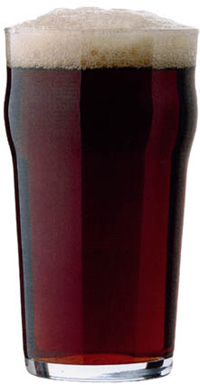
pint
The British advocacy group CAMRA, the Campaign for Real Ale, promotes the month of May as “Mild Month” in an effort to educate people about a style that’s dying before their eyes throughout England. Since this Friday’s “Session” — a.k.a. Beer Blogging Friday — that I’ll be hosting will be about Milds, I thought I’d collect and provide some basic information about this relatively unknown and misunderstood style. In fact, the theme for Friday’s “Session” is “The Mysterious Misunderstood Mild” in an effort to make these delicious beers less so. Yesterday, CAMRA had a press release in anticipation of Mild Month beginning today that summarizes their efforts.

Mild was once Britain’s most popular style of real ale, but had fallen out of fashion in favour of other beers. However there are still many brewers who are enthusiastic about the future of Mild and CAMRA is dedicated to making sure their beers get the credit they deserve.

May has been designated as Mild Month by CAMRA and the consumer organisation is urging beer lovers to seek out milds in their local pubs and rediscover this wonderfully flavoursome beer.

CAMRA also suggests a few recipes for cooking with mild.

Mild’s popularity has been waning since at least 1960. In 1959 the style accounted for 42% of beer sold in Great Britain, but by 1980 its popularity had dropped to a mere 10% and today it’s far less than that. For a good overview of the history of the style and what led to its decline, read the December 1998 article that All About Beer magazine ran on the subject by Roger Protz, entitled “Vanishing Mild.”

Here’s how CAMRA describes milds:

Mild is one of the most traditional beer styles which is enjoying a revival in today’s real ale market. Usually dark brown in colour, due to the use of well-roasted malts or barley it is less hopped than bitters and often has a chocolatety character with nutty and burnt flavours.

Cask conditioned Mild is a rarity in a lot of parts of the country, which is a crying shame, because Mild is a distinctive and tasty beer. Mild is one of, if not the, oldest beer styles in the country. Until the 15th century, ale and mead were the major British brews, both made without hops. Hops were introduced from Holland, France and Germany after this time. This also started the trend on reducing the gravity of ale, as the Hop is also a preservative, and beers had to be brewed very strongly to try to help preserve them. The hop also started the rapid decline of mead, which is only made in a very few places today.

So what is Mild? It is a beer which has tastes and textures all it’s own. Basically it is a beer that is less hopped than bitter, etc. The darkness of Dark Milds, such as Greene King XX Mild, comes from the use of darker malts and/or roasted barley which are used to compensate for the loss of Hop character. “Chocolate “, “fruity”, “nutty” and “burnt” are all tastes to be found in the complexity of Milds. However, not all milds are dark. Yorkshire brewed Timothy Taylors Golden Best is one of the best examples of a light coloured mild, as is Bank’s Original, the name changed from Mild to try to give it a more modern image. In Scotland, 60/- ale is similar to mild (Belhaven’s being a good example).

mild-glass

Milds today tend to have an ABV in the 3% to 3.5% range, with of course some notable exceptions. In fact, a lot of the Microbreweries who try their hand at mild are bringing the alcohol content back up somewhat! Mild wasn’t always weaker though. In the latter half of the 19th Century, milds were brewed to about the same strength as bitters as a response to the demand for a sweeter beer from the working classes and in those days most bitters were around 6 to 7% ABV.

During the First World War, malt rationing and pressure from the temperance movement led to brewers rapidly reduced the strength. Following the Second World War, as prosperity returned, mild`s popularity as a cheap ale began to fade, not being helped by being kept badly in run down pubs as the Big Brewers began to heavily promote their keg lager brands. Coupled to this was a gradual, but steady decline in heavy industry in the North and Midlands of Britain, mild`s great marketplace.

By the 1970s, the keg lager boom had seen mild’s share of the market fall to around 13% and it was a shame to see a bland gassy and overpriced product, which was generally weaker than the mild it was trying to oust, succeed in many cases.

On this side of the pond, there is a great deal of confusion about milds, though for me the most curious issue is that people don’t like the name. What on earth could be wrong with the word “mild,” which in terms of flavor is defined as “not sharp, pungent, or strong.” It’s the very opposite of extreme, but is still full-flavored and delicious. I can think of countless scenarios where a mild would be the ideal compliment to the situation, weather, food, etc.

Making things more confusing is the fact that oftentimes in England a mild when bottled is called a brown ale, but this is still not the same as a brown ale like Newcastle. And then there’s the fact that there are two recognized styles of milds, pale milds and dark milds, further clouding things.

The BJCP organizes milds under their Style #11, English Brown Ale, with 11A designated mild and two additional sub-styles, northern and southern English brown ale. They suggest IBUs of 10-25, SRM of 12-25, and ABV of 2.8-4.5%, with most falling between 3.1-3.8%. The only American example they list is Goose Island PMD Mild.

For the 2007 Great American Beer Festival, The Brewers Association will for the first time include milds as a separate category in the style guidelines. Two categories, actually, as they’re dividing them into two separate styles, English-Style Pale Mild Ale and English-Style Dark Mild Ale. These appear to be the same as Category 56 for the World Beer Cup. For the BA, Pale Mild has IBUs of 10-20, SRM of 8-17 and ABV of 3.2-4% and for Dark Mild, IBUs of 10-24, SRM of 17-34 and ABV of 3.2-4%.

The color distinctions between the two are described as “golden to amber” for pale mild and “deep copper to dark brown (often with a red tint)” for dark mild. Both are dominated by malt favors with very low bittering discernible and allow for some low levels of diacetyl (butterscotch). The dark mild may also include some licorice or “roast malt tones.”

mild

On Friday, if you’re participating in “The Session,” be sure to post a comment to the mild hosting post that will appear here on the Bulletin shortly after midnight PDT. I’ll try to add links in near-realtime and write up the days’ entries as time permits.

session-logo

So for Friday’s Mild Session Blogging Extravaganza, it might not be quite as simple to find a mild as going to your friendly neighborhood corner bar or liquor store. Hopefully, the information listed above may give you some help in finding a suitable beer to write about. The beer may not have the word “mild” written anywhere on the label, but if it’s close to the style parameters then go for it. The idea of Beer Blogging Friday is to be as inclusive as possible so we’re not going to get too hung up on strict style standards — whatever those might be. Find a “mild” beer and join us. To get you started, listed below are some American milds listed on the major beer forums:

The Top Rated American Milds From Beer Advocate*

English Pale Mild Ale:

Mild Ale, from Southern Tier Brewing, Lakewood, New York
Arcadia Special Reserve, from Arcadia Brewing, Battle Creek, Michigan
Cattail Ale, from Lakefront Brewery, Milwaukee, Wisconsin

English Dark Mild Ale:

Merrimack Mild, from The Tap (Haverhill Brewery), Haverhill, Massachusetts
Milltown Mild, from Victory Brewing, Downingtown, Pennsylvania
Harbor Lighthouse Ale, from Bar Harbor Brewing, Bar Harbor, Maine
Pride & Joy Mild Ale, from Three Floyds Brewing, Munster, Indiana
Motor City Brewing Ghettoblaster, from Motor City Brewing Works, Detroit, Michigan
 

The Top Rated American Milds From Rate Beer*

Merrimack Mild, from The Tap (Haverhill Brewery), Haverhill, Massachusetts
Dawn Patrol Dark Mild, from Pizza Port, Solana Beach, California
Titletown Brewing Whistling Chicken Mild Ale, from Titletown Brewing, Green Bay, Wisconsin
Flossmoor Station XXX Mild Ale, from Flossmoor Station, Flossmoor, Illinois
Brew It Up! Northern Mild Brown Ale, from Brew It Up!, Sacramento, California
 

And here are a few more American milds that I know about:*

Bells New World Ale, from Bells Brewery, Galesburg, Michigan
Iron Hill Mild Ale, Iron Hill Brewpubs, various locations in Delaware and Pennsylvania
Jeezum Jim, from Magic Hat Brewing, South Burlington, Vermont
John Harvards British Pale Mild, John Harvards Brewhouse, various locations
Lee’s Mild, Stone Brewing, Escondido, California
London Tavern Mild, from Valley Brewing, Stockton, California
Midlands Mild Ale, from Avery Brewing, Boulder, Colorado
Sara’s Ruby Mild, from Magnolia Pub & Brewery, San Francisco, California
Schlafly English Mild, from the Saint Louis Brewery, St. Louis, Missouri
Thunderhead Mild Ale, from Thunderhead Brewing, Kearney, Nebraska
Triumph Mild Ale, from Triumph Brewing, Princeton, New Jersey
Wynkoop Mayorale Mild, from Wynkoop Brewing, Denver, Colorado

* For both Beer Advocate and Rate Beer, most of the top-rated milds are, naturally, English beers. I removed those British beers from the list here because I figured it was we Americans (and Canadians) that will need the most help in finding a mild. And for all of the listed beers, I have no idea whether or not they are currently available.

Filed Under: Editorial, The Session Tagged With: History

« Previous Page

Find Something

Northern California Breweries

Please consider purchasing my latest book, California Breweries North, available from Amazon, or ask for it at your local bookstore.

Recent Comments

  • Bob Paolino on Beer Birthday: Grant Johnston
  • Gambrinus on Historic Beer Birthday: A.J. Houghton
  • Ernie Dewing on Historic Beer Birthday: Charles William Bergner 
  • Steve 'Pudgy' De Rose on Historic Beer Birthday: Jacob Schmidt
  • Jay Brooks on Beer Birthday: Bill Owens

Recent Posts

  • Beer Saints: St. Medard of Noyon June 8, 2026
  • Historic Beer Birthday: Johann George Moerlein June 8, 2026
  • Beer Birthday: Van Havig June 8, 2026
  • Beer In Ads #5262: Absolutely Pure Daufer’s Celebrated Bock Beer June 7, 2026
  • Beer & Whiskey Birthday: John Hansell June 7, 2026

BBB Archives

Feedback

Head Quarter
This site is hosted and maintained by H25Q.dev. Any questions or comments for the webmaster can be directed here.