Brookston Beer Bulletin

Jay R. Brooks on Beer

  • Home
  • About
  • Editorial
  • Birthdays
  • Art & Beer

Socialize

  • Dribbble
  • Email
  • Facebook
  • Flickr
  • GitHub
  • Instagram
  • LinkedIn
  • Pinterest
  • RSS
  • Twitter
  • YouTube

Powered by Genesis

Historic Beer Birthday: Edmund Resch

June 9, 2025 By Jay Brooks

Today is the birthday of Edmund Resch (June 9, 1847-May 22, 1923). He was the oldest brother of Richard and Emil Resch, who founded the Lion Brewery in Australia, although it was later known as Resch’s Brewery. The brewery was taken over by Tooth and Co. in 1929, but today is owned by Carlton and United Breweries.

Because his career is so intertwined with his brothers, this is his older brother Edmund’s biography, also from the Australian Dictionary of Biography:

Edmund Resch (1847-1923) and Emil Karl Resch (1860-1930), brewers, were the sons of Johann Nicolaus Resch, ironmaster, and his wife Julia Bernhardine Louise Wilhelmine, née Heitmann, both of Saxony. Edmund was born on 9 June 1847 at Hörde, Westphalia, and arrived in Australia in 1863. In 1871, after mining in Victoria, he moved to New South Wales where he and his mate were the first to strike copper at the Cobar South mine. After prospecting for a year between Cobar, Louth, Bourke and Gilgandra he went to Charters Towers, Queensland, where he built, then operated a hotel for four years. He sold out because of ill health and about 1877 bought with a younger brother Richard Frederick Edward Nicolas (1851-1912) a cordial and aerated water factory at Wilcannia, New South Wales. Next year he visited Germany, where at Munich, on 17 October 1878, he married Carolina Rach (1855-1927).

Business flourished, for Wilcannia was a busy river port and centre of a vast pastoral district. In September 1879 Edmund and Richard opened the Lion Brewery and in 1883 purchased a brewery at Cootamundra, renaming it the Lion Brewery; by 1885 they had branches at Silverton, west of Broken Hill, and Tibooburra on the Mount Browne goldfield. On 11 August 1885, however, the partnership was dissolved by mutual consent, Richard carrying on at Cootamundra and Tibooburra and Edmund at Wilcannia, where he built up an enviable reputation as a skilful brewer.

In 1892 Edmund Resch installed a manager and retired to live in Melbourne. In 1895, however, he moved to Sydney to manage Allt’s Brewing & Wine and Spirit Co. Ltd for a banker who had assisted him in his early business career. In 1897 he purchased the brewery for about £67,000 and in 1900 also acquired the business and plant of the New South Wales Lager Bier Brewing Co. Ltd. Assisted by John Herbert Alvarez (d.1913), his able accountant and manager, and his sons Edmund (1879-1963) and Arnold Gottfried (1881-1942), who had both studied modern brewing methods in Europe and the United States of America, Resch embarked on a large building programme, centralizing his combined interests in Dowling Street, Redfern. In July 1906 Resch’s Ltd was incorporated with an authorized capital of £150,000.

Resch’s second business career was even more successful than his first. In 1901 he told a Legislative Assembly select committee on tied houses, where he was reprimanded by the chairman Richard Meagher for answering ‘in an acrimonious way’, that he was the only brewer in New South Wales who did not use ‘salicylic acid and other antiseptics’ in his beer, and, not surprisingly, that he was against tied houses. He successfully advertised in 1904-14 as ‘brewer by appointment to His Excellency the Governor-General’: his ales, beers and stout captured much of the State’s market. From 1903 to October 1913 he was consul in Sydney for the Netherlands government and on his retirement he was appointed knight of the Order of Orange-Nassau. Wealthy, but uncultivated, he lived in great style at Swifts, a Gothic mansion on Darling Point built by (Sir) Robert Lucas-Tooth; sailing on Sydney Harbour was his chief recreation. During World War I Resch contributed generously to the war effort and made up the difference in pay for about sixty employees who had enlisted, but in November 1917, following an indiscretion, he was arrested and interned in Holsworthy camp.
Edmund Resch died at Swifts on 22 May 1923, survived by his wife and sons, and was buried in the Anglican section of Waverley cemetery. Probate of his estate was sworn at £316,828. In 1929 Resch’s Waverley Brewery was taken over by Tooth & Co. Ltd in exchange for shares issued to the Resch family.

Resch-Brewery

During World War I, like many Germans living in Australia, Edmund was imprisoned for the duration of the world because people believed his German heritage would make him a traitor to the allied war effort.

Despite, or perhaps because of his German roots, Edmund contributed generously to Australia’s war effort after the outbreak of WWI, as well as paying his sixty-odd enlisted employees the difference between their service and civilian wages. Nonetheless, he was not immune to the 1916 War Precautions (Alien Restriction) Regulations that required all non-British subjects aged fifteen and over to register their whereabouts. In November 1917, he was arrested and interred at Holdsworthy, near Liverpool, home of Australia’s largest war internment camp, despite having been a resident of Australia for more than fifty years.

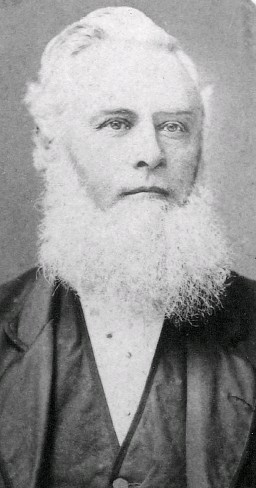
Edmund during his interrment.

This story about the brothers is from a breweriana collector in Australia:

Edmund Resch arrived in Australia from Germany in 1863, probably with his younger brother Richard, and after spending time on Victorian and New South Wales mine fields and as an hotelier in Queensland, he and Richard bought a cordial and aerated water factory in bustling Wilcannia in 1877. Business flourished and in 1879 the pair opened the Lion Brewery in the township.

Resch-stout

Four years later, the brothers expanded their activities by taking over Cootamundra’s Burton Brewery. Originally established by Mary Jane Rochester, Henry Morton and Frederick Henry Jackson in 1881, the new owners renamed it the Lion Brewery in line with their earlier establishment and in December 1883 advertised that “…for cleanliness, condition, fullness of the palate, great keeping qualities and mellow vinous flavour, our ales cannot be surpassed.”

reschs-1899

In 1882, a third brother Emil arrived in Australia after serving a brewing and malting apprenticeship in Germany and following a short stint in Melbourne, moved to Wilcannia to join his siblings. By 1885, their expanding business empire also boasted branches at Silverton and Tibooburra, but in August that year, the partnership was amicably dissolved, with the various holdings split up between the brothers.

Richard continued the Cootamundra and Tibooburra businesses, and after trying unsuccessfully in 1888 to sell the former brewery, carried on until 1903, when he relocated to the Clarence River Brewery at Maclean. Operations ceased around 1915.

lionbrewery-steam-aerated

Edmund carried on at Wilcannia until 1892 when, after installing a manager to oversee operations, he moved to Melbourne intending to retire. This was short lived, however, and three years later he relocated to Sydney to take over management of Allt’s, a brewing, wine and spirit company, on behalf of a banker who had supported him in his early business activities.

After purchasing Allt’s Brewery in 1897 for more than £65,000, Edmund went on to acquire the New South Wales Lager Bier Brewing Company Ltd’s Waverley Brewery business and plant in Redfern three years later. Together with his sons Edmund and Arnold and his accountant/manager John Alvarez, he embarked on major construction works to centralise activities on the Dowling Street, Redfern site. Directories show that he also continued to operate his Wilcannia business until at least 1909.

Reschs-Dinner-Ale

Promoting himself between 1904 and 1914 as “brewer by appointment to His Excellency the Governor-General”, Edmund became so successful that his brewery’s output secured much of the State’s market. In 1906, Resch’s Ltd was incorporated with a capital of £150,000.

reschs-mirror
Reschs-Brewery-001
Resch-card00487_fr

Filed Under: Birthdays, Breweries, Just For Fun Tagged With: Australia, Germany

Historic Beer Birthday: John Toohey

April 26, 2025 By Jay Brooks

tooheys
Today is the birthday of John Thomas Toohey (April 26, 1839-May 5, 1903). He and his brother James bought the Darling Brewery in Melbourne, Australia, and eventually it became known as Tooheys Brewery.


John-Toohey-older


This brief biography is from his Wikipedia page:

He was born in County Limerick to businessman Matthew Toohey and Honora Hall. His family migrated to Melbourne in 1841, where his father was involved in unsuccessful business dealings that eventually forced them to move to New South Wales in 1866. Toohey settled near Lismore, and around 1869 established a cordial factory. The following year he and his brother James began brewing at the Metropolitan Brewery; this would eventually lead to Tooheys Brewery, which the brothers ran. On 26 August 1871 Toohey married Sarah Doheny, with whom he had five children; he would later marry Annie Mary Murphy Egan, a widow, in New Zealand. In 1892 he was appointed to the New South Wales Legislative Council, where he was known as a supporter of Irish nationalism and as a prominent Catholic. In 1902 he embarked on a world tour, but he died in Chicago the following year.

tooheys-brewery-hall

And here’s part of their early history from the brewery’s Wikipedia page:

Tooheys dates from 1869, when John Thomas Toohey (an Irish immigrant to Melbourne) obtained his brewing licence. Toohey and his brother James Matthew ran pubs in Melbourne (The Limerick Arms and The Great Britain) before moving to Sydney in the 1860s. They commenced brewing Tooheys Black Old Ale in a brewery in the area of present-day Darling Harbour. By 1875, demand for their beer had soared and they established The Standard Brewery in inner-city Surry Hills. In 1902, the company went public as Tooheys Limited, and commenced brewing lager (the present-day Tooheys New) in 1930. In 1955, the brewery moved west to Lidcombe. In 1967, Tooheys bought competitor Miller’s Brewers located in Taverner’s Hill, closing that brewery in 1975.


tooheys-flag-ale


This is a shared entry, with his brother John, of James Toohey from the Australian Dictionary of Biography, Volume 6, 1976:

John Thomas Toohey (1839-1903) and James Matthew Toohey (1850-1895), brewers, were the sons of Matthew Toohey (d.1892), businessman, and his wife Honora (d.1878), née Hall. John Thomas was born on 26 April 1839 at Limerick, Ireland, and was taken to Melbourne by his parents in 1841. His father bought town lots and settled many Irish families in Victoria. One of the founders of the St Patrick’s Society in Melbourne, he was a political ally of (Sir) John O’Shanassy and (Sir) Charles Gavan Duffy. In the 1860s he was forced to sell at a loss; in 1866 he went to New South Wales and lived in virtual retirement. James Matthew was born on 18 March 1850 in Melbourne: he is said to have been named after Fr Matthew, the Irish apostle of temperance.

After unsuccessful business ventures in Victoria, New Zealand and Queensland, John settled near Lismore: later James had a property near Coonamble. About 1869 with W. G. Henfrey John set up an auctioneering agency and cordial manufacturing business in Castlereagh Street, Sydney; the next year the brothers began brewing at the Metropolitan Brewery and in 1873 they bought the Darling Brewery in Harbour Street. In 1876 they moved to new premises on the site of the old Albion Brewery in Elizabeth Street and began the Standard Brewery, employing twenty-six hands. Before 1880 imported beer was preferred to the local product, but in the 1880s Toohey’s and Tooth’s beers quickly became popular.

Vice-president of the Licensed Victuallers’ Association, in 1886 James was appointed to the royal commission on the excessive use of intoxicating drink, but withdrew when he felt the balance between local and anti-local optionists was upset. In evidence to the commission he said that ‘the system of shouting’ was the cause of all the excessive drinking in the colony and that beer was less injurious to health than ‘the ardent spirits’. He approved of the tied-house system and maintained that the 830 public houses in the Sydney metropolitan licensing district were not an excessive number, though there were a few too many in certain areas of the city.

Campaigning in 1885 for the Legislative Assembly seat of South Sydney, James claimed that the government’s action in sending troops to the Sudan ‘had resulted in a huge advertisement for the colony’. Favouring an elected Upper House, payment of members and the eight-hour system, he said he opposed local option and the abstinence party, as no Act of parliament could make a man sober. He represented the seat in 1885-93. A firm protectionist by 1887, he saw most free traders as ‘the curled darlings of the [Potts] Point and the merchants of Sydney’. He was a good speaker, if a little impetuous at times. According to the Sydney Morning Herald’s political correspondent in 1887, he ‘rolls the letter “r” beautifully, he drops his voice down to sweet whisper, lifts it up to a palpitating splendour, and then rolls it over the solemn path of prophetic parlance’. Dissatisfied with Sir George Dibbs’s administration, he opposed him for Tamworth in July 1894, but polled poorly. Next year he visited Ireland, England and Europe. James died at Pisa, Italy, on 25 September 1895 and was buried in the Catholic section of Rookwood cemetery, Sydney. He was survived by his wife Catherine (Kate) Magdalene (d.1913), née Ferris, whom he had married at Parramatta on 5 June 1873; they had four sons and eight daughters. Probate of his estate was sworn at £133,623.

On James’s death, John and James’s eldest son, also named John Thomas, took over the brewery. John was a leading Catholic layman, benefactor to numerous Catholic charitable institutions and a financial supporter of the Irish nationalist movement. On Christmas Day 1888 Cardinal Patrick Moran invested him as a knight of the Order of St Gregory. A leader in the Home Rule movement, he was prominent in the erection of the monument over the grave of Michael Dwyer in Waverley cemetery in 1898. Well known in business circles, he was a director of several companies including the City Mutual Fire Insurance Co. Ltd. He lived first at Moira, Burwood, and later at Innisfail, Wahroonga, and assisted in the development of both suburbs. He stood for Monaro in the Legislative Assembly in 1880 but was defeated by Henry Septimus Badgery and (Sir) Robert Lucas Tooth. In April 1892 he was nominated to the Legislative Council, but he very rarely spoke. In September 1901 he gave evidence to an assembly select committee on tied houses. Next year the brewery became a public company, Toohey’s Ltd, with John as chairman; the vendors received 375,000 fully paid shares and £175,000 cash. The well-known advertising slogan and symbol ‘Here’s to ‘ee’ originated in 1894.

For health reasons John went on a world tour with his family in 1902. He died suddenly in Chicago on 5 May 1903 and was buried in the Catholic section of Rookwood cemetery, Sydney. On 26 August 1871 at St Mary’s Cathedral he had married Sarah Doheny who died in 1891 survived by two sons and three daughters. Toohey was survived by his second wife, a widow Annie Mary Murphy, née Egan, whom he had married in Auckland, New Zealand. His estate was sworn for probate at £275,215.

tooheys-brewery

And this is a commercial that Tooheys produced that tells some of the history of the brewery.

Weirdly, some yahoo at Toohey’s thinks that if you’re not 18 then you shouldn’t be able to watch a video about their history, which is just baffling. So go watch the video on YouTube until if, or when, they come to their senses.

Filed Under: Birthdays, Breweries, Just For Fun Tagged With: Australia, History

Beer Birthday: Dave Bonighton

April 3, 2025 By Jay Brooks

mountain-goat-red
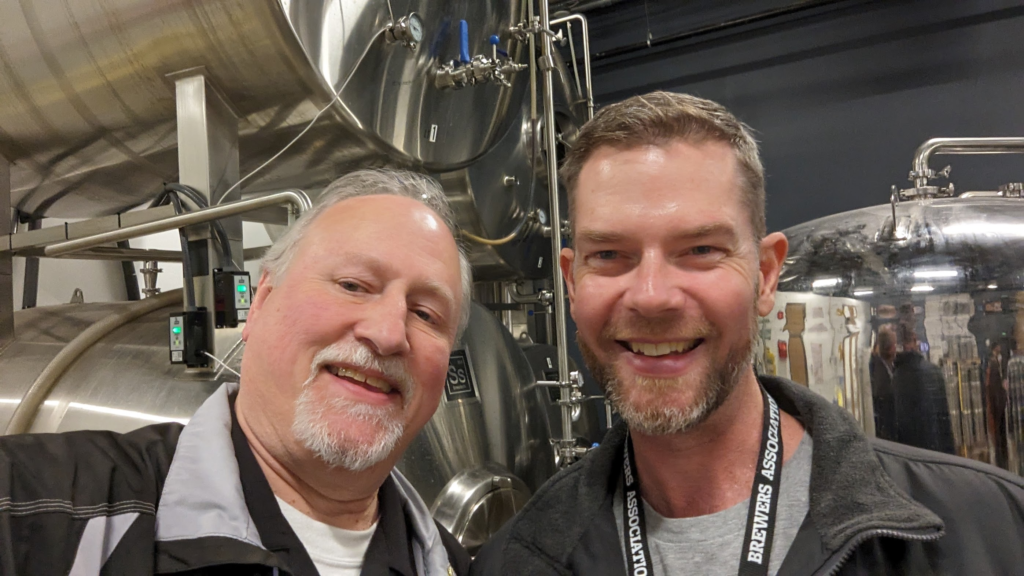
Today is the 55th birthday of Dave Bonighton, who is a co-founder of Australia’s Mountain Goat Beer. I first met Dave either judging in Japan or in the U.S. at the World Beer Cup, although we also judged together in Australia a few years ago at the AIBA. Dave’s a great guy and his beers are some of the best I’ve had from Australia. In 2015, Asahi Bought Mountain Goat, though Dave and his partner stayed on and at the time said “Mountain Goat will continue to operate as a stand-alone business.” Join me in wishing Dave a very happy birthday.
Dave-Bonighton-au
Mountain Goat co-founder and brewmaster Dave Bonighton.

dave-and-cam-aiba
Dave and Cam Hines at the AIBA Awards.

Filed Under: Birthdays, Just For Fun Tagged With: Australia

Historic Beer Birthday: Edward Fitzgerald

March 19, 2025 By Jay Brooks

castlemaine
Today is the birthday of Edward Fitzgerald (March 19, 1820-March 19, 1896). He “was an Australian brewer and founder of the Castlemaine Brewery.” According to his short Wikipedia page. “Edward was born in 1820 in Galway to parents Francis Fitzgerald and Eleanor Joyes. His family owned and operated a distillery establishment at Nun’s Island, Galway. In 1854 Edward Fitzgerald migrated to Australia during the Victorian gold rush and established a brewery in the gold field town of Castlemaine.

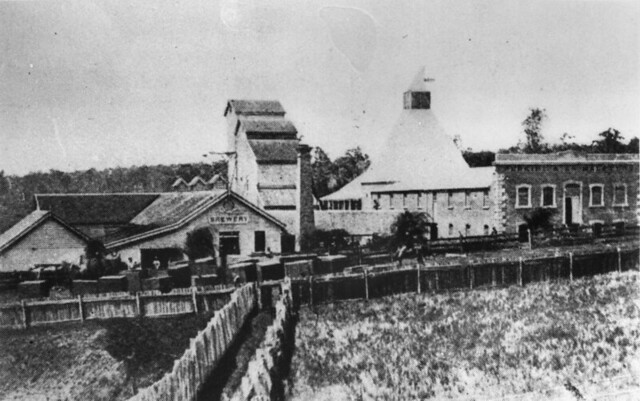
Side_view_of_Castlemaine_Brewery_in_Milton,_Brisbane_1901

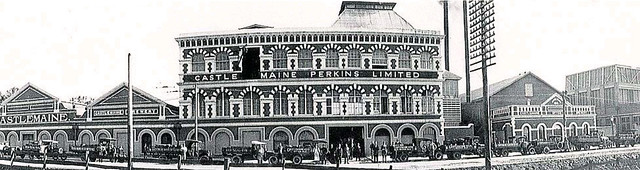
In 1859 his brother Nicholas Fitzgerald emigrated to Australia and joined him in the brewery business. By 1871 the name Castlemaine Brewery had been adopted, in 1875 the brothers opened a brewery in South Melbourne, and in 1885 the enterprise was turned into a public company. Breweries were opened right across the country and the brothers were involved in the establishment of the Castlemaine Perkins brewery in Brisbane which is home of the XXXX brand and is still brewing to this day.”

Unfortunately, while there are photos of his brother, I couldn’t find any of Edward, or any specific biographical information about him that wasn’t related to the brewery.

castlemain-carbine-stout
And this short history is from the Castlemaine Perkins Wikipedia page:

In 1877, brothers Nicholas Fitzgerald and Edward Fitzgerald bought the site of a failing distillery and created a brewery, which they named after an existing brewery that they owned in Castlemaine, Victoria in the Victorian goldfields. They began to brew beer there in the following year and the brewery continues production to this day. The first beverage was called XXX Sparkling Ale.

In 1866, Patrick Perkins started the Perkins Brewery in Toowoomba. In 1872, he later extended his operations to Brisbane with the purchase of the City Brewery in 1872.

The company restricted its operations entirely to brewing by 1916. XXXX was introduced with new advertising campaign in 1924 after the brewery employed German brewer, Alhois William Leitner. The advertising included a depiction of a little man wearing a suit with a smile, a wink and a boater hat. The so-called ‘Fourex Man’ soon became one of the most recognised symbols in Queensland.

In 1928 (long after the death of Patrick Perkins in 1901), the Perkins brewing company was bought by the Castlemaine Brewery with new company being known as Castlemaine Perkins Limited.

Castlemaine Perkins was acquired in 1992 by drinks conglomerate Lion Nathan.

fourex

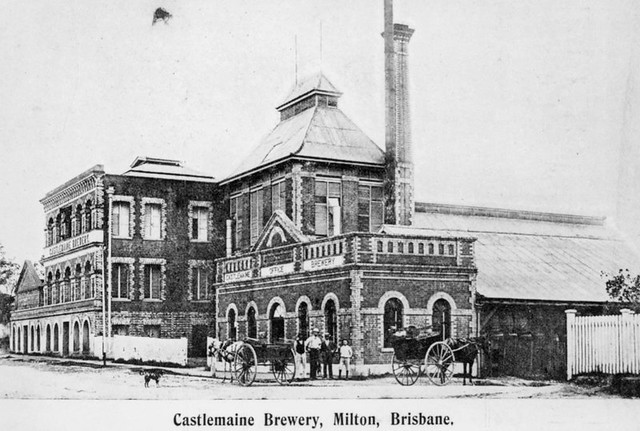
The Castlemaine or Milton Brewery was established at Milton, Brisbane, in 1878 by Fitzgerald Quinlan & Co. The brothers Nicholas and Edward Fitzgerald had established brewing interests at Castlemaine in Victoria, and then in Adelaide, Perth, Sydney and Newcastle. In Brisbane, Quinlan Gray & Co. had taken over the interests of the Milton Distillery that was established on the site at Milton in 1870. The first brew by the new Milton Brewery was called Castlemaine XXX Sparkling Ale and was made to the same formula as the beer brewed by Castlemaine Brewery in Victoria. (Information taken from: Public Affairs Department, Castlemaine Perkins Limited, comp., History of the Castlemaine Perkins Brewery, 1877 – 1993, 1993).
This drawing of the brewery depicts some laden wagons in the street in front of the three-storey building. A worker stands alongside. The signage reads: Castlemaine Brewery, Fitzgerald, Quinlan & Co.

castlemaine-brewery-tower
The Castlemaine Brewery at Milton, Brisbane, 1879, from the State Library of Queensland.

castlemaine-xxxx-bitter-ale

Filed Under: Birthdays, Breweries, Just For Fun Tagged With: Australia, History

Historic Beer Birthday: James Toohey

March 18, 2025 By Jay Brooks

tooheys
Today is the birthday of James Toohey (March 18, 1850-September 25, 1895). He and his brother John bought the Darling Brewery in Melbourne, Australia, and eventually it became known as Tooheys Brewery.

This brief biography is from his Wikipedia page:

He was born in Melbourne to businessman Matthew Toohey and Honora Hall. He was a brewer, opening a business with his brother John in 1870 that eventually became Tooheys Brewery. On 5 June 1873 he married Catherine Magdalene Ferris, with whom he had twelve children. In 1885 he was elected to the New South Wales Legislative Assembly for South Sydney. He held the seat until he resigned in 1893. Toohey died at Pisa in Italy in 1895.

tooheys-brewery-hall

And here’s part of their early history from the brewery’s Wikipedia page:

Tooheys dates from 1869, when John Thomas Toohey (an Irish immigrant to Melbourne) obtained his brewing licence. Toohey and his brother James Matthew ran pubs in Melbourne (The Limerick Arms and The Great Britain) before moving to Sydney in the 1860s. They commenced brewing Tooheys Black Old Ale in a brewery in the area of present-day Darling Harbour. By 1875, demand for their beer had soared and they established The Standard Brewery in inner-city Surry Hills. In 1902, the company went public as Tooheys Limited, and commenced brewing lager (the present-day Tooheys New) in 1930. In 1955, the brewery moved west to Lidcombe. In 1967, Tooheys bought competitor Miller’s Brewers located in Taverner’s Hill, closing that brewery in 1975.

james-toohey-older
This is a shared entry, with his brother John, of James Toohey from the Australian Dictionary of Biography, Volume 6, 1976:

John Thomas Toohey (1839-1903) and James Matthew Toohey (1850-1895), brewers, were the sons of Matthew Toohey (d.1892), businessman, and his wife Honora (d.1878), née Hall. John Thomas was born on 26 April 1839 at Limerick, Ireland, and was taken to Melbourne by his parents in 1841. His father bought town lots and settled many Irish families in Victoria. One of the founders of the St Patrick’s Society in Melbourne, he was a political ally of (Sir) John O’Shanassy and (Sir) Charles Gavan Duffy. In the 1860s he was forced to sell at a loss; in 1866 he went to New South Wales and lived in virtual retirement. James Matthew was born on 18 March 1850 in Melbourne: he is said to have been named after Fr Matthew, the Irish apostle of temperance.

After unsuccessful business ventures in Victoria, New Zealand and Queensland, John settled near Lismore: later James had a property near Coonamble. About 1869 with W. G. Henfrey John set up an auctioneering agency and cordial manufacturing business in Castlereagh Street, Sydney; the next year the brothers began brewing at the Metropolitan Brewery and in 1873 they bought the Darling Brewery in Harbour Street. In 1876 they moved to new premises on the site of the old Albion Brewery in Elizabeth Street and began the Standard Brewery, employing twenty-six hands. Before 1880 imported beer was preferred to the local product, but in the 1880s Toohey’s and Tooth’s beers quickly became popular.

TooheyJames

Vice-president of the Licensed Victuallers’ Association, in 1886 James was appointed to the royal commission on the excessive use of intoxicating drink, but withdrew when he felt the balance between local and anti-local optionists was upset. In evidence to the commission he said that ‘the system of shouting’ was the cause of all the excessive drinking in the colony and that beer was less injurious to health than ‘the ardent spirits’. He approved of the tied-house system and maintained that the 830 public houses in the Sydney metropolitan licensing district were not an excessive number, though there were a few too many in certain areas of the city.

Campaigning in 1885 for the Legislative Assembly seat of South Sydney, James claimed that the government’s action in sending troops to the Sudan ‘had resulted in a huge advertisement for the colony’. Favouring an elected Upper House, payment of members and the eight-hour system, he said he opposed local option and the abstinence party, as no Act of parliament could make a man sober. He represented the seat in 1885-93. A firm protectionist by 1887, he saw most free traders as ‘the curled darlings of the [Potts] Point and the merchants of Sydney’. He was a good speaker, if a little impetuous at times. According to the Sydney Morning Herald’s political correspondent in 1887, he ‘rolls the letter “r” beautifully, he drops his voice down to sweet whisper, lifts it up to a palpitating splendour, and then rolls it over the solemn path of prophetic parlance’. Dissatisfied with Sir George Dibbs’s administration, he opposed him for Tamworth in July 1894, but polled poorly. Next year he visited Ireland, England and Europe. James died at Pisa, Italy, on 25 September 1895 and was buried in the Catholic section of Rookwood cemetery, Sydney. He was survived by his wife Catherine (Kate) Magdalene (d.1913), née Ferris, whom he had married at Parramatta on 5 June 1873; they had four sons and eight daughters. Probate of his estate was sworn at £133,623.

On James’s death, John and James’s eldest son, also named John Thomas, took over the brewery. John was a leading Catholic layman, benefactor to numerous Catholic charitable institutions and a financial supporter of the Irish nationalist movement. On Christmas Day 1888 Cardinal Patrick Moran invested him as a knight of the Order of St Gregory. A leader in the Home Rule movement, he was prominent in the erection of the monument over the grave of Michael Dwyer in Waverley cemetery in 1898. Well known in business circles, he was a director of several companies including the City Mutual Fire Insurance Co. Ltd. He lived first at Moira, Burwood, and later at Innisfail, Wahroonga, and assisted in the development of both suburbs. He stood for Monaro in the Legislative Assembly in 1880 but was defeated by Henry Septimus Badgery and (Sir) Robert Lucas Tooth. In April 1892 he was nominated to the Legislative Council, but he very rarely spoke. In September 1901 he gave evidence to an assembly select committee on tied houses. Next year the brewery became a public company, Toohey’s Ltd, with John as chairman; the vendors received 375,000 fully paid shares and £175,000 cash. The well-known advertising slogan and symbol ‘Here’s to ‘ee’ originated in 1894.

For health reasons John went on a world tour with his family in 1902. He died suddenly in Chicago on 5 May 1903 and was buried in the Catholic section of Rookwood cemetery, Sydney. On 26 August 1871 at St Mary’s Cathedral he had married Sarah Doheny who died in 1891 survived by two sons and three daughters. Toohey was survived by his second wife, a widow Annie Mary Murphy, née Egan, whom he had married in Auckland, New Zealand. His estate was sworn for probate at £275,215.

tooheys-brewery

And this is a commercial that Tooheys produced that tells some of the history of the brewery.

The late Mr James Matthew Toohey

Filed Under: Birthdays, Breweries, Just For Fun Tagged With: Australia, History

Historic Beer Birthday: Emil Resch

February 15, 2025 By Jay Brooks

lion-brewery

Today is the birthday of Emil Resch (February 15, 1860-April 17, 1930). He was the youngest brother of Edmund and Richard Resch, who founded the Lion Brewery in Australia, although it was later known as Resch’s Brewery. The brewery was taken over by Tooth and Co. in 1929, but today is owned by Carlton and United Breweries.

emilresch

This biography is from the Australian Dictionary of Biography:

Emil was born on 15 February 1860 at Aalen, Württemberg, and after serving his apprenticeship in the brewing and malting trade arrived in Australia on 28 September 1882. After a short time in Melbourne he joined his brothers at Wilcannia, and in 1885 took over their Lion Brewery on Umberumberka Creek, Silverton. In 1888, when the brewery had an annual output of over 90,000 gallons (409,148 L), he opened a cordial factory in Argent Lane, Broken Hill. He became an original trustee of the German Club at Broken Hill in 1892 and next year returned to Germany where at Aalen he married Emma Schwartz (d.1945) on 15 August.

Retaining his brewing interests at Broken Hill, in 1898 Resch went to Melbourne and became general manager of Melbourne Brewery and Distillery Ltd (Victoria Brewery). He was naturalized in December 1899. In 1905 Emil, William Baillieu and Carl Pinschof, representing the Victoria and Carlton breweries, began discussions with Nicholas Fitzgerald, Montague Cohenand others which led to the formation of Carlton & United Breweries Pty Ltd on 8 May 1907. Emil, who with Baillieu had bought the Victoria Brewery and incorporated it in the merger in exchange for shares in the new company, was general manager of Carlton and United in 1907-14.

Emil Resch died on 17 April 1930 at his Kew home, survived by his wife, one of his two sons, Carl, and five daughters. He was buried in the Presbyterian section of Boroondara cemetery. 

Resch-Brewery

Because his career is so intertwined with his brothers, this is his older brother Edmund’s biography, also from the Australian Dictionary of Biography:

Edmund Resch (1847-1923) and Emil Karl Resch (1860-1930), brewers, were the sons of Johann Nicolaus Resch, ironmaster, and his wife Julia Bernhardine Louise Wilhelmine, née Heitmann, both of Saxony. Edmund was born on 9 June 1847 at Hörde, Westphalia, and arrived in Australia in 1863. In 1871, after mining in Victoria, he moved to New South Wales where he and his mate were the first to strike copper at the Cobar South mine. After prospecting for a year between Cobar, Louth, Bourke and Gilgandra he went to Charters Towers, Queensland, where he built, then operated a hotel for four years. He sold out because of ill health and about 1877 bought with a younger brother Richard Frederick Edward Nicolas (1851-1912) a cordial and aerated water factory at Wilcannia, New South Wales. Next year he visited Germany, where at Munich, on 17 October 1878, he married Carolina Rach (1855-1927).
Business flourished, for Wilcannia was a busy river port and centre of a vast pastoral district. In September 1879 Edmund and Richard opened the Lion Brewery and in 1883 purchased a brewery at Cootamundra, renaming it the Lion Brewery; by 1885 they had branches at Silverton, west of Broken Hill, and Tibooburra on the Mount Browne goldfield. On 11 August 1885, however, the partnership was dissolved by mutual consent, Richard carrying on at Cootamundra and Tibooburra and Edmund at Wilcannia, where he built up an enviable reputation as a skilful brewer.
In 1892 Edmund Resch installed a manager and retired to live in Melbourne. In 1895, however, he moved to Sydney to manage Allt’s Brewing & Wine and Spirit Co. Ltd for a banker who had assisted him in his early business career. In 1897 he purchased the brewery for about £67,000 and in 1900 also acquired the business and plant of the New South Wales Lager Bier Brewing Co. Ltd. Assisted by John Herbert Alvarez (d.1913), his able accountant and manager, and his sons Edmund (1879-1963) and Arnold Gottfried (1881-1942), who had both studied modern brewing methods in Europe and the United States of America, Resch embarked on a large building programme, centralizing his combined interests in Dowling Street, Redfern. In July 1906 Resch’s Ltd was incorporated with an authorized capital of £150,000.
Resch’s second business career was even more successful than his first. In 1901 he told a Legislative Assembly select committee on tied houses, where he was reprimanded by the chairman Richard Meagher for answering ‘in an acrimonious way’, that he was the only brewer in New South Wales who did not use ‘salicylic acid and other antiseptics’ in his beer, and, not surprisingly, that he was against tied houses. He successfully advertised in 1904-14 as ‘brewer by appointment to His Excellency the Governor-General’: his ales, beers and stout captured much of the State’s market. From 1903 to October 1913 he was consul in Sydney for the Netherlands government and on his retirement he was appointed knight of the Order of Orange-Nassau. Wealthy, but uncultivated, he lived in great style at Swifts, a Gothic mansion on Darling Point built by (Sir) Robert Lucas-Tooth; sailing on Sydney Harbour was his chief recreation. During World War I Resch contributed generously to the war effort and made up the difference in pay for about sixty employees who had enlisted, but in November 1917, following an indiscretion, he was arrested and interned in Holsworthy camp.
Edmund Resch died at Swifts on 22 May 1923, survived by his wife and sons, and was buried in the Anglican section of Waverley cemetery. Probate of his estate was sworn at £316,828. In 1929 Resch’s Waverley Brewery was taken over by Tooth & Co. Ltd in exchange for shares issued to the Resch family.

reschs-the-aristocrat

This story about the brothers is from a breweriana collector in Australia:

Edmund Resch arrived in Australia from Germany in 1863, probably with his younger brother Richard, and after spending time on Victorian and New South Wales mine fields and as an hotelier in Queensland, he and Richard bought a cordial and aerated water factory in bustling Wilcannia in 1877. Business flourished and in 1879 the pair opened the Lion Brewery in the township.

Resch-stout

Four years later, the brothers expanded their activities by taking over Cootamundra’s Burton Brewery. Originally established by Mary Jane Rochester, Henry Morton and Frederick Henry Jackson in 1881, the new owners renamed it the Lion Brewery in line with their earlier establishment and in December 1883 advertised that “…for cleanliness, condition, fullness of the palate, great keeping qualities and mellow vinous flavour, our ales cannot be surpassed.”

reschs-1899

In 1882, a third brother Emil arrived in Australia after serving a brewing and malting apprenticeship in Germany and following a short stint in Melbourne, moved to Wilcannia to join his siblings. By 1885, their expanding business empire also boasted branches at Silverton and Tibooburra, but in August that year, the partnership was amicably dissolved, with the various holdings split up between the brothers.

Richard continued the Cootamundra and Tibooburra businesses, and after trying unsuccessfully in 1888 to sell the former brewery, carried on until 1903, when he relocated to the Clarence River Brewery at Maclean. Operations ceased around 1915.

lionbrewery-steam-aerated

Edmund carried on at Wilcannia until 1892 when, after installing a manager to oversee operations, he moved to Melbourne intending to retire. This was short lived, however, and three years later he relocated to Sydney to take over management of Allt’s, a brewing, wine and spirit company, on behalf of a banker who had supported him in his early business activities.

After purchasing Allt’s Brewery in 1897 for more than £65,000, Edmund went on to acquire the New South Wales Lager Bier Brewing Company Ltd’s Waverley Brewery business and plant in Redfern three years later. Together with his sons Edmund and Arnold and his accountant/manager John Alvarez, he embarked on major construction works to centralise activities on the Dowling Street, Redfern site. Directories show that he also continued to operate his Wilcannia business until at least 1909.

Reschs-Dinner-Ale

Promoting himself between 1904 and 1914 as “brewer by appointment to His Excellency the Governor-General”, Edmund became so successful that his brewery’s output secured much of the State’s market. In 1906, Resch’s Ltd was incorporated with a capital of £150,000.

reschs-mirror
Reschs-Brewery-001
Resch-card00487_fr

Filed Under: Birthdays, Just For Fun Tagged With: Australia

Beer In Ads #3864: Foster’s Kangaroo Pouch

September 30, 2021 By Jay Brooks

Thursday’s ad is for “Foster’s Lager,” from 2002. This ad was made for Carlton & United, who made Foster’s Lager, although it was later part of AB-InBev but more recently was sold to Asahi. It was started by two American brothers who emigrated to Australia in 1886, and started selling it in 1889. In 1907, the Foster brothers merged with four other Melbourne breweries to created Carlton & United Breweries. The Foster’s brand barely sells in Australia, but began importing to the UK and the US in the early 1970s, and thanks to very successful advertising became a popular international brand. This one features a bottle of Foster’s with a pouch, and inside the pouch, naturally, is that most quintessential of Australian animals, the kangaroo.

Filed Under: Art & Beer, Beers Tagged With: Advertising, Australia, History

Beer In Ads #3863: Our Message From Down Under

September 29, 2021 By Jay Brooks

Wednesday’s ad is for “Foster’s Lager,” from 1984. This ad was made for Carlton & United, who made Foster’s Lager, although it was later part of AB-InBev but more recently was sold to Asahi. It was started by two American brothers who emigrated to Australia in 1886, and started selling it in 1889. In 1907, the Foster brothers merged with four other Melbourne breweries to created Carlton & United Breweries. The Foster’s brand barely sells in Australia, but began importing to the UK and the US in the early 1970s, and thanks to very successful advertising became a popular international brand. This one features a cartoon ad which I believe is from around the time of the Olympics the last time they were in Los Angeles, which was 1984.

Filed Under: Art & Beer, Beers Tagged With: Advertising, Australia, History

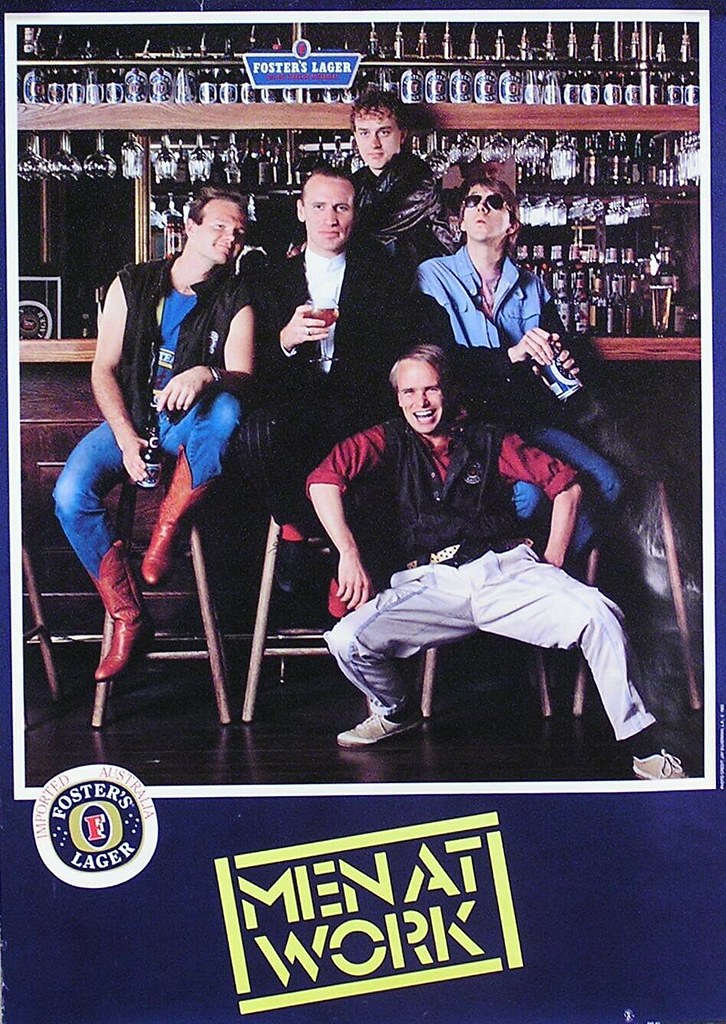
Beer In Ads #3862: Men At Work

September 28, 2021 By Jay Brooks

Tuesday’s ad is for “Foster’s Lager,” from 1983. This ad was made for Carlton & United, who made Foster’s Lager, although it was later part of AB-InBev but more recently was sold to Asahi. It was started by two American brothers who emigrated to Australia in 1886, and started selling it in 1889. In 1907, the Foster brothers merged with four other Melbourne breweries to created Carlton & United Breweries. The Foster’s brand barely sells in Australia, but began importing to the UK and the US in the early 1970s, and thanks to very successful advertising became a popular international brand. This one features the Australian rock band Men at Work, best known for their hits “Down Under” and “Who Can It Be Now?”

Filed Under: Art & Beer, Beers Tagged With: Advertising, Australia, History, Music

Beer In Ads #3861: Australian For Male Bonding

September 27, 2021 By Jay Brooks

Monday’s ad is for “Foster’s Lager,” from 1994, I believe. This ad was made for Carlton & United, who made Foster’s Lager, although it was later part of AB-InBev but more recently was sold to Asahi. It was started by two American brothers who emigrated to Australia in 1886, and started selling it in 1889. In 1907, the Foster brothers merged with four other Melbourne breweries to created Carlton & United Breweries. The Foster’s brand barely sells in Australia, but began importing to the UK and the US in the early 1970s, and thanks to very successful advertising became a popular international brand. This one features a Rugby scrum and the tagline: “Australian for Male Bonding” and an oil can of Foster’s and the tagline: “Australian for Beer.”

Filed Under: Art & Beer, Beers Tagged With: Advertising, Australia, History

« Previous Page
Next Page »

Find Something

Northern California Breweries

Please consider purchasing my latest book, California Breweries North, available from Amazon, or ask for it at your local bookstore.

Recent Comments

  • Ernie Dewing on Historic Beer Birthday: Charles William Bergner 
  • Steve 'Pudgy' De Rose on Historic Beer Birthday: Jacob Schmidt
  • Jay Brooks on Beer Birthday: Bill Owens
  • Steve 'Pudgy' De Rose on Beer Birthday: Charles Finkel
  • Steve 'Pudgy' De Rose on Beer Birthday: Bill Owens

Recent Posts

  • Historic Beer Birthday: Johann Schiff February 1, 2026
  • Beer In Ads #5188: Aged Bock Beer Is Always In Season January 31, 2026
  • Historic Beer Birthday: William Hoffmeister January 31, 2026
  • Historic Beer Birthday: William Wenzel January 31, 2026
  • Beer Saints: St. Veronus January 31, 2026

BBB Archives

Feedback

Head Quarter
This site is hosted and maintained by H25Q.dev. Any questions or comments for the webmaster can be directed here.