Brookston Beer Bulletin

Jay R. Brooks on Beer

  • Home
  • About
  • Editorial
  • Birthdays
  • Art & Beer

Socialize

  • Dribbble
  • Email
  • Facebook
  • Flickr
  • GitHub
  • Instagram
  • LinkedIn
  • Pinterest
  • RSS
  • Twitter
  • YouTube

Powered by Genesis

Beer In Ads #5125: Bowler Brothers’ Bock

February 22, 2026 By Jay Brooks Leave a Comment

Two years ago I decided to concentrate on Bock ads for awhile. Bock, of course, may have originated in Germany, in the town of Einbeck. Because many 19th century American breweries were founded by German immigrants, they offered a bock at certain times of the year, be it Spring, Easter, Lent, Christmas, or what have you. In a sense they were some of the first seasonal beers. “The style was later adopted in Bavaria by Munich brewers in the 17th century. Due to their Bavarian accent, citizens of Munich pronounced ‘Einbeck’ as ‘ein Bock’ (a billy goat), and thus the beer became known as ‘Bock.’ A goat often appears on bottle labels.” And presumably because they were special releases, many breweries went all out promoting them with beautiful artwork on posters and other advertising. With Spring approaching, there are so many great examples that I’m going to post two a day for a few months.

Sunday’s second ad is for Bowler Brothers’ Bock Beer, which was published on February 22, 1915. This ad was for the Bowler Brothers’ Limited of Worcester, Massachusetts, which was originally founded in 1883. This ad ran in The Meriden Daily Journal, also of Meriden, Connecticut.

Filed Under: Art & Beer, Beers, Breweries, Just For Fun Tagged With: Advertising, Bock, Connecticut, History, Massachusetts

Beer Birthday: Fred Bueltmann

February 22, 2026 By Jay Brooks Leave a Comment

new-holland
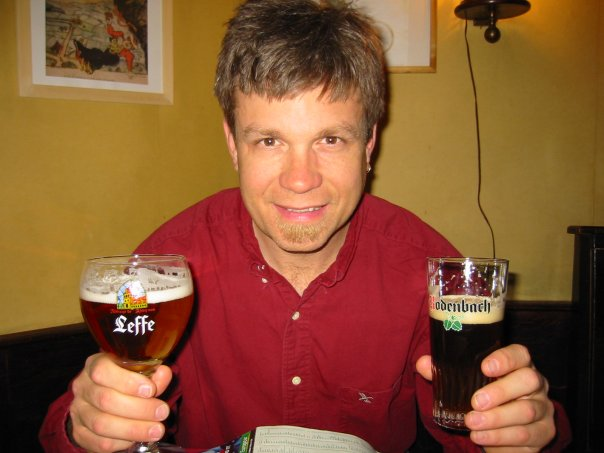
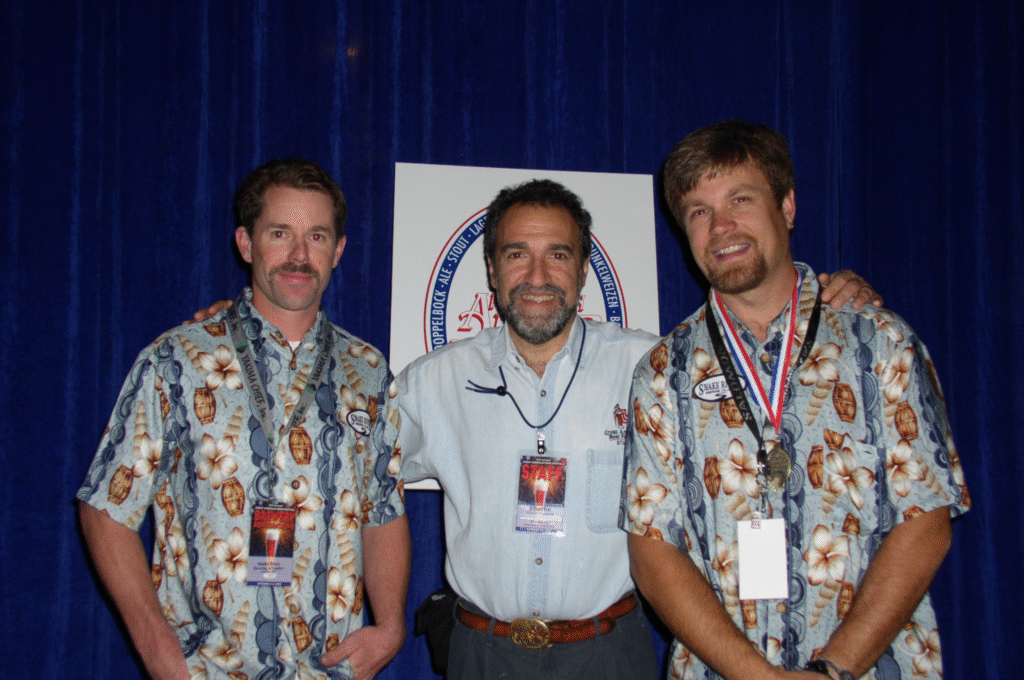
Today is Fred Bueltmann’s 57th birthday. Fred was a partner in New Holland Brewing, and was their VP of brand and lifestyle before announcing his departure last fall. He’s also a self-styled Beervangelist and published the “Beervangelist’s Guide to the Galaxy,” which was successfully funded on Kickstarter. I’ve met Fred several times over the years but got to know him a lot better at GABF a couple of years ago, when it seemed like we judged together on every other session, and had a marvelous time in between rounds. Join me in wishing Fred a very happy birthday.

beervangelist-1


Fred’s promo shot for his Beervangelist book.

beervangelist-2
With Carolyn Smagalski at Wynkoop during GABF a couple of years ago. (“borrowed” from her Facebook page, thanks Carolyn).
Jeff-Mendel-and-Fred
Fred, with Jeff Mendel, at GABF in 2013.
mallett-1
John Mallet, from Bell’s, with Fred at Red Horse Ranch in Michigan (photo purloined from Facebook).

Filed Under: Birthdays, Just For Fun Tagged With: Michigan

Historic Beer Birthday: John Emmerling

February 22, 2026 By Jay Brooks 2 Comments

empire-brewery
Today is the birthday of John Emmerling (February 21, 1851-May 24, 1912). He was born in Philadelphia, but moved to Johnston in Western Pennsylvania, where he founded the Empire Brewery in 1878. It was concurrently also known as the Emmerling Brewing Co. the entire time it was in business, until it was closed by Prohibition in 1920.

emmerling-portrait
Here’s a biography of Emmerling, written in 1896 from the Biographical and Portrait Cyclopedia of Cambria County:

JOHN EMMERLING, proprietor of the Empire Brewery, of Johnstown, Pennsylvania, was born in Philadelphia, this State, February 22, 1851. His education was acquired in the public schools of his native city, upon the completion of which he learned the business of brewing. Subsequently, he traveled extensively, visiting many of the more important cities of the West, and finally, located in Pittsburg, where he married. In 1878 he came to Johnstown, and immediately embarked in the brewing business on his own account. Starting in the humble building now known as the Eintracht Hall, the brewery of John Emmerling prospered so well that in one year it was moved to the larger building now occupied by the bottling house of William Thomas. Six years more saw the business grow until it became necessary to build and remove to the large and commodious brick structure which occupies nearly half a square, fronting on Horner street. The plant is two hundred by one hundred and eighty feet, three stories high, and has an annual output of eight thousand barrels, and contains all the latest improved machinery known to the brewer’s art, including engines, two ten-ton refrigerators, seven pumps for various purposes, and bottling apparatus. A visit to the vault in which the beer is stored, gives to the uninitiated a genuine surprise. Following the guide, one wanders in and out among the huge hogsheads, some of which contain forty, and others as high as eighty barrels of the amber fluid, surrounded on all sides by pipes covered to the depth of several times their own thickness with white frost, produced by the intense cold of the ammonia and brine which they contain, one can but express astonishment at the wonderful advance made since the time when nature alone supplied the cooling substance. So large is the local demand for the beer brewed at this establishment, that very little is shipped out of the city. Two wagons are kept going constantly, and two others are used when the demand requires. The present force consists of fourteen men, to which several others are added when increased business makes demand. On September 26, 1872, Mr. Emmerling married Miss Phil. Houch, a daughter of Earnest Houch, a prominent citizen of Pittsburg, and to them have been born ten children. Mr. Emmerling was one of the organizers of the board of trade, in which he takes an active interest.

john-emmerling-picture

And this is his obituary from the Western Brewer, June 1912

emmerling-obit-1-
emmerling-obit-2-

emmerling-drives
John Emmerling at the wheel of a 1908 Maxwell that he drove round-trip between Pittsburgh and Philadelphia in a race with a $20,000 prize at stake (around $532,258 today’s money). Emmerling (who owned Emmerling Brewery) came out on top.

This is John Emmerling’s brewery, also known as the Empire Brewery in Johnston, Pennsylvania, which also served as the family’s residence.

emmerling-brewery

Emmerlings-export

Filed Under: Birthdays, Breweries, Just For Fun Tagged With: History, Pennsylvania

Beer In Ads #5124: Möerlbach Bock

February 22, 2026 By Jay Brooks Leave a Comment

Two years ago I decided to concentrate on Bock ads for awhile. Bock, of course, may have originated in Germany, in the town of Einbeck. Because many 19th century American breweries were founded by German immigrants, they offered a bock at certain times of the year, be it Spring, Easter, Lent, Christmas, or what have you. In a sense they were some of the first seasonal beers. “The style was later adopted in Bavaria by Munich brewers in the 17th century. Due to their Bavarian accent, citizens of Munich pronounced ‘Einbeck’ as ‘ein Bock’ (a billy goat), and thus the beer became known as ‘Bock.’ A goat often appears on bottle labels.” And presumably because they were special releases, many breweries went all out promoting them with beautiful artwork on posters and other advertising. With Spring approaching, there are so many great examples that I’m going to post two a day for a few months.

Sunday’s first ad is for Möerlbach Bock Beer, which was published on February 22, 1913. This ad was for the Möerlbach Brewing Co. of Rochester, New York, which was originally founded in 1908 by Mathias Kondolf. This ad ran in The Rochester Democrat and Chronicle, also of Rochester, New York.

Filed Under: Art & Beer, Beers, Breweries Tagged With: Advertising, Bock, History, New York

Historic Beer Birthday: George M. Biner

February 22, 2026 By Jay Brooks Leave a Comment

Today is the birthday of George Michael Biner (February 22, 1897-June 19, 1971). He was the brother of William H. Biner, who was also a brewer. He was born in the Montana territory to Swiss immigrant parents. His father, Theophil Biner, knew Leopold Schmidt and even worked at his Olympia Brewery. Biner sent both of his sons, including George, to brewing school in Milwaukee.

This short biography is from his Find-a-Grave page:

George Michael Biner (1897-1971) was the son of Theophil Biner and Juliana Truffer. George contracted polio as a soldier during World War I. However, he went on to be a successful artist, brew master and inventor. He supervised the laying of the tile for the dome of the Los Angeles County Library, invented a labeling machine for breweries and was the co-founder of Biner Ellison which pioneered the production of liquid filling machines, and still makes brewery equipment today.

The RL-HG 540 Labeler.

Filed Under: Birthdays, Just For Fun, Related Pleasures Tagged With: Brewing Equipment, California, Montana

Historic Beer Birthday: Samuel Charles Whitbread

February 22, 2026 By Jay Brooks 1 Comment

whitbread-oval
Today is the birthday of Samuel Charles Whitbread (February 22, 1937- ), an heir to the Whitbread Brewery, who was president of the brewery and Whitbread’s other businesses from 1972 to 2001, when he retired. There’s some basic biographical information from the Peerage:

Sir Samuel Charles Whitbread was born on 22 February 1937. He is the son of Major Simon Whitbread and Helen Beatrice Margaret Hepburn-Stuart-Forbes-Trefusis.3 He married Jane Mary Hayter, daughter of Charles William John Hugh Hayter, on 31 August 1961.

He was educated at Eton College, Windsor, Berkshire, England. He was educated at Trinity College, Cambridge University, Cambridge, Cambridgeshire, England. He held the office of Justice of the Peace (J.P.) for Bedfordshire in 1969. He was a director of Whitbread plc between 1972 and 2001. He held the office of High Sheriff of Bedfordshire between 1973 and 1974. He was invested as a Knight, Most Venerable Order of the Hospital of St. John of Jerusalem (K.St.J.). He was invested as a Fellow, Linnean Society (F.L.S.). He was invested as a Fellow, Royal Society of Arts (F.R.S.A.). He was chairman of Whitbread & Company between 1984 and 1992. He held the office of Lord-Lieutenant of Bedfordshire in 1991. He lived in 2003 at Biggleswade, Bedfordshire, England. He was invested as a Dame Commander, Royal Victorian Order (D.C.V.O.) in 2010.

Lord Samuel Whitbread, outgoing Lord Lieutenant in the comfort of his own home at Southill estate.

This is his entry from the International Who’s Who for 2004.

SCWhitbread-whos-who-2004

Lord Samuel Whitbread, still in the comfort of his own home.

Filed Under: Birthdays, Just For Fun Tagged With: Business, England, Great Britain, History

Beer In Ads #5214: Bock Beer? Yes, Point Bock Beer!

February 21, 2026 By Jay Brooks Leave a Comment

Two years ago I decided to concentrate on Bock ads for awhile. Bock, of course, may have originated in Germany, in the town of Einbeck. Because many 19th century American breweries were founded by German immigrants, they offered a bock at certain times of the year, be it Spring, Easter, Lent, Christmas, or what have you. In a sense they were some of the first seasonal beers. “The style was later adopted in Bavaria by Munich brewers in the 17th century. Due to their Bavarian accent, citizens of Munich pronounced ‘Einbeck’ as ‘ein Bock’ (a billy goat), and thus the beer became known as ‘Bock.’ A goat often appears on bottle labels.” And presumably because they were special releases, many breweries went all out promoting them with beautiful artwork on posters and other advertising. With Spring approaching, there are so many great examples that I’m going to post two a day for a few months.

Saturday’s ad is for Point Bock Beer, which was published on February 21, 1969. This ad was for the Stevens Point Brewery of Stevens Point, Wisconsin, which was originally founded in 1857 and still brewing today. This ad ran in The Stevens Point Journal, also of Stevens Point, Wisconsin. I love the expression on the two faces.

Filed Under: Art & Beer, Beers, Breweries, Just For Fun Tagged With: Advertising, Bock, History, Wisconsin

Historic Beer Birthday: Philip Zorn

February 21, 2026 By Jay Brooks Leave a Comment

ph-zorn
Today is the birthday of Philip Lewis Zorn (February 21, 1837-January 4, 1912). Zorn was born in Wűrzburg, Bavaria, and learned brewing from his father, how was a brewer in Germany. In 1855, when he was eighteen, he emigrated to the U.S., and initially settled in Illinois, where he worked in breweries in Blue Island, Illinois. In 1871, he moved to Michigan City, Indiana and opened the Philip Zorn Brewery. Twenty years later, he incorporated it as the Ph. Zorn Brewing Co. After prohibition, his sons Robert and Charles, who had worked for the brewery beginning as young men, reopened the brewery as the Zorn Brewing Co. Inc., but it in 1935 it became known as the Dunes Brewery, before closing for good in 1938. He was also a city councilman and a co-founder of Citizens Bank of Michigan City.

philip-zorn-pic

This account is from the Indiana Bicentennial:

Philip Zorn Jr. was the son of a brewer in Wűrzburg, Bavaria who immigrated at the age of 18. He worked at a brewery in Illinois from 1855 until he started his own in Michigan City. By 1880 he was making 3,000 bbls annually. He became a prosperous man, a city councilman and the founder of the Citizens Bank of Michigan City.

The company passed to Philip’s sons Robert and Charles who built a new brewhouse in 1903 and reached almost 15,000 bbls by the time of Prohibition. During the dry years they made the Zoro brand of soda pop. After Prohibition they changed the name to Dunes Brewing, possibly because of a court action against Zorn in 1935 for selling beer to unlicensed companies. They made Grain State, Golden Grain and Pilsenzorn brands.

Zorn-beer
Zorn beers.

philip-zorn-obit-1
philip-zorn-obit-2
philip-zorn-obit-3

Golden-Grain-Beer--Labels-Dunes-Brewery

And this excerpt is from “Hoosier Beer: Tapping into Indiana Brewing History,” by Bob Ostrander and Derrick Morris:

zorn-hoosier-beer
zorn-michigan-pride

Filed Under: Birthdays, Breweries, Just For Fun Tagged With: Bavaria, Germany, History, Illinois, Indiana

Historic Beer Birthday: Rudolph J. Schaefer

February 21, 2026 By Jay Brooks 1 Comment

schaefer
Today is the birthday of Rudolph J. Schaefer (February 21, 1863-November 9, 1923). He was the son of Maximilian Schaefer, who along with his brother Frederick, founded the F&M Schaefer Brewing Company in 1848. Rudolph became the president of F&M Schaefer Brewing in 1912, and continued in that position until his death. He also bought out his uncles and their heirs, and controlled the entire company.

rudolph-j-schaefer

This is what the brewery in Brooklyn looked like in 1916, shortly after Rudolph J. Schaefer took control of the company.

Schaefer-brewery-1916

Below is a chapter on the history of F&M Schaefer Brewing Co., from Will Anderson’s hard-to-find Breweries in Brooklyn.

Longest operating brewery in New York City, last operating brewery in New York City [as of 1976], and America’s oldest lager beer brewing company — these honors, plus many others, all belong to The F. & M. Schaefer Brewing Co.

“F. & M.”, as most breweriana buffs know, stands for Frederick and Maximilian, the brothers who founded Schaefer. Frederick Schaefer, a native of Wetzlar, Prussia, Germany, emigrated to the U.S. in 1838. When he arrived in New York City on October 23rd he was 21 years old and had exactly $1.00 to his name. There is some doubt as to whether or not he had been a practicing brewer in Germany, but there is no doubt that he was soon a practicing brewer in his adopted city. Within two weeks of his landing, Frederick took a job with Sebastian Sommers, who operated a small brewhouse on Broadway, between 18th and 19th Streets. Frederick obviously enjoyed both his job and life in America, and the next year his younger brother, Maximilian, decided to make the arduous trip across the Atlantic also. He arrived in June of 1839 and brought with him a formula for lager, a type of beer popular in Germany but unheard of in the United States. The brothers dreamed, and planned, and saved – and in the late summer of 1842 they were able to buy the small brewery from Sommers. The official, and historic, starting date was September, 1842.

schaefer1842
Sommers’ former facility was a start, but that’s all it was, as it was much too small. New York beer drinkers immediately took a liking to “the different beer” the brothers brewed, and in 1845 Frederick and Maximilian developed a new plant several blocks away, on 7th Avenue, between 16th and 17th Streets (7th Avenue and 17th Street is today, of course, well known as the home of Barney’s, the giant men’s clothing store). This, too, proved to be just a temporary move; the plant was almost immediately inadequate to meet demands and the brothers wisely decided to build yet another new plant, and to locate it in an area where they could expand as needed. Their search took them to what were then the “wilds” of uptown Manhattan. In 1849 the brewery, lock, stock and many barrels, was moved to Fourth Ave. (now Park Avenue) and 51st Street. Here, just north of Grand Central Station, the Schaefers brewed for the next 67 years, ever-expanding their plant. The only problem was that the brothers were not the only ones to locate “uptown.” The area in the 40’s, 50’s and 60’s grew rapidly all during the last half of the 19th century, and especially after the opening of the original Grand Central Terminal in 1871. Frederick and Maximilian had wisely purchased numerous lots between 50th and 52nd Streets, and by the time they passed away (Frederick in 1897 and Maximilian in 1904) the brewery was, literally, sitting atop a small fortune. Maximilian’s son, Rudolph J. Schaefer, fully realized this when he assumed the Presidency of the brewery in 1912. In that same year Rudolph purchased the 50% of the company owned by his uncle Frederick’s heirs. He thus had complete control of the brewery, and one of the first matters he turned to was the suitable location for a new, and presumably everlasting, plant. In 1914, in anticipation of its move, Schaefer sold part of the Park Ave. site to St. Bartholomew’s Church. This sale, for a reputed $1,500,000, forced Rudolph to intensify his search for a new location. Finally, in June of 1915, it was announced that the brewery had decided on a large tract in Brooklyn, directly on the East River and bounded by Kent Avenue and South 9th and 10th Streets. Here, starting in 1915, Rudolph constructed the very best in pre-Prohibition breweries. The move across the river to their ultra-new and modern plant was made in 1916, just four years before the Volstead Act crimped the sails (and sales!) of all United States breweries, new or old alike.

While it must have seemed a real shame to brew “near beer” in his spanking new plant, Rudolph Schaefer obviously felt that near beer was better than no beer at all; consequently, the brewery remained in operation all during Prohibition, producing mostly near beer but also manufacturing dyes and artificial ice.

In 1923 Rudolph J. Schaefer passed away at the relatively young age of 60. Control of the company thus passed to his two sons, Frederick M.E. Schaefer and Rudolph J. Schaefer, Jr. Frederick guided the brewery for several years but was troubled by poor health, therefore, in 1927, only a few years after his graduation from Princeton University, Rudolph Jr. was elected President. Although he was by far the youngest brewery President in the United States, Rudy, Jr. provided excellent leadership. Several months before that magic Repeal date of April 7, 1933, when 3.2% beer became legalized, he beat most of his New York City competitors to the punch by launching an extensive advertising campaign, centered around the theme that “Our hand has never lost its skill.” Rudy, Jr. also personally outlined and designed many of the new buildings added to the brewery in expansion programs in the 1930’s and early 1940’s.

In 1938 Schaefer joined that exclusive group of brewers that sold 1,000,000 barrels in a year, and the 2,000,000 mark was passed in 1944, two years after the company celebrated its 100th birthday in 1842. Sales continued strong throughout the 1940’s and, to increase capacity, Schaefer purchased the former Beverwyck Brewery Co. in Albany, New York in 1950. They remained a two-plant company until 1961 when, with an eye toward expanding into large areas of the mid-west, Rudy Schaefer purchased the Standard Brewing Company, of Cleveland, Ohio. This, however, did not turn out to be a wise move; Schaefer beer just didn’t seem to catch on in Ohio, and within two years Schaefer sold the plant to C. Schmidt and Sons, which used it as their midwestern brewing arm. In what almost seems like musical breweries, however, Schaefer added a plant in Baltimore in the same year, 1963, that it disposed of its Cleveland facility. Ironically, Schaefer purchased the Baltimore plant from Theo. Hamm, a large St. Paul, Minn. brewer that had been attemping, with little success, to move into the east coast. The grass may always seem greener in the other brewer’s territory, but it certainly wasn’t so for both Schaefer and Hamm’s in the early 1960’s!

Schaefer’s most dramatic move with respect to plants was the decision, in 1971, to build a brand new, ultra-modern brewery just outside of Allentown, Pa. Realizing that all three of its plants at the time, Brooklyn, Albany, and Baltimore, were old and inefficient, Schaefer management decided it had to go the route being taken by Pabst, Schlitz, Anheuser-Busch and Miller – build a brand new and thoroughly modernized brewery rather than continue to try to upgrade old facilities. To construct a new brewery is extremely expensive, of course, but when it was opened in 1972 Schaefer could be justifiably proud – their Lehigh Valley plant was one of the most modern and efficient breweries in the world!

What does a company do, however, when it has one ultra-modern plant and three that appear very dated by comparison? The question is really rhetorical, of course; strive to add to the modern plant while phasing out the less efficient facilities. And that’s exactly what Schaefer did. The Albany plant was shut down almost immediately, on December 31st of 1972. In 1974 the Lehigh Valley plant was expanded from its original 1,100,000 barrels-per-year capacity to 2,500,000 and then, in 1975, it was decided to expand again – to 5,000,000 barrels plus. By 1975, therefore, it was obvious that one of the two less efficient plants should and would be closed, the only questions remaining was which plant, Brooklyn or Baltimore, and when. Both questions were answered on January 22, 1976 when Robert W. Lear, Chairman and Chief Executive Officer of The F. & M. Schaefer Corp., announced the closing of the Brooklyn plant. This announcement, only one week after Rheingold disclosed its plans to also shut down in Brooklyn, left Brooklyn and New York City without a single producing brewery. While both Frederick and Maximilian Schaefer, if they were alive today, would undoubtedly be proud of Schaefer’s history and many years of brewing, and would certainly be impressed with the modern brewing techniques reflected in the Lehigh Valley plant, I suspect they’d feel very badly about the closing of the company’s brewery in New York City, the city that’s had a love affair with Schaefer lager for over 134 years.

Rudolph-J-Schaefer-1863
A painting of Rudolph J. Schaefer.

rudolph-and-family

The Schaefers around 1895, with Rudolph Schaefer standing, with his father Maximilian Schaefer sitting down, holding F.M. Emile Schaefer, his grandson and Rudolph’s son on his lap.

Schaefer--Beer-Labels-F--M-Schaefer-Brewing-Company_19149-1

Schaefer-family
Three generations of Schaefers.

Filed Under: Beers, Birthdays, Breweries, Just For Fun Tagged With: History, New York

Beer Birthday: Kate Bernot

February 21, 2026 By Jay Brooks Leave a Comment

Today is the 38th birthday of beer writer Kate Bernot, who’s been with Good Beer Hunting (and. specifically their Sightlines)and The Takeout for more than a decade, among much else. More recently, she was named the Executive Director of the North American Guild of Beer Writers, though has moved on from that role. We’ve corresponded over the years, but I got to know her much better in Toronto a couple of years ago when we were both judging the inaugural Canada Beer Cup. Please join me in wishing Kate a very happy birthday.

Me and Kate at a NAGBW event at CBC in Nashville.
Bryan Roth with Kate as she accepts one of her awards from the NAGBW.
Kate’s profile pictuire.

Filed Under: Birthdays, Just For Fun Tagged With: Beer Writers Guild, Montana, Writing

Next Page »

Find Something

Northern California Breweries

Please consider purchasing my latest book, California Breweries North, available from Amazon, or ask for it at your local bookstore.

Recent Comments

  • Ernie Dewing on Historic Beer Birthday: Charles William Bergner 
  • Steve 'Pudgy' De Rose on Historic Beer Birthday: Jacob Schmidt
  • Jay Brooks on Beer Birthday: Bill Owens
  • Steve 'Pudgy' De Rose on Beer Birthday: Charles Finkel
  • Steve 'Pudgy' De Rose on Beer Birthday: Bill Owens

Recent Posts

  • Beer In Ads #5125: Bowler Brothers’ Bock February 22, 2026
  • Beer Birthday: Fred Bueltmann February 22, 2026
  • Historic Beer Birthday: John Emmerling February 22, 2026
  • Beer In Ads #5124: Möerlbach Bock February 22, 2026
  • Historic Beer Birthday: George M. Biner February 22, 2026

BBB Archives

Feedback

Head Quarter
This site is hosted and maintained by H25Q.dev. Any questions or comments for the webmaster can be directed here.