Brookston Beer Bulletin

Jay R. Brooks on Beer

  • Home
  • About
  • Editorial
  • Birthdays
  • Art & Beer

Socialize

  • Dribbble
  • Email
  • Facebook
  • Flickr
  • GitHub
  • Instagram
  • LinkedIn
  • Pinterest
  • RSS
  • Twitter
  • YouTube

Powered by Genesis

Historic Beer Birthday: John Welde

March 2, 2025 By Jay Brooks

welde-&-thomas
Today is the birthday of John Welde (March 2, 1839-August 2, 1901). He was born in Baden, Germany and came to Philadelphia in 1856, when he was seventeen. In 1884, he founded a brewery in Philadelphia, and the following year a business parter, John Thomas, joined the business, and they called it Welde & Thomas, later adding “Brewing Company” to the name. In 1904, it was consolidated with several other breweries into the Consumers Brewers Co., which remained in business until closed by prohibition in 1920. The brewery reopened after repeal in 1933 as the Trainer Brewing Co., but only lasted one year.

John-Welde-photo

Here’s a biography of Welde from the Friends of Mount Moriah Cemetary:

In 1884, John Welde, a German immigrant, established a brewery in Philadelphia on the corner of Broad and Christian Streets. A year later, he formed a partnership with John Thomas, a Philadelphia native, who had been a partner in another brewery. Together they created Welde and Thomas, a brewing firm that was later reorganized into the Welde and Thomas Brewing Company. They moved to a new location and modernized the facility with innovative equipment, growing the brewing capacity of the plant to 50,000 barrels per year. In March 1897, Welde and Thomas, along with five other breweries were consolidated under the title of the Consumer’s Brewing Company. The combined breweries were able to produce approximately 300,000 barrels a year.

John Welde was married and had at least one son, Frederick, both of whom predeceased him. John died in Philadelphia in 1901 and is buried at Mount Moriah Cemetery.

Beer and brewing have held an important place in Pennsylvania and Philadelphia history. The first brewery in the City was erected in 1683. William Penn constructed a brew house on his Pennsbury Manor estate in Bucks County. In the 18th century, the drink of preference in most taverns was beer or ale. By 1793, Philadelphia was producing more beer than all the other seaports in the country. The first steam engine was installed in Francis Perot’s brewery in 1819. This was the height of technology and the first time an engine was used to produce beer. Lager beer was first introduced in 1840 by Philadelphia brewer John Wagner. At the Centennial Exhibition held in Philadelphia in 1876, the United States Brewers’ Association constructed the Brewers’ Building to showcase all aspects of brewing. At one time, there were more than 100 breweries operating in Philadelphia and its surrounding areas.


This biography was printed in the “The Columbian Exposition and World’s Fair Illustrated,” from 1893:

John-Welde-bio-1
John-Welde-bio-2


welde-thomas-stock


This description is from an Advertising Print for Welde and Thomas Brewing Co., created around 1895, and now in the collection of the Smithsonian’s National Museum of American History.

This colorful framed print, an ad for the Welde and Thomas Brewing Company, of Philadelphia, also commemorates the 1895 America’s Cup race between the American yacht Defender and the British Valkyrie III. Imagery of the yacht race dominates the print and the American vessel, the ultimate victor in the match, holds primacy of place. Defender’s full sails provide a dramatic canvas for the names of two of the company’s products: Penn and Sanitas Beers. These brands, along with Quaker, were among those brewed by Welde and Thomas.

Three detailed insets border the print. One shows “Penn’s Brewery of 1682” in Pennsbury, Buck’s County; another shows the Welde and Thomas buildings at Juniper and Fitzwater Streets in Philadelphia; and the third is an image of William Penn holding a bottle of beer. The ad deftly aligns Welde and Thomas beer to icons of American success: the very founding of Philadelphia and its early embrace of brewing as well as an American yacht’s triumphant defense of the America’s Cup.

German immigrant John Welde established a brewery in Philadelphia in 1884, forming a partnership with Philadelphia businessman John Thomas the following year. In 1886, they moved to the Juniper and Fitzwater Streets location and invested in new equipment, increasing their capacity dramatically. In 1897, Welde and Thomas consolidated operations with five other breweries, organizing under the name Consumer’s Brewing Company. Thomas died in 1899 and Welde in 1901.

welde-and-thomas-poster

welde-bottle

Filed Under: Birthdays, Just For Fun Tagged With: History, Pennsylvania, Philadelphia

Historic Beer Birthday: Charles Engel

February 11, 2025 By Jay Brooks

bergner-and-engel
Today is the birthday of Charles Engel (February 11, 1816-June 2, 1900). was born in Stadtgemeinde Bremen, in Bremen, Germany. He emigrated to Philadelphia when he was 29, in 1840, and began brewing there, first as Engel and Wolf’s, and later as Bergner & Engel’s.

Here’s his obituary from the American Brewers Review of July 1900.

charles-engel

Here’s his story, from “100 Years of Brewing,” recounting his role in brewing some of the first lagers in America:


Engel-100yrs-01
Engel-100yrs-02
Engel-100yrs-03
Engel-100yrs-04


engel-and-wolf

His first partnership was with Charles Wolf, but after he retired, Gustavus Bergner joined the company and it became known as the Bergner and Engel Brewing Company.

BergnerEngel_large

“100 Years of Brewing” also has an entry for the Bergner and Engel Brewing Company:

bergner-engel-100yrs-01
bergner-engel-100yrs-02
bergner-engel-100yrs-03
bergner-engel-100yrs-04


1896-pre-prohibition-beer-label-tannhaeuser-bergner-engel-philadelphia

And this similar account is by Pennsylvania beer historian Rich Wagner:

Charles Wolf, a sugar refiner in the neighborhood, had an employee named George Manger, who was a brewer by trade. Manger obtained some of the yeast and began making larger batches in a brewery on New Street near Second. Around the same time, Charles Engel, also a brewer, emigrated and found work in Wolf’s refinery. In 1844 Engel and Wolf brewed their first batch of lager beer in the sugar pan and stored it in sugar hogsheads to be shared with their friends.

The same year, the refinery was destroyed by fire and Mr. Wolf went into the brewing and distilling business at 354 Dillwyn Street. Engel & Wolf’s brewery became a popular resort of the Germans of Philadelphia who were known to “drink the brewery dry.” Since lager yeast requires colder fermenting and aging (lagering) conditions than ale yeast, ice houses became more important than ever. Vaults were dug in 1845, and with the increasing number of German immigrants, Mr. Wolf expanded the brewery. In 1849 he purchased a property on the Schuylkill River known as Fountain Green where lager beer vaults extending over 200 feet were dug. For several years wort was hauled by ox teams from Northern Liberties to the vaults at Fountain Green, a distance of about three miles. Over the next few years a new brewery was erected on the site, modern and complete in every way. It was the first large-scale lager brewery in the United States.

Fountain Green was an ideal location. It was out in the country where there was plenty of room. There were springs on the property. Wolf’s farm was just up the road. The banks of the river are composed of Wissahickon Schist, which is fairly soft and easy to dig. In winter, being right on the river was an advantage when harvesting ice for refrigeration. In addition, the Philadelphia & Reading Railroad served the brewery with the “Engel Side” spur.

Philadelphia developed along both of it’s rivers, but along the more navigable Delaware, ship building, shad fishing, industry and commerce were most abundant. Philadelphia’s reputation as “The Workshop of the World” was earned in large part by the “river wards” of Northern Liberties, Kensington, and Frankford. These neighborhoods were literally teaming with breweries. When lager beer began to catch on, many brewers rented beer vaults along the Schuylkill River, and in the area that came to be known as Brewerytown.

Engel & Wolf enjoyed success, but in 1870 the property was acquired by the Fairmount Park Association. The city had just built the Fairmount Water Works, the most technologically sophisticated, state of the art municipal water pumping facility in the nation, and to ensure water quality, removed all industry from the Schuylkill River for a distance of five miles upstream. At this time Mr. Wolf retired and his partner joined Gustavus Bergner to create the Bergner and Engel Brewing Company.

Gustavus’ father Charles had started a brewery on North Seventh Street in the Northern Liberties in 1852 which Gustavus took over upon his father’s death. In 1857, Gustavus erected a brewery at 32nd & Thompson Streets, an address that would become the heart of Brewerytown. Interestingly enough, Brewerytown was essentially up and over the river bank from the old Engel and Wolf brewery.

The earliest picture of Brewerytown that I have been able to uncover is based on four Hexamer Surveys that were made in 1868. They show thirteen breweries, one of which had a distillery, three “lager beer vaults,” including one owned by Peter Schemm, a row of dwellinghouses with beer vaults beneath them, a number of stables and at least three or four brewery saloons.

Beginning in the 1870’s ice-making and artificial refrigeration technology radically altered the equation. It made proximity to river ice of little importance. Huge fermenting and storage houses could be constructed anywhere and they could maintain cold temperatures year round. Where brewers had been bound to brew only during the colder months, it was now possible to brew year round. With the exponential increase in popularity of lager beer, artificial refrigeration was the answer to a dream.

Some brewers who had rented vaults in or near Brewerytown built breweries there. Others refrigerated their breweries and no longer needed to rent vaults. According to the list of projects executed by brewery architect Otto Wolf, the breweries were continually being altered and enlarged to accommodate the trade. The trend was for the brewers to go west to Brewerytown from the river wards, but some left Brewerytown and went into business in Kensington.

The Bergner & Engel B.C. was one of the largest brewers in the country. B & E won the Grand Prize at the Centennial Exposition held in Philadelphia in 1876 and the Grand Prize at the Paris Exposition in 1878. Their beer was shipped across the country, and around the world. Gustavus Bergner was very active in the United States Brewers Association, the Philadelphia Lager Beer Brewers Association, and the Philadelphia Brewmasters Association. B & E was the largest brewer in Philadelphia, and eventually absorbed three other Brewerytown breweries: Mueller, Eble & Herter, and Rothacker.

When prohibition loomed on the horizon, Mr. Bergner had significant political clout and did everything humanly possible to prevent severe trauma to the brewing industry, not only in Philadelphia, but throughout the nation. At first, the brewers thought they would not be affected. After all, beer was hardly intoxicating when compared with liquor. Then they thought if they reduced the alcohol to 2.75% they could still sell their product. Anti-dry forces in Congress attempted to make beer available by physicians’ prescription. But in the end the Federal Government established the legal limit for “near beer” at one half of one per cent alcohol.

Prohibition devastated the brewing industry. It was such an unpopular law, that for some time, things just went on as they had before. Most of the city’s brewers were law-abiding German Americans. They could not fathom a world without a foamy seidel of beer. Not only that, but they would have to become criminals in order to make beer, their “staff of life.” Legally, they brewed “near bear,” and made soda. They made malt extract for the malt shop as well as for the home brewer, and sold yeast and ice. The Poth brewery became home to the Cereal Beverage Company, the local distributor of Anheuser-Busch’s Bevo. Due to demand and profitability, however, many continued to produce “high-octane” beer, even after being raided several times, sometimes while they were involved in litigation.

The government targeted the biggest guy on the block and made an example of B & E. After being raided, B & E continued to make beer. It was a case of the public and business community defying a terribly unpopular law and the government responded with a vengeance. And while B & E had lots of legal tricks up its sleeve, in the end the government prevailed and shut them down. Breweries throughout the city were padlocked. And in December of 1928, as police sewered nearly a million gallons of B & E beer, officers were quoted as saying “B & E made the best beer in the city.”

b-e-tannhauser


Ale-Labels-Bergner--Engel-Brewing-Co-Plant


Filed Under: Birthdays, Breweries, Just For Fun Tagged With: Germany, History, Pennsylvania, Philadelphia

Historic Beer Birthday: John Thomas

February 1, 2025 By Jay Brooks

welde-&-thomas
Today is the birthday of John Thomas (February 1, 1847-January 4, 1899). In 1884, his later business parter founded a brewery in Philadelphia, the following year Thomas joined the business, and they called in Welde & Thomas, later adding “Brewing Company” to the name. In 1904, it was consolidated with several other breweries into the Consumers Brewers Co., which remained in business until closed by prohibition in 1920. The brewery reopened after repeal in 1933 as the Trainer Brewing Co., but only lasted one year.

John-Thomas-photo

Here’s Thomas’ obituary from the American Brewers Review in 1899:

john-thomas-obit

w-t-brewery-inset
This biography was printed in the “The Columbian Exposition and World’s Fair Illustrated,” from 1893:

John Thomas
John-Thomas-bio-1
John-Thomas-bio-2

John-Thomas
In a biography of his partner John Welde, Thomas naturally gets more than a mention:

In 1884, John Welde, a German immigrant, established a brewery in Philadelphia on the corner of Broad and Christian Streets. A year later, he formed a partnership with John Thomas, a Philadelphia native, who had been a partner in another brewery. Together they created Welde and Thomas, a brewing firm that was later reorganized into the Welde and Thomas Brewing Company. They moved to a new location and modernized the facility with innovative equipment, growing the brewing capacity of the plant to 50,000 barrels per year. In March 1897, Welde and Thomas, along with five other breweries were consolidated under the title of the Consumer’s Brewing Company. The combined breweries were able to produce approximately 300,000 barrels a year.

welde-thomas-stock

This description is from an Advertising Print for Welde and Thomas Brewing Co., created around 1895, and now in the collection of the Smithsonian’s National Museum of American History.

This colorful framed print, an ad for the Welde and Thomas Brewing Company, of Philadelphia, also commemorates the 1895 America’s Cup race between the American yacht Defender and the British Valkyrie III. Imagery of the yacht race dominates the print and the American vessel, the ultimate victor in the match, holds primacy of place. Defender’s full sails provide a dramatic canvas for the names of two of the company’s products: Penn and Sanitas Beers. These brands, along with Quaker, were among those brewed by Welde and Thomas.

Three detailed insets border the print. One shows “Penn’s Brewery of 1682” in Pennsbury, Buck’s County; another shows the Welde and Thomas buildings at Juniper and Fitzwater Streets in Philadelphia; and the third is an image of William Penn holding a bottle of beer. The ad deftly aligns Welde and Thomas beer to icons of American success: the very founding of Philadelphia and its early embrace of brewing as well as an American yacht’s triumphant defense of the America’s Cup.

German immigrant John Welde established a brewery in Philadelphia in 1884, forming a partnership with Philadelphia businessman John Thomas the following year. In 1886, they moved to the Juniper and Fitzwater Streets location and invested in new equipment, increasing their capacity dramatically. In 1897, Welde and Thomas consolidated operations with five other breweries, organizing under the name Consumer’s Brewing Company. Thomas died in 1899 and Welde in 1901.

welde-and-thomas-poster

Filed Under: Birthdays, Breweries, Just For Fun Tagged With: History, Pennsylvania, Philadelphia

Beer Birthday: Suzanne Woods

April 24, 2019 By Jay Brooks

allagash
Today is Suzanne Woods’ 41st birthday. I first met her during my trip to Philadelphia for Philly Beer Week its inaugural year. She used to write online as the Beer Lass and now is the mid-atlantic territory manager for Allagash, though when I first met her she worked for Sly Fox Brewing outside of Philadelphia. Join me in wishing Suzanne a very happy birthday.


slyfox-12
With Suzanne during a visit to Sly Fox Brewing at the beginning of Philly Beer Week.

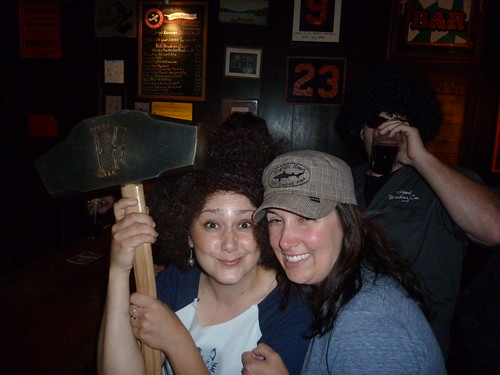
An afro'd Suzy Woods and Wendy, from Dogfsh Head, with the Hammer
An afro’d Suzy and Wendy, from Dogfish Head, with the Hammer during Philly Beer Week 2010.

sidecar-4
Outside the Philly Bar, Sidecar, with some colorful local characters at the bar.

suzanne-woods-5
Suzanne posted this photo of herself when she was five when she turned thirty, eleven years ago.

Filed Under: Birthdays Tagged With: Pennsylvania, Philadelphia

Bergner & Engel Brewing’s Railroad

July 21, 2018 By Jay Brooks

steam-train
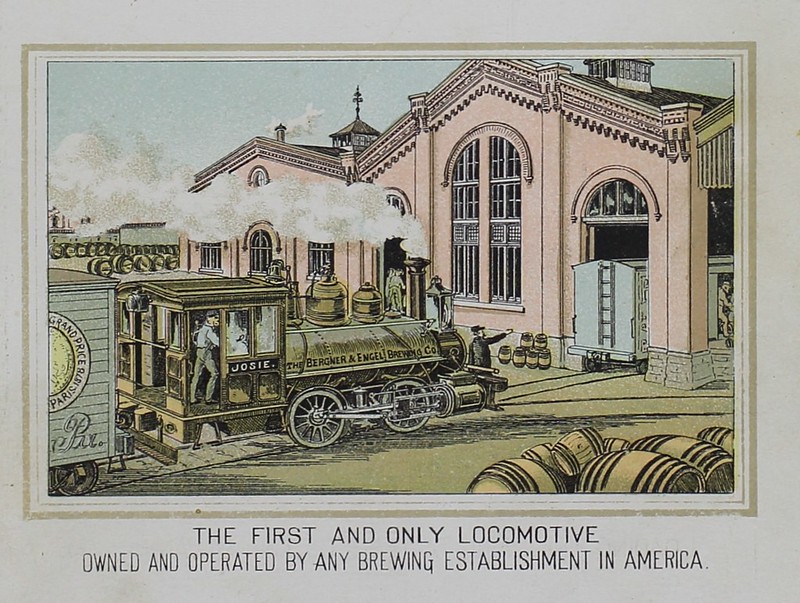
The third Saturday in July is “Railroad Day,” which I know not only because I collect holidays, but also because of my son’s obsession with trains. So this is an interesting historical artifact. The Bergner & Engel Brewing Co. of Philadelphia was one of the more prominent breweries in the Philly neighborhood known as Brewerytown, a nine-block area of the city with breweries on virtually every street.

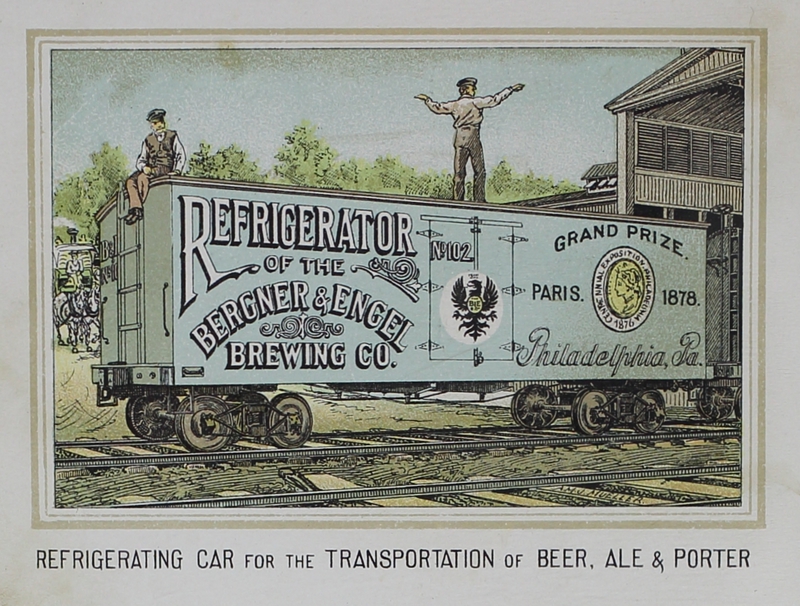
Bergner & Engel was one of the bigger ones in Brewerytown, and in the late 1880s they published a book with chromolithographs of their brewery and their brewing process that are a great timepiece. The 24-page bound publication is really cool. Anyway, because it’s Railroad Day, these two illustrations of the brewery’s boxcar and locomotive are especially awesome.

This is on Page 11, showing B&E’s boxcar:

B&E-Refrigerator-Car

And on Page 12, they show the locomotive, which they claim at the time is “the first and only locomotive owned and operated by any brewing establishment in America:

B&E-Engine-lg

Filed Under: Beers, Breweries, Just For Fun, Related Pleasures Tagged With: History, Pennsylvania, Philadelphia, technology

Beer In Ads #1867: Facts Versus Fallacies #67

March 31, 2016 By Jay Brooks


Thursday’s ad is another one for the Pennsylvania State Brewers Association, from 1915, No. 67 in series they did from 1915-17 called “Facts Versus Fallacies.” I have no idea how many were done but some of the them are numbered into low triple digits, suggesting there were a lot of them, all in an effort to stop Prohibition from happening and win over support for beer. This ad, marked “67,” and is about how in every state that already had a prohibition in alcohol, it was failing miserably, and was impossible to enforce. In Alabama, in one city alone — Birmingham — it was estimated that 500 packages of alcohol were delivered every single day to residents who’d ordered them from out of state. So yeah, that worked.

Facts-v-Fallacies-67-1915

Filed Under: Art & Beer, Beers, Just For Fun Tagged With: Advertising, History, Pennsylvania, Philadelphia, Prohibition

Beer In Ads #1866: Facts Versus Fallacies #61

March 30, 2016 By Jay Brooks


Wednesday’s ad is another one for the Pennsylvania State Brewers Association, from 1915, No. 61 in series they did from 1915-17 called “Facts Versus Fallacies.” I have no idea how many were done but some of the them are numbered into low triple digits, suggesting there were a lot of them, all in an effort to stop Prohibition from happening and win over support for beer. This ad, marked “61,” and is about a canard that’s still used as propaganda by prohibitionists today, which is that people who drink alcohol are criminals and that one leads to the other. But even statistics at that time (as today) did not support that claim, and in fact a majority of incarcerated people were not alcoholics. They go on citing several experts of the day, all with he same opinion, that drinking alcohol does not cause someone to become a criminal, despite the ludicrous cries of the anti-alcohol wingnuts.

Facts-v-Fallacies-61-1915

Filed Under: Art & Beer, Beers, Just For Fun Tagged With: Advertising, History, Pennsylvania, Philadelphia, Prohibition

Beer In Ads #1865: Facts Versus Fallacies #57

March 29, 2016 By Jay Brooks


Tuesday’s ad is another one for the Pennsylvania State Brewers Association, from 1915, No. 57 in series they did from 1915-17 called “Facts Versus Fallacies.” I have no idea how many were done but some of the them are numbered into low triple digits, suggesting there were a lot of them, all in an effort to stop Prohibition from happening and win over support for beer. This ad, marked “57,” and is about yet another false claim by the Anti-Saloon League at their annual convention in Atlantic City, when they claimed that a report offered showed that thousands of people in Pennsylvania were giving up drinking. Sadly, this still happens frequently today, and the report showed no causation and was shown out of context. Statistics from another source, the I.R.S., contradicts their claim, of course.

Facts-v-Fallacies-57-1915

Filed Under: Art & Beer, Beers, Just For Fun Tagged With: Advertising, History, Pennsylvania, Philadelphia, Prohibition

Beer In Ads #1864: Facts Versus Fallacies #55

March 28, 2016 By Jay Brooks


Monday’s ad is another one for the Pennsylvania State Brewers Association, from 1915, No. 55 in series they did from 1915-17 called “Facts Versus Fallacies.” I have no idea how many were done but some of the them are numbered into low triple digits, suggesting there were a lot of them, all in an effort to stop Prohibition from happening and win over support for beer. This ad, marked “55,” and is again about Maine and especially how Massachusetts is accused of supplying alcohol to them, demonstrating more evidence that the local option — which is really a “local prohibition” — cannot work and should be abandoned. And that’s from people within the Anti-Saloon League at one of their own meetings, causing some amount of embarrassment to the prohibitionist position.

Facts-v-Fallacies-55-1915-MA-ME

Filed Under: Art & Beer, Beers, Just For Fun Tagged With: Advertising, History, Pennsylvania, Philadelphia, Prohibition

Beer In Ads #1863: Facts Versus Fallacies #54

March 27, 2016 By Jay Brooks


Sunday’s ad is another one for the Pennsylvania State Brewers Association, from 1915, No. 54 in series they did from 1915-17 called “Facts Versus Fallacies.” I have no idea how many were done but some of the them are numbered into low triple digits, suggesting there were a lot of them, all in an effort to stop Prohibition from happening and win over support for beer. This ad, marked “54,” and is about how Maine has fared with their 50-year prohibition, which began in 1846. Apparently, a prohibitionist group complained to the sitting governor that he should enforce the law, but he responded that he did not have the authority to do so, that only the legislature could do something, and that they had even impeached several sheriffs for not doing their jobs, only to have their replacements do even less to stop prohibition. So it would appear that Maine’s efforts at stopping people from drinking was an abject failure, and yet still prohibitionists continued agitating for a national ban on alcohol, knowing full well it was unlikely to do any good whatsoever.

Facts-v-Fallacies-54-1915

Filed Under: Art & Beer, Beers, Just For Fun Tagged With: Advertising, History, Pennsylvania, Philadelphia, Prohibition

« Previous Page
Next Page »

Find Something

Northern California Breweries

Please consider purchasing my latest book, California Breweries North, available from Amazon, or ask for it at your local bookstore.

Recent Comments

  • Ernie Dewing on Historic Beer Birthday: Charles William Bergner 
  • Steve 'Pudgy' De Rose on Historic Beer Birthday: Jacob Schmidt
  • Jay Brooks on Beer Birthday: Bill Owens
  • Steve 'Pudgy' De Rose on Beer Birthday: Charles Finkel
  • Steve 'Pudgy' De Rose on Beer Birthday: Bill Owens

Recent Posts

  • Historic Beer Birthday: William Hoffmeister January 31, 2026
  • Historic Beer Birthday: William Wenzel January 31, 2026
  • Beer Saints: St. Veronus January 31, 2026
  • Historic Beer Birthday: George Hauck January 31, 2026
  • Beer In Ads #5187: Hampden Bock Beer January 30, 2026

BBB Archives

Feedback

Head Quarter
This site is hosted and maintained by H25Q.dev. Any questions or comments for the webmaster can be directed here.