Brookston Beer Bulletin

Jay R. Brooks on Beer

  • Home
  • About
  • Editorial
  • Birthdays
  • Art & Beer

Socialize

  • Dribbble
  • Email
  • Facebook
  • Flickr
  • GitHub
  • Instagram
  • LinkedIn
  • Pinterest
  • RSS
  • Twitter
  • YouTube

Powered by Genesis

Colorado Unseats California As No. 1 Beer Producing State

September 28, 2007 By Jay Brooks

The Beer Institute has released its 2007 Brewers Almanac with all sorts of statistics, but the one that’s getting all the attention is that California has been unseated as the number one beer state in terms of production, a position its held for several years. Colorado takes the top spot this year, besting California by just over 500,000 barrels, or roughly the equivalent of a brewery two-thirds the size of Sierra Nevada Brewing.

To Colorado, I raise my glass and toast their success. There are some fine breweries there and they deserve their moment in the sun. But just wait until next year. Let’s go breweries of California, get brewing. You’re not going to take this lying down, are you? Some kidding aside, it’s great news for everybody. A little healthy competition never hurt anybody. And with contests like this, everybody wins.

From the press release:

In 2006, the state of Colorado officially became the largest beer producing state in the country, according to newly released data from the Beer Institute. The Colorado brewing industry produced over 23.3 million barrels or 724.5 million gallons of beer. This makes the state tops in production.

“Colorado is tremendously important to the beer industry and produces a number of high quality brews enjoyed by adults around the country,” said Jeff Becker, president of the Beer Institute. “With a strong beer culture and a rich brewing history, it’s no surprise the state has become number one.”

“As a state widely recognized around the country for our natural beauty, rich history, and extensive cultural attractions, we’re pleased to now also be known as the beer brewing capitol of the United States,” added Colorado Governor Bill Ritter. “Colorado breweries are also increasingly using and producing renewable energy, which is good for the industry, good for the environment, and good for developing more home-grown sources of energy.”

Colorado is also home to other major industry trade groups such as the Brewers Association, based in Boulder, representing America’s small brewers since 1942. The state also plays host to the annual “Great American Beer Festival” in Denver.

“In addition to housing many long established large brewers, Colorado is also leading the way among small, independent craft brewers,” said Charlie Papazian, founder and president of the Brewers Association. “We invite beer lovers from every state to visit us and sample firsthand some of the many fine varieties of craft beer produced here.”


Here the Top 10 beer producing states:

  1. Colorado
  2. California
  3. Texas
  4. Ohio
  5. Virginia
  6. Missouri (est.)
  7. Georgia (est.)
  8. Florida
  9. Wisconsin
  10. New York

 
Surprisingly, Oregon and Washington ranked 15th and 16th, respectively. After I take a look at the full almanac, I’ll see what other interesting facts emerge. Until then, I’m drinking a Great Divide Titan IPA tonight. Or perhaps an Odell 5 Barrel Pale Ale or even a Dale’s Pale Ale. Damn, I just have too many friends in Colorado making great beer. Congratulations one and all!
 

Filed Under: Uncategorized Tagged With: Business, California, Colorado, National, Press Release, Statistics

Big Brewers Spending Less on Traditional Advertising

September 24, 2007 By Jay Brooks

According to a article at Advertising Age today, the three biggest brewers are spending less these days on traditional advertising, such as television, print and radio.

From the article:

According to TNS Media Intelligence, top brewers cut measured media spending a whopping 24%, about $131 million, during the first six months of 2007, following a 12% cut during 2006. At the same time, the brewers insist they haven’t cut spending at all — and in many cases have increased it.

What that means is that the dollars they are spending are being spent on things that traditional media folks don’t usually keep track of, such as sponsorships, promotional activity, product placement, bar events, concerts, stadium signage, specific sports promotions and local media. Part of that is simply to focus advertising on the dozens of test brands, the stealth micros and the alternative products that all three, though particularly Anheuser-Busch, have been experimenting with lately to compete with the craft segment, which is the only beer segment that’s been showing robust growth over the last few years.

So is this the traditional advertising world starting to panic? They talked to death about the big brewer’s forays into advertising on the internet and what that’s meant for them. They’re also equating trying to reach a younger demographic as another reason for the sharp declines in traditional ad buys. Does that mean since the younger generation has gotten wise to advertising, we’ll see traditional forms of it decline as a whole as they age? Somehow that seems doubtful, especially since in my humble opinion people aren’t really getting any smarter and advertising is certainly becoming more scientifically based. As a result, it’s hard to swallow the notion that young people are too savvy for advertising to work on them.

Citing a Beer Marketer’s Insights statistic that beer shipments from the big guys rose 2% at the same time traditional ad revenue fell, AdAge concludes that the non-traditional advertising must be working and even may be the key to that growth. They do qualify the 2% figure as “healthy,” at least “by the mature beer industry’s modest standards.”

But I seem to recall that the shipments figure is almost always around 1 to 2%, every year, no matter what. Maybe somebody has those figures in hand, but that’s certainly my memory. Other statistics like revenue, market share, and others have been fluctuating more, but not shipments, which have been fairly steady. At any rate, it seems hard to draw a conclusion from that statistic, even if my memory is faulty.

What really concerns me, if indeed what the article is suggesting is true — and the big three are throwing their massive resources at local media and cheaper, more targeted marketing — then they’ll be infringing on the only kinds of advertising and marketing craft brewers have been able to afford. Only a very few of the biggest microbreweries have been able to afford television advertising and even then it’s been limited and on cable networks. Regional and smaller breweries have only been able to afford the occasional print ad or radio spot, relying instead on guerrilla marketing, word-of-mouth and local community involvement. It will be very hard for them to compete with the big brewers’ ad budgets if they adopt a similar strategy.


Filed Under: Editorial Tagged With: Business, National, Statistics

MSNBC On the Drinking Age

August 14, 2007 By Jay Brooks

MSNBC had a very interesting article about the recent surge in support for lowering the drinking age to from twenty-one to eighteen again. Apart from nations that don’t permit alcohol at all — usually for religious reasons — we have the highest age for allowing drinking of any country in the world. For the vast majority of nations, it’s eighteen. To me it’s as simple as if you can vote and die as a soldier defending our country, you should at least be able to drink a beer. I’ve never heard a convincing rebuttal to that. In my opinion, it should be a part of how we define adulthood.
 

Filed Under: Uncategorized Tagged With: Law, Mainstream Coverage, National, Prohibitionists, Statistics

Researchers Target Beer As Binge Drink of Choice

August 7, 2007 By Jay Brooks

There’s more nonsense coming from the CDC, the Center for Disease Control (the same government yahoos who refuse to acknowledge mercury’s role in my son Porter’s autism, as well as millions of other children) who is publishing a study in next month’s American Journal of Preventive Medicine suggesting people are more likely to binge on beer than other types of alcoholic drinks. The CDC apparently surveyed 14,000 binge drinkers in 18 states who told them that they like beer best. Of those surveyed, 67% preferred beer, 22% liked spirits and 11% were winos with a taste for the grape or premixed drinks (don’t ask me why they lumped those two types of drinks together) with 74% of “binge drinkers” having beer either exclusively or in combination.

Of course, it all comes down to your definition of binge drinking, which they define as “five or more drinks in a row.” Now let’s just think this through for a moment. Beer has an average alcohol content of maybe 4.5% abv. Wine has around 14% and spirits, while harder to pin down, has as alcohol percentage far above wine or beer. So of those three types of drinks, which one is it most possible for the greatest number of people to drink five or more of in a single sitting? Anyone, anyone? Bueller, Bueller? Even if you don’t compare equal amounts of liquid consumed but just typical servings it’s considerably easier to down a six-pack of beer than six glasses of wine, six shots of whisky or even six mixed drinks. So it shouldn’t take a genius or even a doctorate to predict that the lowest alcoholic drink would be consumed more often by people on a binge. After all, it’s not really much of a binge if you pass out in under an hour. Not to mention beer outsells wine 4 to 1 and spirits by a considerable margin, too, so why wouldn’t you expect that to remain consistent among “binge drinkers,” too?

Why blame the drink? What is the point of this ridiculous exercise? Should beer be treated differently because more people abuse it, but keep wine and spirits untouched, since their drinkers are among the sophisticated upper class? With beer being more popular why wouldn’t it be proportionally involved in instances of abuse. You would expect that to be the case. I can’t help but thinking “yeah … and … so what.” Once alcohol enters your bloodstream your body doesn’t discriminate between what form it originally came in — inside you alcohol is just alcohol — a chemical compound: C2H5OH. It’s merely societal features that determine which drink people choose.

So what possible policy changes might flow from this study? It just doesn’t make any sense. This seems like a case where the statistics don’t really mean anything useful. All the study appears to do is confirm what you’d expect would be the case if you think about it for a few seconds. Good thing our tax dollars were channeled into something anyone with a high school diploma should have been able to figure out. Is the CDC setting up conditions for neo-prohibitionists to promote making beer harder to access than wine and spirits, the way the state of Tennessee recently did? Heaven forbid we suggest ways to reduce “binge drinking” that involves lowering the drinking age in line with the rest of the civilized world or allow parents to educate their children on how to drink responsibly by introducing it in the home. Those kinds of ideas — which should be taken for granted — are rarely, if ever, even discussed by policymakers and politicians.

An article in Forbes, via HealthDay News, stated that the “study also found that beer was the primary choice of binge drinkers who were most likely to cause alcohol-related harm, such as drinking and driving.” Of course, that could just as easily be that someone with five beers in them is in much better shape to drive (not that I’m saying that they should drive) than someone with five glasses of wine or five glasses of vodka. It’s as if they’re targeting beer precisely because it’s not impairing people enough.

The Forbes piece continues:

“This study isn’t looking at alcohol consumed by people drinking responsibly, or moderately; this is alcohol consumed by people drinking five or more drinks in a sitting, so almost all of them are going to be impaired — if not overtly intoxicated,” Naimi said in a prepared statement. “This is exactly the kind of drinking behavior that leads to so many deaths and secondhand problems that inflict real pain and costs on society, not just the drinker.”

What that statement ignores is what it means to “drink responsibly, or moderately.” That idea has changed over the years. People’s attitudes towards drinking — and driving — used to be much more tolerant. Have lives been saved by changes to the law and to its more statutory enforcement? Possibly, but I remain somewhat skeptical of what statistics have been offered and continue to believe that even if that is indeed the case, that the price that our society has paid as a whole is too high. Education and altered attitudes quite possibly could have done the same thing, without the draconian measures MADD undertook creating a world where people are literally afraid to have a good time.

When I was first old enough to drive (and then drink) five beers over a few hours would not have made me impaired by the then standard of 0.10% blood alcohol level (BAC). By my weight, I could consume seven drinks in one hour and still be under that BAC level. Even under our present standard of 0.08% BAC I can theoretically still have six drinks in one hour and be legally able to drive. That means even if I decided to become a “binge drinker” I could legally do so, and possibly even drive. But most binges involve greater periods of time and thus could conceivably involve even more drinks. I would much rather have my five drinks over several hours of conversation, food or games than quaff it down as fast as possible. But that’s what education and being a responsible adult can do for you. I find it highly insulting that if I have five pints of beer over the course of an evening’s enjoyment that I am branded a “binge drinker,” with all the derogatory associations that entails. I hold down two jobs (one paid, the other a labor of love), pay my taxes, am involved in my community and my children’s schools. I vote, I support local businesses and frequent my local library. But for some I’ll always be an unrepentant deviant because on occasion I drink a half dozen pints in one day? Bullshit.

In the modern, post-MADD, world, the bar for drinking responsibly is growing lower and lower and it is quite clear the neo-prohibitionists will not be satisfied until all alcohol is again removed from society. In a recent story (sent in by Seth. Thanks Seth.) from the San Francisco Chronicle, MADD doesn’t even want people drinking on Amtrak trains, even though there’s no driving involved. Is this study more fuel for the neo-probs? If so it’s more than a little unsettling that my government is helping the cause of another prohibition with my tax dollars. After all, it’s my country, too. Love it or drown your sorrows.
 

NOTE: Davis on Draft also has a nice rant on a different version of this story, his was from MSNBC.


Filed Under: Editorial Tagged With: Health & Beer, Mainstream Coverage, Prohibitionists, Statistics

Beer Is Dead, Long Live Wine

May 31, 2007 By Jay Brooks

pint vs. wine
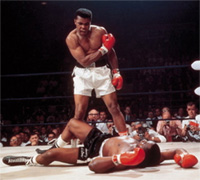
Yesterday Slate Magazine, in the guise of Field Maloney — who claims to drink beer — declared beer all but dead and wine standing over it in the boxing rink taunting it ala a triumphant Cassius Clay after he defeated Sonny Liston.

boxing

The only problem with that sentiment and, indeed, much of his article is that it simply isn’t true. He uses old and questionable statistics and ignores the entire craft beer segment of the marketplace, something like 99% of the breweries out there seem to be under his radar. That’s pretty remarkable given that he claims to like the very stuff he’s bashing. You’d think he’d know just a little bit more about it, wouldn’t you? He does briefly mention craft beer, but only to suggest that we’ve all pilfered wine’s descriptive language. Apparently wine drinkers own the term “floral.”

But every other time he uses the word beer, he’s using it in a very narrow sense. By beer, Maloney means Bud, Miller, Coors and maybe Pabst and any brands owned by the big guys. Period. Because the way he describes “beer marketers” and “American beer executives” it’s abundantly clear he’s not talking about the small fry.

While using support for his position that beer is down and out he uses the infamous 2005 Gallup poll that seemed to indicate that people were beginning to prefer wine to beer, calling the findings “astonishing.” As noted in the sidebar, however, the 2006 poll results returned beer to the top spot, which is where it had been virtually every year before 2005, too. The 2005 results were obviously anomalous but despite that it keeps showing up in print, used to push various agendas. Beer outsells wine roughly four to one, and has done so for many years. That statistic is easily verifiable, unlike what people say about what they like — their so-called preferences — and so it’s a far more accurate portrait of the alcohol landscape. And while overall consumption has been steadily decreasing for many years, and even if we allow for Maloney’s uncited figure of wines sales having doubled over the last ten years (from a small number to begin with), beer is still wildly more popular than wine and will continue to be for the foreseeable future.

The sidebar continues by dismissing the 2006 poll, despite the fact that every poll prior to 2005 agrees with it, saying “[s]till, while wine consumption has grown steadily in this country, beer consumption has remained flat. (The one exception to this trend is craft beers, which have enjoyed double-digit sales growth in the last few years. But craft beers command less than 5 percent of the domestic beer market. Anheuser-Busch alone, by comparison, controls about 50 percent of it.)” What I take away from that bit of tortured analysis is that because craft beer doesn’t represent a big enough piece of the pie, then it’s not worth talking about and it’s not indicative of any trends. Yet Anheuser-Busch has test-marketed or rolled out last year alone something like fifty new products that give the appearance of being craft beers to compete with this segment of the industry. They certainly wouldn’t be spending all their resources on such folly if craft beer wasn’t having an impact on them, so Maloney’s off-hand dismissal of craft beer seems misleading and counterfactual.

I’d love to see figures on big wines vs. boutique wine sales as a percentage of the total (though I suspect definitions are every bit as difficult as in the beer world) but I suspect Maloney doesn’t discount those small wine producers in quoting wine statistics and the gains they’ve made the way he discounts craft beer. And he appears to entirely ignore box wine, jug wine and other cheap wines made in vats the size of Montana, as if all wine was hand-crafted. The notion that all wine is fine wine is every bit as specious as saying all beer is industrial.

Brewers will no doubt get a kick out of this zinger. “The hallmark of beer is consistency: A brewer strives to make batch after batch of Pilsener so it tastes the same—and often succeeds without much difficulty.” So much for the author’s earlier jab about beer being the “result of a complicated process of manufacture.” If it’s not too difficult to make beer consistently, it must not be that complicated after all. That series of statements seems more than a little insulting to me. Most, if not all, of the winemakers I have met have the utmost respect for brewers and do think it’s harder or more complicated to make great beer than great wine. A winemaker I sat next to at a dinner at Mondavi many years ago told me that she thought what they did was easy compared to making beer and that the grapes did all the real work. So yes, I think there is something to beer being more of a complicated affair than wine, but I don’t see why that makes it any less of an art than he appears to believe is the case with winemaking.

Maloney also claims that it was our society’s “shift from an agrarian society to an urban, industrial one” that made beer our drink of choice, because mass production displaced hand made drinks, such as “hard cider (the rural drink of choice), rum, and whiskey.” But didn’t many rum and American whisky brands that are still with us today also get their start during the industrial revolution? If so, then why is beer the bad guy here? Also, he states that beer started to outsell cider “around the time of the Civil War,” but I’m not sure that’s true. I remember reading that cider’s popularity throughout the country did not wane until Prohibition, and that until that time it continued to outsell beer. If that’s true — I’m trying to remember and find where I read that — then it continued to be quite popular through many decades of industrialization. And that seems to contradict his premise that mechanization caused or was responsible for beer’s popularity during the 19th century.

Interestingly, additional criticism of Maloney’s article came from an unlikely source. Nick Fauchald, Senior Associate Food Editor at Food & Wine magazine, penned a rebuttal wonderfully entitled Beer to Wine: “I’m Not Dead Yet” in which he also cites craft beer’s recent gains and suggests the following.

Slate and other outlets sounding the beer death knell are missing one very important point: It’s the generic-tasting, mass-produced beer (Budweiser, Miller and their ilk) that Americans are waving off. American craft beer is still alive and kicking, experiencing its biggest growth since the microbrewery gold rush of the 1990s.

Slate even in mentioning craft beer manages to do so each time with a dismissive tone that makes it sound irrelevant to the discussion. But that ignores over 1400 independent small to medium-sized breweries and brewpubs successfully providing craft beer locally, regionally and even nationally. Craft beer is part of the slow food movement, part of organic food lifestyles, and a part of eating and drinking locally campaigns. It’s just one of many gourmet products, like coffee, chocolate, cheese, bread and many others, that have literally changed the way we perceive and think about them. Craft beer has raised the quality and status of American beer to the point where it has the respect and envy of beer lovers around the world. It’s only here in the U.S. that it gets so little respect.

Unfortunately, a lot of that criticism comes from food and wine sources. I don’t know or understand why so many wine and food writers appear to feel threatened by beer. I don’t know if it’s simple ignorance or malicious snobbery. Is it a kind of good ole boys mentality that can’t abide beer stealing some of their thunder? That sounds almost ridiculous, except that it seems to happen time and time again. Perhaps the real question is why they feel the need to pit the two against one another in the first place? Is it really a competition? Is it really us vs. them? I certainly don’t want to believe that’s it, because I love wine, too, as do most of the hardcore beer people I know, including other writers and brewers. And all of the winemakers I know love beer. So it comes down once more to the question I’ve asked time and time again: why can’t we all just get along. Seriously, I’m not just being rhetorical, but why can’t wine and beer seem to coexist and be supportive of one another? Why do Maloney and so many others feel the need to bash beer in order to lift up their preferred libation? It’s not everybody, obviously, as Nick Fauchald from Food & Wine nicely demonstrates, but it seems to me an awful lot of people who write about wine and/or food have it in for beer. Why is that? It’s got me crying in my beer, because it just doesn’t have to be that way.

UPDATE: Jess Sand over at the wonderful Bar Stories added a very thoughtful and lengthy diatribe on the same Slate article, as did Stan Hieronymous over at Appelation Beer.

Filed Under: Editorial Tagged With: Statistics, Websites

Style Trends Through April 2007

May 22, 2007 By Jay Brooks

Here is a chart of the latest style trends broken out by the top 10 selling styles, based on a year’s worth of sales as of April 22, 2007, courtesy of DBBB, the Domestic Brewers Bottled Brands. They publish the book, “The Essential Reference of Domestic Brewers and Their Bottled Brands” and have a website, which offers monthly online updates of the book.

The chart is based on IRI Data showing sales of beer for the previous twelve months through April 22nd of this year by beer style. IRI is short for Information Resources, Inc., a company that surveys sales of beer (and everything else) from over 15,000 retailers (mostly groceries) in the U.S. As a result, their data is invariably skewed toward the national and regional brands since it doesn’t take into account direct sales and sales from small mom & pop stores. I used to get IRI data from almost every medium to large brewer who called on me when I was a beer buyer for BevMo. And while it’s not accurate for craft beer in specific, it does give you a general idea of certain trends, especially when you follow it over a period of time.


Filed Under: News Tagged With: Business, National, Statistics

Water Beats Milk, Ties Beer

May 5, 2007 By Jay Brooks

I wasn’t even aware there was a competition among liquids, but apparently it’s pretty fierce. This year for the first time bottled water beat out milk, according to Beverage Digest, and was roughly equal to beer for the year 2006.

According to an article in the Atlanta Journal-Constitution, “If the trend continues, Americans could be drinking more bottled water than tap water within a few years.”

“Tap water is in trouble,” quipped John Sicher, publisher of industry newsletter Beverage Digest.

Beverage Digest’s figures showed average per capita consumption of bottled water grew from 11 to 21 gallons between 1996 and 2006. Consumption of milk dropped from 22.7 to 19.5 gallons over the 10-year span, while beer consumption was steady at 21.8. Soft drink consumption dropped from 52 to 50.9 gallons, according to the figures.

No word on whether the water in beer is added to the water figures.

Filed Under: Just For Fun, News Tagged With: Business, Statistics

Neo-Prohibitionist Math

May 3, 2007 By Jay Brooks

Sadly, the United States is not the only country with people who want others live according to their morals. A British Bulletin reader sent in a BBC article about Alcohol Concern, a UK neo-prohibitionist organization that refers to itself as the “national agency on alcohol misuse.” In the article, “Call to stop children’s drinking,” they, of course, use the “it’s for the children” strategy and it’s peppered with plenty of alarmist language about an increase in drinking among 11-13-year olds and citing that “[i]t is currently illegal to give an alcoholic drink to a child under five except under medical supervision in an emergency.” Now what might constitute such an emergency I can’t fathom but the only reason I can see for including it is that it implies that the whole of English parentage is putting beer in their baby’s bottles. It makes it easier to push an agenda when you hammer home the extremes rather than the truth. Of course, alcohol laws are different in the UK. Here’s an overview.

The group Alcohol Concern is also asking for a whopping 16% raise on taxes for alcohol products. And they also want alcohol education to be added to the National Curriculum, which in and of itself is not a bad thing but at the same time they want to restrict parents’ ability to educate their children about alcohol in the home. “Alcohol Concern would include meal times at home in the ban on giving alcohol to young people.” So what that suggests is they believe the government should be deciding what alcohol information should be given to kids and parents should have little or no hand in raising them. Now does that make any sense at all? Since when is the government in a better position to teach your children about anything better than you are? As Karen Gardner, who operates the Parenting Cafe, puts it in a rebuttal:

Parenting is about preparing your children for life.

I’ve just helped my 11-year-old son open his first bank account. When I get to a road with my four-year-old, I get him to decide when it’s safe to cross. It’s the same with alcohol. On your 15th birthday you don’t suddenly develop the ability to deal with alcohol, but by the time you’re 15 you are going to parties where alcohol is flowing. If Alcohol Concern got their way, you’d be sending them out with absolutely no experience of drinking at all and they’d go out and sink four vodkas.

The thing that really concerns me about this law is that if it’s made illegal, parents will tell kids, ‘You can’t drink, I’ll go to prison’. Then a child goes out and does drink too much and needs to call home for help, but feels they can’t in case they get mum or dad into trouble. I understand that some teenagers are going out and binge drinking in town centres, but parents who let their kids do that won’t care about a law anyway. All the law would do is stop responsible parents from trying to educate their children. It would infantilise parents.

Perhaps more troubling, though, is Alcohol Concerns own education materials. They also run a website, Down Your Drink, which purports to help people figure out whether or not they drink too much. Toward that end they also offer a three-question quiz to determine your level of drinking.

Forget for the time being that your weight or general health plays no role whatsoever in the equation, as absurd a notion as I can imagine, but then real education is not the goal. My own “drinking pattern indicates a possible increased risk of alcohol affecting [my] health.” Well, that’s not a surprise, but it doesn’t take into account that I’m a big fella or that I’m most often drinking as a part of my work. No matter, they want to alarm and proselytize, not educate.

You have to answer “Never” or “Monthly or less,” “1 or 2” and “Never” to be considered “drinking sensibly.” If you have 1 or 2 drinks 2-4 times a month (that would be a pint or two once a week or less) and you too could be at an “increased risk of alcohol affecting your health.” How absurd. Of all the possible ways to answer the questionnaire, only two will get you an answer of being a responsible drinker. As far as they’re concerned having one or two drinks monthly or less with no episodes with six drinks in one session is exactly the same as having “10 or more” drinks “daily or almost daily.” How is such inflexible thinking in any way helpful or useful?

But there’s one more absurdity to tackle. Take a close look at how they define “a drink containing alcohol.” They consider “1 drink” to be either “1/2 pint of beer,” “1 glass of wine” or “1 single measure of spirits.” So what that means is that 8 ounces of beer, with an average alcohol content of 4-5% ABV, is the same as one glass of wine, whose alcohol content average is around 14% ABV. I’m not sure what the average glass of wine holds, but even at 4 ounces it would pack more of a punch than twice as much beer. Now that’s some pretty fancy math. I’d love to know how they came up with that standard where a pint of beer is twice as bad as one glass of wine.

No wonder they believe there’s such a problem. When you define almost any amount of drinking, no matter how responsibly small, as being a potential health risk — and ignoring any of the many health benefits — then naturally you will believe there’s an epidemic of drinking problems. But then it’s more likely that you believed that to begin with and are using skewed reasoning and questionable statistics to support your agenda and make it sound more scientific. It’s called lying with statistics and it’s not that hard to do, especially when the mainstream media reports it as fact without questioning it either, which happens more often than not.

Take a look at their research team here at the left, undoubtedly a bunch of models. They’re too politically correct in terms of the mix of young and old, male and female, and racial percentages to be the real research team. And those lab coats are hilarious. But that’s the propaganda of trying to make it seem more serious, more worthy of believing. Don’t fall for it. If all looks too perfect or convenient, it probably is. Few issues are as black and white as they try to paint this one.

Drinking is obviously a huge problem for the people who already don’t and want the rest of us to stop. There are and always will be people who will abuse anything, both benignly and harmful alike. But the answer to dealing with such people should never be to take the object of abuse away from everyone. You don’t end up fixing the problem but instead make it worse, plus you end up punishing the people least deserving of such punishment, the ones who can enjoy things responsibly. Prohibition has never worked for anything. Laws prohibiting murder were among the first laws society ever agreed upon, and it hasn’t eradicated killing yet. You teach people it’s wrong and hope for the best. The same is true concerning alcohol. You teach your children about what it is, how to enjoy it responsibly and how not to abuse it. Take that away, and your kids will be ignorant binge drinkers rebelling against society the first chance they get. But the neo-prohibitionists don’t seem able to grasp this and instead want a Stepford society that forces rather than educates. It uses scare tactics and lies instead of reason and understanding. It would be ridiculous were it not for the growing number of people who think it’s okay to want to tell me and you how to live. Why can’t these people just live how they want to and leave the rest of us alone?

Filed Under: Editorial, News Tagged With: Europe, Great Britain, Law, Prohibitionists, Statistics

Not Just Age and Taxes

April 26, 2007 By Jay Brooks

Science Daily asks “When Are Minimum Legal Drinking-age And Beer-tax Policies The Most Effective?” in reporting on a new study about to be published in the May issue of “Alcoholism: Clinical & Experimental Research.” The study, “The Joint Impact of Minimum Legal Drinking Age and Beer Taxes on US Youth Traffic Fatalities, 1975-2001,” was funded by the National Institute on Alcohol Abuse and Alcoholism, a government agency and branch of the N.I.H. Their mission statement is to “provide leadership in the national effort to reduce alcohol-related problems.”

The study looked at the two most common ways in which government has tried to reduce alcohol-related societal problems: through the minimum drinking age and raising taxes on beer (notice how wine and spirits get yet another pass?). Most significant is the finding that “[w]hen it is illegal for youth to buy and consume beer — as it is now in all 50 US states — higher beer taxes are less effective.” Hear that Oregon legislators (and every other state official trying to extort money from small brewers)?

“Our findings suggest that some of the varying results across past research may simply indicate that a given public policy may not have the same effectiveness in all places and times,” said William R. Ponicki, one of the study’s authors. What that doublespeak means is essentially that for any given policy decision, many other factors determine whether the policy will work as intended or not. It’s not just a simple matter that raising the drinking age will cure underage drinking or that making beer more expensive will either. And that’s just looking at two very broad factors. Imagine all the others at work but not examined, such as peer pressure, alcohol’s perception in our culture, accessibility, and on and on.

What that suggests to me is that MADD and the other neo-prohibitionists were and are misguided in pushing for a higher minimum drinking age, tougher access for legal adults, higher taxes for alcoholic beverages and all the other harebrained ideas on their agenda without having any real notion of how they’ll effect society or even if they have a chance of working. There’s absolutely no reason that legal adults should have to pay more for legal products or have a harder time legally buying them, especially when such measures have not been shown to be effective in reducing any perceived problems. Frankly, I’m sick and tired of being in their petri dish of experimental legislation to mold society to their wishes. It’s my world, too. And yours, as well. We should try to remember that, I think, when fanatics try to remake it for their own benefit and worldview.

Filed Under: Editorial, News Tagged With: Business, National, Prohibitionists, Statistics

« Previous Page

Find Something

Northern California Breweries

Please consider purchasing my latest book, California Breweries North, available from Amazon, or ask for it at your local bookstore.

Recent Comments

  • Bob Paolino on Beer Birthday: Grant Johnston
  • Gambrinus on Historic Beer Birthday: A.J. Houghton
  • Ernie Dewing on Historic Beer Birthday: Charles William Bergner 
  • Steve 'Pudgy' De Rose on Historic Beer Birthday: Jacob Schmidt
  • Jay Brooks on Beer Birthday: Bill Owens

Recent Posts

  • Beer In Ads #5154: Mr. Boh’s Bock Is Here! March 9, 2026
  • Historic Beer Birthday: William Cobbett March 9, 2026
  • Beer In Ads #5153: Roll In A Barrel Of Spring! March 9, 2026
  • Beer In Ads #5152: A Message From Over The Sea About Genuine Bock Beer March 8, 2026
  • Beer In Ads #5151: March Is Bock Beer Time March 8, 2026

BBB Archives

Feedback

Head Quarter
This site is hosted and maintained by H25Q.dev. Any questions or comments for the webmaster can be directed here.