Brookston Beer Bulletin

Jay R. Brooks on Beer

  • Home
  • About
  • Editorial
  • Birthdays
  • Art & Beer

Socialize

  • Dribbble
  • Email
  • Facebook
  • Flickr
  • GitHub
  • Instagram
  • LinkedIn
  • Pinterest
  • RSS
  • Twitter
  • YouTube

Powered by Genesis

Holy Beer Blunder: Call the Commissioner

January 12, 2007 By Jay Brooks

A friend in Portland sent me John Foyston’s piece in today’s Oregonian concerning what’s written in a visitor’s guide to Seattle. If you click on the link, dont panic, it’s the last item near the bottom entitled “Wrong on So Many Levels.” It’s a good thing I didn’t have any liquids in my mouth when I read it, because I would have spit them out across the room the way they do in cheesy sitcoms and movies. My first reaction after reading it was envisioning the spinning graphics when they cut to a new scene in the old ’60s Batman series and a costumed Adam West yelling “get me the Commissioner on the ‘Beer Phone'” to no one in particular, complete with cheeseball music that so perfectly complemented the action making it seem like things were moving fast. Perhaps a giant spotlight shining the image of a pint of beer into the night sky. I admit I should lay off the caffeine, but I have toddlers. I need caffeine.

But this is the sort of thing that cries out for some fast action. And the newly appointed Washington Beer Commisioners are just the folks to mete out some justice and get this thing changed. Okay, enough suspense. Here it is in a nutshell. The Summer/Fall 2006 edition of the Seattle Quick Guide, published by Guest Informant, says the following about Seattle’s beer scene, arguably one of the top two or three cities for beer in the country. Just be sure not to take a drink just before reading it. You have been warned.

“Beer Buzz: Beer may be the beverage of choice for sports addicts, couch potatoes and those with substantial midsections, but consumed in moderation it shares some of the healthful effects of red wine. A 12-ounce glass of beer has about half the alcohol of a glass of wine, which means you can drink more of it. Beer isn’t the ideal before-dinner drink due to the full feeling you get after quaffing a few cold ones, but that bloated sensation is a result of carbonation more than calories.”

“The microbrew craze peaked in the mid-’90s, when it seemed as if everyone and his mother was brewing up a batch of homemade lager in the basement and yuppifying it with exotic flavors in designer bottles. But classic imported beers have many characteristics of microbrews, so why mess with tradition?”

How could so few words manage to be so wrong? Is it possible it was written around 1996 when things were looking bleak for craft beer and they simply never updated it for ten years? But don’t they put out new editions of these hotel guides every year precisely to keep up with the changes in the cities in which they publish their guides? Even so, “designer bottles,” “exotic flavors,” “homemade lager in the basement?” What exactly are the folks at Guest Informant smoking?

It’s baffling. And it’s a grave injustice to the thousands of visitors Seattle gets every year who might believe what they read and assume craft beer is dead, ordering a Heineken instead. Not to mention all the great local beers and breweries that will be ignored. Wouldn’t they want to promote local “traditions” rather than imported ones? Again, whoever wrote this obviously didn’t do a great amount of — or let’s face it, any — research.

As my Oregonian friend (thanks Jim) so aptly wrote, “it is both sad and funny.”

Filed Under: Editorial Tagged With: Mainstream Coverage, Strange But True, Washington

Strange Brew: My Beer Predictions for 2007

January 1, 2007 By Jay Brooks

To Beer or Not to Beer. As Strange Brew was a loose parody of Hamlet, I thought I’d peer crazily into the skull of poor Yorick, and try to divine the future. Let’s see if anything that happened last year can be used to predict what might happen in the beer industry in 2007. Here are five things I think will happen this year. Let’s see how I do a year from now. What are your predictions?

 
Craft beer growth will hit double digits for 2006 and also will continue to rise through 2007.

 
Price wars among the large domestic producers and the popular import brands will heat up again beginning in spring or early summer.

 
Mainstream media attention will increase and will actually begin to improve.

 
A-B’s Here’s to Beer PR campaign will either quietly disappear or if the website remains up will not have any new content added now that Bob Lachky is no longer in charge of the effort.

 
Gluten-Free beer made for the growing number of people with Celiac disease will surprise most predictions and become a bigger niche than expected.

Filed Under: Editorial, News Tagged With: Business, National

Free Happy Hour Law Goes Into Effect

January 1, 2007 By Jay Brooks

California State Bill 1548 went into effect today, handing — as usual — another advantage to large beer companies and further eroding a level playing field for breweries in California. It was originally an even worse bill, but thankfully the California Small Brewers Association was successful in working with legislators and other interested parties to scale back some of the bill’s provisions. It passed without fanfare at the end of August and was quietly signed into law by the Governator, with our watchdog media all but completely silent, in and of itself a telltale sign of whose interests the bill will serve.

The law was originally pushed by Anheuser-Busch which tells you everything about who will benefit most from it. A-B argued that it leveled the playing field for them to compete with wineries and liquor manufacturers and that they plan to “conduct only small educational tastings about new beers.” Sure, and I’m Napoleon Bonaparte.

According to the article in today’s San Francisco Chronicle:

“It’s an opportunity for us to get consumers to sample some of our new products,” said Andrew Baldonado, western region vice president of government affairs for Anheuser-Busch. “The winter’s bourbon cask ale is a seasonal beer that we’re doing. The best way to introduce those new products to consumers is to be able to have them sample them.”

Of course, retailers with the right kind of license can and already have been conducting beer tastings under current law. The new law now allows manufacturers — you know, brewers — to sample the public on their beer directly beyond those few who visit their breweries, such as at bars and restaurants. It further permits “8 ounces per person a day and requires the beer to be served in a glass.” Tasting sessions cannot last more than an hour and there are also other limitations. The full text of the bill is available on one of my previous posts.

In a way, it feels weird to be against this bill because on its face it appears to make exposing people to beer much easier and in literally thousands more locations than under the former system. And I firmly believe that the only way to teach people what beer really is, meaning good beer, involves tasting them on it one on one. So this should be a good thing, at least on paper. The reason it’s not is because of who can afford to really take advantage of the new law. It shouldn’t take a genius to figure out who can best afford to buy eight ounces of beer for a bar full of potential drinkers.

But A-B insists their “purpose” is “education, not intoxication.”

“It would never be an instance where we would be buying the house a round,” said Baldonado. “We would talk to consumers one at a time about whatever product it may be, whether it’s Budweiser or something else.”

Sure, and I’ll never invade Russia or sell Louisiana to the Americans. As the Chronicle article concludes, Glynn Phillips, of Rubicon Brewing, acknowledges the economic difficulty for small brewers to offer free beer. “A small guy like me, I can’t afford to do that,” Phillips said. “But bigger breweries can walk into a restaurant and sample an entire crowd.” Phillips also recently spearheaded the founding of the Northern California Brewers Guild to pool resources between small brewers north of the Bay Area. Such guilds are necessary precisely because the craft brewers don’t have the wherewithal that the large brewers do. And that’s why this law is not all it seems, because it will allow the big guys one more advantage over the small brewers.

One final note that’s almost funny. The Chronicle article contains a quote from Fred Jones, a lawyer with the neo-prohibitionist group, California Council on Alcohol Problems, a coalition of religious groups. Not surprisingly, he doesn’t like the law either, but for different reasons. Here’s what he has to say:

“It was jokingly referred to as the ‘Free Happy Hour’ bill (in the Capitol), so I think that gives you an image of what could happen,” Jones said. “What is the reason behind giving someone 8 ounces of beer free? One could argue that with wineries, each winery is different and every bottle is different depending on age or season. But we’re talking about beer here.”

Wow! Talk about wearing your naked ignorance on your sleeve. Every wine is different but all beer is the same? How stupid do you have to be about beer to think that? Or to say it out loud? Sheesh.

Filed Under: Editorial, News Tagged With: Business, California, Law

Top 10 Beer Stories of 2006

December 31, 2006 By Jay Brooks

As the year winds down, everybody and his brother has a top ten list for the year and I’m no different. It helps, I think, to stop and reflect on what happened over the previous year which puts the whole year in perspective and makes it easier to prepare for the coming one. So here are my choices for the top ten beer stories of 2006.
 

The 2006 Hop Fire: A Yakima hop warehouse owned by S.S. Steiner of Germany caught fire, destroying 4% of the U.S. hop production for the year. October 2.

Gambrinus Loses Corona: After years of successfully selling Corona and building the brand throughout the eastern United States, Grupo Modelo pulled the rug out from under Gambrinus and declined to renew their contract. March 10.

The Lost Abbey: Stone Brewing moved their operations to Escondido and Pizza Port Brewing (now Port Brewing) bought their old brewery in San Marcos. After getting the brewery up and running, Port launched the Lost Abbey label, one of the most exciting new breweries in years. January 31.

GABF Turns 25: This year marked the 25th Anniversary of the Great American Beer Festival. That’s an important milestone because it signals that craft beer has now been around — and popular — for a quarter century. For almost all of that time, GABF has been the biggest festival in the U.S. and the best place to try different beers in one location. September 28-October 1.

The Ram Closes: In May of this year, Charles Wells and Young’s announced that on October 2 they would be merging their two companies. But the biggest part of the story was the announcement that as a part of the merger they would be closing the 400-Year Old Ram Brewery, one of the biggest losses of brewing heritage and a telling sign of how business in general feels about its own history, which is to say not at all. As the science of business grows in sophistication, profit has never before in history been so singularly important. And never before has business seemed so devoid of emotion, reason or even a sense that people matter at all. May 23.

The Empty Glass-Lined Tanks of Old Latrobe: Anheuser-Busch bought the brand Rolling Rock, previously owned by InBev, in an effort to counteract falling revenues to their core brands and keep up their stock’s share price. They did not, however, buy the Latrobe Brewery where Rolling Rock had been brewed since 1939, placing an entire town’s economy and well-being in jeopardy. Preferring to view their decision as a mere externality, A-B took no steps to back up the company’s rhetoric about being a good corporate citizenship. May 19.

Mainstream Media’s Less-Than-Accurate Beer Coverage: With craft beer on the rise and sales of beer manufactured by the large domestic companies slumping, the media in 2006 began paying a bit more attention to beer in general and craft beer more specifically. At least it certainly seemed that way. Unfortunately, while much of the local coverage was good, a lot of the national coverage from the larger, more mainstream media was not. A common problem was hiring wine and/or food writers wholly unfamiliar with beer while beer writers remained underemployed. Sure there’s some selfishness at work, but those of us in this rarified profession would just be happy if beer was reported with accuracy and even a little passion or feeling for the subject matter. A simple sense of respect afforded beer would go a long way, too. But time and time again various big media outlets did such a poor job and spread such misinformation that many of us could not stay silent and frequently wrote letters to the editors in an effort reverse this trend. Did it have any effect Only time will tell. For example, October 9, October 12, October 13, October 27 and November 3.

A-B Troubles & Solutions: Early in the year, Anheuser-Busch reported a substantial 4th quarter drop in income, a trend which had begun the previous year, but which led to all manner of steps by the company throughout 2006 to keep the share price up and keep their distributors and shareholders happy. Just a few of the things A-B accomplished was starting the questionable Here’s to Beer PR campaign; picked up several import brands for distribution such as Grolsh and Tiger; bought Rolling Rock; tried to add brands to their “Craft Beer Alliance;” test-marketed or debuted new products such as the organic Wild Hop Lager, Redbridge Sorghum Beer, along with many others and even started a spirits division (Long Tail Libations); and finally inked a much-rumored distribution deal with most of InBev’s brands. The sheer number of things A-B flung against the business wall to see what might stick was truly staggering. There was something like fifty new products and line extensions. It seemed every week or so there was a new announcement. And for the most part, it worked, as the share price did indeed continue to improve. A-B had to eat some crow, however, when they finally admitted changing the formula for their most popular beers over the years. But overall, things looked rosy again for the world’s largest malt beverage company.

Craft Beer’s Continued Ascendency: For the second consecutive year craft beer led all adult beverages, and showed growth of 9% over the previous year. And by August it looked like for 2006 craft beer was up 11% for the first half of the year. If that figure holds it will mark three consecutive years of good, solid growth. Ten years ago, in 1996, the industry turned downward in terms of growth and after a few down years growth again began slowly several years ago. But now craft beer is the fastest growing segment of the US beverage alcohol industry and is on track to threepeat. This is obviously great news for lovers of great beer and those who believe smaller and regional breweries can better serve the needs of of consumers. This is also undoubtedly the reason that the media is once more paying beer some attention (See No. 4) albeit not always effectively. It’s also one of the reasons people are drinking less domestic industrial light lagers, the highly engineered chemical food products manufactutred by the ginormous multi-national beer corporations.

The Costco Decision: Few court decisions have as much potential to change the way beer is sold across the country. If Costco gets their way, it will be very bad for small breweries everywhere whose access to market and ability to fairly compete with the larger producers will be severely impaired — possibly fatally in some cases. The Washington State Liquor Control Board has appealed the decision and that appeal will be heard next March. April 22 and April 24.

And what will next year bring? See tomorrow’s post with my predictions for the beer industry in 2007.


Filed Under: Editorial, News Tagged With: Business, National

Beer & Christianity

December 25, 2006 By Jay Brooks

christmas
It’s Christmas Eve and I’m sitting at my in-laws drinking a Sierra Nevada Celebration Ale. The kids are asleep, the presents are wrapped and we’ve finished the traditional meal of Chinese take-out (don’t ask). The rest of my wife’s family (she has four siblings) is watching television and finishing their own wrapping, kibitzing in the way brothers and sisters do. I can hear their conversations waft into the front room with all the presents snuggled under the tree — which is where I’m sitting alone — along with the Christmas music on my iPod playing in the kitchen. Christmas is always a time of reflection for me. While I’m grateful that my in-laws have welcomed me so openly into their family, I still can’t help but feel a little sad at this time of the year. My own parents and grandparents are long gone as are all but a handful of uncles, aunts and cousins who remain far away in Pennsylvania.

A couple of days ago, a press release caught my attention from ChristiaNet, which purports to be the “world’s largest Christian portal.” They released a poll taken on the website in which an almost two-thirds majority declared that beer is bad and that overall “drinking beer, wine, liquor, or alcoholic beverages of any kind is wrong.” Naturally the headline only mentioned beer, stating that “Drinking Beer Is Wrong According To ChristiaNet Poll.” This has been rolling around in my head for the last two days and since ChristaNet [Link now dead] has seen fit to throw beer drinkers under the bus at Christmastime, I felt it appropriate to stand up for beer during the same time. So lest you think I’m being sacrilegious, remember that the press release was published three days before Christmas.

So let’s take a look at this issue. ChristiaNet, who I was previously unfamiliar with, in the press release claims they get “twelve million monthly page loads, receive around one million visitors per month and have 400,000 email subscribers who have access to an online shopping mall, job bank, Biblical and life application resources, free ecards, Christian blogs and friendship communities.” Out of those million monthly only 339 responded to the poll that is the subject of their press release. Of those few motivated to take the poll, 192 apparently believe “it isn’t appropriate behavior” for Christians to drink beer, when they answered the question “should Christians drink beer?” So of the approximately 2.1 billion Christians worldwide, less than 200 have a problem with people drinking beer. Eighty were okay with it and another 62 were undecided. And those staggeringly ridiculous statistics warranted a press release that was picked up by news organizations? What exactly was the point of the press release? If you can figure it out, please let me know because I’m stumped. Jesus obviously drank something alcoholic at the last supper, so if He could have a glass, why not the rest of the faithful?

I guess wine during communion is apparently different. I realize Catholics who believe in transubstantiation think the wine is actually the blood of Christ so perhaps that doesn’t count. But Protestants don’t accept transubstantiation so the wine is merely symbolic and therefore just wine. What makes that acceptable but beer is inappropriate? Especially when you consider that it may well have been a mis-translation that Jesus turned water into beer instead of wine. If the same mis-translation continued through the last supper, perhaps Christians today would wash down the body of Christ with beer instead of red wine.

Is it the amount? According to the press release, many respondents made “the distinction that it should be done in moderation and not to get drunk” and also found it “acceptable unless abused or causes someone else to sin.” The release also mused that “[w]hile an occasional drink might have some health benefits, too much can cause health problems. The risk of becoming addicted to it should be considered by those who are tempted.” But that’s true of anything. Too much of almost anything can be bad for you. Certainly extremism of any stripe leads to much unpleasantness. But the stereotypical frat boy mentality of drink ’till you puke is not seriously advocated by any organization that I know of, so who are they targeting. Is there any group — pro or con — that doesn’t think drinking in moderation is the way to go? So again I have to ask — rhetorically at least — why ChristiaNet is going out of their way to paint a picture in which a majority of Christians are against drinking beer? Virtually all of the Christians I know love the stuff and have no problem whatsoever with it.

Many neo-prohibitionist groups seem to have strong ties to extremist religious groups, so is ChristiaNet among them and that what’s going on here? Sadly, I have only questions and no answers. But it creeps me out more than a little to see the holiday of Christmas being used as a time to call into question whether a third of the world’s population has a problem with my beverage of choice. And worse still, using such flimsy statistics as support for their agenda, whatever it truly turns out to be.

But tomorrow (later today, really) my kids — Porter and Alice — will wake me way too early, excited to see what Santa brought them. I’ll have on my traditional Celebration Ale t-shirt I’ve worn every Christmas morning for over ten years. This is Porter’s fifth Christmas and the first one where he’s truly excited about it and is learning the traditions that define us as a nation. He delighted in picking out the perfect tree, stringing the lights, and hanging the ornaments. He insisted we hang a wreath on the front door of our new house. For the last month, one of the books we’ve been reading at bedtime is Are You Grumpy, Santa? and as a result we had to bake chocolate chip cookies to leave out for Santa. When his grandmother said we only had sugar cookies he informed her that they would make Santa grumpy. Needless to say, there were freshly baked chocolate chip cookies left out for Santa’s butt next to the tree. I say “were” because my sister-in-law and I just ate them — leaving a few crumbs behind on the plate — to keep the illusion alive. After we open the presents there will be a feast and I’ll have a few different holiday beers. And I’ll try to figure out why on one of my favorite days of the year, drinking a beer is so wrong. Why do I feel like my ability to enjoy a good beer is constantly under attack? Why can’t we all just say Merry Christmas, share a yuletide brew and get along? I’ll even start the ball rolling.

Happy Holidays, Peace on Earth and Goodwill Toward Men (and Women). Beery Christmas everyone.

Filed Under: Editorial, News Tagged With: National, Press Release, Religion & Beer

Editorial Nonsense from San Antonio

December 19, 2006 By Jay Brooks

My friend and colleague Lisa Morrison sent me a link this morning to an editorial from San Antonio, Texas (on MySanAntonio.com, a partnership between the newspaper San Antonio Express-News and the television station KENS 5) that had gotten her worked up before her morning coffee. But after taking a look at it myself, I understand her frustration. It’s enough to turn your hair red. The editorial is so ridiculous the author didn’t even sign their name to it, presumably they’re too embarrassed to forever link themselves to such blather. The entire argument, if you can even call it that, can be summed up neatly by the title, “TV + beer = round bodies.”

It’s mercifully short, at least, so go ahead a take a look for yourself. The entirety of their support for the argument that drinking beer and watching too much TV is responsible for the country’s obesity problem stems from three data points from an abstract released by the U.S. Census Bureau last week by way of a Reuters article. The first is that “two-thirds of Americans are overweight, including one-third of whom are obese.” Next is that “Americans will spend an average of nearly 4 1/2 hours daily in front of the television” (although the editorial says 10 hours, including “reading books and surfing the Internet” but leaves out the other Census data about listening to the radio, “listening to recorded music,” along with “reading newspapers, playing video games and reading other media.”). Lastly, we drink a half gallon of beer each week on average — I know I’m doing my part. So the editorial takes those pieces of Census data and believes they have the proof that “[b]eer and television lead to big bellies.” And not only does this constitute proof in the mind of the article’s anonymous author, but they also believe that their reasoning is “common sense.”

Here’s some more brilliant analysis:

The bureau does not interpret the data; it merely presents it, but it does not take a social scientist to see that there may be a connection between obesity and beer drinking and television viewing.

If people spent less time watching television and drinking beer, we might see a more encouraging figure when the bureau does its next abstract — a decrease in the amount of overweight Americans.

What the author fails to mention is the figures cited by Reuters come from a “1,300-page book of tables and statistics” that includes 1,376 separate tables of data. To cherry pick three of them and claim to prove a correlation between them is ludicrous.

Other data includes “Per capita consumption of corn sweeteners, including high-fructose syrup, totaled 78.1 pounds in the United States in 2004, up from 35.3 pounds in 1980 but on a downward trend from 81.8 pounds consumed in 2000.” But I’m sure all that sugar had nothing to do with obesity trends. It has to be the beer. That’s just common sense, right?

As Lisa put it:

I cannot believe this editorial actually targets beer consumption (and nothing else except watching TV) for the increased weight of Americans. Like eating too much food or drinking sugary sodas or even sipping too much of the Blessed Red Wine (caps intended) wouldn’t contribute to the creeping numbers on the scale …

There are obviously so many factors that lead to obesity that to simplify it as being caused by beer and television is more than a bit insulting. Not only do many other drinks — both alcoholic and non-alcoholic — also pack on the pounds but snack foods and other empty-calorie eats do at least as much to increase weight gain for sedentary people.

I can’t help but wonder who wrote the editorial and what their real motives or agenda were? Do I smell neo-prohibitionists trying to connect dots that aren’t there? Or merely some misguided journalist with a deadline and not much time to think about what he or she is writing?

Filed Under: Editorial Tagged With: Health & Beer, Midwest

Paging Doctor Obvious

December 14, 2006 By Jay Brooks

health
My friend, Stan, over at Beer Therapy already mentioned this New York Times article yesterday, but I wanted to add my two cents, though knowing me it will be more like three or four cents.

The Times’ piece is about a recent M.I.T. graduate student’s paper “Try It, You’ll Like It: The Influence of Expectation, Consumption and Revelation on Preferences for Beer,” which will be published in this month’s Psychological Sciences, a scientific journal of the Association for Psychological Science. Leonard Lee, who has now received his PhD and is teaching at Columbia, along with research assistants Shane Frederick and Dan Ariely, conducted experiments in which they sought to discover whether tasting beer blind or knowing something about the beer changes people’s perceptions of it.

From the Times article:

[The researchers] found that they could change beer drinkers’ taste preferences by telling them about a secret ingredient in a beer before they drank it.

In previous studies, psychologists had found that putting brand labels on containers of beer, soft drinks and other products tended to enhance people’s subjective ratings of quality. But the new experiment demonstrates that this preference involves more than simple brand loyalty. It changes the experience of taste itself.

“It’s a clean demonstration that what we think is going into our mouth actually changes what we taste, down to the level of the taste buds themselves,” said Michael Norton, an assistant professor of business administration in the marketing department of the Harvard Business School who did not take part in the research.

To which my initial reaction is simply, “duh!” Having been tasting beer both openly and blind for many years, it’s only too obvious that knowing what the beer is or even knowing something about it changes your reaction to it. Not to throw vinegar in this “research,” but did they expect a different result than what experience and indeed common sense would have predicted? I say vinegar, because that’s what the researchers used when giving subjects two beers, one normal and one laced with a small amount of balsamic vinegar. When tasters didn’t know which one had the vinegar, 60% chose the modified beer as their favorite. But when they were told in advance which one had vinegar in it, that number dropped almost in half, to around 33%.

Dr. Lee said that the study showed that the experience of taste involved not only the sensation of a blend of ingredients, but also the “top-down” influence of expectations. Previous research with brain imaging had shown that expectations could change the trace of activity of people’s brains when tasting drinks.

Having experienced this phenomenon first-hand both in myself and others, it just seems incredibly self-evident. I would have been truly shocked to learn the opposite was true, because who wouldn’t think that objectivity is compromised or at least altered by knowing something about what we’re tasting? Why do you think we evaluate beer by tasting it blind, for chrissakes? For competitions in which beer is critically judged, it is always, always, always done blind precisely in an effort to remove as much prejudice from the process as possible, so I don’t see what this study is telling us that we don’t already know. And not just kind of, sort of know, but for which we have centuries of experience so that we really know. This knowledge forms the basis for how we judge beer and indeed probably how everything involving the ephemeral qualities of taste is judged in an effort to be as objective as humanly possible.

So maybe I’m being my usual curmudgeonly self here, but despite Dr. Lee’s protestations to the contrary, it seems to me he did get M.I.T. to foot his bar bill. I don’t see how his findings tell us anything new. I know it made the papers because it’s unusual for beer to be the subject of “serious” research at any level. If this same study had been done using juice or water or almost anything non-alcoholic we would likely never have heard about it. There are fifteen articles in the same issue of the Psychological Sciences Journal, yet this is the only one meriting a mention in the New York Times. Why didn’t “Sex Differences in Intellectual Performance: Analysis of a Large Cohort of Competitive Chess Players” or “The Neglect of Musicians: Line Bisection Reveals an Opposite Bias” get any ink? They both sound interesting to me.

But, okay, I’ll climb down off of my tall equestrian mount. While I’m certainly glad to keep seeing more and more attention paid to beer by the media these days, I continue to be cynical and more than a little suspicious of the motives for its content. Maybe it’s me who needs the psychological evaluation? What do you think?

drink-no-evil

Filed Under: Editorial, News Tagged With: Health & Beer, Strange But True

Bangor Daily News Calls Maine’s Label Ban Misguided

December 12, 2006 By Jay Brooks

The Bangor Daily News has a nice, short editorial calling the State of Maine’s recent banning of three beer labels “misguided” and worrying that it will make Maine a laughingstock around the country and the world. To which I can only add, too late.

Filed Under: Editorial Tagged With: Eastern States, Law

Saint Arnold Takes on Texas

December 6, 2006 By Jay Brooks

Houston Brewery Saint Arnold, named for one of the patron saints of brewing, is trying to persuade the Texas legislature to change the state laws regarding the sale of beer at breweries. Under current law, breweries cannot sell packaged beer at the very place where it’s brewed and bottled.

CEO Brock Wagner said of his intentions, “if we succeed with our law change, [we’ll be] able to sell six-packs to people when they visit the brewery.” That doesn’t seem too unreasonable, but the strangeness of alcohol laws cannot be underestimated, nor can many state’s reluctance to take any progressive steps that could be interpreted as endorsing, supporting or — gasp — encouraging adults to engage in legally permissible activities. As a result of neo-prohibitionist agitation and activism, few alcohol laws have been relaxed or modernized in recent years. It will be interesting to see if Wagner and Saint Arnold can be successful.

Filed Under: Editorial, News Tagged With: Business, Law, Southern States

The Santa Hypocrisy

December 2, 2006 By Jay Brooks

shelton-brothers
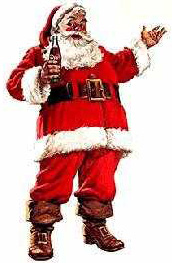
Anybody want to venture a guess where our modern image of Santa Claus comes from? It’s not the church. It’s not from literature. It’s not from the art world. The image of Santa Claus that generally springs to mind was created by illustrator Haddon Sundblom in 1931 for the Coca-Cola company.

santa-coke
Haddon Sundblom’s illustration of Santa Claus for his client, Coca-Cola, painted in the 1930s.

Santa Claus’ origins as we know him today in the U.S. stem from a variety of sources, both pagan and religious. While some urban legends and apparently serious accounts claim that Coca-Cola created Santa, Snopes has debunked that and I want to be clear that that’s not what I’m suggesting, either. Our Santa evolved over time, though most accounts of his modern personage start with Clement C. Moore’s 1822 poem “An Account of a Visit from St. Nicholas” although most people know it by the first line, “Twas the night before Christmas.” Moore fixed the number of reindeer at eight and came up with the names we know today (minus Rudolph, who was added much later in 1938). And like many facets of our melting pot amalgamated society, we freely borrowed from different cultures and Santa continued to evolve as Christmas became increasingly secularized and commercial. Of course, our version of Christmas, including Santa Claus, is now exported around the world.

So look at Sundblom’s image. That is what most of us think of if pressed to picture Santa Claus in our mind. If you look at drawings and paintings of Santa Claus, Saint Nicholas, Kris Kringle and Father Christmas before that time and in other cultures, you’ll see flowing robes of blue, green and other colors. You’ll see a variety of beards or even no beard. You’ll see different headdresses, staff’s, and other symbolic implements and accessories. My point is that the American version of Santa Claus is our creation and has its roots in crass commercialism, which began at least seventy-five years ago.

Today Santa Claus is used to sell everything under the sun from cigarettes to soda pop. Why bring this up? What does it have to do with beer? I mention this because once again several states will not approve beer labels that depict Santa Claus on them. These states — this year so far it’s New York and Maine — claim that showing Santa Claus on the label “might appeal to underage drinkers,” “the Christmas themes … would appeal to children,” and are “undignified and improper.” That last one, from Maine, is one of fourteen mostly ridiculous standards such as “Advertisements of liquor shall not contain any undignified or improper illustration.”

Setting aside the label itself for the moment, let’s just talk about the hypocrisy in these state’s assertions, that it might somehow make underage kids want to drink beer. First of all, what age group believes in Santa Claus? I know it varies, but let’s assume that it’s under ten, which seems to be pretty common. At that age, when Santa is something a child is drawn to, how many have an interest in beer? I’d say next to none. And if you’ve done your job as a parent, your kids would know the difference between an adult drink and one they’re allowed to have. Alcoholic beverages, when they’re even allowed to be sold where children are — like the more enlightened states that allow them to be sold in grocery stores and other general retail outlets — are still segregated together and kept separate from soda, juice and milk. So unless you choose to take your kid down the beer aisle, then I’d say the average kid will be protected from accidentally seeing a beer label with Santa on it. As for older kids, let’s say an underaged kid is interested in buying a beer with Santa on the label. I’m pretty sure it would still be illegal for him to do so. It doesn’t become legal if the label is cute, does it? Did I miss another meeting? Children aren’t permitted to buy whatever appeals to them, are they? So why the hell are these states wasting their time on such utter non-issues? Beer is intended for adults and it’s labels should reflect that. Period. The fact that a minor might accidentally see the label does not and should not matter one whit. The state has no business trying to turn the world into such a kid-friendly place that no adult only things are permitted to be seen by those of us who are, in fact, adults. We should not all be forced to live like ten-year olds in order to “protect” our children. Not only is it impossible, but it’s not even desirable. Overly protected children grow up to be adults with no idea how to deal with controversy, differences of opinion or offense. We already see the effects of this as every subgroup of humanity cries foul whenever their point of view is not completely tolerated. The amount of insult that has led to fatal retaliation is staggering in the world. We need to live with our differences, not try to erase them or pretend they don’t exist.

And why every time a controversy of this kind surfaces, do the authorities conclude — with no evidence whatsoever — that cartoons are exclusively for children. The first newspaper cartoons were for adults and comic strips remained adult-themed for many years. The first animated cartoons were all made for adults. Back before television assumed its place of prominence as the altar of the living room, people went to the cinema far more often than today. And before the film began, they were treated to a newsreel and a cartoon. All of the early cartoons by Disney, Warner Brothers, MGM and the underrated Flesicher Studios were made for adults. Many adults still love cartoons today. I know that’s true because I’m one of them. In America, as usual, the 1950s saw fringe groups censor the violence and adult themes out of comic books with the creation of the “Comics Code” which made comic books suitable only for children until the 1980s, when companies started ignoring the Code and producing works for adults again. In Japan and France, and undoubtedly many other countries, comics for adults in the form of magazines, graphic novels and manga are a very popular medium for adults. In France, for example, the number one magazine is Metal Hurlant (Heavy Metal), which contains ongoing graphic stories for adults. In the U.S., the best-selling magazine is TV Guide. Some of the most popular Japanese films for adults today are animated, films like Akira. Adults there know the best directors and illustrators of anime the way we know football players. The point is that it’s absurd for our government agencies to assume that if it’s a cartoon image that it will automatically appeal to children more than adults, or that kids are the target. Adults love cartoons, too, and we should be allowed to see ones created specifically for us without fear that a child might see it, too.

But I also want to make one more bold assertion about this controversy. All things being equal, and if there were no minimum age to drink alcohol, it would probably be better for kids to drink a beer versus a soda. I know that’s not going to be a popular suggestion, but the fact is beer is healthier than the average soda, which is loaded with caffeine, sugar and all manner of chemicals. Take a look at the label. It reads like a chemistry experiment. I once read that there is so much sugar in a 12 oz. serving of cola that after drinking one, your body will crave additional liquids to dilute all of the sugar you just swallowed in the soda. This leads to you drinking even more soda — a great boon to the companies selling this swill — but a tragic health epidemic for the rest of us. And many schools now accept money from the major soft drink companies to put soda machines right there in school. That’s doing far more harm to our kids than beer is. So why aren’t Maine and New York (and the rest of the states) up in arms over Santa Claus being so closely associated with Coca-Cola or being used to sell cigarettes the way they are with beer? Simple, it’s not really about any concern over the kids. It’s about neo-prohibitionist agendas and the desire to keep alcohol away from everyone, using children as the excuse. [NOTE: I want to be clear that I’m not advocating that we should give beer to kids, just that in terms of protecting them from harm beer is probably less harmful than soda. It’s just an argument. Please, no more misunderstanding e-mails calling me the devil.]

But let’s get back to the labels.

All of the labels in question are imported by Shelton Brothers of Massachusetts. I’ve known Dan Shelton since he first called on me when I was the beer buyer at BevMo around ten years ago. He and two brothers, Will and Joel, import some of the best beers in the world. Just ask them, they’ll tell you. Dan has a much-deserved reputation for speaking his mind. He believes in the beers he sells probably more passionately than any other person I know. Shelton is now suing both states, New York and Maine, over this ridiculous label issue. So I’m certainly glad to see him fighting for his beers.

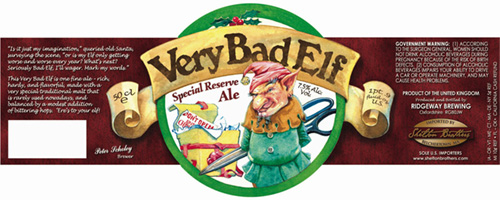
very-bad-elf

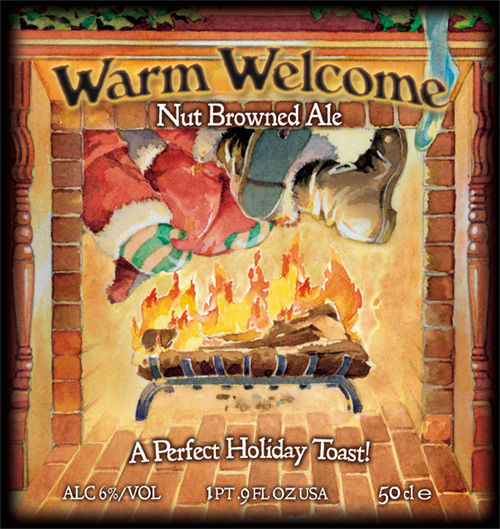
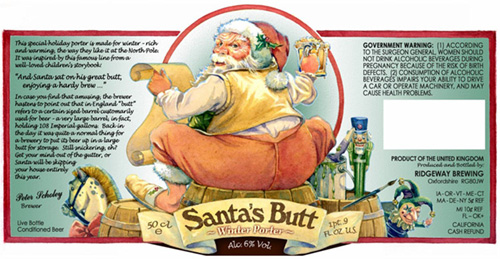
He’s had to fight this fight before, so he at least knows what he’s up against. He’s had similar difficulties with Missouri, New York, North Carolina and Ohio. Last year, the state of Connecticut initially wouldn’t approve the label for Seriously Bad Elf, but then backed off. This year, New York state is saying no to Bad Elf, Very Bad Elf, Criminally Bad Elf (a barleywine), Warm Welcome Nut Brown Ale, Santa’s Butt Winter Porter and Rudolph’s Revenge. The first five are all from a single brewery, Ridgeway Brewery in Oxfordshire, England, and the last is from Cropton Brewery in Yorkshire. Shelton Brothers have filed suit seeking a reversal of the State Liquor Authority’s decision along with damages and legal fees.

warm-welcome

Albany’s Times Union has an overview of the conflict in New York. And Stan at the Real Beer Blog has also weighed in, as has Joe Sixpack. Don Russell’s piece also has an excellent list of other Christmas-themed beers divided into those also depicting Santa Claus, local ones (he’s in Philadelphia), and some of his other favorites from around the country.

santas-butt

But for some reason (no pun intended) the one causing the most trouble is Santa’s Butt to the state officials apparently unaware that a “butt” is a brewing term for a measure of beer. A butt is the equivalent of 2 hogsheads, or 108 imperial gallons (129.7 U.S. gallons). Both New York and Maine are objecting to this label. In Maine, the local Civil Liberties Union has also taken up the fight saying “the beer labels are entitled to First Amendment protection.” According to an AP article, “[t]here is no good reason for the state to censor art, even art found on a beer label,” said Zachary Heiden, staff attorney for the MCLU.

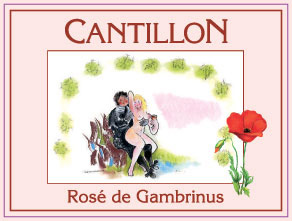
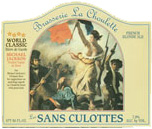
You might at this point be thinking, art? Yes, art, because in addition to Santa’s Butt, the State of Maine is also objecting to two other labels for non-Christmas beers, Cantillon Rose de Gambrinus and Brasserie Les Choulette’s Les Sans Culottes because, according to the state, “they show bare-breasted women.” Gasp!

cantillon-rose
Cantillon webpage for Rose de Gambrinus

The Cantillon label is from a painting by famous Belgian artist Raymond Coumans, who is a friend of Cantillon’s owners and created it specifically for the label. The subject is the legendary King of Flanders, who was a patron of beer and brewing. For a long while, here in California to be sold legally, the naked woman on the king’s lap had to wear a blue dress printed over her body. I cringe every time I think what prudes we are as a nation and how ridiculous we must seem to the rest of the civilized world.

The Associated Press has an overview of the Maine conflict, as does the more local Bangor Daily News.

la-choulette-sans

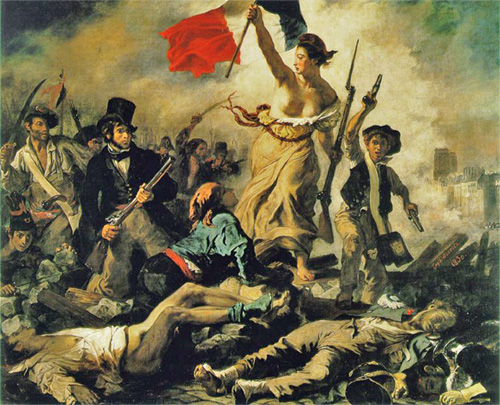
The other beer, Les Sans Culottes from the French brewery, Brasserie Les Choulette, is a Biere de Garde style beer. The label is a detail from the iconic Eugene Delacroix painting Liberty Leading the People that hangs in the Louvre. That the people of Maine might be offended by this image is, in and of itself, offensive to reason and common sense. That they feel their citizens need to be protected from seeing this image on a bottle of beer is ludicrous in the extreme.

This whole episode points out yet another oddity in our nation’s alcohol laws. Most states have this extra layer of the approval process that often denies basic First Amendment rights because the states claim some higher purpose, simply because it’s alcohol. Some of the reasons for the process make a modicum of sense, say, for example, so that labels are not misleading. But to bring in such subjective standards as decency, offensiveness or inappropriateness should never be a part of the procedure. And to pretend to be protecting “the children” is the flimsiest of reasons of all for a product already reserved for only adults. If the rationale is that by using an image that appeals to a child it will create a situation where nothing can stop a minor from obtaining the beer, then fine.

But there are already numerous — I would frankly say too many — impediments to insure alcohol can be obtained only by those adults entitled to buy it. Endless education and programs are created by retailers, distributors and the manufacturers to ensure it never happens, and the penalties imposed to a business when it does are often quite substantially punitive (certainly out of perspective with the actual harm done) so that no business wants to risk selling to a minor. Yet to people in organizations like MADD and other neo-prohibitionists that is still not considered to be enough. Not if there’s even one chance that a teenager might lay his hands on a bottle of beer. That is apparently worse than nuclear war in these people’s minds. I drank alcohol as a teenager, years before it was legal for me to do so. Am I an alcoholic today, a burden on society? Did I ruin my life? No. I am so f*&#ing sick of not being able to buy a beer or it being unreasonably inconvenient to do so just because we’re trying to keep it out of the hands of our kids. Why doesn’t the rest of the world have this problem, or at least doesn’t have it to this degree? Because the rest of the world isn’t quite as preoccupied with controlling the lives of everyone around them, foisting their own set of values on everybody else. Geez, this is pissing me off. Hey Dan, I think it’s time to open up some Christmas beers just so I can relax. Where’s my Santa suit.

delacroix-liberty

Eugene Delacroix’s famous painting Liberty Leading the People, which is apparently inappropriate for the people in the state of Maine to see.

Filed Under: Editorial, News Tagged With: History, International, Law

« Previous Page
Next Page »

Find Something

Northern California Breweries

Please consider purchasing my latest book, California Breweries North, available from Amazon, or ask for it at your local bookstore.

Recent Comments

  • Bob Paolino on Beer Birthday: Grant Johnston
  • Gambrinus on Historic Beer Birthday: A.J. Houghton
  • Ernie Dewing on Historic Beer Birthday: Charles William Bergner 
  • Steve 'Pudgy' De Rose on Historic Beer Birthday: Jacob Schmidt
  • Jay Brooks on Beer Birthday: Bill Owens

Recent Posts

  • Beer Birthday: Dave Alexander May 8, 2026
  • Historic Beer Birthday: Emil Christian Hansen May 8, 2026
  • Beer In Ads #5244: Southern Brewing Bock Beer May 7, 2026
  • Historic Beer Birthday: Anton Dreher May 7, 2026
  • Beer In Ads #5243: Union Brewery Bock Beer! May 6, 2026

BBB Archives

Feedback

Head Quarter
This site is hosted and maintained by H25Q.dev. Any questions or comments for the webmaster can be directed here.