Brookston Beer Bulletin

Jay R. Brooks on Beer

  • Home
  • About
  • Editorial
  • Birthdays
  • Art & Beer

Socialize

  • Dribbble
  • Email
  • Facebook
  • Flickr
  • GitHub
  • Instagram
  • LinkedIn
  • Pinterest
  • RSS
  • Twitter
  • YouTube

Powered by Genesis

Historic Beer Birthday: Jan Léonardus Moortgat

September 13, 2025 By Jay Brooks

Today is the birthday of Jan Léonardus Moortgat (September 13, 1841-May 15, 1920). He was born in Steenhuffel, Belgium, and worked at his parent’s brewery until he was thirty, in 1871, he married and co-founded the Moortgat Farm Brewery with his wife in Breendonk, which is part of Antwerp. His son Albert created their most famous beer, “Duvel,” in 1917 as “Victory Ale,” but renamed it Duvel in 1926.

This is a Google translation of Moortgat’s Dutch language Wikipedia page:

He was born into the family of Petrus Jan Moortgat (1809-1857), brewer in Steenhuffel and Maria Anna De Geest (1811-1884). Jan Leonardus initially continued to help his mother in the brewery until he was thirty. Afterwards he left the company there to his brother Louis.

In 1871 he married Maria De Block (1846-1910), together bought a piece of land in Breendonk and founded a beer and vinegar brewery. She was the daughter of the tenants of the Spanish Castle, the centuries-old farm on the border of Breendonk and Tisselt. Brewing was combined with running a farm. Brewing was a winter activity, agriculture was used the rest of the year.

Leonard was also alderman at Breendonk from 1876 to 1915 under the mayor of the counts Maurice Louis Marie Gaston de Buisseret Steenbecque de Blarenghien (1831-1888) and his son Robert (1863-1931).

In the early 20th century, he left the management to his son Joseph. He introduced the lager but died early. Afterwards, the leadership passed to the other sons Victor and Albert Moortgat. After the First World War, the Duvel was launched and the brewery was further expanded from a family business to a major player on the Belgian market.

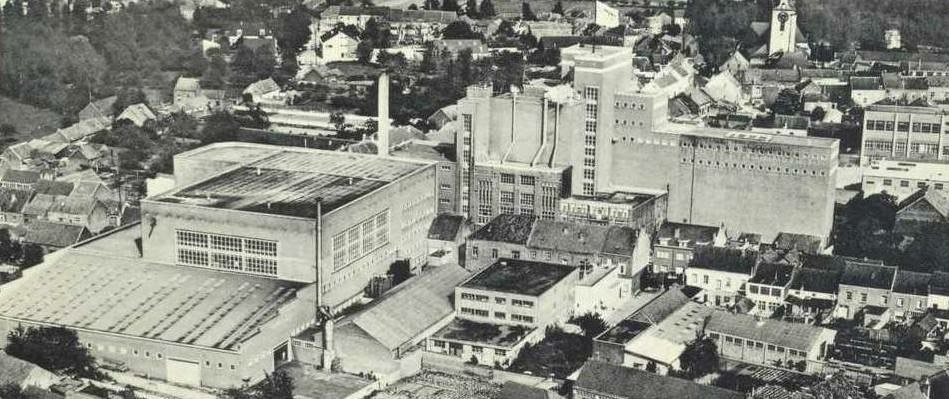
The original Moortgat farmhouse brewery.

This account of the early history of the brewery is from the company’s website:

It all began when Jan-Léonard Moortgat and his wife founded the Moortgat brewery farm in 1871. Around the turn of the century, Moortgat was one of the over 3,000 breweries operating in Belgium.

Jan-Leonard experimented by trial and error, and his top-fermented beers were soon greatly appreciated in the brewery’s home town of Puurs and far beyond. Before long, the Brussels bourgeoisie was also won over by his beers.

Business was booming and Jan-Leonard’s two sons, Albert and Victor, joined the company. There was a clear division of labour: Albert became the brewer, Victor was responsible for delivering the beer to Brussels by horse and dray.

Albert and the Moortgat family c. 1895.

The First World War brought Belgium into contact with England and especially with English ales, which were quite popular at the time.

Inspired by the success of English ales, Albert decided to create a special beer based on the English model.

To create this type of ale, Albert wanted to work with only the best ingredients.

He travelled to the UK to get the specific strain of yeast he wanted and initially met with considerable resistance from the local brewers. It was only after a veritable odyssey across England that he was finally able to get his hands on a precious sample from a Scottish brewery. Our yeast is still cultured from the very same strain to this day!

The two brothers continued to search and experiment until they had perfected the recipe.

To commemorate the end of the First World War, the new beer was initially dubbed ‘Victory Ale’.

Today, of course, it’s known as “Duvel.”

Filed Under: Birthdays, Breweries, Just For Fun Tagged With: Belgium

Beer Birthday: Frank Boon

September 6, 2025 By Jay Brooks

boon

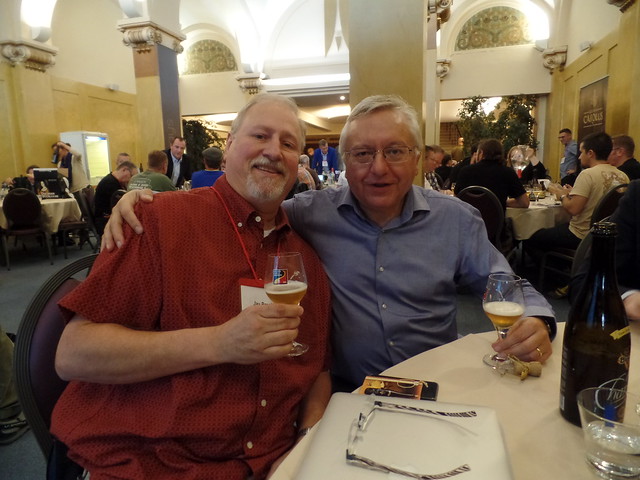
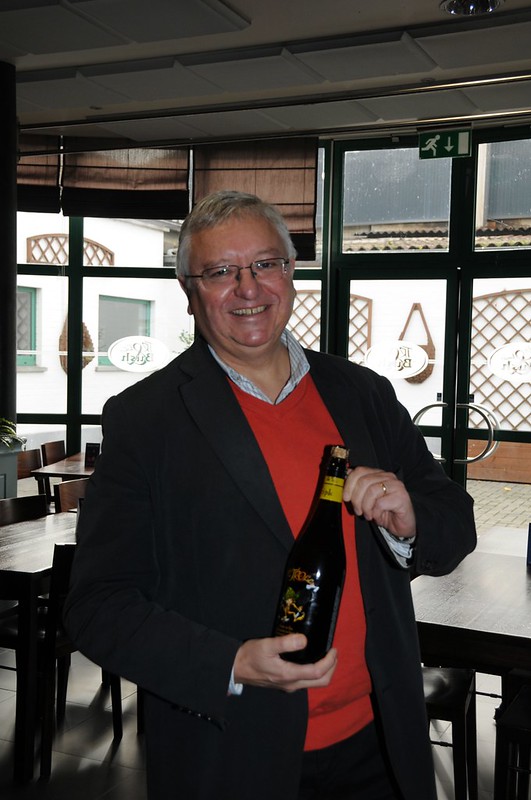
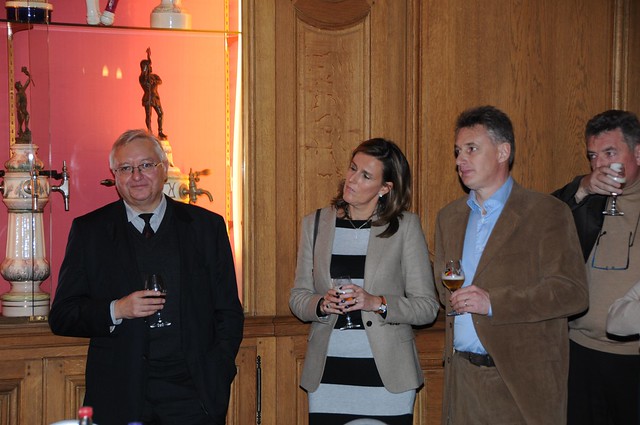
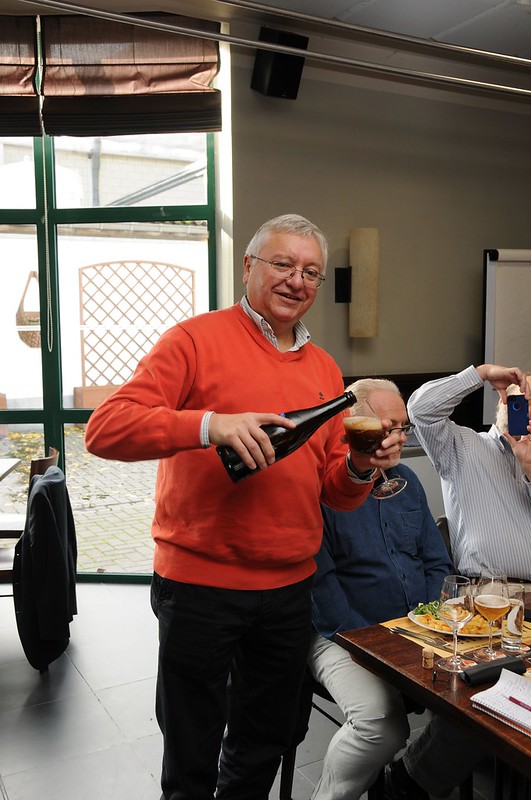
Today is the 71st birthday of Frank Boon, from the Belgian lambic brewery Brouwerij Boon. In 1978, Boon acquired the small “R. De Vits” Lambiek brewery that dated back to 1680, relocating the brewery to downtown Lembeek in 1986. His beers are imported to the U.S. by Latis Imports. Like most lambic fans, I’ve enjoyed his beers for many years, and was fortunate enough to meet Frank a few years ago during Philly Beer Week, and happily spent some time talking with him at the World Beer Cup judging a few years ago. More recently, a few of us toured his brewery after Brussels Beer Challenge judging and he was a gracious host. Join me in wishing Frank a very happy birthday.

Tom Peters, Frank Boon, Jean Van Roy, Fergie Carey and Armand Debelder at a Lambic Beer Dinner held at Monk’s Cafe in Philadelphia several years ago.
Frank and me at the Great Lambic Summit at the University of Pennsylvania Museum of Archeology & Anthropology on June 9, 2010.
Frank-Boon-2018-1
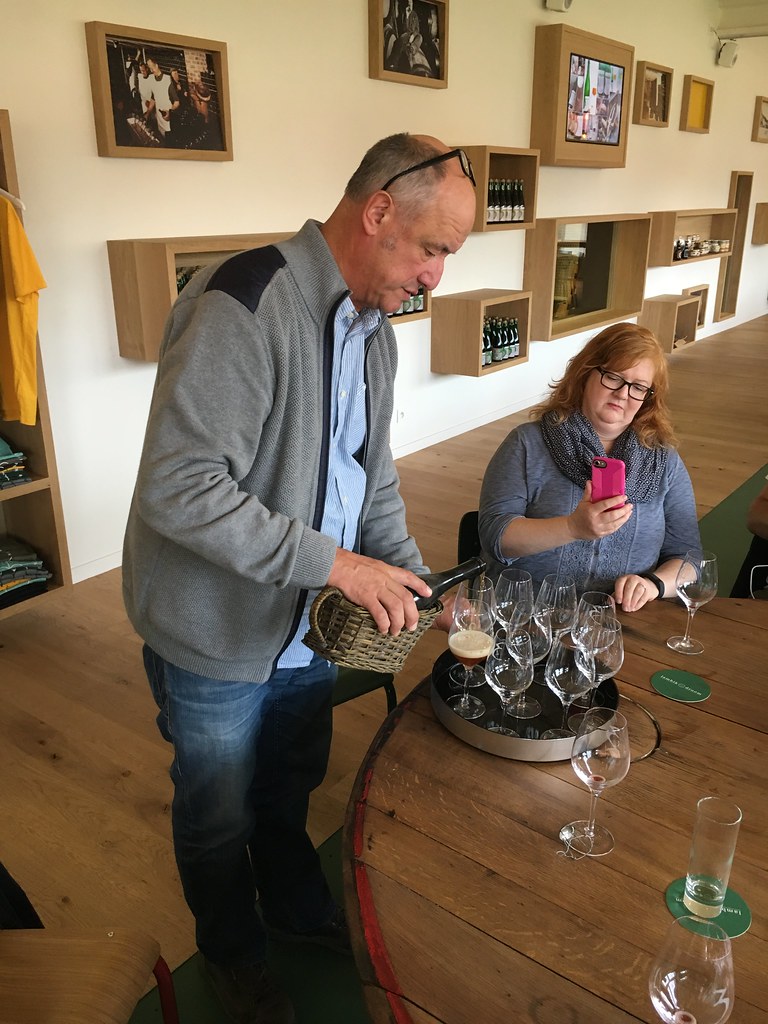
Frank leading a few of us on a tasting at his brewery a couple of years back.
Frank-Boon-2018-2
Talking beer.
Chris Swersey, Karel Boon, Frank, Carl Kins, and Susan Boyle during a visit to the brewery.

Filed Under: Birthdays, Just For Fun Tagged With: Belgium

Beer Birthday: Johan Van Dyck

August 30, 2025 By Jay Brooks

seef
Today is the 50th birthday — the Big 5-O — of Johan Van Dyck, who founded Seef Beer in Antwerp, based on an old style that he worked hard to resurrect after it had died out, despite having been the most popular local beer for many years before two world wars. I first met Johan in San Francisco when he was here with his importer to launch the brand and I wrote about the beer for my newspaper column. The company is now called Antwerpse Brouwcompagnie. It was originally a contract brew, but Johan has opened a production facility in the Noorderpershuis, which was originally a power plant. I’ve since run into him a few times in Belgium, and I’m very glad to see his beer succeed. Join me in wishing Johan a very happy birthday.

DSCN1259
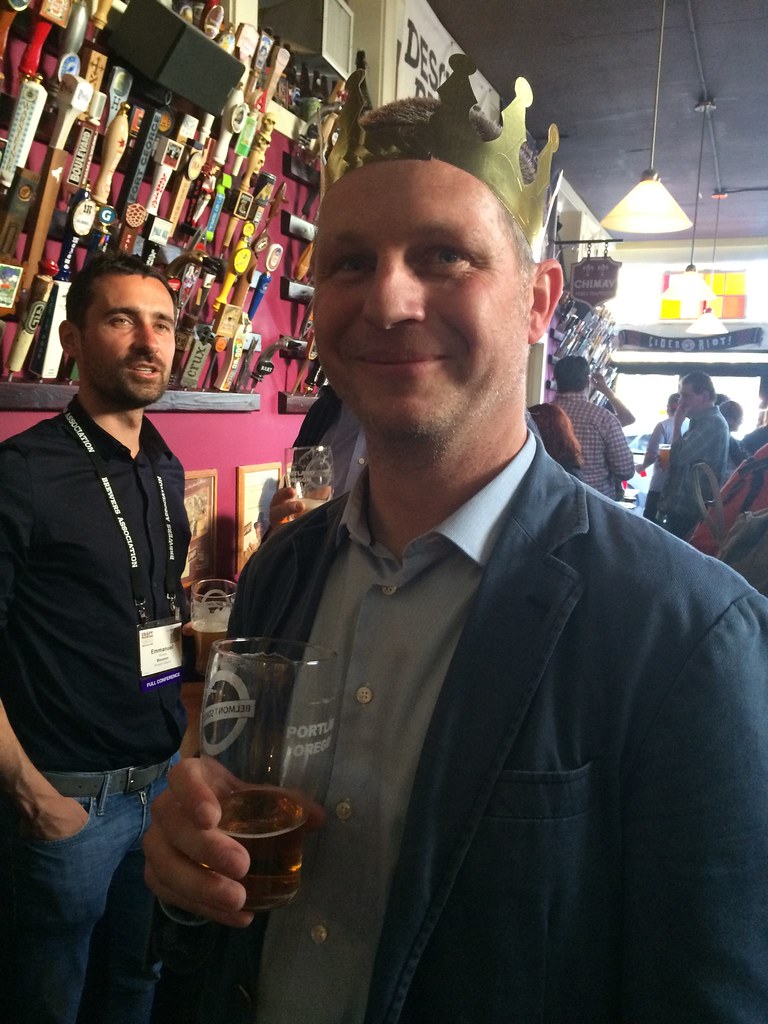
Johan with the King of Belgium (though he was still the prince when we met him), and Bob Leggett from Artisanal Imports.
DSCN1270
Pete Slosberg and me with Johan at City Beer Store
SAM_3813
Johan winning an award at the Brussels Beer Challenge in 2015.

Filed Under: Beers, Birthdays, Just For Fun Tagged With: Belgium

Beer Birthday: Don Feinberg

August 18, 2025 By Jay Brooks

vanberg-dewulf
Today is Don Feinberg’s 70th birthday, along with his wife Wendy Littlefield, ran the Belgian export company Vanberg & DeWulf. Their portfolio included such great beer lines as Dupont, Castelain and Dubuisson (Bush). They were also the original founders of Brewery Ommegang. Several years ago they celebrated their 30th anniversary of being involved in the beer industry and bringing great beer to America. Plus, they’re great fun to hang out and drink with. Unfortunately, several years ago they sold Vanberg & DeWulf, and are taking some time off, before deciding on their next project. It’s been a while now, but hopefully, we’ll learn something soon. Join me in wishing Don a very happy birthday.

Don, along with the Dubuisson brewmaster, being poured Lambrucha in Chicago in 2010.
Wendy and Don at a dinner in Belgium a few years ago.
Feinberg-DC
Wendy Littlefield, Don and Greg Engert at a Vanberg & DeWulf tasting in Washington, D.C.
(photo by Chuck Cook)
Don Feinberg, Anne (from New York’s Ginger Man) and Wendy in Belgium.
Feinberg-QE2
Wendy and Don in 1979.

Filed Under: Birthdays, Just For Fun Tagged With: Belgium, Chicago, Illinois

Historic Beer Birthday: St. Arnulf of Metz

August 13, 2025 By Jay Brooks

halo
While records going back this far in time are notoriously unreliable, some sources put the birthday of St. Arnulf of Metz at August 13, 583 C.E., such as Find-a-Grave, among others. He’s also known as Anou, Arnould, Arnold of Metz, and his feast day is July 18. Although even the year is not settled, and some sources give it as 580 or 582 C.E., so the actual likelihood that any of this is correct is pretty low.

“Saint Arnulf of Metz (c. 582 – 640) was a Frankish bishop of Metz and advisor to the Merovingian court of Austrasia, who retired to the Abbey of Remiremont. In French he is also known as Arnoul or Arnoulf. In English he is also known as Arnold.” Metz is located in northeastern France.

arnulf-of-metz

Also, Arnulf is one of at least three patron saints of brewers with similar names, although he is the oldest, and essentially first one. That’s one of the reasons I chose his feast day, July 18, for the holiday I created in 2008, International Brewers Day.

The Saint Arnold most people are familiar with is Arnold of Soissons, and he’s from much later, almost 500 years, and is thought to have been born around 1040 C.E. Less is known about the third, St. Arnou of Oudenaarde (or Arnouldus), and he’s also a patron saint of beer and specifically Belgian brewers, because Oudenaarde is in Flanders. His story takes place in the 11th century.

Here’s his bio from Find-a-Grave:

Saint Arnulf of Metz (c 582 — 640) was a Frankish bishop of Metz and advisor to the Merovingian court of Austrasia, who retired to the Abbey of Remiremont.

Saint Arnulf of Metz was born of an important Frankish family at an uncertain date around 582. In his younger years he was called to the Merovingian court to serve king Theudebert II (595-612) of Austrasia and as dux at the Schelde. Later he became bishop of Metz. During his life he was attracted to religious life and he retired as a monk. After his death he was canonized as a saint. In the French language he is also known as Arnoul or Arnoulf. Arnulf was married ca 596 to a woman who later sources give the name of Dode or Doda, (whose great grandmother was Saint Dode of Reims), and had children. Chlodulf of Metz was his oldest son, but more important is his second son Ansegisen, who married Saint Begga daughter of Pepin I of Landen.

Arnulf was canonized as a saint by the Roman Catholic Church. In iconography, he is portrayed with a rake in his hand.

He was the third great grandfather of Charlemagne.

Metz_Cathedral_002
St. Arnulf in the Metz Cathedral.

The Legend of the Beer Mug

It was July 642 and very hot when the parishioners of Metz went to Remiremont to recover the remains of their former bishop. They had little to drink and the terrain was inhospitable. At the point when the exhausted procession was about to leave Champigneulles, one of the parishioners, Duc Notto, prayed “By his powerful intercession the Blessed Arnold will bring us what we lack.” Immediately the small remnant of beer at the bottom of a pot multiplied in such amounts that the pilgrims’ thirst was quenched and they had enough to enjoy the next evening when they arrived in Metz.

And here’s another account from Nobility and Analogous Traditional Elites:

During an outbreak of the plague a monk named Arnold, who had established a monastery in Oudenburg, persuaded people to drink beer in place of water and when they did, the plague disappeared.

Arnold spent his holy life warning people about the dangers of drinking water. Beer was safe, and “from man’s sweat and God’s love, beer came into the world,” he would say.

The small country of Belgium calls itself the ‘Beer Paradise’ with over 300 different styles of beer to choose from. Belgium boasts of centuries old tradition in the art of brewing. In the early Middle Ages monasteries were numerous in that part of Europe, being the centers of culture, pilgrimage and brewing. Belgium still has a lot of monasteries and five of these are Trappist, a strict offshoot of the Cis­tercian order, which still brews beer inside the monastery.

During one outbreak of the plague St. Arnold, who had established a monastery in Oudenburg, convinced people to drink beer instead of the water and the plague disappeared as a result. Saint Arnold (also known as St. Arnoldus), is recognized by the Catholic Church as the Patron Saint of Brewers.

St. Arnold was born to a prominent Austrian family in 580 in the Chateau of Lay-Saint-Christophe in the old French diocese of Toul, north of Nancy. He married Doda with whom he had many sons, two of whom were to become famous: Clodulphe, later called Saint Cloud, and Ansegis who married Begga, daughter of Pépin de Landen. Ansegis and Begga are the great-great-grandparents of Charlemagne, and as such, St. Arnold is the oldest known ancestor of the Carolin­gian dynasty.

St. Arnold was acclaimed bishop of Metz, France, in 612 and spent his holy life warning people about the dangers of drinking water. Beer was safe, and “from man’s sweat and God’s love, beer came into the world,” he would say. The people revered St. Arnold. In 627, St. Arnold retired to a monastery near Remiremont, France, where he died on August 16, 640.

In 641, the citizens of Metz requested that Saint Arnold’s body be exhumed and ceremoniously carried to Metz for reburial in their Church of the Holy Apostles. During this voyage a miracle happened in the town of Champignuelles. The tired porters and followers stopped for a rest and walked into a tavern for a drink of their favorite beverage. Regretfully, there was only one mug of beer to be shared, but that mug never ran dry and all of the thirsty pilgrims were satisfied.

A modern portrait of St. Arnulf by American artist Donna Haupt.

Filed Under: Birthdays, Just For Fun, Related Pleasures Tagged With: Austria, Belgium, France, History, Religion & Beer

Historic Beer Birthday: Albert Moortgat

August 2, 2025 By Jay Brooks

Today is the birthday of Albertus Carolus “Albert” Moortgat (August 2, 1890-September 14, 1983). He was the youngest son of Jan Léonardus Moortgat, who founded the brewery which became known as Duvel Moortgat. Albert took over the brewery around 1914 and in 1917 created their iconic beer, Duvel, although they didn’t call it that until 1923.

This is his entry from Dutch Wikipedia, which I altered somewhat so it reads more naturally.

Albert’s father first left the management of the brewery to his brother Joseph (1875-1914), but after his early death he left the management to Albert. The first Duvel was brewed in 1917, but it was not until 1923 that the beer was marketed under that name. Albert went to Scotland to learn how to make this beer and initially called it “Victory Ale.”

In 1921 Moortgat became mayor of Breendonk. Moortgat remained mayor until he was arrested in September 1944, during the Allied liberation of Belgium, and accused of collaboration with the German occupier. He was sentenced to four years in March 1946, but he was released at the end of August 1947.

In 1917 Albert Moortgat married Virginie Plaskie (1891-1977), a daughter of a brewer from Ramsdonk. They had 12 children.

This account of the early history of the brewery is from the company’s website:

It all began when Jan-Léonard Moortgat and his wife founded the Moortgat brewery farm in 1871. Around the turn of the century, Moortgat was one of the over 3,000 breweries operating in Belgium.

Jan-Leonard experimented by trial and error, and his top-fermented beers were soon greatly appreciated in the brewery’s home town of Puurs and far beyond. Before long, the Brussels bourgeoisie was also won over by his beers.

Business was booming and Jan-Leonard’s two sons, Albert and Victor, joined the company. There was a clear division of labour: Albert became the brewer, Victor was responsible for delivering the beer to Brussels by horse and dray.

Albert and the Moortgat family c. 1895. Albert is in the front row on the left.

The First World War brought Belgium into contact with England and especially with English ales, which were quite popular at the time.

Inspired by the success of English ales, Albert decided to create a special beer based on the English model.

To create this type of ale, Albert wanted to work with only the best ingredients.

He travelled to the UK to get the specific strain of yeast he wanted and initially met with considerable resistance from the local brewers. It was only after a veritable odyssey across England that he was finally able to get his hands on a precious sample from a Scottish brewery. Our yeast is still cultured from the very same strain to this day!

The staff of the Moortgat brewery in the 1920s. Neatly dressed. Albert Moortgat is the second from the right in the first row.

The two brothers continued to search and experiment until they had perfected the recipe.

To commemorate the end of the First World War, the new beer was initially dubbed ‘Victory Ale’.

Today, of course, it’s known as “Duvel.”

Filed Under: Birthdays, Breweries, Just For Fun Tagged With: Belgium, History

Beer Birthday: Hildegard Van Ostaden

June 30, 2025 By Jay Brooks

urthel
Today is the 50th birthday of Hildegard Van Ostaden, brewmaster at Urthel, one of only a handful of female brewers working in Belgium. Inspired by a trip to Alaska’s barleywine festival, she also brewed the first American-style Imperial IPA in Belgium. Her beers are all great, and I love the illustrations on the labels that her husband Bas does. Join me in wishing Hildegard a very happy birthday.

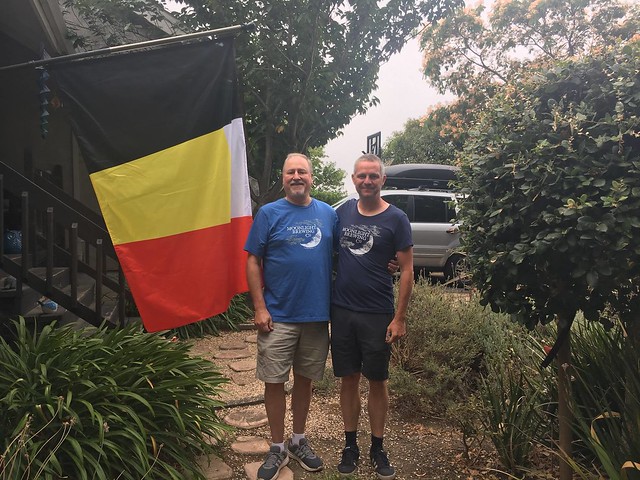
Hildegard with Brian Hunt of Moonlight Brewing at the Beer Chef’s Urthel dinner.
Outside the Falling Rock, fellow GABF judges Carl Kins, from the EBCU (on left), and Hildegard (on right) along with her husband Bas (in the middle) during GABF in 2007.
Bas van Ostaden, Bruce Paton and Hildegard after their dinner in 2007.

Filed Under: Birthdays, Just For Fun Tagged With: Belgium

Beer Birthday: Jean Moeder

June 22, 2025 By Jay Brooks

moeder-lambic
Today is the 47th birthday of Jean Moeder, founder of the Moeder Lambic bar in Brussels, Belgium. I first met Jean at his bar a few years back and have run into him since a couple of times. He’s very passionate about beer, and his place (both of them now) are amazing. Join me wishing Jean a very happy birthday.

moeder-and-cantillon
Jean and good friend Jean Van Roy, from Cantillon, at Brasserie de la Senne a couple of years ago.
moeder-peters
In front of Monk’s Cafe in Philadelphia: Pierre Tilquin, Jean, Jean Van Roy and owner Tom Peters, in 2012.
moeder-and-cantillon-2
But this is by far my favorite, again with Jean and Jean Van Roy, this time from 2014.

[Note: all photos purloined from Facebook.]

Filed Under: Birthdays, Just For Fun Tagged With: Bars, Belgium

Historic Beer Birthday: Constant Vanden Stock

June 13, 2025 By Jay Brooks

Today is the birthday of Constant Vanden Stock (June 13, 1914-April 19, 2008). While he was best known for his exploits in football/soccer, he also ran his family’s business, Belle-Vue Brewery. That brewery was founded by his father, Philémon Vandenstock, in 1913. Constant’s father was captured by the Nazis in World War 2, and was sent to a concentration camp, but died one week after being released in 1945. After the war, Constant re-opened the brewery and continued to run it until the business was effectively acquired by Interbrew, now AB-InBev, in 1988.

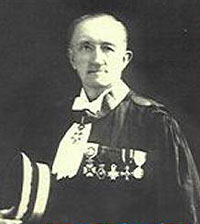
Constant on his 90th birthday.

This biography is from his Wikipedia page.

Constant Vanden Stock was the president and a player of Belgian football club R.S.C. Anderlecht. The stadium of this club is named after him. Constant Vanden Stock also served as coach of the Belgium national football team from 1958 to 1968. He is the father of another club president, Roger Vanden Stock. He is also behind the bribery of referee Emilio Guruceta Muro to throw the UEFA cup semi-final against Nottingham Forest in 1984. Vanden Stock managed the family brewery Belle-Vue, famous for its Kriek and Lambic, until he sold it to beer giant Interbrew, now InBev.

This tribute to Vanden Stock is from the 10th anniversary of his death in 2008, published by the RSCA in Belgium in 2018.

Son of brewer Philémon Vanden Stock and his wife Marie,  Constant Vanden Stock was born in Anderlecht on June 13, 1914, just before the start of the First World War. Ten years later, he began to play for the Mauve and Blancs, where he played only 52 matches in the first team between 1933 in 1938 due to serious injuries. He then joined the ranks of the neighbors of the Union Saint-Gilloise. Five years later, he put an end to his sports career and he focused on the development of Belle-Vue, his father’s brewery.

In the early 1950s, Constant Vanden Stock occupied a very first position at Sporting. He was there for three years responsible for recruiting young people. Constant was also the cadet and school coach. After a short stint as president of La Forestoise, he was appointed to the selection committee of URBSFA. Two years later, he became the only national team coach. Albert Roosens, the Anderlecht president at the time, wanted to bring him back to the RSCA, but Constant nevertheless chose the role of technical director at the Club Brugeois. A year later, in 1969, he returned to the capital, however. Constant became a member of management and also vice-president there, before finally taking over the helm as president in 1971.

It was the start of a long and successful period. In twenty-five years of presidency, Constant Vanden Stock managed to add many trophies to the prize list of our club. He celebrated ten Belgian champion titles, seven Belgian Cups, two Cup Winners’ Cups, a UEFA Cup and two European Super Cups. In addition, the old Émile Versé stadium was completely renovated between 1983 and 1991 to become a football stadium with boxes and  business seats , a great novelty. The enclosure was logically renamed the Constant Vanden Stock stadium to pay tribute to his work.

In 1996, Constant Vanden Stock decided to pass the baton to his son Roger, but he remained, at 82, obviously very attached to his club, as honorary president. In 2005, Constant’s health began to deteriorate, with balance problems which were followed by a heart attack. Constant Vanden Stock died on April 19, 2008, just before the centenary of his club, at the age of 93 years. Rest in peace, Mr. Constant.
This thorough history of Brasserie Belle Vue is from the website Lambic.Info:

Brasserie Belle-Vue has a long and sometimes controversial history of innovation, takeover, and survival among the lambic brewers and blenders. It was founded in 1913, by a café blender named Philémon Vandenstock (1886 – 1945). The owner of a bar in Brussels, Vandenstock, along with his wife, bought wort from various lambic breweries in the city and began blending fondgeuze for the establishment. Shortly after they began their blending business, World War I broke out leaving few resources to continue. Finally, in 1927, the Belle-Vue Café in Anderlecht became available. Vandenstock purchased the building as an outlet for his lambics; serving five other cafes in the area while also selling directly to customers. From 1927 onward, the blendery would market itself under the Belle-Vue name with a mention to Ph. Vandenstock usually visible somewhere on the branding.
The business flourished under Philémon, leading to the first brewery acquisition by Belle-Vue in 1943: Vos-Kina, a lambic brewery located in Sint-Jans-Molenbeek. The acquisition of the brewery came at a difficult time in Europe’s history, right in the middle of World War II. While many breweries were struggling through the war, Belle-Vue was growing. Now able to brew his own lambic, Vandenstock also brought his son Constant Vandenstock and his son-in-law Octave Collin Vandenstock into the business to help manage.[1] Sadly, Philémon was arrested by the occupying Nazi forces in 1944 and sent to the Neuengamme concentration camp where he remained until it was liberated in May of 1945. He died just one week after the camp’s liberation.

The journey of Belle-Vue’s slide into non-traditional lambic started immediately after the death of Philémon when his son Constant took over the business. Until then, Belle-Vue was producing only traditional fondgeuze; however, like many other lambic breweries at the time, Constant began to use artificial flavorings to adapt to the changing palates of Belgian lambic drinkers. Belle-Vue began sweetening, filtering, pasteurizing, and carbonating its gueuze so that it could be consumed more like a traditional European pale lager rather than a traditional lambic. Belle-Vue also was one of the first, if not the first, lambic breweries to move away from using the traditional 75cl bottles to using capped 25cl bottles. This provided an easy “one bottle for one glass” strategy and did away with specialty corkscrews needed for opening the larger bottles.

The journey to the top of the lambic world for Belle-Vue began in the 1949-1950 season when Belle-Vue began to send lambic across the country and into France and the Netherlands. Belle-Vue, who was at the time the only lambic brewery with filtered and pasteurized gueuze, managed to escape the heatwave that resulted in exploding bottles for the majority of the lambic brewers and blenders that season. Business was so good that the brewery went on to two more takeovers, taking over the Louis & Emile De Coster lambic brewery in 1952 and Timmermans in 1955.

Constant, who was always involved with the football leagues in Belgium and Europe brought his son, Roger, as well as Roger’s cousin Philipe, into the business in 1962. In 1969, Belle-Vue acquired two more breweries: De Boeck and Goossens, known together as Brasseries Unies (United Breweries). These two breweries together had already acquired Brasseries Brasserie de la Couronne (De Kroon), Espagne, De Coster-Heymans, and Vandenkerckhoven. Again in 1970 Belle-Vue acquired Brabrux, which had already acquired other well known lambic breweries De Keersmaeker, Vaan Haelen-Coche, Bécasse-Steppé, and Vandenperre. At this point, Belle-Vue controlled approximately 75% of the lambic market. De Neve was also taken over by Belle-Vue in 1975, which is now a set of luxury apartments in the old brewery building.

Belle-Vue was riding a wave of success that very few lambic breweries were achieving at the time, but to do this Belle-Vue needed the help of one brewery still bigger than them in Belgium: Artois. Belle-Vue partnered with Artois to help expand its brand in the export market. The cost of this was a 43% minority share for Artois in Belle-Vue, with Constant still remaining in charge of Belle-Vue. When Artois merged with Piedboeuf (most recognized as the brewer of Jupiler) in 1988 to create Interbrew, it effectively put an end to the Vandenstock family stake in Belle-Vue.

Today, Brasserie Belle-Vue exists under the AB-InBev umbrella and consistently puts out non-traditional, sweetened lambics for the masses. No longer producing a traditional lambic or gueuze, the final true-to-style Belle-Vue product was the Belle-Vue Sélection Lambic released in 1999. Belle-Vue beers are now produced at the brewery in St. Pieters-Leeuw located just outside the Brussels Capital Region in Flemish Brabant. Belle-Vue is not a member of HORAL.

Eoghan Walsh also has a nice overview of the legacy of the lambic brewery entitled “Monsieur Constant // How one brewer defined beer and football in Brussels for the 20th century.”

Filed Under: Birthdays, Breweries, Just For Fun Tagged With: Belgium, Lambic

Historic Beer Birthday: Prosper Cocquyt

June 9, 2025 By Jay Brooks

sabena
Today is the birthday of Prosper Cocquyt (June 9, 1900-October 22, 1954). He was born in Astène, Belgium, near Ghent, and is primarily famous for being an aviator.

Prosper-Cocquyt

Prosper Cocquyt was called “the uncrowned king of the airline pilots.” Shortly after learning to fly, in his early twenties, joined Sabena World Airlines in its inception, and opened several routes for them, including to the Belgian Congo. He flew for them for over 25 years, and was even “the favorite pilot of the Belgian royal family and the personal pilot of the kings, Albert I and Leopold III.” Flying Zone has a lengthy biography of Cocquyt, and so does another website.

He was married to Elza Timmermans, and they had two children, a boy and a girl. It’s possible she was part of the Timmermans brewing family, but I’m not sure. But there’s another reason he’s included here.

When World War I broke out, Cocquyt was only fourteen, and he had to abandon going to school and find work. He was hired by a brewery run by a friend of his father as a mechanic. He distinguished himself by his knowledge of mechanics, and so impressed his boss, at sixteen, he was named chief mechanic, and even received a degree in mechanical engineering and electrical engineering at 21, before abandoning working in brewing to begin his career as a pilot. As far as I could tell, he never looked back.

Prosper-DC4

Filed Under: Birthdays, Just For Fun, Related Pleasures Tagged With: Belgium, History

« Previous Page
Next Page »

Find Something

Northern California Breweries

Please consider purchasing my latest book, California Breweries North, available from Amazon, or ask for it at your local bookstore.

Recent Comments

  • Steve 'Pudgy' De Rose on Historic Beer Birthday: Jacob Schmidt
  • Jay Brooks on Beer Birthday: Bill Owens
  • Steve 'Pudgy' De Rose on Beer Birthday: Charles Finkel
  • Steve 'Pudgy' De Rose on Beer Birthday: Bill Owens
  • Steve "Pudgy" De Rose on Beer Birthday: Pete Slosberg

Recent Posts

  • Beer In Ads #5135: Only The Lilacs Wait For Spring … When Bock Beer Is Here In December! December 7, 2025
  • Historic Beer Birthday: Christian William Feigenspan December 7, 2025
  • Historic Beer Birthday: Theodor Schwann December 7, 2025
  • Beer In Ads #5134: Look, Yes It’s Here, Gem Bock Beer December 6, 2025
  • Historic Beer Birthday: Henry Liebmann December 6, 2025

BBB Archives

Feedback

Head Quarter
This site is hosted and maintained by H25Q.dev. Any questions or comments for the webmaster can be directed here.