Brookston Beer Bulletin

Jay R. Brooks on Beer

  • Home
  • About
  • Editorial
  • Birthdays
  • Art & Beer

Socialize

  • Dribbble
  • Email
  • Facebook
  • Flickr
  • GitHub
  • Instagram
  • LinkedIn
  • Pinterest
  • RSS
  • Twitter
  • YouTube

Powered by Genesis

Historic Beer Birthday: Peter Ganser

June 24, 2025 By Jay Brooks

peter-ganser
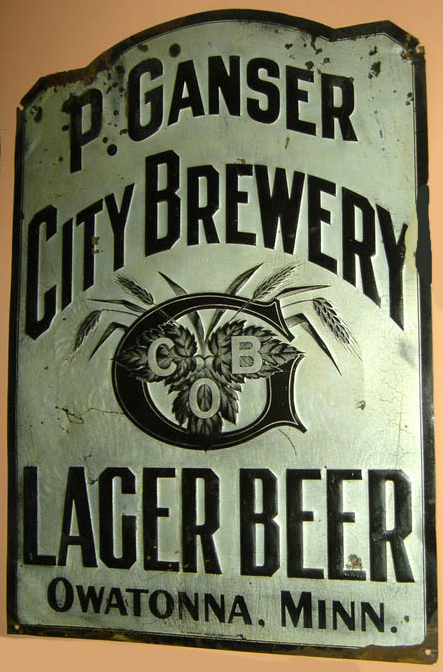
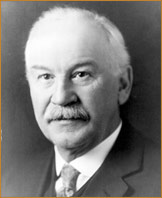
Today is the birthday of Peter Ganser (June 24, 1836-August 5, 1915). He was born in Germany, but settled in Steele County, Minnesota, buying the Knobloch & Mannheim brewery and founding the Peter Ganser brewery in Owatonna, along with his brother Adam. It was generally known as the Peter Ganser, City Brewery, off and on from 1865, before it finally closed a few years into prohibition.
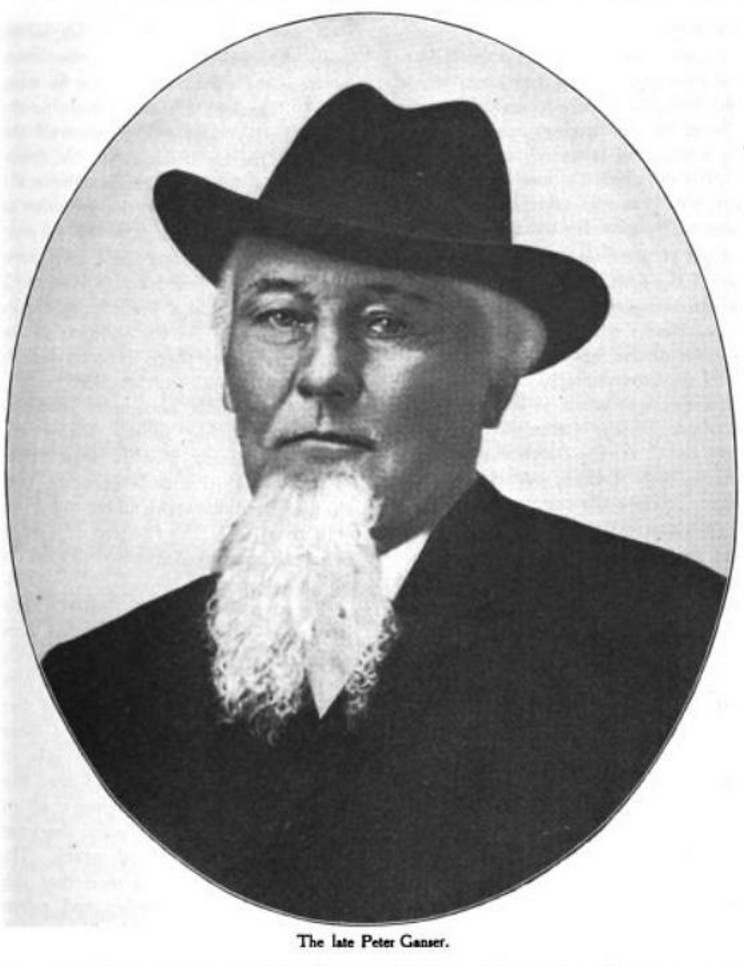
peter-ganser

Here’s his obituary, from the American Brewers Review:
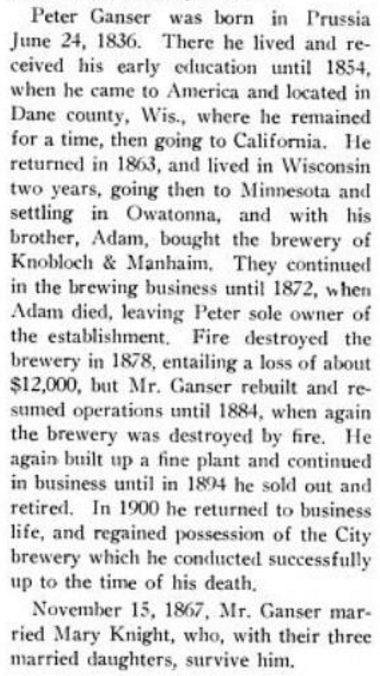
ganser-obit

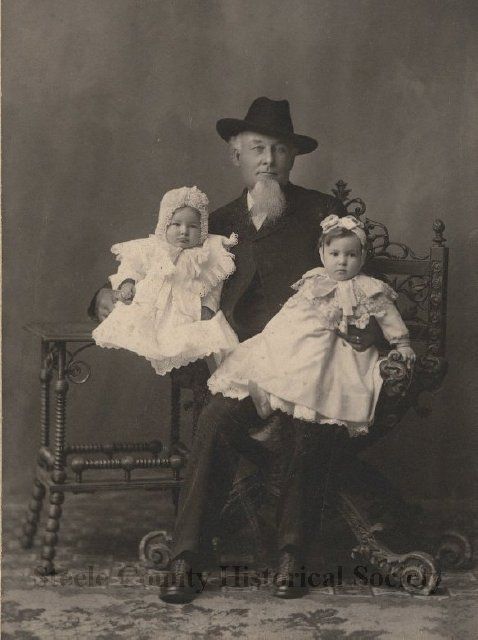
ganser-and-daughters
Local brewer Peter Ganser sits on an ornate chair, holding two of his daughters. On the left is Adeline, who later became Mrs. William Zamboni; on the right is his daughter, Catherine, who later married Harry Brown (from the Steele County Historical Society).

And here’s another account from the “History of Rice & Steele Counties, Minnesota, Illustrated, Vol. II,” and published in 1910:

Peter Ganser, proprietor of the Owatonna City Brewery, is one of those substantial citizens, who, in building the foundations for their own fortunes, find the time to take an interest in all worthy causes that tend toward the development of the community. He combines liberality with shrewd common sense and business ability and from his first settlement here he has had an unbounded faith in Owatonna’s future. Mr. Ganser was born in Prussia, Germany, June 24, 1836. He received his early education in the public schools and remained in his native country until 1854, when he came to America and located in Dane county, Wisconsin, where he lived for a time and then went to California. In 1863 he returned to Wisconsin and there remained until 1865 when he came to Owatonna and, together with his brother, Adam, purchased the city brewery, which they continued together until 1872, at which time the brother died. The subject of this sketch then became the sole owner and proprietor. In 1878 the brewery was destroyed by fire, entailing a loss of about $12,000. Undaunted by this loss, Mr. Ganser rebuilt, but in 1884 again suffered a similar disaster. The present building, to which additions and improvements have been made from time to time, was erected in 1884. In 1879, Mr. Ganser, in company with Jacob Glaeser, erected the building then known as the Germania Hall. Mr. Glaeser has carried on a large and increasing business from year to year. In 1894 he sold out his business for six years lived a retired life. In 1900 he again came into possession of the brewery, which he has since conducted. Mr. Ganser was married in 1867 to Mary Knight, who was born in Indiana. The fruit of this union was three children, viz: Margaret, now the wife of William Fleckenstein of the Fleckenstein Brewery at Faribault; Adeline, now Mrs. W. C. Zamboni; Kate, now Mrs. H. D. Brown, of Owatonna. Mr. Ganser is a Democrat in political faith. He takes an active interest in public affairs, and served as a mayor of Owatonna one term, and alderman of the fourth ward for two years. Mr. Ganser is a self-made man, enterprising in business, and has won his position by persevering efforts. He lives in a very find residence at 508 South Oak street.
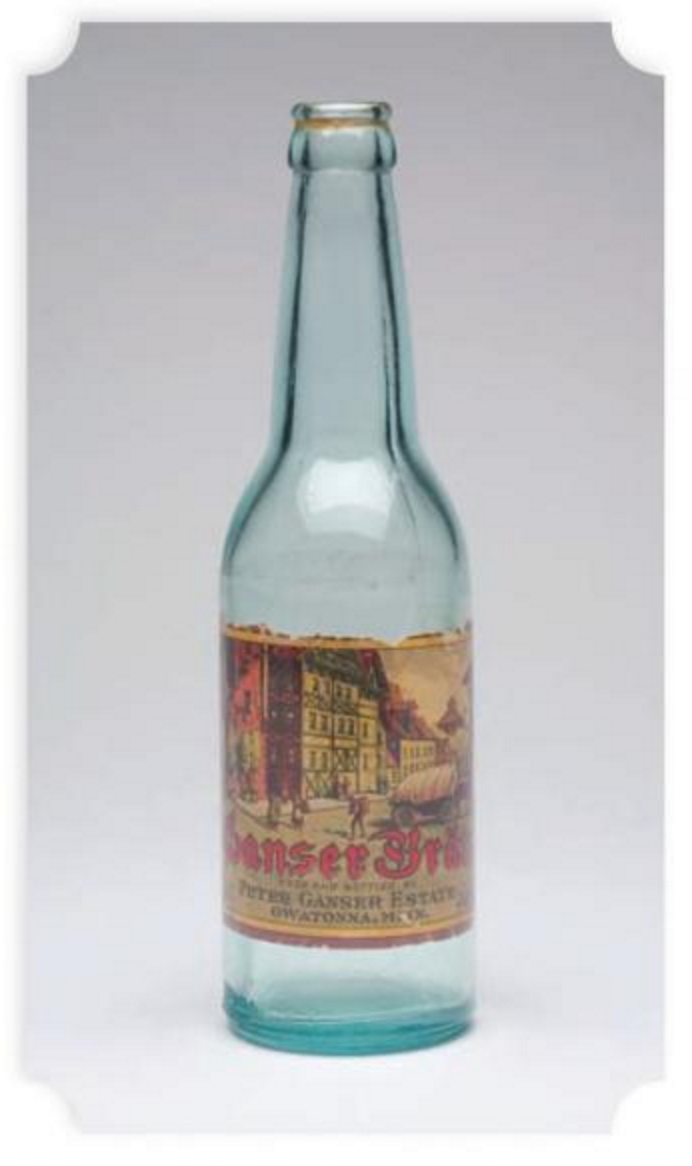
ganser-brau-near-beerGanser Brau Near Beer.

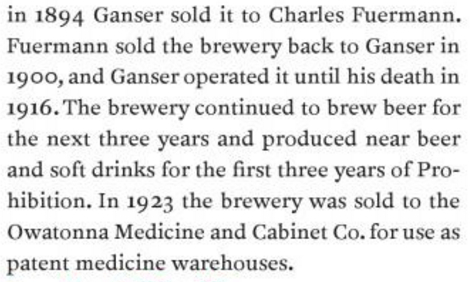
And this is from Land of Amber Waters: The History of Brewing in Minnesota:
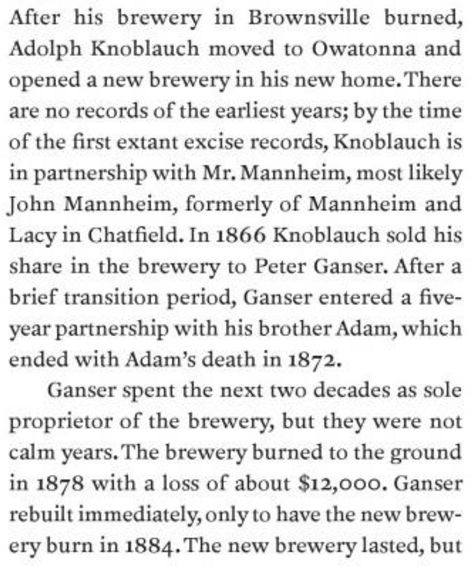
ganser-history-1
ganser-history-2

ganser-city-sign

Filed Under: Birthdays, Just For Fun Tagged With: Germany, History, Minnesota

Beer In Ads #4973: Bock Beer, A Hummer B’Gosh

May 18, 2025 By Jay Brooks

Last year I decided to concentrate on Bock ads. Bock, of course, may have originated in Germany, in the town of Einbeck. Because many 19th century American breweries were founded by German immigrants, they offered a bock at certain times of the year, be it Spring, Easter, Lent, Christmas, or what have you. In a sense they were some of the first seasonal beers. “The style was later adopted in Bavaria by Munich brewers in the 17th century. Due to their Bavarian accent, citizens of Munich pronounced ‘Einbeck’ as ‘ein Bock’ (a billy goat), and thus the beer became known as ‘Bock.’ A goat often appears on bottle labels.” And presumably because they were special releases, many breweries went all out promoting them with beautiful artwork on posters and other advertising.

Sunday’s ad is for Ganser Bock Beer. The ad was published on May 18, 1906. This one was for the P. Ganser, The Home Brewery, a.k.a. City Brewery, of Owatonna, Minnesota, which was originally founded in 1865. This ad ran in the People’s Press, also of Owatonna, Minnesota.

Filed Under: Art & Beer, Beers, Breweries, Just For Fun Tagged With: Advertising, Bock, History, Minnesota

Historic Beer Birthday: George Marti

May 4, 2025 By Jay Brooks

august-schell
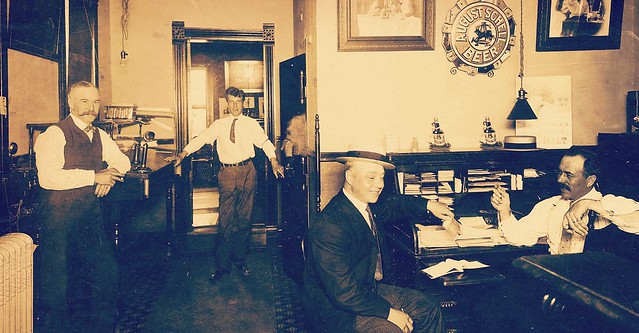
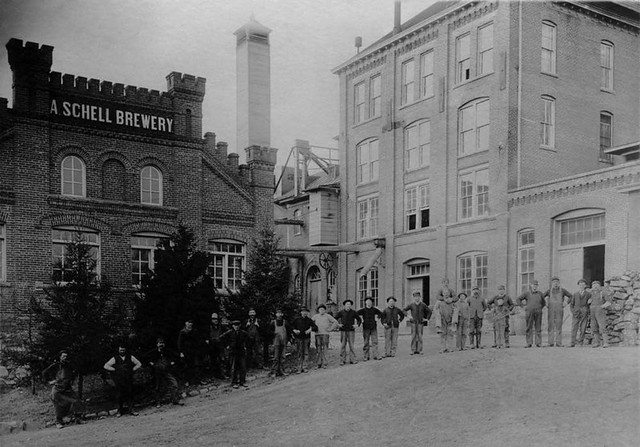
Today is the birthday of George Marti (May 4, 1856-March 22, 1934). He was the husband of Emma Schell, whose father August Schell started the Schell’s Brewery in 1860 in New Ulm, Minnesota. Schell’s Brewery is still in business today, and is still owned by the family who started it. “It is the second oldest family-owned brewery in America (after D. G. Yuengling & Son) and became the oldest and largest brewery in Minnesota when the company bought the Grain Belt rights in 2002.” A pharmacist by trade, when August’s son Otto, who had been running the brewery after his father died, also died suddenly in 1911, George stepped up and became the manager and president of the brewery. He thought it would be temporary, but he remained at the brewery for the rest of his life, and in 1934 when he passed away, his son Alfred Marti took over for him.

georgemarti

This portion of a history of the August Schell Brewery, from Funding Universe, mentions George Marti and his role in the company:

In 1878 August Schell turned over daily operations to his sons Adolph and Otto, but remained as chief executive of the company. Adolph managed the business, and Otto, who had spent time studying brewing in Germany, became brewmaster. Later, after Adolph moved out of state, Otto and his brother-in-law George Marti partnered to operate the brewery. Back in those days the beer was delivered to bars by horse-drawn wagon in oak barrels. When trucks were used in later years, Schell even delivered to people’s homes.

In 1885, August and Theresa Schell built the Schell mansion and had the brewery property beautifully landscaped with gardens and a deer park. The picturesque landscaping still encompasses the brewery complex today, more than 100 years later. Their attention to detail earned the mansion and grounds a spot on the National Register of Historic Sites.

Sometime before he died, August Schell commissioned a Copper brew kettle for the brewery, which held 3,520 gallons of beer. It cost $25,000. At the time copper was the best metal to use in the brewing process. It helped brewers avoid problems due to the acidic content of wort and beer.

August Schell died in 1891, leaving the brewery to his wife. His youngest son Otto was the manager. The family incorporated August Schell Brewing Company in 1902, with Otto serving as president, Theresa as vice-president, and George Marti as secretary-treasurer. In 1911, Otto died suddenly. Theresa died just four months later, leaving George Marti to run the brewery.

The brewery continued to flourish under George Marti’s leadership until Prohibition was signed into law in 1919. Prohibition laws banned the manufacture, sale, and transportation of alcoholic beverages in the United States. Wisely, Marti responded by shifting the brewery’s production to “near beer,” soft drinks, and candy. When Prohibition laws were finally repealed in 1933, Schell’s brewery easily made the transition back to brewing malt beverages. The brewery was fortunate; during that time period, approximately 1,300 breweries in the country went out of business.

The next generation, represented by Alfred Marti, took over brewery management in 1934 after George Marti passed away. The younger Marti added entertainment to the brewery’s local allure by establishing the Schell’s Hobo Band, which still performs in the community today. In 1969, Alfred Marti retired, passing on leadership to his son Warren.

schells-george-marti
I’m pretty sure on of these men is George when he was younger, though I’m not sure if it’s the one on the far left or far right.

And this short paragraph mentioning George is from Immigrant Entrepreneurship:

When Otto Schell incorporated the August Schell Brewing Company in October of 1902 at $300,000 ($8,090,000 in 2011 dollars), he established a tradition of appointing only family members to the board of directors. The original board of directors listed Otto Schell as president, Theresa Schell, his mother and the wife of founder August Schell, as vice-president, and George Marti as secretary and treasurer. When Otto Schell died at the age of 48 in 1911, George Marti, August Schell’s son-in-law, took over as president of the August Schell Brewing Company. Operation of the company has remained within the Marti family ever since.

Schell-brewery-1879

Schells-Deer-Brand-Beer--Labels-August-Schell-Brewing-Company
georgemarti

Filed Under: Birthdays, Breweries, Just For Fun Tagged With: History, Minnesota

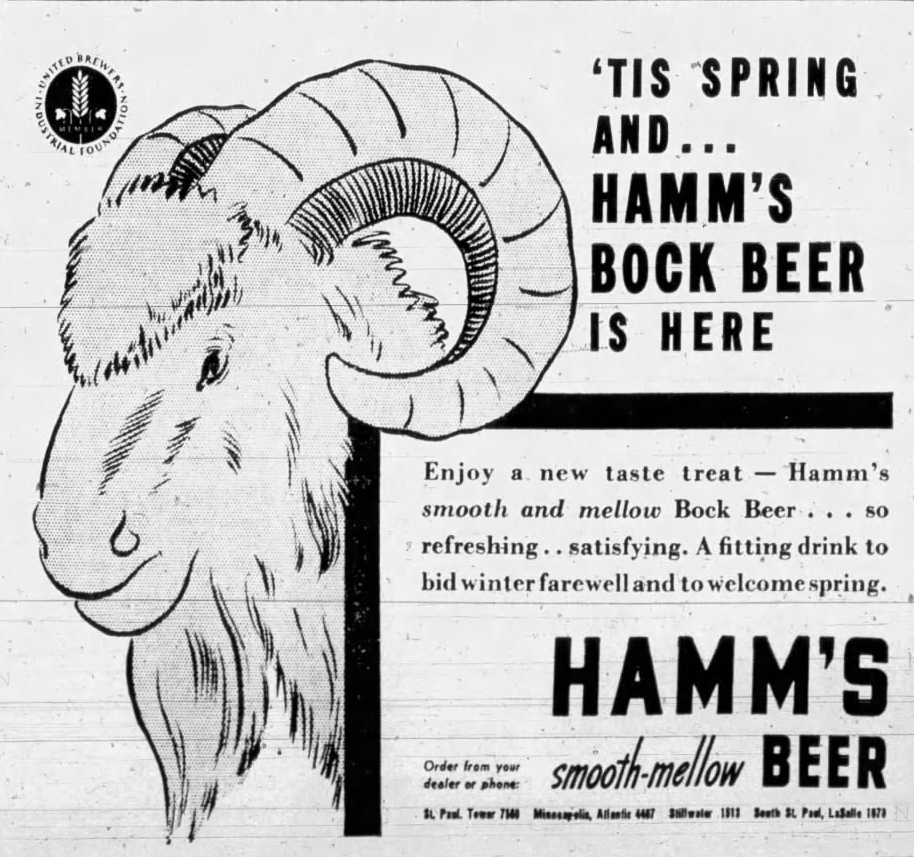
Beer In Ads #4953: ‘Tis Spring And … Hamm’s Bock Beer Is Here

April 27, 2025 By Jay Brooks

Last year I decided to concentrate on Bock ads. Bock, of course, may have originated in Germany, in the town of Einbeck. Because many 19th century American breweries were founded by German immigrants, they offered a bock at certain times of the year, be it Spring, Easter, Lent, Christmas, or what have you. In a sense they were some of the first seasonal beers. “The style was later adopted in Bavaria by Munich brewers in the 17th century. Due to their Bavarian accent, citizens of Munich pronounced ‘Einbeck’ as ‘ein Bock’ (a billy goat), and thus the beer became known as ‘Bock.’ A goat often appears on bottle labels.” And presumably because they were special releases, many breweries went all out promoting them with beautiful artwork on posters and other advertising.

Sunday’s ad is for Pabst Bock Beer and was published April 27, 1938. The brewery was the Theo. Hamm Brewing Co. of St. Paul, Minnesota, which was originally founded in 1865. This ad ran in The Minneapolis Journal of Minneapolis, Minnesota.

Filed Under: Art & Beer, Beers, Breweries Tagged With: Advertising, Bock, History, Minnesota

Beer In Ads #4933: First Taste Of Spring

April 7, 2025 By Jay Brooks

Last year I decided to concentrate on Bock ads. Bock, of course, originated in Germany, in the town of Einbeck. Because many 19th century American breweries were founded by German immigrants, they offered a bock at certain times of the year, be it Spring, Easter, Lent, Christmas, or what have you. In a sense they were some of the first seasonal beers. “The style was later adopted in Bavaria by Munich brewers in the 17th century. Due to their Bavarian accent, citizens of Munich pronounced ‘Einbeck’ as ‘ein Bock’ (a billy goat), and thus the beer became known as ‘Bock.’ A goat often appears on bottle labels.” And presumably because they were special releases, many breweries went all out promoting them with beautiful artwork on posters and other advertising.

Monday’s ad is for Schmidt’s Bock Beer and was published April 7, 1939. The brewery was the Jacob Schmidt Brewing Co. of Saint Paul, Minnesota, which was originally founded in 1857. This ad ran in the St. Paul Recorder, of St. Paul, Minnesota, with the tagline: “First Taste of Spring, Bock is Back!”

Filed Under: Art & Beer, Beers, Breweries, Just For Fun Tagged With: Advertising, Bock, History, Minnesota

Beer In Ads #4931: Spring Time Is Bock Beer Time

April 5, 2025 By Jay Brooks

Last year I decided to concentrate on Bock ads. Bock, of course, originated in Germany, in the town of Einbeck. Because many 19th century American breweries were founded by German immigrants, they offered a bock at certain times of the year, be it Spring, Easter, Lent, Christmas, or what have you. In a sense they were some of the first seasonal beers. “The style was later adopted in Bavaria by Munich brewers in the 17th century. Due to their Bavarian accent, citizens of Munich pronounced ‘Einbeck’ as ‘ein Bock’ (a billy goat), and thus the beer became known as ‘Bock.’ A goat often appears on bottle labels.” And presumably because they were special releases, many breweries went all out promoting them with beautiful artwork on posters and other advertising.

Saturday’s ad is for Gluek’s Bock Beer and was published April 5, 1914. The brewery was the Gluek Brewing Co. of Minneapolis, Minnesota, which was originally founded in 1857. This ad ran in the Star Tribune, also of Minneapolis, Minnesota, with the tagline: “Spring Time is Bock Beer Time.”

Filed Under: Art & Beer, Beers, Breweries, Just For Fun Tagged With: Advertising, Bock, History, Minnesota

Beer In Ads #4881: Minneapolis Brewing Bock

February 14, 2025 By Jay Brooks

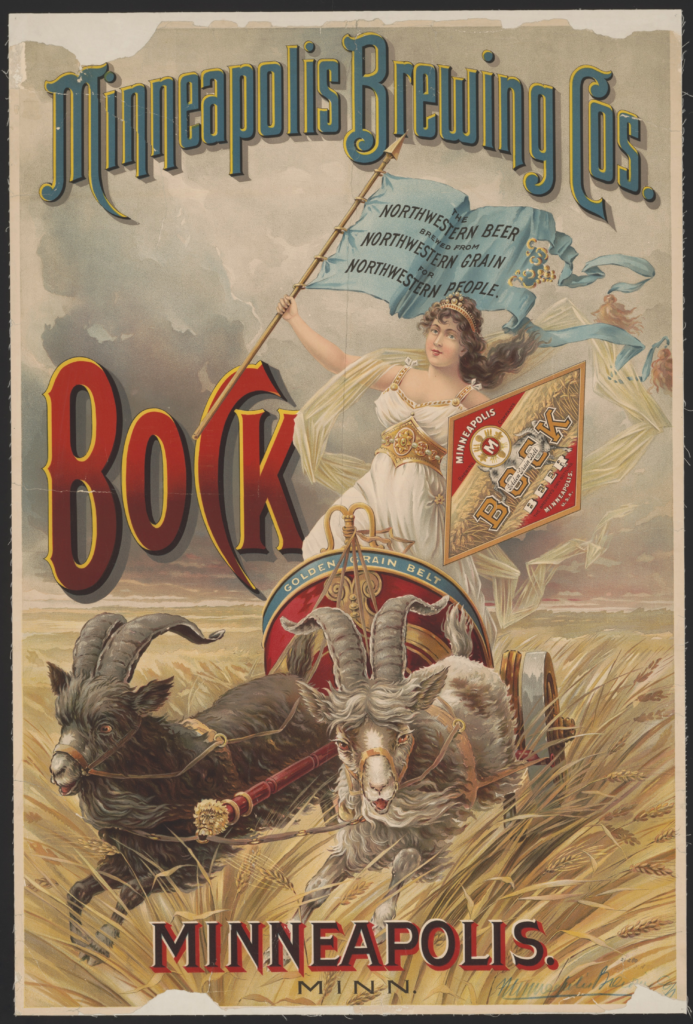
Last year I decided to concentrate on Bock ads. Bock, of course, originated in Germany, in the town of Einbeck. Because many 19th century American breweries were founded by German immigrants, they offered a bock at certain times of the year, be it Spring, Easter, Lent, Christmas, or what have you. In a sense they were some of the first seasonal beers. “The style was later adopted in Bavaria by Munich brewers in the 17th century. Due to their Bavarian accent, citizens of Munich pronounced ‘Einbeck’ as ‘ein Bock’ (a billy goat), and thus the beer became known as ‘Bock.’ A goat often appears on bottle labels.” And presumably because they were special releases, many breweries went all out promoting them with beautiful artwork on posters and other advertising.

Friday’s ad for “Bock” was created for the Minneapolis Brewing Co., which today is known as Grain Belt. I love the text on the flag. “Northwestern Beer brewed from Northwestern Grain for Northwestern People. The lithograph was created in the 1890s, though I don’t know who the lithographer was that produced it.

Filed Under: Art & Beer, Beers, Breweries, Just For Fun Tagged With: Advertising, Bock, History, Minnesota

Beer In Ads #3956: Hamm’s Eagle

December 31, 2021 By Jay Brooks

Friday’s ad is for “Hamm’s,” from the late 1800s, I believe. This ad was made for Hamm’s Brewing, which was founded in 1865 by Theodore Hamm in St. Paul, Minnesota. At its peak, it was the 5th largest brewery in America, and operated facilities in five cities, including San Francisco, L.A., Baltimore and Houston, in addition to the original brewery in Minnesota. This one was most likely a promotional poster and features an eagle perching on a series of Hamm’s beer bottles.

Filed Under: Art & Beer, Beers Tagged With: Advertising, History, Minnesota

Beer In Ads #3955: Brewed From America’s Finest Barley

December 30, 2021 By Jay Brooks

Thursday’s ad is for “Hamm’s,” from the 1950s. This ad was made for Hamm’s Brewing, which was founded in 1865 by Theodore Hamm in St. Paul, Minnesota. At its peak, it was the 5th largest brewery in America, and operated facilities in five cities, including San Francisco, L.A., Baltimore and Houston, in addition to the original brewery in Minnesota. This one features a barley farming scene with a giant bottle f beer in the foreground, with the tagline “Hamm’s Beer, Brewed From America’s Finest Barley.”

Filed Under: Art & Beer, Beers Tagged With: Advertising, History, Minnesota

Beer In Ads #3954: Mount Rainier, It’s The Beer Refreshing

December 29, 2021 By Jay Brooks

Wednesday’s ad is for “Hamm’s,” from 1959. This ad was made for Hamm’s Brewing, which was founded in 1865 by Theodore Hamm in St. Paul, Minnesota. At its peak, it was the 5th largest brewery in America, and operated facilities in five cities, including San Francisco, L.A., Baltimore and Houston, in addition to the original brewery in Minnesota. This one features picture of Mount Rainier on one half and a paneled wood background on the other half with the Hamm’s logo and a can and full mug of beer, with the tagline “It’s the Beer Refreshing.”

Filed Under: Art & Beer, Beers Tagged With: Advertising, History, Minnesota

« Previous Page
Next Page »

Find Something

Northern California Breweries

Please consider purchasing my latest book, California Breweries North, available from Amazon, or ask for it at your local bookstore.

Recent Comments

  • Bob Paolino on Beer Birthday: Grant Johnston
  • Gambrinus on Historic Beer Birthday: A.J. Houghton
  • Ernie Dewing on Historic Beer Birthday: Charles William Bergner 
  • Steve 'Pudgy' De Rose on Historic Beer Birthday: Jacob Schmidt
  • Jay Brooks on Beer Birthday: Bill Owens

Recent Posts

  • Beer In Ads #5147: Frankenmuth Is Michigan’s Largest Selling Bock March 6, 2026
  • Historic Beer Birthday: John Bird Fuller March 6, 2026
  • Beer In Ads #5146: Something Wonderful! March 5, 2026
  • Historic Beer Birthday: Frederick “Fritz” Brekle March 5, 2026
  • Historic Beer Birthday: Frederik C. Silkensen March 5, 2026

BBB Archives

Feedback

Head Quarter
This site is hosted and maintained by H25Q.dev. Any questions or comments for the webmaster can be directed here.