Brookston Beer Bulletin

Jay R. Brooks on Beer

  • Home
  • About
  • Editorial
  • Birthdays
  • Art & Beer

Socialize

  • Dribbble
  • Email
  • Facebook
  • Flickr
  • GitHub
  • Instagram
  • LinkedIn
  • Pinterest
  • RSS
  • Twitter
  • YouTube

Powered by Genesis

Update On FDA Caffeine/Alcohol Ultimatum

November 16, 2009 By Jay Brooks

caffeine
As reported last Friday, the FDA announced that they’d sent letters to almost 30 manufacturers of alcohol drinks that also contain caffeine. The FDA gave these companies 30 days to essentially prove that they’re safe. On the beer side, some of the breweries that received letters include Ithaca Beer Co. (Ithaca Eleven Malt Beverage with Coffee), New Century Brewing (Moonshot) and Thomas Creek Brewery (Mobius Lager). Here’s the full list.

My friend and colleague, Harry Schuhmacher, who writes Beer Business Daily, has some interesting insights into this move by the FDA. Beer Business Daily reports daily on the beer business. If you don’t subscribe to it, you should, especially if you’re a brewery owner or work for one on the business side.

Here’s his take on a few relevant portions of the FDA letter.

FDA: “FDA has not made a determination regarding the GRAS status [GRAS stands for ‘generally regarded as safe’] of the use of caffeine in alcoholic beverages.”

BBD: True, although the FDA has determined that caffeine, even in doses much higher than what are in the alcohol beverages in question, isn’t unsafe. The fact is that caffeine and alcohol have been mixed safely for hundreds of years. But does that mean that the manufacturer should do it for us? Read on.

FDA: “Nor are we aware of a basis for concluding that your use of caffeine in these beverages is prior sanctioned.”

BBD: This doesn’t make sense to us at first blush. The TTB, the federal agency charged by the FAA Act with regulating alcoholic beverages, has certainly “sanctioned” these products by their approval of their formulas, their labels, and even vetted their marketing practices. The TTB has guidelines about adding caffeine to alcohol beverages — ironically based on FDA guidelines on caffeine — and all of the products on the market fall within these guidelines. In fact, these beverages are at caffeine levels well below what the FDA deems as unsafe. So while these beverages haven’t received prior sanction from the FDA, they have received a sort of de facto “sanction” from the TTB, which is just as much a part of the United States government as the FDA.

The crux here I suppose is in the idea of caffeine + alcohol. The FDA operates under the Federal Food, Drug, and Cosmetic Act, while the TTB operates under the Federal Alcohol Administration Act. FDA governs food and non-alc beverages (and caffeine in such), while the TTB governs beverage alcohol. Methinks there is a land grab going on here, and the TTB isn’t too pleased about it, we hear. The FDA says it has jurisdiction because the Federal Food, Drug and Cosmetics Act gives it authority over “articles used for food or drink” and “thus includes alcoholic beverages,” says the FDA. This is probably news to the TTB.

The FDA has guidelines for caffeine in non-alc beverages, and the TTB has guidelines for alcohol in general. So the TTB naturally put the FDA caffeine guidelines with their alcohol guidelines, looked at the products in question, and deemed them safe. But the FDA is now reaching out beyond its historical bounds by placing the onus on the bev-alc manufacturers to prove that putting alcohol and caffeine together in one beverage is safe. More on that below.

He’s been inundated with questions and earlier today gave his thoughts to the most popular ones. With his permission, here are several of the questions and his answers to them:

WHAT’S THE DEAL? The FDA, under pressure from several state Attorneys General (who we hasten to add could make these drinks illegal in their respective states tomorrow either through legislation, regulatory ruling, and/or by AG fiat, but would rather make the feds do the heavy lifting) is formally tackling the issue of caffeine intentionally added to alcohol beverages. It says it has providence when a food or beverage intentionally adds a substance to it that is “unsafe” unless its use has been approved by the FDA, is generally recognized as safe (as caffeine is), or is “subject to a prior sanction.” If the additive is “unapproved” then it is subject to “seizure” if deemed unsafe. The FDA has not “issued a food additive regulation to approve the use of caffeine in alcoholic beverages, and FDA is not aware of a basis to conclude that this use of caffeine is GRAS or subject to a prior sanction by FDA. By law, any person can make a GRAS determination but that determination must meet the GRAS criteria for safety and general recognition.” In other words, call in your best lawyers, because this is going to be a legal war of words just as much as it is a scientific one.

Historically, the FDA has listed caffeine as generally safe in cola-type beverages in lower doses, but there are no “regulations that permit the addition of caffeine, at any level, in alcoholic beverages.” That doesn’t mean it’s unsafe, it just means there aren’t any regulations. But as we mentioned above, the TTB has guidelines, based on the fact that the FDA hasn’t deemed caffeine as unsafe even in larger doses. Can you say turf war? In fact, the FDA and the TTB have a “Memorandum of Understanding” between them outlining what actions each should take under certain circumstances when there is overlap in their jurisdiction. We quote from it: “When FDA learns or is advised that an alcoholic beverage is or may be adulterated, FDA will contact ATF [Ed. Note: that’s the old name for the TTB].” The memorandum unhappily doesn’t mention what happens when a seemingly safe substance like caffeine has found to be “adulterating” alcoholic drinks. One would think the action would be the same as for other alleged adulterations: FDA should contact the TTB, make them aware of it, and let them take care of it. Instead they called a press conference. Politics are involved as usual, and we’ll get to that.

The FDA says it is “unaware of the basis upon which manufacturers may have concluded that the use of caffeine in alcoholic beverages is” generally recognized as safe. But I know of one basis: the fact that the TTB says it was okay. The two agencies must not read each other’s websites. I hear the Internets are slow this time of year in DC. But still, the FDA says that in order for caffeine AND alcohol together to be classified as “Generally Regarded as Safe”, even if they’re safe apart, it must past two tests: 1. Publicly available science must show that caffeine in alcohol is safe, and 2. there is a “consensus among qualified experts regarding the safety of caffeine for this use.” In other words, what the FDA is trying to do is come up with a new substance it can regulate, a substance that is the combination of both caffeine and alcohol. We can call it CafAlc. And CalfAlc, the FDA says, needs to be classified under FDA rules as GRAS or sanctioned. Here’s my beef with this reasoning: If CalfAlc comes under FDA jurisdiction, does that mean that plain old “Alc” isn’t too far behind? Slippery slopes and victory by inches, my friends.

[Ed. Note: This isn’t the first time the FDA has reached into the alcohol beverage business. Because of the strict legal wording of the what the TTB has authority over, gluten free beers like A-B’s Redbridge and Saki fall under FDA authority, because of how they’re made. Technically, it’s legal for gluten free beers to have slotting fees, as a result].

This is extremely unusual. The last time the FDA formally asked a manufacturer to prove their substance is GRAF was back in 2001, when it asked the manufacturers of Echinacea to prove it was GRAS or prior sanctioned for use in conventional foods. So this is a bid deal.

WHAT ABOUT KAHLUA AND CUBA LIBRES? This was a common cry from distributors. Consumers and manufacturers have been mixing alcohol with caffeine for many years. “This FDA action is not directed at products that are flavored with coffee,” says the FDA. So Kahlua isn’t illegal ….. yet. Also, for the time being, the bartender that serves you a Jack and Coke is also safe from arrest, as the FDA is “focusing its attention on products in which caffeine has been intentionally added to alcoholic beverages by the manufacturers. Other products containing added caffeine may be subject to agency review if the available scientific data and information indicate that added caffeine may pose a safety concern, or is being unlawfully used, under the conditions of its use in other products.” So stay tuned. Cuba libres may be next.

HOW HARD IS IT TO GET GRAS STATUS? The FDA says that there must be “technical evidence of safety and a basis to conclude that this evidence is generally known and accepted by qualified experts.” That includes establishing that the beverage’s “intended use” be safe and that it’s not harmful under “probable consumption” and the “cumulative effect of the ingredient in the diet.”

This is kind of bizarre, because as we’ve said, caffeine hasn’t been deemed unsafe. But there’s a reason that alcohol is regulated by a different agency, because by its very nature it is a different type of product — it can be intoxicating — and as such the guidelines of “safe” are a different animal. Here’s my point: If there was no such thing as alcohol on earth, and an alien suddenly landed in Des Moines and introduced the miracle of vodka to us, I doubt the FDA would approve it as GRAS. But the fact remains that alcohol has been on earth for thousands of years, and the voters won’t be denied it. The government once tried to “take away its GRAS status” in 1919, but that didn’t work out so well. We’ll let the lawyers grapple with that. We are in unchartered territory, and while we’re not talking about alcohol alone, but rather CafAlc, the consequences of going down this legal road could still be significant to the industry at large. If CafAlc is deemed unsafe by our protectors at the FDA, and yet caffeine is considered safe, then where does that leave Alc?

WHAT’S THE TIME FRAME? While the FDA gives the producers of these beverages 30 short Winter days to prove they are safe, it gives itself an indeterminate amount of Summer days to respond. “The timeframe is difficult to predict and it will depend on the amount and quality of data and information that the FDA receives from manufacturers and that are otherwise available to the agency and upon the complexity of scientific issues that may be encountered in the course of its review,” writes the FDA. “The FDA’s decision regarding the regulatory status of caffeine added to various alcoholic beverages will be a high priority for the agency; however, a decision regarding the use of caffeine in alcoholic beverages could take some time.”

BIG BREWERS’ HAND IN THIS? A few readers have suggested that A-B and MillerCoors probably have a hand in these latest developments, as it would kill a growing competitive threat while also fitting their crowns with bright white halos (and the added “benefit” of putting the NBWA on its heels). Perhaps, but there are several competing factors in that equation. You can imagine that their marketing people aren’t unhappy about what’s happened, as these indie manufacturers were operating under the radar and taking share and shelf space from castrated Sparks and Tilt. And at the same time I don’t think their government affairs people, who trump almost everything at both those companies, like having any malt-based products out there that cast a bad light on the industry at large — it puts a tax and regulation target on everybody’s back. Still, I also don’t think they’re particularly happy about the FDA getting into the alcohol business. I happen to know that they haven’t been in contact with the FDA about it, in fact. But they do seem to favor federal regulation over state-based regulation. So take all that for what it’s worth.

OUR TAKE. So what’s likely to happen? That’s anybody’s guess, as you can never predict what government agencies will do. But that won’t stop us from conjecturing. The larger producers will likely fold like lawn chairs on Labor Day. Constellation already killed their caffeinated alcohol drink, even though it’s still listed in the FDA’s hit list. I expect Diageo will kill Smirnoff Raw Tea in about sixty seconds if they haven’t already (one source says they already discontinued Raw Tea), as they also want that white halo that A-B and MC have. We note Boston Beer’s Twisted Tea didn’t get a love letter from the FDA.

The smaller producers like Four Loko and Joose, who have everything to lose, have already lawyered up, we hear. One thing that jumps out at us is that 30 days is a ridiculously short time frame for the FDA to expect anybody to prepare a defense. They’ll get extensions on that, you can almost be sure. And you have to think they may have a pretty decent case. There’s no evidence we’ve seen that caffeine and alcohol are dangerous to your health per se, or any more dangerous than either one apart. People have been quaffing rum and Cokes for years. The evidence will be vetted, and in the end, if indeed caffeine and alcohol aren’t any worse for you than drinking coffee and vodka separately, or together to your health, then the FDA will ultimately be satisfied and can report back to the AGs that they did their job.

But I think this is important: The FDA cites a letter provided by the AGs of a group of university scientists showing evidence that alcohol and caffeine may keep people up longer into the night, so there’s more of a chance of them consuming more and getting into dangerous mischief. But one would think this is beyond the scope of the FDA. They’re food regulators, not behavior police. Also, the fact that these products are high in alcohol and taste sweet, and so could be construed to appeal to young people, would also seem to be out of the FDA’s wheelhouse. But I’m no Perry Mason.

THE COLD HARD TRUTH. Having said all that, the fact remains that the Big Boys in our industry — brewers and distillers alike — in the alcohol industry don’t want these drinks to exist. Neither do the control states, neither do the license state regulators, neither do the AGs, neither do parents, neither do some chain retailers, and neither do the fun bunchers [Note: “fun bunchers” is Harry’s term for neo-prohibitionists —J]. These products have been painted with a tar brush — nobody wants to touch them. Even if Joose and Four Loko have great legal representation, there are a lot of big forces against them, including the beer, wine, and spirits industry at large in which they operate. While they may have a legal case against the FDA, this tide is a strong one to swim against.

Worst case scenario for these producers: Caffeine and taurine and other stimulants are deemed to be dangerous in conjunction with alcohol, so Joose and Four Loko and their ilk will have to reformulate without stimulants, but with other vitamins or whatever, and ultimately they get placed on the same playing field as Sparks and Tilt, and we move on down the road. Book it.

Filed Under: Beers, News, Politics & Law Tagged With: FDA, Prohibitionists

Pinhead Drinking Statistics By Media Ignore Reality

November 13, 2009 By Jay Brooks

graphchart
The e-mail newsletter sent out Tuesday by Join Together, the anti-alcohol center at Columbia University, included a summary of an item in the USA Today from November 3, entitled Beer With Extra Buzz On Tap Up To 16%. Join Together’s emphasis on the article is about “More States Allowing High-Alcohol Beer” and similarly the USA Today article takes a cautionary tone as it starts out stating that a “growing number of states are moving to allow higher alcohol content in beer, despite concerns from some substance-abuse experts.” While admitting that 20 states “still place some kind of limit on the amount of alcohol in beer,” the recent changes to the alcohol laws in several states, such as Alabama, Georgia, Montana, North Carolina, Vermont, West Virginia, and others, are worrying the usual anti-alcohol folks.

Although they did talk to Paul Gatza from the Brewers Association, most of the voices in the article were from neo-prohibitionist groups expressing their “concerns.” For example, “David Rosenbloom, president of the National Center on Addiction and Substance Abuse at Columbia University in N.Y., said the more alcohol, ‘the faster you get drunk and the longer you stay drunk. … There’s no evidence that people will drink less, or fewer beers.’ And here’s Chuck Hurley, CEO of Mothers Against Drunk Driving, who said, “Our chief concern is that (higher-alcohol brews) be properly labeled so people understand it takes fewer beers to become intoxicated.”

But here’s why this is a non-story and why author Jessica Leving needs to go back to J-school. What’s not mentioned in this article is that wine and hard liquor, already much stronger than beer, in some cases many times stronger, is already available in those same states who’ve recently raised the allowable alcohol percentage for beer. Higher alcohol drinks have been available since at least 1933, and no doubt for a long time prior to 1920. That an infinitesimal portion of total beer sales can now include some higher alcohol ones is all but meaningless in that light. If someone wanted higher alcohol there’s been no shortage of opportunities for them to find such drinks. When this has come up before, the argument by Anti-Alcohol for why this matters is that more underage people drink beer. But that’s just propaganda. All people drink more beer than wine and spirits, so there’s nothing sinister or unique about beer and underage drinking. In fact, studies by neo-prohibitionist groups reveal that young people really prefer sweeter drinks, like wine and cocktails made with higher alcohol beverages.

The higher alcohol beers they’re all in a panic about are most often more bitter than the average young palate prefers. Those beers are the ones that a small percentage of the population — the beer geeks — want. Sales of those beers as compared to beer’s total is very, very small, I’d wager, and against all alcohol, virtually infinitesimal. So how was that ignored and this non-story published in a national newspaper? How was Rosenbloom allowed to get away with saying “[t]here’s no evidence that people will drink less, or fewer beers” when that’s clearly not true? Simple. Media outlets sell more papers or airtime or whatever by scaring the public and telling stories about what they should fear. What I fear is the lack of truth that accompanies these stories every time they’re told. Despite the fact that Leving at least (unlike many others) tried to include contrary opinions, the piece ends up just giving voice to the anti-alcohol agenda, while not asking the most basic questions that show that agenda to be riddled with misinformation and propaganda.

Filed Under: Beers, Editorial, Politics & Law Tagged With: Mainstream Coverage, Prohibitionists

FDA Gives Alcohol/Caffeine Drinks 30 Days To Prove It’s Safe

November 13, 2009 By Jay Brooks

caffeine
The FDA announced today that they’ve sent a letter to almost 30 manufacturers of alcohol drinks that also contain caffeine. The FDA is giving these companies 30 days to essentially prove that they’re safe. The move is undoubtedly motivated by a bullying letter sent to the FDA in September by 18 state Attorneys General. That letter was itself the product of pressure brought to bear by neo-prohibitionist groups at the state and local level.

From the press release:

“The increasing popularity of consumption of caffeinated alcoholic beverages by college students and reports of potential health and safety issues necessitates that we look seriously at the scientific evidence as soon as possible,” said Dr. Joshua Sharfstein, principal deputy commissioner of food and drugs.

Of the combined use of caffeine and alcohol among U.S. college students in the few studies on this topic, the prevalence was as high as 26 percent.

Under the Federal Food, Drug, and Cosmetic Act, a substance added intentionally to food (such as caffeine in alcoholic beverages) is deemed “unsafe” and is unlawful unless its particular use has been approved by FDA regulation, the substance is subject to a prior sanction, or the substance is Generally Recognized As Safe (GRAS). FDA has not approved the use of caffeine in alcoholic beverages and thus such beverages can be lawfully marketed only if their use is subject to a prior sanction or is GRAS. For a substance to be GRAS, there must be evidence of its safety at the levels used and a basis to conclude that this evidence is generally known and accepted by qualified experts.

The FDA alerted manufacturers to the fact that the agency is considering whether caffeine can lawfully be added to alcoholic beverages. The FDA noted that it is unaware of the basis upon which manufacturers may have concluded that the use of caffeine in alcoholic beverages is GRAS or prior sanctioned. To date, the FDA has only approved caffeine as an additive for use in soft drinks in concentrations of no greater than 200 parts per million. It has not approved caffeine for use at any level in alcoholic beverages.

The FDA requested that, within 30 days, the companies produce evidence of their rationale, with supporting data and information, for concluding that the use of caffeine in their product is GRAS or prior sanctioned. FDA’s letter informed each company that if FDA determines that the use of caffeine in the firm’s alcoholic beverages is not GRAS or prior sanctioned, FDA will take appropriate action to ensure that the products are removed from the marketplace.

Notice that the press release outlines the rationale for the safety check because of “increasing popularity” by “college students” along with “reports of potential health and safety issues,” also known as anecdotes and stories people made up to scare other people. That’s about as flimsy a reason as I can imagine. They don’t seem concerned about older adults, us post-college folks which suggests to me that it’s not really about safety at all.

I think what bothers me about this is simply how obviously it’s the FDA bowing to pressure from anti-alcohol groups. Last time I checked, caffeine was legal. Alcohol is also legal if you’re the “right” age. People have been drinking alcohol and caffeine concurrently, myself included, for centuries. I’m drinking Tejava (my daily ritual) as I write this and by lunchtime I’ll be ready for a beer, followed by more caffeine this afternoon to fend off the mid-afternoon urge to nap. More recently — though even this was years ago — Red Bull and vodka became a very popular cocktail, mixing the two chemicals caffeine and alcohol. Certain people were worried then, too, but I’ve never heard of any real danger posed from that drink and the many imitations and variations it spawned. Even if they banned every alcohol and caffeine drink, people can, and probably will, go right on mixing them on their own. What’s to stop them? Actually, banning them would likely cause an increase in combination drinking, because people love a taboo.

All that would happen, really, is the harming of a few dozen alcohol companies, which I suspect is the Anti-Alcohols (or AnAl’s) game. Even in the unlikely event that they declare the pairing of the two substances a danger, it won’t, and they can’t, stop people from mixing them on their own. Even if it was made illegal, people would never stop having a few drinks followed by a cup of coffee. It’s absurd, really, like they’re trying to remake the world in the image of a Kafka novel.

Filed Under: Beers, Editorial, News, Politics & Law Tagged With: Health & Beer, Prohibitionists

White House Logs Reveal Neo-Prohibitionist Visits

October 31, 2009 By Jay Brooks

white-house
In response to several requests under the Freedom of Information Act, the White House late Friday released a partial list of visitors during roughly the first six-months of Obama’s administration. You can view the entire list at Whitehouse.gov. The Wall Street Journal and MSNBC are both reporting on the politics and law behind the requests, while most media outlets are just focusing on the celebrities. According to MSNBC, the White House rejected their request that all the names of visitors be released. “Like the Bush administration before it, Obama is arguing that any release is voluntary, not required by law, despite two federal court rulings to the contrary.” I don’t know the law on this point, so I won’t argue who’s right one way or the other. Not surprisingly, the administration is spinning it that they’re providing “transparency like you’ve never seen before.”

So why is this important at all to the world of beer? Given that one of the neo-prohibitionist movements most persistent claims is that the beer lobby has undue influence over politics in Washington, one name fairly jumped off the page of the Wall Street Journal report, a name which is confirmed by the official White House list. From January 20 to July 31, the president of the Robert Wood Johnson Foundation, Risa Lavizzo-Mourey, visited the White House seven times (that’s over once a month) and met personally with President Obama twice. The Journal disingenuously characterizes Lavizzo-Mourey as “a thinker in health policy,” when his organization’s true aims have been revealed as something very different. See, for example, the Center For Consumer Freedom’s report Behind the Neo-Prohibition Campaign, which details the true agenda of the RWJF. But perhaps more troubling, is their and other neo-prohibitionist’s persistent claims that the beer lobby has bought favorable treatment disproportionate to other industries. For a recent example, the Marin Institute’s facetious report entitled Big Beer Duopoly made this claim less than two weeks ago.

But let’s look at the facts, at least with regard to the White House. For all their lobbyist spending, not one beer industry representative visited the White House over a six-month period, while during the same time the most pernicious neo-prohibitionist group, the Robert Wood Johnson Foundation, had monthly visits to the White House, including two meetings with POTUS. Of course, it’s possible that beer lobbyists did visit the White House and their names are among those not released by the Obama administration. But since most of the list does include other business leaders and given the White House’s current anti-lobbyist policy, that seems less likely. And let’s not forget that President Obama appointed the former head of MADD, Charles Hurley, to lead the National Highway Traffic Safety Administration.

The obvious conclusion is that what this reveals is the propaganda behind the neo-prohibitionst claims regarding the beer lobby. As is typical, once again they’ve been shown to not be truthful. While claiming undue political influence on the part of the beer industry, the truth is that neo-prohibitionists have the ear of the President. Considering today is Halloween, that may be the scariest news of all.

Filed Under: Editorial, News, Politics & Law Tagged With: Prohibitionists

Marin Institute’s Latest Anti-Alcohol Report

October 22, 2009 By Jay Brooks

marin-institute
The day after I left on vacation (I just spent 10 days in Asheville, NC) I received a frightening press release with the latest propaganda from my neighbors at the Marin Institute. This is the sort of thing I might expect on April 1 or even possibly Halloween, but they’ve taken things up yet another notch in their fight against alcohol.

It starts out with the same nonsense about the recent mergers in the big beer world that resulted in their being two large beer companies accounting for 80% of the American beer market. Ooh, scary. Except that this didn’t just suddenly happen. In 1984, when there were only 44 breweries in the entire country (today there are over 1,500), the top six accounted for 92% of the market. This is a meaningless statistic. That it’s the lead to so many recent stories gives you some idea of how this is being driven by propaganda in an effort to further an anti-alcohol agenda. From Jim Cramer to Joseph A. Califano, Jr. to junk medical “science” and all the way back to the Big Kahuna Looney, the Robert Wood Johnson Foundation, this is the all-out war against alcohol run amuck once more.

You can read the whole nonsensical press release, with their breathless worrying over a “drastic shift in U.S. beer market ownership to this powerful duo of global corporations” and that these “two global corporations sole interest is increasing profits.” Not to mention they’re “troubled that in its rush to approve these mega mergers, the Department of Justice put beer profits above the public interest.” There’s simply nothing new in the press release nor the report itself that hasn’t been addressed before both by these groups and the media at large. This is fake news at its most deadly. It’s almost too ridiculous to merit further comment.

But the most telling comment comes in the summary of the full report at page three, where they make this farcical statement: “Beer remains the cheapest and most widely used drug in America.” Uh, if you want to play that game, It’s fairly likely the hypocrites who wrote that nonsense start their alcohol bashing day with coffee or tea, containing what has to actually be the most widely used drug in the world, including America: caffeine.

The full quote is from page 11, under the heading the “Race to the Bottom.”

Beer is not harmless. Indeed, beer is the most commonly abused drug in the United States, and the most popular drug among youth. Beer should be treated as the drug it is, with stringent guidelines applied when addressing alcohol industry-related issues such as taxation, trade, distribution, production, and corporate structure and industry operations.

In fact that section concerns beer being too cheap and yet these people’s recent fulminations is all about the big beer companies announcing they were going to raise their prices. There’s just no pleasing some people.

The always insightful Harry Schuhmacher, who publishes Beer Business Daily, had a similar reaction.

But here’s where [the report] really comes off the rails and delivers the crazy talk that has everybody heated up. From the report: “Beer is not harmless. Indeed, beer is the most commonly abused drug in the United States, and the most popular drug among youth. Beer should be treated as the drug it is…” Whaa? First of all, the source Marin lists for this claim is a press release by Narconon Arrohead, a drug rehabilitation program affiliated with the Church of Scientology. Second, the dubious source doesn’t claim beer is the most commonly abused “drug”, but rather that “alcohol remains the most commonly abused substance in America.” Whatever, I get it, beer is more popular than wine or liquor. Regardless, by that criteria, we would suggest that the coffee, tea, and energy drink industries are starting to feel left out as the leading vehicles for administering the actual most commonly used “drug” in America: caffeine, used daily by over 90% of N. Americans (source is Wikipedia, which while not infallible, is certainly more credible than Scientology, unless you’re Tom Cruise).

Or were they meaning drug as in “narcotic”? If so, I doubt the average voting soccer dad — or President Obama for that matter (who routinely drinks beer on camera) would appreciate his favorite beverage being styled as a narcotic or himself as a drug user, in my opinion. But that and two bucks will get you a Red Bull. (Watch out, it’s full of taurine).

Even if we accept their absurd line of reasoning, a “drug” isn’t bad in and of itself. Aspirin is a drug. Countless drugs help people manage pain or treat and cure their maladies. You could make a case that even sugar is a drug following the definition, from Dictionary.com, that it’s “a chemical substance used in the treatment, cure, prevention, or diagnosis of disease or used to otherwise enhance physical or mental well-being.” Sugar makes people feel better. Eat too much of it and your health suffers. Ditto overdosing on many drugs. The point is, which I’ve made many times, is that anything can be abused, even things that can be good for you in smaller amounts. The mistake these chuckleheads continually make is saying that something that can be bad if abused is always bad because of the potential is has for there to be negative effects. I doubt they actually believe it but it’s an effective propaganda tool. And let’s not forget what’s behind The Neo-Prohibition Campaign. This report is just the most recent example of their diabolical machinations.
duopoly
To download the entire report, Big Beer Duopoly, please visit the marininstitute.org website. It makes for entertaining fiction. Unfortunately, it’s subtitled “A Primer for Policymakers and Regulators” and despite its questionable and bogus claims, it’s likely some legislators will actually treat it as a credible source.

Filed Under: Breweries, Editorial, Politics & Law Tagged With: Press Release, Prohibitionists

New Study Reveals RWJF Behind Neo-Prohibitionist Movement

October 9, 2009 By Jay Brooks

rwjf
Dan Mindus at the Center for Consumer Freedom recently published a report entitled Behind the Neo-Prohibition Campaign detailing just how deep the tentacles of the Robert Wood Johnson Foundation (RWJF) go in funding neo-prohibitionist groups and campaigns. As someone who pays attention to the interconnectedness of the neo-prohibitionst organizations, I was still floored by what Mindus uncovered. I often take some flack for crying conspiracy concerning these organizations but I feel a certain vindication at just how big a role RWJF actually plays in leading the charge against alcohol.

Here’s an excerpt from the report:

America’s anti-alcohol movement is composed of dozens of overlapping community groups, research institutions, and advocacy organizations, but they are brought together and given direction by one entity: the Robert Wood Johnson Foundation (RWJF). Based in Princeton, New Jersey, the RWJF has spent more than $265 million between 1997 and 2002 to tax, vilify, and restrict access to alcoholic beverages. Nearly every study disparaging alcohol in the mass media, every legislative push to limit marketing or increase taxes, and every supposedly “grassroots” anti-alcohol movement was conceived and coordinated at the RWJF’s headquarters. Thanks to this one foundation, the U.S. anti-alcohol movement speaks with one voice.

For the RWJF, it is an article of faith that diminishing per capita consumption across the board can contain the social consequences of alcohol abuse. Therefore, it has engaged in a long-term war to reduce overall drinking by all Americans. The RWJF relentlessly audits its own programs, checking to see if each dollar spent is having the maximum impact on reducing per capita consumption. Over the past 10 years, this blueprint has been refined. Increased taxes, omnipresent roadblocks, and a near total elimination of alcohol marketing are just a few of the tactics the RWJF now employs in its so-called “environmental” approach.

The environmental approach seeks to shift blame from the alcohol abuser to society in general (and to alcohol providers in particular). So the RWJF has turned providers into public enemy number one, burdening them with restrictions and taxes to make their business as difficult and complex as possible. The environmental approach’s message to typical consumers, meanwhile, is that drinking is abnormal and unacceptable. The RWJF seeks to marginalize drinking by driving it underground, away from mainstream culture and public places.

The RWJF funds programs that focus on every conceivable target, at every level from local community groups to state and federal legislation. Every demographic group is targeted: women, children, the middle class, business managers, Hispanics, Blacks, Whites, Native Americans. Every legal means is used: taxation, regulation, litigation. Every PR tactic: grassroots advocacy, paid advertising, press warfare. Every conceivable location: college campuses, sporting events, restaurants, cultural activities, inner cities, residential neighborhoods, and even bars.

The RWJF scored a major victory in 2000 with a federal .08 BAC mandate, and can claim credit for restrictions on alcohol in localities all over the country. But its $265 million has accomplished much more: it has put in place all the elements required for more sweeping change. This includes a vast network of local community organizations, centers for technical support, a compliant press, and a growing body of academic literature critical of even moderate alcohol consumption. The next highly publicized study or angry local movement may now reach the “tipping point” where the RWJF-funded anti-alcohol agenda snowballs into the kind of orchestrated frenzy the tobacco industry knows well.

You can read the entire report in a pdf, and if you care about keeping alcohol legal in the U.S., I’d highly encourage you to do so. The report, Behind the Neo-Prohibition Campaign, is only 28 pages and includes a list of the organizations and people to watch out for.

Here’s another excerpt, listing the main points in the RWJF’s plan of attack:

The Anti-Alcohol Movement’s Game Plan

The RWJF-funded anti-alcohol movement seeks to convince the public of the following propositions:

  • The social consequences of alcohol consumption are immense, and require drastic action.
  • The vast majority of Americans either abuse alcohol or don’t drink it. The former shouldn’t have access to alcohol, and the latter won’t care if you take it away.
  • Responsible drinking is an oxymoron.
  • Drinking is not normal, it is not acceptable, and it should be isolated from mainstream culture.
  • Adult drinking encourages kids to engage in reckless behavior.
  • The alcohol industry “targets” children, abusers, and minorities with “deceptive” advertising.
  • Alcohol advertising leads inexorably to abuse.
  • Convenient, inexpensive alcohol leads inevitably to its abuse.
  • There is no such thing as responsible drinking and driving.

The more the public hears these messages, the more they will tolerate the legislation and regulation of the “environmental approach.” Billboards have been taken down, hours of service have been slashed, roadblocks have been thrown up, legal BAC levels have come down, taxes have been raised, ads in restaurants have been eliminated. It’s only the beginning.

Be afraid. Be very afraid. These folks are committed fanatics. They cannot be reasoned with. They will not bow to logic. They cannot be appeased. They have no qualms about bending the truth or outright fabrication. They will do absolutely anything to advance their misguided cause. They hate me and you, too, if you think drinking beer is okay.

Filed Under: Editorial, News, Politics & Law Tagged With: Prohibitionists

Not Drinking Leads To Depression

October 6, 2009 By Jay Brooks

pink-elephant
It will be interesting to see how the neo-prohibitionists spin this one. An article in Time magazine, entitled Why Nondrinkers May Be More Depressed, by John Cloud, details the findings of a recent study that suggests “those who never drink are at significantly higher risk for not only depression but also anxiety disorders, compared with those who consume alcohol regularly.”

That study, Anxiety and Depression Among Abstainers and Low-Level Alcohol Consumers, was published in the journal Addiction. According to the press release from the journal:

Abstaining from alcohol consumption is associated with an increased risk of depression according to a new study published in Addiction journal.

It has long been recognised that excessive alcohol consumption can lead to poor physical and mental health. However, there has been mounting evidence that low levels of alcohol consumption may also be associated with poor mental health possibly due to abstainers having other health problems or being reformed heavy drinkers.

The study utilized data from the Nord-Trøndelag Health Study (HUNT Study) based in Norway. This provided information on the drinking habits and mental health of over 38,000 individuals. Using this data the authors were able to show that those individuals who reported drinking no alcohol over a two week period were more likely than moderate drinkers to report symptoms of depression. Those individuals who additionally labeled themselves as “abstainers” were at the highest risk of depression. Other factors, such as age, physical health problems and number of close friends could explain some, but not all of this increased risk. The authors also had access to reported levels of alcohol consumption 11 years prior to the main survey. This showed that fourteen percent of current abstainers had previously been heavy drinkers, but this did not explain all of the increased risk of depression amongst abstainers.

The authors conclude that in societies where some use of alcohol is the norm, abstinence may be associated with being socially marginalized or particular personality traits that may also be associated with mental illness.

Though the authors of the study stop short of encouraging abstainers to start drinking, the Time magazine concludes with what any rational person reading this might think, which is “just say yes.”

The most powerful explanation seems to be that abstainers have fewer close friends than drinkers, even though they tend to participate more often in organized social activities. Abstainers seem to have a harder time making strong friendship bonds, perhaps because they don’t have alcohol to lubricate their social interactions. After all, it’s easier to reveal your worst fears and greatest hopes to a potential friend after a Negroni or two.

So does this mean we should all have a cocktail? Maybe, but Skogen says he doesn’t believe his study should encourage abstainers to become drinkers. Rather, he says doctors might want to investigate why abstaining patients don’t drink and explain that in societies where alcohol use is common, not drinking may lead them to feel left out. Sometimes, you should just say yes.

In addition to this study concerning mental health, several studies over the past decade or more have also concluded that the moderate consumption of alcohol leads to better physical health than for people who abstain from it. Better physical health and now better mental health, all from simply having a drink or two regularly. To me, that’s the pink elephant in the room.

pink-elephant

The anti-alcohol groups seem so hell bent on their all or nothing approach, seeing any alcohol as bad and no alcohol as all good, when the reality is hardly that simple. As these studies suggest, the common ground should be a more reasonable approach that leads to more drinking in moderation, removing the conditions that lead to over-consumption through education, strengthening infrastructure for public transportation so people can go out for a drink without fear, and recognizing that drinking alcohol does have many positive attributes when consumed responsibly. I realize that seems like a Herculean task at this moment in time, but that’s the only way I can see moving past the entrenched positions of both sides.

Obviously, I’m on one side of the aisle and I honestly believe that no one involved with the alcohol industry thinks that over-consumption or any extremes in drinking are a good thing. Both camps seem to agree on that. But the people against alcohol seem incapable of giving up any ground to concede that for most people moderate drinking may not be the evil they believe or that it doesn’t necessarily have to lead to greater problems. That very unwillingness, I believe, is actually exacerbating the problems that some people do experience with drinking too heavily because their focus is on the wrong problem and paints all drinkers will the same broad brush. As science continues to confirm that alcohol has been, and still is, a part of a healthy lifestyle, that position will become harder and harder to defend.

Remember the definition of an abstainer by Ambrose Bierce, in his Devil’s Dictionary:

Abstainer: n. a weak person who yields to the temptation of denying himself a pleasure.

Filed Under: Editorial, News, Politics & Law Tagged With: Mainstream Coverage, Prohibitionists, Statistics

If Beer Is The Kettle, CASA Is The Pot

October 2, 2009 By Jay Brooks

casa
The National Center on Addiction and Substance Abuse (CASA) at Columbia University, is nothing so grandly academic as its name suggests, but one of a growing number of anti-alcohol groups infecting America with its agenda. Today, its Chairman and Founder Joseph A. Califano, Jr., accused the Brewers Association and the Beer Institute of Chutzpah (which he misspelled “chutzpa”) and two specific members of the House of Representatives of hypocrisy. Talk about the pot calling the kettle black!

On his Chairman’s Corner blog today, he rails against the BEER Act, which Congress introduced back in mid-February. H.R. 836, or as its more commonly known, the Brewers Excise and Economic Relief Act of 2009, seeks to roll back the federal excise tax on beer that was doubled in 1991. The bill also would provide additional tax relief for small brewers. Most people, especially those who oppose alcohol, make the assumption that excise taxes are proper to punish the sin of drinking.

He gives his “First Annual Chutzpa (sic) Award” to the Brewers Association and the Beer Institute for H.R. 836, claiming they’re arrogant and he even has the balls to suggest them of bribery! First of all, he’s seriously delusional if he thinks small brewers have piles of cash for lobbyists.

The fact that a trade organization might work for favorable treatment by Congress for its industry or for a reform of the laws that regulate them, appears to be a novel concept to Califano. Isn’t that what every trade organization does? Did I miss a meeting? It’s okay for every other lobby, but not beer? And we’re arrogant for being happy when something goes our way?

He’s upset because for some reason he believes that the alcohol industry is responsible for the minority of people who abuse it. And, as usual, he throws around the nonsensical statistics of how much societal costs alcohol is apparently on the hook for, even though that’s not true of virtually any other industry.

As I’ve noted in Sin Tax Tyrannies, U.S. Senate Told To Raise Beer Taxes, Stupid Is As Stupid Does, The Lie That Won’t Go Away, and who knows how many others at this point, the notion of taxing only alcohol and tobacco should be deeply disturbing to any rational human being. Those two products are the only ones in our country that have excise taxes imposed on them, taxes no other companies have to pay.

People like Califano and his ilk see no apparent contradiction in tobacco and alcohol having to pay for their presumed sins but every other product that’s bad for us in quantity doesn’t have to. Soda companies don’t pay for the medical costs of the obesity epidemic. Meat companies don’t pay for higher heart risks from the over consumption of beef. Too much of almost anything can be bad for you, but we don’t say there shouldn’t be prescription drugs on the off chance that some people might abuse them.

Califano goes on to give his so-called “First Annual Hypocrisy Award” to the sponsors of H.R. 836, calling them hypocrites because for reasons passing understanding he seems to believe that being pro-alcohol and also for health care reform is contradictory. It appears to come back to the idea that alcohol has to pay for any health consequences that someone who drinks might encounter, yet no other industry has to do likewise. The Patriot Act specifically gave an exemption to pharmaceutical companies for any harm caused by them, but beer better pay its bill, by gum.

To me, that’s a far more hypocritical position to take, especially when his arguments are laced with the usual faulty statistics and, naturally, the “it’s for the children” gambit that has become de rigueur for anti-alcohol groups to invoke. Cutting the beer tax, Califano insists will mean more underage drinking, despite the fact that underage drinking is still illegal. The fact that people under 21 still manage to buy alcohol is somehow the beer industry’s fault; not law enforcement, not retail, not the ridiculousness of the law itself. But raising the tax (and thus the price) so it’s too expensive for kids punishes every adult who can legally buy alcohol, too. That’s not a problem if you want another prohibition, of course, but for the rest of society that seems patently unfair and even cruel.

Most intelligent legislators I should think are more concerned about getting our economy on firmer footing — something that H.R. 836 easily accomplishes — than following the misguided advice of the lunatic fringe that CASA represents. If I had my own made-up award for hypocrisy, Califano, CASA, and the rest of the Neo-Prohibitionist groups, would certainly be worthy recipients.

Filed Under: Editorial, Politics & Law Tagged With: Prohibitionists, Statistics

Beer Raped Your Daughter and Gave Her Gonorrhea … Again

October 1, 2009 By Jay Brooks

reason
Thanks to Anat Baron for tweeting this my way, but it seems that the storm clouds are once again gathering over ridiculous propaganda aimed at beer. Luckily, Reason Magazine — a periodical I’ve written for — is on the case in a piece entitled Beer Raped Your Daughter and Gave Her Gonorrhea. Again.

It concerns a Washington Post editorial where two doctors argue out of — one hopes — a sense of fealty to their Hippocratic oath that more expensive beer means lower consumption, less problems, less issues, less greenhouse gas emissions, less poverty, less .. well, you get the idea — the world will be a magically better place if only there were more taxes on beer. Of course, we’ve been down this argumentative road before and their statistics, like others before them, don’t add up. They never do, but that doesn’t stop them for spouting off and making this shit up, because they seem to be taking the approach of a lie repeated often enough becomes a fact over time. As a member of The Angry Arm of the Alcohol Lobby, I say bullshit.

Here’s their nut job argument in a nutshell:

One way to reduce the harmful effects of heavy drinking is to make drinking more expensive: the more a drink costs, the less people drink. This is true of young people, pregnant women and even heavy drinkers. Research indicates that a 10 percent increase in current alcohol excise taxes — that is a penny for a beer — would result in less drinking, especially among underage drinkers, reducing rape, robbery, domestic violence and liver disease. A tax increase of 3 cents per beer would cut youth gonorrhea by 9 percent.

So more expensive beer means less rape, less STDs, less domestic violence and all manner of other horrors. Because that’s the way it’s worked as cigarette prices have kept going up, right? Here’s how Reason looked at this argument:

I’m going to pull out that last line one more time in case you, like me, sometime skim over blockquotes too quickly:

A tax increase of 3 cents per beer would cut youth gonorrhea by 9 percent.

Look at the lovely young lady at right [an old Budweiser print ad of a couple fishing]. If only a three cent tax on that Budweiser could have saved her from the heartbreak of VD.

Messrs. (Drs.?) Sederer and Goplerud have taken the fine art of vaguely claiming that “studies show…” to a new level. Obviously, the argument here is that lots of beer makes people more likely to rape, pillage, etc. and that pricier beer means less consumption. A quick Google reveals that they’re pulling from 2000 study that looked at beer taxes and gonorrhea rates in various states. Reason, of course, tore this study a new one back when first made the rounds. Key passage:

[David Murray of the Statistical Assessment Service, a non-profit think tank in D.C.] does yeoman’s work pointing out the junk reasoning at the root of so much junk science. This one was a high, hanging curve for Murray, who said the CDC’s thinking was on the level of “the sun goes down because we turn on the street lights.”

The really interesting thing is that the CDC, in effect, agrees with that criticism. It buries its assent, however, in an editorial note that says the findings “do not prove a causal relation between higher taxes and declining STD [sexually transmitted disease] rates.”

To get a sense of how bad their math is, just look at their assertion that a 10% increase means only one penny more in excise taxes. That would mean that the taxes now would be 10 cents for that to be true. Are they? Not even close. There’s a federal excise tax on beer, and then a state one, too, and the amount varies widely from state to state, making that line ridiculous on its face.

And they trot out this old saw:

It has been 18 years since federal taxes on alcohol have changed. If all spirit taxes had increased at the consumer price index and been taxed like liquor, federal taxes on a shot of spirits would have increased by 10 cents, a beer by 21 cents, and a glass of wine by 24 cents. Making that adjustment now would raise $101 billion over 10 years, without state tax increases. Equalizing the tax among beer, wine and spirits, without inflation, would raise $60 billion over 10 years.

Don’t you believe it. I’ve examined this argument thoroughly before in Here We Go Again: Beer & Taxes and Why Alcohol Doesn’t Get A Pass, among others, and it’s nothing but vicious propaganda. And propaganda made even worse by virtue of it coming from medical doctors, who people tend to believe have their best interests at heart. They don’t, of course, doctors have their own interests at heart, like everyone else. Just look at how they attacked the idea of health care reform, beginning all the way back in 1948 when a P.R. firm hired by the AMA actually coined the term “socialized medicine” to scare people into making sure we wouldn’t have universal health care in this country. That’s how much they care about you and me.

If you track these things, like I tend to, you’ll notice that the attacks on alcohol have been getting more frequent, more virulent and more mainstream. You don’t think that could have anything to do with pharmaceutical ads proliferating while alcohol ads are highly regulated and restricted? Nah, must be a coincidence. Now where does your daughter hang out? I want to buy her a beer.

Filed Under: Editorial, News, Politics & Law Tagged With: Mainstream Coverage, Prohibitionists, Statistics

Fan Can Critics Show True Colors

August 26, 2009 By Jay Brooks

bud-fan-can
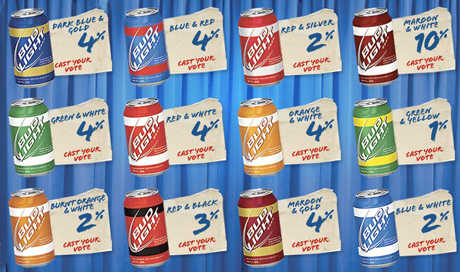
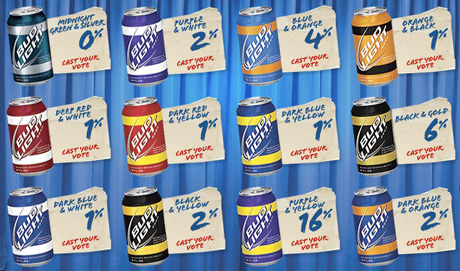
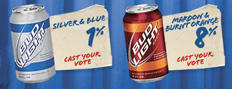
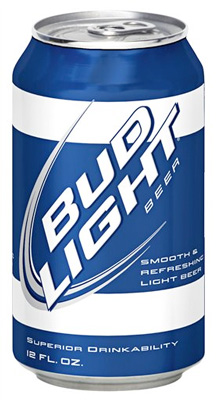
Just when I thought it was impossible for neo-prohibitionists to be any more idiotic, along comes the fan can controversy to prove me wrong once again. If you missed this one, I’ll recap. Anheuser-Busch created twenty-six different versions of its Bud Light can, each with the school colors of popular universities and colleges. There’s no school names, logos or mascots, just the colors. Here are some examples (you can see them all at Tailgate Approved, a Bud Light website).

fan-cans-1

Seems like good marketing to me. Commemorative beer cans are almost as old as beer cans themselves and are one of the most popular collectible items of breweriana. It’s not like these “institutions of higher learning” haven’t been prostituting themselves for decades, licensing literally everything to students, alumni and fans. Many care more for their sports programs then the actual edumacation they’re supposed to be providing students. But, as usual, otherwise reasonable people show their true colors as complete boobs who lose their sense of proportion and logic. Just add alcohol. It would almost be fun to watch if it wasn’t so terribly sad, pathetic and damaging to the enlightened, evolved and reasonable society I wish more people would be striving to create.

The hue and cry this time comes from “concerned people” afraid that a two-color beer can will encourage and promote underage drinking. According to Slashfood:

The cans are being marketed to match the colors of towns with college football teams, a move that has some school administrators up in arms, according to the Wall Street Journal. For example, purple-and-gold cans are being sold near the campus of Louisiana State University in Baton Rouge, La.

The University of Michigan has threatened to sue to make certain “maize and blue” cans are not sold anywhere in the Great Lakes state. At least 25 schools have asked Anheuser-Busch to stop selling the cans near their campuses, the paper said. The company said it would comply with any formal request by a university.

The Wall Street Journal reported that “[m]any college administrators contend that the promotions near college campuses will contribute to underage and binge drinking and give the impression that the colleges are endorsing the brew.” Huh? How exactly does that work? The laws concerning underage drinking aren’t altered in any way by changing the color of the cans, are they? It’s still against the law, isn’t it? This is what drives me insane about these “controversies.” They have no root in logic or common sense. People just fly off the handle without even thinking. I’m sure there are at least a few colleges whose colors are red and white. Is the demand for Coca-Cola greater there because people can be seen drinking a soda with their school colors on it?

The Journal article continues. “Samuel L. Stanley, president of New York’s Stony Brook University and a medical doctor, also objected. In a letter to Anheuser-Busch, he called the campaign ‘categorically unacceptable.'” He then goes on to list some statistics about alcohol-related deaths, which are entirely irrelevant to this issue. Changing the color on a can of beer does not automatically change the nature of the minimum drinking age or how many beers a person might consume in a sitting. Perhaps he’s tacitly admitting that he can’t stop underage drinking on his campus and thinks that this will make it even harder for him to enforce the current laws. Perhaps he should consider supporting lowering the drinking age as suggested by former college dean John McCardell and his Choose Responsibility organization and sign on to the Amethyst Initiative. That might make some headway in reducing drinking problems on his campus, because just banning certain color cans isn’t going to have any effect whatsoever.

fan-cans-2

My favorite so far is the ridiculous University of Michigan response, who “threatened legal action for alleged trademark infringement, demanding that Anheuser-Busch not sell the ‘maize and blue’ cans in the ‘entire state.'” Sadder still though is the fact that colors can actually be trademarked. Think UPS brown. That’s trademarked, though of course it’s the specific hue, not any brown. And last year, in a federal court case in Louisiana, Board of Supervisors of the Louisiana State Univ. et al. v. Smack Apparel Co., et al., C.A. No.: 04-1593, E.D. La., the judge ruled that Louisiana State University, Ohio State University, Oklahoma University, and the University of Southern California did indeed enjoy legal protections for their color schemes.

According to the IP Blawg,

In considering whether the unregistered color schemes were entitled to protection under Section 43(a) of the Lanham Act, the court looked for the requisite secondary meeting needed for a color to be protected, and found that it was present. The four universities had used their color combinations for more than 100 years, marketing hundreds of items with these color schemes, and garnering millions of dollars of retail sales from merchandise bearing these color schemes. The court then found that likelihood of confusion was established under the Fifth Circuit’s precedent where the marks had been in use for decades and were “extremely strong,” the color schemes were virtually identical, and Smack’s shirts were sold in retail outlets alongside plaintiffs’ shirts, and promoted in the same advertising media

The IP Blawg ends by wondering allowed whether or not the court made the right decision. I’d have to say this is almost as ridiculous as patenting seeds. I think what’s really at stake, both here and in the current issue, is that schools aren’t getting any licensing money. By simply using colors that are close to those of the respective schools, they don’t have to pay any licensing fees to the schools, and that’s probably what’s really pissed them off. Because most colleges aren’t exactly shy about hawking all sorts of crap with the school colors, logo and mascot on them. Walking through any university bookstore should convince anyone of that. The higher moral ground they’re flinging around about this is more about not sharing a piece of the pie, I’d wager.

fan-cans-3

Perhaps this might be a good time to have a debate on just how ridiculous is blind loyalty that’s reinforced throughout our lives. We wonder why people are so quick to go to war when our entire society is divided up into a million divisions that pretend to compete against one another. It starts with the street you live on, then your neighborhood, your school, your sports team, your college, your company and finally your country. You’re expected to show “support” for all of them, and usually in an unquestioning way that’s deeply damaging to reason or logic. It makes it much easier for things to never change and makes maintaining a status quo that’s unfair to a majority much easier. Did you ever notice that critical thinking is not taught in school? That’s not an accident. Critical thinking would lead to kids asking all sorts of uncomfortable questions and — gasp — thinking for themselves.

People obviously believe that when shown a can of beer in a person’s school colors, they’ll be unable to do anything but buy them and drink them. This idea of blind loyalty will all but force them to in order to be supportive. Frankly, I can’t even remember what my college’s school colors were. But even if I could, it’s such an obviously specious argument, that I’m amazed anyone could be taking it seriously.

bud-fan-can

But they know that a company as large as Anheuser-Busch InBev can’t risk appearing to do anything that might be even seen as possibly, maybe encouraging people to buy their products, especially those who are not allowed to buy them. So what exactly are companies supposed to do? Apparently, they all have to come up with packaging and marketing that appeals only to adults and specifically does not appeal to anyone under 21. Exactly what would that look like? Beats the hell out of me. I know cartoons are usually one of things that bother these chuckleheads, as if only kids enjoy them. I’m 50, for fuck’s sake, and I still love cartoons as much as I did when I was a non-person who could only die for his country but not drink in it.

My point is it’s impossible to separate kids from society and create two worlds, one with kids and one without. Yet that’s exactly the only thing that would seem to satisfy the people who make these nonsensical complaints. If they really think all it takes to increase underage drinking and binge drinking is change the colors of beer cans, we have more severe problems than underage drinking. I can’t help but think that placing as much emphasis on entertainment and sports, especially college sports, as we do has to be at least part of the reason that so many are so thick as to swallow such arguments. And worse so, for the pinheads that come up with them. These are people who work in universities and so, one presumes, have a college degree. Never was it more obvious that graduating from college can’t make anyone smarter, only more educated. I’ve cited these before, but here is where we’re at, according to the Jenkins Group:

  • 1/3 of high school graduates never read another book for the rest of their lives.
  • 42 percent of college graduates never read another book after college.
  • 80 percent of U.S. families did not buy or read a book last year.
  • 70 percent of U.S. adults have not been in a bookstore in the last five years.

Personally, I’m more worried about that (and not just because I’m a writer) than what color the beer cans are. I know I’ve mentioned this book before, (sigh — sorry about repeating myself) but Morris Berman’s brilliant The Twilight of American Culture suggests that we’re currently heading into another dark ages and that under such circumstances, few people even realize it. I’d offer that worrying about what color the beer cans are and believing that some harm will come to society as a result is yet another sign that Berman is correct. Surely there are more pressing problem’s we’re facing.

Filed Under: Breweries, Editorial, News, Politics & Law Tagged With: Prohibitionists

« Previous Page
Next Page »

Find Something

Northern California Breweries

Please consider purchasing my latest book, California Breweries North, available from Amazon, or ask for it at your local bookstore.

Recent Comments

  • Ernie Dewing on Historic Beer Birthday: Charles William Bergner 
  • Steve 'Pudgy' De Rose on Historic Beer Birthday: Jacob Schmidt
  • Jay Brooks on Beer Birthday: Bill Owens
  • Steve 'Pudgy' De Rose on Beer Birthday: Charles Finkel
  • Steve 'Pudgy' De Rose on Beer Birthday: Bill Owens

Recent Posts

  • Historic Beer Birthday: Joseph Bosch February 11, 2026
  • Historic Beer Birthday: Charles Engel February 11, 2026
  • Historic Beer Birthday: Daniel Jung February 11, 2026
  • Beer In Ads #5198: Back Again! Wiedemann’s Genuine Bock Beer February 10, 2026
  • Historic Beer Birthday: Jacob Hammel February 10, 2026

BBB Archives

Feedback

Head Quarter
This site is hosted and maintained by H25Q.dev. Any questions or comments for the webmaster can be directed here.