Brookston Beer Bulletin

Jay R. Brooks on Beer

  • Home
  • About
  • Editorial
  • Birthdays
  • Art & Beer

Socialize

  • Dribbble
  • Email
  • Facebook
  • Flickr
  • GitHub
  • Instagram
  • LinkedIn
  • Pinterest
  • RSS
  • Twitter
  • YouTube

Powered by Genesis

Next Session Pales In Comparison

May 16, 2012 By Jay Brooks

session-the
For our 64th Session, our host, Carla Companion — a.k.a. The Beer Babe — who these days is writing at Beer Utopia, among others. She’s posted her Session announcement at both The Beer Babe and Beer Utopia, and it looks like you can leave a comment with your Session contribution on either page. Her topic, Pale in Comparison, is a return to our roots with a focus on a particular style of beer: Pale Ale. Here’s how she explains her plan:

What is the one beer style usually makes up the first position in the sample flight, but yet is usually the one that we never get really excited about? The Pale Ale.

While this style serves as the foundation to its big-hoppy-brother the India Pale Ale, lately “Pale Ale” has become a throwaway term. I hear bartenders and servers using it to describe everything from Pilsners to unfiltered wheat beers (I wish I was kidding).

Whether American (typically a bit hoppier) or English (a little more malty), these brews can be complex, interesting and tasty, and are all too often fast-forwarded through in a tasting or left as the “eh, guess I’ll have a pale ale” decision.

Your mission — if you choose to accept it — is to seek out and taste two different pale ales. Tell us what makes them special, what makes them forgettable, what makes them the same or what makes them different.
schlafly-pale-ale

So that sounds like a fun task. She’s right about Pale Ales getting overlooked these days. It used to be one of the most popular styles. In the early days of the microbrewery, everybody had a pale ale. So stay out the sun — and keep your complexion pale — and
be here June 1 to tell us about your pale drinking experiences.
Filed Under: Beers, Just For Fun, The Session Tagged With: Announcements, Blogging

Session #63: The Beer Moment

May 4, 2012 By Jay Brooks

stopwatch1
Our 63rd Session is hosted by Pete Brown from the UK, and as his Session falls on Star Wars Day (May 4, “May the Fourth,” “May the fourth be with you”) he’s decided on a similarly cheeky topic: The Beer Moment. Read his entire stream of consciousness or the abridged version below.

I write to try to encourage other people to share the simple joy of beer as much as I do, to switch on people who drink beer but don’t particularly care about it that much, to suggest to them that there’s so much more they might enjoy. No one says you have to do it this way, and no one ever made me the spokesperson for beer. It’s just how I decided to write, in the same way others decided to write in an opinionated way about what they love, and what they hate.

So in that spirit, my choice of topic — with 62 topics already covered — is this: simply, the Beer Moment.

What is it?

Well, what is it to you? What does that phrase evoke for you?

That’s the most important thing here. Switch off and float downstream, what comes to mind? Don’t analyse it — what are the feelings, the emotions?

I’ve been thinking about this quite a lot recently, because I’ve been talking about it to various people who are working hard to try to improve the image of beer in the UK. Because whether we articulate it or not, whether we drink vile, sunstruck Corona or barrel aged imperial stout brewed with weasel shit, it’s about the moment far more than the liquid itself. The only people who disagree with me on this are people I wouldn’t want to share a beer with.

The moment — for me — is relaxation, reward, release, relief and refreshment. It’s a moment to savour, a moment of mateship, potential, fulfilment, anticipation, satisfaction, and sheer bliss.

It’s different from the moment you drink wine or spirits — it’s more egalitarian, more sociable. It’s not just about the flavour, nor the alcohol. It’s about the centuries of tradition and ritual, the counterpoint to an increasingly stressful life, and the commonality, the fact that it means the same thing to so many.

At least — I think it does. What does it mean to you?

session_logo_all_text_200

I was especially taken by Pete’s instructions, where he paraphrased the opening line of the Beatles’ Tomorrow Never Knows (one of my favorite lesser-known Beatles songs), which in full is “Turn off your mind, relax and float down stream.” The phrase itself is from the Tibetan Book of the Dead, and that sounds like an excellent place to start; relaxed and floating, mind free of distractions — beer in hand.

The “beer moment” is for me the essence of what makes beer one of my life’s passions, distilled — or perhaps more correctly fermented — down to its core ingredients. In many ways, as Don Younger famously quipped, “It’s not about the beer, it’s about the beer.” And as inscrutable as that may sound, I believe Don was on to something. While beer is, of course, the liquid glue that binds us all together, it’s the opportunities and potential that sharing that beer creates that is the essence of the beery moment for me. Beer is the great facilitator. I makes so many other things possible, most of them entirely positive. If that’s starting to sound too zen or new agey, don’t despair. Let me put it another way.

My job often requires me to drink beer alone, which is far from my favorite thing to do. It’s perhaps the worst way to have a beer, even though it’s sometimes necessary. Alone, beer is stripped of all its intangibles, its raison d’etre. You can evaluate the constituent parts, its construction, even how they come together as a finished beer. In other words, on a technical basis. And that’s how you should begin, but there must be a discussion waiting at the end of that process. I just finished judging the World Beer Cup in San Diego this week, and even in this august setting, after silently scoring the beer and making notes, a lively discussion follows each flight. That’s as it should be, whether in a professional judging setting or the local pub. It’s the sharing of the beer that makes the moment.

The number of ways, places and settings in which beer can be shared is limitless. It has adapted itself to virtually all societies, civilizations and communities since, almost quite literally, the beginning of time. It has been an integral part of countless ritual moments, both solemn and casual; a part of people’s lives from birth to death, used to celebrate both moments and many more in between. Of all of the moments in our lives — something on the order of 39,420,000 minutes for the average person — those that involve sharing a beer, those “beer moments,” are infinitely more enjoyable, more memorable and will be the ones that we remember on our deathbed. In a sense, with a few notable exceptions, the beer moments are the ones that truly matter most.

That’s at least in part why I’m also so obsessed with holidays. They provide yet more reasons to celebrate, and celebration almost always means sharing a beer. Though in truth I believe even no reason at all is a perfectly fine reason to share a beer with a friend, and indeed two friends coming together is in and of itself reason enough, I’ve always enjoyed finding new reasons to celebrate life. And why not, I’ve only got — fingers crossed — a few decades left as a beer drinker, and there is much to celebrate, many more beers to share with friends and family. I want as many of the moments left to me as possible to be “beer moments.”

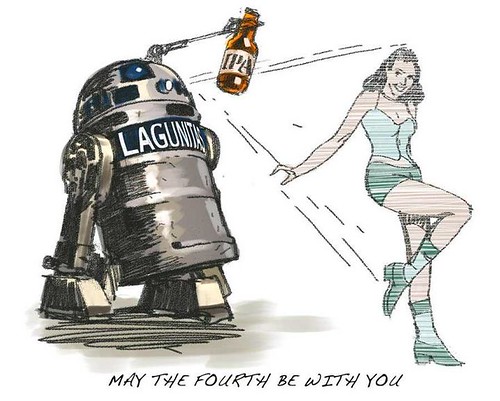
Lagunitas-R2D2
I love this very appropriate artwork that a Lagunitas fan sent into them, and which they posted on their Facebook page.

Filed Under: Beers, Editorial, Just For Fun, The Session Tagged With: Blogging, Philosophy

Session #62: What Drives Beer Bloggers

April 6, 2012 By Jay Brooks

brookston
Our 62nd Session is hosted by Angelo De Ieso from Portland’s Brewpublic and he’s asking the musical question: What Drives Beer Bloggers?. Personally, I use a car, but I have a feeling that’s not what he’s talking about. You read can his complete announcement, or in a nutshell, here’s what he’s driving at:

The title question really gets to the heart of the matter: “What Drives Beer Bloggers?” Why do people decide to start a blog? One thing seems true of most blogs: they are easy to start. All you need is a a computer and a rudimentary understanding of the Internet to initiate your meanderings. The difficulty resides in keeping up with content and reaching an audience. What draws folks to your site? And, what makes you think people want to read what you write?

Your mission as a craft beverage blogger reading this post, should you choose to accept it, is to compose a post on the topic of “What Drives Beer Bloggers.” There are no rigid guidelines about how to write about this topic but we’d certainly love to hear about the history behind your blog, your purpose in creating it, its evolution, and/or what your goals in keeping it going.

session_logo_all_text_200

Today’s tale begins in a world before blogging, circa 2001 B.B., September 10 to be exact. Well … sort of, but it’s more dramatic this way. While the world changed for everybody on September 11, 2001, the night before it changed for just me, or at least for both me and my wife. Around 10:00 p.m. that night, after many agonizing hours, she gave birth to our son Porter. I spent the night in our hospital room with her, and very early the next morning a nurse came in and told us. “Turn on the television, something’s going on in New York.” We switched it on just in time to see the second tower being hit by an airplane. “What sort of world had we just brought our son into,” I wondered.

I had recently left my job as the beer buyer for Beverages & more and had joined the staff of the Celebrator Beer News. It had always been our agreement that I would take care of the kids, while my wife pursued her career, but Tom Dalldorf had made me an offer that was hard to refuse. After Sarah’s maternity leave, he magnanimously agreed to let me bring my son to work every day, in effect creating a nursery at the Celebrator offices, then located in San Leandro. He had no idea what he was getting himself into, but that’s a story for another day.

For the most part, it worked out pretty well, but there was a problem. By the time Porter was one, he wasn’t talking. We told his pediatrician we were concerned, but she told us that every child develops at his or her own pace, and not to worry. At eighteen months, the story was unchanged, and it repeated itself when he turned two. Words were coming, but at a much slower pace than his peers, and we even were starting to think he might be deaf, as you could clap your hands loudly behind his head and get no reaction whatsoever. He was tested, but it was inconclusive. By three, he knew maybe 100 or so words, but rarely strung two of them together. We visited speech therapists and other professionals at the Okland Children’s Hospital but little progress was being made. What does this have to do with beer blogging? Hang on, it’s coming.

My sister-in-law, who’s a research librarian, came upon something we hadn’t considered. She noticed some other symptoms we had not focused on that could indicate Porter might be on the continumum of Autism Spectrum Disorders. We had him tested, both by a doctor and the local school district, and both came back with that he was exhibiting autism-like characteristics. He was assigned to a special preschool and we started reading everything we could about autism, trying to make sense of it. There was an odd sense of relief insofar as knowing what it might be was a lot better than knowing nothing and being left wondering what was wrong for the previous two years. One thing was clear, Porter would need a lot more of our attention. The decision was obvious. I left my full-time job at the Celebrator to stay home with Porter, to shuttle him to his preschool, to physical therapy appointments, to play therapists, to host tutors in our house; in short to do everything we could to help him.

Despite having no regrets and believing firmly it was the right decision, it was not exactly intellectually stimulating or fulfilling. I craved adult conversation. I craved people just to talk with, but even at the playground, the other mothers tended to band together and fathers were routinely shunned. It was like having all stimuli removed, as if you were living in a social vacuum. I read a lot; at least a book, often two, a week. I started writing more. I completed a NaNoWriMo, writing a 50,00-word novel in 30 days. I surfed the internet … a lot. And then I discovered blogging. When Porter was first diagnosed as autistic, I was fielding calls and e-mails from across the country, with friends and family wanting to know how he was doing, what was going on, what they could do to help. Which was great, but I found myself answering the same questions, giving the same speeches, etc. over and over again. There had to be an easier way. There was. I launched the Brookston Family Blog in October of 2004 in order to let people read about how Porter was doing and even so they could see pictures of him, too. My intent, which is still there on the sidebar, was simple. “Our hope is that this blog will help us deal with all the issues we’ll be facing and keep our friends and family informed as well.”

I discovered that I really loved blogging. Not only was it the perfect vehicle to document what was happening in our lives, but I just loved the challenge of writing something every single day. It was, in a sense, liberating, cathartic and also fun. I started writing about anything and everything that was important to me, as well, and that included beer, of course. The upshot was that Porter responded slowly at first, but then began making terrific progress, and his language skills improved dramatically. Eight years later, Porter is in fourth grade, and got a perfect score on 7 out of 10 of his most recent state aptitude tests (and was in the 90+ percentile of the other 3). Most people who meet him never guess that he’s anything but a typical 10-year old. He’s smart, funny, kind and passionate about life. We notice things; little things. He has trouble making friends, though he gets along with most people. But there’s still some social awkwardness. He’s obsessive. That’s something he’ll probably always have to deal with, but we know friends whose children are not faring as well, and we feel fortunate that’s he’s come so far.

When I left the Celebrator, Tom invited me to continue on as the director of the blind panel tastings. It was only once every two months, and it was a way to keep my toe in the beer world. I also continued to attend beer events whenever I could, and began blogging about those as well. As Porter continued to make such great progress, I started thinking about getting back to work in some fashion. I was itching for it, and thought perhaps I could start taking on some freelance work while continuing to stay at home with not just Porter, but also our daughter Alice, who was born in in July of 2004. I started doing a regular column in the Ale Street News. I did a few features for All ABout Beer and the newly launched Beer Advocate magazine, among others. It seemed to work; that I could balance my family and continue to write from home. My wife and I discussed it and concluded that I would make a go of writing from home and in January of 2006, I separated the beer posts from my family blog and launched the Brookston Beer Bulletin. I set out with three goals in mind, though those quickly became five. The original three were track, share and support, followed shortly thereafter by report and monitor the industry as a whole.

Things rarely work out as expected, and this is no exception. I think I expected to quietly use the Bulletin to follow stories that I’d then pitch as stories to print media, fleshing them out in draft form, and commenting on them as I went along. Then, as now, there were no rules about how to blog. I wrote about what I was interested in and, if I was alone in that, so be it. I had no grand illusions about trying to build an audience. It wasn’t that I didn’t want people to read what I wrote, but I never felt the need to try to figure what the people wanted and give it to them. As far I knew, I had no people so better to please myself and hope for the best.

But blogging became its own reward, and indirectly led to lots of other paying work. And at least some people apparently were interested in what I wrote. At many beer events and conferences, people would stop me and tell me how much they enjoyed the Bulletin, which was — and still is — immensely gratifying. I’ve never had any sort of grand plan, or strategy. I’ve just tried to be myself and write from my heart about what struck me as interesting, or important, or worthwhile, or whatever. If nothing else, blogs are personal. I think that’s a part of their essence. They’re not like a newspaper, or a magazine article. They’re closer to the essay form than reporting, even though in many cases journalism is taking place. You have to be honest and authentic or people will see right through you. I try to write in the same voice I might use if I was having a friendly conversation with someone sitting next to me on the couch, sharing a beer. As a result, sometimes I say too much, or reveal personal details; what some might consider an “overshare.” C’est la vie. That’s just me being me.

I remember a conversation I had in 2006 at the Craft Brewers Conference, which was in Seattle that year, with Stan Hieronymus, where he lamented the fact that at that time there were so few beer blogs, especially compared to wine and even food blogs, which even then were quite numerous. Mine was only a few months old at that point, and there weren’t many of us. Fewer still from six years ago are around today, too. But boy how that’s changed in the intervening years. Beer blogs now number close to 1,500 worldwide, and that’s not including blogs written by breweries, bars, distributors and other related industry businesses.

After six, or even eight, years, I can’t imagine slowing down or not blogging every day. It’s become such a big part of me, and what I do. I assume that technologies will change and eventually blogging will give way to something else, perhaps something we can’t even yet imagine. But blogging has been such a useful tool that has enriched my life experience, that I can’t believe I won’t be doing it, or something like it, for the rest of my years. It’s almost like breathing. A writer needs to write, and I could just as easily keep a paper journal that I doodle in each day and never share with anyone. But it’s so much more fun mentally doodling for an actual audience, one that tells you when you’re on the right track and has no qualms about arguing with you when they think you’re not. It’s thrilling that so many people even care about some of the same things that I do, even if they don’t always agree 100%. In fact, I’d be worried if they did. I don’t really understand the appeal of “dittoheads.” I’d much rather have an audience that wants to discuss, analyze and debate, so long as they’re not hostile, of course. Healthy discourse is best, especially over a few beers. And in the end, that’s why we do it, or at least why I do it. Anything that leads to more beer has to be a good thing.

Filed Under: Editorial, Just For Fun, The Session Tagged With: Blogging, Websites

Next Session To Ponder Why We Do What We Do

March 7, 2012 By Jay Brooks

session-the
For our 62nd Session, our host, Angelo De Ieso from Portland’s Brewpublic, is shining a light inward to see if we can figure out why each one of us does what he or she does; why we do what we do; do be do be do. Or to be more specific, What Drives Beer Bloggers?

The title question really gets to the heart of the matter: “What Drives Beer Bloggers?” It is apparent that blogging in general serves the authors in a variety of means. First and foremost, it is important to look at what a blog really is. A portmanteau, or a blending of two words, “Web” and “log”, blogging is defined as “a Web site containing the writer’s or group of writers’ own experiences, observations, opinions, etc., and often having images and links to other Web sites.” Sounds a tad narcissistic to some. In fact, the popular, often humorous collection of modern day colloquialisms and turns-of-phrase that offer a somewhat democratic glance into our culture known as UrbanDictionary.com has an interesting series of takes on the matter. Submitted definitions on the site are rated by readers and ranked according to popularity. Here, the most popular definition of “blog” is: “A meandering, blatantly uninteresting online diary that gives the author the illusion that people are interested in their stupid, pathetic life. Consists of such riveting entries as “homework sucks” and “I slept until noon today.” You can see what we mean.

So is narcissism really at the heart of what it means to be a blogger? Perhaps on some level it is. After all, one of the underlying reasons any of us construct our blogs is to be read. Still, is this to prop our own egos or to contribute to the general betterment and proliferation of that which we seek to project? With Brewpublic, we have always seen our blog as an opportunity to first and foremost serve as a platform to promote the culture of craft beer. You may have noticed the recent rise of craft beer culture in what many dub “the Craft Beer Revolution.” The fact that so many beer blogs have emerged in recent years is a testament to the advancements that quality and innovation have served in our society. Further it is a nod to the ever growing acknowledgement of the prominence of the Internet and social media. Wine bloggers were pioneers in the evangelistic efforts of craft beverage drinker, likely due to the preconceived notion that wine is a drink of social importance, whereas beer has continued to position itself as more than just a lowbrow tipple. As made evident by the staggering growth in craft brewing in our country (more than 1,700 breweries now in the United States), craft beer is beginning to garner the respect is has so long been neglected. In 2012, the third annual Beer Bloggers Conference will be held in Indianapolis (the first two were held in Boulder, CO and Portland, OR) and is another exemplification of this division’s growth. According to the conference’s blog, today there exists close to 900 citizen beer blogs in North America. From “A Beer A Day” to “Zythum-An Ale Analogy“, each blog poses a unique glimpse into craft beer and what it might implicate.

But why do people decide to start a blog (Okay, so not all “blogs” are personal. Many breweries have recognized the value of social media in modern society)? One thing seems true of most blogs: they are easy to start. All you need is a a computer and a rudimentary understanding of the Internet to initiate your meanderings. The difficulty resides in keeping up with content and reaching an audience. What draws folks to your site? And, what makes you think people want to read what you write?

Your mission as a craft beverage blogger reading this post, should you choose to accept it, is to compose a post on the topic of “What Drives Beer Bloggers.” There are no rigid guidelines about how to write about this topic but we’d certainly love to hear about the history behind your blog, your purpose in creating it, its evolution, and/or what your goals in keeping it going.

So start gazing into your crystal ball and see what’s staring back.

Hand with Reflecting Sphere

Mirror, mirror, behind the bar. Who’s the fairest beer blogger of all? So let’s put on our self-reflecting caps and see if we can figure out our individual motivations without resorting to omphaloskepsis. Now’s your chance to get as personal as you want to this April 6, the first Friday in April.

guinness-mirror

Filed Under: Just For Fun, The Session Tagged With: Announcements, Blogging

Session #61: What Makes Local Beer Better?

March 2, 2012 By Jay Brooks

locavore-text
Our 61st Session is hosted by Matt Robinson — a.k.a. The Hoosier Beer Geek — and he’s asking us to consider the question What Makes Local Beer Better? Here’s how he puts it:

The topic I’ve been thinking about is local beer. The term is being used by just about every craft brewer in the country. What does it really mean though? Is it more of a marketing term or is there substance behind the moniker? This month I want to think about what makes local beer better? I’m not just talking about the beer itself, although it’s the focal point, but what makes local beer better? My connection to local beer is far from thinking that my beer is actually “local.” Maybe you don’t agree with me, and you can write about that. Bonus points for writing about your favorite local beer and the settings around it being local to you.

session_logo_all_text_200

I’ve been thinking about this one a bit lately, too, mostly in terms of what most people aren’t talking bout, which is that for many, possibly most, climates the two most common agricultural ingredients of beer cannot be grown and what that means for their ultimate status as local products.

I’ll ignore the question about whether local beer is better, because as far as I’m concerned, that’s not as interesting to me personally. Bad beer can be made halfway around the world as easily as next door, and vice versa. To my way of thinking, good beer is the result of a skilled brewer, using good ingredients, regardless of where they happen to be brewing.

local-beers-logo

There used to a phrase you’d hear as the craft beer movement was gathering steam in its early days: “Think Globally, Drink Locally.” A play on words of “Think Globally, Act Locally,” a phrase that was coined in the late 1960s or 70s (no one’s quite sure); it originally related to town planning and the environment.

But it’s no surprise that early craft brewing placed an emphasis on drinking local, since for most of beer’s history it was only a local product. Beer didn’t used to travel very well, or very far. That’s why at its peak in the 1870s, there were over 4,000 breweries in the United States alone. Every town had at least one brewery to slake the thirst of its residents. When you went to the next town, you drank their beer. When you went to the nearest big city, you could drink perhaps dozens of different beers from their local breweries.

locavore-badge

The First Locavores

In fact, I think craft breweries presaged the newer locavore movements taking place in most communities over the last few years. When the word “locavore” was chosen as Oxford’s 2007 “word of the year,” it was only two years old, having been coined right here in the Bay Area by a group of four women in San Francisco. The original idea was to restrict your diet to food grown or produced within a 100-mile radius. But it also emphasizes that local ingredients are fresher, more nutritious, taste better and are ultimately better for the environment, too. And that message certainly seems to spreading. Are there many towns today that don’t have a farmer’s market?

That’s also the same idea that early craft breweries were trying to get across. Fresh beer tastes better. So the closer to the source one is, the fresher the beer is likely to be, not to mention the economic advantages. By buying local, there’s the added benefit of keeping the money circulating in your local economy and not sending it to a corporate headquarters hundreds of miles away.

Many early microbreweries recognized that advantage from the beginning, and worked tirelessly to be good local citizens, and most I know of are still very active in their local communities, raising money for good causes, donating kegs for worthy events, giving their spent grain to local farmers to feed their livestock and partnering with other local businesses for the benefit of the places where they both live and work.

What Makes a Beer Local?

In 2012, it’s immensely satisfying that no one in America has to travel very far to find local beer. Several years ago, the Brewers Association crunched the numbers and determined that more than half of all Americans lived within 10 miles of a brewery. Since then, hundreds of breweries have opened (with literally hundreds more in various stages of planning) so that factoid is only getting closer. I wouldn’t be surprised to learn it’s more like 75% live within 10 miles of a brewery now.

But as terrific as that is, there is an elephant sitting at the bar, wondering what it means to be a local beer. What exactly makes a beer local? The obvious answer, of course, is that it’s brewed right here. Brewpubs, which brew where they serve, are the most local you can get, from that point of view. And breweries that only deliver their beer in a local area likewise would have to be considered local.

But as many people are beginning to point out, some of the ingredients that go into beer come from all over the world. Beer is an agricultural product, and its two most well known ingredients — barley and hops — do not grow well everywhere. They need the right climate to flourish. Hops grow best in Washington and Oregon, and also in parts of England, Germany, the Czech Republic and even New Zealand. One of pilsner’s signature ingredients is Saaz (or Zatec) hops, which grow best in the area around the Czech Republic. You can grow them other places, but they take on different characteristics when you do that. Beer brewed with the same hop variety grown in different places will often taste slightly different.

And barley does grow in a lot of places, but most it for brewing comes from Europe, the Ukraine, Russia, Canada and Australia. If you want specialty malts, they’re mostly likely available only from where they’re created. Even if you grow your own barley, you have to go through the malting process, which is typically done by a maltster. And there’s not a malthouse in many places, either.

The point is, there are a lot of places where it’s simply not possible to get all the ingredients to brew beer locally, and that raises the specter about whether a beer brewed locally, but with ingredients flown in from around the world, still can be considered a local beer.

Because beer is mostly water, the majority of your bottle will always be almost entirely local, both by weight and by volume. The malt and hops and yeast constitute a very small portion of the finished beer. But as more and more people are taking seriously eating and drinking locally, it’s hard to ignore that arguably beer’s most important ingredients may not come from down the street.

Not that some breweries aren’t trying to address this. Thirsty Bear, in San Francisco, a little while back created a beer using all locally sourced ingredients, which they called Locavore Pale Ale. Likewise, the relatively new Almanac Beer Co. is creating all of their beers with mostly local ingredients, and working toward making that all. And Sierra Nevada releases annually their Estate Brewer’s Harvest Ale, which they make using both malt and hops grown on their own property in and around Chico.

In California, we are fortunate enough to have the right climate where both hops and barley can grow, even though the majority of it is grown elsewhere. But in many other states that traditionally haven’t grown these crops, brewers and farmers are trying to do just that, with an eye toward making their beers even more local.

But in some locations, there isn’t anything that can be done. Alaska isn’t going to start growing hops and barley anytime soon, but I’d have a hard time considering a beer brewed there not being a local beer. Regardless of whether or not 100% of the ingredients are local, it does still have local character. The water, the air, the industry, the people brewing it and selling it, the economy: those are all very local.

For me that’s enough. In the end, I personally don’t think it diminishes beer’s ability to be seen as local. While I believe this is a debate worth having, undoubtedly there will always be some purists who won’t be able to budge from a position that if all the ingredients aren’t local, then it can’t be considered local. If they choose not to drink those beers for that reason alone, that’s a shame. Because with beer, the most important thing is how good it tastes. If it’s all local, that’s just a bonus. Or as friend of mine once quipped, “If I can drink it, it’s local.”

buylocal

Filed Under: Beers, Breweries, Editorial, Just For Fun, The Session Tagged With: California, local

Next Session To Consider What Makes Local Beer Better?

February 27, 2012 By Jay Brooks

session-the
I’m a little behind the eight-ball in getting the word out, but our 61st Session is coming up fast; this Friday to be exact. Our host, Matt Robinson — a.k.a. The Hoosier Beer Geek — is asking us to consider the question What Makes Local Beer Better? Here’s how he puts it:

The topic I’ve been thinking about is local beer. The term is being used by just about every craft brewer in the country. What does it really mean though? Is it more of a marketing term or is there substance behind the moniker? This month I want to think about what makes local beer better? I’m not just talking about the beer itself, although it’s the focal point, but what makes local beer better? My connection to local beer is far from thinking that my beer is actually “local.” Maybe you don’t agree with me, and you can write about that. Bonus points for writing about your favorite local beer and the settings around it being local to you.

buy-fresh-buy-local

So get yourself home to your local community by this Friday — March 2, 2012 — and put on your local thinking cap. Then start waxing philosophical on what exactly that means. Local food — and beer — mother fucker!

local-food-motherfucker

Filed Under: Beers, Breweries, Just For Fun, News, The Session Tagged With: Announcements

Get Your Fill Of Growlers With The Next Session

January 20, 2012 By Jay Brooks

session-the
Our 60th Session returns to all things beer, and specifically Growlers Galore! That’s the topic chosen by this month’s host, Kendall Jones, of the Washington Beer Blog. Here’s what he’s thinking about growlers:

These days people take growlers for granted. In my neck of the woods, growlers are a relatively new phenomenon. I don’t know exactly when or why they appeared on the local beer scene, but it could not have been more than eight or ten years ago. Maybe they existed in obscurity before but today growlers are everywhere. I think. Growlers are very common around the Pacific Northwest, anyway. I cannot speak to their popularity in other beer regions. I’d love to know.

Tell us about your growler collection. Tell us why you love growlers or why you hate them. What is the most ridiculous growler you’ve ever seen? Tell us about your local growler filling station. Ever suffer a messy growler mishap? Anything related to growlers is acceptable.

I happen to prefer draft beer over bottled or canned beer and growlers make it very easy for me to enjoy draft beer at home. My growler collection is quite enormous and I even have a special device installed in the back seat of my car to securely transport up to three growlers at a time.

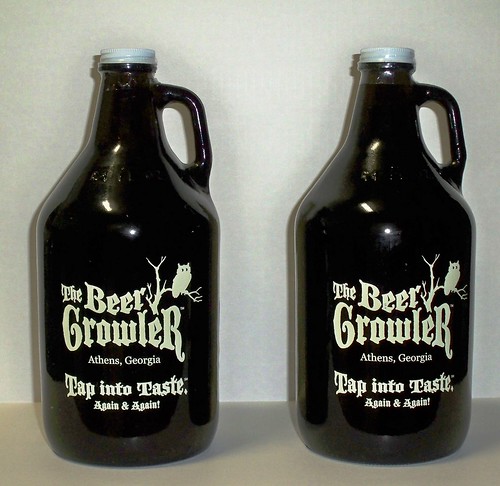
So put down that bottle or can and fill up a growler … and the page with your take on growlers. See you here next month — February 3, 2012 — where you can growl all you want about growlers.

beer-growlers

Filed Under: Beers, Just For Fun, The Session Tagged With: Announcements, Growlers, Packaging

Session #59: I Almost Always Drink Beer, But When I Don’t ….

January 6, 2012 By Jay Brooks

gin-and-tonic-2
Our 59th Session is something of a departure, as the topic could just as properly be about beverages other than beer as beer itself. Our host, Mario Rubio from Brewed For Thought was looking to branch out of beer and explore our other liquid passions. Seizing upon a suggestion I made regarding the Dos Equis pitchman — a.k.a. The Most Interesting Man in the World — who’s fond of remarking “I don’t always drink beer, but when I do….,” Mario turned it on his head, and is asking us to opine about the opposite, as in “I Almost Always Drink Beer, But When I Don’t….” But I’ll let him explain:

With the New Year looming and a month of Christmas and Holiday parties to enjoy there are plenty of opportunities to get into a different beverage besides beer, alcoholic or otherwise. It was with this in mind that I was reminded of a conversation I had one day with Jay Brooks. Looking for advice on how to squeeze some blood from this stone of beer blogging, Jay told me a lot of writers have to look outside of beer to help make a complete income. Upon bringing this up as a Session topic he even offered up a much better title than I would have thought up.

So as we are all incredibly interesting people, and almost always drink beer, let’s talk about what we drink when not drinking beer. Maybe your passion for coffee rivals that of craft beer, or it could be another alcoholic beverage such as scotch. My daughter being a root beer fan would appreciate her dad reviewing a few fizzy sodas. Maybe you have a drink that takes the edge off the beer, be it hair of the dog or a palate cleanser during the evening.

Beer cocktails, wines, ciders, meads, you name it as long as it’s not beer. Try to tie it in with craft beer in some way for extra credit. Be creative and I’ll see you guys in the new year.

session_logo_all_text_200

This one was generally pretty easy for me. In addition to beer, I’m obsessed with a number of other beverages, though some are non-alcoholic. For example, I love unsweetened Iced Tea. Love it. It’s my caffeine delivery system of choice and I drink at least a liter bottle of Tejava — my favorite pre-packaged brand, hands down — each and every day, and usually more. I’m also rather fond of good lemonade, which is harder to find than one might suppose. I don’t really drink any soda — that stuff is really unhealthy — but I will have the occasional root beer or birch beer, which is a bit of nostalgia for me. A-Treat sodas from Philly were what we had around the house growing up, and apart from the Grapefruit Dry, root beer and birch beer were my favorites. A lot of the folk fairs my parents took me to had demonstrations of how they were made in the old days, which I found endlessly fascinating. I also confess to drinking quite a lot of water, especially when I’m also drinking a lot of beer.

alcoholic-range
But as for other alcoholic beverages, I am a self-avowed cross-drinker. I do like wine, though to tend to favor big reds and champagne, which I have a weakness for. The more delicate whites are usually lost on me, but I won’t dismiss them out of hand. I just don’t know a great deal about them, apart from what I like which I decide purely on sensory considerations and find wine ratings even more useless than beer ones. They’re perhaps a necessary evil, and one I have to live with, but they’re often so subjective that they’re often meaningless.

I like single malt whisky and many other spirits, but again my knowledge of them is rather thin. I’ve attended a number of whisky tasting events and dinners, and always had a great time, but find that I rarely reach for a bottle when I’m at home. I like tequila, but it does not like me. As a result of some bad experiences when I was younger, I never ever touch the stuff. I’m also not a huge fan of rum, ouzo, brandy or many other similar liquors and liqueurs. I like vodka and absinthe well enough, though usually only in small doses.

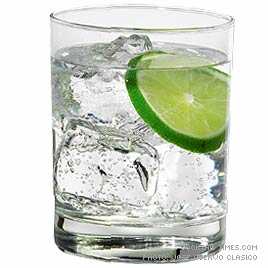
Hands down, my favorite non-beer, alcoholic drink — especially after drinking a lot of beer — is gin. I especially find that a gin and tonic cleanses my palette like nothing else can. I prefer Bombay Sapphire, of the common gins, and Anchor’s Junipero Gin, when I can find it; though in truth I’m not too picky as long as it’s not a rotgut bottom-of-the-barrel variety. There’s nothing quite like it after a day’s beer judging to reset my mind and body for the evening.

Gin-Tonic

Filed Under: Just For Fun, Related Pleasures, The Session Tagged With: Cocktails, Craft Spirits

The Next Session: The Most Interesting Topic In The World

December 12, 2011 By Jay Brooks

session-the
Our 59th Session is something of a departure, as the topic could just as properly be about beverages other than beer as beer itself. Our host, Mario Rubio from Brewed For Thought was looking to branch out of beer and explore our other liquid passions. Seizing upon a suggestion I made regarding the Dos Equis pitchman — a.k.a. The Most Interesting Man in the World — who’s fond of remarking “I don’t always drink beer, but when I do….,” Mario turned it on his head, and is asking beer bloggers to opine about the opposite, as in “I Almost Always Drink Beer, But When I Don’t….” But I’ll let him explain:

With the New Year looming and a month of Christmas and Holiday parties to enjoy there are plenty of opportunities to get into a different beverage besides beer, alcoholic or otherwise. It was with this in mind that I was reminded of a conversation I had one day with Jay Brooks. Looking for advice on how to squeeze some blood from this stone of beer blogging, Jay told me a lot of writers have to look outside of beer to help make a complete income. Upon bringing this up as a Session topic he even offered up a much better title than I would have thought up.

So as we are all incredibly interesting people, and almost always drink beer, let’s talk about what we drink when not drinking beer. Maybe your passion for coffee rivals that of craft beer, or it could be another alcoholic beverage such as scotch. My daughter being a root beer fan would appreciate her dad reviewing a few fizzy sodas. Maybe you have a drink that takes the edge off the beer, be it hair of the dog or a palate cleanser during the evening.

Beer cocktails, wines, ciders, meads, you name it as long as it’s not beer. Try to tie it in with craft beer in some way for extra credit. Be creative and I’ll see you guys in the new year.

So put down that beer and pick up a … well, you decide. See you here next year, on Epiphany — January 6, 2012 — where perhaps you’ll have your own epiphany.

Jay_Interesting
Mario having a little fun with Photoshop.

Filed Under: Just For Fun, News, Related Pleasures, The Session Tagged With: Announcements, Blogging, Websites

Next Session A Dickens Of A Topic

November 14, 2011 By Jay Brooks

session-the
Our 58th Session should be a fun one. Our host, Phil Hardy from Beersay, is apparently hoping for an old-fashioned Christmas this year, and at the top of his list is Charles Dickens’ immortal classic A Christmas Carol. Hardy is attempting to merge the two, which, as Dickens himself said of the goal of his novella in the preface. “I have endeavoured in this Ghostly little book, to raise the Ghost of an Idea, which shall not put my readers out of humour with themselves, with each other, with the season, or with me. May it haunt their houses pleasantly, and no one wish to lay it.” We should all aspire to such heights. The basic idea, which by now you must have guessed, is to write about the beers of Christmas past, present and future, or as Hardy tells it in his announcement post, A Dickens of a Topic for December 2011:

A Christmas Carol

The idea for me was based loosely around the visits of three ghosts to Ebenezer Scrooge, but relayed in a post about the beers of Christmas past, present and future.

What did you drink during Christmas holidays of old, have you plans for anything exciting this year and is there something you’d really like to do one day, perhaps when the kids have flown the nest?

Do you have your own interpretation, was Scrooge perhaps a beer geek?

Or maybe it’s all one day. What will you drink Christmas morning, Christmas afternoon and what will you top off the holiday with that evening?

Just a few examples there, but the idea was to keep the topic as open as possible to allow you free rein to write about a subject with a seasonal twist in whatever way the title grabs you.

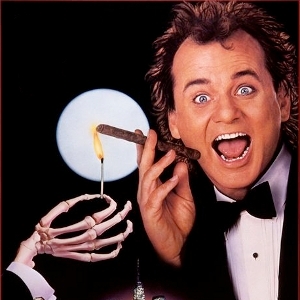
My own favorite interpretation of A Christmas Carol is the Bill Murray film Scrooged, which I watch each year without fail, tearing up at the end … every … single … time. There, now you now; I’m a sentimental old fool.

Scrooged

Acid rain. Drug addiction. International terrorism. Freeway killers. Now more than ever, it is important to remember the true meaning of Christmas. Don’t miss Charles Dickens immortal classic; Scrooge. Your life might just depend on it…

Or maybe not, but just to be sure, why not write your Dickensian blog post anyway, and post it up on Friday, December 2.

Filed Under: Beers, Just For Fun, News, The Session Tagged With: Announcements, Christmas, Holidays, Literature

« Previous Page
Next Page »

Find Something

Northern California Breweries

Please consider purchasing my latest book, California Breweries North, available from Amazon, or ask for it at your local bookstore.

Recent Comments

  • Bob Paolino on Beer Birthday: Grant Johnston
  • Gambrinus on Historic Beer Birthday: A.J. Houghton
  • Ernie Dewing on Historic Beer Birthday: Charles William Bergner 
  • Steve 'Pudgy' De Rose on Historic Beer Birthday: Jacob Schmidt
  • Jay Brooks on Beer Birthday: Bill Owens

Recent Posts

  • Beer In Ads #5148: Ach Himmel Mr. Goat March 6, 2026
  • Historic Beer Birthday: Conrad Windisch March 6, 2026
  • Historic Beer Birthday: Samuel Wainwright March 6, 2026
  • Beer In Ads #5147: Frankenmuth Is Michigan’s Largest Selling Bock March 6, 2026
  • Historic Beer Birthday: John Bird Fuller March 6, 2026

BBB Archives

Feedback

Head Quarter
This site is hosted and maintained by H25Q.dev. Any questions or comments for the webmaster can be directed here.