Brookston Beer Bulletin

Jay R. Brooks on Beer

  • Home
  • About
  • Editorial
  • Birthdays
  • Art & Beer

Socialize

  • Dribbble
  • Email
  • Facebook
  • Flickr
  • GitHub
  • Instagram
  • LinkedIn
  • Pinterest
  • RSS
  • Twitter
  • YouTube

Powered by Genesis

Session #32: Drink East, Young Man

October 2, 2009 By Jay Brooks

east
Session #32 heads east this month, courtesy of Girl Likes Beer, whose personal goal to sample a beer from every country with their own brewery. She’s had quite a few west of her native Poland, but the east is still largely unexplored. So she’s invited us to go east with her. She explains:

I would like you to pick your favorite beer made east from your hometown but east enough that it is already in a different country. It can be from the closest country or from the furthest. Explain why do you like this beer. What is the coolest stereotype associated with the country the beer comes from (of course, according to you)? And one more thing. If you do a video or picture of the beer (not obligatory of course) try to include the flag of the country.

Where I live in Marin County, California is roughly along the 38th Parallel. Following the line of 38 degrees of latitude east, the next countries one encounters, not including a few Atlantic islands, are Portugal and Spain. As I don’t necessarily have a favorite from those nations readily at hand, I’ll go instead for most recently tried. The most recent Spanish beer I’ve tried, is INEDIT, created by Grupo Damm in Barcelona, Spain. Below is my review of it that was published on one of my other blogs, Bottoms Up.
session_logo_all_text_200

Apparently when Ferran Adrià does something new, the food world pays attention. He’s considered one of the world’s great chefs and cooks at el Bulli, his restaurant in Girona, which is in the Catalonia region of Spain. In 2004, he was listed in Time magazine as one of the 100 most influential people in the world. So he’s no doubt a superstar in the restaurant biz.

spain

Adrià recently lent his expertise to beer-making and worked with Spanish brewery Grupo Damm in Barcelona to help create INEDIT, a beer specifically designed as a food beer. Damm is best known for their flagship Estrella Damm, a decent, if unexceptional, example of a European lager, somewhat similar to Heineken or Stella Artois. So if you were going to pair up with a brewery to make a food beer, whatever that even means, there might be better choices, breweries that already understand the balancing of flavors between beer and food, for example.

Cooking, it should be pointed out, does not automatically make one an expert on beer any more than it makes a brewer an expert chef. The press release claims that designing the beer took 1 1/2 years and “400 trial iterations between the master brewers of Estrella Damm,” Adrià, his retaurant partner Juli Soler, and two of the sommeliers from el Bulli. If you know anything about brewing and how long the average batch takes, if might cause you to wonder how it was possible to brew 400 batches in such a short period of time.

At the Damm website, the reason given for why they wanted to make this beer is explained.

Inedit is the first beer specifically created to accompany food. It is born from the conviction that a beer that could be paired with the utmost respect to the best cuisine was necessary. That is its aim and its virtue, and that is what makes Inedit different, special and unique.

A fine sentiment, except that most craft beer along with many of the fine beers brewed in Belgium, Germany, England and others have already been brewed with food in mind. It’s just part and parcel of any good artisanal beer that its very design, its particular ingredients, and the process by which it was brewed all assures it will be an excellent compliment or contrast with just the right food. Many chefs who have been working with beer for years, such as our own Bruce Paton, the beer chef, already know this to be true and have made a living out of discovering those perfect pairings.

But the press releases really trips over itself:

Developed for gastronomy, INEDIT is an alternative to wine for pairing with all dishes — from informal to more exquisite, sophisticated types of food. INEDIT is a unique coupage of barley malt and wheat with spices which provide an intense and complex aroma. It aims to complement food once thought to be a challenge in terms of culinary pairings, including salads, vinegar-based sauces, bitter notes such as asparagus and artichokes, fatty and oily fish, and citrus.

With its delicate carbonation, INEDIT adapts to acidic, sweet and sour flavors. Its appearance is slightly cloudy, and INEDIT has a yeasty sensation with sweet spices, causing a creamy and fresh texture, delicate carbonic long aftertaste, and pleasant memory. The rich and highly adaptable bouquet offers a unique personality with a smooth, yet complex taste.

Unlike most beers, INEDIT is bottled in a 750 ml black wine bottle and is intended for sharing. INEDIT is to be served in a white wine glass, filled halfway and chilled in a cooler.

All well and good, except that how is it possible every beer aficionado knows something, something they take for granted even, that Adrià and his crew do not; which is that beer is, and has always been, a wonderful match with challenging foods.

The very idea of there being an all-purpose beer “for pairing with all dishes” suggests they don’t really understand beer’s complexities at all. No chef worth his salt would ever suggest there’s one wine that might go with any dish, but beer has for so long suffered in the shadows, and many chefs, sadly, think that beer is just one thing: the mass-produced adjunct swill that people guzzle at sporting events.

That they’ve missed the boat is again made obvious by the statement that “[u]nlike most beers, INEDIT is bottled in a 750 ml black wine bottle and is intended for sharing.” There are many, many beers that are bottled in a 750 ml size, not to mention the 22 oz. bomber, which has been around for decades. Both are, and always have been, for sharing.

Then there’s the serving suggestions, that it “be served in a white wine glass, filled halfway and chilled in a cooler.” I’m okay with the white wine glass — sort of — but Belgians and others have specifying particular glassware for their beer for a century or longer. I feel confident that there’s a beer glass that could work, too. But chilling it in a cooler? I don’t even understand that. Is that done with white wine? Is the wine put in the glass and then both are placed in a cooler to chill? Or do they mean that the glass should be chilled in a cooler first, a milder version of a frosted glass? Either way it’s a bad idea, something you should never do to your beer. It probably wouldn’t hurt it the way a frosted glass has the potential to harm beer, but it’s a road we shouldn’t even start traveling down.

But let’s forget all the hype and just talk about the beer itself. After all, that’s really what’s most important. Not surprisingly, Inedit does not live up to the hype. How could it? It’s not that it’s bad, it’s really not, but it’s hardly exceptional in a field in which there are literally countless examples of better beers to pair with food, perhaps hundreds of them being brewed right now just in the Bay Area. Try Arne Johnson’s Point Reyes Porter (from Marin Brewing) with a fine Mexican mole, for example. Absolute heaven. Or Vinnie Cilurzo’s Salvation (from Russian River Brewing) with the Chili Chocolate Mousse featured by Bruce Paton yesterday in his Food & Beer piece. Another slice of heaven. But let’s get back to Inedit.

Inedit’s nose is surprisingly subtle with few spices coming through. As it warms, some of them do start to appear, though still they remain underneath. The sweetness is what comes through on the nose. It’s slightly cloudy like a witbier, though apparently it’s a blend of a lager (most likely something similar to Estrella Damm) and, they claim, a German-style weissbier. There’s no hint of cloves or banana in the nose, suggesting instead that a weissbier yeast has not been used. It has been brewed with orange peel, coriander and licorice. Orange peel and coriander are common ingredients in a Belgian-style wit or white beer, though not a Bavarian-style weissbier. It is unfiltered and is 4.5% a.b.v.
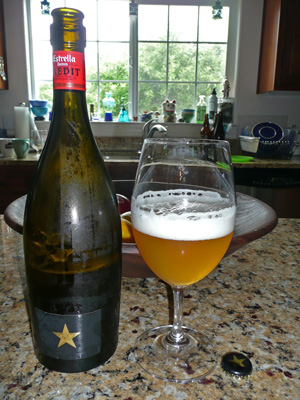
inedit

The mouthfeel is a little thin though the flavors do exhibit some creaminess. Again it’s sweet flavors that dominate the palate, with what spices that do come through being very subtle and remaining in the background throughout. The lager blend seems to contribute a nice clean character, and the finish is quick and similarly clean, dropping off almost immediately. It’s not a bad beer, though there’s no real synergy to the blend, as if it can’t make up its mind what it wants to be. It could work fine with a light salad or some other light fare, but I don’t think it would stand up to heavier flavors very well. At around $9.99, it’s not a bad deal, just don’t expect to be wowed.

I noticed a curious thing though about how this beer’s been received in the two weeks since it was first opened to great fanfare at chef Dan Barber’s Blue Hill at Stone Barns. Barber’s another big time chef, and this year he was picked by Time magazine as one of the 100 most influential people, and it was none other than Ferran Adrià who wrote about Barber for Time. People who’ve reviewed this beer seem to be split down the middle along some telling lines. Beer reviewers seem to consider it, as I do, as average at best. But many food writers, presumably because anything Adrià does is newsworthy, wrote uncritically about it, accepting what was in the press release and passing it along verbatim without question. I’ll let you decide what conclusions to draw from that.

In the New York Times, food writer Florence Fabricant gushes that it “behaves like a wine,” which personally I take as an insult, though I know she doesn’t mean it that way. I suspect Fabricant and other food and wine writers will continue to not quite know what to make of this beer, simply because they don’t seem to really understand it. Fabricant continues by saying later in the short review that Inedit “undergoes a second fermentation in the bottle, like Champagne.” Except that its secondary fermentation, in the beer world, is called bottle conditioning, and is a common practice that’s at least as old as the similar method in champagne-making. There was no need to resort to wine in trying to describe what was going on in the beer.

When she interviewed Adrià last week about the beer she got this gem. “The idea was to make a beer to drink with food, from a wineglass.” The problem, as I see it, with statements like that and Fabricant’s suggestion that the beer is “behaving” like a wine is that, simply put, it isn’t, it can’t, and we shouldn’t even want it to: it’s beer. The only thing about it that makes it appear in any way wine-like is their lack of experience with beer and their apparent refusal to learn anything about it, preferring to fall back on laughingly uneducated wine comparisons. Beer is already the equal of wine in terms of complexity and sophistication, and has been for some time. Sure, there are simple beers, the most popular ones made by the big breweries, for example. But there are also box wines, table wines and Blue Nun, too. That chefs and food writers have no trouble distinguishing between fine wine and the more pedestrian varieties should prepare them to view beer in the same way, yet so few do. Don’t get me wrong, I love wine, too. But it’s just made from one thing: grapes. Beer is made from four primary ingredients (barley, hops, water and yeast). Add to that other grains (like wheat or rye) and other fruit, herbs and spices, then take it and age in a barrel. There are virtually endless combinations of these ingredients and processes that all but guarantee that the complexity that can be realized by a great beer far exceeds most, if not all, wine. These great, complex, sophisticated beers are fantastic with food, and have been for a long time. Pick up Garret Oliver’s “The Brewmaster’s Table,” Stephen Beaumont’s “beer bistro cookbook” or Lucy Saunders’ “Beer & Food, Pairing & Cooking with Craft Beer” at your local bookstore. These authors, and many others, have been writing about the pleasures of beer and food for years and years. It’s frustrating that beer has to continue to claw and fight for the respect it deserves.

Things are starting to change — slowly — and some chefs are beginning to discover that beer often pairs better with many different dishes; heavy meat dishes, cheese, and other spicy foods, to name a few. A majority of culinary schools do teach their students about wine but still ignore beer entirely. To me, that says a lot about the root of the problem. Despite decades of effort by hundreds and hundreds of small breweries to elevate the quality and status of craft beer, many still refuse to afford it the respect it’s due. That’s a shame really. They’re missing out on a lot of pleasure.

Inedit, unfortunately, will not prove to be the answer. The name, Inedit, means “novel, new or original” in French. Too bad it’s not really any of those things.

Filed Under: Beers, The Session Tagged With: Europe, Spain

The Next “Session” Heads East

September 9, 2009 By Jay Brooks

session-the
Girl Likes Beer, who is hosting our next Session, has a personal goal to sample a beer from every country with their own brewery. She’s had quite a few west of her native Poland, but the east is still largely unexplored. So she’s invited us to go east with her. She explains:

I would like you to pick your favorite beer made east from your hometown but east enough that it is already in a different country. It can be from the closest country or from the furthest. Explain why do you like this beer. What is the coolest stereotype associated with the country the beer comes from (of course, according to you)? And one more thing. If you do a video or picture of the beer (not obligatory of course) try to include the flag of the country.

Well, this could be fun. Get out your maps, compasses and orienteering gear. And head east in search of beer.

Filed Under: Beers, Breweries, The Session Tagged With: Announcements, Asia, Australia, The East

Session #31: Summer Beers

September 4, 2009 By Jay Brooks

summer
As this month marks the end of summer, our last summer Session takes on summer beers, courtesy of Peter Estaniel of the BeerBeerBlog. His take:

With the summer coming to a close, what was your favorite beer of the summer? It doesn’t even have to be from this summer. Is it a lager or maybe a light bodied wheat ale? Maybe you’re drinking anti-seasonally and are having a barleywine or Russian Imperial Stout. Why is this beer your favorite? Is there a particular memory associated with this beer? How about a city? Maybe there was a particular dish that made this beer memorable? Spare no detail.

For me, the most memorable summer drinking I did was in London, where I spent a week with fellow beer writer Stephen Beaumont visiting pubs, attending the Great British Beer Festival and endless (and vainly) searching for late night food. While by no means sweltering heat, London was, as always, more moist than the average California summer. They’d just come off a heatwave during the weeks before we arrived, and welcomed some rain. But it was certainly warm enough, staying in the narrow range of mid-70s to high 80s, even late into the evening.

session_logo_all_text_200

We walked around a fair bit of London, taking the tube whenever possible, but also sometimes we just wanted to be above ground, taking in the sights and sounds of the city. To be fair, there was another reason waking was more attractive at times. Besides even the mild summer weather, below ground it could be stiflingly hot, especially when we were sandwiched into the trains during busier times of the day, sweat pouring off of us.

To compensate ourselves, we’d often duck into a pub just for a quick pint, even though we were on our way to another pub, and one which quite possibly was only be fifteen minutes or so away. But thirst must be obeyed, and by god we were often thirsty. And there’s really nothing quite like a English ale on cask, the way nature intended, to quench one’s thirst. Not too cold, which would undoubtedly be a shock to the system, fairly low in alcohol (especially as compared with American beers), which meant we could enjoy more of them, and tasty as all get out. My favorite aspect of cask beer is just how much more flavor can be perceived; more complexity and, perhaps most importantly, more delicate characters. What more could you ask for in a summer beer?

Beaumont at the Dove
Stephen Beaumont at The Dove, a Fuller’s pub along the Thames near Hammersmith where we rested and recharged with a pint.

Even when most of the beers we enjoyed weren’t summer seasonals, but everyday offerings, they were ideally suited to the climate and the warm August weather. And they slaked our thirst almost perfectly.

Filed Under: Beers, The Session Tagged With: Seasonal Release, Summer

Next Session Takes On Summer Beers

August 15, 2009 By Jay Brooks

session-the
Peter Estanial, of the Better Beer Blog, has announced the topic for September’s Session: Summer Beers.

With the summer coming to a close, what was your favorite beer of the summer? It doesn’t even have to be from this summer. Is it a lager or maybe a light bodied wheat ale? Maybe you’re drinking anti-seasonally and are having a barleywine or Russian Imperial Stout. Why is this beer your favorite? Is there a particular memory associated with this beer? How about a city? Maybe there was a particular dish that made this beer memorable? Spare no detail.

Get drinking, summer’s a’wasting.

Filed Under: Beers, The Session Tagged With: Seasonal Release, Summer Beers

Session #30: Beer Desserts

August 7, 2009 By Jay Brooks

session-the
It’s been a full week since I forgot to participate in this month’s Session, for no better reason than it was the day I flew back from London; a lost day, as it were. So in an effort to at least write about the topic, albeit late, here is my take, backdated, on the last dish of the meal: dessert. The topic was hosted by Beer 47, who explained his rationale.

What beer desserts have you tried and liked? Disliked? What beer styles work well with dessert and which ones do not? Do you have any beer dessert recipes that you enjoyed and would like to share?

Like many people, the first beer dessert I had that opened my mind up to the myriad possibilities of beer with dessert was a porter float, which I had in the early 1990s during a visit to Colorado’s first microbrewery, Boulder Beer Co.. It was on their menu and I ordered one, not knowing exactly what to expect. It was revelatory.

session_logo_all_text_200

Since that close encounter of the dessert kind, I’ve had countless more experiences with beer and dessert, from desserts made with beer to simply heavenly pairings. Certain beers do, of course, more readily lend themselves to desserts than others. As a general rule, stronger, darker beers make good dessert beers, though some fruit beers are likewise a good match depending on the dessert. A Framboise (raspberry) Lambic and anything chocolate is a natural. The beers I’ve found work best with dessert are the following:

  • Barley Wine
  • Bocks & Doppelbocks
  • Dubbels
  • Flanders Red Ale
  • Fruit Beers (non-lambic)
  • Fruit Lambics
  • Lambic (Straight)
  • Oatmeal Stouts
  • Old Ale
  • Porters
  • Rauchbiers
  • Russian Imperial Stouts
  • Spice Beers
  • Stouts
  • Tripels

I assume I don’t have to mention two things. First, this list is not exhaustive, but merely some of the more common styles of beer to experiment with. Second, they’re not universal, each goes well with a certain range of desserts. But what could be more fun than trying a variety of desserts with a range of beers?

Filed Under: Food & Beer, The Session Tagged With: Dessert

Session #29: Traveling For Beer

July 3, 2009 By Jay Brooks

travel

I just returned from yet another trip to visit beer destinations, in this case beer gardens in Queens and Brooklyn, an emerging trend there. So it’s fitting that The Session is all about traveling for beer. Our 29th monthly trip is hosted by Beer by Bart tourguides Gail and Steve.

Their chosen topic is “Will Travel For Beer,” which they describe as follows:

If you see the words “travel” and “beer” and instead of your best tourist sagas you think of work or logistics, we want to know your tips and strategies on the road. (Perhaps for getting prized bottles home.)

And if you haven’t done much travel for fine beer, either for work or pleasure, but you have a trip you’d love to do, tell us where you’d like to go seeking the experience and the community of beer. Who would you want to meet at your destination, who would your travel-mates be, and what would you most want to taste when you arrived?

Details please, whichever way you take this! You’re welcome to pull out the vacation slide show if you wish. By all means have a beer that reminds you of the trip, and describe it if you wish. This episode of The Session goes up on Friday July 3rd, 2009. Finish early and maybe you can go someplace for the weekend!

For me, beer and travel are inextricably linked. I can’t really imagine them being separated from one another. Travel is beer, at least for me. Of course, unlike most people I do this for a living — or try to — and so it makes sense that any time I go somewhere, even if it’s just a family vacation, I also check out the beer scene, what breweries are there, etc. I spent my honeymoon visiting breweries in the Pacific Northwest. Frankly, I don’t travel nearly enough but with two young kids it’s not always possible.

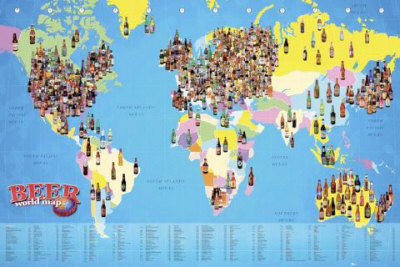
beer-world-map

I’m actually behind in putting up photos of all my beer trips, but time is short these days and deadlines are always looming, so I’m working on it. But there are still quite a few you can see at the old photo gallery. I’ve started moving them all over to a Flickr Pro account, where you’ll be able to more photos from all of the events, since I don’t have to worry about taxing my server there.

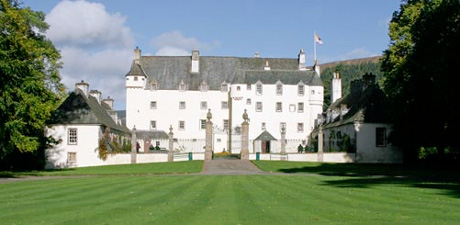
I’d say my favorite trip would have to be to the Traquair House Brewery located in Traquair House, Scotland’s oldest continuously inhabited home. You have to take two buses south from Edinburgh, and then walk about 2 miles from town to get to the house. It’s pretty remote and completely worth the effort. The house has secret passageways, a hedge maze and an unimaginably old brewery. My photos from that trip are on film, so one of these days I’ll have to scan those pictures. Until then, here’s a shot from the Traquair House website.

traquair

Filed Under: The Session Tagged With: Photo Gallery, Scotland, Travel

Session #28: Thinking & Drinking Globally

June 5, 2009 By Jay Brooks

Today is National Doughnut Day, among other things, and time once again for The Session, in fact our 28th such outing. This time our host is Brian Yaeger, who writes at Red, White & Brew. His chosen topic is “Think/Drink Globally,” which he described as follows:

In honor of Global Craft Beer Forever, I propose everyone writes about the farthest brewery (including brewpubs) you have visited and specifically the best beer you had there. Again, not your favorite or any old brewery you’ve been to, but the one that is the longest haul away, be it by airplane, car, ferry, rickshaw, whatever. (If you blog about beer but have never been to a House of Brewing, get on it!)

Then, the last part, since this exercise gives us an excuse to drink beer, do one of the following:

  1. if you brought home a bottle while visiting the brewery and have it secreted away, crack it open.
  2. if you don’t have any left from that visit but the particular beer is available where you live (or if not your fave from said brewery, another brand from it), go get one.
  3. otherwise, find a local beer of the same style and do a little compare and contrast.

Well it certainly isn’t to hard to figure out the farthest place I’ve traveled so far for a beer was to New Zealand. The whole family went there for two weeks last year around this same time, plus my in-laws, too. We had a great time, and stayed most of the time in a beach house north of Auckland in the middle of nowhere. And since a lot of New Zealand feels like the middle of nowhere, that’s really saying something. We explored caves, went on hikes, lounged at the beach and tried our damnedest not to hit anything driving on the wrong (for us) side of the road. There were sheep everywhere and the joke is that there are more of them than people in New Zealand, and it’s not hard to believe.

The last few days were spent in the capital city of Auckland, where there was more beer, I’m happy to say. Though, sadly, only a minority was actually worth drinking. I did an article on beer in New Zealand for All About Beer. There were several decent breweries, the best I tried were from Emerson, Epic, Galbraith, and Hallertau.

Of those four, I spent the most time at Hallertau, as they also sell bottled beers and owner Stephen Plowman and Luke Nicholas (who brews the Epic Beer line) and I opened a couple dozen ebers so I could get a good cross section of the islands’ beer. Here’s what I wrote about the place in All About Beer:

Near the edge of the city limits, in Riverhead, is Galbraith’s polar opposite, the Hallertau Brewbar & Restaurant. Opened just three years ago by Stephen Plowman, the restaurant is thoroughly modern in both décor and cuisine, with an emphasis on local ingredients wherever possible. The menu includes esoteric fare as well as new takes on traditional dishes, and everything tastes homemade and delicious. The brewing equipment, though much less modern, and looking as if designed by MacGyver, still manages to create some terrific beers. Plowman makes an interesting range of beers, and likes to play around with his seasonals. His regular beers include a Kölsch-style ale, an American pale ale, an Irish red and a German-style Schwarzbier. His seasonal offerings have included an Imperial IPA (big, hoppy beers are a veritable rarity in New Zealand), a Belgian-style Tripel and a Saison flavored with Manuka tips, a local shrub sometimes also called a tea tree.

But by far my favorite of his beers was an experimental beer he was making, and I bought a couple bottles of it to bring home and age. Here’s what I wrote about it at the time:

But Plowman’s most ambitious beer may also be his best. His Porter Noir is a barrel-aged beer, which may be the first beer in New Zealand to use Brettanomyces. He brewed a strong Porter (6.6% abv) and aged it in local Pinot Noir barrels for four months before bottling. In the bottle, Brettanomyces was added and left to condition for another six months, before being released for purchase. It’s a wonderful beer, with rich, complex flavors of thick figs, raisins and the like, with strong Brett horse stable character. I can’t say for sure whether or not the people of New Zealand are ready for a beer so vastly different from their popular, but insipid, draught style. But ready or not, here it comes.

The second time I tried it, with Vinnie Cilurzo, from Russian River Brewing, here’s what I found:

Dark in color and a very thick tan head. The nose was marked by characteristic barnyard aromas with just a touch of malty sweetness. The nose was slightly less pungent than the sample I had in New Zealand, but Vinnie and I both declared it to be quite tasty. The Brett character married quite nicely with the nutty, malty porter flavors.

So let’s see what a year has done to it. The Bretty barnyard is still there, possibly even stronger, at least as I remember it. It’s still very malty but seems more complex to me as well, with all sorts of aroma and tastes mixing about on the nose and on the tongue. Dark fruit and some spiciness predominate, but there’s more there, too. I don’t know if Plowman is making new batches of this beer, but I certainly hope so, it’s definitely one of the most adventuresome being made in New Zealand.

I realized that I never posted photos from the New Zealand trip because I was saving them for the All About Beer article, but it’s been a year now, so I think it’s okay to post some of them now. So here’s a gallery of beer-related photos and also some non-beer related photos, in case you’re curious about what else we saw when we were there. [Note: the photos have no captions because I didn’t have time to put them in before leaving for Monterey. I’ll try and put them in Sunday after we get back, so check back Monday if you want to have more information about what’s in the photos.]

Filed Under: Beers, The Session Tagged With: New Zealand, Travel

Session #27: Beer Cocktails

May 1, 2009 By Jay Brooks

session-the
This month is our 27th monthly Session, a.k.a. Beer Blogging Friday. The topic this month is “Beer Cocktails: Beyond the Black & Tan,” hosted by Joe Ruvel & Jasmine Smith at Beer at Joe’s. By cocktails or mixed drinking that include beer as one of the ingredients, here’s what Joe has in mind:

Most people have had a black & tan, which is a combination of two kinds of beer and think it’s pretty tasty. Most people have heard of a Shandy, beer with lemonade or soda added, and think it’s not so tasty.

But beer cocktails go far beyond these two famous examples. Many countries have their own versions, and many new chefs and bartenders are getting creative with beer as an ingredient, not just a standalone drink.

What’s your favorite beer cocktail (and yes, despite the title of this post, it can be a black & tan or a shandy)? Find a recipe for that or a new one, try it, and tell us why you did or didn’t like it–even if you think beer cocktails are nothing but a good way to waste a beer. Have fun and try something new!

session_logo_all_text_300

While I’d wager that the idea of mixing beer with other liquors and liquids strikes most as a bad idea, I’ve actually had some very good experiences with mixed beer drinks, though I suppose the majority of those are guilty pleasures. I have, for example, very fond memories of Spotie Oties (or possibly Spodie Odies), a drink I first learned about at tailgate parties at Penn State, where several good high school friends of mine went to college. A Spotie Otie is simply a mix of equal parts cheap beer and cheap Sangria. I know, I know. But it sounds much worse than it tastes. Its flavor actually reminds you a lot of a fruit punch and it’s very easy drinking, or in A-B parlance it had great “drinkability.” And don’t forget that this was at a time before craft beer so it was far more necessary than it might be today.

Another favorite beer cocktail is another very simple one, though I don’t now if it has a name. Take any dry Irish stout and add a few drops of Crème de Cassis. It just gives the beer a certain something, just a nice hint of fruitiness.

So I’m not opposed to mixed drinks with beer per se, but it seems it was a better idea when it was harder to find a decent beer.

Even when I wrote my guidebook to Silicon Valley, in 1991-92, it was often difficult to find a bar with anything different on tap. So having an appendix with Beer Cocktails made sense. If I wrote it again today, I might not include them, but looking back there are some fun recipes all the same.

I know that cocktails have their origin in the 17th century and the first mention of them in print was 1803, April 28th to be precise. And I know that the word “cocktail” itself was once a specific drink that included any distilled spirits mixed with sugar, water, and bitters. Over time it became a generic term for any mixed drink, but I think my original sense of it stems from Prohibition, when it took on a new importance to mask bathtub gin and other homemade alcoholic drinks’ imperfections. I’m probably wrong about this (Maureen? Bob?) and I’m in a field in Boonville — not the middle of nowhere, but you can see if from here — but I seem to recall that the number and creativity of cocktails exploded during that period precisely because the need was so great to cover defects in the homemade spirits served at speakeasies and elsewhere.

That was certainly my initial experience with beer cocktails, they always used cheap beer that was lacking in flavor as the base liquid for mixing. For that reason, I never felt too bad about mixing with them, since I wouldn’t want to drink those beers anyway. It always seemed like finding a home for an orphaned beer that otherwise would just be left alone to go bad. Effectively, it was adulteration with purpose. And that’s probably where it would have ended, an old idea whose time had passed. But recently my mind was changed by my friend Sean Paxon, the Homebrew Chef, who made me a special mixed beer cocktail for my birthday party in March of this year.

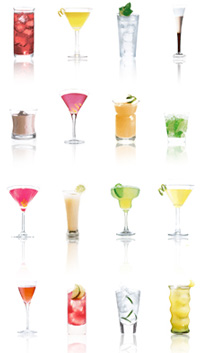
cocktails

Whatever Sean named it (I can’t recall), it used Westmalle Tripel as the base liquid. I confess my first reaction at the time was revulsion at what I perceived was ruining such a fine beer. But that was before I tasted it. To the Tripel, Sean added a foam made with coconut, ginger and something else, and I think Mango juice may have been involved somewhere. I’m pretty sure we were all guinea pigs for an upcoming article in Beer Advocate magazine, so the full recipe will most likely be in the next issue. Whatever was in it, it was delicious, and it definitely changed my mind that a beer cocktail can use a decent beer without fear of death threats. So I obviously need to rethink my bias against the mixed beer cocktail. Cheers!

hawaii50-12

Filed Under: Beers, Just For Fun, The Session Tagged With: Cocktails

Session #25: Love Lager

March 6, 2009 By Jay Brooks

session-the
March comes in like a lager for our 25th monthly Session, a.k.a. Beer Blogging Friday, thanks to John Duffy, a.k.a. The Beer Nut, whose theme this time around is “Love Lager,” by which he means the cheap stuff, the mass-produced swill, the … well, let’s let him tell us:

It’s the world’s most popular style of beer and can be found in abundance in almost every corner of the globe. For millions of people the word “beer” denotes a cold, fizzy, yellow drink — one which is rarely spoken of among those for whom beer is a hobby or, indeed, a way of life.

So for this Session, let’s get back to basics. I’m sure I’m not the only one whose early drinking career featured pale lager in abundance, so consider this a return to our roots as beer drinkers. Don’t even think about cheating the system: leave your doppelbocks and schwarzbiers out of this one: I want pilsners, light lagers, helleses and those ones that just say “beer” because, well, what else would it be?

I want to know what’s so great about them, and what’s awful. Are we talking just lawnmowers, barbecues and sun holidays here, or is there a time for some thoughtful considered sipping of a cold fizzy lager?

session_logo_all_text_200 Well, I suppose there’s some truth to what he says. I assume like most people of my generation, at least, I did grow up on interchangeable light-bodied lagers, in my case mostly regional brands that are no longer with us from where I hail from, the southeastern area of Pennsylvania that I refer to as “Dutch Wonderland.” There’s no real area that’s been given that name, except in my mind. Dutch Wonderland is actually a C-rate amusement park in Lancaster. But to me, that seems the perfect appellation because it was a wonderful place to grow up and the Dutch refers not to the Netherlands, but to its German heritage. It’s Dutch like Pennsylvania Dutch, a corruption of Deutsch, meaning German. And I grew up near the heart of Amish Pennsylvania. In fact, my relatives emigrated there in the early 1700s from Bern, Switzerland, which is in the German-speaking part of Switzerland. They were Anabaptists and settled on a farm in what today is Bernville. My relatives were essentially Mennonites, which are like reformed Amish. Or perhaps more correctly, the Amish are conservative Mennonites who rejected certain technologies and, unlike most immigrants, managed to avoid assimilation.

By the time I came along, the family farm was sold, and the relatives of my grandparents’ generation had scattered. I grew up just outside of Reading, and that’s “red-ding,” NOT “reed-ding” for all you Monopoly players who remember it was the first railroad on the board. My hometown, from age 5 up, was Shillington, a one-square mile plot housing around 6,000 people. Its most famous son was author John Updike, who recently passed away. It’s about a one and a quarter-hour drive northwest from Philadelphia.

All over Eastern Pennsylvania in the 1960s and 70s, there were quite a number of regional brands that were either still going, or which were still being brewed under license by someone bigger who’d acquired the brand name. Just off the top of my head, there was Carling, Fyfe & Drum, Ortlieb, Schaefer, Schmidt’s, Sunshine and Yuengling. Who knows how many names are lost due to the systematic killing off of my brain cells.

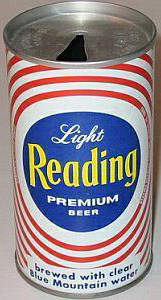
But it was hometown favorite Reading Beer that I remember so clearly. Advertising for the brand was everywhere throughout town. Actually, it still is in many of the old corner bars that continue to dot the city. They had those concentric circles on the cans that really made them stand out. My memory, actually, is that the beer wasn’t very good. They went out of business in 1976, when I began my senior year of high school (though I think Schaefer continued brewing it in Fogelsville). At that age, my friends and I weren’t terribly picky about our beer. But because Reading Premium was fairly ubiquitous and pretty cheap, it was not unusual that that’s what we’d end up with. Even to my untrained palate and at an age when I’d drink whatever I could manage to get my hands on, I don’t remember the taste of Reading Premium all that fondly.

reading-circle

I don’t recall great variation in the many different regional beers that were available at the time. We had our favorites, though I believe now they must have been all based on perceptions created by marketing and advertising. For us, it was about image. We all had relatives who had their particular brands they were more or less loyal to. My stepfather gravitated toward Carling Black Label, my Mom — when she drank at all — liked Sunshine, and I had an uncle who drank only Schmidt’s. Why? Beats me, I couldn’t really see the why they were loyal to their brands; they were virtually indistinguishable as far as I could tell.

reading I have great nostalgia for the brand, but almost entirely for their image, the cool graphics, the slogan: “Friendly Beer for Modern People,” and the fact that it was my hometown.

Given Anheuser-Busch’s rise to prominence, it’s curious to recall that when I was a youth, it was a brand that had almost no presence in my area. In fact, it was generally perceived, especially as I entered the teens as a new beer, as a brand with rebellious overtones because it was new to us and was definitely not our father’s beer. In fact, the marketing of that perception was so successful that I once wore a Budweiser t-shirt to church one Sunday, for which my Mother later went apoplectic when she learned of my immature act of rebellion.

But in the end I suppose it was that sameness that made me so receptive to new beers when I left home and lived in New York City in the late 1970s. The only beer that tasted any different than almost every beer available when I was a teenager was Genesee Cream Ale, and even then it was a favorite simply because it was different; a little less bitter, a little more sweet, a least in fond memory. So when I encountered newly imported beers like Bass, Guinness and Pilsner Urquell in jazz clubs throughout New York City, they were a revelation. And that’s what led me down the beer-soaked path I’m on now.

The commodification of beer, like so many other foods and beverages, is ultimately a doomed idea. It may be, and in this case has been, successful for a long time. But eventually people will rebel against that kind of conformity. It happens in music, in fashion, in everything. No matter how popular, diversity will eventually win out over bland sameness. That’s in part what fueled the microbrewery revolution; a desire to drink beers that didn’t all taste the same. The same thing happened in bread when people tired of Wonder bread; in cheese when Kraft individual slices ceased to be the height of sophistication; and when fast food hamburgers were no longer the highest purpose put to cows.

But in an apparent contradiction, nostalgia is also a potent draw for beer these days. It speaks volumes about just how effective and successful marketing and adverting has been in creating positive associations and connections to brands. Witness the recent success of Pabst, and the re-introductions of Rheingold, Narragansatt, Primo and Schllitz, to name just a few. Happily, Reading Premium also made a comeback in 2007, brewed once again in Reading by a small brewer, Legacy Brewing. (And by coincidence, the Berks County Historical Society is currently having an exhibition called Beer and Pretzels, about Reading’s rich history of brewing and pretzel-making.)

I had a chance to try the beer last year while I was in Philadelphia for the first Philly Beer Week, which as it happens begins again today for the second years’ festivities. And it tasted pretty good, I must say. Certainly, it’s better than when I was a teenager. Like virtually all of the re-introductions, it’s formula has been updated to modern sensibilities, thank goodness. It no longer had the harsh aftertaste I associated with it as a kid. Now it’s just a simple, well-made but inoffensive beer. It’s not complex or rich with big flavors. But it has as much “drinkability” as any other light-flavored lager macro brand, probably a little bit more, since it’s all-malt, at least.

friendly-beer

So what’s the takeaway in all this meandering? It was light lagers that I first loved, like almost everybody, when I had an immature, undeveloped palate. Their inoffensive character wasn’t necessarily what initially drew them to me, since that’s all that was available at the time, unlike today. (Which I guess is my curmudgeonly way of saying young people are better off today, beer-wise, then when I was first 21. We had to walk to the bar, uphill, both ways.) But eventually, that sameness made me want more, and once I found that beer could be so much more, I never looked back, except through the eyes of nostalgia. Not everyone makes that leap, sadly, as evidenced by 95% of Americans still drinking mostly swill, well-made swill perhaps, but still largely unchanged in the fifty years I’ve walked the planet. That’s the power of the big company’s access to market, their juggernaut of marketing and advertising, and most people’s apathy in choosing what to eat and drink.

There are certainly more flavorful lagers than the macro-ones masquerading as pilsners, but they’re as rare as ales, at least in terms of market share. Bland lagers are the worldwide favorite it would seem, and more’s the pity. It’s hard to love that fact, no matter how much nostalgia I can muster.

Filed Under: Beers, Editorial, The Session Tagged With: Beer Styles, Pennsylvania

Session #23: The New Year of Beer

January 2, 2009 By Jay Brooks

The new year brings our 23rd monthly Session, a.k.a. Beer Blogging Friday, crashing into being like a newborn. The previous year is often portrayed as an old, decrepit man and the new year a bouncing baby, filled with the infinite possibilities that youth brings with another 363 days of 2008 stretching out in front of us. And that essentially, is what this Session is about. Hosted by Brewmiker (a.k.a. Beerme) at Beer and Firkins, he wonders aloud what the new year will bring to the world of beer and what lessons you may have learned in the year just past, though I’ll let him tell you what he means.

It seems that change is a theme the entire world is dealing with at the moment. Hope for a better future seems also to be on the minds of many. The topic for the next edition of The Session, hosted by [Brewmiker], will be a New Year theme. I would like to write about the yearly mix of the hope for the new rising out of the ashes of the old, as it relates to … beer.

Specifically, what will you miss about 2008 (feel free to list your tasting notes, if that item is a particular beer) and what do you expect will excite you most in 2009, in the “Beer World”? (again, if that is a beer, what about it is special and worthy of being excited about?)

I confess that I’m not entirely certain how to even approach this question. I don’t think I ever consider the transition from one year to the next in terms of what beers I had last year or which I think I might like to try the next. I tend to take them as they come. Unlike wine and some spirits, they’re aren’t very many beers that are vintage dated. So I rarely find myself lamenting the loss of some vintage beer, though it does happen. I wouldn’t mind a few more bottles of Russian River’s Damnation Batch 23, or a Thomas Hardy 1977, for example. But by and large, beer doesn’t change that much from year to year. In fact that consistency is what most brewers strive for.

Of course, there are plenty of small batch one-off beers, that is beers that are only made once and are very limited. Some are anniversary beers, some are collaborations and some are just for the hell of it. While I very much enjoy the opportunity to try one of these, and will often go out of my way to track them down, there are very few I anticipate unless I’ve heard about one from someone else or from a press release (which are notoriously absent for limited edition beers).

While I am eternally fascinated with calendars, dates and anything, really, to do with time, I just don’t think of beer in those terms.

Is there a mood of phoenix-like hope this year? Probably for some people, as the words “hope” and “change” have been thrown around politically for the last several months leading up to our most recent Presidential election. For me, I can only muster cautious optimism. As pleased as I am with the change in administrations looming — and I am pleased — I also fear that the problems our new Prez will be facing are too daunting to respond to quick or inexpensive fixes. The outgoing regime left behind a nation in shambles (including many 11th hour parting gifts). Has there ever been a greater eight-year swing from surplus to deficit? And no matter what he does to raise money to reduce it, Conservatives will say Obama is the tax and spend liberal they’ve always accused him of, contracting a severe but convenient case of political amnesia as to who caused those problems. That’s my prediction for the new year’s political landscape; things will get worse before they get better, assuming that they will in fact actually get better. I’m hopeful, but only in the classical sense of Pandora’s Box. When all the evil has been unleashed into the world, hope is all that remains. For some reason I’ve always been drawn to that story. As cynical as I am (and have almost always been) the concept of hope has usually allowed me to avoid sinking into abject nihilism. But the very fact that hope is essentially at the forefront of political thought I find oddly discomforting, precisely because it’s an emotion of desperation. When there’s nothing left to cling to, hope is all there is.

Or perhaps that should be “hops” is all there is. One possible positive effect of the economy bottoming out is beer will become the affordable luxury for millions of people looking for a little temporary joy in otherwise bleak times. If craft brewers can seize the opportunity and work to present and persuade people that their hand-crafted artisan beers are the equal of many wines — but at a fraction of the cost — then perhaps small boutique brewers can increase their market share. It may seem counter-intuitive but selling less at a higher price (and at higher margins) will yield higher profits. That’s what wine and spirits have been doing for years, while big breweries who rely on volume have convinced most people that beer is a cheap commodity unworthy of true premium pricing. But now the conditions may be ripe for the rise of craft beer in the time recession, a.k.a. 2009.

There’s little I’ll miss personally from 2008, a miserly little year that took more than it gave. I still have a garage full of beer that needs to be sampled before summer begins baking it. That should keep me busy for a few months and I’d certainly rather be writing about the beer than the politics, business and neo-prohibitionist issues that seem to be occupying so much of my time lately. I suppose that’s my overall resolution for the coming year. More beer, less not beer.


Filed Under: Beers, The Session Tagged With: Uncategorized

« Previous Page
Next Page »

Find Something

Northern California Breweries

Please consider purchasing my latest book, California Breweries North, available from Amazon, or ask for it at your local bookstore.

Recent Comments

  • Bob Paolino on Beer Birthday: Grant Johnston
  • Gambrinus on Historic Beer Birthday: A.J. Houghton
  • Ernie Dewing on Historic Beer Birthday: Charles William Bergner 
  • Steve 'Pudgy' De Rose on Historic Beer Birthday: Jacob Schmidt
  • Jay Brooks on Beer Birthday: Bill Owens

Recent Posts

  • Historic Beer Birthday: Conrad Pfeiffer March 7, 2026
  • Beer In Ads #5148: Ach Himmel Mr. Goat March 6, 2026
  • Historic Beer Birthday: Conrad Windisch March 6, 2026
  • Historic Beer Birthday: Samuel Wainwright March 6, 2026
  • Beer In Ads #5147: Frankenmuth Is Michigan’s Largest Selling Bock March 6, 2026

BBB Archives

Feedback

Head Quarter
This site is hosted and maintained by H25Q.dev. Any questions or comments for the webmaster can be directed here.