Brookston Beer Bulletin

Jay R. Brooks on Beer

  • Home
  • About
  • Editorial
  • Birthdays
  • Art & Beer

Socialize

  • Dribbble
  • Email
  • Facebook
  • Flickr
  • GitHub
  • Instagram
  • LinkedIn
  • Pinterest
  • RSS
  • Twitter
  • YouTube

Powered by Genesis

Session #5: Atmosphere

July 6, 2007 By Jay Brooks

Today is our fifth Beer Blogging Friday “Session” and the topic is decidedly cerebral. Ron and Al, who run Hop Talk have chosen a topic near and dear to their hearts: atmosphere. Ron at Hop Talk wrote about atmosphere when they first started their blog almost a year ago. In that first atmospheric post, he wrote: “It might be a place, it might be a time, and it might be the company you are with; but, there’s no two ways about it, a beer will taste better if enjoyed in the right atmosphere.”

Fast forward to this June and the set-up for today’s session, which Ron and Al describe thusly:

Beer is about more than flavor, IBUs, and the debate over what is a craft beer and what isn’t. It’s about Life. It’s the proverbial icing on the cake.

So, we want to know about the “Atmosphere” in which you enjoy beer. Where is your favorite place to have a beer? When? With whom? Most importantly:

Why?

Because while life isn’t all about beer, beer is all about life.

I like this topic because it appeals to my philosophical nature and my tendency to over-analyze everything. I can’t really decide what is the right beer to have for such a discussion, though something atmospheric should do the trick. I suspect one isn’t really even necessary but I want to keep the tradition of including a beer as part of each Session. After all, what’s a Session without a beer?

After rummaging through the beer refrigerator I settle on a small 375 ml bottle of Russian River Temptation (batch 002) that’s been in there for several months, at least. As this is an out-of-this-world topic I give in to temptation and pick an out-of-this-world beer. So beer in hand, let’s tackle this sucker. High in the upper atmosphere — the exosphere — where the air is thinnest, is a good place to start. Metaphorically, I’d like to peel back the layers as we get closer and closer to the surface of things, where the air is thicker and richer. Will the heat shield hold? It’s been hotter than hades in the Bay Area this week. I hope I chose my beer wisely.

This far from home, your favorite place to have a beer is undoubtedly home. No matter how far you roam, no matter how many places you adopt as new homes, no matter how much time has passed, you only have one original home, the place you were born. I spent the first eighteen years of my life in one place and only three houses, two of which belonged to my grandmothers and the third one was purchased by my mother when she married my alcoholic stepfather when I was five. That one was in downtown Shillington. After high school, I left and came back more times than I care to remember, always drawn home like the proverbial moth to the flame, perhaps for the warmth of familiarity.

I was amazed to see Stan over at Appellation Beer chose the Northeast Taproom in Reading, Pennsylvania and included a piece he wrote ten years before when owner Pete Cammarano still had the place. What’s amazing about that is that Reading is my hometown — or near enough, I grew up just outside Reading in a little suburb called Shillington. So every visit home also included stopping in at the Northeast Taproom to spend time with friends who weren’t fortunate enough to escape the slow death of Reading from a mid-size industrial, manufacturing hub into the “Outlet Capital of the World” where busloads of shoppers from all over the east coast flock to buy cheap goods and take advantage of Pennsylvania having no sales tax on clothing.

After a stint in the Army Band, I was back living in the Commonwealth when I turned 21. I was also married (to my first wife) and putting myself through college and working full-time running a record store in the mall. So my best bar days were behind me, at least in Reading. I learned about most of the good ones while still underage as my stepfather had an uncanny knack of knowing all the best taverns, especially which ones had the best food. So by the time I was 21, I already knew the best ones to go to and so spent little time on experimentation. I already knew which ones felt comfortable to me, though it would take considerably longer to understand why that was so. Two teachers at Wilson High School — where by father-in-law was superintendent — wrote a book called “The Bars of Reading” and were invited to be on the Tonight Show. (My prick of a father-in-law told them they couldn’t go, but they managed it without his blessing, but that’s another story). I still have my copy and it’s still remarkable just how many corner bars there were in such a small town. At some of them, even today, you can still buy a 7 oz. glass of draft beer for under a buck. But the Northeast Taproom was by far the best in modern times. It was a great combination of good selection, quirky weirdness yet with that neighborhood bar feel to it. I haven’t been back since Pete sold the place and in a way I’m almost scared to go. I just don’t want to prove Tom Wolfe right, even though in this case he probably is correct.

So there is something about a drink at home in places dripping with nostalgia and memories. I often glance about such places furtively, forgetting for a second that I’m old enough to legally be drinking inside, not just stealing sips from my stepfather’s glass when no one is looking. But as comfortable as I feel in such places, having grown up in them, and despite such wonderful atmosphere they are more a piece of history and the past than my favorite places right now. For that, we have to descend farther into the atmosphere to the Thermosphere, where the Space Shuttle happily tests yeast and the Aurora Borealis straddles the Karman Line (at 100 km — the international definition of where space begins).

Below that is the Mesosphere, which is where most of the meters that shower the Earth burn up in the atmosphere. They’re just too hot to drink with, despite there being a French beer called Meteor. As we close in on Earth, we next descend into the Stratosphere, which is where what’s left of the ozone layer resides. It’s also where we send weather balloons to track the patterns in the atmosphere used by meteorologists to incorrectly predict the weather so maddeningly often. Just a little farther along we reach the final layer, known as the Troposphere. This where the airplanes fly, at its thickest a mere 23,000 feet (4 1/3 mi.) at the poles and 60,000 feet (10 1/2 mi.) at the equator. We sit at the very bottom of this airy fishbowl, on our barstools, talking about the weather and quenching out thirst with another beer. That’s our own atmosphere. Of course, it doesn’t answer the question of our favorite drinking atmosphere.

So let’s break the question down:

  1. Where
  2. When
  3. With Whom
  4. Why

1. Where

Where is probably the first aspect you think of when the question of atmosphere is posed. Location, location, location. The other W’s are merely window dressing to place and merely modify your experience of that place whether temporally, by its fellowship or the reason you’re there in the first place. So without question “where” is what atmosphere is all about. It’s the hokey pokey. Everything else that may or may not enhance it doesn’t stand a chance unless you’ve chosen the right place to begin with. So where are the best places? That’s undoubtedly a personal decision, but there is, I think, some universal criteria that we’d all more or less agree with.
 

  • Comfort: In my opinion, the best places are the ones where I feel the most comfortable, however you define that. I don’t necessarily mean safe, some of my favorite places are often described as dive bars. But you have to feel in place, not out of it. Often, that requires other people, but not always. There are plenty places of solitude that would qualify for me.
  •  

  • Beauty: It’s hard to admit, but looks do matter. Who wouldn’t prefer the stunning vista of mountains or a lake to a brick wall? There’s something universally calming about the idylls of nature. Why fight it?
  •  

  • The Source: It’s hard to imagine a better place than the source of something as the best place to enjoy it. I can’t imagine the unfiltered Radeberger Zwickel tastes sweeter outside of its native Dresden. Isn’t that why barrel tasting is so wonderful? You just can’t get closer to the source than that. I’m sure that’s why I like drinking in breweries so much.


2. The Rest

To me, when is less about time than season. Even here in California, where the seasons don’t make themselves individually known as forcefully as more temperate climates, there is a rhythm to the year. Some of it is imposed artificially by the calendar but much of it is still managed by nature herself. The time of year often makes the decision of a beer or range of beers for you. The blonde ale I’m enjoying right now is ideal for the warmth of this July day. If it were cooler, I’d be craving something heartier.

The people you drink with to my mind does more to change the experience than any other single factor, except for place. Simpatico drinking buddies are worth their weight in gold. They take a good situation — great place, great beer — and turn it into an experience worth remembering. Oftentimes, you can’t even remember what was discussed, just that it was an enjoyable experience. And in the end, that’s really all that matters.

And that brings us to why, which our hosts Ron and Al regard as being of the utmost importance. I’m not sure I place as much stock in the why as they do, though it’s undoubtedly important. I think, more often than not, the why of what makes a particular atmosphere comes out of the other factors, is in effect created by the place, the beer, the camaraderie, etcetera. It’s the synergy of all of the other factors coming together in such a way as makes them all fit together. I’m sure you can create those conditions artificially, but I’m willing to bet that it’s the ones that come together of their own accord that are the best. You can choose a great place. You can order a great beer. You can invite terrific friends to join you. But that’s still no guarantee of a great time. Oh, I’ll grant you it’s a good start and will probably work more often than not. Still, you could also go to the same place with the same people and drink the same beer night after night and not recreate a magical evening. It’s that indefinable synergy that provide the final ingredient and makes a pleasant evening into a truly memorable one.

Of course, like the best philosophy (not that I really have one), all of the preceding says quite a lot yet fails to answer the simple question of where is my favorite place to enjoy a beer. So here goes. During the day, my favorite location is where I spend most of my time — my house. In any comfy chair — comfort is king! — whether on the back deck, my office or the snuggle chair in the living room surrounded by my wife and friends is the ideal spot. At night, I fancy being out in the middle of nowhere with the bright stars twinkling overhead and a roaring campfire in front of me. Again, in a — what else? — comfy folding camp chair surrounded by my wife and friends.

Notice that regardless of the place, friends are an indispensable component of a favorite place to drink. Even though I continue to feel that location is of the utmost importance, it all falls apart if the experience can’t be enjoyed with the right people. Beer isn’t called a social lubricant for nothing. I haven’t read many other Session pieces yet, but I’m willing to bet sight unseen that for almost every single one, drinking with the right people is what it’s all about. I think that’s going to be near universal. Because while “place” makes the experience, “people” makes the experience worthwhile.

We started out, perhaps reluctantly, admitting “life isn’t all about beer” instead championing that “beer is all about life.” For those of us who think about beer so much more than the rest of the population — whatever we call ourselves — we do so because we’ve convinced ourselves that we’re in on a secret that enhances our very lives. It’s not necessarily a secret we want to keep, but instead is one we want to shout about to anybody willing to listen.

I imagine it’s like seeing color in a black and white world. How would you describe red or blue or yellow to someone who’s never seen color? And once you’ve seen the world in all it’s rich hues, the black and white world seems all gray and lifeless by comparison. It’s such a rich experience that you can’t help but want other people to see it, too. It’s too magnificent to keep it to yourself. It’s frankly a little frustrating when so many people seem to say, “nah, I like my world in black and white, thank you very much” because you know how much they’re missing. Sometimes I feel a little sorry for them, even though I know how patronizing and condescending that sounds. I see people I’ve known for years, still drinking industrial light lagers without a moment’s pause, and I just shake my head thinking of all of life’s pleasures they’re denying themselves. Because how could someone who thinks all beer is the same possibly even consider a question like atmosphere? It’s all the same, right? So what can it matter? I always imagine such people — trying to give them the benefit of the doubt — just feel they have more important things to think about. Truthfully, that never actually seems to be the case, and in fact many just seem to be sleepwalking through life not giving too much thought to any of the choices they make, beer or otherwise. If that really is the case, how many simple pleasures that you and I take for granted do they miss over and over again? If nothing else, loving beer is about enjoying life to the fullest, because it never stops with the beer. I guess beer is a gateway pleasure, because it leads to single malt scotch, cider, pairing with food, purposeful travel, fantastic cheese, port, cooking, and all manner of decadence that leads to a richer, fuller life. It also leads to an intuitive understanding that the very idea of “atmosphere” is important to the true enjoyment of life. That there is a healthy percentage of the world that can’t see that is very sad, indeed. Maybe that’s why there’s so much misery in the world today. Perhaps better beer really could save the world. Okay, I’ve changed my mind again. My favorite place to have a beer is that future world where everybody drinks good beer, war is an unknown concept and everybody understands that a life half-lived is a life wasted.

Hey, I can dream, can’t I? I’ll hold out until everybody understands the following poem, Lines on Ale (1848), by Edgar Allen Poe (1809-1849):

Fill with mingled cream and amber,
I will drain that glass again.
Such hilarious visions clamber
Through the chamber of my brain.
Quaintest thoughts, queerest fancies
Come to life and fade away.
What care I how time advances;
I am drinking ale today.

Amen, brother.


Filed Under: Editorial, The Session Tagged With: Websites

Session #4: Local Brews

June 1, 2007 By Jay Brooks

Today is our fourth Session a.k.a beer Blogging Friday and the theme is something of a departure from our usual topic. This month’s host is the Gastronomic Fight Club from Omaha, Nebraska, and they’ve chosen “Local Brews” as the theme, describing his goal as wanting to “create a guide book of tasting notes to drinking local.”

As I often do, I decided to tackle the theme literally, and so I went to the closest brewery, which is Moylan’s, a mere 1.7 miles from my home (2.3 if you take the freeway) in Novato, California.

We moved to the town of Novato in northern Marin in late December, just over five months ago. We sold our condo in San Rafael for a small house, but one with a yard for the kids and no more stairs (our condo was on four levels. After a while, it began to feel like we were living in an Escher drawing.) Condo life was also impersonal, and we craved more of a community and neighborhood feel to where we lived.

Novato is a relatively small (population approx. 50,000) bedroom community with a small downtown area. It was only established in 1960, making the town one-year younger than I am! We live only two blocks from the main downtown street, Grant Avenue. In the few months we’ve been here, it’s been far more enjoyable than the three years we lived in San Rafael. We can walk to a lot of places, which is great. One place that’s a little far, unfortunately, is the town’s only brewery.

Moylan’s is located on the outskirts, so to speak, a part of our only really big shopping center, Rowland Plaza, along with a Costco, Target, Staples, a multi-screen movie theatre and many other chain stores. It was built and opened in 1995 by Brendan Moylan, a Novato resident. Moylan also opened nearby Marin Brewing six years earlier, in 1989. In addition to the brewpub and full pub menu at the brewery, there is also a production facility where Moylan’s and Marin Brewing bottle several of their popular beers in 22 oz. bottles.

I had thought about going to Moylan’ for lunch, but I just couldn’t get it together and so didn’t manage to get there until around four in the afternoon. At that late hour I didn’t expect anyone to be in the brewery itself, but happily Moylan’s new head brewer Denise Jones was still there. She recently replaced James Costa who left to work at E.J. Phair. Denise has been brewing commercially for many years and is probably most well-known for her years at Third Street Aleworks in Santa Rosa. She poured us a beer and sat down with me to chat.

I told her about “The Session” and this months theme as we tried the Pomegranate Wheat, a beer that James Costa first made last year. Denise had told me she’s been increasing the amount of fruit and lowering the IBUs so I wanted to taste the difference. Indeed, it did taste more “juicy” and had a nice sweetness that wasn’t at all cloying.

Next, I tried their ESB on cask, but unfortunately it was oxidized. Denise confessed they’ve been having a problem with the line and she’s working on fixing it. In the meantime, I also tried the ESB from a regular carbonated tap and also the nitrogen line. It was interesting to have the same beer from three different delivery systems. Oxidation aside, the cask version naturally was the smoothest of the three, though the Nitrogen one was a pretty close second. No matter how many times I try it, I’m amazed every single time how much better cask beer is, especially when you can do a direct comparison. Not that Moylan’s ESB was bad, but even the oxidized cask was almost preferable to the harsh, forced CO2 of the regular version.

Denise brought up one aspect of drinking locally that had not occurred to me before. She suggested that one reason people preferred their local brew was that it was made with the same water that was already familiar to them and that familiarity made it automatically taste more unconsciously recognizable and thus was preferable on a visceral level. It reminds me of the way your Mom’s home cooking tastes better, not because it actually is better than a five-star restaurant, but because it has that familiarity, a certain nostalgia perhaps, that makes it taste better than it really ought to. Given that water, like human beings when you get right down to it, are mostly water it does make a certain kind of sense. I’m kicking myself that it hadn’t occurred to me before now. Many beers are rightly famous in part because of what the local water source added to the beer’s flavor, but that would be true of almost everything affected by the local water, from food cooked in it to the simple tap water you drink day after day.

After a pair of session beers, I decided to go out with a bang and for my final beer decided on Ryan O’Sullvan’s Imperial Stout. It’s a style I’m already fond of and I’ve had the beer before but I don’t order it on draft often enough. It’s a mighty fine beer and at 10% abv packs quite a wallop. It’s thick and viscous, something on the order 10W-30, and very full-flavored with hints of berries and roasted coffee. It’s a great sipping beer that deserves to be enjoyed slowly so it’s ever-increasing complexity come through as it warms. It was a nice beer to finish with and I sat and savored it after Denise left for her commute home to Napa.

Here’s a list of all the beers Moylan’s currently has on tap at the brewpub. The descriptions are their own. A dozen or more of their regular and seasonal beers are also available in 22 oz. bottles throughout the Bay Area and Califoria generally, as well as parts of Arizona, Massachusetts, New York, Ohio, Oregon, Rhode Island and Washington.

BEERS CURRENTLY ON TAP AT MOYLAN’S
 

  • Unfiltered Wheat – A Light and Refreshing American Style Wheat Ale. 4.5%
  • Pomegranate Wheat – Tasty Unfiltered Wheat blended with Pomegranate Juice that makes perfect Summer afternoon treat 5.0%
  • Extra Special Bitter – Our Traditional English Style Bitter. This one is served on Co2 for a slightly more bitter finish. Enjoy! 5.2%
  • Moylan’s Special Bitter – Our Traditional English Style Bitter served on Nitrogen for Smooth Maltiness and a Creamy Finish. 5.2%
  • Tipperary Pale Ale– Our Award Winning Classic Style Pale Ale. It’s slightly hoppy with smooth, subtle malty finish. 5.0%
  • India Pale Ale – This American Style IPA is Slightly Malty with an aggressive Hop flavor crisp finish, that leaves you wanting another. 6.5%
  • Moylander Double IPA – This Ale has received a score of 97 points and a rating of SUPERLATIVE at the World Beer Championships in Chicago. Huge and Hoppy, Thick and Hearty . . . not faint of heart! 8.5%
  • Hopsickle Triple IPA – A homage to hops with an Ale that stimulates the taste buds with the blast of Tomahawk, Cascade and Centennial hops. 9.2%
  • Kilt Lifter Scotch Ale – “FIRST PLACE CALIFORNIA STATE FAIR 2005 & 2006” Our Flagship Beer! Traditional Scottish “Wee Heavy” Ale is Big, Rich, and Malty, with a Warm Finish. 8.0%
  • Old Blarney Barley Wine – HUGE malt flavors with a big hop kick, this heavy ale is not for faint of heart! 10%
  • Irish Dry Stout – A classic Irish style dry stout. Rich and Creamy with a roasted character finishes smooth and dry. Served on N2 4.8%
  • Imperial Stout – A Monster Stout with a Warming Smooth Malty Finish and Hints of Roasted Coffee and Chocolate. 10.0%
  • Cask Conditioned Ales – Irish dry stout & extra special bitter.

Filed Under: Breweries, Editorial, The Session Tagged With: Bay Area, California

Session #4 Announced: Drink Locally

May 8, 2007 By Jay Brooks

Snekse, of the Gastronomic Fight Club, a primarily food-oriented blog from Nebraska, will be hosting June’s “Session” and will be taking us in a bit of a different direction.

With this Session, he wants to “create a guide book of tasting notes to drinking local.”

The idea here is to be as helpful as possible for visitors to your area. What is the beer/brewery/brewpub that you feel is quintessential to your city? What do the locals drink? What could a tourist drink that would make them feel like they’ve found something special; something that they’re going to miss when they go home?

Here are the rules:

  • You can pick anything commercially made within 150 miles of your house, but try to pick the brewery or brewpub closest to your house (NOTE: the average American lives within 10 miles of a craft brewery).
  • You can select any beer or even a sampler if you want.
  • If you select a single beer, let us know why you choose this beer (e.g. favorite, seasonal, limited edition, best seller).
  • Preferably you’ll shy away from beers with wide distribution outside your immediate area.

It looks to be an interesting way to approach the next Session, and it could be quite revealing. I certainly like the idea of each of us mining our own local areas for hidden treasure. So please join on the first Friday of June, which is also the first day of June. To participate, simply drop Snekse an e-mail “with the words “Session #4″ in the subject line,” and the following:

Include your name, the name of your blog, the URL to your post, the name of the brewery or brew pub that made the beer(s) you drank, where the place is located, the name and style of the beer(s) you drank and lastly, a general description of the availability of the beer(s). If you don’t have a blog, email me your notes and I’ll include them in the round up.

Filed Under: News, The Session Tagged With: Announcements, International, Other Event, Websites

Session #3: The Mysterious Misunderstood Mild

May 4, 2007 By Jay Brooks

magnolia
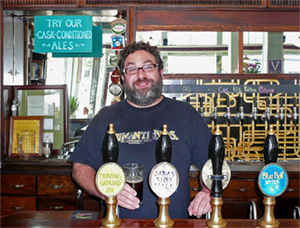
I was thrilled to discover that Dave McLean from San Francisco’s Magnolia Pub & Brewery not only had a mild, but had one on cask available at the pub. He put it on Monday so I was hoping it would still be there when I arrived Thursday afternoon.

mild-day-1

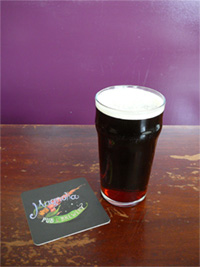
Happily, when I arrived I found both McLean and his mild, Sara’s Ruby Mild, at the hand pumps. The inspiration for Magnolia’s mild came from a trip Dave took to England several years ago. He found himself at the Beacon Hotel in the West Midlands town of Dudley. The hotel also included a brewery, at least since 1880, but it was closed in 1950 by the then-owner, Sarah Hughes. Her grandson re-started the brewery in 1988, naming it in his grandmother’s honor. Today the Sarah Hughes brewery has three regular ales, Pale Amber, Dark Ruby Mild and Sedgley’s Surprise Bitter, along with some rotating seasonals.

I ordered my first pint of mild and found a seat in a booth and settled in for some lunch. I was hungry and so it all looked good, but I tried to choose a dish that would pair nicely with my mild. I hadn’t actually been to Magnolia to eat since chef Eddie Blyden returned from Philadelphia and revamped the menu last year and the choices looked just terrific.

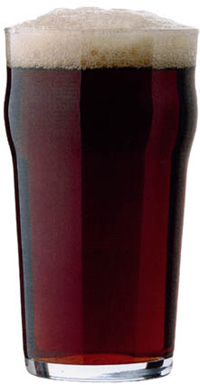
Sara’s Ruby Mild on cask was a delight from the first. It was a deep mahogany color with streaks of ruby red that shone in the afternoon light. The nose was light and subtle, with sweet, bready malt aromas. On cask, it was smooth and easy-drinking. Thick Brussels lace stuck to the sides. There was just a touch of butterscotch up front but it was mostly malt character throughout, dry and biscuity, and never overly sweet. You knew the hops were there because it seemed so balanced, but they never asserted themselves or got in the way, simply staying in their place, out of the way. Overall a very well-conditioned beer with a nice, clean dry finish.

mild-day-2

Magnolia used primarily Maris Otter malt — around 65% — and three more crystal malts and some black malt, along with Fuggles and Golding hops. The yeast used was their regular ale yeast, a flocculent London variety. Original gravity was around 1038 or so, and yielded around 3.7% ABV, a true session beer.

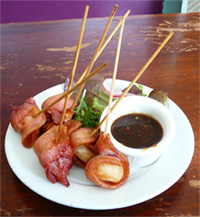
I started with an appetizer of bacon wrapped roasted chestnuts that were superb and were washed down nicely by the mild.

mild-day-3

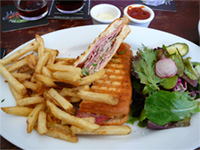
Then a slightly spicy Cuban sandwich of garlic pork and ham with swiss cheese on grilled panini bread. Here the mild paired really well, neutralizing the spiciness with each sip, cleansing my palate and readying me for the next bite. Before I knew it, I’d finished off my second pint.

mild-day-4

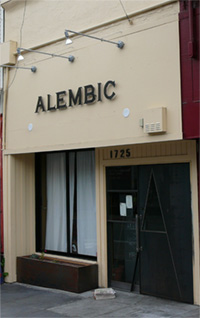
For curiosity’s sake, I walked the few blocks down Haight Street to Dave McLean’s new bar, the Alembic, where he’d mentioned that he had the mild there in its non-cask form. It’s a shame I didn’t try it before the cask, but the Alembic didn’t open until four so there was no way around it. Good as the mild was at the Alembic, it suffered by comparison to the cask-conditioned version. Even in appearance it was slightly more orange and not as ruby, but with a thick, pillowy ivory head. It was gassier, naturally, and not as smooth, which made the hops more pronounced, especially in the finish.

mild-day-5

But now I see why CAMRA and English beer lovers are crying over the loss of this fine beer, especially in its real ale form. Because that’s where milds really do shine. On cask, their more subtle flavors really burst forth and you can see yourself enjoying quite a few of these beers in one — ahem — session. If not for the tug of my children (I did have to pick them up at their preschool) I could have easily spent the entire afternoon curled up with a good book or talking with friends, enjoying pint after pint of Sara’s Ruby Mild. This style definitely deserves to be less mysterious, better understood and more available. If there aren’t any milds made where you live, ask your local brewery to make one. There’s no reason that we have to be mild about promoting milds. To borrow CAMRA’s phrase, we can be “wild about milds.”

If you want some history and background on the style Mild, please take a look at my overview of milds, which I posted a few days ago.

Our first “Session” post was by Al at Hop Talk, who blogged about his fruitless search to find a mild in his area. Next, Kevin at KevBrews in Ohio managed to find just one example in his local store stocked with 800 beers, highlighting just how underrepresented this style is in America. The beer they did have was Three Floyds Pride & Joy Mild, a beer the brewery describes as a “hoppy interpretation of the style,” which as Kevin notes makes it “too bright, too hoppy, too citrus to be a true mild.” He concludes that he’ll stick with Bell’s Best Brown for a session beer.

Over in Sweden, Knut at the eponymous Knut Albert’s Beer Blog, writes about Pumpviken påskøl, which is the Easter seasonal from the Nynäshamn Steam Brewery located in a small town south of Stockholm. At 5.8% he finds that it is still close to the English style, describing it as “less bitter than a bitter, and more flavourful than a (standard) brown ale.” Of course, a century or more ago, the original milds were much stronger than today so perhaps Knut has stumbled upon one made in the original way?

Stonch, who’s a Londoner, naturally had an easier time finding a mild, though even in its native England it still requires some effort. He thoughtfully highlights some pubs around London that support and stock milds year round. Look for him to continue writing about milds throught the month. Stonch in an earlier post also reviewed Elgood’s Black Dog, which he describes as “a fantastic 3.6% abv dark mild with a distinctive and moreish smoky flavour.”

At A Good Beer Blog, Alan puts on his armor and goes on an “Unlikely Quest For A Mild,” settling finally on “Vanilla Bean Brown Beer” by Landmark Beer Co., a contract brewer in New York. Ultimately a little disappointed, Alan finds it “a bit overwhelmed by a syrupy and bitter dark chocolate vanilla statement that leaves little left to the malt.” He has one more prospect to open tomorrow, but for now he eloquently concludes.

session_logo_all_text_200

The lesson is this – you are never going to see a flavoured mild or an extreme mild. Mild is only itself. No muss, no fuss. No fanfare, no breakthrough in technology. Just a newly matured light, clean, flavourful and, yes, watery beer. It’s a confident statement of the light hand that it takes to make it.

Next up, Craig, one of the bloggers at Beers, beers, beers reviewed a bottle of Black Cat, a dark mild from Moorhouses in England. It was gratifying to read that he’d never had a mild before but was giving it a try to participate in the Session. And while he generally prefers “something with a little more punch,” his review is generally positive, concluding that “it’s a little surprising that this isn’t a more popular style here. It’s really drinkable, due to it’s low alcohol content and mild flavor.”

Donovan at Catch & Release went all out, setting sail for the other side of the pond and a visit to the Market Porter (a great London Pub I went to in January) for a podcast show tasting a Gunpowder Strong Mild from Coach House Brewing. You can download the podcast at the Internet Archive.

Captain Hops at the Beer Haiku Daily was also unable to find a mild for today’s Session, though he did write a haiku about his search, and posted the two haikus I wrote about milds. In his e-mail to me, he writes that nothing “could call attention to the plight of the mild like the fact that half the beer bloggers out there had trouble finding one. Now I feel like I am on a mission! It seems that several of the local breweries have made them at one time, but no longer have them on their rosters. Perhaps a little encouragement ….” Still searching for “that elusive mild,” Captain Hops nonetheless has been enjoying Wild Goose Nut Brown Ale lately, which though not strictly a mild is similar in style and certainly a milder, less extreme beer.

Jon from The Brew Site in the Pacific Northwest likewise had some difficulty finding a true mild but in the spirit of the day tasted Old Speckled Hen. While an English Pale Ale, it was considerably milder than most of what he found available in his area. Although earlier this week he did review BridgePort’s new Beertown Brown, another local contender for kinda, sorta mildish.

Thomas, from the other side of the country, in Massachusetts, on his Thom’s Beer Blog, reviewed “Midlands Mild: A Spoonful Weighs A Ton” from John Harvard’s Brew House, a dark mild style which the brewpub described thusly:

Not all ‘light’ beers are light in color, or flavorless; not all ‘dark’ beers are overpowering in flavor or alcohol. Mild ales from England’s Midlands region are a little known example. A so-called ‘cloth cap beer,’ these drinkable session ales sustained farmers through the harvest season. Dark, mellow, flavorful and surprisingly complex at 3.2% alcohol by volume, this is the perfect ale to debunk popular beer myths.

Thom gave the beer high marks and thought it pretty much nailed the style guidelines, writing the following about its flavor. “Very nice maltiness that’s sweet, but never cloying. There are notes of caramel, dark fruit, a little bit of burnt sugar as well as a mild graininess. Mellow, but flavorful.”

Then we skip back to the west coast again to Dave’s blog about the L.A. beer scene, “Hair of the Dog Dave.” Dave also had some difficulty finding a mild, likening his search to trying to find an “honest mechanic.” He eventually stumbled onto Riggwelter from Black Sheep Brewery, located in Masham, England, which is aparently the gateway to Wensleydale (sorry I’m laughing right now, as should everyone who really knows Monthy Python’s Cheese Sketch). Dave followed up to remind me that in fact it’s Black Sheep Brewery that also makes the hilarious Monty Python’s Holy Grail Ale, a novelty beer created for the comedy troupe’s 30th anniversary.

Dave also has some cool information about the beer’s name. Riggwelter, interestingly enough, “comes from Old Norse. Rygg means back and velte means to overturn, so when sheep get stuck on their backs and can’t get up, they are riggwelted. I didn’t even know this happened to sheep.” As for the taste, he was initially put off by over time came to enjoy his foray into milds, describing it as having flavors of “roasted malt, with a subtle bitterness throughout, with the tiniest hint of sourness in the finish.”

Next we head north to Canada and Greg Clow’s Beer, Beats & Bites. He found a “Mild Brown Ale” at C’est What, a Toronto brewpub. At only 3.4% ABV and served on “nitro-tap” it was a real session beer. Greg wrote up the beer back in February for his Beer of the Week column that he does for Taste T.O., concluding that it was “nice to have a flavourful beer that one can quaff several pints of in a session without falling off one’s barstool in the process.”

Then over to Andrew Ager at another eponomously named blog, Andrew Ager dot com, in New England where he posits that Three Floyd’s Pride & Joy Mild, which KevBrews also wrote about, is in fact an extreme mild, thus in effect refuting Alan from A Good Beer Blog’s assertion that we are “never going to see a flavoured mild or an extreme mild.” Andrew goes on to talk about the “rare and lusty Sarah Hughes Dark Ruby Mild,” which is the beer that inspired Dave McLean at Magnolia to create his own “Sara’s Ruby Mild” which in turn was the beer I wrote about. Ah, what comes around goes around, especially if you swirl it.

John at Sine Qua Non made his own homebrew for the ocassion and muses wistfully that, although milds may be one of his favorite styles, he’s “never had a ‘real’ mild, i.e. one brewed in Britain to a traditional recipe” and further questions “if many Brits have either” given that the beer now called in mild is quite different, at least in terms of strength, then it was a century ago. John describes his own effort as “malty-sweet with a bit of a chocolate-nutty character and a touch of roastiness in the dry finish. Medium-full bodied and creamy, with a good head if there’s enough CO2 to support it.”

Our journey next takes us again north of the border to Canada for Stephen Beaumont’s A Mild Session at his blog on That’s the Spirit, where I initially am docked a few points for my choice of mild both on the basis of scarcity and season. Of course, Stephen managed to find two and can I really be faulted for the weather in Toronto? It’s not like I had anything to do with global warming. Did I leave the oven on? When I had my beer yesterday in San Francisco is was cool, slightly gray and a little windy — ideal weather for my mild.

Like fellow Torontoan Greg Clow, Stephen also chose the C’est What Mild Brown Ale. And despite a couple of delivery issues, he liked it, he really liked it, concluding that “the MBA passes the true test of a mild, which is to say it needs make no apologies for its lack of strength. This is not only a very fine beer, but also proof that you don’t necessarily require big hops or big alcohol to make a beer interesting.”

Next we head back south, not quite all the way to the border, to New Mexico for some more history at Stan Hieronymus’ Appellation Beer. Stan decided to break his own promise and made his own mild, though he strayed quite a bit from the style parameters, including using no hops in favor of a mild gruit. I’m not sure he’s entirely happy with the results, but I’ll let his own words describe his beer.

I used a little more lightly smoked malt than [Randy Mosher] suggested — and, by golly, Wheeler and Protz talk about smoked malt in early Milds — and the mix of spices was different since I walked around my yard and collected stuff I knew wouldn’t kill you. Even though I cut back on the cardamom it still dominates right now, and might forever. It adds an unfortunate astringent note, not totally unlike a badly hopped beer.

Alan had one more go at A Good Beer Blog, sampling a Nut Brown Ale from Black Oak Brewing from Canada, but it, too, came up short. Close, but no cigar.

Rick over at Lyke 2 Drink also came up snake eyes in his search for a mild, but Rick regales us with a little more mild history before detailing his Herculean effort to track down a beer to write about.

Late in the evening, just after midnight, Lew Bryson explained his conspicuous absence somewhat cryptically, but then rallied the next day while attending the Southern California Homebrewing Festival, where he found four on cask, three of which he sampled. Lew also philosophized how and where milds fit into his session beer project and theorized as to why they’re not more popular here on this side of the pond.

That looks like it’s all for this “Session.” Thanks to everyone who particiated, even those who were frustrated in their attempts to actually find a mild. Although I felt like a few people gave me a hard time over my choice, the point really was to raise awareness about this somewhat rare and unknown style and I think we succeeded not only with the milds that were found and written about, but also with the fact that they are so hard to find, a fact very well illustrated by many of our intrepid bloggers. But if we play it safe and pick, say “pilsners” (sorry Al, didn’t mean to throw you under the bus) then we have some fun and enjoy ourselves but we don’t really accomplish much of anything. And if nothing else, we should at least use this forum to educate and illuminate what makes beer so special that we take the time to study it, drink it and write about it.

Filed Under: Reviews, The Session Tagged With: Websites

May is Mild Month

May 1, 2007 By Jay Brooks

pint
The British advocacy group CAMRA, the Campaign for Real Ale, promotes the month of May as “Mild Month” in an effort to educate people about a style that’s dying before their eyes throughout England. Since this Friday’s “Session” — a.k.a. Beer Blogging Friday — that I’ll be hosting will be about Milds, I thought I’d collect and provide some basic information about this relatively unknown and misunderstood style. In fact, the theme for Friday’s “Session” is “The Mysterious Misunderstood Mild” in an effort to make these delicious beers less so. Yesterday, CAMRA had a press release in anticipation of Mild Month beginning today that summarizes their efforts.

Mild was once Britain’s most popular style of real ale, but had fallen out of fashion in favour of other beers. However there are still many brewers who are enthusiastic about the future of Mild and CAMRA is dedicated to making sure their beers get the credit they deserve.

May has been designated as Mild Month by CAMRA and the consumer organisation is urging beer lovers to seek out milds in their local pubs and rediscover this wonderfully flavoursome beer.

CAMRA also suggests a few recipes for cooking with mild.

Mild’s popularity has been waning since at least 1960. In 1959 the style accounted for 42% of beer sold in Great Britain, but by 1980 its popularity had dropped to a mere 10% and today it’s far less than that. For a good overview of the history of the style and what led to its decline, read the December 1998 article that All About Beer magazine ran on the subject by Roger Protz, entitled “Vanishing Mild.”

Here’s how CAMRA describes milds:

Mild is one of the most traditional beer styles which is enjoying a revival in today’s real ale market. Usually dark brown in colour, due to the use of well-roasted malts or barley it is less hopped than bitters and often has a chocolatety character with nutty and burnt flavours.

Cask conditioned Mild is a rarity in a lot of parts of the country, which is a crying shame, because Mild is a distinctive and tasty beer. Mild is one of, if not the, oldest beer styles in the country. Until the 15th century, ale and mead were the major British brews, both made without hops. Hops were introduced from Holland, France and Germany after this time. This also started the trend on reducing the gravity of ale, as the Hop is also a preservative, and beers had to be brewed very strongly to try to help preserve them. The hop also started the rapid decline of mead, which is only made in a very few places today.

So what is Mild? It is a beer which has tastes and textures all it’s own. Basically it is a beer that is less hopped than bitter, etc. The darkness of Dark Milds, such as Greene King XX Mild, comes from the use of darker malts and/or roasted barley which are used to compensate for the loss of Hop character. “Chocolate “, “fruity”, “nutty” and “burnt” are all tastes to be found in the complexity of Milds. However, not all milds are dark. Yorkshire brewed Timothy Taylors Golden Best is one of the best examples of a light coloured mild, as is Bank’s Original, the name changed from Mild to try to give it a more modern image. In Scotland, 60/- ale is similar to mild (Belhaven’s being a good example).

mild-glass

Milds today tend to have an ABV in the 3% to 3.5% range, with of course some notable exceptions. In fact, a lot of the Microbreweries who try their hand at mild are bringing the alcohol content back up somewhat! Mild wasn’t always weaker though. In the latter half of the 19th Century, milds were brewed to about the same strength as bitters as a response to the demand for a sweeter beer from the working classes and in those days most bitters were around 6 to 7% ABV.

During the First World War, malt rationing and pressure from the temperance movement led to brewers rapidly reduced the strength. Following the Second World War, as prosperity returned, mild`s popularity as a cheap ale began to fade, not being helped by being kept badly in run down pubs as the Big Brewers began to heavily promote their keg lager brands. Coupled to this was a gradual, but steady decline in heavy industry in the North and Midlands of Britain, mild`s great marketplace.

By the 1970s, the keg lager boom had seen mild’s share of the market fall to around 13% and it was a shame to see a bland gassy and overpriced product, which was generally weaker than the mild it was trying to oust, succeed in many cases.

On this side of the pond, there is a great deal of confusion about milds, though for me the most curious issue is that people don’t like the name. What on earth could be wrong with the word “mild,” which in terms of flavor is defined as “not sharp, pungent, or strong.” It’s the very opposite of extreme, but is still full-flavored and delicious. I can think of countless scenarios where a mild would be the ideal compliment to the situation, weather, food, etc.

Making things more confusing is the fact that oftentimes in England a mild when bottled is called a brown ale, but this is still not the same as a brown ale like Newcastle. And then there’s the fact that there are two recognized styles of milds, pale milds and dark milds, further clouding things.

The BJCP organizes milds under their Style #11, English Brown Ale, with 11A designated mild and two additional sub-styles, northern and southern English brown ale. They suggest IBUs of 10-25, SRM of 12-25, and ABV of 2.8-4.5%, with most falling between 3.1-3.8%. The only American example they list is Goose Island PMD Mild.

For the 2007 Great American Beer Festival, The Brewers Association will for the first time include milds as a separate category in the style guidelines. Two categories, actually, as they’re dividing them into two separate styles, English-Style Pale Mild Ale and English-Style Dark Mild Ale. These appear to be the same as Category 56 for the World Beer Cup. For the BA, Pale Mild has IBUs of 10-20, SRM of 8-17 and ABV of 3.2-4% and for Dark Mild, IBUs of 10-24, SRM of 17-34 and ABV of 3.2-4%.

The color distinctions between the two are described as “golden to amber” for pale mild and “deep copper to dark brown (often with a red tint)” for dark mild. Both are dominated by malt favors with very low bittering discernible and allow for some low levels of diacetyl (butterscotch). The dark mild may also include some licorice or “roast malt tones.”

mild

On Friday, if you’re participating in “The Session,” be sure to post a comment to the mild hosting post that will appear here on the Bulletin shortly after midnight PDT. I’ll try to add links in near-realtime and write up the days’ entries as time permits.

session-logo

So for Friday’s Mild Session Blogging Extravaganza, it might not be quite as simple to find a mild as going to your friendly neighborhood corner bar or liquor store. Hopefully, the information listed above may give you some help in finding a suitable beer to write about. The beer may not have the word “mild” written anywhere on the label, but if it’s close to the style parameters then go for it. The idea of Beer Blogging Friday is to be as inclusive as possible so we’re not going to get too hung up on strict style standards — whatever those might be. Find a “mild” beer and join us. To get you started, listed below are some American milds listed on the major beer forums:

The Top Rated American Milds From Beer Advocate*

English Pale Mild Ale:

Mild Ale, from Southern Tier Brewing, Lakewood, New York
Arcadia Special Reserve, from Arcadia Brewing, Battle Creek, Michigan
Cattail Ale, from Lakefront Brewery, Milwaukee, Wisconsin

English Dark Mild Ale:

Merrimack Mild, from The Tap (Haverhill Brewery), Haverhill, Massachusetts
Milltown Mild, from Victory Brewing, Downingtown, Pennsylvania
Harbor Lighthouse Ale, from Bar Harbor Brewing, Bar Harbor, Maine
Pride & Joy Mild Ale, from Three Floyds Brewing, Munster, Indiana
Motor City Brewing Ghettoblaster, from Motor City Brewing Works, Detroit, Michigan
 

The Top Rated American Milds From Rate Beer*

Merrimack Mild, from The Tap (Haverhill Brewery), Haverhill, Massachusetts
Dawn Patrol Dark Mild, from Pizza Port, Solana Beach, California
Titletown Brewing Whistling Chicken Mild Ale, from Titletown Brewing, Green Bay, Wisconsin
Flossmoor Station XXX Mild Ale, from Flossmoor Station, Flossmoor, Illinois
Brew It Up! Northern Mild Brown Ale, from Brew It Up!, Sacramento, California
 

And here are a few more American milds that I know about:*

Bells New World Ale, from Bells Brewery, Galesburg, Michigan
Iron Hill Mild Ale, Iron Hill Brewpubs, various locations in Delaware and Pennsylvania
Jeezum Jim, from Magic Hat Brewing, South Burlington, Vermont
John Harvards British Pale Mild, John Harvards Brewhouse, various locations
Lee’s Mild, Stone Brewing, Escondido, California
London Tavern Mild, from Valley Brewing, Stockton, California
Midlands Mild Ale, from Avery Brewing, Boulder, Colorado
Sara’s Ruby Mild, from Magnolia Pub & Brewery, San Francisco, California
Schlafly English Mild, from the Saint Louis Brewery, St. Louis, Missouri
Thunderhead Mild Ale, from Thunderhead Brewing, Kearney, Nebraska
Triumph Mild Ale, from Triumph Brewing, Princeton, New Jersey
Wynkoop Mayorale Mild, from Wynkoop Brewing, Denver, Colorado

* For both Beer Advocate and Rate Beer, most of the top-rated milds are, naturally, English beers. I removed those British beers from the list here because I figured it was we Americans (and Canadians) that will need the most help in finding a mild. And for all of the listed beers, I have no idea whether or not they are currently available.

Filed Under: Editorial, The Session Tagged With: History

Session #3 Announced: The Mysterious Misunderstood Mild

April 9, 2007 By Jay Brooks

As I’ll be hosting next month’s “Session” on Cuatro de Mayo, or May 4, it’s time to unveil the theme for our third round. The theme will be “The Mysterious Misunderstood Mild” to coincide with CAMRA‘s May promotion Mild Month. Saturday the 5th will also be National Mild Day on the other side of the pond. For those of us here in the colonies, we may have a harder time finding a mild to review. But several craft brewers do make one, even if they don’t always call it a mild. So you may have to do a little detective work to find one, but that should prove to be half the fun. See you in the merry month.


Filed Under: The Session Tagged With: Announcements, Other Event, Websites

Session #2: Dubbel Your Pleasure

April 6, 2007 By Jay Brooks

For our second session of Beer Blogging Friday I went a little farther from home and chose an old favorite, Westmalle Dubbel. Dubbel, of course, doesn’t mean the beer is double anything, but merely that it’s stronger than the single and not as strong as the tripel. It’s all relative, meaning the strength of dubbels can vary widely. Nor should the dubbel be based on the single but is more often its own and very separate style, as opposed to an Imperial or Double IPA (which is at least based on an IPA).

Westmalle undoubtedly made the first modern dubbel shortly after World War Two, and based it on a heavier beer they began making in 1926, which itself was based on a darker beer pioneered around 1856. So there’s quite a bit of history in every sip, though I don’t know if the brewer originally had a limp or not. I make that comment in reference to a Publican article by British beer writer Ben McFarland where he essentially excoriates amateur beer snobs, going so far as to call them “condescending clowns” and other rather insulting word portraits of his vision of the classic beer snob. One of these was the beer snobs “patronising dismissal of any beer that isn’t brewed by a 16th century monk with a limp.” In a later rebuttal of sorts on Rate Beer, McFarland indicated he intended the piece to be a “light-hearted article” but also that he was trying to make the point that “beer snobs are damaging beer’s appeal by taking it too seriously.” I frankly thought his article was in fact damaging to beer enthusiasts and enthusiasm, and said so. Though I more often very much enjoy McFarland’s writing style — his piece in the new issue of the Celebrator, for example, is priceless — this one seemed more vindictive and spiteful than it did tongue-in-cheek or funny.

But Westmalle Dubbel is without question, if not a beer snob’s beer, certainly a beer for the enthusiast or aficionado rather than McFarland’s “everyday chap.” That’s too bad, really, as it should be more of an everyday beer. The monks assuredly don’t view it as anything too special, just another beer in the mix, though perhaps reserved for a particular day, Good Friday for example. But compared with so much of what passes for beer, it really is quite extraordinary.

Some form of this beer was indeed more than likely brewed in the 16th century by a Trappist monk — though the limp remains purely speculative. It was revived again during the 19th century’s industrial revolution when many Abbey breweries began to modernize and then revived yet again in its present form some sixty years ago.

Happily, I’ve got the right glass for this beer and it’s finally warmed up enough to open it. It’s quiet in my office, and I can hear the bubbles crackle as I pour it down the center to release the CO2. The tan head recedes after a couple of minutes, revealing a deep mahogany color. I grandiosely swirl the glass to enhance the aroma and inhale ostentatiously (note: in case you missed it, this last bit is sarcasm, it was a regular swirl and I used my everyday nose). The nose is sweet and malty with some underlying fruitiness — raisins? — with a hint of characteristic nuttiness. The first sip is a jolt of sweetness with a raisiny, prune-like character. In subsequent tastes, the beer dances on my tongue with a pleasant effervescence. The malt character continues to change with time and chocolate notes become more common, as do tiny hints of banana and some kind of berry or fig that I can’t quite put my finger on. The finish is clean and dry.

Westmalle’s Tripel deservedly gets a lot of attention, in the manner of a favorite son or daughter. But the dubbel is no Jan Brady, and has plenty of secret and not-so-secret admirers, of which I am unabashedly one. I’m sure I’m not the only person who will write about this beer today, as it is one of the truly great dubbels around.

But back to this question of beer snobs and how taking themselves too seriously might be “damaging beer’s appeal.” Westmalle’s Dubbel is, I think, a perfect example of a beer worthy to be taken seriously. Should that fact be off-putting to the novice or uninitiated? Must I tone down my enthusiasm for this beer so as not to scare off “potential drinkers?” Frankly, if anyone won’t try a Westmalle Dubbel because I waxed too lyrically about it or used “absurd verbal acrobatics” to describe it, then that person wasn’t ready yet anyway. I want to bring people over to the cause of better beer at least as much as McFarland does, possibly even more so, but I don’t think discouraging or disparaging a beer geek who’s stepped over the line into snobbery is a very helpful or effective tactic.

Like it or not, the people McFarland so disdains are the very people who can and will carry the message of good beer in their own personal missions. Will they always carry out their missionary work in a way we’d like, in the way we might do it, or even in a way that brings honor to the cause? Probably not, and at least not all the time.

But maybe, just maybe, those of us in the public eye as brewers or beer writers didn’t always know as much as we do today. Perhaps we once were empty vessels waiting to be filled, too. As I learned about better beer and began homebrewing, I tried to talk to anyone and everyone I knew about how good this stuff was, especially compared to the popular bile of the day. Did I make mistakes, overstep myself beyond what I really knew or make a fool of myself. Why yes, yes, I did. Was I a beer snob? Yes, from time to time I was insufferably so. Thank goodness nobody gave me the advice to just “shut up and drink it.” Because over time I learned more and more and made a fool of myself less and less. And I have personally introduced better beer to scores of people, who are today telling two friends, who in turn will tell two more, and so on and so on, dubbeling our pleasure at every turn.

Filed Under: Editorial, Reviews, The Session Tagged With: Belgium, Europe

Session #1: Not Your Father’s Stout

March 2, 2007 By Jay Brooks

For our first session of Beer Blogging Friday I chose an old local favorite, San Quentin’s Breakout Stout from Marin Brewing. I must confess that it’s been at least several years since I’d tasted it and, as such, was looking very forward to finding out how much it had changed or I had changed in the intervening time. Since there are no real rules, I’ve decided to approach the Session as I would any session of drinking beer, with good conversation and camaraderie. So while the talk may be imaginary, the beer is not.

As far as the theme goes, my father never drank stouts and given that I’m now approaching fifty I’d say very few of our fathers did in fact drink stout at all. I may taking things too literally, but perhaps apart from Guinness, I feel comfortable saying our father’s generation was not one who embraced dark beer. In Dutch Wonderland — the part of eastern Pennsylvania where I grew up — folks were fiercely loyal to local brands. A wholesale distributor in the Keystone State recently quipped that Anheuser-Busch’s market share there is roughly half of what it is in other states. And as he further points out, there are more “old school” breweries and beer brands than any other place. So my father and men of his age drank Yuengling, Reading, Schmidt’s and Schaefer, light (colored) beers one and all. Yuengling did have a Porter but I don’t recall anyone ever drinking it until I was an adult.

As far as I know, the only dark beer my father — stepfather, really — ever drank was in fact a Guinness. And that’s because I brought him a bottle of it from New York City, where I discovered it, along with Bass and Pilsner Urquell, at the jazz clubs I frequented when I lived there in the late 1970s. Compared to what I’d drank in my earlier teens, these were like nothing I’d ever tasted — and I liked it.

I’d had a few ales growing up, Genesee Cream Ale, especially in that minimalist green can, was a teen favorite among my peers, and Yuengling had their Lord Chesterfield Ale. Then there was Ballantine which relatives in New Jersey seemed to prefer. But Bass and Guinness were worlds different from those and seemed positively exotic by comparison. That seems odd now, with the two imports more pedestrian among the exponentially wider field of available beers today, but it really was a different time. But enough about my father.

San Quentin’s Breakout Stout is made by friend Arne Johnson, head brewer at Marin Brewing, who’s been brewing there for a dozen years. I mention this because I’ve been thinking lately about some thoughts Alan McLeod had on “Do We Love The Beer Or Brewer?” He mentioned it in conjunction with a discussion Lew Bryson heated up over what, as writers, we owe the beer industry. And I know this may sound a bit wishy-washy, but I can see merits in both sides of this debate. Certainly we must be honest and forthright in our opinions and free to dislike a beer if we truly believe it to be inferior in some way. But — and Lew pointed this out, too — that doesn’t mean people who hate gueuze should write critically about it or that bad samples should create a bad review, especially if the sample went bad while cellared by the critic. If a brewery sends a bad sample, that’s another matter.

But back to Alan’s query, who do we love? I assume I’m not too atypical among my colleagues in having many close friends who are brewers. In such an insular and incestuous industry it’s all but inevitable that you see the same people at events, tastings, festivals, etc. over and over again. To my mind, it would be stranger still to not have brewer friends under such conditions. There are a lot of great people in this industry. Frankly, it’s one of the reasons I love my job. Among other industries I have known or worked in, brewing has perhaps the lowest ratio of assholes (let’s call in the A-Ratio) I’ve yet encountered. There are a few to be sure — you know who you are — but by and large the brewing community is one I want to be a part of and support precisely because of the people in it. I used to work in the music business once upon a time and by contrast the A-Ratio was quite high. And once you met a “rock star” who was so full of himself and a mess of a human being, it was truly hard to listen to his music in quite the same way afterward. You could still appreciate his talents and artistry, but only up to a point. Because once you knew what a wanker he was and how he treated the people around him, etc. you no longer wanted his music to be in the background of your life anymore. At least that was my reaction.

So what does that mean for brewers versus their brew? Knowing who made a beer I think does indeed influence at least our approach to a beer, even as we try to be as objective as possible. It would be naïve to believe otherwise. Think about it this way. Someone hands you a beer and says try this, it’s a new one from Russian River Brewing. Now if you like other beers you’ve had from them, you’ll likely be more inclined or predisposed to evaluate it, if not more favorably, at least with greater care and latitude than if the beer was presented as being from a brewer whose efforts you generally didn’t care for. That’s just human nature. In effect it’s Aristotle’s syllogisms occurring naturally in the real world.

It’s also the reason that we always evaluate beer in competition blindly, often double blind (meaning we don’t even know whose beers are entered). I do agree with Alan when he writes that we “have to remember that the subject matter itself is the important thing.” But unless you’re tasting it blind, I also think it’s practically impossible to separate it from outside influence, and to me that means other factors are also important to varying degrees. In quantum physics in the first half of the last century, physicists had a problem with light. Sometimes it behaved like a particle and sometimes like a wave. Eventually they figured out that light behaved as one or the other based on the kind of experiment you used to examine it. And this led to the idea that it was impossible to adopt the role of independent observer in any experiment because scientists couldn’t separate themselves from the world they were observing. They couldn’t step out of a door and be outside the universe, and that also meant that there would always be some part of any experiment that was influenced by the observer. This is known as the “observer effect,” which is defined as follows. “The observer effect refers to changes that the act of observing has on the phenomenon being observed.”

And as arcane a reference as that is, I think it also applies to tasting and evaluating beer. We could call it the “taster effect,” and define it as the influences on the act of tasting a beer changes the experience and has an effect on the beer being tasted. Does it mean objectivity is impossible? Maybe, but hopefully as professionals we can get to a very high degree of objectiveness and play down the outside influences, large and small, as best we can. I think that’s the best we can hope for, that with experience and diligent study we reach a point where our evaluations are internally consistent, that is we tend to view the same defects and positive qualities the same way regardless of the beer. You may at this point be thinking I’ve veered off track here, so let’s get back to the brewer. Do we love the brewer or the beer? I think it’s a little of both. The beer may be the primary reason we’re all here but as the creator of the stuff we all love, he or she can’t be ignored entirely either. Different brewers make their beer in different ways, of course, meaning their influence directly effects the final product. Knowing who made a beer also reveals something subtle about it. It tells us about intention, about what they were trying to make. It tells us what ingredients are more likely to have been used. It may tell us something about the water used, or any number of factors that effect the taste of the beer. If you enjoy the beers of a particular brewer then you know at least there’s a high degree of probability that you’ll also enjoy a new effort by that brewer. It’s no guarantee, obviously, but it offers you a reasonable assumption and ultimately I think changes how you approach tasting that beer. I don’t think that’s a bad thing, just something I think we should acknowledge and be aware of. Because we don’t live a vacuum, separated from the rest of the world with just our beer. The whole world conspired together to put that glass of beer in our hands at that particular moment in time. Every single preceding moment influenced what we will do next, whether it gets a good or a bad review. And for that, I love the brewer, too, because he made the beer in my hand. Of course, after I taste it, I may decide I hate him just as passionately, fickle critic that I may be.

Speaking of which, I’ve got a stout sitting here in front of me which I’m letting come up to room temperature. Arne’s stout is a beautiful murky black with a mocha-colored head. Thick Brussels lace stick and then cascade down the sides of the glass. It has the aroma of silky smooth chocolate, the kind you’d smell after the milk chocolate is melted in huge vats at the candy factory. There are whiffs of bitter coffee lying underneath, poking through to mix with the cocoa. Swirling it in my mouth, the bitter coffee dominates while his little sister chocolate cries for attention and tugs at my sides. It’s very smooth and creamy, and you only detect its strength — 7% abv — toward the end, as it’s rushing down your throat. The finish is clean, with hints of bitterness lingering pleasantly below the surface, urging you on for another sip. And I give into temptation and indulge myself.

It’s a really fine stout and I think I’m enjoying it now more than even when I’d tried it before. It’s easy to see why it’s won so many medals, at least eighteen at last count. Does it matter that the brewer is a friend. I don’t know, but I’d happily have another pint with him tomorrow.

Filed Under: Editorial, Reviews, The Session Tagged With: Bay Area, California

The Session: Beer Blogging Friday Coming

March 1, 2007 By Jay Brooks

Happy March! Stan Hieronymus over at Appellation Beer had a wacky idea a couple of weeks back, and invited the beer bloging community to join him in his gentle madness. The idea is simple enough. Once a month, in our case, on the first Friday of each month any beer bloggers who want to participate will all blog on that day on the same subject or theme. For the first time around, we’ll all be writing about stouts, and the theme is “Not Your Father’s Stout.” One blog will play host and the hosts will rotate from month to month. Stan will host the first one tomorrow and Alan McLeod of A Good Beer Blog will host the April gathering, announcing the theme shortly after March 2, and I’ll be tackling May.

I also created a logo for the event in an effort to tie the event together visually. If you’re planning on participating, I’d encourage you to grab the logo from the logo page I set up. The logo is there in different sizes and with slightly different text. I also included the original photoshop file if you want to download it and muck about with it to personalize it for your blog. I’d suggest that we all leave “The Session” text alone and personalize only the rest of the image, either the text on the mat or some other modification. I say that because we want the logo to act as a marker to inform readers of who is participating in the online event. I think we need to maintain some consistency of appearance for it to be easily recognizable and to help this idea be successful.

Filed Under: News, The Session

« Previous Page

Find Something

Northern California Breweries

Please consider purchasing my latest book, California Breweries North, available from Amazon, or ask for it at your local bookstore.

Recent Comments

  • Bob Paolino on Beer Birthday: Grant Johnston
  • Gambrinus on Historic Beer Birthday: A.J. Houghton
  • Ernie Dewing on Historic Beer Birthday: Charles William Bergner 
  • Steve 'Pudgy' De Rose on Historic Beer Birthday: Jacob Schmidt
  • Jay Brooks on Beer Birthday: Bill Owens

Recent Posts

  • Beer In Ads #5149: Winter Brewed For Summer Flavor! March 7, 2026
  • Historic Beer Birthday: Conrad Pfeiffer March 7, 2026
  • Beer In Ads #5148: Ach Himmel Mr. Goat March 6, 2026
  • Historic Beer Birthday: Conrad Windisch March 6, 2026
  • Historic Beer Birthday: Samuel Wainwright March 6, 2026

BBB Archives

Feedback

Head Quarter
This site is hosted and maintained by H25Q.dev. Any questions or comments for the webmaster can be directed here.