Brookston Beer Bulletin

Jay R. Brooks on Beer

  • Home
  • About
  • Editorial
  • Birthdays
  • Art & Beer

Socialize

  • Dribbble
  • Email
  • Facebook
  • Flickr
  • GitHub
  • Instagram
  • LinkedIn
  • Pinterest
  • RSS
  • Twitter
  • YouTube

Powered by Genesis

Anheuser-Busch Announces Layoffs

December 8, 2008 By Jay Brooks

Anheuser-Busch announced today (though the press release is on the InBev website, not A-B’s nor the new ABIB website). The plan is to cut around “1,400 U.S. salaried positions in its beer-related divisions, affecting about 6 percent of the company’s total U.S. workforce,” three-quarters of which were at A-B HQ in St. Louis. Also, 250 vacant position will now not be filled and 415 independent contractors will also be terminated.

From the press release:

“To keep the business strong and competitive, this is a necessary but difficult move for the company,” said David A. Peacock, president of Anheuser-Busch. “We will assist in the transition for these employees as much as possible. The people of Anheuser-Busch dedicate themselves to the business, and we appreciate all of their contributions.” The company will provide employees severance pay and pension benefits based on age and years of service. Employees also will be offered additional benefits during the transition, including outplacement services.

The announced workforce reductions are in addition to the more than 1,000 U.S. salaried employees company-wide who accepted the company’s voluntary enhanced retirement program, which closed November 14 and provided special benefits for eligible employees retiring by the end of 2008. The retirements were part of planned cost reductions of [$1 billion dollars US], called project Blue Ocean, announced by Anheuser-Busch in June 2008. At that time, the company announced plans to reduce its company-wide U.S. full-time salaried workforce of 8,600 by 10 to 15 percent before the year end. The company’s other Blue Ocean cost reductions remain on track. Bargaining unit employees at the company’s 12 U.S. breweries are unaffected by the reductions announced today.

“Managing our costs is important in building and maintaining a successful business, especially in a challenging economy,” said Peacock. “We are pleased with our U.S. beer sales, we will continue to invest in growing our brands and we will always look for ways to become more efficient. Decisions like this are never easy, but they will ensure the long-term success for
Anheuser-Busch and our employees.”

The company anticipates that the aggregate pre-tax expense associated with the reduction will be approximately 197 million USD. Approximately 150 million USD of this expense will arise from severance arrangements with terminated employees and the remainder will arise from enhancements in the pension benefits required by the terms of the defined benefit plan because the terminations are occurring within three years of the change of control of the company. The company anticipates that cash expenditures from the reduction will be approximately 213 million USD. The plans announced today are an integral part of the at least 1.5 billion USD in annual synergies identified by InBev when it announced its combination with Anheuser-Busch in July. The company is confident in its ability to achieve against this synergies projection by 2011.

No surprises there, but with a mere 17 days until Christmas, it certainly feels like scrooge has arrived a little early this year.

 

Filed Under: Uncategorized Tagged With: Uncategorized

Beer in Art #5: Leger’s Still Life With A Beer Mug

December 7, 2008 By Jay Brooks

art-beer
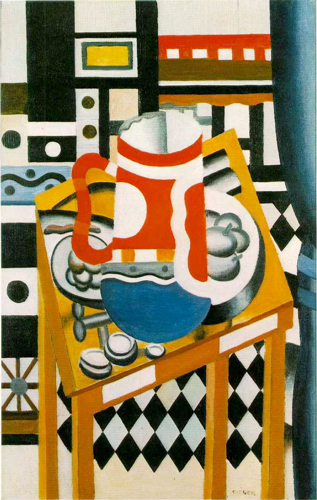
Today’s work of art (& beer) is decidedly more modern, with bold colors and an abstract vision. Still Life With A Beer Mug, by the French artist Fernand Léger, was painted around 1921. Léger is generally considered a cubist painter, like Pablo Picasso, who’s probably the most famous cubist. He was born in France and was originally trained as an architect. During World War I he served in the military and was gassed during the Battle of Verdun, which greatly effected his later art, which would include this work.

The painting, Still Life With A Beer Mug, is at the Tate Museum in London, and there’s a transcript describing every aspect of the painting, but there’s also a shorter summary there.

This vibrant, bold oil painting has a strong visual impact, largely because it is painted using predominantly black, white and the three primary colours – red, yellow and blue. Dominating the centre of the painting is an overly large German style beer mug with a handle seen in profile on the left. It dwarfs the small, square table on which it sits. The table has exaggeratedly long thin legs that disappear off the bottom of the canvas and it stands on a black and white chequered floor. Surrounding the beer mug are what appear to be two plates of fruit, some small pots of butter and an object that could be a cork-screw. The objects in this painting are quite hard to read, because Léger has radically simplified their forms, reducing them to simple shapes. He has also used several different viewpoints at once and filled every inch of the canvas with a riot of highly coloured, contrasting geometric patterns. Some of these seem to correspond to surfaces in the painting, like the chequered floor, but most seem to be used simply for bold decorative effect. Finally, running down the right hand side of the canvas is a blue curtain tied back half way down its length.

Leger_still-life-with-beer

Here is Waldemar Januszczak’s take on Still Life With A Beer Mug, from Techniques of the Great Masters of Art

“In Still Life with a Beer Mug,…the shaded modelling of the curtain, objects on the table and the interior view of the mug contrasts with the flatly painted geometric shapes and the patterned rendering of other forms. This illustrates Leger’s preoccupation with plastic contrasts, which he described as follows in 1923: ‘I group contrary values together: flat surfaces opposed to modelled surfaces; volumetric figures opposed to the flat facades of houses . . .; pure flat tones opposed to grey, modulated tones, or the reverse’. Leger did not want simply to copy a manufactured object, but felt that its clean, precise beauty should be accepted as a challenging starting point which would, if necessary, be distorted to achieve the final desired result.

Leger found his source material in what he described as ‘the lower-class environment, with its aspects of crudeness and harshness, of tragedy and comedy, always hyperactive’. Leger’s work can thus be seen as a response to a view of the world as being in flux and opposition on which, through its being rendered in art, order is imposed through the methodical preparation and execution of the work. The canvas of Still Life with a Beer Mug was divided into 24 squares, some of which can still be seen on the canvas. Leger’s rather aggressive statements about his work should not obscure the fact that Still Life with a Beer Mug is an outstanding example of sensitive and subtle handling of the oil painting medium. Leger took vast pains to achieve exactly the result he wanted. In this work slight adjustments were made in the final paint layer even after the work had been photographed at the Galerie Simon in Paris.

“Still Life with a Beer Mug shows an extremely subtle handling of oils. The strong color contrasts show a range of carefully worked tomes. The black tones are played against white. The warm colors, vermilion, cadmium orange and yellow, are played against the cool tints and shades of Prussian blue, and these intense areas are relieved by the delicate interaction of almost creamy washes of pale lemon yellow and pale blue-green in the diamond pattern below the table. The picture retains the fine but emphatic canvas pattern which shows through the ground. Indeed, the ground itself makes up much of the white background.”

For more about Fernand Léger, Wikipedia is a good place to start. There are also tons of links at the ArtCyclopedia.


Filed Under: Art & Beer

Repeal Day 75th Anniversary Parade

December 5, 2008 By Jay Brooks

Today was, of course, the 75th anniversary of the repeal of the 18th Amendment with the ratification of the 21st Amendment. The 21st Amendment Brewery & Restaurant in San Francisco, California held a Repeal Day Parade that marched from Justin Herman Plaza, near the ferry Building, to their brewpub on 2nd Street, near the Giants’ ballpark in China Basin.

Frequent stops were made along the parade route, such as Nico and Shaun dancing with a pair of flappers.

There were two messages on the day: “Repeal Prohibition” and “We Want Beer.”


For exactly 21 more photos from the 21st Amendment Repeal Day Parade, visit the photo gallery.
 

UPDATE: 21st Amendmet now has some more photos from the parade, too.


Filed Under: Uncategorized Tagged With: Uncategorized

Session #22: 75 Years Demonizing Alcohol

December 5, 2008 By Jay Brooks

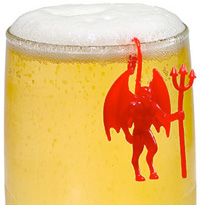
demon
This is our 22nd Session a.k.a. Beer Blogging Friday and today’s topic is quite relevant for the day, as this is the 75th anniversary of the repeal of the 21st Amendment to the U.S. Constitution ending thirteen years of our national prohibition. Our host today, naturally, is the 21st Amendment Blog, written by Shaun O’Sullivan and Nico Freccia, co-founders of the 21st Amendment Brewery & Restaurant in San Francisco, California. Here’s how they put their approach to this month’s topic:

In 1920, there were thousands of breweries across America making unique, hand-crafted beer. The passage of Prohibition wiped out this great culture. On December 5, 1933, the states ratified the 21st Amendment, repealing the 18th Amendment, thus ending 13 years of Prohibition in America. At the 21st Amendment Brewery, the repeal of Prohibition means we can celebrate the right to brew beer, the freedom to be innovative, and the obligation to have fun.

What does the repeal of Prohibition mean to you? How will you celebrate your right to drink beer?

session_logo_all_text_200

I confess I’ve been struggling mightily for something to write about Prohibition, as I feel like I’ve written about it so much lately that there’s really not much left to say. But then my friend and colleague, historian and author Maureen Ogle sent me a link to an Op-Ed piece she did for U.S. News & World Report. Her unique and fresh take on the ramifications of Prohibition’s end was a revelation for me. It was like getting in the bathtub of cheap hooch with Archimedes himself. It was a real “Eureka,” “a-ha moment” and “epiphany” all rolled into one. The wheels started turning. Maybe there’s another way to look at this.

Most of us have taken it as a given that the repeal of Prohibition was a victory for the pro-alcohol majority and a denunciation of the anti-alcohol sentiments that had brought it about. But maybe not. Despite its obvious failures on many fronts, it was the depression that really hastened its end. The economy needed a shot in the arm, and legalizing alcohol created jobs, tax revenue and good will. In the end, it was money, not morals that brought down Prohibition.

For just one example of how bad Prohibition was, check out Prohibition and the Rise of Crime, a blog post by J. Michael Jones, a retired police chief.

That’s not to say I won’t be celebrating today. I will. I’ll be in downtown San Francisco later marching in a Repeal Day parade. I’ll be enjoying some legal beer and toasting how good the American beer scene is today. And I won’t be alone, of course. There are numerous celebrations throughout the country today. But I wonder if we’re celebrating the right things? Or celebrating the right way?

The NBWA (National Beer Wholesalers Association) released a press release today extolling the virtues of the three-tier distribution, a system created out of whole cloth as a way to return alcohol to the public arena after passage of the 21st Amendment.

“This anniversary is a great time to recognize the success of the past 75 years of effective, state-based alcohol regulation since the ratification of the 21st Amendment,” said NBWA President Craig Purser. “A ‘one size fits all’ approach to alcohol regulation during Prohibition was a failure. The 21st Amendment allows individual states to regulate alcohol as their citizens see fit.”

Their celebration is understandable, of course, since after Prohibition an entirely new segment of the beer industry was created — The Distributor. But while understandable, it’s hard not to view their celebration as little too self-serving. They’re not really celebrating alcohol being legally available again so much as their own success in creating a new business model. This new system created a lot of wealth for a number of people and organizations. I’m not saying they haven’t worked hard for it or that they don’t deserve to celebrate their success, but it just feels a little too much like self-congratulatory patting themselves on back. To be fair the Distilled Spirits Council of the United States had a similar press release.

Many other mainstream writing about today’s anniversary is likewise self-congratulatory. Many gave very standard accounts, such as the Illinois Telegraph, the San Francisco Chronicle (which also has some interesting local info and photos), USA Today and even the UK’s Independent. There’s nothing whatsoever wrong with any of these or the countless other similar articles that will be published around the world today.

alcohol-squares

In the Independent, author Rupert Cornwell reflects on the fact that in America “the mindset that produced Prohibition lives on. The cocktail, it is said, is enjoying a new golden age. But a third of American adults don’t drink at all, and the country ranks only 40th in the international league table of alcohol consumption. Indeed, since the late 1970s, consumption per head in the US has been falling steadily.”

The great “war on alcohol” between 1920 and 1933 may have ended in resounding defeat. But an American belief that human vices can be eradicated, and human nature perfected, persists, visible in the continuing, scarcely less futile “war on drugs” declared by Richard Nixon in 1971 and, who knows, maybe in George Bush’s “war on terror” as well. But don’t let such somber thoughts spoil the party tonight.

He’s not the only one to notice the comparison between Prohibition and our current drug policy, such as Stop the Drug War. Even the Wall Street Journal has an article today entitled Let’s End Drug Prohibition. Are we finally starting to realize as a culture that regulating is better than outlawing? Sadly, probably not. The neo-prohibitionists are still running amuck.

But as Maureen Ogle points out in yet another Repeal Day article, this one in the Philadelphia Inquirer, it’s really our Constitution that was saved by ending Prohibition. As she details, Prohibition led to corruption, conspiracy and contempt for the law by not just citizens, but which also — and I just can’t put it better than Ogle — “oozed into and out of every level of government, from Washington to the smallest municipality.” And that’s not just hindsight, a report in 1931 by federal commission that had studied Prohibition for two years, concluded that it was an abject failure and as “the more flagrantly authorities disregarded citizens’ rights, the more cynical Americans became. Young adults in particular — the very people who would become “leaders in the next generation” — demonstrated overt ‘hostility to or contempt for the law.'”

As the Patriot Act (not to mention our current lame duck administration) similarly disregards the Constitution and the rights of American citizens, and we appear to be heading into another protracted recession (if not an actual depression), the conditions seem eerily similar to those of seventy-five plus years ago. As they worried then, what might a continuing disrespect for the Constitution lead to? I’m worried. Aren’t you? Don’t get me wrong, I’m thrilled that “change” may be on the horizon, but I can’t help but continue to be apprehensive that our swing to the right and the threats to democracy that that entailed will so easily be undone by good intentions. Movement Conservatism may be in a weakened state right now, but it’s hardly on life support.

And speaking of beer and elections, did you know that in seven states, it’s still illegal to sell or serve alcohol on Election Day? Weird, huh? In Alaska, Kentucky, Indiana, Massachusetts, South Carolina, Utah and West Virginia alcohol and voting apparently still don’t mix. According to TriState, these [s]o-called “Blue Laws” date back to the 1930s and make it illegal to sell alcohol on certain important religious or political days. Blue laws were meant to protect the integrity of the voting process in a time when many saloons also served as polling places. In the past 70 years, most states have either relaxed their Election Day bans or repealed them altogether.”

demon-beer

But finally, back to Maureen Ogle’s devastating insight into what the end of Prohibition has wrought. Though she finds the term clumsy, I like it. She asserts that repeal “institutionalized the demonization of alcohol.” For some, that may be hard to swallow (yes, intended) but for me it made perfect sense and made me look at the issue from a different perspective.

To summarize what Ogle means by that, here’s her introductory paragraph:

Prohibition ended on Dec. 5, 1933, not with a bang but with the thud of thousands of pages of new city, state, and federal laws that dictated when, where, and how Americans could make, buy, sell, and drink alcohol. Ratification of the 21st Amendment, repealing Prohibition, was neither a green light to drink nor a victory over the “dry” crusade that had produced Prohibition. Seventy-five years later, we’re still captives of that crusade.

Indeed, the 21st Amendment heralded the age of regulating alcohol like never before. It created new rules and regulations, label approval procedures, licensing requirement, all manner of new taxes and previously unheard of restrictions on all aspects of how alcoholic beverages could be made, sold, marketed, packaged and even consumed. At every step from grain to glass, there was the watchful eye of the government to tell everybody what role they were to play and within what parameters the game would take place.

I can only imagine that people were so happy to have alcohol back that it was scarcely even noticed by the ordinary public. I’m sure the breweries were keenly aware, but they were undoubtedly thrilled to be back in business under any conditions and more likely figured being regulated in business was far better than not being in business at all.

Before Prohibition, there were around 1,500 breweries, but less than half reopened afterward. And for a variety of reasons, the number of breweries continued to decline sharply. By the year I was born, 1959, there were only about 200 left. At least one of the reasons that the re-opened breweries struggled was the maze of new federal and state regulations imposed on how alcohol companies operated their businesses.

After Prohibition, the original message of the temperance movement was not only alive and well, but became internalized and institutionalized — essentially set in stone — by the very laws created to regulate it. That message is still with us today. Simply put, it is this:

Alcohol is evil. No one can be trusted with it.

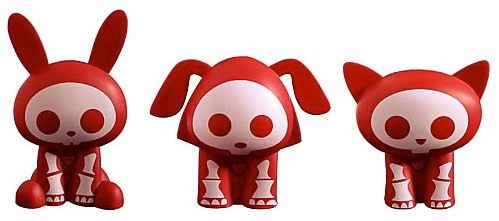
demons-three

That message permeates all discussions of alcohol policy and any “issues” about alcohol. That message has been communicated by the laws passed seventy-five years ago and generations of new adults have soaked up that message almost completely. That’s it’s thoroughly untrue goes not only unchallenged but the notion isn’t even considered as a topic for discussion, so embedded is it in our collective psyche. Every aspect of how we treat alcohol has this false message looking over our shoulder, refusing to go away.

Alcohol is not inherently evil, we just treat it as if it were. People can be trusted with it, and in fact most people who drink alcohol are responsible adults, we just treat them like children in our over-paternalistic society. And we do this because we’ve assumed the temperance propaganda message to be true and we’ve created alcohol laws under that same mistaken assumption.

Ogle sums up:

It’s a vicious, and lethal, cycle: As long as we remain addicted to demonization, we avoid serious discussion about those values. The longer we avoid that conversation, the longer we pass on the booze-is-bad message to our kids, who grow up to pass the message on to their kids. And as long as we teach children to fear rather than respect alcohol, we’ll interrupt the silence with periodic spasms of hand-wringing and finger-pointing about campus drinking, binge drinking, underage drinking, and the like. But here’s the truth: The “alcohol problem” is of our own creation. We’ve got the drinking culture we deserve.

I agree with everything Maureen says with the possible exception of that last sentence. I’m not entirely persuaded that we “deserve” the drinking culture we have today. If our present “drinking culture” had been arrived at by an ongoing open, fair and honest public debate about alcohol, then I’d wholeheartedly agree that we got what we deserve. But I believe that what we’re stuck with today is the result of subterfuge, conspiracy, propaganda and out and out lies by people and organizations with a Carrie Nation-style axe to grind.

I prefer an image of prohibitionists having slunk away to lick their wounds in defeat but the truth is they’ve never really gone away. They’ve never stopped trying to keep their message alive. That they’ve been so successful while at the same time convincing us they’d lost is deviously clever. They’re like the tortured, evil protagonist in every horror movie who refuses to die, no matter how many times he’s shot, sliced or garroted. They always come back, don’t they? To me, that’s the unfortunate message of this 75th anniversary. It’s certainly worth celebrating 75 years of beer in America. But it’s perhaps more important to recognize that the battle didn’t end December 5, 1933. It merely changed the terms of engagement from above ground prohibition to underground demonization. Happy Repeal Day everybody. Drink up.

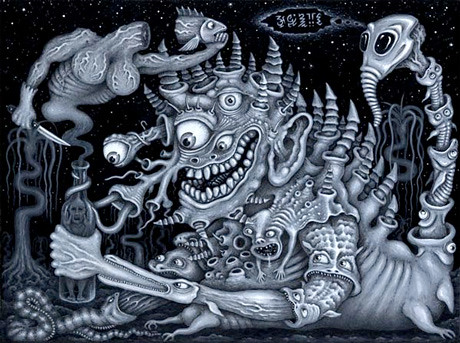
demon-alcohol

The Demon Alcohol, by Robert Steven Connett.

This is a nicely imagined vision of how we view alcohol today, in a Hieronymus Bosch sort of way.

For a lot more great information about Prohibition, check out Prohibition Repeal.
celebrate-repeal

Filed Under: Beers, Editorial, Politics & Law, The Session Tagged With: Law, Prohibitionists

Sapporo’s Space Beer Almost Ready For Tasting

December 3, 2008 By Jay Brooks

Back in May I mentioned that Sapporo Breweries was “planning to brew a beer made from barley descended from seeds grown in space, specifically in the Russian section of the International Space Station two years ago.” Back then I wrote.

According to Reuters, Sapporo said in a statement. “By pursuing the infinite possibility that space has, we wish to present our customers with rich and enjoyable proposals to enjoy a new beer culture.” Sapporo will not sell the initial results, but instead will sample select consumers on the new space beer, which should be — ahem — launched this November. Working with Okayama University scientists, they will produce just over 166 gallons of beer (630 liters). I doubt anyone will be able to taste any difference, but I’d still like to be one of the lucky ones chosen to try it.

Well, it’s December now and still no sign of a tasting. But wait, there’s more news. Sapporo announced yesterday that in January the tasting will take place. According to Japan Today, “[a] total of 30 couples, who have been selected through a lottery, will be invited to the events at the company’s six plants from Hokkaido to Oita Prefecture.”

Presumably the barley she’s holding is the third-generation space barley they used in making the beer, named Sapporo Space Barley. The original plants were sent into space and grown in the International Space Station for five months.

Showing off the bottles at yesterday’s press conference.

Only 100 liters of the beer was made, far less than originally announced, and initial reports say — not surprisingly — that it tastes the same as any other beer.

My favorites quote from the press: From Technovelgy, “I’m guessing “out of this world” will be the most common response.” And from Dvice, “[u]ntil then we’ll stay tuned to see if the space grown beer microbes yield any gamma ray-like super powers.”


Filed Under: Uncategorized Tagged With: Uncategorized

Craft Beer in the Funny Papers

December 3, 2008 By Jay Brooks

My friend Pete Slosberg noticed something different in a comic strip and sent it to me yesterday. It’s a recent Non Sequitur cartoon by Wiley Miller. Read it all the way down the last panel. Go ahead, I’ll wait. Meet you at the end.

 
That’s the first I know of a craft beer being mentioned in a nationally syndicated comic strip, in this case specifically Shipyard Ale from Shipyard Brewing in Portland, Maine. That’s pretty cool, in my humble opinion.


Filed Under: Uncategorized Tagged With: Uncategorized

New Oregon Brewery Opens

December 2, 2008 By Jay Brooks

In case you missed this, a new brewery opened yesterday in Gresham, Oregon. The 4th Street Brewery will have five regular beers on tap, including Gresham Light, Demented Duck Amber, Black Roots Blonde, Powell Porter, and Eager Beaver IPA. John Foyston had the story in the Oregonian.


Filed Under: Uncategorized Tagged With: Uncategorized

Saving British Pubs

December 2, 2008 By Jay Brooks

I don’t know who Neil Hamilton is, apart from a former British Member of Parliament — a hardcore Thatcherite Conservative — who’s been embroiled in one scandal after another for many years. He doesn’t appear to be the sort of politician I’d normally side with; he even once “strongly” supported lead in gasoline and opposed removing it, not to mention being anti-trade union, anti-immigration anti-child benefit, pro-free market and supporting capital punishment, privatization, and the right of people to sell their organs. So to say we’re polar opposites might be something of an understatement.

But that doesn’t mean we can’t find any common ground. He does have some interesting things to say about drinking and the economy. In an Op-Ed piece in the UK’s Daily Express entitled Why We Have To Save the Great British Pub, Hamilton says things that no politician in America would dare say. And despite everything else he stands for, I have to admire that about him.

You should read it all in context, as it’s about what the UK government is doing with regard to alcohol laws, many of which mirror our own foolhardy efforts. But with so many choice bon mots, it’s hard to resist listing some of my favorites.

We all need something to cheer us up. So, what does our killjoy Government plan to do? Ban happy hour in pubs, that’s what.

And here’s a question that American politicians are loathe to ask.

Quite apart from the obvious uselessness of this measure, what business is it of these interfering busybodies anyway?

And none will admit this truism.

We all know alcoholics can wreck their health; so can madcap drivers but we don’t require signs on all cars saying, “Warning: Death Trap.” There is no “drink problem” in this country; only a small minority of “problem drinkers.”

U.S. alcohol policy is also quite focused on punishing everyone, too.

Why should the rest of us be denied early evening happy hours after work just because a few idiots can’t control themselves in completely different circumstances?

Penalizing everyone because they can’t police a few bad apples.

If a pub or bar habitually serves drinks to drunks, it should lose its licence. If youngsters scream and vomit in the streets, they should be arrested and punished. Why penalise sensible drinkers by raising prices and restricting hours?

And it doesn’t work here, either.

That will do nothing to reduce alcohol abuse or smoking. Addicts of either will just stay in, drinking and smoking more cheaply in front of the TV. Youngsters will tank up at home on cheap vodka before sallying forth for a night on the pull in some raucous bear-pit bar.

So instead of praising beer consumption over higher alcohol drinks like cocktails or wine, our neo-prohibitionists target beer and leave the rest alone.

The paradox of this is that beer is a low-alcohol drink and pubs are a controlled environment, tailor-made to prevent alcohol-related problems.

I presume what he’s saying is perhaps part of normal conservative rhetoric in Great Britain, or he wouldn’t be saying it in a general circulation mainstream newspaper. But over on this side of the pond, it would be positively extreme and radical, the kind of opinions that almost never grace our media outlets, print of otherwise. If one of our conservative politicians said even some of this, they’d be hounded by religious, conservative and neo-prohibitionist groups from now ’till doomsday.

Personally, I just like hearing them from someone other than myself.


Filed Under: Uncategorized Tagged With: Uncategorized

A Frosty Mug of Smurfs

December 1, 2008 By Jay Brooks

Not necessarily everything to come out of Belgium is as wonderful as their beer. Witness The Smurfs, which were created by Belgian artist Peyo in 1958. Yup, you read that right. The Smurfs are celebrating their 50th anniversary this year. They made our way to America in 1981, when NBC debuted that annoying Hanna-Barbera animated series.

But I may have to rethink my dislike of the Smurfs based upon this collectible figure that was made in 1974, well before the U.S. TV series. According to the Mushroom Village, a website about collecting Smurf stuff, the Smurf holding a mug of beer is designated “20078 Beer” and the “mold was introduced in 1974.” They describe it as follows. “Big smile with hands out, frothy beer mug in his right hand.” It’s considered only slightly uncommon, garnering a 2 (out of 5) rarity rating. It was available only in Hong Kong and West Germany, as far as I can tell, though I found one on eBay from Canada. (Yes, despite my hatred of the little blue people, I ordered myself one just because he’s holding a beer mug.)

It was just too completely weird not to, especially with that shit-eating wide grin. I can only assume that this particular one was never sold in the United States. Can you just imagine the hue and cry from certain parents upon finding this one in the toy bin? That fact alone makes me want one. According to Wikipedia:

From 1959 on until the end of the 1960s, Dupuis produced Smurf figurines. But the best known and most widely available Smurf figurines are those made by Schleich, a German toy company. Most of the Smurf figurines given away as promotional material (e.g. by British Petroleum in the 1970s and McDonald’s in the 1990s) are made by Schleich as well. New Smurf figures continue to appear: in fact, only in two years since 1969 (1991 and 1998) have no new smurfs entered the market. Schleich currently produces 8 new figurines a year. Over 300 million of them have been sold so far.


Filed Under: Uncategorized Tagged With: Uncategorized

Beer in Art #4: Van Gogh’s Beer Tankards

November 30, 2008 By Jay Brooks

art-beer
Vincent Van Gogh is justly famous for his later works, where he used bold swaths of color to create amazing paintings that (though not in his lifetime) shattered the art world. Paintings like Starry Night, Sunflowers and Wheat Field with Crows. Most of his most well-known works stem from the last few years of his life, which ended in July of 1890.

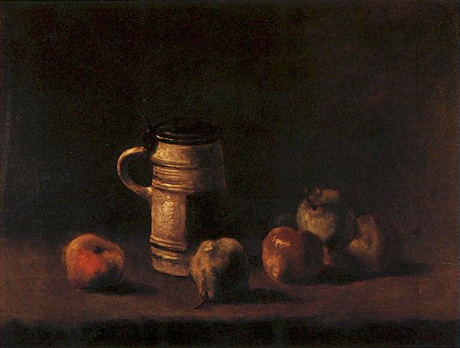
But before that, his work was darker, less colorful and he created three paintings with a mug or bottle of beer, between 1881-85, before he moved to Paris the following year and all hell broke loose, color-wise. The painting I like best of these is Beer Tankards, which was done between September and October of 1885 when Van Gogh was in Nuenen (in the northern part of The Netherlands). It’s currently one of the works at the Van Gogh Museum in Amsterdam.

VanGogh-beer-tankards-1885

Beer Tankards was done a few months after his father passed away in March and these works were dark, such as The Potato Eaters, one of his first major works. Though it’s nearly monochromatic, I like the composition of it, the way he’s seemingly haphazardly strewn the three tankards on what presumably a wooden table. Their positioning is, of course, quite deliberate.

Van-Gogh_Still-Life-Beer

The first time Van Gogh used a beer mug with four years earlier, in 1881’s Still Life with Beer Mug and Fruit. During this time the artist depicted “only the meager and homely possessions of the very poor: their basic foodstuffs, their rough earthenware crockery and thick bottles of beer set out clumsily on plain tables against dark backgrounds.” That’s Naomi E. Maurer’s description in her book, The Pursuit of Spiritual Wisdom.

Van-Gogh_Still-Life-Beer2

He revisited the same thing three years later, in 1884 (a year before Beer Tankards) when he painted Still Life with Pottery, Beer Glass and Bottle. This one’s probably the least known, and for me it’s easy to see why. It seems too crowded and composition suffers as a result. Also, it’s very rough, not just impressionistic but less polished or finished.

In the last year of his life, Van Gogh returned once more to painting drinking, though as Rick Lyke points out, he was copying “a woodblock print by Honore Daumier titled “Physiology of the Drinker, The Four Ages.” The painting depicts a youth and three men gathered around a table, tankards in hand, with a pitcher at the ready for refills.” The painting is at the Art Institute of Chicago.

Van-Gogh_the-drinkers

For more about Vincent Van Gogh, Wikipedia is a good place to start, though there’s even more at the Vincent Van Gogh Gallery. There are also tons of links at the ArtCyclopedia.

Filed Under: Art & Beer Tagged With: The Netherlands

« Previous Page
Next Page »

Find Something

Northern California Breweries

Please consider purchasing my latest book, California Breweries North, available from Amazon, or ask for it at your local bookstore.

Recent Comments

  • Bob Paolino on Beer Birthday: Grant Johnston
  • Gambrinus on Historic Beer Birthday: A.J. Houghton
  • Ernie Dewing on Historic Beer Birthday: Charles William Bergner 
  • Steve 'Pudgy' De Rose on Historic Beer Birthday: Jacob Schmidt
  • Jay Brooks on Beer Birthday: Bill Owens

Recent Posts

  • Beer In Ads #5225: Fabled Ambrosia Of The Ancients April 17, 2026
  • Historic Beer Birthday: William O. Poth April 17, 2026
  • Beer In Ads #5224: Harvard Bock Beer April 16, 2026
  • Historic Beer Birthday: William H. Biner April 16, 2026
  • Historic Beer Birthday: Alan Eames April 16, 2026

BBB Archives

Feedback

Head Quarter
This site is hosted and maintained by H25Q.dev. Any questions or comments for the webmaster can be directed here.