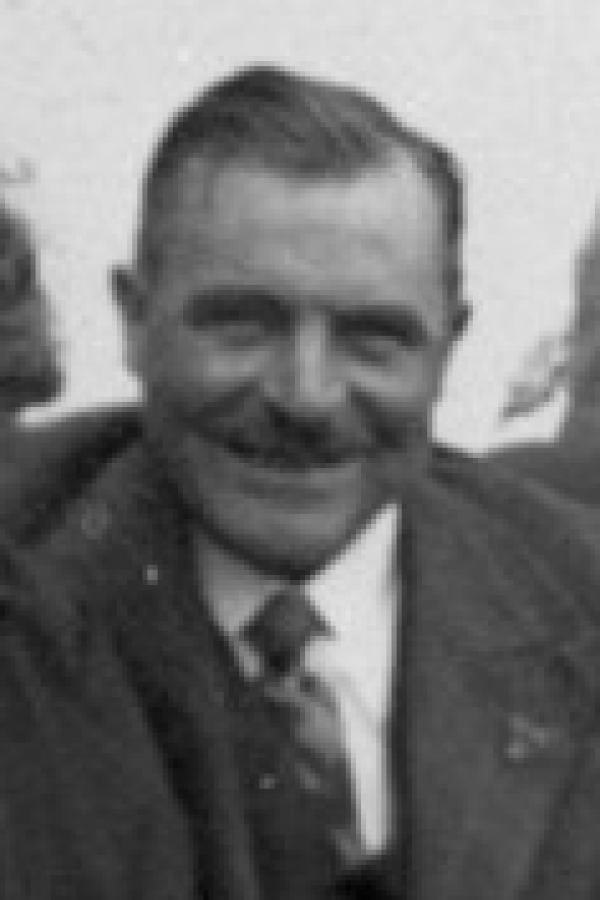
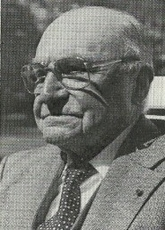
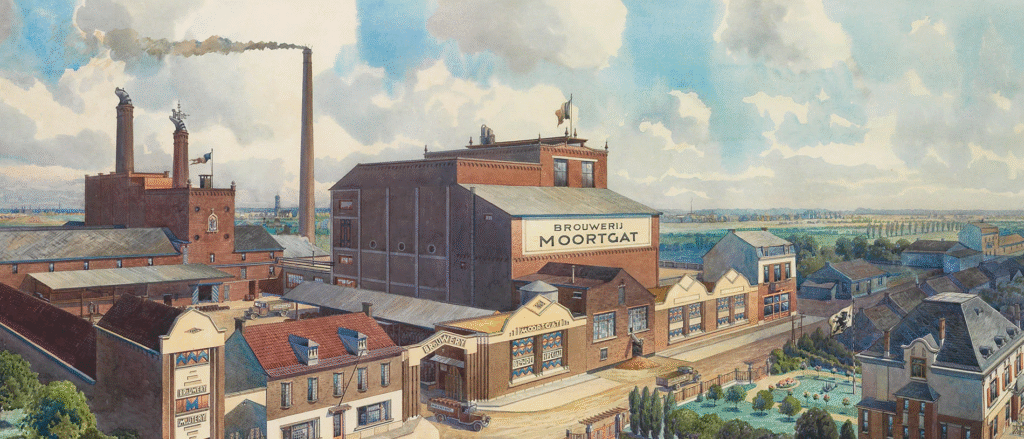
Today is the birthday of Albertus Carolus “Albert” Moortgat (August 2, 1890-September 14, 1983). He was the youngest son of Jan Léonardus Moortgat, who founded the brewery which became known as Duvel Moortgat. Albert took over the brewery around 1914 and in 1917 created their iconic beer, Duvel, although they didn’t call it that until 1923.
This is his entry from Dutch Wikipedia, which I altered somewhat so it reads more naturally.
Albert’s father first left the management of the brewery to his brother Joseph (1875-1914), but after his early death he left the management to Albert. The first Duvel was brewed in 1917, but it was not until 1923 that the beer was marketed under that name. Albert went to Scotland to learn how to make this beer and initially called it “Victory Ale.”
In 1921 Moortgat became mayor of Breendonk. Moortgat remained mayor until he was arrested in September 1944, during the Allied liberation of Belgium, and accused of collaboration with the German occupier. He was sentenced to four years in March 1946, but he was released at the end of August 1947.
In 1917 Albert Moortgat married Virginie Plaskie (1891-1977), a daughter of a brewer from Ramsdonk. They had 12 children.
This account of the early history of the brewery is from the company’s website:
It all began when Jan-Léonard Moortgat and his wife founded the Moortgat brewery farm in 1871. Around the turn of the century, Moortgat was one of the over 3,000 breweries operating in Belgium.
Jan-Leonard experimented by trial and error, and his top-fermented beers were soon greatly appreciated in the brewery’s home town of Puurs and far beyond. Before long, the Brussels bourgeoisie was also won over by his beers.
Business was booming and Jan-Leonard’s two sons, Albert and Victor, joined the company. There was a clear division of labour: Albert became the brewer, Victor was responsible for delivering the beer to Brussels by horse and dray.
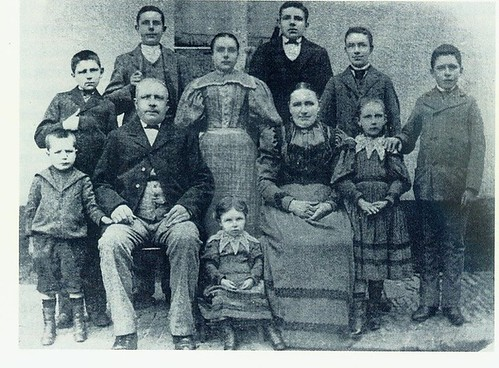
Albert and the Moortgat family c. 1895. Albert is in the front row on the left.
The First World War brought Belgium into contact with England and especially with English ales, which were quite popular at the time.
Inspired by the success of English ales, Albert decided to create a special beer based on the English model.
To create this type of ale, Albert wanted to work with only the best ingredients.
He travelled to the UK to get the specific strain of yeast he wanted and initially met with considerable resistance from the local brewers. It was only after a veritable odyssey across England that he was finally able to get his hands on a precious sample from a Scottish brewery. Our yeast is still cultured from the very same strain to this day!
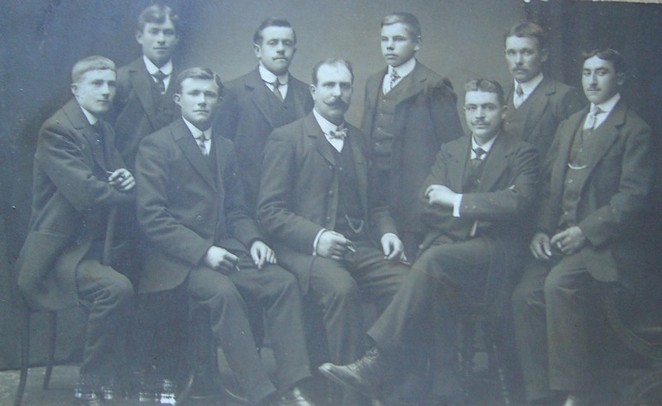
The staff of the Moortgat brewery in the 1920s. Neatly dressed. Albert Moortgat is the second from the right in the first row.
The two brothers continued to search and experiment until they had perfected the recipe.
To commemorate the end of the First World War, the new beer was initially dubbed ‘Victory Ale’.
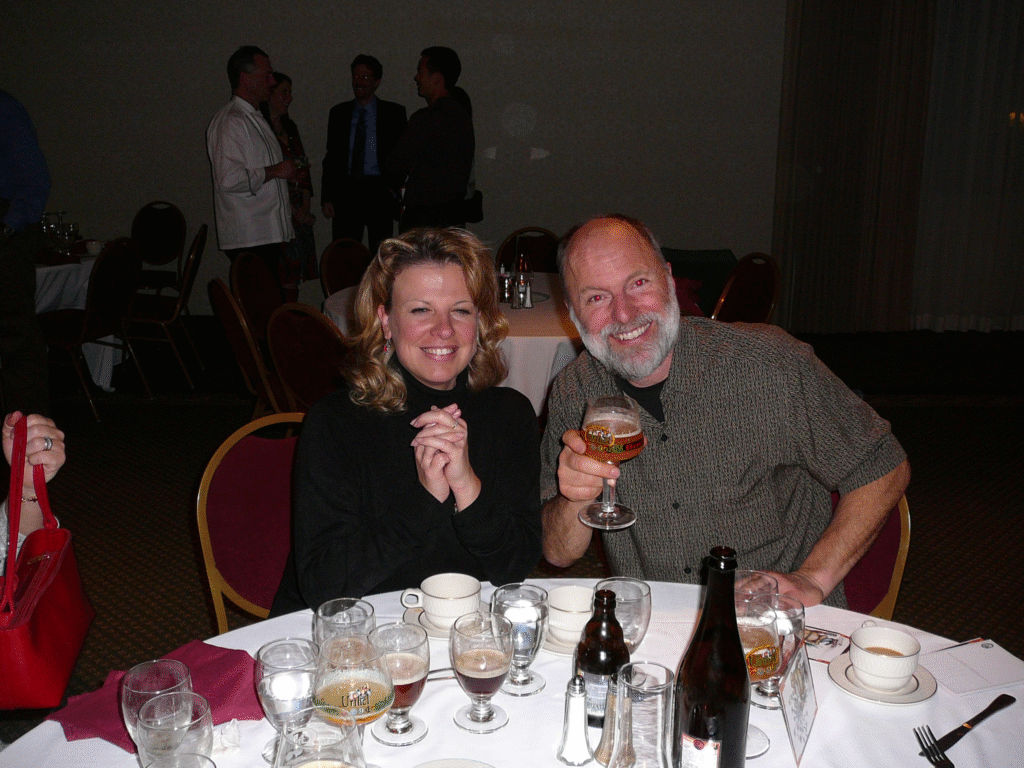
Today is the 51st birthday of Hildegard Van Ostaden, brewmaster at Urthel, one of only a handful of female brewers working in Belgium. Inspired by a trip to Alaska’s barleywine festival, she also brewed the first American-style Imperial IPA in Belgium. Her beers are all great, and I love the illustrations on the labels that her husband Bas does. Join me in wishing Hildegard a very happy birthday.
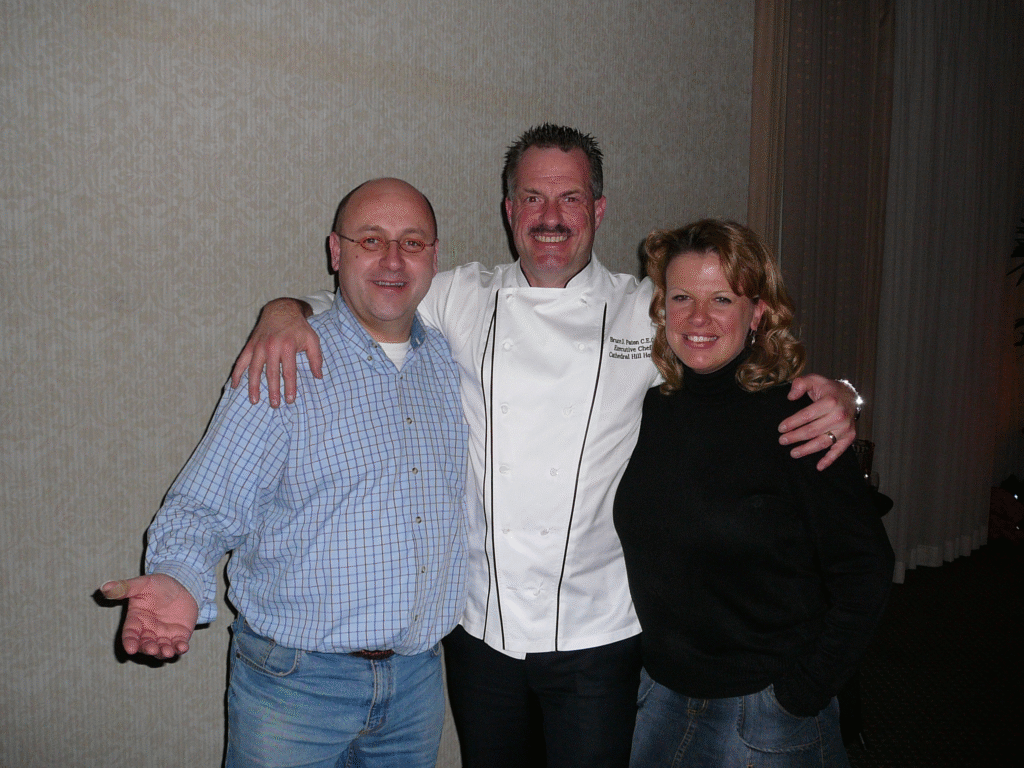
Hildegard with Brian Hunt of Moonlight Brewing at the Beer Chef’s Urthel dinner.
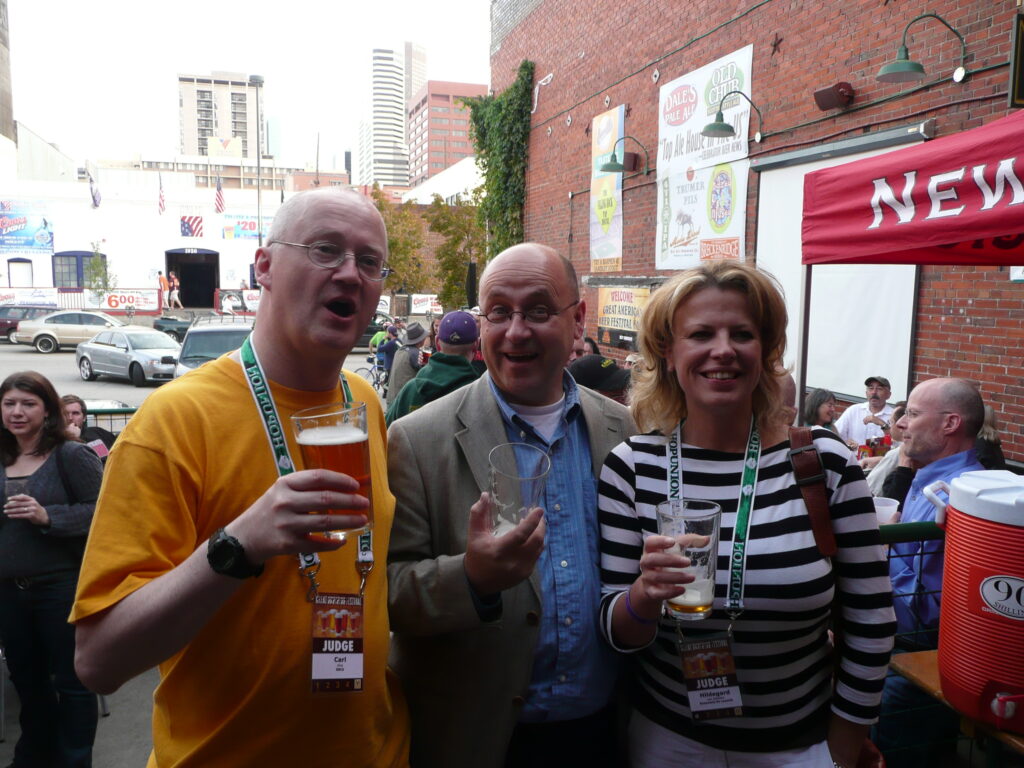
Outside the Falling Rock, fellow GABF judges Carl Kins, from the EBCU (on left), and Hildegard (on right) along with her husband Bas (in the middle) during GABF in 2007.
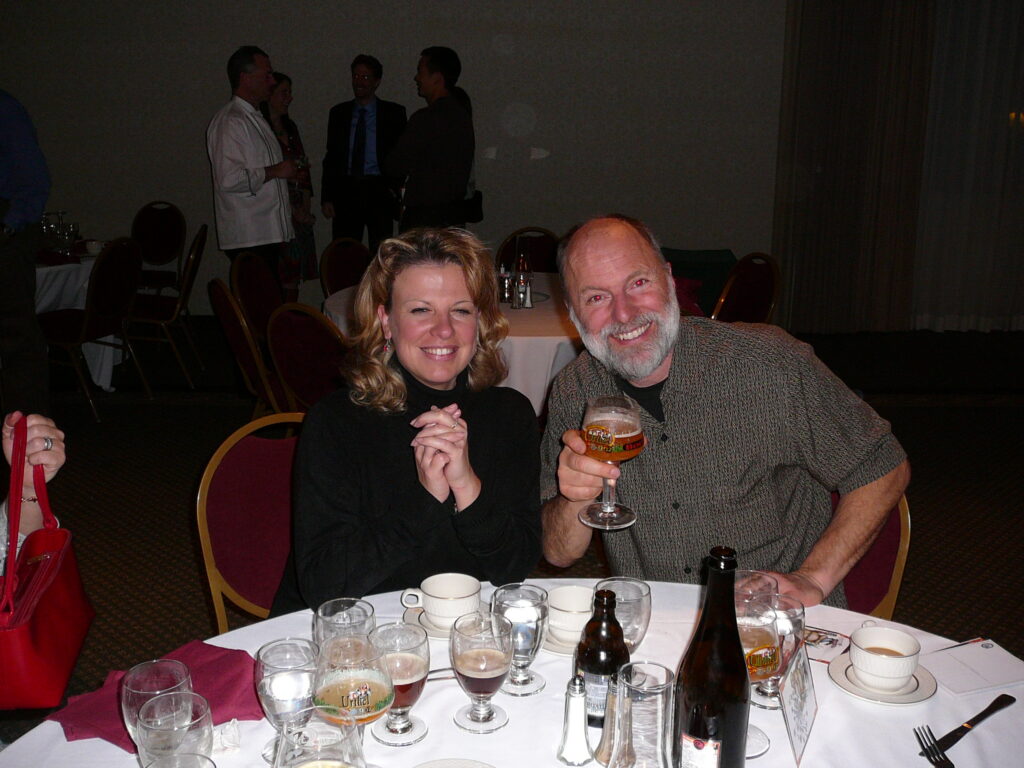
Bas van Ostaden, Bruce Paton and Hildegard after their dinner in 2007.
Today is the 48th birthday of Jean Moeder, founder of the Moeder Lambic bar in Brussels, Belgium. I first met Jean at his bar a few years back and have run into him since a couple of times. He’s very passionate about beer, and his place (both of them now) are amazing. Join me wishing Jean a very happy birthday.
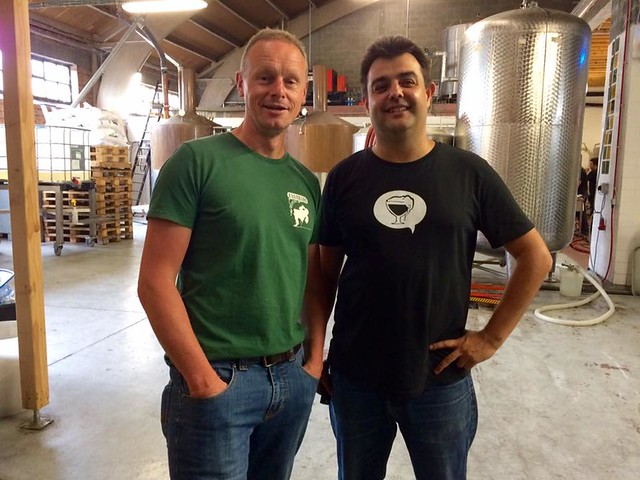
Jean and good friend Jean Van Roy, from Cantillon, at Brasserie de la Senne a couple of years ago.
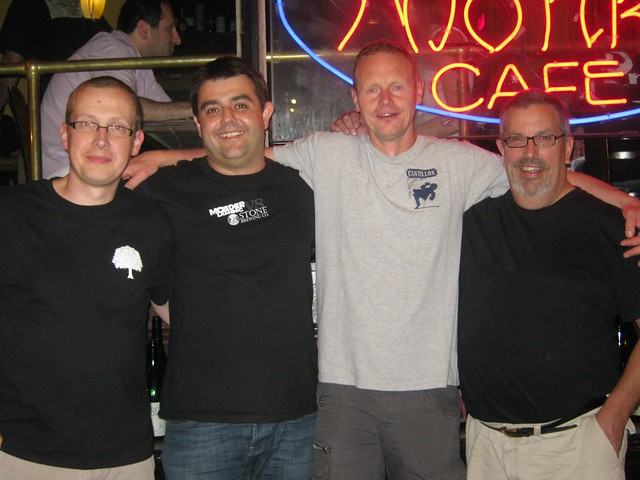
In front of Monk’s Cafe in Philadelphia: Pierre Tilquin, Jean, Jean Van Roy and owner Tom Peters, in 2012.
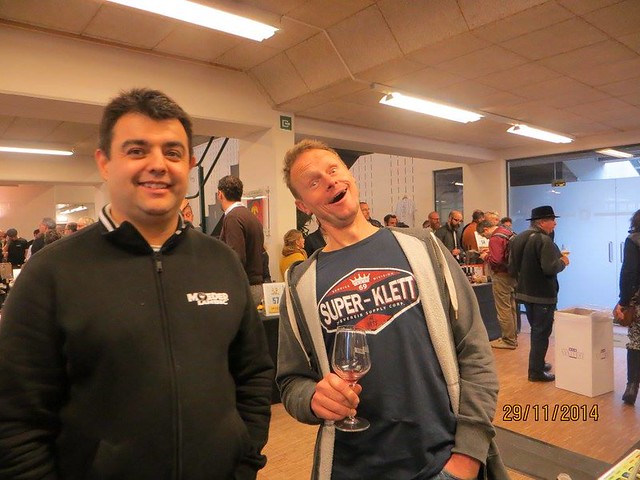
But this is by far my favorite, again with Jean and Jean Van Roy, this time from 2014.
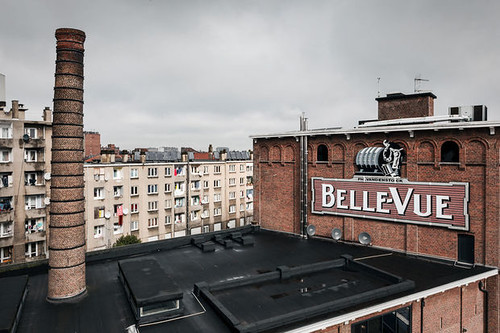
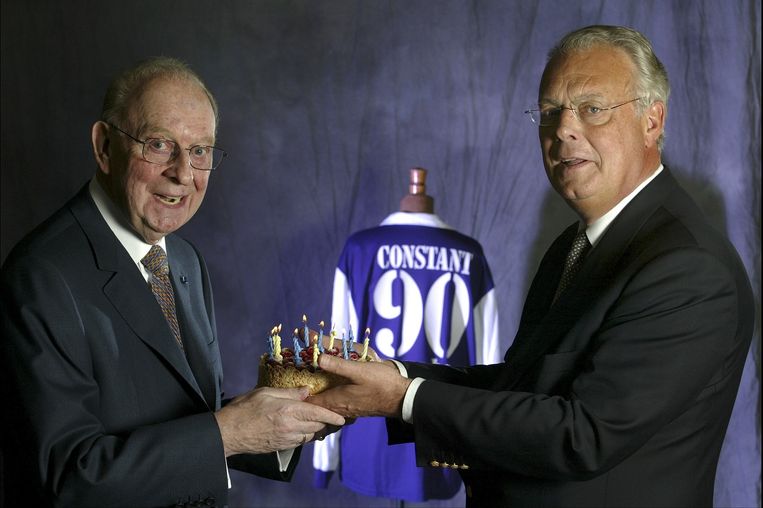
Today is the birthday of Constant Vanden Stock (June 13, 1914-April 19, 2008). While he was best known for his exploits in football/soccer, he also ran his family’s business, Belle-Vue Brewery. That brewery was founded by his father, Philémon Vandenstock, in 1913. Constant’s father was captured by the Nazis in World War 2, and was sent to a concentration camp, but died one week after being released in 1945. After the war, Constant re-opened the brewery and continued to run it until the business was effectively acquired by Interbrew, now AB-InBev, in 1988.
Constant Vanden Stock was the president and a player of Belgian football club R.S.C. Anderlecht. The stadium of this club is named after him. Constant Vanden Stock also served as coach of the Belgium national football team from 1958 to 1968. He is the father of another club president, Roger Vanden Stock. He is also behind the bribery of referee Emilio Guruceta Muro to throw the UEFA cup semi-final against Nottingham Forest in 1984. Vanden Stock managed the family brewery Belle-Vue, famous for its Kriek and Lambic, until he sold it to beer giant Interbrew, now InBev.
This tribute to Vanden Stock is from the 10th anniversary of his death in 2008, published by the RSCA in Belgium in 2018.
Son of brewer Philémon Vanden Stock and his wife Marie, Constant Vanden Stock wasborn in Anderlecht on June 13, 1914, just before the start of the First World War. Ten years later, he began to play for the Mauve and Blancs, where he played only 52 matches in the first team between 1933 in 1938 due to serious injuries. He then joined the ranks of the neighbors of the Union Saint-Gilloise. Five years later, he put an end to his sports career and he focused on the development of Belle-Vue, his father’s brewery.
In the early 1950s, Constant Vanden Stock occupied a very first position at Sporting. He was there for three years responsible for recruiting young people. Constant was also the cadet and school coach. After a short stint as president of La Forestoise, he was appointed to the selection committee of URBSFA. Two years later, he became the only national team coach. Albert Roosens, the Anderlecht president at the time, wanted to bring him back to the RSCA, but Constant nevertheless chose the role of technical director at the Club Brugeois. A year later, in 1969, he returned to the capital, however. Constant became a member of management and also vice-president there, before finally taking over the helm as president in 1971.
It was the start of a long and successful period. In twenty-five years of presidency, Constant Vanden Stock managed to add many trophies to the prize list of our club. He celebrated ten Belgian champion titles, seven Belgian Cups, two Cup Winners’ Cups, a UEFA Cup and two European Super Cups. In addition, the old Émile Versé stadium was completely renovated between 1983 and 1991 to become a football stadium with boxes and business seats , a great novelty. The enclosure was logically renamed the Constant Vanden Stock stadium to pay tribute to his work.
In 1996, Constant Vanden Stock decided to pass the baton to his son Roger, but he remained, at 82, obviously very attached to his club, as honorary president. In 2005, Constant’s health began to deteriorate, with balance problems which were followed by a heart attack. Constant Vanden Stock died on April 19, 2008, just before the centenary of his club, at the age of 93 years. Rest in peace, Mr. Constant.
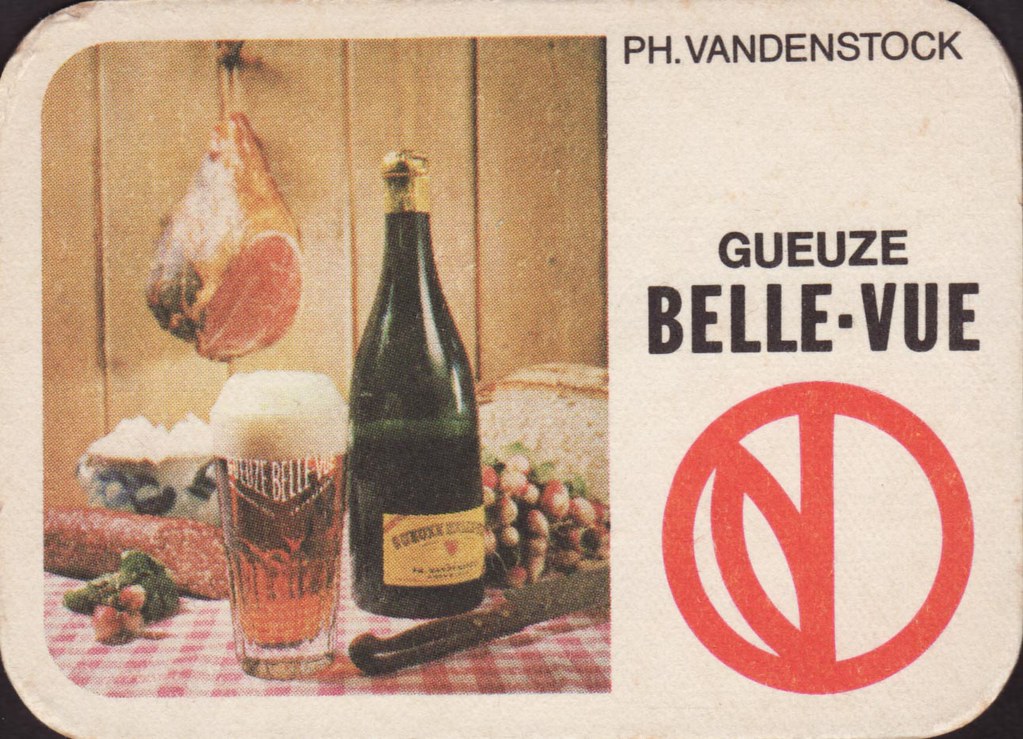
Brasserie Belle-Vue has a long and sometimes controversial history of innovation, takeover, and survival among the lambic brewers and blenders. It was founded in 1913, by a café blender named Philémon Vandenstock (1886 – 1945). The owner of a bar in Brussels, Vandenstock, along with his wife, bought wort from various lambic breweries in the city and began blending fondgeuze for the establishment. Shortly after they began their blending business, World War I broke out leaving few resources to continue. Finally, in 1927, the Belle-Vue Café in Anderlecht became available. Vandenstock purchased the building as an outlet for his lambics; serving five other cafes in the area while also selling directly to customers. From 1927 onward, the blendery would market itself under the Belle-Vue name with a mention to Ph. Vandenstock usually visible somewhere on the branding.
The business flourished under Philémon, leading to the first brewery acquisition by Belle-Vue in 1943: Vos-Kina, a lambic brewery located in Sint-Jans-Molenbeek. The acquisition of the brewery came at a difficult time in Europe’s history, right in the middle of World War II. While many breweries were struggling through the war, Belle-Vue was growing. Now able to brew his own lambic, Vandenstock also brought his son Constant Vandenstock and his son-in-law Octave Collin Vandenstock into the business to help manage.[1] Sadly, Philémon was arrested by the occupying Nazi forces in 1944 and sent to the Neuengamme concentration camp where he remained until it was liberated in May of 1945. He died just one week after the camp’s liberation.
The journey of Belle-Vue’s slide into non-traditional lambic started immediately after the death of Philémon when his son Constant took over the business. Until then, Belle-Vue was producing only traditional fondgeuze; however, like many other lambic breweries at the time, Constant began to use artificial flavorings to adapt to the changing palates of Belgian lambic drinkers. Belle-Vue began sweetening, filtering, pasteurizing, and carbonating its gueuze so that it could be consumed more like a traditional European pale lager rather than a traditional lambic. Belle-Vue also was one of the first, if not the first, lambic breweries to move away from using the traditional 75cl bottles to using capped 25cl bottles. This provided an easy “one bottle for one glass” strategy and did away with specialty corkscrews needed for opening the larger bottles.
The journey to the top of the lambic world for Belle-Vue began in the 1949-1950 season when Belle-Vue began to send lambic across the country and into France and the Netherlands. Belle-Vue, who was at the time the only lambic brewery with filtered and pasteurized gueuze, managed to escape the heatwave that resulted in exploding bottles for the majority of the lambic brewers and blenders that season. Business was so good that the brewery went on to two more takeovers, taking over the Louis & Emile De Coster lambic brewery in 1952 and Timmermans in 1955.
Constant, who was always involved with the football leagues in Belgium and Europe brought his son, Roger, as well as Roger’s cousin Philipe, into the business in 1962. In 1969, Belle-Vue acquired two more breweries: De Boeck and Goossens, known together as Brasseries Unies (United Breweries). These two breweries together had already acquired Brasseries Brasserie de la Couronne (De Kroon), Espagne, De Coster-Heymans, and Vandenkerckhoven. Again in 1970 Belle-Vue acquired Brabrux, which had already acquired other well known lambic breweries De Keersmaeker, Vaan Haelen-Coche, Bécasse-Steppé, and Vandenperre. At this point, Belle-Vue controlled approximately 75% of the lambic market. De Neve was also taken over by Belle-Vue in 1975, which is now a set of luxury apartments in the old brewery building.
Belle-Vue was riding a wave of success that very few lambic breweries were achieving at the time, but to do this Belle-Vue needed the help of one brewery still bigger than them in Belgium: Artois. Belle-Vue partnered with Artois to help expand its brand in the export market. The cost of this was a 43% minority share for Artois in Belle-Vue, with Constant still remaining in charge of Belle-Vue. When Artois merged with Piedboeuf (most recognized as the brewer of Jupiler) in 1988 to create Interbrew, it effectively put an end to the Vandenstock family stake in Belle-Vue.
Today, Brasserie Belle-Vue exists under the AB-InBev umbrella and consistently puts out non-traditional, sweetened lambics for the masses. No longer producing a traditional lambic or gueuze, the final true-to-style Belle-Vue product was the Belle-Vue Sélection Lambic released in 1999. Belle-Vue beers are now produced at the brewery in St. Pieters-Leeuw located just outside the Brussels Capital Region in Flemish Brabant. Belle-Vue is not a member of HORAL.
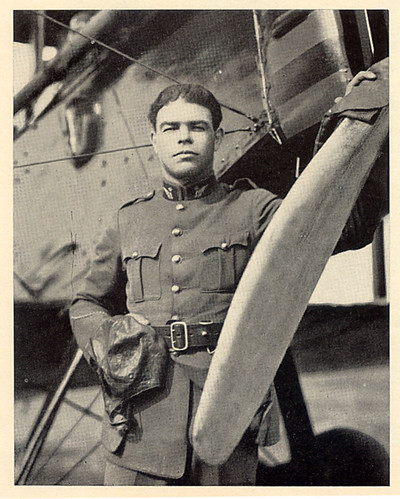
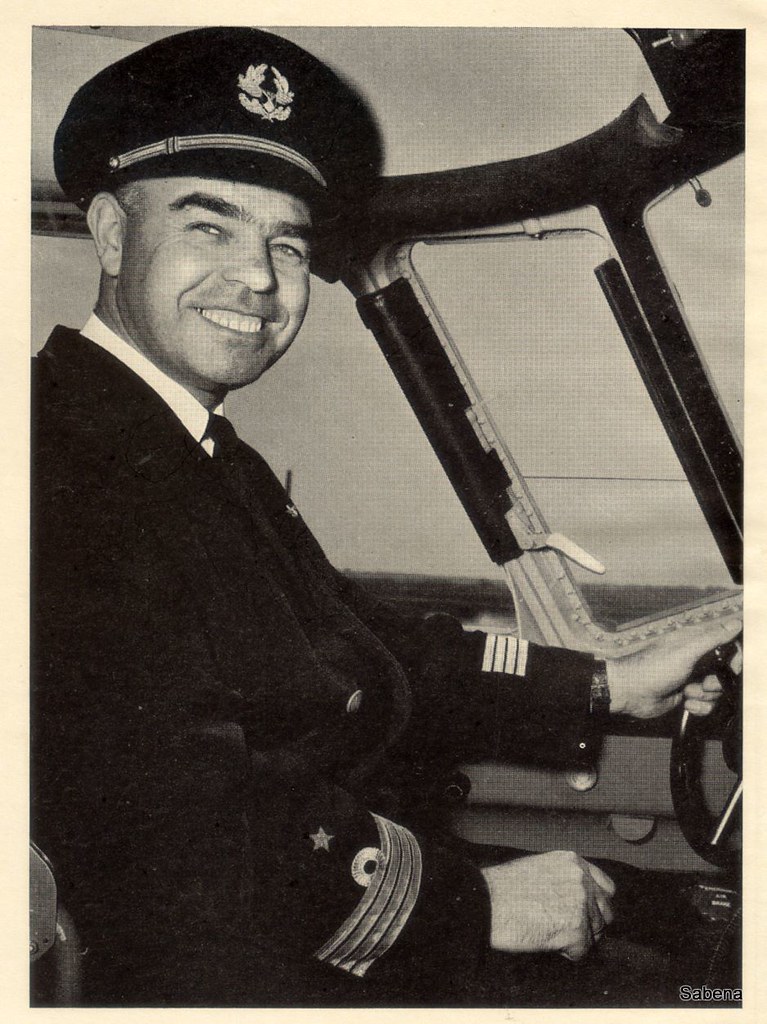
Today is the birthday of Prosper Cocquyt (June 9, 1900-October 22, 1954). He was born in Astène, Belgium, near Ghent, and is primarily famous for being an aviator.
Prosper Cocquyt was called “the uncrowned king of the airline pilots.” Shortly after learning to fly, in his early twenties, joined Sabena World Airlines in its inception, and opened several routes for them, including to the Belgian Congo. He flew for them for over 25 years, and was even “the favorite pilot of the Belgian royal family and the personal pilot of the kings, Albert I and Leopold III.” Flying Zone has a lengthy biography of Cocquyt, and so does another website.
He was married to Elza Timmermans, and they had two children, a boy and a girl. It’s possible she was part of the Timmermans brewing family, but I’m not sure. But there’s another reason he’s included here.
When World War I broke out, Cocquyt was only fourteen, and he had to abandon going to school and find work. He was hired by a brewery run by a friend of his father as a mechanic. He distinguished himself by his knowledge of mechanics, and so impressed his boss, at sixteen, he was named chief mechanic, and even received a degree in mechanical engineering and electrical engineering at 21, before abandoning working in brewing to begin his career as a pilot. As far as I could tell, he never looked back.
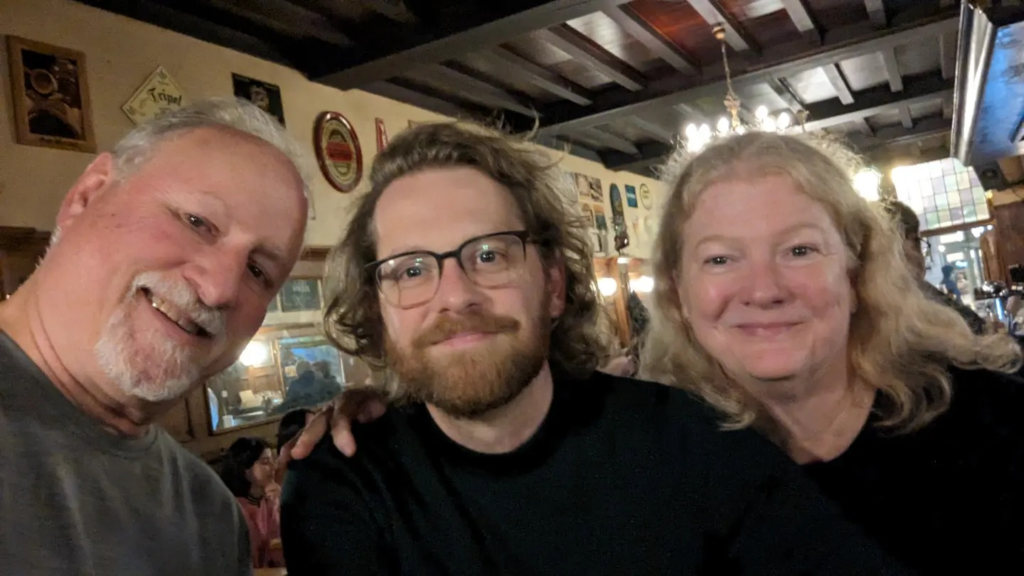
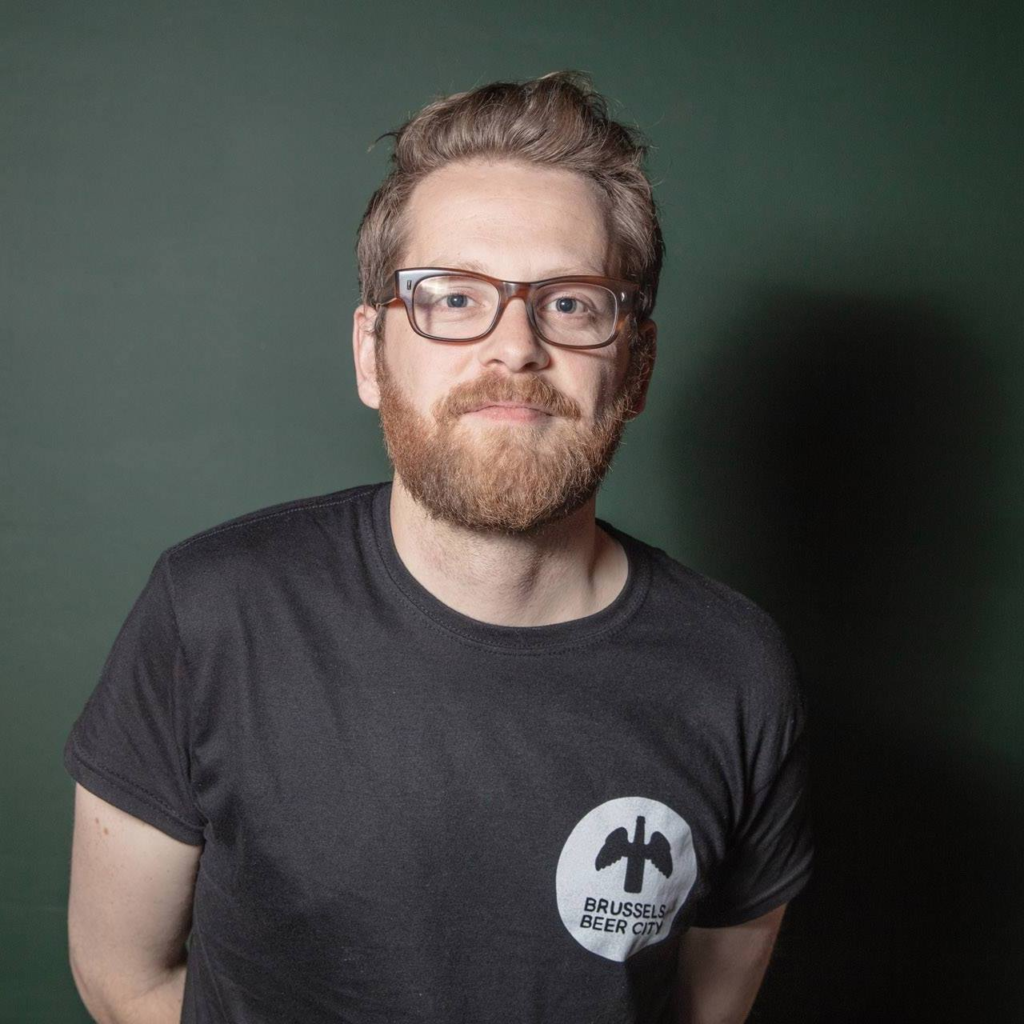
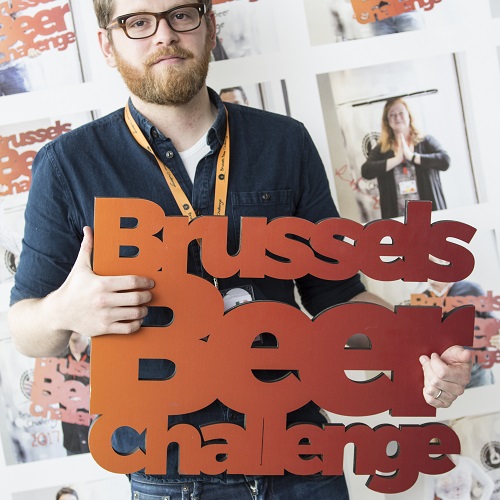
Today is the 40th birthday — The Big 4-O — of Irish beer writer Eoghan Walsh, whose work brought him to live in Brussels, Belgium, where he writes the blog Brussels Beer City. While I was aware of Eoghan’s work thanks to the interwebs, I finally got to meet and spend some time with him during judging for the Brussels Beer Challenge a few years ago, which was great fun, along with subsequent visits to Belgium. Join me in wishing Eoghan a very happy birthday.
Meeting up with Eoghan at Brasserie de la Senne to pick up a copy of his latest book, “A History of Brussels Beer in 50 Objects.”
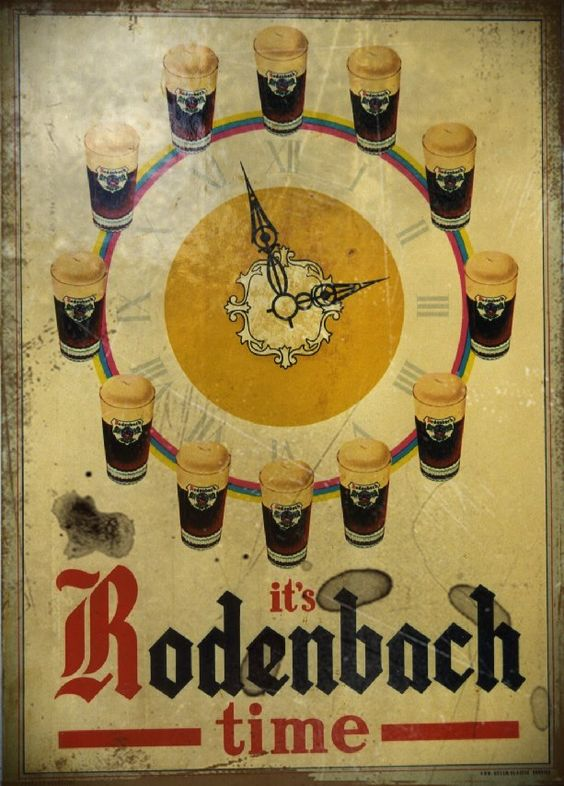
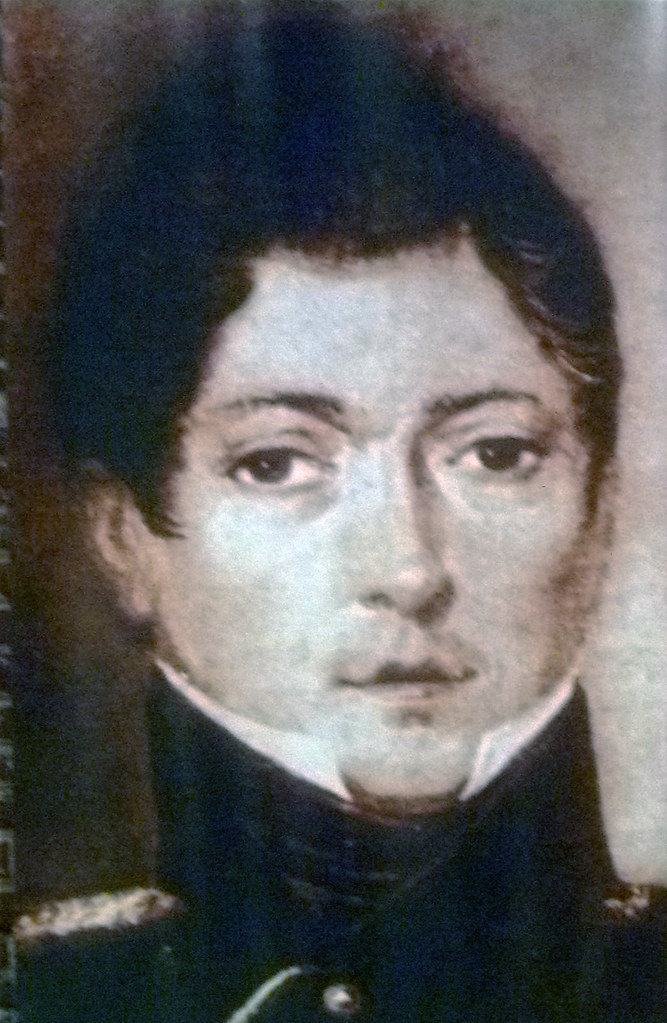
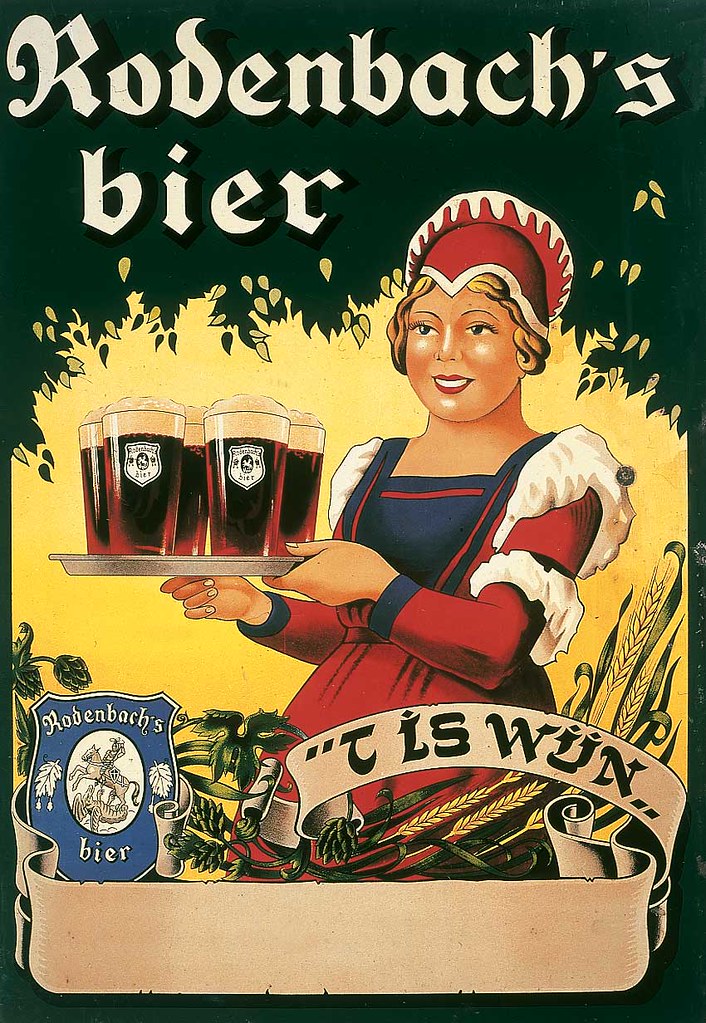
Today is the birthday of Pedro Rodenbach (June 8, 1794-January 20, 1848). He was a military officer and fought in the Battle of Waterloo. When he left the army in 1818, he married a brewer’s daughter, Regina Wauters, who was from Mechelen in Belgium. After Pedro’s father died, he and his brothers, Alexander, Ferdinand and Constantijn, bought a brewery in Roeselare. When their agreed-upon partnership ended after fifteen years, Pedro and Regina bought them out. It was originally called Brasserie et Malterie Saint-Georges, but later became known as Brouwerij Rodenbach.
This is a translation of his Dutch Wikipedia page:
Pedro Rodenbach was the youngest brother of Alexander and Constantin Rodenbach. Like his older brothers Ferdinand Constantin and he enlisted in the French army. He joined there in February 1811 as a volunteer the Imperial Guard. He made the disastrous Russian campaign note (1812), and was second lieutenant in the 14th regiment of cuirassiers under in March 1813 Colonel About that last action came during the Battle of Leipzig (1813). Back in Belgium, he joined as a lieutenant (Belgian) carabineers, which were integrated into the Dutch army and battled in the Battle of Waterloo (1815).
Rodenbach took in 1818 resigned from the army. He married that year in Mechelen Regina Wauters, a rich brewer’s daughter. After the death of his father in 1820 he began working with his brothers Alexander and Ferdinand and his sister a company which included a distillery and a brewery.
In preparation for the Belgian revolution made by Pedro name to King William I to hand over a petition in June 1829, drawn up by his brother Alexander, the release of Louis de Potter and other political prisoners. At the outbreak of the revolution he was in the front row, he founded the “Reunion Central”, a revolutionary club including Rogier, Chazal and Ducpétiaux. He took charge of a company of volunteers, and drove at the September day gallop to Lille to the exiled Louis de Potter back to Brussels to accompany.
Pedro Rodenbach joined the new Belgian army as a colonel and was tasked to organize the 1st regiment of hunters on horseback. From August 1831 to February 1839 he was the military commander instead of Brussels.
In 1836 he bought the fortune of his wife Regina, his brothers share in the joint venture over. It was renamed Brasserie et Malterie Saint-Georges, later known as Brouwerij Rodenbach. However, he continued to live in Brussels, after his discharge from active military service in June 1839, and the effective management of the company was owned by his wife in Roeselare.
And this is the history currently on the brewery website:
The Rodenbachs moved from Andernach am Rhein to Roeselare in West Flanders. The Rodenbach line boasted numerous military men, poets, writers, brewers and entrepreneurs, as well as pragmatic revolutionaries and politicians.
Pedro Rodenbach took part in Napoleon’s Russian campaign and was instrumental in the Belgian revolution in 1830, which led to an independent Belgium. Three Rodenbachs were members of the constitutional congress when Belgium was founded. Constantijn Rodenbach was the author of the “Brabançonne”, the Belgian national anthem.
In 1836, Pedro Rodenbach, together with his entrepreneurial wife Regina Wauters, founded the brewery. However, it is Eugène Rodenbach whom RODENBACH has to thank for its unique quality and masterful character. Not only did he study the vinification of beer, but also optimised the maturation process in oak casks, or “foeders” (maturation casks). The world-renowned cask halls with their 294 oak casks, some of which are 150 years old, are protected as part of the industrial heritage of the Flemish Community.
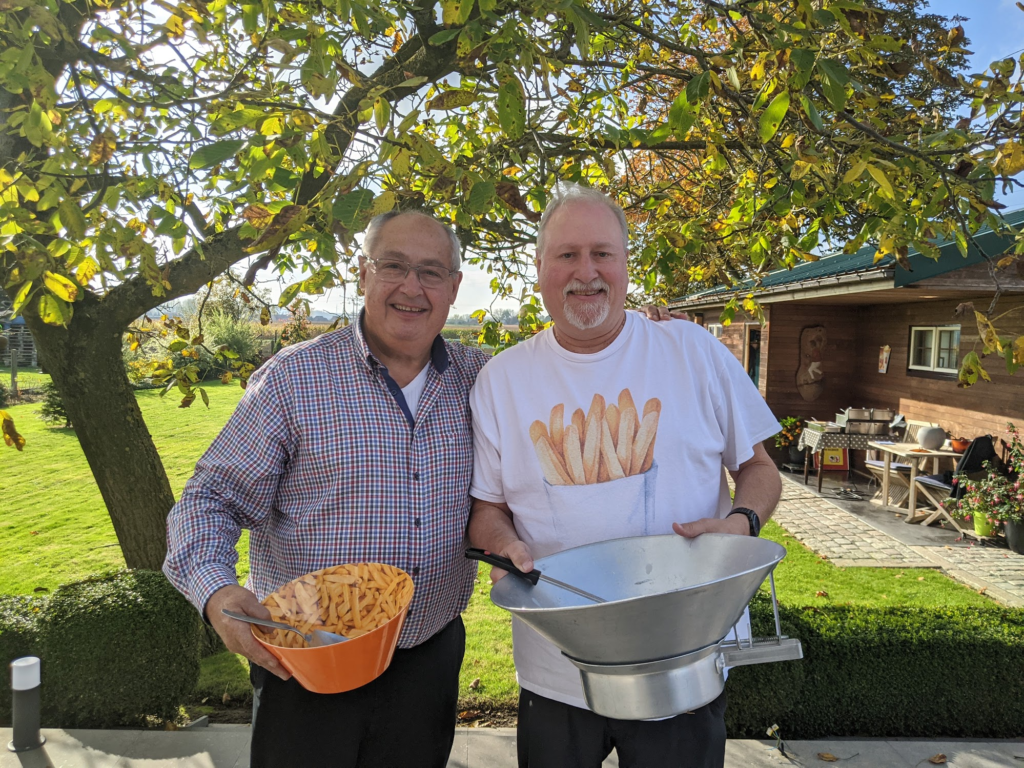
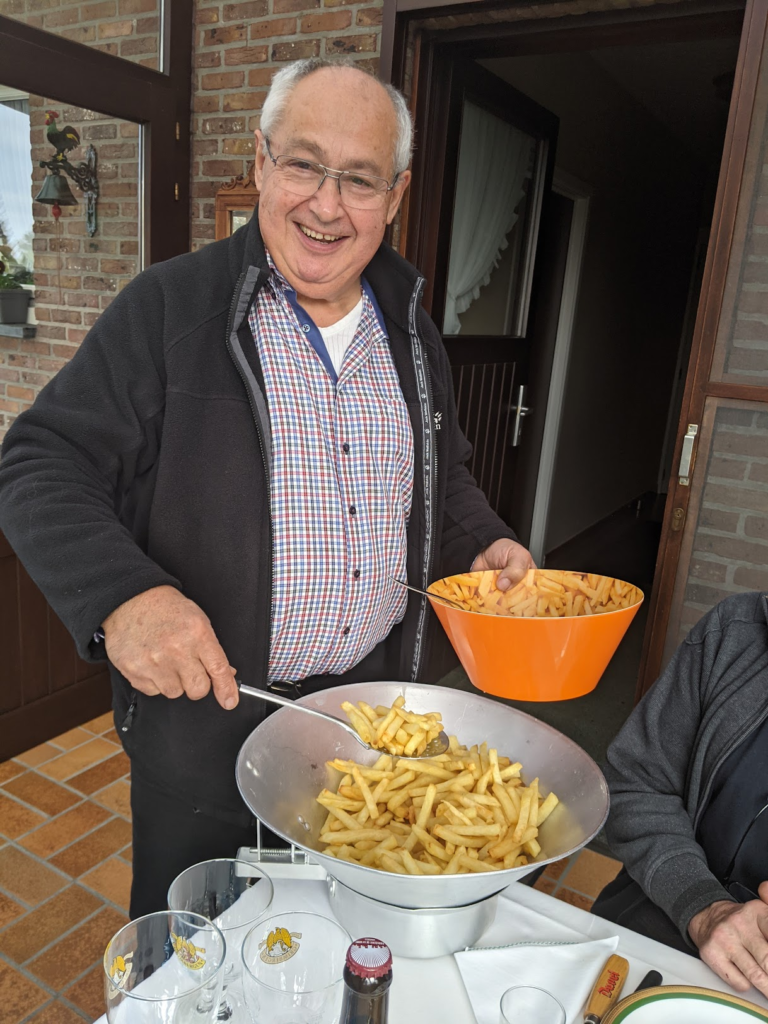
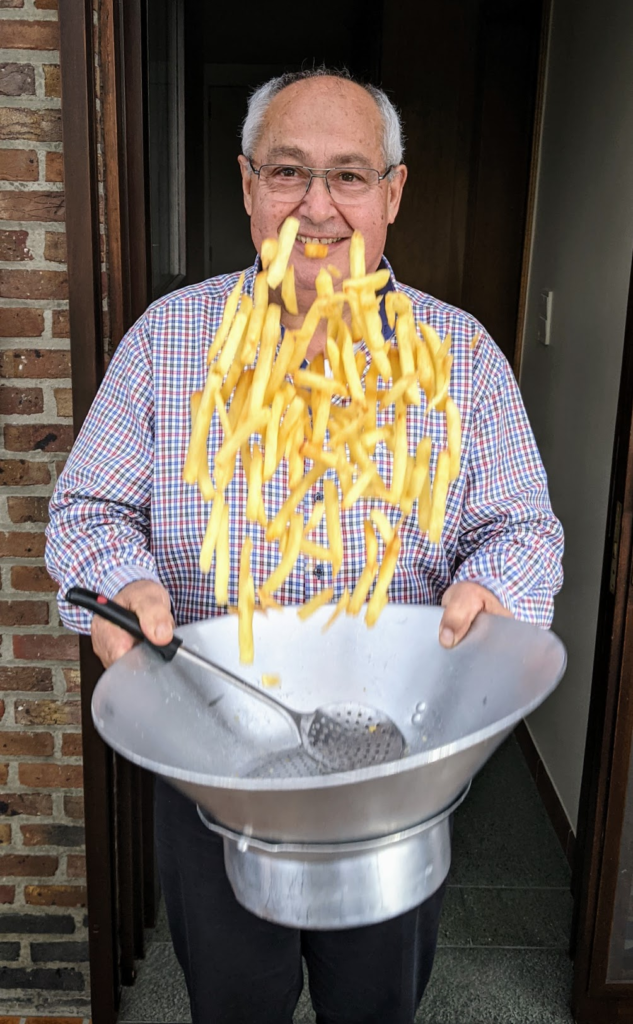
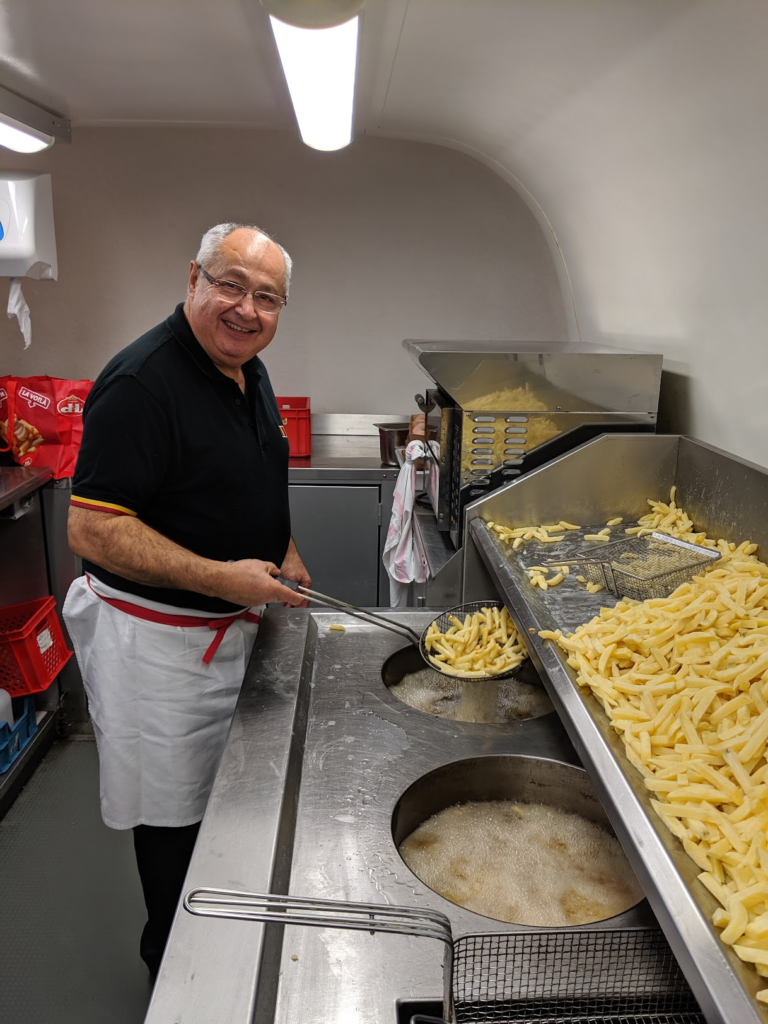
Today is the 78th birthday of Eddy Cooremans, who is a Belgian frites ambassador. I first met Eddy in 2019, when Navefri/Unafri, the Belgian frites shops trade association (which represents Belgium’s 4,500+ frites shops/stands) brought a frites trailer to our lunch during the Brussels Beer Challenge judging. Eddy frequently works as an ambassador for the association, and has flown around the world to make frites in numerous counties during trade delegations and other international events. Eddy started as a locally famous football player in his youth, but after retiring became active in the frites industry, opening a Belgian frites shop in New York City in the 1980s, helped open the Belgian Frites Museum in Brugges, and writing one of the seminal books on Belgian frites, Van Aardappel tot Friet, with André Delcart. Last year, when I was back in Belgium, Eddy invited me to his home outside of Brussels and I spent the day with geeking out on all things frites. He was incredible generous with his time and it’s rare that I can find someone who will happily discuss the minutiae of frites for hours on end, but Eddy is one of those people, truly a kindred spirit. Join me in wishing Eddy a very happy birthday.
A couple of years ago in Eddy’s backyard, where he was teaching me the finer points of frites.
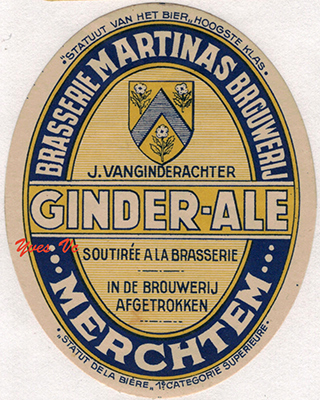
Today is the birthday of Josephus Petrus Van Ginderachter (May 19, 1889-June 17, 1959). He was the son of Corneel van Ginderachter, and the grandson of Cornelius Antonius Van Ginderachter, who, in 1888, acquired the Brouwerij Martinas, which had been founded in 1871 by Florentinus De Boeck. Josephus, who was sometimes referred to as Joseph, created their most well-known beer in 1928, Ginder-Ale, and the business became known as Brouwerij Ginder-Ale.
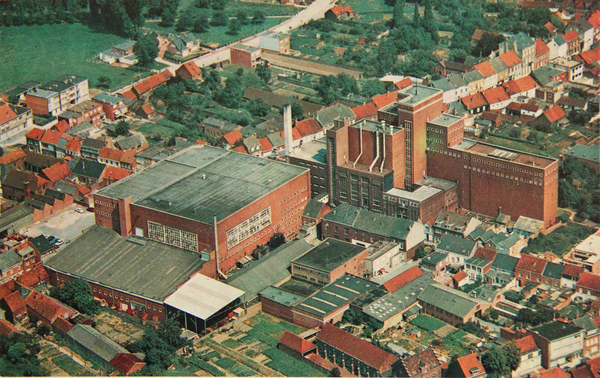
In 1908, the brewery buildings were again adapted, including an increase in the volume parallel to the Kattestraat. The street facade on the Kattestraat was adapted around 1923 as a result of the construction of, among other things, a warehouse, to the left of the former buildings, which was extended to the current volume. The brewery buildings were also further expanded in 1927 and 1930. From the interwar period, Joseph Van Ginderachter was director of the brewery. In 1928 he launched Ginder-Ale, a top-fermented beer. In addition to being a brewer, he was also mayor of Merchtem from 1933 to 1959. Under his directorship, the brewery flourished during the 1950s. This was accompanied by the construction of a new director’s house with offices on the side of the Langensteenweg (after the demolition of, among other things, the former brewer’s house and a warehouse), as well as an extension of the industrial buildings. The architect was Paul-Jean De Vos. The house on Langensteenweg was registered in the land register in two phases, namely first the right part and the gate in 1949 with offices and a caretaker’s house, and then in 1950 the director’s house on the left side of the passage. The extension of the brewery was registered in the land register in 1952 and included a building with cold stores. Another large-scale expansion followed in 1955. The brewery also expanded during that period with a building with a bottling plant on the other side of the Kattestraat (1954). 1956 building plans, drawn up by engineer L. Durin (Ghent), adapted the appearance of this complex on the Katte and Dendermondestraat. This building was also expanded later. A connecting bridge was also built between the buildings on Kattestraat (demolished around 1995). Afterwards Constant De Smedt took over the brewery and finally in 1973 the Artois brewery. Production continued until the late 1980s and the brewery finally closed in 1991.
Here’s a short history of the brewery translated from the Belgian website Residentie Martinas.
The brewery was founded in 1871 by Florentius De Boeck (1826-1892) – the father of composer August De Boeck – and was taken over in 1888 by Corneel van Ginderachter. After Corneel’s death, the company was managed by his wife Hendrika van Nuffel, who had to hand over her copper boilers to the Germans during the First World War. In 1928, son Joseph launched the high fermentation beer Ginder Ale, a beer of the Spéciale belge type that, according to experts, was closely related to the taste of Antwerp’s De Koninck or Palm from Steenhuffel. The company enjoyed its greatest success in the 1950s, employing 180 people at its peak. In 1973 it was taken over by the Artois Brewery – from 1988 Interbrew – and it continued to brew there until 1991. From then on, production was transferred to Leuven and to date 3,000 hectoliters are produced annually. This beer is usually distributed in the vicinity of Merchtem, so that one can literally speak of a regional beer. Due to the successive mergers, Brouwerij Ginder-Ale is part of Anheuser-Busch InBev.
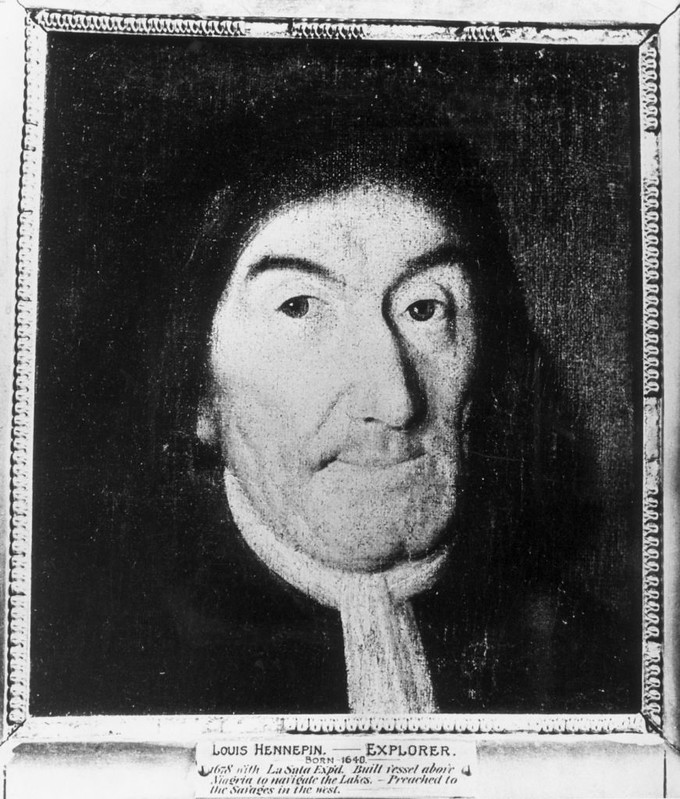
Today is the birthday of Louis Hennepin (May 12, 1626-c. 1705). Hennepin “was a Roman Catholic priest and missionary of the Franciscan Recollet order (French: Récollets) and an explorer of the interior of North America.” His name was used for a Farmhouse Saison brewed by Brewery Ommegang known as Ommegang Hennepin.
Antoine Hennepin was born in Ath in the Spanish Netherlands (present-day Hainaut, Belgium). In 1659, Béthune, the town where he lived, was captured by the army of Louis XIV of France. Henri Joulet, who accompanied Hennepin and wrote his own journal of their travels, called Hennepin a Fleming (i.e. a native of Flanders).
At the request of Louis XIV the Récollets sent four missionaries to New France in May 1675, including Hennepin, accompanied by René Robert Cavelier, Sieur de la Salle. In 1678, Hennepin was ordered by his provincial superior to accompany La Salle on an expedition to explore the western part of New France. Hennepin was 39 when he departed in 1679 with La Salle from Quebec City to construct the 45-ton barque Le Griffon, sail through the Great Lakes, and explore the unknown West.
Hennepin was with La Salle at the construction of Fort Crevecouer (near present-day Peoria, Illinois) in January 1680. In February, La Salle sent Hennepin and two others as an advance party to search for the Mississippi River. The party followed the Illinois River to its junction with the Mississippi. Shortly thereafter, Hennepin was captured by a Sioux war party and carried off for a time into what is now the state of Minnesota.
In September 1680, thanks to Daniel Greysolon, Sieur Du Lhut, Hennepin and the others were given canoes and allowed to leave, eventually returning to Quebec. Hennepin returned to France and was never allowed by his order to return to North America. Local historians credit the Franciscan Récollect friar as the first European to step ashore at the site of present-day Hannibal, Missouri.
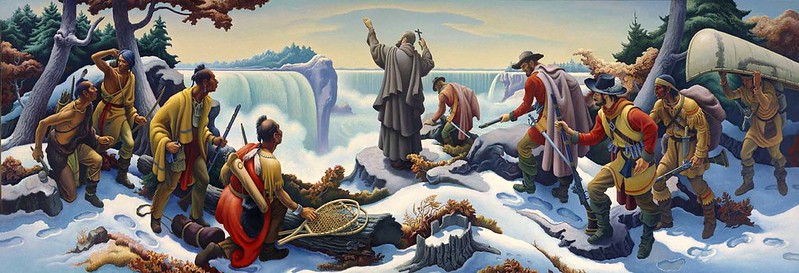
Two great waterfalls were brought to the world’s attention by Hennepin: Niagara Falls, with the most voluminous flow of any in North America, and the Saint Anthony Falls in what is now Minneapolis, the only waterfall on the Mississippi River. In 1683, he published a book about Niagara Falls called A New Discovery. The Regionalist painter Thomas Hart Benton created a mural, “Father Hennepin at Niagara Falls” for the New York Power Authority at Lewiston, New York.
The Thomas Hart Benton mural “Father Hennepin at Niagara Falls”
Because of explorations with La Salle throughout the Great Lakes region, there are geographic places named for Hennepin in Illinois, Michigan, New York, Ontario Canada, but especially Minnesota, where he’s considered the unofficial godfather of the state. For example, here’s a more thorough entry on Hennepin from the Minnesota Encyclopedia:
Father Louis Hennepin, a Recollect friar, is best known as an early explorer of Minnesota. He gained fame in the seventeenth century with the publication of his dramatic stories of the exploration of the Mississippi River. Father Hennepin spent only a few months in Minnesota, but his influence is undeniable. While his widely read travel accounts were more fiction than fact, they allowed Hennepin to leave a lasting mark on the state.
Louis Hennepin was likely born in 1640, although some sources suggest it was as early as 1626. The son of a wealthy banker, he was baptized in the small town of Ath in what is now Belgium on April 7, 1640. Hennepin joined the Recollect Friars at a monastery in Béthune, France, and was ordained a priest in 1666. A few years later, Hennepin asked his superiors for permission to join the Recollect missionaries in North America. In 1675, he sailed to Quebec.
The Recollects were a French branch of the Franciscan order. They were active throughout France’s territory in North America. Hennepin spent his first three years as a missionary in the area of the eastern St. Lawrence River, ministering to voyageurs, colonists, and American Indian communities. In 1678, Hennepin was chosen to accompany René-Robert Cavelier Sieur de la Salle on his exploration of the Mississippi. In 1680, while on La Salle’s expedition, Hennepin and two other members of the party, Michel Accault and Antoine Auguelle (Picard du Gay), were sent to explore the section of the Mississippi north of the Illinois River.
The three men set out early in March 1680, progressing north while avoiding ice that remained on the river. They had just reached Lake Pepin on April 11 or 12 when they encountered a Dakota war party. The Dakota took the three men captive and transported them to a village near Lake Mille Lacs. Hennepin, Accault, and Auguelle lived in the Dakota village until late June or early July of 1680.
At midsummer, Hennepin and Auguelle received permission from the Dakota to canoe down the Mississippi to the mouth of the Wisconsin River. There they planned to collect supplies that the La Salle expedition had left for them. During this trip Hennepin and Auguelle first encountered the waterfall on the Mississippi that Hennepin named in honor of his patron saint, St. Anthony of Padua.
During his own expedition, Daniel Greysolon, Sieur du Lhut, heard rumors that the three men were being held captive. On July 25, 1680, Greysolon arrived at the Dakota village to negotiate the release of Hennepin, Accault, and Auguelle. By August, the three captives had begun their journey back to French forts in the east. Hennepin left Canada in the fall of 1681 and returned to France.
Once in France, Hennepin embarked upon the literary career that would bring him both fame and criticism. His first book, A Description of Louisiana, newly discovered to the South-West of New France, was published in Paris in 1683. It detailed his travels, his experiences living with the Dakota, and his discovery of St. Anthony Falls. From the start, Hennepin’s work was a blend of myth and fact. In his travel accounts he made waterfalls much higher and wildlife far more dangerous. He depicted the American Indian populations of North America as barbarous savages. An egotistical and vain man, Hennepin portrayed himself as La Salle’s favorite and most trusted confidant.
In his following two books, published in 1697 and 1698, Hennepin exaggerated further. He claimed that he had traveled from Illinois down the Mississippi to the Gulf of Mexico and back before being captured by the Dakota. The details of his improbable canoe trip, covering some three thousand miles in only a month, were taken directly from accounts of La Salle’s own trip down the Mississippi two years after Hennepin’s time in Minnesota. While his books continued to circulate widely, his reputation was significantly damaged.
Little is known about the end of Hennepin’s life. Around 1700 he traveled to Rome to seek funding from Franciscan authorities. Some say that Hennepin died in Rome around 1701, while other sources suggest he returned to Utrecht and died in 1705. Hennepin’s memory lives on in the many parks, landmarks, schools, and streets, including one in his home city in Belgium, named in his honor.
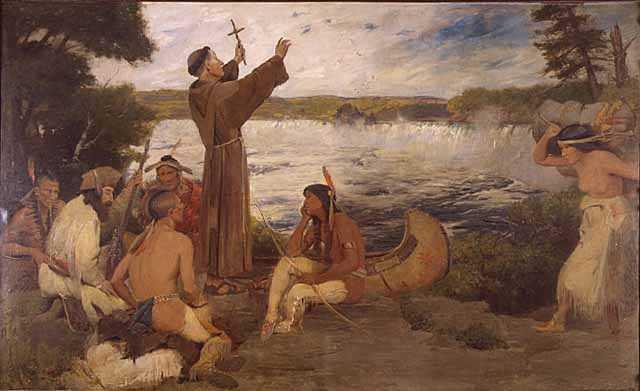
Painting of Father Louis Hennepin at St. Anthony Falls by Douglas Volk, c. 1905.
Perhaps most amazing, Hennepin is believed to be the first European to see the splendor of Niagara Falls, and at a minimum his journal account of seeing them in 1678 is the earliest known written reference to the famous falls.
Father Hennepin at Niagara Falls in 1678. Drawing by C.W. Jefferys.