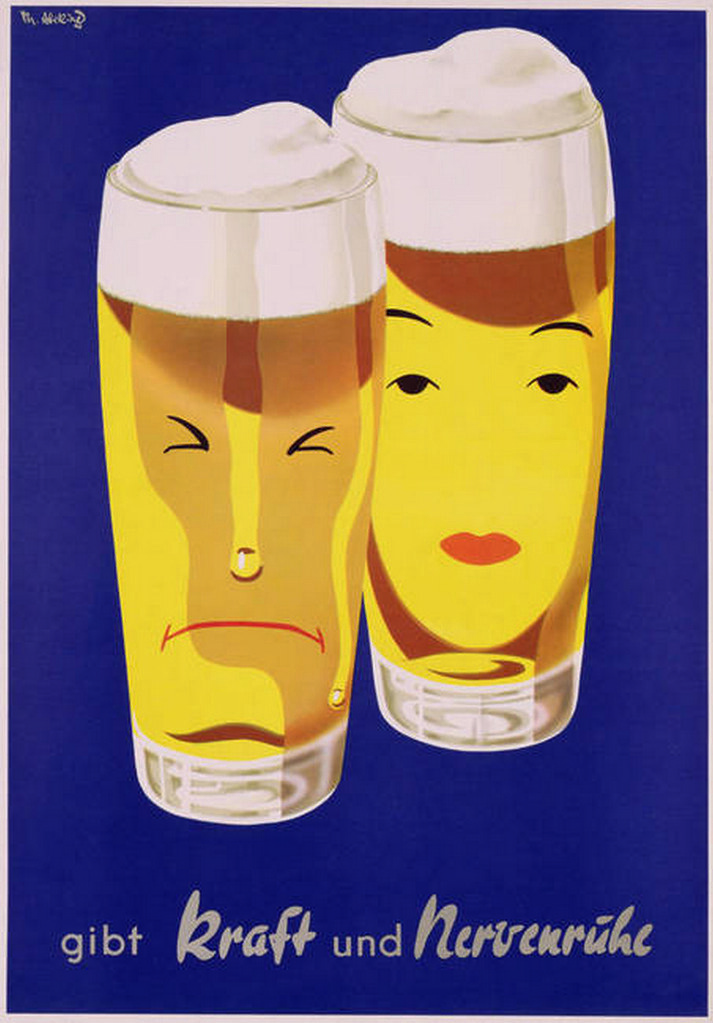
Monday’s ad is for
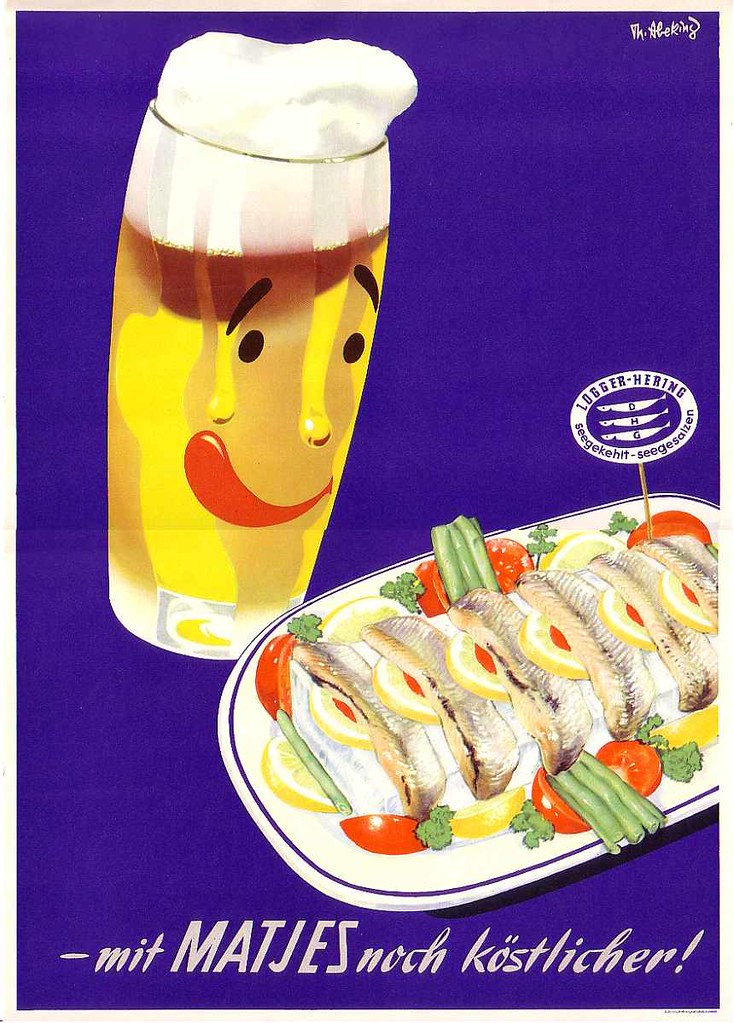

Monday’s ad is for
Sunday’s ad is for
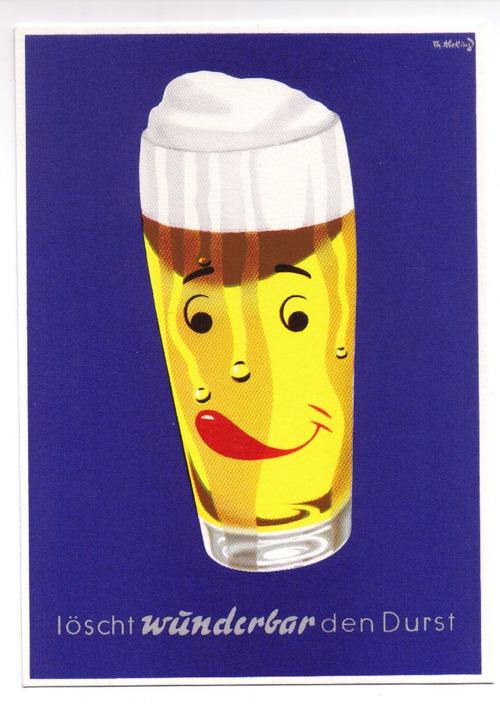
Saturday’s ad is for löscht wunderbar den Durst, or “Beer Wonderfully Quenches the Thirst,” from 1954. From the late 1800s until the 1960s, poster art really came into its own, and in
Friday’s ad is for
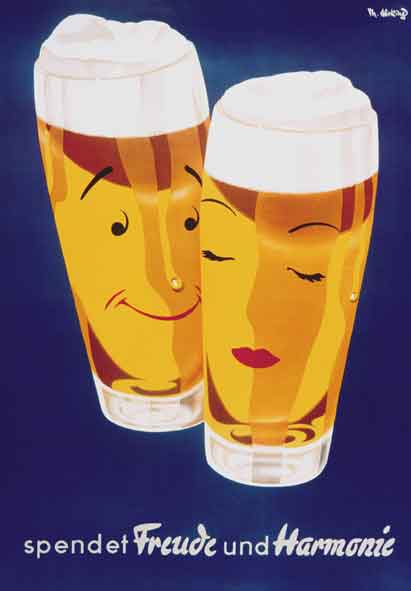
Wednesday’s ad is for

Sunday’s ad is for Bier, from 1962. From the late 1800s until the 1960s, poster art really came into its own, and in

While it doesn’t help much, there are versions that include the text “Durst wird durch Bier erst schön” which Google translates as “Thirst becomes beautiful through beer.” And while a nice sentiment, it really doesn’t help solve the mystery of this poster’s purpose.

Saturday’s ad is for Hemelinger Bier, from 1953. From the late 1800s until the 1950s, poster art really came into its own, and in

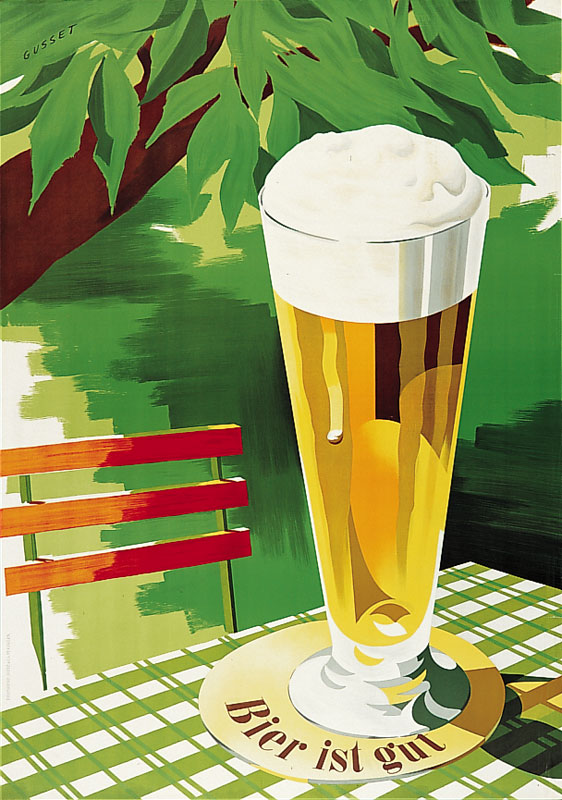
Tuesday’s ad is for Bier Ist Gut, from 1952. From the late 1800s until the 1950s, poster art really came into its own, and in
Sunday’s ad is for Löwenbräu Bier, from 1900. From the late 1800s until the 1940s, poster art really came into its own, and in

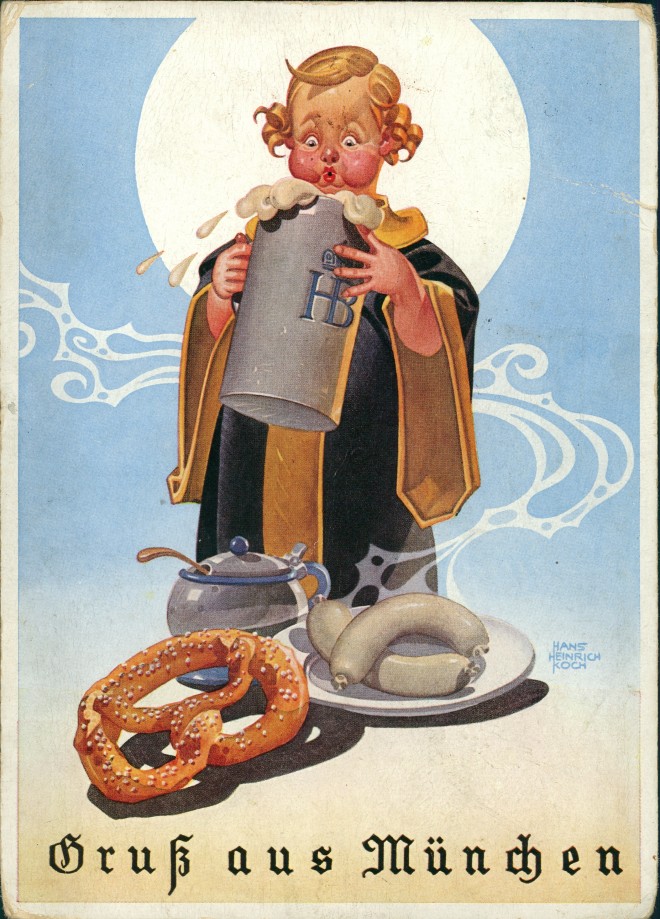
Saturday’s ad is for Hofbräuhaus, from 1910s, I think. From the late 1800s until the 1940s, poster art really came into its own, and in Europe a lot of really cool posters, many of them for breweries, were produced. This poster is for Hofbräu München, and was created by Hans Heinrich Koch. The text at the bottom translates to “Greetings from Munich.”