Brookston Beer Bulletin

Jay R. Brooks on Beer

  • Home
  • About
  • Editorial
  • Birthdays
  • Art & Beer

Socialize

  • Dribbble
  • Email
  • Facebook
  • Flickr
  • GitHub
  • Instagram
  • LinkedIn
  • Pinterest
  • RSS
  • Twitter
  • YouTube

Powered by Genesis

Historic Beer Birthday: John Ewald Siebel

September 17, 2025 By Jay Brooks

siebel-banner
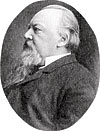
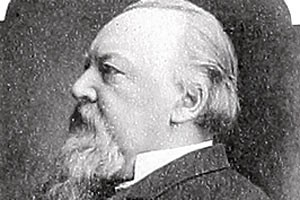
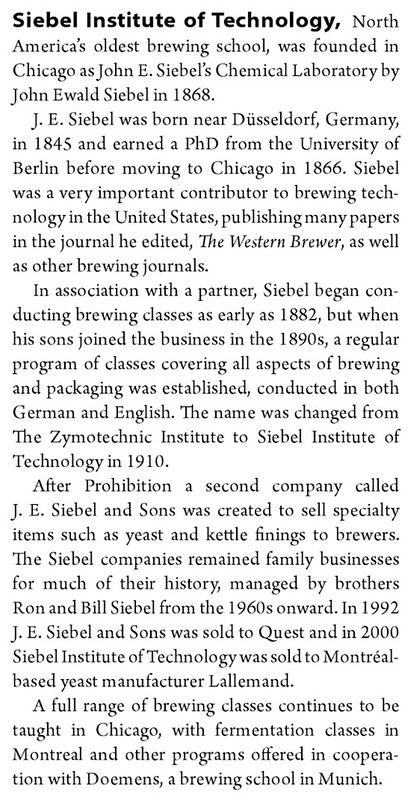
Today is the birthday of John Ewald Siebel (September 17, 1868-December 20, 1919). Siebel was born in Germany, but relocated to Chicago, Illinois as a young man. Trained as a chemist, in 1868 he founded the Zymotechnic Institute, which was later renamed the Siebel Institute of Technology.

Here’s his obituary from the Foreign Language Press Survey:

Professor John Ewald Siebel has died after an active life devoted to science. Besides his relatives, thousands of his admirers, including many men of science, mourn at the bier of the friendly old man. He died in his home at 960 Montana Avenue.

Professor Siebel was born September 18, 1845, in Hofkamp, administrative district of Dusseldorf [Germany], as the son of Peter and Lisette Siebel; he attended high school [Real-Gymnasium] at Hagen and studied chemistry at the Berlin University. He came to the United States in 1865 and shortly afterwards obtained employment as a chemist with the Belcher Sugar Refining Company in Chicago. Already in 1868, he established a laboratory of his own, and from 1869 until 1873 he was employed as official chemist for the city and county. In 1871 he also taught chemistry and physics at the German High School. From 1873 until 1880 he was official gas inspector and city chemist. During the following six years he edited the American Chemical Review, and from 1890 until 1900 he published the Original Communications of Zymotechnic Institute. He was also in charge of the Zymotechnic Institute, which he had founded in 1901. Until two years ago he belonged to its board of directors.

Among the many scientific works published by the deceased, which frequently won international reputation, and are highly valued by the entire world of chemical science are: Newton’s Axiom Developed; Preparation of Dialized Iron; New Methods of Manufacture of Soda; New Methods of Manufacture of Phosphates; Compendium of Mechanical Refrigeration; Thermo-and Electro-Dynamics of Energy Conversion; etc. The distilling industry considered him an expert of foremost achievement.

The deceased was a member of the Lincoln Club; the old Germania Club; the local Academy of Science; the Brauer and Braumeisterverein [Brewer and Brewmaster Association]; the American Institute for Brewing; and the American Society of Brewing Technology. Professor Siebel was also well known in German circles outside the city and state.

His wife Regina, whom he married in 1870….died before him. Five sons mourn his death: Gustav, Friedrich, Ewald, Emil and Dr. John Ewald Siebel, Jr. Funeral services will be held tomorrow afternoon at Graceland Cemetery.

Professor Siebel was truly a martyr of science. He overworked himself, until a year ago he suffered a nervous breakdown. About four months ago conditions became worse. His was an easy and gentle death.

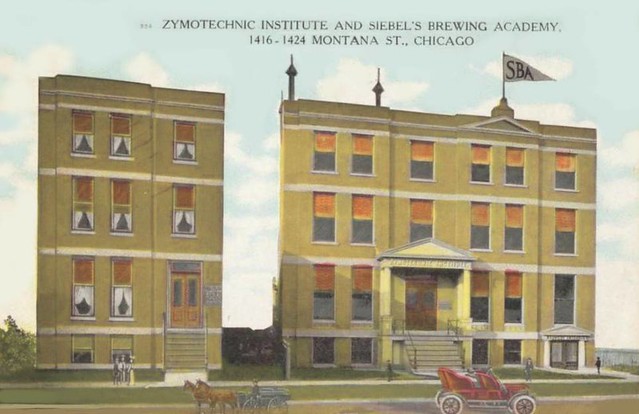
postcard-chicago-zymotechnic-institute-and-siebes-brewing-academy-c1910

The Siebel Institute’s webpage tells their early history:

Dr. John Ewald Siebel founded the Zymotechnic Institute in 1868. He was born on September 17, 1845, near Wermelskirchen in the district of Dusseldorf, Germany. He studied physics and chemistry and earned his doctorate at the University of Berlin before moving to Chicago 1866. In 1868 he opened John E. Siebel’s Chemical Laboratory which soon developed into a research station and school for the brewing sciences.

In 1872, as the company moved into new facilities on Belden Avenue on the north side of Chicago, the name was changed to the Siebel Institute of Technology. During the next two decades, Dr. Siebel conducted extensive brewing research and wrote most of his over 200 books and scientific articles. He was also the editor of a number of technical publications including the scientific section of The Western Brewer, 100 Years of Brewing and Ice and Refrigeration.

In 1882 he started a scientific school for brewers with another progressive brewer but the partnership was short lived. Dr. Siebel did, however, continue brewing instruction at his laboratory. The business expanded in the 1890’s when two of Dr. Siebel’s sons joined the company.

The company was incorporated in 1901 and conducted brewing courses in both English and German. By 1907 there were five regular courses: a six-month Brewers’ Course, a two-month Post Graduate Course, a three-month Engineers’ Course, a two-month Maltsters’ Course and a two-month Bottlers’ Course. In 1910, the school’s name, Siebel Institute of Technology, was formally adopted. With the approach of prohibition, the Institute diversified and added courses in baking, refrigeration, engineering, milling, carbonated beverages and other related topics. On December 20, 1919, just twenty-seven days before prohibition became effective, Dr. J. E. Siebel passed away.

With the repeal of prohibition in 1933 the focus of the Institute returned to brewing under the leadership of F. P. Siebel Sr., the eldest son of Dr. J. E. Siebel. His sons, Fred and Ray, soon joined the business and worked to expand its scope. The Diploma Course in Brewing Technology was offered and all other non-brewing courses were soon eliminated. Then in October 1952, the Institute moved to its brand new, custom built facilities on Peterson Avenue where we have remained for almost 50 years.

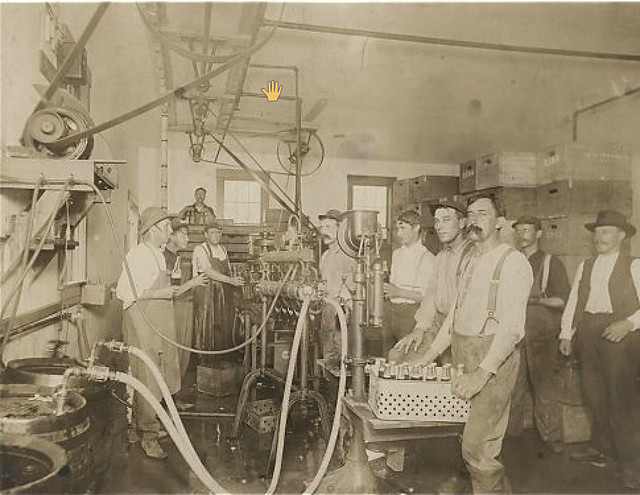
Siebel-1902-04
Siebel Brewers Academy c. 1902-04.

Here’s another short account from the journal Brewery History, in an article entitled “A History of Brewing Science in the United States of America,” by Charles W. Bamforth:

Dr John Ewald Siebel (1845-1919) was born on September 17th 1845 at Hofcamp, near Düsseldorf. Upon visiting an uncle in US after the completion of his doctorate in chemistry and physics he became chief chemist at Belcher’s sugar refinery in Chicago, aged 21, but that company soon folded. Siebel stayed in Chicago to start an analytical laboratory in 1868, which metamorphosed into the Zymotechnic Institute.

With Chicago brewer Michael Brand, Siebel started in 1882 the first Scientific School for practical brewers as a division of the Zymotechnic Institute. True life was not breathed into the initiative until 1901 with Siebel’s son (one of five) Fred P. Siebel as manager. This evolved to become the Siebel Institute of Technology, which was incorporated in 1901 and conducted brewing courses in both English and German. Within 6 years five regular courses had been developed: a six-month course for brewers, a twomonth post graduate course, a threemonth course for engineers, a two-month malting course and a two-month bottling course.

Amongst Siebel’s principal contributions were work on a counter pressure racker and artificial refrigeration systems. Altogether he published more than 200 articles on brewing, notably in the Western Brewer and original Communications of the Zymotechnic Institute. Brewing wasn’t his sole focus, for instance he did significant work on blood chemistry.

Son EA Siebel founded Siebel and Co and the Bureau of Bio-technology in 1917, the year that prohibition arrived. Emil Siebel focused then on a ‘temperance beer’ that he had been working on for nine years. Courses in baking, refrigeration, engineering, milling and nonalcoholic carbonated beverages were offered.

And here’s the entry for the Siebel Institute from the Oxford Companion to Beer, written by Randy Mosher:

Filed Under: Birthdays, Just For Fun, Related Pleasures Tagged With: Chicago, Education, Germany, History, Illinois, Science

Historic Beer Birthday: Charles H. Wacker

August 29, 2025 By Jay Brooks

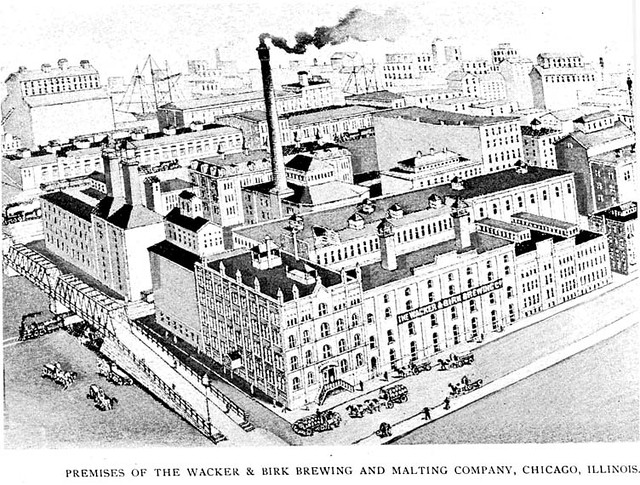
wacker-and-birk
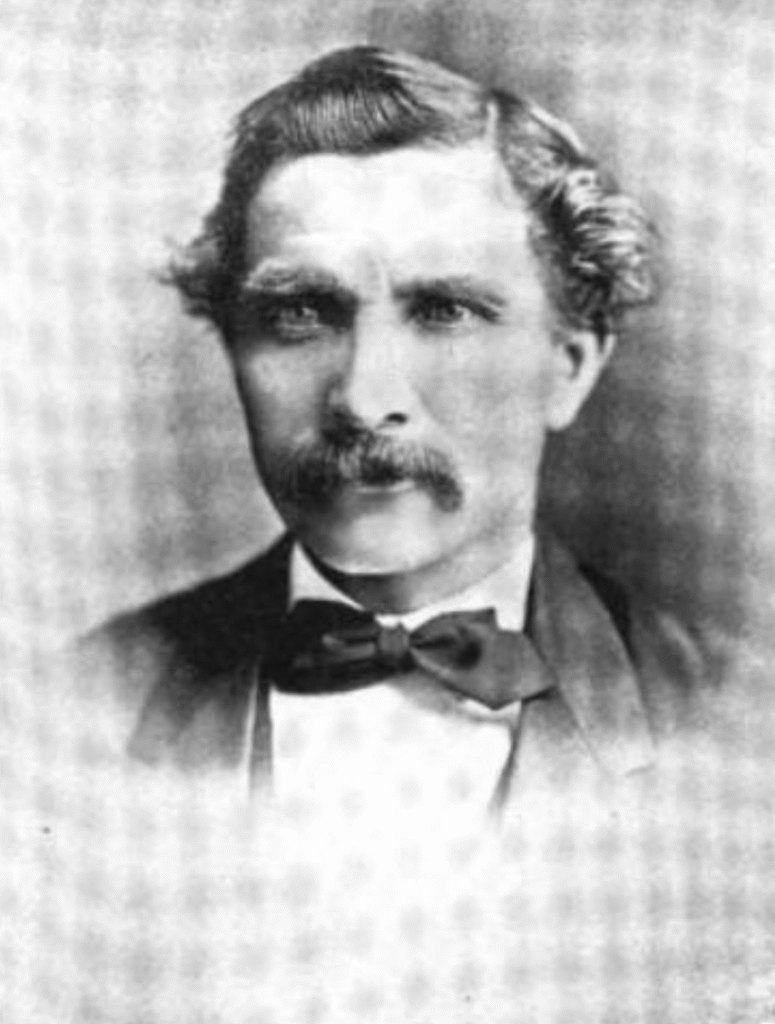
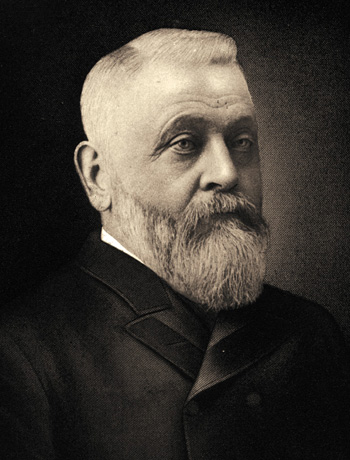
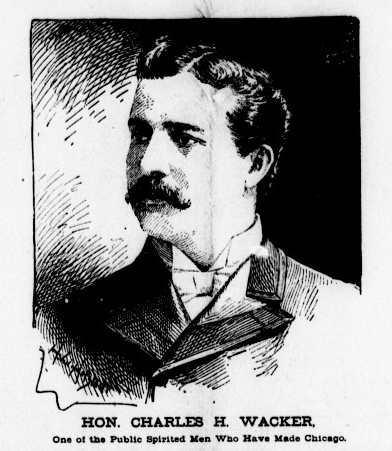
Today is the birthday of Charles H. Wacker (August 29, 1856-October 31, 1929). Wacker’s family came from Württemberg Germany (though some sources claim he was from Switzerland), and he was 2nd generation American, having been born in Chicago, Illinois. His father Frederick, also a brewer, founded the Wacker and Birk Brewing and Malting Co. In 1882 or 83, Charles joined his father in the family business, and rose to prominence in Chicago throughout his life.

Charles-H-Wacker-1911

Here’s his short biography from Find-a-Grave:

He was a “mover and shaker” in the early days of Chicago. He was part of the Chicago Plan Commission formed to win acceptance of the famous Burnham Plan of 1909. He was a contemporary of Daniel Burnham and helped him promote his plan for the development of the city’s lakefront and system of parks. Lower and Upper Wacker Drive (two roads one on top of the other) in Chicago is named for him.

Here’s his Wikipedia entry:

Charles Henry Wacker, born in Chicago, Illinois, was a second generation German American who was a businessman and philanthropist. His father was Frederick Wacker, a brewer, who was born in Württemberg Germany. He was Vice Chairman of the General Committee of the Commercial Club of Chicago, and in 1909 was appointed Chairman of the Chicago Plan Commission by Mayor Busse. As Commission chairman from 1909 to 1926, he championed the Burnham Plan for improving Chicago. This work included addresses, obtaining wide publicity from newspapers, and publishing Wacker’s Manual of the Plan of Chicago (by Walter D. Moody) as a textbook for local schoolchildren.

Prior to serving on the Commission, Wacker was a Chicago brewer and the director of the 1893 Columbian Exposition held in Chicago.

As a businessman he was part of a consortium of Chicago brewers who underwrote the methods that facilitated the commercialization of refrigeration machines.

Wacker Drive, built as part of the Burnham Plan, and Charles H. Wacker Elementary School are named in his honor. The name Wacker is also attached to other institutions in Chicago, such as the Hotel Wacker.

Charles H. Wacker was educated at Lake Forest Academy (class of 1872) and thereafter at Switzerland’s University of Geneva.

wacker-and-birk

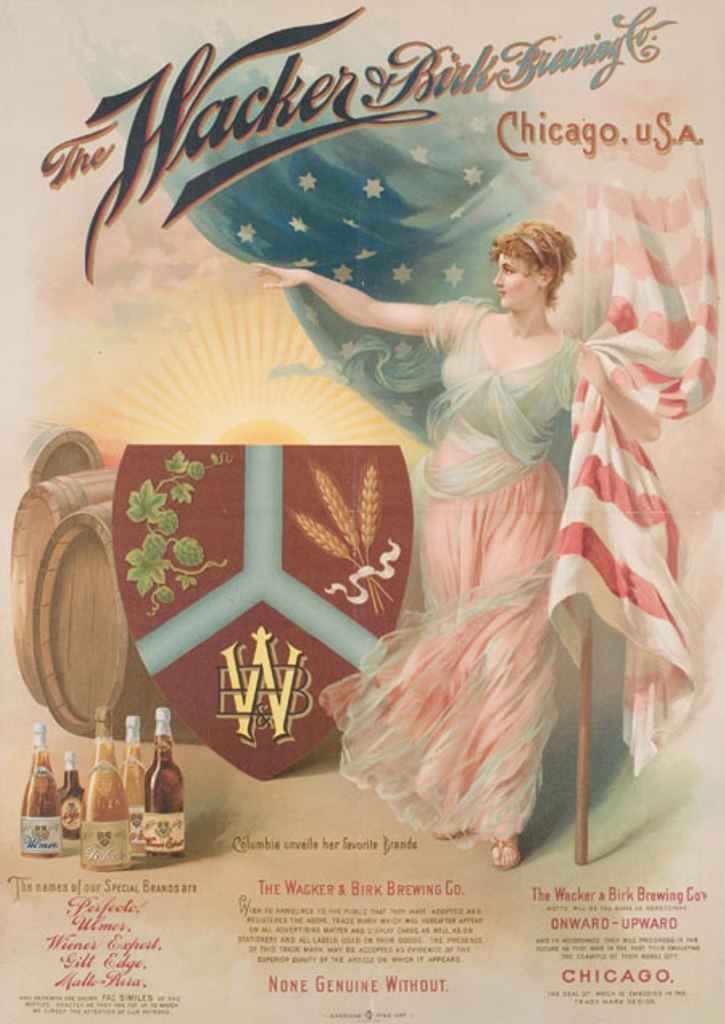
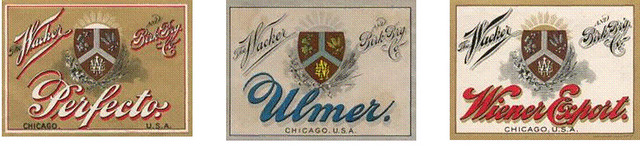
The Chicago brewery his father started was originally called Seidenschwanz & Wacker, and was located on Hinsdale, between Pine and Rush streets. It was founded in 1857, but the following year it became known as Wacker & Seidenschwanz, and was on N. Franklin Street. That version lasted until 1865. Beginning that same year, its name changed once again to the Frederick Wacker Brewery, and its address was listed as 848 N. Franklin Street, presumably in the same location as its predecessor. Sixteen years later, in 1882, it relocated to 171 N. Desplaines (now Indiana Street) and it became known as the Wacker & Birk Brewing & Malting Co. This is also when Charles joined his father’s business, when he would have been 26 years old. Just before prohibition the name was shortened to the Wacker & Birk Co., although it appears to have closed by 1920.

wacker-poster

Here’s one more biography, from the library at the University of Illinois at Chicago:

Wacker was born in 1856 to a German immigrant who owned a brewing and malting company. Although he worked as a real estate investor and bank director, Wacker eventually took over his father’s business. In civic affairs, Wacker was director of the Ways and Means Committee for the World’s Columbian Exposition of 1893. In 1909, Mayor Fred Busse appointed Wacker to the Chicago Plan Commission, a committee designed to convince residents to issue bonds and spend money on widening streets, improving sidewalks, and redeveloping parts of the city. During his tenure on the Commission, Wacker urged voters to approve the forest preserves referenda. Later, he served on the Forest Preserve Plan Committee. Chicago leaders rewarded Wacker by renaming a double-decker roadway after him. First proposed in the Burnham Plan and completed in the 1920s, Wacker Drive runs along the Chicago River in the Loop.

wackerbirklabels

Filed Under: Birthdays, Breweries, Just For Fun Tagged With: Chicago, History, Illinois

Beer In Ads #5062: Atlas Bock Beer

August 25, 2025 By Jay Brooks

Last year I decided to concentrate on Bock ads. Bock, of course, may have originated in Germany, in the town of Einbeck. Because many 19th century American breweries were founded by German immigrants, they offered a bock at certain times of the year, be it Spring, Easter, Lent, Christmas, or what have you. In a sense they were some of the first seasonal beers. “The style was later adopted in Bavaria by Munich brewers in the 17th century. Due to their Bavarian accent, citizens of Munich pronounced ‘Einbeck’ as ‘ein Bock’ (a billy goat), and thus the beer became known as ‘Bock.’ A goat often appears on bottle labels.” And presumably because they were special releases, many breweries went all out promoting them with beautiful artwork on posters and other advertising.

Monday’s ad is for Atlas Bock Beer, which was published on August 25, 1933. This one was for, I think, the Atlas Brewing Co. (or Atlas Beverage Co.) of Chicago, Illinois, which was originally founded in 1891 as the Bohemian Brewing Co. of Chicago, but was renamed Atlas in 1896. This ad ran in The Daily Argus Leader, of Sioux Falls, North Dakota. I love that the name of the restaurant was “The Eat Shoppe.”

Filed Under: Art & Beer, Beers, Breweries, Just For Fun Tagged With: Advertising, Bock, History, Illinois, South Dakota

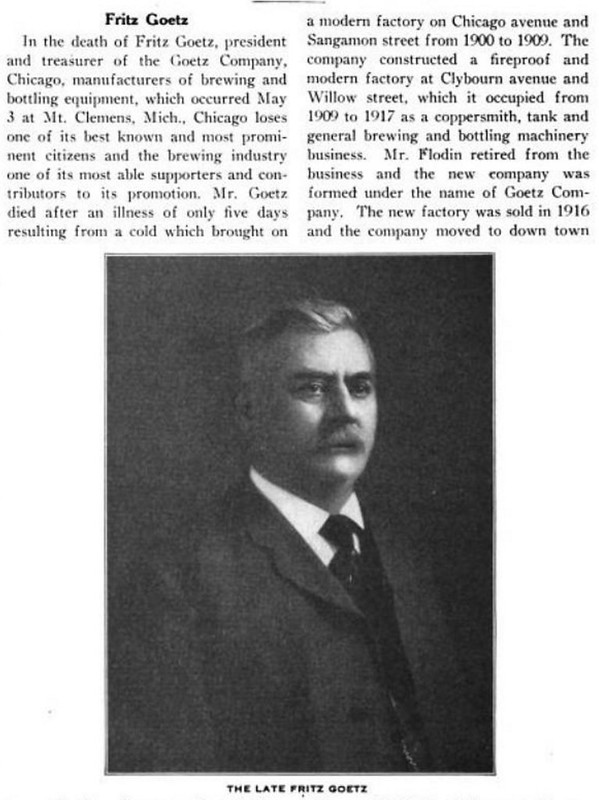
Historic Beer Birthday: Fritz Goetz

August 20, 2025 By Jay Brooks

brewhouse
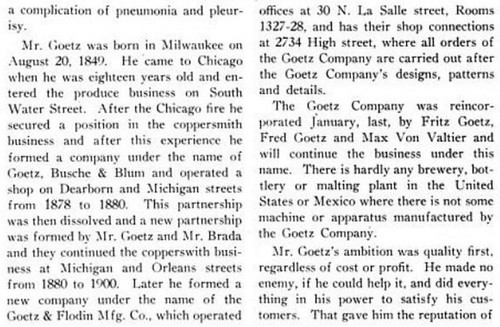
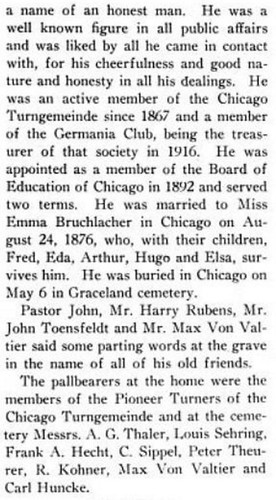
Today is the birthday of Fritz Goetz (August 20, 1849-May 3, 1917). He was born in Milwaukee, Wisconsin, but moved to Chicago as a young man, eventually going into the copper business, which changed names a few times, but settled on the Goetz Company. In addition to copper brewing equipment, they also sold tanks, and general brewing and bottling equipment. The business was so successful that in his obituary, it was noted that “There is hardly any brewery, bottlery or malting plant in the United States or Mexico where there is not some machine or apparatus manufactured by the Goetz Company.”

Here is his obituary from the American Brewers’ Review for 1918:

Filed Under: Birthdays, Breweries, Just For Fun Tagged With: Birthdays, Brewing Equipment, Chicago, Illinois

Beer Birthday: Don Feinberg

August 18, 2025 By Jay Brooks

vanberg-dewulf
Today is Don Feinberg’s 70th birthday, along with his wife Wendy Littlefield, ran the Belgian export company Vanberg & DeWulf. Their portfolio included such great beer lines as Dupont, Castelain and Dubuisson (Bush). They were also the original founders of Brewery Ommegang. Several years ago they celebrated their 30th anniversary of being involved in the beer industry and bringing great beer to America. Plus, they’re great fun to hang out and drink with. Unfortunately, several years ago they sold Vanberg & DeWulf, and are taking some time off, before deciding on their next project. It’s been a while now, but hopefully, we’ll learn something soon. Join me in wishing Don a very happy birthday.

Don, along with the Dubuisson brewmaster, being poured Lambrucha in Chicago in 2010.
Wendy and Don at a dinner in Belgium a few years ago.
Feinberg-DC
Wendy Littlefield, Don and Greg Engert at a Vanberg & DeWulf tasting in Washington, D.C.
(photo by Chuck Cook)
Don Feinberg, Anne (from New York’s Ginger Man) and Wendy in Belgium.
Feinberg-QE2
Wendy and Don in 1979.

Filed Under: Birthdays, Just For Fun Tagged With: Belgium, Chicago, Illinois

Beer In Ads #5053: Stiegl Golden Bock Beer

August 14, 2025 By Jay Brooks

Last year I decided to concentrate on Bock ads. Bock, of course, may have originated in Germany, in the town of Einbeck. Because many 19th century American breweries were founded by German immigrants, they offered a bock at certain times of the year, be it Spring, Easter, Lent, Christmas, or what have you. In a sense they were some of the first seasonal beers. “The style was later adopted in Bavaria by Munich brewers in the 17th century. Due to their Bavarian accent, citizens of Munich pronounced ‘Einbeck’ as ‘ein Bock’ (a billy goat), and thus the beer became known as ‘Bock.’ A goat often appears on bottle labels.” And presumably because they were special releases, many breweries went all out promoting them with beautiful artwork on posters and other advertising.

Thursday’s ad is for Stiegl Golden Bock Beer, which was published on August 14, 1982. This one is for the Stiegl Brauerei of Salzburg, Austria, which was originally founded in 1492. This ad for the imported beer ran in The Chicago Tribune, of Chicago, Illinois.

Filed Under: Art & Beer, Beers, Breweries, Just For Fun Tagged With: Advertising, Austria, Bock, Chicago, History, Illinois

Beer In Ads #5049: Get Your Quarts From LaCorte’s

August 10, 2025 By Jay Brooks

Last year I decided to concentrate on Bock ads. Bock, of course, may have originated in Germany, in the town of Einbeck. Because many 19th century American breweries were founded by German immigrants, they offered a bock at certain times of the year, be it Spring, Easter, Lent, Christmas, or what have you. In a sense they were some of the first seasonal beers. “The style was later adopted in Bavaria by Munich brewers in the 17th century. Due to their Bavarian accent, citizens of Munich pronounced ‘Einbeck’ as ‘ein Bock’ (a billy goat), and thus the beer became known as ‘Bock.’ A goat often appears on bottle labels.” And presumably because they were special releases, many breweries went all out promoting them with beautiful artwork on posters and other advertising.

Sunday’s ad is for Fox De Luxe Bock Beer, which was published on August 10, 1951, though strictly speaking it was for a liquor store called LaCorte’s Park-In Liquors, located at 552-56 State Line St., in Calumet City, Illinois. [I checked, it appears to be the site of a Wendy’s today.] The ad was actually advertising a variety of alcohol, some twelve different products, but I cut them all out except the one bock beer and its neighbor. The bock is from the Peter Fox Brewing Co. of Chicago, Illinois, which was originally founded in 1896 as the Hoffman Bros. This ad ran in The Hammond Times, an afternoon paper serving Hammond, Whiting, and East Chicago, Indiana, though now is headquartered in Munster, and it just a few miles (less than 4) from the liquor store.

Filed Under: Art & Beer, Beers, Breweries, Just For Fun Tagged With: Advertising, Bock, History, Illinois, Indiana

Historic Beer Birthday: William J. Seib

August 4, 2025 By Jay Brooks

conrad-seipp

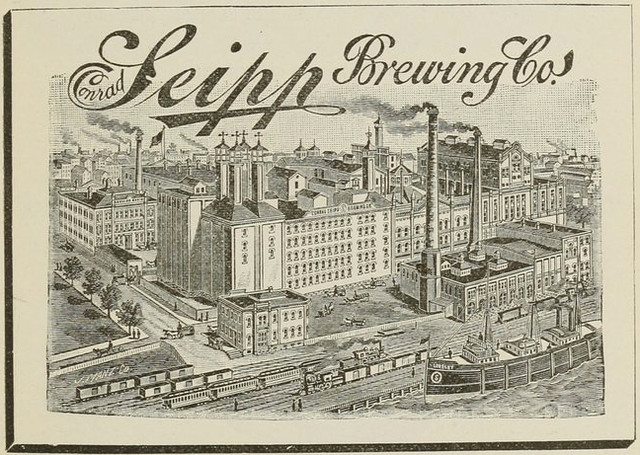
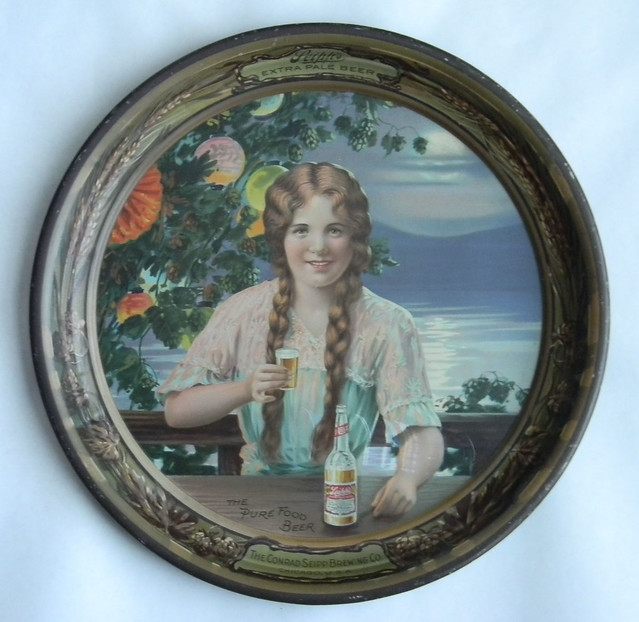
Today is the birthday of William J. Seib (August 4, 1836-after 1901). He was born in Germany and learned to brew there. When he was 18, in 1854, he emigrated to the United States and worked at several breweries in the Detroit area, including Stroh’s. He worked for several additional breweries before becoming the brewmaster at Conrad Seipp Brewery of Chicago, Illinois, a position he held for nearly two decades until his retirement in 1901, after fifty years in the brewing industry. He must have been very well regarded because he’s referred to as “the dean of American brewmasters.” Seib was one of three men appointed to draft the charter of the Master Brewers’ Association of the United States, along with Louis Frisch and Charles J. Schmidt, which was founded on April 14, 1887.

william-j-seib

This is a short biography when he retired from brewing in 1901, when he was 64, from the American Brewers’ Review:

william-j-seib-retirement
seipp-brewery-overview

And this biography is from when Seib celebrated his 50th wedding anniversary.

Seib-golden-wedding-1
Seib-golden-wedding-2
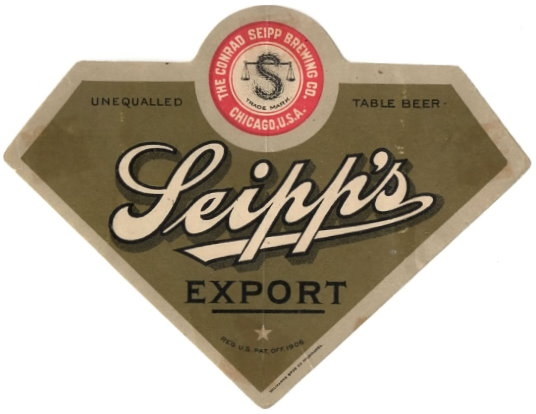
Seopps-Export-Beer-Labels-Conrad-Seipp-Brewing-Co

Filed Under: Birthdays, Just For Fun Tagged With: Germany, Illinois

Beer Birthday: Jonathan Surratt

July 31, 2025 By Jay Brooks

beer-mapping
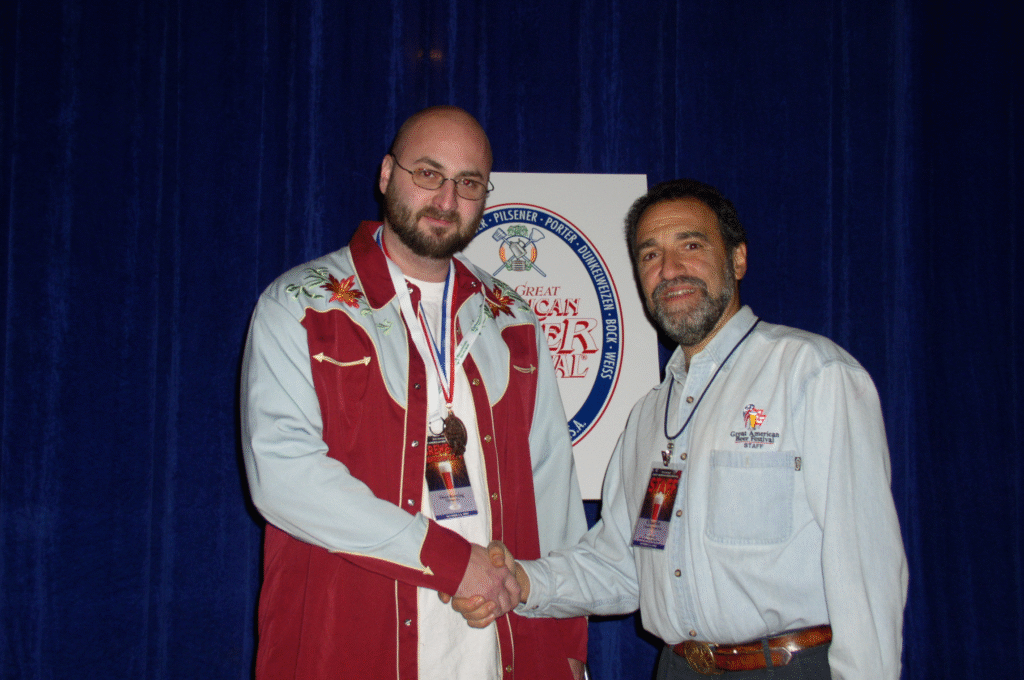
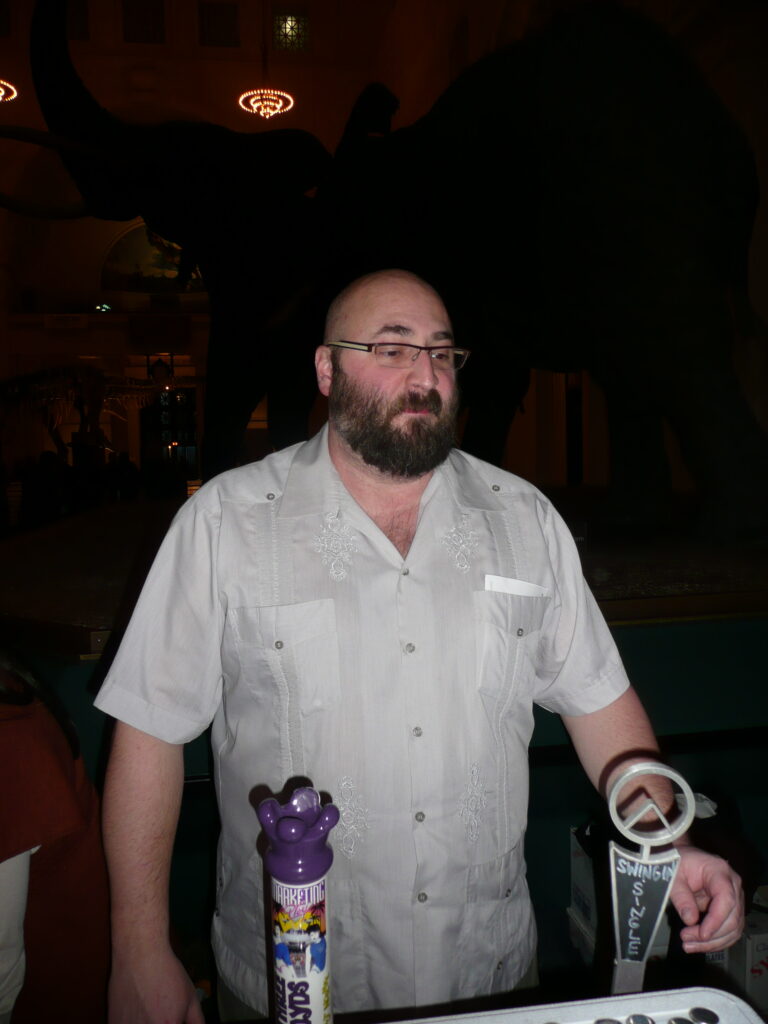
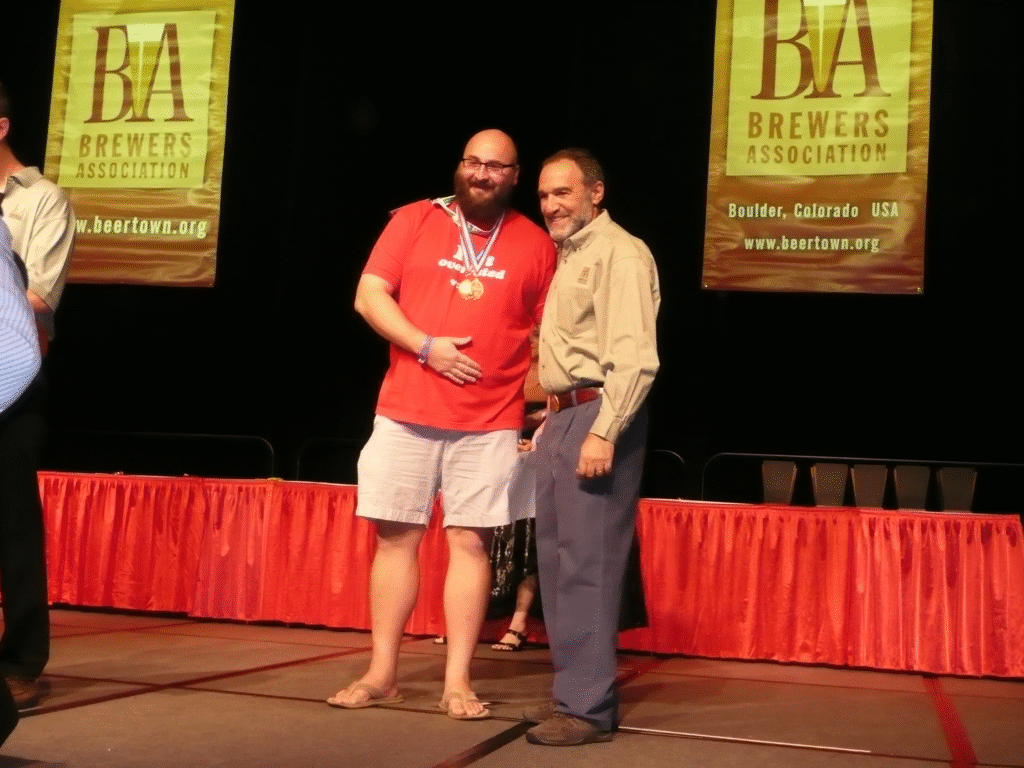
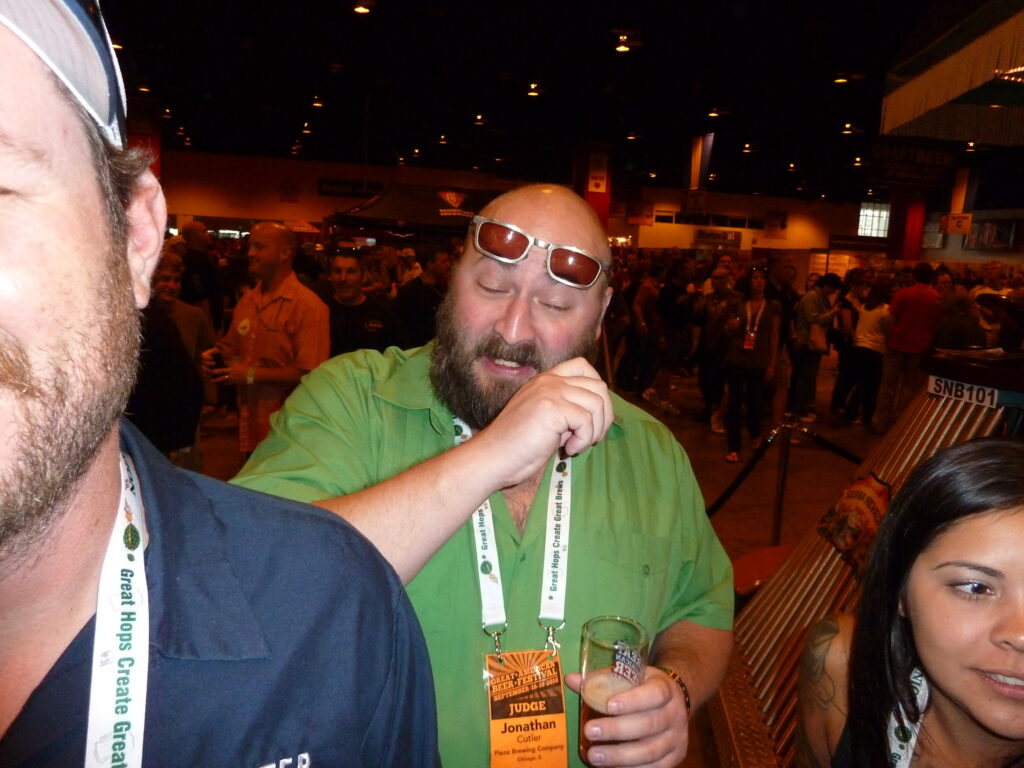
Today is the 51st birthday of Jonathan Surratt. Jonathan launched the Beer Mapping Project and also ran the website for DRAFT magazine before it folded. And Jonathan also created National Growler Day, though its exact date from year to year is still fluid, plus he was a twitter diva, too. More recently, he’s become a sandwich aficionado of the highest order. Join me in wishing Jonathan a very happy birthday.

A self-portrait with Matt, then with Oakshire Brewing, Jonathan, and me at the Goose Island cask event during CBC in 2010.
Horse Brass publican Don Younger bookended by Jonathan’s wife Robin and Jonathan, displaying his excellent taste in attire.
Jonathan & Robin Surratt Sandwiched by Sean Paxton
Jonathan with Sean Paxton and Jonathan’s wife Robin at GABF a few years ago.
gabf07-71
Jonathan, Ray McCoy, Robin, and Ray’s wife, Cornelia Corey.
P1050259
Michael Roper, owner of the Hopleaf, Jonathan, and Wendy Littlefield, from Vanberg & DeWulff, when we had dinner there a few years ago.

Filed Under: Birthdays Tagged With: Chicago, Illinois, Midwest

Historic Beer Birthday: Jacob Woolner

July 24, 2025 By Jay Brooks

Today is the birthday of Jacob Woolner (July 24, 1834-March 23, 1909). He was born in Szennitz (or Szeged), Hungary (although one source says Budapest) but settled initially in Vienna, Austria, where he married. In 1873, he emigrated to the United States, and ended up in Peoria, Illinois. In 1886, he co-founded the Union Brewing Co. with his brother-in-law Sigmund O. Mitler. It closed in 1920 due to prohibition, re-opening briefly as the Peoria Brewing Co. in 1934 but closed for good in 1940.

This is his obituary from his unexpected death in 1909.

Filed Under: Birthdays, Just For Fun Tagged With: Hungary, Illinois

« Previous Page
Next Page »

Find Something

Northern California Breweries

Please consider purchasing my latest book, California Breweries North, available from Amazon, or ask for it at your local bookstore.

Recent Comments

  • Bob Paolino on Beer Birthday: Grant Johnston
  • Gambrinus on Historic Beer Birthday: A.J. Houghton
  • Ernie Dewing on Historic Beer Birthday: Charles William Bergner 
  • Steve 'Pudgy' De Rose on Historic Beer Birthday: Jacob Schmidt
  • Jay Brooks on Beer Birthday: Bill Owens

Recent Posts

  • Beer In Ads #5144: Now… From Old Dutch Draft Bock Beer In Bottles, Too March 4, 2026
  • Historic Beer Birthday: Leonhard Eppig March 4, 2026
  • Historic Beer Birthday: Greg Noonan March 4, 2026
  • Historic Beer Birthday: Jacob Ruppert Sr. March 4, 2026
  • Historic Beer Birthday: George Klotter March 4, 2026

BBB Archives

Feedback

Head Quarter
This site is hosted and maintained by H25Q.dev. Any questions or comments for the webmaster can be directed here.