Brookston Beer Bulletin

Jay R. Brooks on Beer

  • Home
  • About
  • Editorial
  • Birthdays
  • Art & Beer

Socialize

  • Dribbble
  • Email
  • Facebook
  • Flickr
  • GitHub
  • Instagram
  • LinkedIn
  • Pinterest
  • RSS
  • Twitter
  • YouTube

Powered by Genesis

Budweiser Negotiating to Buy Budweiser

September 14, 2007 By Jay Brooks

No, you read that right. In April it was announced that the Czech Republic, who owns and operates Budejovicky Budvar — from the Bohemian town of Budweis — was considering selling it to the highest bidder to help with the country’s budget woes. Naturally they used the gentler word privatize, but the result is the same. Forbes is reporting that Anheuser-Busch has been in negotiations for some time now.

A-B and Budvar have been bickering over the Budweiser trademark for over a century, though recently A-B agreed to distribute Czechvar (Budvar’s trade name in the U.S.) in the American market. Buying the Czech brewery would make good sense from a business point of view, because the still numerous pending trademark disputes would simply vanish, saving untold millions in legal fees. Plus A-B would be able to market its own Budweiser uniformly throughout the world. Currently there are a number of nations where Budvar has prevailed in litigation and the American Budweiser must be sold in those countries under a different name. Buying the brewery then seems like it would be worth its weight in gold. Of course, the Czech government is apparently not one to let an opportunity pass it by and is exploiting the situation. They’re asking $1.5 billion, even though that’s twelve times its annual sales of just over $125 million. Most valuations use a formula of around 2.5 times annual sales, making a pricetag of $300 million or so a bit more reasonable, at least to prospective buyers.

A-B began selling beer under the name Budweiser (admittedly taking the name from the Bohemian town of Budweis) in 1876 (registering the trademark in 1878), whereas the present brewer, Budejovicky Budvar, didn’t begin brewing until 1895. But as the Czechs are quick to point out, beer was being brewed in the town of Budweis since the 13th century, since 1265 to be exact. And in that time before trademarks and brand names per se, beer brewed in the town was called Budweiser to distinguish it from beer made in other towns, it just wasn’t made by the same company. To a number of people, however, the dispute is about more than just who used the brand name first. To the Czechs it’s understandably a matter of national pride. How do you tell someone they can’t use the name of their own town on their own labels with a company name that also includes the name of the town?


Well if you’re Anheuser-Busch, you rely on the fact that you’ve spent millions and millions of dollars building a brand name and some upstart company shouldn’t be able to just waltz in and trade on all that hard work. And while I do understand A-B’s position, I’d be more sympathetic to it if this dispute just started recently after they really have created a worldwide brand name over many, many years spending untold dollars to do so. But that’s not exactly what happened. This dispute began early in the 20th century, only ten years or so after the modern Budvar was formed and only 30-odd years after Anheuser began using the Budweiser name. At that time they were certainly a successful company, but nowhere near the international behemoth they are today. Looked at today, it’s much easier to accept A-B’s arguments, but not when the dispute began. The vast majority of the effort and resources that A-B has spent building up the value of the brand name took place after Budvar began complaining that A-B was using their town’s name. I’m not sure that matters from a legal standpoint (though perhaps it should) but it just feels wrong. I know that’s idealistic and isn’t how the world really works, but I’m not convinced that most people want to live in a world where the bully with the most money usually wins. A-B may have even figured out a way to market Budweiser in the Czech Republic, by buying another local brewery, Jihocesky Pivovary, which is currently located in southern Bohemia. But in 1997 they found documents indicating they were the first brewery in Budweis, having been founded in 1795.

But buying Budejovicky Budvar would finally and forever put this dispute to bed. I just don’t know if that’s really the right result. It certainly doesn’t feel like it would end the controversy or really answer the question of who really should be entitled to use the name “Budweiser.”

 

Filed Under: Editorial, News Tagged With: Business, Europe, History, International, Law, National

Krusovice Komes to Amerika

June 19, 2007 By Jay Brooks

Monday night I attended a presentation at the Toronado for the San Francisco launch of Krusovice, a beer from the Czech Republic. An old friend of mine, Dave Deuser, is the local rep. for the beer, which is (or was, but more on that in a minute) part of the Binding Group, a German company that owns several breweries, including DAB, Radeberger, Clausthaler, and Tucher. He had Krusovice’s head brewer and a translator who works for the brewery in tow.

Binding USA is bringing two of Krušovice’s beers into the U.S. market, the Imperial and the Cerne. The Imperial, which they call a Czech Premium Lager, is very clean with soft, round flavors. I was quite impressed with it. It used all Saaz hops and was right up there with the best tasting lagers I’ve had. The Cerné is a dark lager made with pale and specialty malts. At only 3.8% abv, it was very easy drinking. It had delicious sweet malt flavors.

The presentation was very thorough and included a thick, spiral bound book that the brewer went over page by page, calling out “turn page now” in his best Germanic command voice. The Royal Brewery of Krušovice has a rich history, having been founded around 1517. In 1581, the brewery was purchased by Emperor Rudolf II, whose visage still appears on the labels. When he moved his capital from Vienna to Prague, he moved it to the nearby town of Krušovice and it became a “Royal Brewery,” a distinction it continues to claim to this very day.

In 1945, after World War II it became the property of the state, in this case Czechoslovakia, until it was privatized in 1991 and then was purchased by the Binding Group in 1994. Binding completely modernized the brewery facilities and began exporting the beer in 1997. As of 2005, Krušovice was the 5th largest brewery in the Czech Republic.

All their beers use a double decoction method, which is fairly common in Germany and for lagers. Many craft brewers use infusion mashing since it requires less equipment and is generally quicker, and while there is a debate about which method is better, it seems moot as long as the end result is both what you were trying to achieve and tastes good.

Krušovice is currently sold throughout most of Europe, Australia and now North America (or at least in the U.S. and Canada). 63% of Krušovice is sold in kegs, 32% in bottles and 5% in cans. It’s apparently wildly popular in Russia, which accounts for more than half of all exports.

And that brings us to the weird part of the evening. Halfway through their tour of the States, they got the word that Krušovice had been sold to Heineken, who was looking to make greater inroads into the Russian beer market. So it was a testament to everybody’s professionalism that presentation went as well as it did. My friend Dave didn’t now what his role would be now regarding Krušovice, but it’s likely Heineken will bring in their own people and the Binding folks won’t be involved any longer. As for the brewer, I’m sure he must have felt at least a twinge of uncertainty for his own fate, but everybody continued to champion the brand as if nothing had changed. I’m not sure I could have done as well under those circumstances.

It was a fun and informative evening, with two very tasty beers to make it all the more enjoyable.

Krusovice’s head brewer (at left) and his translator.

Filed Under: Beers, News Tagged With: Europe, History, International, National, Tasting

Session #4 Announced: Drink Locally

May 8, 2007 By Jay Brooks

Snekse, of the Gastronomic Fight Club, a primarily food-oriented blog from Nebraska, will be hosting June’s “Session” and will be taking us in a bit of a different direction.

With this Session, he wants to “create a guide book of tasting notes to drinking local.”

The idea here is to be as helpful as possible for visitors to your area. What is the beer/brewery/brewpub that you feel is quintessential to your city? What do the locals drink? What could a tourist drink that would make them feel like they’ve found something special; something that they’re going to miss when they go home?

Here are the rules:

  • You can pick anything commercially made within 150 miles of your house, but try to pick the brewery or brewpub closest to your house (NOTE: the average American lives within 10 miles of a craft brewery).
  • You can select any beer or even a sampler if you want.
  • If you select a single beer, let us know why you choose this beer (e.g. favorite, seasonal, limited edition, best seller).
  • Preferably you’ll shy away from beers with wide distribution outside your immediate area.

It looks to be an interesting way to approach the next Session, and it could be quite revealing. I certainly like the idea of each of us mining our own local areas for hidden treasure. So please join on the first Friday of June, which is also the first day of June. To participate, simply drop Snekse an e-mail “with the words “Session #4″ in the subject line,” and the following:

Include your name, the name of your blog, the URL to your post, the name of the brewery or brew pub that made the beer(s) you drank, where the place is located, the name and style of the beer(s) you drank and lastly, a general description of the availability of the beer(s). If you don’t have a blog, email me your notes and I’ll include them in the round up.

Filed Under: News, The Session Tagged With: Announcements, International, Other Event, Websites

Victories Down Under

April 20, 2007 By Jay Brooks

You may recall that at the end of January, there was an announcement that 19 American craft brewers entered their beers in the the Australian International Beer Awards (AIBA )through the Brewers Association‘s Export Development Program (or EDP). Yesterday the results were announced with several American breweries winning medals. Now the Australian awards are somewhat different than the GABF or World Cup medals. The beers are judged in a similar fashion and assigned points with a total possible of 20, but instead of choosing first, second and third, any and every beer that gets above 17 points receives a gold medal, 15.5-16.5 receives a silver and 14-15 for a bronze medal. There is a Grand Champion Trophy for the Highest Scoring Beer, and this year it is Weihenstephan Kristall from Germany’s Weihenstephan Brewery. There’s also about a dozen additional awards such as “Champion Ale” and the “Best Packaging Award.”

The biggest victory by an American brewery went to Deschutes Brewing of Bend, Oregon, who won the International Malting Company Trophy for Champion Large International Brewery. They also won the Veolia Environmental Services Trophy for
Champion Stout for their Obsidian Stout.
 

Here’s how the American brewers fared:
 

Gold Medals:

Blue Point Brewing: Winter Ale
Boston Beer Co.: Samuel Adams Brown Ale
Boston Beer Co.: Long Shot Old Ale
Boston Beer Co.: Samuel Adams Honey Porter
Boston Beer Co.: Samuel Adams Winter Lager
BridgePort Brewing: BridgePort India Pale Ale
Deschutes Brewery: Mirror Pond Pale Ale
Deschutes Brewery: Cinder Cone Red
Deschutes Brewery: Black Butte Porter
Deschutes Brewery: Obsidian Stout
Great Divide Brewing: Hercules Double India Pale Ale
Matt Brewing: Imperial IPA
Pelican Pub Brewery: Doryman’s Dark Ale
Pelican Pub Brewery: Kiwanda Cream Ale
Sprecher Brewing: Imperial Stout
Stone Brewing: Stone Imperial Russian Stout
Trumer Braurei: Trumer Pils
 

Silver Medals:

21st Amendment Brewery: 21A IPA
Blue Point Brewing: Hoptical Illusion
Boston Beer Co.: Long Shot Dortmunder
Boston Beer Co.: Samuel Adams Boston Lager
Boston Beer Co.: Samuel Adams Black Lager
Boston Beer Co.: Samuel Adams Light
Boston Beer Co.: Samuel Adams Pale Ale
Boston Beer Co.: Samuel Adams Boston Ale
Boston Beer Co.: Samuel Adams Cream Stout
Deschutes Brewery: Inversion IPA
Deschutes Brewery: Hop Henge IPA
Deschutes Brewery: Cascade Ale
Deschutes Brewery: Jubelale
Deschutes Brewery: Hop Trip
Deschutes Brewery: Bachelor ESB
Firestone Walker Brewing: Firestone Pale Ale
Firestone Walker Brewing: Firestone Bravo Brown
Flying Dog Ales: Doggie Style Classic Pale Ale
Great Divide Brewing: Titan India Pale Ale
Jolly Pumpkin Artisan Ales: Maracaibo Especial
Left Hand Brewing: Sawtooth Ale
Matt Brewing: Saranac Pale Ale
Odell Brewing: 90 Shilling
Odell Brewing: Cutthroat Porter
Odell Brewing: East Street Wheat
Pelican Pub Brewery: India Pelican Ale
Pelican Pub Brewery: Tsunami Stout
Pelican Pub Brewery: Saison du Pelican
Pelican Pub Brewery: Bridal Ale
Pelican Pub Brewery: Grand Cru de Pelican
Pelican Pub Brewery: Stormwatcher’s Winterfest
Pelican Pub Brewery: MacPelican’s Wee Heavy Strong Scotch Ale
Rogue Ales: Hazelnut Brown Nectar
Rogue Ales: American Amber
Rogue Ales: Mocha Porter
Sprecher Brewing: Dopple Bock
Widmer Brothers Brewing: Widmer W’07 Pale Ale
 

Bronze Medals:

Blue Point Brewing: Toasted Lager
Boston Beer Co.: Samuel Adams Octoberfest
Boston Beer Co.: Samuel Adams Double Bock
Boston Beer Co.: Samuel Adams Hefeweizen
Boston Beer Co.: Samuel Adams Cranberry Lambic
Boston Beer Co.: Samuel Adams Scotch Ale
BridgePort Brewing: Blue Heron
BridgePort Brewing: Beertown Brown
Deschutes Brewery: Abyss
Flying Dog Ales: Old Scratch Amber Lager
Flying Dog Ales: Gonzo Imperial Porter
Great Divide Brewing: Oak Aged Yeti Imperial Stout
Issaquah Brewhouse: Menage A Frog
Kona Brewing: Fire Rock Pale Ale
Left Hand Brewing: Black Jack Porter
Left Hand Brewing: Milk Stout
Odell Brewing: 5 Barrel Pale Ale
Pelican Pub Brewery: MacPelican’s Scottish Style Ale
Rogue Ales: Juniper Pale Ale
Rogue Ales: Shakespeare Stout
Rogue Ales: Smoke Ale
Shipyard Brewing: Shipyard Chamberlain Pale Ale
Shipyard Brewing: Brewers Choice Honey Porter
Shipyard Brewing: SeaDog Bluepaw Wildberry Wheat Ale
Sprecher Brewing: Piper’s Scotch Ale
Stone Brewing: Stone IPA
Widmer Brothers Brewing: Broken Halo IPA
Widmer Brothers Brewing: Drop Top Amber Ale
Widmer Brothers Brewing: Widmer Hefeweizen

Filed Under: News Tagged With: Australia, Awards, International

Dos Equis New Ad Campaign Not Very Interesting

April 11, 2007 By Jay Brooks

dos-equis
Since 2004, Dos Equis and all of the Cervecería Cuauhtémoc Moctezuma brands, which also include Bohemia, Carta Blanca, Sol and Tecate, have been marketed in the U.S. by Heinken USA through an agreement they signed with FEMSA, a multi-billion dollar beverage company in Latin America.

dos-equis-tv
CLICK HERE TO VIEW A COMPILATION OF THE ADS

The latest ad campaign Heineken is just launching and the plan is to position Dos Equis as a premium product through a nationwide push using spots called the “Most Interesting Man in the World” and with the tagline, “stay thirsty, my friends,” whatever that means. The advertising agency that created the ads is Euro RSCG, which is apparently the fifth largest global ad agency in the world and headquartered in New York City. If you click on the ad to the left, it will open a new window at AdWeek where you can watch the first commercial. This first one is something of an introduction, setting the tone for four more that will begin airing next week. Here’s how AdWeek describes the commercial.

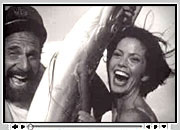
It opens on a bearded, tuxedo-clad gentleman bench-pressing two comely nurses. A narrator intones oddly intriguing descriptions of the man, e.g., “His blood smells like cologne,” as the character continues to do implausible things, like freeing a bear from a trap.

Ultimately, we see a more mature MIM, with a touch of gray in his hair, seated at a table surrounded by beautiful women. He says, “I don’t always drink beer, but when I do, I prefer Dos Equis.” The spot ends with the tagline, “Stay thirsty, my friends.”

There will also be radio spots, print ads in Stuff magazine and the MIM is featured on the Dos Equis website along with a separate website, staythirstymyfriends.com. You can also see all four commercials at that website.

Now the ad is well-produced and are not without some humor, but they don’t seem very different from almost any other beer ad created by a big name ad agency. What did strike me as odd and a little interesting was the following about just how Euro RSCG sees the ad campaign.

From the AdWeek story:

For Euro RSCG, the spot is a conscious attempt to elevate the often-lowbrow imagery associated with beer ads. “The stain of the Swedish bikini teams still lingers. Those kinds of ads are targeted at beer-drinking morons,” said Jeff Kling, ecd at Euro RSCG in New York. “We saw this as an opportunity to talk to people a little differently. It portrays a different kind of drinker.”

Raise your hand if you know what’s wrong with that. The “Most Interesting Man in the World” (MIM) is not low-brow? It can be distinguished from the Swedish Bikini Team? This is not aimed at morons? It displays a different kind of drinker? So let’s look at those statements.

  1. Not Low-Brow: The MIM is Ricardo Montalban without the Corinthian leather and sporting a beard. He’s classy with a capital “K.” This is every cliche of sophistication and in my opinion lacks any authentic portrayal of it whatsoever. It looks like what a drunken frat boy might consider high-brow.”
  2. No Lingering Babes: Uh, exactly what do you call the two Asian nurses in tight white uniforms in the beginning or the two babes in low-cut black cocktail dresses at the end? They may not be wearing bikinis, but they’re cut from the same cloth.
  3. Not Aimed at Morons: Because arm wrestling is the way intelligent people settle their political differences or spend an evening of fun. Worse than that, at the website you can “test your skills” by arm-wrestling a “deceased head of state.” They get bonus points for not realizing that Winston Churchill was not a head of state, but Prime Minister. The Queen is head of state in Great Britain. Another non-moronic game you can play at the website is a “Test of your resilience and fortitude” that involves holding down the spacebar on your keyboard as long as you can or want to. Now that’s sophistication.
  4. A Different Kind of Drinker: Freeing bears from traps and fishing for Marlin. Frankly I’d be worried about liability for all those different drinkers who had themselves a 12-pack and then actually tried to free a bear. I don’t see how this is in any way a departure from the same inanity that’s graced our TV sets for decades.

The ads aren’t really any worse than any other bad beer ads, but what I find troubling is how the ad agency speaks about them. Is it just me, or do their statements seems completely divorced from reality? Because if they were really setting out to show beer in a different light instead of how it’s been portrayed for a very long time, I think they utterly and completely failed in that regard. I for one, plan to not stay thirsty. Perhaps a nice beer with do the trick.

Filed Under: Editorial, News Tagged With: Business, International, National, Promotions

Laughing Beer?!?

April 1, 2007 By Jay Brooks

Okay, this one is just too weird not to mention. An Israeli company has figured out a way of infusing beer with nitrous oxide, better known as laughing gas. They’ve gotten aproval from Israel’s Ministry of Health to sell it after the process has been patented. Real story or April Fool’s prank? It looks real, but who knows.

Filed Under: Just For Fun, News Tagged With: Business, International, Science of Brewing, Strange But True

Heineken in Takeover Bid for Scottish & Newkie

March 31, 2007 By Jay Brooks

According to today’s Scotsman, Heineken is the leading contender in a takeover bid for the world’s tenth largest beer company, Scottish & Newcastle. According to S&N’s website, in Europe they’re the fourth largest brewer in volume terms and the number two in profit terms. I believe Heineken is number one in both.

The article relates some interesting history of breweries in Edinburgh and though it alludes to pictures of these old breweries, does not include them in the online version. Though S&N no longer operates a brewery in Edinburgh, they do still employ around 1,000 people there locally. The Scots, naturally are not thrilled at losing so large a company, but S&N long ago lost sight of any sense of community to the areas where they originated and eventually built their empire so it’s hard to get too worked up about this one.

The old Scottish & Newcastle brewery in Fountainbridge, Edinburgh, taken in 1992. The brewery was closed in 2005. This cool photograph was taken by Peter Stubbs and can be found on EdinPhoto, a website dedicated to photographs of Edinburgh and Scotland.

Filed Under: News Tagged With: Business, Europe, Great Britain, International

Vending Beer

March 29, 2007 By Jay Brooks

Two years ago, two business entrepreneurs had an idea to get beer into the hands of more people, 24 hours a day, 7 days a week. They talked to Pilsner Urquell, who agreed to bankroll the pair. The idea was simple enough. Vending machines currently dispense almost every thing under the sun already, from a pack of gun to expensive iPods. Why not beer? And actually beer is already dispensed in vending machines in some places, Japan for example, as shown below. Notice they even dispense beer bottles, too.

And in other places in Europe, such as the train station in Brussels, where I snapped this picture in January. Along with a wide array of food and other beverages, for a few Euros you could get a can of Hoegaarden, Heineken or Grimbergen beer.

And when I was in the Army in the late 70s, stationed in New York City, we had a vending machine in our day room that dispensed cans of beer for a few coins, something like 50 or 75 cents. But that’s a relative rarity here in the U.S., where we’re completely out of step with the rest of the civilized world in our approach to alcohol. For example, we have no problem showing bloody scene after scene of violent murder and death on television, yet it’s illegal to show someone drinking a beer. The idea is, as I understand it, showing people drinking might lead kids to take up drinking. So using that logic, does that mean it’s okay if our youth turn into murdering psychopaths? It does say something profound, I think, about our priorities as a society though, and especially how screwed up they are. Death, murder, and crime: perfectly acceptable as entertainment. Alcohol: gasp, oh no, not that. Don’t show that. People might get the idea that having a good time is okay.

In the Czech Republic, where per capita beer consumption is the highest in the world, the only problem with a beer vending machine is how to keep people under the age of eighteen from buying it, so Karel Stibor and David Polnar came up with a solution, a card reader that solves this basic problem. From the Prague Post report:

“We’ve developed a special reading device that can scan buyers’ IDs and passports, in order to determine their age,” Stibor explains. “If a buyer is under 18, coins inserted in the machine’s slot are returned and the machine does not dispense the beer can.”

The scanner recognizes not only Czech IDs and passports, but also all EU cards.

The developers have applied for Czech and international patents and would like to offer the technology to other businesses where the age of customers is a factor.

“This technology can also be applied to door systems, turnstiles, gaming machines, Internet terminals or cigarette vending machines,” Polnar says.

Curiously, the most obvious American objection isn’t even mentioned. If someone tried this here, the hue and cry would undoubtedly be about how easy it would be for kids to borrow or steal their parents or another adult’s I.D. In the Czech Republic (and most of the rest of Europe) that’s not even an issue because alcohol is not the stigmatized taboo it is in the U.S. So this might actually work in Europe, but it would requite a paradigm shift in thinking before it would be viable here.

Filed Under: Editorial, News Tagged With: Business, Europe, International, Law

Bud & Bud: Now They’re Buds?

January 14, 2007 By Jay Brooks

+ = ?

I saw this last Monday but was too busy with deadlines for paying gigs to do anything more than drop my jaw in amazement at the news. To say I was surprised would be an understatement. The vigor with which these two companies have battled one another is legendary. For them to unceremoniously bury the hatchet — and not into each other’s back — even in just the U.S. market defies logic. I can see why Anheuser-Busch would want the deal. To have a Bud with flavor and another import that’s been selling well, with even greater potential, is a no brainer for them.

But why Budějovický Budvar would be so eager is an entirely different matter. I have a hard time fathoming that it was simply the profit motive and the tantalizing carrot of making a killing here in the U.S. that drove their decision. Not to mention all of the people this move — along with the earlier InBev agreement — have put on the unemployment line. The very people who built all of these brands into ones that A-B would be interested in poaching are now left out in the cold, all of their hard work for naught. Many of the ones I know personally are great people, too, so it seems remarkably unfair.

I guess I just don’t want to believe that the principles Budvar has been arguing for so vehemently could be set aside so easily just for a wad of cash. There are currently something like 100 lawsuits going on in 30 countries around the globe over the brand names Bud, Budvar and Budweiser. A-B just lost an appeal in Portugal, so the disputes between the two companies are far from over. And generally speaking A-B has been the aggressor in a majority of the cases, at least as far as I’ve seen.

Here in the U.S., and other countries where A-B has prevailed in court decisions, Budvar, Budweis and Budweiser are labeled Czechvar, conveying none of the heritage of a beer brewed in the town of České Budějovice, which in German is Budweis. A-B has publicly acknowledged countless times that it was their inspiration for the beer they named Budweiser in 1876. Disputes began a century ago and have not subsided up through the present time. Even A-B’s press release acknowledges as much.

After nearly a century of disagreements in certain parts of the world over rights to the Budweiser name for their beers, Anheuser-Busch and Czech brewer Budejovicky Budvar have formed a historic alliance in which Anheuser-Busch will become the U.S. importer of Czechvar Premium Czech Lager, the two brewers jointly announced today.

The agreement gives Czechvar, currently sold in 30 states, access to Anheuser-Busch’s marketing and sales expertise and wide-reaching U.S. distribution network. It gives Anheuser-Busch another European import as part of an aggressive push into high-end beer categories that has led to alliances with Grolsch, Tiger, Kirin and most recently InBev, which added Stella Artois, Beck’s, Bass Pale Ale and other beers to its import portfolio.

The agreement does not impact existing litigation or trademark disputes between the two brewers in other countries, and they have agreed the partnership cannot be used to support either side in any trademark cases.

“After years of differences, this is a meaningful step for two great brewers to form a relationship that is good for both of our businesses,” said August A. Busch IV, president and chief executive officer of Anheuser-Busch Cos. Inc. “For Anheuser-Busch, it also represents an opportunity to enhance our import portfolio with a super-premium Czech import. Working with our family of wholesalers, we look forward to introducing Czechvar to a new audience of beer lovers.”

“At the same time, the agreement represents a historical turning point between our companies. We have managed to move away from discussions between lawyers and toward a practical dialog, which is going to be beneficial to both sides. Our corporation has therefore gained the best importer in the USA,” added Budejovicky Budvar’s CEO, Jiří Boček.

The agreement was effective Jan. 5. Terms were not disclosed.

Hmm. When a brewery with so much reason to feel a deep-seated animosity toward the world’s largest beer company can make nice for a fistful of ducats, what does that mean for the rest of the world’s breweries trying to sell their products here. Between the InBev brands (like Stella Artois), Grolsch, Tiger, Kirin, and now what many people refer to as “the real Budweiser,” Czechvar, this will make it increasingly difficult for other imported beers — and especially the smaller brands — to find a willing distributor to carry their products. Certainly no Bud distributor who wants to stay in Augie’s good graces would carry a non-A-B import. And that clutters the remaining distributors, especially where there’s only one other house that carries both Coors and Miller. Few distributors can carry everything presented them and that means less diversity in their territories, more so in states where it’s difficult or impossible for companies to self-distribute.

As usual, the losers will be you and me when we try to find that obscure import like Westmalle Tripel or Urthel Hop-It. Every time the highly efficient behemoth A-B distribution network adds another “official” beer to its portfolio, the available beers across the country become increasingly the same. If it keeps up like this, the only remaining diversity you’ll see at the local grocery store will be completely illusory. They’ll all be owned or have exclusive distribution agreements with a very small number of companies. And that will make it nearly impossible for a newcomer, whether an imported brewery or a local craft brewer, to find a spot on the shelf.

Filed Under: Editorial, News Tagged With: Business, Europe, International, National, Strange But True

Heineken Amnesia

December 17, 2006 By Jay Brooks

I came across this on Ad Punch, a blog about advertising. The post is about a new ad campaign by Heineken in India with fake news stories pasted to Heineken bottles about the supposed lengths people would go to actually drink Heineken beer. It still amazes me how powerful advertising is when it creates the perception that something as awful tasting as Heineken is considered a premium beer. So the first ad in the series really cracked me up. Here it is below.


Because in my opinion you’d have to have amnesia to drink Heineken willingly. Perhaps after drinking one it might give you amnesia. I certainly can’t remember any good reasons why anyone with or without amnesia would have one. There are other ads as well, which you can see on Ad Punch, but this one had me in stitches.

Filed Under: Just For Fun Tagged With: International, Strange But True

« Previous Page
Next Page »

Find Something

Northern California Breweries

Please consider purchasing my latest book, California Breweries North, available from Amazon, or ask for it at your local bookstore.

Recent Comments

  • Ernie Dewing on Historic Beer Birthday: Charles William Bergner 
  • Steve 'Pudgy' De Rose on Historic Beer Birthday: Jacob Schmidt
  • Jay Brooks on Beer Birthday: Bill Owens
  • Steve 'Pudgy' De Rose on Beer Birthday: Charles Finkel
  • Steve 'Pudgy' De Rose on Beer Birthday: Bill Owens

Recent Posts

  • Historic Beer Birthday: A.J. Houghton February 8, 2026
  • Historic Beer Birthday: Charles Tascher February 8, 2026
  • Historic Beer Birthday: Lüder Rutenberg February 8, 2026
  • Beer In Ads #5195: It’s The Time Of Year For Pearl Bock Beer February 7, 2026
  • Beer Birthday: Tom Acitelli February 7, 2026

BBB Archives

Feedback

Head Quarter
This site is hosted and maintained by H25Q.dev. Any questions or comments for the webmaster can be directed here.