Brookston Beer Bulletin

Jay R. Brooks on Beer

  • Home
  • About
  • Editorial
  • Birthdays
  • Art & Beer

Socialize

  • Dribbble
  • Email
  • Facebook
  • Flickr
  • GitHub
  • Instagram
  • LinkedIn
  • Pinterest
  • RSS
  • Twitter
  • YouTube

Powered by Genesis

Historic Beer Birthday: Gustavus Bergner 

November 11, 2025 By Jay Brooks

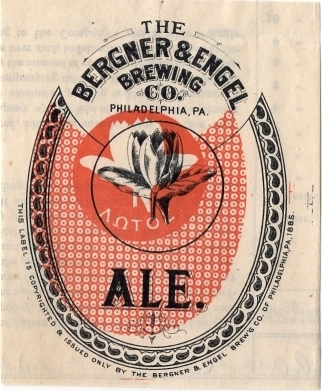
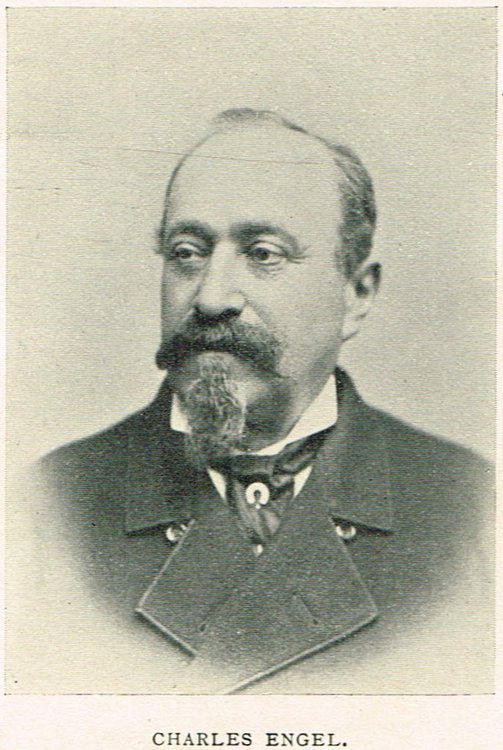
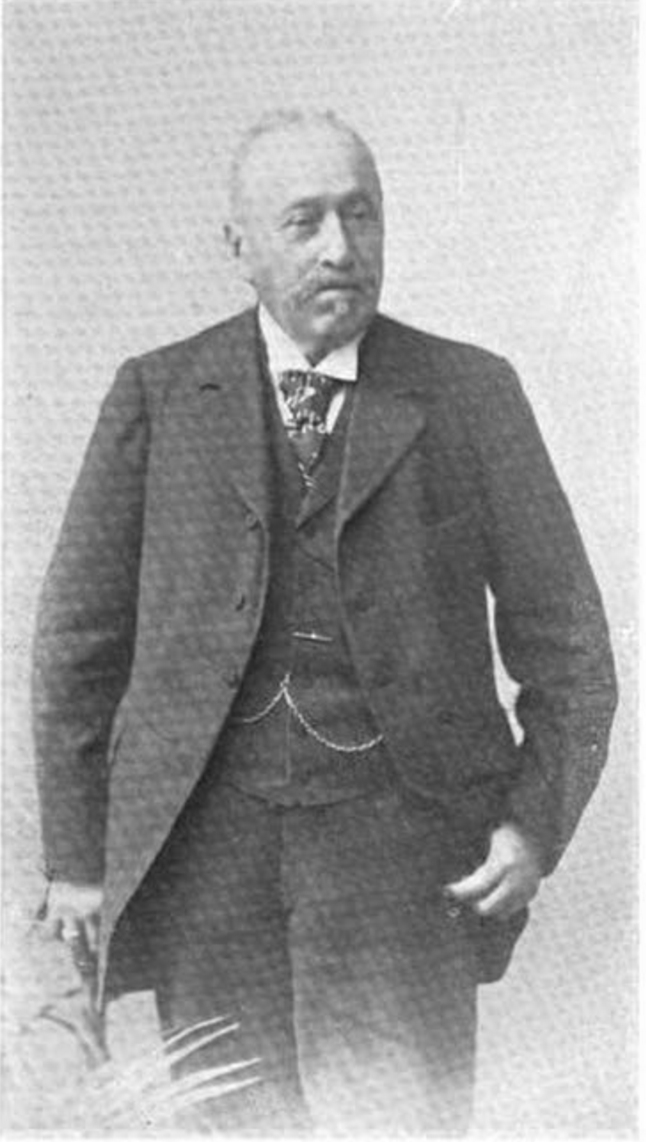
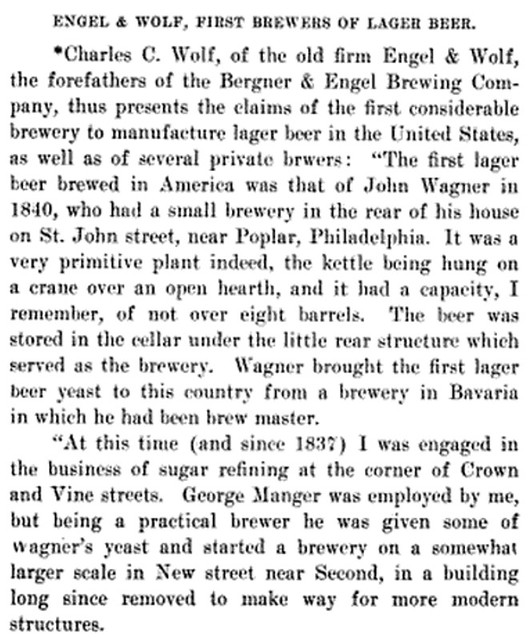
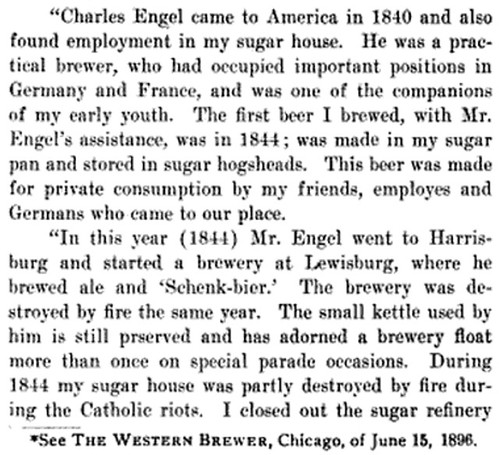
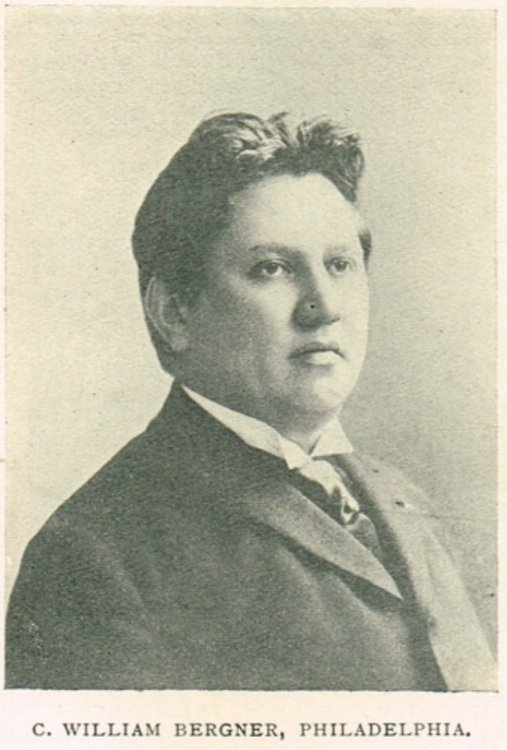
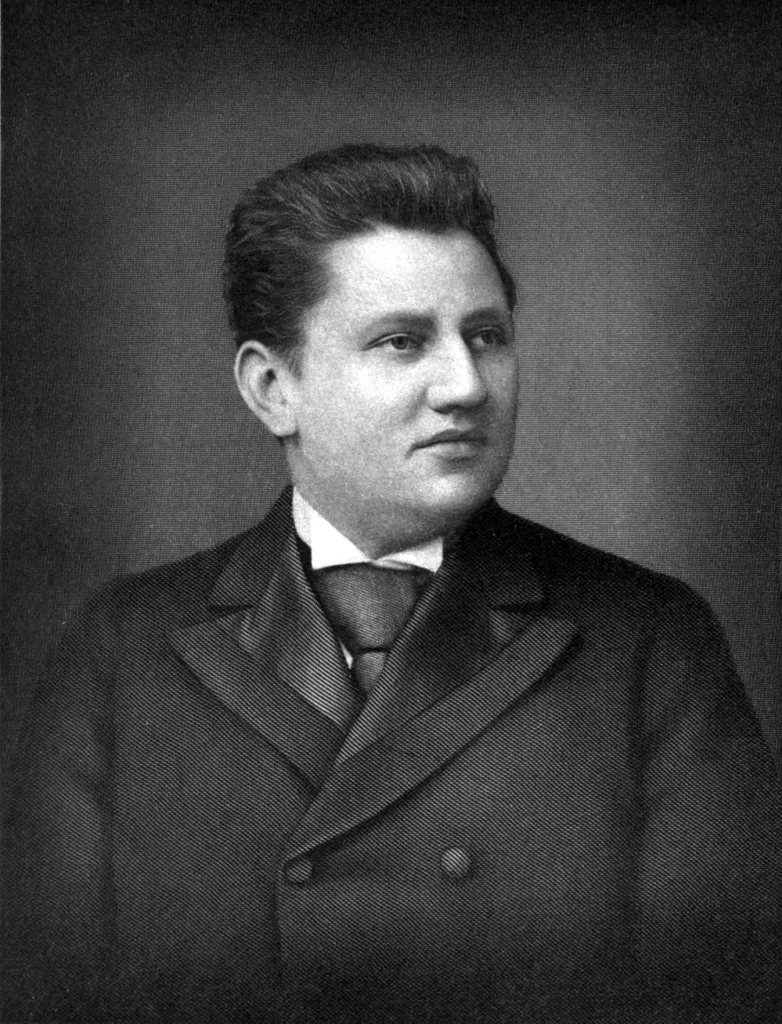
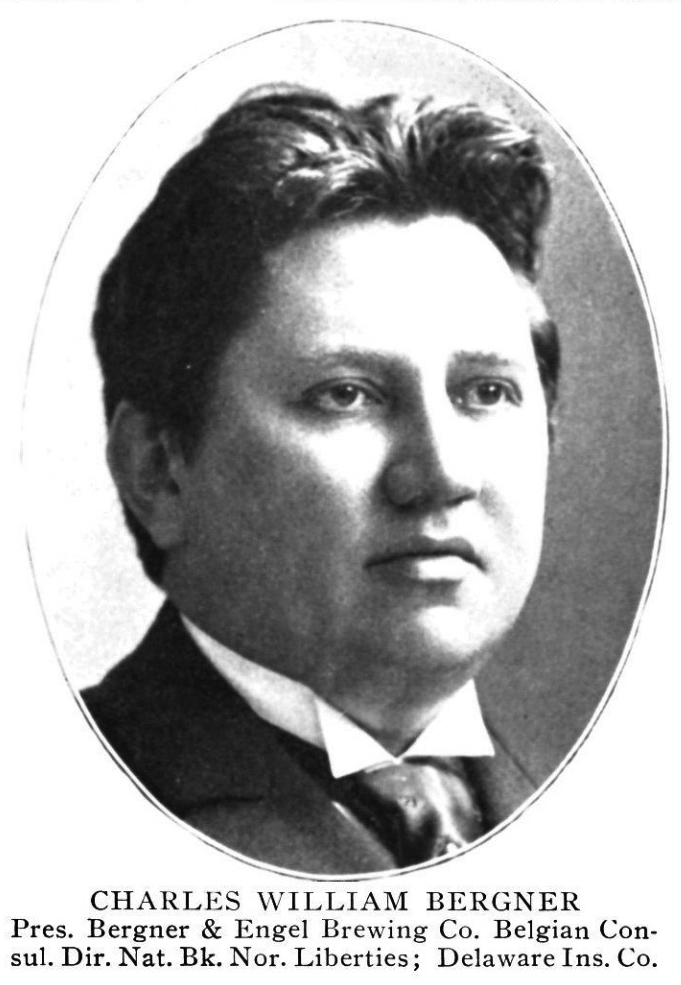
Today is the birthday of Gustavus Bergner (November 11, 1832-May 6, 1883). He was born in Germany, but emigrated to the U.S. with his family when he was a teenager. He learned to brew working at the brewery owned by his father, Charles William Bergner. After his father’s passing, Gustavus owned and operated a large saloon, before “he became a partner in the old brewing firm of Engel & Wolf. The brewery was greatly enlarged, and their business increased rapidly. The firm subsequently became Bergner & Engel, and later the Bergner & Engel Company.”

Here is his obituary from the Philadelphia Inquirer on May 7, 1883:


“GUSTAV BERGNER, the WELL-KNOWN BREWER

“Mr. Gustav Bergner, of the Bergner & Engel Brewing Company, died about nine o’clock last night at his residence, No. 2310 Green street. Mr. Bergner has been failing in health for some time and has been quite ill for the past two weeks.

His father, who was a brewer, came to this country about thirty five years ago, and after traveling about two years, went back to his native land and returned with his family, The elder Bergner built a brewery on Seventh street, below Girard avenue, that neighborhood at that tine being in the suburbs of the city. The son learned the business there, and was afterward admitted into partnership. The business of the firm rapidly developed, and their establishment was soon one of the leading breweries of the city.

Mr. Bergner experienced several reverses during life, and after the partnership with his father, he conducted a large saloon on Dock street. From the years 1872 to 1878 he ran the large saloon on Library street nor conducted by Gustav Wallace. Here he amassed considerable money. In 1872 he became a partner in the old brewing firm of Engel & Wolf. The brewery was greatly enlarged, and their business increased rapidly. The firm subsequently became Bergner & Engel, and later the Bergner & Engel Company.
It is one of the largest breweries in this section of the country. Several times their establishment was partly destroyed by fire, causing an interruption of their business.

Mr. Bergner was a member of several German societies, and was known in German circles as a very liberal man. During his life he amassed a great deal of money, but always spent it freely. He leaves a widow and a son and a daughter.”

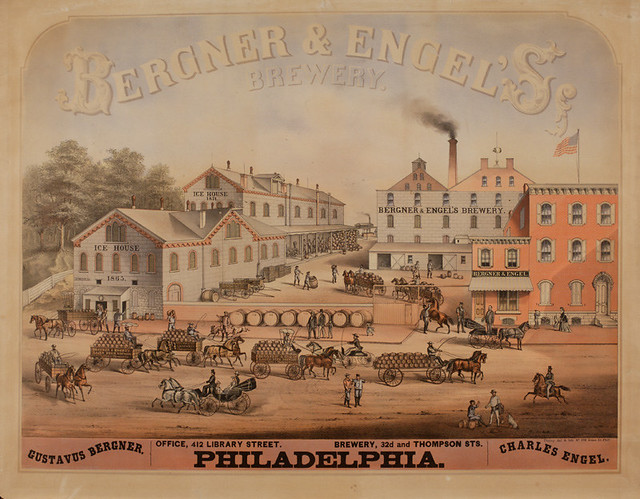
Here’s a description of the above poster of Bergner’s brewery from the Library Company of Philadelphia:

Since the erection of the first brewery in Philadelphia circa 1683, beer making has been a near steady Philadelphia industry. Following the introduction of lager beer to the Philadelphia market in the mid-19th century, German-American brewers dominated the field. The firm of Bergner & Engel, formed in 1870 between longtime brewers Gustave Bergner and Charles Engel, symbolized the best of the best of that era’s nearly one hundred, mostly German-American run breweries. Operating from a plant built for Bergner in 1858 at 32nd and Thompson streets, the brewery served as the forerunner in the establishment of the industrial neighborhood known as Brewerytown.

This circa 1875 print, a chromolithograph by German-born lithographer Charles P. Tholey, evokes the vitality of the brewing industry and documents the eye-catching imagery of advertising for the city during the 19th century. The advertisement conveys the expanse of the Bergner & Engel plant that included ice houses, a brew room, fermenting and cooling rooms, store rooms, offices, and dwellings. The numerous factory wagons loaded with kegs of beer to be delivered, the visible construction dates of the ice houses, and the several returned and cleaned barrels demonstrate the success of the company. To catch and keep the viewer’s eye, Tholey also employed subtle details such as the excited dogs, the probable job seeker soliciting a worker on break, and one of the proprietors, Bergner, conversing with an employee in front of his office.

Unlike advertisements of today, the product for sale does not serve as the focus of the print. Rather, the factory comprises the image. Competition for consumers was not based on the quality of the good, but the quality of the establishment in which the product was produced. Regarding the circulation of such prints, rather than posting them publicly in stations, on buildings, or fences, businesses probably enclosed the advertisements with product shipments sent to their distributors throughout the country. Enterprises such as Bergner & Engel anticipated that their retailers would display the prints in the public spaces of their establishments to promote their products to a broader base of consumers.

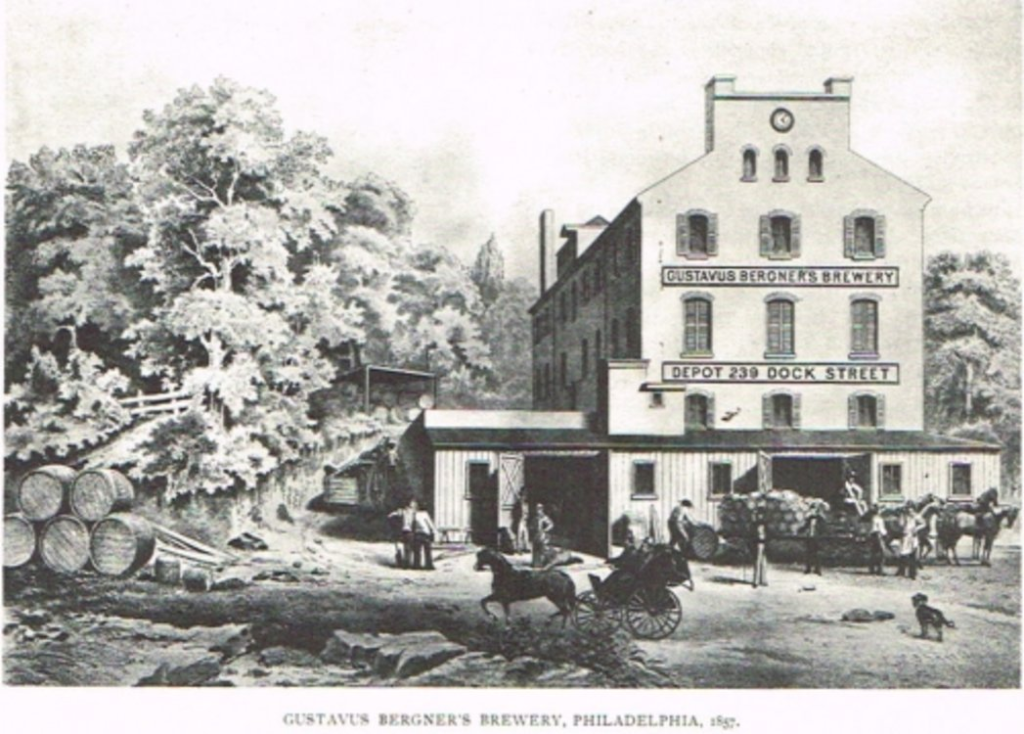
The brewery around 1857.

This short biography is from the breweriana website Tavern Trove.

Gustavus Bergner, the founder of the Bergner & Engel Brewing Co., was born in Crimmitschau, Germany.  He arrived in America with his father in around 1850, and was naturalized on Halloween day, 1853.  He cut his teeth in the brewing business by working at his father Charles William Bergner’s Philadelphia brewery on 7th street, below Girard Avenue.  The education was to be short-lived, however as his father died on November 15th of 1852 .

Upon his father’s death Gustavus brought in Christian Muehleck as a partner.  Together they moved the brewery to Dock Street and expanded it. On June 8th of 1863 they opened the Library Street Hall at 412 Library Street and used the saloon/hotel as a depot to sell their beer.  They ran both enterprises for a few years until the Library Street landlady sued them for breach of contract.  The beer men won their lawsuit in January of 1866 but in May of that year Muehleck died after a short illness, leaving Bergner to continue alone.

Bergner brewed at the Dock Street location for four more years and in that time amassed a sizable reputation.  In 1870, at age 38, Bergner was offered a partnership in the reputable Engle and Wolf Brewery, Charles C. Wolf having retired.  With Bergner on board, the Engel & Wolf plant was expanded even more, and output was greatly increased.  By 1872 the firm had been renamed the Bergner & Engel Brewery, and was one of the largest in eastern Pennsylvania.  

In around 1853 Bergner married fellow German emigre Catharine Christine Wehn.  Their union produced a son and a daughter.  

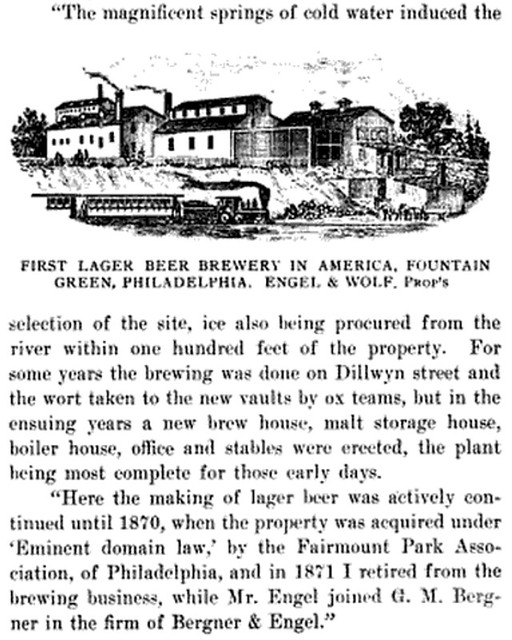
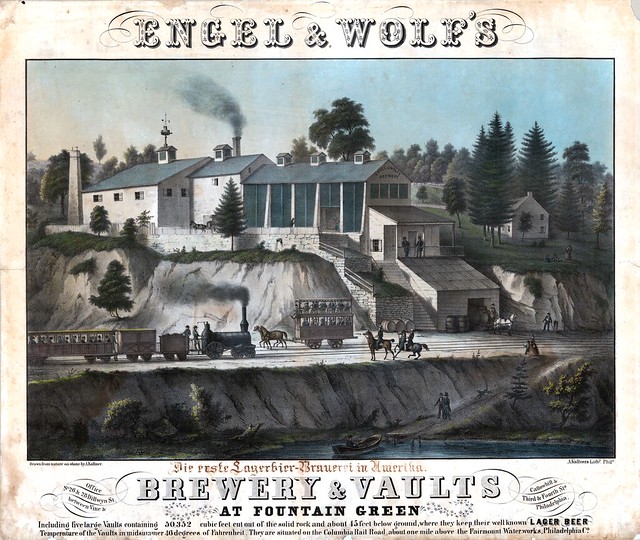
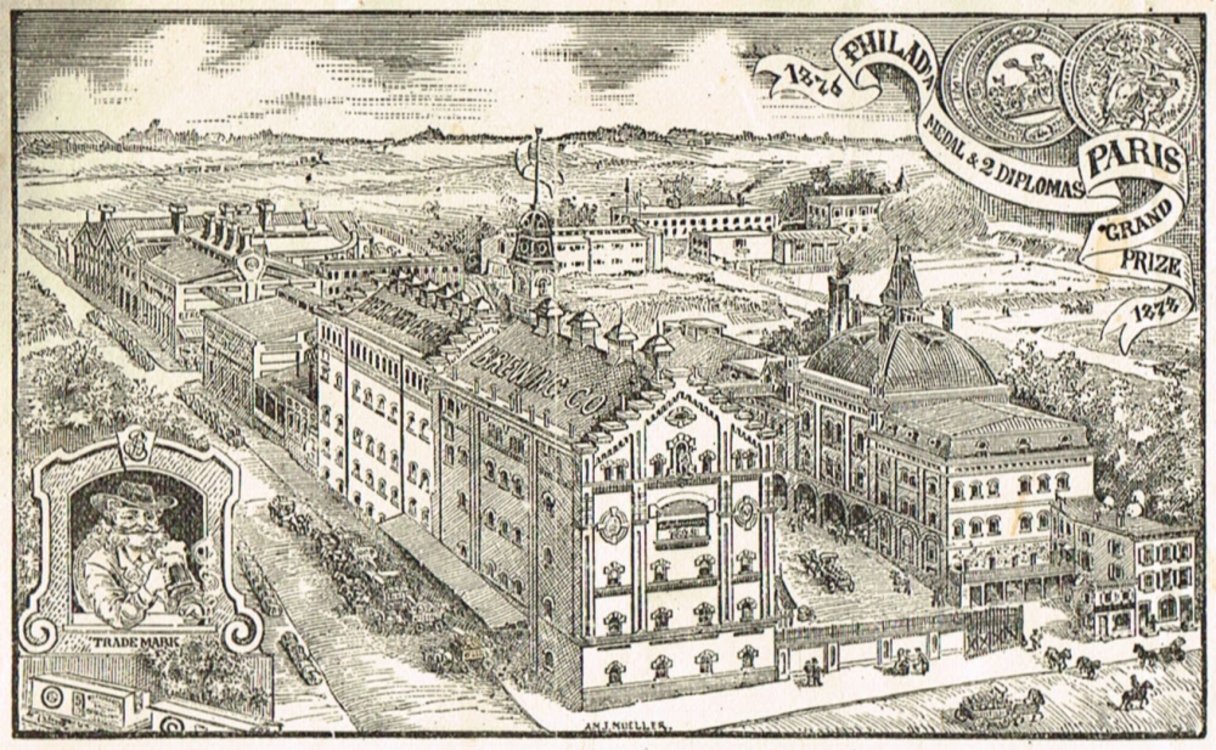
And this is the brewery around 1870.

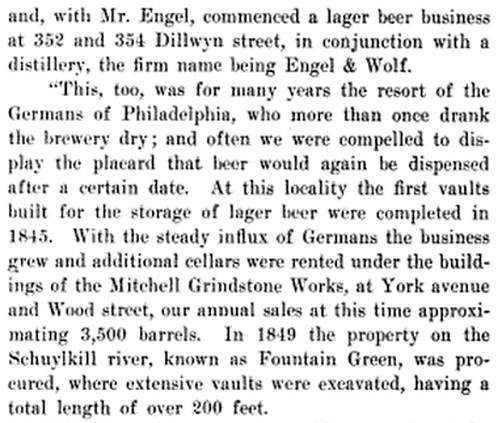
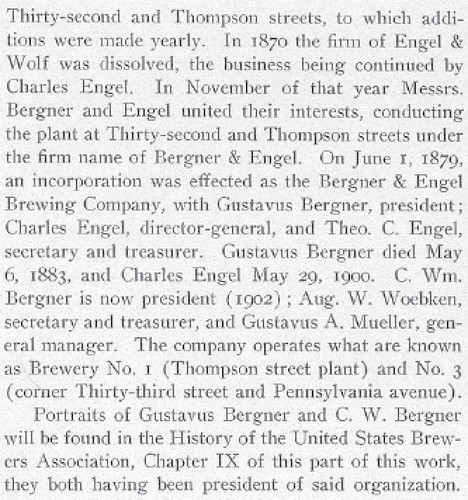
And this account is from “One Hundred Years of Brewing:”

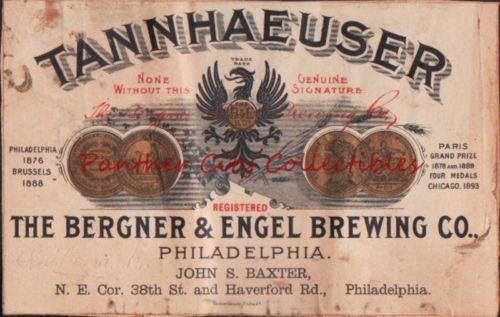
This the company letterhead from 1880.

Filed Under: Birthdays, Just For Fun Tagged With: Pennsylvania, Philadelphia

Historic Beer Birthday: Jack Curtin

November 9, 2025 By Jay Brooks

jack-curtin-toon
Today is fellow Pennsylvania beer writer Jack Curtin’s birthday (November 9, 1932-October 1, 2013), who passed away in 2013 at the ripe old age of 81. You could read his writings and rantings on a variety of subjects at his Liquid Diet Online, Curtin’s Corner, I Have Heard the Mermaids Singing, and The Great Disconnect. If you think I don’t know when to stop, check out Jack’s voluminous output. Plus Jack was one of my favorite people to kvetch about politics with, over a pint, of course, and, also like me, worked in comics for a time, too. Join me in drinking a toast to Jack tonight.

Jack and me at Nodding Head during Philly Beer Week many years ago.
gabf06-sat-04
Jack, at right, with fellow Pennsylvanians Don Russell (a.k.a. Joe Sixpack) and Lew Bryson. I’m originally from Pennsylvania, too. What is it about the Commonwealth and beer writers?
Tomme Arthur & Jack Curtin
Tomme Arthur and Jack.
Jack Curtin, Sam Calagione, Ed Friedland and Curt's assistant brewer
Jack with Sam Calagione, Ed Friedland and Nodding Head’s then-assistant brewer.

Filed Under: Birthdays Tagged With: Pennsylvania, Philadelphia

Historic Beer Birthday: George Weisbrod

October 31, 2025 By Jay Brooks

weisbrod-hess
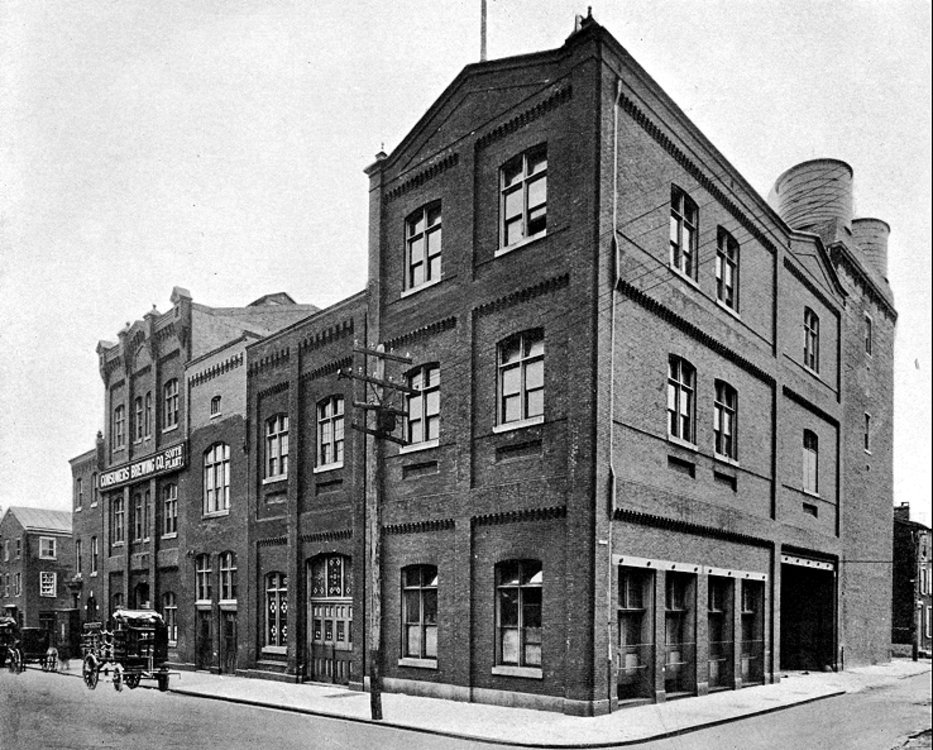
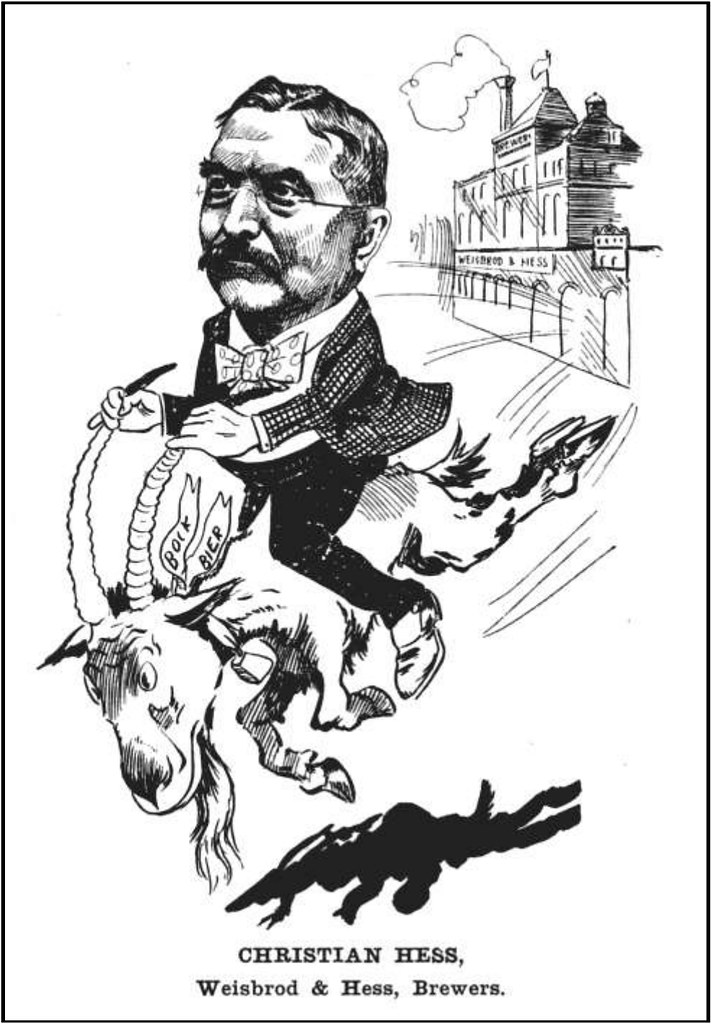
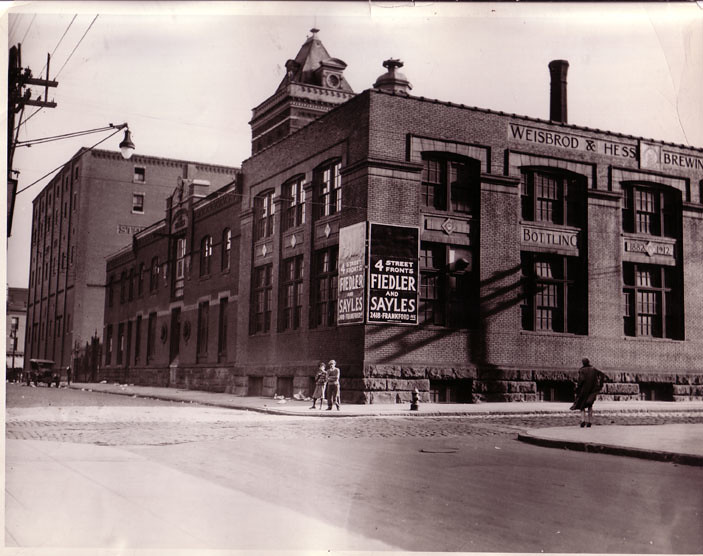
Today is the birthday of George Weisbrod (October 31, 1851-January 1, 1912). Weisbrod was born in Germany, and that’s about all I could find out about the man who co-founded, along with Christian Hess, the George Weisbrod & Christian Hess Brewery, usually shortened to just the Weisbrd & Hess Brewery, and also known as the Oriental Brewery.

george-weisbrod-cartoon

Both Weisbrod and Hess were German immigrants, and originally their intention was simply to make enough beer to supply their Philadelphia saloon on Germantown Avenue. Some sources say they began as early as 1880, but most put the founding at 1882. The brewery was going strong until closed by prohibition. They managed to reopen in 1933, but closed for good in 1938.

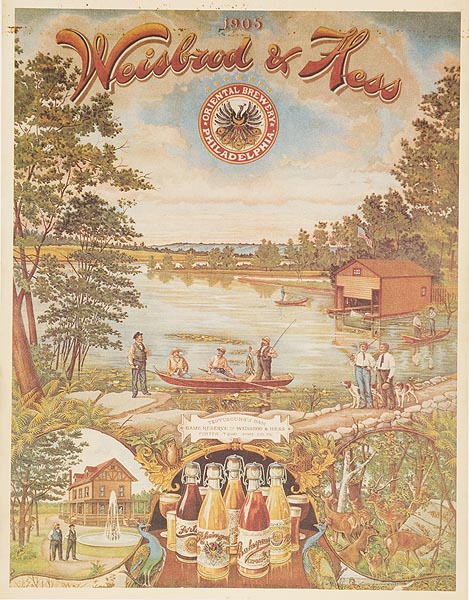
weisbrod-hess-1905
A brewery poster from 1905.
In 1994, Yards Brewing renovated the old Weisbrod & Hess Brewery, but after the partners split, it became the Philadelphia Brewing Co., while Yards under the direction of Tom Kehoe moved to another location.

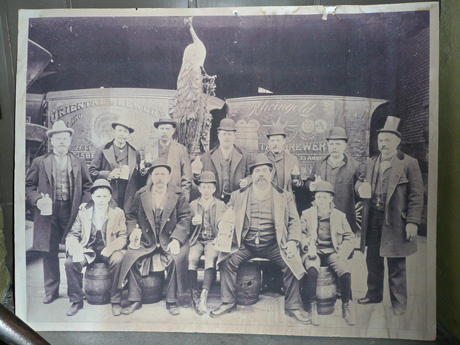
phillybeerwk08-47
In the Philadelphia Brewing Co. tasting room upstairs, an old photo of the employees of the original brewery on the premises, Weisbrod & Hess Oriental Brewing Company.
Both Philadelphia Weekly and Hidden City Philadelphia have stories about the brewery and efforts to re-open it.

weisbrod-hess-1892
The brewery two years closing, in 1940.

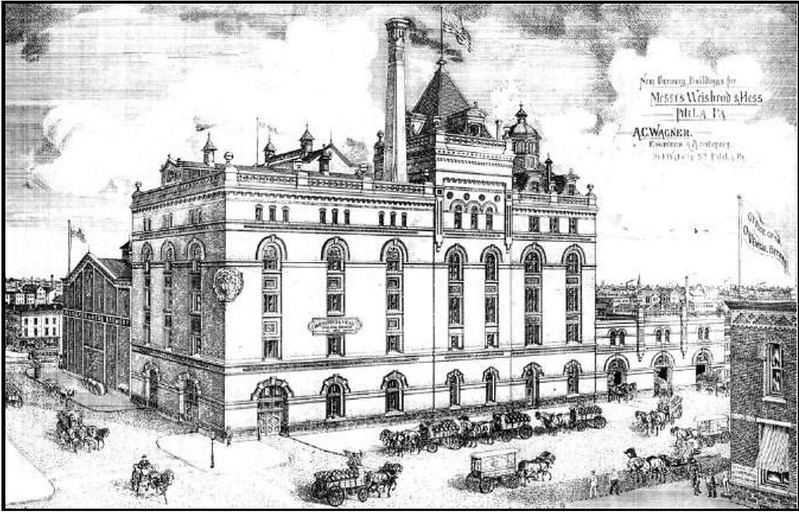
The brewery was designed by famed local architect Adam C. Wagner, and this is an illustration of his design for the brewery from 1892.

W&H-1892

OrientalBreweryPhila1899
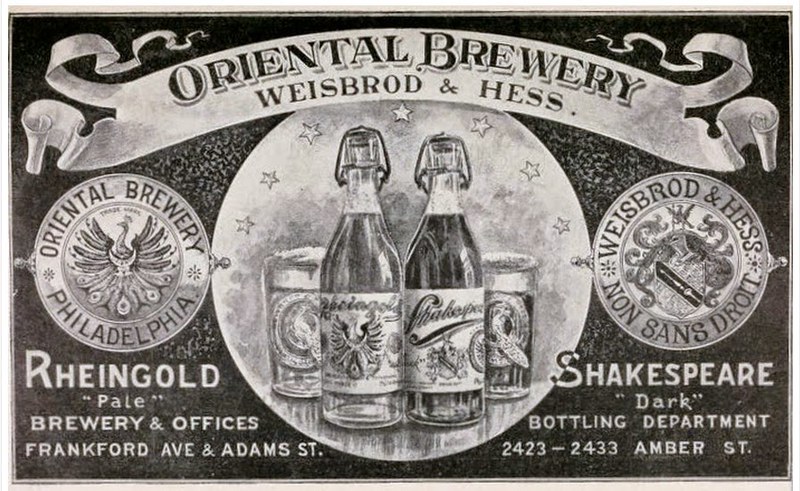
An ad from 1899.

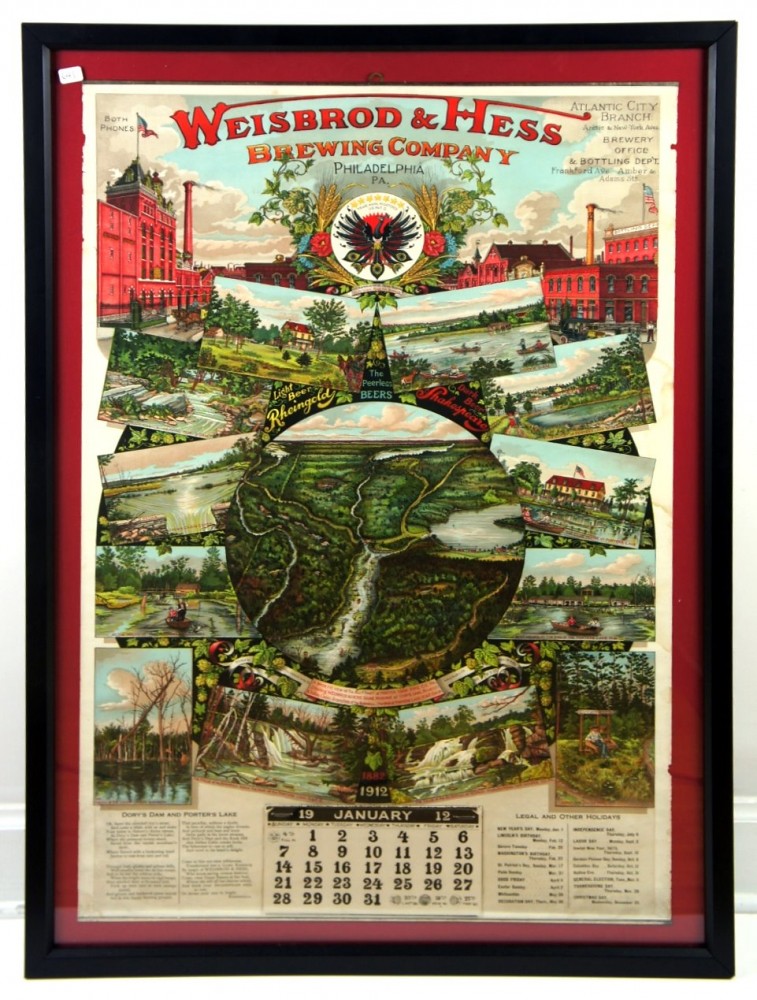
Factory-Scene-1912-calendar-Signs-Pre-Pro-Weisbrod-Hess-Brewing-Co
And a calendar from 1912.

Filed Under: Birthdays, Breweries Tagged With: Germany, History, Pennsylvania, Philadelphia

Beer In Ads #5109: Gretz The Best In Bock Beer

October 22, 2025 By Jay Brooks

Last year I decided to concentrate on Bock ads for awhile. Bock, of course, may have originated in Germany, in the town of Einbeck. Because many 19th century American breweries were founded by German immigrants, they offered a bock at certain times of the year, be it Spring, Easter, Lent, Christmas, or what have you. In a sense they were some of the first seasonal beers. “The style was later adopted in Bavaria by Munich brewers in the 17th century. Due to their Bavarian accent, citizens of Munich pronounced ‘Einbeck’ as ‘ein Bock’ (a billy goat), and thus the beer became known as ‘Bock.’ A goat often appears on bottle labels.” And presumably because they were special releases, many breweries went all out promoting them with beautiful artwork on posters and other advertising.

Wednesday’s poster is for Gretz Bock Beer, which was published around 1951. It was made for the William Gretz Brewing Co. in Philadelphia, Pennsylvania, which was originally founded in 1861 by Albert Schwartz. Unfortunately, we don’t know who the artist was who created this.

Filed Under: Art & Beer, Beers, Breweries, Just For Fun Tagged With: Advertising, Bock, History, Pennsylvania, Philadelphia

Beer In Ads #5105: The 2 To 1 Favorite Of 60 Official Beer Tasters

October 18, 2025 By Jay Brooks

Last year I decided to concentrate on Bock ads for awhile. Bock, of course, may have originated in Germany, in the town of Einbeck. Because many 19th century American breweries were founded by German immigrants, they offered a bock at certain times of the year, be it Spring, Easter, Lent, Christmas, or what have you. In a sense they were some of the first seasonal beers. “The style was later adopted in Bavaria by Munich brewers in the 17th century. Due to their Bavarian accent, citizens of Munich pronounced ‘Einbeck’ as ‘ein Bock’ (a billy goat), and thus the beer became known as ‘Bock.’ A goat often appears on bottle labels.” And presumably because they were special releases, many breweries went all out promoting them with beautiful artwork on posters and other advertising.

Saturday’s ad is for Hornung’s White Bock Beer, which was published on October 18, 1934. This one was for the Jacob Hornung Brewing Co. of Philadelphia, Pennsylvania, which was originally founded in 1885. Not to take away their competition wins, but boy have they been milking their two awards for years. This ad ran in The Philadelphia Inquirer, also from Philadelphia, Pennsylvania.

Filed Under: Art & Beer, Beers, Breweries, Just For Fun Tagged With: Advertising, Bock, History, Pennsylvania, Philadelphia

Historic Beer Birthday: William Penn

October 14, 2025 By Jay Brooks

pennsylvania
Today is the birthday of William Penn (October 14, 1644-July 30, 1718). He “was the son of Sir William Penn, and was an English real estate entrepreneur, philosopher, early Quaker, and founder of the Province of Pennsylvania, the English North American colony and the future Commonwealth of Pennsylvania. He was an early advocate of democracy and religious freedom, notable for his good relations and successful treaties with the Lenape Native Americans. Under his direction, the city of Philadelphia was planned and developed.

In 1681, King Charles II handed over a large piece of his American land holdings to Penn to appease the debts the king owed to Penn’s father. This land included present-day Pennsylvania and Delaware. Penn immediately set sail and took his first step on American soil in New Castle in 1682 after his trans-Atlantic journey. On this occasion, the colonists pledged allegiance to Penn as their new proprietor, and the first general assembly was held in the colony. Afterwards, Penn journeyed up the Delaware River and founded Philadelphia. However, Penn’s Quaker government was not viewed favourably by the Dutch, Swedish, and English settlers in what is now Delaware. They had no “historical” allegiance to Pennsylvania, so they almost immediately began petitioning for their own assembly. In 1704 they achieved their goal when the three southernmost counties of Pennsylvania were permitted to split off and become the new semi-autonomous colony of Lower Delaware. As the most prominent, prosperous and influential “city” in the new colony, New Castle became the capital.

As one of the earlier supporters of colonial unification, Penn wrote and urged for a union of all the English colonies in what was to become the United States of America. The democratic principles that he set forth in the Pennsylvania Frame of Government served as an inspiration for the United States Constitution. As a pacifist Quaker, Penn considered the problems of war and peace deeply. He developed a forward-looking project for a United States of Europe through the creation of a European Assembly made of deputies that could discuss and adjudicate controversies peacefully. He is therefore considered the very first thinker to suggest the creation of a European Parliament.

A man of extreme religious convictions, Penn wrote numerous works in which he exhorted believers to adhere to the spirit of Primitive Christianity. He was imprisoned several times in the Tower of London due to his faith, and his book No Cross, No Crown (1669), which he wrote while in prison, has become a Christian classic.”

william-penn-etching

Of course, that’s his mainstream history, he also made contributions to America’s nascent brewing history. For example, here’s an account, “William Penn And Beermaking in Colonial Pennsylvania,” excerpted from Stanley Baron’s “Brewed in America,” published in 1962:

Pennsylvania and New Jersey were latecomers among the American colonies. True enough, there had been in their development a Swedish period and a Dutch period, but the real establishment of the two colonies had to wait for the time of the English “proprietors.” It was in 1680 that William Penn received his famous grant of land from Charles II, as payment of a debt owed to Penn’s father, the celebrated admiral. By this means Penn became sole proprietor of a colony which he foresaw as a place of refuge for his fellow Quakers — the nonconformist sect whose faith earned them nothing but contempt and persecution in England (as well as in most of the established American colonies). Before he set out in 1682 he sent ahead a government plan of his own devising, and also a number of representatives to map out a city to be called Philadelphia. Penn’s concept of government was extraordinarily liberal, in many respects tantamount to a genuinely democratic scheme; moreover, he guaranteed complete freedom of worship, and delegated much more administrative authority than any other of the colonial governors saw fit to allow.
Penn understood the wisdom of securing friendly relations with the Indians from the start. In 1683, he established a “Great Treaty” with them. In exchange for property rights which they were willing to grant him, he made a practice of giving them a variety of goods — in at least one instance, a barrel of beer.

Shortly after Penn’s arrival, an Assembly was held in Chester, the former Swedish settlement of Upland. At this meeting his Frame of Government was adopted; and there were also laid down certain laws regulating the licensing of taverns, taxing of beer, sale of alcoholic beverages to Indians, etc. Such laws were sooner or later passed in every one of the American colonies and differ only in the merest details.

pennsbury

Penn himself was enough of a beer-drinker to have a brewhouse constructed at the estate he built in Pennsbury, Bucks County, twenty miles upriver from Philadelphia. At a cost of about £7000 and over a period of many years, the manor-house was erected under Penn’s supervision, although he was most of that time back in England. He made a start on the project soon after his arrival in 1682, but he had to return to England in 1684. He commissioned his trusted friend James Harrison as “Steward of the Household at Pennsbury,” and from that date until his return, he wrote frequent letters, filled with details about the house’s specifications, the gardens, the servants, slaves, etc. “I would have a Kitchen,” he wrote from London after he returned there in 1684, “two larders, a wash house & room to iron in, a brew house & in it an oven for bakeing.” During the following two years he felt the need to repeat these instructions, which in time were fulfilled.

Penn was not able to see the results at Pennsbury until 1699. At that time, as things turned out, he remained only a year; thus he spent in all only three years in America. Nonetheless, he made good use of Pennsbury while he was there; “Indians almost every morning were waiting in the hall, seated on their haunches.” Penn also entertained in that house the governors of Maryland and Virginia, as well as what are usually referred to as “visiting dignitaries.” None of Penn’s descendants cared for the house as the proprietor himself had, and it was permitted by sheer neglect to go to ruin. It was finally torn down at the time of the Revolution, but somehow the brewhouse structure managed to survive until 1864. It is described as being 20 by 35 feet, “with solid brick chimney and foundations, 10-inch sills and posts, and weatherboarded with dressed cedar.”

That there was beer in the earliest stages of Philadelphia’s settlement is attested to by the immigrant Thomas Paschall in 1683: “Here is very good Rye . . . also Barly of 2 sorts, as Winter and Summer, . . . also Oats, and 3 sorts of Indian Corne, (two of which sorts they can Malt and make good beer as Barley).”

In a 1685 account of progress in his colony, Penn wrote:

“Our DRINK has been Beer and Punch, made of Rum and Water: Our Beer was mostly made of Molasses, which well boyld, with Sassafras or Pine infused into it, makes very tolerable drink; but now they make Mault, and Mault Drink begins to be common, especially at the Ordinaries and the Houses of the more substantial People. In our great Town there is an able Man, that has set up a large Brew House, in order to furnish the People with good Drink, both there and up and down the River.”

Farther along in the same document, he identified this “able man” as William Frampton, and to demonstrate the first Philadelphia brewer’s prosperity, he added that Frampton had recently built “a good Brick house, by his Brew House and Bake House, and let the other for an Ordinary.” Frampton — Quaker, merchant, provincial councillor and landowner — originally emigrated to New York and did not arrive in Philadelphia until 1683. If he was as prosperous as Penn makes out, he did not enjoy this state for long: he died in 1686.

In those early days of Philadelphia, many inhabitants are said to have owned their own malt-houses in order to make strong beer at home, and Gabriel Thomas stated in his account of the town (as of 1696) that there were three or four “spacious malt-houses, as many large brew-houses.” Thomas, a Welsh pioneer who lived in the colony for fifteen years, also described Philadelphia beer as “equal in strength to that in London,” selling for 15s. the barrel — cheaper than in England. In addition, he speaks of Philadelphia beer as having a “better Name, that is, is in more esteem than English Beer in Barbadoes and is sold for a higher Price there.” This would be an extremely early, if not the first, instance of American beer being exported outside of the mainland, though there is no indication of the regularity or volume of business thus entailed. In the course of the eighteenth century, Philadelphia beer began to make a resounding reputation for itself: the origins of that fame may lie right here, in this remark of Thomas’s comparing the beer favorably with the English product. On the other hand, Thomas’s unbridled enthusiasm must not be discounted — he may very well have been trying to paint the prettiest possible picture of conditions in America, and particularly Pennsylvania.

Another brewer of this earliest Philadelphia period was Joshua Carpenter, whose brother, Samuel, had come over from England several years before Penn’s arrival. Samuel Carpenter, a Quaker, was responsible for building Philadelphia’s first wharf, between Walnut Street and Dock Creek. Joshua, who had followed his brother to Philadelphia some years later and who was himself not a Quaker, did so well out of his brewing enterprise that he was rated as the second richest inhabitant of the town in 1693; his brother was first.

The brewery established by Anthony Morris in 1687, south of Walnut Street, on the riverbank side of Front, was a longer-lasting establishment. Morris (the second of his name) was another Quaker, provincial councillor and second mayor of Philadelphia. He had sailed for America in 1682, and settled first in Burlington, New Jersey. Three years later, however, he went to Philadelphia, and soon set up his brewery there. His son, Anthony, Jr., prepared himself for the business by becoming in 1696 an indentured apprentice to another brewer operating in Philadelphia at that time, Henry Babcock. It was stated in the indenture that he was to spend seven years learning “the art or trade of a Brewer.” He undertook to keep the brewing “secrets” of Babcock and his wife Mary, “& from their service he shall not absent himself, nor the art & mystery of brewing he shall not disclose or discover to any person or persons during ye sd term.” His father paid the Babcocks the sum of twenty pounds, and they undertook not only to teach him for seven years, but also to lodge and board him, and “mending of his linen & woolen cloaths.” They on their side promised not to put him to “slavish work,” such as grinding at the handmill and the like.

It must have been this younger Anthony Morris who signed his name, “Morris junr,” at the bottom of a receipt that read: “Reed of Hannah Ring Eighteen Shillings for barrel Ale delivered for funeral of her husband 7mo 4th 1731.”

The Morris brewery was conducted as a family business, handed down from generation to generation, until 1836, when ownership of the concern was taken over by outsiders. Through marriage with the Perot family of French Huguenot background, however, the Morrises have maintained an unbroken connection with the brewing industry. In 1823 Francis Perot married the daughter of Thomas Morris, in whose brewery he had spent six years as apprentice. With brothers, sons and then grandsons in charge, the Perot family have been malting in Philadelphia ever since.

Pennsylvania had made an encouraging, even a spectacular, beginning. It had grown like a balloon; within twenty years, by the end of the century, its main city had a population equal to that of New York (4000). And yet, after about twenty-five years, it began to bog down. Penn died in 1718, but a good many years before that he had relinquished personal control of the province, while remaining proprietor. Relations with the Indians deteriorated; boundary conflicts, like sores, kept irritating the relations between Pennsylvania and her neighbors; and the fine promise of commercial prosperity had been disappointed. The bold Philadelphia printer, Andrew Bradford, was hauled before the Council in 1721 for publishing a pamphlet called “Some Remedies proposed for the restoring of the Sunk Credit of the Province of Pennsylvania.” He was reprimanded for so-called libelous statements.

Yet at the same time, the Council, under Governor Sir William Keith, passed laws designed to improve just those conditions which it had called untrue in Bradford’s case. Among those was an act “for laying a Duty on Wine, Rum, Brandy and Spirits, Molassoes, Cyder, Hops and Flax, imported, landed or brought into this Province.” The self-evident purpose of an act like this was to give aid to home manufactures and, by placing a duty on imported hops, of course, the Council encouraged Pennsylvania farmers to cultivate them locally. Another reason for this act was undoubtedly the wish to cut down supplies of beverages with high alcoholic content, in favor of beer (which did not appear among the list of dutiable items) — but the barn door may have been closed too late, for by the eighteenth century rum was universally available in America, and increasingly popular. Acts of the same kind were passed at intervals by the Provincial Council — in 1738, 1744, etc. — but they appear to have been less than wholly effectual.

Painting-of-William-Penn

And this short history is from the online Museum of Beer and Brewing:

The William Penn Brewery — the staid Quaker build one of the earliest breweries in America near what is now Philadelphia. Part of his lands were colonized by immigrants from the German Palatinate who found Penn’s Product, prepared under the supervision of a Master Brewer from Europe, highly palatable. The first brewery in America was built in New Amsterdam (now New York) in the 17th century about 30 years before Penn’s.

17th-Century-William-Penn-Brewery
The illustration for William Penn’s Brewery from the Museum of Beer and Brewing.

And this is the labels from a beer created to honor William Penn by the now-defunct (I believe) William Penn Brewing Co., which appears to have been a contract beer.

williampenntabletent1
williampenntabletent2

Filed Under: Birthdays, Just For Fun, Politics & Law Tagged With: England, Great Britain, History, Pennsylvania, Philadelphia

Beer Birthday: Megan Parisi

October 13, 2025 By Jay Brooks

Today is the birthday of Megan Parisi, who’s currently a brewer for the Boston Beer Company. Before that she brewed at Wormtown Brewery, Bluejacket and Cambridge Brewing. And coincidentally, we both once played clarinet in a military band, Megan for the US Navy, whereas I was in an Army band. Megan’s a terrific brewer and a great addition to the Samuel Adams Brewery in Boston. Join me in wishing Megan a very happy birthday.

John Harris, from Ecliptic Brewing, Megan, and John Holl, from All About Beer magazine at the GABF judges’ reception at Epic Brewing in 2015.
Me and Megan at CBC when it was in Minneapolis.
megan-parisi-boston
Megan at her new job at the Samuel Adams brewery in Boston a few Julys ago when I was there judging the finals for the Longshot Homebrew Competition.
Will Meyers, with Kevin & Megan, from Cambridge Brewing
Will Meyers (whose birthday is also today) and Kevin both from Cambridge Brewing with Megan, then also with Cambridge, at GABF in 2009.
Legend & Bluejacket
During CBC in Washington, D.C. in 2013. Bobby Bump: assistant brewer, at Bluejacket, Megan, when she was lead brewer at Bluejacket and John Wampler, brewmaster at Legend Brewing in Richmond, Virginia. [Photo by Thomas Cizauskas.]

Filed Under: Birthdays, Just For Fun Tagged With: Massachusetts, Music, Pennsylvania, Philadelphia

Beer In Ads #5097: Hornung’s White Bock Beer Wins!

October 5, 2025 By Jay Brooks

Last year I decided to concentrate on Bock ads. Bock, of course, may have originated in Germany, in the town of Einbeck. Because many 19th century American breweries were founded by German immigrants, they offered a bock at certain times of the year, be it Spring, Easter, Lent, Christmas, or what have you. In a sense they were some of the first seasonal beers. “The style was later adopted in Bavaria by Munich brewers in the 17th century. Due to their Bavarian accent, citizens of Munich pronounced ‘Einbeck’ as ‘ein Bock’ (a billy goat), and thus the beer became known as ‘Bock.’ A goat often appears on bottle labels.” And presumably because they were special releases, many breweries went all out promoting them with beautiful artwork on posters and other advertising.

Sunday’s ad is for Hornung’s White Bock Beer, which was published on October 5, 1934. This one was for the Jacob Hornung Brewing Co. of Philadelphia, Pennsylvania, which was originally founded in 1885. This ad ran in The Press of Atlantic City, from Atlantic City, New Jersey. I’ve shared more ads for this beer, and a few where they were crowing about their victories in two beer competitions, one in 1912 and, apparently, this one in 1934.

Filed Under: Art & Beer, Beers, Breweries, Just For Fun Tagged With: Advertising, Bock, History, New Jersey, Pennsylvania, Philadelphia

Historic Beer Birthday: John F. Betz Jr.

September 1, 2025 By Jay Brooks

betz-pa
Today is the birthday of John F. Betz Jr. (September 1, 1856-April 8, 1910). He was born in Pennsylvania, the son of John F. Betz, who in 1867 bought what was the Robert Hare & J. Warren Porter Brewery when it opened in 1775, but was the William Gaul Brewery when Betz acquited it, but Betz changed it to the John F. Betz Brewery. When John Jr. joined his father in the business in 1880, they changed the name to the John F. Betz & Son Brewery. The brewery survived prohibition, but closed for good in 1939.

Here’s his obituary from the American Brewers’ Review:

John-F.-Betz-Sons-Brewery
The Betz brewery in Philadelphia.

This much longer account is from “Philadelphia and Popular Philadelphians,” published in 1891. It’s mostly about Junior’s father, but he is mentioned in the course of the article:

Betz-Brewery-pa
The Philadelphia brewery.

I’m not sure if this was a newspaper advertisement or some very favorable coverage, but this was a page from The Times—Philadelphia on May 28, 1893. But in the right-hand corner is where I discovered the only image of John F. Betz Jr. that I could find.

Filed Under: Birthdays, Breweries, Just For Fun Tagged With: History, Pennsylvania, Philadelphia

Beer Birthday: Jennie Hatton Baver

August 12, 2025 By Jay Brooks

dogfish-head-green philly-beer
Today is the 54th birthday of Jennie Hatton, now Jennie Hatton Baver, who did P.R. for Philly Beer Week and several craft breweries in the tri-state area for a number of years. She cut her teeth working for Tom Peters at Monk’s Cafe. Jennie and her business partner Claire Pelino are responsible for many, many beer books being published as literary agents to a number of beer writers, including yours truly. Also, Jennie is one of my favorite people in the industry and she’s so much fun to be around that people refer to her as “The Wonderful Jennie Hatton.” Also, few people love tater tots like I do, and she’s one of them. That’s enough for me. More recently, she’s been the Marketing Director for Dogfish Head. Join me in wishing Jennie a very happy birthday.

Jennie and me on the floor at GABF in 2008.
Everyone wanted their picture taken with the Hammer, and Jennie was only too happy to oblige
Jennie wielding the Hammer of Glory during this last year’s Philly Beer Week.
Jennie Hatton and the Reverend
Jennie and the Reverend Kirk T. Berlenbach, Rector of Saint Timothy’s Episcopal Church, at the Sam, Tomme & Old Beer event at Nodding Head Brewing during Philly Beer Week.
Jennie w/tots & a dog at North Lanes Lounge
Jennie with some of the best tater tots ever, at North Lanes Lounge in Philly.

Filed Under: Birthdays Tagged With: Pennsylvania, Philadelphia

« Previous Page
Next Page »

Find Something

Northern California Breweries

Please consider purchasing my latest book, California Breweries North, available from Amazon, or ask for it at your local bookstore.

Recent Comments

  • Ernie Dewing on Historic Beer Birthday: Charles William Bergner 
  • Steve 'Pudgy' De Rose on Historic Beer Birthday: Jacob Schmidt
  • Jay Brooks on Beer Birthday: Bill Owens
  • Steve 'Pudgy' De Rose on Beer Birthday: Charles Finkel
  • Steve 'Pudgy' De Rose on Beer Birthday: Bill Owens

Recent Posts

  • Historic Beer Birthday: Henry C. Haefner Jr. February 13, 2026
  • Beer Birthday: Bruce Joseph February 13, 2026
  • Beer In Ads #5200: Now Is The Time To Enjoy … Stroh’s Bock Beer February 12, 2026
  • Historic Beer Birthday: Adolph Schell February 12, 2026
  • Beer Birthday: Jennifer Talley February 12, 2026

BBB Archives

Feedback

Head Quarter
This site is hosted and maintained by H25Q.dev. Any questions or comments for the webmaster can be directed here.