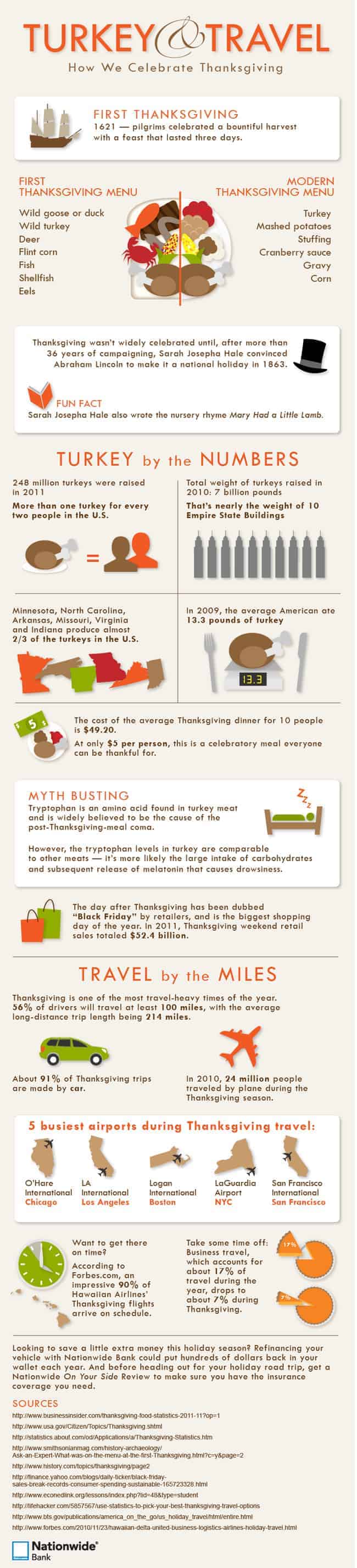
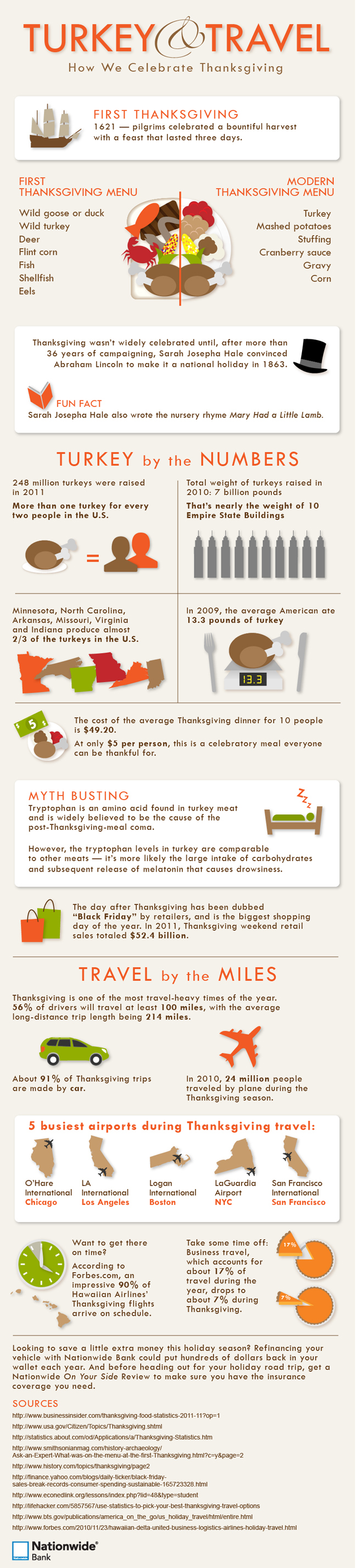
Today’s bonus infographic is all about the holiday, entitled Turkey & Travel: How We Celebrate Thanksgiving. It was created by Nationwide Bank, and shows a number of factoids about Thanksgiving, including a comparison of what was served at the first one compared to our modern meals.
Beer At The Thanksgiving Table

Thirty years ago, in November 1983, Michael Jackson wrote an article for the Washington Post entitled “Beer at the Thanksgiving Table.” It was subtitled “Wine is acceptable for this annual feast, but what if you prefer beer?” It was apparently one of his first pieces on the topic of pairing beer and food.
The article contains one of my favorite quotes by Michael:
To give thanks is a matter of joy; should that be confined by excessive sobriety? Better still, Thanksgiving is an annual opportunity to refresh old friendships and make new ones, in which matter both the ritual and effect of a shared glass is the best tie.
When you consider this was written when Sierra Nevada was still a very small brewery, New Albion had just closed and Mendocino Brewing had only been founded the same year, it’s a remarkable time piece. Nobody was even thinking about pairing beer with food yet. Now we take it for granted. But back then most people still needed convincing. This is great reminder of how far we’ve come and how much of debt of thanks we owe to Michael.
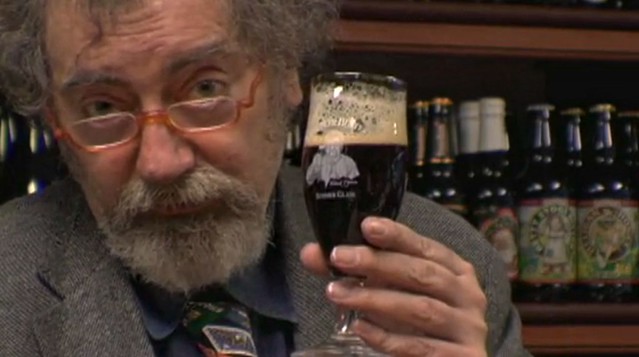
Here’s Michael’s suggested general pairing suggestions from thirty years ago:
As an aperitif: Dry, hoppy beers with some bitterness. Try New Amsterdam (from New York) or Anchor Steam (San Francisco).
With fish: Pilsners. Almost all of the well-known American beers are loosely of this style. So are the best-known imported brands, like Heineken and Carlsberg. Czech and German Pilsners tend to be drier, and therefore go especially well with the more oily varieties of fish.
Shellfish: Dry stouts or porters.
Smoked meats, sausages: If you can find it, the smoked Rauchbier of Bamberg, Germany. Or a German altbier or weizenbeier.
Pasta: The less spicy pasta dishes of Northern Italy go quite well with the Munich Dark type of beer. It is, after all, commonly served with the admittedly-heavier noodle dishes of Germany.
Fowl: Munich Light with turkey; perhaps the slightly less sweet Dortmunder style might go better with chicken.
Red Meat: English Pale Ale.
Game: Scottish ale, which is heavier.
But take the time to go back and read the entire article. And give thanks that nobody looks at you funny when you bring beer to the Thanksgiving meal. As is my personal tradition, I’m enjoying some Anchor Christmas Ale with my meal, something I’ve been doing for roughly twenty-five years. Happy Thanksgiving.
What Should I Bring To Thanksgiving?

Today’s infographic is a flowchart to help people answer the question “What Should I Bring To Thanksgiving?” It was created by someone at Chow. But you’d better hope you’re going to a dinner at a casual friend’s house, because that’s the only way you’re getting a decent beer, or at least “bombers of Dogfish Head ALe, whatever that is.

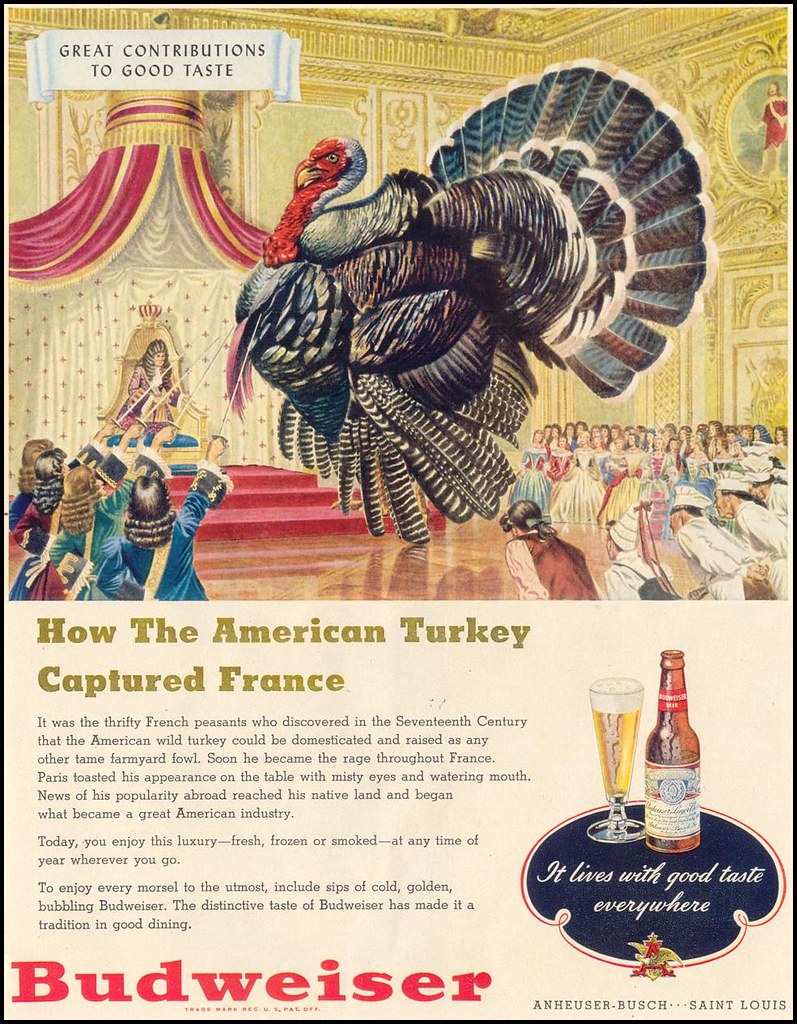
Beer In Ads #1029: How The American Turkey Captured France

Wednesday’s ad is for Budweiser, from November 1948. Part of their “Great Contributions to Good Taste” series, according to the story, it was poor French peasants who discovered that turkeys could be raised and eaten and they became wildly popular there, when news travelled back to the colonies and the rest, as they say, is history. Happy Thanksgiving tomorrow,
Beer-Fed Turkeys Taste Better
An AP story, Farmer says beer for birds improves flavor, claims that at least one farmer believes that’s the case. According to the AP article, Joe Morette of New Hampshire started giving his turkeys beer in 1993, when on a hot July day, “[a] turkey knocked one over and started drinking and they’ve been sipping the suds ever since.” He continues. “Morette, who prefers serving the turkeys lager, insists the beer makes birds fatter, more flavorful and juicier.” Peta is reportedly against this and stated “turkeys shouldn’t be fed beer and ‘farmers across the country use questionable practices to keep costs down or to alter the taste of animals’ flesh because their priority is profit, not the animals’ welfare.'” As far as I ‘m concerned that’s reason enough it’s a good idea.
Happily, cooler heads prevailed. “[A] poultry expert with the University of New Hampshire Cooperative Extension said it is unlikely that the birds are suffering. ‘I don’t know exactly how much beer each turkey is consuming, but it would have to be a lot in order for it to kind of have the same effect as too much beer on people,’ said Carl Majewski, a field specialist in food and agriculture.”

It could even be good for them.
Kathi Brock, national director of Humane Heartland, which oversees the treatment of farm animals, said that standards from the American Humane Association don’t prohibit serving beer to animals. “I consulted with an avian veterinarian who said that while giving beer to turkeys is not a standard protocol, hops could be beneficial for the intestinal tract,” Brock said.
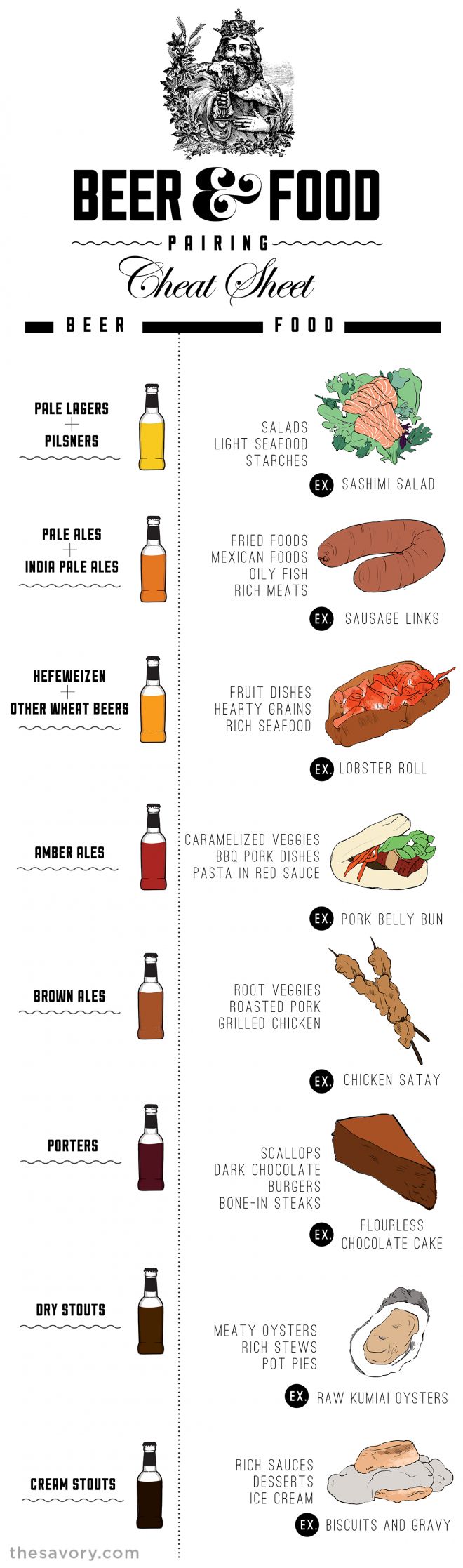
Beer & Food Pairing Cheat Sheet

Today’s infographic is entitled the Beer & Food Cheat Sheet, and was created by The Savory. It shows eight basic kinds of beer and makes some suggestions of three or four basic foods that they think pairs with each, along with some additional tips below the infographic.
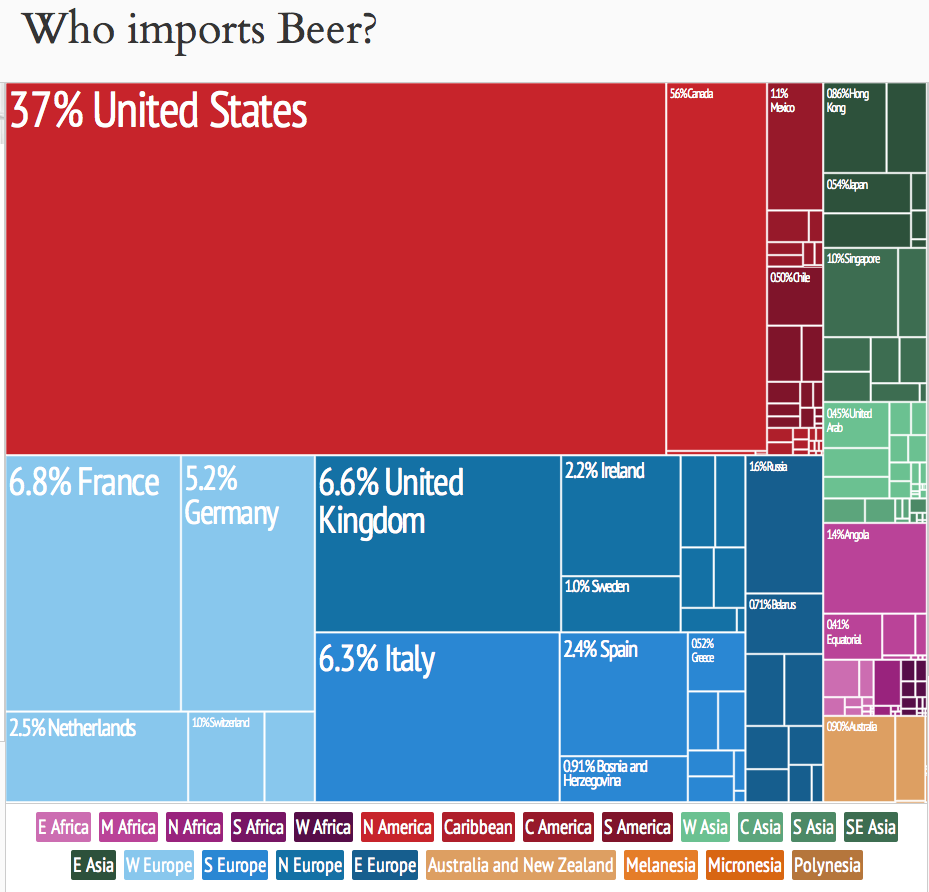
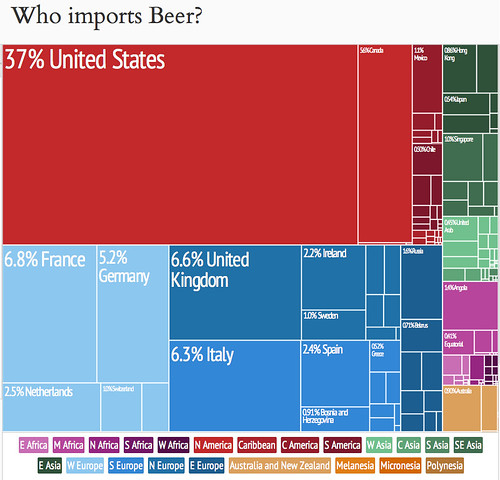
Who Imports Beer?

Today’s infographic is an interesting treemap created by the Observatory of Economic Complexity, a collaboration between M.I.T. and Harvard. This one shows the amount of beer imported by the nations of the world, with the size of their relative amount of importing shown by the size of the rectangle.
Dinner In The Beer Garden: A New Cookbook Needs Your Support

My good friend Lucy Saunders, the beer cook, has a new cookbook on beer and food, Dinner In The Beer Garden, that’s she hoping to publish through Kickstarter. Like everything she does, it looks awesome. For as little as $15, you can get a copy of it as an e-book, and for a mere $25, you can be one of the very first on planet beer to put her recipes to the test with your favorite beers, using your own paperback copy of the book. For higher pledges, there’s even more cool stuff you can get, like t-shirts, signed copies, hoodies, and for the Pièce de résistance pledge, she’ll come and cook five of the recipes in the book for you and 12 guests.
[The book itself is] about pairing craft beer with plant-based recipes, enjoyed outdoors in gardens and other social spaces. This isn’t about traditional biergarten food like ham hocks and bratwurst. It’s a cookbook for people who like carrots and kale — as well as butter, fish, cheese and chocolate! Profiles of gorgeous brewery gardens, a chapter on the history and design of beer gardens, and juicy color photographs of recipes turn the book into a tasty read. Recipes are both original and contributed by home cooks and chefs in the craft brewing community.
Most of the hard work is already done; most of the recipes have been created and tested, photographs taken, and discussions with the printer — one she’s used for previous projects — have begun. All she needs is a little help from her friends to make her new cookbook appear in all of our hands, and the recipes inside filling our stomachs with deliciousness. If you love great food and beer, please consider pledging to become a backer of Lucy’s book at whatever level you feel comfortable.
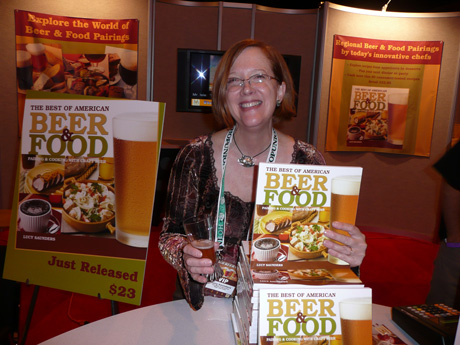
Lucy showing off one of her other cookbooks, “The Best of American Beer & Food” during GABF in 2007.
Craft Beer Vs. Red Wine: An (Infographic) Battle For The Ages

Today’s infographic is “A Battle For The Ages,” at least regarding “Craft Beer Vs. Red Wine.” It’s peppered with factoids and quotes along it’s path of deciding the question.

Click here to see the battle royale full size.
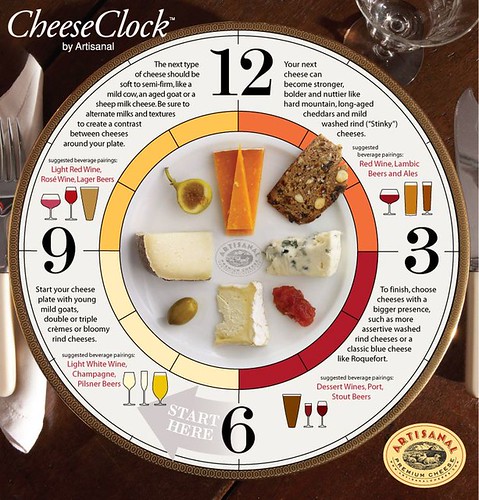
Cheese Clock Plate And Pairings

Today’s infographic is a chart for pairing cheese with beer, and other alcohol, put together by Artisanal Premium Cheese, with four basic kinds of cheese and some general suggestions. Offhand, their suggestions actually aren’t that sound. If there’s anything I’ve learned about pairing cheese and beer, it’s that you can’t really make generalities. They also have a plate and pairings page that attempts to provide more information, but even that seems woefully simplistic. But at least they’re acknowledging that beer and cheese can be paired.