Brookston Beer Bulletin

Jay R. Brooks on Beer

  • Home
  • About
  • Editorial
  • Birthdays
  • Art & Beer

Socialize

  • Dribbble
  • Email
  • Facebook
  • Flickr
  • GitHub
  • Instagram
  • LinkedIn
  • Pinterest
  • RSS
  • Twitter
  • YouTube

Powered by Genesis

Beer In Ads #5136: American Bock Beer Is Being Served Today!

February 28, 2026 By Jay Brooks

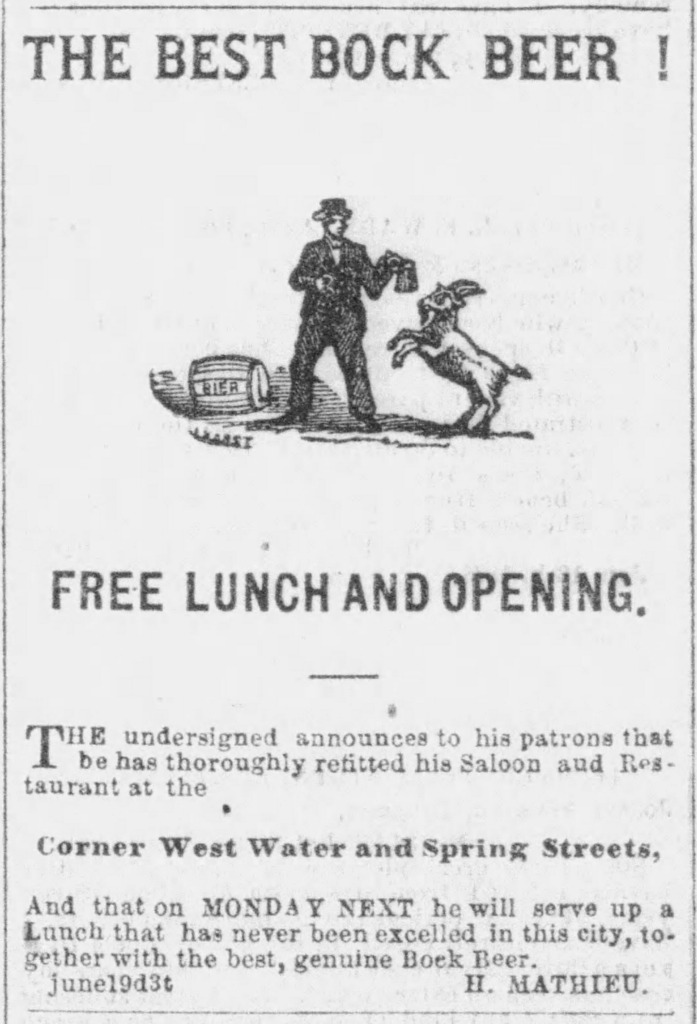
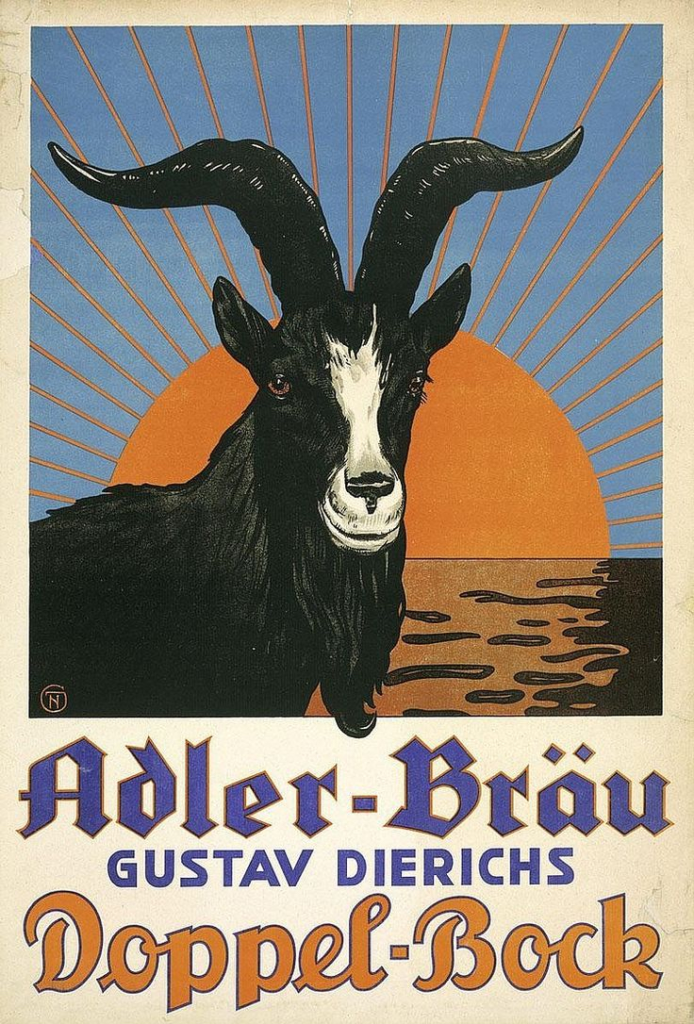
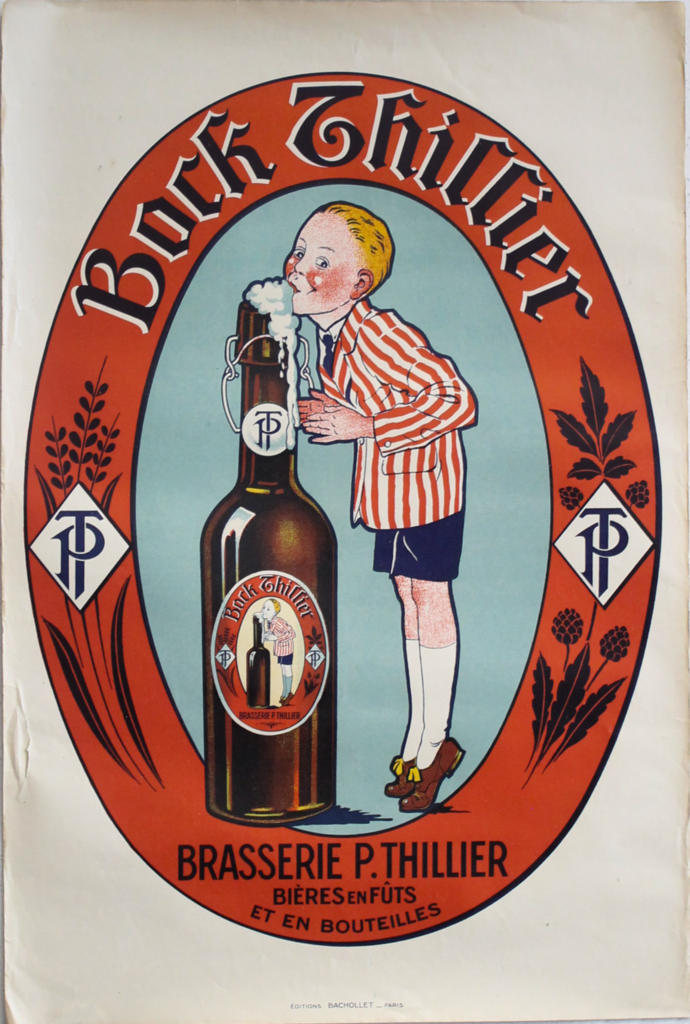
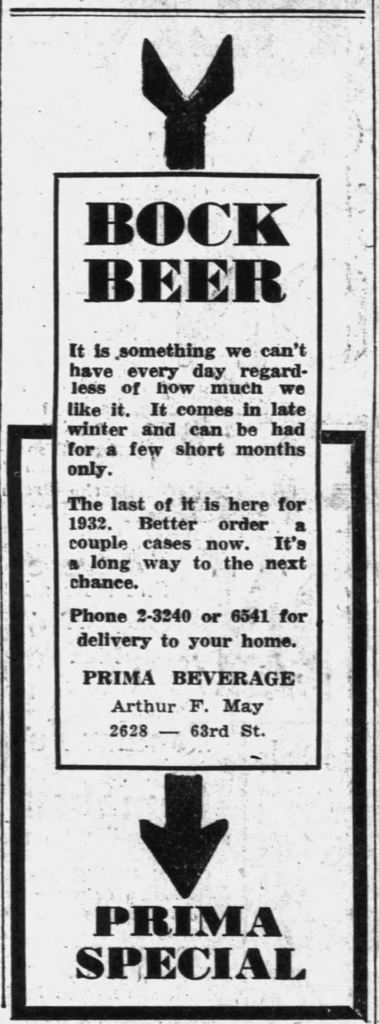
Two years ago I decided to concentrate on Bock ads for awhile. Bock, of course, may have originated in Germany, in the town of Einbeck. Because many 19th century American breweries were founded by German immigrants, they offered a bock at certain times of the year, be it Spring, Easter, Lent, Christmas, or what have you. In a sense they were some of the first seasonal beers. “The style was later adopted in Bavaria by Munich brewers in the 17th century. Due to their Bavarian accent, citizens of Munich pronounced ‘Einbeck’ as ‘ein Bock’ (a billy goat), and thus the beer became known as ‘Bock.’ A goat often appears on bottle labels.” And presumably because they were special releases, many breweries went all out promoting them with beautiful artwork on posters and other advertising. With Spring approaching, there are so many great examples that I’m going to post two a day for a few months.

Saturday’s first ad is for American Bock Beer, which was published on February 28, 1951. This one was for the American Brewery Inc. of Baltimore, Maryland and was founded in 1863 by Joseph F. Wiessner. This ad ran in The Evening Sun, of Baltimore, Maryland.

Filed Under: Art & Beer, Beers, Breweries, Just For Fun Tagged With: Advertising, Bock, History, Maryland

Beer In Ads #5135: What Record’s Bock Beer Is

February 27, 2026 By Jay Brooks

Two years ago I decided to concentrate on Bock ads for awhile. Bock, of course, may have originated in Germany, in the town of Einbeck. Because many 19th century American breweries were founded by German immigrants, they offered a bock at certain times of the year, be it Spring, Easter, Lent, Christmas, or what have you. In a sense they were some of the first seasonal beers. “The style was later adopted in Bavaria by Munich brewers in the 17th century. Due to their Bavarian accent, citizens of Munich pronounced ‘Einbeck’ as ‘ein Bock’ (a billy goat), and thus the beer became known as ‘Bock.’ A goat often appears on bottle labels.” And presumably because they were special releases, many breweries went all out promoting them with beautiful artwork on posters and other advertising. With Spring approaching, there are so many great examples that I’m going to post two a day for a few months.

Friday’s second ad is for Bushkill Bock Beer, which was published on February 27, 1912. This one was for Record Brewing Co. of Elmira, New York and was founded in 1902. This ad ran in The Elmira Star Gazette, of Elmira, New York.

Filed Under: Art & Beer, Beers, Breweries, Just For Fun Tagged With: Advertising, Bock, History, New York

Beer In Ads #5134: Lord Bushkill On Bushkill Bock

February 27, 2026 By Jay Brooks

Two years ago I decided to concentrate on Bock ads for awhile. Bock, of course, may have originated in Germany, in the town of Einbeck. Because many 19th century American breweries were founded by German immigrants, they offered a bock at certain times of the year, be it Spring, Easter, Lent, Christmas, or what have you. In a sense they were some of the first seasonal beers. “The style was later adopted in Bavaria by Munich brewers in the 17th century. Due to their Bavarian accent, citizens of Munich pronounced ‘Einbeck’ as ‘ein Bock’ (a billy goat), and thus the beer became known as ‘Bock.’ A goat often appears on bottle labels.” And presumably because they were special releases, many breweries went all out promoting them with beautiful artwork on posters and other advertising. With Spring approaching, there are so many great examples that I’m going to post two a day for a few months.

Friday’s first ad is for Bushkill Bock Beer, which was published on February 27, 1936. This one was for Bushkill Products Co. of Easton, Pennsylvania and was founded in 1848 or 1849 by Xavier Veile. They’re advertising in Florida as “Bushkill Beer and Ale: Fine Old Pennsylvania Brew.” This ad ran in The Miami Herald, of Miami, Florida. It’s essentially a cartoon for their Bock beer, signed by “Tyler.”

Filed Under: Art & Beer, Beers, Breweries, Just For Fun Tagged With: Advertising, Bock, Cartoons, Comics, Florida, History, Pennsylvania

Beer In Ads #5133: Going… Going… SB Bock

February 26, 2026 By Jay Brooks

Two years ago I decided to concentrate on Bock ads for awhile. Bock, of course, may have originated in Germany, in the town of Einbeck. Because many 19th century American breweries were founded by German immigrants, they offered a bock at certain times of the year, be it Spring, Easter, Lent, Christmas, or what have you. In a sense they were some of the first seasonal beers. “The style was later adopted in Bavaria by Munich brewers in the 17th century. Due to their Bavarian accent, citizens of Munich pronounced ‘Einbeck’ as ‘ein Bock’ (a billy goat), and thus the beer became known as ‘Bock.’ A goat often appears on bottle labels.” And presumably because they were special releases, many breweries went all out promoting them with beautiful artwork on posters and other advertising. With Spring approaching, there are so many great examples that I’m going to post two a day for a few months.

Thursday’s second ad is for SB Bock Beer, which was published on February 26, 1952. This one was for Southern Brewing Co., of Tampa, Florida and was founded in 1934 by August Schell. This ad ran in The Tampa Times, also of Tampa, Florida.

Filed Under: Art & Beer, Beers, Breweries, Just For Fun Tagged With: Advertising, Bock, Florida, History

Beer In Ads #5132: Grain Belt Bock Beer

February 26, 2026 By Jay Brooks

Two years ago I decided to concentrate on Bock ads for awhile. Bock, of course, may have originated in Germany, in the town of Einbeck. Because many 19th century American breweries were founded by German immigrants, they offered a bock at certain times of the year, be it Spring, Easter, Lent, Christmas, or what have you. In a sense they were some of the first seasonal beers. “The style was later adopted in Bavaria by Munich brewers in the 17th century. Due to their Bavarian accent, citizens of Munich pronounced ‘Einbeck’ as ‘ein Bock’ (a billy goat), and thus the beer became known as ‘Bock.’ A goat often appears on bottle labels.” And presumably because they were special releases, many breweries went all out promoting them with beautiful artwork on posters and other advertising. With Spring approaching, there are so many great examples that I’m going to post two a day for a few months.

Thursday’s first ad is for Grain Belt Bock Beer, which was published on February 26, 1914. This one was for August Schell Brewing Co., of New Ulm, Minnesota and was founded in 1860 by August Schell. This ad ran in The Sauk Centre Herald, of Sauk Centre, Minnesota.

Filed Under: Art & Beer, Beers, Birthdays, Just For Fun Tagged With: Advertising, Bock, History, Minnesota

The Bock Beer Pig?

February 26, 2026 By Jay Brooks

Many regular readers of the Brookston Beer Bulletin will be aware that I’ve been pretty far down the rabbit hole of Bock Beer for the last couple of years. Most days, beyond posting ads featuring Bock beer, I also share what I call Bock oddities from the past, often cartoons, little news items or what have you. I’ve also found numerous origin stories for Bock, some the usual story, but some quite fanciful and unique. Taken as a whole, these all showcase how Bock used to be a much larger part of the national consciousness and something society as a whole was very aware of, so much so that it was considered as much a sign of spring as seeing the first robin. Today, I’d argue most people who aren’t beer people — let’s call them normal — don’t really know much about Bock beer. Maybe they’ve heard the term, were aware goats are somehow involved, but probably not much more beyond that.

But the Bock oddity I found today is perhaps the strangest I’ve found so far, and deserves a bit more explanation and analysis. This one is a story entitled “Bock Beer Centuries Old: First Used By Egyptians,” and was published in the Evansville (Indiana) Courier and Press on February 26, 1940. In it, not only do “officials” from the local Sterling Brewers, Inc. suggest that Egyptian brewers were making Bock at least as early 400 B.C.E., but claim that that the beer was not originally associated with a goat, but a pig! Let that sink in. Imagine all of the Bock beer signs with pigs instead of goats. That would be odd, indeed.

No author is given, though given that the local brewery is interviewed for it, it was probably a local reporter who took the breweries fanciful story uncritically and passed it along to their readers unchecked. It’s the only mention of pigs being associated with Bock beer I could find anywhere, not just in ancient Egypt. Here’s the full article:

There’s certainly a lot to unpack there. The article is reprinted two days later in the same newspaper, but that’s it. No mention of it later. In fact, I couldn’t find any additional references to the ideas in it either, which I suppose isn’t surprising since it’s so out of left field.

I checked advertising for Sterling Bock, since they’re the originators of the story, to see if they made any further mention of it, but all their ads around this time employ the more traditional goat to advertise Sterling Bock.

1950.
1934.

But what about Egyptian Bock? Certainly some Egyptian beer was dark in color, but that’s about all we can say, I think. You may recall I found this reference to Bock beer in Egypt from 1944. It was notable because in the caption they suggest that the ancient image shows a goat which they claim “research experts of the brewing industry believe that this, in a way, was the first advertisement for bock beer.” Understandably, no individual was willing to put their name on that conclusion, so we don’t know who this research expert(s) of the brewing industry was.

Here’s the whole 1944 article from the Oregonian:

As for pigs in beer, those we can find aplenty, but rarely if ever associated with Bock beer.

For example, there’s this Shiner pig, though it’s for Shiner beers, not Shiner Bock.

And here’s an older label for a Dunkler Bock that features a wild boar.

So this is certainly an amusing anecdote, and without a doubt one of the odder stories about Bock’s origins I’ve come across. I suppose some brewery could make a bacon-infused Bock and then we’d really be heading in the right (or wrong) direction.

Filed Under: Beers

Beer In Ads #5131: Now! Extra Rich And Satisfying! Esslinger’s Bock Beer

February 25, 2026 By Jay Brooks

Two years ago I decided to concentrate on Bock ads for awhile. Bock, of course, may have originated in Germany, in the town of Einbeck. Because many 19th century American breweries were founded by German immigrants, they offered a bock at certain times of the year, be it Spring, Easter, Lent, Christmas, or what have you. In a sense they were some of the first seasonal beers. “The style was later adopted in Bavaria by Munich brewers in the 17th century. Due to their Bavarian accent, citizens of Munich pronounced ‘Einbeck’ as ‘ein Bock’ (a billy goat), and thus the beer became known as ‘Bock.’ A goat often appears on bottle labels.” And presumably because they were special releases, many breweries went all out promoting them with beautiful artwork on posters and other advertising. With Spring approaching, there are so many great examples that I’m going to post two a day for a few months.

Wednesday’s second ad is for Esslinger’s Bock Beer, which was published on February 25, 1938. This one was for Esslinger Brewing Co., of Philadelphia, Pennsylvania and was founded in 1868 by George Esslinger. This ad ran in The Press of Atlantic City, also of Atlantic City, New Jersey.

Filed Under: Beers

Beer In Ads #5130: Pearl Bock Is Back!

February 25, 2026 By Jay Brooks

Two years ago I decided to concentrate on Bock ads for awhile. Bock, of course, may have originated in Germany, in the town of Einbeck. Because many 19th century American breweries were founded by German immigrants, they offered a bock at certain times of the year, be it Spring, Easter, Lent, Christmas, or what have you. In a sense they were some of the first seasonal beers. “The style was later adopted in Bavaria by Munich brewers in the 17th century. Due to their Bavarian accent, citizens of Munich pronounced ‘Einbeck’ as ‘ein Bock’ (a billy goat), and thus the beer became known as ‘Bock.’ A goat often appears on bottle labels.” And presumably because they were special releases, many breweries went all out promoting them with beautiful artwork on posters and other advertising. With Spring approaching, there are so many great examples that I’m going to post two a day for a few months.

Wednesday’s first ad is for Pearl Bock Beer, which was published on February 25, 1966. This one was for Pearl Brewing Co., of San Antonio, Texas and was founded in 1883. This ad ran in The San Antonio Express News, also of San Antonio, Texas.

Filed Under: Art & Beer, Beers, Breweries, Just For Fun Tagged With: Advertising, Bock, History, Texas

Historic Beer Birthday: Emma Bentzen Koehler

February 25, 2026 By Jay Brooks

Today is the birthday of Emma Bentzen Koehler (February 25, 1858-April 26, 1943). She was born in St. Louis, Missouri, and in 1882 she married Otto Koehler. He was a brewer at the Lone Star Brewery and in 1902 took over the San Antonio Brewing Association, which became known as the Pearl Brewery. When he was murdered in 1914, she took over running the brewery, and all of her husband’s real estate holdings and other businesses. She managed to keep them solvent through prohibition and continued to run it successfully until she retired shortly before the outbreak of World War 2. She continued to advise on major deals concerning the business and eventually her nephew, who had been named for her husband, another Otto Koehler, was chosen by the board as her successor.

This short biography is from her Find-a-Grave page:

Wife of Otto Koehler, owner and operator of the San Antonio Brewing Association later known as the Pearl Brewery. After Otto’s death in 1914, Emma took control of Otto’s extensive business and real estate holdings. She deeded what is now known as Koehler Park to the citizens of San Antonio, Texas on December 24, 1914. The park is now 100 years old. She saw the brewery through prohibition and with help from B. B. McGimsey, kept the doors open selling mostly dairy products.

Emma Koehler with general manager B. B. McGimsey watch the first bottling of XXX Pearl beer after the federal government ended national prohibition in 1933.

This is the portion of the Pearl Brewery’s Wikipedia page that discusses Emma Koehler.

In 1902, Otto Koehler took the helm of the brewery, leaving his position as manager at the Lone Star Brewing Company to become president and manager of the San Antonio Brewing Association. Under Otto’s leadership, the brewery set strategic plans to grow in physical size and beer output in motion. The San Antonio Brewing Association went from a microbrewery that produced enough output for residents and businesses to a strong competitor to the much larger Lone Star Brewing Company. Koehler was one of the first residents to build in the newly opened Laurel Heights section of San Antonio. The hill on which Koehler built his home, now known as the Koehler Cultural Center, provided a clear view of the city skyline and, of course, included an unobstructed view of the San Antonio Brewing Association’s City Brewery. Legend has it that by sitting on his porch, Koehler could determine whether his employees were hard at work by the smoke color rising from the brewery’s stacks.

In 1902, Koehler purchased the property to re-open the since-closed Hot Wells hotel, spa, and bathhouse on the San Antonio River on the south side of San Antonio.

After Koehler’s death, his wife, Emma, succeeded him as the chief executive. Under Emma Koehler’s direction, many of her husband’s strategic plans were either started or fulfilled. Namely, she modernized the original brew house, and by 1916, beer production capacity had significantly increased from 6,000 US barrels (720 m3) per year in the early 20th century to over 110,000 US barrels (13,000 m3) per year. With the tremendous production increase, the San Antonio Brewing Association was able to outpace the Lone Star Brewing Company to become the largest Texas brewery and the beer America most widely associated with Texas and the West.

During the early 20th century, Pearl used advertisement campaigns that featured Judge Roy Bean – one of the more colorful and famous law enforcement personalities of the Wild West.

The brewery in 1918.

Prohibition

Prior to Prohibition, Texas was a hot spot for beer production. With a strong German and European influence, small and regional breweries were found throughout the state. San Antonio enjoyed having two of Texas’ largest breweries: Lone Star Brewery and the San Antonio Brewing Association. Prohibition, though, changed the face of brewing and forced almost every brewery out of business. When the Volstead Act and Prohibition went into effect on January 16, 1920, Lone Star Brewing Company ended sales, shut the brewery doors, and dissolved the company.

Emma Koehler vowed not to let the brewery go under. In late 1919, the San Antonio Brewing Association changed its name to Alamo Industries (1919–1921) and began operations to comply with Prohibition laws. Times were tough for the brewery and its employees. However, the facility stayed open by continuing to produce a near beer called “La Perla,” bottling soft drinks, dry cleaning, operating a small advertising sign division, running a small auto repair shop, and entering the commercial ice and creamery businesses. Being so diverse brought in cash for the company, which meant Alamo Industries did not acquire expertise in any area. As a result, Alamo Industries reorganized its product lines. The company changed its name to the Alamo Foods Company (1921–1933) and shifted its products toward food speciality. The sections for auto repair, dry cleaning, and advertising were closed or sold off to third parties.

Although no solid proof exists, rumors abound that Alamo Foods used the old brewery equipment for more than “La Perla” and that, in fact, the brewery still bottled a tiny amount of the real Pearl and Texas Pride for close friends and sale on the black market. One thing is sure, though: when the Blaine Act ended Prohibition at midnight on September 15, 1933, within minutes, 100 trucks and 25 railroad boxcars loaded with beer rolled out of the brewery grounds.

After Prohibition

With the end of Prohibition, so too came the end of the Alamo Foods Company. The company went back to its prior name: San Antonio Brewing Association (1933–1952). Most believed beer production would quickly return to the levels before the 1920 ban. However, Pearl’s hard times were not over yet. In 1933, the nation was still deep in the grips of the Great Depression. Although most of the public would have loved to enjoy a Pearl, the financial situation of most made buying beer an unaffordable luxury. Through her skillful management, Emma Koehler kept the brewery afloat through the Depression, selling beer to those who could afford it and continuing many of the business ventures that had carried the brewery through Prohibition.

As the Great Depression ended in the United States, world affairs worsened and spun the globe toward World War II. After almost 26 years at the helm of the San Antonio Brewing Association, Emma Koehler decided it was time to relinquish the official title. Her “retirement” closed an amazing chapter in the brewery’s history. While it may not seem much these days, Emma’s successful management role at Pearl was a breakthrough for its day. At a time when women’s suffrage was still in its infancy and women did not yet have the right to vote, Emma Koehler led Texas’ largest brewery and one of the larger breweries in the nation.

Emma did not fade quietly into the history books, however. For years after her retirement, she remained an important part of brewery operations. While she did not have voting powers with the San Antonio Brewing Association, she typically had the final word on all large deals or changes. Emma’s successor depended on her heavily after the transition and during the brewery’s changes to meet the effort of World War II.

Emma and Otto’s wedding photo.

The Return of Otto Koehler

Otto and Emma Koehler’s lives were filled with helping others and improving the community through various organizations and corporations. Otto and Emma never had children in their long marriage, but their extended family was huge. A large portion of their substantial wealth was spent on helping their families immigrate to the United States from their homeland in Germany. The Koehlers paid for family members’ passage to New York and travel expenses to their city of choice, which was usually San Antonio or close proximity. Once relocated, the Koehlers helped set them up with housing and a job at the brewery or one of the other Koehler-owned companies.

One family the Koehlers helped was Otto’s twin brother, Karl Koehler. Karl and his wife moved to Pennsylvania, where they had two boys. The older of the two boys was named after Otto. Born on July 24, 1893, as a youngster Otto A. and his younger brother were taken to Europe by their parents for what was supposed to be a short trip. On the trip however, Karl became seriously ill and decided to stay in Germany. In 1908, when Otto A. was just 15, his father finally succumbed to his illnesses and died. Otto A. returned to America and became a ward of his uncle Otto and aunt Emma. Otto A. developed a special bond with Otto and Emma, who treated him as a son. In 1921, Otto A. left his other jobs to come to the brewery to assist Emma in daily operations.

When Emma decided it was time to step aside of her post, the board members and Emma picked Otto A. to be her successor. Emma served as Otto’s advisor during the transition and his first years as head of the brewery, a position she held until her death on April 26, 1943. Although the Koehlers did not own the brewery, after the first Otto, his wife Emma, and now Otto A., the family was very much considered the owners not only by the community, but the brewery board members and workers alike. Otto A. was a strong leader and businessman who had learned much from his aunt and uncle. It was this strength that he would have to draw on as turbulent times lay ahead for the brewery and beer brewing industry as a whole.

And here’s a short obituary for her:

If you want to read more about Emma Koehler, take a look at Emma Koehler: Pioneer of the San Antonio Brewing Industry or ‘Miss Emma’ Saved Her Brewery And Left A Legacy For All Of San Antonio.

Filed Under: Beers

Beer In Ads #5129: Try A Glass Of Magnolia Bock Beer Today

February 24, 2026 By Jay Brooks

Two years ago I decided to concentrate on Bock ads for awhile. Bock, of course, may have originated in Germany, in the town of Einbeck. Because many 19th century American breweries were founded by German immigrants, they offered a bock at certain times of the year, be it Spring, Easter, Lent, Christmas, or what have you. In a sense they were some of the first seasonal beers. “The style was later adopted in Bavaria by Munich brewers in the 17th century. Due to their Bavarian accent, citizens of Munich pronounced ‘Einbeck’ as ‘ein Bock’ (a billy goat), and thus the beer became known as ‘Bock.’ A goat often appears on bottle labels.” And presumably because they were special releases, many breweries went all out promoting them with beautiful artwork on posters and other advertising. With Spring approaching, there are so many great examples that I’m going to post two a day for a few months.

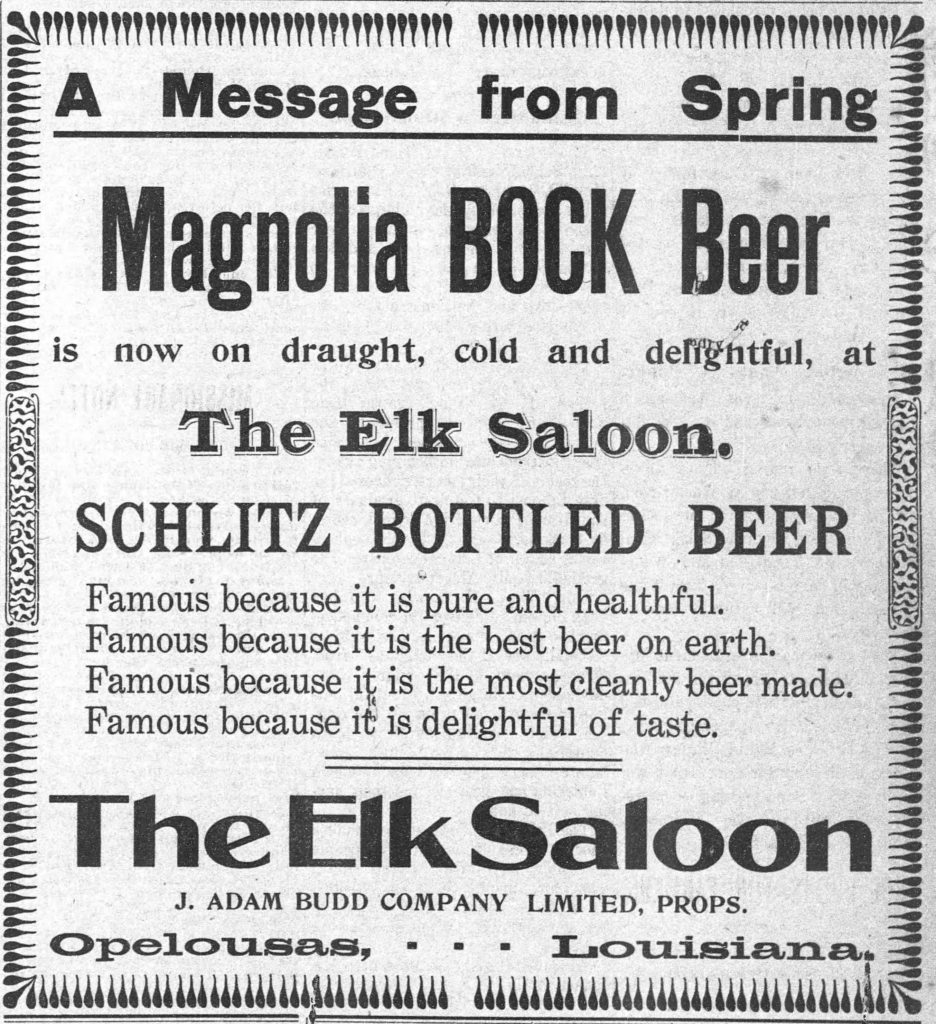
Tuesday’s second ad is for Magnolia Bock Beer, which was published on February 24, 1907. This ad was for the Houston Ice & Brewing Co. of Houston, Texas, which was originally founded in 1893. This ad ran in The Houston Chronicle, also of Houston, Texas.

Filed Under: Art & Beer, Beers, Breweries, Just For Fun Tagged With: Advertising, Bock, History, Texas

« Previous Page
Next Page »

Find Something

Northern California Breweries

Please consider purchasing my latest book, California Breweries North, available from Amazon, or ask for it at your local bookstore.

Recent Comments

  • Bob Paolino on Beer Birthday: Grant Johnston
  • Gambrinus on Historic Beer Birthday: A.J. Houghton
  • Ernie Dewing on Historic Beer Birthday: Charles William Bergner 
  • Steve 'Pudgy' De Rose on Historic Beer Birthday: Jacob Schmidt
  • Jay Brooks on Beer Birthday: Bill Owens

Recent Posts

  • Historic Beer Birthday: Henry Becker April 19, 2026
  • Beer In Ads #5226: Broadway Brewing Bock Beer April 18, 2026
  • Beer Birthday: Neil Miller April 18, 2026
  • Beer Birthday: Alan McLeod April 18, 2026
  • Beer In Ads #5225: Fabled Ambrosia Of The Ancients April 17, 2026

BBB Archives

Feedback

Head Quarter
This site is hosted and maintained by H25Q.dev. Any questions or comments for the webmaster can be directed here.