Brookston Beer Bulletin

Jay R. Brooks on Beer

  • Home
  • About
  • Editorial
  • Birthdays
  • Art & Beer

Socialize

  • Dribbble
  • Email
  • Facebook
  • Flickr
  • GitHub
  • Instagram
  • LinkedIn
  • Pinterest
  • RSS
  • Twitter
  • YouTube

Powered by Genesis

Beer In Ads #5062: Atlas Bock Beer

August 25, 2025 By Jay Brooks

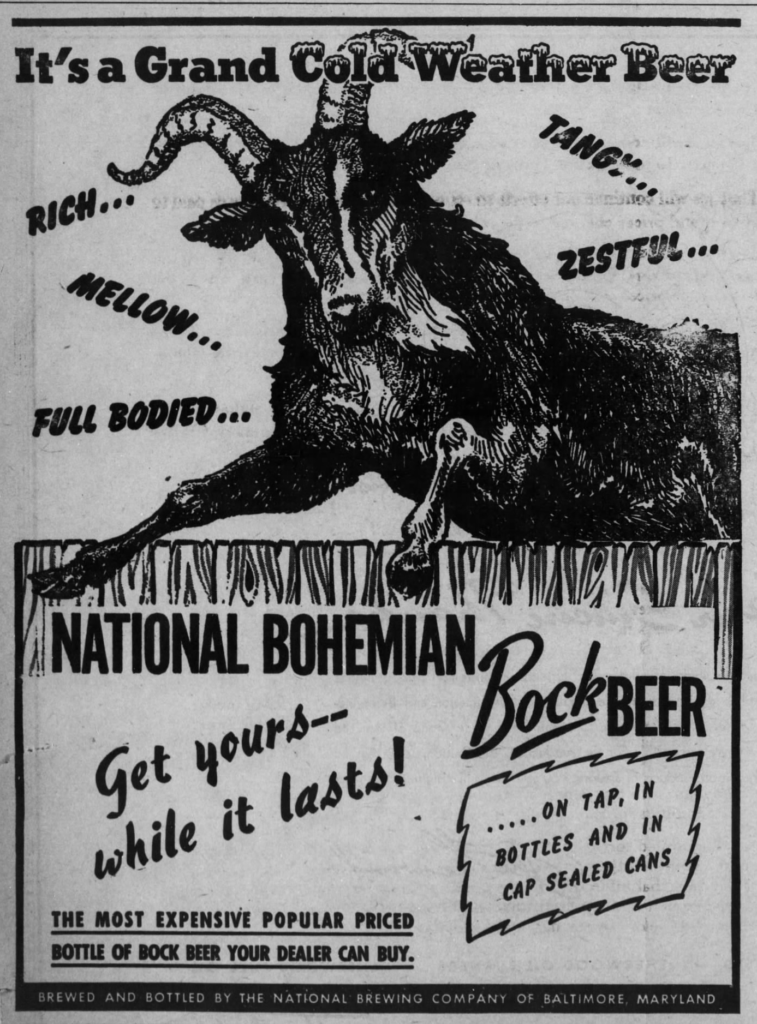
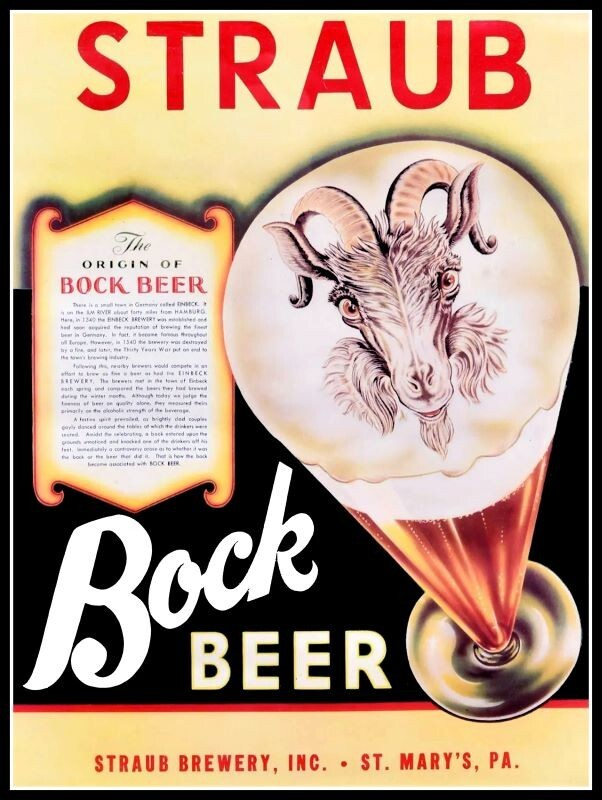
Last year I decided to concentrate on Bock ads. Bock, of course, may have originated in Germany, in the town of Einbeck. Because many 19th century American breweries were founded by German immigrants, they offered a bock at certain times of the year, be it Spring, Easter, Lent, Christmas, or what have you. In a sense they were some of the first seasonal beers. “The style was later adopted in Bavaria by Munich brewers in the 17th century. Due to their Bavarian accent, citizens of Munich pronounced ‘Einbeck’ as ‘ein Bock’ (a billy goat), and thus the beer became known as ‘Bock.’ A goat often appears on bottle labels.” And presumably because they were special releases, many breweries went all out promoting them with beautiful artwork on posters and other advertising.

Monday’s ad is for Atlas Bock Beer, which was published on August 25, 1933. This one was for, I think, the Atlas Brewing Co. (or Atlas Beverage Co.) of Chicago, Illinois, which was originally founded in 1891 as the Bohemian Brewing Co. of Chicago, but was renamed Atlas in 1896. This ad ran in The Daily Argus Leader, of Sioux Falls, North Dakota. I love that the name of the restaurant was “The Eat Shoppe.”

Filed Under: Art & Beer, Beers, Breweries, Just For Fun Tagged With: Advertising, Bock, History, Illinois, South Dakota

Historic Beer Birthday: Hans Adolf Krebs

August 25, 2025 By Jay Brooks

science
Today is the birthday of Hans Adolf Krebs (August 25, 1900-November 22, 1981). He was a German-born British physician and biochemist. He was the pioneer scientist in study of cellular respiration, a biochemical pathway in cells for production of energy. He is best known for his discoveries of two important chemical reactions in the body, namely the urea cycle and the citric acid cycle. The latter, the key sequence of metabolic reactions that produces energy in cells, often eponymously known as the “Krebs cycle,” earned him a Nobel Prize in Physiology or Medicine in 1953. And it’s the Krebs cycle that is his relation to brewing, as it’s also known as the respiratory phase, the second aerobic state of the fermentation process immediately following the lag period.

krebs-signature

Here’s a description of the Krebs cycle from Life Fermented:

The Krebs cycle, also known as the tricarboxylic acid (TCA) cycle or the citric acid cycle, is a circular and repeating set of reactions which requires oxygen. In beer making, this would occur in the first stage of fermentation when the yeast is pitched into a well aerated wort, and carries on until all oxygen is used up.
Pyruvate (are you tired of this word yet?) is first converted to acetyl-CoA (pronounced “Co-A”) in the following reaction:

pyruvate + 2 NAD+ + CoA-SH → acetyl-CoA + CO2 + NADH, with the help of the pyruvate dehydrogenase (PDH) complex. Note that this is the first time CO2 is produced, and yet more NADH is generated.

This acetyl-CoA then enters into a cycle of reactions which nets two molecules of CO2, one GTP (guanosine triphosphate, another unit of energy equivalent to ATP), three NADH, and one FADH2 (flavin adenine dinucleotide, which functions similarly to NADH). After the cycle completes, another acetyl-CoA molecule enters and the cycle repeats itself.

But wait, this just made more NADH, and we need to regenerate NAD+ so glycolysis can continue. Both the NADH and FADH2 now donate their electrons to a process called the electron transport chain/ oxidative phosphorylation. The result is a return of NAD to the NAD+ state, and a large amount of ATP cellular energy.

Because the Krebs cycle is so efficient at producing ATP energy units, this is the yeast’s preferred pathway. But, you’ll notice a rather conspicuous absence: ethanol. This is only formed in the absence of oxygen.

NPG x88332; Sir Hans Adolf Krebs

Here’s a biography of Krebs, from the Nobel Prize website:

Sir Hans Adolf Krebs was born at Hildesheim, Germany, on August 25th, 1900. He is the son of Georg Krebs, M.D., an ear, nose, and throat surgeon of that city, and his wife Alma, née Davidson.

Krebs was educated at the Gymnasium Andreanum at Hildesheim and between the years 1918 and 1923 he studied medicine at the Universities of Göttingen, Freiburg-im-Breisgau, and Berlin. After one year at the Third Medical Clinic of the University of Berlin he took, in 1925, his M.D. degree at the University of Hamburg and then spent one year studying chemistry at Berlin. In 1926 he was appointed Assistant to Professor Otto Warburg at the Kaiser Wilhelm Institute for Biology at Berlin-Dahlem, where he remained until 1930.

In I930, he returned to hospital work, first at the Municipal Hospital at Altona under Professor L. Lichtwitz and later at the Medical Clinic of the University of Freiburg-im-Breisgau under Professor S. J. Thannhauser.

In June 1933, the National Socialist Government terminated his appointment and he went, at the invitation of Sir Frederick Gowland Hopkins, to the School of Biochemistry, Cambridge, where he held a Rockefeller Studentship until 1934, when he was appointed Demonstrator of Biochemistry in the University of Cambridge.

In 1935, he was appointed Lecturer in Pharmacology at the University of Sheffield, and in 1938 Lecturer-in-Charge of the Department of Biochemistry then newly founded there.

In 1945 this appointment was raised to that of Professor, and of Director of a Medical Research Council’s research unit established in his Department. In 1954 he was appointed Whitley Professor of Biochemistry in the University of Oxford and the Medical Research Council’s Unit for Research in Cell Metabolism was transferred to Oxford.

Professor Krebs’ researches have been mainly concerned with various aspects of intermediary metabolism. Among the subjects he has studied are the synthesis of urea in the mammalian liver, the synthesis of uric acid and purine bases in birds, the intermediary stages of the oxidation of foodstuffs, the mechanism of the active transport of electrolytes and the relations between cell respiration and the generation of adenosine polyphosphates.

Among his many publications is the remarkable survey of energy transformations in living matter, published in 1957, in collaboration with H. L. Kornberg, which discusses the complex chemical processes which provide living organisms with high-energy phosphate by way of what is known as the Krebs or citric acid cycle.

Krebs was elected a Fellow of the Royal Society of London in 1947. In 1954 the Royal Medal of the Royal Society, and in 1958 the Gold Medal of the Netherlands Society for Physics, Medical Science and Surgery were conferred upon him. He was knighted in 1958. He holds honorary degrees of the Universities of Chicago, Freiburg-im-Breisgau, Paris, Glasgow, London, Sheffield, Leicester, Berlin (Humboldt University), and Jerusalem.

He married Margaret Cicely Fieldhouse, of Wickersley, Yorkshire, in 1938. They have two sons, Paul and John, and one daughter, Helen.

And in the Microbe Wiki, on a page entitled “Saccharomyces cerevisiae use and function in alcohol production,” under a section called “Fermentation of alchohol,” the Krebs cycle is placed in its portion in the fermentation process:

Saccharomyces cerevisiae is able to perform both aerobic and anaerobic respiration. The process begins with the yeast breaking down the different forms of sugar in the wort. The types of sugars typically found in wort are the monosaccharides glucose and fructose. These sugars contain a single hexose, which is composed of 6 carbon atoms in the molecular formula C6H12O6. Disaccharides are formed when two monosaccharides join together. Typical disaccharides in the wort are galactose, sucrose, and maltose. The third type of fermentable sugar in the wort is a trisaccharide. This trisaccharide is formed when three monosccharides join together. Maltotriose is the trisaccharide commonly found in the wort and is composed of three glucose molecules. The wort does contain other sugars such as dextrins but it is not fermentable by yeast10. These dextrins contain four monosaccarides joined together. In order for the yeast to use the disaccharides and trisaccharides they first must be broken down to monosaccharides. The yeast does this by using different enzymes both inside and outside the cell. The enzyme invertase is used to break down sucrose into glucose and fructose. The invertase catalyzes the hydrolysis of the sucrose by breaking the O-C (fructose bond). The other enzyme used is maltase, which breaks down maltose and maltotriose into glucose inside the cell. The enzyme does this by catalyzing the hydrolysis of the sugars by breaking the glycosidic bond holding the glucose molecules together.

Once the sugars are broken down into monosaccharides the yeast can use them. The primary step is called glycolysis. In this process the glucose is converted to pyruvate using different enzymes in a series of chemical modifications. The electrons from glucose end up being transferred to energy carrying molecules like NAD+ to form NADH. ATP is also formed when phosphates are transferred from high-energy intermediates of glycolysis to ADP. In the presence of oxygen aerobic respiration can occur. This occurs in the mitochondria of the yeast. The energy of the pyruvate is extracted when it goes through metabolic processes like the Krebs cycle. The products of this type of metabolism are ATP, H2O, and CO2. However if there is no oxygen present and an abundance of sugars, as in the wort, the yeast undergo alcoholic fermentation. This type of metabolism yields much smaller amounts of energy when compared to aerobic respiration. However, because of the large supply of sugars from the different grains the wort is a very good environment for fermentative growth. The alcoholic fermentation begins with the two pyruvate acquired from glycolysis. These two pyruvate are decarboxylated by pyruvate decarboxylase to form two acetaldehydes and CO2. The CO2 is the gas that is observed during fermentation as bubbles that float to the top of the wort creating the kräusen or beer head, the foam that is very characteristic of a freshly poured beer. Pyruvate decarboxylase is a homotetramer meaning it contains four identical subunits. This also means that is has four active sites. The active sites are where the pyruvate reacts with the cofactors thiamine pyrophosphate (TPP) and magnesium to remove the carbon dioxide9. The final step to form alcohol is the addition of a hydrogen ion to the aldehyde to form ethanol. This hydrogen ion is from the NADH made during glycolysis and converts back to NAD+. The ethanol is originally believed to serve as an antibiotic against other microbes. This form of defense ensures that bacteria do not grow in the wort, thus ruining the beer with off flavors. However recently with the boom of craft beer different bacteria have been purposefully added to create what is known as sour beer. The sour taste comes from the waste products of the bacteria.

krebs_cycle_from_wikimedia-tweaked

To learn more about the Krebs cycle check out this video from the University of Oklahoma’s Chemistry of Beer – Unit 7 – Chemical Concepts: Krebs Cycle:

Filed Under: Beers, Birthdays, Breweries, Just For Fun, Related Pleasures Tagged With: History, Science, Science of Brewing

Beer In Ads #5061: Schaffhauser Giant Bock

August 23, 2025 By Jay Brooks

Last year I decided to concentrate on Bock ads. Bock, of course, may have originated in Germany, in the town of Einbeck. Because many 19th century American breweries were founded by German immigrants, they offered a bock at certain times of the year, be it Spring, Easter, Lent, Christmas, or what have you. In a sense they were some of the first seasonal beers. “The style was later adopted in Bavaria by Munich brewers in the 17th century. Due to their Bavarian accent, citizens of Munich pronounced ‘Einbeck’ as ‘ein Bock’ (a billy goat), and thus the beer became known as ‘Bock.’ A goat often appears on bottle labels.” And presumably because they were special releases, many breweries went all out promoting them with beautiful artwork on posters and other advertising.

Saturday’s poster is for Falken Schaffhauser’s Bock, and was published in 1934. This one was made for the Bierbrauerei Falken Schaffhausen, or Falcon Brewery, of Schaffhausen, Switzerland. The brewery was founded in 1799, and is still in business today, and is “considered the only independent brewery in the Schaffhausen region,” and is Switzerland’s 5th largest brewery. This one is for their Schaffhauser Bock and shows a giant goat (though honestly it looks more like a bighorn sheep) towering over a dozen men all drinking beer. It was created by Swiss artist Arnold Oechslin.

Filed Under: Art & Beer, Beers, Breweries, Just For Fun Tagged With: Advertising, Bock, History, Switzerland

Beer In Ads #5060: Hospitality Demands Our Pale Bock Beer

August 22, 2025 By Jay Brooks

Last year I decided to concentrate on Bock ads. Bock, of course, may have originated in Germany, in the town of Einbeck. Because many 19th century American breweries were founded by German immigrants, they offered a bock at certain times of the year, be it Spring, Easter, Lent, Christmas, or what have you. In a sense they were some of the first seasonal beers. “The style was later adopted in Bavaria by Munich brewers in the 17th century. Due to their Bavarian accent, citizens of Munich pronounced ‘Einbeck’ as ‘ein Bock’ (a billy goat), and thus the beer became known as ‘Bock.’ A goat often appears on bottle labels.” And presumably because they were special releases, many breweries went all out promoting them with beautiful artwork on posters and other advertising.

Friday’s ad is for Thomas Brau Bock Beer, which was published on August 22, 1935. This one was for the Gebrüder Thomas Bierbrauerei of Munich, Germany, which was originally founded in the Middle Ages, but merged with Paulaner in 1928. To be fair, it’s really a small part of a full-page ad for a market chain called “George W. Loft Markets,” in upstate New York, with locations in New Rochelle, White Plains, and the Bronx. This ad ran in The Standard-Star, of New Rochelle, New York, and the exact same ad also ran in the Daily Reporter of White Plains.

Filed Under: Art & Beer, Beers, Breweries, Just For Fun Tagged With: Advertising, Bock, Germany, History, New York

Beer In Ads #5058: Schaffhauser Bock

August 20, 2025 By Jay Brooks

Last year I decided to concentrate on Bock ads. Bock, of course, may have originated in Germany, in the town of Einbeck. Because many 19th century American breweries were founded by German immigrants, they offered a bock at certain times of the year, be it Spring, Easter, Lent, Christmas, or what have you. In a sense they were some of the first seasonal beers. “The style was later adopted in Bavaria by Munich brewers in the 17th century. Due to their Bavarian accent, citizens of Munich pronounced ‘Einbeck’ as ‘ein Bock’ (a billy goat), and thus the beer became known as ‘Bock.’ A goat often appears on bottle labels.” And presumably because they were special releases, many breweries went all out promoting them with beautiful artwork on posters and other advertising.

Wednesday’s poster is for Falken Schaffhauser’s Bock, and was published in 1932. This one was made for the Bierbrauerei Falken Schaffhausen, or Falcon Brewery, of Schaffhausen, Switzerland. The brewery was founded in 1799, and is still in business today, and is “considered the only independent brewery in the Schaffhausen region,” and is Switzerland’s 5th largest brewery. This one is for their Schaffhauser Bock and shows a giant man with a mug of beer. Below him is a village Maypole with a band playing while numerous couples dance. It was created by Swiss artist Arnold Oechslin.

Filed Under: Art & Beer, Beers, Breweries, Just For Fun Tagged With: Advertising, Bock, History, Switzerland

Beer In Ads #5057: Ephrata Is Saying: Give Me White Bock Every Time

August 19, 2025 By Jay Brooks

Last year I decided to concentrate on Bock ads. Bock, of course, may have originated in Germany, in the town of Einbeck. Because many 19th century American breweries were founded by German immigrants, they offered a bock at certain times of the year, be it Spring, Easter, Lent, Christmas, or what have you. In a sense they were some of the first seasonal beers. “The style was later adopted in Bavaria by Munich brewers in the 17th century. Due to their Bavarian accent, citizens of Munich pronounced ‘Einbeck’ as ‘ein Bock’ (a billy goat), and thus the beer became known as ‘Bock.’ A goat often appears on bottle labels.” And presumably because they were special releases, many breweries went all out promoting them with beautiful artwork on posters and other advertising.

Tuesday’s ad is for Hornung’s White Bock Beer, which was published on August 19, 1937. This one was for the Jacob Hornung Brewing Co. of Philadelphia, Pennsylvania, which was originally founded in 1885. This ad ran in The Ephrata Review, of Ephrata, Pennsylvania.

Filed Under: Art & Beer, Beers, Breweries, Just For Fun Tagged With: Advertising, Bock, History, Pennsylvania

Beer In Ads #5056: Geo. F. Spenger’s Extra Bottled Malt Beverages

August 18, 2025 By Jay Brooks

Last year I decided to concentrate on Bock ads. Bock, of course, may have originated in Germany, in the town of Einbeck. Because many 19th century American breweries were founded by German immigrants, they offered a bock at certain times of the year, be it Spring, Easter, Lent, Christmas, or what have you. In a sense they were some of the first seasonal beers. “The style was later adopted in Bavaria by Munich brewers in the 17th century. Due to their Bavarian accent, citizens of Munich pronounced ‘Einbeck’ as ‘ein Bock’ (a billy goat), and thus the beer became known as ‘Bock.’ A goat often appears on bottle labels.” And presumably because they were special releases, many breweries went all out promoting them with beautiful artwork on posters and other advertising.

Thursday’s ad is for Extra Malt Wine or Bock Beer, or more generally for Geo. F. Sprenger’s Extra Bottled Malt Beverages, which was published on August 18, 1879. This one is for the Sprenger Brewery of Lancaster, Pennsylvania, which was originally founded in 1850. This ad ran in The Lancaster Daily Intelligencer, also of Lancaster, Pennsylvania.

Filed Under: Art & Beer, Beers, Breweries, Just For Fun Tagged With: Advertising, Bock, History, Pennsylvania

NFL Football: Pick The Winners At Brookston Fantasy Games 2025

August 18, 2025 By Jay Brooks

This is, I believe, the sixteenth year for the Brookston Fantasy Football Games, though I took a few years off after the 2020 pandemic season. We’ve had a lot of fun over the years, so if you love football and beer, consider joining us this year, whether you’ve played in past seasons or are a newcomer. The NFL season begins Thursday, September 4, so in just under three short weeks. Why not join us?

As I’ve done in previous years, I’ve set up two free Yahoo fantasy football games, one a simple pick ’em game and the other a survival pool. Up to 50 people can play each game (that’s Yahoo’s limit, not mine), so if you’re a regular Bulletin reader feel free to sign up for one or even both. It’s free to play, all you need is a Yahoo ID, which is also free. Below is a description of each game and the details on how to join each league and play.

Pro Football Pick’em

In this Pick’em game, just pick the winner for every game each week, with no spread, and let’s see who gets the most correct throughout the season. All that’s at stake is bragging rights, but it’s still great fun.

Also, like the last few years, we’ll be able to keep picking all through the playoffs, so the game will continue through to the Super Bowl, which is pretty cool.

In order to join the group, just go to Pro Football Pick’em, and on the right-hand side under the heading “Join Private Group,” enter the following information…

Group ID#: 19754 (Brookston Football Picks)
Password: BROOKSTON2025

Survival Football

If picking all sixteen football games every week seems like too much, then Survival Football is for you. In Survival Football, you only have to pick one game each week. The only catch is you can’t pick the same team to win more than once all season. And you better be sure about each game you pick because if you’re wrong, you’re out for the season. Actually a few years ago they added a new feature and I changed the game so to be kicked out you have to be wrong twice. In that way more people stand a better chance of lasting longer into the season. So get one wrong, and you’re still okay, get a second wrong, now you’re gone for the season. Last man standing wins.

Again, like the last few years, we can keep picking all through the playoffs, assuming our luck holds. So the game could even continue through to the Super Bowl.

This year it’s even easier to join, with a new streamlined sign-up process. Just click on this direct link and follow the instructions from there. [Note: if for some reason it doesn’t work, send me not through messenger and we’ll get you sorted, though I’m pretty sure you already have to have a Yahoo ID to start signing up.]

With 50 players allowed in each game, there’s plenty of room, so don’t be shy. Sign up for one or both games. This season, I’ll most likely post the standings week by week on my Facebook page so we can taunt and tease one another. Anyway, why not join us? Go head to head again me and my team, the Brookston Brew Jays.

Filed Under: Beers

Beer In Ads #5055: Weihnachts Bock Monk

August 17, 2025 By Jay Brooks

Last year I decided to concentrate on Bock ads. Bock, of course, may have originated in Germany, in the town of Einbeck. Because many 19th century American breweries were founded by German immigrants, they offered a bock at certain times of the year, be it Spring, Easter, Lent, Christmas, or what have you. In a sense they were some of the first seasonal beers. “The style was later adopted in Bavaria by Munich brewers in the 17th century. Due to their Bavarian accent, citizens of Munich pronounced ‘Einbeck’ as ‘ein Bock’ (a billy goat), and thus the beer became known as ‘Bock.’ A goat often appears on bottle labels.” And presumably because they were special releases, many breweries went all out promoting them with beautiful artwork on posters and other advertising.

Sunday’s poster is for Falken Schaffhauser’s Weihnachts Bock, and was published in 1931. This one was made for the Bierbrauerei Falken Schaffhausen, or Falcon Brewery, of Schaffhausen, Switzerland. The brewery was founded in 1799, and is still in business today, and is “considered the only independent brewery in the Schaffhausen region,” and is Switzerland’s 5th largest brewery. This one is for their Schaffhauser Weihnachts Bock (Christmas or WInter Bock) and shows a monk taking a walk in the snow. Of course, he took a mug with him because you never know if you’ll run across a keg of bock in the wilderness. It was created by Swiss artist Arnold Oechslin.

Filed Under: Art & Beer, Beers, Breweries, Just For Fun Tagged With: Advertising, Bock, History, Switzerland

Beer In Ads #5054: Alpine Bock Beer Festival

August 15, 2025 By Jay Brooks

Last year I decided to concentrate on Bock ads. Bock, of course, may have originated in Germany, in the town of Einbeck. Because many 19th century American breweries were founded by German immigrants, they offered a bock at certain times of the year, be it Spring, Easter, Lent, Christmas, or what have you. In a sense they were some of the first seasonal beers. “The style was later adopted in Bavaria by Munich brewers in the 17th century. Due to their Bavarian accent, citizens of Munich pronounced ‘Einbeck’ as ‘ein Bock’ (a billy goat), and thus the beer became known as ‘Bock.’ A goat often appears on bottle labels.” And presumably because they were special releases, many breweries went all out promoting them with beautiful artwork on posters and other advertising.

Friday’s ad is not for a specific Bock Beer, but for an upcoming Bock Beer Festival at the Alpine Village Beer Garden, and was published on August 15, 1969. This one is for the Alpine Village in Torrance, California, which was originally founded in 1968. They had Bavarian Dances every weekend, but the Bock Beer Festival took place on august 17. Unfortunately, it closed during Covid, but has recently been designated as culturally significant and saved from demolition. This ad for the event ran in The Daily Breeze, of Hermosa Beach, California.

Filed Under: Art & Beer, Beers, Events, Just For Fun Tagged With: Advertising, Bock, California, History

« Previous Page
Next Page »

Find Something

Northern California Breweries

Please consider purchasing my latest book, California Breweries North, available from Amazon, or ask for it at your local bookstore.

Recent Comments

  • Ernie Dewing on Historic Beer Birthday: Charles William Bergner 
  • Steve 'Pudgy' De Rose on Historic Beer Birthday: Jacob Schmidt
  • Jay Brooks on Beer Birthday: Bill Owens
  • Steve 'Pudgy' De Rose on Beer Birthday: Charles Finkel
  • Steve 'Pudgy' De Rose on Beer Birthday: Bill Owens

Recent Posts

  • Beer In Ads #5185: It’s Bock Time January 28, 2026
  • Historic Cider Birthday: H.P. Bulmer January 28, 2026
  • Beer Birthday: Shane McNamara January 28, 2026
  • Historic Beer Birthday: John Goetz January 28, 2026
  • Beer Birthday: Jean-Marie Rock January 28, 2026

BBB Archives

Feedback

Head Quarter
This site is hosted and maintained by H25Q.dev. Any questions or comments for the webmaster can be directed here.