Brookston Beer Bulletin

Jay R. Brooks on Beer

  • Home
  • About
  • Editorial
  • Birthdays
  • Art & Beer

Socialize

  • Dribbble
  • Email
  • Facebook
  • Flickr
  • GitHub
  • Instagram
  • LinkedIn
  • Pinterest
  • RSS
  • Twitter
  • YouTube

Powered by Genesis

Beer In Ads #5140: The Talk Of The Town, Jacob Ruppert Bock Beer

March 2, 2026 By Jay Brooks

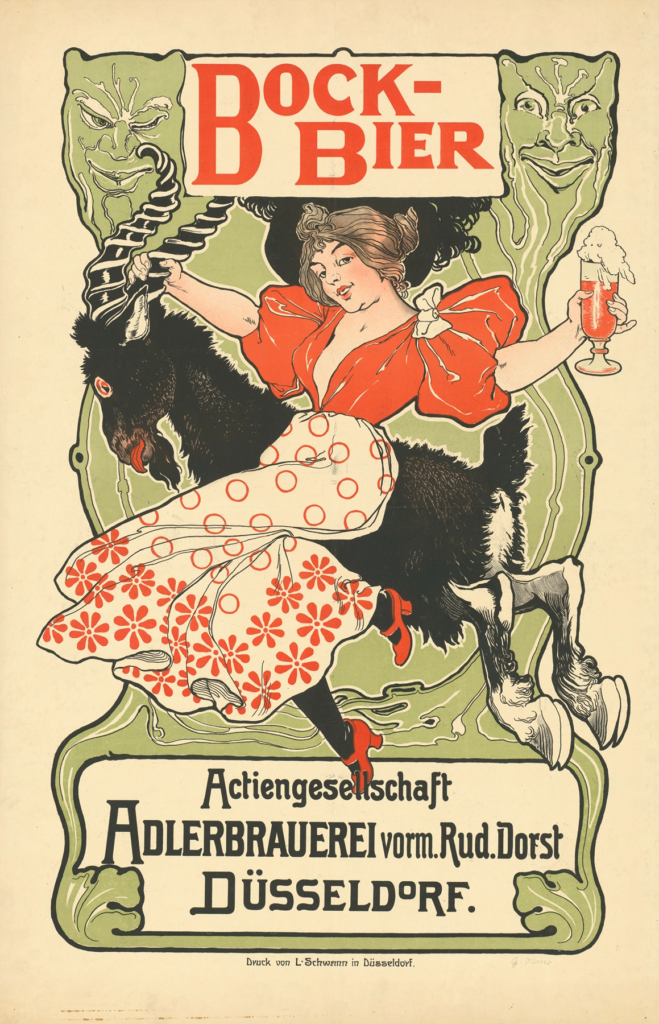
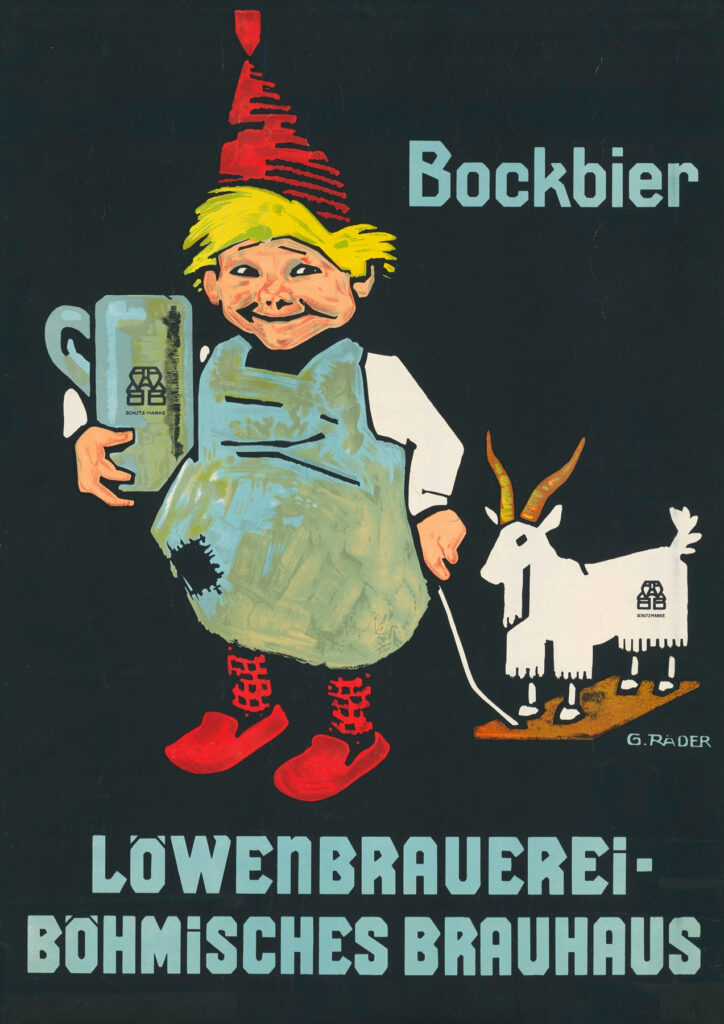
Two years ago I decided to concentrate on Bock ads for awhile. Bock, of course, may have originated in Germany, in the town of Einbeck. Because many 19th century American breweries were founded by German immigrants, they offered a bock at certain times of the year, be it Spring, Easter, Lent, Christmas, or what have you. In a sense they were some of the first seasonal beers. “The style was later adopted in Bavaria by Munich brewers in the 17th century. Due to their Bavarian accent, citizens of Munich pronounced ‘Einbeck’ as ‘ein Bock’ (a billy goat), and thus the beer became known as ‘Bock.’ A goat often appears on bottle labels.” And presumably because they were special releases, many breweries went all out promoting them with beautiful artwork on posters and other advertising. With Spring approaching, there are so many great examples that I’m going to post two a day for a few months.

Monday’s second ad is for Braumeister Bock Beer, which was published on March 2, 1936. This ad was for the Jacob Ruppert Brewery of New York, New York, which was originally founded in 1856 by Matthias Haffen as the Haffen Brewery until 1914 when Ruppert’s father bought it a year before he died, leaving it to Jacob, who changed the name. This ad ran in The Brooklyn Eagle, of Brooklyn, New York.

Filed Under: Art & Beer, Beers, Breweries, Just For Fun Tagged With: Advertising, Bock, History, New York

Historic Birthday: David G. Yuengling

March 2, 2026 By Jay Brooks

Today is the birthday of David G. Yuengling (March 2, 1808-September 27, 1877) who founded the Eagle Brewing Co. in 1829, and today it’s “America’s oldest brewery.” The name was changed in 1873 to D. G. Yuengling and Son when David’s son Frederick joined the company. He was born in Aldingen in what today is Germany — but then was the Kingdom of Württemberg. He was born David Gottlob Jüngling, but anglicized his name after emigrating the United States in 1828.

Yuengling-DG

100 Years of Brewing has a short summary of D.G. and the brewery’s early years.

Immigrant Entrepreneurship, under German-American Business Biographies, has a lengthy one of David Gottlob Yuengling.

David Gottlob Jüngling was born in the village of Aldingen (today part of the town of Remseck in the German federal state of Baden-Württemberg) into a family that is listed as operating Aldingen’s first brewery by 1816. A passport application from 1862 describes the 56-year old David Gottlob as having blue eyes and black hair and standing five feet six inches (168 cm) tall. His father, Friedrich Jüngling, operated Aldingen’s brewery in the Neues Schloss (“New Palace”), a baroque manor of which he owned one quarter, including the brewery and livestock pens. Prior to starting the brewery in Aldingen, Friedrich Jüngling’s profession is listed as butcher, and he served on the town council. Both positions reflected a degree of wealth and social status within the community. Although Friedrich Jüngling was born in nearby Erdmannhausen, his wife Anna Maria Jüngling (née Wildermuth) was born in Aldingen. D.G. Yuengling had three brothers and four sisters, one of whom, Christiane, also immigrated to Pennsylvania. D.G. Yuengling may have apprenticed in his father’s brewery during his youth, or he may have acquired skills as a brewer through an apprenticeship at another brewery in the region. However, his older brother, Jakob, inherited their father’s brewery and reportedly continued operating it until his death in 1878. With Jakob in charge of the Jüngling family brewery, and economic opportunities in the 1820s somewhat limited, particularly in Württemberg, D. G. Yuengling chose to immigrate to Pennsylvania in 1829 via Rotterdam. Yuengling landed in Baltimore and quickly moved on to the towns of Lancaster and Reading in Pennsylvania, both of which were at the time heavily populated by German immigrants and Pennsylvania Germans whose demand for beer was already served by local entrepreneurs. Yuengling likely sought a location with fewer brewers and a steady demand for fresh, locally produced beer.

The boomtown of Pottsville, deep in the anthracite coal belt of Eastern Pennsylvania, offered one such location. The town had been named for John Potts, who founded it after purchasing the first anthracite furnace along the Schuylkill River in 1806. The furnace had been in use since 1795. The demand for hard coal in Philadelphia and the surrounding region led to skyrocketing prices for anthracite coal land, with one parcel selling for $33,000 more than it had been purchased for five years earlier, and another increasing by $15,000 within months. Yuengling arrived in this rapidly-changing community in 1829 and set up a brewery shortly thereafter.

D.G. Yuengling (front and center) with the brewery employees in 1873.

Upon his arrival in the United States, David Gottlieb Yuengling carried with him his skills as a brewer, as well as possibly some startup money (Startkapital). In 1829, when Yuengling established the Eagle Brewery in Pottsville, the town was experiencing a building boom related to land speculation and increasing anthracite coal production. The daytime population, including mine workers, had jumped to over 3,700. In 1832, some twenty-five taverns prospered in Pottsville and, along with numerous inns and hotel, served the drinking needs of the growing population. By comparison, in 1825, “Pottsville [had] contained only fifteen houses, three taverns, three stores, a printer’s shop, a post office, and the shops of a few craftsmen.”

In addition to its increasing population, Pottsville formed an important node in an expanding regional transportation network. Trails, roads, and turnpikes linked it with other nearby communities including Schuylkill Haven, which lay along the Schuylkill River. The Schuylkill flowed in a southwesterly direction and met the Delaware River at Philadelphia. It offered an early means of waterborne transportation between interior Pennsylvania and the port of Philadelphia. The discovery of coal in Schuylkill County in 1790 spurred the construction of the Schuylkill Canal and subsequently the founding of the influential Philadelphia & Reading Railroad. Both of these enterprises transported anthracite coal from Pottsville and the surrounding coal fields to Philadelphia and later New York City and improved access to materials produced outside the region. While these new transportation facilities played little to no role in beer distribution at the time due to the highly localized nature of unpasteurized beer consumption, they brought about an increase in demand for labor in the region and supported local business activities, which provided fertile ground for Yuengling’s new brewery venture.

Yuengling’s 1829 Eagle Brewery was located on Centre Street near the Schuylkill County Courthouse, which during the economic depression of the 1870s became known for the trial of striking coal miners who were decried as Molly Maguires and executed for murder. During the brewery’s early years of operation, Yuengling likely produced beer almost exclusively for the local market. Yuengling started brewing on a small scale, perhaps due to limited financial resources and access to credit, or possibly because he did not want to risk overextending himself. The brewery’s production totals reflect the precarious nature of his small business. Furthermore, he likely performed most, if not all, of the brewing and distribution process himself. His beer would have been made in open kettles and vats and the production process would have been physically arduous. Brewing involved boiling a mash of grain and water to convert complex starches into simple sugars. Boiled grains would then be sparged (i.e. rinsed) with hot water in order to extract all the sugars from the grain. The resulting sweet and sticky wort would be boiled with hops and then cooled so that yeast could be added to ferment the sugars and produce alcohol. Depending on the type of beer produced, primary fermentation could take one or more weeks. In all, the demanding process required heating water, lifting heavy supplies, pumping hot liquids between vats, and transporting barrels of finished beer via hand truck or horse cart to nearby taverns and inns.

yuengling-poster

After a fire destroyed the original brewery in 1832, Yuengling quickly rebuilt his enterprise at its present location on Mahantongo Street. His new Eagle Brewery was situated in a location that took advantage of both natural geography and manmade features. The site at the intersection of Fifth and Mahantongo Streets lay near a freshwater spring that provided water for the community of Pottsville. The new brewery made use of this water for all brewing operations. Yuengling contracted with local laborers, possibly coal miners, to build tunnels into a mountain behind the new facility. The tunnels extended underneath the brewery and kept finished beer cool, though not cold enough to prevent spoilage without the addition of ice. When Yuengling began brewing lager, the tunnels provided an ideal area for lagering the beer during cooler months. The site’s location near the local road and canal system facilitated shipment of brewing supplies to the brewery. Malt deliveries arrived from Philadelphia by horse and cart, as well as via canal boats, and Yuengling obtained ice shipments in a similar manner. By 1842, the company was receiving malt shipments by railroad, and it began distributing its beer the same way as the rail network improved during the 1850s and 1860s. These transportation facilities also enabled beer to be transported to nearby communities, many of which contained large numbers of German immigrants among their beer-drinking populations.

In 1841, thirty-three-year-old David Yuengling married seventeen-year-old Elizabeth, daughter of John George and Rosine Elizabeth Betz from nearby Schuylkill Haven. Census records hint that John G. Betz, like his son-in-law, may have been a brewer by trade and the family may also have operated an inn in Schuylkill Haven. Also like Yuengling, the Betz family had emigrated from the Kingdom of Württemberg. Elizabeth had been born in Stuttgart, fewer than ten miles from David Yuengling’s family home in Aldingen, on September 26, 1823. Perhaps the two families had known each other in the Old World. By 1850, federal census records show that David and his then twenty-seven-year-old wife Elizabeth had five children: Elizabeth (age 6), David (age 8), Mary (age 5), Teresia (age 4), and Frederick (age 2). Eventually, the couple had a total of three sons and seven daughters.

David Yuengling dealt with numerous challenges during the early decades that his business was in operation. He faced competition from fellow brewers in Pottsville. At least three other breweries operated in the city in 1830. The Orchard Brewery opened around 1831 and brewed beer in Pottsville and later nearby Port Carbon until the late 1870s. Likewise, the Rettig Brewery opened at the end of the Civil War and survived until the Prohibition era. Numerous other breweries opened, brewed beer briefly, and then folded due to fires and financial difficulties. Yuengling also faced a threat from prohibitionist forces in Pennsylvania. Following the passage of prohibition legislation in Maine in 1851, “dry” advocates secured the passage of a law in Pennsylvania banning Sunday sales of alcohol in 1852. Two years later, a full ban went before state voters and was narrowly defeated, in large part due to heavy turnout by beer-drinking voters, including substantial numbers of German immigrants.

As David Yuengling’s three sons came of age in the 1850s and 1860s, he introduced them to the craft of brewing and put them to work in the brewery. His oldest son David Jr. apprenticed under his father and later served as a foreman for his uncle, John Frederick Betz, at Betz’s brewery in New York City. He also visited the German lands and studied the brewing craft in Munich, Stuttgart, and Klein-Schwechat, a town near Vienna in the Austrian Empire. Middle son Frederick obtained a college education and studied business at the Eastman Business School in Poughkeepsie. He later studied brewing in the German lands and Austria, as well as at the Berger and Engel Brewing Company in Philadelphia, and eventually went to work in his father’s brewery. Less is known about the education of William Yuengling, who died at the age of thirty-six in 1898.

After the Civil War, David Jr. decided to strike out on his own and established a new brewing enterprise in Richmond, Virginia, in 1866. Startup capital for the new Betz, Yuengling & Beyer Brewery (later James River Brewery, D.G. Yuengling and Company) came from the Yuengling family and John Betz, David Jr.’s uncle, as well as another brewer, Louis Beyer. This small expansion project was presumably planned with input from the elder Yuengling and is typical of a careful venture into secondary markets. The Richmond brewery remained under David Jr.’s oversight until it was sold in 1878.

As the senior David Yuengling neared his mid-60s, he chose to make middle-son Frederick a minority partner in the business. The legal foundation for the future of the family firm was solidified when the brewery became D.G. Yuengling and Son in 1873. That year also marked a high point in the number of breweries in the United States with over 4,000 in operation. Following the 1873 financial panic, however, the industry began to consolidate as the resulting business depression put numerous local and regional breweries out of business and ambitious and well-capitalized breweries such as Anheuser-Busch began to make inroads in regional markets outside the Midwest by taking advantage of railroad transportation and new technologies for keeping beer fresh such as pasteurization and refrigeration, both of which required significant capital investments. Consequently, the number of breweries fell by over a thousand by the mid-1870s and continued a precipitous decline through the beginning of the twentieth century, when about 1,500 remained in operation.

Unlike a few of the wealthy, American “beer barons” of the late nineteenth century, Yuengling did not retire to his native Germany, not even part time. His was a privately-held, midsize business (Mittelstand), and conditions may not have allowed him to retire abroad. He may simply have decided against withdrawing too much capital from his life’s work, or perhaps he also felt a strong sense of allegiance to his community. David Gottlieb Yuengling passed away after falling on the stairs of his home after a day of working in his brewery’s office on 29 September 1877, at the age of 70. Hundreds of Pottsville residents and brewery workers gathered to pay their final respects. The responsibility for continuing the Yuengling brewery legacy rested with D.G. Yuengling’s sons, because women typically did not own and lead businesses enterprises. Nevertheless, the founder’s widow, Elizabeth, who lived until 1894, inherited his shares in the firm and Frederick acted as minority owner.

Yuengling-1855
The brewery in 1855.

Throughout his life in the United States, David G. Yuengling was an active member of the Pottsville community. He was the first president of the Pottsville Gas Company and later a director of the Pottsville Water Company. Yuengling also supported the German Lutheran Church in Pottsville and contributed $10,000 for the construction of the church building, and served as a vestryman (council member). His posts with the gas and water companies illustrate Yuengling’s concern with encouraging progress in Pottsville, as well as securing the supply of resources necessary for his brewing business. Unlike the Forty-Eighters, German immigrants who had escaped reactionary monarchies in Europe and who tended to vote Republican, Yuengling was a Democrat. Whereas the Democratic Party had embraced the nativist and anti-immigrant cause by 1848, the Republican Party and its rising star Abraham Lincoln had been founded by anti-slavery Whigs and Free Soilers. Yuengling, however, had immigrated to America twenty years prior, during the era of Jacksonian democracy with President Andrew Jackson, a Democrat, at the helm in the White House. Jackson’s message had been one of economic opportunity and democracy for the common, white man, as well as the preservation of the Union. At the same time, though he was a Democrat, David Yuengling also belonged to two secret societies, the Masons and the German Order of the Harugari (Der Deutsche Orden der Harugari), a mutual aid society founded in response to nativist actions against German immigrants. Like his father, Frederick Yuengling also served the community of Pottsville as president of the Pottsville Gas Company, as well as a “director of the Safe Deposit Bank and of the Pottsville Water Company.”

In addition to his engagement in the Pottsville community, which served the development of the town as well as his own business interests, David Yuengling committed time, skills, and experience to establish and further the brewing careers of a number of fellow German immigrants. His brother-in-law, John F. Betz, himself the son of a brewer, served an apprenticeship in the Yuengling brewery before participating in a grand brewing tour in Europe and establishing a brewery in New York City and later Philadelphia. Betz went on to build a brewing empire in the City of Brotherly Love and later, as previously noted, helped bail out David Yuengling Jr.’s failing brewery in New York City in the late 1890s. Henry C. Clausen Sr. was a second prominent brewer who started as a Yuengling apprentice. Clausen and John Betz co-owned a brewery in New York City and the former founded the H. Clausen and Son Brewery in the 1870s, which was for a time one of the largest breweries by production total in the nation. His son, Henry C. Clausen Jr., later founded and served as president of the U.S. Brewers’ Association.

As an immigrant entrepreneur, David Yuengling Sr. drew on his background in the Old Country while embracing new opportunities available in the U.S. His participation in the local Lutheran community and his membership in the German Order of the Harugari attest to his desire to sustain elements of his German ethnic heritage even after living in the United States for many years. His craft training in the German lands provided him with the technical skills necessary to produce quality beer in a new environment. He began brewing English-style beers, both because they were popular with the local drinking public in Pennsylvania and also because his training in the 1820s would have involved brewing ales. He proved open to new innovations in brewing, however, and began working with lager beer as the style became popular both in Central Europe and in the United States in the middle of the nineteenth century. Today, D.G. Yuengling & Son’s flagship beer harkens back to the lager beers brewed by David Yuengling during the Civil War era.

There are also a couple of books on the Yuengling family and brewery. There’s Yuengling: A History of America’s Oldest Brewery and D.G. Yuengling & Son, Inc., part of the Images of America series. And there’s also a Yuengling Fan website with quite a lot of information.

Filed Under: Beers, Birthdays, Breweries, Just For Fun Tagged With: History, Pennsylvania

Craft Beer & Ale: A Parody of Dr. Seuss’ Green Eggs & Ham

March 2, 2026 By Jay Brooks

Seuss-logo
Today, of course, is the birthday of Theodore Geisel, a.k.a. Dr. Seuss. Over ten years ago my kids, who are all grown and moved out of the house, were on a Dr. Seuss kick and we read quite a few of his books multiple times, with Green Eggs & Ham emerging as the family favorite. I was playing around with the words one night, as I often do, and decided to see if I could come up with a beer-themed parody of the book. I originally posted the results many years ago, and here they are once again; Craft Beer & Ale, by Dr. J. Enjoy!

CRAFT BEER & ALE

Sam I am

I am Sam

Sam I am

That Sam’s upscale.
That Sam regales.
I do not like that Sam wholesale!

Seuss-2

Do you drink
craft beer & ale?

I do not drink them, Sam, they’re stale.
I do not drink
craft beer & ale.

Would you drink them
weak or strong?

I would not drink them
weak or strong.
I would not drink them, it is wrong.

I do not drink
craft beer & ale.
I do not drink them, Sam, curtail.

Would you drink them with more hops?
Would you drink them chased with schnapps?

I do not drink them
with more hops.
I do not drink them
chased with schnapps.
I do not drink them
weak or strong.
I do not drink them
all night long.
I do not drink
craft beer & ale.
I do not drink them,
Sam, you’re off the trail.

Would you drink them
in a pub?
Would you drink them
at a club?

Not in a pub.
Not at a club.
Not with more hops.
Not chased with schnapps.
I would not drink them
weak or strong.
I would not drink them, it is wrong.
I would not drink craft beer & ale.
I do not drink them, Sam — no sale.

Would you? Could you? In a bar?
Drink them! Drink them! Here they are.

I would not, could not, in a bar.

cheese

You may like them. You will see.
You may like them with some cheese!

I would not, could not with some cheese.
Not in a bar! You let me be.

I do not like them in a pub.
I do not like them at a club.
I do not like them with more hops.
I do not like them chased with schnapps.
I do not like them weak or strong.
I do not like them all night long.
I do not like craft beer & ale.
I do not like them, Sam, you’re beyond the pale.

A stein! A stein!
A stein! A stein!
Could you, would you,
in a stein?

stein

Not in a stein! Not in a stein!
Not with some cheese! Sam! Let me be!

I would not, could not, in a pub.
I could not, would not, at a club.
I will not drink them with more hops.
I will not drink them chased with schnapps.
I will not drink them weak or strong.
I will not drink them, it is wrong.
I do not like craft beer & ale.
I do not like them, Sam, you’ve gone off the rail.

Say! In a glass?
Here in a glass!
Would you, could you,
in a glass?

glass

I would not, could not, in a glass.

Would you, could you, while you dine?

I would not, could not, while I dine.
Not in a glass. Not in a stein.
Not in a bar. Not with some cheese.
I do not drink them, Sam, you see.
Not with more hops. Not in a pub.
Not chased with schnapps. Not in a club.
I will not drink them weak or strong.
I will not drink them all night long.

You do not drink
craft beer & ale?

I do not drink them,
Sam, you make me wail.

Could you, would you,
drink with Charlie?

I would not, could not,
drink with Charlie.

Would you, could you,
with more barley?

I could not, would not,
with more barley,
I will not, will not,
drink with Charlie.

I will not drink them while I dine.
I will not drink them in a stein.
Not in a glass! Not with some cheese.
Not in a bar! You let me be!
I do not drink them in a pub.
I do not drink them at a club.
I do not drink them with more hops.
I do not drink them chased with schnapps.
I do not drink them weak or strong.
I do not drink them IT IS WRONG!

I do not drink craft beer & ale!
I do not drink them, Sam — you fail.

You do not drink them. So you say.
Try them! Try them! And you may.
Try them and you may, I say.

Sam! If you will let me be,
I will try them. You will see.

Seuss-1

Say! I like craft beer & ale!
I do! I like them, Sam, you prevail!
And I would drink them with more barley.
And I would drink with homebrew Charlie…

And I will drink them while I dine.
And in a glass. And in a stein.
And in a bar. And with some cheese.
They are so good, so good, you see!

So I will drink them in a pub.
And I will drink them at a club.
And I will drink them with more hops.
And I will drink them chased with schnapps.
And I will drink them weak or strong.
Say! I will drink them ALL NIGHT LONG!

I do so love
craft beer at home!
Thank you!
Thank you, Sam-Cala-Gione!

ILikeit


All artwork by Rob Davis. Thanks, Rob! All words after Theodore Seuss Geisel by Dr. J. If you’re so inclined, you can also see the original text side by side with my parody at Craft Beer & Ale Compared.

Filed Under: Art & Beer, Beers, Just For Fun Tagged With: Humor, Poetry

Beer In Ads #5139: Two Famous Figures Join To Bring You Genuine Braumeister Bock Beer

March 2, 2026 By Jay Brooks

Two years ago I decided to concentrate on Bock ads for awhile. Bock, of course, may have originated in Germany, in the town of Einbeck. Because many 19th century American breweries were founded by German immigrants, they offered a bock at certain times of the year, be it Spring, Easter, Lent, Christmas, or what have you. In a sense they were some of the first seasonal beers. “The style was later adopted in Bavaria by Munich brewers in the 17th century. Due to their Bavarian accent, citizens of Munich pronounced ‘Einbeck’ as ‘ein Bock’ (a billy goat), and thus the beer became known as ‘Bock.’ A goat often appears on bottle labels.” And presumably because they were special releases, many breweries went all out promoting them with beautiful artwork on posters and other advertising. With Spring approaching, there are so many great examples that I’m going to post two a day for a few months.

Monday’s first ad is for Braumeister Bock Beer, which was published on March 2, 1950. This ad was for the Independent Milwaukee Brewery of Milwaukee, Wisconsin, which was originally founded in 1901 by Henry N. Bills, William Gutknecht, Charles Evers, Emil Czarnecki, and William Jung. This ad ran in The Reedsburg Times Press, of Reesburg, Wisconsin. Those two famous figure? It’s “The Jolly Braumeister (Brew Master)” “Billy Bock (Himself).”

Filed Under: Art & Beer, Beers, Breweries, Just For Fun Tagged With: Advertising, Bock, History, Wisconsin

Beer In Ads #5138: The Event Of The Year: Jax Bock Beer

March 2, 2026 By Jay Brooks

Two years ago I decided to concentrate on Bock ads for awhile. Bock, of course, may have originated in Germany, in the town of Einbeck. Because many 19th century American breweries were founded by German immigrants, they offered a bock at certain times of the year, be it Spring, Easter, Lent, Christmas, or what have you. In a sense they were some of the first seasonal beers. “The style was later adopted in Bavaria by Munich brewers in the 17th century. Due to their Bavarian accent, citizens of Munich pronounced ‘Einbeck’ as ‘ein Bock’ (a billy goat), and thus the beer became known as ‘Bock.’ A goat often appears on bottle labels.” And presumably because they were special releases, many breweries went all out promoting them with beautiful artwork on posters and other advertising. With Spring approaching, there are so many great examples that I’m going to post two a day for a few months.

Sunday’s second ad is for Jax Bock Beer, which was published on March 1, 1935. This ad was for the Jackson Brewing Co. of New Orleans, Louisiana, which was originally founded in 1890 by Lawrence Fabacher. This ad ran in The Shreveport Journal, also of Shreveport, Louisiana.

Filed Under: Art & Beer, Beers, Breweries, Just For Fun Tagged With: Advertising, Bock, History, Louisiana

Beer In Ads #5138: Flower City Bock Beer

March 1, 2026 By Jay Brooks

Two years ago I decided to concentrate on Bock ads for awhile. Bock, of course, may have originated in Germany, in the town of Einbeck. Because many 19th century American breweries were founded by German immigrants, they offered a bock at certain times of the year, be it Spring, Easter, Lent, Christmas, or what have you. In a sense they were some of the first seasonal beers. “The style was later adopted in Bavaria by Munich brewers in the 17th century. Due to their Bavarian accent, citizens of Munich pronounced ‘Einbeck’ as ‘ein Bock’ (a billy goat), and thus the beer became known as ‘Bock.’ A goat often appears on bottle labels.” And presumably because they were special releases, many breweries went all out promoting them with beautiful artwork on posters and other advertising. With Spring approaching, there are so many great examples that I’m going to post two a day for a few months.

Sunday’s first ad is for Flower City Bock Beer, which was published on March 1, 1913. This one was for the Flower City Brewing Co., of Rochester, New York, which was founded in 1902, I think. In a somewhat confusing twist, there was also a Flower City Brewing Co. located in nearby Orlean, New York that was only in business from 1907-1920 as the Orlean Brewing Co., but was called Flower City for just two years, from 1933-34. This ad ran in The Democrat and Chronicle, also of Rochester, New York.

Filed Under: Art & Beer, Beers, Breweries, Just For Fun Tagged With: Advertising, Bock, History, New York

Beer In Ads #5137: Bock Is Back… Look For It March 1st

February 28, 2026 By Jay Brooks

Two years ago I decided to concentrate on Bock ads for awhile. Bock, of course, may have originated in Germany, in the town of Einbeck. Because many 19th century American breweries were founded by German immigrants, they offered a bock at certain times of the year, be it Spring, Easter, Lent, Christmas, or what have you. In a sense they were some of the first seasonal beers. “The style was later adopted in Bavaria by Munich brewers in the 17th century. Due to their Bavarian accent, citizens of Munich pronounced ‘Einbeck’ as ‘ein Bock’ (a billy goat), and thus the beer became known as ‘Bock.’ A goat often appears on bottle labels.” And presumably because they were special releases, many breweries went all out promoting them with beautiful artwork on posters and other advertising. With Spring approaching, there are so many great examples that I’m going to post two a day for a few months.

Saturday’s second ad is for not for a specific Bock Beer, but for every Bock made by the member breweries of the Western Pennsylvania Brewers’ Association. The ad was published on February 28, 1951. This one was for the Western Pennsylvania Brewers’ Association which was founded in 1902 by at least a dozen different breweries. This ad ran in The Pittsburgh Press, of Pittsburgh, Pennsylvania.

Filed Under: Art & Beer, Beers, Breweries, Just For Fun Tagged With: Advertising, Bock, History, Pennsylvania

American Craft Beer Hall of Fame: 2nd Year Inductees

February 28, 2026 By Jay Brooks

Earlier today, the American Craft Beer Hall of Fame, announced the 2026 inductees, the second class of inductees, in a coordinated livestream from multiple locations. You can watch the ceremony on YouTube. The brainchild of Marty Nachel, the Hall of Fame welcomed eight new members.

American Craft Beer Hall of Fame:

The 2026 Class

Charles Bamforth

A British scientist specializing in malting and brewing, Bamforth is a former president of the Institute of Brewing and Distilling and served as the endowed professor of malting and brewing sciences at the University of California, Davis Brewing School. He later worked as senior quality adviser to Sierra Nevada Brewing Company and has received numerous industry honors, including the Brewers Association Recognition Award, the Master Brewers Association of the Americas Award of Honor, and honorary life membership in the MBAA.

Larry Bell

Bell founded Kalamazoo Brewing Company (later renamed Bell’s Brewery) in 1985 and became a frequent speaker and presenter throughout the industry. He received the Brewers Association Recognition Award for innovative brewing and dedication to craft beer, while Bell’s Two Hearted Ale earned recognition from the American Homebrewers Association as one of the best beers in the United States.

Sam Calagione

Alongside his wife Mariah, Calagione co-founded Dogfish Head Brewing Company in 1995 and became widely known for championing experimentation and nonconformity in brewing. He invented Randall the Enamel Animal draught flavoring device and later starred in the Discovery Channel series “Brew Masters” in 2010, helping bring craft beer culture to a broader audience.

Teri Fahrendorf

One of the first women brewmasters in the United States, Fahrendorf led brewing operations at Golden Gate, Triple Rock and Steelhead brewing companies and earned eight Great American Beer Festival medals. A 2014 Brewers Association Recognition Award recipient for lifetime achievement, she is also a respected consultant, technical writer and international speaker, and founded the Pink Boots Society to support women in the beer industry.

Kim Jordan

Jordan co-founded New Belgium Brewing Company in 1991 and guided the brewery’s growth from a small startup into one of the nation’s most prominent craft producers. Under her leadership, New Belgium became known for its sustainability initiatives and culture of social and environmental responsibility. She has also been named a 2025 inductee to the Colorado Business Hall of Fame.

Garrett Oliver

Oliver has served as brewmaster at both Manhattan Brewing Company and Brooklyn Brewery and is widely respected as an author and educator. His works include “The Brewmaster’s Table” and “The Oxford Companion to Beer.” Named an honorary Beer Academy Sommelier by the Institute of Brewing and Distilling, he remains a sought-after speaker and international beer judge.

Pete Slosberg

Slosberg co-founded Pete’s Brewing Company in 1986, and its flagship Pete’s Wicked Ale helped define the American brown ale style while becoming the No. 2 selling craft brand at its peak in the mid-1990s. He later authored “Beer for Pete’s Sake” and continues to contribute to the industry as an international beer judge and co-founder of the South Beer Cup competition.

Carol Stoudt

Stoudt and her husband opened Stoudt’s Brewing Company in 1987, where she became one of the first female brewmasters in the United States and the nation’s first female sole proprietor of a brewery. A recipient of the Presidential Award from Breweries in Pennsylvania, she is widely recognized as a trailblazer who helped expand opportunities for women in the craft beer business.

Filed Under: Beers, Events, Just For Fun, News Tagged With: ACBHOF, Awards, Hall of Fame

Beer In Ads #5136: American Bock Beer Is Being Served Today!

February 28, 2026 By Jay Brooks

Two years ago I decided to concentrate on Bock ads for awhile. Bock, of course, may have originated in Germany, in the town of Einbeck. Because many 19th century American breweries were founded by German immigrants, they offered a bock at certain times of the year, be it Spring, Easter, Lent, Christmas, or what have you. In a sense they were some of the first seasonal beers. “The style was later adopted in Bavaria by Munich brewers in the 17th century. Due to their Bavarian accent, citizens of Munich pronounced ‘Einbeck’ as ‘ein Bock’ (a billy goat), and thus the beer became known as ‘Bock.’ A goat often appears on bottle labels.” And presumably because they were special releases, many breweries went all out promoting them with beautiful artwork on posters and other advertising. With Spring approaching, there are so many great examples that I’m going to post two a day for a few months.

Saturday’s first ad is for American Bock Beer, which was published on February 28, 1951. This one was for the American Brewery Inc. of Baltimore, Maryland and was founded in 1863 by Joseph F. Wiessner. This ad ran in The Evening Sun, of Baltimore, Maryland.

Filed Under: Art & Beer, Beers, Breweries, Just For Fun Tagged With: Advertising, Bock, History, Maryland

Beer In Ads #5135: What Record’s Bock Beer Is

February 27, 2026 By Jay Brooks

Two years ago I decided to concentrate on Bock ads for awhile. Bock, of course, may have originated in Germany, in the town of Einbeck. Because many 19th century American breweries were founded by German immigrants, they offered a bock at certain times of the year, be it Spring, Easter, Lent, Christmas, or what have you. In a sense they were some of the first seasonal beers. “The style was later adopted in Bavaria by Munich brewers in the 17th century. Due to their Bavarian accent, citizens of Munich pronounced ‘Einbeck’ as ‘ein Bock’ (a billy goat), and thus the beer became known as ‘Bock.’ A goat often appears on bottle labels.” And presumably because they were special releases, many breweries went all out promoting them with beautiful artwork on posters and other advertising. With Spring approaching, there are so many great examples that I’m going to post two a day for a few months.

Friday’s second ad is for Bushkill Bock Beer, which was published on February 27, 1912. This one was for Record Brewing Co. of Elmira, New York and was founded in 1902. This ad ran in The Elmira Star Gazette, of Elmira, New York.

Filed Under: Art & Beer, Beers, Breweries, Just For Fun Tagged With: Advertising, Bock, History, New York

« Previous Page
Next Page »

Find Something

Northern California Breweries

Please consider purchasing my latest book, California Breweries North, available from Amazon, or ask for it at your local bookstore.

Recent Comments

  • Bob Paolino on Beer Birthday: Grant Johnston
  • Gambrinus on Historic Beer Birthday: A.J. Houghton
  • Ernie Dewing on Historic Beer Birthday: Charles William Bergner 
  • Steve 'Pudgy' De Rose on Historic Beer Birthday: Jacob Schmidt
  • Jay Brooks on Beer Birthday: Bill Owens

Recent Posts

  • Beer In Ads #5250: Pacific Bock Beer May 13, 2026
  • Beer Birthday: Eric Warner May 13, 2026
  • Historic Beer Birthday: Henry Uihlein May 13, 2026
  • Historic Beer Birthday: Christian Moerlein May 13, 2026
  • Beer In Ads #5249: Dresdner Hofbräu Bock-Bier May 12, 2026

BBB Archives

Feedback

Head Quarter
This site is hosted and maintained by H25Q.dev. Any questions or comments for the webmaster can be directed here.