Brookston Beer Bulletin

Jay R. Brooks on Beer

  • Home
  • About
  • Editorial
  • Birthdays
  • Art & Beer

Socialize

  • Dribbble
  • Email
  • Facebook
  • Flickr
  • GitHub
  • Instagram
  • LinkedIn
  • Pinterest
  • RSS
  • Twitter
  • YouTube

Powered by Genesis

Beer In Ads #5271: Bock Thillier

June 17, 2026 By Jay Brooks Leave a Comment

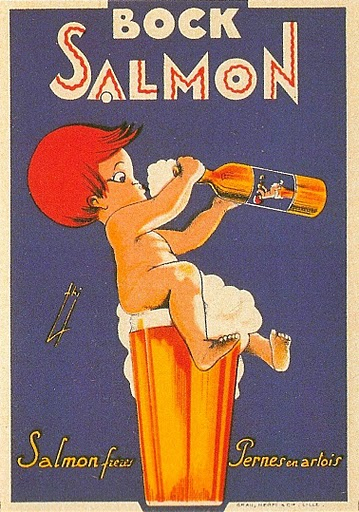
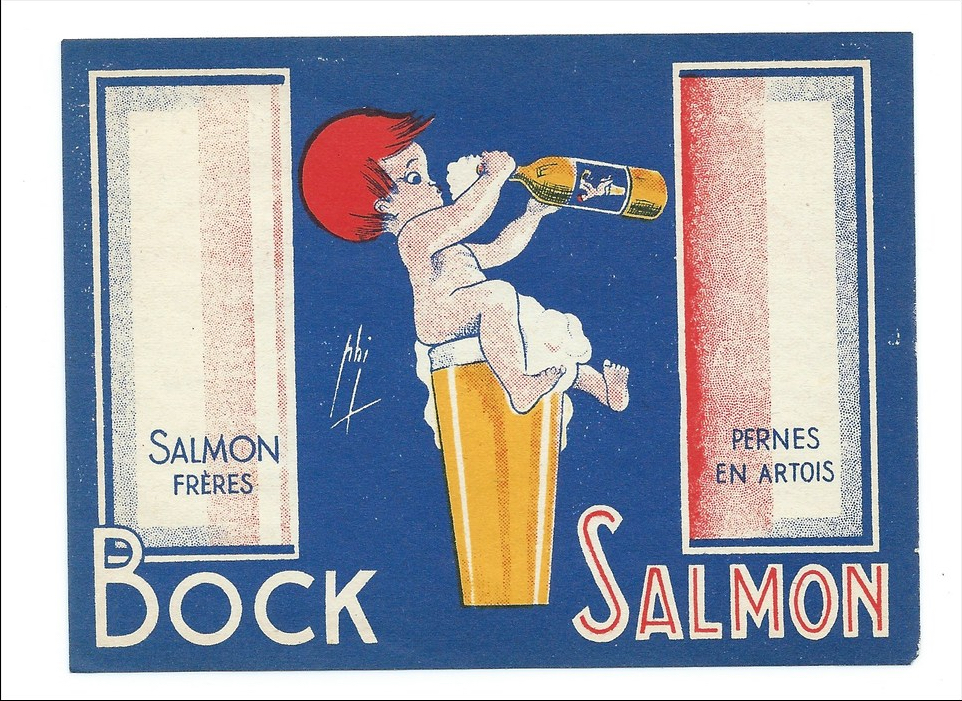
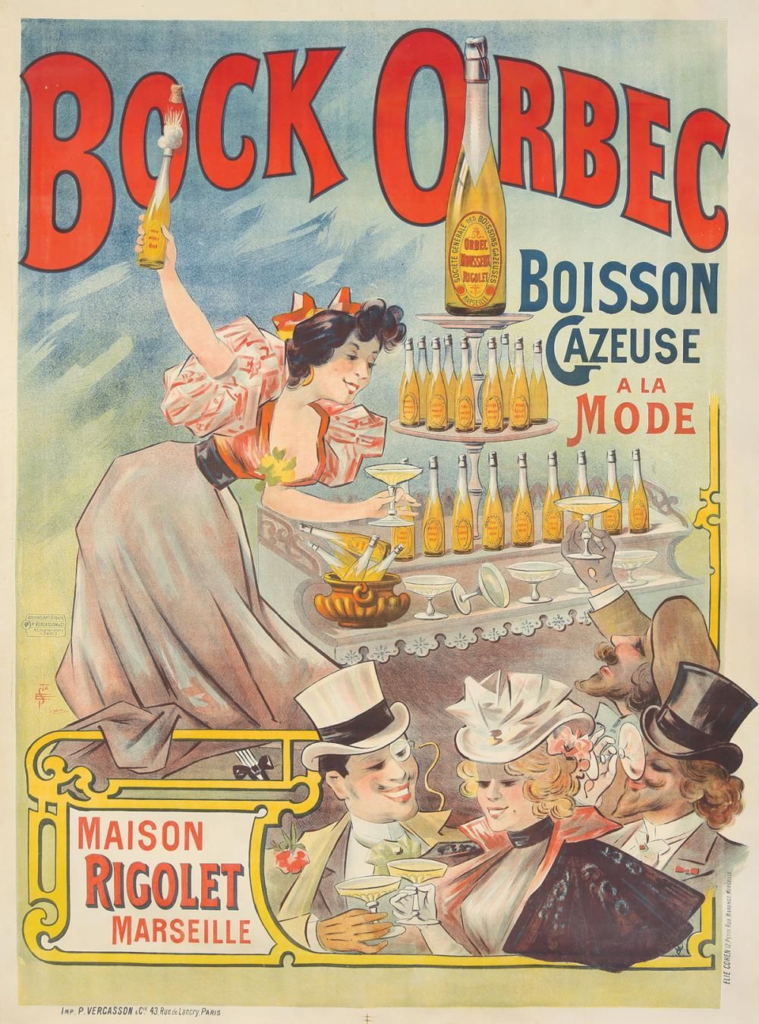
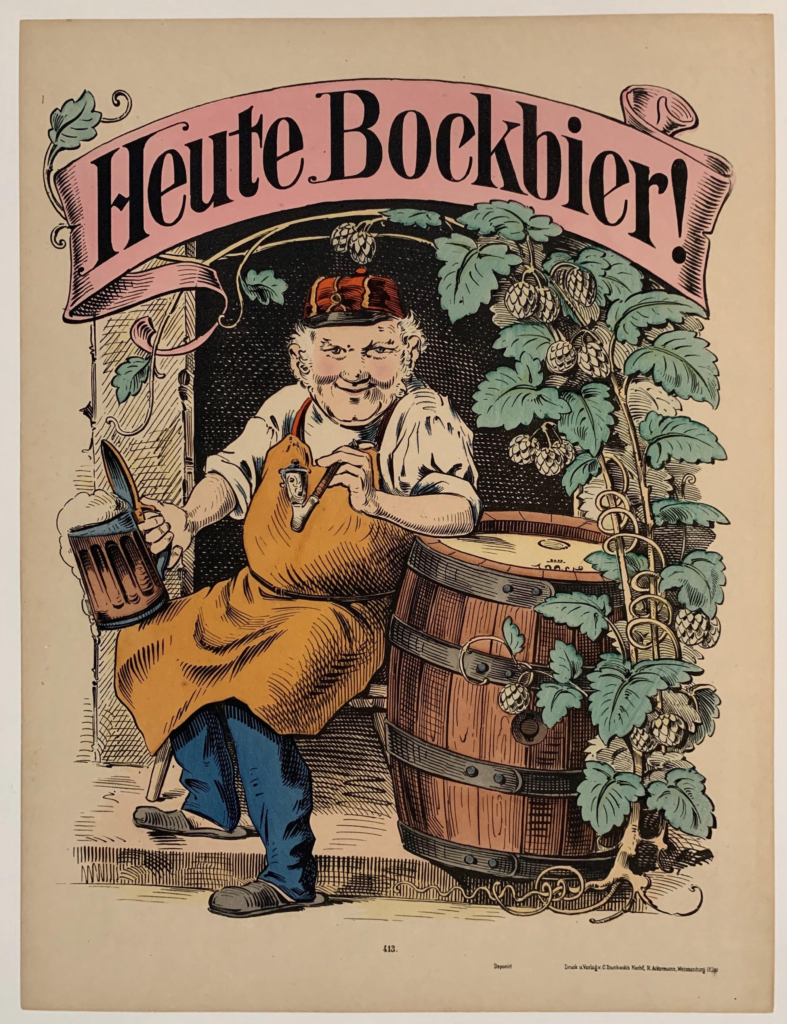
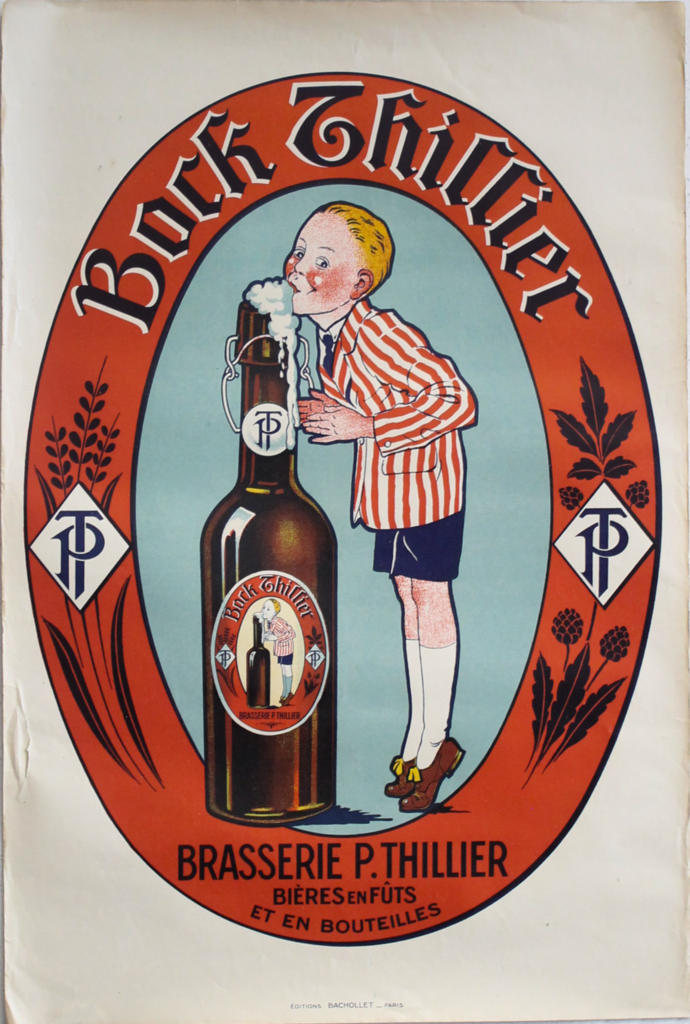
Two years ago I decided to concentrate on Bock ads for awhile. Bock, of course, may have originated in Germany, in the town of Einbeck. Because many 19th century American breweries were founded by German immigrants, they offered a bock at certain times of the year, be it Spring, Easter, Lent, Christmas, or what have you. In a sense they were some of the first seasonal beers. “The style was later adopted in Bavaria by Munich brewers in the 17th century. Due to their Bavarian accent, citizens of Munich pronounced ‘Einbeck’ as ‘ein Bock’ (a billy goat), and thus the beer became known as ‘Bock.’ A goat often appears on bottle labels.” And presumably because they were special releases, many breweries went all out promoting them with beautiful artwork on posters and other advertising. With Spring approaching, there are so many great examples that I’m going to post two a day for a few months.

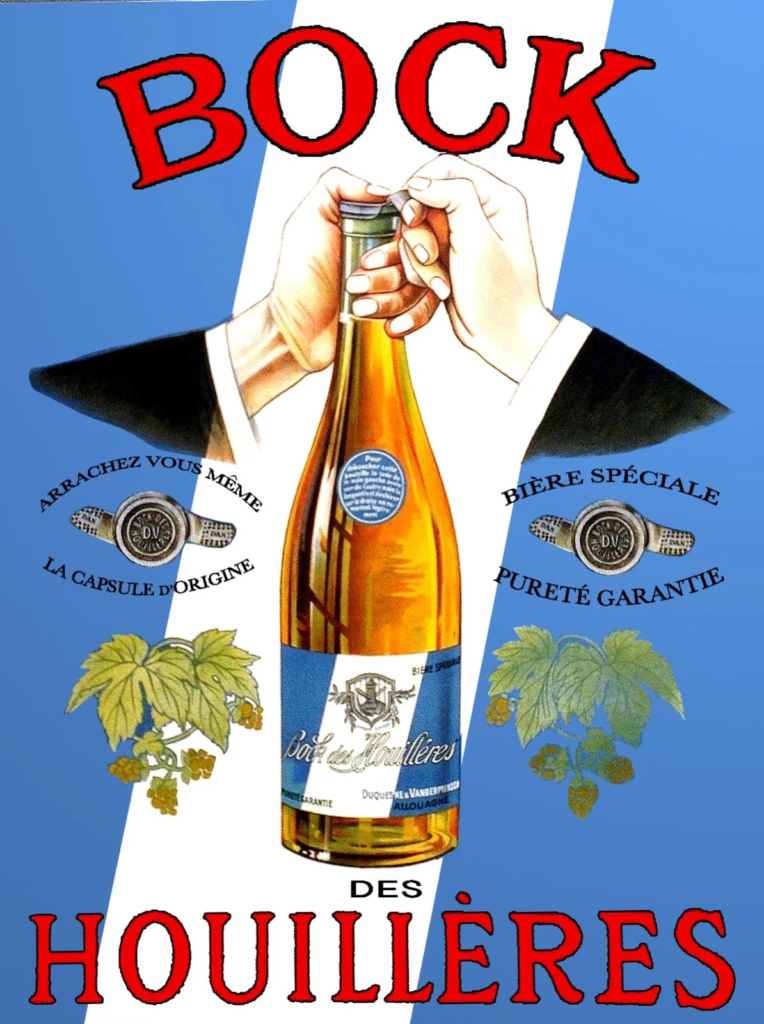
Wednesday’s work was created for “Bock Thillier,” which was published in 1926. It was created for the Brasserie Paul Thillier Fruges of Pas-de-Calais, France, which was founded in 1881. This poster was done by Editions Bachollet of Paris, France.

Filed Under: Art & Beer, Beers, Breweries, Just For Fun Tagged With: Advertising, Bock, France, History

Historic Beer Birthday: Harry MacElhone

June 16, 2026 By Jay Brooks Leave a Comment

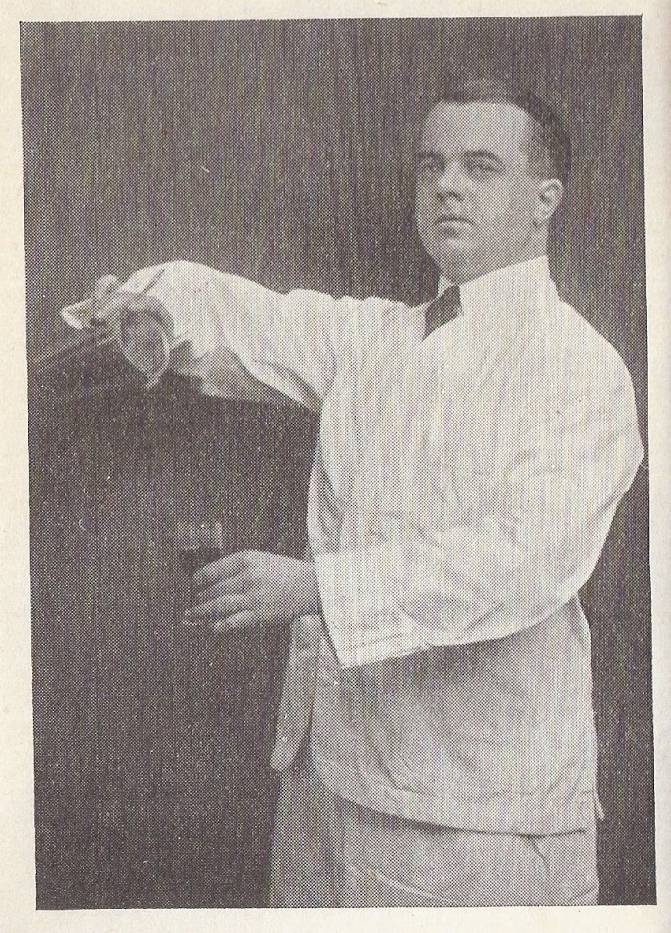
Today is the birthday of famed bartender and bar owner Harry MacElhone (June 16, 1890-September 16, 1996) who opened the famous Harry’s New York Bar in Paris, France in 1911.

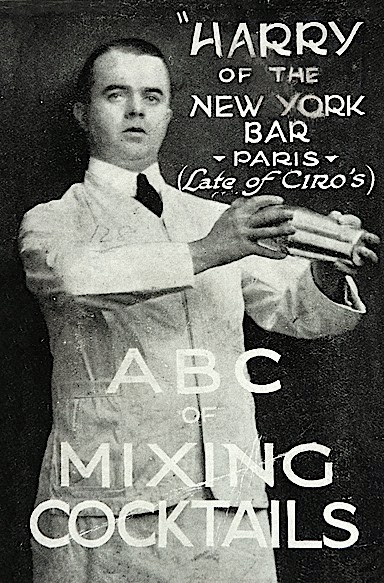
“Harry MacElhone was a defining figure in early 20th-century bartending, most famous for his role at Harry’s New York Bar, which he bought in 1923. Born in Dundee, Scotland, on 16 June 1890, he published books including Harry’s ABC of Mixing Cocktails and Barflies and Cocktails.

ABC-of-Mixing-Cocktails

MacElhone also worked at Ciro’s Club in Deauville and the Plaza Hotel New York. He is often credited with inventing many cocktails, including the Bloody Mary, sidecar, the monkey gland, the White Lady, the boulevardier, and an early form of the French 75. As of 2011, his descendants continued to run Harry’s Bar.”

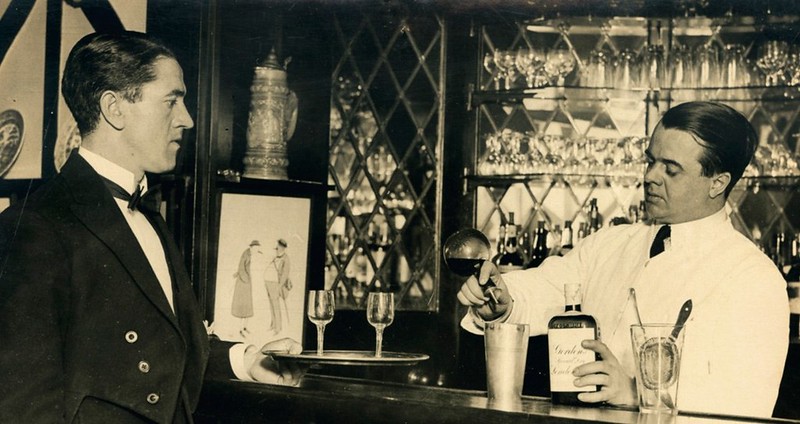
harry-macelhone-ciros
Harry (at right) as head barman at Ciro’s in London.

Harry’s New York Bar was originally founded by American jockey Tod Sloan, who so wanted to create the atmosphere of a New York saloon that he actually bought one in New York, had it dismantled, shipped to Paris and rebuilt it where it stands to day at 5 rue Daunou (Sank Roo Doe Noo). It’s original name was simply the New York Bar when it opened on Thanksgiving Day in 1911.

harrys-nybar
Harry’s New York Bar in Paris.

Sloan initially hired a Scottish bartender from Dundee named Harry MacElhone to run it, who twelve years later bought the bar in 1923 and added his first name to it. Shortly after opening, it began attracting American expatriates and celebrities, including such “Lost Generation” writers as F Scott Fitzgerald, Gertrude Stein and Ernest Hemingway. George Gershwin supposedly wrote “An American In Paris” there, and it has been visited by many movie stars over the years, from Humphrey Bogart to Clint Eastwood. In the book Casino Royale, Ian Fleming’s character Bond said it the best place in Paris to get a “solid drink.” It’s also where the Bloody Mary was first conceived, as well as the White Lady and the Sidecar.

A few years ago, Harry’s New York Bar celebrated its 100th anniversary and there were articles detailing the place, such as Harry’s Bar: The Original and A century of Harry’s Bar in Paris, by the BBC.

Filed Under: Birthdays, Just For Fun Tagged With: Bars, France, History

Historic Beer Birthday: John the Fearless

May 28, 2026 By Jay Brooks

gambrinus
Today is the birthday of John the Fearless (May 28, 1371–September 10, 1419). He was “also known as John of Valois and John I of Burgundy, [and] was Duke of Burgundy from 1404 to 1419. He was a member of the Burgundian branch of the Valois Dynasty. For a period of time, he served as Regent of France on behalf of his first cousin King Charles VI of France, who suffered from severe mental illness.”

Here’s another short biography from the University of Ohio’s eHistory:

Philip the Good John earned the moniker Fearless during a crusade he attempted to lead against the Turks in Nikopol in 1396. The Crusaders were defeated and John was captured. He was ransomed a year later. At the age of 33 he succeeded his father as duke. During the battle of Agincourt he was noticeably missing. During the next few years he negotiated with Henry V but no firm alliance was ever struck. He was assassinated in 1419 by partisans of the the dauphin Charles (later King Charles VII) during a negotiation session.

The origin of Gambrinus is “most widely believed to be John the Fearless (1371–1419), who some also believe to be the inventor of hopped malt beer.”

This speculation is written by Hugh Evans for the Homebrew Emporium:

The second historical figure who may have been mythologized into Gambrinus was John the Fearless (1371-1419), Duke of Burgundy. While Burgundy was known then as now more for wine than beer, it too produced a lot of ale. More surprising, John the Fearless is credited with being influential in the introduction of hops to European brewing. Prior to the use of hops, European brewers used a collection of herbs called Gruit to provide a bitter component to beer, as well as to help stabilize it. John Duke of Burgundy appears to have encouraged brewers in his fiefdoms to switch to using hops during his reign, reinforcing a trend that was already spreading across the continent.

And this is from the Lord of the Drinks:

An alternative name is John the Fearless (1371-1419), who was Duke of Burgundy. This John was also quite fond of long drinking sessions. Plus under his reign the use of hops in beer was legalized in several areas in Belgium. Since the mythical Gambrinus is said to have introduced hops, this could be a clear indication. Although hops was already used in nearby areas before John, and all together it took about 500 years before this ingredient had found its way to all corners of “the Lowlands”.

John_the_Fearless

Filed Under: Birthdays, Just For Fun Tagged With: France, History

Historic Beer Birthday: Christian Weyand

May 11, 2026 By Jay Brooks

Today is the birthday of Crétien “Christian” Weyand (May 11, 1826-August 7, 1898). He was born in France as Cretien Weyand, but came to the U.S. when he was 21, settling in the Buffalo area of New York. He was originally a shoemaker, but when he was forty years old, he co-founded the Main Street Brewery, along with a partner, John Schetter, who he eventually bought out in 1873. In 1890, the brewery was incorporated as the Christian Weyand Brewing Co. and remained in business until closed by prohibition in 1920.

Here’s a short biography from Find-a-Grave:

Weyand, Christian, was born in Lorraine, France, May 11, 1826, attended the common schools, and in the spring of 1847 came to America and settled in Buffalo, where he has since resided. He followed the shoemaker’s trade for some time, and then in 1866 engaged in the brewing business with a partner.

In 1873 he became sole owner of the establishment on the corner of Main and Goodell streets, and in a few years built up one of the largest and best breweries in Western New York. In May 1890, the Weyland Brewing Company was incorporated with C. Weyand. president; John A. Weyand, vice-president and manager; and Charles M. Weyand, secretary, and treasurer. Mr. Weyand is probably the best-known brewer in Buffalo. He is a prominent, public-spirited citizen, widely esteemed and respected, and has always enjoyed the confidence of all who know him. May 9, 1852, he married Magdalena Mayer of Buffalo.

And this is his obituary from the American Brewers Review:

This short history of Christian, and the brewery, is from the “1897 Brewers Convention Buffalo NY,” published by the Buffalo Brewers Association:

Christian Weyand Brewing Company.

In 1866, Christian Weyand established the business now conducted by The Christian Weyand Brewing Company. Mr. Weyand is a native of France, having been born in the province of Lorraine a little more than seventy years ago. There he spent his youth and received his education; but in his twenty-first year he left Lorraine for the wider opportunities of the New World, landing in New York just fifty years ago. He soon found his way to Buffalo, but it was nearly twenty years before he began the business with which his name is now so intimately connected in the minds of all Buffalonians. During these years he worked as a shoemaker — at first as an employee, and later in a shop of his own.

Mr. Weyand, with a partner, began the brewing business in a small way, with little capital and a poorly equipped plant; but the purest and best of barley malt was used from the start, and improved machinery was introduced as fast as the necessary capital could be secured. In 1873. Mr. Weyand assumed entire charge of the business, and applied himself vigorously to the task of building up a model brewery. His efforts met with entire success, and in a few years his establishment became one of the first in its line in Buffalo — a city that boasts of many fine breweries. In 1890, he organized the business into a stock company, called The Christian Weyand Brewing Company, of which he is president, his son, John A. Weyand, vice-president and manager, and another son, Charles M. Weyand, secretary and treasurer. Since then the business has materially increased, and in 1896-97 it became necessary to make extensive additions to the plant. The new buildings on the corner of Main and Goodell streets, built of buff terra cotta elaborately ornamented in Renaissance style, are exceedingly handsome; and it is now one of the best-equipped breweries in the country.

buffalo-main-and-goddell
This is purported to be a photograph of the house at the “Southeast Corner Main and Goodell Streets” from the 1912 “Picture Book Of Earlier Buffalo.” But as Michael F. Rizzo and Ethan Cox, authors of “Buffalo Beer” point out, “the structures in the background and to the left of the subject must have been the Christian Weyand brewery. Indeed, the least occluded building to the left was, I think, their office address on Goodell.”

Filed Under: Birthdays, Breweries, Just For Fun Tagged With: France, History, New York

Historic Beer Birthday: John J. Saltzmann

March 7, 2026 By Jay Brooks

Today is the birthday of John Jacob Saltzmann (March 7, 1828-May 21, 1892). He was born in Alsace, France, moved to the U.S. around 1852, bounced around New York, Buffalo, before opening the John J. Saltzmann Brewery in 1867, which was also known as the Palace Hill Brewery (which is the neighborhood where it was located) in Oil City, Pennsylvania. He brought in two of his sons, junior and Albert to help with the brewery and the year before senior’s death they, in 1890, they carried on running the brewery, renaming it Saltzmann Bros. Brewery, which it remained until prohibition. After repeal, it reopened briefly as Oil City Brewing Co., but closed for good in 1936.

John J. Saltzmann Sr. (on left) with two of his sons, John Jr. and Albert (though which is which, I can’t be sure).

Here’s Saltzmann’s obituary:

Filed Under: Birthdays, Breweries, Just For Fun Tagged With: France, History, Pennsylvania

Historic Beer Birthday: Mary of Burgundy

February 13, 2026 By Jay Brooks

duchesse
Today is the birthday of Mary of Burgundy (February 13, 1457-March 27, 1482), She was also known as the “Duchess of Burgundy, [and] reigned over the Low Countries from 1477 until her death. As the only child of Charles the Bold and his wife Isabella of Bourbon, she was the heiress to the vast, and vastly wealthy, Burgundian domains in France and the Low Countries upon her father’s death in the Battle of Nancy on January 5, 1477.”

Mary_of_burgundy-1490-Michael_pacher
Portrait of Mary of Burgundy, painted in 1490 by Austrian artist, Michael Pacher.

Here’s more about Mary, most of it from her Wikipedia page:

Mary of Burgundy was born in Brussels, at the ducal castle of Coudenberg, to Charles the Bold, Count of Charolais, and his wife, Isabella of Bourbon. Her birth, according to the court chronicler, Georges Chastellain, was attended by a clap of thunder ringing from the otherwise clear twilight sky. Her godfather was Louis, Dauphin of France, in exile in Burgundy at that time; he named her for his mother, Marie of Anjou. Reactions to the child were mixed: the baby’s grandfather, Duke Philip the Good, was unimpressed, and “chose not to attend the [Baptism] as it was only for a girl;” the grandmother, Isabella of Portugal, was simply delighted at the birth of a granddaughter.

Philip the Good died in 1467, making his son Duke of Burgundy and his 10-year-old granddaughter heiress presumptive. As the only child of Charles the Bold, Mary was heiress presumptive to a vast and wealthy domain, made up of the Duchy of Burgundy, the Free County of Burgundy, and the majority of the Low Countries, and her hand was eagerly sought by a number of princes. The first proposal was received by her father when she was only five years old, to marry the future King Ferdinand II of Aragon. Later the younger brother of Louis XI, Charles, Duke of Berry, made an approach, to the intense annoyance of his brother the King, who attempted to prevent the necessary papal dispensation for consanguinity.

As soon as Louis produced a male heir who survived infancy, the future King Charles VIII of France, Louis wanted his son to be the one to marry Mary, despite his son being thirteen years younger than Mary. Nicholas I, Duke of Lorraine, was a few years older than Mary, and his duchy lay alongside Burgundian territory, but his plan to combine his territory with hers was ended by his death in battle in 1473.

Mary ascended upon her father’s death in the Battle of Nancy on 5 January 1477. King Louis XI of France seized the opportunity afforded by his rival’s defeat and death to attempt to take possession of the Duchy of Burgundy proper, and also of Franche-Comté, Picardy and Artois.

A portrait believed to have been painted by Niklas Reiser.

The King was anxious that Mary should marry his son Charles and thus secure the inheritance of the Low Countries for his heirs, by force of arms if necessary. Burgundy, fearing the French military power, sent an embassy to France to negotiate a marriage between Mary and six-year-old Charles VIII, but returned home without a betrothal, finding the French king’s demands of cession of territories to the French crown unacceptable.

On February 10, 1477 at Ghent on the occasion of her formal recognition, known as the Joyous Entry, as Charles’ heir, she was compelled to sign a charter of rights, called the Great Privilege. Under this agreement, the provinces and towns of Flanders, Brabant, Hainaut, and Holland recovered all the local and communal rights which had been abolished by the decrees of the dukes of Burgundy in their efforts to create a centralized state on the French model out of their separate holdings in the Low Countries. In particular, the Parliament of Mechelen (established formally by Charles the Bold in 1470) was abolished and replaced with the pre-existing authority of the Parliament of Paris, which was considered an amenable counterweight to the encroaching, if informal, centralization undertaken by both Charles the Bold and Philip the Good. The Duchess also had to undertake not to declare war, make peace, or raise taxes without the consent of the States, and to employ only native residents in official posts.

Such was the hatred of the people for the old regime that two of her father’s influential councilors, the Chancellor Hugonet and the Sire d’Humbercourt, having been discovered in correspondence with the King of France, were executed at Ghent despite the tears and entreaties of the Duchess.

Another, later portrait by an unknown Flemish artist.

Mary now made her choice among the many suitors for her hand, selecting Archduke Maximilian of Austria, who became her co-ruler. The marriage took place at Ghent on the evening of 16 August 1477.[5] The event initiated two centuries of contention between France and the Habsburgs (later of Spain, then of Austria) for their possession, which climaxed in the War of the Spanish Succession, 1701–1714.

In the Netherlands, affairs now went more smoothly, the French aggression was temporarily checked, and internal peace was in large measure restored.

Five years later, the 25-year-old Duchess died due to a fall from her horse on March 27, 1482 near Wijnendale Castle. She loved riding, and was falconing with Maximilian when her horse tripped, threw her, and then landed on top of her, breaking her back. She died several days later, having made a detailed will. She is buried in the Church of Our Lady in Bruges.

Louis was swift to re-engage, and forced Maximilian to agree to the Treaty of Arras (1482) by which Franche-Comté and Artois passed for a time to French rule, only to be regained by the Treaty of Senlis (1493), which established peace in the Low Countries. Mary’s marriage to the House of Habsburg would prove to be a disaster for France, for the Burgundian inheritance would later bring it into conflict with Spain and the Empire.

There’s also a nice account of her life from the Freelance History Writer and the Royal Women blog.

Duchesse-bottle

But, of course, she was also the inspiration for a Belgian beer, brewed by the Brouwerij Verhaeghe, located in Vichte, which is a ancient castle and farm in West Flanders. The beer is called Duchesse de Bourgogne, and it’s a personal favorite of mine. I know some people think it’s uneven, or not a classic Flanders Red Ale, but I love it.

VerhaegheDuchesse

I also wrote about Duchesse de Bourgogne a few years ago, and at the time I did my own short overview of her life.

Beer aside, the history of the Duchesse is fascinating. Her anglicized name was Mary of Burgundy, though she was born in Brussels on February 13, 1457, the only child of Charles the Bold, Duke of Burgundy, and his wife Isabella of Bourbon. Needless to say she was quite a catch, especially after her father died in battle (at the siege of Nancy, not a particularly awful sounding name) in 1477, when she was nineteen. Louis XI of France tried to take Burgundy and the Low Countries for himself but was frustrated when Mary signed the “Great Privilege,” by which she gave Flanders, Brabant, Hainaut, and all of Holland autonomous rule (leaving for herself the remainder of the Low Countries, Artois, Luxembourg, and Franche-Comté). She then married Archduke Maximilian of Austria, who was later the Holy Roman Emperor Maximilian I, and part of the Hapsburg Austrian dynasty. This sparked a long-standing dispute over the Low Countries between France and the Hapsburg family.

One of Mary’s favorite hobbies was falconing, which was popular among royals in the day. Falconry is basically training and hunting using a falcon. While engaged in this pursuit, in 1482, Mary’s horse tripped, tossing her onto the ground where the horse then landed on top of her, breaking her back. A few days later she died. Mary was only 25. The beer label’s portrait pays homage to her love of falconry and her ultimate death because of it.

Her young son Philip became heir after her death, though Maximilian was in charge until he reached adulthood. King Louis forced Maximilian to sign the Treaty of Arras the same year, and it gave Franche Comté and Artois to France. But Philip was a virtual prisoner until 1485, and then it took Max another eight years to take back control of their lands in the Low Countries. The Treaty of Senlis, in 1493, finally established peace in the area, but Burgundy and Picardy remained French.

So during her short life, Mary had such great impact on European politics that they can be felt even now in the present. So it’s quite appropriate that she have so wonderful a beer that bears her name and her portrait. It’s a fitting legacy.

The description of the beer from the importer, D&V International:

The Duchesse de Bourgogne from Brouwerij Verhaeghe is the traditional Flemish red ale. This refreshing ale is matured in oak casks; smooth with a rich texture and interplay of passion fruit, and chocolate, and a long, dry and acidic finish. After the first and secondary fermentation, the beer goes for maturation into the oak barrels for 18 months. The final product is a blend of younger 8 months old beer with 18 months old beer. The average age of the Duchesse de Bourgogne before being bottled is 12 months.

Coat of arms of Mary of Burgundy.

Filed Under: Beers, Birthdays, Just For Fun Tagged With: Belgium, France, History

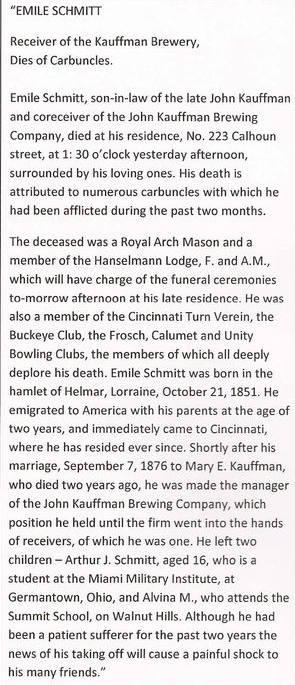
Historic Beer Birthday: John Kauffman

February 10, 2026 By Jay Brooks

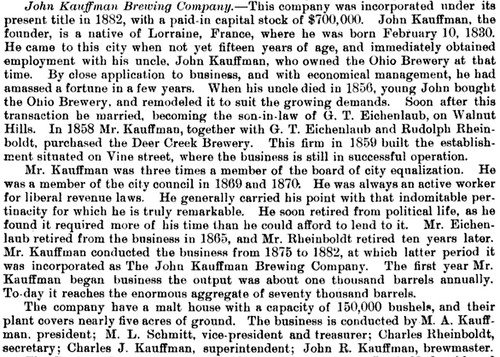
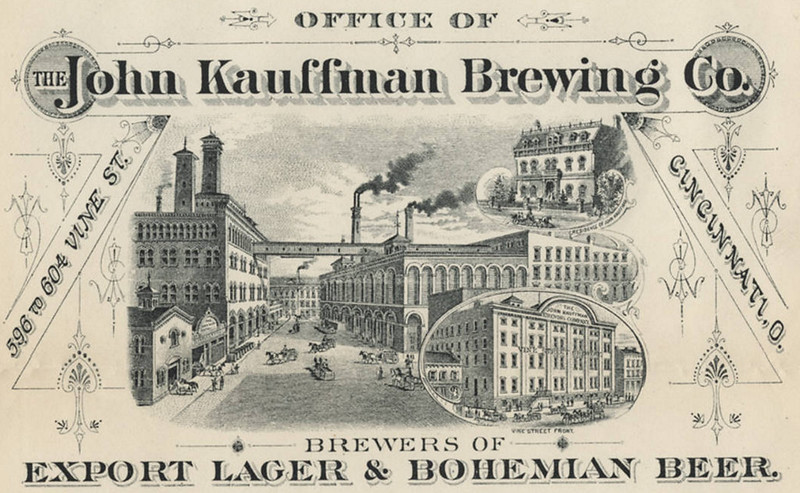
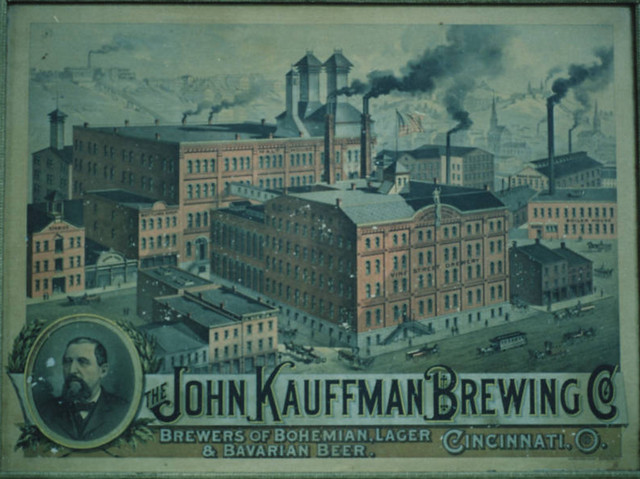
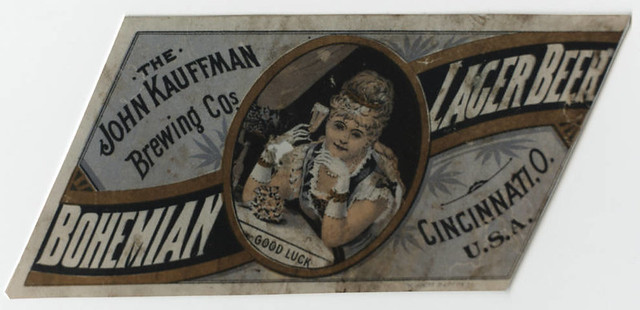
Today is the birthday of John Kauffman (February 10, 1839-January 15, 1886). Kauffman was born in Lorraine, France. He was part of the group that bought the Franklin Brewery in Cincinnati, Ohio in 1856. By 1859, it was called the John Kaufman & Co. Brewery, and it became the fourth largest brewery in Cincinnati. Eventually, he remained as the sole owner, and in 1882 renamed it the John Kauffman Brewing Co. It was closed by prohibition, and never reopened, although it was used as the Husman Potato Chip factory, so at least it was put to good use.
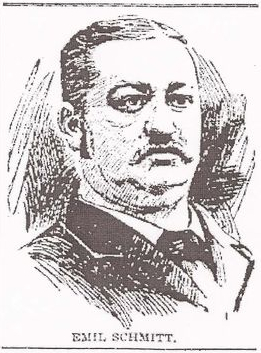
There’s an entry for the John Kauffman Brewery in the “History of Cincinnati and Hamilton County, Ohio,” published in 1894:

John-Kauffman-photo

Cincinnati Brewing History has this account of the brewery’s history, taken from Cincinnati Breweries, by Robert J. Wimberg, from 1989:

“In 1856 John Kauffman, George F. Eichenlaub, and Rudolf Rheinbold purchased the Franklin Brewery on Lebanon Road near the Deer Creek from Kauffman’s aunt. Her husband, John Kauffman, estabished the brewery in 1844. He died in 1845. In 1859 under the name Kauffman and Company, they began to build a new brewery on Vine Street and soon left the Deer Creek location. The first structure on Vine was completed in 1860.

In 1871 the Kauffman Brewery was the city’s fourth largest with sales amounting to $30,930. It was located on both the west and east sides of Vine north of Liberty and south of Green Street.

In 1860 Kauffman also bought the Schneider grist mill on Walnut Street near Hamilton Road (McMicken Avenue), but leased it out before long to another company.

In its first year on Vine Street, the brewery produced only about 1000 barrels. By 1877 the number grew to 50,000 barrels of beer. Kauffman’s beer was sold in Nashville, Montgomery, Atlanta, Charleston, Savannah, and New Orleans.

In 1865 Eichenlaub retired from the business and he was followed by Rheinbold in 1877. John Kauffman then took over the leadership by himself. After his oldest son Johnn studied brewing in Augsburg, Germany, he went to work at the family brewery. Emil Schmidt, Kauffman’s son-in-law, was superintendent by 1877.

In 1882 the brewery was incorporated as the John Kauffman Brewing Company with a paid-in capital stock of $700,000. In 1888 the brewery building at 1622 Vine was enlarged. Note it is occupied by the Schuerman Company today. The office and family residence was at 1625-27 Vine, which was razed and replaced about 75 years ago.

John Kauffman died in 1892 and his wife Marianne Eichenlaub Kauffman took over. She was president of the corporation; Emil Schmidt, vice-president; and treasurer; Charles Rheinbold, secretary; Charles J. Kauffman, superintendent; and John R. Kauffman, brewmaster. By 1894 the brewery produced 70,000 barrels of beer. The malt house had a capacity of 150,000 bushels of barley and the brewery plant covered five acres of ground.

By 1913 John R. Kauffman was president of the company. The brewery produced ‘Gilt Edge’, ‘Columbia’ and ‘Old Lager’ beers. It closed in 1919 when Prohibition became law and never reopened.”
John-Kauffman-Brewery-poster

The brewery is also mentioned briefly in a History of the Brewery District for Cincinnati:

Industry continued to be an important factor in Over-the-Rhine’s development. The canal area was still the location of many diversified industries, including lumberyards, foundries, pork packers, tanneries, and glycerin works. The brewing industry tended to concentrate along McMicken Avenue and the Miami and Erie canal (what is now the Brewery District). By 1866 the Jackson Brewery, J. G. John & Sons Brewery, Christian Moerlein Brewing Company, and John Kauffman Brewing Company dominated the industrial use of the area. In close association on the west side of the canal were the John Hauck and Windisch-Mulhauser Brewing Companies. Between 1875 and 1900 seventeen breweries were located in Over-the-Rhine and West End.
Kauffman-brewery-letterhead

John_Kauffman_Brewing_Company_beer_label

Filed Under: Birthdays, Breweries, Just For Fun Tagged With: France, History, Ohio

Historic Beer Birthday: Andrew MacElhone

February 8, 2026 By Jay Brooks

harrys-ny-bar
Today is the birthday of famed bartender Andrew MacElhone (February 8, 1923-September 16, 1996) whose father opened the famous Harry’s New York Bar in Paris, France in 1911.

It was originally founded by American jockey Tod Sloan, who so wanted to create the atmosphere of a New York saloon that he actually bought one in New York, had it dismantled, shipped to Paris and rebuilt it where it stands to day at 5 rue Daunou (Sank Roo Doe Noo). It’s original name was simply the New York Bar when it opened on Thanksgiving Day in 1911. Sloan initially hired a Scottish bartender from Dundee named Harry MacElhone to run it, who twelve years later bought the bar in 1923 and added his first name to it. Shortly after opening, it began attracting American expatriates and celebrities, including such “Lost Generation” writers as F Scott Fitzgerald, Gertrude Stein and Ernest Hemingway. George Gershwin supposedly wrote “An American In Paris” there, and it has been visited by many movie stars over the years, from Humphrey Bogart to Clint Eastwood. In the book Casino Royale, Ian Fleming’s character Bond said it the best place in Paris to get a “solid drink.” It’s also where the Bloody Mary was first conceived, as well as the White Lady and the Sidecar.
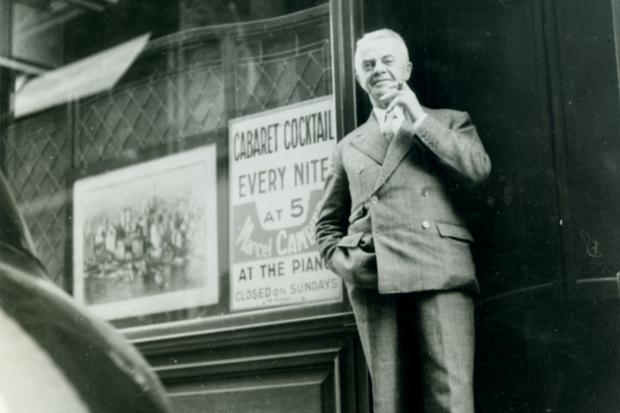
Andrew started working in the bar in 1939, when he was 16, and never left. He took over for his father Harry MacElhone in 1958 and continued to run the bar for 31 years, until 1989. He’s also credited with creating the Blue Lagoon cocktail in the 1960s, when Blue Curaçao was first available in bottles.

harrys-nybar
Harry’s New York Bar in Paris.

Filed Under: Birthdays, Just For Fun Tagged With: Bars, France

Historic Beer Birthday: Gustave Amos

January 1, 2026 By Jay Brooks

Today may be the birthday of Gustave Amos (1840-1910), but the exact month and day is unknown. He was a Protestant Lutheran originally from Wasselonne, in northeastern France. He founded the Brasserie Amos in 1868, which was located in Metz, which is part of the Moselle, which is in the Lorraine area of Eastern France. His father, Jean Amos, owned and operated a candle factory, then a soap factory, but it was his Uncle Edouard, who was a local brewer, that introduced Gustave to brewing when he was very young. The Amos brewery kept growing and doing very well, but in 1910, Gustave was killed in accident when he was struck by a cab right outside the front door of the brewery. His son, Gustave Amos, Jr. continued to run the brewery and it stayed in the family until his great-grandson, Gérard Frantz, sold the brewery in 1988 to the German group Karlsberg (called Karlsbräu outside Germany to avoid confusion with Carlsberg) in Homborg. They closed the brewery in 1993.

This brief biograpy of Gustave is from L’Histoire sous un autre Angle, translated by Google:

Gustave Amos, the founder of the brewery, comes from a large family in Wasselonne. Born in 1840, he is the grandson of Frédéric Georges Amos who settled in Wasselonne during the revolutionary period, around 1795. Coming from a patrician family of reformed Württemberg which dates back to the beginning of the 16th century, Frédéric Georges will become the ancestor of a line of industrialists, officers, engineers and doctors. Nowadays, two streets in Wasselonne recall this illustrious family. If two streets in Wasselonne honor the Amos family, Canada has preferred to give the name of this family to one of its towns.

This account of the brewery’s early history comes from Le Blog des Bibliothèques Médiathèques de Metz in a post entitled “Last Sips of Amos:”

Contrary to what the collective imagination retains, the beer industry made its appearance in the Metz region before the annexation of the department by Germany. Indeed, the Amos brewery opened its doors in 1868! It was founded by Gustave Amos, a young brewer from Wasselonne (Bas-Rhin), in line with the family business. An excellent master brewer and remarkable businessman, Gustave Amos quickly succeeded in raising his brewery to the forefront of Moselle beer producers, even though the city of Metz had more than fifteen active breweries. First located in the city center, the company moved to the Sablon district shortly after the War of 1870.

Brewery employees before World War 1.

During the entire period of the Annexation, Gustave Amos made a point of surpassing the Germanic breweries which had established themselves in the Metz region. At that time, the Amos brewery became the meeting place for the Metz bourgeoisie of French origin in Metz. An anecdote reported by the Bière et brasseries de Moselle website tells us thatin 1895, a 72-year-old former notable from Metz, exiled to Pont-à-Mousson, cycled daily to Metz to join the regulars’ table, between 5 and 7 p.m. Thus, the “native” inhabitants of Lorraine could freely taste a local beer with the nose and beard of the Occupant! Faced with the success encountered, Gustave Amos transformed his company into a Société Anonyme in 1908, allowing his children to succeed him and the family business to remain independent. Great good for him, because barely two years later, he died hit by a cab in front of his brewery. Gustave-fils therefore took over the management of the Amos company. Although competition from German breweries was fierce, on the eve of the First World War, Amos was the third largest Moselle brewery, with an annual production of 70,000 hectoliters. This strong activity can in part be explained by the presence of a large garrison stationed in the city; in addition, the German immigrant population consumed a lot of beer … and this despite the controversy reported inLa Gazette lorraine , the official French-speaking press of the occupier, according to which brasseries of French origin served beer in glasses of smaller capacity than German mugs!

Another view of the brewery from the other side.

Moselle beer and breweries picks up the story:

Gustave moved to Metz in 1868. He rented for three years, then bought from Jean-Baptiste Reinert, the brewery located at the corner of the rue Hollandre- Piquemal and d’Heltz, opposite the Belle-Isle hospital. The places quickly became too small and, in 1874, the brewery moved to Sablon.

The larger Amos brewery in Sablon.
Although the one in Metz was no slouch.

Filed Under: Birthdays, Breweries, Just For Fun Tagged With: France

Beer In Ads #5157: Bock Thillier

December 31, 2025 By Jay Brooks

Last year I decided to concentrate on Bock ads for awhile. Bock, of course, may have originated in Germany, in the town of Einbeck. Because many 19th century American breweries were founded by German immigrants, they offered a bock at certain times of the year, be it Spring, Easter, Lent, Christmas, or what have you. In a sense they were some of the first seasonal beers. “The style was later adopted in Bavaria by Munich brewers in the 17th century. Due to their Bavarian accent, citizens of Munich pronounced ‘Einbeck’ as ‘ein Bock’ (a billy goat), and thus the beer became known as ‘Bock.’ A goat often appears on bottle labels.” And presumably because they were special releases, many breweries went all out promoting them with beautiful artwork on posters and other advertising.

Tuesday’s poster is for Bock Thillier, which was created in 1926, exactly one hundred years ago. This poster was for the Brasserie P. Thillier of Fruges, a french commune located in the department of Pas-de-calais in region Hauts-de-france, which is in Northern France, which was originally founded in 1881 by Paul Thillier’s mother, and he took over the brewery and modernized it beginning in 1908. I’m not sure who the artist was who created it, though it was printed by Bachollet Editions.

Filed Under: Art & Beer, Beers, Breweries, Just For Fun Tagged With: Advertising, Bock, France, History

Next Page »

Find Something

Northern California Breweries

Please consider purchasing my latest book, California Breweries North, available from Amazon, or ask for it at your local bookstore.

Recent Comments

  • Bob Paolino on Beer Birthday: Grant Johnston
  • Gambrinus on Historic Beer Birthday: A.J. Houghton
  • Ernie Dewing on Historic Beer Birthday: Charles William Bergner 
  • Steve 'Pudgy' De Rose on Historic Beer Birthday: Jacob Schmidt
  • Jay Brooks on Beer Birthday: Bill Owens

Recent Posts

  • Beer In Ads #5276: Last Call For Bock Beer June 26, 2026
  • Beer Birthday: Jamil Zainasheff June 26, 2026
  • Historic Beer Birthday: Isaac Leisy June 26, 2026
  • Historic Beer Birthday: James Anderton June 26, 2026
  • Beer Birthday: Alan Moen June 26, 2026

BBB Archives

Feedback

Head Quarter
This site is hosted and maintained by H25Q.dev. Any questions or comments for the webmaster can be directed here.