Brookston Beer Bulletin

Jay R. Brooks on Beer

  • Home
  • About
  • Editorial
  • Birthdays
  • Art & Beer

Socialize

  • Dribbble
  • Email
  • Facebook
  • Flickr
  • GitHub
  • Instagram
  • LinkedIn
  • Pinterest
  • RSS
  • Twitter
  • YouTube

Powered by Genesis

Beer In Ads #2008: Steady As She Goes

August 20, 2016 By Jay Brooks


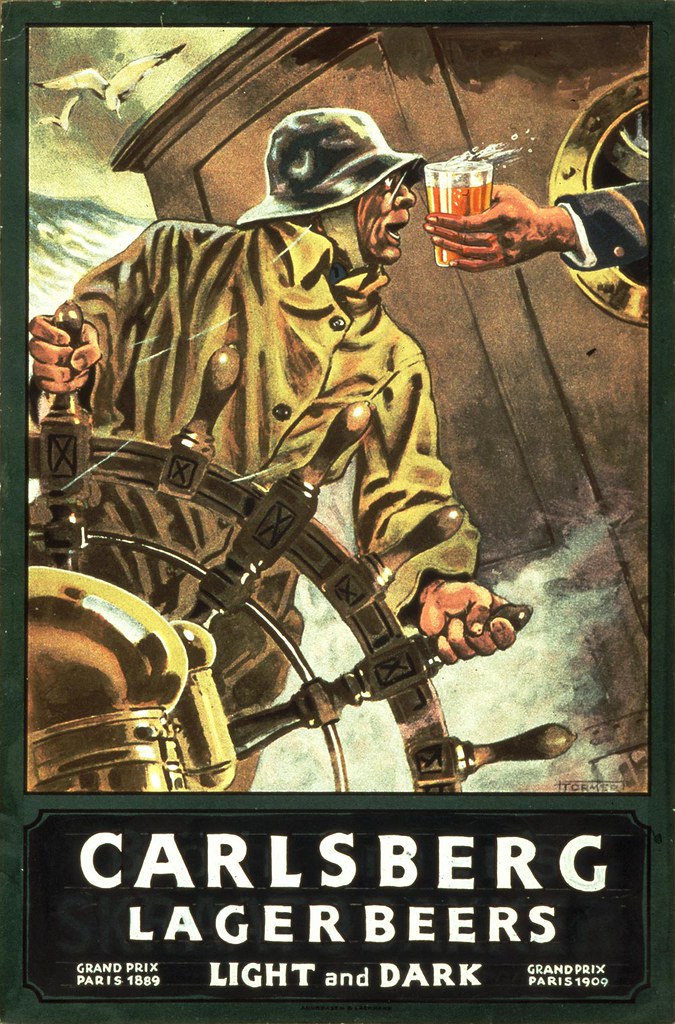
Saturday’s ad is for Carlsberg, from who knows when. Showing the deck of a ship during a storm, the helmsman — wearing a rain slicker and cap — is doing his best to steer the ship. Out of the safety of a porthole inside, a hand thrusts out offering him a beer. He looks like he could use a beer.
carlsberg44

Filed Under: Art & Beer, Beers Tagged With: Advertising, Carlsberg, History

Patent No. 3397871A: Beer Carbonator

August 20, 2016 By Jay Brooks

patent-logo
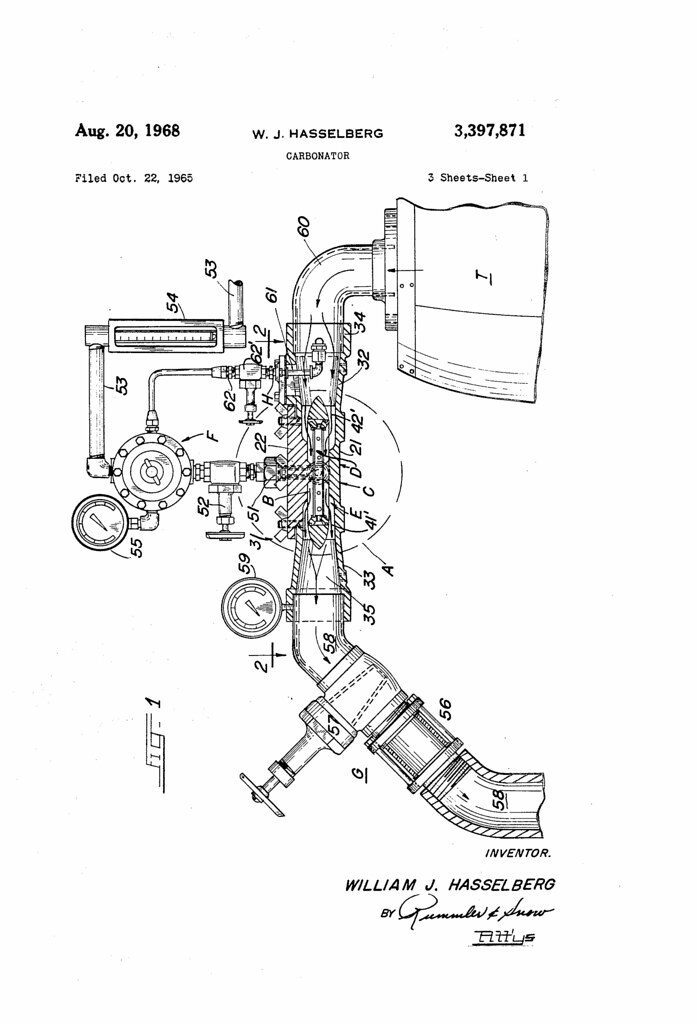
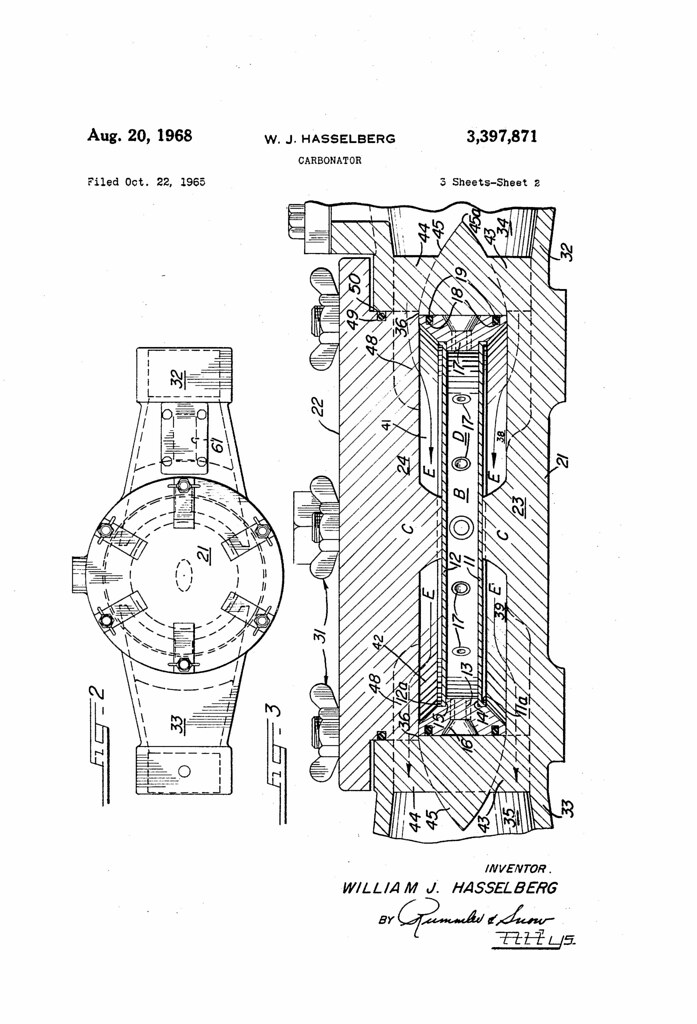
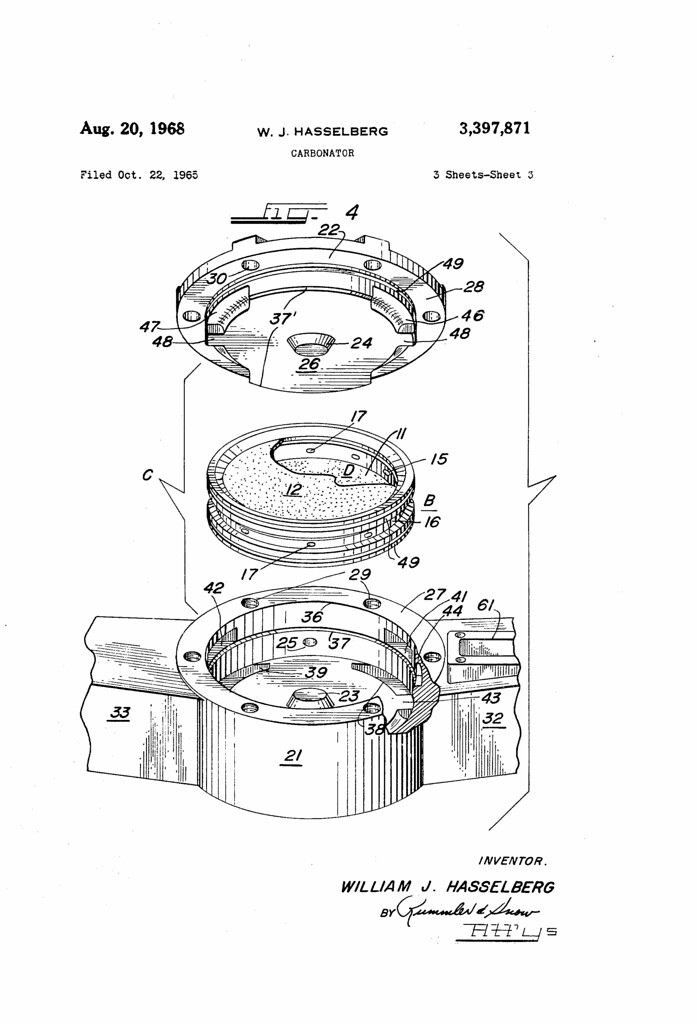
Today in 1968, US Patent 3397871 A was issued, an invention of William J. Hasselberg, for his beer “Carbonator.” There’s no Abstract, although in the description it includes these claims:

The carbonating of beverages generally is effected by the pressed flow of carbon-dioxide (CO into the beverage as it is conveyed into sealed receptacles, subject to later draft therefrom for consumption. Beer is one of the principal beverages of this kind. When the beverage is drawn from the storage receptacle for transfer to containers for marketing the beverage, there has to be a charging of the beverage with carbon-dioxide. With beer this re-carbonization has to be done with considerable care in order to get the desired quality thereof when it is to be drawn from containers for consumption. The desire is to so carbonate the beer that when poured from a marketing container into a container for drinking, the beer displays the quality expected of good beer. Carbonating means, heretofore and currently in use, have fallen far short of such attainment. Further, there is a great need for larger capacity carbonating devices.

The main objects of this invention are: to provide an improved structuring of a carbonator for charging a beverage before, or as, it is packaged for consumption; to provide an improved structuring of a carbonator of this kind especially adapted for charging beer that has been held in storage receptacles for a considerable period before being packaged for consumption; to provide a carbonator of this kind structured to inject into, and mix with the beverage flow from the storage receptacle, the carbon-dioxide (CO in a mist-like form so that when the beverage is poured from the marketing container into a drinking container the beverage displays a quality closely simulating that of champagne; to provide a device of the class which will force rapid binding of the CO gas with the beer flow; to provide means to split up the beer flowing through a conduit into two chambers, and injecting precisely controlled CO gas into the beer flowing therethrough and, by continuing flow the charged beer returns to a conduit for packaging or storage; and to provide an improved carbonator of this kind of such simple construction as to make very economical the manufacture thereof, and exceedingly gratifying the beverage resulting from the use thereof.

US3397871-0
US3397871-1
US3397871-2

Filed Under: Beers, Just For Fun, Politics & Law, Related Pleasures Tagged With: History, Kegs, Law, Patent

Patent No. 681056A: Refrigerating And Tapping Box

August 20, 2016 By Jay Brooks

patent-logo
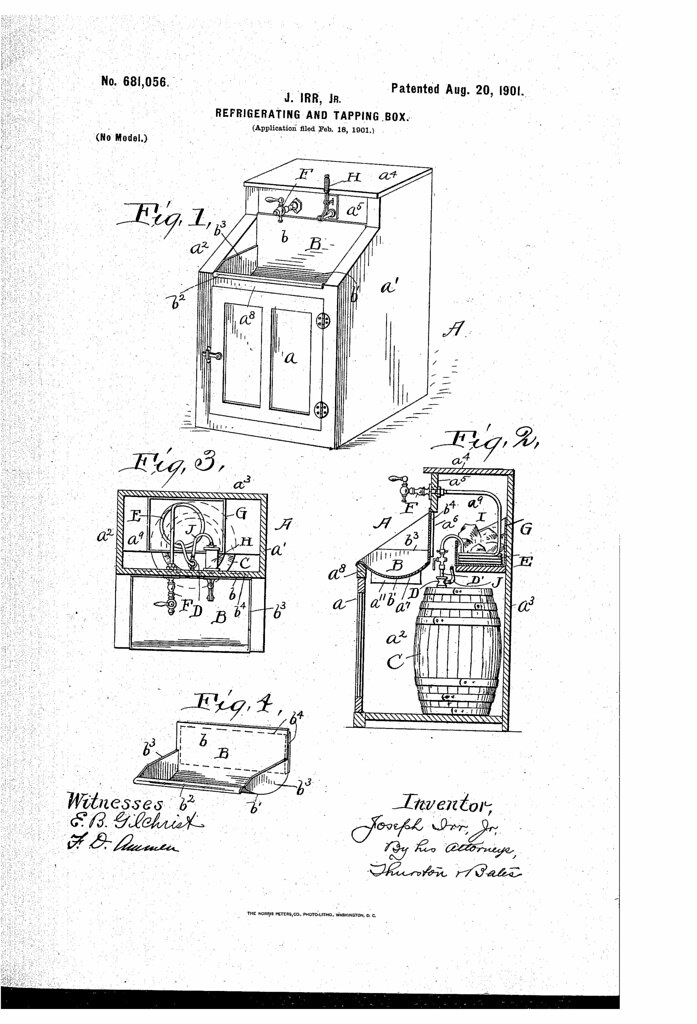
Today in 1901, US Patent 681056 A was issued, an invention of Joseph Irr Jr., for his “Refrigerating and Tapping Box.” There’s no Abstract, although in the description it includes these claims:

The primary object of this invention is to provide a very simple, efficient, and compact refrigerating-box for the reception of a beer keg and for the convenient tapping of the same. In order that the beer-faucet may be conveniently operated, it must be at a fairly well defined height above the floor, while for the necessary connections to be conveniently made to the tapping-tube it must project a certain distance above the top of the beer keg. The result is that with an ordinary construction of cabinet to allow room for the insertion of a keg with the tap-tube would require the faucet to be placed at an inconvenient height, ‘wherefore the best that has and tapping of the keg all arranged in one compartment. There may be as many of these compartments laterally as desired. Where there is more than one compartment, the faucets may be provided in but one of them and properly connected with the others.

US681056-0

Filed Under: Beers, Just For Fun, Politics & Law, Related Pleasures Tagged With: Bars, History, Kegs, Law, Patent

Patent No. 680836A: Apparatus For Cleansing Faucets And Their Connections

August 20, 2016 By Jay Brooks

patent-logo
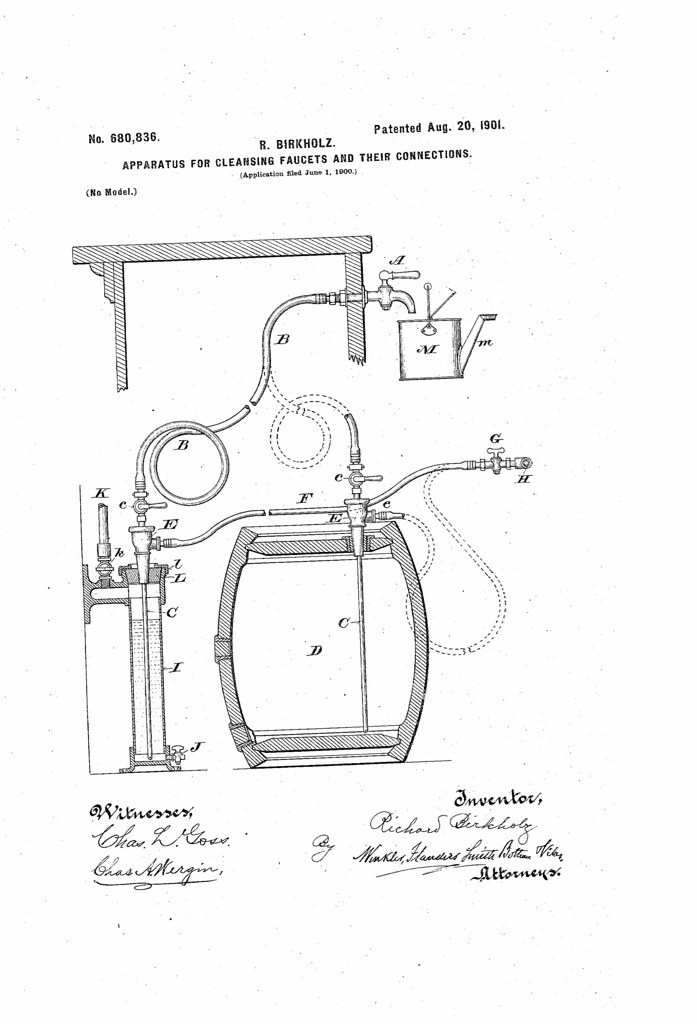
Today in 1901, US Patent 680836 A was issued, an invention of Joseph J. Danks, for his “Apparatus For Cleansing Faucets and Their Connections.” There’s no Abstract, although in the description it includes these claims:

I have invented certain new and f useful Improvements in Apparatus for Cleaning the viscous deposits and other impurities which collect in beer-dispensing faucets and their pipe or hose connections leading from the kegs or barrels from which the beer is drawn. Its main objects are to facilitate changing the connections for cleansing the dispensing apparatus and for drawing beer or other liquid to be dispensed, to save time, and to avoid waste both of the beer or liquid to be dispensed and of the cleansing materials.

US680836-0

Filed Under: Beers, Just For Fun, Politics & Law, Related Pleasures Tagged With: History, Kegs, Law, Patent

Beer In Ads #2007: And Saw A …

August 19, 2016 By Jay Brooks


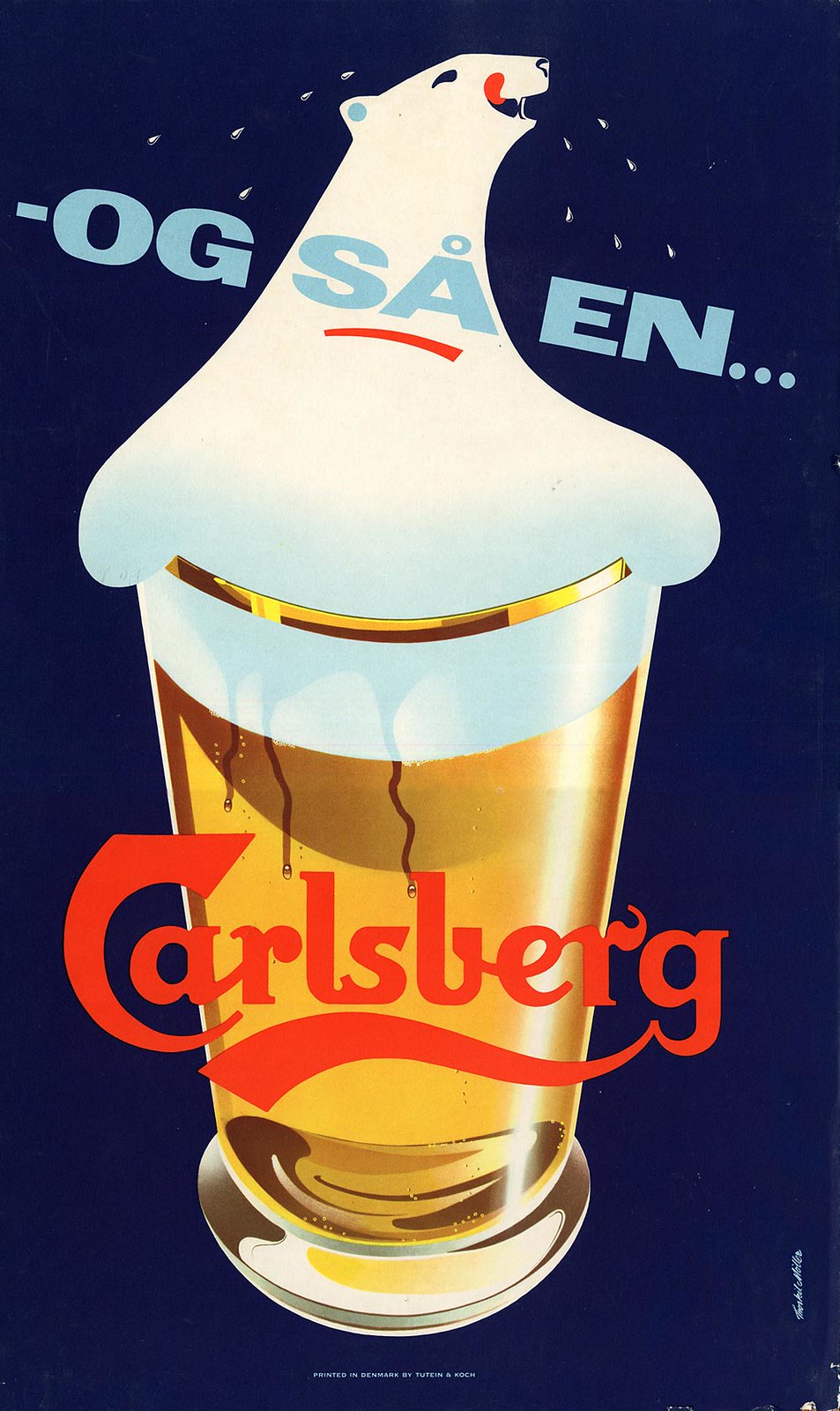
Friday’s ad is for Carlsberg, from the late 1950s. With a polar bear emerging from the foam of the glass of beer, the text reads “—Og Så En,” which Google translates as “And saw a …” though there must be another meaning for that phrase. It’s still a pretty cool illustration, though.

carlsberg19

Filed Under: Art & Beer, Beers Tagged With: Advertising, Carlsberg, History

Peter Parley’s Definitions Of Beer

August 19, 2016 By Jay Brooks

book
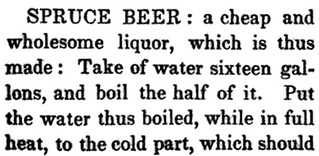
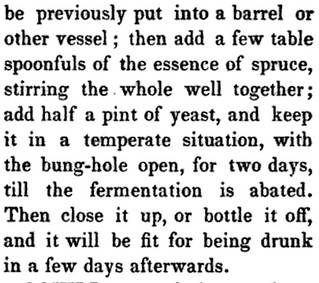
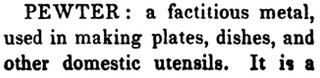
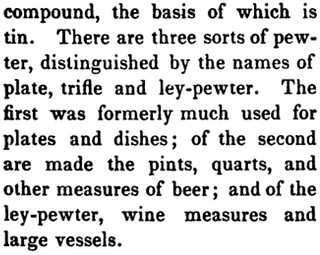
Today is the birthday of Samuel Griswold Goodrich, an American writer who wrote under the pseudonym Peter Parley (August 19, 1793-May 9, 1860). He was a very prolific writer, of mostly non-fiction and children’s books, with around 170 titles, with an estimated sales total of around 8,000,000 copies of his books sold during his lifetime. One of his most popular titles, “Peter Parley’s Geography for Children,” is believed to have sold 2,000,000 copies alone! He also published magazines, such as “The Token,” almanacs and much more.

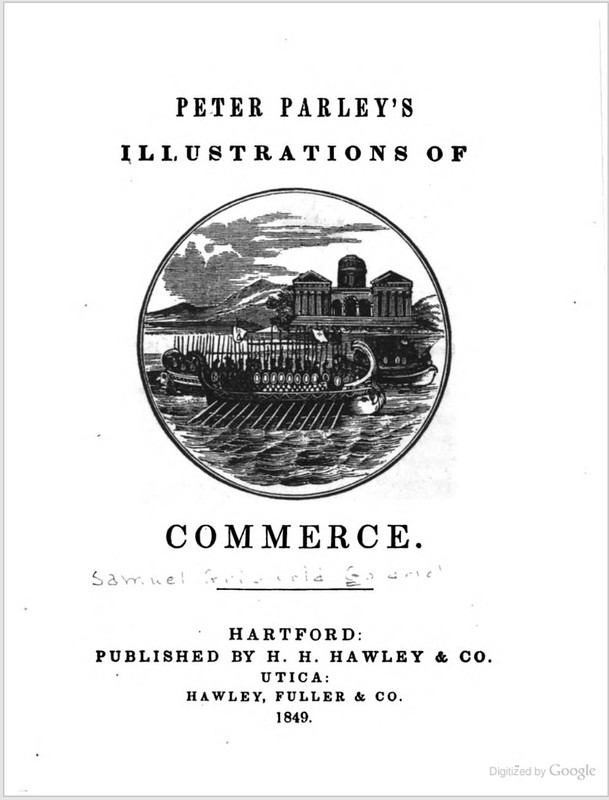
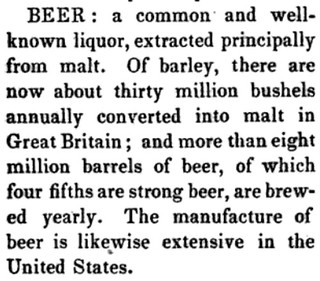
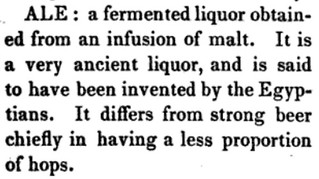
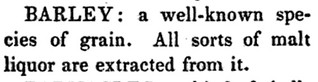
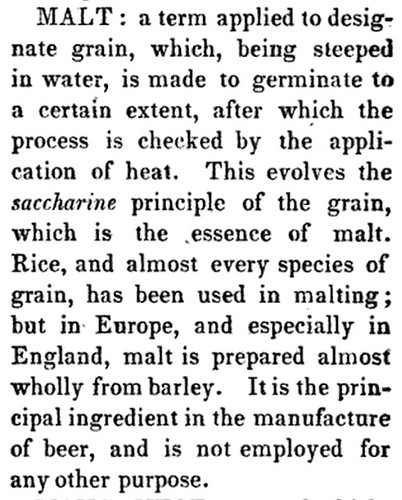
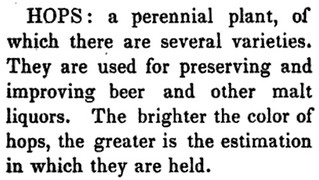
One of his books, Peter Parley’s Illustrations of Commerce, was published in 1849. It’s essentially a dictionary of goods that can be sold which Goodrich defines in the beginning of his Preface as “the exchange of commodities for other articles, or for some representative of value, or for which other commodities can be procured.” There are short entries defining and describing a wide range of items under that loose definition. Not surprisingly, a few of them are about beer or the ingredients that are used to brew it. His books were aimed at a general audience, rather than brewers or others knowledgeable about beer, so they definitions are interesting when viewed in that context.

parleys-commerce

Beer

parley-beer

Ale

parley-ale

Barley

parley-barley

Malt

parley-malt

Hops

parley-hops

Spruce Beer

parley-spruce-1
parley-spruce-2

Pewter

parley-pewter-1
parley-pewter-2

Filed Under: Beers, Just For Fun, Related Pleasures Tagged With: Connecticut, History, Literature

Patent No. 434430A: Keg And Barrel Washing Machine

August 19, 2016 By Jay Brooks

patent-logo
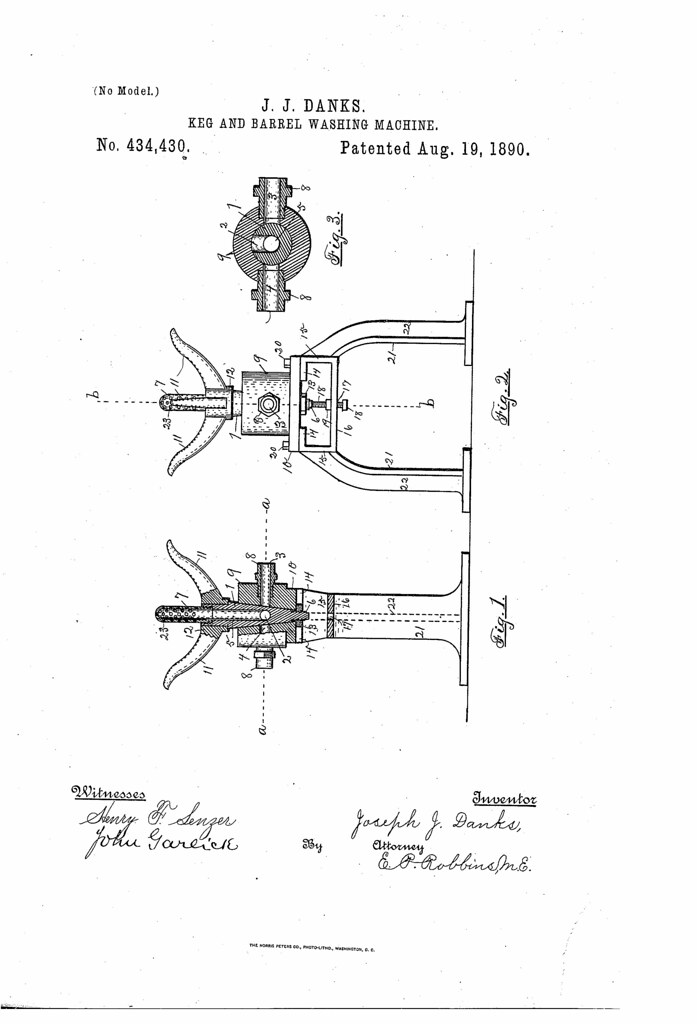
Today in 1890, US Patent 434430 A was issued, an invention of Joseph J. Danks, for his “Keg and Barrel Washing Machine.” There’s no Abstract, although in the description it includes these claims:

The object of my invention is to produce a keg and barrel washing machine which will be simpler of construction, more convenient to use, less expensive, and more durable than similar previous machines. A machine similar to this is shown and described in Patent N 0. 330,550, for a keg-washing machine, dated November 17, 1885, and granted to H. Binder.

That machine has two independent support ing-frames with a keg-holder supported by-one frame and a valve supported by the other, with their respective axes parallel and an operative mechanical connection between them, consisting of gearing or its equivalent. The principle of construction of that machine requires such a mechanical connection between the keg holder and the valve, and also is limited in operation to an oscillating turning motion. The Valve part or plug has two side openings near each other, which, with the oscillating motion necessary, causes uneven wear on one side of the valve-plug and in time causes the valve to leak, when the machine must be repaired, and since such machines are worked continuously such wear results soon and is objectionable.

In order to attain the objects above mentioned, I have devised my machine so that the axis of the valve and that of the keg holder may coincide, and so that the valve plug and holder may be rigidly connected together, and hence no operative mechanical connection be required between the valve and keg-holder, thus having a simple and inexpensive arrangement with a single frame. Further, I make but one side opening in the valve plug and am enabled to rotate the keg holder and valve in either direction continuously, thus avoiding undue wear of the parts.

US434430-0

Filed Under: Beers, Breweries, Just For Fun, Politics & Law, Related Pleasures Tagged With: Brewing Equipment, History, Kegs, Law, Patent

Patent No. 141944A: Improvement In Apparatus For Preserving Beer On Draft

August 19, 2016 By Jay Brooks

patent-logo
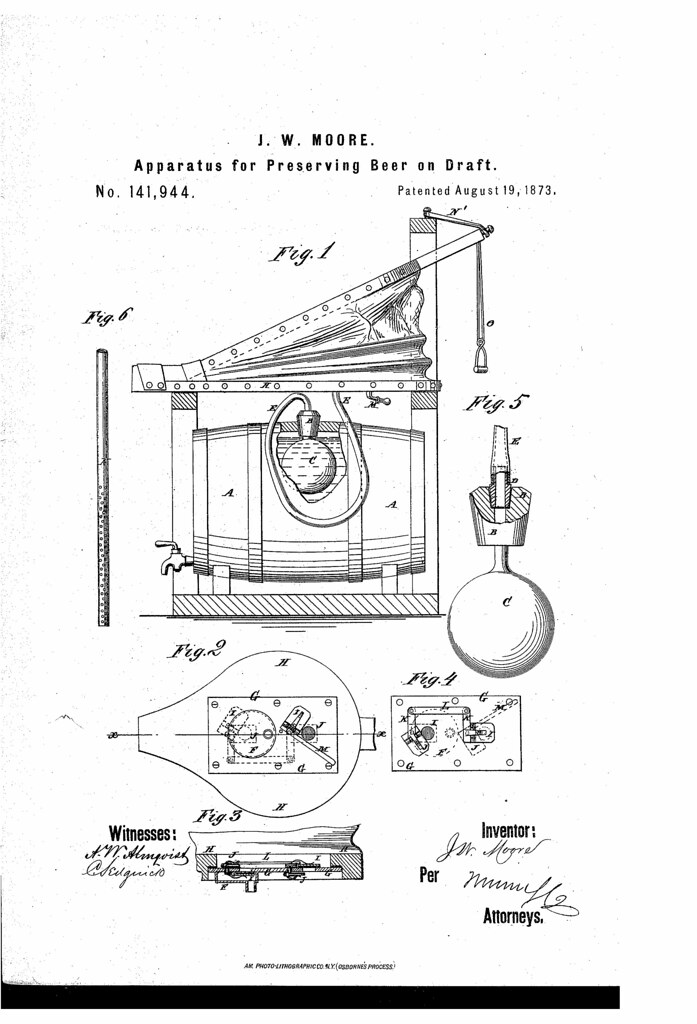
Today in 1873, US Patent 141944 A was issued, an invention of John W. Moose, for his “Improvement in Apparatus For Preserving Beer on Draft.” There’s no Abstract, although in the description it includes these claims:

This invention relates to means for introducing air into casks to take the place of the liquid drawn out; and it consists in the combination, with a flexible bag or air holder, of a valve and bellows mechanism of a novel construction, as will be hereinafter more fully described. It further consists in the employment of a perforated tube for withdrawing the air from the flexible bag.

US141944-0

Filed Under: Beers, Just For Fun, Politics & Law, Related Pleasures Tagged With: Barrels, History, Kegs, Law, Patent

Beer In Ads #2006: Gamle Carlsberg Hipster

August 18, 2016 By Jay Brooks


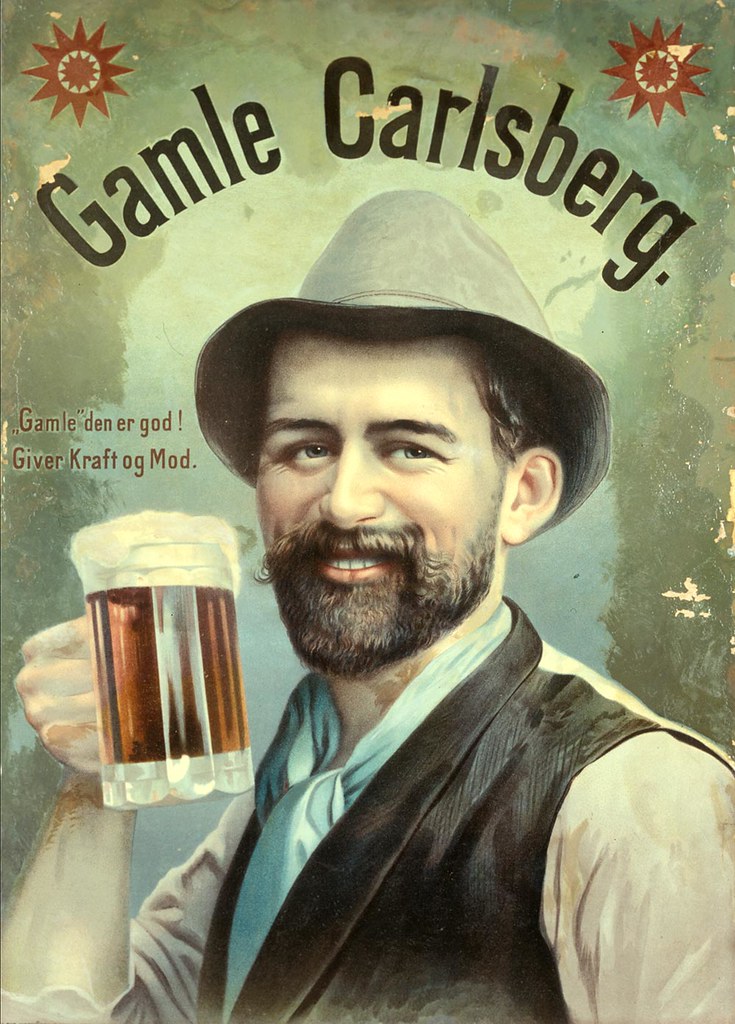
Thursday’s ad is for Carlsberg, from 1897. Apparently they had hipsters as far back as the late 19th century with that chapeau, the flowing mustache, closely manicured beard and the baby blue ascot. Above that mug of beer he’s holding, the text translates roughly to “‘Old’ it is good! Give strength and courage,” whatever that means. I expect that’s not quite the sense of what it’s trying to say. But he looks so happy that he’s making me thirsty.

carlsberg32

Filed Under: Art & Beer, Beers Tagged With: Advertising, Carlsberg, History

Patent No. 3145106A: Addition Of Dry Clay To Beer

August 18, 2016 By Jay Brooks

patent-logo
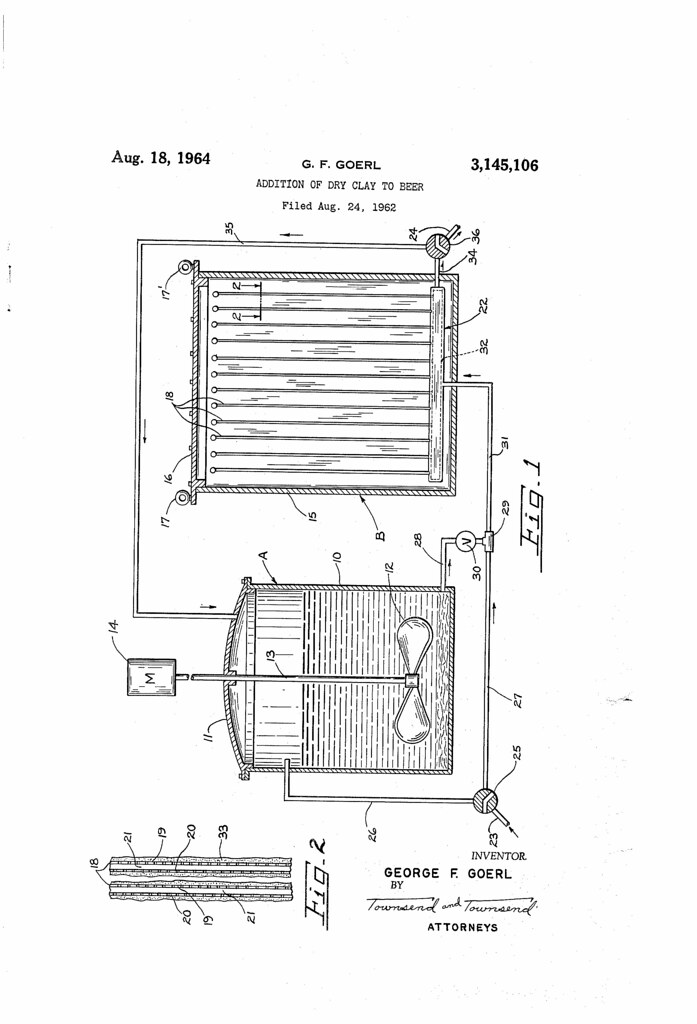
Today in 1964, US Patent 3145106 A was issued, an invention of George F. Goerl, for his “Addition Of Dry Clay To Beer.” There’s no Abstract, although in the description it includes these claims:

The gist of the present invention lies in the addition of chill-proofing clay to beer in dry form without first forming an aqueous slurry of the clay as in prior procedures. The dry clay is introduced into the beer by incorporating the clay in the conventional filter cake used to pre-filter beer after fermentation. The clay enters the beer as the beer passes through the filter cake. By adding the clay in dry form the sludge and beer loss attendant the use of hydrated clay is avoided. In addition, the chill-proofing effect of the clay appears to be enhanced by the present method.

Thus in the preferred embodiment there is provided an improved method for adding clay to beer in order to chill-proof the beer comprising slurrying diatomaceous earth and hectorite in a preselected volume of beer, forming an initial filter cake from said slurry of diatomaceous earth and hectorite, and flowing beer after fermentation through said filter cake to pre-filter the beer and to erode hectorite from the filter cake into the beer to chill-proof the beer. A beer slurry of diatomaceous earth and hectorite is continuously added in controlled quantities to beer prior to passage of the beer through the filter cake in order to continuously build up the filter cake and replace eroded hectorite. The initial cake and continuous addition are controlled to provide about 200 p.p.m. of hectorite with respect to the beer for erosion into the beer.

The present invention applies to malt beverages generally including beer, ale, stout, and the like. For ease of description, beer has been frequently used throughout the specification and claims. However, wherever the term beer appears it should be understood that the other related malt beverages could be readily substituted therefor.

Beer production follows a generally accepted sequence of steps. First, aqueous extract from suitable grain is fermented to produce beer. After fermentation has been completed, the temperature is dropped to approximately 30 F. and the beer is transferred from the fermentation equipment into a storage tank for a rest or aging period at about 30-32 F. The rest period may be as little as five days and in some cases as much as three months. Carbon dioxide may or may not be introduced into the beer during the rest period. The carbon dioxide is used to partially carbonate the beverage and purge the liquid of entrapped air.

After this first storage the beer is put through a preclarification or prefiltration operation. This is usually accomplished with some mechanical means such as a centrifuge or a filter. The present invention comes into play in this preclarification step. Most prevalently, the preclarification or first filtration (a second or polish filtration occurs at the termination of the processing of the beer) is accomplished by passing the beer through a filter cake formed by any suitable porous filtering substance. Most preferably and commonly, the substance employed is diatomaceous earth. However, other suitable substances such as perlite or cotton fibrous pads might be used as alternatives.

After pre-filtration the beer is then transferred into a finishing storage tank for another storage period of about one to five days during which time final carbonation is accomplished. Following the finishing period the beer is polish filtered. The beer is then in a form as found in the final product when purchased by the consumer.

During the course of the processing subsequent to fermentation, several treatments have become standard which serve to stabilize and make the final product more desirable in many respects. The beer may be treated with a clay for chill-proofing purposes in accordance with the method described in United States Patent No. 2,416,007, dated February 18, 1947. That patent teaches the addition of an aqueous suspension of suitable clays into the beer for removing foreign or partially soluble substances from beer such as undesirable proteins or proteinaceous complexes.

A number of improvements have been made upon said patent most of which include the preparation of an aqueous suspension of the clay prior to its addition to the beer. The present method is a further improvement upon said patent and prior techniques in that the aqueous suspension is avoided and the clay in dry form is added directly to the beer.

The most significant phenomenon that has been observed when dry clay is added to beer as opposed to aqueous suspensions of clay is that the clay does not swell as in aqueous addition techniques. This difference in the properties of the clay between the two types of addition is most important from an economic standpoint. In the aqueous addition of the clay the fully hydrated clay flocks and precipitates forming a sediment or sludge on the bottom of the treatment tank. When clay is added dry to beer it remains in the beer in particle size and no flocculation as such occurs.

Specifically, the practical advantage which follows from the use of dry clay includes the ease with which the beer may be finally filtered because of the simplicity of separating the non-flocculated clay after it has performed its function. Most important, the use of dry clay greatly reduces the volume of the trapped beer in the clay because of the non-flocculated, high density characteristics of the clay when added dry. This means a higher yield of beer per unit of beer-making ingredients.

In all respects the present method is similar to the prior methods of treating beer except that. the clay is added in dry form and at the point in the processing where the pro-filtration occurs. Aside from this difference all other prior techniques for treating the beer may e used as desired. Thus the various other treatments for stabilizing and clarifying beer may be used in addition to the clay treatment. These additional steps may include the use of reducing agents such as potassium metabisulfite, or preferably S0 gas itself, in accordance with United States Patent No. 2,916,377, dated December 8, 1959. It is also common to employ a proteolytic enzyme such as bromelin and/ or papain. The use of these other materials in the presently improved process is unchanged in any significant respect from prior techniques such as quantity of these other materials which may be employed or the point in the brewing process where they may be added. For example, when S0 gas is used, it may be introduced in the range of 5 to 30 ppm. and the enzyme dosage may be between 50015,000 activity units per barrels of beer processed, and they may be added at any point after fermentation, individually or simultaneously.

US3145106-0

Filed Under: Beers, Breweries, Just For Fun, Politics & Law, Related Pleasures Tagged With: History, Law, Patent, Science of Brewing

« Previous Page
Next Page »

Find Something

Northern California Breweries

Please consider purchasing my latest book, California Breweries North, available from Amazon, or ask for it at your local bookstore.

Recent Comments

  • Bob Paolino on Beer Birthday: Grant Johnston
  • Gambrinus on Historic Beer Birthday: A.J. Houghton
  • Ernie Dewing on Historic Beer Birthday: Charles William Bergner 
  • Steve 'Pudgy' De Rose on Historic Beer Birthday: Jacob Schmidt
  • Jay Brooks on Beer Birthday: Bill Owens

Recent Posts

  • Beer Birthday: Don Gortemiller October 2, 2026
  • Beer In Ads #5364: Heute FF Bockbier! October 1, 2026
  • Historic Beer Birthday: Albert Fisher October 1, 2026
  • Historic Beer Birthday: John Courage October 1, 2026
  • Historic Beer Birthday: Joseph Fallert Jr. October 1, 2026

BBB Archives

Feedback

Head Quarter
This site is hosted and maintained by H25Q.dev. Any questions or comments for the webmaster can be directed here.