Brookston Beer Bulletin

Jay R. Brooks on Beer

  • Home
  • About
  • Editorial
  • Birthdays
  • Art & Beer

Socialize

  • Dribbble
  • Email
  • Facebook
  • Flickr
  • GitHub
  • Instagram
  • LinkedIn
  • Pinterest
  • RSS
  • Twitter
  • YouTube

Powered by Genesis

Session #5: Atmosphere

July 6, 2007 By Jay Brooks

Today is our fifth Beer Blogging Friday “Session” and the topic is decidedly cerebral. Ron and Al, who run Hop Talk have chosen a topic near and dear to their hearts: atmosphere. Ron at Hop Talk wrote about atmosphere when they first started their blog almost a year ago. In that first atmospheric post, he wrote: “It might be a place, it might be a time, and it might be the company you are with; but, there’s no two ways about it, a beer will taste better if enjoyed in the right atmosphere.”

Fast forward to this June and the set-up for today’s session, which Ron and Al describe thusly:

Beer is about more than flavor, IBUs, and the debate over what is a craft beer and what isn’t. It’s about Life. It’s the proverbial icing on the cake.

So, we want to know about the “Atmosphere” in which you enjoy beer. Where is your favorite place to have a beer? When? With whom? Most importantly:

Why?

Because while life isn’t all about beer, beer is all about life.

I like this topic because it appeals to my philosophical nature and my tendency to over-analyze everything. I can’t really decide what is the right beer to have for such a discussion, though something atmospheric should do the trick. I suspect one isn’t really even necessary but I want to keep the tradition of including a beer as part of each Session. After all, what’s a Session without a beer?

After rummaging through the beer refrigerator I settle on a small 375 ml bottle of Russian River Temptation (batch 002) that’s been in there for several months, at least. As this is an out-of-this-world topic I give in to temptation and pick an out-of-this-world beer. So beer in hand, let’s tackle this sucker. High in the upper atmosphere — the exosphere — where the air is thinnest, is a good place to start. Metaphorically, I’d like to peel back the layers as we get closer and closer to the surface of things, where the air is thicker and richer. Will the heat shield hold? It’s been hotter than hades in the Bay Area this week. I hope I chose my beer wisely.

This far from home, your favorite place to have a beer is undoubtedly home. No matter how far you roam, no matter how many places you adopt as new homes, no matter how much time has passed, you only have one original home, the place you were born. I spent the first eighteen years of my life in one place and only three houses, two of which belonged to my grandmothers and the third one was purchased by my mother when she married my alcoholic stepfather when I was five. That one was in downtown Shillington. After high school, I left and came back more times than I care to remember, always drawn home like the proverbial moth to the flame, perhaps for the warmth of familiarity.

I was amazed to see Stan over at Appellation Beer chose the Northeast Taproom in Reading, Pennsylvania and included a piece he wrote ten years before when owner Pete Cammarano still had the place. What’s amazing about that is that Reading is my hometown — or near enough, I grew up just outside Reading in a little suburb called Shillington. So every visit home also included stopping in at the Northeast Taproom to spend time with friends who weren’t fortunate enough to escape the slow death of Reading from a mid-size industrial, manufacturing hub into the “Outlet Capital of the World” where busloads of shoppers from all over the east coast flock to buy cheap goods and take advantage of Pennsylvania having no sales tax on clothing.

After a stint in the Army Band, I was back living in the Commonwealth when I turned 21. I was also married (to my first wife) and putting myself through college and working full-time running a record store in the mall. So my best bar days were behind me, at least in Reading. I learned about most of the good ones while still underage as my stepfather had an uncanny knack of knowing all the best taverns, especially which ones had the best food. So by the time I was 21, I already knew the best ones to go to and so spent little time on experimentation. I already knew which ones felt comfortable to me, though it would take considerably longer to understand why that was so. Two teachers at Wilson High School — where by father-in-law was superintendent — wrote a book called “The Bars of Reading” and were invited to be on the Tonight Show. (My prick of a father-in-law told them they couldn’t go, but they managed it without his blessing, but that’s another story). I still have my copy and it’s still remarkable just how many corner bars there were in such a small town. At some of them, even today, you can still buy a 7 oz. glass of draft beer for under a buck. But the Northeast Taproom was by far the best in modern times. It was a great combination of good selection, quirky weirdness yet with that neighborhood bar feel to it. I haven’t been back since Pete sold the place and in a way I’m almost scared to go. I just don’t want to prove Tom Wolfe right, even though in this case he probably is correct.

So there is something about a drink at home in places dripping with nostalgia and memories. I often glance about such places furtively, forgetting for a second that I’m old enough to legally be drinking inside, not just stealing sips from my stepfather’s glass when no one is looking. But as comfortable as I feel in such places, having grown up in them, and despite such wonderful atmosphere they are more a piece of history and the past than my favorite places right now. For that, we have to descend farther into the atmosphere to the Thermosphere, where the Space Shuttle happily tests yeast and the Aurora Borealis straddles the Karman Line (at 100 km — the international definition of where space begins).

Below that is the Mesosphere, which is where most of the meters that shower the Earth burn up in the atmosphere. They’re just too hot to drink with, despite there being a French beer called Meteor. As we close in on Earth, we next descend into the Stratosphere, which is where what’s left of the ozone layer resides. It’s also where we send weather balloons to track the patterns in the atmosphere used by meteorologists to incorrectly predict the weather so maddeningly often. Just a little farther along we reach the final layer, known as the Troposphere. This where the airplanes fly, at its thickest a mere 23,000 feet (4 1/3 mi.) at the poles and 60,000 feet (10 1/2 mi.) at the equator. We sit at the very bottom of this airy fishbowl, on our barstools, talking about the weather and quenching out thirst with another beer. That’s our own atmosphere. Of course, it doesn’t answer the question of our favorite drinking atmosphere.

So let’s break the question down:

  1. Where
  2. When
  3. With Whom
  4. Why

1. Where

Where is probably the first aspect you think of when the question of atmosphere is posed. Location, location, location. The other W’s are merely window dressing to place and merely modify your experience of that place whether temporally, by its fellowship or the reason you’re there in the first place. So without question “where” is what atmosphere is all about. It’s the hokey pokey. Everything else that may or may not enhance it doesn’t stand a chance unless you’ve chosen the right place to begin with. So where are the best places? That’s undoubtedly a personal decision, but there is, I think, some universal criteria that we’d all more or less agree with.
 

  • Comfort: In my opinion, the best places are the ones where I feel the most comfortable, however you define that. I don’t necessarily mean safe, some of my favorite places are often described as dive bars. But you have to feel in place, not out of it. Often, that requires other people, but not always. There are plenty places of solitude that would qualify for me.
  •  

  • Beauty: It’s hard to admit, but looks do matter. Who wouldn’t prefer the stunning vista of mountains or a lake to a brick wall? There’s something universally calming about the idylls of nature. Why fight it?
  •  

  • The Source: It’s hard to imagine a better place than the source of something as the best place to enjoy it. I can’t imagine the unfiltered Radeberger Zwickel tastes sweeter outside of its native Dresden. Isn’t that why barrel tasting is so wonderful? You just can’t get closer to the source than that. I’m sure that’s why I like drinking in breweries so much.


2. The Rest

To me, when is less about time than season. Even here in California, where the seasons don’t make themselves individually known as forcefully as more temperate climates, there is a rhythm to the year. Some of it is imposed artificially by the calendar but much of it is still managed by nature herself. The time of year often makes the decision of a beer or range of beers for you. The blonde ale I’m enjoying right now is ideal for the warmth of this July day. If it were cooler, I’d be craving something heartier.

The people you drink with to my mind does more to change the experience than any other single factor, except for place. Simpatico drinking buddies are worth their weight in gold. They take a good situation — great place, great beer — and turn it into an experience worth remembering. Oftentimes, you can’t even remember what was discussed, just that it was an enjoyable experience. And in the end, that’s really all that matters.

And that brings us to why, which our hosts Ron and Al regard as being of the utmost importance. I’m not sure I place as much stock in the why as they do, though it’s undoubtedly important. I think, more often than not, the why of what makes a particular atmosphere comes out of the other factors, is in effect created by the place, the beer, the camaraderie, etcetera. It’s the synergy of all of the other factors coming together in such a way as makes them all fit together. I’m sure you can create those conditions artificially, but I’m willing to bet that it’s the ones that come together of their own accord that are the best. You can choose a great place. You can order a great beer. You can invite terrific friends to join you. But that’s still no guarantee of a great time. Oh, I’ll grant you it’s a good start and will probably work more often than not. Still, you could also go to the same place with the same people and drink the same beer night after night and not recreate a magical evening. It’s that indefinable synergy that provide the final ingredient and makes a pleasant evening into a truly memorable one.

Of course, like the best philosophy (not that I really have one), all of the preceding says quite a lot yet fails to answer the simple question of where is my favorite place to enjoy a beer. So here goes. During the day, my favorite location is where I spend most of my time — my house. In any comfy chair — comfort is king! — whether on the back deck, my office or the snuggle chair in the living room surrounded by my wife and friends is the ideal spot. At night, I fancy being out in the middle of nowhere with the bright stars twinkling overhead and a roaring campfire in front of me. Again, in a — what else? — comfy folding camp chair surrounded by my wife and friends.

Notice that regardless of the place, friends are an indispensable component of a favorite place to drink. Even though I continue to feel that location is of the utmost importance, it all falls apart if the experience can’t be enjoyed with the right people. Beer isn’t called a social lubricant for nothing. I haven’t read many other Session pieces yet, but I’m willing to bet sight unseen that for almost every single one, drinking with the right people is what it’s all about. I think that’s going to be near universal. Because while “place” makes the experience, “people” makes the experience worthwhile.

We started out, perhaps reluctantly, admitting “life isn’t all about beer” instead championing that “beer is all about life.” For those of us who think about beer so much more than the rest of the population — whatever we call ourselves — we do so because we’ve convinced ourselves that we’re in on a secret that enhances our very lives. It’s not necessarily a secret we want to keep, but instead is one we want to shout about to anybody willing to listen.

I imagine it’s like seeing color in a black and white world. How would you describe red or blue or yellow to someone who’s never seen color? And once you’ve seen the world in all it’s rich hues, the black and white world seems all gray and lifeless by comparison. It’s such a rich experience that you can’t help but want other people to see it, too. It’s too magnificent to keep it to yourself. It’s frankly a little frustrating when so many people seem to say, “nah, I like my world in black and white, thank you very much” because you know how much they’re missing. Sometimes I feel a little sorry for them, even though I know how patronizing and condescending that sounds. I see people I’ve known for years, still drinking industrial light lagers without a moment’s pause, and I just shake my head thinking of all of life’s pleasures they’re denying themselves. Because how could someone who thinks all beer is the same possibly even consider a question like atmosphere? It’s all the same, right? So what can it matter? I always imagine such people — trying to give them the benefit of the doubt — just feel they have more important things to think about. Truthfully, that never actually seems to be the case, and in fact many just seem to be sleepwalking through life not giving too much thought to any of the choices they make, beer or otherwise. If that really is the case, how many simple pleasures that you and I take for granted do they miss over and over again? If nothing else, loving beer is about enjoying life to the fullest, because it never stops with the beer. I guess beer is a gateway pleasure, because it leads to single malt scotch, cider, pairing with food, purposeful travel, fantastic cheese, port, cooking, and all manner of decadence that leads to a richer, fuller life. It also leads to an intuitive understanding that the very idea of “atmosphere” is important to the true enjoyment of life. That there is a healthy percentage of the world that can’t see that is very sad, indeed. Maybe that’s why there’s so much misery in the world today. Perhaps better beer really could save the world. Okay, I’ve changed my mind again. My favorite place to have a beer is that future world where everybody drinks good beer, war is an unknown concept and everybody understands that a life half-lived is a life wasted.

Hey, I can dream, can’t I? I’ll hold out until everybody understands the following poem, Lines on Ale (1848), by Edgar Allen Poe (1809-1849):

Fill with mingled cream and amber,
I will drain that glass again.
Such hilarious visions clamber
Through the chamber of my brain.
Quaintest thoughts, queerest fancies
Come to life and fade away.
What care I how time advances;
I am drinking ale today.

Amen, brother.


Filed Under: Editorial, The Session Tagged With: Websites

Tennessee Scopes Out the Future

June 25, 2007 By Jay Brooks

When I turned 21, oh so many years ago, the state I grew up in — Pennsylvania — still didn’t have pictures on their driver’s licenses. As a result, the Pennsylvania Liquor Control Board had their own method for insuring that no one under the age of 21 could get served. It was called a PLCB card, though we called our “drinking card.” A few weeks before you reached the magic age when you could drink in public, you went to one of those old photo booths where you got four black and white photos for a few ducats, filled out a form and returned it to any State Store (which in Pennsylvania is the only place where you can legally buy wine and spirits off-premise). Then anytime after your birthday, you returned to pick up your laminated drinking card complete with cheesy photo. I still have mine. Naturally, once they started issuing photo driver’s licenses, the PLCB card was discontinued.

Around that same time, MADD railroaded through the National Minimum Drinking Age Act, which effectively took the decision about a minimum drinking age away from the states and created a federal standard by tying it to federal highway subsidies. That was 1984 and since then the drive to make it harder for everyone to get their hands on alcohol in the name of protecting children only grows worse. MADD and the neo-prohibitionists seem never to be satisfied.

So around that same time signs started appearing on retail counters by the cash register that said something like “If You Look 25, You Will Be Carded” or words to that effect. I was around 25 at the time and while it was a little annoying and inconvenient, the novelty of being able to prove my status as an adult hadn’t fully worn off yet. Also, I knew that at 25 many people look young enough to actually be underage, so I could at least understand the rationale for it under the heightened scrutiny the MADD-era had ushered in. But then a curious thing happened. A few years later the sign read “If You Look 30” and then a little later “If You Look 35,” loosely keeping pace with my own aging. It became increasing irritating on those few occasions that I left my wallet at home and looked nothing like a 21-year old. It’s oddly Orwellian to me that I have to have my “papers” on me at all times, constantly having to prove my identity or my status as an adult. At law, we’re presumed innocent but at alcohol we’re presumed underage unless we can prove otherwise.

Now that I’m well into my forties, I’m still routinely carded at some places even though my hair is graying, thinning and I have a goatee that is almost entirely gray and white. I’ve had people tell me that I should be flattered to appear so young but that really has nothing to do with it any longer. Even when I did look younger I felt it was a very weak argument. What’s flattering about constantly having to prove I’m not a child? Most establishments card everybody today not because they can’t tell who’s young and who’s not, but because they’re rightly scared of governmental regulators and what might happen to their bottom line should a minor accidentally slip through their net and get some alcohol. I’ve been old enough to drink more than half of my life now and look almost nothing like the gawky, awkward kid I was 27 years ago. The idea that I still have to prove that I am 21 because MADD and the neo-prohibitionists convinced the state that stopping kids from drinking was more important that my being treated like an adult, and they in turn made the penalty for sellers of alcohol so out of proportion that they have no choice but to overdo enforcement, pisses me off more than I can tell you.


As an aside, something I never noticed before is that we are the only nation in the world where you have to be 21 to drink legally. In every single other country, the age is below 21, the vast majority of countries set the age quite sensibly at 18. In two countries it’s 20 (Iceland and Japan) and in South Korea it’s 19. In many European countries the minimum drinking age is 16 (including Belgum, France, Germany, Italy and the Netherlands). Ten sovereign states, including China and Portugal, have no minimum at all. I knew as a society we were ridiculously conservative and puritanical, but I didn’t realize that the moral bullys had saddled us with the highest age in the entire world at which we confer full adulthood on our citizens. I think I just assumed we were among the most backward nations, not the out and out leader of looneyville when it comes to the minimum age for alcohol (setting aside, of course, those countries that don’t allow alcohol for any of their citizens). Sheesh, how embarrassing.

But now the state of Tennessee is poised to make it mandatory that every single person in the state must “show the proper I.D.” (a phrase that fairly begs to be said in a thick, German accent) with no exception. One foot in the grave? Too bad, prove you’re an adult. Grey-haired Grandpa out with his grandbabies in tow? Too bad, you just might be wearing old man makeup. U.S. Senator, a position you can’t hold unless you’re at least 30 years old? Too bad, no exceptions. It’s called the “The Tennessee Responsible Vendor Act” and it goes into effect on July 1. As is typical with these neo-prohibitionist programs, it claims to be designed to combat underage drinking. That is, of course, a completely deceptive lie insofar as it will do nothing of the kind. Making a 90-year old person so obviously over 21 that only a person with an I.Q. below 50 (such as someone with a moderate mental disability or a neo-prohibitionist) will not stop one underage person from obtaining alcohol. What it will do is make it more difficult and annoying for everyone, instead of just the people “lucky” enough to look younger.

In their press release of “Success Stories,” the neo-prohibitionist group Underage Drinking Enforcement Training Center celebrates their victory in getting this law passed and characterizes the law as “an innovative and strong step in the fight against underage drinking. The mandatory ID provision of this law is the first of its’ kind in the country and establishes Tennessee as a national leader on the initiative to stop underage drinking.” Yet they fail, as does every single other account of this law, to say exactly how or why requiring “anyone purchasing beer for off-premise consumption to present identification” will in any way reduce underage drinking. I think there’s a good reason no one is discussing why this law will reduce underage drinking. It’s because it doesn’t stand up to any logic or scrutiny, so it’s best to just use meaningless platitudes.

The continual raising of the age at which you have to prove that you’re an adult does absolutely nothing to alter the daily millions of individual exchanges between customer and retailer, apart from the ones involving legal adults who are far removed from the threshold age. Kids will always find a way to get alcohol. It’s their very resourcefulness that insures they’ll be successful adults, too. They can still get a fake I.D., of course, and getting an adult to buy beer for a minor isn’t going to stop. Then there’s stealing from parents, neighbors and the like. Kids in my day always found a way, and today’s generations are no different. Making me show my I.D. does nothing to keep the 19-year old behind me in line from using his fake I.D. It’s like all the increased security at airports. It gives only the illusion of actually doing anything to stop terrorism and makes life difficult for everybody in the process.

That Tennessee will be the first state to enact a law making it mandatory that every person wishing to legally purchase alcohol must definitively prove their status as an adult every single time they want to do so is as dubious a distinction as being the first state to … let’s see, how about sue a teacher for teaching evolution. It’s really difficult to not make comparisons to the Scopes trial, because it points out such backward thinking, in my opinion. I have some good friends from Tennessee, so I know it’s not everybody there.

But everything I’ve written about so far isn’t even the worst part. So strap in as I reveal the next part of this law. I don’t want to be responsible for any injuries when you fall out of your chair. Ready? Here goes. The Tennessee Responsible Vendor Act does NOT apply to wine or spirits, just Beer! Yup, that’s not a typo. Grandpa can buy a fifth of Jack Daniels or a bottle of Old Thunderbird without being carded. But throw a six-pack of barley pop up on the counter and it’s a whole new ballgame. The law covers just off-premises consumption, meaning retailers. Restaurants and bars (known as on-premises) are also exempt, so essentially the law targets just people buying beer to drink at home or otherwise in some private or public setting (like a picnic in a park).

According to the Knoxville News Sentinel, some retailers have already begun carding everybody, such as Roadrunner Markets, and they seem publicly on board.

John Kelly, chief operating officer for Roadrunner Markets, implemented the policy last year. Carding everyone makes it less likely that a clerk mistakenly sell beer to someone who is underage, he said, and regular customers quickly got used to having to show an ID. Most now arrive at the counter with their identification in hand.

“The universal carding law means that all retailers are on the same page,” said Kelly. “There will be consistent training of clerks. Customers can expect to have their ID checked at any store in Tennessee that sells beer.”

Of course, they really have no choice so kowtowing makes the most sense, since they want to remain in the good graces of state agencies that have the power to regulate them. That’s the same reason these laws get passed in the first place. No politician who wants to be reelected would dare oppose new laws that claim their purpose is to curb underage drinking.

The idea that beer is singled out like this is infuriating, to say the least, and shows in stark relief the bias against beer that exists in our society. And as the comment above about “regular customers quickly [getting] used to having to show an ID” shows, most people will just passively comply regardless of their personal feelings, not that they have much choice. How do you make your objections known in any meaningful way?

Unfortunately, it’s difficult to oppose these laws simply because they’re sold using protecting children as the carrot, bait no one can afford not to take. Truth and logic count for nothing against the emotions of keeping kids safe. That’s why neo-prohibitionists use this tactic, because they know it’s effective and is difficult to counter. That it’s dishonest doesn’t seem to matter one wit, a fact I find particularly onerous given that so many neo-prohibitionists are also very religious. I guess the goal of another prohibition has its own morality in which the ends justify the means, the slipperiest slope of all.

The ray of hope is that the law expires after one year so that lawmakers have an opportunity to “review its impact.” Perhaps it will enough of a fiasco that it will not be renewed and likewise will not inspire other states to follow Tennessee’s lead.


Filed Under: Editorial, News Tagged With: Law, Prohibitionists, Southern States

Real Hop-sicles

June 21, 2007 By Jay Brooks

A friend and colleague sent me this story from his local area around Washington, D.C. (thanks Gregg). Rustico Restaurant & Bar, a great beer restaurant in Alexandria, Virginia, began serving “beer-sicles” last week. They make frozen beer pops shaped like the Popsicles you remember for $4 or a larger cone size for $6. They’re made from 99% beer using all-natural ingredients, executive chef Frank Morales claims, and he created the new pops with the help of the restaurant’s Beer Director, Greg Engert. Don’t you just love the idea that a restaurant has a beer director?

Executive Chef Frank Morales with his new beer-sicles.
photo © Associated Press

So far, four flavors have been offered. Fudgesicle (made with Bell’s Kalamazoo Stout), Raspbeer-y (made with the very sweet St. Louis Framboise), Plum (made with Chapeau Mirabelle) and Banana (made with Chapeau Banana). Since their debut last week, they’re a big hit with customers, and men especially, Morales noted. Apparently they worked on the right combination of ingredients for weeks before being satisfied, so I guess that 1% ingredient is quite an important one. So what otherwise seems like a simple idea — freeze beer in a Popsicle mold — may actually hinge on a particular secret ingredient. Of course, I’m open to experimentation.

Unfortunately, according to the AP story, the Virginia Department of Alcoholic Beverage Control believes that “the beer-sicles might violate state regulations” which state that “the law requires beer to be served in its original container, or served immediately to a customer once it is poured from its original container.” Apparently the Virginia ABC is investigating, but their initial reaction appears to be that it violates state alcohol law.

This is apparently because the purpose of that law is so the ABC can keep tabs on where the alcohol goes along it’s journey from manufaturer to consumer. According to Philip Disharoon, the special agent in charge of the Alexandria division, he’s worried that he “would have no way of knowing where the beer product came from.” The idea that they may have to stop making these just because the Virginia ABC can’t track the path of the beer from bottle to mold to freezer to customer, all in a single location, strikes me as bureaucratic nonsense. I imagine that may have been more of a concern during bootlegging days, but I have a hard time believing it’s much of an issue any longer.

Virginia’s alcohol laws do include an exemption for beer used for “culinary purposes” (3VAC5-70-40), which would appear to make it legal for Rustico to continue selling beersicles. Since it appears that they’re already using beer in many of the dishes served at the restaurant, perhaps they’re already covered. The regulation does give the ABC broad authority to “refuse to issue or [t] suspend or revoke such a permit for any reason” which seems rather unfair, to say the least. But that’s the nature of many alcohol laws, in which fairness is rarely a priority. Also, alcohol used for cooking must be kept completely separate from beer that’s for sale to patrons, which also seems quite ridiculous.

But the more you examine each state’s own arcane alcohol regulations, you realize that over time they’ve become bloated bureaucratic gibberish that few people can understand, even among the state employees charged with interpreting them. I know firsthand that in some states ABC employees will give different interpretations to the same regulation, leaving brewery and restaurant/bar owners completely baffled as to what the law actually says or how to comply with it. And even relying on one state employee’s interpretation can land you in hot water if another’s interpretation is different. That certainly seems fair, doesn’t it? At the very least, you’d think they could either get their stories straight or at least respect their colleagues interpretation that someone relied on in good faith. But sadly that’s not the way government works, especially when it comes to the hot button issue of alcohol.

But the idea of beer-flavored Popsicles seems a natural. Perhaps the folks that own the trademark on the name Popsicle, which is Unilever (although in 1993 they changed their name to the more appetizing Good Humor-Breyers® Ice Cream Company) could make beer-flavored Popsicles for adults that we can all buy at the grocery store. Can you just imagine the hue and cry from neo-prohibitionists when beer pops show up in the frozen food section? It would almost be worth it just to see them come unglued. Plus, I just love the idea of a green, 100 ibu, real honest-to-goodness Hopsickle.

UPDATE 7.22: Two new news sources also include video of the beersicles so you can see what they look like and see a bit more about how they’re made. The first is from WLBZ in Bangor, Maine and the second is from CBS 3 in Philadelphia, Pennsylvania.

UPDATE 7.22 – #2: Courtesy of Reason magazine, Senior Editor Radley Balko went to Rustico this afternoon hoping to try a beer-flavored Popsicle but was told “they’re no longer serving them. At least until the state alcohol control tyrants give them the okay.” Apparently they’re trying to figure out how to cook the beer and/or add more ingredients so it will fall under “culinary purposes” as I detailed above. Sounds to me like the Virginia ABC has lost touch with reality. If freezing beer in a mold, with a stick, and serving it as a dessert doesn’t qualify as a culinary use, then I have to conclude it’s not about the law anymore, but about control. That’s the word everybody forgets in “ABC,” but it stands for “Alcoholic Beverage Control.” State agencies take that part of their job perhaps most seriously of all in their zeal to do their job. These agencies really should work with alcohol manufacturers and retailers because for the most part all they want to do is comply with the law. But many times, because of the nature of bureaucracy, an adversarial relationship is created over time and the agencies spend more of their resources on enforcement and punishment, forgetting that they’re charged with keeping alcohol in society in a safe manner, not controlling it to the point of killing it.


Filed Under: Editorial, Food & Beer, Just For Fun Tagged With: Eastern States, Law, Strange But True

Do Labels Matter?

June 20, 2007 By Jay Brooks

Alan from A Good Beer Blog sent me a link to this interesting article from today’s Globe and Mail entitled “Why you drink what you do (apart from the obvious reason).” The story details a research effort at Brock University in Ontario, Canada, to look into the real reasons people pick up particular wines instead of other ones.

The effort is described in the article as:

Part psychology lab, part focus-group boardroom and part stage set, the facility, which was launched last week with a $69,000 federal grant, will enable researchers to create a variety of ambiences, including a barrel-cellar tasting room, candle-lit restaurant and liquor store.

The plan is to scientifically look at a variety of factors that may influence a purchase decision and to what extent they do influence. In addition to the label itself, they’re also planning on looking at lighting, background music, other people, and the influence of so-called expert or snob opinions.

I know from my time in retail that people really do shop the ratings. I’ve watched people walk wine aisles with a Wine Spectator in hand looking for specific wines that received a rating high enough for them to buy. I’ve even heard such people insult live human beings trying to suggest trying a different wine that they liked, but which perhaps wasn’t rated in that issue or didn’t get a rating high enough. I certainly don’t think ratings are unimportant or irrelevant, but I do think that they can be relied upon much too heavily.

If you find a critic whose tastes appear to align with your own, then it’s probably a safe bet that what that person recommends will also find favor with your own palate. But even then not always. It’s a pretty rare thing generally speaking, because no two people taste things in exactly the same way. We all have slightly different combinations of sensitivities and tolerances for certain smells and tastes. If you work at it, you can learn your own and adjust for them. For example, I’m particularly sensitive to a type of oxidation that manifests itself as cattiness or simply catty. To me it stands out like cat piss — which is what I call it — and it often overwhelms a beer for me, making it hard for me to concentrate on the beer’s more positive attributes. Normally it can be detected only in levels of 55 parts per trillion, but I suspect that my own sensitivity runs higher. People I taste with regularly can even predict what I’ll say about such beers, so I constantly have to remember to play that down, if possible, because I know I’m more sensitive to that particular aroma than others often are.

But more often you’re simply drawn to certain tastes without really even knowing why. So unless and until you can identify your own peculiar preferences, it’s best to try as many different things as you can in effort to discover what you really like for yourself. The ratings can be a helpful start, but by no means should you ignore first hand suggestions or your own intuition. And to lock yourself in to only buying wine that receives a certain rating is to miss a lot of very exciting and tasty discoveries.

The article’s author, Beppi Crosariol, goes even farther when she suggests that in her experience, “people who talk loudest and dominate conversations are also far more likely to be collectors of overpriced wine.” When she wonders aloud whether or not “we really need PhDs in lab coats to remind us the wine world is teeming with arrogant, self-appointed dictators and irrational buying behaviour,” she ultimately concludes that we do. “If you can show me another consumer product more irrationally priced than wine, I will eat my hat and wash it down with a magnum of lukewarm Hochtaler,” she continues. “Quality and price are so often in such blatant conflict in the wine world, you would do better to choose a bottle with a blindfold on than willfully empty your wallet on something you’d never tasted.” Well said. So she believes that perhaps if scientific study can reveal such prejudices as meaningless, it might “help consumers feel more comfortable about dismissing the pretentious blather of experts,” and “it would be one giant leap forward for fun, pleasure and fairer pricing.” Hard to disagree with that, I’d say.

Unfortunately, the professor conducting these experiments, Hildegarde Heymann, has her own prejudices to overcome, and she doesn’t even appear to even notice them when she says.

“[T]he subject of wine, more than that of any other consumer product, is loaded with emotional and psychological baggage. The average woman may pay scant attention to the skirt and blouse she pulls on in the morning, she says, yet ‘people will agonize over a $10 bottle of wine. They tend to take it extraordinarily personally. There is such a need by the consumer to make the right wine choice.’

Now I don’t want to speak for all women here, but most of the ones I know will in fact agonize over what “skirt and blouse she pulls on in the morning” far more than their choice of wine. I hope I’m not revealing too much when I say that my own wife often tries on several outfits before being satisfied with what’s she wearing for the day. So has almost every woman I’ve ever dated or known well-enough to know their wardrobe choices. Now that could just be me, but I tend to doubt that I’m unique in my experience that women tend to take their appearance and what they wear “extraordinarily personally.” For that matter, so do many men. So I’m already beginning to question her firm grasp on reality, and therefore my hopes for her study, when she drops the bomb.

And, Prof. Heymann adds, that is regrettable. ‘People pick up a beer without thinking about it. They should be able to pick up wine the same way.’

Okay…. Where to begin? First, that she believes that wine is the only consumer product “loaded with emotional and psychological baggage” or is loaded with the most seems almost delusional. Has she not been watching the evolution of advertising over the past century? Every single consumer good is tied to an emotional need, that’s what advertising does. Does she think people buy expensive, inefficient cars unemotionally with cool detachment? What does she think brand loyalty is, for chrissakes, if not an emotional response? An entire industry exists for the sole purpose of selling us emotions.

But, of course, that’s small potatoes compared to that second-last sentence. Let’s look at that one more time. “People pick up a beer without thinking about it.” Well, I guess Anheuser-Busch can dismantle their gargantuan advertising and marketing budgets and concentrate on making a better tasting beer. Is the good professor smoking crack? People pick up their beer of choice because of years of relentless marketing and advertising designed to get them to do just that. Hellooooo! That she honestly doesn’t appear to think people consciously — or even unconsciously — choose what beer they buy is positively baffling.

And that takes me to the title of this screed, do labels matter? Of course they do, but not just for wine. You don’t need a PhD to know that virtually every product takes the label they put on it very, very seriously. Having designed from the bottom up, several private label beers — at least one of which is still around — gave me a window into this process. We came up with names, graphics and stories and went through more versions than I care to recall. Suffice it to say it was a long and tortuous process. So I view labels much differently now than I once did. For example, almost all labels change, even the ones you don’t think do. Most large companies are constantly tweaking and updating their labels and packaging in order to stay competitive and stand out on the shelf. If you don’t do that, people will lose interest and no longer have a reason to pick up their products. If you look at a major label — Budweiser or Heineken is good for this — from year to year, you’ll see that minor changes occur all the time. Because they’re well-established brands, they don’t overhaul them in one go, but if you look at them in ten year increments, you’ll see that they have actually changed quite a bit over time. For less well-established brands, it’s usually a good idea to redo your packaging from top to bottom every two to three years so — okay, I hate this buzzword, too — that it remains “fresh.” It is well-known that there are many people who buy both beer and wine based on the label. It’s hardly a secret, it’s why companies put so much effort into their design. So finding out what it is about labels that makes one more palatable than another is certainly of interest, but it’s the other, less well-known factors that I think most people in the business will be interested to learn.

But in the end, I’m still not sure what to make of her last statement, that people “should be able to pick up wine the same way.” By “same way,” she means, of course, “without thinking about it.” Now why on Earth is that how people should buy anything, much less wine? I don’t know about you, or the rest of Canada, but I actually want to think about which beer, wine or whatever that I buy. I find I don’t usually make good choices if they’re mindless. I find that thinking about what I want often leads to my getting exactly that — what I want. Why shouldn’t the choices I make about what to drink, what to eat or even what to wear be personal? If not personal, what would they then be? Wouldn’t impersonal choices lead to drinking, eating and wearing exactly the same thing? That’s certainly not the world I want to live in.

I certainly like the idea of looking into the reasons people choose what they do. It’s a fascinating topic, to me. But I’m befuddled by the concluding idea that the goal of the research is to remove the thinking from choosing. Having personal choices and emotional ones at that, is one of the things that makes us human. If they were all the same, we’d all be the same. Think Globally, Drink Locally, but whatever you do, keep thinking. Vive la Différences.


Filed Under: Editorial Tagged With: Business

Frustration Brews Around Gilroy Beer

June 17, 2007 By Jay Brooks

Gilroy’s local newspaper, the Gilroy Dispatch, runs a regular feature entitled the Red Phone, where they reprint phone messages from area citizens to local issues. The following one was printed yesterday about the on-going brouhaha over the Gilroy Garlic Festival’s refusal to allow a local brewery to pour their beer at the festival:

Pour judgment

It is a shame when we allow the greed of one beer distributor to stop the ability of one of our own businesses to participate and actually show their product to the public. If we are really a community that cares, then we should support our local businesses, not give them the only distribution rights, but at least have the decency to let them compete. The quality of the beers offered by Coast Range/Farmhouse is far superior to those that will be distributed at OUR (Garlic) Festival. Have we lost our perspective and the purpose of this fabulous little festival that really puts the spotlight on not only our Garlic, but our city, our amenities and yes, our businesses? Would it make the Chamber of Commerce, the Garlic Festival and the people of Gilroy happy if Coast Range went under?

Filed Under: Editorial, News Tagged With: Bay Area, Business, California

Something Smells in Gilroy

June 14, 2007 By Jay Brooks

garlic
Something smells in Gilroy these days, and it’s not the garlic. That odor is the smell of hypocrisy wafting up from the South Bay town. Since 1979, Gilroy has been putting on the Gilroy Garlic Festival in order to, in their own words, “provide benefits to local worthy charities and non-profit groups by promoting the community of Gilroy through a quality celebration of Garlic.” Wow, what a great idea. Celebrating local communities and promoting the support of local foods like garlic is what the local food movement is all about. They should rightly be proud of the area’s garlic production and how much it has added to the economic benefit of the town and their surrounding environment. That’s without question a good and worthy goal.

Unfortunately — you knew there’d be a catch — such forward thinking does not extend to all of the community’s local riches. The town’s local brewery, Coast Range Brewery, is not allowed to sell its local beer at the annual event in late July, not even their own garlic beer. According to the Gilroy Dispatch, since the festival’s inception 29 years ago, the Gilroy Chamber of Commerce has “been the sole beneficiary of the hundreds of kegs served up over the three-day weekend” and has enjoyed the exclusive right to choose the beer distributor whose work ultimately lines its coffers. So not surprisingly, all of that high-minded rhetoric about supporting local businesses is thrown out the window when their own greed gets factored in, especially when over half of the revenue realized from the festival comes from beer sales.

The beer this year will again be distributed by Bottomley Distributing, the area Budweiser distributor. So expect to see such local fare as Budweiser (from Missouri), Corona (from Mexico), Redhook (from Washington), Rolling Rock (from New Jersey) and Widmer (from Oregon). Bottomley could, of course, distribute Coast Range’s beers just for the event but they’ve refused to do so. “They can make this work,” Jeff Moses, GM of Coast Range, said of the chamber. “They can purchase the beer if they like. They just won’t do it.”

Susan Valenta, the chamber’s chief executive officer, defended the chamber’s questionable actions by saying “[i]t’s a turnkey operation … At the end of the day, we’re not in the business of beer, but in fund-raising.” I’m glad to see she cares so deeply for the health of all of Gilroy’s businesses, not just the garlicky ones. What self-serving hypocrites. You can’t really claim to be promoting the local economy and then turn your back on a local business because you may not make as much money or it may be more complicated. Shame on Gilroy. I, for one, think all beer lovers should boycott the place until they get their heads out into the sunshine again.

More from the Dispatch article:

Getting local businesses involved in the festival has been a top priority for [Brian] Bowe [executive director of the nonprofit Gilroy Garlic Festival Association], who approached the chamber and several distributors about letting Coast Range Brewery into the event.

“I have tried working with the distributors directly to get them to carry the (Coast Range Brewery’s) Farmhouse products, and they have declined,” Bowe said, adding: “I think that the chamber has tried to give (Coast Range) a fair shake.”

Well it sounds like his heart is in the right place, but if he thinks that sounds like a “fair shake,” someone should buy that man a dictionary. Because from where I sit, nothing at all about this sounds fair at all. This is all about excuses. They “declined!” and that’s that? I’m pretty sure it’s your festival, Mr. Bowe. Either you or the greedy chamber could demand Bottomley do you what you claim to want them to do — include the local Coast Range Brewery — or risk losing their contract in the future. But you didn’t do that, did you? So much for local communities sticking together. It’s enough to make me want to stop eating garlic altogether.

Filed Under: Editorial, Events, Food & Beer, News Tagged With: Bay Area, California, Festivals

Criminal Parenting

June 14, 2007 By Jay Brooks

crime
I suspect this rant will win me few friends and probably more than a few enemies, but sometimes you have to say what’s on your mind. I’ve only seen a little about this story — Parents locked up for son’s boozy 16th — all of it curiously from the press outside of the country, so I can only comment on what facts I do know. It seems a Virginia couple had a 16th birthday party for their son back in August of 2002 and served some beer to him and a few of his friends. Yesterday, after the Supreme Court refused to hear their appeal in late May, both went off to jail to serve 4 1/2-year sentences, six-months for each kid at the party with measurable levels of alcohol.

At the party there were around 30 people between 12 and 18 years old. Of those 30, nine apparently had “measurable levels” of alcohol in their system. The fact that they used the careful phrase “measurable levels” infers that they were well below the already questionable 0.08% which arbitrarily defines what it means to be drunk. To me it sounds like they gave the kids a taste of beer in a controlled setting. As reported in the Brisbane Times, the couple was “[c]oncerned that the teenagers would drink without supervision, [so] the parents said they had bought alcohol with the understanding that the teens would spend the night at their place and collected half a dozen car keys to prevent drunk driving.” Under a less Draconian society than ours, that doesn’t strike me as particularly unreasonable. But we live in a society that generally does not allow parents to use their own judgment about how to raise their children. Now I want to be crystal clear that I don’t think for one second that they should have given beer to the other kids, not under today’s climate especially. While I can almost understand why some of those parents might be upset, had my son been there I would not have been troubled in the least. As for their own son, well that’s another matter. The fact that learning to drink responsibly in the home, the way it’s done throughout most of the rest of the world, is illegal here says quite a lot about our society and its commitment to raising mature, self-reliant adults.

The fact that Paris Hilton got a mere 45 days for repeatedly flaunting the law and this couple got 4 1/2 years for showing poor judgment once, even though they were at least trying to keep people safe and off the roads, is also illustrative of how out of whack our justice system has become. The idea that they deserved jail time seems ludicrous to me. But then I don’t see alcohol as the great social ill that so many people do. I have a hard time thinking of them as criminals, and for very personal reasons. When I was a kid not that long ago, my mother and stepfather acted in much the same way, as did other parents of my peers. My mother, for all her flaws, was a nurse and one of the most caring people I knew. While in nursing school she spent one of her rotations in the ER and saw more than her fair share of drug overdoses. When I started high school and began going to parties, she despaired that I would take up drugs. So she offered me a deal. If I agreed to never do drugs she would keep the basement refrigerator stocked with beer for me and my friends. Needless to say, I took the deal and spent many happy and safe nights with friends drinking responsibly in my basement. We had a pool table, television, sofas and privacy. That my mother would be a considered a criminal today — and indeed technically was then too, I suppose — strikes me as absurd. She was correct in assuming that I would drink and that there was nothing whatsoever she could do about it short of locking me under the stairs. It wasn’t just me, it was just the times, at least to some extent. Almost everyone I knew drank at least on the weekends. Some of my friends’ parents even knew that their kids were drinking at my house with my parent’s consent and knowledge. They felt better knowing where their kids were and that they were safe with people they knew rather than out driving around and/or out with strangers. These people were all criminals? They were bad parents?

In our post-MADD society that’s certainly how they would be viewed today. But I don’t accept that they loved their children any less than parents today simply because they chose their own way to deal with underage drinking. I recall one of our graduation parties — this was 1977 — that one of my fellow seniors threw. Her parents, along several others parents of seniors, were there and they provided several kegs, which were in the backyard. In the basement there was a true home theater (the father was a projectionist by trade) and he was showing Mel Brooks’ Young Frankenstein on film. Of the 435 people in my graduating class, it seemed like most of them were there that night. If this scene unfolded today the parents would be hauled off to the hoosegow, as the case with the Virginia couple. Yet it was safe and incident free, like virtually all the parent-chaperoned parties I attended. But one of the consequences of strictly interpreting law in such a way that the letter of it becomes more important than its spirit is that it criminalizes parents for making choices that fall outside the agenda set by neo-prohibitionists and other conservative interests that want to control every aspect of society with their own set of moral values.

When my kids reach their teen years, I would love to be able to teach them about responsible drinking firsthand. But given that doing so might give the state the so-called authority to take them away from me, I won’t risk it. I find it deeply troubling that I can’t decide for myself how to raise them or teach them how to be an adult. The notion that our government can do a better job from afar is preposterous. The best I can hope for is that they’ll see my wife and me drinking responsibly in our home; with meals, on sunny afternoons on the back deck, and so on. Hopefully they’ll also see my many friends in the brewing industry likewise drinking responsibly at the few remaining beer festivals that still allow children. Maybe seeing that will allow them to model responsible behavior and ignore the ridiculous propaganda spewed out by the neo-prohibitionist groups. It would be far better if I could slowly taste them on alcohol so they know what it is, how to choose it and how to enjoy it responsibly. We give 16-year olds learner’s permits so they can learn how to drive with an experienced adult. People should be able to do the same thing with alcohol without fear of being arrested or worse.

Instead, my kids will undoubtedly get most of their information from the media and their peers — despite my best efforts — and most of it will be wrong. Many kids today raised under such conditions understandably become binge drinkers. Anyone with an ounce of sense sees the connection between a lack of education and irresponsible drinking by teens and young adults. Future politicians, hoping to distance themselves from the results of their own lack of education, will call this time in their lives a “youthful indiscretion.” They will likewise fail to see that such an environment was been created by the very people and laws that set out to stop underage drinking. All they’ve succeeded in doing is to make the problem far worse. The Virginia couple heading off to jail has had their lives ruined by a system that made them criminals for trying to do the right thing. Is it really so unreasonable to believe that their son would have wanted to celebrate his 16th birthday with alcohol? I did. Most of the people I know did. It’s only wrong because we — or I should say you and you and you — have decided it’s wrong. It hasn’t been wrong through much of humanity’s history. It isn’t considered wrong right now in many parts of the world. I have no trouble believing this couple reasonably thought they were keeping their son and his friends safe that night. And they very well may have. But that obviously counted for naught. The couple is divorced now. Their son will be turning 21 later this year, in August. His parents’ lives have been ruined. I’d love to know the effect all of this has had on him and his friends who had a nip of beer five years ago. Have they all become alcoholics? Hopeless hooligans and ruffians? N’er do wells destined to be a burden on society for the balance of their lives? Doubtful. It’s more likely they’re normal college-age kids no different from everyone else around them. Apart from the attention this case probably got locally, I doubt it’s had any effect on their lives whatsoever. So in the end two parents who were trying to do the right thing and likely caused no real harm whatsoever ran afoul of neo-prohibitionist agendas and the laws they’ve spawned, and in the process had their lives destroyed. If that’s justice, maybe it’s time she took off the blindfold.

Filed Under: Editorial, News Tagged With: History, Law, Prohibitionists

Against the Ropes

June 1, 2007 By Jay Brooks

Part of me breathes a sigh of relief when someone else I respect reacts the same way I do to something, case in point being the recent Slate beer slam that I wrote about yesterday. Not only did Food & Wine editor Nick Fauchald take offense, but so did fellow beer writers Stan Hieronymous and Jess Sand. On one hand there’s a certain comfort to know I’m not off the deep end, which is a place I often find myself, but on the other hand these sort of attacks on beer seem to be coming with an alarming frequency here of late. Increasingly, they seem calculated to cause offense in order to increase web traffic, ratings, exposure, etc. It’s what I’ve called the Coulter-effect since incendiary pundit Ann Coulter is a master at the ridiculously offensive statement that’s crafted just for that purpose of keeping herself in the public eye as an object of media attention without which presumably she’d whither and die (figuratively, I mean). There have been quite a few of these lately against beer that have caused quite a stir, but I won’t mention them by name so as not to give them more of what they crave — attention.

This latest one on Slate is heating up again, thanks to a Q&A with author Field Maloney that the Washington Post hosted yesterday at 10:00 a.m. I’m sorry I missed the live version, but there is a transcript, thoughtfully sent to me by a Bulletin reader (thanks Sean). Maloney answered a baker’s dozen of questions, most of which were asking for advice on what to drink, but a few were more illuminating, both for the questions themselves and Maloney’s answers.

Question #4 was from a wine blogger in the D.C. area, Winesmith, and he displays a great deal of ignorance (I don’t mean that derisively BTW, just that he doesn’t seem to be aware) about how well food and beer work together when he writes the following in his query. “More people are beginning to realize (consciously or not) that wine and food enhance each other, but beer is a refresher that washes food down.” To his credit, Maloney disagrees with this, and says he “think[s] [beer’s] flavors can play off the flavors of food nicely.” But the wholesale statement that wine is so self-evidently better with food than beer is remarkable in what it says about perception and how the self-avowed wine lover can become myopic in pursuit of a narrow range of tastes. Wine goes quite poorly with a wide range of foods, such as Barbecue, Cajun, Chinese, Indian, Japanese and Mexican, to name a few. As Garrett Oliver put it in his wonderful book, The Brewmaster’s Table, “spices distort wine flavors, turning white wines hot and red wines bitter.” And the caramelized flavors from roasted grains work perfectly with the similar caramelized flavors you get when you cook meat. I could go on and on, but the point is simply that I’m always surprised at what people don’t know and so surmise or presume to be true based on propaganda. It’s understandable but deeply troubling.

Question #7 concerns the much-discussed 2005 Gallup poll that was the basis for some of Maloney’s conclusions. The question, from Philadelphia, was that “despite the Gallup Poll in 2005 (the 2006 poll put beer back on top, by the way, but it didn’t get anywhere near the press attention the 2005 one did — more evidence of a wine-wing media bias…) beer continues to handily outsell wine, both in volume and dollar sales. What’s that indicate?” Maloney responds with these gems.

Some of the beer people pointed this out in 2005. Even though more Americans said they preferred wine in that pool, beer still outsold wine 6 to 1. So either a very few people drink a whole lot of beer, or people are more stuck on beer than they let on. I think because wine has become more of a “lifestyle” drink, people might be more likely to say they “prefer” wine in a poll, even though they actually drink more beer. But who knows? The unpredictable psychology of polling behavior is fascinating to me.

Also, I think the American media loves stories that indicate a shift in the status quo. In this case, with wine vs. beer, it was a shift in the status quo that seemed to reinforce some larger cultural trends. That kind of stuff is catnip to journalists.

Now this is just plain odd. Maloney actually admits “beer still outsold wine 6 to 1” along with his fascination with the “unpredictable psychology of polling behavior.” He then went on to explain why so much of the media pounced on the 2005 poll. So not only did he know that the poll was bogus and not indicative of a real trend, he even speculated on why it was so over-reported. So maybe this is just too obvious a question, but then why on Earth did he use the poll as support for his theory that suddenly wine is ascendant and beer is in a nosedive. Acknowledging that here is a bit like getting away with murder and then later saying offhandedly, “oh sure, I knew I killed her, but ….” To me, this makes Maloney a first class wanker, because it means everything that flowed from this first incorrect statistic (in paragraph two of his article) that he knew was incorrect is all malarkey. It makes the whole hatchet job more malicious somehow. I could more easily forgive using a faulty statistic if I thought it was an innocent mistake or that he genuinely believed it to be true. But writing falsehoods that you know to be false to support an already questionable conclusion is really hitting below the belt.

Finally, in Question #10, a person from Cleveland asked him to justify his position given the terrific growth that craft beer has experienced lately. Maloney’s answer was the same as in the sidebar of the original piece, and points out what I suspected, which is that many people who read the article didn’t even know there was a sidebar since to view it you had to click on a link in the middle of the story. Basically, Maloney dismisses the entire craft beer industry with a wave of his hand because it doesn’t represent a big enough piece of the pie. It’s a stunning piece of logic which in my opinion requires balls the size of kegs to even say out loud. It’s just so condescendingly insulting. It reminds me of the way some people treat children, the ones that refuse to take seriously anything they say until they reach a certain age. But 100 million cases of beer seems like a plenty big enough kid. To keep the analogy going, craft beer is in its mid-twenties, and has been showing signs of maturing for several years now. Pretending we don’t exist or that we don’t matter seems necessary only because our continued existence and health makes impossible the notion that beer is dead and wine victorious. It’s irresponsible journalism, in my opinion, to so nakedly ignore facts that do not support your conclusion.

Of course, Coultering doesn’t require facts, only that you be as outrageous as possible. Here Maloney excels. As he correctly points out in the beginning of his answer to Question #2, he states “I’m not a beer authority.” He just plays one in the press. Slate should have been wary of letting someone whose only apparent beer expertise is that he drinks the stuff declare an entire industry to be in its death throes and the healthiest portion of it irrelevant. Then again, maybe Slate was in on the Coultering. “But who knows?” Like Maloney, I too am nostalgic for a pastoral bygone era, but mine is for a time when journalists and the news media had standards and ethics. Maybe such a time never really existed, who knows? But I’ve decided that I won’t let facts get in my way, either. Apparently that’s not how it’s done anymore.


Filed Under: Editorial, Food & Beer Tagged With: National, Websites

Session #4: Local Brews

June 1, 2007 By Jay Brooks

Today is our fourth Session a.k.a beer Blogging Friday and the theme is something of a departure from our usual topic. This month’s host is the Gastronomic Fight Club from Omaha, Nebraska, and they’ve chosen “Local Brews” as the theme, describing his goal as wanting to “create a guide book of tasting notes to drinking local.”

As I often do, I decided to tackle the theme literally, and so I went to the closest brewery, which is Moylan’s, a mere 1.7 miles from my home (2.3 if you take the freeway) in Novato, California.

We moved to the town of Novato in northern Marin in late December, just over five months ago. We sold our condo in San Rafael for a small house, but one with a yard for the kids and no more stairs (our condo was on four levels. After a while, it began to feel like we were living in an Escher drawing.) Condo life was also impersonal, and we craved more of a community and neighborhood feel to where we lived.

Novato is a relatively small (population approx. 50,000) bedroom community with a small downtown area. It was only established in 1960, making the town one-year younger than I am! We live only two blocks from the main downtown street, Grant Avenue. In the few months we’ve been here, it’s been far more enjoyable than the three years we lived in San Rafael. We can walk to a lot of places, which is great. One place that’s a little far, unfortunately, is the town’s only brewery.

Moylan’s is located on the outskirts, so to speak, a part of our only really big shopping center, Rowland Plaza, along with a Costco, Target, Staples, a multi-screen movie theatre and many other chain stores. It was built and opened in 1995 by Brendan Moylan, a Novato resident. Moylan also opened nearby Marin Brewing six years earlier, in 1989. In addition to the brewpub and full pub menu at the brewery, there is also a production facility where Moylan’s and Marin Brewing bottle several of their popular beers in 22 oz. bottles.

I had thought about going to Moylan’ for lunch, but I just couldn’t get it together and so didn’t manage to get there until around four in the afternoon. At that late hour I didn’t expect anyone to be in the brewery itself, but happily Moylan’s new head brewer Denise Jones was still there. She recently replaced James Costa who left to work at E.J. Phair. Denise has been brewing commercially for many years and is probably most well-known for her years at Third Street Aleworks in Santa Rosa. She poured us a beer and sat down with me to chat.

I told her about “The Session” and this months theme as we tried the Pomegranate Wheat, a beer that James Costa first made last year. Denise had told me she’s been increasing the amount of fruit and lowering the IBUs so I wanted to taste the difference. Indeed, it did taste more “juicy” and had a nice sweetness that wasn’t at all cloying.

Next, I tried their ESB on cask, but unfortunately it was oxidized. Denise confessed they’ve been having a problem with the line and she’s working on fixing it. In the meantime, I also tried the ESB from a regular carbonated tap and also the nitrogen line. It was interesting to have the same beer from three different delivery systems. Oxidation aside, the cask version naturally was the smoothest of the three, though the Nitrogen one was a pretty close second. No matter how many times I try it, I’m amazed every single time how much better cask beer is, especially when you can do a direct comparison. Not that Moylan’s ESB was bad, but even the oxidized cask was almost preferable to the harsh, forced CO2 of the regular version.

Denise brought up one aspect of drinking locally that had not occurred to me before. She suggested that one reason people preferred their local brew was that it was made with the same water that was already familiar to them and that familiarity made it automatically taste more unconsciously recognizable and thus was preferable on a visceral level. It reminds me of the way your Mom’s home cooking tastes better, not because it actually is better than a five-star restaurant, but because it has that familiarity, a certain nostalgia perhaps, that makes it taste better than it really ought to. Given that water, like human beings when you get right down to it, are mostly water it does make a certain kind of sense. I’m kicking myself that it hadn’t occurred to me before now. Many beers are rightly famous in part because of what the local water source added to the beer’s flavor, but that would be true of almost everything affected by the local water, from food cooked in it to the simple tap water you drink day after day.

After a pair of session beers, I decided to go out with a bang and for my final beer decided on Ryan O’Sullvan’s Imperial Stout. It’s a style I’m already fond of and I’ve had the beer before but I don’t order it on draft often enough. It’s a mighty fine beer and at 10% abv packs quite a wallop. It’s thick and viscous, something on the order 10W-30, and very full-flavored with hints of berries and roasted coffee. It’s a great sipping beer that deserves to be enjoyed slowly so it’s ever-increasing complexity come through as it warms. It was a nice beer to finish with and I sat and savored it after Denise left for her commute home to Napa.

Here’s a list of all the beers Moylan’s currently has on tap at the brewpub. The descriptions are their own. A dozen or more of their regular and seasonal beers are also available in 22 oz. bottles throughout the Bay Area and Califoria generally, as well as parts of Arizona, Massachusetts, New York, Ohio, Oregon, Rhode Island and Washington.

BEERS CURRENTLY ON TAP AT MOYLAN’S
 

  • Unfiltered Wheat – A Light and Refreshing American Style Wheat Ale. 4.5%
  • Pomegranate Wheat – Tasty Unfiltered Wheat blended with Pomegranate Juice that makes perfect Summer afternoon treat 5.0%
  • Extra Special Bitter – Our Traditional English Style Bitter. This one is served on Co2 for a slightly more bitter finish. Enjoy! 5.2%
  • Moylan’s Special Bitter – Our Traditional English Style Bitter served on Nitrogen for Smooth Maltiness and a Creamy Finish. 5.2%
  • Tipperary Pale Ale– Our Award Winning Classic Style Pale Ale. It’s slightly hoppy with smooth, subtle malty finish. 5.0%
  • India Pale Ale – This American Style IPA is Slightly Malty with an aggressive Hop flavor crisp finish, that leaves you wanting another. 6.5%
  • Moylander Double IPA – This Ale has received a score of 97 points and a rating of SUPERLATIVE at the World Beer Championships in Chicago. Huge and Hoppy, Thick and Hearty . . . not faint of heart! 8.5%
  • Hopsickle Triple IPA – A homage to hops with an Ale that stimulates the taste buds with the blast of Tomahawk, Cascade and Centennial hops. 9.2%
  • Kilt Lifter Scotch Ale – “FIRST PLACE CALIFORNIA STATE FAIR 2005 & 2006” Our Flagship Beer! Traditional Scottish “Wee Heavy” Ale is Big, Rich, and Malty, with a Warm Finish. 8.0%
  • Old Blarney Barley Wine – HUGE malt flavors with a big hop kick, this heavy ale is not for faint of heart! 10%
  • Irish Dry Stout – A classic Irish style dry stout. Rich and Creamy with a roasted character finishes smooth and dry. Served on N2 4.8%
  • Imperial Stout – A Monster Stout with a Warming Smooth Malty Finish and Hints of Roasted Coffee and Chocolate. 10.0%
  • Cask Conditioned Ales – Irish dry stout & extra special bitter.

Filed Under: Breweries, Editorial, The Session Tagged With: Bay Area, California

Beer Is Dead, Long Live Wine

May 31, 2007 By Jay Brooks

pint vs. wine
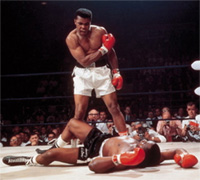
Yesterday Slate Magazine, in the guise of Field Maloney — who claims to drink beer — declared beer all but dead and wine standing over it in the boxing rink taunting it ala a triumphant Cassius Clay after he defeated Sonny Liston.

boxing

The only problem with that sentiment and, indeed, much of his article is that it simply isn’t true. He uses old and questionable statistics and ignores the entire craft beer segment of the marketplace, something like 99% of the breweries out there seem to be under his radar. That’s pretty remarkable given that he claims to like the very stuff he’s bashing. You’d think he’d know just a little bit more about it, wouldn’t you? He does briefly mention craft beer, but only to suggest that we’ve all pilfered wine’s descriptive language. Apparently wine drinkers own the term “floral.”

But every other time he uses the word beer, he’s using it in a very narrow sense. By beer, Maloney means Bud, Miller, Coors and maybe Pabst and any brands owned by the big guys. Period. Because the way he describes “beer marketers” and “American beer executives” it’s abundantly clear he’s not talking about the small fry.

While using support for his position that beer is down and out he uses the infamous 2005 Gallup poll that seemed to indicate that people were beginning to prefer wine to beer, calling the findings “astonishing.” As noted in the sidebar, however, the 2006 poll results returned beer to the top spot, which is where it had been virtually every year before 2005, too. The 2005 results were obviously anomalous but despite that it keeps showing up in print, used to push various agendas. Beer outsells wine roughly four to one, and has done so for many years. That statistic is easily verifiable, unlike what people say about what they like — their so-called preferences — and so it’s a far more accurate portrait of the alcohol landscape. And while overall consumption has been steadily decreasing for many years, and even if we allow for Maloney’s uncited figure of wines sales having doubled over the last ten years (from a small number to begin with), beer is still wildly more popular than wine and will continue to be for the foreseeable future.

The sidebar continues by dismissing the 2006 poll, despite the fact that every poll prior to 2005 agrees with it, saying “[s]till, while wine consumption has grown steadily in this country, beer consumption has remained flat. (The one exception to this trend is craft beers, which have enjoyed double-digit sales growth in the last few years. But craft beers command less than 5 percent of the domestic beer market. Anheuser-Busch alone, by comparison, controls about 50 percent of it.)” What I take away from that bit of tortured analysis is that because craft beer doesn’t represent a big enough piece of the pie, then it’s not worth talking about and it’s not indicative of any trends. Yet Anheuser-Busch has test-marketed or rolled out last year alone something like fifty new products that give the appearance of being craft beers to compete with this segment of the industry. They certainly wouldn’t be spending all their resources on such folly if craft beer wasn’t having an impact on them, so Maloney’s off-hand dismissal of craft beer seems misleading and counterfactual.

I’d love to see figures on big wines vs. boutique wine sales as a percentage of the total (though I suspect definitions are every bit as difficult as in the beer world) but I suspect Maloney doesn’t discount those small wine producers in quoting wine statistics and the gains they’ve made the way he discounts craft beer. And he appears to entirely ignore box wine, jug wine and other cheap wines made in vats the size of Montana, as if all wine was hand-crafted. The notion that all wine is fine wine is every bit as specious as saying all beer is industrial.

Brewers will no doubt get a kick out of this zinger. “The hallmark of beer is consistency: A brewer strives to make batch after batch of Pilsener so it tastes the same—and often succeeds without much difficulty.” So much for the author’s earlier jab about beer being the “result of a complicated process of manufacture.” If it’s not too difficult to make beer consistently, it must not be that complicated after all. That series of statements seems more than a little insulting to me. Most, if not all, of the winemakers I have met have the utmost respect for brewers and do think it’s harder or more complicated to make great beer than great wine. A winemaker I sat next to at a dinner at Mondavi many years ago told me that she thought what they did was easy compared to making beer and that the grapes did all the real work. So yes, I think there is something to beer being more of a complicated affair than wine, but I don’t see why that makes it any less of an art than he appears to believe is the case with winemaking.

Maloney also claims that it was our society’s “shift from an agrarian society to an urban, industrial one” that made beer our drink of choice, because mass production displaced hand made drinks, such as “hard cider (the rural drink of choice), rum, and whiskey.” But didn’t many rum and American whisky brands that are still with us today also get their start during the industrial revolution? If so, then why is beer the bad guy here? Also, he states that beer started to outsell cider “around the time of the Civil War,” but I’m not sure that’s true. I remember reading that cider’s popularity throughout the country did not wane until Prohibition, and that until that time it continued to outsell beer. If that’s true — I’m trying to remember and find where I read that — then it continued to be quite popular through many decades of industrialization. And that seems to contradict his premise that mechanization caused or was responsible for beer’s popularity during the 19th century.

Interestingly, additional criticism of Maloney’s article came from an unlikely source. Nick Fauchald, Senior Associate Food Editor at Food & Wine magazine, penned a rebuttal wonderfully entitled Beer to Wine: “I’m Not Dead Yet” in which he also cites craft beer’s recent gains and suggests the following.

Slate and other outlets sounding the beer death knell are missing one very important point: It’s the generic-tasting, mass-produced beer (Budweiser, Miller and their ilk) that Americans are waving off. American craft beer is still alive and kicking, experiencing its biggest growth since the microbrewery gold rush of the 1990s.

Slate even in mentioning craft beer manages to do so each time with a dismissive tone that makes it sound irrelevant to the discussion. But that ignores over 1400 independent small to medium-sized breweries and brewpubs successfully providing craft beer locally, regionally and even nationally. Craft beer is part of the slow food movement, part of organic food lifestyles, and a part of eating and drinking locally campaigns. It’s just one of many gourmet products, like coffee, chocolate, cheese, bread and many others, that have literally changed the way we perceive and think about them. Craft beer has raised the quality and status of American beer to the point where it has the respect and envy of beer lovers around the world. It’s only here in the U.S. that it gets so little respect.

Unfortunately, a lot of that criticism comes from food and wine sources. I don’t know or understand why so many wine and food writers appear to feel threatened by beer. I don’t know if it’s simple ignorance or malicious snobbery. Is it a kind of good ole boys mentality that can’t abide beer stealing some of their thunder? That sounds almost ridiculous, except that it seems to happen time and time again. Perhaps the real question is why they feel the need to pit the two against one another in the first place? Is it really a competition? Is it really us vs. them? I certainly don’t want to believe that’s it, because I love wine, too, as do most of the hardcore beer people I know, including other writers and brewers. And all of the winemakers I know love beer. So it comes down once more to the question I’ve asked time and time again: why can’t we all just get along. Seriously, I’m not just being rhetorical, but why can’t wine and beer seem to coexist and be supportive of one another? Why do Maloney and so many others feel the need to bash beer in order to lift up their preferred libation? It’s not everybody, obviously, as Nick Fauchald from Food & Wine nicely demonstrates, but it seems to me an awful lot of people who write about wine and/or food have it in for beer. Why is that? It’s got me crying in my beer, because it just doesn’t have to be that way.

UPDATE: Jess Sand over at the wonderful Bar Stories added a very thoughtful and lengthy diatribe on the same Slate article, as did Stan Hieronymous over at Appelation Beer.

Filed Under: Editorial Tagged With: Statistics, Websites

« Previous Page
Next Page »

Find Something

Northern California Breweries

Please consider purchasing my latest book, California Breweries North, available from Amazon, or ask for it at your local bookstore.

Recent Comments

  • Bob Paolino on Beer Birthday: Grant Johnston
  • Gambrinus on Historic Beer Birthday: A.J. Houghton
  • Ernie Dewing on Historic Beer Birthday: Charles William Bergner 
  • Steve 'Pudgy' De Rose on Historic Beer Birthday: Jacob Schmidt
  • Jay Brooks on Beer Birthday: Bill Owens

Recent Posts

  • Beer Birthday: Dave Alexander May 8, 2026
  • Historic Beer Birthday: Emil Christian Hansen May 8, 2026
  • Beer In Ads #5244: Southern Brewing Bock Beer May 7, 2026
  • Historic Beer Birthday: Anton Dreher May 7, 2026
  • Beer In Ads #5243: Union Brewery Bock Beer! May 6, 2026

BBB Archives

Feedback

Head Quarter
This site is hosted and maintained by H25Q.dev. Any questions or comments for the webmaster can be directed here.