Brookston Beer Bulletin

Jay R. Brooks on Beer

  • Home
  • About
  • Editorial
  • Birthdays
  • Art & Beer

Socialize

  • Dribbble
  • Email
  • Facebook
  • Flickr
  • GitHub
  • Instagram
  • LinkedIn
  • Pinterest
  • RSS
  • Twitter
  • YouTube

Powered by Genesis

Space Beer?

May 28, 2007 By Jay Brooks

On April 28, 2007, a UP Aerospace SL-2 rocket blasted off into space on a routine mission. It carried the ashes of deceased actor James Doohan, who portrayed “Scotty” on Star Trek (I actually met Doohan once in the early 1980s when I worked for a chain of videostores in North Carolina) along with Mercury 7 Astronaut L. Gordon Cooper and 200 other urns. SL-2 is short for UP Aerospace’s SpaceLoft-2 , a rocket suborbital sounding rocket. UP Aerospace sends up four to six such commercial rockets each year.

In addition to the remains sent into space, the payload consists of photographs, seeds, science experiments, soccer jerseys and the secret payload of Microgravity Enterprises, Inc.. According to their website, Microgravity Enterprises goal is to “develop space-based products and make them available to the general public at low affordable prices.” Currently, the make Space2O, bottled water enriched with electrolytes that were flown in space aboard the SL-2, and Antimatter, an energy drink in which many of the ingredients have likewise flown in space.

All that Microgravity Enterprises, which calls itself a space commercialization company, will say about the latest flight is that their payload contained the ingredients with which they’ll make the “first true space beer”. Company spokeswoman Linda Strine “says said ingredients, the amounts and types of which are secret and patented, will be delivered next week to a ‘production facility’ that in the span of a month will generate an otherworldly brew called Comet Tail Ale. “We flew enough ingredients to support almost a year’s worth of production,” says Darryl Hupfer, VP of sales and marketing for Microgravity Enterprises.

They’re spinning it pretty good, but I suspect it was the yeast that they flew into space. And their client, most likely, is nearby Kellys Brewpub, located in Albuquerque, New Mexico. As reported last year in the New Mexico Business Weekly, Kellys sent some yeast up in one of UP Aerospace’s rockets before but since it failed to reach suborbit (meaning that it didn’t reach the 45 mile-high threshold that defines where “space” begins) they brewed a beer they called “Test Flight Amber Ale.”

I have mixed feelings about this project because it seems so gimmicky and I know that the rocketed ingredients won’t make the beer taste any differently. But I am a former space geek — reinvigorated somewhat by my son Porter’s obsession with all things space-related — so it also seems like a fun idea, too.

So I don’t wish to throw water on the fire or rain or their parade, but it also seems to be that this won’t be the “first true space beer” as the company claims. I’m pretty sure that the Apollo beer that was a contract beer around a decade ago used yeast that had been in space, too. It was in a distinctive blue bottle and they made an ale and a lager which was sold in six-packs. And I know that a German science experiment managed to get some yeast aboard one of the space shuttle flights. I know some of it they then used for research purposes, but I have a hard time believing they didn’t use at least some of it to brew a batch of beer.

Who knows, perhaps Kellys also sent a few hop pellets in the rocket, too. In the end, it may come down simply to how you define a “true space beer.”


Filed Under: Editorial, Just For Fun Tagged With: Business, Ingredients, Yeast

The If You Were A Beer Test

May 25, 2007 By Jay Brooks

I’m a sucker for quizzes of all stripes, be they tests of trivia, intelligence or knowledge. To me, the best pubs are the ones that host a trivia night once a week. My local when I lived in Cupertino, California, many years ago, the Britannia Arms, had a trivia league Tuesday nights with regular teams and season standings leading to a grand prize winner. It was great fun, and my only point is that I love to take tests. Weird, I know, but I even like to take those mostly meaningless personality tests. Case in point, there are a number of these that claim to determine what kind of beer you are based on a few questions about your personality. The latest one I stumbled upon, The If You Were A Beer Test, is on OK Cupid, an online dating website and was created by a 25-year old female member living in New York City, Gwendolyn Books.

There are nine simple questions, and she’s divided the quiz results into dark & bitter, working class, and genuine, presumably three questions apiece since my own score was 66% dark & bitter, 33% working class, 100% genuine and my own beer was Guinness, which the quiz claims as follows:

Okay, we all know Guinness is the best possible score on any “What Kind Of Beer Are You” test, so you can just go on and pat yourself on the back now. Like the world’s most famous brew, you’re genuine, you’ve got good taste, and you’re sophisticated. What else can I say, except congratulations?

If your friends didn’t score the same way, get ready for them to say: Guinness is too heavy; it’s an acquired taste; it’s too serious — and they probably think those things about you at times. But just brush ’em off. Everybody knows Guinness is the best. Cheers.

I don’t who she means by “everybody” but, of course, I don’t consider Guinness to be anywhere near the best. It’s not a bad beer per se, but it’s certainly lost its iconic status in my eyes, though I realize quite a number of people do still revere it. My wife, sadly, got Corona which, to her credit, she finds every bit as disgusting as I do. And in the end, that’s why as much I love these kinds of things they always tend to disappoint, because the range of beer in these things is decidedly narrow, despite the following cute little ditty that appears just before your beer personality is revealed.

If you were a beer, which would you be?
A Guinness, Sam Adams, or Old Milwaukee?

Do you have a thick head? Are you dark, are you skunked?
Aged at the hands of obscure Trappist Monks?

Are you stout, are you bitter, oaky like Fall,
Or like most of my coworkers, with no taste at all?

However you are, here’s one test you can’t flunk,
All beers are okay, so long as you’re drunk.

At least she’s aware of Trappist Monks, Samuel Adams and the fact that beer can be skunked (especially popular brands like Corona and Heineken), and that put this quizmaster above most, if not all, of the other similar quizzes I’ve taken in the past. Still, I only have myself to blame. I guess I’ll have to add to my growing list of things I’d like to do in my copious free time making a quiz that’s more geared toward the many different styles of beer and the many different personality types. That could be fun. With my personality, though, I’d probably end up a sour beer.

What kind of beer are you? Not much here you’re fond of? I feel your pain.

Filed Under: Editorial, Just For Fun, News

Spinning the Beer Business

May 23, 2007 By Jay Brooks

On Tuesday, August Busch IV addressed investors at the biannual “Investor Day” and unsurprisingly recent company woes were played down and the future looked so bright they probably should have passed out sunglasses to investors to reinforce the point. Given the less than enthusiastic analysis by Wall Street the week before, it’s not a stretch to consider the rosy predictions to be pure spin to mollify jumpy investors.

As usual, the business press went along with it, mostly reporting the spin without questioning it or even analyzing it to much of a degree. As reported in the New York Times, Busch boldly told investors “that profit would rise more than forecast this year on higher sales of imported beers and fewer discounts of Bud Light and Michelob.” Despite dismal sales gains and worse profits, A-B told its investors that the 1% gain realized in the second quarter was proof enough that things were finally looking up.

More curiously, Busch IV told shareholders “the company [this February] started to import beverages, including Stella Artois and Bass from InBev, to fend off rivals like SABMiller.” What’s odd about that statement to investors is that most conventional wisdom, both internally and externally, doesn’t blame SABMiller at all for A-B’s troubles, but craft beer, wine and spirits.

Busch IV also stated that “Anheuser-Busch is much better positioned for growth than we were just eight months ago,” but neither he — nor the Times — offers any explanation as to why that might be. All A-B said was that “[p]rofit will increase slower than forecast in the second quarter but accelerate in the second half of the year” and “[e]arnings on a share basis will increase this year more than the long-term growth of 7 percent to 10 percent that the company targets.” To me that sounds like code for don’t sell now, don’t bail on us, things will get better … eventually.

CNN Money reported that A-B did indeed see a 1% rise in sales this month, calling that a “rebound” after a poor showing the previous month. That’s a far more optimistic connotation of the word “rebound” than my dictionary allows, but that’s spin for you. In a related CNN Money article, “Anheuser-Busch profit disappoints,” A-B CFO W. Randolph Baker further spins the reasons for poor sales and even blames the weather. It’s this last one that produced in me a rare guffaw. Certainly there is a close and well-documented correlation between the weather and beer sales. The warmer the weather, the better the sales — it’s hardly rocket science. But when I was the beer buyer at Beverages & more and was expected to hit sales targets it was the one excuse for falling short, no matter how legitimate, that I was all forbidden to use. Apparently, I was expected to predict the weather and plan for it — I never quite understood how I could be held responsible for factors outside my control but such was the pressure cooker of retail. Anyway, to hear the CFO of the biggest beer company in the world blame the weather for not hitting their own sales targets strikes me as pretty funny and suggests that A-B doesn’t really have a good idea as to what exactly is causing their sales to remain mostly flat. Baker claims to be “uncomfortable saying it’s only a weather story,” which says to me he’s not supposed to use that excuse any more than I was.

Dow Jones’ Marketwatch also predictably spins it A-B’s way, titling their take “Anheuser says back on growth track.” The MarketWatch take begins accepting Bud’s pronouncements. “Citing a bigger and better beer portfolio [the InBev imports – failing to mention distributor issues], favorable pricing trends [unilaterally deciding not to discount their own products hardly constitutes a trend], international opportunities [despite everyone saying it’s the core brands at home that are the issue] and a modest rebound in domestic sales [the 1% rise in the first half of May], Anheuser-Busch said Tuesday that it is back on a growth track, but perhaps not so much right away [yes, in the future, always the future].

“Busch said that consumers are increasingly ‘active’ rather than ‘passive’ and added that ‘we have to evolve how we do business … to combine our supply-side strength with a new and equally powerful demand expertise.'” While that may be true, Bud.TV (rumored to be shut down shortly), MingleNow and even Here’s to Beer have not exactly taught A-B about the “powerful demand expertise” many consumers are looking for. They didn’t even mention Raymond Hill, their curious new venture with a faux or stealth “craft beer” that’s made by A-B.

MarketWatch lastly detailed A-B’s forays into making spirits, with mixed results:

But with beer continuing to lose share in the alcohol market, he said that the company needs to move beyond the category and into “high-margin segments with exceptional potential. … We will target products and categories where we can drive growth.” That is a not-so-veiled reference to hard liquor, which has been booming just as domestic brew fades. A-B has made some baby steps — and missteps — in that direction, developing both distilled spirits and higher-alcohol malt beverages in a small way.

Last year, the company launched “Jekyll & Hyde,” two “nesting” bottles of spirits meant to be mixed together and downed as a shot. It also rolled out Spykes, a 12% alcohol malt-based product sold in tiny perfume-like bottles. That experiment was a disaster and the company announced it would stop making the stuff last week due to poor sales and attacks by advocacy groups that claimed it appealed to underage drinkers.

It was a little strange that craft beer’s gains were not addressed — at least not by the media as far as I can tell — since they’re the only category of alcoholic beverages that’s showing significant growth at the present time. Perhaps we’re still too small to bring up at investor meetings.

All of this emphasis on international markets, non-beer products and their “packaging and entertainment businesses” as a way out of the morass seems odd given that everybody and their mother cites inattention to their core brands as the biggest problem A-B is facing. A-B’s Tuesday press release does mention the core brands, but it all sounds like doublespeak and gobbledegook to me. Here’s what they had to say about their core product lines:

Senior managers from Anheuser-Busch’s U.S. beer company presented their plans to grow the company’s core trademark brands and actively pursue high-end growth opportunities. The company is making good progress in digesting the series of new growth initiatives recently undertaken and managing the added complexity associated with an expanded portfolio. In citing incremental revenue growth as a key objective, the executives stated that the pricing environment in the U.S. beer industry is favorable.

Now I speak jargon, in fact I’m relatively fluent in it, but “actively pursue high-end growth opportunities,” “making good progress in digesting the series of new growth initiatives recently undertaken,” “managing the added complexity associated with an expanded portfolio,” and “the pricing environment in the U.S. beer industry is favorable” are tortuously vague and unnecessarily convoluted to me. They all sound impressive but don’t really seem to say very much. It’s the same old hackneyed platitudes gussied up in fancy dress words to confuse the hoi polloi. In English, all they’re planning is “to sell as much as they can,” “figure out which new brands are selling and which aren’t,” “rolling out the new import and domestic brands they gobbled up last year,” and “not discounting their prices to wholesalers and retailers as much as in previous years.” Now was that so hard to say?

At the same time Anheuser-Busch is trying to persuade shareholders that everything’s fine and that their stock will be up again, they’ve also announced that they’re “looking to slash hundreds of millions of dollars in costs over the next few years,” according to an article in the St. Louis Post-Dispatch. That’s the sort of thing investors and Wall Street tends to applaud but generally isn’t too great for all the unemployed that such measures leave in their wake. A-B is looking to “trim $300 million to $400 million in costs over the next four years,” and you now that’s got to include layoffs. The increased high-tech robotics that A-B is using in its operations certainly doesn’t suggest more hirings, but less, despite the fact that they’re asking current employees to slash their own throats by submitting ” ideas under a productivity plan called ‘Project Blue Ocean.'”

Also somewhat scary for those of us who don’t relish the idea of A-B buying out craft brewers is the announcement that new guidelines A-B approved last year will allow them to take on more debt, with an eye toward getting “more involved in mergers and acquisitions.” So look for another round of rumors on who might be up for grabs later this year.

None of this spin doctoring is unique to A-B, of course, it’s the stock in trade of all large modern corporations. But this was Augie number IV’s first time in front of the investors since taking over the family business last year so it’s worth noting that things haven’t changed very much under his leadership. I’d say we’re in for more efforts at maintaining the status quo as the year continues to unfold. Buckle up, it’s going to be a bumpy ride.

Filed Under: Editorial Tagged With: Business, Mainstream Coverage, National

Best Bars in America, According to Esquire

May 23, 2007 By Jay Brooks

In the lastest issue of Esquire magazine, they list their choices for the “best bars in America,” 51 in all. There are some good places to be sure, but I must question any list of great bars that doesn’t include the Toronado — especially one that seems to favor dive bars. And perhaps more curious than that obvious oversight is the fact that last year’s list not only also overlooked the Toronado but contains none of the same bars as this year’s list.

And while there are certainly other quibbles with the list — Rick Lyke details quite a few — to me this is the crucial fact that makes it impossible to take seriously. Any bar worthy to be considered the best in America would undoubtedly have become so over time and would also be great year after year. You’d expect that a bar that made the list this year was probably pretty damn good last year and one on last year’s list still decent this year. The notion that none from last year are on this year’s list and vice versa makes this purely a literary exercise. Esquire explains it by saying that it’s not an “overhaul of last year’s list. Those bars are still great, and we still drink in them. Think of the list [from last year] as a Hall of Fame.”

So I understand that Esquire wants to have new places to write about each year and their readers likewise would want to read about new places to try, too. But then it can’t possibly be considered a list of the “best” bars, just a collection of good bars that they believe are praiseworthy. That’s not a bad thing, I looked over the list with considerable anticipation and interest. The sensational title did set me up for certain expectations that went largely unfulfilled. And I suspect I’m not alone. A quick Googling of Esquire’s best bars in America reveals that local community websites, forums, etc. all over the country are discussing it, lamenting omissions, bitching about whole cities missing and questioning the choices. And I think it’s that provocative rubric that sparks such a furor. It’s likely that Esquire not only counted on that but actively designed the list, at least in part, to be debated. Because it’s becoming increasingly obvious that getting people talking about your article, magazine or website is the real goal and anything that stifles that, such as accuracy, full disclosure, or calling it by a less volatile name would all not create the same amount of buzz. Personally, I loathe this trend. It creates a situation where it’s more advantageous to be outrageous than truthful or reasonable. Ann Coulter, for example, is a master of this technique. It’s a reminder that the goal of modern journalism is not informing the people, accurate reporting or even keeping an appearance of impartiality. It’s all about selling advertising and making money. And without standards, the easiest way to do that is simply by being provocative and outrageous. Of course, picking the best bars in America is an inconsequential exercise when compared to the many more important issues that the press misleads us about on any given day, but the technique and goal is the same — and the subject is my stock in trade, which is why I’m talking about it at all.

But even with all of that, the Esquire effort is rife with problems. Despite using several writers to compile the list even they admit there are issues with their method.

We haven’t patronized every bar in America, though we’re working on it. For the parts of the country we’ve never had the honor of drinking in, we asked our friends — the most knowledgeable and passionate of whom is Esquire drinks correspondent David Wondrich. Despite our connections, we’ve clearly shortchanged some great cities and have no doubt overlooked some great bars.

Obviously with a task as broad and large as trying to declare the best bars in America it’s going to be difficult to consider every bar, but not doing so, or even trying to be somewhat comprehensive, makes it largely a futile effort in the end. But all it really would have taken to make it a valid effort would have been to change the title of the article to “Our Favorite Bars in America for 2007.” But that wouldn’t have created the buzz that publishing a flawed article and declaring the choices to be “the best” has done. To me, that’s the worst kind of tabloid journalism.

Filed Under: Editorial Tagged With: Bars, Mainstream Coverage, National

Mainstream Beer Still Suffering

May 21, 2007 By Jay Brooks

According to yet another business article in Forbes, the reason for Anheuser-Busch‘s sales declines are the result of a lack of focus on their core brands, principably Budweiser and Bud Light. And while wine, spirits and craft beer’s rise has been credited with A-B’s decline, this AP article also claims Molson Coors — the #3 American brewer — has also gained ground against their nemesis, largely because they’ve continue to push their core brands. A-B has already suggested they’ll be increasing marketing by at least 8% and the details of this and a renewed focus on their flagships are expected to be revealed at A-B’s bi-annual Investor Day this Tuesday.

Goldman Sachs analyst Judy Hong further advised that what A-B needs to do to remain competitive is “either purchase a large craft brewer or work with distiller Fortune Brands Inc. to buy the Swedish state-owned liquor group that makes Absolut vodka, V&S Vin & Spirit AB, to gain access to the growing spirits market.” On the other hand, William Pecoriello, an analyst at Morgan Stanley, thinks A-B is on the right track, spending more marketing dollars on their core brands. In a memo to clients, he stated “[i]t seems unlikely that Anheuser-Busch can overcome the challenges for its core brands without significant increases in marketing, distribution and administrative spending.”

The troubling pronouncement in of all of this is Hong’s suggestion that A-B “purchase a large craft brewer.” It’s not like they haven’t been trying to do just that for some time now, but when Wall Street raises the spectre of it as a worthwhile idea, people tend to sit up and take notice.

Filed Under: Editorial Tagged With: Business, National

Wisconsin Wants More Beer Taxes

May 15, 2007 By Jay Brooks

Another state is looking to enhance their revenue by tapping brewers on the shoulder. According to a report in yesterday’s Milwaukee Journal Sentinel, “[t]wo Democratic legislators vowed Monday to try to tap the state’s beer drinkers by seeking approval of a fivefold increase in Wisconsin’s $2-a-barrel beer tax, which has not been raised in 38 years.” Berceau wants to raise the tax to $10 per barrel supposedly to fund programs to “fight drunken driving and treat alcohol addiction and mental illness.” As recent studies have indicated though, such raises rarely result in the goals intended. I’ll never understand why responsible drinkers and brewers who contribute positively to the economy are routinely targeted for this kind of punishment because of a few bad apples. We don’t tax sugar makers and soda companies to fund health centers to treat obesity. We don’t ask people who can enjoy one piece of chocolate cake to foot the bill for over-eaters and the health costs they add to society, nor should we. Berceau wants the tax on a six-pack to be 18 cents, up from its previous level of 3.6 cents, which would add as much as $48 million to the amount people would have to spend to buy the same amount of beer.

“Wisconsin’s beer tax hasn’t been raised since ‘man walked on the moon,’ said Berceau, whose efforts to raise the tax have failed in the past,” suggesting she’s been in bed with her sponsors for some time. Those sponsors, some of whom presumably have made campaign contributions, include “the Wisconsin Prevention Network; the American Society of Addiction Medicine; Mothers Against Drunk Driving; the Mental Health Association of Wisconsin; and the National Association for the Mentally Ill of Wisconsin.”

According to the national Beer Institute, Wisconsin ranked sixth in beer consumption in 2006, with an average of 38.2 gallons consumed for every person 21 and older. Wisconsin’s $2-a-barrel tax is third lowest in the nation, behind the 59-cent levy in Wyoming and the $1.86 tax in Missouri.

Filed Under: Editorial, News, Politics & Law Tagged With: Law, Midwest

Beer Is Healthy Food

May 14, 2007 By Jay Brooks

I’m not exactly sure who PS Prakasa Rao is. The best I can figure is he’s a scientist or doctor from India who frequently writes for his local newspaper. At any rate, he’s got an editorial piece titled “Beer Is Healthy Food” in today’s Central Chronicle from India.

In today’s editorial, he goes against conventional thinking and outlines how beneficial beer can be, stating that he believes beer to be “better than Milk.”

From the article:

Unless we have a tendency towards abuse, believe it or not, taken in moderation, Beer is actually a very healthy food. It’s full of vitamins and minerals that are good for nerve production, help you concentrate, increase blood circulation, and stimulate the metabolism. The hops, low alcohol content, and carbonation help relax the body.

He goes on to outline additional health benefits and, naturally, caution against binge drinking, along with a list of certain types of people who probably shouldn’t drink. I certainly prefer that to the neo-prohibitionist agenda that if one person can’t handle alcohol, no one else should be allowed to either. Way to go, Doc.

Filed Under: Editorial Tagged With: Asia, Health & Beer

Neo-Prohibitionist Math

May 3, 2007 By Jay Brooks

Sadly, the United States is not the only country with people who want others live according to their morals. A British Bulletin reader sent in a BBC article about Alcohol Concern, a UK neo-prohibitionist organization that refers to itself as the “national agency on alcohol misuse.” In the article, “Call to stop children’s drinking,” they, of course, use the “it’s for the children” strategy and it’s peppered with plenty of alarmist language about an increase in drinking among 11-13-year olds and citing that “[i]t is currently illegal to give an alcoholic drink to a child under five except under medical supervision in an emergency.” Now what might constitute such an emergency I can’t fathom but the only reason I can see for including it is that it implies that the whole of English parentage is putting beer in their baby’s bottles. It makes it easier to push an agenda when you hammer home the extremes rather than the truth. Of course, alcohol laws are different in the UK. Here’s an overview.

The group Alcohol Concern is also asking for a whopping 16% raise on taxes for alcohol products. And they also want alcohol education to be added to the National Curriculum, which in and of itself is not a bad thing but at the same time they want to restrict parents’ ability to educate their children about alcohol in the home. “Alcohol Concern would include meal times at home in the ban on giving alcohol to young people.” So what that suggests is they believe the government should be deciding what alcohol information should be given to kids and parents should have little or no hand in raising them. Now does that make any sense at all? Since when is the government in a better position to teach your children about anything better than you are? As Karen Gardner, who operates the Parenting Cafe, puts it in a rebuttal:

Parenting is about preparing your children for life.

I’ve just helped my 11-year-old son open his first bank account. When I get to a road with my four-year-old, I get him to decide when it’s safe to cross. It’s the same with alcohol. On your 15th birthday you don’t suddenly develop the ability to deal with alcohol, but by the time you’re 15 you are going to parties where alcohol is flowing. If Alcohol Concern got their way, you’d be sending them out with absolutely no experience of drinking at all and they’d go out and sink four vodkas.

The thing that really concerns me about this law is that if it’s made illegal, parents will tell kids, ‘You can’t drink, I’ll go to prison’. Then a child goes out and does drink too much and needs to call home for help, but feels they can’t in case they get mum or dad into trouble. I understand that some teenagers are going out and binge drinking in town centres, but parents who let their kids do that won’t care about a law anyway. All the law would do is stop responsible parents from trying to educate their children. It would infantilise parents.

Perhaps more troubling, though, is Alcohol Concerns own education materials. They also run a website, Down Your Drink, which purports to help people figure out whether or not they drink too much. Toward that end they also offer a three-question quiz to determine your level of drinking.

Forget for the time being that your weight or general health plays no role whatsoever in the equation, as absurd a notion as I can imagine, but then real education is not the goal. My own “drinking pattern indicates a possible increased risk of alcohol affecting [my] health.” Well, that’s not a surprise, but it doesn’t take into account that I’m a big fella or that I’m most often drinking as a part of my work. No matter, they want to alarm and proselytize, not educate.

You have to answer “Never” or “Monthly or less,” “1 or 2” and “Never” to be considered “drinking sensibly.” If you have 1 or 2 drinks 2-4 times a month (that would be a pint or two once a week or less) and you too could be at an “increased risk of alcohol affecting your health.” How absurd. Of all the possible ways to answer the questionnaire, only two will get you an answer of being a responsible drinker. As far as they’re concerned having one or two drinks monthly or less with no episodes with six drinks in one session is exactly the same as having “10 or more” drinks “daily or almost daily.” How is such inflexible thinking in any way helpful or useful?

But there’s one more absurdity to tackle. Take a close look at how they define “a drink containing alcohol.” They consider “1 drink” to be either “1/2 pint of beer,” “1 glass of wine” or “1 single measure of spirits.” So what that means is that 8 ounces of beer, with an average alcohol content of 4-5% ABV, is the same as one glass of wine, whose alcohol content average is around 14% ABV. I’m not sure what the average glass of wine holds, but even at 4 ounces it would pack more of a punch than twice as much beer. Now that’s some pretty fancy math. I’d love to know how they came up with that standard where a pint of beer is twice as bad as one glass of wine.

No wonder they believe there’s such a problem. When you define almost any amount of drinking, no matter how responsibly small, as being a potential health risk — and ignoring any of the many health benefits — then naturally you will believe there’s an epidemic of drinking problems. But then it’s more likely that you believed that to begin with and are using skewed reasoning and questionable statistics to support your agenda and make it sound more scientific. It’s called lying with statistics and it’s not that hard to do, especially when the mainstream media reports it as fact without questioning it either, which happens more often than not.

Take a look at their research team here at the left, undoubtedly a bunch of models. They’re too politically correct in terms of the mix of young and old, male and female, and racial percentages to be the real research team. And those lab coats are hilarious. But that’s the propaganda of trying to make it seem more serious, more worthy of believing. Don’t fall for it. If all looks too perfect or convenient, it probably is. Few issues are as black and white as they try to paint this one.

Drinking is obviously a huge problem for the people who already don’t and want the rest of us to stop. There are and always will be people who will abuse anything, both benignly and harmful alike. But the answer to dealing with such people should never be to take the object of abuse away from everyone. You don’t end up fixing the problem but instead make it worse, plus you end up punishing the people least deserving of such punishment, the ones who can enjoy things responsibly. Prohibition has never worked for anything. Laws prohibiting murder were among the first laws society ever agreed upon, and it hasn’t eradicated killing yet. You teach people it’s wrong and hope for the best. The same is true concerning alcohol. You teach your children about what it is, how to enjoy it responsibly and how not to abuse it. Take that away, and your kids will be ignorant binge drinkers rebelling against society the first chance they get. But the neo-prohibitionists don’t seem able to grasp this and instead want a Stepford society that forces rather than educates. It uses scare tactics and lies instead of reason and understanding. It would be ridiculous were it not for the growing number of people who think it’s okay to want to tell me and you how to live. Why can’t these people just live how they want to and leave the rest of us alone?

Filed Under: Editorial, News Tagged With: Europe, Great Britain, Law, Prohibitionists, Statistics

May is Mild Month

May 1, 2007 By Jay Brooks

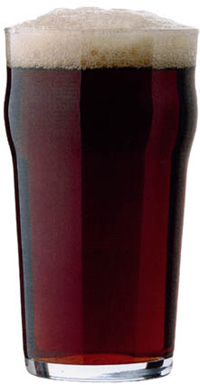
pint
The British advocacy group CAMRA, the Campaign for Real Ale, promotes the month of May as “Mild Month” in an effort to educate people about a style that’s dying before their eyes throughout England. Since this Friday’s “Session” — a.k.a. Beer Blogging Friday — that I’ll be hosting will be about Milds, I thought I’d collect and provide some basic information about this relatively unknown and misunderstood style. In fact, the theme for Friday’s “Session” is “The Mysterious Misunderstood Mild” in an effort to make these delicious beers less so. Yesterday, CAMRA had a press release in anticipation of Mild Month beginning today that summarizes their efforts.

Mild was once Britain’s most popular style of real ale, but had fallen out of fashion in favour of other beers. However there are still many brewers who are enthusiastic about the future of Mild and CAMRA is dedicated to making sure their beers get the credit they deserve.

May has been designated as Mild Month by CAMRA and the consumer organisation is urging beer lovers to seek out milds in their local pubs and rediscover this wonderfully flavoursome beer.

CAMRA also suggests a few recipes for cooking with mild.

Mild’s popularity has been waning since at least 1960. In 1959 the style accounted for 42% of beer sold in Great Britain, but by 1980 its popularity had dropped to a mere 10% and today it’s far less than that. For a good overview of the history of the style and what led to its decline, read the December 1998 article that All About Beer magazine ran on the subject by Roger Protz, entitled “Vanishing Mild.”

Here’s how CAMRA describes milds:

Mild is one of the most traditional beer styles which is enjoying a revival in today’s real ale market. Usually dark brown in colour, due to the use of well-roasted malts or barley it is less hopped than bitters and often has a chocolatety character with nutty and burnt flavours.

Cask conditioned Mild is a rarity in a lot of parts of the country, which is a crying shame, because Mild is a distinctive and tasty beer. Mild is one of, if not the, oldest beer styles in the country. Until the 15th century, ale and mead were the major British brews, both made without hops. Hops were introduced from Holland, France and Germany after this time. This also started the trend on reducing the gravity of ale, as the Hop is also a preservative, and beers had to be brewed very strongly to try to help preserve them. The hop also started the rapid decline of mead, which is only made in a very few places today.

So what is Mild? It is a beer which has tastes and textures all it’s own. Basically it is a beer that is less hopped than bitter, etc. The darkness of Dark Milds, such as Greene King XX Mild, comes from the use of darker malts and/or roasted barley which are used to compensate for the loss of Hop character. “Chocolate “, “fruity”, “nutty” and “burnt” are all tastes to be found in the complexity of Milds. However, not all milds are dark. Yorkshire brewed Timothy Taylors Golden Best is one of the best examples of a light coloured mild, as is Bank’s Original, the name changed from Mild to try to give it a more modern image. In Scotland, 60/- ale is similar to mild (Belhaven’s being a good example).

mild-glass

Milds today tend to have an ABV in the 3% to 3.5% range, with of course some notable exceptions. In fact, a lot of the Microbreweries who try their hand at mild are bringing the alcohol content back up somewhat! Mild wasn’t always weaker though. In the latter half of the 19th Century, milds were brewed to about the same strength as bitters as a response to the demand for a sweeter beer from the working classes and in those days most bitters were around 6 to 7% ABV.

During the First World War, malt rationing and pressure from the temperance movement led to brewers rapidly reduced the strength. Following the Second World War, as prosperity returned, mild`s popularity as a cheap ale began to fade, not being helped by being kept badly in run down pubs as the Big Brewers began to heavily promote their keg lager brands. Coupled to this was a gradual, but steady decline in heavy industry in the North and Midlands of Britain, mild`s great marketplace.

By the 1970s, the keg lager boom had seen mild’s share of the market fall to around 13% and it was a shame to see a bland gassy and overpriced product, which was generally weaker than the mild it was trying to oust, succeed in many cases.

On this side of the pond, there is a great deal of confusion about milds, though for me the most curious issue is that people don’t like the name. What on earth could be wrong with the word “mild,” which in terms of flavor is defined as “not sharp, pungent, or strong.” It’s the very opposite of extreme, but is still full-flavored and delicious. I can think of countless scenarios where a mild would be the ideal compliment to the situation, weather, food, etc.

Making things more confusing is the fact that oftentimes in England a mild when bottled is called a brown ale, but this is still not the same as a brown ale like Newcastle. And then there’s the fact that there are two recognized styles of milds, pale milds and dark milds, further clouding things.

The BJCP organizes milds under their Style #11, English Brown Ale, with 11A designated mild and two additional sub-styles, northern and southern English brown ale. They suggest IBUs of 10-25, SRM of 12-25, and ABV of 2.8-4.5%, with most falling between 3.1-3.8%. The only American example they list is Goose Island PMD Mild.

For the 2007 Great American Beer Festival, The Brewers Association will for the first time include milds as a separate category in the style guidelines. Two categories, actually, as they’re dividing them into two separate styles, English-Style Pale Mild Ale and English-Style Dark Mild Ale. These appear to be the same as Category 56 for the World Beer Cup. For the BA, Pale Mild has IBUs of 10-20, SRM of 8-17 and ABV of 3.2-4% and for Dark Mild, IBUs of 10-24, SRM of 17-34 and ABV of 3.2-4%.

The color distinctions between the two are described as “golden to amber” for pale mild and “deep copper to dark brown (often with a red tint)” for dark mild. Both are dominated by malt favors with very low bittering discernible and allow for some low levels of diacetyl (butterscotch). The dark mild may also include some licorice or “roast malt tones.”

mild

On Friday, if you’re participating in “The Session,” be sure to post a comment to the mild hosting post that will appear here on the Bulletin shortly after midnight PDT. I’ll try to add links in near-realtime and write up the days’ entries as time permits.

session-logo

So for Friday’s Mild Session Blogging Extravaganza, it might not be quite as simple to find a mild as going to your friendly neighborhood corner bar or liquor store. Hopefully, the information listed above may give you some help in finding a suitable beer to write about. The beer may not have the word “mild” written anywhere on the label, but if it’s close to the style parameters then go for it. The idea of Beer Blogging Friday is to be as inclusive as possible so we’re not going to get too hung up on strict style standards — whatever those might be. Find a “mild” beer and join us. To get you started, listed below are some American milds listed on the major beer forums:

The Top Rated American Milds From Beer Advocate*

English Pale Mild Ale:

Mild Ale, from Southern Tier Brewing, Lakewood, New York
Arcadia Special Reserve, from Arcadia Brewing, Battle Creek, Michigan
Cattail Ale, from Lakefront Brewery, Milwaukee, Wisconsin

English Dark Mild Ale:

Merrimack Mild, from The Tap (Haverhill Brewery), Haverhill, Massachusetts
Milltown Mild, from Victory Brewing, Downingtown, Pennsylvania
Harbor Lighthouse Ale, from Bar Harbor Brewing, Bar Harbor, Maine
Pride & Joy Mild Ale, from Three Floyds Brewing, Munster, Indiana
Motor City Brewing Ghettoblaster, from Motor City Brewing Works, Detroit, Michigan
 

The Top Rated American Milds From Rate Beer*

Merrimack Mild, from The Tap (Haverhill Brewery), Haverhill, Massachusetts
Dawn Patrol Dark Mild, from Pizza Port, Solana Beach, California
Titletown Brewing Whistling Chicken Mild Ale, from Titletown Brewing, Green Bay, Wisconsin
Flossmoor Station XXX Mild Ale, from Flossmoor Station, Flossmoor, Illinois
Brew It Up! Northern Mild Brown Ale, from Brew It Up!, Sacramento, California
 

And here are a few more American milds that I know about:*

Bells New World Ale, from Bells Brewery, Galesburg, Michigan
Iron Hill Mild Ale, Iron Hill Brewpubs, various locations in Delaware and Pennsylvania
Jeezum Jim, from Magic Hat Brewing, South Burlington, Vermont
John Harvards British Pale Mild, John Harvards Brewhouse, various locations
Lee’s Mild, Stone Brewing, Escondido, California
London Tavern Mild, from Valley Brewing, Stockton, California
Midlands Mild Ale, from Avery Brewing, Boulder, Colorado
Sara’s Ruby Mild, from Magnolia Pub & Brewery, San Francisco, California
Schlafly English Mild, from the Saint Louis Brewery, St. Louis, Missouri
Thunderhead Mild Ale, from Thunderhead Brewing, Kearney, Nebraska
Triumph Mild Ale, from Triumph Brewing, Princeton, New Jersey
Wynkoop Mayorale Mild, from Wynkoop Brewing, Denver, Colorado

* For both Beer Advocate and Rate Beer, most of the top-rated milds are, naturally, English beers. I removed those British beers from the list here because I figured it was we Americans (and Canadians) that will need the most help in finding a mild. And for all of the listed beers, I have no idea whether or not they are currently available.

Filed Under: Editorial, The Session Tagged With: History

Harveys Home Again

April 26, 2007 By Jay Brooks

By the time you read this, you can walk into the Lewes Arms in Sussex, England and once more order a pint of the local favorite, which is brewed down the road, Harveys Best Bitter. Since last December, when Greene King pub owner pulled Harvey’s tap because their own Greene King beer wasn’t selling nearly as well, the Friends of the Lewes Arms have been boycotting the pub asking for Harvey’s ale to be reinstated.

Throughout the boycott, the giant Greene King acted the part of bully with perfect arrogance and cluelessness. Their actions created something of a P.R. nightmare for them, and in the end doomed them to failure. Even when the writing was on the wall, they continued to act like bullies who could and would do whatever they wanted in the name of business. But eventually they capitulated, saying they would take another look at the issue. On April 20, they announced Harvey’s would be returned to the pub. Both the BBC and the Publican reported the news (as did fellow beer blogger Stonch), with Greene King making the following statement.

“We are passionate supporters of cask beer, are proud of our own brews and have recognised the intensity of feeling around Harveys at the Lewes Arms.” He said that the history of the pub, including its role as former brewery tap, combined with activities ranging from dwyle flunking to pea throwing made this hostelry very special.

“Now that Harveys is going back into the pub, my team and I are hoping that we can make a fresh start with our customers and are looking forward to helping the Lewes Arms once again play a full role in the local community.”

Greene King chief executive Rooney Anand added, “The Lewes Arms is a very special local pub with a unique place in the life of the town.

“We underestimated the depth of feeling and level of reaction about our initial decision and I believe that the conclusion the team put forward to return Harveys to the bar is the right one. I’m pleased that Jonathan and the team have taken on board our customers’ feedback and hope people will be pleased with the news.”

Today, Thursday April 26, Harveys Best Bitter will be on tap once more at the Lewes Arms, which is excellent news indeed. Congratulations to the Friends of the Lewes Arms.

Filed Under: Editorial, News Tagged With: Business, Europe, Great Britain

« Previous Page
Next Page »

Find Something

Northern California Breweries

Please consider purchasing my latest book, California Breweries North, available from Amazon, or ask for it at your local bookstore.

Recent Comments

  • Bob Paolino on Beer Birthday: Grant Johnston
  • Gambrinus on Historic Beer Birthday: A.J. Houghton
  • Ernie Dewing on Historic Beer Birthday: Charles William Bergner 
  • Steve 'Pudgy' De Rose on Historic Beer Birthday: Jacob Schmidt
  • Jay Brooks on Beer Birthday: Bill Owens

Recent Posts

  • Beer Birthday: Dave Alexander May 8, 2026
  • Historic Beer Birthday: Emil Christian Hansen May 8, 2026
  • Beer In Ads #5244: Southern Brewing Bock Beer May 7, 2026
  • Historic Beer Birthday: Anton Dreher May 7, 2026
  • Beer In Ads #5243: Union Brewery Bock Beer! May 6, 2026

BBB Archives

Feedback

Head Quarter
This site is hosted and maintained by H25Q.dev. Any questions or comments for the webmaster can be directed here.