Brookston Beer Bulletin

Jay R. Brooks on Beer

  • Home
  • About
  • Editorial
  • Birthdays
  • Art & Beer

Socialize

  • Dribbble
  • Email
  • Facebook
  • Flickr
  • GitHub
  • Instagram
  • LinkedIn
  • Pinterest
  • RSS
  • Twitter
  • YouTube

Powered by Genesis

Oskar Blues Expands

April 13, 2007 By Jay Brooks

Got the following press release today from Oskar Blues and thought I’d pass it along unadulterated.

Oskar Blues Brewery — the nation’s first microcanning craft brewery and makers of Dale’s Pale Ale — is expanding its brewhouse for the fourth time in four years.

This week the brewery is finishing the process of replacing four 60-barrel tanks with four 120-barrel tanks. The new tanks will allow Oskar Blues to double its brewing capacity. (A barrel equals 31 US gallons.)

“More and more are retailers and beer lovers are asking for our beer,” says Oskar Blues founder Dale Katechis. “So we’re doing all we can to give them what they want.”

Last year the microcanning craft brewery (and creator of the Canned Beer Apocalypse) enjoyed its fourth straight year of significant growth, increasing its revenues 121% and its beer production by 64%.

In 2006 Oskar Blues produced 8219 barrels of Dale’s Pale Ale, Old Chub Scottish-Style Ale, Gordon and its other canned and draft beers. In 2005 the company produced 5000 barrels. (A barrel of beer equals 31 gallons.)

Since it began hand-canning its beer (two cans at a time on a table-top machine) in November of 2002, Oskar Blues’ production has grown by about 1200%.

Now that’s a tight fit. New tanks being installed at Oskar Blues in Lyons, Colorado.

More from the press release:

The company’s flagship, Dale’s Pale Ale, is the nation’s first hand-canned craft beer. A robust American pale ale (with 6.5% abv and 65 International Bittering Units) its honors include Top American Pale Ale from the New York Times, Top Colorado-Brewed Beer from the Rocky Mountain News, World’s Best Canned Beer from Details magazine, three “Top-Five American Pale/Amber Ale from Ratebeer.com, and gold and silver medals in the Stockholm Beer & Whiskey Festival.

About two dozen US microbreweries now brew and can their own beer. Oskar Blues’ beers are now canned five cans at a time on equipment from Cask Brewing Systems in Alberta, Canada.

Oskar Blues Brewery is located in Lyons, Colorado (pop.1500), a small mountain town 18 miles northwest of Boulder, Colorado. The brewpub and music venue was opened in 1997 by Katechis and his wife, Christi Katechis. Dave Chichura is the head brewer for Oskar Blues Brewery.

One of the new tanks upright in the brewery.

Filed Under: News Tagged With: Brewing Equipment, Business, Colorado, Press Release

Dos Equis New Ad Campaign Not Very Interesting

April 11, 2007 By Jay Brooks

dos-equis
Since 2004, Dos Equis and all of the Cervecería Cuauhtémoc Moctezuma brands, which also include Bohemia, Carta Blanca, Sol and Tecate, have been marketed in the U.S. by Heinken USA through an agreement they signed with FEMSA, a multi-billion dollar beverage company in Latin America.

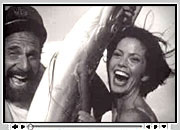
dos-equis-tv
CLICK HERE TO VIEW A COMPILATION OF THE ADS

The latest ad campaign Heineken is just launching and the plan is to position Dos Equis as a premium product through a nationwide push using spots called the “Most Interesting Man in the World” and with the tagline, “stay thirsty, my friends,” whatever that means. The advertising agency that created the ads is Euro RSCG, which is apparently the fifth largest global ad agency in the world and headquartered in New York City. If you click on the ad to the left, it will open a new window at AdWeek where you can watch the first commercial. This first one is something of an introduction, setting the tone for four more that will begin airing next week. Here’s how AdWeek describes the commercial.

It opens on a bearded, tuxedo-clad gentleman bench-pressing two comely nurses. A narrator intones oddly intriguing descriptions of the man, e.g., “His blood smells like cologne,” as the character continues to do implausible things, like freeing a bear from a trap.

Ultimately, we see a more mature MIM, with a touch of gray in his hair, seated at a table surrounded by beautiful women. He says, “I don’t always drink beer, but when I do, I prefer Dos Equis.” The spot ends with the tagline, “Stay thirsty, my friends.”

There will also be radio spots, print ads in Stuff magazine and the MIM is featured on the Dos Equis website along with a separate website, staythirstymyfriends.com. You can also see all four commercials at that website.

Now the ad is well-produced and are not without some humor, but they don’t seem very different from almost any other beer ad created by a big name ad agency. What did strike me as odd and a little interesting was the following about just how Euro RSCG sees the ad campaign.

From the AdWeek story:

For Euro RSCG, the spot is a conscious attempt to elevate the often-lowbrow imagery associated with beer ads. “The stain of the Swedish bikini teams still lingers. Those kinds of ads are targeted at beer-drinking morons,” said Jeff Kling, ecd at Euro RSCG in New York. “We saw this as an opportunity to talk to people a little differently. It portrays a different kind of drinker.”

Raise your hand if you know what’s wrong with that. The “Most Interesting Man in the World” (MIM) is not low-brow? It can be distinguished from the Swedish Bikini Team? This is not aimed at morons? It displays a different kind of drinker? So let’s look at those statements.

  1. Not Low-Brow: The MIM is Ricardo Montalban without the Corinthian leather and sporting a beard. He’s classy with a capital “K.” This is every cliche of sophistication and in my opinion lacks any authentic portrayal of it whatsoever. It looks like what a drunken frat boy might consider high-brow.”
  2. No Lingering Babes: Uh, exactly what do you call the two Asian nurses in tight white uniforms in the beginning or the two babes in low-cut black cocktail dresses at the end? They may not be wearing bikinis, but they’re cut from the same cloth.
  3. Not Aimed at Morons: Because arm wrestling is the way intelligent people settle their political differences or spend an evening of fun. Worse than that, at the website you can “test your skills” by arm-wrestling a “deceased head of state.” They get bonus points for not realizing that Winston Churchill was not a head of state, but Prime Minister. The Queen is head of state in Great Britain. Another non-moronic game you can play at the website is a “Test of your resilience and fortitude” that involves holding down the spacebar on your keyboard as long as you can or want to. Now that’s sophistication.
  4. A Different Kind of Drinker: Freeing bears from traps and fishing for Marlin. Frankly I’d be worried about liability for all those different drinkers who had themselves a 12-pack and then actually tried to free a bear. I don’t see how this is in any way a departure from the same inanity that’s graced our TV sets for decades.

The ads aren’t really any worse than any other bad beer ads, but what I find troubling is how the ad agency speaks about them. Is it just me, or do their statements seems completely divorced from reality? Because if they were really setting out to show beer in a different light instead of how it’s been portrayed for a very long time, I think they utterly and completely failed in that regard. I for one, plan to not stay thirsty. Perhaps a nice beer with do the trick.

Filed Under: Editorial, News Tagged With: Business, International, National, Promotions

Top 50 Breweries for 2006

April 11, 2007 By Jay Brooks

The Brewers Association has just announced the top 50 breweries in the U.S. based on sales for 2006. Here is the new list:

  1. Anheuser-Busch; St Louis MO
  2. Miller Brewing; Milwaukee WI
  3. Coors Brewing; Golden CO
  4. Pabst Brewing; Woodridge IL
  5. Boston Beer Co.; Boston MA
  6. D. G. Yuengling and Son; Pottsville PA
  7. Sierra Nevada Brewing; Chico CA
  8. Gambrinus; San Antonio TX
  9. New Belgium Brewing; Fort Collins CO
  10. High Falls Brewing; Rochester NY
  11. Widmer Brothers Brewing; Portland OR
  12. Redhook Ale Brewery; Woodinville WA
  13. Pittsburgh Brewing; Pittsburgh PA
  14. Pyramid Breweries; Seattle WA
  15. Minhas Craft Brewery; Monroe WI
  16. Matt Brewing; Utica NY
  17. Deschutes Brewery; Bend OR
  18. Boulevard Brewing; Kansas City MO
  19. Alaskan Brewing; Juneau AK
  20. The Harpoon Brewery; Boston, MA
  21. Full Sail Brewing; Hood River OR
  22. Anchor Brewing; San Francisco CA
  23. Kona Brewing; Kailua-Kona HI
  24. Magic Hat Brewing Company; South Burlington VT
  25. Gordon Biersch Brewing; San Jose CA
  26. Bell’s Brewery; Galesburg MI
  27. Summit Brewing; Saint Paul MN
  28. August Schell Brewing; New Ulm MN
  29. Shipyard Brewing; Portland ME
  30. Mendocino Brewing; Ukiah CA
  31. Goose Island Beer; Chicago IL
  32. Abita Brewing; New Orleans LA
  33. Long Trail Brewing; Bridgewater Corners VT
  34. Brooklyn Brewery; Brooklyn NY
  35. New Glarus Brewing; New Glarus WI
  36. Rogue Ales; Newport OR
  37. Stone Brewing; Escondido CA
  38. Stevens Point Brewery; Stevens Point WI
  39. Rock Bottom Brewery Restaurants; Louisville CO
  40. Firestone Walker Brewing; Paso Robles CA
  41. Great Lakes Brewing; Cleveland OH
  42. Dogfish Head Craft Brewery; Lewes DE
  43. Straub Brewery; Saint Mary’s PA
  44. Lagunitas Brewing; Petaluma CA
  45. Flying Dog Brewery; Denver CO
  46. Sweetwater Brewing; Atlanta GA
  47. Odell Brewing; Fort Collins CO
  48. Mac and Jack’s Brewery; Redmond WA
  49. Big Sky Brewing; Missoula MT
  50. Otter Creek Brewing; Middlebury VT


From the press release:

The Brewers Association, which tabulates industry growth data, reports that in 2006 77.7% of the craft beer produced was made from the top 50 craft brewing companies. Additionally, 34 out of the top 50 brewing companies in the U.S meet the Brewers Association’s definition of a craft brewer.

“Beer made by small, independent and traditional breweries is definitely an American success story,” states Paul Gatza, Director of the Brewers Association. “There’s a change in lifestyle going on. People are trading up and that is what is creating such strong demand for craft beer”.

With just under 1400 small breweries the segment eclipsed 6.7 million barrels in 2006. The fastest growing craft beer sector in 2006 was microbreweries (those under 15,000 barrels a year). Sales were up 16%, showing customer support for local breweries. Total craft beer industry sales have grown 31.5% over the last 3 years an early 2007 indicators point toward accelerating sales growth.

“If you Google craft beer you’ll see more press coverage than ever before. This is because beers from craft breweries provide diversity and flavor and that’s what people want,” stated Julia Herz, a spokesperson for the Brewers Association.

Twenty-two states are represented in the top 50 brewing companies list, according to the Brewers Association. California hosts (7) top breweries. Colorado has (5) and Oregon and Wisconsin each host (4) top producers. The remainder of the top 50 operate from New York (3), Pennsylvania (3), Vermont (3), Washington (3), Illinois (2), Massachusetts (2), Minnesota (2), Missouri (2), Alaska (1) , Louisiana (1), Maine (1), Michigan (1), Montana (1), Ohio (1) and Texas (1).


In 2006, while sales of large domestic brewers still lagged behind their 2004 peak, the craft beer segment continued to explode. Scan data from Information Resources Inc. shows craft beer with a 17.8% increase in supermarket sales for 2006—more growth than any other alcohol beverage category in the supermarket sales channel. For more sales statistics, the Brewers Assocation has set up a statistics page on their website.

This is more excellent news for craft beer, as the final number even exceeded easrlier estimates. Let’s raise a glass and offer a toast to craft beer’s continuing success. Cheers to all of those brewers making such wonderful, world-class beer.

Filed Under: News Tagged With: Business, National, Press Release

SABMiller Eyeing S&N?

April 10, 2007 By Jay Brooks

At the end of March, Heineken appeared to be the leading contender in a takeover bid for Scottish & Newcastle. Now the latest rumors have SABMiller considering their own bid to take over the Scottish beer giant for the sum of £6.5 billion (around 12.75 billion in U.S. dollars). If successful, many believe SABMiller would sell off pieces of S&N, specifically it’s French interests along with Foster’s, John Smith’s bitter and Strongbow cider, to international drinks company Diageo. If true, official details should be released by the end of the week.

Filed Under: News Tagged With: Business, Europe, Great Britain

Coors’ Ice Cold Obsession

April 9, 2007 By Jay Brooks

All of the big beer companies and many of the bigger imported ones have at one time or another emphasized “ice cold” as the ideal temperature to enjoy their products. It’s no secret that the closer to freezing you serve your beer, the less of it you can actually taste. So they’re quite right to market their products this way, as for me the less I can taste of them the more I enjoy them. All three of the big U.S. players have used this tactic at one time or another, and then there was the fad for “Ice Beer” a number of years ago. Some imports, like Guinness and Foster’s, have even gone so far as to re-brand line extensions like Guinness Extra Cold and Foster’s Extra Cold, as if changing the temperature makes it a different style. In London, I have seen both Guinness and the Extra Cold version side-by-side in the same pub. It may be a great way to monopolize two taps, but in every other was it’s a travesty.

Many servers still cock their head to one side in the manner of a dog just shown a card trick when I ask them to re-pour my beer into a beer glass that hasn’t been frosted in the freezer. I find this especially troubling when I didn’t ask for a frosted glass or wasn’t informed — or more properly warned — it came in one. A waitress once told me they didn’t have any non-frosted glasses in which to serve me my Chimay. I can only imagine she’d never heard of hot water to warm up the glass. But it’s very, very bad for the beer to be frozen in that manner so I’ve never really understood why so many clueless bars even do it. I’ve written about this before here, to wit:

Now generally when beer dips below freezing ingredients begin to break down, primarily the proteins which come out of solution. This causes them to separate and form small flakes that swim around in the beer and make it cloudy. Of course, because of the alcohol beer freezes at a point that’s already slightly below freezing, the exact point depending on the percentage of alcohol. Alcohol itself freezes at -173° F.

This is also the reason frosted, frozen glasses stored in the freezer are such a terrible idea. They also chemically alter the beer and change its taste. The reason you generally don’t notice it is simply because drinking any liquid at that temperature also numbs many of your taste buds. Several volatile components in the beer aren’t released in your mouth and disappear undetected down your throat. The beer’s flavor profile is considerably narrowed and some tastes disappear completely. Cold beer also effects the beer’s balance because hop character survives better than malt or fruity esters. This is the reason bland lagers, which are generally less well-hopped, do better at cold temperatures and explains why ales are generally served at warmer temperatures. A good rule of thumb is the colder the beer, the less of it you can actually taste.

So it’s a bit confusing why so many of the larger beer companies that make their products on such massive scales also tend to be the ones that promote the idea that colder is better, until you remember that they’re pretty savvy marketeers. And if you want the largest possible market share, it’s a lot easier to change peoples’ tastes than actually go to the trouble of educating them about why beer tastes the way it does and that the bitterness is actually a good thing. But if you take steps to insure your product is indistinguishable for your competitor, then you can simply market the brand instead of the beer. The science of advertising and marketing knows far more about branding and how to make people loyal to a particular brand than how to teach a wide range of people something as arcane as beer styles and why beers taste differently. Make them a commodity through marketing and you reduce a lot of your costs because you only have one or two products in many different packages.

But Coors approach to coldness is positively obsessive and for several years it seems all of their big marketing pushes have been geared toward ice cold beer. I believe they’re the only big brewer who ships their beer in refrigerated trucks to wholesalers and distributors, but that may only be anecdotal. Some of their current slogans even include “Taste the Cold” and “Rocky Mountain Cold Refreshment.” The fact that cold doesn’t actually have a particular taste is, apparently, irrelevant. I once had a journalism class in college where we had to read a essay on McDonald’s marketing practices, and there was a part of it that’s always stuck with me. The author visited the plant in New England where all of Mickey D’s Fillet-O-Fish patties are made. After seeing the whole operation from start to finish, he’s handed a cooked one to sample. As he bites into, his tour guide remarks. “Tastes crispy, doesn’t it?” The essayist then thinks to himself that he doesn’t know how to tell his host that “crispy” is not a flavor.

And the same is true for cold, especially in beer where if cold has any taste, it’s the absence of any flavor. But the images and messages we’re inundated with by marketeers are replete with such non-sequitors of logic, and most of us don’t even bat an eye or think about them very much. But it is as effective as it is insidious. The reason we take a shower, wash our hair and make the effort to insure our underarms are odor-free is entirely the work of marketing early in the last century in an effort to sell more soap, shampoo and deodorant. Prior to that time, Americans bathed far less often. Believe me, I’m not arguing we should return to a less hygienic time, my point is only that we take for granted now what once had to be suggested to us was a problem none of us knew we had through marketing and advertising. A particularly pervasive modern example is how big pharma creates a drug you didn’t need and then invents a disease you didn’t know you had that their new drug can magically treat. So instead of creating a drug to cure a disease that already exists, they create a disease and then sell you on the drug that treats it, rather than cures it. There’s far less money in cures than in lifelong treatments. Whoever heard of ADHD before there was Ritalin, or Erectile Dysfunction before Viagra.

Now recently Coors appears to turning all of its R&D money into finding high-tech solutions to keep their beer as cold as possible. The first of these was last year’s “Stay Cold Glassware,” which used a double-paned design to keep the beer away from your warm hands thus keeping beer colder longer. Here’s how Coors sold it to the public. “Beer pulled at 35 degrees and served in a room temperature glass will warm to 45 degrees when held for 20 minutes. The Stay Cold Glassware only allows a mere three degree increase in temperature in 20 minutes, thus keeping the beer colder and more refreshing longer.” Then there was this frightening sounding “ice-ready” package innovation, from a Coors press release:

Back by popular demand in retail stores nationwide is the Coors Light Plastic Bottle Cooler Box, the industry’s first ice-ready bottle package that can go just about anywhere. Introduced last summer, the innovative design was recognized by Convenience Store News Magazine as the Best New Packaging Innovation in 2005. Essentially a single use portable cooler, consumers need only add ice to the box to enjoy cold beer anytime. The Plastic Bottle Cooler Box includes 18 break-proof 16-ounce plastic bottles, allowing consumers to take beer where glass isn’t allowed.

In England, where Molson-Coors also owns Bass, to combat the Extra Cold versions of Guinness and others, they spent over $18 million dollars developing the technology for Coors Sub-Zero, a device that chills beer down below freezing, to -2.5° C (27.5° F). It seems little more than a gimmick on display at bars throughout England. When it first came out, my friend and fellow beer writer Stephen Beaumont tried it in Canada and came to the same conclusion in a feature he called “Hey Molson-Coors, What Do You Have Against Taste?”

Then there was more money spent developing “Cold Wrap” labels that are designed to absorb the heat from your hand rather than warm the beer to a temperature where you might be able to actually taste it. These debuted on bottles last year. On cans, they spray painted the epoxy linings blue — over the gentle protests of the can manufacturers — and called it “frost brew lining.” Both schemes seem to me a perfect illustration that technology is not always a good thing.

Now AdAge is reporting the next step in Coors cold marketing is “Coors Light Super Cold Draft,” a new “glacier tap” mechanism (pictured above) that delivers beer at 6-10° colder than ordinary taps. In the article, a Coors PR flack is actually quoted as saying they own cold, whatever that means.

“We can own [cold] because of our heritage and our brewing process,” said Sara Mirelez, brand director for the Coors Light and Coors brands.

Hilarious. I think I’ll claim to own sarcasm because of my heritage of using it and my writing process. Okay, people, nobody else better use sarcasm without checking with me first, because I f$@&ing own sarcasm.

But really, there’s a low-tech solution I think Coors is overlooking. I could save them literally millions of dollars per annum if they’d just take my simple suggestion. Ready? Here goes nothing. Hey Coors, how about taking all that R&D money and use it to spend incrementally more on your ingredients to make an all-malt beer and maybe create a pilsner that still tastes good when it’s a little warmer? Then you wouldn’t need all the cold temperature gadgets, saving untold buckets full of money every year that would more than offset the margin loss from using more expensive ingredients. Now that will get me a chilly reception.
 

UPDATE 4.10: Coors has even set up a separate website for Super Cold Draft.

Filed Under: Editorial Tagged With: Brewing Equipment, Business, Science of Brewing, Western States

Brew Years Eve

April 7, 2007 By Jay Brooks

At 12:01 a.m., 74 years ago, beer became legal for the first time in thirteen years. Though it would be eight more months until Prohibition officially ended (on December 5), President Franklin D. Roosevelt kept his first campaign promise by encouraging Congress to modify the Volstead Act and they passed the Cullen-Harrison bill, which FDR signed it into law on March 23. The bill allowed the sale and manufacture of low-alcohol beer (3.2% alcohol by weight/4.0% by volume), along with light wines, too. For brewers, it represented a return to brewing and those that had remained opening making non-alcoholic products quickly retooled. Those that had been shuttered for over a decade had a harder time re-opening, but some did manage it. Ultimately Prohibition did irreparable harm the industry as a whole and less than half of America’s breweries did not survive.

And we’re still waiting for an apology from all the temperance nutcases who thought making alcohol illegal would turn society into a utopia. If anything, it made things much, much worse. Virtually every societal ill temperance nutjobs believed prohibition would fix were only made worse. Instead of a more civil, crime-free world, crime actually increased significantly, not least of which directly is directly attributable to bootlegging and bathtub gin. An entire new enforcement agency was created to deal with all the new criminalized behavior by the Volstead Act, made famous by Elliot Ness and his “Untouchables.” And that was in part because corruption became rampant especially among law enforcement and local officials who took bribes and looked the other way while speakeasies operated with homemade and illegal booze. This corruption in turn made the average citizen’s respect for the law evaporate.

All those people who used to work at breweries, wineries, distilleries along with their salesmen, advertisers, marketers, distributors, delivery men, and on and one were suddenly out of a job, causing much economic harm. It’s no mere coincidence that our worst economic depression took place during this same period of time. In every sense this experiment was ignoble and failed to achieve any of its goals.

Originally, and for many years after, brewers referred to April 7 as “New Beer’s Eve” Although the fortunes of many breweries and the industry as a whole ebbed and flowed, overall the number of breweries continued to plummet until the early 1980s, when the microbrewery revolution began to reverse that trend.

The Brewers Association, a trade organization for small and regional breweries, is reviving the holiday under the name “Brew Years Eve” and encouraging their members to host celebrations all over the country. Their website lists hundreds of events by state

From their press release:

While the full repeal of Prohibition came on December 5, 1933, a modification of the Volstead Act legalized beer with 3.2 percent alcohol by weight (4.0 percent by volume) starting on April 7 of that year. In fact, one of the first public delivery of beer went to the White House to honor Franklin Delano Roosevelt who had won the presidency in part because he favored repeal. From April 7 on, the country’s brewers were back in business and Americans enjoyed legal beer for eight months before wine and spirits were once again legitimate.

Today, brewers bring Americans a lot more than just beer. Since the 1970s, the ranks of brewers have grown to include more than 1400 small, traditional and independent craft beer makers. Each contributes jobs and a variety of local and federal taxes to the economy.

To learn more about the history of Prohibition, here are some interesting links:

  • Alcohol Prohibition Was A Failure, Policy Analysis from the Cato Institute
  • Alcohol, Temperance & Prohibition, from Brown University
  • April 7 is NOT the 74th Anniversary of the End of National Prohibition, by Bob Skilnik, with an excerpt from his wonderful book Beer & Food.
  • Prohibition: A Lesson in the Futility (and Danger) of Prohibiting, from the book Ain’t Nobody’s Business If You Do
  • Schaffer Library of Drug Policy History of Alcohol Prohibition
  • Temperance & Prohibition History, from Ohio State
  • Thinkquest’s Prohibition — The “Noble Experiment”
  • Wikipedia

Filed Under: Editorial, Events, News Tagged With: Business, History, Other Events, Prohibitionists

Budvar to Privatize

April 6, 2007 By Jay Brooks

Czech brewer Budejovicky Budvar — from the Bohemian town of Budweis — announced today that it will be transformed into a joint-stock company as the first step toward privatization. Currently, Budvar (whose beers are marketed in the U.S. under the name Czechvar) is a state-owned company.

Agriculture Minister Petr Gandalovic, whose ministry controls Budvar, also said today that privatization will depend largely on any outcome in the long-standing trademark dispute with Anheuser-Busch, whose beer brand “Budweiser” was inspired by the town of Budweis. The speculation is that this move, along with several other proposed similar privatizations of other nationally held companies, is being taken to assist the government in dealing with a recent budget crisis.

Filed Under: News Tagged With: Business, Europe

Greene King Visits the Clue Farm

April 5, 2007 By Jay Brooks

The Publican is reporting that Greene King is going to subject its decision to remove the locally brewed Harvey’s Best Bitter from the Lewes Arms to an “internal review” where most expect that decision to be reversed. Though no timetable has been set, Harveys will once more be sold at the pub most likely within the next few weeks.

From the Publican article:

Adam Collett, marketing director for Greene King’s managed pubs, acknowledged his company had “underestimated the strength of feeling which led to many locals boycotting what was once a great British pub. As a result, it has lost some of its character and greatness.”

Although he defended Greene King’s right to remove the beer from the pub “and, where we choose, not to sell rival beers”, he admitted the group “did not fully appreciate its special position in Lewes as the former ‘Brewery Tap’, or take into account its history and traditions”.

Sure they did, just a simple misunderstanding. They’ve been completely belligerent and intractable throughout this episode, to say now that they just didn’t “fully appreciate” how locals felt about their local beer is more spin control. They knew exactly what they were dealing with from almost the beginning, but they believed they could outlast the boycott and they also didn’t count on the publicity the story generated. The PR backlash was so bad that it probably led to former marketing director Mark Angela leaving over his handling of what became a “public relations nightmare” and the restructuring of the managed pubs division. Collett, who replaced him, was undoubtedly tasked with fixing the Lewes problem. Naturally, Greene King denies this scenario. It was just a coincidence is what they’ll probably say. I guess Angela just wanted to spend more time with his family, that’s a common reason given by exiting executives.

Notice that even within the conciliatory reversal of position, Greene King retains the bullying language that they will do whatever they want and “where [they] choose, [will] not [to] sell rival beers.” To me that signals a company desperately wanting to fix its negative public image but without changing its corporate culture in any meaningful way. They may have bought a clue in this particular instance, but it probably won’t help them if they face similar opposition at another location.

I’m certainly happy for the people of Lewes who fought for their local heritage. Getting a big company to see reason and be a better corporate citizen is no easy feat. It’s proof once more that sufficiently motivated groups of organized people can successfully challenge institutions, and that makes the world a slightly less depressing place. Congratulations to the Friends of the Lewes Arms. Next time I’m across the pond, I’d like to stop in the Lewes Arms and have myself a pint of Harveys.

Filed Under: Editorial, News Tagged With: Business, Europe, Great Britain

Sam Adams to Be Made in the Glass-Lined Tanks of Old Latrobe

April 4, 2007 By Jay Brooks

The big story yesterday, reported by practically everybody, is that the Boston Beer Co. — makers of Samuel Adams beers — have signed a contract with City Brewing of Wisconsin to brew Sam Adams beer at the newly acquired Latrobe Brewery. It appears the relationship between Boston Beer Co. and City Brewing on this project will be some form of partnership, with Jim Koch’s company kicking in between three and seven million dollars to upgrade the Pennsylvania facility. In addition, “the parties are discussing the potential of Boston Beer having an ownership interest in the brewing facility.”

The parties expect the brewery to be up and running again in the second quarter, which means anytime over the next three months, and possibly as soon as next month. Happily, around 250 brewery employees should finally be back at work after InBev’s sale of the Rolling Rock brand — but not the Latrobe brewery — to Anheuser-Busch for $82 million closed the plant last July. Anheuser-Busch declined to buy the brewery and moved production to its facility in Newark, New Jersey, where it’s been brewing Rolling Rock for almost a year. Curiously, Boston Beer was one of the leading contenders in last year’s rumor mills surrounding who might buy the threatened Latrobe brewery and save it from closure. Federal, state and local officials and politicians worked tirelessly with InBev to find a buyer and rumored potential suitors also included Pittsburgh Brewing, Sierra Nevada and Yuengling before City Brewing bought it for an undisclosed amount.

Boston Beer’s co-packing contract with Miller is set to expire in October of next year, so this is seen by financial analysts as putting to rest any long-term concerns about meeting rising product demand. Sales volume increased 17% last year. Boston Beer President and CEO Martin Roper indicated that the Latrobe deal gives Sam Adams “increased flexibility” and they chose Latrobe brewery in part because of its heritage. As a result, yesterday afternoon shares of Boston Beer rose 66 cents to $33.74.

Samuel Adams has also been pursuing a property in Freetown, Massachusetts to build a brewery from scratch. According to company spokeswoman Michelle Sullivan. “’We’ve signed a purchase and sale on the site,’ Sullivan said, adding the company has also hired consultants to look into building plans.” Boston Beer also owns the Hudepohl-Schoenling in Cincinnati, Ohio and a smaller pilot brewery in Jamaica Plain, a little southwest of their headquarters in Boston, Massachusetts.

Filed Under: News Tagged With: Business, Eastern States

Craft Brewers Pour into Austin in Two Weeks

April 4, 2007 By Jay Brooks

Austin to Host Conference on Craft Beer

Boulder, Colo. • In mid-April Austin will be flooded with flavorful craft beer and the brewers who make it. That’s when the Brewers Association, the not-for-profit trade association for America’s small brewers, will hold its annual professional conference. Craft brewers from across the country will pour into Austin to attend the Craft Brewers Conference, the brewing industry’s largest gathering in North America. Attendance is expected to exceed 1,600.

Austinites will benefit from this surge of beer culture with public events at local venues featuring special beers on tap, craft beer-paired dinners and good elbow-rubbing time with the royalty of craft brewers. “Austin is a city rich in craft beer culture and we look forward to bringing the industry together in such a beer-friendly town,” said Cindy Jones, Marketing Director for the Brewers Association.

Today, sales of craft beers — beer made by small, independent and traditional brewers — are at an all-time high. 2006 marked an 11.7% increase for the category totaling a retail sales figure of $4.2 billion and 3.2% share by volume of the beer market with over 6.65 million taxable production in barrels. America’s craft beers are now a world-class brand being emulated and talked about globally.

“Having the Craft Brewers Conference come to Austin is a fantastic opportunity for the local brewers to showcase our beers,” says Chip McElroy of Live Oak Brewing Co. “We Austinites are proud of our town and the local things we have produced — especially music and beer. We just had the SXSW music conference in town, now bring on the brewers!”
 

Events open to the public include:
 

Event: American Homebrewers Association Rally
Presented by: Independence Brewing Company
Date/Time: Sunday, April 15, 3-6 pm
Location: 3913 Todd Lane #607, Austin, TX
Contact: 303-447-0816 x 123
Cost: Free for American Homebrewers Association (AHA) members or $33 for non-members– which includes a 1 year membership to the AHA!
To kick off the Craft Brewers Conference and support the American Homebrewers Association, Independence is hosting a rally. There will be special guest speakers, brewery tours, raffle prizes, complimentary beer tasting…and to top it all off, they’ll be pouring an experimental beer they’ve been working on. Visit the website for more details. www.independencebrewing.com
 

Event: American Beer Feast
Presented by: Alamo Drafthouse Lakecreek
Date/Time: Thursday, April 19 @ 7:30 p.m.
Location: 13729 Research Blvd., Austin
Contact: 512-219-8135
Showing of “American Beer”, the movie, with director Paul Kermizian and many other special guests. Ticket price includes pre-show appetizers and a three-course craft beer meal (many great beers) to accompany the film.
Cost: Admission is $65 and includes entrance, meal and beer. Guaranteed to be a special evening. Visit the website for more details. www.drafthouse.com/lakecreek/frames.asp
 

Event: Zax Pints and Plates Beer Dinner
Presented by: Zax Pints and Plates
Date/Time: Thursday, April 19 @ 7:00 p.m.
Location: 312 Barton Springs, Austin
Contact: 512-481-0100
Join your friends at Zax Pints and Plates for a 4 course beer and food pairing featuring fine ales and lagers from Victory Brewing Company. Space is limited so make reservations early.
Cost: Open to the public. Admission is $45.
Call 512-481-0100 for more information and reservations. www.zaxaustin.com
 

Event: John Langford Live and in effect!
Presented by: Opal Divines Austin Grill (Penn Field)
Date/Time: Friday, April 20 @ 7:00 p.m.
Location: 3601 South Congress Street. Austin
Contact: 512- 707-0237
A free concert and short film featuring the music of John Langford and featuring Dogfish Head Craft brewed ales.
 

Be sure and visit craft beer hotspots in the Austin area open year-round: Blue Star Brewing, Draught House Pub and Brewery, Fredericksburg Brewing Co, Independence Brewing, Live Oak Brewing, Lovejoys Taproom and Brewery, North by Northwest Restaurant and Brewery, Real Ale Brewing Co. Visit beertown.org for a complete list of breweries by state and city.

For more information about the conference visit www.CraftBrewersConference.com. The Craft Brewers Conference is open to brewing industry professionals and media only.

Filed Under: Uncategorized Tagged With: Announcements, Beer Suppliers, Brewing Equipment, Business, Other Event, Press Release

« Previous Page
Next Page »

Find Something

Northern California Breweries

Please consider purchasing my latest book, California Breweries North, available from Amazon, or ask for it at your local bookstore.

Recent Comments

  • Bob Paolino on Beer Birthday: Grant Johnston
  • Gambrinus on Historic Beer Birthday: A.J. Houghton
  • Ernie Dewing on Historic Beer Birthday: Charles William Bergner 
  • Steve 'Pudgy' De Rose on Historic Beer Birthday: Jacob Schmidt
  • Jay Brooks on Beer Birthday: Bill Owens

Recent Posts

  • Historic Beer Birthday: William Cobbett March 9, 2026
  • Beer In Ads #5153: Roll In A Barrel Of Spring! March 9, 2026
  • Beer In Ads #5152: A Message From Over The Sea About Genuine Bock Beer March 8, 2026
  • Beer In Ads #5151: March Is Bock Beer Time March 8, 2026
  • Beer In Ads #5150: The Best Of Bocks Comes To Town! March 7, 2026

BBB Archives

Feedback

Head Quarter
This site is hosted and maintained by H25Q.dev. Any questions or comments for the webmaster can be directed here.