Brookston Beer Bulletin

Jay R. Brooks on Beer

  • Home
  • About
  • Editorial
  • Birthdays
  • Art & Beer

Socialize

  • Dribbble
  • Email
  • Facebook
  • Flickr
  • GitHub
  • Instagram
  • LinkedIn
  • Pinterest
  • RSS
  • Twitter
  • YouTube

Powered by Genesis

Beer In Ads #4916: Defeat Of The Cold-Water-Men By The Bock

March 21, 2025 By Jay Brooks

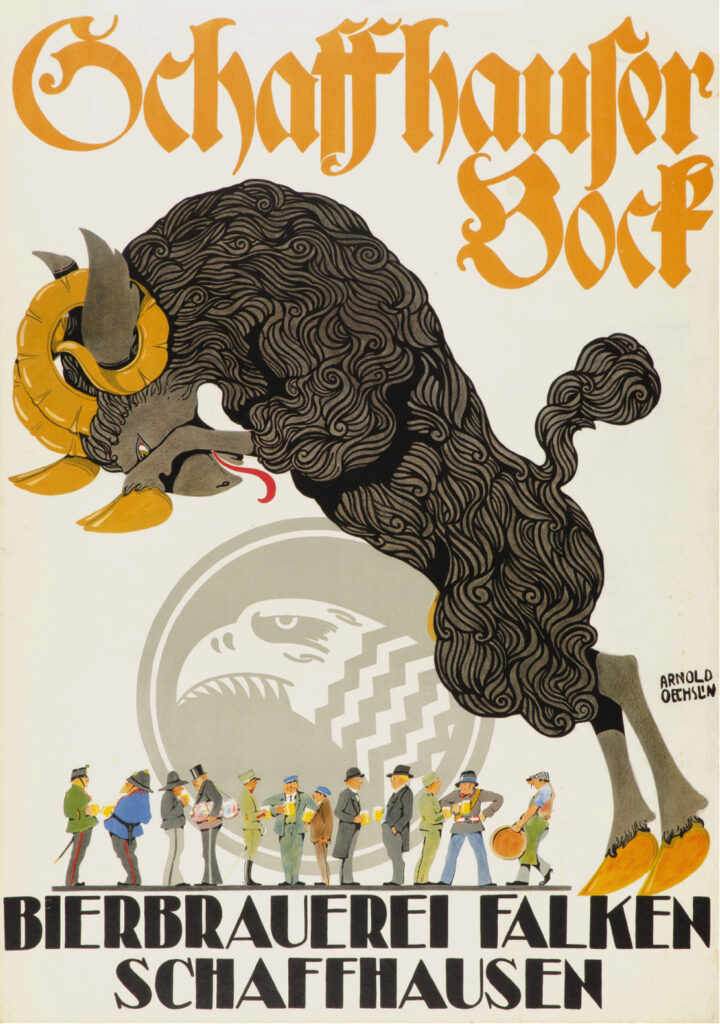
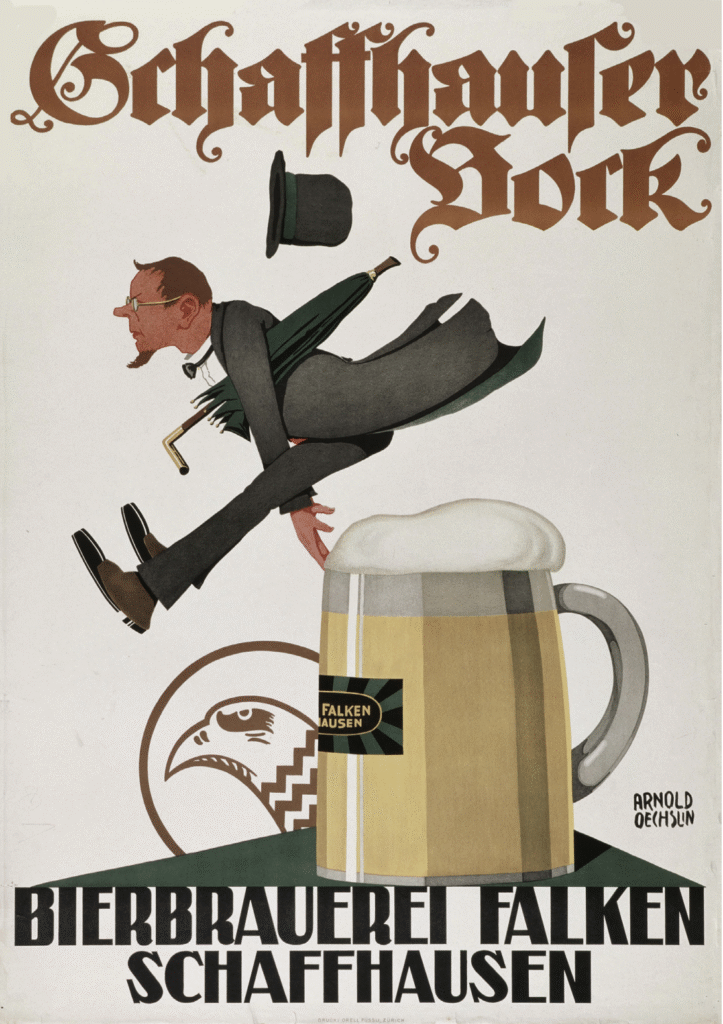
Last year I decided to concentrate on Bock ads. Bock, of course, originated in Germany, in the town of Einbeck. Because many 19th century American breweries were founded by German immigrants, they offered a bock at certain times of the year, be it Spring, Easter, Lent, Christmas, or what have you. In a sense they were some of the first seasonal beers. “The style was later adopted in Bavaria by Munich brewers in the 17th century. Due to their Bavarian accent, citizens of Munich pronounced ‘Einbeck’ as ‘ein Bock’ (a billy goat), and thus the beer became known as ‘Bock.’ A goat often appears on bottle labels.” And presumably because they were special releases, many breweries went all out promoting them with beautiful artwork on posters and other advertising.

Friday’s ad is called “Defeat of the Cold-Water-Men by the Bock, March 21, 1873” and depicts an epic battle between men and goats, with apparently the goat winning. The artist who created the poster was Emil Bott, a German-born artist who emigrated to Pittsburgh, Pennsylvania.

Filed Under: Art & Beer, Beers, Just For Fun Tagged With: Advertising, Bock, History, Pennsylvania

Beer In Ads #4915: Acme Bock Beer Every Drop Perfect!

March 20, 2025 By Jay Brooks

Last year I decided to concentrate on Bock ads. Bock, of course, originated in Germany, in the town of Einbeck. Because many 19th century American breweries were founded by German immigrants, they offered a bock at certain times of the year, be it Spring, Easter, Lent, Christmas, or what have you. In a sense they were some of the first seasonal beers. “The style was later adopted in Bavaria by Munich brewers in the 17th century. Due to their Bavarian accent, citizens of Munich pronounced ‘Einbeck’ as ‘ein Bock’ (a billy goat), and thus the beer became known as ‘Bock.’ A goat often appears on bottle labels.” And presumably because they were special releases, many breweries went all out promoting them with beautiful artwork on posters and other advertising.

Thursday’s ad is for Acme Bock Beer and was published March 21, 1942. The brewery was the Acme Brewing Co. of San Francisco, California, which was originally founded in 1907, though they also opened a location in the Los Angeles area. Today the brand is owned by North Coast Brewing. This ad ran in the Colfax Record of Colfax, California, and shows a goat parachuting, which makes the tagline, “Every Drop Perfect!,” work on two levels.

Filed Under: Art & Beer, Beers, Breweries, Just For Fun Tagged With: Advertising, Bock, California, History

Beer In Ads #4914: Acme Bock Beer Tells You Spring Is Here

March 19, 2025 By Jay Brooks

Last year I decided to concentrate on Bock ads. Bock, of course, originated in Germany, in the town of Einbeck. Because many 19th century American breweries were founded by German immigrants, they offered a bock at certain times of the year, be it Spring, Easter, Lent, Christmas, or what have you. In a sense they were some of the first seasonal beers. “The style was later adopted in Bavaria by Munich brewers in the 17th century. Due to their Bavarian accent, citizens of Munich pronounced ‘Einbeck’ as ‘ein Bock’ (a billy goat), and thus the beer became known as ‘Bock.’ A goat often appears on bottle labels.” And presumably because they were special releases, many breweries went all out promoting them with beautiful artwork on posters and other advertising.

Wednesday’s ad is for Acme Bock Beer and was published March 19, 1937. The brewery was the Acme Brewing Co. of San Francisco, California, which was originally founded in 1907, though they also opened a location in the Los Angeles area. Today the brand is opened by North Coast Brewing. This ad ran in the Ventura Weekly Post and Democrat of Ventura, California, announcing that “It’s not the robins. It’s not the March winds. It’s not the rosebuds. It’s Acme Bock Beer That tells you Spring is here!”

Filed Under: Art & Beer, Beers, Breweries, Just For Fun Tagged With: Advertising, Bock, California, History

The Cheerupping-Cup

March 19, 2025 By Jay Brooks

Today, like every day, I surveyed a list of writers born this day and try to find an appropriate quote involving beer or drinking for the day. I’ve been doing this for years and have amassed a fairly sizable quantity of quotations. But today I stumbled upon yet another great word that has been lost to time, or in this case never quite seems to have caught on at all, which is a pity.

Tobias Smollett was born today in 1721 in “Dalquhurn, now part of Renton in present-day West Dunbartonshire, Scotland.” According to his Wikipedia page, he “was a Scottish writer and surgeon. He was best known for writing picaresque novels such as The Adventures of Roderick Random (1748), The Adventures of Peregrine Pickle (1751) and The Expedition of Humphry Clinker (1771), which influenced later generations of British novelists, including Charles Dickens.”

While searching through his work today, I happened upon a great word in his 1771 novel The Expedition of Humphry Clinker, which is described as “the last of the picaresque novels of Tobias Smollett, published in London on 17 June 1771 (three months before Smollett’s death), and is considered by many to be his best and funniest work. It is an epistolary novel, presented in the form of letters written by six characters: Matthew Bramble, a Welsh Squire; his sister Tabitha; their niece Lydia and nephew Jeremy Melford; Tabitha’s maid Winifred Jenkins; and Lydia’s suitor Wilson.”

In the 59th letter of the novel, of a total of 85, which was written by J. Melford Argylshire and addressed “To Sir Watkin Phillips, Bart. of Jesus college, Oxon” and beginning “Dear Knight,” Smollett invented the word “chearupping-cup” to describe … well, a cup of cheer, with, naturally, alcohol in it. Here’s the paragraph that includes it:

When the Lowlanders want to drink a chearupping-cup, they go to the public house, called the Change-house, and call for a chopine of two-penny, which is a thin, yeasty beverage, made of malt; not quite so strong as the table-beer of England,—This is brought in a pewter stoop, shaped like a skittle, from whence it is emptied into a quaff; that is, a curious cup made of different pieces of wood, such as box and ebony, cut into little staves, joined alternately, and secured with delicate hoops, having two cars or handles—It holds about a gill, is sometimes tipt round the mouth with silver, and has a plate of the same metal at bottom, with the landlord’s cypher engraved.—The Highlanders, on the contrary, despise this liquor, and regale themselves with whisky; a malt spirit, as strong as geneva, which they swallow in great quantities, without any signs of inebriation. They are used to it from the cradle, and find it an excellent preservative against the winter cold, which must be extreme on these mountains—I am told that it is given with great success to infants, as a cordial in the confluent smallpox, when the eruption seems to flag, and the symptoms grow unfavourable—The Highlanders are used to eat much more animal food than falls to the share of their neighbours in the Low-country—They delight in hunting; have plenty of deer and other game, with a great number of sheep, goats, and black-cattle running wild, which they scruple not to kill as vension, without being much at pains to ascertain the property.

I confirmed with the O.E.D. that this is the sole instance of the word being used (at least that they recorded) and which thy defined as “Of an alcoholic drink: reviving; comforting….” “Chear,” being an archaic form of “cheer,” that never quite caught on as well as cheer, it feels better with the double-ee’s. And indeed later editions spelled it “cheerupping-cup” as listed in “A Supplemental English Glossary,” by T. Lewis O. Davis, and published in 1881, under an entry for “Twopenny.”

From “A Supplemental English Glossary,” by T. Lewis O. Davis.

And in another instance from a news report in the Stamford Mercury, Friday, July 4, 1823, there’s a story using the word.

The language of love, so much talked of by the poets, prevailed against every remonstrance of friends and even the rage and fury of relations. The happy swain had conquest in his cheeks and will love, cherish, honour and obey. Hand in hand the couple blithely proceeded to the adjoining village of Rippingale where the festive board groaned with the weight of the feast and it also being the annual feast day of the parish, the tabor struck up and the village was gay. Rural sports were the order of the day and the merry dance and sparkling glass went round till night was at odds with morning and the groom, having taken sufficient of the cheer-upping cup, the happy couple retired and after throwing the stocking, the jolly swain was left wrapt in the arms of Morpheus to enjoy (what he most needed), nature’s sweet restorer, balmy sleep. [My emphasis.]

But doing some more rabbit-hole digging, I discovered it was used earlier with the more common ‘cheer’ spelling, though still not often and certainly not enough to suggest its use became widespread by any means. The O.E.D. lists as an adjective “cheer-upping” with the same definition, “[o]f an alcoholic drink: reviving; comforting…” with a range of use from 1720-1832. They also list a quotation that predates Smollett, from 1733, so it’s likely he wasn’t the first after all. “They … retired to comfort themselves with a cheer-upping Cup,” which is from “English Malady: or, A Treatise of Nervous Diseases of All Kinds,” by George Cheyne, though he remains one of the few to use it in fiction.

But whoever came up with, I still don’t understand why it fell out of use, because it just rolls pleasantly off the tongue: “cheerupping-cup.” Who wouldn’t want, or often need, a cheerupping-cup? I think I need one now. Who’s with me? Fancy a cheerupping-cup?

Filed Under: Just For Fun, Related Pleasures Tagged With: History, Words

Beer In Ads #4913: Oertels ’92 Bock Beer

March 18, 2025 By Jay Brooks

Last year I decided to concentrate on Bock ads. Bock, of course, originated in Germany, in the town of Einbeck. Because many 19th century American breweries were founded by German immigrants, they offered a bock at certain times of the year, be it Spring, Easter, Lent, Christmas, or what have you. In a sense they were some of the first seasonal beers. “The style was later adopted in Bavaria by Munich brewers in the 17th century. Due to their Bavarian accent, citizens of Munich pronounced ‘Einbeck’ as ‘ein Bock’ (a billy goat), and thus the beer became known as ‘Bock.’ A goat often appears on bottle labels.” And presumably because they were special releases, many breweries went all out promoting them with beautiful artwork on posters and other advertising.

Tuesday’s ad is for Oertels ’92 Old Style Bock Beer and was published March 18, 1937. The brewery was the Oertels Brewing Co. of Louisville, Kentucky, which was originally founded in 1874, apparently by Charles Hartmetz and his brothers, and knnown as the Butchertown Brewery, but by 1884 John Fred Oertel was involved and beginning in 1892 Oertel was the sole owner. They survived prohibition but closed in 1967. This ad ran in the Courier Journal of Louiville, Kentucky, announcing the release of Acme bock beer that day, which I imagine was similar to yesterday’s ad announcing the release of “the NEW Oertel Goat!” ak.k.a. Oertels ’92 Old Style Bock Beer. The brewery’s flagship for many years was “Ortels ’92 Beer,” presumably named for the year of the brewery’s founding.

Filed Under: Art & Beer, Beers, Breweries, Just For Fun Tagged With: Advertising, Bock, History

Beer In Ads #4912: Acme Bock Beer Here!

March 17, 2025 By Jay Brooks

Last year I decided to concentrate on Bock ads. Bock, of course, originated in Germany, in the town of Einbeck. Because many 19th century American breweries were founded by German immigrants, they offered a bock at certain times of the year, be it Spring, Easter, Lent, Christmas, or what have you. In a sense they were some of the first seasonal beers. “The style was later adopted in Bavaria by Munich brewers in the 17th century. Due to their Bavarian accent, citizens of Munich pronounced ‘Einbeck’ as ‘ein Bock’ (a billy goat), and thus the beer became known as ‘Bock.’ A goat often appears on bottle labels.” And presumably because they were special releases, many breweries went all out promoting them with beautiful artwork on posters and other advertising.

Monday’s ad is for Acme Bock Beer and was published March 17, 1938. The brewery was the Acme Brewing Co. of San Francisco, California, which was originally founded in 1907, though they also opened a location in the Los Angeles area. Today the brand is opened by North Coast Brewing. This ad ran in the Daily News of Los Angeles, California, announcing the release of Acme bock beer that day, which I imagine was similar to yesterday’s ad announcing it would be released the following day. I love that it starts with “HERE!” and ends with “Watch it go!”

Filed Under: Art & Beer, Beers, Breweries, Just For Fun Tagged With: Advertising, Bock, California, History

Beer In Ads #4911: Acme Bock Is Back Tomorrow

March 16, 2025 By Jay Brooks

Last year I decided to concentrate on Bock ads. Bock, of course, originated in Germany, in the town of Einbeck. Because many 19th century American breweries were founded by German immigrants, they offered a bock at certain times of the year, be it Spring, Easter, Lent, Christmas, or what have you. In a sense they were some of the first seasonal beers. “The style was later adopted in Bavaria by Munich brewers in the 17th century. Due to their Bavarian accent, citizens of Munich pronounced ‘Einbeck’ as ‘ein Bock’ (a billy goat), and thus the beer became known as ‘Bock.’ A goat often appears on bottle labels.” And presumably because they were special releases, many breweries went all out promoting them with beautiful artwork on posters and other advertising.

Sunday’s ad is for Acme Bock Beer and was published March 16, 1950. The brewery was the Acme Brewing Co. of San Francisco, California, which was originally founded in 1907, though they also opened a location in the Los Angeles area. Today the brand is opened by North Coast Brewing. This ad ran in the News Pilot of San Pedro, California, announcing the release of Acme bock beer the following day.

Filed Under: Art & Beer, Beers, Breweries, Just For Fun Tagged With: Advertising, Bock, California, History

Beer In Ads #4910: Acme Bock Beer

March 15, 2025 By Jay Brooks

Last year I decided to concentrate on Bock ads. Bock, of course, originated in Germany, in the town of Einbeck. Because many 19th century American breweries were founded by German immigrants, they offered a bock at certain times of the year, be it Spring, Easter, Lent, Christmas, or what have you. In a sense they were some of the first seasonal beers. “The style was later adopted in Bavaria by Munich brewers in the 17th century. Due to their Bavarian accent, citizens of Munich pronounced ‘Einbeck’ as ‘ein Bock’ (a billy goat), and thus the beer became known as ‘Bock.’ A goat often appears on bottle labels.” And presumably because they were special releases, many breweries went all out promoting them with beautiful artwork on posters and other advertising.

Saturday’s ad is for Acme Bock Beer and was published March 15, 1934. The brewery was the Acme Brewing Co. of San Francisco, California, which was originally founded in 1907, though they also opened a location in the Los Angeles area. Today the brand is opened by North Coast Brewing. This ad ran in the Oregonian of Portland, Oregon, for the first release of bock beer since Prohibition was repealed the previous year.

Filed Under: Art & Beer, Beers, Breweries, Just For Fun Tagged With: Advertising, Bock, California, History

Beer In Ads #4909: It’s The Smile Of Springtime!

March 14, 2025 By Jay Brooks

Last year I decided to concentrate on Bock ads. Bock, of course, originated in Germany, in the town of Einbeck. Because many 19th century American breweries were founded by German immigrants, they offered a bock at certain times of the year, be it Spring, Easter, Lent, Christmas, or what have you. In a sense they were some of the first seasonal beers. “The style was later adopted in Bavaria by Munich brewers in the 17th century. Due to their Bavarian accent, citizens of Munich pronounced ‘Einbeck’ as ‘ein Bock’ (a billy goat), and thus the beer became known as ‘Bock.’ A goat often appears on bottle labels.” And presumably because they were special releases, many breweries went all out promoting them with beautiful artwork on posters and other advertising.

Friday’s ad is for Acme Bock Beer and was published March 14, 1940. The brewery was the Acme Brewing Co. of San Francisco, California, which was originally founded in 1907, though they also opened a location in the Los Angeles area. Today the brand is opened by North Coast Brewing. This ad ran in the Palo Verde Valley Times of Blythe, California, two days before the release of that year’s seasonal bock.

Filed Under: Art & Beer, Beers, Breweries, Just For Fun Tagged With: Advertising, Bock, History

Beer In Ads #4908: It’s My Kind Of Bock

March 13, 2025 By Jay Brooks

Last year I decided to concentrate on Bock ads. Bock, of course, originated in Germany, in the town of Einbeck. Because many 19th century American breweries were founded by German immigrants, they offered a bock at certain times of the year, be it Spring, Easter, Lent, Christmas, or what have you. In a sense they were some of the first seasonal beers. “The style was later adopted in Bavaria by Munich brewers in the 17th century. Due to their Bavarian accent, citizens of Munich pronounced ‘Einbeck’ as ‘ein Bock’ (a billy goat), and thus the beer became known as ‘Bock.’ A goat often appears on bottle labels.” And presumably because they were special releases, many breweries went all out promoting them with beautiful artwork on posters and other advertising.

Thursday’s ad is for Frankenmuth Nut Brown Bock Beer and was published March 13, 1952. The brewery was the Frankenmuth Brewing Co. of Frankenmuth, Michigan, which was originally founded in 1862 by Martin Heubisch and Wilhelm Knaust. It has closed and re-opened a couple of times, and is still around today as a craft brewery known as the Frankenmuth Brewery. It’s interesting that they referred to their bock as a “nut brown bock beer,” which is a new one on me. But at least it was a favorite of local bartender Bert Wells, who exclaimed “It’s My Kind of Bock!”

Filed Under: Art & Beer, Beers, Breweries, Just For Fun Tagged With: Advertising, Bock, History, Michigan

« Previous Page
Next Page »

Find Something

Northern California Breweries

Please consider purchasing my latest book, California Breweries North, available from Amazon, or ask for it at your local bookstore.

Recent Comments

  • Bob Paolino on Beer Birthday: Grant Johnston
  • Gambrinus on Historic Beer Birthday: A.J. Houghton
  • Ernie Dewing on Historic Beer Birthday: Charles William Bergner 
  • Steve 'Pudgy' De Rose on Historic Beer Birthday: Jacob Schmidt
  • Jay Brooks on Beer Birthday: Bill Owens

Recent Posts

  • Beer In Ads #5228: All Together For Newark April 21, 2026
  • Beer Birthday: Steve Parkes April 21, 2026
  • Beer In Ads #5227: It’s Here! Bock Beer By Bosch April 20, 2026
  • Beer Birthday: Drew Beechum April 20, 2026
  • Beer Birthday: Des De Moor April 20, 2026

BBB Archives

Feedback

Head Quarter
This site is hosted and maintained by H25Q.dev. Any questions or comments for the webmaster can be directed here.