Brookston Beer Bulletin

Jay R. Brooks on Beer

  • Home
  • About
  • Editorial
  • Birthdays
  • Art & Beer

Socialize

  • Dribbble
  • Email
  • Facebook
  • Flickr
  • GitHub
  • Instagram
  • LinkedIn
  • Pinterest
  • RSS
  • Twitter
  • YouTube

Powered by Genesis

Historic Beer Birthday: Conrad Windisch

March 26, 2026 By Jay Brooks 5 Comments

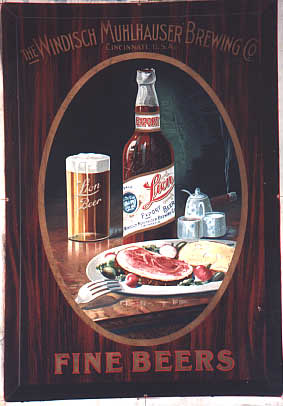
Today is the birthday of Conrad Windisch (March 26, 1825-July 2, 1887) who was a co-founder, along with Gottlieb Muhlhauser of the Windisch-Muhlhauser Brewing Co. of Cincinnati, Ohio, which was known as the “Lion Brewery.” He was originally a partner in the more famous Christian Moerlein Brewery, but in 1866 was bought out by Moerlein. During the same period, he also owned and ran the C. Windisch & Co. Brewery, located in the Covington, Kentucky, but it closed after just one year, in 1862. After leaving the Christian Moerlein Brewery, he partnered with Muhlhauser on the Lion Brewery, which remained open until prohibition.
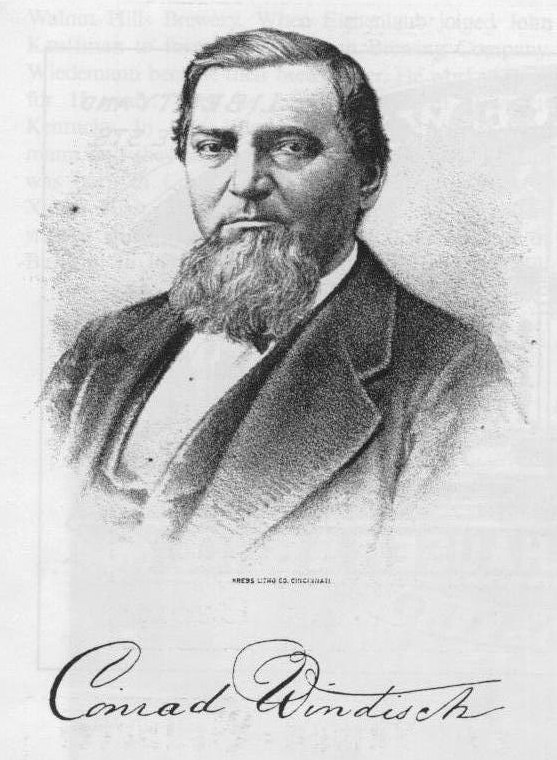
Here’s a short biography from Find-a-Grave:

Brewer. A native of Germany, he was born in the village of Eggloffstein in Bavaria. At the age of 13, after an education in the common schools, he began to work full time for his father, Ulrich Windisch, at the family’s brewery and farm. During the German Revolution of 1848, he left his homeland and emigrated to America. Windisch first settled in Pittsburgh, Pennsylvania and worked for a brewer for a brief period of time before moving west to work at breweries in Belleville, Illinois, and St. Louis, Missouri. He eventually came to Cincinnati in 1850 and found similar work. Windisch worked for Koehler at the Buckeye Street Brewery for three years until he became a partner with Christian Moerlein in 1853. He also started his own brewery in 1862 and sold his interest to Moerlein in 1866 to devote his time to his own interests. With his brother-in-law, Gottlieb Muhlhauser, as well as Muhlhauser’s brother, Henry, the Muhlhauser-Windisch & Company was established. It was more commonly known as the Lion Brewery because of two stone carved lions atop each of the two gables at the entrance. The business soon became one of Cincinnati’s foremost brewers. They were among the first to introduce ice machines and was the city’s second largest during the 1880’s. In 1854, Windisch married Sophia Wilhelmina Kobmann, who was also from his native village and lived on an estate in present day Fairfield in Butler County, Ohio. He died at his residence in 1887 when he was 62 years old. The brewery continued with his son, William A. Windisch and later with another son, Charles Windisch and remained in operation until 1920 when Prohibition caused the doors to close.
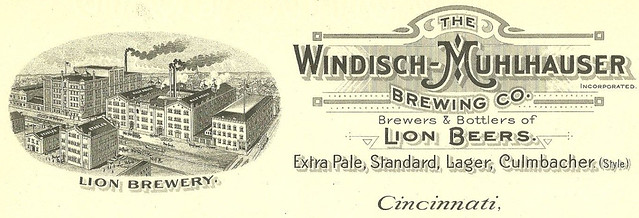
conrad-windisch-brewery-letterhead

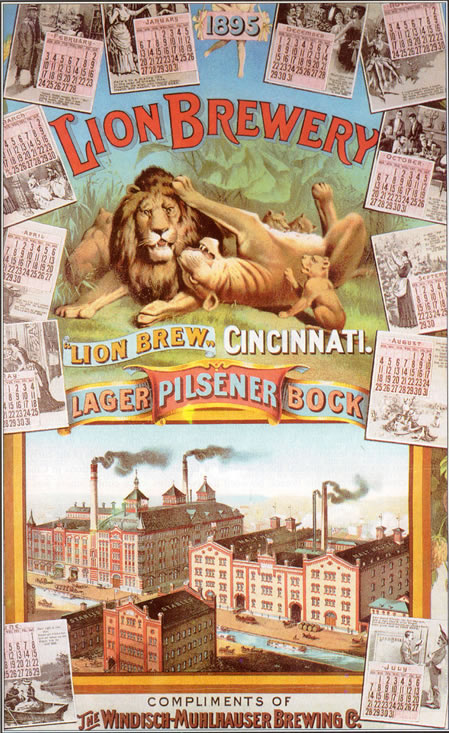
Their brewery became known as the “Lion Brewery” because of the two lions that rested atop the brewery’s gables and many of their beer names used a lion in the name and on the labels.
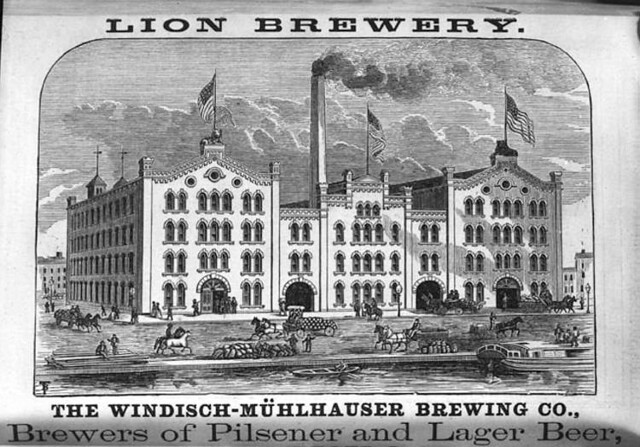
Lion-Brewery1

The History of Cincinnati and Hamilton County, Ohio has a short history of the Windisch-Muhlhauser Brewing Company:
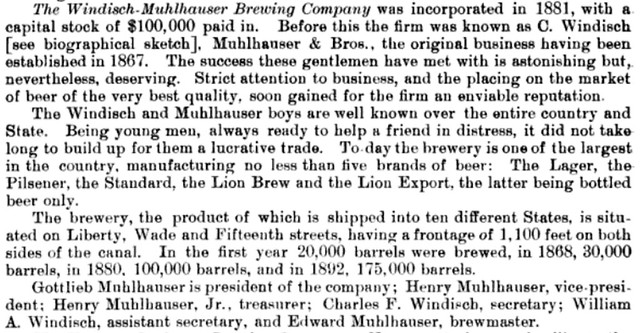
Lion-brewery-history

Paired Creation also has a history of the brewery.
Filed Under: Birthdays, Breweries, Just For Fun Tagged With: History, Kentucky, Ohio

Historic Beer Birthday: Joseph Metcalfe

February 28, 2026 By Jay Brooks

indiana
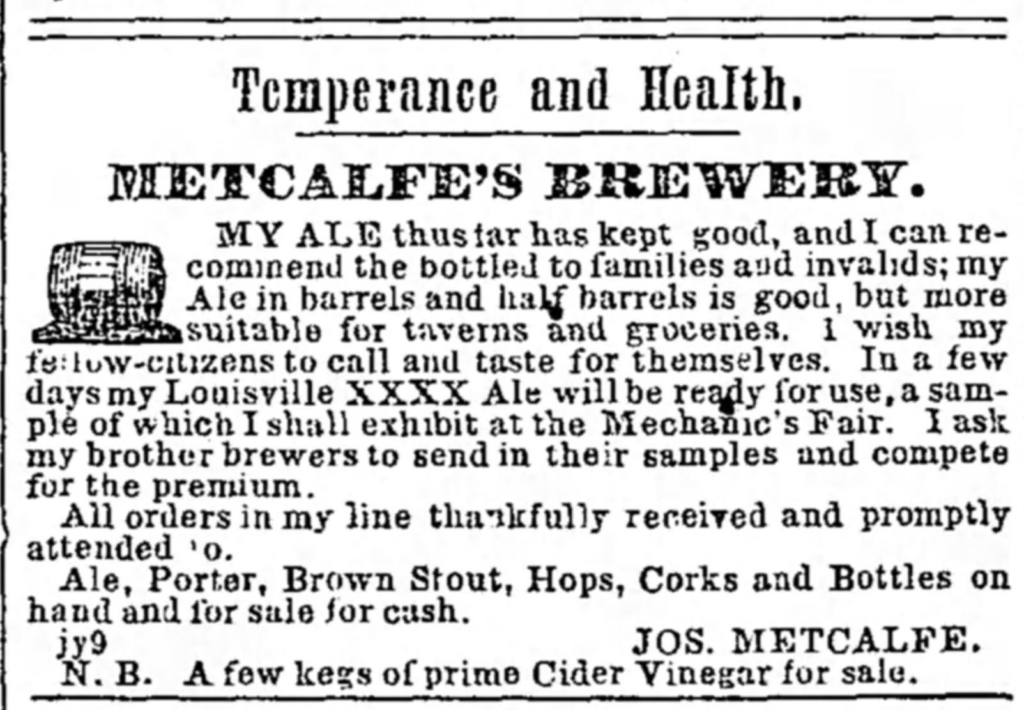
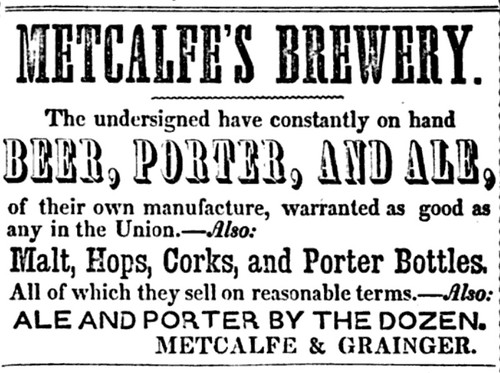
Today is the birthday of Joseph Metcalfe (February 28, 1832-September 26, 1858). He was born in Yorkshire, England, but came to the U.S. with his family as an infant, settling in Louisville when he was still a child. He was a brewer who owned breweries in both Louisville, Kentucky and New Albany, Indiana, which is just across the Ohio River from Louisville. He was often referred to as Colonel Metcalfe, and he was a veteran of the Mexican War as well as the Civil War.

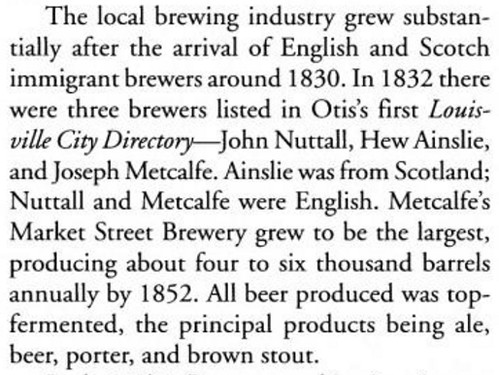
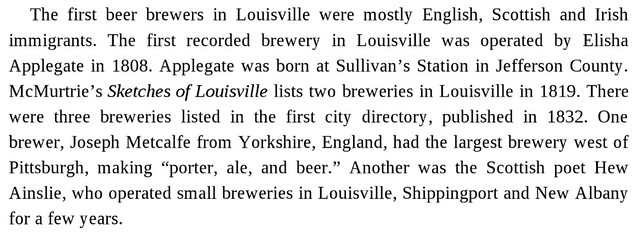
He’s mentioned, curiously, in Germans in Louisville, in the prehistory of the town, from a German perspective.

matcalfe-germans-in-louisville

And again similarly in an Encyclopedia of Louisville:

Here’s the story from IndianaBeer.com:

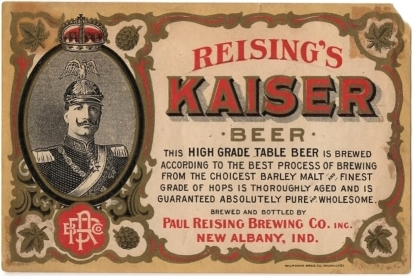
Colonel Joseph Metcalfe started a brewery in New Albany in 1847 which he sold to William Grainger in 1856 who sold it to Paul Reising in 1857. Reising sold it to Martin Kaelin in 1861 who renamed it Main Street Brewery. This was a two-story building of 40×60 feet with two lagering cellars. It employed five men who made 3,600 bbls by 1868.

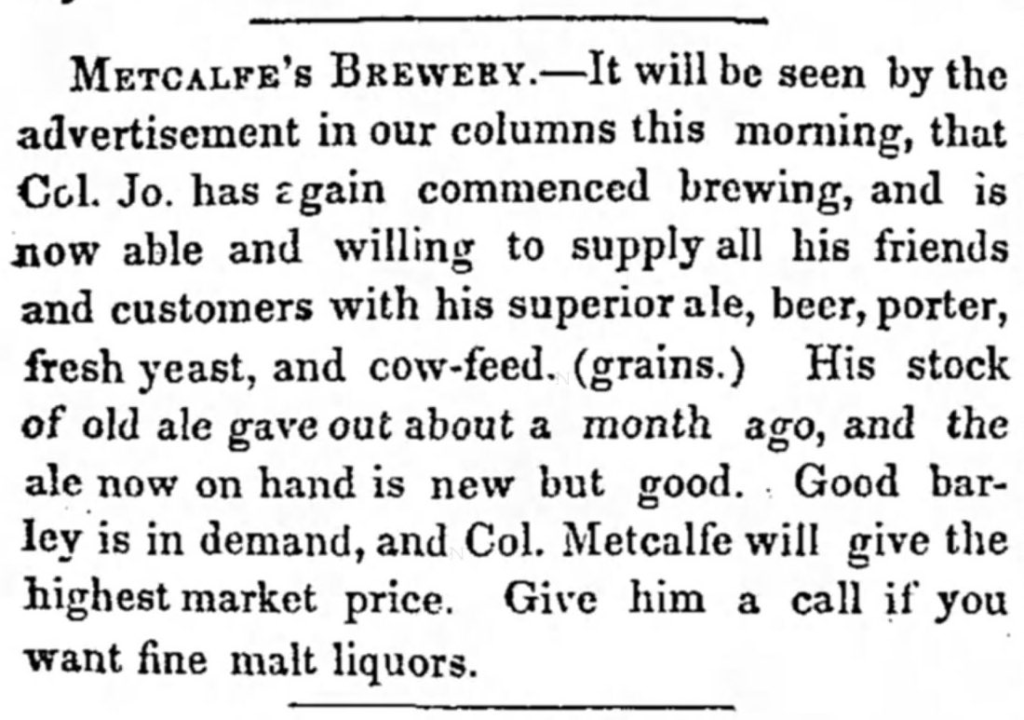
This little item ran in Louisville Courier on September 11, 1855:

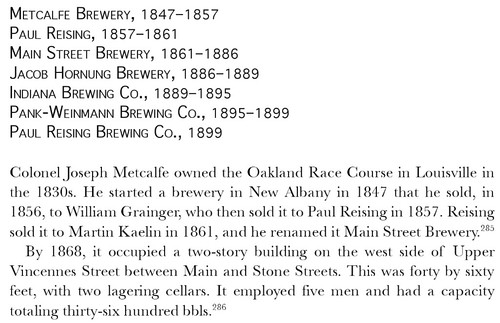
And this is how he’s mentioned in Hoosier Beer: Tapping Into Indiana Brewing History:

Tavern Trove has a slightly different timeline for the brewery, as do a number of sources.

Joseph Metcalfe Brewery 1847-1857
William Grainger 1857-aft 1857
Paul Reising Aft. 1857-1861
Martin Kaelin, Main Street Brewery 1861-1882
Louis Schmidt, Main Street Brewery 1882-1883
Hornung and Atkins, Main Street Brewery 1883-1886
Jacob Hornung, Main Street Brewery 1886-1889
Indiana Brewing Co. 1889-1895
Pank-Weinmann Brewing Company. 1895-1899
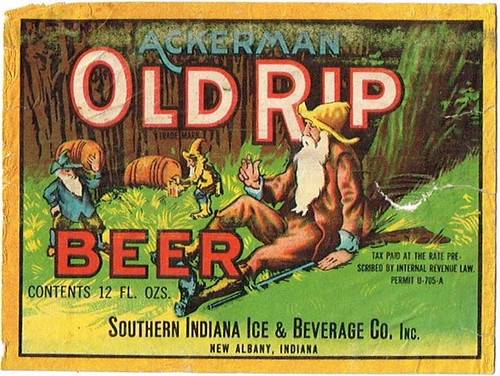
Merged with the Southern Indiana Ice and Beverage Co. of New Albany, Indiana in 1899

paul-reising-brewery
This is Metcalfe’s brewery shortly after he had sold it to Paul Reising.
Reisling-brewers
The brewery crew when it was the Paul Riesing Brewery.

Filed Under: Birthdays, Just For Fun Tagged With: History, Indiana, Kentucky

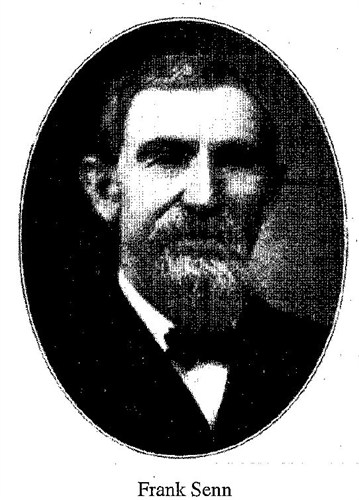
Historic Beer Birthday: Frank Senn

February 2, 2026 By Jay Brooks

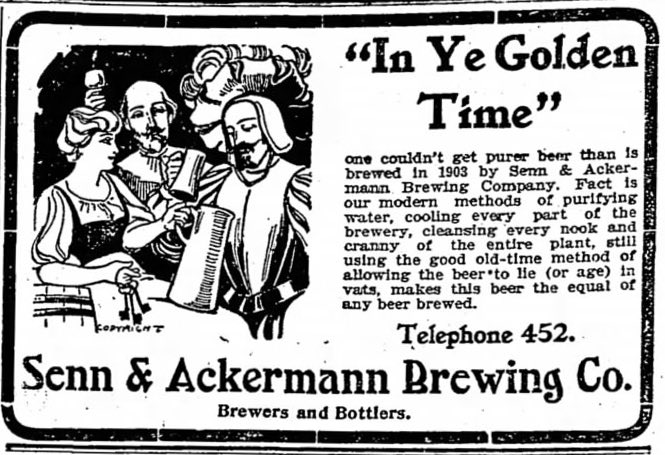
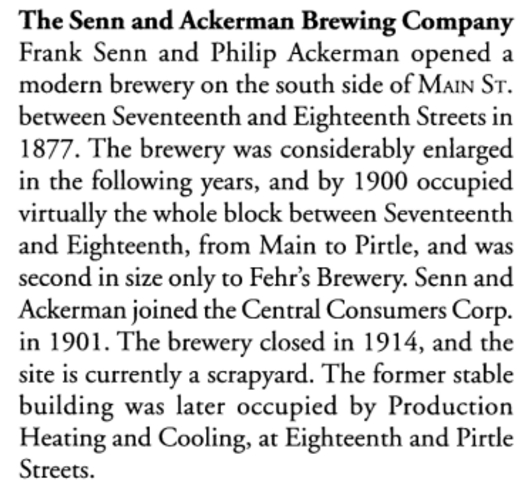
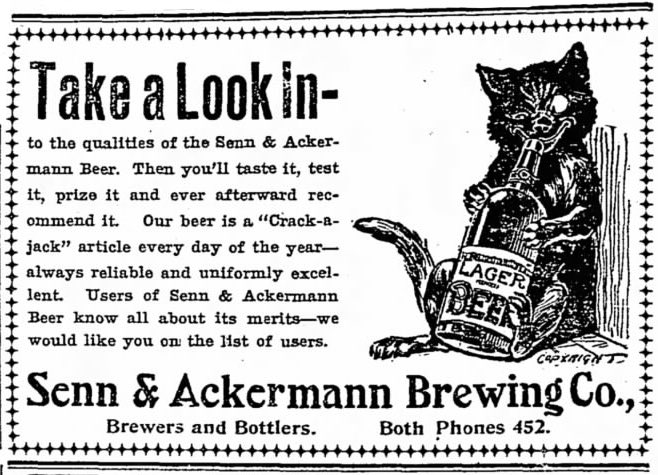
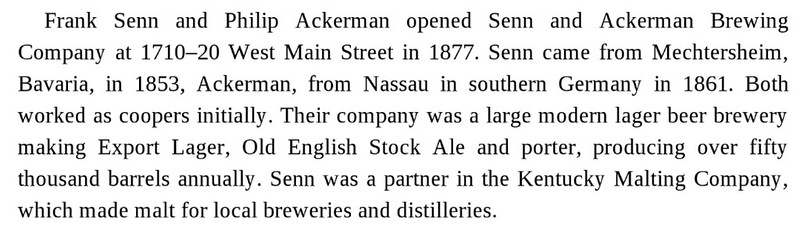
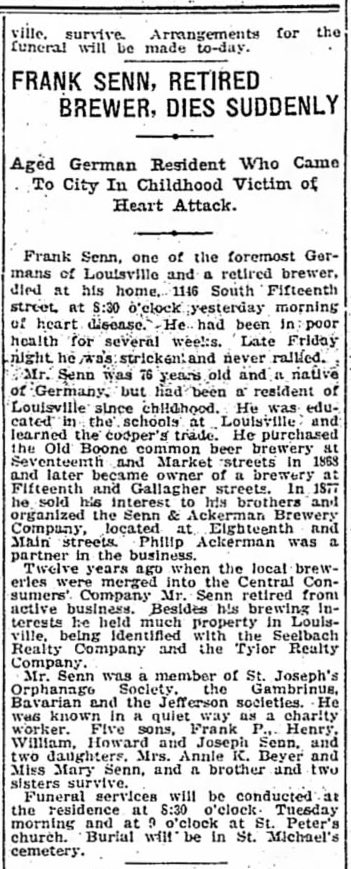
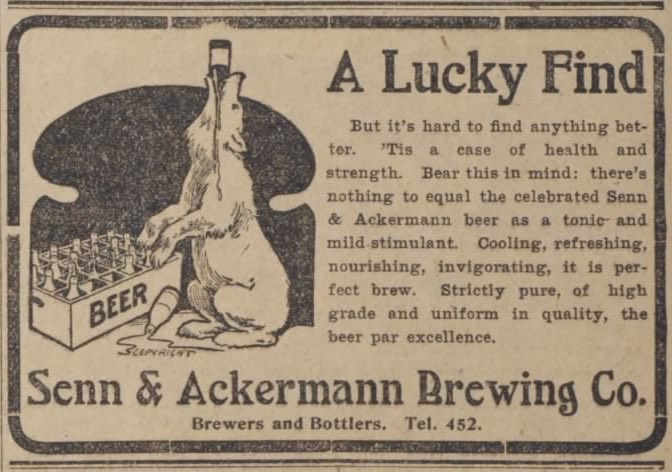
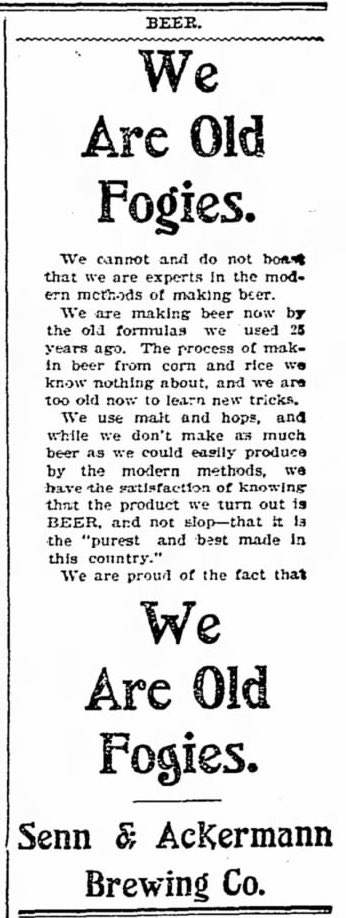
Today is the birthday of Frank Senn (February 2, 1838-November 8, 1913) who was born in Mechtersheim, Germany, which today is known as Römerberg, but settled in St. Louis, Missouri with his parents in 1853. In Louisville, Kentucky, he opened the Frank Seen Brewery in 1874, but later sold it to his two brothers. In 1877, he took with a partner, Philip Ackermann, he opened a new brewery, the Frank Senn & Philip Ackermann Brewery. In 1892, they shortened it to the Senn & Ackermann Brewing Co., which it remained until being closed by prohibition.

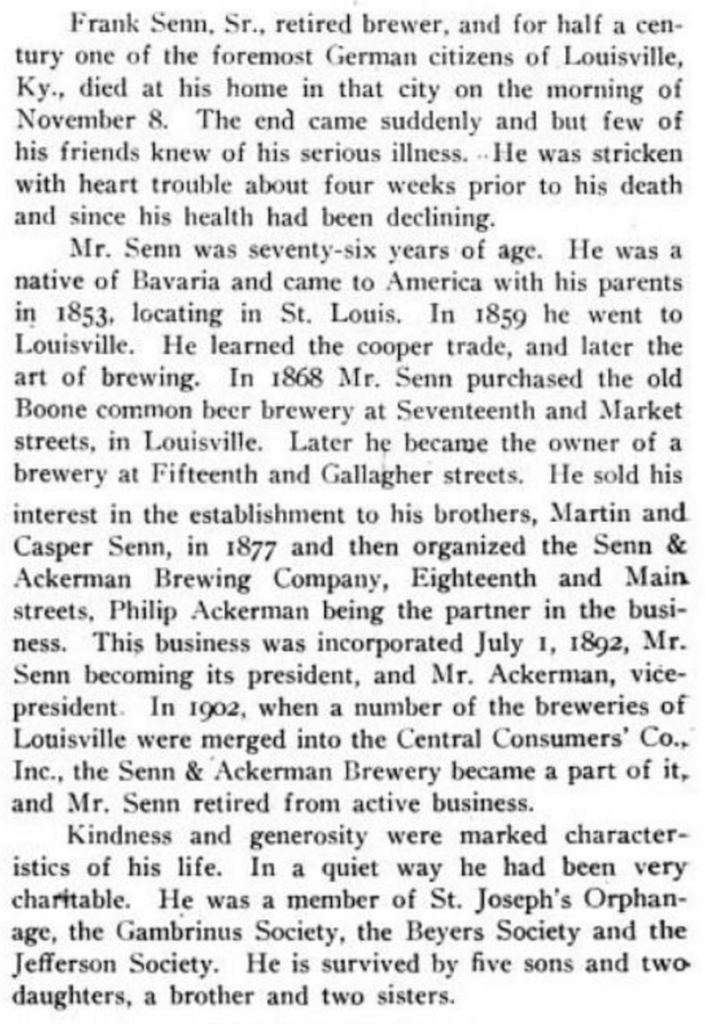
Here’s a short bio, from his obituary, printed in the Western Brewer and Journal for July to December 1913.

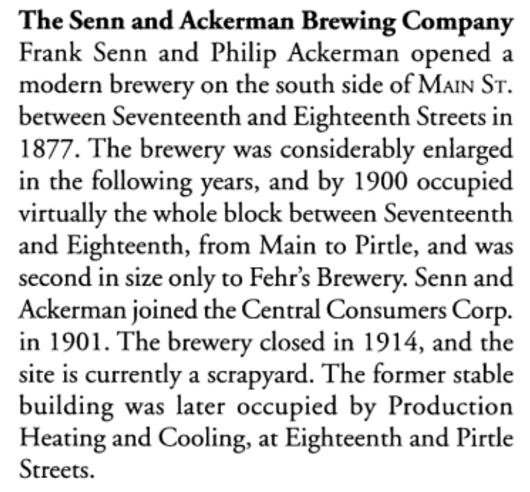
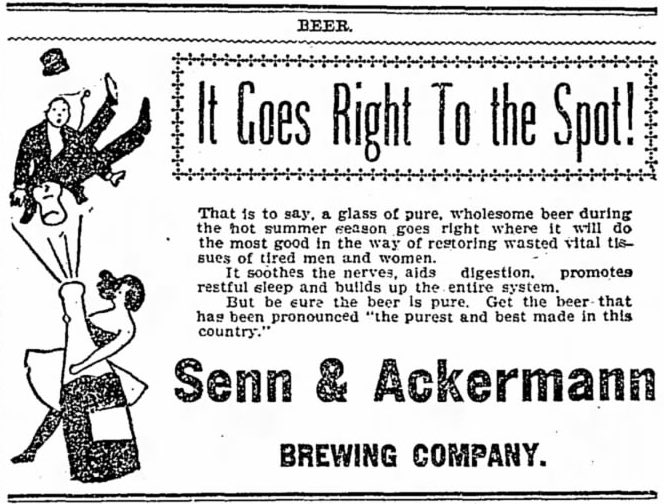
Here’s a short history of the brewery, from the Encyclopedia of Louisville:

And another one from Germans in Louisville: A History:

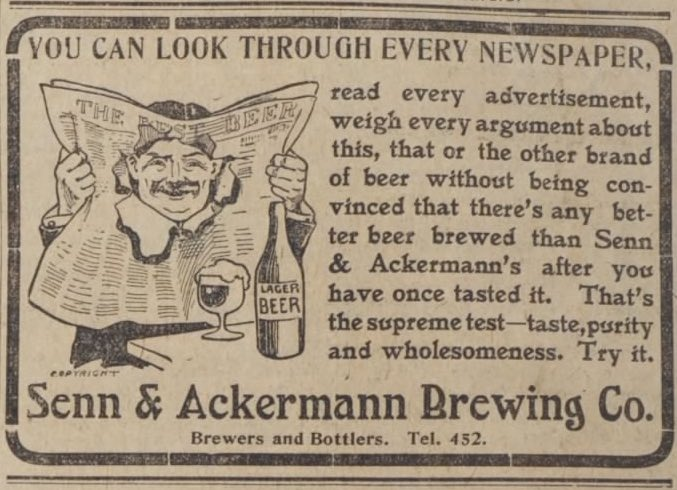
senn-ackermann-history-2

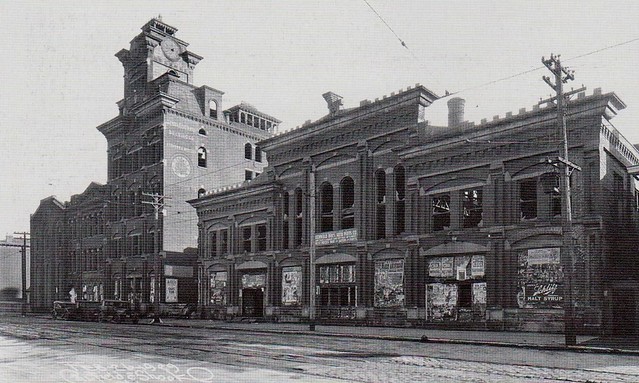
After prohibition began, the building was abandoned, eventually becoming a scrapyard.

Ackerman-and-Senn-abandoned

And this obituary is from the Courier Journal:

Filed Under: Birthdays, Just For Fun Tagged With: History, Kentucky

Historic Beer Birthday: Philip Ackerman

December 27, 2025 By Jay Brooks

senn-&-ackermann
Today is the birthday of Philip Ackerman (December 27, 1841-?). In Spring Field, Illinois, he founded the Ackerman Brewery in 1863. A few years later, in 1866, he must have taken on some partners because it was briefly the Ackerman & Biehl Brewery, from 1866-1869, and then the Ackerman & Nolte Brewery, from 1869-1875, before becoming the Philip Ackerman Brewery in 1876, until closing in 1880. Meanwhile, in 1877, with another partner, Frank Senn, he opened a new brewery in Louisville, Kentucky, the Frank Senn & Philip Ackermann Brewery. In 1892, they shortened it to the Senn & Ackermann Brewing Co., which it remained until being closed by prohibition. Unlike his partner, Frank Senn, there’s very little information I could find about him, not even a photograph.

Here’s a short history of the brewery, from the Encyclopedia of Louisville:

senn-ackermann-history
And another one from Germans in Louisville: A History:

senn-ackermann-history-2

After prohibition began, the building was abandoned, eventually becoming a scrapyard.

Ackerman-and-Senn-abandoned

Filed Under: Birthdays, Breweries, Just For Fun Tagged With: History, Kentucky

Historic Beer Birthday: Wilhelm Riedlin

November 20, 2025 By Jay Brooks

bavarian-kentucky
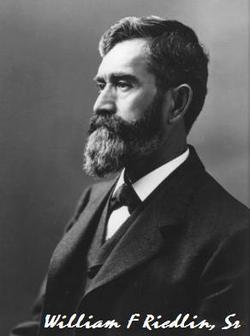
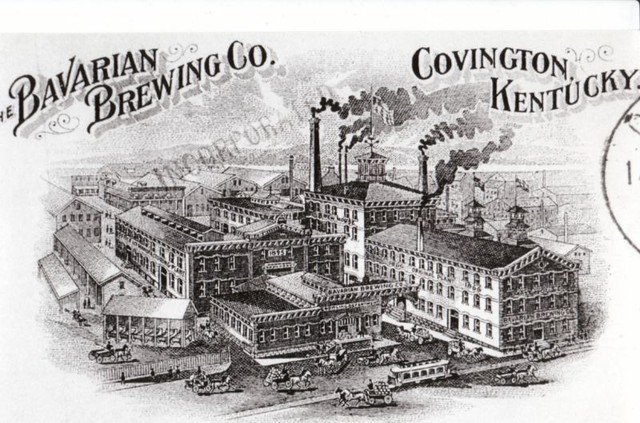
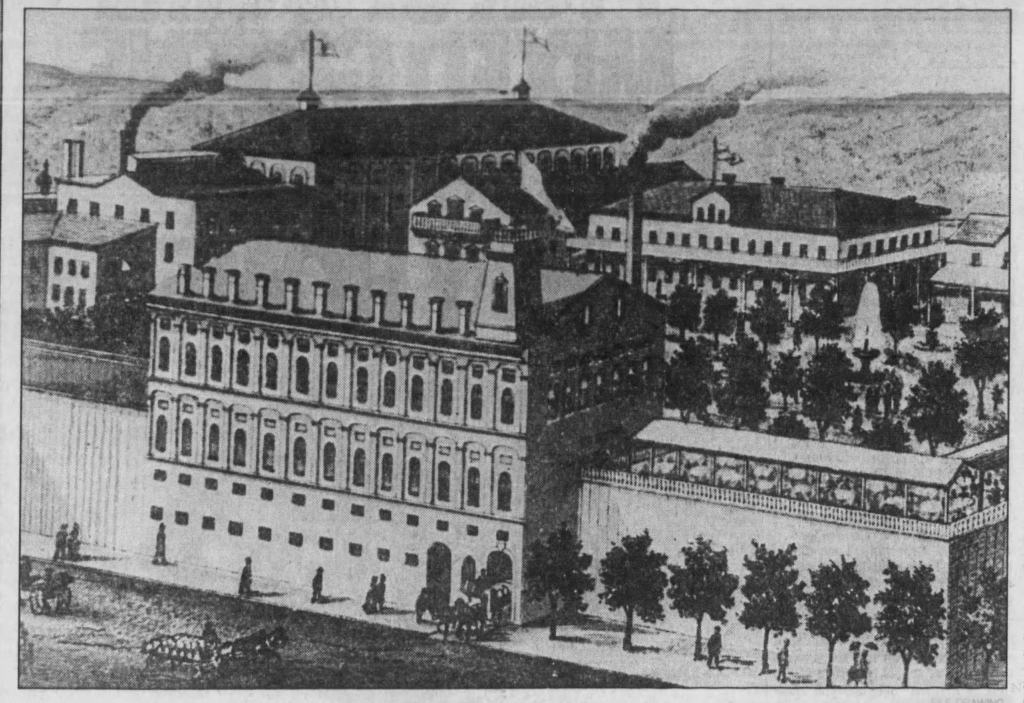
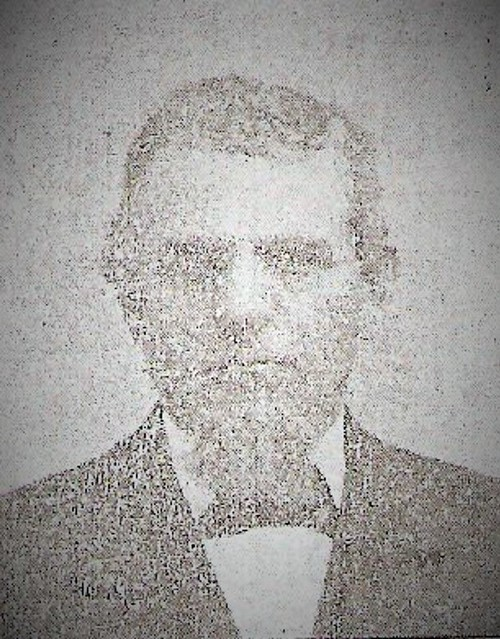
Today is the birthday of Wilhelm Ferdinand Riedlin (November 20, 1850-February 19, 1919). He was born in either Vögisheim or Mulheim, Baden, Germany, and emigrated to the United States in June of 1870. He bought into the Bavarian Brewing Co. of Covington, Kentucky in 1882, and eventually became the sole owner. Riedlin died as prohibition began, but the brewery reopened after repeal, although not until 1935, by one of Riedlin’s son-in-laws and the family retained ownership until 1959, when they sold the business to International Breweries Inc., who finally closed the brewery for good in 1966.

William-Riedlin
This short account of his life is from Find-a-Grave:

He was a very active resident of Covington, KY.

-In his early career, he was a blacksmith, a trade he brought to the US, having learned from his father.
-In 1877, he opened a grocery store, and shortly after established Tivoli Hall Saloon and Beer Garden
-He was the President and owner of the Bavarian Brewing Company by 1882. During prohibition, the Brewing Company manufactured ice and soft drinks.
-He was an active member of the City Legislature and the Covington Elks.
-The director of the Gernan National Bank and Covington Sawmill
-A member and the President of the German Pioneer Society and the Covington Turner Society
-The treasurer of the Baden Benevolent Society
-The President of the Covington Coal Company
-A major stockholder in the Ludlow Lagoon Amusement Park

In 1877, he married Matilda Emma Hoffman. The two made their home at 917 Main Street, Covington KY. Current day, this is now his historic residence, being occupied by a funeral home, the Covington Chapel.

William and Emma had nine children: Carl, Charles, Emma, William Jr, Anna Maria, Edward, Walter F, Lucia and A.K.

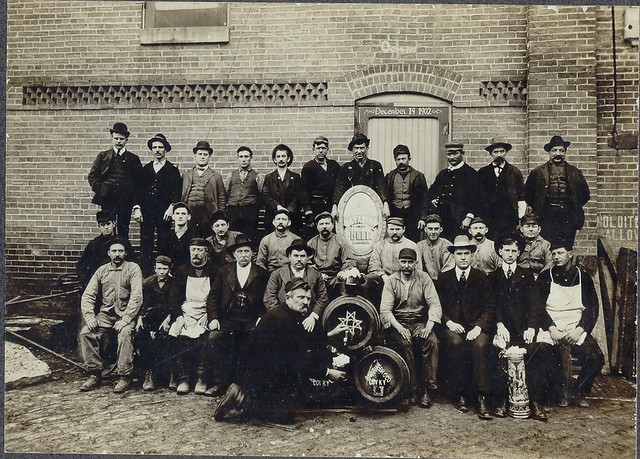
bavarian-brewery-employees

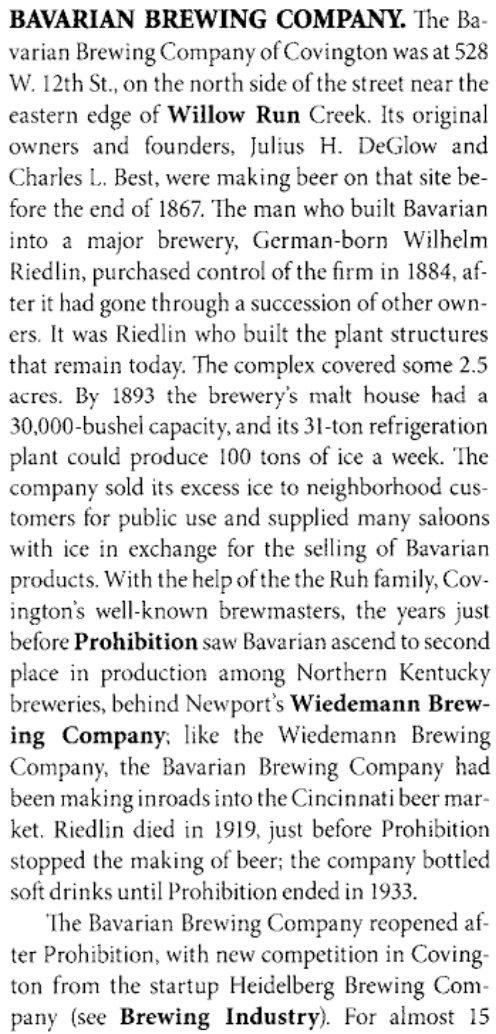
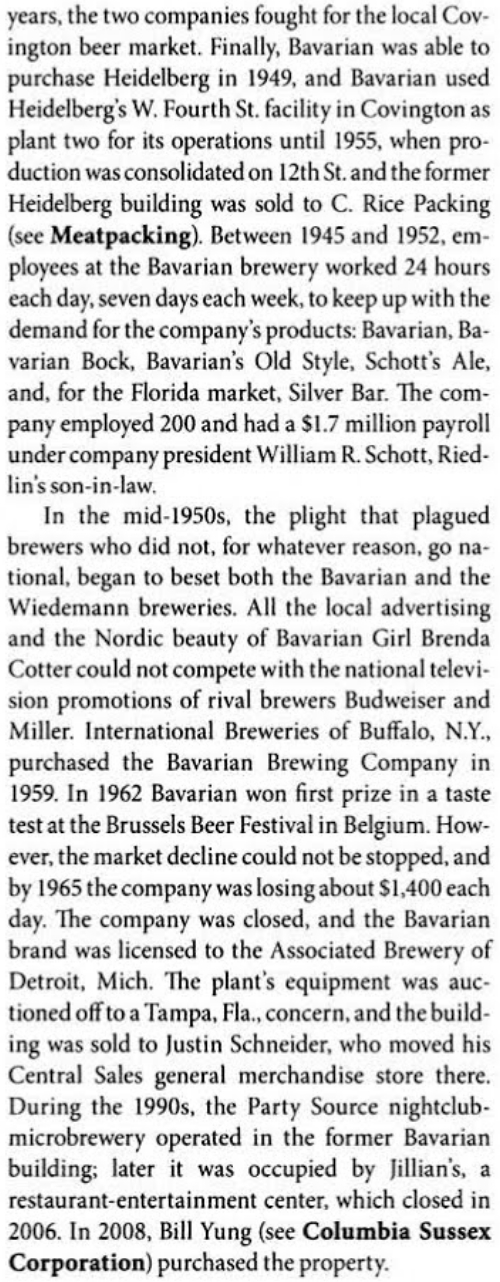
And this history of the brewery is from “The Encyclopedia of Northern Kentucky,” edited by Paul A. Tenkotte, James C. Claypool:

bavarian-brewing-ky-01
bavarian-brewing-ky-02
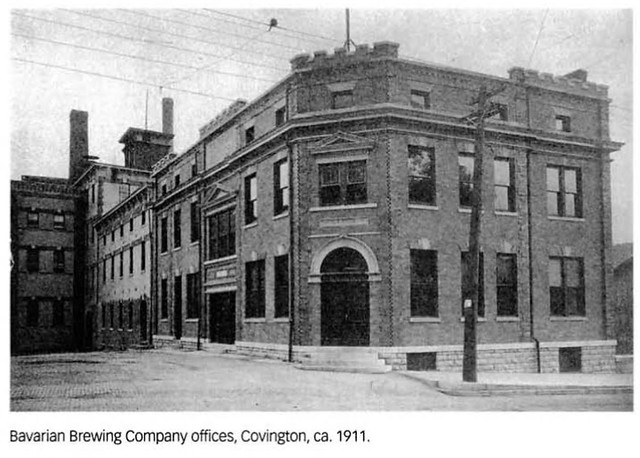
bavarian-brewing-offices-1911

The Wikipedia page for the Bavarian Brewing Co. mentions Riedlin, of course, and his contributions to the success of the business, eventually becoming sole owner.

After the brewery was established as DeGlow & Co., new ownership interests within just a couple of years resulted in several changes to its name beginning in 1868, including DeGlow, Best & Renner. However, in 1873, it was established as the Bavarian Brewery Co. Over the next several years the brewery operated under this name, but ownership interests varied. John Meyer obtained controlling interest and the brewery operated under his name for a short time, starting in 1879. Then in 1882, a German immigrant named William Riedlin, who established a saloon and beer hall called Tivoli Hall in the Over The Rhine area of Cincinnati, entered into partnership with John Meyer. It operated as the Meyer-Riedlin Brewery before Riedlin purchased a controlling interest in the brewery from Meyer, incorporated the business under its former name and became president in 1889.

A number of changes were made to the facility during Riedlin’s tenure including the brewery’s first bottling plant built in 1892. Key bottling innovations including the crown bottle cap and pasteurization increased the shelf life of beer, enabling it to be distributed to a much wider area. Besides Bavarian Beer, the company also offered Riedlin Select Beer. By 1914 the annual beer production was 216,000 barrels, increasing from only 7,341 barrels in 1870, and it became the largest brewery in the state.

Operations expanded from the original location on Pike street to include several structures on the property between Pike Street and 12th Street. The main structure, which essentially remains today, was a four story 175 by 125 foot edifice that opened in January, 1906, serving as both the stock and wash houses. An ice house that manufactured 200,000 pounds of ice daily, and that included a couple of ponds, was adjacent to the brewery. The total land area comprised six and one-half-acres. Ice was used in the lager fermentation process before refrigeration became available and it was also sold to the public.

Beer production was abruptly halted shortly before the introduction of Prohibition in 1918. To prevent a complete closure of the brewery, arrangements were made to bottle non-alcoholic beverages under the name The William Riedlin Beverage Company. However, William Riedlin died in early 1919, several months before Prohibition was officially passed by Congress. His son, William Riedlin, Jr., died within a couple months after his father aged 37. He had previously been a Vice President of the brewery and briefly in charge of the Beverage Company. Shortly after the deaths of the father and son the brewery property was closed – for some fifteen years.

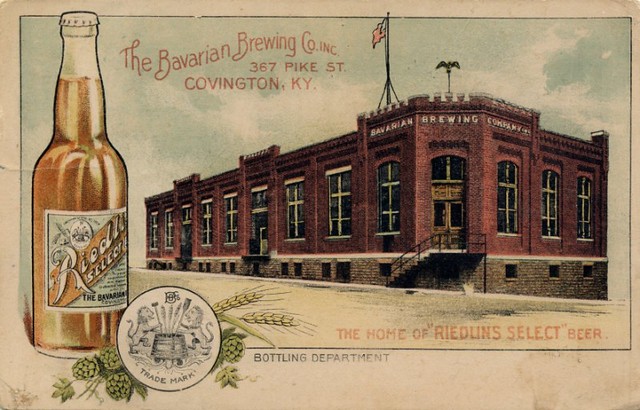
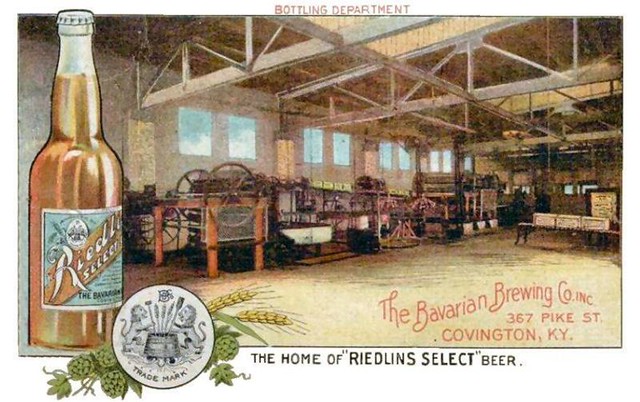
bavarian-postcard-bottling

The Kenton County Public Library also has a history of the Bavarian Brewery, and Riedlin’s involvement is discussed.

Bavarian Brewery can be traced back to the year 1866 when Julius Deglow and Charles L. Best began operating a small brewery on Pike Street in Lewisburg. In 1869, the brewery officially became known as Bavarian. William Riedlin and John Meyer were the next owners of the brewery. They purchased Bavarian in 1882. Seven years later, Riedlin became the sole owner. Anton Ruh was hired as the brew master.
Under William Reidlin’s ownership, Bavarian Brewer expanded rapidly. The first bottling plant at Bavarian was built in 1892 and was replaced in 1903. This two-story structure was modern in every detail and measured 46’ x 188’. At this same time a new stable was constructed to house the many horses needed to pull delivery wagons. A new four-story warehouse followed in 1905. By 1914, Bavarian Brewery was the largest such enterprise in the Commonwealth of Kentucky. The brewery occupied a 6 ½ ace site on Pike Street and was producing 216,000 barrels of beer each year.

Bavarian continued to prosper until the era of Prohibition. In 1919 production at the plant shifted from beer to soft drinks. In 1925, the icehouse was sold to Joseph and Ferdinand Ruh who incorporated as the Kenton Ice Company. Bavarian re-opened in 1935. Over three thousand guests attended the grand opening. The officers at this time were: Murray L. Vorhees, Fred C. Faller, and Leslie S. Deglow. Three years later, William Riedlin’s four grandsons purchased the business for $55,000. Sales rose throughout the 1930s.

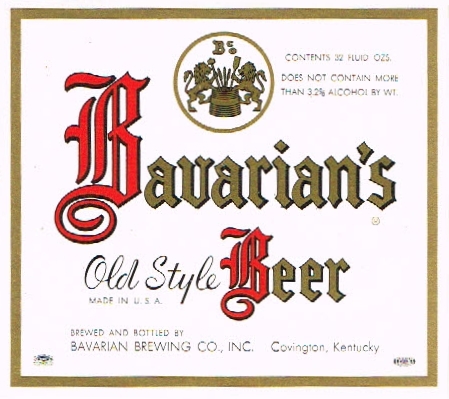
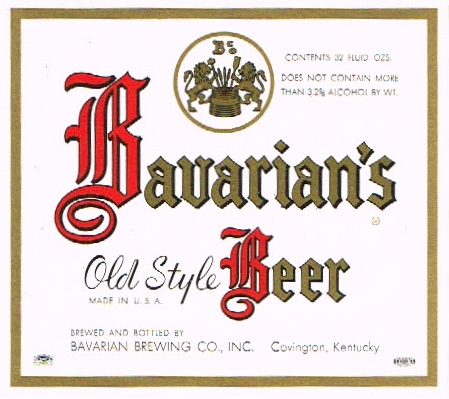
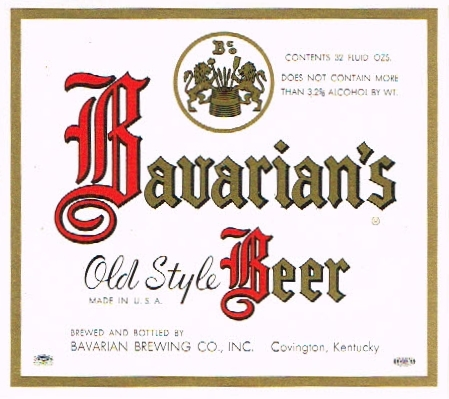
Bavarians-Beer--Labels-Bavarian-Brewing-Company-
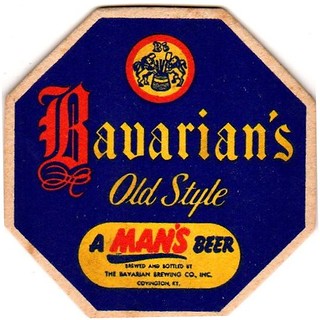
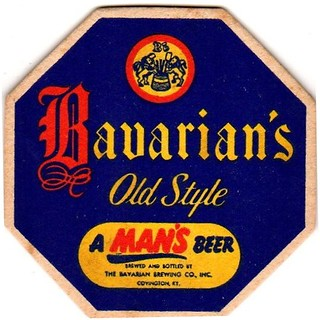
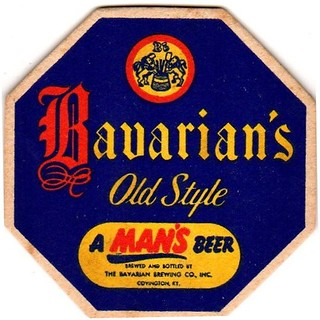
Bavarians-Old-Style-Beer-Coasters-Over-4-Inches-Bavarian-Brewing-Company

Filed Under: Birthdays, Breweries, Just For Fun Tagged With: Germany, History, Kentucky

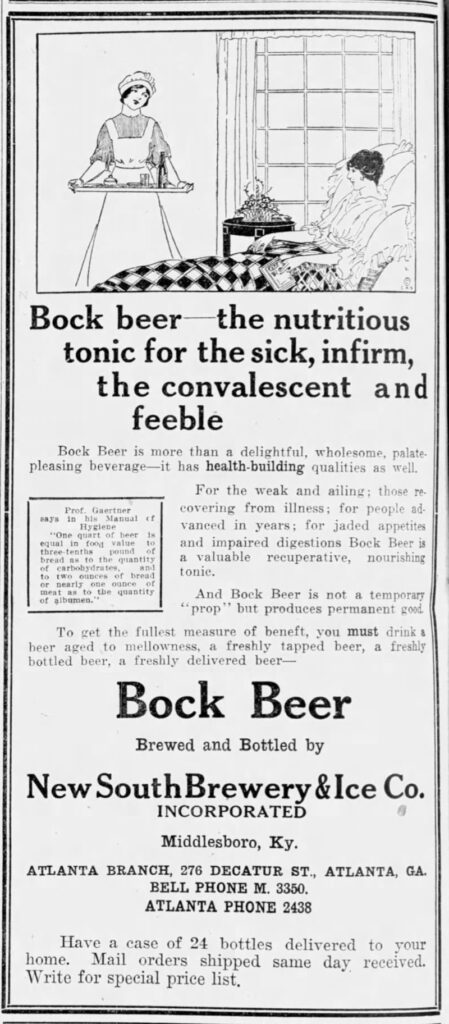
Beer In Ads #5102: Bock Beer — The Nutritious Tonic For The Sick, Infirm, The Convalescent And Feeble

October 15, 2025 By Jay Brooks

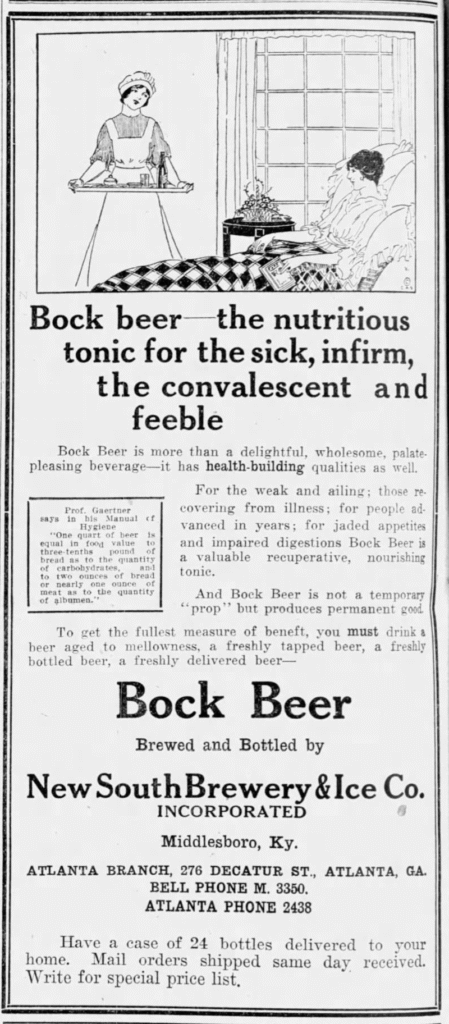
Last year I decided to concentrate on Bock ads. Bock, of course, may have originated in Germany, in the town of Einbeck. Because many 19th century American breweries were founded by German immigrants, they offered a bock at certain times of the year, be it Spring, Easter, Lent, Christmas, or what have you. In a sense they were some of the first seasonal beers. “The style was later adopted in Bavaria by Munich brewers in the 17th century. Due to their Bavarian accent, citizens of Munich pronounced ‘Einbeck’ as ‘ein Bock’ (a billy goat), and thus the beer became known as ‘Bock.’ A goat often appears on bottle labels.” And presumably because they were special releases, many breweries went all out promoting them with beautiful artwork on posters and other advertising.

Wednesday’s ad is for the New South Brewery Bock Beer, which was published on October 15, 1914. This one was for the New South Brewery & Ice. Co. of Middlesboro, Kentucky, which was originally founded in 1891, though the ad specifically mentioned their Atlanta Branch on Decatur Street. This ad ran in The Atlanta Journal, from Atlanta, Georgia.

Filed Under: Art & Beer, Beers, Just For Fun Tagged With: Advertising, Bock, Georgia, History, Kentucky

Historic Beer Birthday: John H. Meyer

September 15, 2025 By Jay Brooks

bavarian-kentucky
Today is the birthday of John H. Meyer (September 15, 1818-1890 or after). Meyer was born in Oldenburg, Germany, but moved to Covington, Kentucky when he was 19. Julius Deglow founded what would become the Bavarian Brewing Co. in 1866. In 1879, John H. Meyer briefly bought a controlling interest in the brewery and for a time it was called the John Meyer Brewery. There’s not much more information I could find out about John H. Meyer, just one group photo and I was unable even to confirm when he died.

John H. Meyer is man on the far right in the front row.

The Wikipedia page for the Bavarian Brewing Co. mentions Meyer, but he’s not even considered one of the most important people in the history of the brewery, which was open for 100 years.

After the brewery was established as DeGlow & Co., new ownership interests within just a couple of years resulted in several change to its name beginning in 1868, including DeGlow, Best & Renner. However, in 1873, it was established as the Bavarian Brewery Co. Over the next several years the brewery operated under this name, but ownership interests varied. John Meyer obtained controlling interest and the brewery operated under his name for a short time, starting in 1879. Then in 1882, a German immigrant named William Riedlin, who established a saloon and beer hall called Tivoli Hall in the Over The Rhine area of Cincinnati, entered into partnership with John Meyer. It operated as the Meyer-Riedlin Brewery before Riedlin purchased controlling interest in the brewery from Meyer, incorporated the business under its former name and became president in 1889.

bavarian-postcard-bottling

The Kenton County Public Library also has a history of the Bavarian Brewery, and again Meyer figured only very briefly in the first paragraph.

bavarian-postcard-bottling-inside

Bavarian Brewery can be traced back to the year 1866 when Julius Deglow and Charles L. Best began operating a small brewery on Pike Street in Lewisburg. In 1869, the brewery officially became known as Bavarian. William Riedlin and John Meyer were the next owners of the brewery. They purchased Bavarian in 1882. Seven years later, Riedlin became the sole owner. Anton Ruh was hired as the brew master.
bavarian-covington

Filed Under: Birthdays, Breweries, Just For Fun Tagged With: History, Kentucky

Historic Beer Birthday: Charles D. Goepper

August 15, 2025 By Jay Brooks

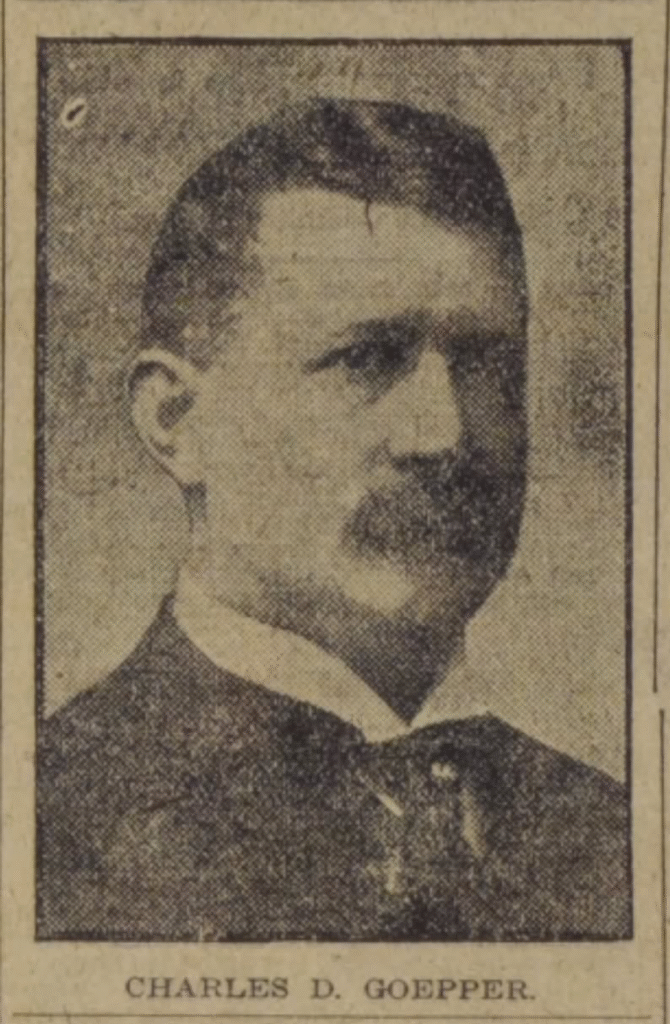
Today is the birthday of Charles D. Goepper (August 15, 1860-June 7, 1909). In 18990, he was elected Secretary of the Phoenix Brewery of Louisville, Kentucky. The brewery was founded in 1859 as the Philip Zang Brewery, but became known as the Phoenix Brewery just two years later, in 1861, but closed in 1916 due to prohibition.

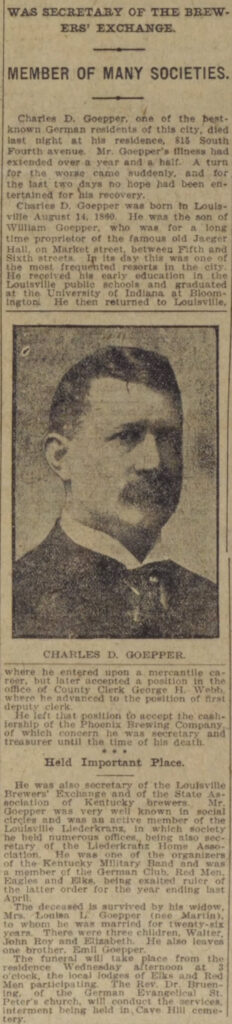
Here is Goepper’s obituary from the American Brewers’ Review:

And this obituary is from the Louisville Courier Journal:

And this obituary is from the same day in Louisville Courier Journal, but is slightly different, possibly from different editions, like the morning and evening papers?:

Filed Under: Birthdays, Breweries, Just For Fun Tagged With: Kentucky

Historic Beer Birthday: Julius Deglow

August 4, 2025 By Jay Brooks

bavarian-kentucky
Today is the birthday of Julius Deglow (August 1823-August 4, 1885). He was born in Germany sometime in August, though the exact date is unknown, but since we know he died on August 4, that’s as good a date as any. He moved to Covington, Kentucky as a young man. In 1866, he founded what would become the Bavarian Brewing Co. Although ownership would pass to others, the brewery remained in business in some form until 1966.

This obituary of Deglow is from the Kentucky State Journal in Newport:

The many friends of Mr. Julius H. Deglow, the prominent tanner of Covington, will regret to learn of his rather sudden death Tuesday at about 1:30 o’clock. The deaths of Mr. Deglow and his wife are of a peculiarly sad nature. About three months ago they went to Germany to be cured of an illness, but not meeting with success, Mrs. Deglow came home to spend her last days. In a few days after her arrival she died. A telegram was sent Mr. Deglow in Germany, but he never received it, and he knew nothing of his wife’s death until he arrived in Cincinnati on Monday night. This sad news so affected him that he, too, died at his country residence on the Lexington pike about an hour after his arrival and taking his bed.

bavarian-covington

The Wikipedia page for the Bavarian Brewing Co. mentions Deglow, of course, since he founded the brewery, though how long he remained as an owner is unclear.

After the brewery was established as DeGlow & Co., new ownership interests within just a couple of years resulted in several change to its name beginning in 1868, including DeGlow, Best & Renner. However, in 1873, it was established as the Bavarian Brewery Co. Over the next several years the brewery operated under this name, but ownership interests varied. John Meyer obtained controlling interest and the brewery operated under his name for a short time, starting in 1879. Then in 1882, a German immigrant named William Riedlin, who established a saloon and beer hall called Tivoli Hall in the Over The Rhine area of Cincinnati, entered into partnership with John Meyer. It operated as the Meyer-Riedlin Brewery before Riedlin purchased controlling interest in the brewery from Meyer, incorporated the business under its former name and became president in 1889.

bavarian-postcard-bottling

The Kenton County Public Library also has a history of the Bavarian Brewery, and again Deglow figured only very briefly in the first paragraph.

Bavarian Brewery can be traced back to the year 1866 when Julius Deglow and Charles L. Best began operating a small brewery on Pike Street in Lewisburg. In 1869, the brewery officially became known as Bavarian. William Riedlin and John Meyer were the next owners of the brewery. They purchased Bavarian in 1882. Seven years later, Riedlin became the sole owner. Anton Ruh was hired as the brew master.
bavarian-postcard-bottling-inside

Filed Under: Birthdays, Breweries, Just For Fun Tagged With: Germany, History, Kentucky

Beer In Ads #5040: Frank Fehr’s Bock Beer

July 31, 2025 By Jay Brooks

Last year I decided to concentrate on Bock ads. Bock, of course, may have originated in Germany, in the town of Einbeck. Because many 19th century American breweries were founded by German immigrants, they offered a bock at certain times of the year, be it Spring, Easter, Lent, Christmas, or what have you. In a sense they were some of the first seasonal beers. “The style was later adopted in Bavaria by Munich brewers in the 17th century. Due to their Bavarian accent, citizens of Munich pronounced ‘Einbeck’ as ‘ein Bock’ (a billy goat), and thus the beer became known as ‘Bock.’ A goat often appears on bottle labels.” And presumably because they were special releases, many breweries went all out promoting them with beautiful artwork on posters and other advertising.

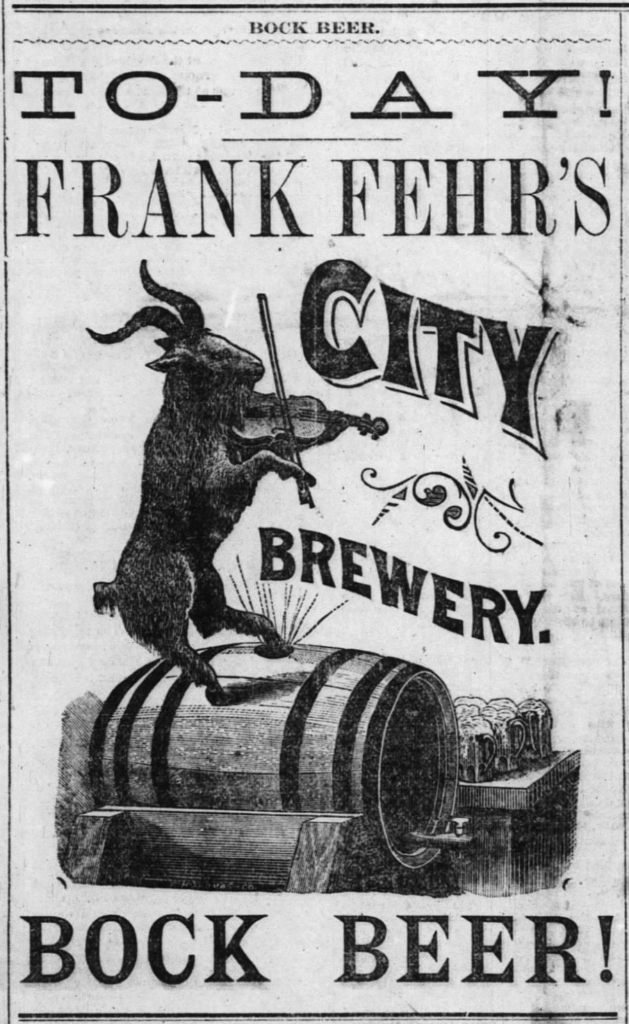
Thursday’s ad is for Frank Fehr’s Bock Beer, which was published in 1884. This one was for the Frank Fehr City Brewery of Louisville, Kentucky, which was originally founded in 1849 as the William Tell Brewery. Frank Fehr appears to have joined the brewery in 1872 and after 1876 it became known as the Frank Fehr City Brewery. This ad ran in The Courier Journal, also of Louisville, Kentucky.
Filed Under: Art & Beer, Beers, Breweries, Just For Fun Tagged With: Advertising, Bock, History, Kentucky

Next Page »

Find Something

Northern California Breweries

Please consider purchasing my latest book, California Breweries North, available from Amazon, or ask for it at your local bookstore.

Recent Comments

  • Bob Paolino on Beer Birthday: Grant Johnston
  • Gambrinus on Historic Beer Birthday: A.J. Houghton
  • Ernie Dewing on Historic Beer Birthday: Charles William Bergner 
  • Steve 'Pudgy' De Rose on Historic Beer Birthday: Jacob Schmidt
  • Jay Brooks on Beer Birthday: Bill Owens

Recent Posts

  • Beer In Ads #5187: Ballantine’s Bock Is Here — With Horns! March 26, 2026
  • Historic Beer Birthday: Augustus Hoeveler March 26, 2026
  • Historic Beer Birthday: Bill Siebel March 26, 2026
  • Historic Beer Birthday: Conrad Windisch March 26, 2026
  • Beer Birthday: Rudi Ghequire March 26, 2026

BBB Archives

Feedback

Head Quarter
This site is hosted and maintained by H25Q.dev. Any questions or comments for the webmaster can be directed here.