Brookston Beer Bulletin

Jay R. Brooks on Beer

  • Home
  • About
  • Editorial
  • Birthdays
  • Art & Beer

Socialize

  • Dribbble
  • Email
  • Facebook
  • Flickr
  • GitHub
  • Instagram
  • LinkedIn
  • Pinterest
  • RSS
  • Twitter
  • YouTube

Powered by Genesis

Visual Poetry: Let’s Have A Beer

June 23, 2018 By Jay Brooks

poetry
So this post will be chiefly for the literary, and especially poetry lovers, among you, a small subset of beer lovers who also enjoy art. Visual poetry is “a development of concrete poetry but with the characteristics of intermedia in which non-representational language and visual elements predominate. In other words, it was experimental or avant-garde poetry in which the arrangement of the text also was a part of the poem’s meaning, which was communicated both visually and through the text itself.

Two Mexican poets in the 1920s, José D. Frias and José María González de Mendoza were both expatriates living in France and became friends, later exchanging humorous letters between themselves and their literary friends. Today is Mendoza’s birthday, which is what reminded me of this.

In 1923, the pair wrote a letter from Paris to fellow poet Francisco Orozco Muñoz that included four visual poems. They were based on the work of French poet Guillaume Apollinaire, who a few years before wrote a book of visual poetry entitled Calligrammes: Poems of Peace and War 1913-1916. They also were influenced by Japanese Haiku, which had become popular at the time in their literary circles, as opposed to Apollinaire’s more cubist or l’esprit nouveau poetry.

Three of the visual poems were written by Frias and translated visually by Mendoza. But the fourth poem was done entirely by Mendoza, and it’s the one below. All four poems contain witty references to the fact that Muñoz was living in Brussels.

lets-have-a-beer

The text is in the shape of a mug of beer, sitting on a table, and reads, according to several books on visual poetry, “Let’s Have a Beer” followed by “The Sun Has Already Set in Flanders.”

Filed Under: Birthdays, Just For Fun, Related Pleasures Tagged With: Belgium, Literature, Mexico, Poetry

Beer In Ads #2507: The Pelican, That Feathered Freak

December 31, 2017 By Jay Brooks


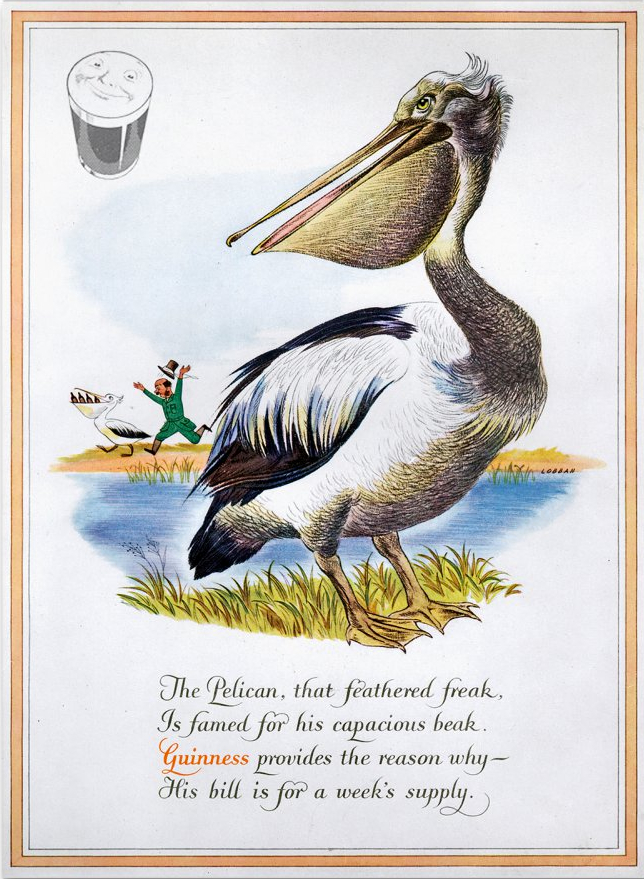
Sunday’s ad is for Guinness, from 1952. While the best known Guinness ads were undoubtedly the ones created by John Gilroy, Guinness had other creative ads throughout the same period and afterward, too, which are often overlooked. This ad, one of many that used Lewis Carroll’s Alice in Wonderland (at least I think this is one that did) features a pelican, with another one in the background with four bottles of Guinness in his bill, being chased by a zookeeper. And at the bottom is this simple poem:

The Pelican, that feathered freak,
Is famed for his capacious beak.
Guinness provides the reason why —
His bill is for a week’s supply!

Guinness-1952-pelican

Filed Under: Art & Beer, Beers Tagged With: Advertising, Guinness, History, Literature, Poetry

Beer In Ads #2506: The Ostrich, Travelers Recall

December 30, 2017 By Jay Brooks


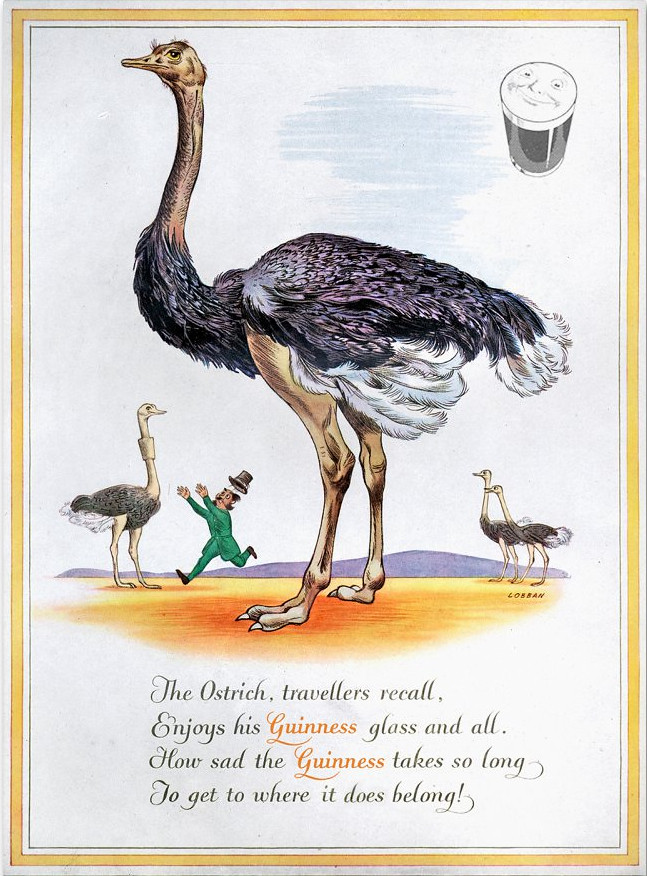
Saturday’s ad is for Guinness, from 1952. While the best known Guinness ads were undoubtedly the ones created by John Gilroy, Guinness had other creative ads throughout the same period and afterward, too, which are often overlooked. This ad, one of many that used Lewis Carroll’s Alice in Wonderland (at least I think this is one that did) features an ostrich, with three more in the background, one of which swallowed the zookeeper’s pint glass. And at the bottom is this simple poem:

The Ostrich, travelers recall,
Enjoys his Guinness, glass and all.
How sad the Guinness takes so long
To get to where it does belong!

Guinness-1952-ostrich

Filed Under: Art & Beer, Beers Tagged With: Advertising, Guinness, History, Literature, Poetry

Beer In Ads #2505: Ma-Supials Have A Pouch, Or Bin

December 29, 2017 By Jay Brooks


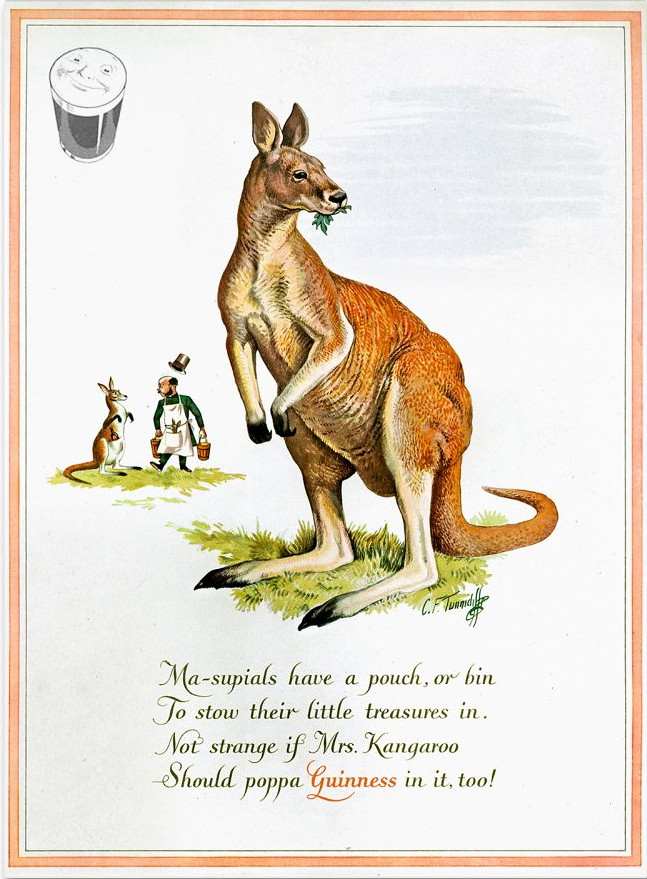
Friday’s ad is for Guinness, from 1952. While the best known Guinness ads were undoubtedly the ones created by John Gilroy, Guinness had other creative ads throughout the same period and afterward, too, which are often overlooked. This ad, one of many that used Lewis Carroll’s Alice in Wonderland (at least I think this is one that did) features a kangaroo, with another one in the background surprising a zookeeper. And at the bottom is this simple poem:

Ma-supials have a pouch, or bin
To stow their little treasures in.
Not strange if Mrs. Kangaroo
Should poppa a Guinness in it, too!

Guinness-1952-kangaroos

Filed Under: Art & Beer, Beers Tagged With: Advertising, Guinness, History, Literature, Poetry

Beer In Ads #2504: Insatiable Carnivore!

December 28, 2017 By Jay Brooks


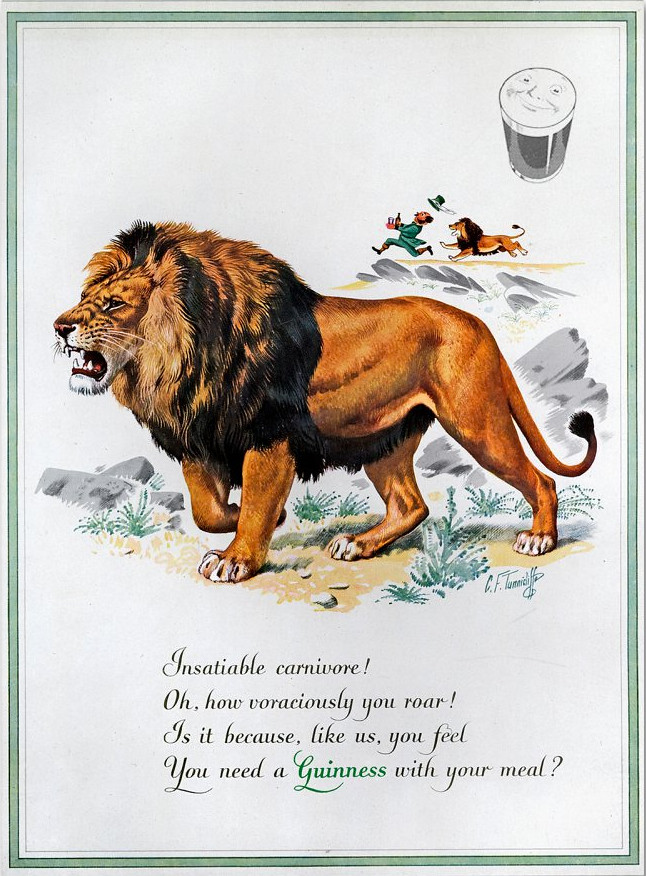
Thursday’s ad is for Guinness, from 1952. While the best known Guinness ads were undoubtedly the ones created by John Gilroy, Guinness had other creative ads throughout the same period and afterward, too, which are often overlooked. This ad, one of many that used Lewis Carroll’s Alice in Wonderland (at least I think this is one that did) features a roaring lion, with another one in the background chasing a zookeeper who’s holding a bottle and glass of Guinness on a tray. And at the bottom is this simple poem:

Insatiable carnivore!
Oh, how voraciously you roar!
Is it because, like us, you feel
You need a Guinness with your meal?

Guinness-1952-lions

Filed Under: Art & Beer, Beers Tagged With: Advertising, Guinness, History, Literature, Poetry

Beer In Ads #2503: You Must Admire The Sea-Lion’s Flair

December 27, 2017 By Jay Brooks


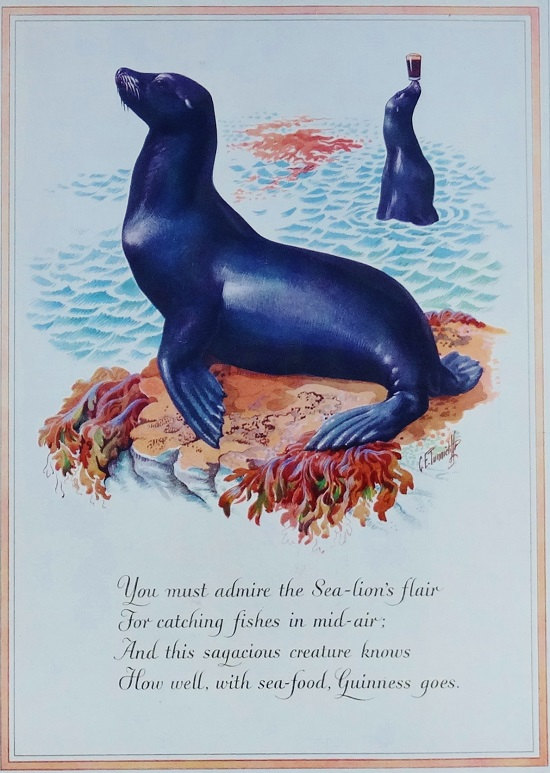
Wednesday’s ad is for Guinness, from 1952. While the best known Guinness ads were undoubtedly the ones created by John Gilroy, Guinness had other creative ads throughout the same period and afterward, too, which are often overlooked. This ad, one of many that used Lewis Carroll’s Alice in Wonderland (at least I think this is one that did) features a couple of sea lions, one of them balancing a glass of Guinness on its nose. And at the bottom is this simple poem:

You must admire the sea-lion’s flair
For catching fishes in mid-air:
And this sagacious creature knows
How well, with sea-food Guinness goes.

Guinness-1952-sea-lions

Filed Under: Art & Beer, Beers Tagged With: Advertising, Guinness, History, Literature, Poetry

Beer In Ads #2498: If Seven Men Sailed Seven Ships

December 22, 2017 By Jay Brooks


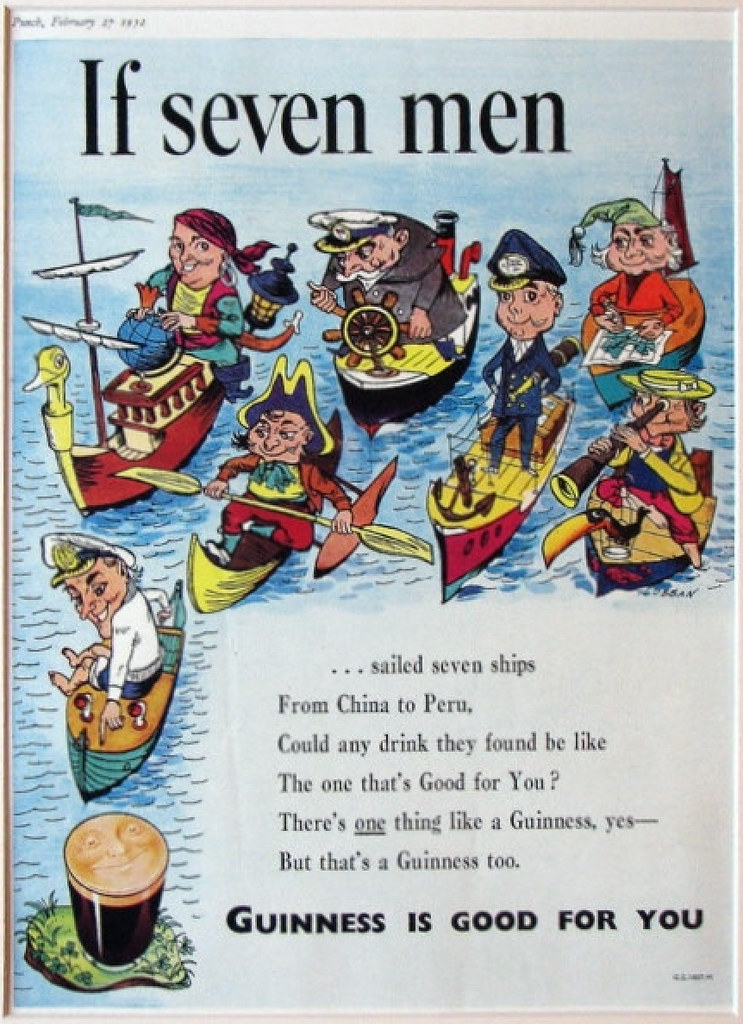
Friday’s ad is for Guinness, from 1952. While the best known Guinness ads were undoubtedly the ones created by John Gilroy, Guinness had other creative ads throughout the same period and afterward, too, which are often overlooked. This ad, one of many that used Lewis Carroll’s Alice in Wonderland, and is a parody of the poem “The Walrus and the Carpenter,” which was originally in Through the Looking-Glass. In this parody, the Guinness-themed poem begins “If seven men … sailed seven ships,” and is about some odd looking ships and their captains trying to find Guinness “from China to Peru.”

Guinness-7men2-1952

Filed Under: Art & Beer, Beers Tagged With: Advertising, Guinness, History, Literature, Poetry

Prohibitionist Poetry

November 5, 2017 By Jay Brooks

poetry
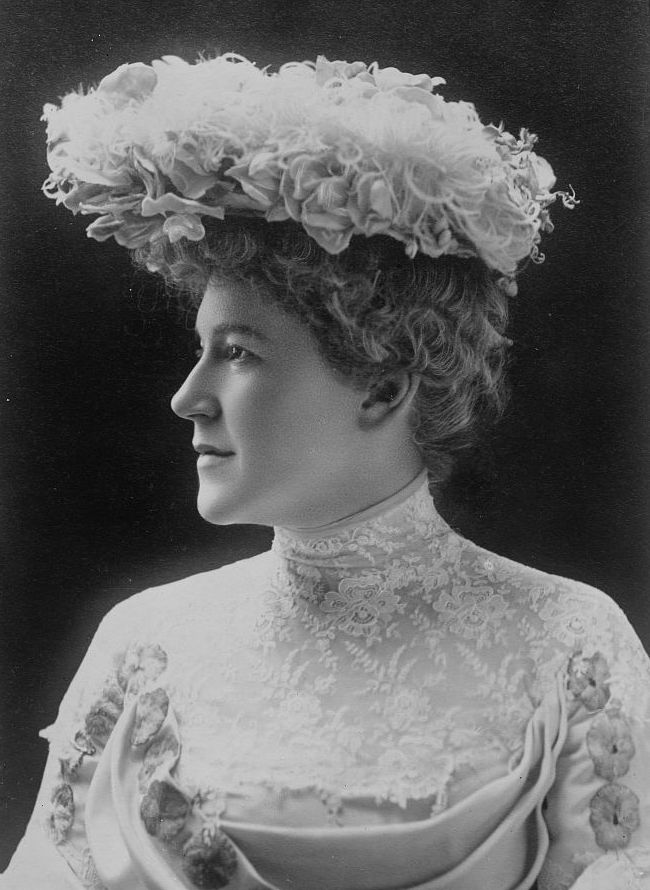
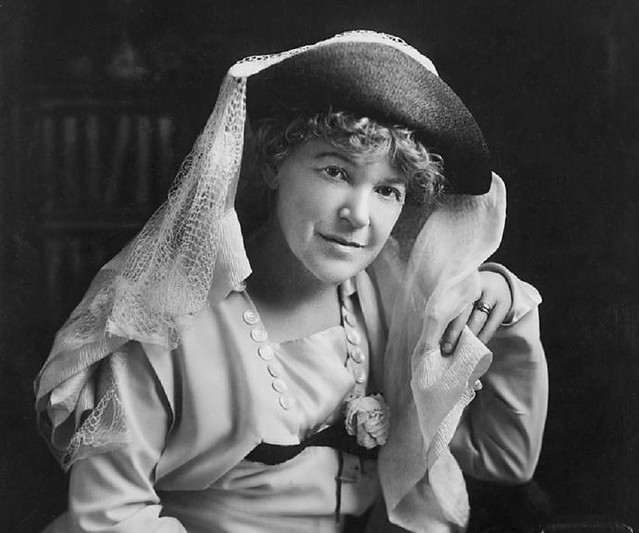
Today is the birthday of Ella Wheeler Wilcox, who “was an American author and poet. Her best-known work was Poems of Passion. Her most enduring work was ‘Solitude,’ which contains the lines ‘Laugh, and the world laughs with you; weep, and you weep alone.’ Her autobiography, The Worlds and I, was published in 1918, a year before her death.” She was also a confirmed prohibitionist and wrote many temperance poems that are absolutely rife with ridiculous propaganda, along the order of “Reefer Madness” in their misinformation, and are similarly unintentionally funny … almost. But she started writing such works as a young woman, having never once consumed a drop of alcohol herself so her ignorance, while understandable, is no less dangerous and uninformed. Also, her poetry wasn’t very good, but it was popular. For example, her poetry’s described on her Wikipedia page:

A popular poet rather than a literary poet, in her poems she expresses sentiments of cheer and optimism in plainly written, rhyming verse. Her world view is expressed in the title of her poem “Whatever Is—Is Best”, suggesting an echo of Alexander Pope’s “Whatever is, is right,” a concept formally articulated by Gottfried Leibniz and parodied by Voltaire’s character Doctor Pangloss in Candide.

None of Wilcox’s works were included by F. O. Matthiessen in The Oxford Book of American Verse, but Hazel Felleman chose no fewer than fourteen of her poems for Best Loved Poems of the American People, while Martin Gardner selected “The Way Of The World” and “The Winds of Fate” for Best Remembered Poems.

She is frequently cited in anthologies of bad poetry, such as The Stuffed Owl: An Anthology of Bad Verse and Very Bad Poetry.

Ella_Wheeler_Wilcox_circa_1919

Here’s a representative example, written around 1872, and entitled “Ph. Best & Co.’s Lager-Beer.” In the poem, he really sticks it to Philip Best for making and selling beer, all but calling him a murderer. Needless to say, she must have been a hoot at parties.

Ph. Best & Co.’s Lager-Beer

“In every part of the thrifty town,
Whether my course be up or down,
In lane, and alley, and avenue,
Painted in yellow, and red, and blue,
This side and that, east and west,
Was this flaunting sign-board of ‘Ph. Best.’

’Twas hung high up, and swung in the air
With a swaggering, bold-faced, ‘devil-may-care-
It-is-none-of-your-business’ sort of way;
Or, as if dreading the light o’ the day,
It hung low, over a basement-stair,
And seemed ashamed when you saw it there.

Or it shone like a wicked and evil eye
From a ‘restaurant’ door on passers-by,
And seemed with a twinkling wink to say:
‘Are you bound for hell? Then step this way;
This is the ticket-office of sin;
If you think of purchasing, pray, walk in.’

Or it glared from a window where the light
Of the lamps within shone full and bright,
And seemed to be saying, ‘Come out of the storm!
Come into my haven snug and warm;
I will give you warmth from the flowing bowl,
And all I ask is your purse and soul.’

But whether on window, door, or stair,
Wherever I went, it was always there;
Painted in yellow, and red, and blue,
It stared from alley and avenue:
It was north and south, and east, and west,
The lager-beer of this Philip Best.

And who was Philip Best, you ask?
Oh! he was a man, whose noble task
Was the brewing of beer — good beer, first class —
That should sparkle, and bubble, and boil in the glass:
Should sparkle and flow till drank, and then
Feast like a vampire on brains of men.

Ah! Philip Best, you have passed from view,
But your name and your works love after you.
Come, brothers, raise him a monument,
Inscribed, ‘Here lies the man who sent
A million of souls to the depths of hell;
Turned genius and worth to the prison-cell;

Stole bread from the mouth of the hungry child:
Made the father a brute, and the mother wild;
Filled happy homes with dread unrest:
Oh! a very great man was Philip Best.
O Ph. Best! you have passed from view,
But your name and your deeds live after you.’”

ella-wheeler-wilcox-7

She was nicknamed “the poet laureate of the Temperance Movement,” and indeed her very first book of poetry, “Drops of Water: Poems,” was published by The National Temperance Movement and Publication House. It’s quite startling to see how they viewed drinking people and especially the people making and selling alcoholic beverages as less than human, something you still see today in the propaganda of modern prohibitionist groups. But some of her poems are just crazy.

Here are some more excerpts from some of her other temperance poems:

From “What I Have Seen, Number III”

“I saw two men: one was fair to behold;
The other, a drunken sot, bloated and bold.
One stood on the mountain and drank of God’s fountain,
The other drank beer in the street.
Yet both started alike; but one made a ’stroke,’
Which ended, you see, in defeat.”

From “What I Have Seen, Number V”

“I saw his candidate sipping his beer,
Wiping his mustache and lapping his jaws;
And I said to myself, ‘ It’s decidedly queer,
If this is the man that should help make our laws,’
But may be he is — may be he is!
I won’t say it outright, but may be he is!”

From “Don’t Drink”

“Don’t drink, boys, don’t!
There is nothing of happiness, pleasure, or cheer,
In brandy, in whiskey, in rum, or beer.
If they cheer you when when drunk, you are certain to pay
In headaches and crossness the following day.
Don’t drink, boys, don’t!”

From “Where are the Temperance People?”

“Where are the temperance people?
Well, scattered here and there:
Some gathering in their produce
To show at the autumn fair:
Some threshing wheat for market,
And others threshing rye,
That will go to the fat distiller
For whiskey by-and-by.

And some are selling their hop crops
At a first-rate price, this year,
And the seller pockets the money,
While the drunkard swallows the beer.
And some ’staunch temperance workers’(?)
Who’d do anything for the cause,
Save too give it a dime or a moment,
Or work for temperance laws,

May be seen from now to election,
Near any tavern stand
Where liquor flows in plenty,
With a voter on either hand.
And these temperance office-seekers
That we hear of far and near
Are the ones who furnish the money
That buys the lager-beer.”

From “Give Us a Call”

“Give us a call! We keep good beer,
Wine, and brandy, and whiskey here;
Our doors are open to boys and men,
And even to women, now and then.
We lighten their purses, we taint their breaths,
We swell up the column of awful deaths;
      All kinds of crimes
      We sell for dimes
In our sugared poisons, so sweet to taste!
If you’ve money, position, or name to waste,
      Give us a call!

Give us a call! In a pint of our gin,
We sell more wickedness, shame, and sin
Than a score of clergymen, preaching all day
From dawn till darkness, could preach away,
And in our beer (though it may take longer
To get a man drunk than drinks that are stronger)
We sell out poverty, sorrow, and woe —
Who wants purchase? Our prices are low.
      Give us a call!”

From “Origin of the Liquor Dealer”

“Turn it in, to a lake of gin,
      Where the devil bathes, to cool.
Then lift it up, and turn to a cup
      Of wine they dip from a pool.
Then they dip it in ale, till it turneth pale,
      In beer, till it growth red.
It? nay, HE! for the thing they see
      Is a man, from heel to head.”

And here’s one more full poem:

From “The Brewer’s Dog”

“The brewer’s dog is abroad boys,
      Be careful where you stray,
His teeth are coated with poison,
      And he’s on the watch for prey.
The brewery is his kennel,
      But he lurks on every hand,
And he seeks for easy victims
      The children of the land.

His eyes gleam through the windows
      Of the gay saloon at night,
And in many a first-class ‘drug store’
      He is hiding out of sight.
Be careful where you enter,
      And, if you smell his breath,
Flee as you would from a viper,
      For its fumes are the fumes of death.

O boys! would you kill the bloodhound?
      Would you slay the snarling whelp?
I know that you can do it
      If every one will help.
You must make a solemn promise
      To drink no ale or beer,
And soon the feeble death-wail
      Of the brewer’s dog we’ll hear.

For, if all keep the promise,
      You can starve him out, I know;
But, if boys and men keep drinking,
      The dog will thrive and grow.”

WER0780

Filed Under: Just For Fun, Politics & Law, Related Pleasures Tagged With: History, Poetry, Prohibitionists

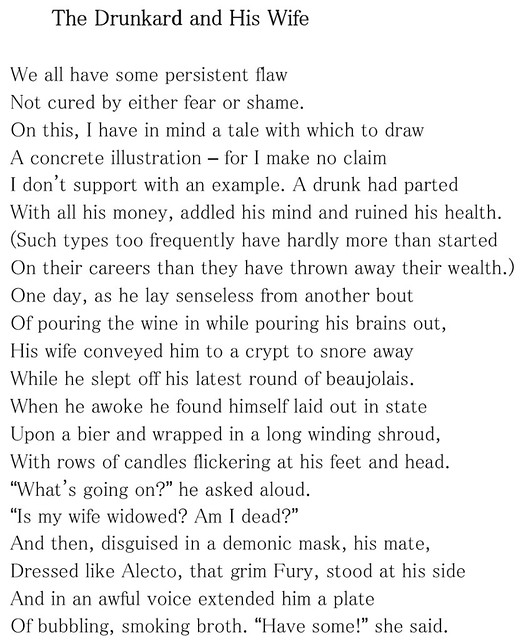
The Drunkard And His Wife

July 8, 2017 By Jay Brooks

fairy-tale
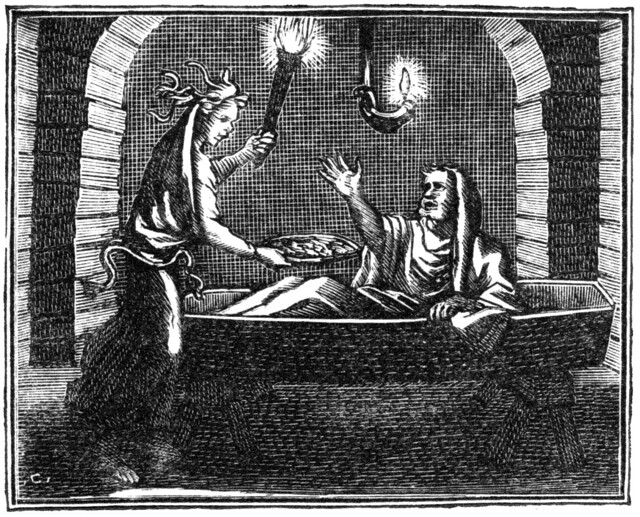
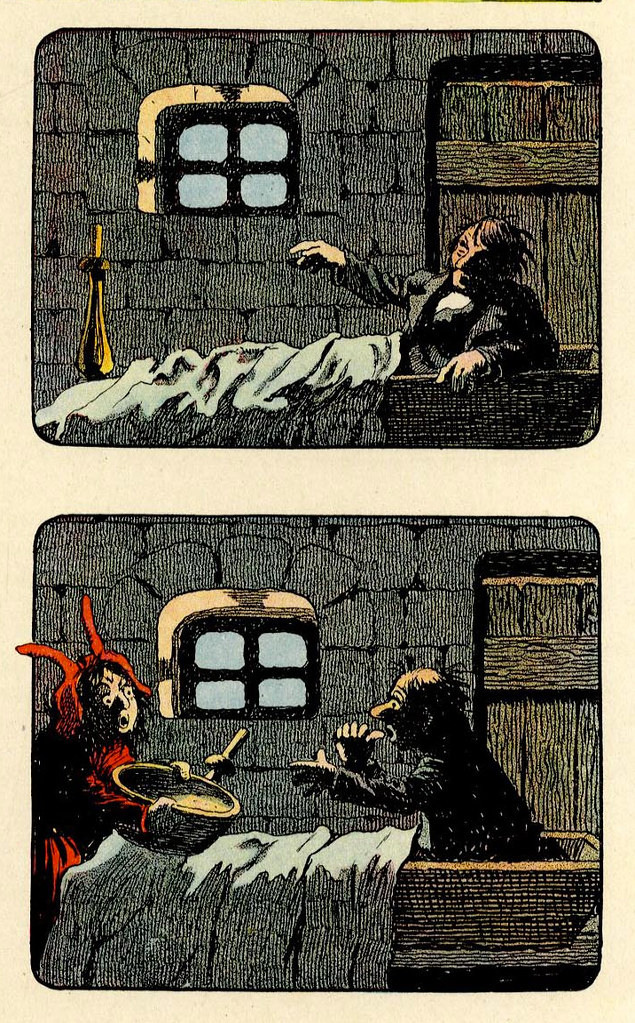
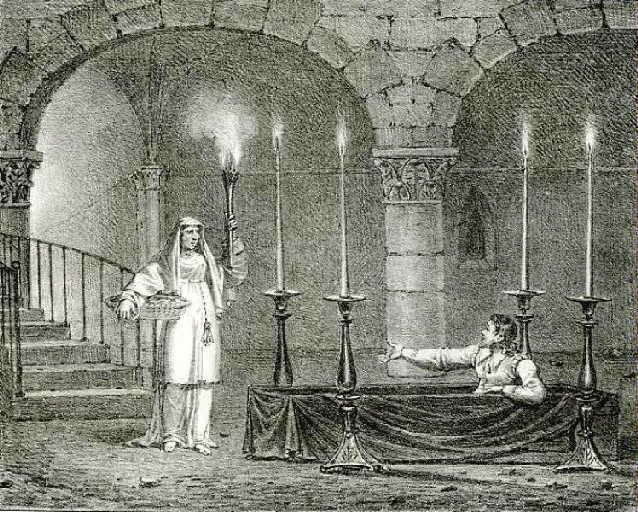
Today is the birthday of Jean de La Fontaine, who “was a famous French fabulist and one of the most widely read French poets of the 17th century. He is known above all for his Fables, which provided a model for subsequent fabulists across Europe and numerous alternative versions in France, and in French regional languages.” One of his fables is called “The Drunkard and His Wife.” It’s an odd little story about a wife who came up with a novel cure for her husband’s drinking. Why it hasn’t caught on is anybody’s guess.

Chauveau_-_Fables_de_La_Fontaine_-_03-07

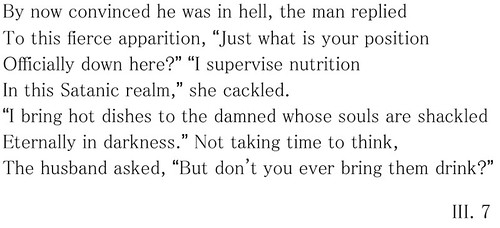
This is a modern translation, done by Craig Hill for “The Complete Fables of La Fontaine: A New Translation in Verse.”

drunkard-and-his-wife-1
drunkard-and-his-wife-2

SH142-1

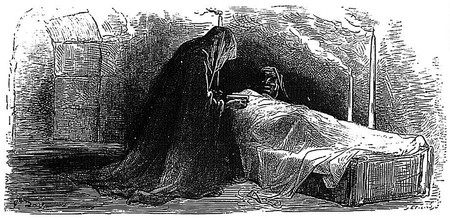
Just for fun, here’s an earlier version from 1886, translated by Walter Thornbury, and with an illustration by Gustave Doré:

FABLE LIII.

THE DRUNKARD AND HIS WIFE.

Each one’s his faults, to which he still holds fast,
And neither shame nor fear can cure the man;
‘Tis apropos of this (my usual plan),
I give a story, for example, from the past.
A follower of Bacchus hurt his purse,
His health, his mind, and still grew each day worse;
Such people, ere they’ve run one-half their course,
Drain all their fortune for their mad expenses.
One day this fellow, by the wine o’erthrown,
Had in a bottle left his senses;
[Pg 168]His shrewd wife shut him all alone
In a dark tomb, till the dull fume
Might from his brains evaporate.
He woke and found the place all gloom,
A shroud upon him cold and damp,
Upon the pall a funeral lamp.
“What’s this?” said he; “my wife’s a widow, then!”
On that the wife, dressed like a Fury, came,
Mask’d, and with voice disguised, into the den,
And brought the wretched sot, in hopes to tame,
Some boiling gruel fit for Lucifer.
The sot no longer doubted he was dead—
A citizen of Pluto’s—could he err?
“And who are you?” unto the ghost he said.
“I’m Satan’s steward,” said the wife, “and serve the food
For those within this black and dismal place.”
The sot replied, with comical grimace,
Not taking any time to think,
“And don’t you also bring the drink?”

laf_head_054

And here’s one more translation of the fable:

Each has his fault, to which he clings
In spite of shame or fear.
This apophthegm a story brings,
To make its truth more clear.
A sot had lost health, mind, and purse;
And, truly, for that matter,
Sots mostly lose the latter
Ere running half their course.
When wine, one day, of wit had fill’d the room,
His wife inclosed him in a spacious tomb.
There did the fumes evaporate
At leisure from his drowsy pate.
When he awoke, he found
His body wrapp’d around
With grave-clothes, chill and damp,
Beneath a dim sepulchral lamp.
‘How’s this? My wife a widow sad?’
He cried, ‘and I a ghost? Dead? dead?’
Thereat his spouse, with snaky hair,
And robes like those the Furies wear,
With voice to fit the realms below,
Brought boiling caudle to his bier –
For Lucifer the proper cheer;
By which her husband came to know –
For he had heard of those three ladies –
Himself a citizen of Hades.
‘What may your office be?’
The phantom question’d he.
‘I’m server up of Pluto’s meat,
And bring his guests the same to eat.’
‘Well,’ says the sot, not taking time to think,
‘And don’t you bring us anything to drink?’

m078402_0002056_p

SH142-2

Filed Under: Just For Fun, Related Pleasures Tagged With: France, History, Literature, Poetry

Jean Verdenal’s Letter To T.S. Eliot

May 11, 2017 By Jay Brooks

reading-book
This will probably only be of interest to the most hardcore literati among you, but if you like poetry, literature or weird history, read on McDuff. According to Wikipedia, Jean Jules Verdenal “(May 11, 1890–May 2, 1915) was a French medical officer who served, and was killed, during the First World War. Verdenal and his life remain cloaked in obscurity; the little we do know comes mainly from interviews with family members and several surviving letters.”

Verdenal was born in Pau, France, the son of Paul Verdenal, a medical doctor. He had a talent for foreign languages. He was athletically inclined. Verdenal as a student was interested in literature and poetry and possessed copies of Stéphane Mallarmé’s Poésies and of Jules Laforgue’s Poésies and Moralités Légendaires. It was perhaps Verdenal’s literary inclinations that led him to become friends with American poet T.S. Eliot, whom he met in 1910 at the Sorbonne. After they parted ways, Verdenal and Eliot corresponded through letters. Verdenal was killed on May 2, 1915, while treating a wounded man on the battlefield. This was just a week into the Gallipoli Campaign and a few days shy of his twenty-fifth birthday.”

ts-eliot

T.S. Eliot, of course, was an American-born poet, who most people know of because his 1939 collection of poems, “Old Possum’s Book of Practical Cats,” was later adapted by Andrew Lloyd Webber into the popular musical, “Cats,” which debuted in 1981. But here’s the basics, again from Wikipedia:

Thomas Stearns Eliot (September 26, 1888–January 4, 1965) was a British essayist, publisher, playwright, literary and social critic, and “one of the twentieth century’s major poets”. He moved from his native United States to England in 1914 at the age of 25, settling, working, and marrying there. He eventually became a British subject in 1927 at the age of 39, renouncing his American citizenship.

Eliot attracted widespread attention for his poem “The Love Song of J. Alfred Prufrock” (1915), which was seen as a masterpiece of the Modernist movement. It was followed by some of the best-known poems in the English language, including The Waste Land (1922), “The Hollow Men” (1925), “Ash Wednesday” (1930), and Four Quartets (1943). He was also known for his seven plays, particularly Murder in the Cathedral (1935) and The Cocktail Party (1949). He was awarded the Nobel Prize in Literature in 1948, “for his outstanding, pioneer contribution to present-day poetry.”

There is also speculation that Verdenal was the inspiration for the character “Phlebas the Phoenician” in Eliot’s long-form poem “The Wasteland,” which he published in 1922. Eliot certainly dedicated some of his works to Verdenal, including “his first volume of poetry, ‘Prufrock and Other Observations,’ which was published two years after Verdenal’s death, in 1917.

Here’s another account of their meeting and friendship:

In 1910 T.S. Eliot, then a graduate student studying philosophy at Harvard University, went to Paris to study a year at the Sorbonne. He took a room at a pension where he met and befriended Jean Verdenal, a French medical student who had another room there.

Eliot returned to Harvard in the autumn of 1911 to continue his work toward a doctorate.

Eliot and Verdenal carried on a correspondence at least through 1912. Seven letters from Verdenal to Eliot (written in French) are archived at Harvard University’s Houghton Library. The Verdenal letters have also been published in The Letters of T.S. Eliot: 1898-1922 (Vol 1). Apparently no copies of Eliot’s letters to Verdenal survive.

So why I bring this is up is the following passage, from a letter that Verdenal wrote to T.S. Eliot in July of 1911.

“My dear friend, I am waiting impatiently to hear that you have found some notepaper in Bavaria, and to receive an example of it covered with your beautiful handwriting, before German beer has dulled your wits. As a matter of fact, it would have some difficulty in doing so, and we see that even few natives of the country escaped its effects; history tells us that the formidable Schopenhauer was a great beer-lover. He also played the clarinet, but perhaps that was just to annoy his neighbours. Such things are quite enough to make us cling to life. The will to live is evil, a source of desires and sufferings, but beer is not to be despised — and so we carry on. O Reason!”

Verdenal has an interesting take on German beer. ANd the clarinet, which I used to play, too.

Phlebas-the-Phoenician

And this is passage from “The Wasteland,” about which some scholars believe Verdenal was the inspiration for Phlebas the Phoenician. You can read more about why at this page about T.S. Eliot and Jean Verdenal.

          IV. Death by Water

Phlebas the Phoenician, a fortnight dead,
Forgot the cry of gulls, and the deep sea swell
And the profit and loss.
                                 A current under sea
Picked his bones in whispers. As he rose and fell
He passed the stages of his age and youth
Entering the whirlpool.
                               Gentile or Jew
O you who turn the wheel and look to windward,
Consider Phlebas, who was once handsome and tall as you.

Filed Under: Beers, Just For Fun, Related Pleasures Tagged With: Germany, History, Literature, Poetry

« Previous Page
Next Page »

Find Something

Northern California Breweries

Please consider purchasing my latest book, California Breweries North, available from Amazon, or ask for it at your local bookstore.

Recent Comments

  • Ernie Dewing on Historic Beer Birthday: Charles William Bergner 
  • Steve 'Pudgy' De Rose on Historic Beer Birthday: Jacob Schmidt
  • Jay Brooks on Beer Birthday: Bill Owens
  • Steve 'Pudgy' De Rose on Beer Birthday: Charles Finkel
  • Steve 'Pudgy' De Rose on Beer Birthday: Bill Owens

Recent Posts

  • Beer In Ads #5206: What Is Rainier Bock Beer? February 17, 2026
  • Historic Beer Birthday: John A. White Jr. February 17, 2026
  • Historic Beer Birthday: Ernest Davis February 17, 2026
  • Beer In Ads #5205: Bock Time Is Schmidt’s Time February 16, 2026
  • Historic Beer Birthday: Samuel C. Whitbread February 16, 2026

BBB Archives

Feedback

Head Quarter
This site is hosted and maintained by H25Q.dev. Any questions or comments for the webmaster can be directed here.