Finland Beer

finland
Today in 1917, Finland gained their Independence from Russia.

Finland
finland-color

Finland Breweries

Finland Brewery Guides

Other Guides

Guild: Panimoliitto

National Regulatory Agency: National Product Control Agency for Welfare and Health

Beverage Alcohol Labeling Requirements: Follows Eu Regulations

Drunk Driving Laws: BAC 0.05% [Note: 0.12% (aggravated). The penalty is a fine or jail up to 6 months plus license suspension from 1 month to 5 years. For aggravated, also a prison sentence (60 days to 2 years) is possible, usually as a suspended sentence. Routine breath testing without a probable cause is permitted and often practiced. Penalties vary by level of intoxication.]

finland

  • Full Name: Republic of Finland
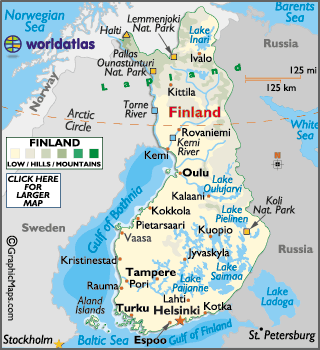
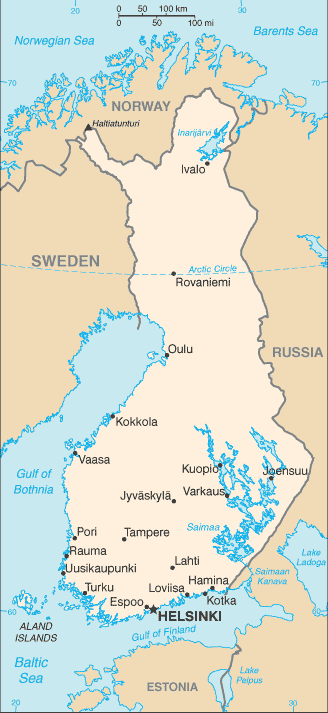
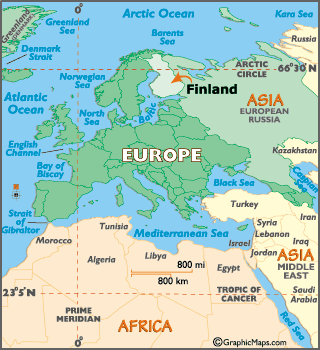
  • Location: Northern Europe, bordering the Baltic Sea, Gulf of Bothnia, and Gulf of Finland, between Sweden and Russia
  • Government Type: Republic
  • Language: Finnish (official) 91.2%, Swedish (official) 5.5%, other (small Sami- and Russian-speaking minorities) 3.3%
  • Religion(s): Lutheran Church of Finland 82.5%, Orthodox Church 1.1%, other Christian 1.1%, other 0.1%, none 15.1%
  • Capital: Helsinki (Helsingfors)
  • Population: 5,262,930; 116th
  • Area: 338,145 sq km, 65th
  • Comparative Area: Slightly smaller than Montana
  • National Food: Mämmi
  • National Symbol: Lion, Whooper Swan, Brown Bear, European perch, Ladybird; Lily of the Valley; Birch, Silver Birch; Finland’s Lion, Nordic Cross
  • Affiliations: UN, EU
  • Independence: From Russia, December 6, 1917

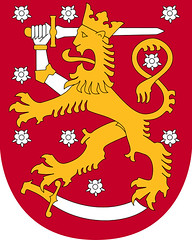
finland-coa

  • Alcohol Legal: Yes
  • Minimum Drinking Age: 18 (for possession and purchase of <22% a.b.v.) 20 (for possession and purchase of ≥22% a.b.v.) (18 for all in bars and restaurants) [Note: Age limits apply to purchase and possession. Police may search minors in public places and confiscate or destroy alcoholic beverages. Adults are responsible for alcohol use by minors in private; offering alcohol to a minor is a punishable offense if it results in drunkenness and is inappropriate with regard to the minor's age, maturity and other circumstances.]
  • BAC: 0.05%
  • Number of Breweries: 36

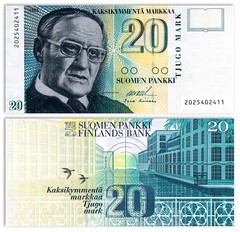
finland-money-2

  • How to Say “Beer”: olut, kalja, pikkutekijä / slang: olvi
  • How to Order a Beer: O-loot moolek kee-tos
  • How to Say “Cheers”: Kippis / Kippis Terveydeksi (“to your health”) / Maljanne (“a toast to you sir”)
  • Toasting Etiquette: N/A

finland-map

Alcohol Consumption By Type:

  • Beer: 46%
  • Wine: 23%
  • Spirits: 28%
  • Other: 3%

Alcohol Consumption Per Capita (in litres):

  • Recorded: 9.72
  • Unrecorded: 2.80
  • Total: 12.52
  • Beer: 4.59

WHO Alcohol Data:

  • Per Capita Consumption: 9.7 litres
  • Alcohol Consumption Trend: Increase
  • Excise Taxes: Yes
  • Minimum Age: 18
  • Sales Restrictions: Time, location, specific locations, intoxicated persons
  • Advertising Restrictions: Yes
  • Sponsorship/Promotional Restrictions: Yes

Patterns of Drinking Score: 3

Prohibition: 1919 to 1932 in Finland (called kieltolaki, “ban law”) [In 1919, Finland enacted prohibition, as one of the first acts after independence from the Russian Empire. Four previous attempts to institute prohibition in the early 20th century had failed due to opposition from the tsar. After a development similar to the one in the United States during its prohibition, with large-scale smuggling and increasing violence and crime rates, public opinion turned against the prohibition, and after a national referendum where 70% voted for a repeal of the law, prohibition was ended in early 1932.]

finland-eu

Ireland Beer

ireland
Today in 1921, Ireland gained their Independence by treaty with the United Kingdom.

Ireland
ireland-color

Ireland Breweries

Ireland Brewery Guides

Other Guides

Guild: Irish Brewers Association; Beoir (consumer group)

National Regulatory Agency: Food Safety Authority of Ireland

Beverage Alcohol Labeling Requirements: Follows Eu Regulations

Drunk Driving Laws: BAC 0.05% [Note: 0.05% generally or 0.02% for learner drivers, newly qualified drivers (those who have their license for less than two years) and professional drivers, and those who do not have their driving license on them when stopped by the Gardaí (police). Police do not need a reason to request a breath sample. Being convicted of drunk driving usually carries a 2 year ban as well as a €1500 fine.]

ireland

  • Full Name: Ireland (Eire)
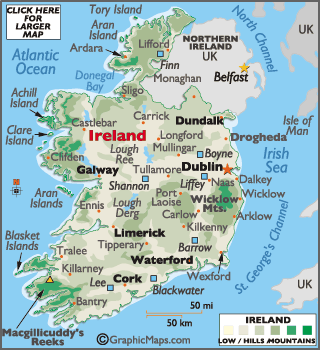
  • Location: Western Europe, occupying five-sixths of the island of Ireland in the North Atlantic Ocean, west of Great Britain
  • Government Type: Republic, parliamentary democracy
  • Language: English (official, the language generally used), Irish (Gaelic or Gaeilge) (official, spoken mainly in areas along the western coast)
  • Religion(s): Roman Catholic 87.4%, Church of Ireland 2.9%, other Christian 1.9%, other 2.1%, unspecified 1.5%, none 4.2%
  • Capital: Dublin (Baile Átha Cliath)
  • Population: 4,722,028; 119th
  • Area: 70,273 sq km, 120th
  • Comparative Area: Slightly larger than West Virginia
  • National Food: Colcannon, Irish Stew
  • National Symbol: Irish Wolfhound, Irish Setter, Irish Elk; Shamrock; Sessile Oak; Celtic harp called a cláirseach (official), harp on coat of arms etc. (official), Celtic Cross; Harp
  • Affiliations: UN, EU
  • Independence: By treaty from the UK, December 6, 1921 / Declared, April 24, 1916 / Ratified, January 21, 1919

ireland-coa

  • Alcohol Legal: Yes
  • Minimum Drinking Age: 18 [Note: It is illegal for minors to buy alcohol, to attempt to buy it for minors or to consume alcohol in a public space in Ireland. Those under 18 may consume alcohol in a private residence when permission is given from a parent or guardian. It is illegal to purchase alcohol for anybody under the age of consent without permission from their guardians. Alcohol can be sold in stores only between 10:30 and 22:00 on weekdays and Saturdays or 12:30 and 22:00 on Sundays.]
  • BAC: 0.08%
  • Number of Breweries: 20

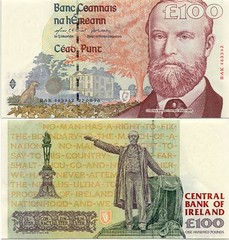
ireland-money-2

  • How to Say “Beer”: beoir / leann (lionn)
  • How to Order a Beer: Byohr awoyn, lyeh doh hull
  • How to Say “Cheers”: Sláinte / Guid forder! (“good luck”) [Ulster-Scots]
  • Toasting Etiquette: Common Toasts

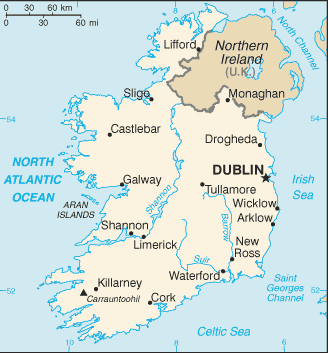
ireland-map

Alcohol Consumption By Type:

  • Beer: 53%
  • Wine: 20%
  • Spirits: 19%
  • Other: 8%

Alcohol Consumption Per Capita (in litres):

  • Recorded: 13.39
  • Unrecorded: 1.00
  • Total: 14.39
  • Beer: 7.04

WHO Alcohol Data:

  • Per Capita Consumption: 13.4 litres
  • Alcohol Consumption Trend: Stable
  • Excise Taxes: Yes
  • Minimum Age: 18
  • Sales Restrictions: Places, intoxicated persons
  • Advertising Restrictions: Some
  • Sponsorship/Promotional Restrictions: Some (sales promotions)

Patterns of Drinking Score: 3

Prohibition: None

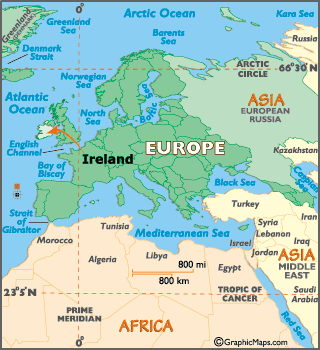
ireland-eu

Beer Birthday: Natalie Cilurzo

russian-river
Today is the 44th birthday of Natalie Cilurzo, co-founder of Russian River Brewing, and the woman who makes everything run smoothly at both the brewpub and the production brewery. You’d be hard-pressed to find a nicer person in the beer world, and though she spent many years working with wine, the brewing industry is all the richer now that she’s left that all behind her. Join me in wishing Natalie a very happy birthday.

Natalie & Vinnie
Natalie with Vinnie at his 40th birthday party a few years ago.

P1060235
Jen Garris, from Pi Bar, Dave Keene’s wife Jen Smith, and Natalie at the Toronado 25th Anniversary Blending Dinner.

wbc-din08-07
Four out of Five, the Cilurzos and a Stan. From Left: Natalie, Stan Hieronymus, Vinnie’s mother and father, and Vinnie Cilurzo at the World Beer Cup gala dinner in 2008.

Best man Vinnie Cilurzo, Dave Keene, Jennifer Smith and maid of honor Natalie Cilurzo
Best man Vinnie Cilurzo, Dave Keene, Jennifer Smith and maid of honor Natalie at Dan & Jen’s wedding during GABF 2010.

Me, Natalie Cilurzo and Sean Paxton (and his daughter Olivia)
Me, Natalie and Sean Paxton (and his daughter Olivia) at the Pliny the Younger release in 2011. (photo by Mario Rubio.)

St. Nicholas: Patron Saint of Brewers

santa-claus
While St. Nicholas is best known — in America, at least — for wearing red and white and giving presents to Children each December 25, he’s actually the patron saint for a number of professions, places and afflictions. His feast day is not actually Christmas Day, but almost three weeks earlier on December 6. That’s the reason why the holiday beer Samichlaus is brewed each year on this day. The person we associate with Christmas, Santa Claus, was based on Saint Nicholas, who was originally known (and still is in some places) as Bishop Nicholas of Myra.

santa-pils

Nicholas is the patron saint of brewers, among many others. He’s also the patron saint against imprisonment, against robberies, against robbers. And Nick’s the patron for apothecaries, bakers, barrel makers, boatmen, boot blacks, boys, brewers, brides, captives, children, coopers, dock workers, druggists, fishermen, Greek Catholic Church in America, Greek Catholic Union, grooms, judges, lawsuits lost unjustly, longshoremen, maidens, mariners, merchants, penitent murderers, newlyweds, old maids, parish clerks, paupers, pawnbrokers, perfumeries, perfumers, pharmacists, pilgrims, poor people, prisoners, sailors, scholars, schoolchildren, shoe shiners, spinsters, students, penitent thieves, travellers, University of Paris, unmarried girls, and watermen. Places he’s the patron for are Apulia, Italy; Avolasca, Italy; Bardolino, Italy; Bari, Italy; Cammarata, Sicily, Italy; Cardinale, Italy; Cas Concos, Spain; Creazzo, Italy; Duronia, Italy; Fossalto, Italy; Gagliato, Italy; Greece; La Thuile, Italy; Lecco, Italy; Limerick, Ireland; Liptovský Mikulás, Slovakia; Lorraine; Mazzano Romano, Italy; Mentana, Italy; Miklavž na Dravskem polju, Slovenia; Naples, Italy; Portsmouth, England; Russia; Sassari, Italy; Sicily; Is-Siggiewi, and Malta.

He also has many names around the world, such as Baba Chaghaloo, Father Christmas, Joulupukki, Kanakaloka, Kris Kringle, Pere Noel, Papa Noël, Santa Claus, and Weihnachtsmann (“Christmas Man” or “Nikolaus”), to name just a few.

Here’s what Wikipedia has to say:

Saint Nicholas (March 15, 270 – December 6, 346) is the common name for Nicholas of Myra, a saint and Bishop of Myra (in Lycia, part of modern-day Turkey). Because of the many miracles attributed to his intercession, he is also known as Nicholas the Wonderworker. He had a reputation for secret gift-giving, such as putting coins in the shoes of those who left them out for him, and is now commonly identified with Santa Claus. His reputation evolved among the faithful, as was the custom in his time. In 1087, his relics were furtively translated to Bari, in southern Italy; for this reason, he is also known as Nicholas of Bari.

The historical Saint Nicholas is remembered and revered among Catholic and Orthodox Christians. He is also honoured by various Anglican and Lutheran churches. Saint Nicholas is the patron saint of sailors, merchants, archers, and children, and students in Greece, Belgium, Romania, Bulgaria, Georgia, Russia, the Republic of Macedonia, Slovakia, Serbia and Montenegro. He is also the patron saint of Barranquilla, Bari, Amsterdam, Beit Jala, and Liverpool. In 1809, the New-York Historical Society convened and retroactively named Sancte Claus the patron saint of Nieuw Amsterdam, the Dutch name for New York City. He was also a patron of the Varangian Guard of the Byzantine emperors, who protected his relics in Bari. So beloved is Saint Nicholas by Russians, one commonly heard saying is that “if God dies, at least we’ll still have St. Nicholas.”

The American image of Santa Claus in red and white has more to do with marketing than anything else. I wrote about this in The Santa Hypocrisy a couple of years ago when the Shelton Brothers were in hot water from several states who tried to tell them Santa Claus on a beer label threatened the American way of life and especially the impressionable young kiddies who would all be led down the path to underage drinking and alcoholism because Santa was depicted on a beer label. It was an utterly ridiculous position and they ultimately backed down, but it’s indicative of our puritan hang-ups as a culture and our general paternalism where we believe everyone needs to be protected. And in retrospect I can now see how the “institutionalized demonization of alcohol” creates the conditions for such decisions. Remember the message? “Alcohol is evil. No one can be trusted with it.” When that’s the underlying assumption, you create rules for what can and can’t be displayed on a label that are way beyond reason; standards no other products have to follow because they’re not seen as inherently evil.

But before the 20th century and in other parts of the world, Santa Claus was and still is depicted in many different ways and in various colors. Father Christmas, for example, is often seen wearing a green robe, as in the British Isles he’s more associated with nature and the old Celtic religions. The yule log, Christmas tree, wreaths, mistletoe and many other features we take for granted during the holidays do not have direct Christian origins, but were appropriated from pagan religions in order to make the transition to Christianity easier for the masses to make. Personally, I love a green Santa Claus because it reminds me of hops, and a Santa that stands for hops is one I can get behind.
green-santa-4
Few American beer labels show Santa precisely because of our peculiar brand of paternalism and the label laws spawned by our institutionalized demonization of alcohol. Santa’s Private Reserve, from Rogue in Oregon, is one of the few I can think of year after year. Most, not surprisingly, come from abroad, where people take a more reasonable approach to both the holidays and alcohol. There’s the famous Santa’s Butt from Ridgeway Brewing in England, but also Pickled Santa from the Hop Back Brewery and Austria’s Samichlaus is translated as “Santa Claus.”

santa-mugs

Why does it seem like we’re the only uptight nation on Earth when it comes to this silly issue. In Hong Kong, a giant Santa Claus is shown with a mug of beer, and no one seems to be that concerned. Try putting something like that up here, and all hell would break loose. We’re the only country complaining that there’s a “War on Christmas,” as stupid a notion as ever there was one, especially in a nation where those who celebrate Christmas constitute the vast majority.

santa-drinks

The point is if the church can have a patron saint of brewing, why do religious people object to St. Nicholas being on beer labels? Wouldn’t it make perfect sense for brewers to want to place their patron saint on their beer?

Throughout Europe, Monks not only kept alive the method of brewing beer but improved techniques for making it. A Benedictine nun in Germany, Hildegard von Bingen, is most likely responsible for the introduction of hops in beer. Religion and brewing are intertwined throughout history and, in every place except the United States, that continues to be the case. Why? What about our particular religiosity makes us incapable of seeing that and reconciling it? Why is it seemingly acceptable for Santa Claus to be used to sell everything under the sun … except alcohol. Santa sells cigarettes, soda pop, fast food and pretty much everything else with capitalistic glee yet alcohol is the corrupting influence? That’s going too far somehow? Please.

That Santa Claus only appeals to children is usually the rallying cry of the buffoons who complain about this sort of thing, but a survey of pop culture will reveal that St. Nick is used in all manner of adult contexts. Kris Kringle, like the spirit of Christmas itself, belongs to all of us, not just children. There’s no doubt that I love seeing Christmas through the fresh eyes of my children, their innocence and wonder adds a new dimension to my enjoyment of the season. But I loved the holidays as much before I was a father and after I was an adult, too.

That St. Nicholas appeals to wide array of people should be obvious from the huge number of groups and places that consider him their patron. When so many look to him for comfort in such a varied number of ways, how can anyone say what he is or what he isn’t, where he’s appropriate or where he’s not? They can’t of course, despite neo-prohibitionists and our government’s attempts to the contrary. As the patron saint of brewers, Santa Claus is, and ought to be, perfectly at home on a bottle of beer.

There’s also a wealth of information about the real Santa Claus at the Saint Nicholas Center online.