Ingredients

Beer Birthday: Chris White

by Jay Brooks on July 1, 2011 · 0 comments

in Birthdays

white-labs
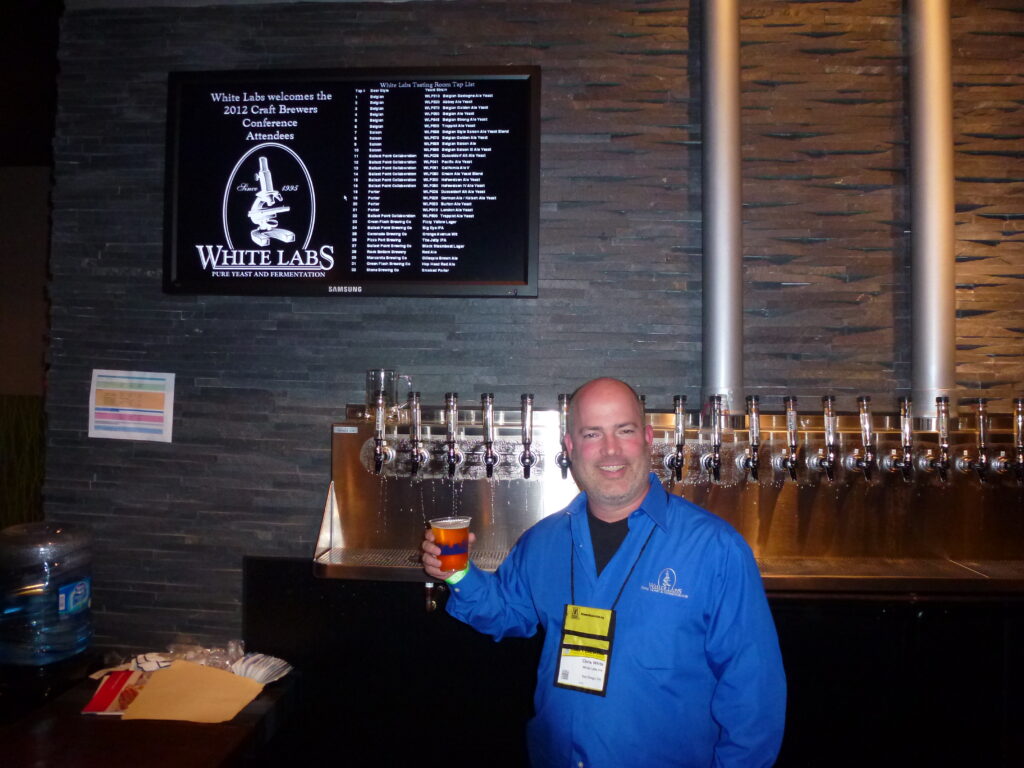
Today is the 43rd birthday of Chris White. Chris founded the yeast company White Labs in 1995 and he’s also on the faculty of the Siebel Institute. He’s also a fixture at virtually every brewing industry and homebrewing conference. Join me in wishing Chris a very happy birthday.
cbc07-23
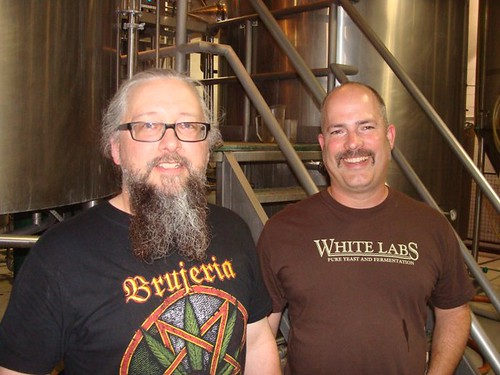
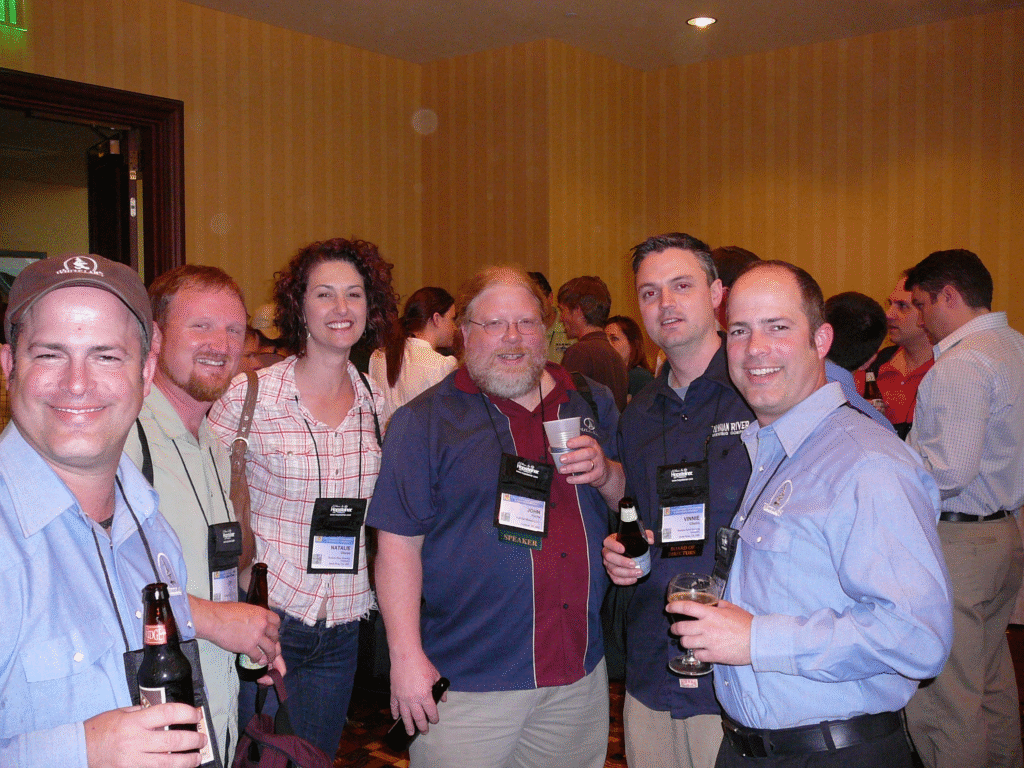
Chris and his brother Mike bookending Chuck, from Green Fash Brewing, Natalie Cilurzo, from Russian River Brewing, John Harris, from Full Sail Brewing, and Vinnie Cilurzo, also from Russian River, at CBC in Austin, Texas in 2007.

chris-white-2
Surly brewer Todd Haug with Chris.

chris-white-1
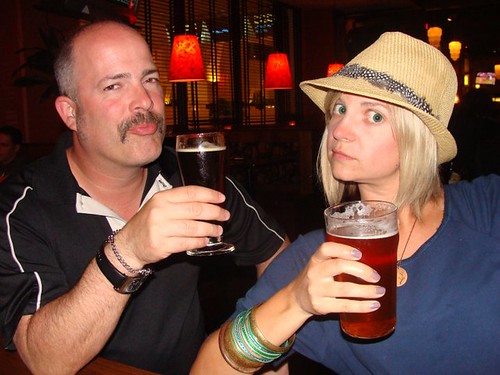
Chris with Technical Sales and Marketing Coordinator Ashley Paulsworth at the NHC.

[Note: last two photos purloined from Facebook.]
{ 0 comments }

Most Complete Beer Proteome Found

by Jay Brooks on September 29, 2010 · 1 comment

in Beers,News

science
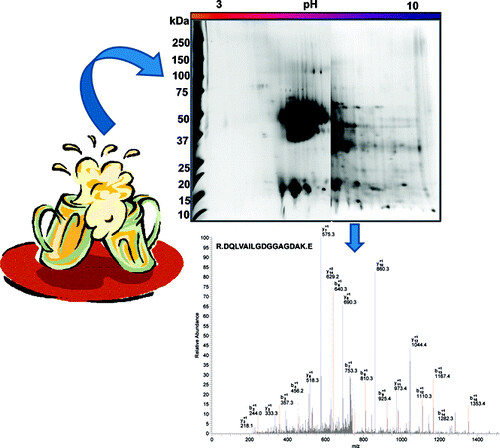
The American Chemical Society has announced that the most complete beer proteome has been found. The journal article in the ACS publication Journal of proteome Research, The Proteome Content of Your Beer Mug was conducted in Milan, Italy by two area university departments from the Politecnico di Milano and the Universit degli Studi di Milano working together.

According to the press release:

In an advance that may give brewers powerful new ability to engineer the flavor and aroma of beer — the world’s favorite alcoholic beverage — scientists are publishing the most comprehensive deciphering of the beer’s “proteome” ever reported. Their report on the proteome (the set of proteins that make beer “beer”) appears in ACS’ monthly Journal of Proteome Research.

Pier Giorgio Righetti and colleagues from say they were inspired to do the research by a popular Belgian story, Les Maîtres de l’Orge (The Brew Masters), which chronicles the fortunes of a family of brewers over 150 years. They realized that beer ranks behind only water and tea as the world’s most popular beverage, and yet little research had been done to identify the full set of proteins that make up beer. Those proteins, they note, play a key role in the formation, texture, and stability of the foamy “head” that drinkers value so highly. Nevertheless, scientists had identified only a dozen beer proteins, including seven from the barley used to make beer and two from yeast.

They identified 20 barley proteins, 40 proteins from yeast, and two proteins from corn, representing the largest-ever portrait of the beer proteome. “These findings might help brewers in devising fermentation processes in which the release of yeast proteins could be minimized, if such components could alter the flavor of beer, or maximized in case of species improving beer’s aroma,” the report notes.

I’m not sure about those findings, the statement about the “ability to engineer the flavor and aroma of beer” sounds a bit too Frankenstein-like for my tastes. Though to be fair, I don’t remember much about Proteomes from my time taking the short course on brewing at U.C. Davis.

j-of-proteome

At any rate, the whole article is online. Below is the abstract, see if it makes sense to you:

The beer proteome has been evaluated via prior capture with combinatorial peptide ligand libraries (ProteoMiner as well as a homemade library of reduced polydispersity) at three different pH (4.0, 7.0, and 9.3) values. Via mass spectrometry analysis of the recovered fractions, after elution of the captured populations in 4% boiling SDS, we could categorize such species in 20 different barley protein families and 2 maize proteins, the only ones that had survived the brewing process (the most abundant ones being Z-serpins and lipid transfer proteins). In addition to those, we could identify 40 unique gene products from Saccharomyces cerevisiae, one from S. bayanus and one from S. pastorianus as routinely used in the malting process for lager beer. These latter species must represent trace components, as in previous proteome investigations barely two such yeast proteins could be detected. Our protocol permits handling of very large beer volumes (liters, if needed) in a very simple and user-friendly manner and in a much reduced sample handling time. The knowledge of the residual proteome in beers might help brewers in selecting proper proteinaceous components that might enrich beer flavor and texture.

Interesting ….

proteome-2010

{ 1 comment }

North Carolina To Grow Hops

by Jay Brooks on June 1, 2010 · 3 comments

in News,Related Pleasures

north_carolina
The Raleigh, North Carolina News & Observer has an interesting article, Brewers Have High Hopes For N.C. Hops, about farmers in the state, centered in the mountains around Asheville, experimenting with planting hops.

Hoping to build on the craft-brewing and local food movements, N.C. State University researchers in Raleigh and a handful of farmers in the mountains are growing experimental plots of hops, the cone-shaped flower clusters that brewers add to beer for bitterness and aroma and as a natural preservative.

Rob Austin, Deanna Osmond, and Jeanine Davis at NCSU got a $28,000, one-year grant this year from the Golden LEAF Foundation to investigate the commercial viability of growing hops here. In March, a couple of volunteers from a soon-to-open Durham brewery called Fullsteam came to help researchers plant a small plot of about 200 plants at a university field laboratory near Lake Wheeler south of Raleigh.

With tobacco demand presumably in steady decline, it would certainly be interesting to see the south rise again with farmers turning to hops.

{ 3 comments }

simple-earth-hops
Matt Sweeny, from Fatty Matty Brewing, a homebrewing and craft beer website, announced yesterday that he’s started a small hop farm in Dodgeville, Wisconsin, named Simple Earth Hops.

simple-earth-hops

From the press release:

Simple Earth Hops is a new 1/4 acre hopyard located at Greenspirit Farm CSA in Dodgeville, Wisconsin. The hopyard was founded with the idea of providing a much needed agricultural product for local craft brewers. Simple Earth Hops was established to demonstrate that local farmers can produce a consistent, sustainable supply of ultra high quality hops by working directly with local craft brewers while still maintaining a focus on ecology, the land and the people involved.

“Craft beer producers have made it clear that they desire a local source of hops. Simple Earth Hops will address this need for a local sustainable supply of hops by small locally owned craft beer producers.”

simple-earth-1
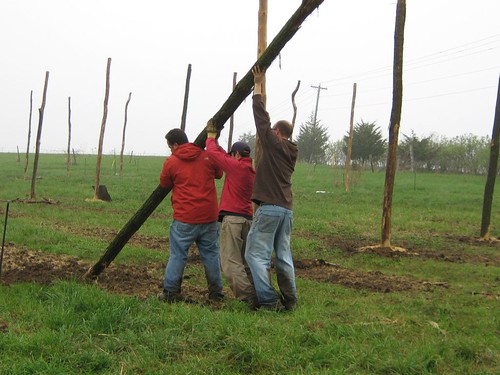
Raising the trellises.

Look for Simple Earth Hops to elaborate more on the details of a Grand Opening hopyard tour/beer tasting event in late July, 2010 and for the hopyard harvest tour & beer tasting in early Fall, 2011.

Funding for Simple Earth Hops is provided in part by a 2009 NCR-SARE (USDA) grant. This small-scale commercial hopyard has been established by the Sweeny family of Dodgeville, Wisconsin who slowly grow earth friendly hops for local brewers with similar locavore ethics.

simple-earth-2
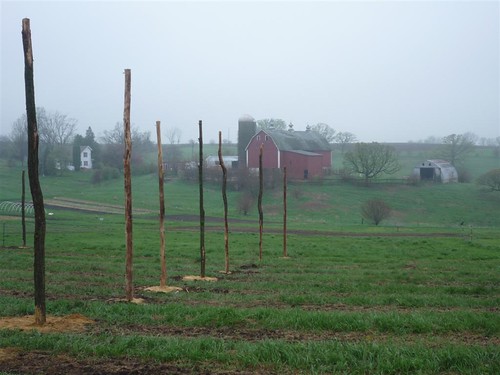
The hop trellises on Greenspirit Farms.

{ 3 comments }

Well, folks, it’s all over. The deed is done, indeed. The deal for InBev to acquire Anheuser-Busch has been agreed upon in principle, for nearly $50 billion. It’s not really over, of course, because it still has to wind its way through the federal approval process. But for all intents and purposes, it’s probably just a matter of time now that the two parties have reached an accord.

The Wall Street Journal, Reuters, and the Financial Times are all now reporting that the parties have agreed to a deal. The new entity’s board will contain two A-B people, most likely including August A. Busch IV. Sadly, they decided to ignore my suggestion of calling the new company InBusch and went instead with the relatively boring and far too long name, Anheuser-Busch InBev.


{ 0 comments }

World’s First All-Rye Beer

by Jay Brooks on January 23, 2008 · 10 comments

in Beers,Breweries,News,Reviews

Most rye beers that I’m aware of use only around 10-20% rye with the rest being the more traditional barley. I’ve always liked that little something that rye adds to the beer and was in heaven over ten years ago during that year or so when it seemed like almost everybody was making a rye beer. These days, rye beers are a bit more on the rare side, though there’s still a few hundred being made in North America.

There is also a German style of beer, Roggenbier, which uses at anywhere from 25-65% rye malt, depending on whose account you accept. The German Institute says “half barley malt and equal portions of wheat and rye malts” are used while the BJCP guidelines say “Malted rye typically constitutes 50% or greater of the grist (some versions have 60-65% rye). Remainder of grist can include pale malt, Munich malt, wheat malt, crystal malt and/or small amounts of debittered dark malts for color adjustment.” Nothing against the BJCP, but I’m more inclined to to accept the version of the German Beer Institute since it’s an association of German breweries and related institutions.

So those are the common rye beers, what about using 100% rye? Well, probably the first and foremost reason you never hear about all-rye beers is that it is so difficult to brew with. Rye has no husks, like barley does, and that means it’s extremely difficult to sparge (which is spraying hot water on the spent grain) as without the husks it turns to a thick porridge or concrete.

There was a Irish brewer, Dwan Tipperary Brewing, who closed a few years back, who made a beer called All Rye Beer or All Rye Paddy at least once. But there’s no information as to whether it really used 100% rye malt, apart from that suggestive name. I’ve also come across an account of a homebrewer making an all-rye beer. MoreBeer’s forum also has a topic dedicated to why this is a difficult task.

So perhaps I should change the title to the world’s only currently made commercial example of a 100% rye beer, but it doesn’t sound very sexy that way, now does it? At any rate, Bear Republic Brewing in Healdsburg, California on Friday, debuted what they believe to be the world’s first 100% rye beer. I was on hand to try some of the first keg of their new Easy Ryeder and talk with the brewers about it.

But let’s talk about the beer itself first. It had a dull copper color, slightly hazy, with a decent tan head. The nose was a little restrained, with some bready aromas, a touch of hops and, naturally, some rye character. But it was surprisingly smooth, mild and very drinkable, an easy ryeder indeed. I was surprised to learn it was 5% abv because it seemed more like a session beer to me, and I would have guessed a little lower than that. I thought the rye flavors might overpower the beer, but that’s not the case at all. It is light and refreshing throughout with just enough hop character (at 30 IBUs) for balance. It finishes with just a bit of rye flavor lingering, before dissipating quickly and cleanly. Again, I think my expectations were that if beer with just a fraction of rye tends to give it strong rye flavors and character, that with all rye it would be even more so, but that wasn’t really was not what happened. Instead, they managed to create a unique, ultimately very drinkable beer that in temperament seems closer to a wheat beer, but with the more barley-like flavors of rye.

The beer went through several trials before getting things right. To combat the wort turning to concrete, they had to watch the temperature fluctuations much more closely than usual (no more than 3-5 degrees or it turned to stone), and with bags of rice hulls added to make up for the lack of husks in rye malt. It was, of course, difficult to get the malt to break down and early test batches, if they didn’t become concrete-like, were still very thick and viscous and even hard to remove from the lauter tun at all. Even so, the first test batch that yielded drinkable results was the color of bad gravy, having a dull gray tint to it from all pale rye malt. Apparently it tasted fine, but who among us wants a beer the color of dishwater? Twenty-five pounds of chocolate rye malt was then added to give it the much more appealing color it exhibits today. The hops they used are Chinook and Saaz. It took four tries to get it right, as there really aren’t any manuals for tis kind of beer. Was it worth all that effort? I think so, as the results are quite tasty and in some ways different from anything else I’ve tried. It certainly must have been a learning experience and it’s interesting to see that it is possible on a commercial level to use only rye. It’s quite an achievement, and if you love rye — or just brewing innovation and creativity — you owe it to yourself to get up to Healdsburg to try this new beer.

Bear Republic brewers Rich Norgrove, Jode Yaksic, Peter Kruger and Ray Lindecker. Jode, according to Rich, had the most to do with creating the Easy Ryder, from doing the research, test batches and coming up with the name.


{ 10 comments }

The Yeast of Immortality

January 14, 2008

Though it appears the focus of this new discovery, at least as reported in Live Science, is mostly about the vain hope of immortality, it does involve beer yeast. Research scientists from USC “have extended the lifespan of yeast, microbes responsible for creating bread and beer, by 10-fold. That’s twice the previous record for life [...]

Keep Reading →

Session #10: Winter Beers

December 7, 2007

This month’s Session, sponsored by Barley Vine, is Let It Snow: Winter Beers. Of all the seasonal beers, the ones released during winter are my favorites; the ones I look most forward to sampling each and every year. The category of winter beers lacks the tradition of, say for example, oktoberfest beers or springfest beers, [...]

Keep Reading →

Costa Rica Just Says No to Swiss Beer

December 5, 2007

I guess it’s good to know that other country’s bureaucracies are every bit as irrational as my own, especially when dealing with the regulation of alcohol and other so-called “controlled” substances. It seems the Latin American country of Costa Rica is having issues with a Swiss beer, Hanfblute, because it contains the essence of marijuana [...]

Keep Reading →

Van’s Ned Flanders

December 4, 2007

John Foyston had a nice piece in the Oregonian yesterday about one of my favorite — and perhaps most underrated — beers to be poured at the Oregon Brewers Festival. It was certainly my favorite the year it appeared, 2006, and as this story attests, people are still talking about it. The beer is Ned [...]

Keep Reading →

Busch Model Train Accesories

November 18, 2007

After the official part of my recent German beer trip ended, I had a few days to myself before heading back across the pond. So one day, Peter Reid (who publishes Modern Brewery Age) and I took a Deutsche Bahn train to nearby Salzburg, Austria to visit the original Trumer Brauerei (more about that trip [...]

Keep Reading →

Greenpeace Asserts GE Rice Used in Bud

October 8, 2007

Greenpeace today released the results of an independent analysis of rice at an Arkansas mill which supplies rice to Anheuser-Busch for use in their beer. The lab found genetically engineered rice in 75% of the samples. From the press release: An independent laboratory, commissioned by Greenpeace, detected the presence of GE rice (Bayer LL601) in [...]

Keep Reading →

Kirin Discovers Anti-Oxidizing Yeast

August 16, 2007

Kirin Brewery, along with the Keio University Institute of Advanced Biosciences have announced the discovery of new yeast strain found by analyzing the metabolic byproducts that brewer’s yeast synthesizes. What they found was that brewer’s yeast creates large quantities of “hydrogen sulfide when processing a tiny number of metabolites of the amino acid asparagine.” The [...]

Keep Reading →

California Redefines Distilled Spirits

August 14, 2007

California’s Board of Equalization took the surprising move today (by a one vote margin) of redefining distilled spirits using some very odd language. The new definition, which takes effect in July 2008, was re-written in an effort by neo-prohibitionist groups to tax FMB’s (flavored malt beverages, a.k.a. alcopops or malternatives) at a higher rate under [...]

Keep Reading →

Session #6: Fruit Beer

August 3, 2007

This has been a brutal month for me, in the last few weeks I’ve been to Denver, Portland and am writing this from Mammoth Lakes, California, where I’m attending a CSBA meeting and beer festival. So the Bulletin has suffered, but I didn’t want to miss this month’s Session because it’s an idea that I [...]

Keep Reading →

Bravo For the New Hop

July 13, 2007

Countless new hop varieties are created every year, so many in fact that they are given only a number. A hop has to really prove itself worthy before it actually gets a name. For example, Hop #01046 began its life in Prosser, Washington at the Golden Gate Roza Hop Ranches. During the summer of 2000, [...]

Keep Reading →