Cenosillicaphobia

beer-word
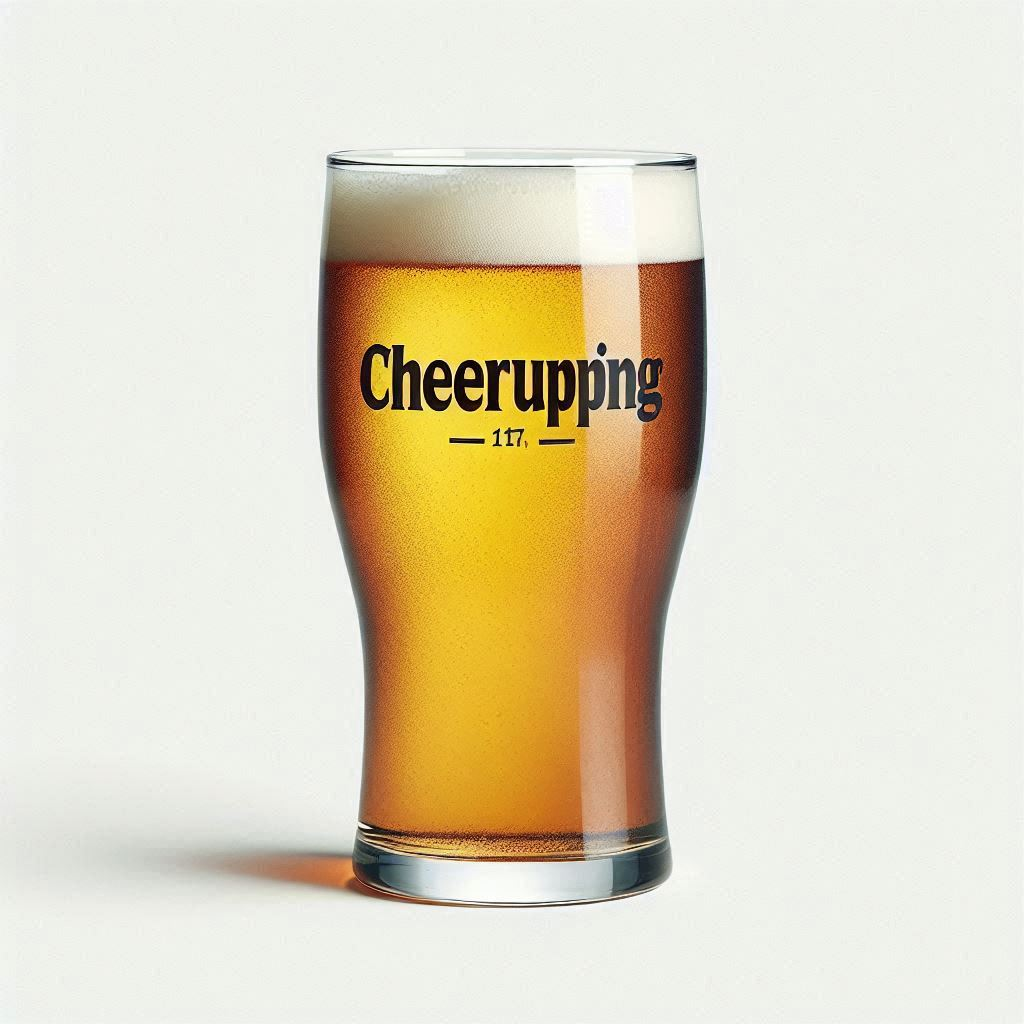
Here’s an interesting word I’ve been seeing around the internet: Cenosillicaphobia. According to some sources, the Fact-Archive and the Urban Dictionary, the word means “the fear of an empty glass,” as “commonly experienced by drinkers.”

Although I can’t find it listed in any of my regular dictionaries, it seems to fit at least. It’s not in either of my two unabridged ones, including the Webster’s International 2nd edition, which my librarian sister-in-laws tells me is the gold standard. The closest word in my O.E.D. is “cenotaph,” which means “empty tomb.” So along with “sillica” for glass, the word “cenosillicaphobia” seems to fit the meaning, the “fear of an empty glass.”

So look at the photo below. If seeing the beer glass empty causes you to shudder involuntarily, you probably have cenosillicaphobia. Luckily, a cure is as close as the nearest keg, can or bottle.

empty-beer-glass

Join Me On A Brannigan & Get Bibesy?

beer-word
I stumbled onto yet another list of old words, this group on the Matador Network. 20 obsolete English words that should make a comeback includes some pretty cool words, like Scriptitation, which I think I engage in every single day. Scriptitation is “[a] 17th-century word meaning ‘continual writing’” But two in particular caught my eye as beer-related.

Brannigan

Noun – “A drinking bout; a spree or ‘binge’” – Brannigan was originally a North American slang word, but it is now rarely used. “Shall we go for a brannigan on Friday?” can be a more sophisticated way to discuss such activities.

I can’t imagine the root of that, unless of course there was some gut named Brannigan who was well-known for binge drinking.

Bibesy

Noun – “A too earnest desire after drink.” – “Bibesy” may have been completely made up in the 18th century and it’s unclear whether it ever made it into common use, but it could easily be used today: “Wedding guests waited anxiously for the bar to open; bibesy should be expected after such a long, dull service.”

Not sure about that one either, but there were a few other gems, too. “Twitter-light,” for example, once meant “a romantic way to refer to the hours as the sun goes down,” but I suspect would have a completely different meaning. Then there’s something I’m often accused of: Perissology. “Perissology” means the “Use of more words than are necessary; redundancy or superfluity of expression.” I completely disagree and will write a short, 10,000-word rebuttal on why it’s not true.

I’m not sure I’d vote for either of these beer words to make a comeback, but it’s always fun to find them.

Cage, Agraffe Or Muselet?

muselet
Most of you already know I’m a freak for obscure words and language more generally, so I’ll always take a look at a list of curious words. One that I recently was looking over at Mental Floss included such gems as a dringle, which is “to waste time by being lazy,” perfectly describing what I was doing when I discovered that.

But the other word was agraffe, which they defined as being “the wire cage that keeps the cork in a bottle of champagne.” I’d heard the word muselet used before, usually in connection with champagne, but many brewers today also use them, though most people I know refer to them more simply as a “cage,” as in a “cage and cork,” or occasionally a “cage and crown.”
agraffe
But agraffe is a new one on me. A quick search reveals that it’s more often used to refer to a part of a piano, “a guide at the tuning-pin end of the string, screwed into the plate, with holes through which the strings pass.” Most dictionaries I looked at didn’t mention the cage usage at all. Champagne.net does offer this definition.

Literally means “staple” (as in Swingline); in Champagne, this is a large metal clip used to secure the cork before capsules were invented, typically during the second fermentation and aging in bottle. A bottle secured with this clip is said to be agrafé.

Notice they also spell it with only one “f.” Wordnik, in their listing under Century Dictionary does list this usage, as the fifth definition. “n. An iron fastening used to hold in place the cork of a bottle containing champagne or other effervescing wine during the final fermentation.

Muselet doesn’t show up in most standard dictionaries either, but it is defined, at least, by Wikipedia:

A muselet is a wire cage that fits over the cork of a bottle of champagne, sparkling wine or beer to prevent the cork from emerging under the pressure of the carbonated contents. It derives its name from the French museler, to muzzle. The muselet often has a metal cap incorporated in the design which may show the drink maker’s emblem. They are normally covered by a metal foil envelope. Muselets are also known as wirehoods or Champagne wires.

Neither word is included in the “Dictionary of Beer & Brewing” (2nd ed.), but then “cage” isn’t listed in it, either.

So does anybody know? Those of you in the wine world, is either term in common usage, and, if so, is one preferred over the other? Or are they generally only used in France, perhaps? It seems more likely that they were originally borrowed from the French into English, but have since fallen out of use, or perhaps their usage lingers only in the technical jargon of Champagne and sparking wine. Anyone, anyone? Bueller.

muselet_diagram

Zumologists In The Zythepsary

history
Here are some obsolete words that need to be brought back. We all know zymurgy is “the branch of applied chemistry dealing with fermentation, as in winemaking, brewing, the preparation of yeast, etc.” not to mention a magazine, and zymology “is the study of zymurgy, the area of applied science related to fermentation. It deals with the biochemical processes involved in fermentation, with yeast selection and physiology, and with the practical issues of brewing.” So far so good, but have you ever heard of these?

Zumologist
A brewer. Webster’s 1828 has this definition. “n. One who is skilled in the fermentation of liquors.” It’s also an alternate form of “zymologist.” And one dictionary claims this as its origins. “fr. Gk zume, to ferment + -ologist
Zumology
Webster’s 1828 has this definition. “n. [Gr., ferment; to ferment; discourse.] A treatise on the fermentation of liquors, or the doctrine of fermentation.
Zythepsary
A brewery, according to “Webster’s Revised Unabridged Dictionary, published 1913 by C. & G. Merriam Co.” Apparently it’s from “Ancient Greek ζῦθος (zuthos, ‘barley beer’) + ἕψω (hepsō, ‘boil’)
One 1835 dictionary lists the word thusly:
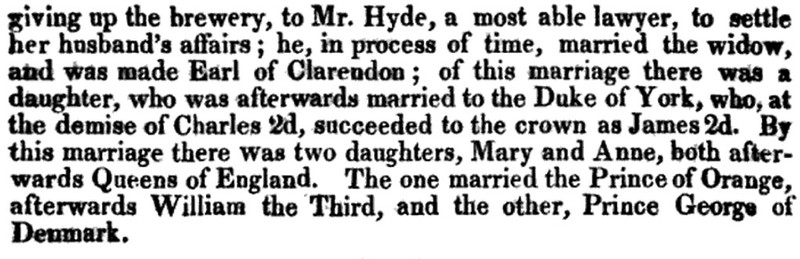
ZYTHEPSARY, zidi-iVser-4, n. A place for brewing ; a brewery ; a brewhouse. A pronouncing and explanatory dictionary of the English language: Page 740 James Knowles — 1835.”
And case you’re curious here’s how to pronounce zythepsary.
Zythum
The same 1835 dictionary defines zythum as “n. A beverage ; a liquor composed of malt and corn. A pronouncing and explanatory dictionary of the English language: Page 740 James Knowles — 1835.”

Those are some pretty cool words. Come on people, let’s starting using those again. Who doesn’t want to go for a Zythum, made by a Zumologist at your local Zythepsary?

Here’s a passage by Charles Dickens in the weekly Journal “All the Year Round” using the word zythepsary. It’s from 1861, when the word was already uncommon, apparently.

“But the oddest things of all are to be found in the dictionaries. Why they are all kept there no one knows; but what man in his senses would use such words as zythepsary for a brewhouse, and zumologist for a brewer; would talk of a stormy day as procellous and himself as madefied; of his long-legged son as increasing in procerity but sadly inarcid, of having met wilh much procacity from such a one; of a bore as a macrologist; of an aged horse as macrobiolic; of important business as moliminous,and his daughter’s necklace as moniliform; of some one’s talk as meracious, and lament, his last night’s nimiety of wine at that dapatical feast, whence he was taken by ereption?”

And this Pabst ad from 1897 refers to the Pabst Zythepsary.

Pabst-bock-1897

And here’s science fiction writer Isaac Asimov using zymologist in 1962′s “The Caves of Steel.”

“‘I’m a zymologist, if you don’t mind.’

‘What’s the difference?’

Clousarr looked lofty. ‘A chemist is a soup-pusher, a stink-operator. A zymologist is a man who helps keep a few billion people alive. I’m a yeast-culture specialist.’”

I’ve heard Yeast-wrangler before, but not that one. That’s also pretty awesome. I’d love to start seeing that on brewers’ business cards: “Yeast-Culture Specialist.”

asimov-caves-of-steel

“Craft Beer” Added To Webster’s Dictionary

webster
The interwebs are all abuzz with the news this morning that the term “craft beer” has been added to the Merriam-Webster Dictionary. I know very few people who are happy with the term already, so this is probably not going to help. The definition they chose doesn’t seem to quite work. I know they were trying to generalize a term that itself has struggled to be defined, and there are already many differences of opinion about what the term means, so it was no easy task. Even so, it seems like a fail. It will apparently be in the next print edition of the dictionary, but has already been added online. Here’s the entry:

craft beer noun

Definition of CRAFT BEER

: a specialty beer produced in limited quantities : MICROBREW

First Known Use of CRAFT BEER

1986

That definition suffers from the vagueness of what it means to be “a specialty beer” — which itself needs to be defined — and that it includes only beers that are brewed “in limited quantities.” As opposed to those beers in unlimited quantities? Does that mean year-round beers cannot be considered “craft beer?” Probably not, but my point is this is a pretty inelegant attempt at defining craft beer. It’s simple, at least, but hanging what it means to be a craft beer on it being “special” and “in limited quantities” is not exactly doing anybody any favors.

But other dictionaries have also tackled “craft beer” with mostly the same uninspired results. Here’s a few others.

American Heritage Dictionary: A distinctively flavored beer that is brewed and distributed regionally. Also called craft brew, microbrew.

Dictionary.com: an all-malt or nearly all-malt specialty beer usually brewed in a small, regional brewery.

Oxford English Dictionary: a beer with a distinctive flavour, produced and distributed in a particular region.

Stan had a post a couple of years ago about Craft beer: The 1986 definition that explores its origins. A lot of terms have come and gone, picked up and fallen out of favor, and there’s a twitter discussion swirling about what the next term will be, with Ray Daniels suggesting “Artisan Brewer” as the “next big thing.” Here are a few that have been, and continue to be, used to describe beer that’s not “good old macrobrew made in vats the size of Rhode Island” (however we define that, too), and at least one suggested this morning just in jest:

  • Artisan Beer
  • Authentic Beer
  • Boutique Brewer
  • Cool Brewer
  • Cottage Brewery
  • Craft Beer
  • Craft Brew
  • Flavor Beer
  • Hand-Crafted Beer
  • Handmade Beer
  • Microbrewery
  • Nanobrewery
  • Picobrewery
  • Real Beer
  • Regional Brewery
  • Small Batch Beer
  • Small Brewer
  • Specialty Beer
  • True Beer

Did I miss any? Are there any you think should be added for consideration? What do you think we should call this stuff we all love? Maybe just call it “beer” and be done with it?

Alcoholidays

beer-word
I’ve never been sure if I love words because I’m a writer, or if I became a writer because of my love for words. Either way, as long as I can remember I’ve been fascinated by words, their origins, their shades of meaning, the way they roll off the tongue, their rhythm … well, you get the idea. I’m a word freak. So I’m always thrilled when I discover a new one, or at least one new to me.

This one’s a portmanteau, which is essentially a word that “is a combination of two (or more) words or morphemes into one new word.” “Blog” is one you probably use every day. Other examples include “breathalyzer,” “brunch,” “camcorder,” “ginormous,” “motel,” “smog” and “spork.” Some catch on, while others don’t quite make it into everyday usage. There are a lot of portmanteaus in computing and the internet, and Wikipedia has a long list of them.

One of my favorite magazines is Mental Floss, which is a great one for feeding your inner trivia geek. They recently had a blog post entitled 12 Really Forced Portmanteaux That Didn’t Catch On that included some that you can easily see why they didn’t become popular. Words like “locorestive” (Inclined to remain in one place) or “saccharhinoceros” (A lumbering person with an excessively effusive or affectedly sentimental manner) don’t exactly roll off the tongue. Some of the portmanteaus on the list are downright funny.

But here’s the one that caught my eye: alcoholiday, combining alcohol and holiday. It was defined as “leisure time spent drinking” when it first “appeared in a 1913 New York Times story titled ‘New Arrivals in Portmanteau Land.’”

It may not be the most elegant word, but there are certainly holidays that fit that description to a tee. St. Patrick’s Day, Cinco de Mayo and New Years’ Eve seem obvious alcoholidays. And our Independence Day, Labor Day, Memorial Day and even Halloween could easily be included.

Maybe it’s time to bring back alcoholiday?

Comfort Food & Beer

comfort-food-wh
Friends and regular Bulletin readers will already be aware of my obsession with comfort foods. Almost all of my favorite foods fall into that category: frites, potato chips, bacon, shepherd’s pie, Monte Cristo sandwiches, cheese, peanut butter pie and pretty much anything fried. So a few weeks ago, when I got a call from my friend, brewer Brian Hunt from Moonlight Brewing, I was especially susceptible to an idea he had that craft beer, too, should be considered a comfort food in its own right. I loved the notion immediately and we got together to talk about the idea over a few pints of comfort beer. The result of those discussions — plus some more research and conversations — was a feature I wrote that was just published online at the Brewer’s Association’s new CraftBeer.com, entitled Is Beer Comfort Food?

As a word nerd, I was fascinated to discover that the phrase is actually a fairly modern one, though there’s some disagreement as to its actual origin. The first use of the phrase appears to be in 1966, though it was an isolated occurrence and did not catch on at that time.

In “The Thin Book,” a 1966 work by ‘”a formerly fat psychiatrist’” named Theodore Isaac Rubin. The book’s ad copy read, ‘”Learn about ammunition foods, comfort foods and emergency foods.’” Reached in New York, Dr. Rubin recalls: ‘”I just made it up; I didn’t hear it anywhere. It means food that makes you feel good, that was always available and would help to sustain a diet.’” (“Ammunition foods” never made it into the canon.)

Likewise, Liza Minnelli (and I assume that yes, it was that Liza Minnelli) used the term in “Dieting Is All Well and Good— But Give Me ‘Comfort Food’!”, a piece she co-wrote with Helen Dorsey for Pennsylvania’s “Clearfield Progress’” Family Weekly section in July of 1972. That’s most likely why Wikipedia incorrectly identifies its origin as 1972.

But it appears to be in the latter half of the 1970s that the concept of comfort food began to catch on. The Merrian-Webster Dictionary lists its first use as 1977, making it roughly the same age as craft beer itself. Merriam-Webster added it to their dictionary the same year, although it wasn’t listed in the prestigious Oxford English Dictionary until 1997.

In the May 1978 issue of Bon Appétit, an article entitled M.F.K. Fisher on Comfort Foods appeared, somewhat solidifying the term, though some point to a March 1985 column by New York Times food writer Marian Burros, “Turning to Food For Solace.” William Safire credits her for popularizing the term, writing in 2003:

Burros was largely responsible for the term’s popularization. In a 1985 Times column titled ‘”Turning to Food for Solace,’” she wrote that the restaurateur George Lang, owner of New York’s Café des Artistes, “said his comfort foods ‘are foods I can eat any time, whether I’m full or not…. Comfort foods are the perfect tranquilizer.’” Lang said, ‘’My whole childhood is brought back with goose liver,” and the sophisticated food columnist revealed her own nostalgia for spaghetti and meat sauce or a tuna-fish sandwich.

Word expert Barry Popik disagrees and in his blog The Big Apple has undoubtedly the best account of the various claims to the term’s origins.

But back to the original question, is beer a comfort food? Brian Hunt and I think so, and so did several other brewers I spoke to. To find out why we think so, check out Is Beer Comfort Food? on CraftBeer.com.

Top Ten Tuesday: Top 10 Drunk Words


Last month, I tackled the Top 10 Drunk Phrases, so now I thought I’d look at the single colloquial words for being drunk. So for my 17th Top 10 list that’s what we’ll do, so I can keep milking the Drunk Words, a project I worked on several years ago and finally got back on line last year. Again, one of things I absolutely love about the English language is just how many words we have for the same thing, especially colloquialisms, better known as slang. If you accept the anthropologist theory that what’s important to a culture can be deduced by the number of words it has for certain aspects of its culture (which I don’t, BTW) then the nearly 2,000 words for being drunk would say quite a bit. Only sex and parts of the body seem to have more. Anyway, my choices are based simply on the way the words sound or some other ephemeral quality that I like, like cleverness or the pure unabashed silliness of the word. There are so many great drunken words to choose from, take a look at the list and let me know your faves. Anyway, here’s List #17:
 

Top 10 Drunk Words
 

Jazzed
Plastered
Wasted
Smashed
Hammered
Wobbly
Clobbered
Schnockkered
Blotto
Loaded


It was really difficult to keep the list to ten, and a great many colorful words were left on the cutting room floor. Here’s a few more that almost made the list:

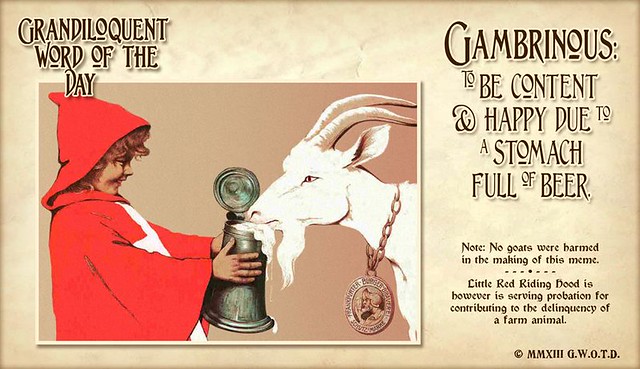
Cupshotten, Embalmed, Floored, Flummoxed, Gambrinous, Goofy, Implixlocated, Inebriated, Marinated, Oenophygia, Shipwrecked, Snoozamorooed, Tanked, Tight, Upholstered, Vulcanized, and Zonked.

Let me know your favorites, and if you see any you know of that are missing from the list, please post a comment and I’ll add it.


Also, if you have any ideas for future Top 10 lists you’d like to see, drop me a line.