Brookston Beer Bulletin

Jay R. Brooks on Beer

  • Home
  • About
  • Editorial
  • Birthdays
  • Art & Beer

Socialize

  • Dribbble
  • Email
  • Facebook
  • Flickr
  • GitHub
  • Instagram
  • LinkedIn
  • Pinterest
  • RSS
  • Twitter
  • YouTube

Powered by Genesis

Saint Arnold Takes on Texas

December 6, 2006 By Jay Brooks

Houston Brewery Saint Arnold, named for one of the patron saints of brewing, is trying to persuade the Texas legislature to change the state laws regarding the sale of beer at breweries. Under current law, breweries cannot sell packaged beer at the very place where it’s brewed and bottled.

CEO Brock Wagner said of his intentions, “if we succeed with our law change, [we’ll be] able to sell six-packs to people when they visit the brewery.” That doesn’t seem too unreasonable, but the strangeness of alcohol laws cannot be underestimated, nor can many state’s reluctance to take any progressive steps that could be interpreted as endorsing, supporting or — gasp — encouraging adults to engage in legally permissible activities. As a result of neo-prohibitionist agitation and activism, few alcohol laws have been relaxed or modernized in recent years. It will be interesting to see if Wagner and Saint Arnold can be successful.
Filed Under: Editorial, News Tagged With: Business, Law, Southern States

Costco Appeal Moved Up to March?

December 5, 2006 By Jay Brooks

Miller’s BrewBlog is reporting that the Washington State Liquor Board appeal of Judge Marsha Pechman’s ruling in favor of Costco earlier this year in the Costco Case has been moved up and will take place March 3-9, 2007. But a stay she imposed was supposed to give state lawmakers until May 1, 2007 to change Washington’s beer and wine laws through new legislation, so I don’t know what that will mean to those efforts.

I can’t find the order changing the schedule at the Ninth Circuit’s website, so I can’t confirm that’s what is happening. I have a call into the state’s Liquor Board to see if I can confirm the news from them and will update this post when I hear back from them.

Filed Under: News Tagged With: Business, Law, Washington

Anheuser-Busch to Import Corona in China

December 5, 2006 By Jay Brooks

Grupo Modelo, the makers of Corona, will be partnering with Anheuser-Busch (who owns 50% of non-voting stock in Modelo) in China. As of next month, January 2007, A-B will import Grupo Modelo beers throughout China.

Modelo also distributes Anheuser-Busch beers in Mexico and beginning shortly, will also bring Tsingtao to Mexico. Not surprisingly, A-B also owns a piece the Chinese brewer, too.

From the press release:

“This new partnership ideally complements the international strategy that Modelo has successfully implemented for several decades. We are very pleased with this association, which offers excellent long-term growth opportunities for Grupo Modelo’s brand portfolio in China, a very important market for our company,” stated Carlos Fernandez, chairman of the board of directors and chief executive officer of Grupo Modelo.

“The popularity and high quality of Corona Extra makes it an excellent complement to our Budweiser and Harbin beers,” said August A. Busch IV, president and CEO of Anheuser-Busch Cos. Inc. “Corona Extra competes in the super-premium segment of the market, which is experiencing strong growth. With our continued success in this segment, and our 10 years of sales, marketing and distribution experience, we expect to significantly increase the sales of Corona.”

Filed Under: News Tagged With: Asia, Business, International, Press Release

Peak Organic Peaks With 12-Packs

December 2, 2006 By Jay Brooks

Jon Cadoux, founder of Portland, Maine’s Peak Organic Brewing announced the addition of 12-packs and kegs. Twelve-packs will be released for their Pale Ale as well as a variety pack containing four bottles of each of their three current styles: pale ale, amber ale and a nut brown ale.

From the press release:

“Peak Organic customers enjoy celebrating the great moments of life with family and friends,” said Cadoux, whose Peak Organic web site is filled with customer photos and stories. “We are responding to increased demand by offering 12-packs and draft. Peak on draft is especially popular in restaurants that are very focused on high quality ingredients.”

One of America’s very first organic beers, Peak Organic is made with the highest quality ingredients and is characterized by a distinctively refreshing taste. Peak is available in three flavors: Pale Ale, complex and hoppy; Nut Brown Ale, smooth with a nutty finish; and Amber Ale, lively with a subtle toasted character.

Bottled in Portland, Maine, Peak Organic is made with barley and hops that are grown without toxic and persistent pesticides and chemical fertilizers. “This process makes our beer better tasting and more enjoyable, both for consumers and for the planet,” said Cadoux.

Organic beer is well positioned for growth. Organics has become a $13 billion industry and represents the fastest growing segment of America’s food and beverage category.

Jon Cadoux, founder of Peak Organic Brewing in Portland, Maine, from an AP story on MSNBC in July.
(Photo by Pat Wellenbach / AP)

Filed Under: Beers, News Tagged With: Business, Eastern States, Organic, Press Release

Canadian Brewery to Donate Beer to Compatriots in Afghanistan

December 2, 2006 By Jay Brooks

The Steam Whistle Brewery, of Toronto, Canada, has announced its employees have decided to send a week’s worth of their beer rations, an employee benefit, to Candian soldiers stationed in Afghanistan. The company has stated that they’ll match the employee donations. According to the The Canadian Press, “troops are allowed to have liquor on the base three times during the year, including Christmas,” even though as a Muslim nation beer is hard to come by.
 

Canadian troops will receive limited edition Steam Whistle pilsner holiday twelve-packs like the one pictured here.

Filed Under: Just For Fun, News Tagged With: Canada, International

The Santa Hypocrisy

December 2, 2006 By Jay Brooks

shelton-brothers
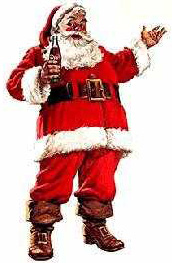
Anybody want to venture a guess where our modern image of Santa Claus comes from? It’s not the church. It’s not from literature. It’s not from the art world. The image of Santa Claus that generally springs to mind was created by illustrator Haddon Sundblom in 1931 for the Coca-Cola company.

santa-coke
Haddon Sundblom’s illustration of Santa Claus for his client, Coca-Cola, painted in the 1930s.

Santa Claus’ origins as we know him today in the U.S. stem from a variety of sources, both pagan and religious. While some urban legends and apparently serious accounts claim that Coca-Cola created Santa, Snopes has debunked that and I want to be clear that that’s not what I’m suggesting, either. Our Santa evolved over time, though most accounts of his modern personage start with Clement C. Moore’s 1822 poem “An Account of a Visit from St. Nicholas” although most people know it by the first line, “Twas the night before Christmas.” Moore fixed the number of reindeer at eight and came up with the names we know today (minus Rudolph, who was added much later in 1938). And like many facets of our melting pot amalgamated society, we freely borrowed from different cultures and Santa continued to evolve as Christmas became increasingly secularized and commercial. Of course, our version of Christmas, including Santa Claus, is now exported around the world.

So look at Sundblom’s image. That is what most of us think of if pressed to picture Santa Claus in our mind. If you look at drawings and paintings of Santa Claus, Saint Nicholas, Kris Kringle and Father Christmas before that time and in other cultures, you’ll see flowing robes of blue, green and other colors. You’ll see a variety of beards or even no beard. You’ll see different headdresses, staff’s, and other symbolic implements and accessories. My point is that the American version of Santa Claus is our creation and has its roots in crass commercialism, which began at least seventy-five years ago.

Today Santa Claus is used to sell everything under the sun from cigarettes to soda pop. Why bring this up? What does it have to do with beer? I mention this because once again several states will not approve beer labels that depict Santa Claus on them. These states — this year so far it’s New York and Maine — claim that showing Santa Claus on the label “might appeal to underage drinkers,” “the Christmas themes … would appeal to children,” and are “undignified and improper.” That last one, from Maine, is one of fourteen mostly ridiculous standards such as “Advertisements of liquor shall not contain any undignified or improper illustration.”

Setting aside the label itself for the moment, let’s just talk about the hypocrisy in these state’s assertions, that it might somehow make underage kids want to drink beer. First of all, what age group believes in Santa Claus? I know it varies, but let’s assume that it’s under ten, which seems to be pretty common. At that age, when Santa is something a child is drawn to, how many have an interest in beer? I’d say next to none. And if you’ve done your job as a parent, your kids would know the difference between an adult drink and one they’re allowed to have. Alcoholic beverages, when they’re even allowed to be sold where children are — like the more enlightened states that allow them to be sold in grocery stores and other general retail outlets — are still segregated together and kept separate from soda, juice and milk. So unless you choose to take your kid down the beer aisle, then I’d say the average kid will be protected from accidentally seeing a beer label with Santa on it. As for older kids, let’s say an underaged kid is interested in buying a beer with Santa on the label. I’m pretty sure it would still be illegal for him to do so. It doesn’t become legal if the label is cute, does it? Did I miss another meeting? Children aren’t permitted to buy whatever appeals to them, are they? So why the hell are these states wasting their time on such utter non-issues? Beer is intended for adults and it’s labels should reflect that. Period. The fact that a minor might accidentally see the label does not and should not matter one whit. The state has no business trying to turn the world into such a kid-friendly place that no adult only things are permitted to be seen by those of us who are, in fact, adults. We should not all be forced to live like ten-year olds in order to “protect” our children. Not only is it impossible, but it’s not even desirable. Overly protected children grow up to be adults with no idea how to deal with controversy, differences of opinion or offense. We already see the effects of this as every subgroup of humanity cries foul whenever their point of view is not completely tolerated. The amount of insult that has led to fatal retaliation is staggering in the world. We need to live with our differences, not try to erase them or pretend they don’t exist.

And why every time a controversy of this kind surfaces, do the authorities conclude — with no evidence whatsoever — that cartoons are exclusively for children. The first newspaper cartoons were for adults and comic strips remained adult-themed for many years. The first animated cartoons were all made for adults. Back before television assumed its place of prominence as the altar of the living room, people went to the cinema far more often than today. And before the film began, they were treated to a newsreel and a cartoon. All of the early cartoons by Disney, Warner Brothers, MGM and the underrated Flesicher Studios were made for adults. Many adults still love cartoons today. I know that’s true because I’m one of them. In America, as usual, the 1950s saw fringe groups censor the violence and adult themes out of comic books with the creation of the “Comics Code” which made comic books suitable only for children until the 1980s, when companies started ignoring the Code and producing works for adults again. In Japan and France, and undoubtedly many other countries, comics for adults in the form of magazines, graphic novels and manga are a very popular medium for adults. In France, for example, the number one magazine is Metal Hurlant (Heavy Metal), which contains ongoing graphic stories for adults. In the U.S., the best-selling magazine is TV Guide. Some of the most popular Japanese films for adults today are animated, films like Akira. Adults there know the best directors and illustrators of anime the way we know football players. The point is that it’s absurd for our government agencies to assume that if it’s a cartoon image that it will automatically appeal to children more than adults, or that kids are the target. Adults love cartoons, too, and we should be allowed to see ones created specifically for us without fear that a child might see it, too.

But I also want to make one more bold assertion about this controversy. All things being equal, and if there were no minimum age to drink alcohol, it would probably be better for kids to drink a beer versus a soda. I know that’s not going to be a popular suggestion, but the fact is beer is healthier than the average soda, which is loaded with caffeine, sugar and all manner of chemicals. Take a look at the label. It reads like a chemistry experiment. I once read that there is so much sugar in a 12 oz. serving of cola that after drinking one, your body will crave additional liquids to dilute all of the sugar you just swallowed in the soda. This leads to you drinking even more soda — a great boon to the companies selling this swill — but a tragic health epidemic for the rest of us. And many schools now accept money from the major soft drink companies to put soda machines right there in school. That’s doing far more harm to our kids than beer is. So why aren’t Maine and New York (and the rest of the states) up in arms over Santa Claus being so closely associated with Coca-Cola or being used to sell cigarettes the way they are with beer? Simple, it’s not really about any concern over the kids. It’s about neo-prohibitionist agendas and the desire to keep alcohol away from everyone, using children as the excuse. [NOTE: I want to be clear that I’m not advocating that we should give beer to kids, just that in terms of protecting them from harm beer is probably less harmful than soda. It’s just an argument. Please, no more misunderstanding e-mails calling me the devil.]

But let’s get back to the labels.

All of the labels in question are imported by Shelton Brothers of Massachusetts. I’ve known Dan Shelton since he first called on me when I was the beer buyer at BevMo around ten years ago. He and two brothers, Will and Joel, import some of the best beers in the world. Just ask them, they’ll tell you. Dan has a much-deserved reputation for speaking his mind. He believes in the beers he sells probably more passionately than any other person I know. Shelton is now suing both states, New York and Maine, over this ridiculous label issue. So I’m certainly glad to see him fighting for his beers.

very-bad-elf

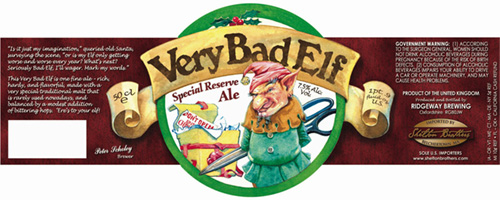
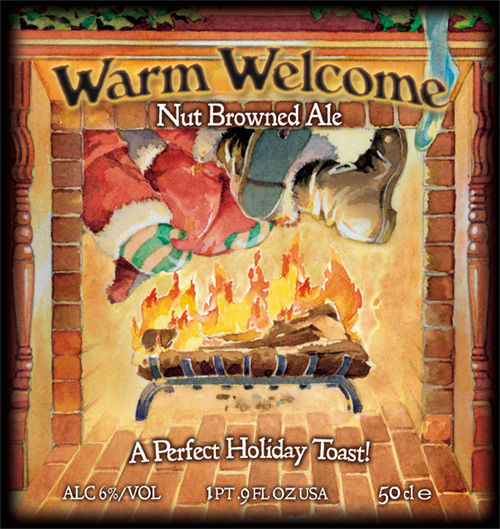
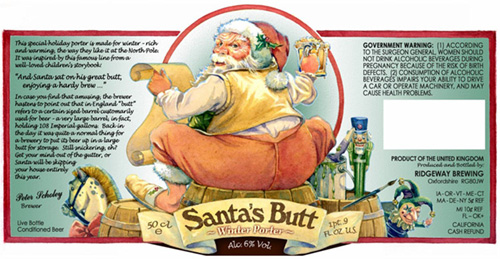
He’s had to fight this fight before, so he at least knows what he’s up against. He’s had similar difficulties with Missouri, New York, North Carolina and Ohio. Last year, the state of Connecticut initially wouldn’t approve the label for Seriously Bad Elf, but then backed off. This year, New York state is saying no to Bad Elf, Very Bad Elf, Criminally Bad Elf (a barleywine), Warm Welcome Nut Brown Ale, Santa’s Butt Winter Porter and Rudolph’s Revenge. The first five are all from a single brewery, Ridgeway Brewery in Oxfordshire, England, and the last is from Cropton Brewery in Yorkshire. Shelton Brothers have filed suit seeking a reversal of the State Liquor Authority’s decision along with damages and legal fees.

warm-welcome

Albany’s Times Union has an overview of the conflict in New York. And Stan at the Real Beer Blog has also weighed in, as has Joe Sixpack. Don Russell’s piece also has an excellent list of other Christmas-themed beers divided into those also depicting Santa Claus, local ones (he’s in Philadelphia), and some of his other favorites from around the country.

santas-butt

But for some reason (no pun intended) the one causing the most trouble is Santa’s Butt to the state officials apparently unaware that a “butt” is a brewing term for a measure of beer. A butt is the equivalent of 2 hogsheads, or 108 imperial gallons (129.7 U.S. gallons). Both New York and Maine are objecting to this label. In Maine, the local Civil Liberties Union has also taken up the fight saying “the beer labels are entitled to First Amendment protection.” According to an AP article, “[t]here is no good reason for the state to censor art, even art found on a beer label,” said Zachary Heiden, staff attorney for the MCLU.

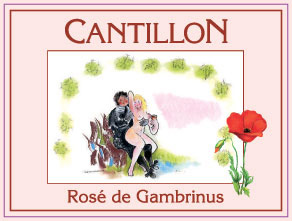
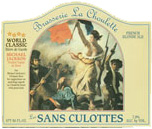
You might at this point be thinking, art? Yes, art, because in addition to Santa’s Butt, the State of Maine is also objecting to two other labels for non-Christmas beers, Cantillon Rose de Gambrinus and Brasserie Les Choulette’s Les Sans Culottes because, according to the state, “they show bare-breasted women.” Gasp!

cantillon-rose
Cantillon webpage for Rose de Gambrinus

The Cantillon label is from a painting by famous Belgian artist Raymond Coumans, who is a friend of Cantillon’s owners and created it specifically for the label. The subject is the legendary King of Flanders, who was a patron of beer and brewing. For a long while, here in California to be sold legally, the naked woman on the king’s lap had to wear a blue dress printed over her body. I cringe every time I think what prudes we are as a nation and how ridiculous we must seem to the rest of the civilized world.

The Associated Press has an overview of the Maine conflict, as does the more local Bangor Daily News.

la-choulette-sans

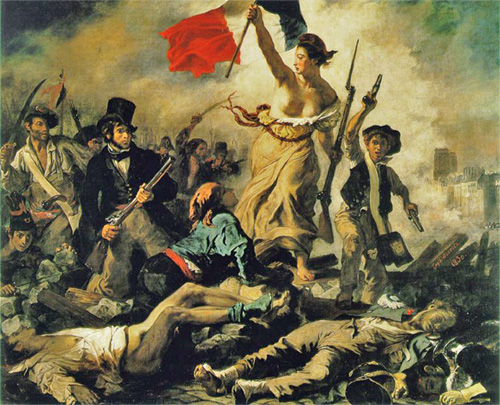
The other beer, Les Sans Culottes from the French brewery, Brasserie Les Choulette, is a Biere de Garde style beer. The label is a detail from the iconic Eugene Delacroix painting Liberty Leading the People that hangs in the Louvre. That the people of Maine might be offended by this image is, in and of itself, offensive to reason and common sense. That they feel their citizens need to be protected from seeing this image on a bottle of beer is ludicrous in the extreme.

This whole episode points out yet another oddity in our nation’s alcohol laws. Most states have this extra layer of the approval process that often denies basic First Amendment rights because the states claim some higher purpose, simply because it’s alcohol. Some of the reasons for the process make a modicum of sense, say, for example, so that labels are not misleading. But to bring in such subjective standards as decency, offensiveness or inappropriateness should never be a part of the procedure. And to pretend to be protecting “the children” is the flimsiest of reasons of all for a product already reserved for only adults. If the rationale is that by using an image that appeals to a child it will create a situation where nothing can stop a minor from obtaining the beer, then fine.

But there are already numerous — I would frankly say too many — impediments to insure alcohol can be obtained only by those adults entitled to buy it. Endless education and programs are created by retailers, distributors and the manufacturers to ensure it never happens, and the penalties imposed to a business when it does are often quite substantially punitive (certainly out of perspective with the actual harm done) so that no business wants to risk selling to a minor. Yet to people in organizations like MADD and other neo-prohibitionists that is still not considered to be enough. Not if there’s even one chance that a teenager might lay his hands on a bottle of beer. That is apparently worse than nuclear war in these people’s minds. I drank alcohol as a teenager, years before it was legal for me to do so. Am I an alcoholic today, a burden on society? Did I ruin my life? No. I am so f*&#ing sick of not being able to buy a beer or it being unreasonably inconvenient to do so just because we’re trying to keep it out of the hands of our kids. Why doesn’t the rest of the world have this problem, or at least doesn’t have it to this degree? Because the rest of the world isn’t quite as preoccupied with controlling the lives of everyone around them, foisting their own set of values on everybody else. Geez, this is pissing me off. Hey Dan, I think it’s time to open up some Christmas beers just so I can relax. Where’s my Santa suit.

delacroix-liberty

Eugene Delacroix’s famous painting Liberty Leading the People, which is apparently inappropriate for the people in the state of Maine to see.

Filed Under: Editorial, News Tagged With: History, International, Law

Ohio Bar Declared “Most Arrogant”

November 30, 2006 By Jay Brooks

Out of 46 bars nationwide that signed up for a promotion sponsored by Stone Brewing, Boston’s Bistro and Pub in Dayton, Ohio was declared “The Most Arrogant Bar in America” and will hold the title for one full year. In order to win, they had to sell more of Stone Brewing’s Arrogant Bastard beer than any of the other participants. They took all of the other beers they normally carried off of their taps, and sold over eighteen half-kegs or approximately 2,634 pints to win the prize.


UPDATE: Kevin from KevBrews also has a nice update on this story.

Filed Under: News Tagged With: California, Midwest, Promotions

InBev and AnBusch Hop Into Bed Together

November 30, 2006 By Jay Brooks


There aren’t too many details yet, but it was announced today that the long rumored — and just as long denied — distribution agreement between Anheuser-Busch and InBev will occur. What we do know so far is that A-B will take over distribution of all of InBev’s brands in the U.S., with the exception of Brahma and Labatts. I have already heard from InBev employees I know that they will lose their jobs as of the end of January next year. There’s no word yet how many people will be rendered redundant and how many, if any, will get to keep their jobs.

How this will effect the industry remains to be seen, but rest assured it will have a big impact on a variety of fronts. The deal is effective February 1, 2007.

Here are some early reports on the deal from a variety of sources:

  • Advertising Age
  • Anheuser-Busch Press Release
  • Brew Blog
  • Forbes
  • MarketWatch
  • Reuters
  • St. Louis Today


From the press release:

ST. LOUIS – Brussels (November 30, 2006) – Anheuser-Busch (NYSE: BUD) will become the exclusive U.S. importer of a number of InBev’s (Euronext: INB) premium European import brands, including Stella Artois®, Beck’s®, Bass Pale Ale®, Hoegaarden®, Leffe® and other select InBev brands, the two brewers announced today.

Effective February 1, 2007, Anheuser-Busch will import these premium brands and be responsible for their sales, promotion and distribution in the United States. These InBev brands, which had sales volumes of about 1.9 million hectoliters (or about 1.5 million barrels) in 2005, will be available to Anheuser-Busch’s U.S. wholesaler network where possible.

InBev’s Canadian brands, including Labatt Blue® and Labatt Blue Light®, as well as Brahma®, are not included in the agreement. Working closely with Labatt Breweries of Canada, InBev USA will continue to market and sell the Labatt and Brahma brands through a separate distribution network.

Terms of the agreement were not disclosed.

“This agreement gives us highly-valued brands that appeal to beer drinkers looking for sophisticated imports in their beer choices,” said August A. Busch IV, president and chief executive officer of Anheuser Busch Cos. Inc. “We live in a world with diverse cultures and lifestyles, and this provides additional variety for our consumers. These well-known import brands complement our company’s leading portfolio of American premium beers and enable our company to better compete. This is consistent with our stated strategy of enhancing our participation in the U.S. high-end beer segment.”

“By securing access to Anheuser-Busch’s world-class sales and distribution system, this agreement will enhance opportunities for U.S. consumers to experience the unique values of our premium European import brands, and further accelerate their growth,” said Carlos Brito, CEO, InBev. “This is another step in InBev’s mission to create enduring bonds with our consumers throughout the world.”

Doug Corbett, president of InBev USA, said: “InBev USA remains fully committed to the Labatt Canadian brands and to Brahma. These are great brands with a lot of potential and this agreement will allow us to focus on growing them in their markets.”

Filed Under: News Tagged With: Announcements, Business, National

Grupo Modelo to Build New Brewery on the Rio Grande

November 30, 2006 By Jay Brooks

According to today’s International Herald Tribune, Grupo Modelo, the Mexican brewer responsible for the abomination that is Corona, announced plans to build a new brewery by 2010. The new brewery will be built in Piedras Negras, a city located near the border of Texas, just across the Rio Grande River, in the Mexican state of Coahuila. The new brewery will be built to meet a growing demand for its flagship beer, Corona, and will add approximately 260 million gallons of capacity for the company.

Filed Under: News Tagged With: Business, International

Champagne vs. Beer

November 30, 2006 By Jay Brooks

When many people think of champagne and beer, they might conjure up the image of Miller High Life, which used to call itself “the champagne of bottled beer.” But many American craft and Belgian brewers are increasingly putting their high end beers in champagne bottles, with cork, cage and foil, just like the sparkling wine. It was an easy shorthand to convey that what’s inside the bottle is as fine in its own way as any wine and the size and seal and make them ideal for bottle conditioned beers which continue to ferment in the bottle. The small Belgian brewery, Malheur, has taken this idea one step farther and released three beers that evoke champagne in their very names: Malheur Bière Brut, Dark Brut, and Cuvée Royale. All three use what owner Emanuel De Landtsheer calls “à la méthode originale.”

De Landtsheer’s family had been in brewing for generations and he recently took up the family calling when he opened the Malheur brewery in 1997. Michael Jackson has a delightful story about the brewery’s origins at his online Beer Hunter. When he first debuted the Brut line, he also used the phrase, the “Veuve-Clicquot of the beer world” in his marketing of the beers. Veuve-Clicquot sued to stop Malheur from using their name in the advertising, along with the more general terms, “method traditional”, “brut” and “reserve.” The lower court ruled for the champagne maker but on appeal to the European Court of Justice, it appears that they will rule for Malheur. Malheur voluntarily stopped using specific reference to Veuve-Clicquot for their beer, and the high court will likely rule that the other three terms do not imply a specific product or competitor and as such are legal to use for beer. The official ruling has not yet been handed down, but Reuters is reporting that this is now the expected outcome because their rulings generally follow the advocate general’s opinion.
 

Filed Under: News Tagged With: Belgium, Business, Europe, Law

« Previous Page
Next Page »

Find Something

Northern California Breweries

Please consider purchasing my latest book, California Breweries North, available from Amazon, or ask for it at your local bookstore.

Recent Comments

  • Bob Paolino on Beer Birthday: Grant Johnston
  • Gambrinus on Historic Beer Birthday: A.J. Houghton
  • Ernie Dewing on Historic Beer Birthday: Charles William Bergner 
  • Steve 'Pudgy' De Rose on Historic Beer Birthday: Jacob Schmidt
  • Jay Brooks on Beer Birthday: Bill Owens

Recent Posts

  • Beer In Ads #5137: Bock Is Back… Look For It March 1st February 28, 2026
  • Historic Beer Birthday: John Holme Ballantine February 28, 2026
  • American Craft Beer Hall of Fame: 2nd Year Inductees February 28, 2026
  • Beer Birthday: Jeff Bell February 28, 2026
  • Beer In Ads #5136: American Bock Beer Is Being Served Today! February 28, 2026

BBB Archives

Feedback

Head Quarter
This site is hosted and maintained by H25Q.dev. Any questions or comments for the webmaster can be directed here.