Brookston Beer Bulletin

Jay R. Brooks on Beer

  • Home
  • About
  • Editorial
  • Birthdays
  • Art & Beer

Socialize

  • Dribbble
  • Email
  • Facebook
  • Flickr
  • GitHub
  • Instagram
  • LinkedIn
  • Pinterest
  • RSS
  • Twitter
  • YouTube

Powered by Genesis

Patent No. DE2751778A1: Beer Piping Cleaning System

May 23, 2016 By Jay Brooks

patent-logo
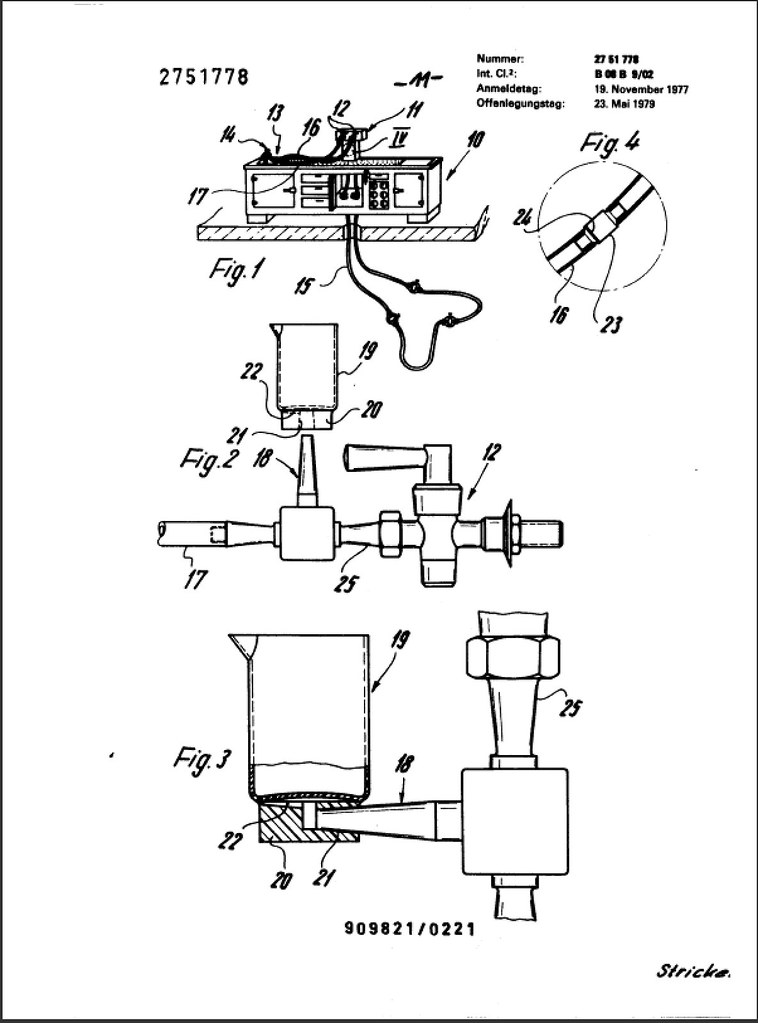
Today in 1979, US Patent DE 2751778 A1 was issued, an invention of Heinz Stricker, for his “Beer Piping Cleaning System — with suction nozzle for disinfectant inserted in tap water circuit.” Here’s the Abstract:

A system for the cleaning out of piping between bar barrels and the taps in a bar consists of a hose which is coupled between a water tap and a beer tap and includes a suction nozzle. A beaker with a disinfectant is attached to the nozzle so that the flow of water entrains the disinfectant. The piping in the cellar is disconnected from the barrels and coupled together so that the fluid can rise to another beer tap and out into a sink. After a certain retention time the whole is flushed out with clean water. This provides a chemical cleaning in addition to the conventional sponge cleaning.
2751778

Filed Under: Beers, Just For Fun, Politics & Law, Related Pleasures Tagged With: Bars, History, Kegs, Law, Patent

Patent No. 1959501A: Beer Dispensing Device

May 22, 2016 By Jay Brooks

patent-logo
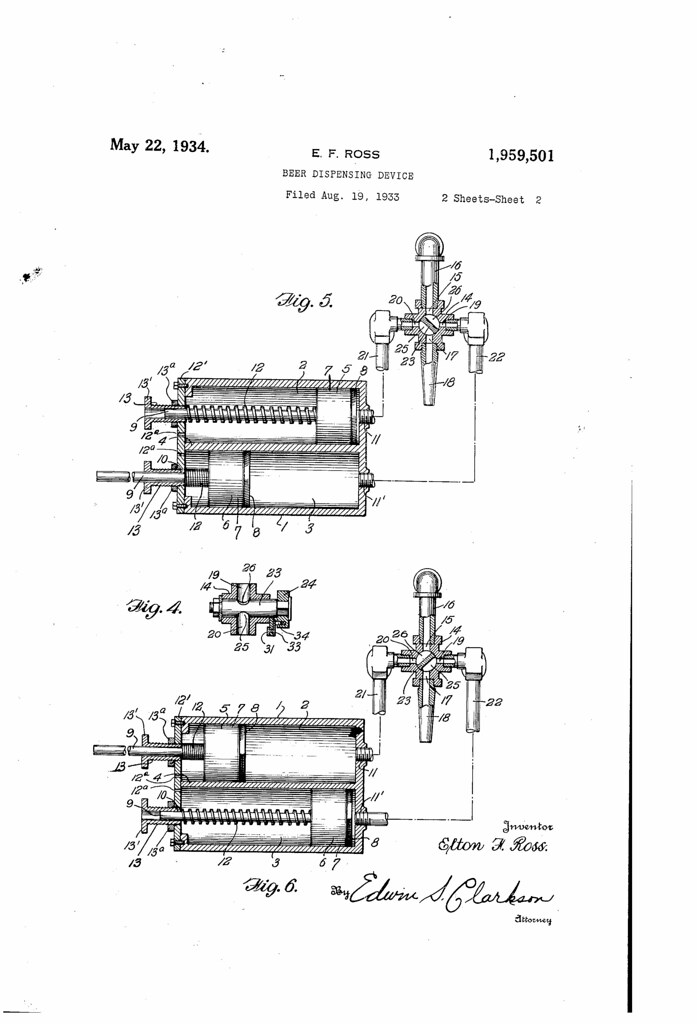
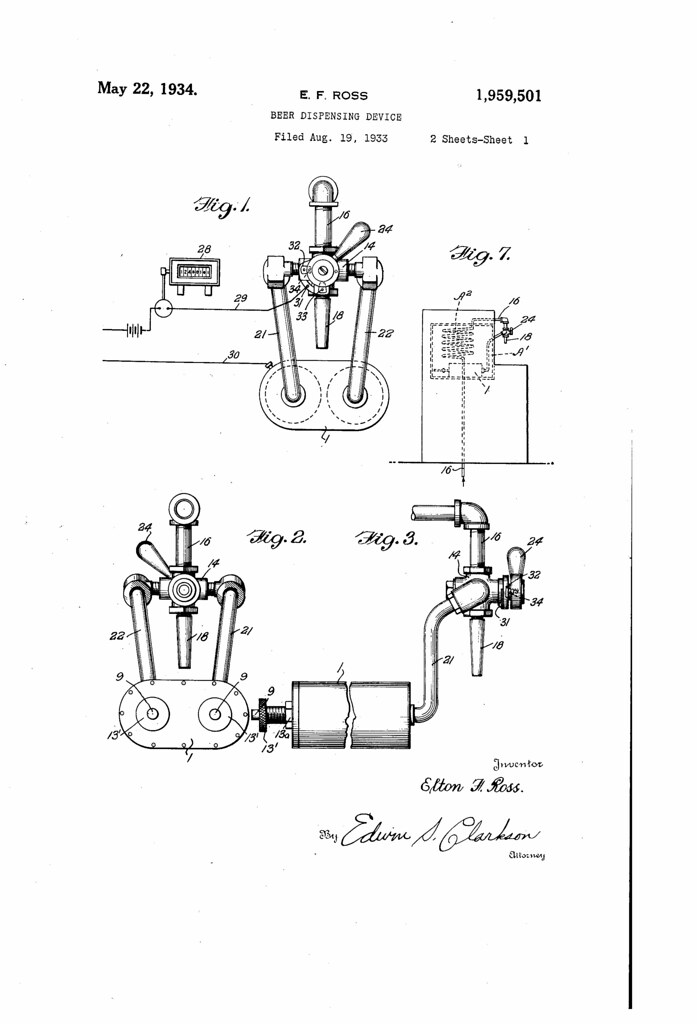
Today in 1934, US Patent 1959501 A was issued, an invention of Elton F. Ross, for his “Beer Dispensing Device.” There’s no Abstract, though it’s described this way in the application:

This invention relates to a device for dispensing beer and other carbonated liquids discharged under pressure from a keg or other source of supply, and particularly to a dispensing device designed to supply measured quantities of the liquid and to control the discharge so as to prevent waste of the liquid and other objections due to wildness of the liquid.

US1959501-0
US1959501-1

Filed Under: Beers, Just For Fun, Politics & Law, Related Pleasures Tagged With: History, Kegs, Law, Patent

Patent No. 821208A: Beer Glass Tray

May 22, 2016 By Jay Brooks

patent-logo
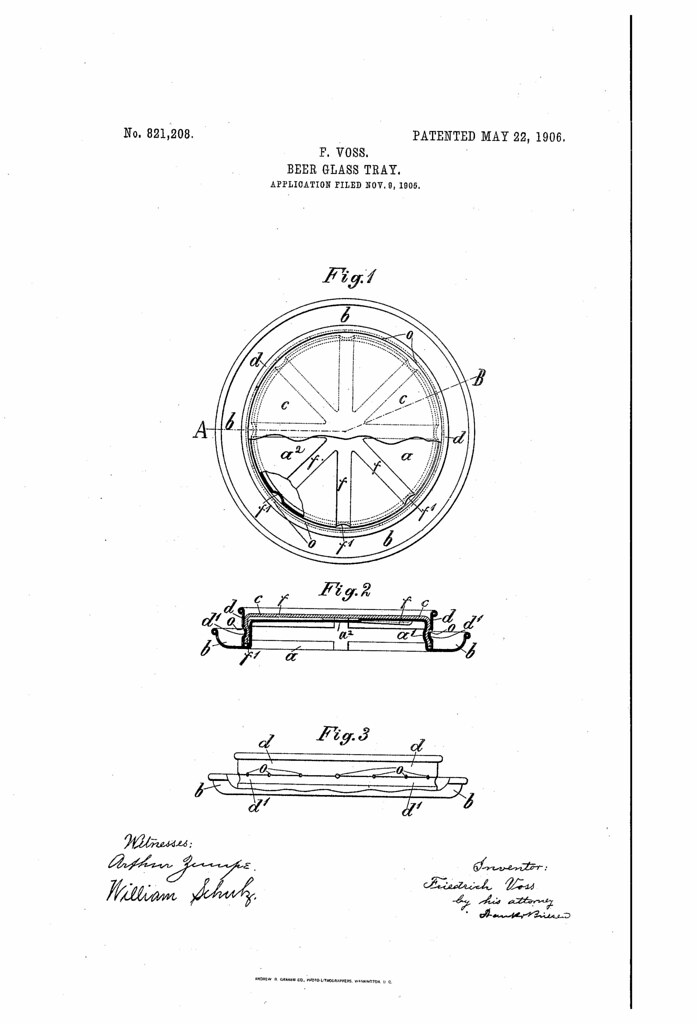
Today in 1906, US Patent 821208 A was issued, an invention of Friedrich Voss, for his “Beer Glass Tray.” There’s no Abstract, though it’s described this way in the application:

This invention relates to a beer-glass tray which absorbs the drippings and conveys the same to a receiving-trough, so that cleanliness is insured.

US821208-0

Filed Under: Beers, Just For Fun, Politics & Law, Related Pleasures Tagged With: Bars, Glassware, History, Law, Patent, Pubs

Patent No. WO1987002975A1: A Beer Tapping Installation

May 21, 2016 By Jay Brooks

patent-logo
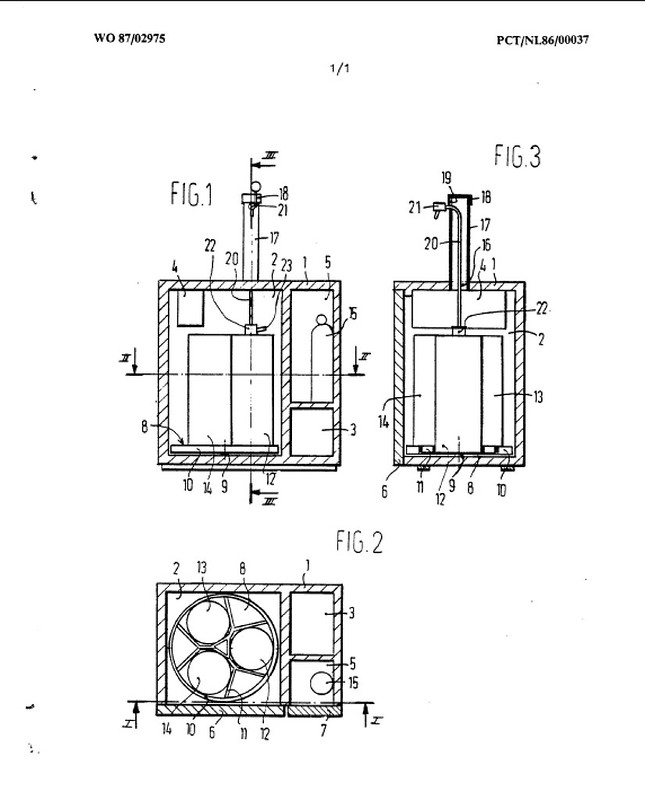
Today in 1987, US Patent WO 1987002975 A1 was issued, an invention of Jacobus Dijkstra and Gijsbert Slootweg, assigned to Heineken Technisch Beheer B.V., for their “A Beer Tapping Installation.” Here’s the Abstract:

A beer tapping installation comprising a refrigerator having a cask cooling and installation space (2) including a revolving platform (8) on which casks (12, 13, 14) can be placed and with a space for accommodating a CO2 cylinder (15), as well as a tap (21), a beer line (20) from the cask installation space to the tap, a hollow support (17) for enveloping the beer line from the refrigerator to the tap, a cask coupling (22) on the beer line and a CO2 supply line from the CO2 container to the cask coupling. The hollow support is in open communication with the cask cooling and installation space and the beer line, together with the cask coupling and the tap, is movable longitudinally of the hollow support.

1987002975

Filed Under: Beers, Just For Fun, Politics & Law, Related Pleasures Tagged With: History, Kegs, Law, Patent

Patent No. 4590085A: Flavor Enhancement And Potentiation With Beer Concentrate

May 20, 2016 By Jay Brooks

patent-logo
Today in 1986, US Patent 4590085 A was issued, an invention of Daniel R. Sidoti, John H. Dokos, Edward Katz, and Charles M. Moscowitz, assigned to Anheuser-Busch Incorporated, for their “Flavor Enhancement And Potentiation With Beer Concentrate.” Here’s the Abstract:

A new method for intensifying the inherent flavors of foods and for imparting other desirable organoleptic properties is disclosed. The method consists of adding to foodstuffs a flavor enhancing amount of a heat denatured concentrate of beer. There is also provided a process for producing the above described concentrate.

FRUIT-BEER-CONCENTRATE

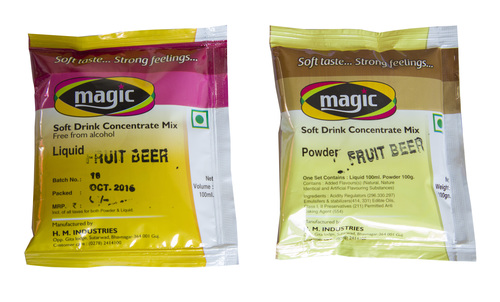
While the abstract doesn’t tell us too much, the background from the application is very interesting, as it talks quite a bit about beer in cooking, which appears to be the primary goal of the patent’s use, although the patent has lapsed, so I don’t know if it was ever used in a commercial product. I know there have been, and even currently are, powdered beer products on the market, this one seems aimed at adding beer flavoring to cooking, rather than being able to make instant beer by adding water.

BACKGROUND OF THE INVENTION

Foodstuffs of all varieties whether precooked, served hot or cold, or whether prepared without cooking have flavors, aroma, and other organoleptic properties that influence the sensory perceptions of human taste. The manufacturers of such foods as sauces, spreads, dips, soups, dressings, stuffings, garnishes, meats, fish, vegetables, salads, breads, etc. whether dry, frozen, refrigerated or canned, desire to produce products organoleptic properties closely profiling the natural flavors, aromas and textures that appeal broadly to the sensory perceptions of the consuming public. A food whose natural flavors are unduly masked may be too bland, or if overly modified with added flavor components, it may be perceived as too spicy. The availability of spices, condiments, etc., permits the individual consumer to adjust the flavor of food purchased from the shelf to suit his or her particular taste preference.

Nevertheless, food manufactures because of the nature of precooking processes, the addition of preservatives, the packaging and keeping techniques of retorting, pasturization, etc. will often times find that the desired natural flavor of the foodstuff has been suppressed below the threshold taste perceptions of the average consumer. Accordingly, techniques for addressing this deficiency have become customary to the industry.

One such technique involves the use of chemical compounds which intensify the flavors inherently present in food without adding any flavor from the chemical itself. These compounds are known as Flavor Enhancers and include, for example, linalool, 2-nonenal which is used to enhance the flavor of coffee, and certain sulfur containing amino acids which are used to enhance meaty flavors. Other chemicals serve as flavor enhancers through reacting with endogenous flavor components of food itself to synergistically promote the combined flavor effect of those components.

Another technique which is commercially employed to address the problem of suppressed natural flavors is that of using chemical compounds which when added to foods in very low concentrations to catalytically create desirable organoleptic properties of the foodstuff otherwise undetectable. These compounds are known as Flavor Potentiators, and like Flavor Enhancers, their taste is not itself detectable to the sensory perceptions of the ordinary consuming public.

There are drawbacks, however, to the previously known Flavor Enhancers and Potentiators. One foremost disadvantage is that these compounds are selective in their functional contribution to flavor development. The same compound which enhances coffee flavor may have a deleterious effect, if any effect at all, on, for example, cheese flavor. Accordingly, some food products such as soups, dressings and some pastries which have a combined variety of natural flavors are extremely difficult to potentiate or enhance from previously known chemicals.

Another serious drawback to previous flavor enhancement and potentiation techniques is that they require the addition of chemical compounds which have no nutritional value themselves nor are they derived from natural food or beverage constituents.

It has now been found and this finding forms the basis of this invention, that Flavor Enhancement and/or Potentiation can be achieved by the addition of denatured beer concentrate to foodstuffs of all types and varieties, whether cooked or prepared fresh, without the need to employ non-nutritional, chemical compounds.

It should be appreciated that cooking with beer is not new. The book Cooking With Beer by Carole Fahy, first published in 1972 by Elm Tree Books, indicates that the brewing of beer is known to have been practiced in Mesopotamia and Egypt at least 5,000 years ago. The Egyptians passed on their knowledge of brewing to the Greeks who in turn handed it down to the Romans who refined the Anglo-Saxon form which was already in place at the time of the Roman conquest. English ale became the basis for many religious and social festivals and is said to have accompanied bread as the sole breakfast menu of Queen Elizabeth I.

Ales and beers are all manufactured beginning with mashing barley malt and possibly grain adjuncts such as barley, corn and rice. This is filtered, brought to boil, pitched with hops and result in a wort which consists of water, dextrine and fermentable sugars. The wort is then fermented with yeast.

English ales have been traditionally distinguished from American brews or lagers primarily on the basis of the type of yeast employed to ferment fermentable sugars of the precursor wort into alcohol. Secondarily, there is a distinction between the ratio of malt and grain adjuncts in the mash in that ales customarily have far less, if any, grain adjuncts. Also there are distinctions in the level of hop addition. These factors contribute significantly to the variations in taste of American brews or lagers and ales.

Beers have gained some limited acceptance in cooking as a consequence of their richness, delightful taste, their ability to improve the texture and lightness of cakes, pies and batters; their tenderizing effect on tough meats; their contribution to preserving foods; their ability to make breads rise; their adding piquancy to dull vegetables and attractively glazing roasted meats and a few other culinary virtues. However, each of these benefits is owed to the full compliment of the beer flavor and texture attributes present naturally and, in the case of assisting cakes to rise, its fermentable state with its residual yeast in active form and its carbonation being readily apparent.

It has been determined however, that the use of beer in cooking does have its limitations. For example, if you are making a soup which requires dried vegetables according to Carole Fahy in Cooking With Beer, you must make certain that you soak them thoroughly, overnight, before use because the hard pellets will otherwise sink to the bottom of a rich vegetable beer soup apparently due to slow diffusion of beer molecules through the surface membrane and interior of the dried vegetables. Additionally, when sieving foods as for example, soups, the richer the beer is, the more difficult to push entirely through the strainer without losing some of the desired flavor. Still further, it is found necessary to cook foods longer with beer to fully develop the flavor. Finally, and perhaps most importantly, cooking with beer imparts of a clear beer flavor to the foodstuffs tending to mask the inherent natural flavors of the other foodstuffs. Accordingly, beers, although employed previously in cooking, have not been used nor thought to have any Flavor Enhancing or Potentiation functionality. Likewise, previous beer extracts or concentrates have had no utility in flavor enhancement but rather have been prepared in undenatured form in order to be reconstituted into either alcoholic or nonalcoholic beverages.

British Patent No. 2127 describes the prepration of a nonalcoholic beer extract or concentrate. Although the concentration can be effected in any efficient vacuum evaporation apparatus, the first end to be attained is the separation of the alcohol produced by fermentation at as low a temperature as possible. After separation, as disclosed in this patent, the temperature may be raised, but the subsequent evaporation must be carefully conducted otherwise aromatic compounds present may be expelled or destroyed and the color of the product materially increased. The product is said to be pleasant to the taste and to possess all the nutritive and feeding properties of original beer before removal of the alcohol and subsequent concentration. The product is employed as an ale concentrate designed to be reconstituted into a non-alcohlic beverage by the addition of water.

British Patent No. 1,228,917 discloses a dry extract of a fermented beverage. However, it is compounded with dry yeast in live active form, together with dry fermentable carbohydrates or dry unfermented wort containing fermentable carbohydrates in order to permit fermentation when diluted. The boiling evaporation utilized to produce the extract is under a vacuum high enough to take place at the predetermined low temperature of 100° F. The original fermented beverages and their respective solids or residues and the yeast are protected during evaporation by the low temperatures. The evaporation at yeast-preserving temperatures with minimum of exposure to the heat also preserves the solubility of the enzymes of yeast and, therefore, the yeast remains in active condition so it will act vigorously when the extract is diluted with water for the preparation of a beverage.

In British Patent No. 1,290,192, a beer extract is produced from evaporating a partly fermented beverage at temperatures below 80° F. or any other suitably low temperature that will preserve the constituents of the reduced wort in a soluble state. The extract contains fermentable substances with the same characteristics of the beverage from which the extract was made. It possesses the characteristic flavor and taste of the original beverage that can be produced and imparted by yeast fermentation and is naturally alcoholic; and when suitable diluted with water, provides a beverage having the flavor and taste of the original beverage. The yeast, however, is used in large quantity for example, twice as much in respect to the amount of fermentable carbohydrates as is usually employed to pitch ordinary fermented beverages.

SUMMARY OF THE INVENTION

It is an object of the present invention to provide a new and useful technique for flavor enhancement and potentiation intensifying the inherent natural flavors of food and creating desirable organoleptic properties to a broad range of foodstuffs with a derivative of a nutritious foodstuff natural concentrate despite having substantially denatured the components of flavor and color, consistency, solubility and fermentability from the concentrate.

It is a further object of this invention to provide a new and useful concentrate of beer and its method of manufacture.

These objects and others are fulfilled by heat treating a fermented malt beverage or beer at sufficiently high temperatures to substantially denature the product and adding it at very low levels to foodstuffs. The denatured beer concentrate is added in amounts below which the concentrate is detectable in taste or mouth feel, but sufficient to achieve flavor enhancement and potentiation.

Filed Under: Beers, Food & Beer, Just For Fun, Politics & Law, Related Pleasures Tagged With: Cooking, Food, History, Law, Patent

Patent No. 318306A: Beer Keg Washer

May 19, 2016 By Jay Brooks

patent-logo
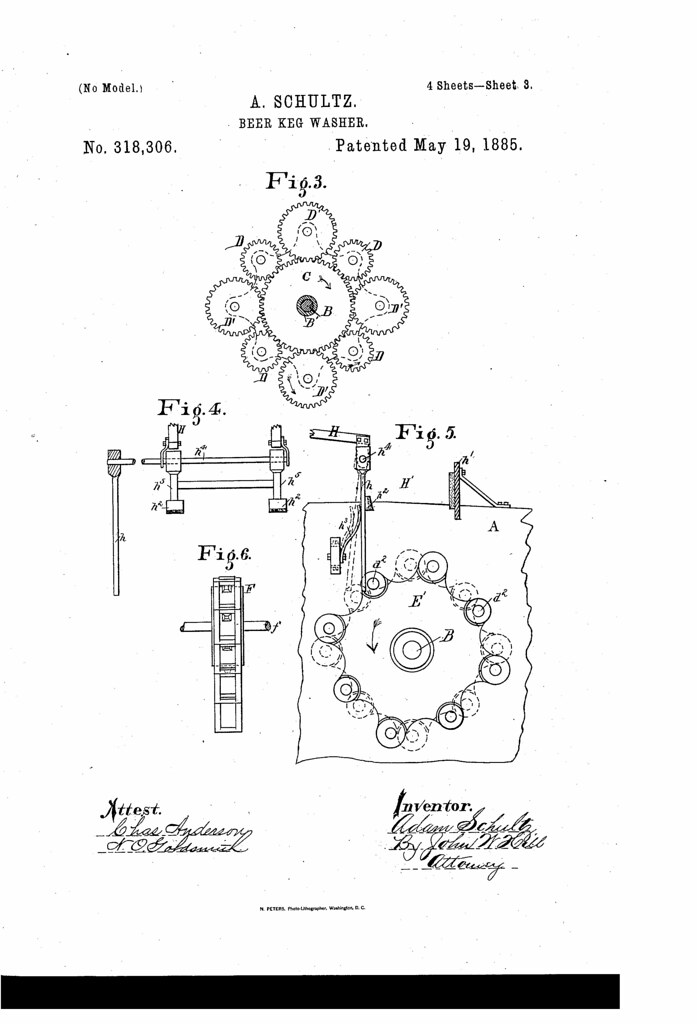
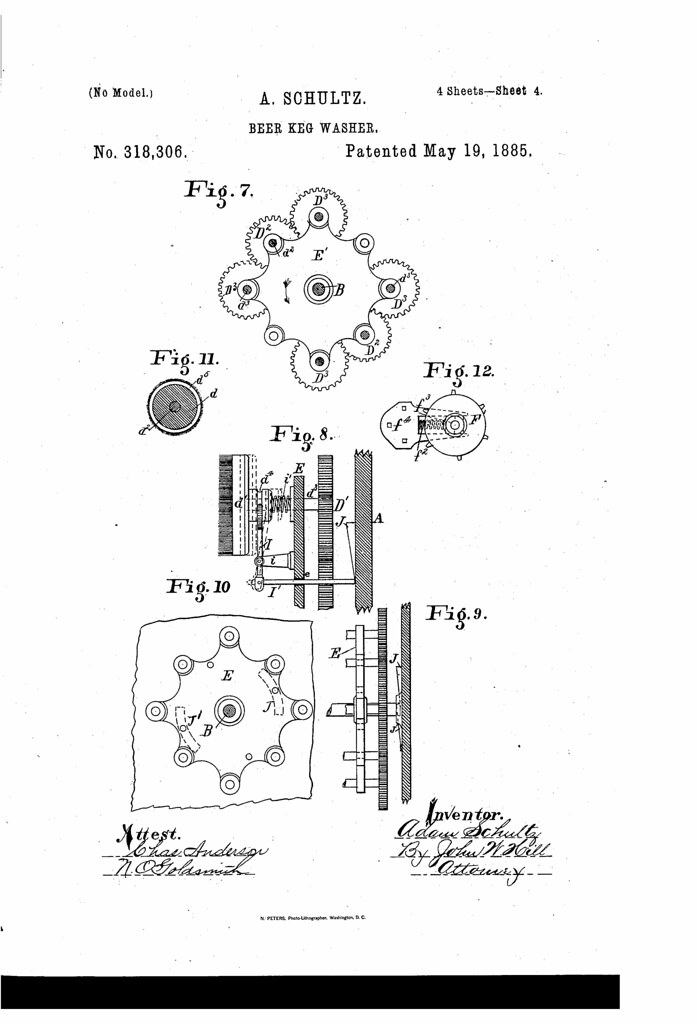
Today in 1885, US Patent 318306 A was issued, an invention of Adam Schultz, for his “Beer Keg Washer.” There’s no Abstract, though it’s described this way in the application:

My invention relates to apparatus or machinery for scrubbing or washing the external surfaces of beer-kegs, barrels, and similar articles, and has for its object the construction of an apparatus in which the entire operation of charging the Same with kegs, scrubbing the kegs, and finally discharging the cleaned kegs from said apparatus shall be accomplished mechanically, without manual labor, and with the smallest possible. consumption of water. The apparatus is also designed to clean the kegs much more rapidly than by any other method of scrubbing with which I am acquainted.

US318306-0
US318306-1
US318306-2
US318306-3

Filed Under: Beers, Just For Fun, Politics & Law, Related Pleasures Tagged With: Brewing Equipment, History, Kegs, Law, Patent

Patent No. 227867A: Gas-Pressure Regulator And Indicator

May 18, 2016 By Jay Brooks

patent-logo
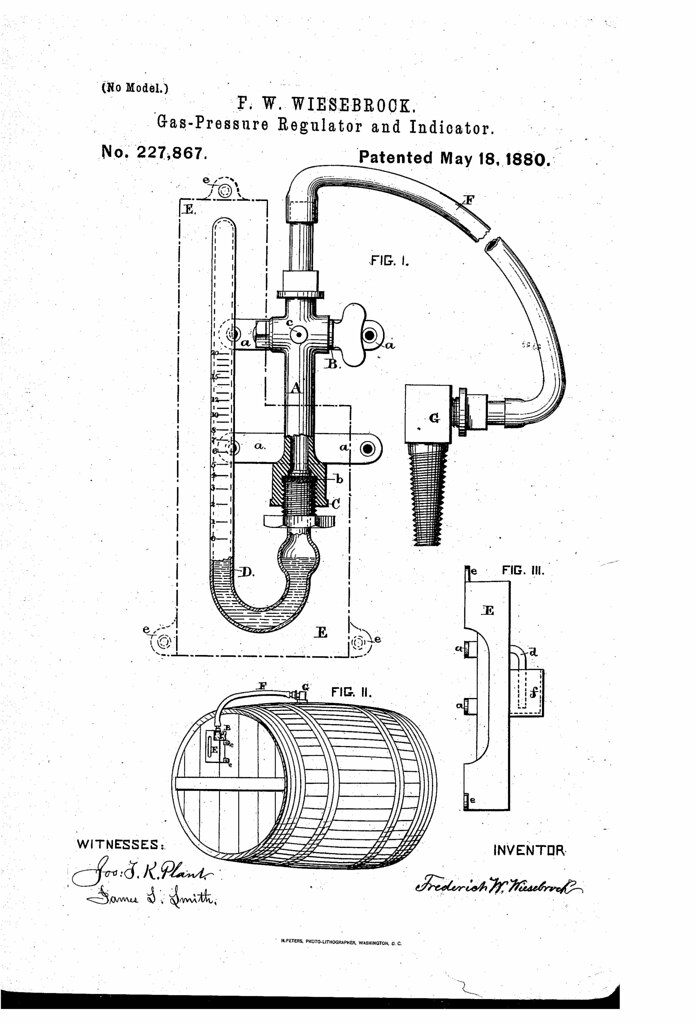
Today in 1880, US Patent 227867 A was issued, an invention of Frederick W. Wiesebrock, for his “Gas-Pressure Regulator and Indicator.” There’s no Abstract, although in the description it includes this summary:

I have invented certain new and useful Improvements in Gas- Pressure Regulators and Indicators; and I do hereby declare the following to be a full, clear, and exact description of the invention; and it consists in the construction and arrangement of parts, as will be more fully described hereinafter, reference being had to the accompanying drawings, in which Figure l is a front view of my apparatus, partly in section. Fig. 2 is a view of a cask with my apparatus attached. Fig. 3 is a detail view of the same.

US227867-0

Filed Under: Beers, Just For Fun, Politics & Law, Related Pleasures Tagged With: Brewing Equipment, History, Kegs, Law, Patent

Patent No. 582769A: Beer-Bottling Apparatus

May 18, 2016 By Jay Brooks

patent-logo
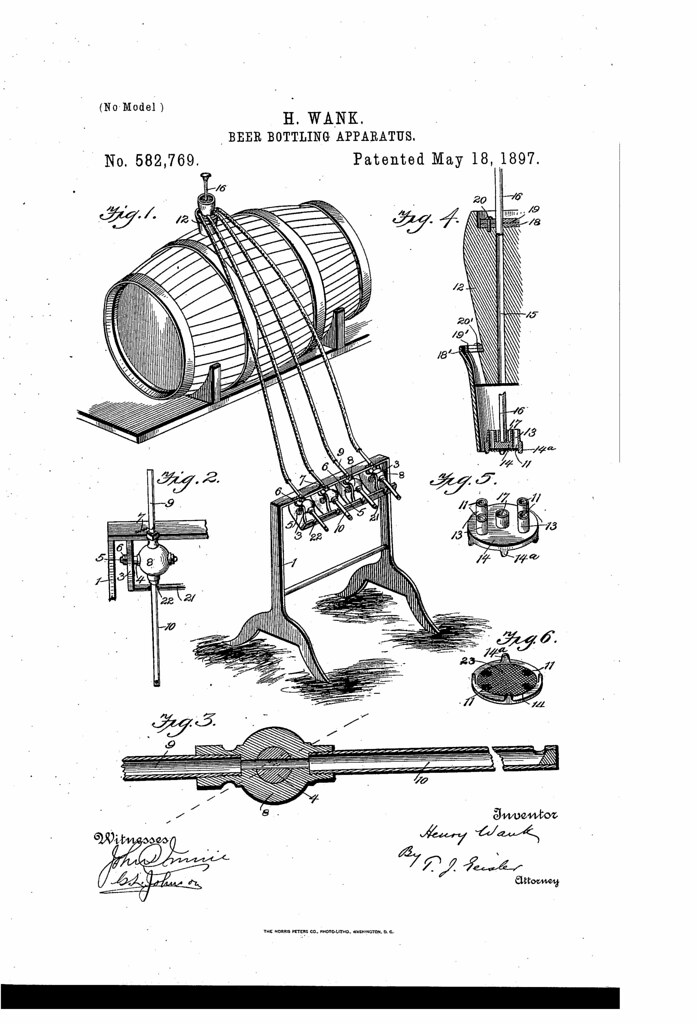
Today in 1897, US Patent 582769 A was issued, an invention of Henry Wank, for his “Beer-Bottling Apparatus.” There’s no Abstract, although in the description it includes this summary:

The object of my invention is to provide means for siphoning the liquid in the barrel directly into the bottle without exposing the beer to the air to any extent, which usually deteriorates the quality of the beer, and to reduce the escape of gas in the beer to a minimum.

US582769-0

Filed Under: Beers, Just For Fun, Politics & Law, Related Pleasures Tagged With: Bottles, Brewing Equipment, History, Law, Patent

Patent No. 2348797A: Crown Cap Selecting Machine

May 16, 2016 By Jay Brooks

patent-logo
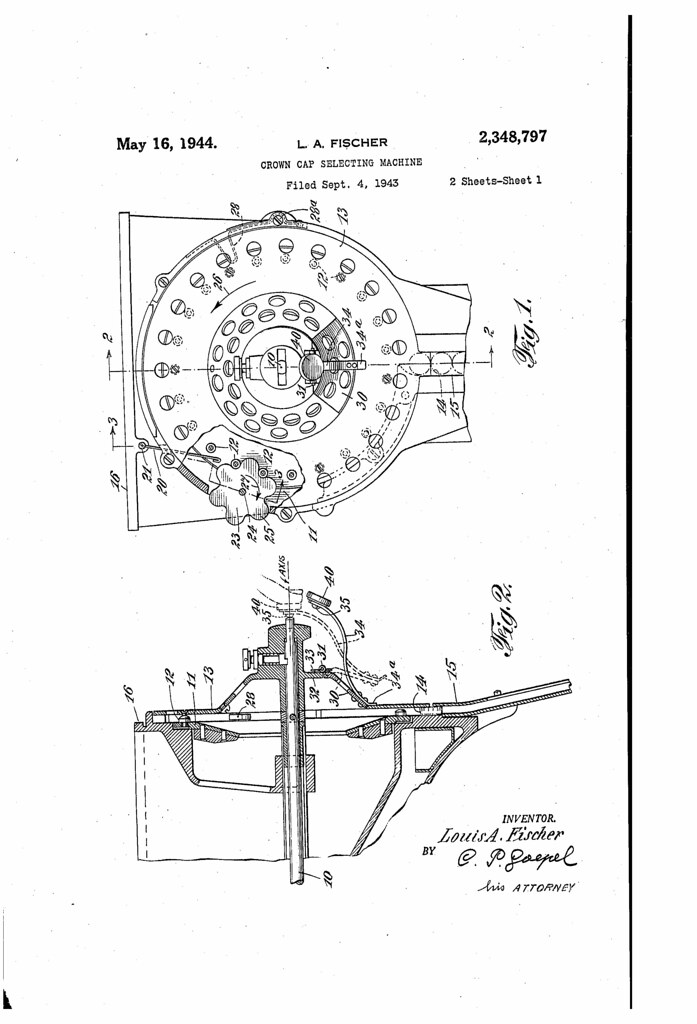
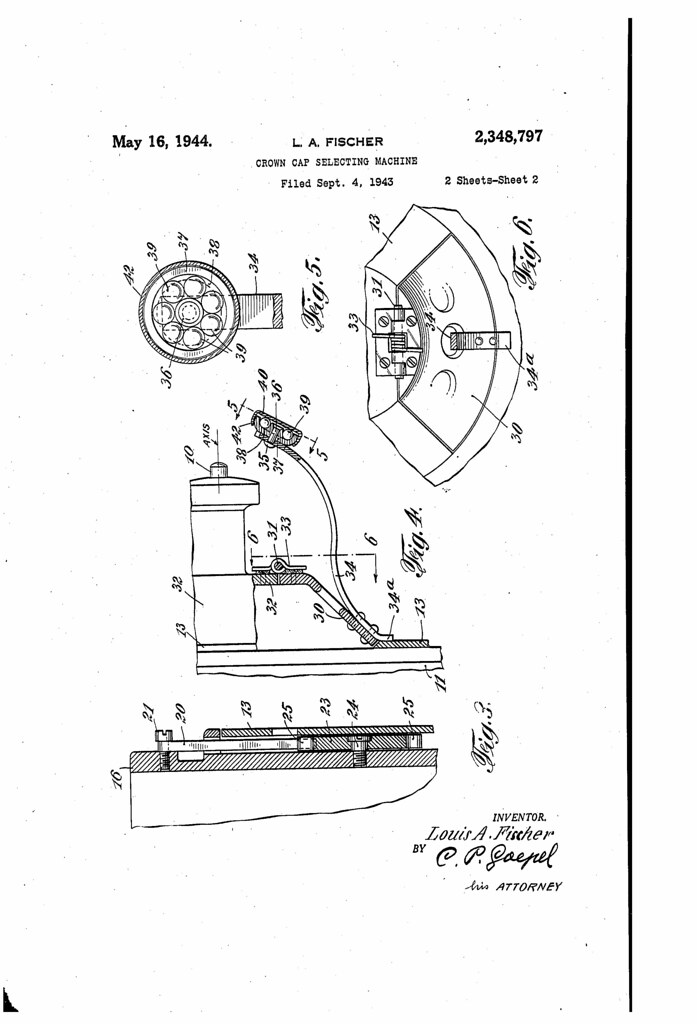
Today in 1944, US Patent 2348797 A was issued, an invention of Louis A. Fischer, assigned to the Schaefer Brewing Co., for his “Crown Cap Selecting Machine.” There’s no Abstract, although in the description it includes this summary:

This invention relates to crown cap selecting machines, and has for its object to provide means for inspecting the interior of such machines while the same are running, and also provide means for preventing the caps from clogging during the operation of the machine.

In the use of such cap selecting machines, it frequently happens that inspection of the interior of the same becomes necessary and also that certain caps which have become clogged be removed. Also certain foreign matters must be dislodged.

This requires a shutting down of the machine and a re-starting, this requiring several hours of non-use of the machine.

The invention consists of a door closed opening which permits the caps to be ejected from the machine, capable of being opened and closed during the operation of the machine, and the invention also consists in the means for preventing clogging of caps.

US2348797-0
US2348797-1

Filed Under: Beers, Breweries, Just For Fun, Politics & Law, Related Pleasures Tagged With: Brewing Equipment, Crowns, History, Law, Patent

Patent No. 257977A: Beer Chip

May 16, 2016 By Jay Brooks

patent-logo
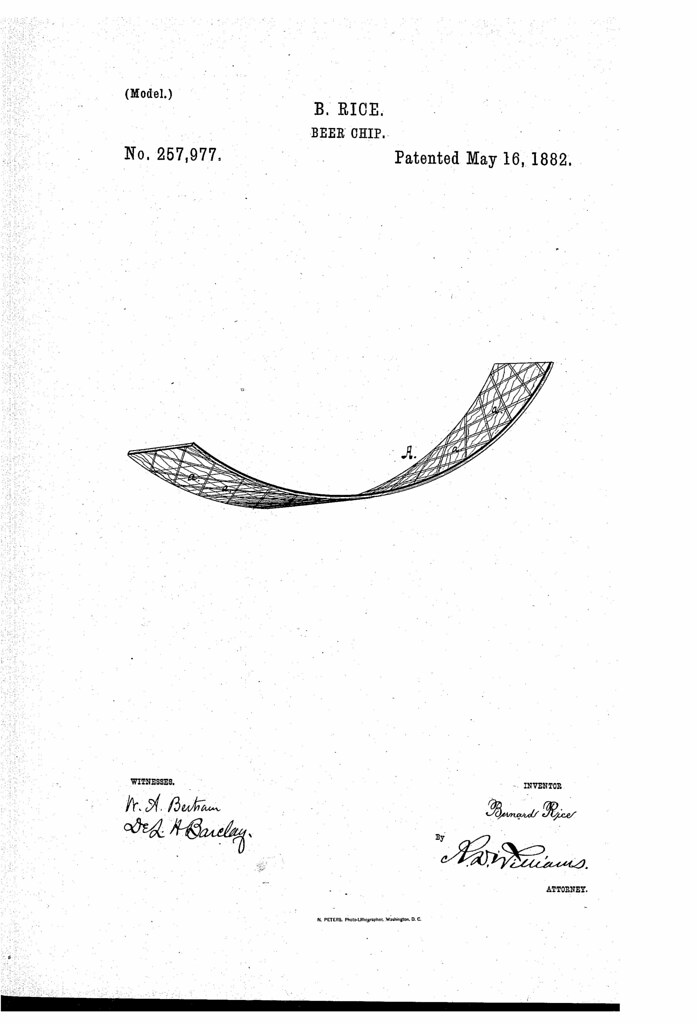
Today in 1882, US Patent 257977 A was issued, an invention of Bernard Rice, for his “Beer Chip.” There’s no Abstract, although in the description it includes this summary:

My said invention relates to the chips or shavings employed by brewers for clarifying the beer in vats or thus previous to kegging it. These chips consist of beechwood, by preference, and have heretofore been used in the form of thick shavings, or of sawed lath-like chips, straight and flat, or of a mixture of the two. Grave objections lie to either form, which it is the design of my invention to obviate. The shavings invariably break in numerous places on the convex side, form ing interstices into which the particles of yeast and impurities settle, rendering it impossible to properly cleanse the shavings in the usual revolving washers. The sawed chips, while not open to this objection, are deficient in superficies, are liable to pack and stick together, and on the whole are inferior to the shavings. The desideratum is a shaving or chip having a large superficies, curved so as not to pack nor adhere to other chips, tough enough to withstand the agitation in the washer without breaking, and one which will not mildew when kept in stock. Such a chip I have succeeded in preparing, and that at a cost less than that of the chips as heretofore made. In practice I cut a sheet of veneer from a revolving login the usual way, choosing by preference the inner portion of the log, which is free from knots, and comparatively free from resin, and thoroughly dry the sheet. Either before or after drying I cut it into chips about eighteen inches long by one and a quarter inch wide, and pass them between heated calender rolls. This process has the effect to compact the fiber and prevent the chips from becoming soggy and sinking in the vats, to toughen them and prevent them from breaking in the cask or washer, and it gives them a. permanent curvature, so that they never straighten out. It also increases the density of the wood, rendering it of substantially the same specific gravity as the beer, whereby the chips do not tend to float exclusively at the surface, but remain suspended in the beer. The calendering, furthermore, dries out the sap and resin.

In order to insure a proper bending of the chips, an extra roller or bender may be attached to the calendering machine; but that is not essential. The rolls may also have embossed figures or lines, so as to indent the chips and increase their superficies.

US257977-0

Filed Under: Beers, Breweries, Just For Fun, Politics & Law, Related Pleasures Tagged With: History, Law, Patent, Science of Brewing

« Previous Page
Next Page »

Find Something

Northern California Breweries

Please consider purchasing my latest book, California Breweries North, available from Amazon, or ask for it at your local bookstore.

Recent Comments

  • Bob Paolino on Beer Birthday: Grant Johnston
  • Gambrinus on Historic Beer Birthday: A.J. Houghton
  • Ernie Dewing on Historic Beer Birthday: Charles William Bergner 
  • Steve 'Pudgy' De Rose on Historic Beer Birthday: Jacob Schmidt
  • Jay Brooks on Beer Birthday: Bill Owens

Recent Posts

  • Historic Beer Birthday: Bill Siebel March 26, 2026
  • Historic Beer Birthday: Conrad Windisch March 26, 2026
  • Beer Birthday: Rudi Ghequire March 26, 2026
  • Beer In Ads #5186: Today’s The Day! March 26, 2026
  • Historic Beer Birthday: Bill Brand March 26, 2026

BBB Archives

Feedback

Head Quarter
This site is hosted and maintained by H25Q.dev. Any questions or comments for the webmaster can be directed here.