Brookston Beer Bulletin

Jay R. Brooks on Beer

  • Home
  • About
  • Editorial
  • Birthdays
  • Art & Beer

Socialize

  • Dribbble
  • Email
  • Facebook
  • Flickr
  • GitHub
  • Instagram
  • LinkedIn
  • Pinterest
  • RSS
  • Twitter
  • YouTube

Powered by Genesis

Next Session Tackles Women In Beer

October 30, 2013 By Jay Brooks

session-the
For our 81st Session, our host is Nichole Richard — better known to the beer world as “Nitch” — who writes online at Tasting Nitch. She’s originally from the West Coast and lived in Hawaii, as well, has lived in 15 countries on three different continents, and is currently an expat living in France, and trying her best to “create a craft beer movement among cheap wine drinkers.” Her topic for this session asks bloggers to weigh in on the gender issue — Women in Craft Beer Culture. Are they “scary beer feminists?” Or “a healthy growing demographic?”

Feel free to write about what you want as long as it is beer and woman related!

I would love to see some of our historian beer bloggers give a bit of in depth back ground information on history of women in beer culture. Praise Ninkasi and what not, but were there male brewers before the fall of Rome?

Who did most the brewing in early colonized North America?

How is it that most current African brewers are still housewives while modern brewing is male dominated?

Do a feature on a woman in the beer industry!

Have you inspired your significant other to become beer culture involved? Call it, high five your beer loving wife day.

Are there any men out there who think that women in beer is a bad thing? For religious reasons, women aren’t allowed to tour many Trappist breweries and there are still French chefs who believe that a women on her menstrual cycle cannot make whip cream. (Truth.)

Woman’s palate’s are changing the direction of beer! Are women to blame for the recent increase in fruit beers? …

Are there any women out there who are crusading a flag of femininity while milling malt. Tell us your story!

Young blond woman with glass of beer

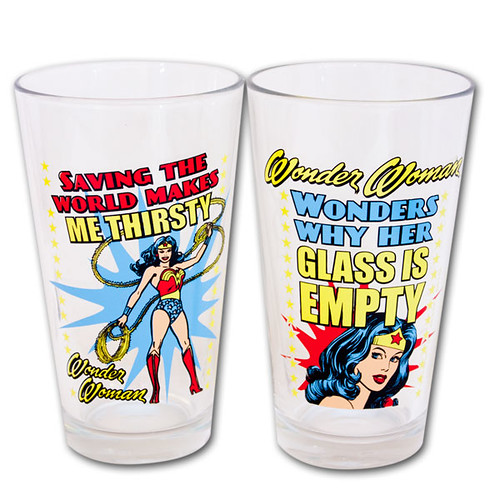
So two days from now, on Friday, November 1, shake off that post-Halloween hangover and no matter which gender you are, weigh in on the female half of humanity and their role in craft beer culture.

Wonder_Woman_Pint_Set

Filed Under: Beers, Just For Fun, Related Pleasures, The Session Tagged With: Announcements, Women

Weigh In On The Craft Beer Bubble

September 16, 2013 By Jay Brooks

session-the
For our 80th Session, our host is Derek Harrison, who writes online at It’s Not Just the Alcohol Talking. His topic for this session asks bloggers to weigh in on the question that pundits and business analysts have been asking and answering frequently in recent months, Is Craft Beer a Bubble?

It’s a good time to be in the craft beer industry. The big brewers are watching their market share get chipped away by the purveyors of well-made lagers and ales. Craft breweries are popping up like weeds.

This growth begs the question: is craft beer a bubble? Many in the industry are starting to wonder when, and more importantly how, the growth is going to stop. Is craft beer going to reach equilibrium and stabilize, or is the bubble just going to keep growing until it bursts?

bubble-burst

So on Friday, October 4, let us know where you stand on the bursting bubble hypothesis. Is the bubble precarious and ready to pop any second or as solid as a glass ball?

burst

Filed Under: Breweries, The Session Tagged With: Announcements, Business

Session #79: USA Vs. The World

September 6, 2013 By Jay Brooks

us-uk
Our 79th Session is hosted by Adrian Dingle, better known online simply as Ding through his Dings Beer Blog. He’s created a curmudgeonly reputation for himself as a British expat critic of American beer culture and has a few hot button issues that particularly rankle, especially when it comes to our laissez-faire attitude toward session beer, our beer culture (or lack of it) and that dirtiest of words (whisper it when you say it like it was cancer): cask. So no one should be shocked that he’s chosen as his topic for this session USA versus Old World Beer Culture, or more tellingly, “What the hell has America done to beer?”

Anyone with any inkling of my online, in-person and blogging presence in the American beer world since 2000, will know that the whole of my beer experience in that time has been colored by, sits against the backdrop of, and forms the awkward juxtaposition to, my English beer heritage and what has been happening the USA in the last few years. Everyone knows that I have been very vocal about this for a very long time, so when it came to thinking about what would be a great “Session” topic, outside of session beer, it seemed like that there could be only one topic; “What the hell has America done to beer?,” a.k.a., “USA versus Old World Beer Culture.”

This probably won’t be pretty, and you’re probably not gonna like it much, but hey, what’s new?

session_logo_all_text_200

Having never met Ding in person, I can only glean his motives, personality and agenda from his writing. Of course, as an ugly American, I can just make stuff up, too. In a sense, whenever I read Ding’s missives, I get the feeling that’s he’s talking down to me, giving me a pat on the head. “Silly Americans” seems to linger in between each word he writes. I often feel I’m being lectured to as opposed to the give and take of actual argument. Because from what I’ve read, Ding doesn’t so much have a set of evolving opinions that’s he’s arrived at through life experience, but rather he rigidly knows what’s correct, and the rest of us are simply wrong. There’s often not really an argument that’s being made, more a position that’s being laid out. That’s he’s taking the time to patiently tell us all how we’re wrong is something we should all be grateful for, I suppose. And really, I would be, were it not for the fact that it’s just no fun to argue with such certainty. And so I confess over the years, I haven’t actually jumped into any of the frays over session beer or other Ding-worthy topics. I’ve peeked in from time to time, but that’s about it. So my sense of things is obviously limited, is not backed up by the entirety of his body of writing, and is probably wrong all over the place. But the fact that I can admit that I may be wrong about something is, it appears, one of our many differences.

My friend Lew Bryson tells me he shared a very pleasant pint with Ding once, and enjoyed himself quite a bit. So I’m sure he’s a perfectly nice person. And I’d happily share a pint with Ding in person should the occasion arise, though obviously not a session beer, in the highly unlikely event that we could find one, and not American cask ale, either. Until then, “[t]his probably won’t be pretty, and you’re probably not gonna like it much, but hey, what’s new?” I also want to stress that this is not meant to be a personal attack on Ding, but as that last quote indicates, I think he was asking for it, so to speak. I know he can dish it out, and I’m quite confident he can take it (probably much better than I could, I’m pretty thin-skinned) but my personality still demands that I make sure I make it clear that I mean all of this in a spirit of a good-natured ribbing and do not intend it be taken as mean-spirited. This is actually the first time I’ve read some of his opinions, so this is simply a seat-of-the-pants reply to some of them.

us-and-uk

I can’t help but think that Ding’s expat status has something to do with all this. Living among us savages has colored the way he views the world. When I was growing up (a debatable premise, I assure you) near Philadelphia, in the summer I rooted for the Baltimore Orioles (my favorite player was Brooks Robinson) and in the winter it was Vince Lombardi’s Packers all the way. The point is, I never went for the hometown favorite. Having lived in the Bay Area California since 1985, I’ve become a San Francisco Giants fan, but am still a diehard Green Bay supporter (and team owner). But now that I’m no longer a resident of the Commonwealth (Pennsylvania), I find myself rooting for the Phillies and Eagles (when they’re not playing the Giants or Packers) more than ever before. And I suspect it’s a kind of nostalgia and a way to connect with my old roots, or at least the people, friends and family, that are still there. So with no evidence whatsoever, I wonder if the separation of Ding from his Mother England, has made him so supportive of his British heritage in a way that’s made him dismissive of everything else. Think Mike Myers saying “if it’s not Scottish, it’s crap.” It seems like there has to be a least a little element of “if it’s not English beer, it’s crap” to Ding’s way of thinking. At least, that’s how it comes across.

So with that being said, perhaps the funniest thing is, I don’t disagree with everything Ding says, and in fact think he’s correct in a lot of overall impressions of American beer culture. I may disagree with some (many) of his conclusions, but not his observations about our differences. I may disagree with what I perceive as an inflexibility in many of his points of view, but that’s just me, perhaps. So let’s look at a few cherry-picked arguments he’s made.

Oft quoted argument #1. The American beer renaissance has saved many styles form going the way of the Dodo. Now, this has some partial truth in as much as the American MARKET has supported some styles that had become much less popular elsewhere, but this is an accident of the historical timeline and NOT as a consequence of any particular foresight, expertise or American brewing skill. For example, the reason that in the 60′s, 70′s and 80′s Gose was dying a death in Germany was that essentially there was very limited demand. With the American beer-geek consumer being so incredibly indiscriminate, there will (for a while at least) be room for all kinds of obscure styles and obscure beers. This is less of a style revival and more about the ability to sell just about anything (in many cases regardless of quality) to the US consumer. Jean Van Roy has been quoted (accurately or not I cannot ascertain) as saying that America played an important role in saving Cantillon from becoming dangerously irrelevant, but again, what he refers to here is insatiable consumer rather than the discerning one.

Okay, here’s what bothers me about this one. When visiting Cantillon, Jean mentioned that about 60% of their business is in America. That’s suggests that we’re a fairly important market for them, larger even than their own home country. But according to Ding, that’s not enough, because apparently it isn’t being bought by the right kind of customer. It’s somehow important that only “discerning” customers buy Cantillon, the “insatiable” ones (whatever that even means, people who will buy anything one supposes) don’t actually count, apparently. I find that odd, to say the least. And by admitting that there’s some “partial truth” to the argument, isn’t he really admitting that it’s not actually false then? I’m fairly certain that Porter was on death’s door in the UK when Anchor released their bottled Porter in 1974. And he mentions Gose, and I’m certain there are others. But none of that matters because we’ll buy anything? These beers are either saved or not, why are the perceived “motives” what makes it true or not?

Oft quoted argument #3. American beer has introduced new styles. Frankly that’s just plainly inaccurate. If one were to take a style that might be considered quintessentially representative of the contemporary, American beer scene, the West Coast Double/Imperial IPA, and then one were to read the prolific Ron Pattinson over at Shut Up About Barclay Perkins, one would see that it’s all been done before.

Two words: steam beer. A lot of this argument is necessarily wrapped up in what you mean by, or how you define, “beer styles.” Is there another nation making more different types of beers? Is there another country whose beer culture (oh wait, we’re uncultured) includes the availability of more everyday kinds of beer? If something existed once, ever, somewhere in the dark mists of history, and an American brewer makes it again, why should that not be celebrated? Encouraged? Enjoyed (assuming it tastes good)? Even if it’s true that (yawn with me here) “it’s all been done before,” if I’ve never had it, then it’s new to me. If no one’s had it a century, it’s new to a lot of people, isn’t it? But I guess enjoying anything new or novel, that’s just us Americans being boorish again. Well I’m only going to be alive the one time, so I’m going to enjoy it. If we have to argue over “introduced” or “reintroduced,” who cares?

It’s wonderful to have more beer in cans. Mmmmm, well I suppose it’s nice to have the flexibility that cans can offer, but far too many people are sacrificing the quality of the beer for the convenience of the container. I’d rather have inconvenience and better beer if the other choice is more convenience with an inferior beer. In short, the container should not overrule the contents – it seems as though too often recently that’s exactly what happens, as people settle for lesser beer simply because it’s canned.

I’ve done numerous side-by-side taste tests of beer in a can alongside the same beer in either a bottle or on draft. And in each instance, there was little discernible difference between the two. The “metal turbidity” problem of leeching metal flavor into the beer was largely solved a number of years ago so the idea that “people are sacrificing the quality of the beer for the convenience of the container” is what is false here. Ding’s right that the “container should not overrule the contents.” The thing is, it doesn’t.

More is always better (number of breweries and number of beers). The level of growth in the craft industry in the US is simply unsustainable. It’s flooding the market with mediocre and poor beer and shelf space is at a premium more than ever. It also has the effect of leaving old beer on shelves for extended periods of time. A popular fallacy in the US is that this will be a good thing because ‘the market will decide’, and the poorer breweries will be driven out, making the landscape stronger. In reality, good beer is actually losing shelf space to ‘trendy’ beer, and brewers that are making ‘better’ beer are suffering. With close to 900 breweries in planning stages in the US, there’s a really precarious situation brewing, and a bubble about to burst. I think we’re already in a saturated market for GOOD beer.

Good beer currently represents about 6.5% of the total U.S. Beer market. It could be a little more or less, depending on who you include as “good” or how you define that, but even if we generously placed it at 10%, that still puts good beer as a pretty small part of the whole. And yet many business analysts continue to shake their fists about this supposed bubble that’s about to burst. Ding appears to agree with them. To him, the market’s already saturated. I think he’s wrong about that. Talk to me when we’re closer to the situation being reversed and we’re closer to 90%. Then the balloon may actually be full enough to do some bursting. Ever try to puncture a balloon that’s barely full? It doesn’t work. Air just seeps out, there’s no explosion. So yeah, there’s lots and lots of new breweries, and plenty of them will make beer that’s not as good as some others. Plenty of them will not be savvy businesspeople and won’t get their beer to market as well as others. So yes, some (or even many) will go out of business, leaving room for the next dreamer to give it a go. Maybe the next one’ll make it; maybe not. But there’s still plenty of room for managed growth. There’s still plenty of opportunities for good beer to flourish. There’s still plenty of opportunities for beer to become more of an everyday part of more people’s lives, at which point we’d actually have ourselves some “beer culture,” at least as Ding defines it.

This is one of Ding’s Top 10′ myths that the US craft beer fad has perpetuated amongst the newbs, and (most disappointingly), even amongst those that should know better, but fully eight of them (all but #1 and #3) are straw men that I’ve never heard any serious person make as an actual argument or defense of good beer. I’m sure people have said such things, and I’m sure we can find people who even believe them — but people say and believe all kinds of stupid things — and that certainly doesn’t make them valid arguments in need of knocking down. But even the other two seem to be problematic.

British beer is undergoing a massive revolution inspired by American brewers. This is an interesting one, that, if you live in the USA and know little about the British beer scene, or if you are under 25 and live the UK, there would appear to be some truth to. Amongst those groups, brewers like Thornbridge, BrewDog and Kernel are ‘all the rage’, and of course in the case of BrewDog they are the ones that make all the (literal) noise. The reality is quite different and remains that the overwhelming majority of magnificent beer drunk in the UK is traditional in its style, ABV and brewed by low-key brewers that still put substance over style. Don’t be fooled by the juvenile posturing and adolescent attention seeking.

I’ve visited the UK several times, beginning around 1982, and without question the British beer scene has changed dramatically in that time, at least. In my own experience, many traditional British brewers are indeed resistant to change, and why not, traditional British beer can be wonderful. I was in Burton a few years ago for a collaboration brew that Matt Brynildson, Firestone Walker’s award-winning brewer, was doing at Marston’s. The brewmaster there refused — yes, refused — to use the amount of hops called for by Matt’s recipe. Before arriving, they exchanged e-mails several times until when Matt kept insisting, she simply stopped replying to him. When we arrived, she was perfectly nice, and the beer turned out fine, even in its modified form. But like many brewers I spoke to, she was convinced that British drinkers would not drink such a hoppy beer. The reality seems to be, at least for a growing minority, that many consumers will in fact drink such American-inspired beers. At the beer festival where Matt’s collaboration beer debuted, it was the most popular beer there, as voted on by the attendees and the sales data. Likewise, at the Great British Beer Festival, the stand with foreign beers from the U.S. was consistently one of the most popular places at the festival and there were long lines every time we looked. That doesn’t mean that traditional English ale is going away anytime soon, but it does certainly suggest that attitudes there are indeed changing and that a certain (and growing) percentage of British consumers are interested in American, and American-influenced, beer. Could a bar like London’s The Rake even have existed ten or twenty years ago? To say things haven’t changed, or aren’t changing as we speak, is to put your head in the sand.

You can put ANY beer in a cask and get a good result. No, no, no, no. NO! The whole POINT of cask presentation is to accentuate the subtle, gentle nuances that occur over a 1, 2 or 3 day period. This relies upon beers being low-hopped, malt forward and relatively low ABV. If you put a 10% Imperial IPA in a cask, you’re missing the WHOLE point. Now, it is true that virtually ALL beer tastes better in a cask then a keg, but that’s a different argument and not one I’m making here, rather a huge amount of beer that is being presented in casks in the USA is simply not beer that will showcase the presentation at all well – the vast majority of people in the US are missing the point of cask beer. My (current) #1 pet peeve about the beer scene in the USA.

Okay, I agree with Ding that not all cask beer is great, and I agree that not everything should be in a cask to begin with. What I disagree with is that “the vast majority of people in the US are missing the point of cask beer.” We may be missing what Ding’s point of cask beer is, but whatever he thinks cask beer is or should be isn’t necessarily the definition that everybody else has, or indeed should have. Like most things in the beer world, there are very few empirical truths that everyone agrees upon. Cask is not one thing. British cask is not one thing. If we do things differently, that does not negate anything. It just makes American cask different. He’s free not to like it, and he’s free to not order it. He’s even free to criticize it, just as I’m free to disagree with him. But if enough people are enjoying much of what American brewers are doing with cask beer, why shouldn’t they keep on doing it? Fact is, they should, and they undoubtedly will. I for one, will keep drinking it, and probably will even enjoy much of it. Deal with it.

carlsberg-elephant

And that brings us to the 1,000-lb. elephant in the room: Session Beer. Nothing typifies the Ding mindset better than his inflexible position that in order to be a session beer anywhere in the world, the beer must hue to his definition and, accordingly, has to be below 4% a.b.v. That’s because once upon a time, that’s the beer people drank in English pubs. That’s based on age-old traditions. But I confess I didn’t realize Ding has actually softened his position.

IF you are an educated, discerning beer drinker, with a sense of history and a solid knowledge base (even though I still think it is technically 100% INcorrect to refer to a 4+% beer as a ‘session beer’). If you do fall into the beer-educated group, then I suppose that you can use the term in a more liberal manner but at the same time have an appreciation of the REAL definition and its relevance.

Well, thanks. That’s a load off. Glad to know that through education and having the proper appreciation, I will be permitted to use a word with a meaning that has never been static and has long varied from its original meaning (if indeed it even ever had one). The problem with all of this dogma is that the idea that words are static and never change or alter their meaning is ludicrous. And the idea that that something as vague as the idea of a session beer has to mean the same thing everywhere in the world, at all times through history, is equally absurd. Ding cites my friend Martyn Cornell as evidence of his 4% or below definition, but Cornell’s actual analysis in How old is the term ‘session beer’? reveals that the question is not as settled as Ding would have us believe. The term itself is fairly modern, and the concept, though somewhat older, has itself changed a bit over time. For all the stamping of feet and wringing of the “traditional” hands, the idea of a “session beer” is, like all words in the English language, subject to time and place. There’s nothing wrong with that, but I think we’ve all wasted a lot of time haggling over this. It’s the idea that’s important. It’s the concept that has drawn both Lew Bryson and myself to it. Getting caught up in this narrow definition does nothing to advance either the idea or concept of session beers, all it really does it hold it back; back in time, and back in place. I’m willing to concede that there was indeed a time when session beer was thought to be 4% a.b.v. or below and that such thoughts took place in Great Britain as early as the First World War. But we’re not in merry olde England, and it’s the 21st century.

Martyn Cornell himself concludes that while he prefers the 4% concept (and would even be willing to go down to 3.8%), he also admits that “there’s no cast-in-concrete rule about what strength a session beer should be – it’s much more about common sense.” And it’s that “common sense” that I feel has been lacking in Ding’s insistence that his definition is the only definition of session beer. Though I’m pleased to see even he’s been somewhat convinced, albeit reluctantly in a very qualified fashion, that change is possible. Perhaps we can one day actually share a session beer.

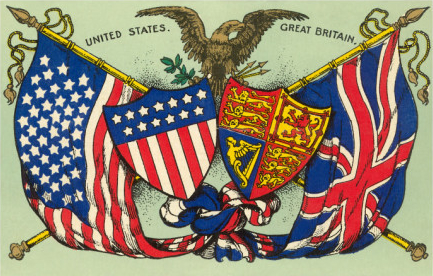
united-states-great-britain-flags-and-seals

So one final question to answer. “What the hell has America done to beer?” The simple answer is “nothing … and everything.” Beer, in my mind, is reflected by where it’s brewed. It reflects the broader culture. Beer in England was made by Englishmen and developed in essentially a single, straight line, over time. America, on the other hand, has always been a melting-pot of different cultures coming together and trying to make the best of those differences. The earliest brewing influences came from England, the Netherlands and the local indigenous people. Later, German and other European brewers greatly changed the direction of beer in America. Lacking a long tradition is, I believe, more of a freedom than a limitation. Saying you can’t do something different, new or again, and claiming it’s “tradition” that keeps you from changing is, I believe, a terrible tragedy. While every new thing isn’t always good just because of its newness, I can guarantee that not being able to even consider doing anything your own way, or differently from “tradition,” can be dreadful. That’s possibly a uniquely American way of thinking, but then we’re talking about America. It’s a perfectly ordinary or common notion to most of us. It’s one of our strengths, I’d argue. Tradition is fine, important even, in certain contexts. But tradition for tradition’s sake never is. Traditions should be examined, probably by every generation, and we should keep the ones that make sense and replace the ones that no longer advance society. That’s how change occurs. That’s why there’s no more slavery. It’s why we got rid of child labor. It’s why women can vote and make their own decisions regarding their own bodies. Before those rights became as obvious as they appear today, all of them were once cherished traditions, peculiar institutions.

I was in Japan last week, judging their International Beer Competition. Over the last few years, I’ve judged similar competitions or visited beer cultures in Argentina, Chile, New Zealand and Italy. What do brewers in all of those budding beer countries want to talk about? Not English Beer. Not German Beer. Not “traditional” beer. They want to know about American beer. They want hear about West Coast Eepas (IPAs). I bring bottles of Pliny the Elder with me as gifts. It’s fun to see their eyes pop out, like I was giving them a pair of blue jeans in post-World War 2-Europe. They’re genuinely excited to try it, to share it with their friends and colleagues. These countries, and I’d guess many others, look to us in building their own beer cultures, as we looked to Europe and England for our inspiration. So I find it humorous to discover that we actually have no beer culture, or that it’s lacking, again, the proper sort of something. Really, it comes down once again to definitions. What is “culture?” Look it up. See if you can find one everybody agrees with. So it may be provocative to declare that America has no beer culture, then back it up by narrowly defining it. Or maybe I’m just proving Ding’s point by being irreverent? That’s apparently at the heart of all of our culture, by which I can only assume he means we’re disrespectful of everyone and everything and take nothing seriously, since that’s the definition of being irreverent. I’m completely serious when I say I hope Ding has enough old world culture to forgive me for being such an asshole.

As for our beer culture, I think it’s alive and well, and will trundle on with or without Ding’s acceptance of it, or my half-hearted defense of it. I believe our beer culture has become the envy of many parts of the world, both new and even some old. It’s true it often gets little respect from people both here at home and abroad, but it’s more popular now than at any time during my lifetime. Is it different from other beer cultures? Decidedly so, but I don’t think most of us would have it any other way. Vive la différence. Let’s drink a beer. An American beer.

Filed Under: Beers, Editorial, Just For Fun, The Session Tagged With: Beer Culture, International, UK

Fighting The Beer Revolutionary War In The Next Session

August 19, 2013 By Jay Brooks

session-the
For our 79th Session, our host is Adrian Dingle, better known online simply as Ding through his Dings Beer Blog. Not surprisingly, he’s decided to shake things up with a provocative topic, the USA versus Old World Beer Culture.

Anyone with any inkling of my online, in-person and blogging presence in the American beer world since 2000, will know that the whole of my beer experience in that time has been colored by, sits against the backdrop of, and forms the awkward juxtaposition to, my English beer heritage and what has been happening the USA in the last few years. Everyone knows that I have been very vocal about this for a very long time, so when it came to thinking about what would be a great “Session” topic, outside of session beer, it seemed like that there could be only one topic; “What the hell has America done to beer?,” a.k.a., “USA versus Old World Beer Culture.”

This probably won’t be pretty, and you’re probably not gonna like it much, but hey, what’s new?

us-and-uk

So on Friday, September 6, let the battle begin. What do you think America has done to beer? And in comparison, what about England? Are we at war? Are we having a beer war? Or is the “special relationship” intact? Grab your musket, a pewter tankard of some session beer (however you define it!) along with your laptop, and let slip the dogs of beer war.

united-states-great-britain-flags-and-seals

Filed Under: Beers, Breweries, Just For Fun, Related Pleasures, The Session Tagged With: Announcements, Blogging, UK

Let’s Hear Your Elevator Pitch For Beer

July 26, 2013 By Jay Brooks

session-the
For our 78th Session, our host is James Davidson, who writes beer bar band, where he writes about his many passions, and also writes about beer for the Australian Brews News. His topic asks everyone to make their “elevator pitch” to be as “persuasive and passionate about beer can you be in the short[est] space possible?” Here’s a fuller explanation of how to make Your Elevator Pitch for Beer:

“Elevator pitch” is a term used by marketers, sales people, film/tv makers and the like. It’s the delivery of a short but powerful summary that will sell their idea or concept to the listener in one swift hit.

Here’s the scenario:

You walk into an elevator and hit the button for your destination level. Already in the elevator is someone holding a beer…and it’s a beer that annoys you because, in your view, it represents all that is bad with the current state of beer.

You can’t help but say something, so you confront your lift passenger with the reason why their beer choice is bad.

30 seconds is all you have to sell your pitch for better beer, before the lift reaches the destination floor. There’s no time, space or words to waste. You must capture and persuade the person’s attention as quickly as possible. When that person walks out of the elevator, you want them to be convinced that you have the right angle on how to make a better beer world.

Here’s the rules:

  1. In less than 250 words or 30 seconds of multimedia content, write/record/create your elevator pitch for beer in which you argue you case, hoping to covert the listener to your beer cause.
  2. Blog/publish it online on Friday 2nd August, 2013.
  3. When your contribution has been posted, leave a comment here with a link to your post. Alternatively, email, tweet or facebook me with a link to your post.

The topic is essentially open. It is whatever you feel passionately about when it comes to the misgivings of beer in today’s market and/or culture.

What is the argument/topic that you believe will best advance a better beer world? You may just want to argue for craft beer over mass-produced bland lagers. Maybe you actually want to end the need to define “craft beer”. Maybe it’s that the way gender is used or represented when it comes to beer, such as attempts to push “girly styles”. Maybe you believe brands like Carling, Samuel Adams or James Squire should be in everyone’s beer fridge. You may be an purist for the cause of CAMRA, or you may want to argue against CAMRA. Maybe you think the outrageous ingredients and hybrid styles of extreme brewing are hurting beer today, or maybe there needs to be more delicious high alcohol triple barrel aged palate wreckers…?

Maybe the person in the elevator with you isn’t even holding beer, but instead they have some sugary pre-mix lolly-like alcoholic drink, and you want to convince them that drinking beer is a much better option. Even worse…maybe that person is holding a “low-carb” beer!

Maybe you think everything about beer is actually just fine. So argue your case for that.

And that’s the other reason why I have set this challenge is to help refocus my own argument for beer. The more I have learned about brewing, the beer industry and business, and the history of beer, the harder I have found it to define a strong argument for my own (Australian-centric) beer position statement of: drink “craft” beer instead of soulless mass produced adjunct lagers.

This is an exercise in words. I hope that this can be the easiest and hardest contribution that you have ever made to the beer conversation.

The easiest, because it’s a mere 250 words or 30 seconds. The hardest, because it requires every word to be important, meaningful, useful and powerful. There’s no room for footnotes, caveats or rebuttal.

elevator-pitch-1

So on Thursday, August 1, make your pitch. As I suffer from an acute case of verbosity, the hardest part will be keeping it to the length of an elevator ride. Going down?

elevator-pitch-2

Filed Under: Beers, Just For Fun, The Session Tagged With: Announcements, Blogging

Weigh In On What’s The Big Deal About IPA?

June 18, 2013 By Jay Brooks

session-the
For our 77th Session, our host is Justin Mann, who writes his eponymous Justin’s Brew Review. His topic is to question the popularity of craft beer’s fastest growing category: IPAs. Or as he puts it, “What’s the Big Deal About IPA?”

For quite some time now, I’ve been wondering what makes the India Pale Ale (IPA) style of beer so popular. Don’t get me wrong–I thoroughly enjoy it and gladly participate in #IPADay. I’m just wondering, why all the hype? What is it about an IPA that makes craft beer enthusiasts (CBE) go wild? Is it because CBEs want to differentiate craft beer from crap beer? I don’t care if a watered-down pilsener is labeled as “triple-hops brewed”; it wouldn’t satisfy someone looking for an IPA.

At the same time, not all CBEs prescribe to the IPA way. The author (a beer writer!) of a recent article proclaims that “hoppy beer is awful” and that it is allegedly “alienating people who don’t like bitter brews”. I happen to like IPAs and DIPAs, so I’m not going to preach about only non-hopped craft beer, as the author suggests, just to turn people away from over-commercialized yellow-colored water. Besides, maybe the bitterness and hoppiness of an IPA is exactly what some beer drinkers that have yet to be introduced to the ways of craft might want.

So what’s the deal? Let me know what you think by sending me a link to your blog post on July 5. Or if you’re not a blogger, I’d still love to hear what you think. Leave a comment [on his announcement post], or connect with Justin’s Brew Review on your favorite social media platform.

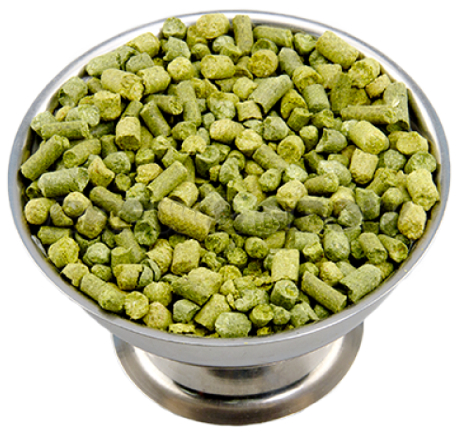
hop-pellets

So on Friday, July 5 — the day after celebrating American independence with a hoppy beer — weigh in on what’s the big deal with these hoppy brews, these “eepas.”

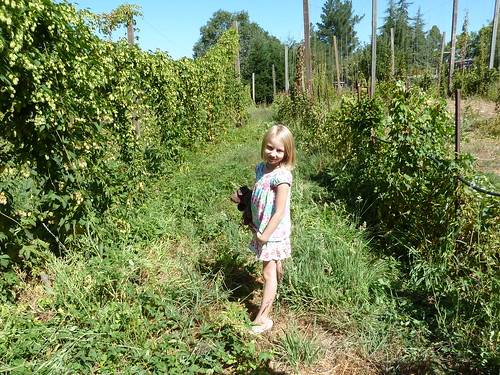
Alice outstanding in her field ... hop field, that is.
My daughter Alice in the hop fields on harvest day several years ago.

Filed Under: Beers, Just For Fun, Related Pleasures, The Session Tagged With: Announcements, Hops, IPA

Examining Our Compulsions For The Next Session

May 13, 2013 By Jay Brooks

session-the
For our 76th Session, our host is Glen Humphries, who writes Beer is Your Friend. His topic is an extension of another recent Session, the one about Beer Audits. That Session inspired him and as he was “writing about buying heaps of beer, [it] got [him] thinking about just what it is that compels [him] to keep buying beer.” In other words, why do we keep buying so much beer? So here’s his invitation to The Session for June 2013 and his topic, Compulsion:

Like most beer fans, I tend to buy way more beer than I can drink. I can have a fridge full, plus a few boxes of bottles, plus homebrew and still I’ll walk into a shop and buy some more. Or order some more online. Or do both in the space of a few days.

Why do we do stuff like this? Obviously we’re not just buying stuff to drink because, if we were, wouldn’t we just wait until we were running low and then stock up? What so many of us do is stock up, even though we’re already stocked up. Perhaps we’re expecting the zombie apocalypse to happen soon and don’t want to go through that sober.

Is buying heaps of beer something you worry about? Do you look at your Aladdin’s Cave of beer and feel even a smidge of guilt about how much it all cost you? Or do you just rub your hands together, cackle with glee and say ‘‘it’s mine! All mine!’’.

What lengths do you go to to hide this compulsion? For instance, do you try and sneak beer into the house so your other half doesn’t see it? (Not saying that I’ve done this. Oh, okay, I have done this).

It’s a compulsion that can extend to homebrewing too. Do you keep making new batches of homebrew, even though you already have plenty of your own brews to drink?

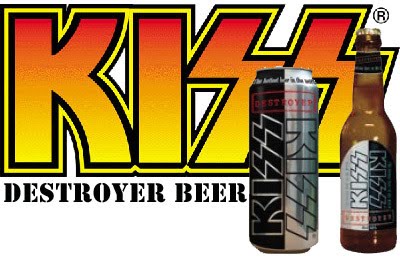
If you’re on holidays and you drive by a brewery, are you compelled to stop in? Or do you go so far as arrange your holidays to ensure that you happen to drive by a brewery or two? On the offbeat side of compulsion, I know I can be compelled to try a beer I just know will be crap. Like Destroyer, that beer the band KISS put out. Absolute crap. And I knew that before I bought it. But I still bought a six-pack of it.

kiss-destroyer-beer

So on Friday, June 7 — would that be “E-Day?” — admit your own beer-buying compulsions and wax philosophically about the reasons why you buy what you buy.

Filed Under: Beers, Just For Fun, The Session Tagged With: Announcements

Getting Down To Business For The Next Session

April 15, 2013 By Jay Brooks

session-the
For our 75th Session, our host is Chuck Lenatti, who writes Allbrews. His topic is about the business of beer, how to get a new brewery up and running or keep one going. It’s the part of the process that many would-be brewers aren’t experts at, and often trip themselves up at various points along the way from concept to being a going concern. So here’s his invitation to The Session for May 2013 and his topic, The Business of Brewing:

Like sandlot baseball players or schoolyard basketball junkies, many amateur brewers, including some beer-brewing bloggers, harbor a secret dream: They aspire to some day “go pro.” They compare their beer with commercial brews poured in their local pubs and convince themselves that they’ve got the brewing chops it takes to play in the Bigs. Some of them even make it, fueling the dream that flutters in the hearts of many other home brewers yearning to see their beer bottles on the shelves at City Beer or their kegs poured from the taps at Toronado.

Creating a commercial brewery consists of much more than making great beer, of course. It requires meticulous planning, careful study and a whole different set of skills from brewing beer. And even then, the best plan can still be torpedoed by unexpected obstacles. Making beer is the easy part, building a successful business is hard.

In this Session, I’d like to invite comments and observations from bloggers and others who have first-hand knowledge of the complexities and pitfalls of starting a commercial brewery. What were the prescient decisions that saved the day or the errors of omission or commission that caused an otherwise promising enterprise to careen tragically off the rails?

beer-parlor

So on Friday, May 3, think about all of the breweries you’ve witnessed open, the ones that have succeeded and the ones that have come and gone. What was the difference? Which ones made it, and why do you think that is? What exactly makes a brewery successful, apart, of course, from making good beer.

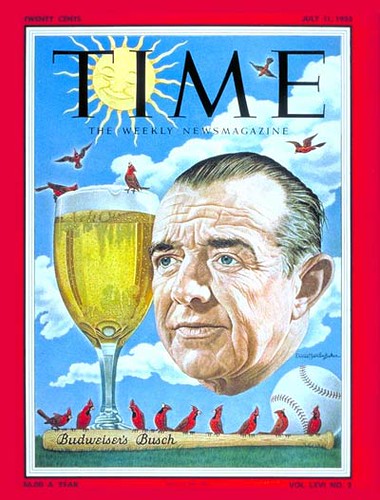
Time-July-11-1955
Some beer businesses have worked out better than others.
(Time magazine, July 11, 1955)

Filed Under: Breweries, The Session Tagged With: Announcements, Business

The Session #74: The Beer Balancing Act

April 5, 2013 By Jay Brooks

balance-beer-life
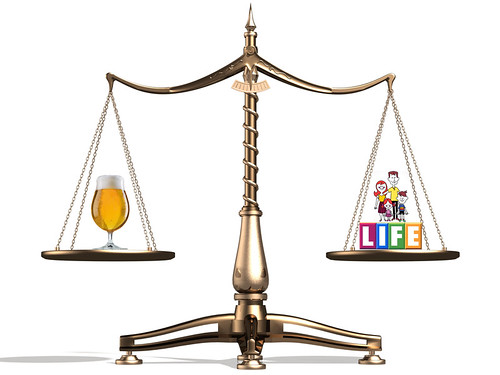
Our 74th Session, is hosted by Bryan Roth, who writes This Is Why I’m Drunk. His topic is about finding balance in life, recognizing that however passionate or obsessed any of us are about our beer, life is more than just beer. Or as Bryan puts it. “Beer is more than the alcohol that goes into it – it’s the passion, history and community. Beer is also just one of many interests I have in my life, whether it’s exercise, continuing my education or keeping tabs on how social media impacts society. Beer doesn’t define me, even if it may be something I can ramble on about for hours and hours. These are all things I love spending my time on, but what about you?” So here’s his invitation to I’m Having a Party and You’re Invited: “The Session” for April 2013:

April’s topic is “Finding Beer Balance.” It’s a discussion I hope will offer a variety of responses as people consider their interests outside of finding the perfect pint.

Is beer your vice? Is beer your reward? Does beer really have to be either? Do you find lifestyle balance through work, hobbies, family or maybe even “Dry Days” like David Bascombe? There are a variety of ways to find balance. These questions are simply a jumping-off point.

session_logo_all_text_200

It’s hard not to love Bryan’s topic, even if it requires us to talk about the one subject every one of us loves more than beer: ourselves. But blogs are, if nothing else, personal; so being personal seems part and parcel of any blog. If it wasn’t personal, at least part of the time, then it would be something else. So how does anyone balance their work and their personal life?

balance-work-life

For me, it’s never been that difficult. Almost every longterm job I’ve had was in a field that I first came to because I was passionate about it in some way. When I was a kid, I was into music, played in bands, and my first real job out of high school was playing in a U.S. Army Band. After that, I managed record stores and became one of the record buyers for a large chain of records stores.

My next job played on that experience plus a lifelong passion for film, when I did marketing and advertising for a small chain of video stores. After moving to California, and a few grunt jobs to pay the bills, I once again found myself managing video stores and then was a buyer for that chain, too.

I later turned my lifetime love of comic books into a job — you guessed it — managing a comic book store, before a chance opportunity landed me a job writing for a law office, finally putting those journalism classes (and my stint as sports editors of my junior high school newspaper) to good use. While there was a lot I loved about that job, it was the writing — crafting a persuasive argument, applying law to a set of facts, and agonizing over every word — that really got me up in the morning.

At that time, I was already a beer geek, having really started down that path in the late 1970s while stationed in New York City. After moving to California in 1985, there was plenty more to discover there, and I held tasting parties and started homebrewing, too. In 1991, I visited over 550 bars over a period of about four months, with the result being the publication of the book The Bars of Santa Clara County: A Beer Drinkers Guide to Silicon Valley. (Hilariously, someone in Florida will sell you a new copy of the book for $60.90! I have a box left, I’ll sell you one for far less than that!)

I used that book, along with my experience as a record and video buyer, to become the beer buyer for Beverages & more, and have been involved in some part of the beer industry since around 1991 or 1992.

Lost and Confused Signpost

Although throughout my entire life I’ve generally felt lost, confused, bewildered and disoriented, I’ve always gravitated toward work that has something to do with a passion. So most of my jobs have never been just for the paycheck. Even when the paycheck wasn’t all that much (most of them frankly) I’ve been fortunate that I tended to care about them far more than I probably should have — good for the employer, jury’s still out if that was good for me. Last month, I found this great quote by legendary brewer Pierre Celis. “To me, work is being on vacation. Why do I continue working? Well, if I stop I’m no longer on vacation.” And that’s a bit how I feel about my work. I’m always doing it, because it doesn’t feel like work. Oh, sometimes it does, certainly, but by and large I feel driven to do it — not because of deadlines or paying the rent or any mundane reasons like that — because it’s something that I feel like I have to do. I feel fortunate I found beer, and that I’ve managed to turn writing about it into not just my job. but a career. But even if I hadn’t, I suspect I’d be writing about something else. Writing has always felt like something I just do, something I just have to keep doing. Publish or perish, as they say.

So I may not be typical in balancing work and life, because for me the two are so inextricably entwined together. It’s a symbiotic relationship. One couldn’t exist without the other. No matter what work I’m doing, I tend to live it 24/7 even though sometimes that can be very, very bad. Unfortunately, I think I’m just hardwired that way. Over the years I’ve collected board games, legos, Hawaiian shirts, ties, records, comic books, books, videos, animation, view-masters, 3-D anything, buttons, breweriana, clothespins, dates, ticket stubs, dice, miniatures, postcards, art, globes, rocks, gems, fossils, birds, playing cards, baseball and football cards, tarot cards, beer books, quotations, xmas ornaments, Atari games, and pint glasses. And that’s just what I can remember off of the top of my head.

Does it get in the way of life? Sometimes, naturally, but usually it’s not a problem. Kids have made me more grounded about being too obsessive, because they demand your attention in way that you not only don’t mind but that you actually want to stop whatever you’re doing and focus on them. Anything that makes you less self-interested has got to be a good thing in the long run. So while I’m as obsessive about beer as any beer geek, maybe more so in some ways, I can go on and on about any number of subjects, as people who know me well can attest to. I can bore you to death talking about a great number of arcane hobbies, pursuits and passions. Just wind me up. My geekdom knows no depths or bounds. A few years ago, I wrote one of the “It’s My Round” pieces for All ABout Beer magazine in which I compared comic books and craft beer in Living in the Silver Age.

Questions and Answers signpost

Part of it is an unquenchable curiosity about damn near everything. There are very few subjects that I can’t find something interesting in. Asking Who, What, Where, When, Why and How in life is a good way to live as far as I’m concerned, especially since asking questions and seeking the right answers is something journalists are supposed to do. How lucky is that?

Balancing

I wasn’t always as lucky as I feel today, but maybe that’s lucky too. Having struggled in different ways and at different times in my life has made me a much stronger person and most importantly allows me to appreciate how lucky I am right now. I love my job, my career, what I do every day. I love that I have a supportive, loving wife and kids who bring me both joy and keep me grounded at the same time. I love where I live, not just the house we’re in but where in the world, too. Living equidistant between Lagunitas and Russian River doesn’t suck. And just as important: friends. In my twenty plus years in the beer world, I’ve made many lifelong friends to share both a beer and our shared passions for it. In the end, that may be the best thing of all, because I’ve always felt that one of the best aspects of beer is its shareability. Beer alone is good, but often a little sad, too. Beer just cries out for companionship. Beer’s at its best as a shared experience.

Still, even though beer is unquestionably a big part of my life, it’s not the only part, and it’s probably not even the biggest or most important part. That would be people; family and friends. Luckily sharing a beer with them makes for a richer experience and for a more balanced existence. For me, that’s balancing beer and life.

balance-beer-life

Filed Under: Beers, Just For Fun, Related Pleasures, The Session

Finding Balance In The Next Session

March 8, 2013 By Jay Brooks

session-the
For our 74th Session, our host is Bryan Roth, who writes This Is Why I’m Drunk. His topic is about finding balance in life, recognizing that however passionate or obsessed any of us are about our beer, life is more than just beer. Or as Bryan says it. “Beer is more than the alcohol that goes into it – it’s the passion, history and community. Beer is also just one of many interests I have in my life, whether it’s exercise, continuing my education or keeping tabs on how social media impacts society. Beer doesn’t define me, even if it may be something I can ramble on about for hours and hours. These are all things I love spending my time on, but what about you?” So here’s his invitation to I’m Having a Party and You’re Invited: “The Session” for April 2013:

April’s topic is “Finding Beer Balance.” It’s a discussion I hope will offer a variety of responses as people consider their interests outside of finding the perfect pint.

Is beer your vice? Is beer your reward? Does beer really have to be either? Do you find lifestyle balance through work, hobbies, family or maybe even “Dry Days” like David Bascombe? There are a variety of ways to find balance.

These questions are simply a jumping-off point. No matter what your answer, I’d love for you to join us in April. Here’s how to participate:

Think of a response to post on your blog. Or just leave a response in the comment section – no blog (or blogging experience) necessary.
Post your response on “Finding Beer Balance” on April 5.
Come back to this post and leave a comment with a link to your response.
It’s that easy.

So on Friday, April 5, take a moment to reflect on the other things in your life that are important to you, and how you balance those with your love of great beer. C’mon grasshopper, give us your zen wisdom; a few koans for the pub. What is the sound of one hand drinking a beer? Let us know with your Session post on the first Friday in April.

balance-beer-life

Filed Under: Beers, Just For Fun, The Session Tagged With: Announcements, Family

« Previous Page
Next Page »

Find Something

Northern California Breweries

Please consider purchasing my latest book, California Breweries North, available from Amazon, or ask for it at your local bookstore.

Recent Comments

  • Bob Paolino on Beer Birthday: Grant Johnston
  • Gambrinus on Historic Beer Birthday: A.J. Houghton
  • Ernie Dewing on Historic Beer Birthday: Charles William Bergner 
  • Steve 'Pudgy' De Rose on Historic Beer Birthday: Jacob Schmidt
  • Jay Brooks on Beer Birthday: Bill Owens

Recent Posts

  • Beer In Ads #5148: Ach Himmel Mr. Goat March 6, 2026
  • Historic Beer Birthday: Conrad Windisch March 6, 2026
  • Historic Beer Birthday: Samuel Wainwright March 6, 2026
  • Beer In Ads #5147: Frankenmuth Is Michigan’s Largest Selling Bock March 6, 2026
  • Historic Beer Birthday: John Bird Fuller March 6, 2026

BBB Archives

Feedback

Head Quarter
This site is hosted and maintained by H25Q.dev. Any questions or comments for the webmaster can be directed here.