The Bangor Daily News has a nice, short editorial calling the State of Maine’s recent banning of three beer labels “misguided” and worrying that it will make Maine a laughingstock around the country and the world. To which I can only add, too late.
Full Sail’s LTD Series
Full Sail Brewing of Hood River, Oregon announced a new limited series of beers to celebrate their 20th anniversary. The “LTD Series” 01 will be released this month.
From the press release:
|
The “LTD Series” will be available in six-packs this month. I din’t know if you can quite read it, but the six-pack carrier reads “From Our Ace Crew of Libationary Wunderkinds” and also a “An Easy-Drinking Albeit Wicked Awesome Limited Edition Lager.”
Ancient Beer Bottles Found
From today’s Publican, a number of old beer bottles were found in the vaults of Worthington’s White Shield brewery in Burton-upon-Trent in Staffordshire, now owned by Molson Coors. Some of the bottles are over 130 years old. The oldest bottle is 137-years old, bottled in 1869. That beer is Harry Ratcliff’s Ale and was brewed to commemorate a son being born into the Ratcliff family, which was later part of the Bass, Ratcliff & Gretton breweries in the late 1800s.
Above, Worthington White Shield’s head brewer, Steve Wellington. “It was always rumoured that there were some vintage beers on site but uncovering such an interesting collection is fantastic. I believe this is one of the most exciting and unique discoveries ever made in British brewing.”
From the Publican:
Dr George Philliskirk, beer expert and Chief Executive of the Beer Academy comments: “This discovery is remarkable, especially as the oldest beer of all dates back to 1869 and tastes so fresh, and with such attractive ripe plum and honeyed flavours. This demonstrates the potential for vintage beers to be taken seriously – maybe even being worthy of a special section in wine lists at Britain’s top restaurants.”
As a result of this find, Worthington’s in conjuction with CAMRA, is sponsoring a contest to find the oldest unopened bottle of beer in the U.K. The winner “will be invited to the White Shield Brewery in Burton upon Trent to brew their very own vintage.”
Below are some more photos of the bottles found in Worthington’s cellars:
Brewing at John Harvard’s
Today’s Boston Globe online edition has an interesting photo essay of a day in the life of John Harvard brewer Maria Poulinas called “Try This Job: Craft Beer Brewer.” She brewes at the Framingham, Massachusetts brewpub.
A New Gluten-Free: There’s Vikings in Them Thar Dark Hills
There’s new gluten-free brewery coming. This one is Dark Hills Brewery and is viking themed. It’s located in northest Arkansas near Fayettville. Owners Constance Rieper-Estes and Leigh Nogy (who’s also the brewmaster) plan to have the production facility up and running by fall of 2007. They will be producing five different beers all using just rice and corn as the grain substitutes.
World Series Beer Collectibles
This will give you some idea how much I don’t follow baseball. Until I read this press release from Anheuser-Busch, I had no idea who won this year’s world series. Apparently it was the St. Louis Cardinals and A-B is doing a commemorative can and magnum bottle.
From the press release:
The commemorative 46.5-ounce magnum bottle features the Cardinals 2006 World Series Champions logo on the front, with a summary of the World Series on the back label. The World Series magnum is sold individually in a red and blue box featuring the Cardinals and World Series Champions logos. The 16-ounce Budweiser aluminum bottle features the Cardinals 2006 World Series Champions logo and lists the years of each of the Cardinals 10 titles. The aluminum bottle is sold in 15-packs of specially labeled Budweiser cases featuring images of the Cardinals World Series bottles.
Both will be available in liquor, grocery and convenience stores in the greater St. Louis metro area — the magnum bottle as early as this weekend, and the aluminum bottle starting mid-next week. Both bottles will be reintroduced in March, when they will be more widely available as the city gears up for the 2007 Major League baseball season.
And an AP story added:
A 46.5-ounce magnum bottle will include the Cardinals 2006 World Series Champions logo on the front and a summary of the World Series on the back. Also available is a 16-ounce aluminum bottle featuring the championship logo and a list of the 10 championship years for the Cardinals. Among all baseball teams, only the New York Yankees have won more World Series titles.
The Cardinals won only 83 regular-season games but won the World Series in five games over Detroit. It was their first championship in 24 years.
Though Anheuser-Busch sold the Cardinals to the current ownership group more than a decade ago, the brewery and the team remain closely connected. The new ballpark that opened this year is named Busch Stadium thanks to a naming-rights agreement. The old advertising jingle “Here Comes the King” still stirs the crowd during rallies.
Unfortunately, just like their Millennium magnum and other collectible bottles, inside will still be just Budweiser and not a special brew made for the occasion.
This Is Belgium
Each year the Belgian Post Office does a series of commemorative stamps celebrating some aspect of Belgian society or heritage called “This is Belgium.” This year’s set honors the food and drink of Belgium.
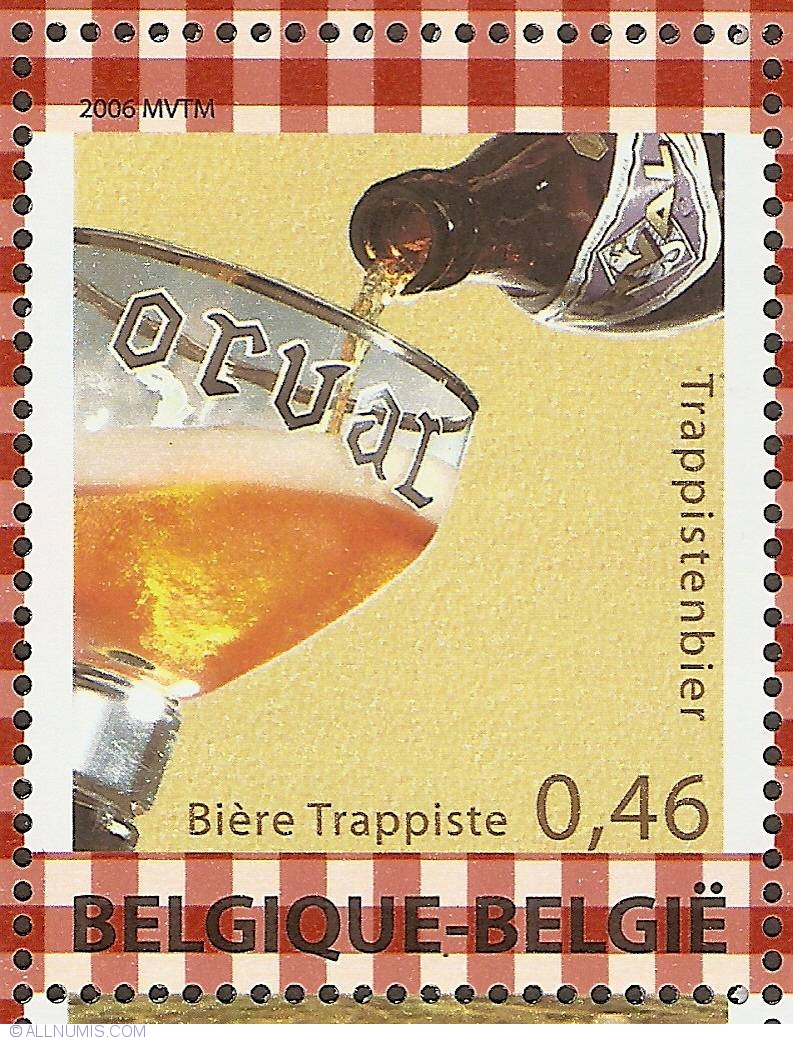
As you can see, of the ten stamps in the series, two are beers: Orval and 3 Fonteinen Gueuze.


And here’s a larger look at the Orval stamp:
BBC: Belgian Beer Coverage
BBC News had an article Thursday about beer in Belgium entitled “Belgian beer gets the travel bug.” The story begins with “For Belgians, beer is not merely a drink, but something of a national symbol.” Wouldn’t it be great if we could get to that point here?
If You Happen to Be in Belgium …
If you happen to be in Belgium next week, you should do whatever you have to to do to get to Essen for the 12th annual Kerstbierfestival. They’ll be tasting over 100 holiday and winter beers over the two-day festival.
And please note they use a cartoon on the poster. You know what would happen here in the U.S. if they did that, right? Neo-prohibitionists and state agencies would be falling over themselves to stop them from “appealing to kids.”
12.16-17
Kerstbierfestival (12th annual)
Heuvelhal, Kapelstraat 7, B-2910 Essen, Belgium
[ website ] [ in English ] [ Directions ]
Turning Water into Happoshu

In Japan it will cost you two to three times as much as it does in the rest of the world if you’re keen to drink a beer. That’s because the Japanese government in their infinite wisdom (why is it governments are all so dogmatically stupid in creating laws without thinking them through?) placed an onerous tax on any beer who’s weight of malt extract exceeds 67% of the fermentable ingredients. In fact, that is their definition of what beer — biiru in Japanese — is. This was done to protect the more traditional sake (or nihonshu) and, of course, it backfired.
Breweries did just what you’d expect them to do. They began making beers with less than 67% malt, using rice or other adjuncts. Suntory made the first one in 1994, called Hop’s Draft, and it contained 65% malted barley. Because it no longer fit the definition of beer, a new name was required and it has become known as happoshu, which means “sparkling alcohol.” Naturally the Japanese government saw what was happening but instead of reversing a foolish decision, changed the standard to 50%. Japanese brewers responded by lowering the malt even further so that today about 25% malt in happoshu is common. The lower malt produces more fusel alcohol that many argue leads to greater hangovers. By all accounts, it tastes awful but has been growing in popularity because it’s so much cheaper. One snarky account I read mentioned that happoshu tastes more like American beer.
Recently, around thirty students from Fuji Women’s University, a catholic school, worked with a local brewer, Yasuharu Osugi, from Nihon Ji Biiru Kobo, to develop a pink happoshu brew aimed specifically at women. In hopes of it appealing to females, they lowered the hop character and made it 4.5%, so it’s a bit weaker than most happoshu. The ingredients include a hoshinoyume, a local rice, along with the herb shiso, a pink-colored juice that gives the brew its distinctive hue. The label will feature a four-leaf clover and goes on sale today.
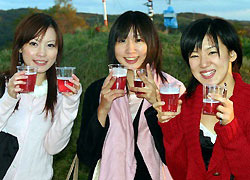
Students from Fuji Women’s University give their pink happoshu a taste test.
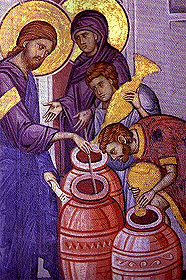
It being a catholic university, they chose the name “Cana Story,” after the place in the new testament story in which Jesus is supposed to have turned water into wine. Of course, it may be fitting. I’ve heard some credible theories that when the new testament was translated from Hebrew into Greek that they had no word for beer and thus translated the line to wine instead. Certainly beer being mostly water would make more sense, though makes it a bit less miraculous.