Brookston Beer Bulletin

Jay R. Brooks on Beer

  • Home
  • About
  • Editorial
  • Birthdays
  • Art & Beer

Socialize

  • Dribbble
  • Email
  • Facebook
  • Flickr
  • GitHub
  • Instagram
  • LinkedIn
  • Pinterest
  • RSS
  • Twitter
  • YouTube

Powered by Genesis

Beer In Ads #4883: Bock Bier In Color

February 16, 2025 By Jay Brooks

Last year I decided to concentrate on Bock ads. Bock, of course, originated in Germany, in the town of Einbeck. Because many 19th century American breweries were founded by German immigrants, they offered a bock at certain times of the year, be it Spring, Easter, Lent, Christmas, or what have you. In a sense they were some of the first seasonal beers. “The style was later adopted in Bavaria by Munich brewers in the 17th century. Due to their Bavarian accent, citizens of Munich pronounced ‘Einbeck’ as ‘ein Bock’ (a billy goat), and thus the beer became known as ‘Bock.’ A goat often appears on bottle labels.” And presumably because they were special releases, many breweries went all out promoting them with beautiful artwork on posters and other advertising.

Sunday’s ad for “Bock” depicts what looks like a blind goat holding a large mug of beer while leaning over a wooden cask with “Bock Bier” carved into it. The hand-colored lithograph was created in 1880.  The lithographer was H. Schile & Co. of 18 Division St. in New York City. Henry Jerome Schile was born in Germany, and emigrated to the U.S. in 1851, settling in Manhattan, which is where he opened his own print company.

Filed Under: Art & Beer, Just For Fun Tagged With: Advertising, Bock, History, New York

Historic Beer Birthday: Samuel C. Whitbread

February 16, 2025 By Jay Brooks

whitbread-oval
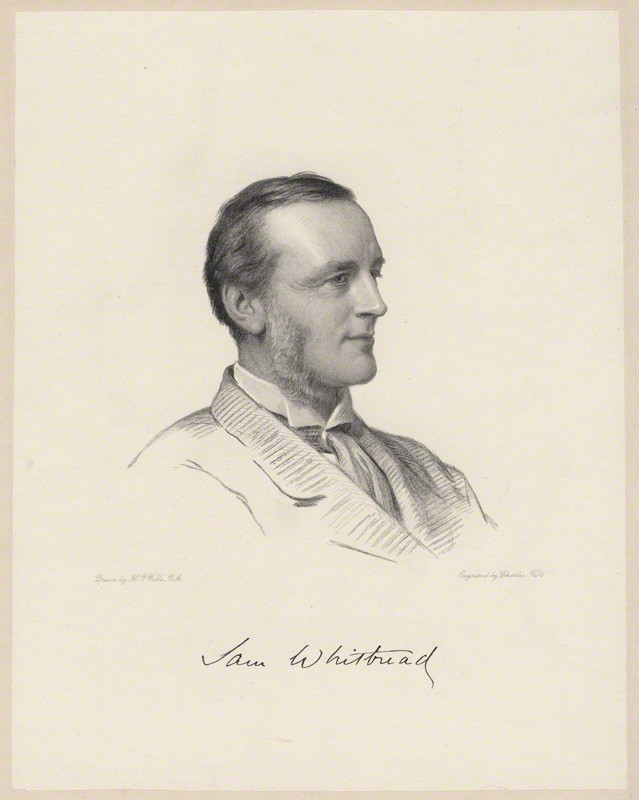
Today is the birthday of Samuel Charles Whitbread (February 16, 1796-May 22, 1879). “He was the grandson of Samuel Whitbread,” who founded the brewery Whitbread & Co. Samuel C. “represented the constituency of Middlesex (1820–1830) and was High Sheriff of Bedfordshire in 1831. His interests were astronomy and meteorology. He served as president of the Royal Meteorological Society from 1850 to 1853. In June 1854 he was elected a Fellow of the Royal Society.”

NPG D4766; Samuel Charles Whitbread
Here is a portion of his biography from the History of Parliament:

b. 16 Feb. 1796, 3rd but 2nd surv. s. of Samuel Whitbread† (d. 1815) of Cardington and Southill, Beds. and Elizabeth, da. of Lt.-Gen. Sir Charles Grey of Falloden, Northumb.; bro. of William Henry Whitbread*. educ. by private tutor Richard Salmon 1802-7; Sunninghill, Berks. (Rev. Frederick Neve) 1807; Eton 1808; St. John’s, Camb. 1814. m. (1) 28 June 1824, Juliana (d. 13 Oct. 1858), da. of Maj.-Gen. Henry Otway Trevor (afterwards Brand), 3s. (1 d.v.p.) 3da. (1 d.v.p.); (2) 18 Feb. 1868, Lady Mary Stephenson Keppel, da. of William Charles, 4th earl of Albemarle, wid. of Henry Frederick Stephenson*, s.p. suc. bro. to family estates 1867. d. 27 May 1879. Offices Held Sheriff, Beds. 1831-2.

Biography

Whitbread, a member of the brewing dynasty, was raised in London and Bedfordshire, where his father, a leading Foxite Whig, inherited the family’s recently purchased estate of Southill in 1796. His parents’ favourite, he was educated with his elder brother William and sent to Cambridge to prepare him for a career in the church or politics. Little is known of his reaction to his father’s suicide in July 1815. His uncle Edward Ellice*, who now oversaw the Whitbreads’ troubled finances, dismissed the brothers’ private tutor Sam Reynolds, who ‘goes about as an idle companion to the boys’, and pressed their continued attendance at Cambridge. Whitbread joined Brooks’s, 22 May 1818, and became a trustee the following month of his father’s will, by which he received £5,000 and £500 a year from the age of 21, £5,000 in lieu of the church livings of Southill and Purfleet (Essex) reserved for him, and was granted the right to reside at Cardington when the house fell vacant. William came in for Bedford at the general election of 1818 and Samuel was now suggested for Westminster and Middlesex, where he nominated the Whig veteran George Byng* in a speech proclaiming his own credentials as a candidate-in-waiting. Encouraged by his mother, who took a house in Kensington Gore after William came of age, he fostered his connections with the Westminster reformers, purchased a £10,000 stake in the brewery and in 1819 joined their controlling partnership, which was then worth £490,000 ‘on paper’ and dominated by his father’s partners Sir Benjamin Hobhouse†, William Wilshere of Hitchin and the Martineau and Yallowley families. Maria Edgeworth, who now met Whitbread for the first time, described him as a ‘good, but too meek looking … youth’.

Whitbread grasped the opportunity to contest Middlesex at the general election of 1820, when, backed by his relations, brewing partners, the Nonconformists and the Whig-radical coalition campaigning in Westminster (which he denied), he defeated the sitting Tory William Mellish in a 12-day poll to come in with Byng. His lacklustre brother had shown none of their father’s talent and energy, but Samuel impressed with his enthusiasm and appealed throughout to his father’s reputation as a reformer and advocate of civil and religious liberty. Ellice praised his common sense and popularity and surmised that Parliament ‘may save him by throwing him into society and engaging him in politics, although possibly the situation he will occupy will be rather too prominent for either his abilities or experience’. He later informed Lord Grey:

Sam has exceeded all our expectations … He has on every occasion conducted himself with skill and feeling, and shown a quickness and talent, which I did not give him credit for, and if he will only apply himself with activity and industry to the business of the county, he may retain the seat as long as he pleases.

NPG D9981; Samuel Whitbread
Samuel C. later in life.
While most of the rest of his biography concerns political machinations, toward the end, there’s some more about his life outside politics:

Out of Parliament, Whitbread acted to combat the ‘Swing’ riots in Bedfordshire in December 1830, attended the Bedford reform meeting in January 1831, and addressed the Middlesex meeting at the Mermaid with Charles Shaw Lefevre, 21 Mar. He declared for the Grey ministry’s reform bill, notwithstanding the omission from it of the ballot. As sheriff, he assisted his brother and the Bedford reformers in the county and borough at the May 1831 general election, when both constituencies were contested. He continued to promote reform and the ministerial bill at district meetings in Middlesex, where he turned down a requisition to contest the new Tower Hamlets constituency at the 1832 general election. A lifelong Liberal, Whitbread did not stand for Parliament again, but from 1852 took a keen interest in his son Samuel’s political career as Member for Bedford. His health remained erratic, and he increasingly devoted his time to business and scientific pursuits. As a fellow since 1849 of the Royal Astronomical Society, and treasurer, 1857-78, he built the Howard observatory at Cardington (1850), and became a founder member that year of the British Meteorological Society and a fellow of the Royal Society in 1854. In 1867 he succeeded his childless brother William to the family estates and as head of the brewery and trusts, and in 1868, almost ten years after Juliana’s death, he married into the Albermarle family, making Cardington available for Samuel, who had inherited his uncle’s shares in Whitbreads’. He died in May 1879 at his town house in St. George’s Square, survived by his second wife (d. 20 Sept. 1884) and four of his six children. According to his obituary in the Bedford Mercury:

in the world at large, Mr. Whitbread did not figure greatly. He was fond of sport, but not to a base degree; his caution prevented him making rash ventures, which often end unhappily. As a walker he was rather famous; it was a matter of amusement to his friends to see how in the vigour of his manhood and even of late years he used to walk down interviewers who bored him … The anecdotes of this species of pedestrianism are neither few nor far between, and the richest of them are those in which the bores were portly and ponderous to a degree. It may be imagined therefore that he was humorous; and so he was. He was good company everywhere. Political economists might have praised his habits of economy, for his chief fault was his desire never to waste anything.

His will, dated 30 Nov. 1875, was proved in London, 24 July 1879. By it he confirmed Samuel’s succession to the entailed estates and several family settlements, ensured that the non-entailed estates, including the brewery’s Chiswell Street premises, passed to his younger son William, and provided generously for other family members.

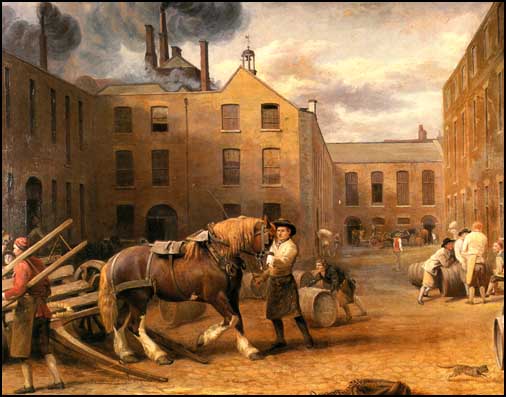
George_Garrard,_Whitbread_Brewery_in_Chiswell_Street_(1792)
The Whitbread Brewery in Chiswell Street, 1792, painted by George Garrard.

Filed Under: Birthdays, Just For Fun Tagged With: England, Great Britain, History, UK

Beer Birthday: Brendan Moylan

February 16, 2025 By Jay Brooks

marin moylans
Today is Brendan Moylan’s 64th birthday. Brendan owns his eponymous Moylan’s Brewing and until very recently, Marin Brewing, which he closed a few years ago. He was a very active part of both the local and beer community, and each year used to put on the Breastfest to benefit breast cancer awareness. Join me in wishing Brendan a very happy birthday.

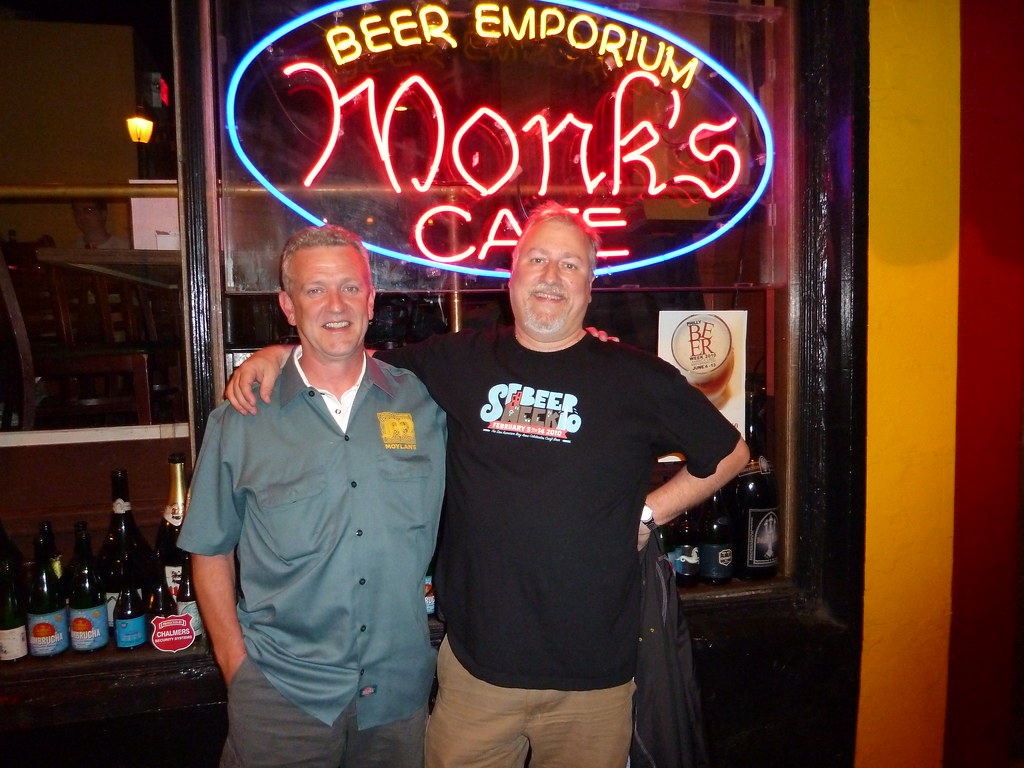
Brendan and in me in front of Monk’s Cafe in Philadelphia during Philly Beer Week in 2010.
Brendan at the Falling Rock during GABF 2007.
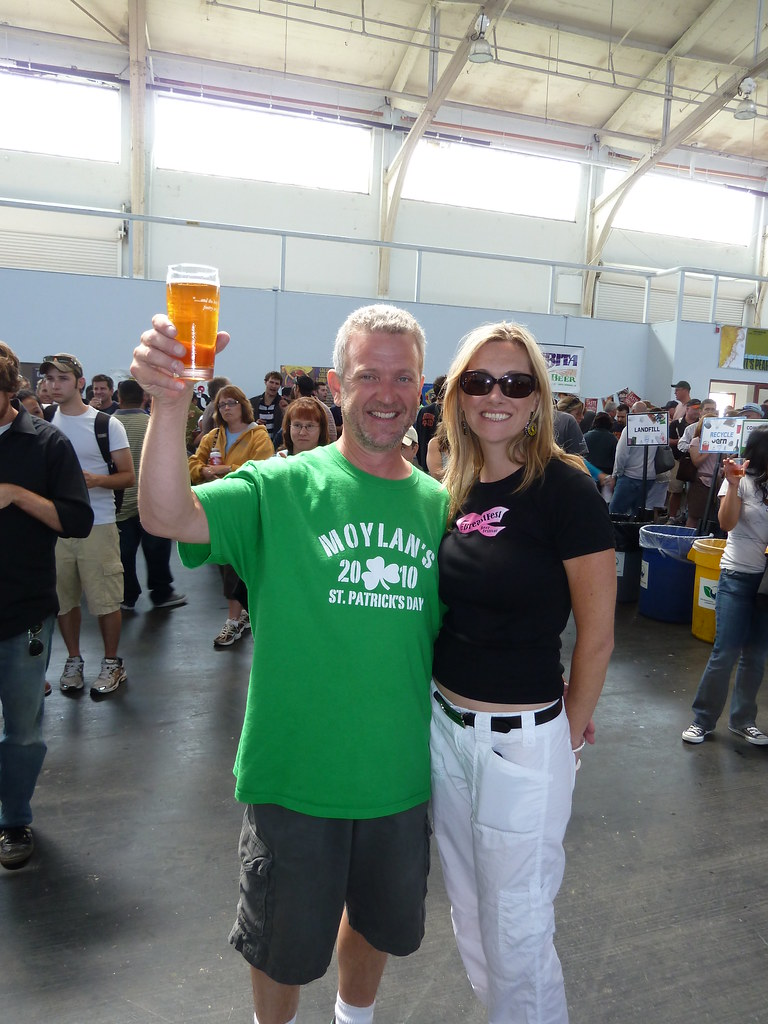
Brendan and his wife at the Breastfest that Marin Brewing sponsors in 2010.
GABF 2010.

Filed Under: Birthdays, Just For Fun Tagged With: Bay Area, California

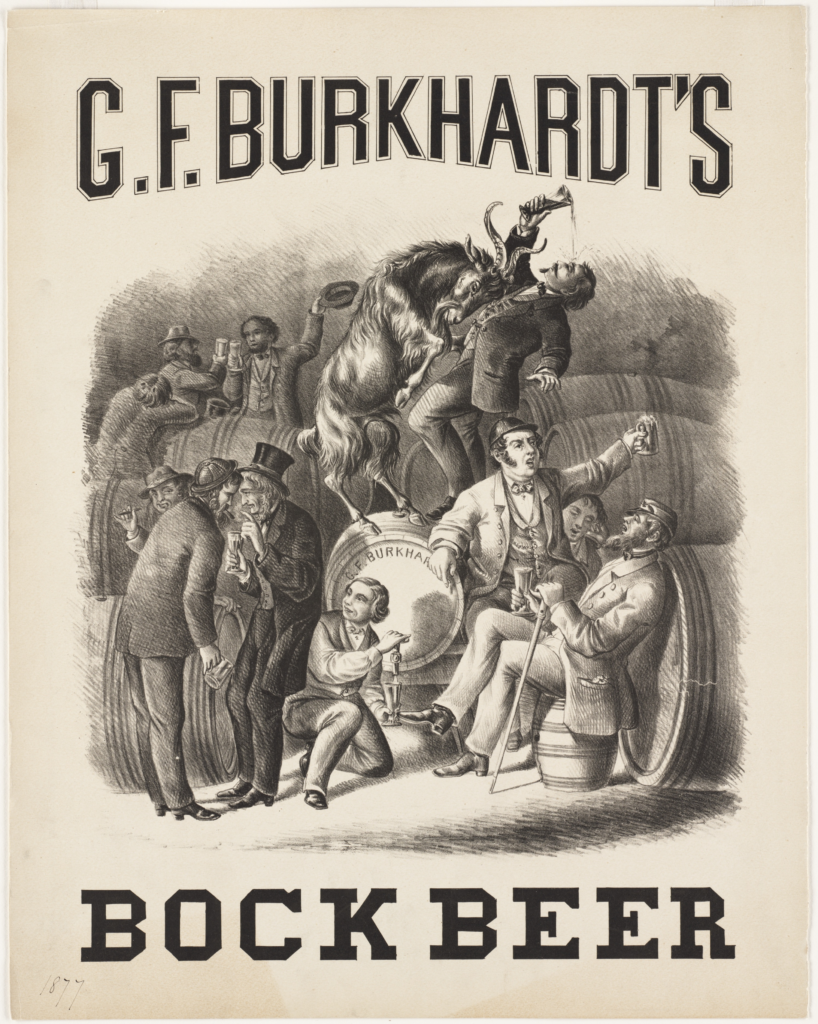
Beer In Ads #4882: G.F. Burkhardt’s Bock Beer

February 15, 2025 By Jay Brooks

Last year I decided to concentrate on Bock ads. Bock, of course, originated in Germany, in the town of Einbeck. Because many 19th century American breweries were founded by German immigrants, they offered a bock at certain times of the year, be it Spring, Easter, Lent, Christmas, or what have you. In a sense they were some of the first seasonal beers. “The style was later adopted in Bavaria by Munich brewers in the 17th century. Due to their Bavarian accent, citizens of Munich pronounced ‘Einbeck’ as ‘ein Bock’ (a billy goat), and thus the beer became known as ‘Bock.’ A goat often appears on bottle labels.” And presumably because they were special releases, many breweries went all out promoting them with beautiful artwork on posters and other advertising.

Saturday’s ad for “Bock” was created for the G.F. Burkhardt Brewing Co., which was located in Boston Massachusetts. They were in business from 1850 until 1918. The lithograph was created in 1877. The artist who created it was Charles Wellington Reed, who in addition to his work as an illustrator and artist, he was also at the Battle of Gettysburg, where he received the Medal of Honor for bravery.

Filed Under: Art & Beer, Beers, Breweries, Just For Fun Tagged With: Advertising, Bock, Boston, History, Massachusetts

American Craft Beer Hall of Fame: Inaugural Inductees

February 15, 2025 By Jay Brooks

Earlier today, the newly organized American Craft Beer Hall of Fame, announced the first class of inductees in a coordinated livestream from multiple locations. You can watch the ceremony on YouTube. The brainchild of Marty Nachel, the Hall of Fame welcomed a dozen members to the inaugural class.

American Craft Beer Hall of Fame:

The 2025 Inaugural Class

Fred Eckhardt, the Dean of American Beer Writers

Charles and Rose Ann Finkel, founders of Merchant du Vin and Pike Brewing

Bert Grant, founder of Yakima Brewing & Malting Co., a.k.a. Grant’s Brewery Pub

Ken Grossman, founder of Sierra Nevada Brewing

Michael Jackson, the Beer Hunter

Jim Koch, founder of Boston Beer Co., makers of Samuel Adams Boston Lager

Fritz Maytag, owner of Anchor Brewing, and the Father of the Microbrewery

Jack McAuliffe, Suzy Stern Denison, and Jane Zimmerman, founders of New Albion Brewing

Charlie Papazian, founder of the American Home Brewing Association, today’s Brewers Association, the Great American Beer Festival, the World beer Cup, and the author of The Complete Joy of Homebrewing

Filed Under: Beers

Beer In Ads #4881: Minneapolis Brewing Bock

February 14, 2025 By Jay Brooks

Last year I decided to concentrate on Bock ads. Bock, of course, originated in Germany, in the town of Einbeck. Because many 19th century American breweries were founded by German immigrants, they offered a bock at certain times of the year, be it Spring, Easter, Lent, Christmas, or what have you. In a sense they were some of the first seasonal beers. “The style was later adopted in Bavaria by Munich brewers in the 17th century. Due to their Bavarian accent, citizens of Munich pronounced ‘Einbeck’ as ‘ein Bock’ (a billy goat), and thus the beer became known as ‘Bock.’ A goat often appears on bottle labels.” And presumably because they were special releases, many breweries went all out promoting them with beautiful artwork on posters and other advertising.

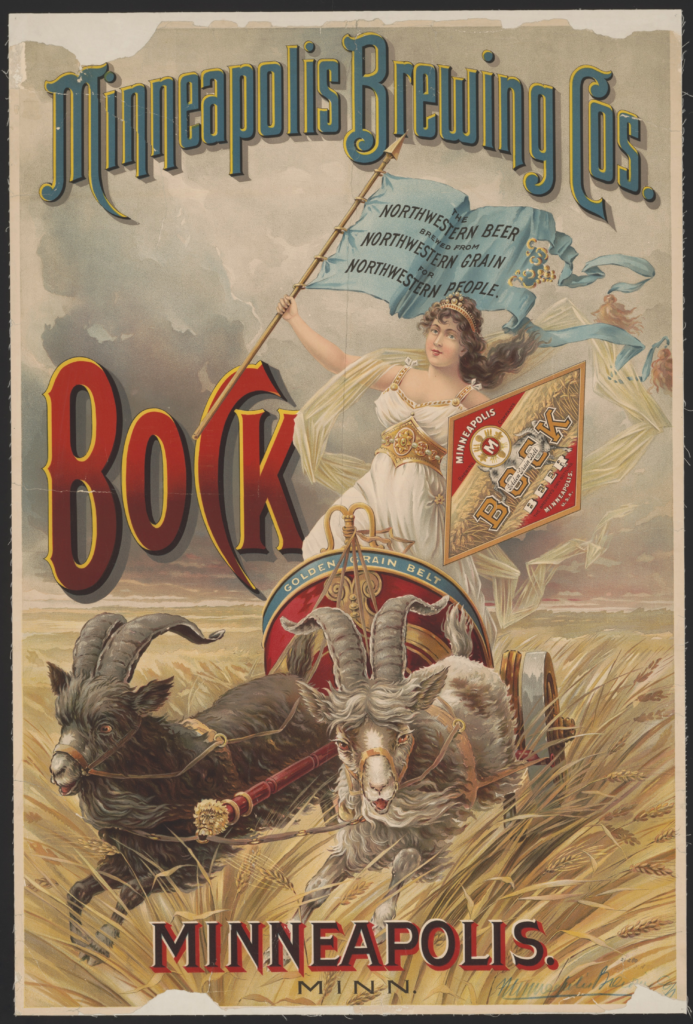
Friday’s ad for “Bock” was created for the Minneapolis Brewing Co., which today is known as Grain Belt. I love the text on the flag. “Northwestern Beer brewed from Northwestern Grain for Northwestern People. The lithograph was created in the 1890s, though I don’t know who the lithographer was that produced it.

Filed Under: Art & Beer, Beers, Breweries, Just For Fun Tagged With: Advertising, Bock, History, Minnesota

Beer In Ads #4880: Centennial Bock Bier

February 13, 2025 By Jay Brooks

Last year I decided to concentrate on Bock ads. Bock, of course, originated in Germany, in the town of Einbeck. Because many 19th century American breweries were founded by German immigrants, they offered a bock at certain times of the year, be it Spring, Easter, Lent, Christmas, or what have you. In a sense they were some of the first seasonal beers. “The style was later adopted in Bavaria by Munich brewers in the 17th century. Due to their Bavarian accent, citizens of Munich pronounced ‘Einbeck’ as ‘ein Bock’ (a billy goat), and thus the beer became known as ‘Bock.’ A goat often appears on bottle labels.” And presumably because they were special releases, many breweries went all out promoting them with beautiful artwork on posters and other advertising.

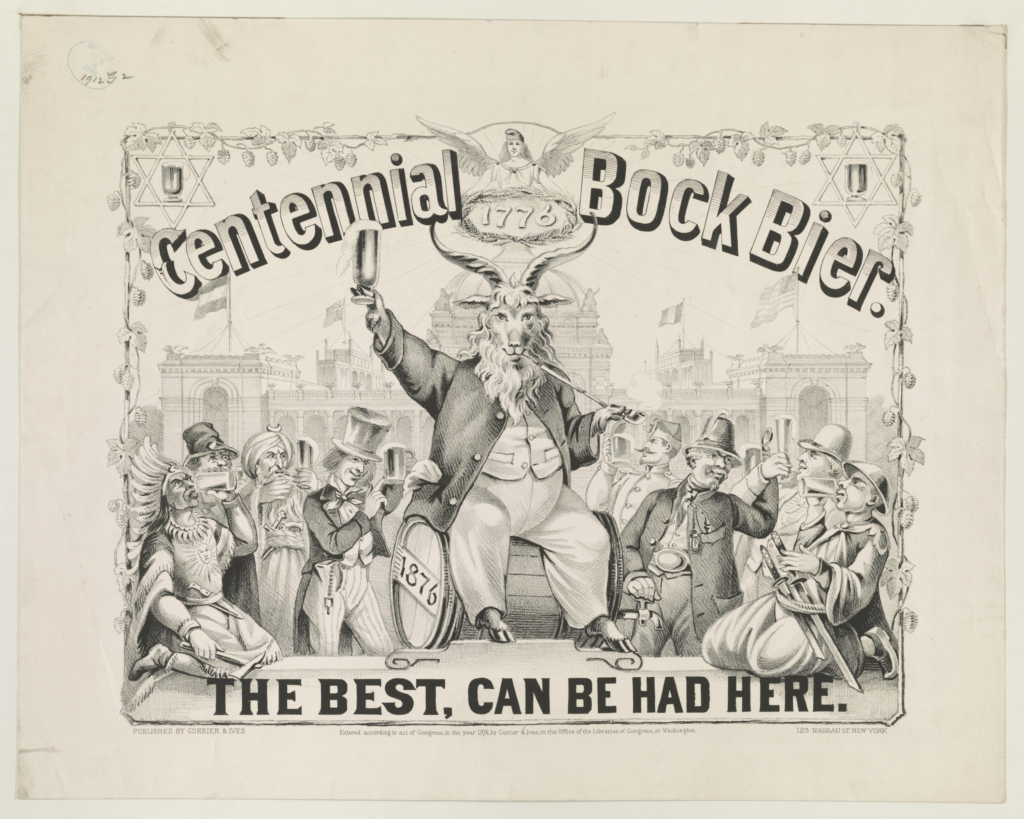
Thursday’s ad for “Bock” depicts a well-dressed goat raising a toast to America’s centennial, with the title: “Centennial Bock Bier. The Best, Can Be Had Here.” The lithograph was created in 1876. The lithographer was the famous Currier & Ives, located at 125 Nassau St., New York. They were a “printmaking business operating from 1835 to 1907. Founded by Nathaniel Currier, the company designed and sold inexpensive hand-painted lithographic works based on news events, views of popular culture and Americana. Advertising itself as “the Grand Central Depot for Cheap and Popular Prints,” the corporate name was changed in 1857 to “Currier and Ives” with the addition of James Merritt Ives.”

Filed Under: Art & Beer, Beers, Just For Fun Tagged With: Advertising, Bock, History, New York

Beer In Ads #4879: Pyramida Bock

February 12, 2025 By Jay Brooks

Last year I decided to concentrate on Bock ads. Bock, of course, originated in Germany, in the town of Einbeck. Because many 19th century American breweries were founded by German immigrants, they offered a bock at certain times of the year, be it Spring, Easter, Lent, Christmas, or what have you. In a sense they were some of the first seasonal beers. “The style was later adopted in Bavaria by Munich brewers in the 17th century. Due to their Bavarian accent, citizens of Munich pronounced ‘Einbeck’ as ‘ein Bock’ (a billy goat), and thus the beer became known as ‘Bock.’ A goat often appears on bottle labels.” And presumably because they were special releases, many breweries went all out promoting them with beautiful artwork on posters and other advertising.

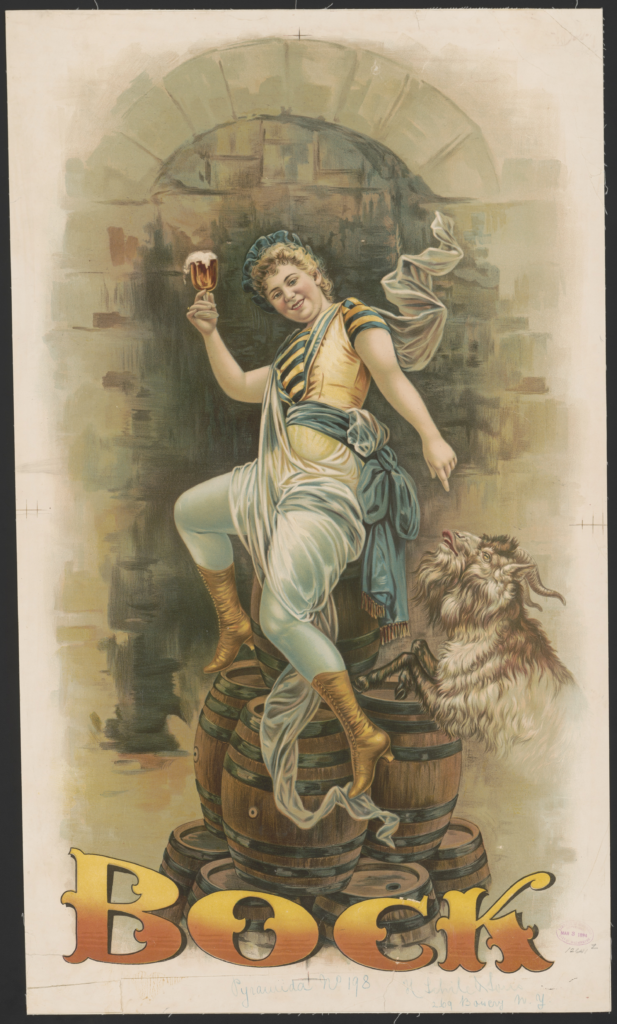
Wednesday’s ad for “Bock” depicts a woman jumping up onto a pyramid of wooden kegs, possibly to escape the goat nipping at her heels. The poster is inexplicably titled “Bock, Pyramida No. 198.” Does that mean there are at least another 197 of these? The chromolithograph was created in 1894. The lithographer was H. Schile & Co. of 269 Bowery in New York City. Henry Jerome Schile was born in Germany, and emigrated to the U.S. in 1851, settling in Manhattan, which is where he opened his own print company.

Filed Under: Art & Beer, Beers, Just For Fun Tagged With: Advertising, Bock, History, New York

Beer In Ads #4878: Goat’s Head Bock Beer

February 11, 2025 By Jay Brooks

Last year I decided to concentrate on Bock ads. Bock, of course, originated in Germany, in the town of Einbeck. Because many 19th century American breweries were founded by German immigrants, they offered a bock at certain times of the year, be it Spring, Easter, Lent, Christmas, or what have you. In a sense they were some of the first seasonal beers. “The style was later adopted in Bavaria by Munich brewers in the 17th century. Due to their Bavarian accent, citizens of Munich pronounced ‘Einbeck’ as ‘ein Bock’ (a billy goat), and thus the beer became known as ‘Bock.’ A goat often appears on bottle labels.” And presumably because they were special releases, many breweries went all out promoting them with beautiful artwork on posters and other advertising.

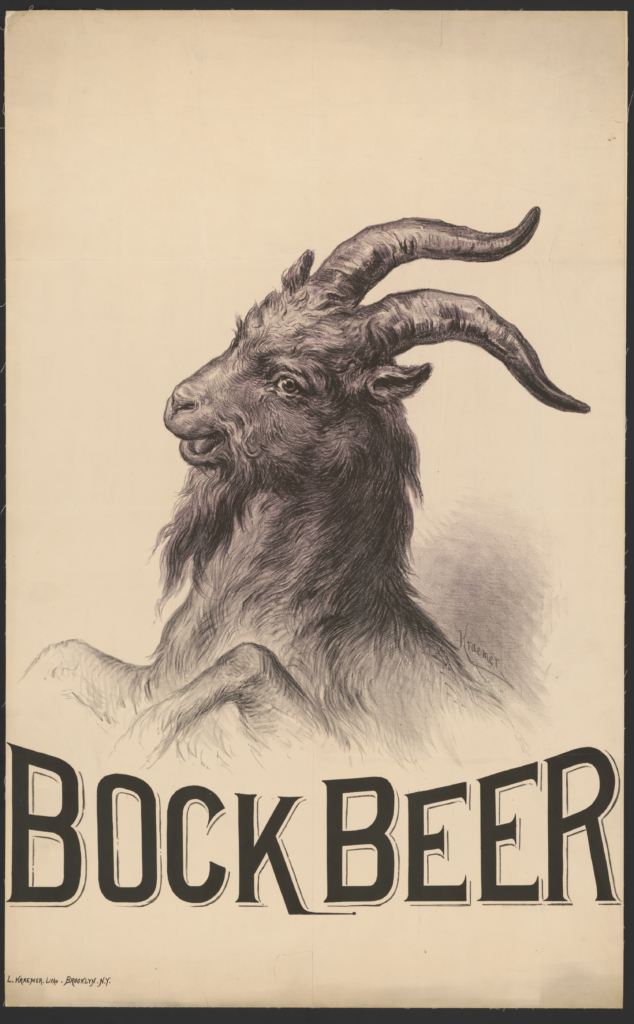
Tuesday’s ad for “Bock” depicts a happy-looking goat up on his hind legs,m with the text below him: “Bock Beer.” The lithograph was created in 1880. The lithographer was L. Kraemer Litho. of Brooklyn, New York.

Filed Under: Art & Beer, Beers, Just For Fun Tagged With: Advertising, Bock, Brooklyn, History, New York

Beer In Ads #4877: White Bock

February 10, 2025 By Jay Brooks

Last year I decided to concentrate on Bock ads. Bock, of course, originated in Germany, in the town of Einbeck. Because many 19th century American breweries were founded by German immigrants, they offered a bock at certain times of the year, be it Spring, Easter, Lent, Christmas, or what have you. In a sense they were some of the first seasonal beers. “The style was later adopted in Bavaria by Munich brewers in the 17th century. Due to their Bavarian accent, citizens of Munich pronounced ‘Einbeck’ as ‘ein Bock’ (a billy goat), and thus the beer became known as ‘Bock.’ A goat often appears on bottle labels.” And presumably because they were special releases, many breweries went all out promoting them with beautiful artwork on posters and other advertising.

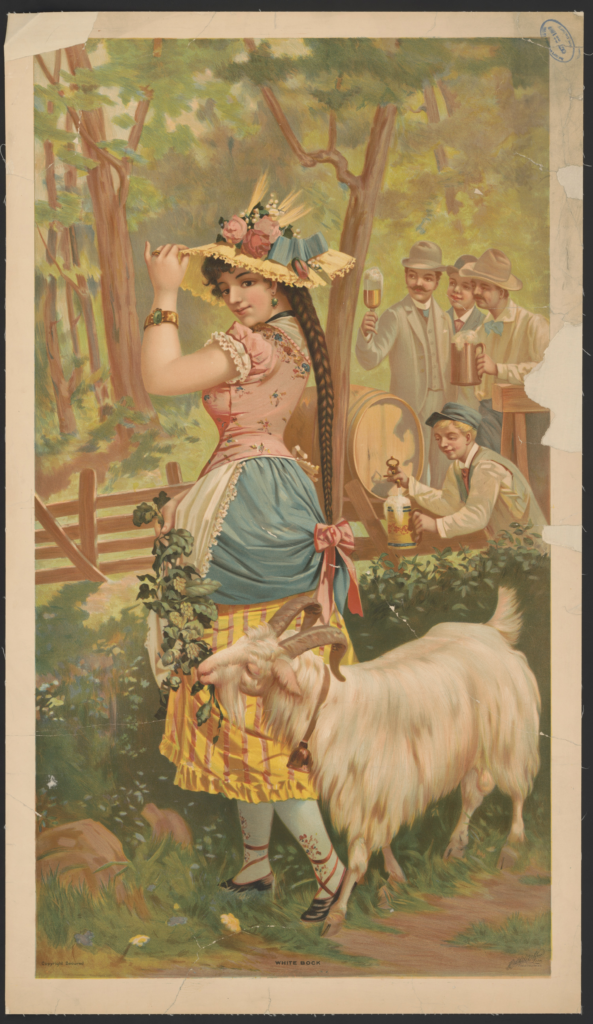
Monday’s ad for “Bock” depicts a well-dressed lady in a fetching hat somewhere in a forest setting. She’s holding a sprig of hops as a white goat is coming up from behind her trying to eat the hops. I presume that’s why the poster is titled: “White Bock.” In the background, a group of men are pouring themselves a beer from a wooden cask. The lithograph was created in 1889. The lithographer was H. Schile & Co. of 295 Bowery in New York City. Henry Jerome Schile was born in Germany, and emigrated to the U.S. in 1851, settling in Manhattan, which is where he opened his own print company.
Filed Under: Art & Beer, Beers, Just For Fun Tagged With: Advertising, Bock, History, New York

« Previous Page
Next Page »

Find Something

Northern California Breweries

Please consider purchasing my latest book, California Breweries North, available from Amazon, or ask for it at your local bookstore.

Recent Comments

  • Ernie Dewing on Historic Beer Birthday: Charles William Bergner 
  • Steve 'Pudgy' De Rose on Historic Beer Birthday: Jacob Schmidt
  • Jay Brooks on Beer Birthday: Bill Owens
  • Steve 'Pudgy' De Rose on Beer Birthday: Charles Finkel
  • Steve 'Pudgy' De Rose on Beer Birthday: Bill Owens

Recent Posts

  • Beer In Ads #5204: Oh Brother! Griesedieck Bros. Genuine Premium Bock Beer Is Here! February 15, 2026
  • Historic Beer Birthday: Emil Resch February 15, 2026
  • Historic Beer Birthday: Philip Zang February 15, 2026
  • Beer In Ads #5203: Robert Portner’s Bock Beer February 15, 2026
  • Historic Beer Birthday: August Schell February 15, 2026

BBB Archives

Feedback

Head Quarter
This site is hosted and maintained by H25Q.dev. Any questions or comments for the webmaster can be directed here.