Brookston Beer Bulletin

Jay R. Brooks on Beer

  • Home
  • About
  • Editorial
  • Birthdays
  • Art & Beer

Socialize

  • Dribbble
  • Email
  • Facebook
  • Flickr
  • GitHub
  • Instagram
  • LinkedIn
  • Pinterest
  • RSS
  • Twitter
  • YouTube

Powered by Genesis

Next Session Uncovers The Other Beer Economy

May 23, 2016 By Jay Brooks

session-the
For our 112th Session, our host will again be Carla Jean Lauter, a.k.a. The Beer Babe. For her topic, she’s chosen The Other Beer Economy, and I”ll let her explain what that means.

beer-economy

Last year, the total economic impact of the beer brewing industry in the state of Maine was approaching the same scale as the lobster industry. Let that sink in for a second. Maine – which is arguably *best* known for lobsters – is shifting to an economy strongly supported by brewing.

Growing alongside of the boom of breweries are many small businesses that are supporting, or supported by the craft beer industry. Maine is now home to a malt processing facility, and several hop farms. There are multiple beer tourism-focused businesses that help connect visitors to the state’s best beer offerings. There are companies that create beer-related apparel for beer fans, some that have designed unique bottle openers and manufacture them in-state. Maine is also home to a company that manufactures and installs brewing equipment, and another whose sole mission is to clean the lines that serve up that beer to thirsty beer fans.

Yet, we rarely give these businesses a second thought. They are the second beer economy, often operating behind-the-scenes. I think we could give them a bit more credit for keeping things growing, sharing the products of our local breweries with more people, and sometimes even literally keeping the beer flowing.

For this month’s session, let’s talk about those businesses in the beer world that aren’t breweries. What are the roles that they can play? What opportunities still exist for new niche roles to be developed? What can local/state/regional governments do to encourage this kind of diversity of businesses around an industry?

I’m excited to hear your thoughts and stories.
spatalesbeer

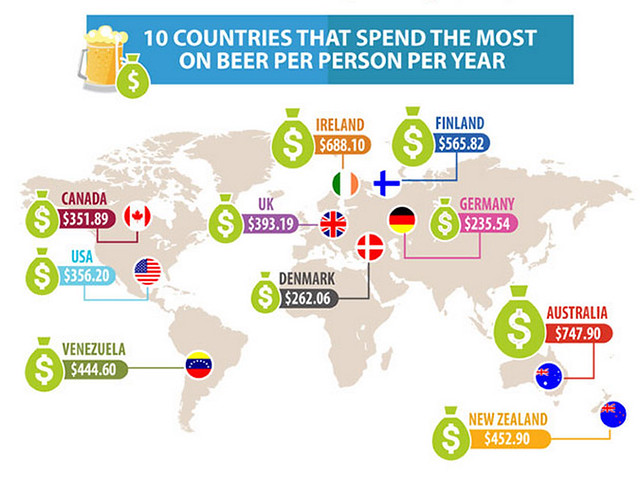
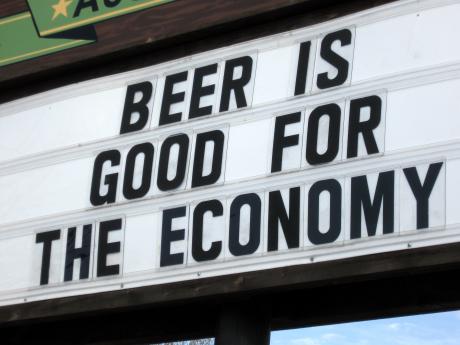
So this June 3, start thinking like a dismal scientist and look at the economic indicators, the market forces and the new economic models. To participate in the June Session, leave the link to your post in a comment to the original announcement or tweet your link to her at the @beerbabe on or before Friday, June 3.
beer-good-for-economy

Filed Under: Just For Fun, The Session Tagged With: Announcements, Blogging, Social Media

Patent No. DE2751778A1: Beer Piping Cleaning System

May 23, 2016 By Jay Brooks

patent-logo
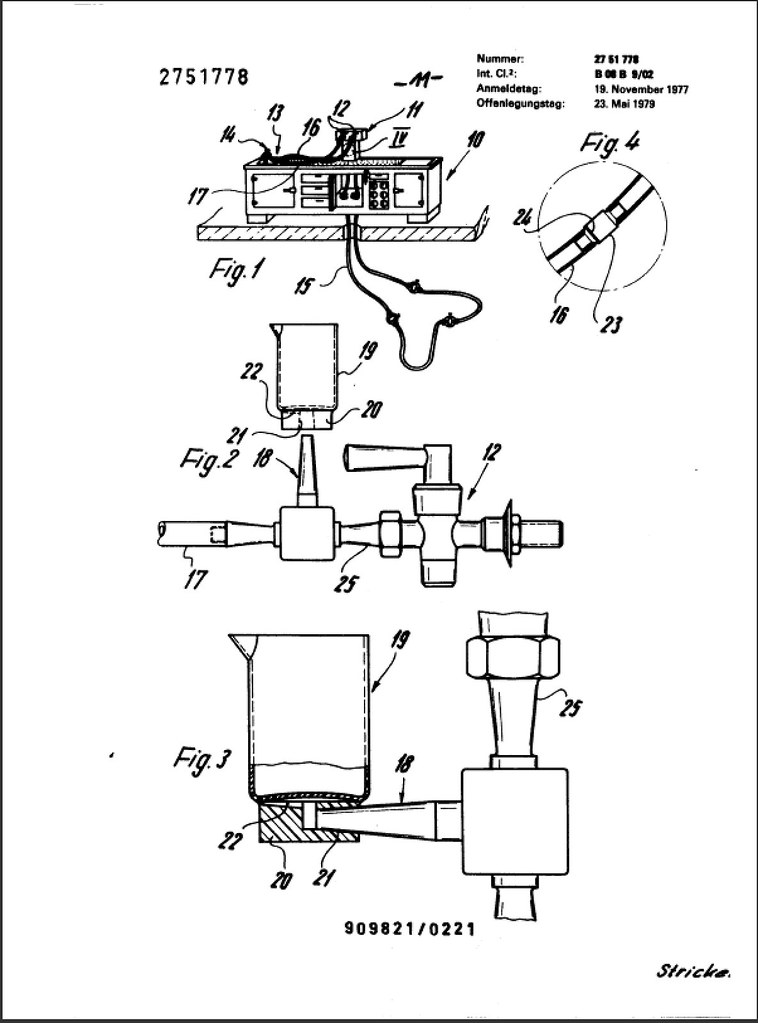
Today in 1979, US Patent DE 2751778 A1 was issued, an invention of Heinz Stricker, for his “Beer Piping Cleaning System — with suction nozzle for disinfectant inserted in tap water circuit.” Here’s the Abstract:

A system for the cleaning out of piping between bar barrels and the taps in a bar consists of a hose which is coupled between a water tap and a beer tap and includes a suction nozzle. A beaker with a disinfectant is attached to the nozzle so that the flow of water entrains the disinfectant. The piping in the cellar is disconnected from the barrels and coupled together so that the fluid can rise to another beer tap and out into a sink. After a certain retention time the whole is flushed out with clean water. This provides a chemical cleaning in addition to the conventional sponge cleaning.

2751778

Filed Under: Beers, Just For Fun, Politics & Law, Related Pleasures Tagged With: Bars, History, Kegs, Law, Patent

Beer In Ads #1919: Holiday Visitors

May 22, 2016 By Jay Brooks


Sunday’s ad is entitled Holiday Visitors, and the illustration was done in 1950 by Douglass Crockwell. It’s #50 in a series entitled “Home Life in America,” also known as the Beer Belongs series of ads that the United States Brewers Foundation ran from 1945 to 1956. In this ad, friends and family are arriving, bearing gifts, for a Christmas party. It’s cold outside, but a fire going inside and a tray of beer waiting for them. Sounds like a party to me.

050. Holiday Visitors by Douglass Crockwell, 1950

Filed Under: Art & Beer, Beers, Just For Fun Tagged With: Advertising, History

Patent No. 1959501A: Beer Dispensing Device

May 22, 2016 By Jay Brooks

patent-logo
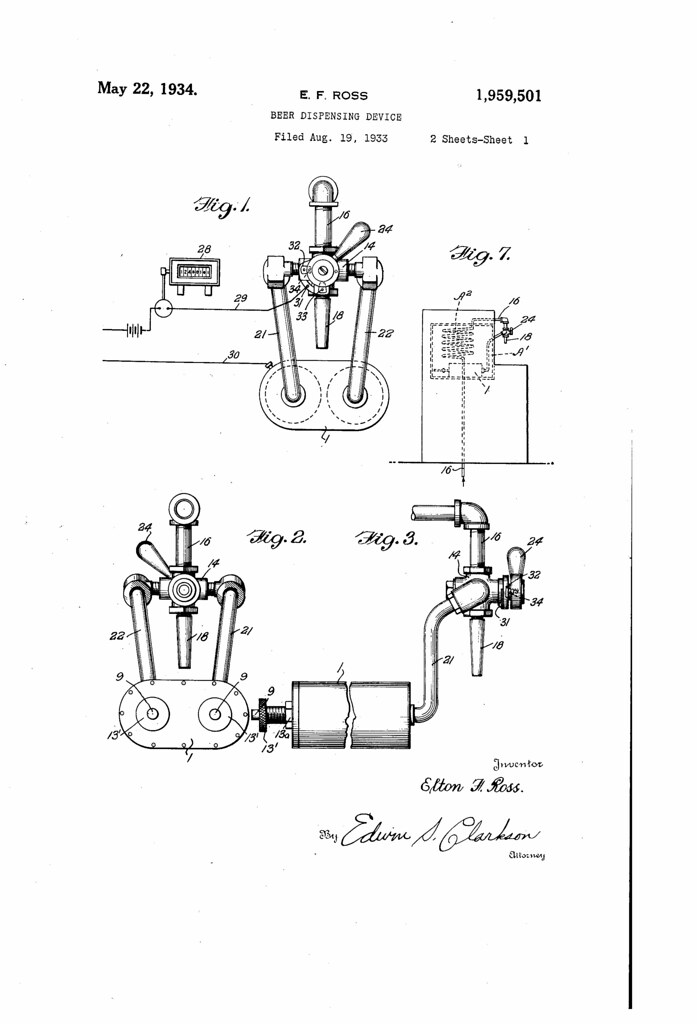
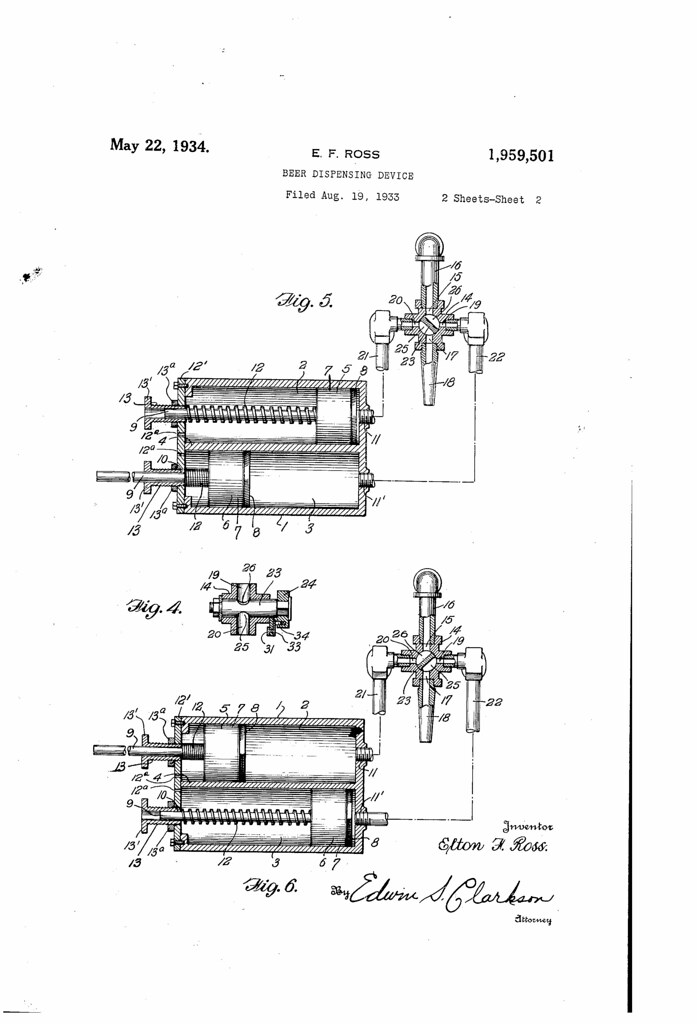
Today in 1934, US Patent 1959501 A was issued, an invention of Elton F. Ross, for his “Beer Dispensing Device.” There’s no Abstract, though it’s described this way in the application:

This invention relates to a device for dispensing beer and other carbonated liquids discharged under pressure from a keg or other source of supply, and particularly to a dispensing device designed to supply measured quantities of the liquid and to control the discharge so as to prevent waste of the liquid and other objections due to wildness of the liquid.

US1959501-0
US1959501-1

Filed Under: Beers, Just For Fun, Politics & Law, Related Pleasures Tagged With: History, Kegs, Law, Patent

Patent No. 821208A: Beer Glass Tray

May 22, 2016 By Jay Brooks

patent-logo
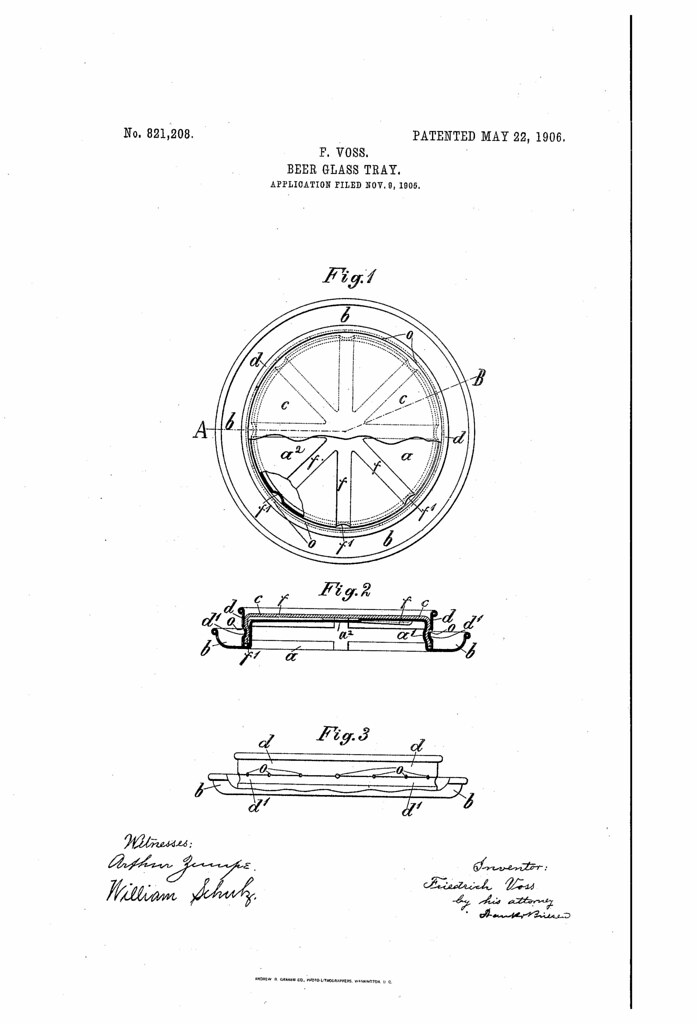
Today in 1906, US Patent 821208 A was issued, an invention of Friedrich Voss, for his “Beer Glass Tray.” There’s no Abstract, though it’s described this way in the application:

This invention relates to a beer-glass tray which absorbs the drippings and conveys the same to a receiving-trough, so that cleanliness is insured.

US821208-0

Filed Under: Beers, Just For Fun, Politics & Law, Related Pleasures Tagged With: Bars, Glassware, History, Law, Patent, Pubs

Beer In Ads #1918: Thanksgiving Dinner

May 21, 2016 By Jay Brooks


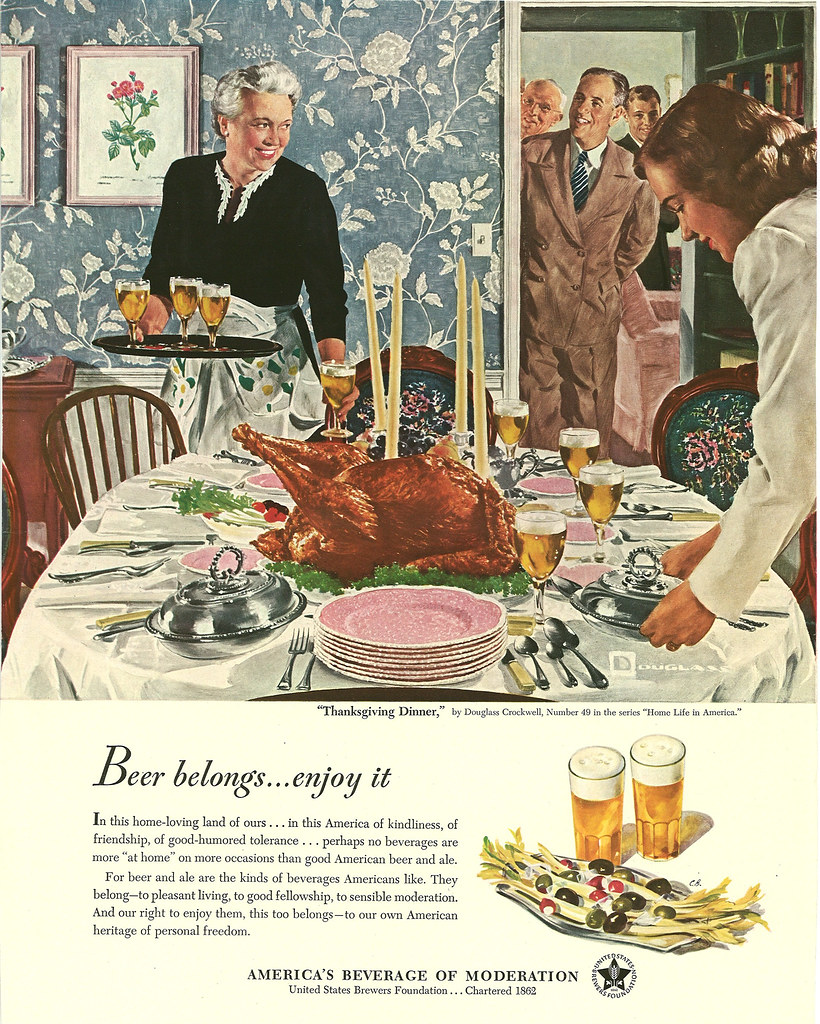
Saturday’s ad is entitled Thanksgiving Dinner, and the illustration was done in 1950 by Douglass Crockwell. It’s #49 in a series entitled “Home Life in America,” also known as the Beer Belongs series of ads that the United States Brewers Foundation ran from 1945 to 1956. In this ad, a picture perfect Thanksgiving turkey is on the dinner table, but the it’s not complete. People wait in the wings to be seated until the most important job is done. The matriarch of the family is putting beer glasses down at each place setting, the final touch, before the holiday meal can begin. Just like at my house. If that text, and the art, looks familiar, you’ve got a good memory as this exact same Thanksgiving Dinner piece was used in 1947 as #10 in the series.

049. Thanksgiving Dinner by Douglass Crockwell, 1950

Filed Under: Art & Beer, Beers, Just For Fun Tagged With: Advertising, History, Holidays

Patent No. WO1987002975A1: A Beer Tapping Installation

May 21, 2016 By Jay Brooks

patent-logo
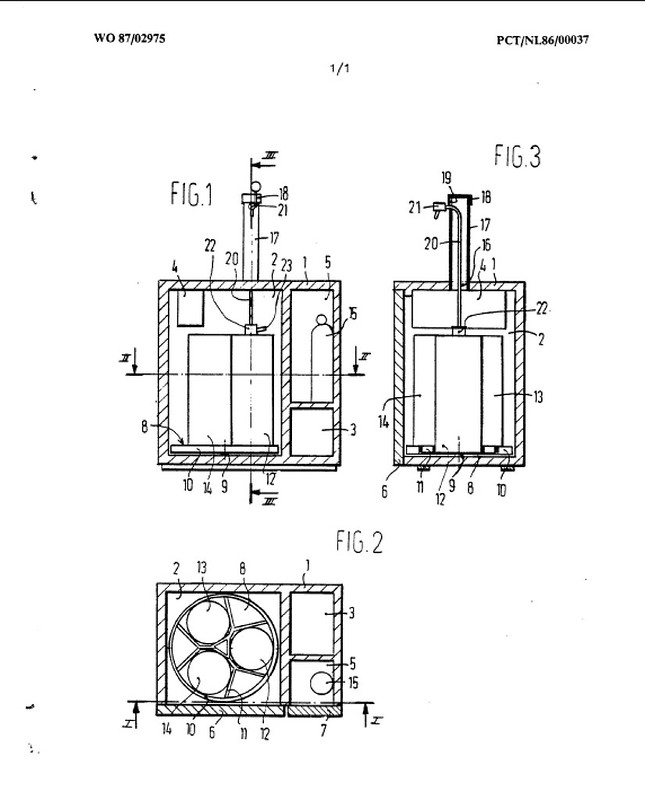
Today in 1987, US Patent WO 1987002975 A1 was issued, an invention of Jacobus Dijkstra and Gijsbert Slootweg, assigned to Heineken Technisch Beheer B.V., for their “A Beer Tapping Installation.” Here’s the Abstract:

A beer tapping installation comprising a refrigerator having a cask cooling and installation space (2) including a revolving platform (8) on which casks (12, 13, 14) can be placed and with a space for accommodating a CO2 cylinder (15), as well as a tap (21), a beer line (20) from the cask installation space to the tap, a hollow support (17) for enveloping the beer line from the refrigerator to the tap, a cask coupling (22) on the beer line and a CO2 supply line from the CO2 container to the cask coupling. The hollow support is in open communication with the cask cooling and installation space and the beer line, together with the cask coupling and the tap, is movable longitudinally of the hollow support.

1987002975

Filed Under: Beers, Just For Fun, Politics & Law, Related Pleasures Tagged With: History, Kegs, Law, Patent

Beer In Ads #1917: Home From Hunting

May 20, 2016 By Jay Brooks


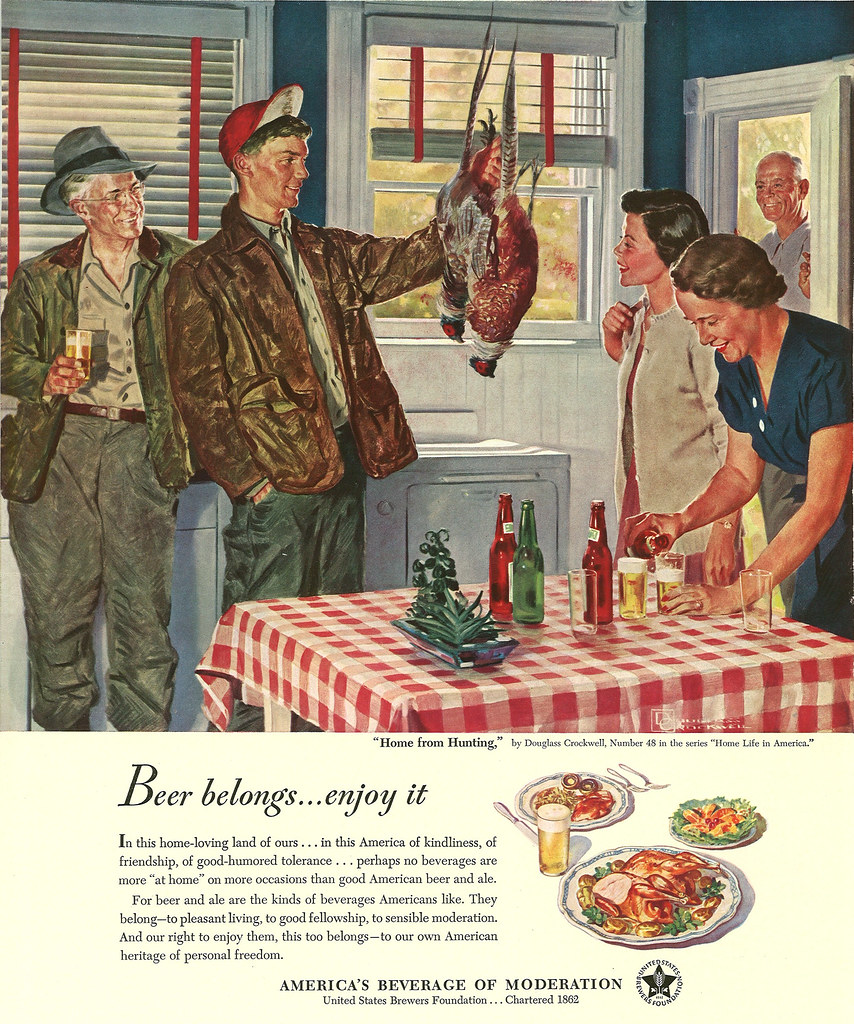
Friday’s ad is entitled Home from Hunting, and the illustration was done in 1950 by Douglass Crockwell. It’s #48 in a series entitled “Home Life in America,” also known as the Beer Belongs series of ads that the United States Brewers Foundation ran from 1945 to 1956. In this ad, some men are returning home from a hunting expedition with a pair of pheasants as their prize, and it’s smiles all around. And that looks a little odd for some reason, seeing everyone grinning about the dead birds. Something esle in this ad worth noting is how small the beer glasses are. Look at them in relationship to the beer bottles on the table and in the man on the left’s hand. They look six or eight ounce juice glasses, which seems strange.

048. Home From Hunting by Douglass Crockwell, 1950

Filed Under: Art & Beer, Beers, Just For Fun Tagged With: Advertising, History

Stone Brewing To Open Taproom & Pilot Brewery In Napa

May 20, 2016 By Jay Brooks

stone
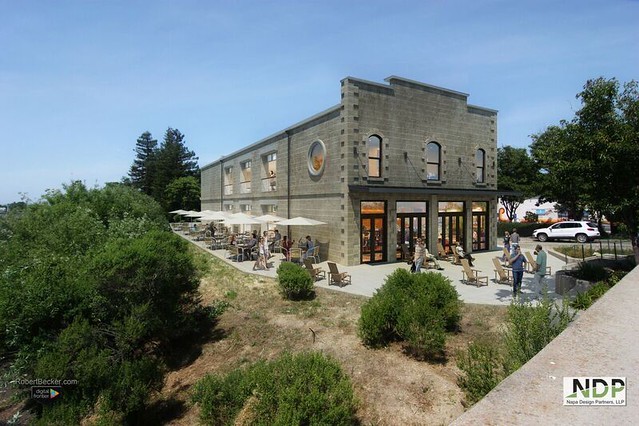
Stone Brewing announced today that they were renovating the historic 10,000 square foot Borreo building in downtown Napa. Once completed, it will be a tap room and pilot brewery, which will do growler fills, as well as create exclusive beers for that location. The restaurant will use locally sourced food available “on premise or to take away picnic style.” The new Stone taproom is expected to open sometime next year.

Stone-napa

Here’s the press release from Stone Brewing:

Stone Brewing will begin renovations to a 10,000 square-foot iconic building in downtown Napa, bringing its bold and flavorful craft beer to the region well-known for its amazing wine. Stone’s newest outpost, located on 3rd Street and Soscol Avenue, will include a pilot brewing system, a dining experience, growler fills and Stone merchandise.

“The historic Borreo building is the perfect space for us to put down our roots in Napa,” said Greg Koch, Stone Brewing CEO & co-founder. “Not only is it literally made of stone, it’s one of downtown’s most iconic links to the 19th century and a landmark that’s been vacant for the past 15 years. We recognize the high quality of wine that comes from the region and the appreciation that Napa Valley locals and visitors have for fresh, well-crafted drink. We are elated to become a contributing part of such an artisanal town.”

The 10-barrel pilot brew system will enable brewers to produce Stone’s iconic bold and innovative beer using core recipes as well as indigenous ingredients from the local geography. The Stone Brewing Tap Room – Napa will fill growlers and serve Stone’s year-round beers as well as special releases brewed onsite.

Stone’s food philosophy will carry over to its newest Tap Room with a dining experience that incorporates the local Napa flavors for enjoyment on premise or to take away picnic style. Stone proudly specializes in locally grown, small-farm ingredients and features an eclectic menu of world-inspired cuisine and a unique take on comfort food. As strong advocates for environmental responsibility and high-quality food, Stone will purchase local and small-farm organic produce from the Napa region. Making the most of outstanding weather is something the San Diego-based company is quite familiar with. Locals and tourists visiting Stone Brewing Tap Room – Napa will enjoy an outdoor seating area complete with communal tables, fire pits and views overlooking downtown Napa.

The historic Borreo building, named for the family that formerly owned the historic stone structure, is an Italianate Renaissance design made from native-cut stone. It was completed in 1877 and has been vacant since 2001. While keeping historic elements in place, Stone plans to transform the building’s western wall, adding expansive doors to a stunning garden facing the Napa River.

“I’m a huge Napa fan,” said Koch. “I’ve been visiting for more than 20 years and I first toured through the Borreo Building nearly five years ago. We’ve tried a few times to make something happen there, and are thrilled to finally see it come to fruition!”

With an anticipated opening in 2017, Stone Brewing Tap Room – Napa joins two expansion projects already underway for the growing company. Stone Brewing World Bistro & Gardens – Berlin will open its doors in Germany this summer. Stone Brewing — Richmond will begin supplying fresh Stone beer from its 250-barrel brewhouse in July.

Filed Under: Beers Tagged With: Announcements, Bay Area, Northern California, Press Release

Patent No. 4590085A: Flavor Enhancement And Potentiation With Beer Concentrate

May 20, 2016 By Jay Brooks

patent-logo
Today in 1986, US Patent 4590085 A was issued, an invention of Daniel R. Sidoti, John H. Dokos, Edward Katz, and Charles M. Moscowitz, assigned to Anheuser-Busch Incorporated, for their “Flavor Enhancement And Potentiation With Beer Concentrate.” Here’s the Abstract:

A new method for intensifying the inherent flavors of foods and for imparting other desirable organoleptic properties is disclosed. The method consists of adding to foodstuffs a flavor enhancing amount of a heat denatured concentrate of beer. There is also provided a process for producing the above described concentrate.

FRUIT-BEER-CONCENTRATE

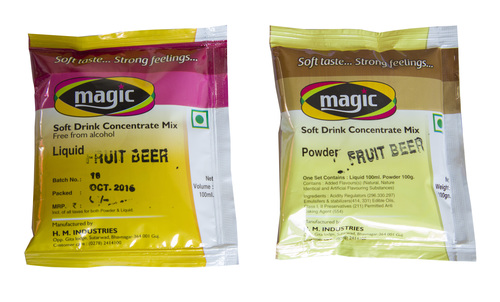
While the abstract doesn’t tell us too much, the background from the application is very interesting, as it talks quite a bit about beer in cooking, which appears to be the primary goal of the patent’s use, although the patent has lapsed, so I don’t know if it was ever used in a commercial product. I know there have been, and even currently are, powdered beer products on the market, this one seems aimed at adding beer flavoring to cooking, rather than being able to make instant beer by adding water.

BACKGROUND OF THE INVENTION

Foodstuffs of all varieties whether precooked, served hot or cold, or whether prepared without cooking have flavors, aroma, and other organoleptic properties that influence the sensory perceptions of human taste. The manufacturers of such foods as sauces, spreads, dips, soups, dressings, stuffings, garnishes, meats, fish, vegetables, salads, breads, etc. whether dry, frozen, refrigerated or canned, desire to produce products organoleptic properties closely profiling the natural flavors, aromas and textures that appeal broadly to the sensory perceptions of the consuming public. A food whose natural flavors are unduly masked may be too bland, or if overly modified with added flavor components, it may be perceived as too spicy. The availability of spices, condiments, etc., permits the individual consumer to adjust the flavor of food purchased from the shelf to suit his or her particular taste preference.

Nevertheless, food manufactures because of the nature of precooking processes, the addition of preservatives, the packaging and keeping techniques of retorting, pasturization, etc. will often times find that the desired natural flavor of the foodstuff has been suppressed below the threshold taste perceptions of the average consumer. Accordingly, techniques for addressing this deficiency have become customary to the industry.

One such technique involves the use of chemical compounds which intensify the flavors inherently present in food without adding any flavor from the chemical itself. These compounds are known as Flavor Enhancers and include, for example, linalool, 2-nonenal which is used to enhance the flavor of coffee, and certain sulfur containing amino acids which are used to enhance meaty flavors. Other chemicals serve as flavor enhancers through reacting with endogenous flavor components of food itself to synergistically promote the combined flavor effect of those components.

Another technique which is commercially employed to address the problem of suppressed natural flavors is that of using chemical compounds which when added to foods in very low concentrations to catalytically create desirable organoleptic properties of the foodstuff otherwise undetectable. These compounds are known as Flavor Potentiators, and like Flavor Enhancers, their taste is not itself detectable to the sensory perceptions of the ordinary consuming public.

There are drawbacks, however, to the previously known Flavor Enhancers and Potentiators. One foremost disadvantage is that these compounds are selective in their functional contribution to flavor development. The same compound which enhances coffee flavor may have a deleterious effect, if any effect at all, on, for example, cheese flavor. Accordingly, some food products such as soups, dressings and some pastries which have a combined variety of natural flavors are extremely difficult to potentiate or enhance from previously known chemicals.

Another serious drawback to previous flavor enhancement and potentiation techniques is that they require the addition of chemical compounds which have no nutritional value themselves nor are they derived from natural food or beverage constituents.

It has now been found and this finding forms the basis of this invention, that Flavor Enhancement and/or Potentiation can be achieved by the addition of denatured beer concentrate to foodstuffs of all types and varieties, whether cooked or prepared fresh, without the need to employ non-nutritional, chemical compounds.

It should be appreciated that cooking with beer is not new. The book Cooking With Beer by Carole Fahy, first published in 1972 by Elm Tree Books, indicates that the brewing of beer is known to have been practiced in Mesopotamia and Egypt at least 5,000 years ago. The Egyptians passed on their knowledge of brewing to the Greeks who in turn handed it down to the Romans who refined the Anglo-Saxon form which was already in place at the time of the Roman conquest. English ale became the basis for many religious and social festivals and is said to have accompanied bread as the sole breakfast menu of Queen Elizabeth I.

Ales and beers are all manufactured beginning with mashing barley malt and possibly grain adjuncts such as barley, corn and rice. This is filtered, brought to boil, pitched with hops and result in a wort which consists of water, dextrine and fermentable sugars. The wort is then fermented with yeast.

English ales have been traditionally distinguished from American brews or lagers primarily on the basis of the type of yeast employed to ferment fermentable sugars of the precursor wort into alcohol. Secondarily, there is a distinction between the ratio of malt and grain adjuncts in the mash in that ales customarily have far less, if any, grain adjuncts. Also there are distinctions in the level of hop addition. These factors contribute significantly to the variations in taste of American brews or lagers and ales.

Beers have gained some limited acceptance in cooking as a consequence of their richness, delightful taste, their ability to improve the texture and lightness of cakes, pies and batters; their tenderizing effect on tough meats; their contribution to preserving foods; their ability to make breads rise; their adding piquancy to dull vegetables and attractively glazing roasted meats and a few other culinary virtues. However, each of these benefits is owed to the full compliment of the beer flavor and texture attributes present naturally and, in the case of assisting cakes to rise, its fermentable state with its residual yeast in active form and its carbonation being readily apparent.

It has been determined however, that the use of beer in cooking does have its limitations. For example, if you are making a soup which requires dried vegetables according to Carole Fahy in Cooking With Beer, you must make certain that you soak them thoroughly, overnight, before use because the hard pellets will otherwise sink to the bottom of a rich vegetable beer soup apparently due to slow diffusion of beer molecules through the surface membrane and interior of the dried vegetables. Additionally, when sieving foods as for example, soups, the richer the beer is, the more difficult to push entirely through the strainer without losing some of the desired flavor. Still further, it is found necessary to cook foods longer with beer to fully develop the flavor. Finally, and perhaps most importantly, cooking with beer imparts of a clear beer flavor to the foodstuffs tending to mask the inherent natural flavors of the other foodstuffs. Accordingly, beers, although employed previously in cooking, have not been used nor thought to have any Flavor Enhancing or Potentiation functionality. Likewise, previous beer extracts or concentrates have had no utility in flavor enhancement but rather have been prepared in undenatured form in order to be reconstituted into either alcoholic or nonalcoholic beverages.

British Patent No. 2127 describes the prepration of a nonalcoholic beer extract or concentrate. Although the concentration can be effected in any efficient vacuum evaporation apparatus, the first end to be attained is the separation of the alcohol produced by fermentation at as low a temperature as possible. After separation, as disclosed in this patent, the temperature may be raised, but the subsequent evaporation must be carefully conducted otherwise aromatic compounds present may be expelled or destroyed and the color of the product materially increased. The product is said to be pleasant to the taste and to possess all the nutritive and feeding properties of original beer before removal of the alcohol and subsequent concentration. The product is employed as an ale concentrate designed to be reconstituted into a non-alcohlic beverage by the addition of water.

British Patent No. 1,228,917 discloses a dry extract of a fermented beverage. However, it is compounded with dry yeast in live active form, together with dry fermentable carbohydrates or dry unfermented wort containing fermentable carbohydrates in order to permit fermentation when diluted. The boiling evaporation utilized to produce the extract is under a vacuum high enough to take place at the predetermined low temperature of 100° F. The original fermented beverages and their respective solids or residues and the yeast are protected during evaporation by the low temperatures. The evaporation at yeast-preserving temperatures with minimum of exposure to the heat also preserves the solubility of the enzymes of yeast and, therefore, the yeast remains in active condition so it will act vigorously when the extract is diluted with water for the preparation of a beverage.

In British Patent No. 1,290,192, a beer extract is produced from evaporating a partly fermented beverage at temperatures below 80° F. or any other suitably low temperature that will preserve the constituents of the reduced wort in a soluble state. The extract contains fermentable substances with the same characteristics of the beverage from which the extract was made. It possesses the characteristic flavor and taste of the original beverage that can be produced and imparted by yeast fermentation and is naturally alcoholic; and when suitable diluted with water, provides a beverage having the flavor and taste of the original beverage. The yeast, however, is used in large quantity for example, twice as much in respect to the amount of fermentable carbohydrates as is usually employed to pitch ordinary fermented beverages.

SUMMARY OF THE INVENTION

It is an object of the present invention to provide a new and useful technique for flavor enhancement and potentiation intensifying the inherent natural flavors of food and creating desirable organoleptic properties to a broad range of foodstuffs with a derivative of a nutritious foodstuff natural concentrate despite having substantially denatured the components of flavor and color, consistency, solubility and fermentability from the concentrate.

It is a further object of this invention to provide a new and useful concentrate of beer and its method of manufacture.

These objects and others are fulfilled by heat treating a fermented malt beverage or beer at sufficiently high temperatures to substantially denature the product and adding it at very low levels to foodstuffs. The denatured beer concentrate is added in amounts below which the concentrate is detectable in taste or mouth feel, but sufficient to achieve flavor enhancement and potentiation.

Filed Under: Beers, Food & Beer, Just For Fun, Politics & Law, Related Pleasures Tagged With: Cooking, Food, History, Law, Patent

« Previous Page
Next Page »

Find Something

Northern California Breweries

Please consider purchasing my latest book, California Breweries North, available from Amazon, or ask for it at your local bookstore.

Recent Comments

  • Bob Paolino on Beer Birthday: Grant Johnston
  • Gambrinus on Historic Beer Birthday: A.J. Houghton
  • Ernie Dewing on Historic Beer Birthday: Charles William Bergner 
  • Steve 'Pudgy' De Rose on Historic Beer Birthday: Jacob Schmidt
  • Jay Brooks on Beer Birthday: Bill Owens

Recent Posts

  • Beer In Ads #5259: Be Hospitable During The Smeltania June 4, 2026
  • Historic Beer Birthday: Frank Leonard Eppig June 4, 2026
  • Historic Beer Birthday: August Schmid June 4, 2026
  • Historic Beer Birthday: David & Louis Kuntz June 4, 2026
  • Beer In Ads #5258: Enjoy Delicious Bock Beer June 3, 2026

BBB Archives

Feedback

Head Quarter
This site is hosted and maintained by H25Q.dev. Any questions or comments for the webmaster can be directed here.