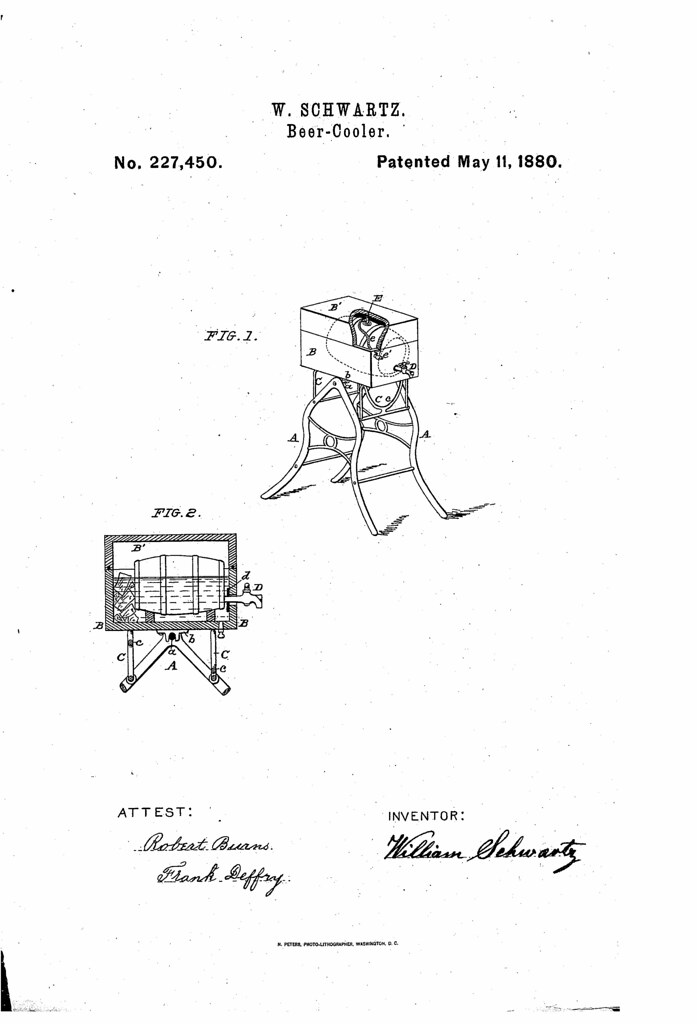
Today in 1880, US Patent 227450 A was issued, an invention of William Schwartz, for his “Beer-Cooler.” There’s no Abstract, and all it says in the description is that Schwartz “invented certain Improvements in Beer-Keg Receptacles.” I guess you have to read through the rest of it to figure it out.
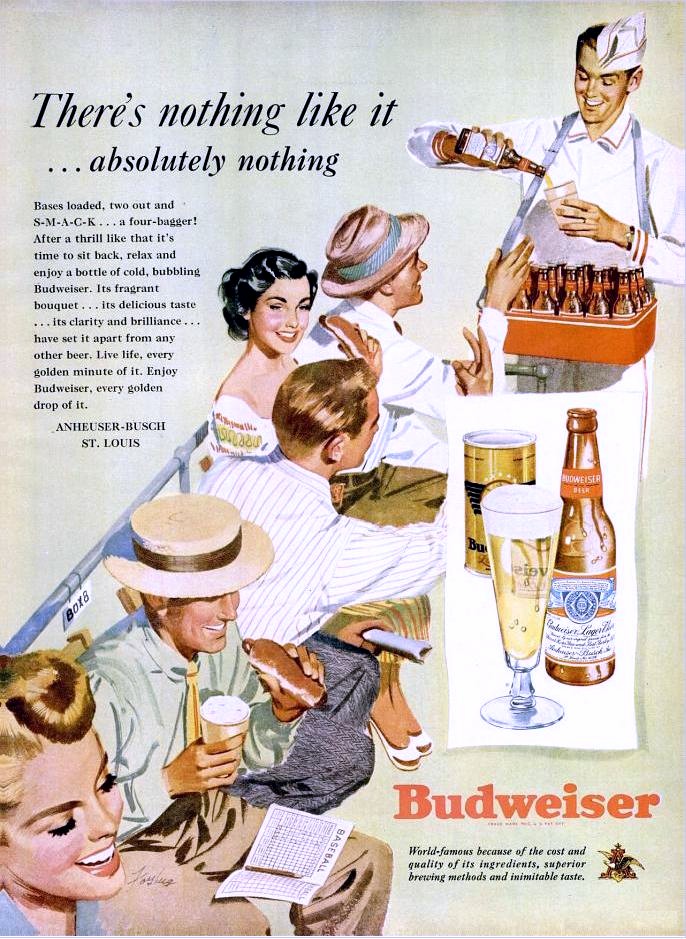
Beer In Ads #1551: Bases Loaded, Two Out And S-M-A-C-K

Sunday’s ad is for Budweiser, from 1949. The ad illustrates a scene at a baseball game, with a uniformed beer vendor — how does he keep that hat on his head? — is pouring a bottle of Budweiser into a paper cup, while they watch the game, eat hot dogs and order more beer. Seems like a pretty good day.
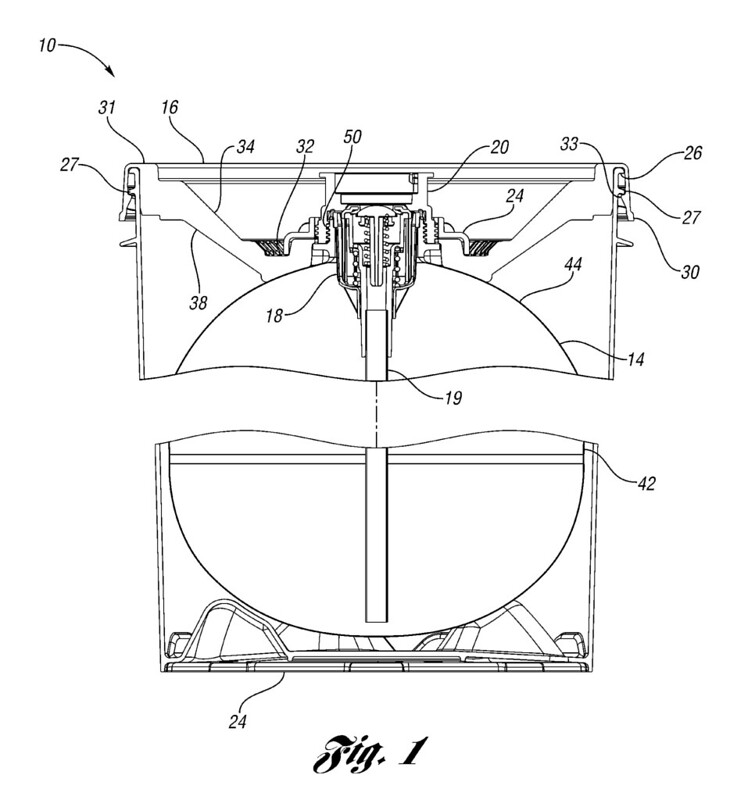
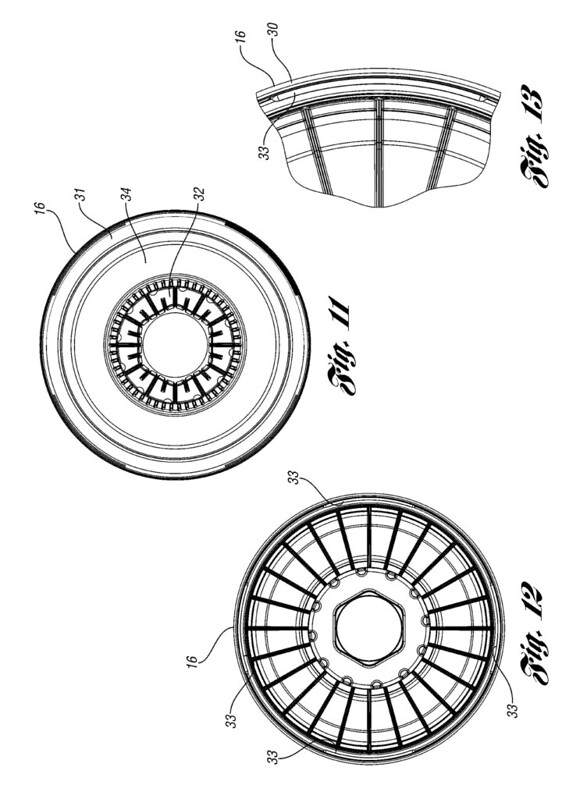
Patent No. 20120111874A1: Plastic Beer Keg
Today in 2012, US Patent 20120111874 A1 was issued, an invention of William P. Apps, for his “Plastic Beer Keg.” Here’s the Abstract:
A plastic keg includes a liner including a neck portion and a body portion. A lid having an opening is disposed at least partially over the liner. The liner is disposed in an outer container having a wall with at least one locking rib projecting therefrom. The locking rib angles downward and the lid secured to the outer container by the at least one locking rib. Optionally, a locking ring securing the neck portion of the liner to the lid may be configured to release the liner when the filled keg is dropped.


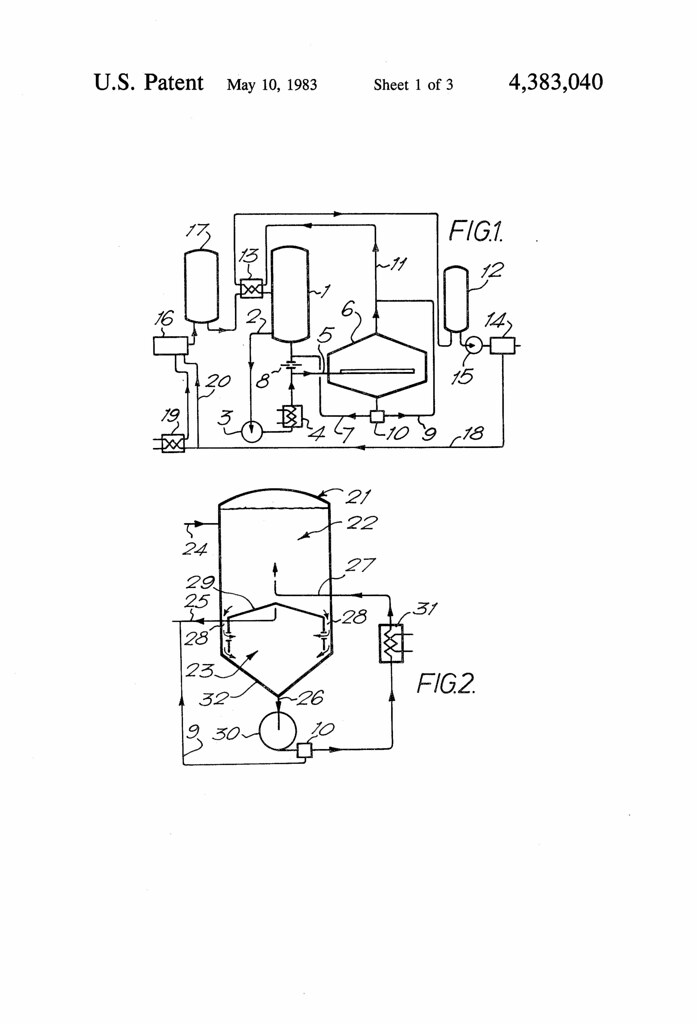
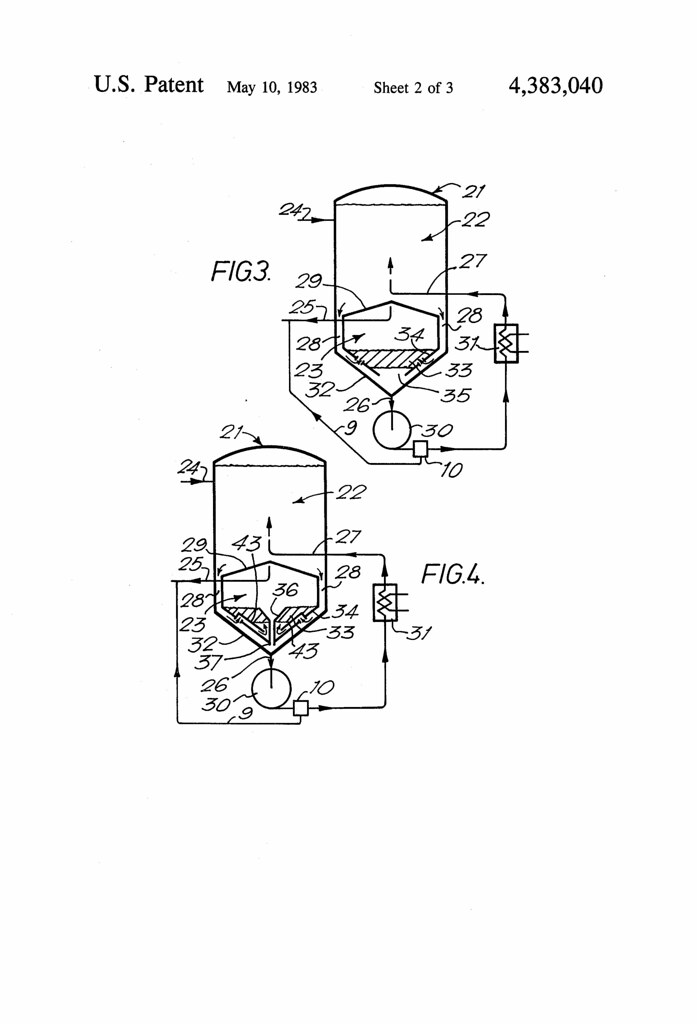
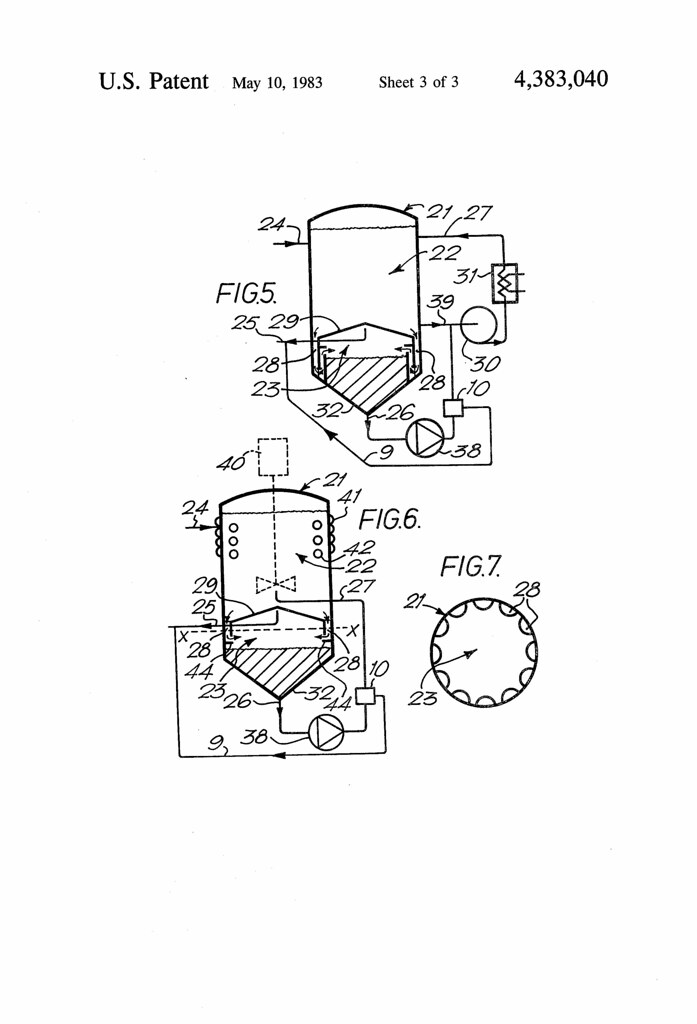
Patent No. 4383040A: Fermentation Process And Apparatus
Today in 1983, US Patent 4383040 A was issued, an invention of Richard Fricker, for his “Fermentation Process and Apparatus.” Here’s the Abstract:
A method for continuous fermentation in which carbohydrate solution is fed continuously into a fermentation zone containing substantially homogeneously distributed yeast and carbohydrate solution whereby the carbohydrate is fermented to ethanol, a proportion of the fermenting liquid continuously passing to a pressurized settling tank, yeast depleted liquid being withdrawn from the upper part of the settling tank and yeast enriched liquid being withdrawn from the lower part of said tank and returned to the fermentation zone, a proportion of yeast being withdrawn without being returned to the fermentation zone, said proportion being such that the concentration of yeast in the fermentation zone is substantially constant, and the pressure within the settling tank is sufficient to prevent the formation of gaseous carbon dioxide. The method enables rapid continuous fermentation to take place using high concentrations of yeast.
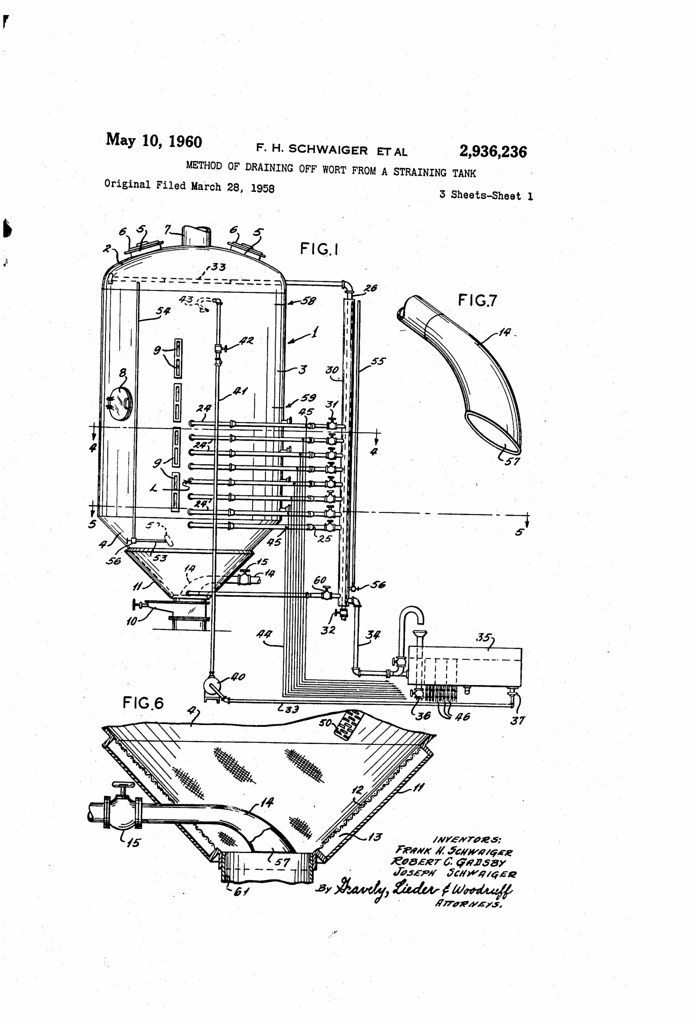
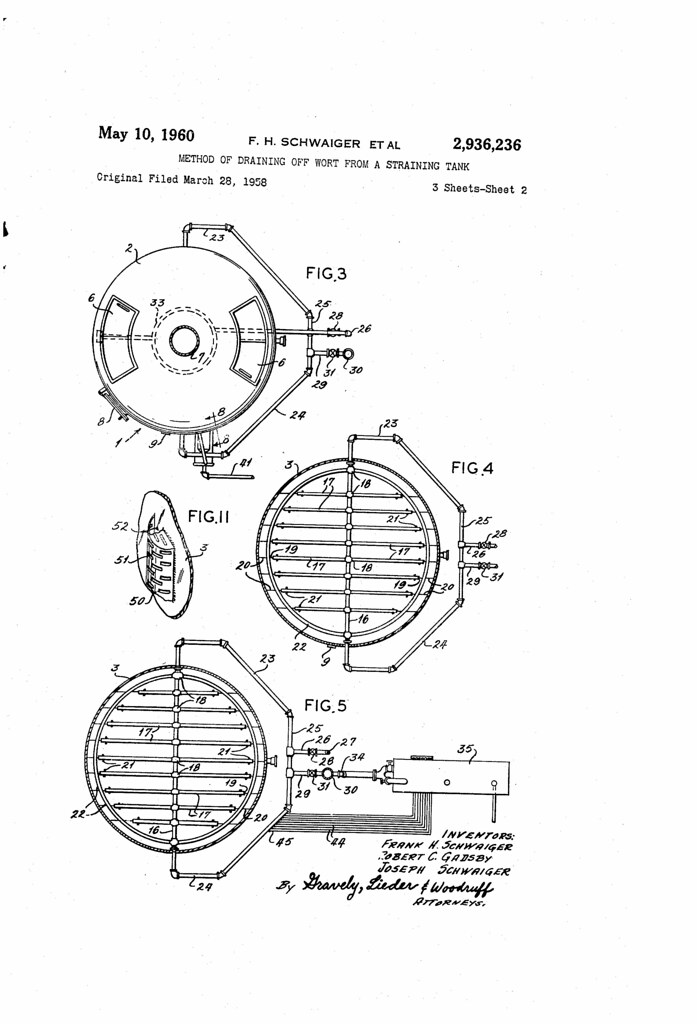
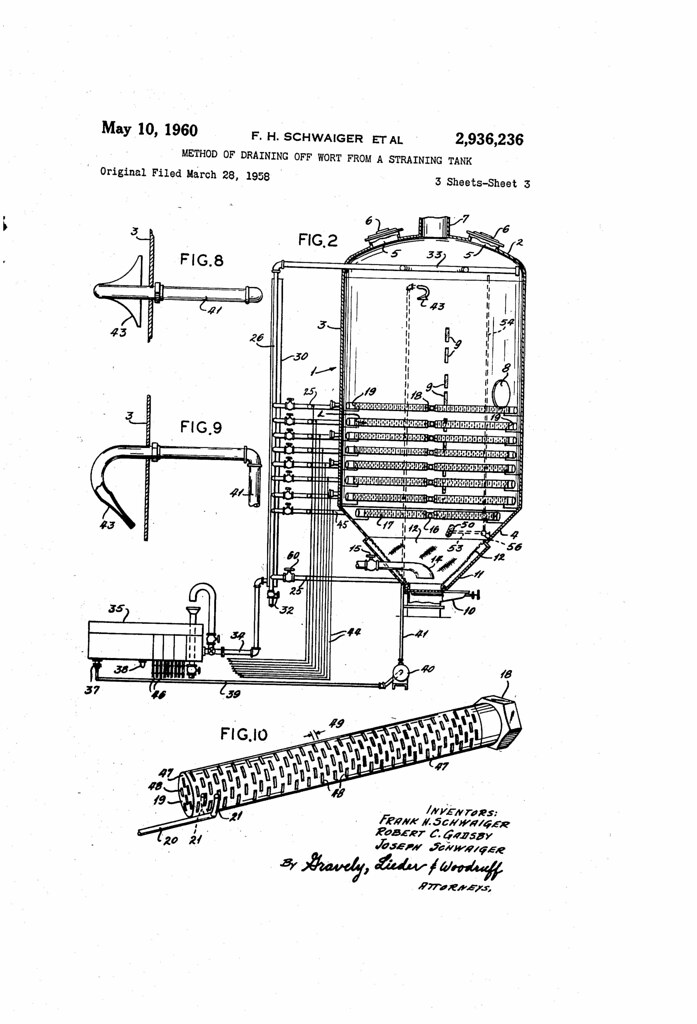
Patent No. 2936236A: Method Of Draining Off Wort From A Straining Tank
Today in 1960, US Patent 2936236 A was issued, an invention of Robert C. Gadsby, Schwaiger Joseph, and Frank H. Schwaiger, assigned to Anheuser Busch, for their “Method of Draining Off Wort From a Straining Tank.” There’s no Abstract, but the description states that the “invention relates to a straining tank or grain extractor or lauter tub, and more particularly to a new type of straining tank for use in the brewing industry to remove extract from brewers grains. This divisional application relates to the method of straining employed by said straining tank.”
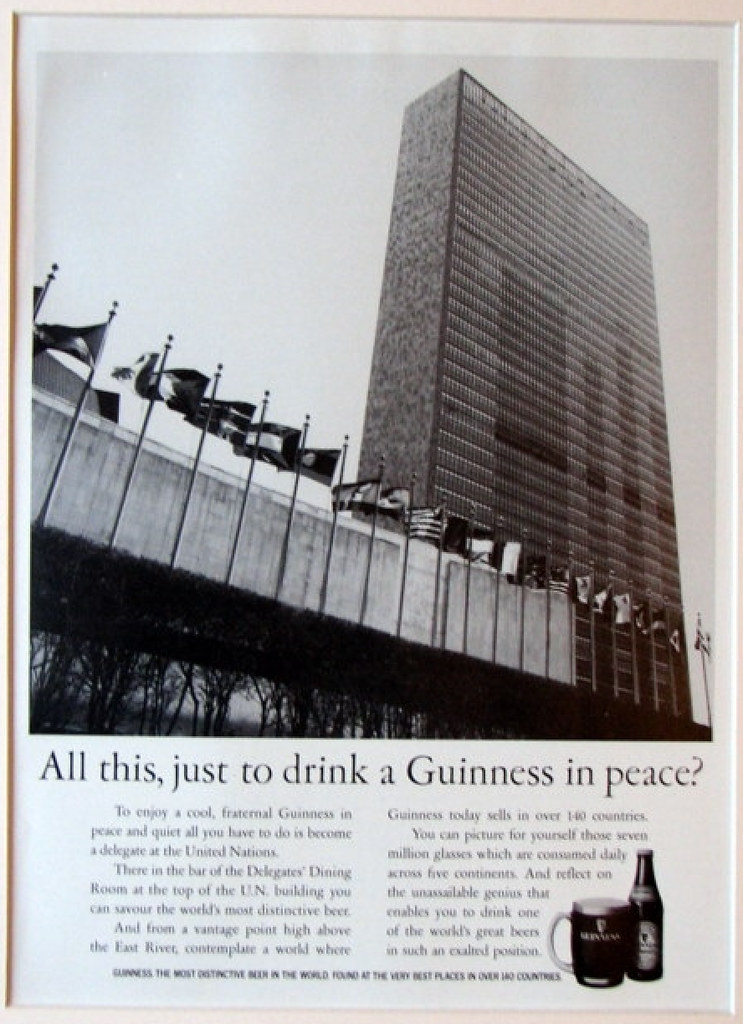
Beer In Ads #1550: All This, Just To Drink A Guinness In Peace?
Saturday’s ad is another one for Guinness, this one from 1986. The ad shows the United Nations building in New York, with the odd tagline “All This, Just To Drink A Guinness In Peace?” Apparently that’s because the Delegates’s Dining Room on the top floor serves Guinness, though I still don’t think it makes a great deal of sense.
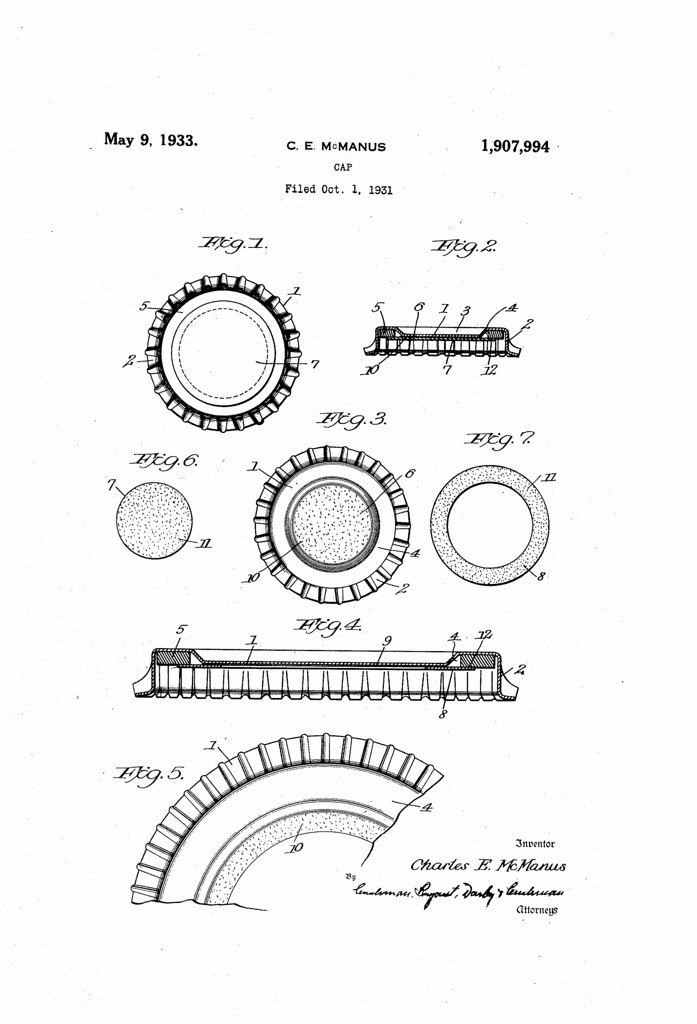
Patent No. 1907994A: Cap
Today in 1933, US Patent 1907994 A was issued, an invention of Edward McManus Charles, assigned to Crown Cork & Seal Co., for his “Cap.” There’s no Abstract, but in the description they talk about an “invention relat[ing] to caps for containers and particularly contemplates a cap wherein a sealing ring or cushion is usually employed.” If you keep reading, it’s explained that this crown works better than previous ones for a variety of reasons, even though it looks pretty much the same as other crowns.
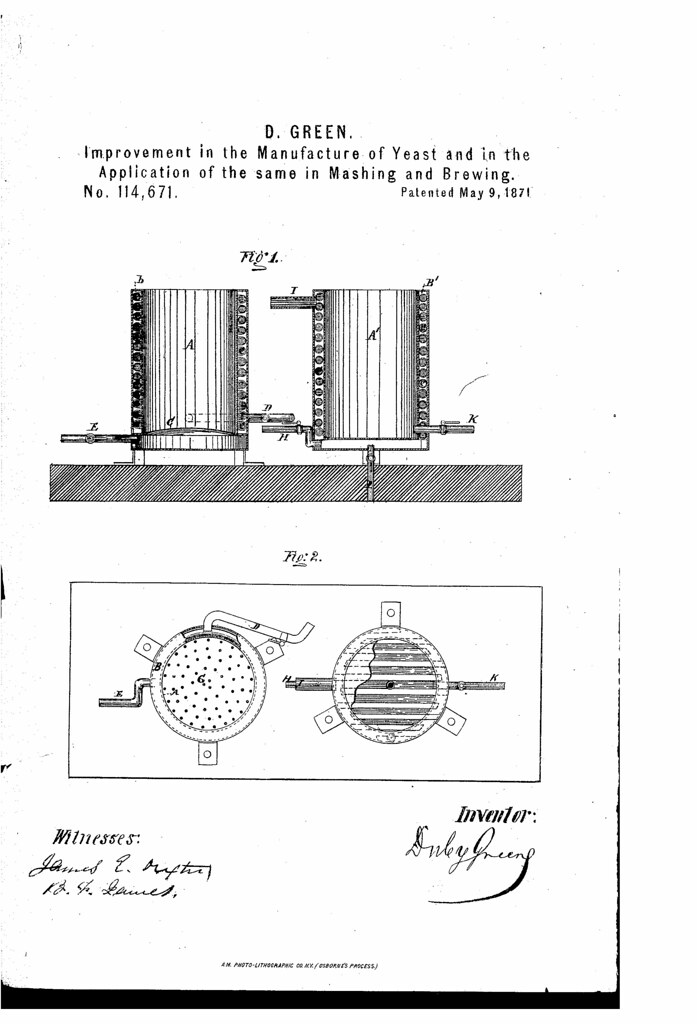
Patent No. 114671A: Improvement In The Manufacture Of Yeast And In The Application Of The Same In Mashing And Brewing
Today in 1871, US Patent 114671 A was issued, an invention of Duby Green, for his “Improvement in the Manufacture of Yeast and in the Application of the Same in Mashing and Brewing.” There’s no Abstract, and in the description there’s never really any simple overview or summation of the invention, Green just dives right it to explaining his formula and how it works. I guess he figured the crazy long title was enough.
Beer In Ads #1549: Picnic Time At Stonehenge
Friday’s ad is for Guinness, from 1957. The ad shows two young couples having a picnic within spitting distance of Stonehenge which I imagine was as impossible in 1957 as it is today. Maybe I’m wrong, but I can’t believe they’d let anyone get so close to such a national treasure. I love the wild abandon with which the one dude is eating a chicken leg. I know the other guy is sporting an ascot, but is the chicken man wearing one, too, or did he tuck his tie in his shirt? And the dresses that the women are wearing are pretty fly, too, particularly the grey skirt with the jugs. But a picnic by Stonehenge? It’s true. “Life is worth living after a Guinness.”

Patent No. 3033762A: Straining Tank
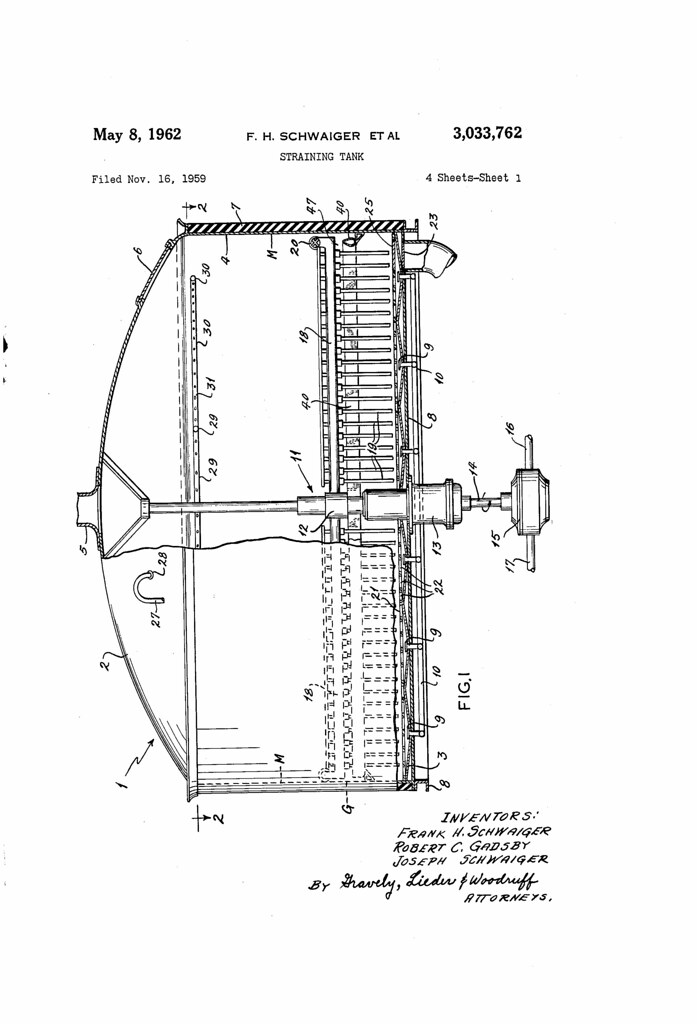
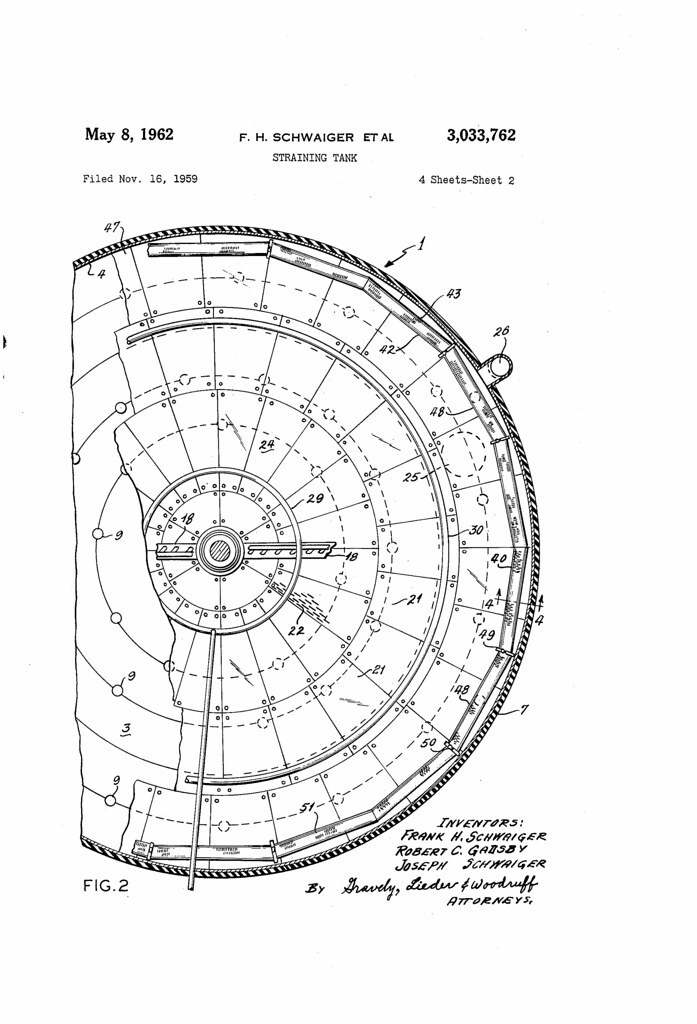
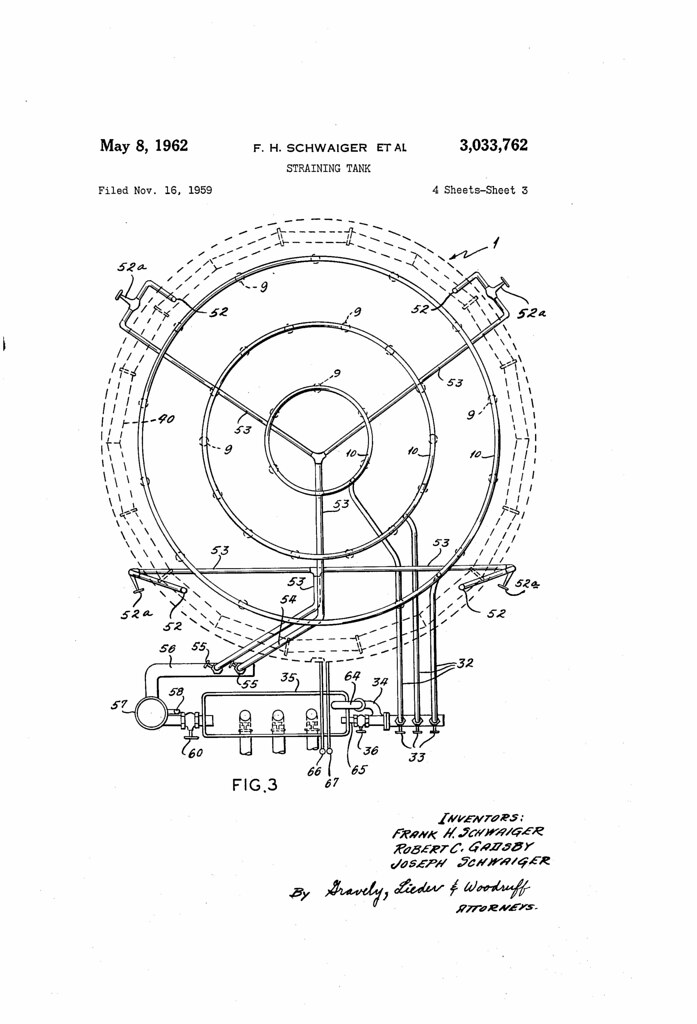
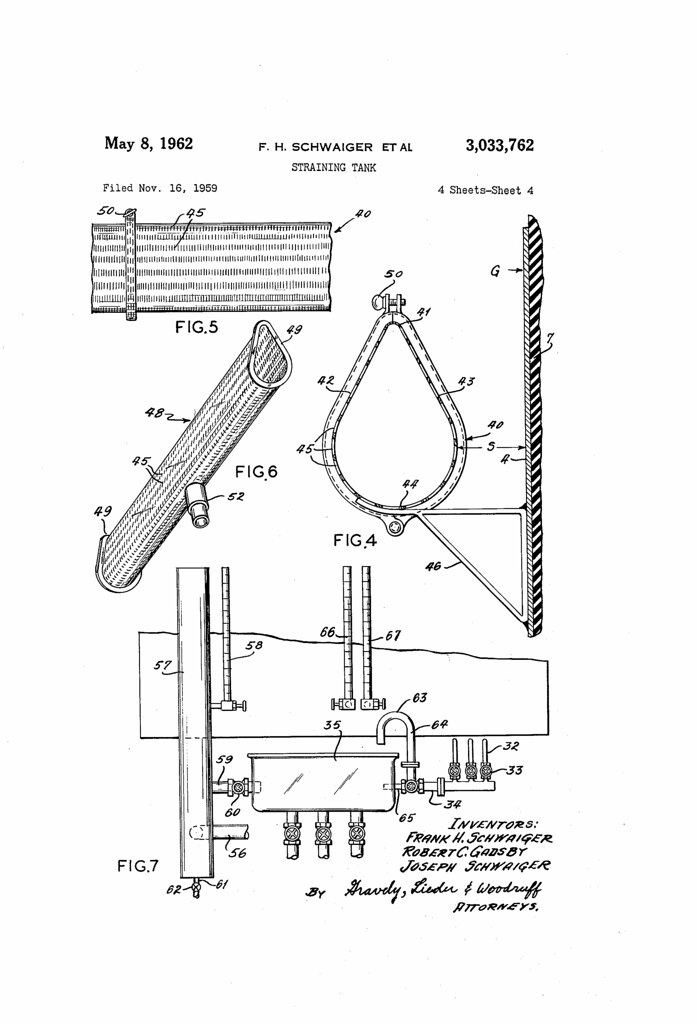
Today in 1962, US Patent 3033762 A was issued, an invention of Robert C. Gadsby, Schwaiger Joseph, and Frank H. Schwaiger, assigned to Anheuser-Busch, for their “Straining Tank.” There’s no Abstract, but in the description it’s stated that the “invention relates to an improved straining tank or grain extractor or lauter tub, and more particularly to an improvement in an existing kind of lauter tub presently in widespread use in the brewing industry to remove extract from brewers grains.” They later elaborate a bit more:
This invention relates to an improvement in existing lauter tubs having agitators therein which increases the efficiency or reduces the draw-o time to about two-thirds of the time previously required. This is important because the lautering step in the brewing process has in the past been one of the slowest and one of the bottlenecks in the production of beer. In other words, in the usual brewing operation today, the capacity of the step which uses lauter tubs or straining tanks largely determines the capacity of the brewery.