Brookston Beer Bulletin

Jay R. Brooks on Beer

  • Home
  • About
  • Editorial
  • Birthdays
  • Art & Beer

Socialize

  • Dribbble
  • Email
  • Facebook
  • Flickr
  • GitHub
  • Instagram
  • LinkedIn
  • Pinterest
  • RSS
  • Twitter
  • YouTube

Powered by Genesis

Guinness’ Latest “What Were They Thinking”

October 4, 2007 By Jay Brooks

I’ve said it before and I’ll say it again. What the hell is Diageo doing with the Guinness brand? Are they trying to kill it, make it a mockery of its former self, or insult their customers even more than they already have? If so, they’re succeeding brilliantly. Diageo was created out of the merger between Grand Metropolitan and Guinness ten years ago. The new name was chosen for reasons passing understanding. Why take two recognizable names and trash them in favor of a new one nobody knows? The word Diageo came from the Latin word for ‘day’ and the Greek word for ‘world’. Apparently they couldn’t even make up their minds about what language to create the new company name from.

At any rate, over the last decade Diageo has displayed no respect whatsoever to the legacy, history or taste of the original Irish stout. Guinness had been brewing beer at St. James’s Gate in Dublin since 1759, with stout production beginning several years later, and now they’re even considering closing the brewery. Then there’s the $13 million widget bottle abomination that in 2001 tried to convince people to drink out of the bottle after all, setting the cause of better back again in the process. More recently, they’ve introduced “Extra Cold Guinness,” another useless novelty, and the test marketing of “Guinness Red” in England last year. The latest assault on their brand is “a plate-shaped device called the ‘Surger.’”

For a mere $25, Guinness wholesalers can stop selling Guinness on draft. Instead, they’ll pour it into a pint glass and put in on the “Surger.” Then “the bartender pushes a button to activate sound waves, which course through the liquid creating gas bubbles and ultimately the familiar cascading effect typical of a Guinness pint poured from draught.” One east coast distributor liked the idea, saying. “It gives me a new talking point that I can bring to my customers which is good for us.” Yes, forget about the beer itself, we need more talking points. This same guy “foresees the Surger eventually becoming available to consumers so they can drink a draught-like Guinness at home.”

Brandweek is spinning it like this. “One facet of marketing these days is to create an experience for the consumer. So Diageo will marry its new “Alive Inside” advertising message about the Guinness pour with a plate-shaped device called the ‘Surger.'” Given that there’s another, more important “surge” going on in the middle east involving more American soldiers fighting, was “the Surger” really the best Diageo could come up with? I always marvel at how the large companies strategize over their advertising and marketing messages. I suspect it’s embedded into the culture of big business, and in particular marketing, that nobody says “no” if the boss likes it or if a committee came up with it, once more proving that “group think” is a terrible danger. I always assume there’s some lone voice in the back, not being heard, saying “but what about the beer?” That guy will undoubtedly be fired within the week.

Here’s one of the new “Alive Inside” television spots:

Again, I must be the most out-of-step, uncool guy in the universe, because I find that ad more than a little creepy. Oh, I’ll grant you the music is slick and the effects are cool. But I can’t get past the idea that when I take that first sip, a million tiny men in white suits will be swimming down my throat. Yuck. It’s alive inside! What a terrible allusion to make. Isn’t that going to make the beer crunchy? Yeah, I know I shouldn’t take it so literally, but that’s how I roll. See, uncool to the bitter end.

 

Filed Under: Editorial Tagged With: Business, Europe, History, Packaging

Budvar Not For Sale

October 1, 2007 By Jay Brooks

The Prague Daily Monitor reported today that the Czech Republic government has changed its mind for the time being about privatizing Budejovicky Budvar brewery. Prime Minister Mirek Topolanek was quoted as saying there’s “no privatization,” adding that it would take at least 12-18 more months before Budvar would become a joint-stock company. He also laid to rest rumors that Marek Dalik, Topolanek’s advisor, was in negotiations with Anheuser-Busch to purchase the Czech brewery, as had been widely reported in the business press.


Filed Under: News Tagged With: Business, Europe, International

The Ethical Blogging Debate

October 1, 2007 By Jay Brooks

WARNING: This whole post is not really about beer at all, but instead is about blogging about beer and the ethics surrounding what beer bloggers write about. If that sounds dead boring, you can safely ignore reading this one. This is a very, very long post so I wanted to give everyone fair warning before investing a lot of time in reading it only to find out there was no light (beer) at the end of the tunnel.

At the beginning of the month I got an e-mail from Jack of the Stella Artois Blog inviting me to an “exclusive online premiere of the new Stella Artois cinematic website on 15th September, 3 days before it screens to the rest of the world.” The e-mail was personal enough to suggest he’d actually visited the Bulletin but otherwise seemed somewhat canned. I didn’t give it much thought as I was on some deadlines and didn’t reply. Less than a week later I got another e-mail that sounded much less personal and gave me a gentle nudging for having not RSVP’d despite the fact that the original e-mail made no such mention. It did, however, hold out the proverbial carrot that the promotional packets were “dwindling.” A few days later I got a similar introductory e-mail from a Matt, also from Stella Artois, asking me again if I’d watch and write about the new website. All told, I received six e-mails about this promotion. At any rate I did get the promo packet which included a poster, some coasters and the password. In the end I never did get a chance to actually go to the new web launch and watch the movie because I was just too busy with assignments.

In the meantime, every other beer blogger got a similar invitation. Some probably went to the new website and watched the movie, some didn’t. While I was working, Stonch, across the pond, was thinking about this and what it means for bloggers and the beer blogging community. Last week, he wrote a message to all of us. Here’s a part of that message:

The object, of course, is to start a “viral campaign” on the internet. Having recognised that between us we have many thousands of readers, they’re expecting beer bloggers to give free promotion to their product. The Stella Artois Blog lists and thanks those who have so far fallen into the trap. I’d ask those of my peers who have provided a link to or posted about the Stella site to reconsider. If this latest campaign to grab further market share for Stella Artois succeeds – at the expense of products we do like — let’s at least be able to say we weren’t part of it.

Remember what makes blogs unique, and what makes them popular. I’m not implacably against InBev or any other company (although sometimes I think I should be). Just remember that people don’t visit our websites to read press releases from macrobrewers — the trade press covers that nicely. I didn’t start a blog to provide a free service to InBev, and I suspect you didn’t either. Don’t get taken for a ride.

In deference to Stonch’s opinion and my own unsettled mind, I will not provide a link in this post, as I might normally have otherwise done.

What’s really interesting has been the response to Stonch’s post. He’s really sparked an interesting debate about ethics and beer blogging. Alan over at A Good Beer Blog added his take, which he titled Stonch’s New Campaign: Don’t Sell Out Beer Bloggers. Between the two posts, there have been at least 44 comments made, many of them running to several paragraphs, with a back and forth vibe and Stonch at the center defending and clarifying his opinion, as necessary. There were people who agreed wholeheartedly and some who did not. Clearly this issue is on our collective minds.

I started to add my own comments to Stonch’s post and Alan’s follow-up, but my typical verbosity started to run longer than usual so I gave up and started over here instead. If you want to read the originals instead of my cliff notes version, go ahead. I’ll wait right here until you get back. Otherwise, what follows here are the relevant bits of the discussion, at least for my purposes, along with my own take, following each comment, in italics.

Alan at A Good Beer Blog responded first:

How masterful of you and quite right. It is odd when these things come by in the emails — people expecting that their product and your hard won bandwidth/readership have a relationship. A while ago the makers of a movie with beer in the title which likely had a multi-million dollar ad campaign fund, wanted to trade the reputation of beer bloggers for free word of mouth. Backfired.

Bob Woodshed at [BW] Beer Blog disagreed, saying:

While I agree with you that their campaign is obviously viral marketing, the reason I accepted their invitation is because their idea of a cinematic website intrigued me. Stella Artois decided to take a chance by spending every cent on their obviously very expensive site, so why not give them a hand?

Bob’s notion that we should “give them a hand” because they spent a lot of money seems odd, at the very least, to me. Of all the reasons I’ve personally ever reviewed something, cost has never been a factor. Stella Artois is not, of course, much of an underdog with limited resources needing championing. Between their affiliation with Anheuser-Busch and their previous master, InBev, they haven’t exactly been hurting for marketing dollars such that they would have to reach out to the beer blogging community guerrilla-style as their only option to reach potential consumers. So that suggests to me it was a conscious decision to launch a grassroots-like campaign by contacting beer bloggers.

But let me suggest a different way of thinking about this. I don’t see anything inherently wrong with Stella Artois sending us invitations or press releases. I rely on press releases quite a bit to know what’s happening in the industry. I probably get at least a dozen each day. Some I discard immediately and some I write about immediately, with most falling somewhere in between. The only thing different about Stella Artois’ communication with us was that they tried to personalize the messages, which I assume must have taken considerably longer than a gang e-mail exactly the same to everyone on their list. They also perhaps tried to make us feel special by personalizing the e-mails and being invited in to take a peek at the new website early. I hope this doesn’t sound patronizing — it’s not intended to — but most beer bloggers who don’t also work for more traditional media perhaps aren’t used to getting freebies or something early before it’s available to the general public. But really, that’s exactly how regular marketing works. Book reviewers get books before they’re published. Movie reviewers see films before they’re released. That’s how the movie review is in the paper the same day the movie comes out and the book review is a magazine the same week or month it’s published.

Press releases are exactly what Stonch is complaining about, an attempt to get the media to write about whatever is the subject of the press release, no more, no less. Ideally, Stella Artois gave us three days to visit the new website in the hopes that many of us would write about it on the day they launched it thus creating a buzz over its launch. The same thing is happening a million times every day for every product you can imagine and even some you can’t. Check out any of the PR websites where businesses post their press releases. The sheer volume of them is quite amazing. There isn’t a company doing business today that doesn’t use press releases. Some even call them news releases so they don’t sound quite so commercial. But the fact is news organizations do rely on them to some extent for news they write about. It’s one of the ways they gather the news that ends up in their paper, on their television station, or wherever each and every day. So yes, Stella Artois was trying to get something for nothing, but no more so than every other single business in the world. We’re all on the same ride, and we can’t really be taken on one we don’t want to get on.

Mike from the Stella Artois Blog also chimed in, insisting Stella was not trying to seed a viral campaign.

I am part of the team undertaking the Stella Artois campaign and I would just like to correct a couple of things. Nobody is asking you to use a press release. We invited bloggers who we believed were interested in Stella Artois, having read their blogs, to see a preview of the new website. If you don’t like it say so. If you want to say nothing, say nothing. This is not about a ‘viral’ campaign however you define it, this is about respecting your opinion if you wish to give it.

Mike is, I think, partly correct. It was simply an invitation with no real way Stella Artois could or would expect that everyone would write about their new website. With press releases, if you get a 10% return you’re probably doing pretty good. He is, however, I think a little disingenuous when he asserts it wasn’t “about a ‘viral’ campaign however you define it.” Whether he’ll admit it or not, they did want people to write about it. One of the e-mails I received specifically asked me to write about them and said so in no uncertain terms, asking if I’d “be interested in checking out and writing about this new campaign for Stella Artois.” They certainly wouldn’t have spent all that time and resources sending all the beer bloggers an individual e-mail and the packets if they weren’t at least hoping that they’d get a good response and people would write favorably about them. They wanted buzz, to say otherwise seems like spin.

A little later on, Dumbledore remarked:

Alan, what I am trying to say is that it is not the responsibility of the Stella marketing department to maintain the purity of beer blogs. It’s their job to sell Stella. And I think, given that most beer bloggers are open to contact and approaches from sponsors, they have every right to send the emails they have.

It is the responsibility of the beer bloggers to maintain their standards.Which I think is what Stonch is saying when he says “I think it’s clear that I didn’t mean you’re literally asking people to reproduce a press release. However, I’d argue that bloggers uncritically publicising a campaign for InBev amounts to the same thing.” Who’s to blame if bloggers uncritically publicise a campaign? The bloggers, of course.

If you don’t like the product, ignore these emails like we all ignore all the other spam we get daily in our inboxes.

Exactly. We should all critically look at every communique we get and decide if we want to use it or not.

Shawn, the Beer Philosopher, added:

This may be a fundamental philosophical difference between you and I [Stonch], but I don’t tend to, de facto, reject commenting on happenings in the worldwide beer industry because they’re from a macro beer maker. In my opinion, if they do something that’s interesting enough to comment on, I’ll post it … all the while making sure I note to my readers that I in no way endorse or recommend their product.

I agree with Shawn. One should never make a policy decision absolute. Never (pun intended). If nothing else, keeping tabs on macro brewers is a way to keep them honest, too. If they know bloggers might be critical of something they do, it’s possible they won’t do it. Doubtful, perhaps, but possible. But really, most macros have the knowledge, sophisticated equipment and expertise to make fantastic beers, but for business reasons choose to make beers with very broad appeal, inoffensive to almost everyone except us beer geeks. Why do you think they have 95% market share? They have shareholders to appease and are so large that to keep the share price up they must keep up growth. That’s the corporate system. I personally hate that system and believe it’s done and is doing our society great harm, but I understand it. The way to sell more beer is not to suddenly double your costs to go all-malt with three times the hops and then have to spend millions of advertising and marketing dollars to re-train the majority of your consumers that what you’ve been selling up until this point is not really what beer is after all. I love that fantasy, but it will, of course, never ever come to pass. Any big company that tries it would be bankrupt within a year.

Alan, again from A Good Beer Blog:

What Stonch (and I) might be suggesting is that beer bloggers should have a confidence that is not always seen, the confidence to have if not “higher standards” then at least some respect for themselves as media outlets many people now read. Obviously the InBev PR people thought enough about the power of beer blogging to reach out as they did. That they chose this route rather than advertising bloggers or webtech bloggers speaks to the intention of the happening. In significant part, it was to get the product mentioned on beer blogs. In response, beer bloggers should be considering seriously what that means as that, for me, is the real event.

Lew Bryson, at his Seen From a Glass, liking what Alan wrote, added with his usual aplomb:

Very well put. I was feeling nervous about my livelihood a couple years ago; why should people buy my stuff when they could get beer writing for free on the Web? Then some brewer yelled at me for what I said about his beer, and I said it was nothing more than what was being said on the rating sites. Am I to be held to a higher standard, I asked. Well, yeah, he replied, as if I were stupid. You’re an established beer writer. You have a responsibility to your readers and to the brewers. I guess I’d always known that, I was just getting nervous and a bit sloppy. I shaped up, and my work’s actually gotten better and I’ve got more of it.

Bloggers who are consistent, who write good stuff, who take this seriously, whether they are paid for it or not, fall into that same category. You become “serious” and “responsible” by virtue of being there every day, or week, or whatever, and not just writing willy-nilly, but thinking, and asking, and backing up your opinions. And just like with political bloggers getting “real” press credentials, beer bloggers get invites to press trips, samples, press releases, and…invites to website launches. Stonch obviously already has assimilated the flipside of that: the responsibility to write about that with full objective perspective. You have that responsibility to your readers, and as I just exercised, to the brewers — got a press release from a major brewer’s PR firm, and sent it back, noting a somewhat glaring error. Part of the business.

Stonch is quite correct, however, when he says that “what makes blogs unique, and what makes them popular” is their honesty, their voice, along with Alan and Lew’s confidence. It’s that consistency of voice and opinion that I think is at the heart of any good beer bloggers can do. We have to be true to ourselves first. If we can do that, our own voice will emerge. People will know when we’re not being true, especially if they’re following what we’re writing on a regular basis. So personally I don’t want to write about things I don’t believe in or want to support for some reason, because not only will people feel I’ve compromised myself but, more importantly, I’d feel the same way. Maybe that’s overly pretentious, but it is right I think. The only people I read regularly are the ones that I also respect because I know I’m getting their unadulterated true selves in their opinions. I may not always agree with them — and frankly I’d hate it if I did — but an honest exchange of differing viewpoints is what makes change possible. How many times has one of us read something another beer blogger wrote and either commented on it or did their own take in their own post. That’s exactly what sparked this very debate in the first place. This is what makes the beer blogosphere such a healthy and important medium. The exchange of ideas and opinions is perhaps our most important contribution to the beer world. Frankly, I don’t really care that much how many people agree with me so long as I made them think. (Oh, sure, it would be nice if people did agree with me all the time, but it’s not the most important thing. I’ve grown used to being out of step with the world.)

Stan Hieronymus, from Appellation Beer (and others) weighed in:

There is a level of Internet logistics and marketing not being mentioned here.

First, the PR folks are reaching out to many more people than beer bloggers. Think of it like launching an independent film in theaters. Buzz is their business.

Second, there are the logistics of Search Engine Optimization (SEO). A topic I care nothing about and pay no attention to, but I do know that incoming links help move a site up the search engine ladder and get it more attention.

Third, in every study about why consumers will buy a beer (in this case substitute “visit a web site about beer”) you’ll see that people say a recommendation from a friend is more important than advertising.

So it’s not necessarily a matter of seeking a link without paying, but that the placement within editorial copy is more valuable.

Stan is also correct here and I think this is at least part of the motivation of not just Stella Artois, but every company who sends out press releases.

Alan, at A Good Beer Blog, also did his own post about this issue, which itself sparked several thoughtful comments. Here’s part of what Alan had to say:

We who have worked hard, who are sifting as we are sipping, picking the good from the bad should be confident in the nobility of the thoughtful drinker — and the value of talking it up. Fine beer, like any serious food or drink, fulfills itself in the theatre of its consumption. So whatever is it we are, we are something related to that and it’s definitely something worthwhile. Let’s give it respect.

Don’t get me wrong. There is nothing wrong with a parcel full of swag and, to be sure, the day is not yet here when the embrace offered by beer bloggers has been universally reciprocated by the brewers, the shops, the pubs. So, if I was to add anything and as was the case when the PR folk for the movie BeerFest came around, when a product placement is offered and if you are even interested, maybe think to ask what they are willing to pay. You are spending a lot to promote the good in beer. A lot. Beer should at least pay for itself if you are going to play the role of spreading the good news. If the product or the price is not right, shouldn’t the answer be “no thanks”?

Then Stan from Appellation Beer piped in about a question Stonch had asked in a previous post, “can marketing campaigns, backing homogenised products from big brewers, do anything to help the cause of quality beer?”

Alan then clarified his position:

I don’t think I can say what a beer blog should be. But I do think it is important to acknowledge what they can be and might be already — which I think is a big part of Stonch’s point. Collectively, they represent a huge readership. Bigger than most trade magazines and more immediately responsive. If we come back to the core element in the entire process, press releases or websites or ads are sideshows to what is in the glass. Heck, even a lot of what is “beer culture” is a bit of a sideshow for me.

I think there is no one thing we could ever agree on about what a beer blog should be. There can never be a right answer to that question. A blog can only be whatever the person writing it wants it to be. Blogs that touch people, challenge them to think in new ways or entertain them with a uniquely singular voice will always have more readers than blogs by a company or committee or ones that compromise themselves for a few doubloons.

I get requests to advertise, promote, and write about all manner of things that I find don’t fit with my personal ethos every single day. Some are quite obvious and I’m often astonished that people think I might be willing to write about these things. A particularly odd one was a so-called humor blogger sent me his tale of sending the Boston Beer Co. fake (and ridiculous) letters of complaint which they of course had to respond to in all seriousness, taking up their time and resources just so these yahoos could have a cheap laugh at their expense. It’s a type of humor, often employed on morning radio shows, that I just don’t get. There’s nothing witty, clever or even funny about trying to demean an unsuspecting mark. But they thought I’d find this hilarious and would want to write about their cruel prank. As I know the person who was stuck writing the responses, I promptly forwarded it to her and hopefully they put a stop to it. But I get these kinds of things all the time, people wanting me to hawk beer pong t-shirts or beer goggles or some other god-awful thing that appeals to the frat boy mentality so many of us are fighting against. It’s as if they don’t bother to read my content and just assume if it’s a beer blog, they’ll just love this.

So I either simply ignore them or politely decline. But that’s the price of being out there in the public arena. I want to get communications from as many sources as possible and pick and choose what fits my purposes or what I think people might be interested in reading about. The fact that I have to sift through offers I don’t want is just part and parcel of the job.

Travis from CNYBrew chimed in with his take from the tech world’s idea of a blog:

Regarding what a beer blog should or shouldn’t be, I would offer that a blog that exists only to promote a product or the blogs sponsors will find itself without any real traffic. People read blogs for a unique and personal perspective outside of the advertising world. Corporate sponsors want to tap into the legitimacy that blogs have earned by good posting.

To me, that’s why Stonch’s stance on this is completely correct. Bloggers who choose to take part in things like this for an obvious pay off and pimp products for money, will quickly lose readership and find themselves looking in from the outside in. I read a lot of tech blogs and I have seen blogs get pegged for this type of activity. The readership lights the bloggers up for selling out.

I’m not convinced that writing about Stella Artois’ new website automatically becomes “selling out.” I think it would depend on what was written, wouldn’t it? I can’t see how reviewing it would be “pimp[ing] products for money” or that there is an “obvious pay off.” First of all, no money changed hands. Secondly, nobody thinks twice about reviewing a beer someone sends them, so why should a website critique be any different? Personally I think the larger beer companies spend far too much money and resources on the look of their websites (and I absolutely loathe the overuse of flash technology) and almost nothing on the content or usefulness of them. But that’s just one opinion. But since beer lovers visit them, why would they be outside the realm of a beer blogger’s milieu? While a lot of people think it’s only about the beer, there is so much more to the beer industry than just the product. And while I do think it’s perfectly fine for someone to restrict themselves to writing just about the beer itself, it therefore follows that it’s equally acceptable to go beyond that narrow definition of the world of beer to include the business, the people, the advertising, and so on. No one can really tell anyone else what to write about. We all have to decide for ourselves and as long as you can defend your decision, at the very least to yourself, and you stay true to yourself, then I can’t see how there are any wrong ways to be a beer blogger.

Stan then added:

I think the blogger should have free choice. And writing about advertising is writing about beer culture. For one thing, if you are assuming something of a watchdog role — which many bloggers do — then there is the matter of calling companies on advertising that doesn’t reflect what’s in the glass.

And he later finished with what for my purposes will be the last word:

I don’t see the point in a blog (beer or otherwise) that apes anything (print, etc.) [basically agreeing with a point Stonch made].

Again, this is what works for me and I’m all for all bloggers to choose their own course, but what Ron Pattinson wrote a little while back makes a perfect mission statement:

“Honest beer is what I want. Beer that can look me straight in the eye and not flinch. Beer with heart. Beer that’s like an old friend. Beer you can sit and drink by the pint in a pub with your mates.”

Just insert “to write about” after “what I want.”

That’s another way of saying be true to yourself and find your own voice, which is my overriding point of all this. But I will go so far as to suggest that it can even be okay to “ape” (though that’s obviously meant derogatorily) a press release. I often reprint press releases for things like beer dinners, festivals or other events to help spread the word about them, especially if I’m attending or know and like the people putting on the event. I usually add my own take or comments about it but will then just quote liberally from the press release, in some cases reprinting almost all of it. Usually I also do this for small breweries who won’t get picked up in the national press and using portions of a press release is an expedient method of getting the information out. Why shouldn’t I help people and events I believe in? Have I sold out because I try to help small brewers get their message out? When I got a press release from Sierra Nevada announcing that they were bottling their anniversary ale for the first time, should I have tossed it out because it was just an attempt to get free publicity and I shouldn’t have fallen into their trap? Of course not, because I believed then — as I still do — that people would want to know that information. It’s all about context and making choices. I don’t think you can make generalizations about almost anything we’re sent as a press release or similar communications.

I know it sounds like I strongly disagree with Stonch, but the truth is I’m glad he posted his thoughts because he prompted this lovely debate and made a lot of us think about what and why we do what we do. I think it’s important for all of us to think about these issues. Honestly, my first reaction to Stonch’s post was one of agreement. But the more I thought about it, the more I realized that I didn’t. I think it’s the spirit of his message which is so attractive, which is that we should follow our passion and not have it dictated to us. And that’s correct, I think, it’s just that it’s much more complicated than just saying no to big companies. So thanks Stonch. I’m thirsty. Let’s have a beer.


Filed Under: Editorial Tagged With: Business, International, Websites

Japanese Craft Market

September 28, 2007 By Jay Brooks

Beverage World yesterday had an interesting little article about what’s going on with craft beer in the Japanese market. Microbreweries were only made legal in 1994 and there are about 280 operating today in Japan.


Filed Under: Uncategorized Tagged With: Asia, Business, International

Colorado Unseats California As No. 1 Beer Producing State

September 28, 2007 By Jay Brooks

The Beer Institute has released its 2007 Brewers Almanac with all sorts of statistics, but the one that’s getting all the attention is that California has been unseated as the number one beer state in terms of production, a position its held for several years. Colorado takes the top spot this year, besting California by just over 500,000 barrels, or roughly the equivalent of a brewery two-thirds the size of Sierra Nevada Brewing.

To Colorado, I raise my glass and toast their success. There are some fine breweries there and they deserve their moment in the sun. But just wait until next year. Let’s go breweries of California, get brewing. You’re not going to take this lying down, are you? Some kidding aside, it’s great news for everybody. A little healthy competition never hurt anybody. And with contests like this, everybody wins.

From the press release:

In 2006, the state of Colorado officially became the largest beer producing state in the country, according to newly released data from the Beer Institute. The Colorado brewing industry produced over 23.3 million barrels or 724.5 million gallons of beer. This makes the state tops in production.

“Colorado is tremendously important to the beer industry and produces a number of high quality brews enjoyed by adults around the country,” said Jeff Becker, president of the Beer Institute. “With a strong beer culture and a rich brewing history, it’s no surprise the state has become number one.”

“As a state widely recognized around the country for our natural beauty, rich history, and extensive cultural attractions, we’re pleased to now also be known as the beer brewing capitol of the United States,” added Colorado Governor Bill Ritter. “Colorado breweries are also increasingly using and producing renewable energy, which is good for the industry, good for the environment, and good for developing more home-grown sources of energy.”

Colorado is also home to other major industry trade groups such as the Brewers Association, based in Boulder, representing America’s small brewers since 1942. The state also plays host to the annual “Great American Beer Festival” in Denver.

“In addition to housing many long established large brewers, Colorado is also leading the way among small, independent craft brewers,” said Charlie Papazian, founder and president of the Brewers Association. “We invite beer lovers from every state to visit us and sample firsthand some of the many fine varieties of craft beer produced here.”


Here the Top 10 beer producing states:

  1. Colorado
  2. California
  3. Texas
  4. Ohio
  5. Virginia
  6. Missouri (est.)
  7. Georgia (est.)
  8. Florida
  9. Wisconsin
  10. New York

 
Surprisingly, Oregon and Washington ranked 15th and 16th, respectively. After I take a look at the full almanac, I’ll see what other interesting facts emerge. Until then, I’m drinking a Great Divide Titan IPA tonight. Or perhaps an Odell 5 Barrel Pale Ale or even a Dale’s Pale Ale. Damn, I just have too many friends in Colorado making great beer. Congratulations one and all!
 

Filed Under: Uncategorized Tagged With: Business, California, Colorado, National, Press Release, Statistics

Catholic Irony vs. Miller

September 28, 2007 By Jay Brooks

miller-art
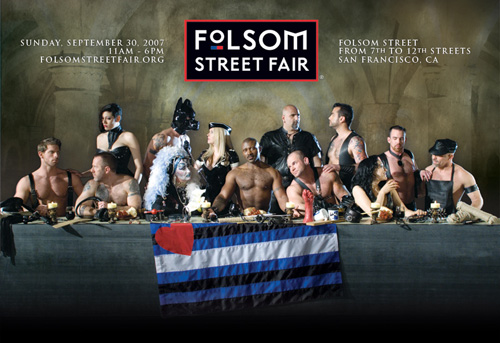
There’s a festival in San Francisco every year, the Folsom Street Fair, that celebrates sexual diversity, fetishes and leather lifestyles. The event has a rich history of fighting conventional wisdom and poverty, as well. It’s a registered non-profit organization and also has all the things that typical street fairs have: music, food, beer and sponsors. One of the four main event sponsors this year, known as “presenting sponsors,” is Miller Brewing Co. Which is all well and good, or at least it was until the fair organizers unveiled this year’s poster for the event.

folsomstfair

It’s an obvious parody of Leonardo Da Vinci’s painting The Last Supper, which along with his Mona Lisa, Edward Hopper’s Nighthawks, Grant Wood’s American Gothic and Edvard Munch’s The Scream, is undoubtedly one of the most parodied works of art in the world. Do a Google Image’s search for “last supper parody” and no less than 6,360 images pop up. The poster is meant to show diversity in many forms; racial, gender, sexual preference and lifestyle. If you’re deeply religious it’s possible that you won’t like the image but that’s the price you pay for living in a free society. Everybody wants tolerance in the first person, such as “tolerate my beliefs” but it’s gets harder for those same people in the third person, as in “tolerating his beliefs.” Enter the Catholic League, which bills itself as a “Catholic civil rights organization” and states its purpose is to “defend the right of Catholics – lay and clergy alike – to participate in American public life without defamation or discrimination.” Their mission also includes working “to safeguard both the religious freedom rights and the free speech rights of Catholics whenever and wherever they are threatened.” All laudable goals, except that it appears the free speech rights of non-catholics count for naught. Since Tuesday the Catholic League has put out five press releases “calling on more than 200 Catholic, Protestant, Jewish, Muslim, Buddhist and Hindu organizations to join with [them] in a nationwide boycott of Miller beer.”

Yesterday, SABMiller released the following statement:

Statement Regarding Folsom Street Fair

While Miller has supported the Folsom Street Fair for several years, we take exception to the poster the organizing committee developed this year. We understand some individuals may find the imagery offensive and we have asked the organizers to remove our logo from the poster effective immediately.

Not good enough, sayeth the Catholic League, calling Miller’s press release a “lame statement of regret.” Then they kicked things into high gear. “We feel confident that once our religious allies kick in, and once the public sees the photos of an event Miller is proudly supporting, the Milwaukee brewery will come to its senses and pull its sponsorship altogether. If it doesn’t, the only winners will be Anheuser-Busch and Coors.” See, even Catholics aren’t aware of the craft beer movement and believe there are only three breweries in the U.S. And certainly imports were overlooked, too. Some kidding aside, this is certainly a quagmire for Miller, and this has been receiving a lot of media attention, as stories involving sex usually do in our society. There’s nothing like titillation to increase reader- and viewer-ship.

Locally, at least, not everybody agrees as one gay member of the clergy had this to say via the Bay Area Reporter.

“I disagree with them I don’t think that [Folsom Street Events] is mocking God,” said Chris Glaser, interim senior pastor at Metropolitan Community Church – San Francisco. “I think that they are just having fun with a painting of Leonardo da Vinci and having fun with the whole notion of ‘San Francisco values’ and I think it’s pretty tastefully and cleverly done.”

Glaser added, “I think that oftentimes religious people miss out on things because they don’t have a sense of humor. That’s why being a queer spiritual person we can laugh at ourselves and laugh at other people.”

Even Speaker of the House Nancy Pelosi, herself a Catholic, issed the following through her press secretary, Drew Hammill. “As a Catholic, the speaker is confident that Christianity has not been harmed.” Exactly. And while the people Fox News interviewed called it a “mockery of religion,” “blasphemy” and suggested that it’s “bad for society,” I can’t see the Catholic League’s point.

First of all, they don’t own the image of Da Vinci’s Last Supper and it’s already been parodied countless times. The event itself has been painted by numerous artists over the centuries. Honestly, I don’t see how the “religious freedom rights and the free speech rights of Catholics” have been infringed upon or how catholics have been in any way defamed. The Last Supper even as an idea is not the exclusive province of Catholicism. If they had left it alone, it would have been a minor event in a local community.

And why pick on Miller? There are dozens of other sponsors, too, including SF Environment, an environmental group, and the San Francisco Bay Guardian, a local weekly newspaper. I almost hate to wonder, might this also be a little bit because it’s beer? Many neo-prohibitionist groups are also religiously based. But really, what did Miller do wrong? They sponsored a local event that’s perfectly legal, has the support of the local community and government. They’ve been sponsoring it for years. Then suddenly the event does something that the Catholic League doesn’t like. They’re offended. So what? Miller tries to soothe the situation, obviously seeing it for the powderkeg it is and asks to have their logo taken off the offending poster, but bravely continues to sponsor the event. Good for them. Why shouldn’t they? How is that in any way the “corporate arrogance” the Catholic League accuses them of? What’s arrogant about that? If you want to talk arrogance, then we need to look at the Catholic League. Being arrogant is defined as “making claims or pretensions to superior importance or rights,” which is exactly what they’re doing by asserting that their “right” to not have their religion criticized or challenged — if indeed that’s really what’s being done, which I seriously doubt — is above the free speech rights of the criticism or challenge. I doubt many in the Catholic League have read Richard Dawkin’s The God Delusion, but one of the book’s soundest arguments is that religion has become the only idea, concept, belief, whatever that can’t be criticized. That we’re taught we must respect one another’s beliefs and not question them. Why? Why is every single other idea in the world able be talked about critically but not religion? It just doesn’t make sense to me. Obviously, the Catholic League believes that or they wouldn’t be misreading this so badly. It seems obvious to me that the Folsom Street Fair poster isn’t attacking or criticizing religion and certainly isn’t targeting the Catholic religion. It’s obviously parody, which is protected speech under the First Amendment of our Constitution. Even the Supreme Court has said so, thanks to an unlikely person, Larry Flynt, publisher of Hustler, whose story is chronicled in the film The People vs. Larry Flynt.

But again, why pick on Miller? They didn’t make the poster. They didn’t print the poster. They didn’t approve the poster. All they did was sponsor the event. The Catholic League is the bully in this passionate play, and they’re the ones that deserve to be crucified, not Miller. It’s one thing to disagree with another point of view or not like what you perceive as criticism of your own, but it’s quite another to attack it and try to harm their business over that disagreement. That’s what bullies do. But there’s one more bit of irony in all this that needs saying. Obviously, many catholics and other religious conservatives have a great deal of difficulty dealing with non-traditional sexual lifestyles, some of which are center stage in the Folsom Street Fair. But the Catholic Church is no stranger to non-traditional sexual practices among its own clergy and has systematically been suppressing its own sexual misconduct literally ruining the lives of hundreds, maybe thousands, of children in the process. Check out the film Deliver Us From Evil for just the tip of iceberg. That’s really offensive, worthy of people being offended, not like this fake controversy and complaints of being wounded simply by an image they don’t like.

Frankly, I thought I’d never utter these words, but “It’s Miller Time.”

Filed Under: Editorial, Politics & Law Tagged With: Business, California, Law, National, Prohibitionists, San Francisco

Shuck and Jive

September 26, 2007 By Jay Brooks

There is little doubt that hops are or soon will be in short supply. I heard it at “Hop School” in Ralph Olson’s “state of the hop crop” report and I’ve heard it from almost every other quarter, as well. Belmont Station’s blog has a good summary of what Ralph had to say via Dave Wills at Freshops and Rick Sellers at Pacific Brew News has another summary from Deschutes brewer Larry Sidor, as well as a summary of world hop news. There have even been two recent fires at hop kilns, and while crop damage was minimal (though the kilns were destroyed) it still further reduced an already thin harvest. Lew Bryson also posted David Edgar’s summary from today’s Brewers Forum. Overall, there’s some good but mostly foreboding on the future availability of hops, and most notably prices may skyrocket. There simply isn’t enough hops to meet current demand and acreage has been declining for several years.

Enter corn into the mix. When George Bush started touting ethanol he increased incentives and subsidies for farmers to grow corn to make the alternative fuel. If you’re barely getting by growing a difficult and fragile crop like hops, switching to corn with all that federal moola looks mighty attractive. I’ve heard that now from a variety of sources. According to an Iowa State University study, food prices have risen an average of $47 per person as a result of the ethanol surge since last year. So it’s not just hops, but farmers are replacing a number of other crops with corn, too. This has been widely reported to be effecting food prices across the board. But once on a gravy train, few will voluntarily jump off, no matter that the train may be headed for a collision. And corn has been riding those amber waves for quite some time, especially once high fructose corn syrup made its debut in 1980. HFCS is now in what seems like every processed food you could name. So if government policy makes their situation even better, you would expect the corn industry to be overjoyed.

There’s a little interview today at Retail News online (subscription required) with S. Richard Tolman, CEO of the National Corn Growers Association, trying to allay fears that the corn subsidies are having unintended consequences. And if you want to lay such fears to rest, who better to ask than someone with a totally vested interest in convincing you that black really is the new white. Here’s the forthright honesty he employs to counter numerous claims and studies that suggest “ethanol production is exacerbating environmental impact problems.” Tolan’s answer: “Those claims are simply not true.” Deny, deny, deny.

To the final question, “Critics contend that American farmers will be unable to keep up with demand for corn needed to produce ethanol. What’s the short-term and long-term thinking on this from corn growers?” he answers:

Short-term the question has already been answered. Farmers have planted more acres of corn this year than any time since World War II. If we have merely an average yield, there will not only be enough corn for all current food, fuel and export markets, we will build our carryover (surplus) stocks.

It’s that “planted more acres of corn this year than any time since World War II” line that should concern beer lovers everywhere. More acres of corn means less acres of something else. Believe it or not, when I was in the nation’s “hopbasket” — The Yakima Valley, Washington — last month I saw several large fields of corn.

Ethanol production has doubled over the last three years, and in 2006 accounted for almost 5 billion gallons. But that’s still only around 5% of total gasoline needs, and corn growers are hoping to increase that to 10%. Doubling again the acreage for ethanol would mean a pretty substantial amount of land on which one thing — hops perhaps — would be converted to grow corn. It seems naive to think that’s not going to raise the price of whatever is no longer being grown on the land that’s now growing corn. So while it may seem odd to blame corn for the hop shortage, it is at least one of the factors that’s contributing to it. I’m certainly no energy expert, but I haven’t seen anything to convince me that ethanol is the panacea so many seem to believe it is. Even if planting all that new corn provides us with 10% of our fuel needs, we’ll pay for it somewhere else, either in higher food prices or a potential beer shortage. Frankly, I’d rather walk, bike or take mass transit than give up beer.

But nothing’s going to change if people continue to give a voice to industry stooges like Tolman with so obvious an axe to grind. Why would anyone, and especially people in the retail business, believe such pernicious propaganda? He’s telling retailers the goods they sell will not go up in price if there is less acreage of land to grow the ingredients needed to make or grow the things they sell. On top of that, he represents the very people changing the way that land is used. That’s shuckin’ and jivin’ of the first order.


Filed Under: Editorial, Politics & Law Tagged With: Business, Hops, National

Big Brewers Spending Less on Traditional Advertising

September 24, 2007 By Jay Brooks

According to a article at Advertising Age today, the three biggest brewers are spending less these days on traditional advertising, such as television, print and radio.

From the article:

According to TNS Media Intelligence, top brewers cut measured media spending a whopping 24%, about $131 million, during the first six months of 2007, following a 12% cut during 2006. At the same time, the brewers insist they haven’t cut spending at all — and in many cases have increased it.

What that means is that the dollars they are spending are being spent on things that traditional media folks don’t usually keep track of, such as sponsorships, promotional activity, product placement, bar events, concerts, stadium signage, specific sports promotions and local media. Part of that is simply to focus advertising on the dozens of test brands, the stealth micros and the alternative products that all three, though particularly Anheuser-Busch, have been experimenting with lately to compete with the craft segment, which is the only beer segment that’s been showing robust growth over the last few years.

So is this the traditional advertising world starting to panic? They talked to death about the big brewer’s forays into advertising on the internet and what that’s meant for them. They’re also equating trying to reach a younger demographic as another reason for the sharp declines in traditional ad buys. Does that mean since the younger generation has gotten wise to advertising, we’ll see traditional forms of it decline as a whole as they age? Somehow that seems doubtful, especially since in my humble opinion people aren’t really getting any smarter and advertising is certainly becoming more scientifically based. As a result, it’s hard to swallow the notion that young people are too savvy for advertising to work on them.

Citing a Beer Marketer’s Insights statistic that beer shipments from the big guys rose 2% at the same time traditional ad revenue fell, AdAge concludes that the non-traditional advertising must be working and even may be the key to that growth. They do qualify the 2% figure as “healthy,” at least “by the mature beer industry’s modest standards.”

But I seem to recall that the shipments figure is almost always around 1 to 2%, every year, no matter what. Maybe somebody has those figures in hand, but that’s certainly my memory. Other statistics like revenue, market share, and others have been fluctuating more, but not shipments, which have been fairly steady. At any rate, it seems hard to draw a conclusion from that statistic, even if my memory is faulty.

What really concerns me, if indeed what the article is suggesting is true — and the big three are throwing their massive resources at local media and cheaper, more targeted marketing — then they’ll be infringing on the only kinds of advertising and marketing craft brewers have been able to afford. Only a very few of the biggest microbreweries have been able to afford television advertising and even then it’s been limited and on cable networks. Regional and smaller breweries have only been able to afford the occasional print ad or radio spot, relying instead on guerrilla marketing, word-of-mouth and local community involvement. It will be very hard for them to compete with the big brewers’ ad budgets if they adopt a similar strategy.


Filed Under: Editorial Tagged With: Business, National, Statistics

On Drinking Well

September 23, 2007 By Jay Brooks

I got this press release from Diageo and Zagat last week and was only able to glance at it because of some article deadlines, and I also saw that Stan Hieronymus wrote about this over at Appellation Beer. The two companies have launched a new website, Drinkwell, that uses the Zagat survey format but for restaurants serving drinks.

From the press release:

In an innovative industry collaboration, Diageo, the world’s leading premium drinks business with hallmark brands including Smirnoff, Guinness, Johnnie Walker, Baileys, J&B, Cuervo, Captain Morgan and Tanqueray, announced today that it has joined with Zagat Survey, the world’s leading provider of consumer survey-based content, to launch drinkwell(TM) (www.idrinkwell.com), the first online resource guide to restaurants that are dedicated to serving the highest quality drinks and drink service.

“When people go out they often start the evening with cocktails, and that experience — good or bad — can set the mood for the entire night,” said Steve Wallet, vice president of Channel Marketing for Diageo. “At Diageo our leadership and knowledge in the area of spirits, beer and wine is second to none. drinkwell(TM) combines Diageo’s expertise with Zagat’s, and the industry’s foremost mixologists, to create a one-of-a-kind online resource for consumers seeking a complete quality dining and drinks experience.”

Visitors to www.idrinkwell.com will have free access to the ratings that Zagat surveyors have given to the hundreds of drinkwell(TM) establishments across the country, based on the quality of drinks, service, atmosphere and cost.

“Eating is only one part of the consumer experience when visiting a restaurant,” said Tim Zagat, Co-chair and CEO of Zagat Survey. “The creation of drinkwell(TM) gives consumers a new way to make informed decisions about where to find the best drinks and service.”

drinkwell(TM) has partnered with several world-renowned beverage experts including Dale DeGroff, Steve Olson, Paul Pacult, Dave Wondrich and Doug Frost, to develop the drinkwell(TM) Academy Staff Training Program for participating establishments. drinkwell(TM) — accredited establishments are identified by a special black and brushed metal plaque, in the same way the burgundy Zagat Survey decal denotes a Zagat-rated restaurant.

That’s all well and good, but apparently by “world-renowned beverage experts” they mean people who know wine and spirits but precious little about beer. You’d think that would not be the case given that Diageo also owns the Guinness brand, but since acquiring it they’ve essentially squandered away all its respectability. I’ve never been entirely sure why Diageo bought Guinness, because they seem to have little feeling for the original Irish Stout, its history or even its customers. They’ve insulted consumers everywhere with such abominations as the widget-bottle, Red Guinness and Extra Cold Guinness.

Stan knows a lot of the initial fifteen cities that Drinkwell launched with better than I do and he notes that the Chicago listings are missing some of the Windy City’s best beer destinations. His nutshell take on Drinkwell?

The good news is it free. The bad news is there’s dang little beer.

Their listings for my local area include not just San Francisco but the entire Bay Area. Only 61 places are listed — I know they’re just getting started but that still feels like an infinitesimally small number — not one has much of a beer selection, though the cynic in me is willing to bet they all carry Guinness. In California, there are two main types of restaurant alcohol licenses, a Type 41 allows a restaurant to carry just beer and wine and a Type 47 allows beer, wine and spirits. There are others, of course, but for discussion purposes that’s the main difference: just beer and wine or both with spirits, too. All 61 of the Drinkwell’s Bay Area listings are “full bar” places, meaning they sell all three kinds of alcohol.

It would take forever to list what’s missing here but what’s wrong will take considerably less time. It’s not a bad idea to rate drinks selection, service, and the like but “drinks” should really mean all of the drinks, not just cocktail-friendly places. There’s more than a whiff of this being a self-serving promotion by Diageo to sell more of its spirits portfolio, which ends up cheapening Zagat, in my opinion.

Zagat bills itself as “the world’s leading provider of consumer survey based content about where to eat, drink, stay and play. With more than 300,000 surveyors worldwide, Zagat Survey rates and reviews restaurants, hotels, nightlife, movies, music, golf, shopping and a range of other entertainment categories and is lauded as the “most up-to-date,” “comprehensive” and “reliable” guide ever published.” Maybe, but I can’t help but thinking pairing with Diageo makes them much less independent. This “partnership” probably means Zagat is trading on their unbiased reputation for a large fee from Diageo to increase their business. That may be untraditional or even cutting-edge but it still smacks of old-fashioned crass advertising and marketing. Plus, there’s no reason I can think of why Zagat couldn’t include drinks information as a part of its regular survey information without Diageo’s biased assistance. If, as Tim Zagat says in the press release, “[e]ating is only one part of the consumer experience when visiting a restaurant,” why didn’t he conclude they should have added that to their current survey model? Why would they need to “partner” with a company that has such an obvious agenda?

But the real tragedy is beer is once again ignored as a part of a fine dining experience. It may be that many or even most of the 300,000 Zagat restaurant reviewers are biased with regard to their perceptions of beer, wine and spirits and it seems Diageo’s rationale for doing this is perfectly transparent: it’s to increase their business. Zagat had an opportunity to make their ratings more complete and with a broader appeal, including people looking for good beer in a restaurant setting along with wine and spirits. Instead it appears they decided to take the money and run. Maybe I’m overreacting as I’m so often accused and things will improve with time, but with Diageo driving the bus, so to speak, I can’t see how they’ll ever include good beer destinations as one of their stops. And that makes Zagat ultimately less useful to me, and perhaps many other lovers of great beer. In the end, the experience of eating and “drinking well” should be about all of the available choices to enhance that culinary adventure.


Filed Under: Editorial Tagged With: Business, National, Press Release, Promotions

Budweiser Negotiating to Buy Budweiser

September 14, 2007 By Jay Brooks

No, you read that right. In April it was announced that the Czech Republic, who owns and operates Budejovicky Budvar — from the Bohemian town of Budweis — was considering selling it to the highest bidder to help with the country’s budget woes. Naturally they used the gentler word privatize, but the result is the same. Forbes is reporting that Anheuser-Busch has been in negotiations for some time now.

A-B and Budvar have been bickering over the Budweiser trademark for over a century, though recently A-B agreed to distribute Czechvar (Budvar’s trade name in the U.S.) in the American market. Buying the Czech brewery would make good sense from a business point of view, because the still numerous pending trademark disputes would simply vanish, saving untold millions in legal fees. Plus A-B would be able to market its own Budweiser uniformly throughout the world. Currently there are a number of nations where Budvar has prevailed in litigation and the American Budweiser must be sold in those countries under a different name. Buying the brewery then seems like it would be worth its weight in gold. Of course, the Czech government is apparently not one to let an opportunity pass it by and is exploiting the situation. They’re asking $1.5 billion, even though that’s twelve times its annual sales of just over $125 million. Most valuations use a formula of around 2.5 times annual sales, making a pricetag of $300 million or so a bit more reasonable, at least to prospective buyers.

A-B began selling beer under the name Budweiser (admittedly taking the name from the Bohemian town of Budweis) in 1876 (registering the trademark in 1878), whereas the present brewer, Budejovicky Budvar, didn’t begin brewing until 1895. But as the Czechs are quick to point out, beer was being brewed in the town of Budweis since the 13th century, since 1265 to be exact. And in that time before trademarks and brand names per se, beer brewed in the town was called Budweiser to distinguish it from beer made in other towns, it just wasn’t made by the same company. To a number of people, however, the dispute is about more than just who used the brand name first. To the Czechs it’s understandably a matter of national pride. How do you tell someone they can’t use the name of their own town on their own labels with a company name that also includes the name of the town?


Well if you’re Anheuser-Busch, you rely on the fact that you’ve spent millions and millions of dollars building a brand name and some upstart company shouldn’t be able to just waltz in and trade on all that hard work. And while I do understand A-B’s position, I’d be more sympathetic to it if this dispute just started recently after they really have created a worldwide brand name over many, many years spending untold dollars to do so. But that’s not exactly what happened. This dispute began early in the 20th century, only ten years or so after the modern Budvar was formed and only 30-odd years after Anheuser began using the Budweiser name. At that time they were certainly a successful company, but nowhere near the international behemoth they are today. Looked at today, it’s much easier to accept A-B’s arguments, but not when the dispute began. The vast majority of the effort and resources that A-B has spent building up the value of the brand name took place after Budvar began complaining that A-B was using their town’s name. I’m not sure that matters from a legal standpoint (though perhaps it should) but it just feels wrong. I know that’s idealistic and isn’t how the world really works, but I’m not convinced that most people want to live in a world where the bully with the most money usually wins. A-B may have even figured out a way to market Budweiser in the Czech Republic, by buying another local brewery, Jihocesky Pivovary, which is currently located in southern Bohemia. But in 1997 they found documents indicating they were the first brewery in Budweis, having been founded in 1795.

But buying Budejovicky Budvar would finally and forever put this dispute to bed. I just don’t know if that’s really the right result. It certainly doesn’t feel like it would end the controversy or really answer the question of who really should be entitled to use the name “Budweiser.”


Filed Under: Editorial, News Tagged With: Business, Europe, History, International, Law, National

« Previous Page
Next Page »

Find Something

Northern California Breweries

Please consider purchasing my latest book, California Breweries North, available from Amazon, or ask for it at your local bookstore.

Recent Comments

  • Bob Paolino on Beer Birthday: Grant Johnston
  • Gambrinus on Historic Beer Birthday: A.J. Houghton
  • Ernie Dewing on Historic Beer Birthday: Charles William Bergner 
  • Steve 'Pudgy' De Rose on Historic Beer Birthday: Jacob Schmidt
  • Jay Brooks on Beer Birthday: Bill Owens

Recent Posts

  • Beer In Ads #5152: A Message From Over The Sea About Genuine Bock Beer March 8, 2026
  • Beer In Ads #5151: March Is Bock Beer Time March 8, 2026
  • Beer In Ads #5150: The Best Of Bocks Comes To Town! March 7, 2026
  • Historic Beer Birthday: John J. Saltzmann March 7, 2026
  • Beer In Ads #5149: Winter Brewed For Summer Flavor! March 7, 2026

BBB Archives

Feedback

Head Quarter
This site is hosted and maintained by H25Q.dev. Any questions or comments for the webmaster can be directed here.