Brookston Beer Bulletin

Jay R. Brooks on Beer

  • Home
  • About
  • Editorial
  • Birthdays
  • Art & Beer

Socialize

  • Dribbble
  • Email
  • Facebook
  • Flickr
  • GitHub
  • Instagram
  • LinkedIn
  • Pinterest
  • RSS
  • Twitter
  • YouTube

Powered by Genesis

Newsweek Discovers Vintage Beer

February 16, 2007 By Jay Brooks

Alright, it didn’t make the magazine, but it is a “web exclusive” on the Newsweek website. It is an article by Andrew Romano entitled Beer By the Year (thanks to Joe in Florida for sending me the link). The article is about vintage beers and the 25 of them Gramercy Tavern in New York City has added to their menu. It’s great to see Newsweek do a piece on aged beers, though the article suffers from the usual snide disbelief that beer could be worth spending money on and be something beyond a drink for the masses, or as Romano envisions it, an “equal-opportunity inebriator.”

Then there’s this dissmissive description:

This is beer we’re talking about. You know, the stuff shirtless football fans drink from a helmet. Sure, boosters might do well to take a page from wine’s playbook: according to the latest figures from the National Institutes of Health, alcohol consumption from beer (per capita) is down 6 percent since 1992, while “classier” vino is up 17 percent.

A little later in the article Romano grudgingly admits that some beers may benefit from aging but then claims that that’s true only “in theory.” He makes this claim because the final product may not necessarily turn out to be good after all. Why? One explanation is that the aging must be done properly: at the right temperature, in a dark place, etc. Here’s his other reasons.

Brewers, unlike vintners, release their beverages when they’re ready to drink, and aging is an inexact science. Given time, some bottles soar; others sour. With vintage beer, you always run the risk of liking the final draft less than the first.

This makes it sound as if he’s inferring that wine doesn’t have such issues, that aging wine is an exact science. But the exact same risks he brings up are true for wine, as well. First of all, plenty of wines are released too early but just as many are ready to drink, too. And then to age a wine properly, all the same steps involving light, temperature and so on must also be followed for the wine to have benefitted from the aging process.

Many — if not most — of the beers meant to be aged are not released when they’re green, but have in fact been aged for a period of time before being released to the public for further aging. I spoke to Vinnie Cilurzo of Russian River Brewing and he confirmed that he does age many of his beers either in the tank, barrel or bottle before releasing them to the public, some for a few weeks and some for many months. He wants the flavors to be right and the taste to have mellowed or changed in a positive way before they’re out of his hands.

I don’t quite understand why the author feels the need to qualify aging beer as having unique risks. “Given time,” not every bottle of wine will age well either, so why is he making it sound like aging is a different process for wine and beer?

Happily, Romano doesn’t stick with that tone and for the most part is convinced that vintage beers are worth their higher price tag. Romano and his dinner companion try six vintage beers and like all of them, and love a couple, especially the 1992 Thomas Hardy.

According to the article, Gramercy Tavern “gave beer-by-the-year its big-league, fine-dining debut with a select 25-bottle list of vintage suds from Europe, Japan and North America. The response, says assistant beverage director Kevin Garry, has been ‘amazing’—and it could mean more mainstream acceptance to come. ‘Based on how our guests have reacted, I can totally see vintage beer catching on at other places,’” says Garry, who pairs his bottles with cheeses and desserts. ‘I’d love to see it become the next cool thing in the fine-dining world.’”

As the article ends, Romano can’t resist bad-mouthing beer one more time in his last sentence, which concludes, “[w]e stumble home shortly thereafter.” Let’s see, two men share six bottles of beer. That’s three apiece. And not all were big 750 ml bottles. Thomas Hardy bottles are 11.2 ounces. Yes, some of the beers were strong, but overall not compared to the average wines. Would a wine writer having consumed an equal amount of wine ever claim to have “stumbled” home afterwards? Not in a million years.

Filed Under: Editorial, Food & Beer Tagged With: Eastern States, Mainstream Coverage, Websites

The Chronicle’s Super Bowl Suggestions

February 2, 2007 By Jay Brooks

With two days until the Super Bowl, as big a television party event as there is, the San Francisco Chronicle makes a few suggestions on how to choose the right beer for your party foods. Though the author, Christina Kelly, can’t resist throwing wine into the mix, too, because, of course, she’s a wine writer. And that’s exactly who’d you want to write a piece about beer and food pairings, a wine columnist.

So as a result, wine is the very first word written in one of the few articles one might reasonably expect could be, for a change, all about the beer. She admits “tradition” gives the Super Bowl to beer, but still can’t help talking about how inexpensive wines “work surprisingly well” with “[m]ost game day foods.” Which is, I think, hogwash. Most of the spicy foods enjoyed at the average Super Bowl party distort wine’s flavors. As Garrett Oliver explains it, spicy flavors turn “white wines hot and red wines bitter.”

But the Chronicle’s “rule of thumb” for beer is “the hotter and spicier the food, the darker the beer.” Why would you pair spicy foods with roasted malt flavors like coffee and chocolate? A much better choice would be lighter and/or hoppier beers that can stand up to the spices and cut through them. But of course, she’s probably talking about darker more modestly, insofar as almost everything with flavor is darker than American-style light lager.

So here are the snack foods and their suggestions. I’ll ignore the wine suggestions, as, I think, they should be ignored.

Guacamole

Okay, to be fair she didn’t do too badly here, suggesting a pale ale. I agree with that one though would add that an IPA would work well, too. I don’t know why she mentions an Australian beer, when one from Goose Island or the Pale Ale from Alcatrazz Brewing in Indianapolis would make more sense. Also, she suggests you “try a Pilsner beer like Beck’s,” which I wouldn’t wish on a mortal enemy. If you want a pilsner, get a real one, though I think a richer amber lager would work better anyway. The Super Bowl is a peculiarly American event, what’s with all the imported beer suggestions?

Chili

This is priceless. “A no-brainer here — select a frosty Corona or a Negra Modelo and a wedge of lime. It’s refreshing and the lime works great with chili, no matter how spicy.” I think the brain might be useful here after all, especially to help you avoid a beer with a lime in it and particularly Corona, one of the worst beer choices anyone can make. If I read her sentence again, it sounds like she’s also saying you could put a lime wedge in the Nega Modelo, too. I can’t imagine that’s what she means, but it does read that way.

Better still would be a nice brown ale, like BridgePort’s new Beer Town Brown, or an Irish stout. Even a pale ale or IPA would work better than an insipid Corona. You want something rich enough to stand up to the strong flavors in most chili.

Potato Chips

I know I promised to stay away from the wine suggestions, but I simply can’t imagine pairing cheese Doritos with “a medium and fruity Zinfandel.” I do, however, believe she’s correct when she writes “[p]lain chips work with nearly every beer.” Of course, I love potato chips almost as much as my children, so I’m not exactly rational about this one.

Nachos

If spice and jalapenos dwell on your nachos, go for a malty beer — Anchor Liberty Ale has a firm malt background that will cool the tongue. You can’t go wrong with Anchor Porter either.

Hmm. I’m not sure I think of Anchor Liberty Ale as a big “malty” beer. It’s hops are certainly restrained compared to, say, Sierra Nevada Pale Ale, but it’s still a pale ale. If you think malty is the way to go, a marzen or Oktoberfest beer would probably work better. But floral, citrusy hops that’s found in most pale ales and IPAs would also work quite nicely.

Buffalo Wings

With the kind of spicing in buffalo wings, I’m not convinced that a hoppy beer — as she suggests — is the answer. She also states that “spicier needs the darker bitter to take on the hot sauce,” which to me seems to suggest the author believe that dark equals hoppy. Perhaps I’m mis-reading that, but what else could she mean by “darker bitter?”

Actually, I think a maltier beer such as a brown ale, a porter or even an amber ale would pair up much better. The author also mentions that “a hefeweizen brought those wings to their knees” when it was slathered in a red hot sauce, but I can’t see how wheat beer would stand up to it, much less bring them to their knees. But that, at least, I’d be willing to test.

Pizza

Finally we agree. Anderson Valley Brewing’s Boont Amber is an excellent pizza beer, as are most good pale and amber ales, along with marzens and amber lagers, too. Depending on the toppings, I can see an IPA performing well but generally a more well-balanced beer should do the trick.

Overall, Christina Kelly’s article and suggestions aren’t terrible though I do disagree strongly with some of her choices. More importantly, I still don’t quite understand why the media insists on handing out beer assignments to wine writers. That’s quite frustrating both on a personal and professional level. How much more fun would this article have been if the Chronicle had instead asked a wine writer to choose the wine pairings and also hired a beer writer to choose the beers? Let them go head to head. That would have been a much better way to go, in my opinion. In that way, they could have let the reader decide for themselves knowing an expert in each field had made the choices.

Filed Under: Editorial, Food & Beer, Just For Fun Tagged With: Mainstream Coverage

Pennichuck Pairing of Food & Beer

January 31, 2007 By Jay Brooks

The Nashua Telegraph in southern New Hampshire has some suggestions for pairing beer and food courtesy of Mike Labbe, the brewer at Pennichuck Brewing.

Filed Under: Food & Beer Tagged With: Eastern States, Mainstream Coverage

Playboy Uncovers Beer

January 30, 2007 By Jay Brooks

The February edition of Playboy magazine includes an article called Brew Romance, in which a distinguished panel of fourteen chose their favorite bottled beers in several categories. The article then recounts the results. Here are their top ten choices:

  1. Sierra Nevada Pale Ale
  2. Victory Prima Pils
  3. Ommegang Abbey Ale
  4. Anderson Valley Boont Amber
  5. Sierra Nevada Porter
  6. Brooklyn Black Chocolate Stout
  7. Tröegs Tröegenator Double Bock
  8. Samuel Adams Utopias
  9. Alaskan Smoked Porter
  10. Deschutes Mirror Pond Pale Ale

And there were also a few honorable mentions:
 

  • Samuel Adams Double Bock
  • Rogue Shakespeare Stout
  • Anchor Porter
  • Anchor Steam
  • Victory HopDevil
  • Blue Point Toasted Lager


It’s a pretty good list, too. I can’t really quibble with any of the choices, they’re all great beers. Sure, I might have put some above others and there’s a few missing from the list I might have compiled — Russian River’s Pliny the Elder comes to mind. And it’s certainly great to see good beer in such a mainstream magazine as Playboy.

Filed Under: Just For Fun, News, Reviews Tagged With: Awards, Mainstream Coverage, Websites

The True Meaning of Beer?

January 18, 2007 By Jay Brooks

This little screed came courtesy of a regular east coast reader (thanks Loren) by way of the Beer Advocate Forum, where it was commented on extensively already. It’s a column from yesterday’s Pittsburgh Tribune-Review entitled “Beer snobs forget the true meaning of beer.” Despite being a large former bouncer, the author, Mike Seate, is apparently vying to be the next Ann Coulter. He also writes a blog for the Tribune-Review called the “Hot Seate” and according to his bio there, he has already gotten a “stack of hate mail as tall as Shaquille O’Neal” and “collected more than nine hours of angry phone calls from readers, many of which he hopes to compile into a comedy CD tentatively titled ‘He Hate Me.'” So it seems clear he’s acting this way on purpose. He claims to be “writing about the grittier side of local life, focusing on touchy subjects like racism, economic strife, crime and the police, transportation, pop culture trends and, occasionally, the absurdity of modern politics.”

I won’t spend much time dissecting his article, it’s too intentionally inflammatory to bother and Todd Alstrom and the legion of Beer Advocates commenting after him have pretty much said it all already, anyway. Suffice it to say it’s the ignorant ramblings of a man who honestly appears to know nothing about the subject he’s writing on. It’s pure unadulterated opinion. There’s nothing wrong with having an opinion per se, plenty of beer writers have them — not that I’m naming names. It’s when you can’t back them up with supporting facts, any expertise or even familiarity with the subject matter that causes those opinions to become meaningless. Obviously anyone can say anything they want to. But that doesn’t mean anyone else has to listen. It’s unfortunate that some such people get an imprimatur from the mainstream media outlets by virtue of their thoughts being published. Newspapers, radio and television openly court controversy because it sells papers and air time. Now that “news” has become viewed largely in the same way as entertainment programming by their owners, ratings and revenue have become more important than providing a public service as a thank you to all of us and the FCC for giving them control of the airwaves so they can make billions of dollars. As the great writer A.J. Liebling wrote. “Freedom of the press is limited to those who own one.”

Seate reminds me of the peasants outside of Dr. Frankenstein’s laboratory with pitchforks and fire, ignorantly mistaking the technological advances his work represents as a monster. He clings to the notion that the “true meaning of beer” is that it’s a “workingman’s drink,” ignoring centuries of history. Mike’s blissfully unaware that were it not for the “strange orders of Trappist Belgian monks who craft their beers in dank basements” he so blithely insults he would have no industrial light lager to swill from a Styrofoam cup. Like virtually every commodity the world has ever known, its role and status in society is always changing and evolving. Things very rarely stay the same. Mike is obviously uncomfortable with change and seems especially upset that beer with more flavor also is more expensive. Oh, the humanity!

It’s quite funny that the only to beers he mentioned are Guinness and Boddingtons, neither of which are held in great esteem by the beer snobs he so disdains, and both are from fairly large companies, especially Guinness, whose parent company Diageo is one of the biggest beverage concerns in the world. But he manages to mangle just about every assertion he makes in his piece and in the end, I think that must be the point. Shock and awe always creates more of a stir than thoughtful analysis and reason. And like Coulter’s ignorant pronoucements, it works. I should be ignoring what he’s saying but I can’t. The bait is there and I took it. It’s schadenfreude. I can’t look away.

So what is the true meaning of beer? It’s a good question, but not one that’s easy to answer, especially since it means different things to different people. But like it or not, there are probably many millions of people who are afraid of better beer just the way Mike Seate is, ignorantly lashing out at what he doesn’t understand. It’s a common enough strategy for those that cling to their precious status quo. Change is always a little scary. Perhaps all we can do is offer him our sympathy that his ignorance keeps him “doing [his] drinking at home, on the cheap, from a Styrofoam cup,” while the rest of us are above ground, out at one of “those so-called beer emporiums,” enjoying a beer so good it will make you cry out of a “tiny brandy snifter [or] elegant, hand-blown glass goblet.” Ah, now that’s the life.

Filed Under: Editorial Tagged With: Eastern States, Mainstream Coverage, Websites

Faux Canada

January 16, 2007 By Jay Brooks

According to an article in today’s Montreal Gazette, Canadians are increasingly looking to buy better tasting beer. And like their American cousins, the big Canadian breweries are flooding the market with faux or stealth microbrews in order to compete with craft brewers. With these faux craft beers, they’re trying to fool customers into thinking they’re getting just want they want, a beer that’s been hand-crafted to taste great.

Labatt has a line called Alexander Keith, named for an early brewer in Nova Scotia. MolsonCoors, likewise, has Rickard’s family of brands. Both Rickard’s and Keith’s are listed on their respective company websites and acknowledged as their brands. Alexander Keith’s own website does disclose that it’s a Labatt brand, but only in the legal stuff like “terms of use.” They certainly don’t go out of their way to associate themselves with the parent company.

An interesting parallel, though the article goes on to discuss tarrifs between provinces and what their removal will mean for small players. I don.t know enough about the market to form an opinion, but it’s an interesting read.

Alexander Keith’s IPA, owned by Labatt; and Rickard’s Red, owned by MolsonCoors.

Filed Under: Editorial, News Tagged With: Business, Canada, Mainstream Coverage

The Duchesse

January 16, 2007 By Jay Brooks

duchesse
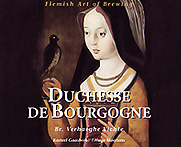
Jon Bonné, the new big cheese at the San Francisco Chronicle’s wine section, had a little blurb in the Sipping News about a wonderful beer, the Duchesse de Bourgogne, imported by D&V International.

Bonné claims it’s a beer for wine lovers, though I assume he means others might enjoy it, too. His pairing suggestions are intriguing, matching it with “rich cream dishes (with mussels, for instance) or a firm, bold-flavored cheese like an aged Gouda.” He also mentions the City Beer store — 1168 Folsom (at 7th), 415.503.1033 — as a place to buy it, and it’s good to see them get some love. I could make a big deal out of Bonné’s selling as a beer for cork dorks, but I’m hoping what he’s trying to do is get people who might not otherwise try a sophisticated beer to try one, and because I’m trying to give him the benefit of the doubt after his gracious response to my earlier criticism about one of the first beer pieces he green-lighted after coming to the Chronicle.

Duchesse de Bourgogne is a favorite of mine, as I love the style — Flanders Red Ale — and I usually order one if I find it on a beer list. I was thrilled to see it in California beginning last year. It’s brewed at the Brouwerij Verhaeghe, located in Vichte, which is a ancient castle and farm in West Flanders, Belgium. By the way, it’s pronounced “Doo-shay.”

duchesse

Beer aside, the history of the Duchesse is fascinating. Her anglicized name was Mary of Burgundy, though she was born in Brussels on February 13, 1457, the only child of Charles the Bold, Duke of Burgundy, and his wife Isabella of Bourbon. Needless to say she was quite a catch, especially after her father died in battle (at the siege of Nancy, not a particularly awful sounding name) in 1477, when she was nineteen. Louis XI of France tried to take Burgundy and the Low Countries for himself but was frustrated when Mary signed the “Great Privilege,” by which she gave Flanders, Brabant, Hainaut, and all of Holland autonomous rule (leaving for herself the remainder of the Low Countries, Artois, Luxembourg, and Franche-Comté). She then married Archduke Maximilian of Austria, who was later the Holy Roman Emperor Maximilian I, and part of the Hapsburg Austrian dynasty. This sparked a long-standing dispute over the Low Countries between France and the Hapsburg family.

mary-ob3 mary-ob2
Two portraits of Mary of Burgundy, the Duchesse de Bourgogne.

One of Mary’s favorite hobbies was falconing, which was popular among royals in the day. Falconry is basically training and hunting using a falcon. While engaged in this pursuit, in 1482, Mary’s horse tripped, tossing her onto the ground where the horse then landed on top of her, breaking her back. A few days later she died. Mary was only 25. The beer label’s portrait pays homage to her love of falconry and her ultimate death because of it.

Her young son Philip became heir after her death, though Maximilian was in charge until he reached adulthood. King Louis forced Maximilian to sign the Treaty of Arras the same year, and it gave Franche Comté and Artois to France. But Philip was a virtual prisoner until 1485, and then it took Max another eight years to take back control of their lands in the Low Countries. The Treaty of Senlis, in 1493, finally established peace in the area, but Burgundy and Picardy remained French.

So during her short life, Mary had such great impact on European politics that they can be felt even now in the present. So it’s quite appropriate that she have so wonderful a beer that bears her name and her portrait. It’s a fitting legacy.

The description of the beer from the importer:

The Duchesse de Bourgogne from Brouwerij Verhaeghe is the traditional Flemish red ale. This refreshing ale is matured in oak casks; smooth with a rich texture and interplay of passion fruit, and chocolate, and a long, dry and acidic finish. After the first and secondary fermentation, the beer goes for maturation into the oak barrels for 18 months. The final product is a blend of younger 8 months old beer with 18 months old beer. The average age of the Duchesse de Bourgogne before being bottled is 12 months.

Filed Under: News Tagged With: Belgium, Europe, History, Mainstream Coverage

Holy Beer Blunder: Call the Commissioner

January 12, 2007 By Jay Brooks

A friend in Portland sent me John Foyston’s piece in today’s Oregonian concerning what’s written in a visitor’s guide to Seattle. If you click on the link, dont panic, it’s the last item near the bottom entitled “Wrong on So Many Levels.” It’s a good thing I didn’t have any liquids in my mouth when I read it, because I would have spit them out across the room the way they do in cheesy sitcoms and movies. My first reaction after reading it was envisioning the spinning graphics when they cut to a new scene in the old ’60s Batman series and a costumed Adam West yelling “get me the Commissioner on the ‘Beer Phone'” to no one in particular, complete with cheeseball music that so perfectly complemented the action making it seem like things were moving fast. Perhaps a giant spotlight shining the image of a pint of beer into the night sky. I admit I should lay off the caffeine, but I have toddlers. I need caffeine.

But this is the sort of thing that cries out for some fast action. And the newly appointed Washington Beer Commisioners are just the folks to mete out some justice and get this thing changed. Okay, enough suspense. Here it is in a nutshell. The Summer/Fall 2006 edition of the Seattle Quick Guide, published by Guest Informant, says the following about Seattle’s beer scene, arguably one of the top two or three cities for beer in the country. Just be sure not to take a drink just before reading it. You have been warned.

“Beer Buzz: Beer may be the beverage of choice for sports addicts, couch potatoes and those with substantial midsections, but consumed in moderation it shares some of the healthful effects of red wine. A 12-ounce glass of beer has about half the alcohol of a glass of wine, which means you can drink more of it. Beer isn’t the ideal before-dinner drink due to the full feeling you get after quaffing a few cold ones, but that bloated sensation is a result of carbonation more than calories.”

“The microbrew craze peaked in the mid-’90s, when it seemed as if everyone and his mother was brewing up a batch of homemade lager in the basement and yuppifying it with exotic flavors in designer bottles. But classic imported beers have many characteristics of microbrews, so why mess with tradition?”

How could so few words manage to be so wrong? Is it possible it was written around 1996 when things were looking bleak for craft beer and they simply never updated it for ten years? But don’t they put out new editions of these hotel guides every year precisely to keep up with the changes in the cities in which they publish their guides? Even so, “designer bottles,” “exotic flavors,” “homemade lager in the basement?” What exactly are the folks at Guest Informant smoking?

It’s baffling. And it’s a grave injustice to the thousands of visitors Seattle gets every year who might believe what they read and assume craft beer is dead, ordering a Heineken instead. Not to mention all the great local beers and breweries that will be ignored. Wouldn’t they want to promote local “traditions” rather than imported ones? Again, whoever wrote this obviously didn’t do a great amount of — or let’s face it, any — research.

As my Oregonian friend (thanks Jim) so aptly wrote, “it is both sad and funny.”

Filed Under: Editorial Tagged With: Mainstream Coverage, Strange But True, Washington

Wine Enthusiast Enthuses Over Dogfish Head

January 12, 2007 By Jay Brooks

Well, not exactly. Author Gregg Glaser is squarely in our camp, being the Editor of Yankee Brew News and the News Editor of All About Beer. But it was still terrific seeing his article in a wine magazine, which covers primarily wine, of course, but also spirits. A quick search of their archives and it’s clear Wine Enthusiast does ocassionally write about beer, at least a few times year anyway. The article, Extreme Beer Dinners: Big beer, big food and lots of both, is part of the “Best of 2006” issue and is an overview of some of the unusual beers Sam Calgione makes at Delaware’s Dogfish Head Craft Brewed Ales. It also mentions his new book, Extreme Brewing, and the many beer dinners Sam has done across the country, including the one he did in San Francisco last November.

This was the label featured in Glaser’s article but I’m running it here again because I love Tara McPherson‘s artwork.

Filed Under: Food & Beer, News Tagged With: Eastern States, Mainstream Coverage

Hitachino a Hit

January 4, 2007 By Jay Brooks

A food writer, Kim O’Donnel, with the Washington Post, surprised herself by discovering that beer and food do indeed work quite well together. In the article, she describes having a “palate-changing, food-beer pairing experience” at a Japanese restaurant in New York City when her waiter suggested trying a Hitachino Nest Beer with the meal. In O’Donnel’s Post blog, “A Mighty Appetite,” she then goes on to detail other experiences with the Japanese craft beer and even includes a link to an interview with Kiuchi Brewery owner Toshiyuki Kiuchi at StarChefs.com. Also, at the end, fellow Celebrator writer Gregg Wiggins chimes in with a useful couple of links to additional information about beer and food from beer writer Greg Kitsock and Brooklyn Brewery brewmaster and author Garret Oliver.

Filed Under: Food & Beer Tagged With: Asia, Mainstream Coverage

« Previous Page
Next Page »

Find Something

Northern California Breweries

Please consider purchasing my latest book, California Breweries North, available from Amazon, or ask for it at your local bookstore.

Recent Comments

  • Ernie Dewing on Historic Beer Birthday: Charles William Bergner 
  • Steve 'Pudgy' De Rose on Historic Beer Birthday: Jacob Schmidt
  • Jay Brooks on Beer Birthday: Bill Owens
  • Steve 'Pudgy' De Rose on Beer Birthday: Charles Finkel
  • Steve 'Pudgy' De Rose on Beer Birthday: Bill Owens

Recent Posts

  • Beer In Ads #5208: Jax Bock Beer Is Here Again! February 18, 2026
  • Historic Beer Birthday: Henry Weinhard February 18, 2026
  • Historic Beer Birthday: Simeon Hotz February 18, 2026
  • Beer Birthday: Teri Fahrendorf February 18, 2026
  • Beer In Ads #5207: Good News! Good Cheer! Dawson’s Bock Beer Is Here! February 17, 2026

BBB Archives

Feedback

Head Quarter
This site is hosted and maintained by H25Q.dev. Any questions or comments for the webmaster can be directed here.