Brookston Beer Bulletin

Jay R. Brooks on Beer

  • Home
  • About
  • Editorial
  • Birthdays
  • Art & Beer

Socialize

  • Dribbble
  • Email
  • Facebook
  • Flickr
  • GitHub
  • Instagram
  • LinkedIn
  • Pinterest
  • RSS
  • Twitter
  • YouTube

Powered by Genesis

Beer In Ads #5094: Christiania Bryggeri’s Bok-Øl

October 2, 2025 By Jay Brooks

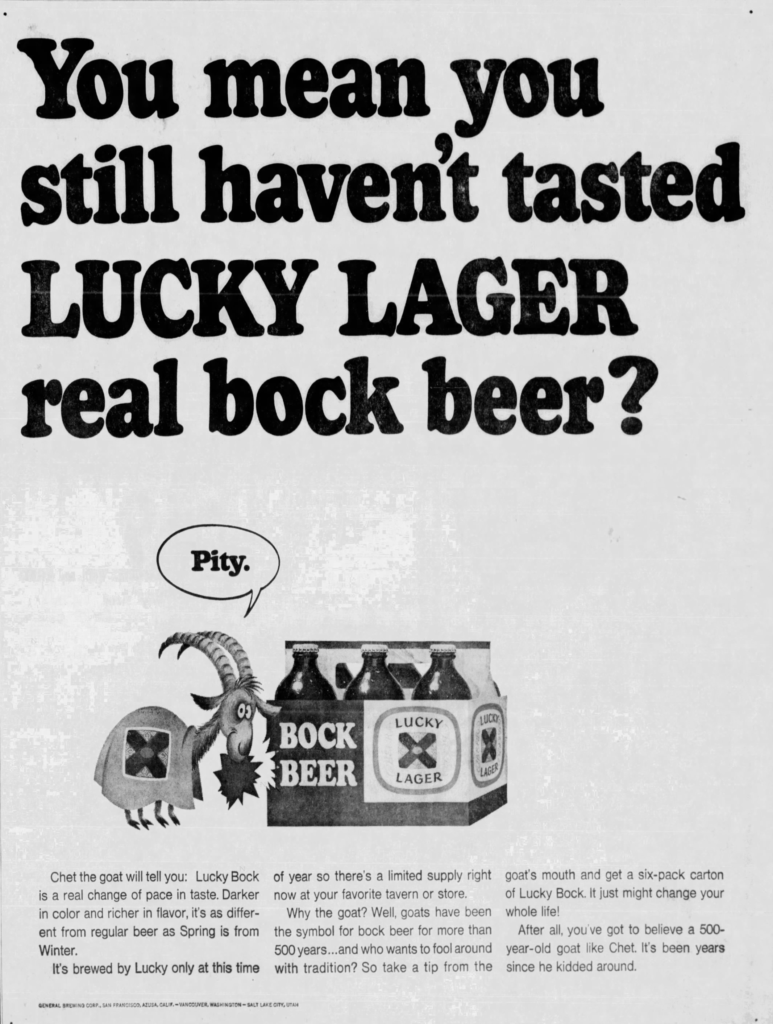
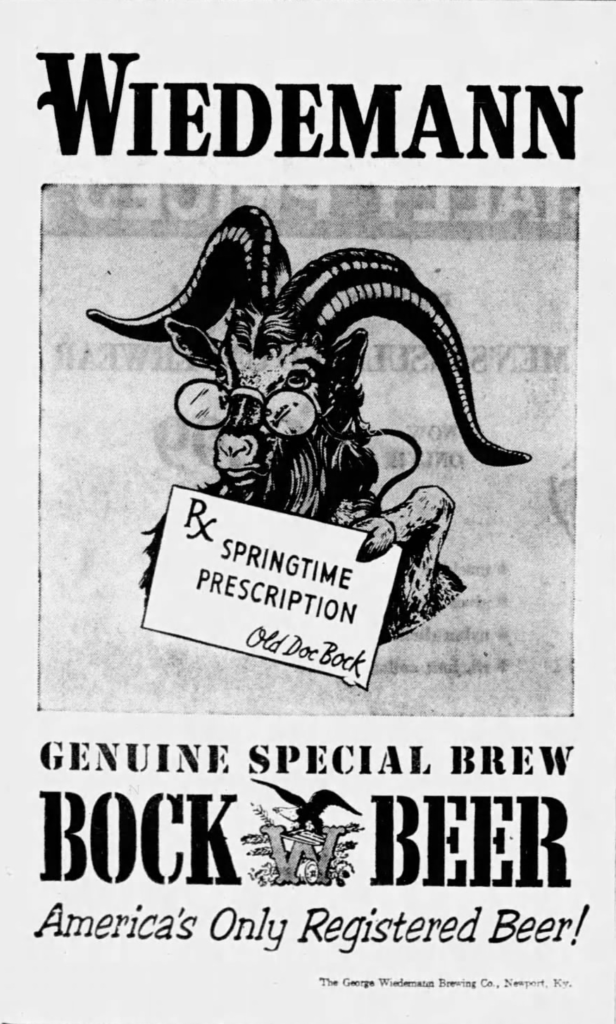
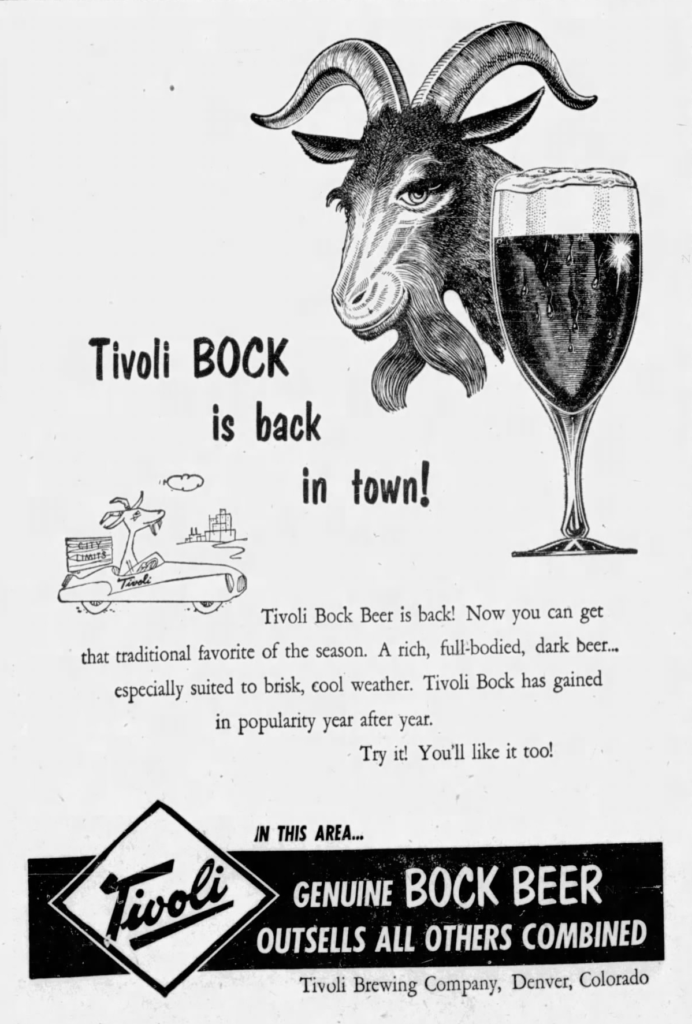
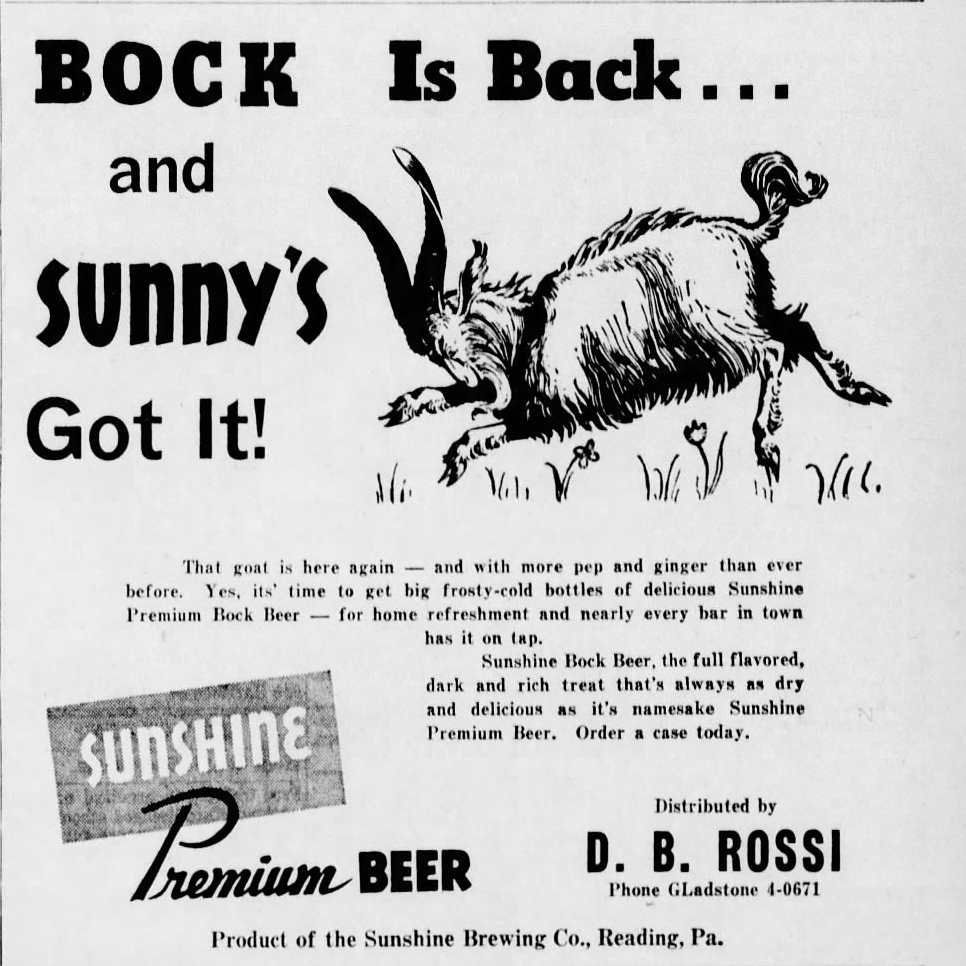
Last year I decided to concentrate on Bock ads. Bock, of course, may have originated in Germany, in the town of Einbeck. Because many 19th century American breweries were founded by German immigrants, they offered a bock at certain times of the year, be it Spring, Easter, Lent, Christmas, or what have you. In a sense they were some of the first seasonal beers. “The style was later adopted in Bavaria by Munich brewers in the 17th century. Due to their Bavarian accent, citizens of Munich pronounced ‘Einbeck’ as ‘ein Bock’ (a billy goat), and thus the beer became known as ‘Bock.’ A goat often appears on bottle labels.” And presumably because they were special releases, many breweries went all out promoting them with beautiful artwork on posters and other advertising.

Thursday’s work is for Christiania Bryggeri’s Bok-Øl, which was created in 1910. This one was for the Christiania Bryggeri, of Christiania (Oslo), Norway, which was originally founded in 1855. The artist who created this poster was Othar Holmboe, who was also from Norway.

Filed Under: Art & Beer, Beers, Breweries, Just For Fun Tagged With: Advertising, Bock, History, Norway

Beer In Ads #5093: Bock Bier Wädenswil

October 1, 2025 By Jay Brooks

Last year I decided to concentrate on Bock ads. Bock, of course, may have originated in Germany, in the town of Einbeck. Because many 19th century American breweries were founded by German immigrants, they offered a bock at certain times of the year, be it Spring, Easter, Lent, Christmas, or what have you. In a sense they were some of the first seasonal beers. “The style was later adopted in Bavaria by Munich brewers in the 17th century. Due to their Bavarian accent, citizens of Munich pronounced ‘Einbeck’ as ‘ein Bock’ (a billy goat), and thus the beer became known as ‘Bock.’ A goat often appears on bottle labels.” And presumably because they were special releases, many breweries went all out promoting them with beautiful artwork on posters and other advertising.

Wednesday’s work is for Wädenswil Bock Bier, which was created in 1939. This one was for the Brauerei Wädenswil of Wädenswil, Switzerland, which was originally founded in 1833. Sadly, the artist who created it is unknown.

Filed Under: Art & Beer, Beers, Breweries, Just For Fun Tagged With: Advertising, Bock, History, Switzerland

Beer In Ads #5092: The October Bock Beer

September 30, 2025 By Jay Brooks

Last year I decided to concentrate on Bock ads. Bock, of course, may have originated in Germany, in the town of Einbeck. Because many 19th century American breweries were founded by German immigrants, they offered a bock at certain times of the year, be it Spring, Easter, Lent, Christmas, or what have you. In a sense they were some of the first seasonal beers. “The style was later adopted in Bavaria by Munich brewers in the 17th century. Due to their Bavarian accent, citizens of Munich pronounced ‘Einbeck’ as ‘ein Bock’ (a billy goat), and thus the beer became known as ‘Bock.’ A goat often appears on bottle labels.” And presumably because they were special releases, many breweries went all out promoting them with beautiful artwork on posters and other advertising.

Tuesday’s ad is for Consumers’ Bock Beer, which was published on September 30, 1900, six days before it was scheduled to be released on October 6. This one was for the Consumers’ Brewing Co. of Norfolk, Virginia, which was originally founded in 1896. At least I think so, since that’s the closest one to D.C. But there were also breweries called “Consumers'” located in Rhode Island, Ohio, Pennsylvania and New York. This ad ran in The Washington Post, from Washington, D.C.

Filed Under: Art & Beer, Beers, Breweries, Just For Fun Tagged With: Advertising, Bock, D.C., History

Beer In Ads #5091: Buffalo Bock Beer Is Out

September 29, 2025 By Jay Brooks

Last year I decided to concentrate on Bock ads. Bock, of course, may have originated in Germany, in the town of Einbeck. Because many 19th century American breweries were founded by German immigrants, they offered a bock at certain times of the year, be it Spring, Easter, Lent, Christmas, or what have you. In a sense they were some of the first seasonal beers. “The style was later adopted in Bavaria by Munich brewers in the 17th century. Due to their Bavarian accent, citizens of Munich pronounced ‘Einbeck’ as ‘ein Bock’ (a billy goat), and thus the beer became known as ‘Bock.’ A goat often appears on bottle labels.” And presumably because they were special releases, many breweries went all out promoting them with beautiful artwork on posters and other advertising.

Monday’s ad is for Buffalo Bock Beer, which was published on September 29, 1915. This one was for the Buffalo Brewing Co. of Sacramento, California, which was originally founded in 1890. This ad ran in The Plumas Independent, which served Plumas County, California, located in the northeast part of the state, in the Sierra Nevada mountains. I love how they claim you can “Get ‘It’ Anywhere.”

Filed Under: Art & Beer, Beers, Breweries, Just For Fun Tagged With: Advertising, Bock, California, History, Sacramento

Beer In Ads #5090: Salvator Season In Munich

September 28, 2025 By Jay Brooks

Last year I decided to concentrate on Bock ads. Bock, of course, may have originated in Germany, in the town of Einbeck. Because many 19th century American breweries were founded by German immigrants, they offered a bock at certain times of the year, be it Spring, Easter, Lent, Christmas, or what have you. In a sense they were some of the first seasonal beers. “The style was later adopted in Bavaria by Munich brewers in the 17th century. Due to their Bavarian accent, citizens of Munich pronounced ‘Einbeck’ as ‘ein Bock’ (a billy goat), and thus the beer became known as ‘Bock.’ A goat often appears on bottle labels.” And presumably because they were special releases, many breweries went all out promoting them with beautiful artwork on posters and other advertising.

Sunday’s work is another one for Salvator Doppelbock, which was created in 1861. This one was for the Paulaner Brewery (Paulaner Brauerei München) of Munich, Germany, which was originally founded in 1634. It’s an original drawing is called “Die Salvator-Saison in München” (or “Salvator Season in Munich”) at the Munich City Museum, although they don’t know who the artist was who created this highly detailed drawing.

Filed Under: Art & Beer, Beers, Breweries, Just For Fun Tagged With: Advertising, Bock, Germany, History

Beer In Ads #5089: Bottled Beer At Its Best

September 27, 2025 By Jay Brooks

Last year I decided to concentrate on Bock ads. Bock, of course, may have originated in Germany, in the town of Einbeck. Because many 19th century American breweries were founded by German immigrants, they offered a bock at certain times of the year, be it Spring, Easter, Lent, Christmas, or what have you. In a sense they were some of the first seasonal beers. “The style was later adopted in Bavaria by Munich brewers in the 17th century. Due to their Bavarian accent, citizens of Munich pronounced ‘Einbeck’ as ‘ein Bock’ (a billy goat), and thus the beer became known as ‘Bock.’ A goat often appears on bottle labels.” And presumably because they were special releases, many breweries went all out promoting them with beautiful artwork on posters and other advertising.

Saturday’s ad is for bottles of Hornung’s White Bock Beer, which was published on September 27, 1935. This one was for the Jacob Hornung Brewing Co. of Philadelphia, Pennsylvania, which was originally founded in 1885. This ad ran in The Trenton Evening Times, from Trenton, New Jersey.

Filed Under: Art & Beer, Beers, Breweries, Just For Fun Tagged With: Advertising, Bock, History, New Jersey, Pennsylvania

Historic Beer Birthday: Samuel Adams

September 27, 2025 By Jay Brooks

samuel-adams-logo-new
Today is the birthday of Samuel Adams (September 27, 1722-October 2, 1803). He “was an American statesman, political philosopher, and one of the Founding Fathers of the United States. As a politician in colonial Massachusetts, Adams was a leader of the movement that became the American Revolution, and was one of the architects of the principles of American republicanism that shaped the political culture of the United States. He was a second cousin to President John Adams.” He was also at least a maltster, and possibly a brewer.

Copley-sam_adams-lg
A portrait of Samuel Adams by John Singleton Copley.

Copely was one of the most famous early American painters, especially of portraits. He also did paintings of John Hancock, John Adams and Paul Revere, as well. The painting hangs in Boston’s Museum of Fine Art, and I had a change to see the original in 2009, when the CBC was in Boston. It was smaller than I expected at 49 1/2 x 39 1/2 in. and is believed to have been painted around 1772. Its first owner, after the artist, was none other than John Hancock. His wife later gave it to Adams’ grandson and in 1876 it was given to the City of Boston. In the painting, he’s pointing at the Massachusetts Charter, which Adams believed was a constitution that protected peoples’ rights.

engraving-samuel-adams
An engraving of Samuel Adams, by Alonzo Chappel, from 1858.

Whether or not Adams was in fact a brewer is open to some debate. Stanley Baron’s Brewing in America suggests that he may have been involved in his father’s malting business, making him a Malster. In the footnote in the Wikipedia entry on Samuel Adams, it tells the following story.

Baron, Brewed in America, 74–75; Alexander, Revolutionary Politician, 231. However, Stoll (Samuel Adams, 275n16) notes that James Koch, founder of Boston Beer Company, reports having seen a receipt for hops signed by Adams, which indicates that Adams may have done some brewing.

It seems to me we might rarely hear of Sam Adams’ connection to the world of beer were it not for the Boston Beer Co. Historically, it doesn’t seem like that was a driving force in his life. What does seem clear, is that his father, Samuel Adams Sr., was most certainly a maltster, and also probably a brewer.

Here’s Michael Burgan, author of Samuel Adams: Patriot and Statesman, discussing Samuel Adams Sr., Samuel Adams’ father.

adams-sr-bio

samuel-adams-1722-1803-granger

On the New England Historical Society’s website, on a page about Samuel Adams, entitled Sam Adams Walked Into a Tavern and Started a Revolution. Part of that has the heading “Sam the Maltster.”

Sam the Maltster

Sam’s Adams’ father, Deacon Samuel Adams, was a man of wealth and respect. He made his living selling malt to beer makers from a malt house in his backyard. Deacon Adams was a leader of the populist political party known as the Boston Caucus, whose members met in taverns.

Young Sam Adams entered Harvard in 1736 at 14, graduated in 1740 and received a master’s degree in 1743. He didn’t want to be a lawyer or a minister, so he tried working in Thomas Cushing’s counting house. He hated it. He ended up living at home on the income from his father’s malt house.

sam-adams-green-dragonHe haunted the taverns of Boston, honing his political skills and making his political connections. His cousin John Adams noted taverns were where ‘bastards, and legislators, are frequently begotten.’

Sam didn’t become a legislator. First he was elected clerk of the market, then town scavenger, then tax collector, a position he held for nearly a decade. Later he became clerk of the Massachusetts House of Representatives, delegate to the Continental Congress, president of the Massachusetts Senate, lieutenant governor and governor.

When Sam was 24, his father died. The next year, British naval officers kidnapped 50 men on the Boston waterfront to impress them into service. A riot ensued, the prisoners were released and Sam Adams became a journalist. He started a newspaper, The Independent Advertiser, in which he portrayed the rioters as an assembly of people defending their natural right to life and liberty.

He also organized the Sons of Liberty, which flourished in Boston’s tavern-based political culture.

In 1769, Sam Adams, James Otis, Paul Revere, John Hancock, Benjamin Edes and 350 Sons of Liberty celebrated the fourth anniversary of resistance to the Stamp Act at the Liberty Tree Tavern in Dorchester. They dined in a tent set up for the occasion and drank 45 toasts. John Adams, who was there, noted that no one got drunk (beer could be pretty weak) and grudgingly approved of the affair. “Otis and Adams are politick, in promoting these Festivals, for they tinge the Minds of the People, they impregnate them with the sentiments of Liberty.”

BE040567
Samuel Adams in 1795 when he was Governor of Massachusetts.

Most accounts of Samuel Adams focus on his political activities and rarely mention his association with brewing at all. Here, for example, is a short biography from U.S. History.org, one of the 56 on the website done for each of the 56 Signers of the Declaration of Independence.

Samuel and John Adams’ names are almost synonymous in all accounts of the Revolution that grew, largely, out of Boston. Though they were cousins and not brothers, they were often referred to as the Adams’ brothers, or simply as the Adams’. Samuel Adams was born in Boston, son of a merchant and brewer. He was an excellent politician, an unsuccessful brewer, and a poor businessman. His early public office as a tax collector might have made him suspect as an agent of British authority, however he made good use of his understanding of the tax codes and wide acquaintance with the merchants of Boston. Samuel was a very visible popular leader who, along with John, spent a great deal of time in the public eye agitating for resistance. In 1765 he was elected to the Massachusetts Assembly where he served as clerk for many years. It was there that he was the first to propose a continental congress. He was a leading advocate of republicanism and a good friend of Tom Paine. In 1774, he was chosen to be a member of the provincial council during the crisis in Boston. He was then appointed as a representative to the Continental Congress, where he was most noted for his oratory skills, and as a passionate advocate of independence from Britain. In 1776, as a delegate to the Continental Congress, he signed the Declaration of Independence. Adams retired from the Congress in 1781 and returned to Massachusetts to become a leading member of that state’s convention to form a constitution. In 1789 he was appointed lieutenant governor of the state. In 1794 he was elected Governor, and was re-elected annually until 1797 when he retired for health reasons. He died in the morning of October 2, 1803, in his home town of Boston.

Finally, an article on the History Channel’s website, The Sudsy History of Samuel Adams, comes to pretty much the same conclusion, that Samuel Adams did inherit his father’s malting business, but if he was involved at all, his heart wasn’t in it. While it’s possible he also did brew, most likely for his household as was common in his day, there’s little, if any, compelling evidence for it. But thanks to Jim Koch, for the foreseeable future at least, his name will be inextricably linked to beer.

adams_s

Filed Under: Art & Beer, Birthdays, Just For Fun Tagged With: History, Massachusetts, Politics

Beer In Ads #5088: Salvator Doppelbock

September 26, 2025 By Jay Brooks

Last year I decided to concentrate on Bock ads. Bock, of course, may have originated in Germany, in the town of Einbeck. Because many 19th century American breweries were founded by German immigrants, they offered a bock at certain times of the year, be it Spring, Easter, Lent, Christmas, or what have you. In a sense they were some of the first seasonal beers. “The style was later adopted in Bavaria by Munich brewers in the 17th century. Due to their Bavarian accent, citizens of Munich pronounced ‘Einbeck’ as ‘ein Bock’ (a billy goat), and thus the beer became known as ‘Bock.’ A goat often appears on bottle labels.” And presumably because they were special releases, many breweries went all out promoting them with beautiful artwork on posters and other advertising.

Friday’s lithograph is for Salvator Doppelbock, which was published in April of 1840. This one was for the Paulaner Brewery (Paulaner Brauerei München) of Munich, Germany, which was originally founded in 1634. The poster is called “Verschiedene Szenen beim Salvatorbier” (or “Various scenes at the Salvator beer”) at the Munich City Museum, although they don’t know who the artist was who created it. But here’s a translation of their description:

Salvator, a Doppelbock beer, dates back to the 17th-century Munich Paulaner monks, who sought a culinary way to bridge the austere Lent period. Under the motto ‘Liquids don’t break the fast,’ they brewed a particularly strong and high-calorie beer that soon enjoyed widespread popularity even outside the monastery walls. After secularization in 1806, the Paulaner brewery, and with it the recipe for the fortifying Doppelbock, passed to master brewer Franz Xaver Zacherl, who named the beer ‘Salvator’ (Latin for ‘redeemer’). Zacherl’s continuation of the traditional annual tapping of the strong beer, laid the foundation for the festivities during the strong beer season known as the ‘Fifth Season.'”

Filed Under: Art & Beer, Beers, Breweries Tagged With: Advertising, Bock, Germany, History

Beer In Ads #5087: It’s Like Old Times Again

September 25, 2025 By Jay Brooks

Last year I decided to concentrate on Bock ads. Bock, of course, may have originated in Germany, in the town of Einbeck. Because many 19th century American breweries were founded by German immigrants, they offered a bock at certain times of the year, be it Spring, Easter, Lent, Christmas, or what have you. In a sense they were some of the first seasonal beers. “The style was later adopted in Bavaria by Munich brewers in the 17th century. Due to their Bavarian accent, citizens of Munich pronounced ‘Einbeck’ as ‘ein Bock’ (a billy goat), and thus the beer became known as ‘Bock.’ A goat often appears on bottle labels.” And presumably because they were special releases, many breweries went all out promoting them with beautiful artwork on posters and other advertising.

Thursday’s ad is for Rainier Bock Beer, which was published on September 25, 1933. This one was for the Rainier Brewing Co. of Seattle, Washington, which was originally founded in 1878, though it was mostly advertising Long John’s Tavern, which located in downtown Nevada City, California. The tagline was “It’s Like Old Times Again Down at Long John’s.” This ad ran in The Nevada County Nugget, from Nevada City, California.

Filed Under: Art & Beer, Beers, Breweries, Food & Beer Tagged With: Advertising, Bock, California, History, Pubs

Beer In Ads #5086: Ehrhart’s Party Store Bock Beer

September 24, 2025 By Jay Brooks

Last year I decided to concentrate on Bock ads. Bock, of course, may have originated in Germany, in the town of Einbeck. Because many 19th century American breweries were founded by German immigrants, they offered a bock at certain times of the year, be it Spring, Easter, Lent, Christmas, or what have you. In a sense they were some of the first seasonal beers. “The style was later adopted in Bavaria by Munich brewers in the 17th century. Due to their Bavarian accent, citizens of Munich pronounced ‘Einbeck’ as ‘ein Bock’ (a billy goat), and thus the beer became known as ‘Bock.’ A goat often appears on bottle labels.” And presumably because they were special releases, many breweries went all out promoting them with beautiful artwork on posters and other advertising.

Wednesday’s ad is for an unknown Bock Beer, which was published on September 24, 1965. This one was not for a specific brand of bock beer, it was instead for a liquor store called Ehrhart’s Party Store. I cut out the middle of the ad, which consisted of some other ads for root beer along with information about the store and its hours. Surprisingly, sixty years after this ad ran, the store is still a going concern in Bucyrus, Ohio. This ad ran in The Bucyrus Telegraph-Forum, which serves Bucyrus, Crawford County and Ohio.

Filed Under: Art & Beer, Beers, Just For Fun Tagged With: Advertising, Bock, History, Ohio

« Previous Page
Next Page »

Find Something

Northern California Breweries

Please consider purchasing my latest book, California Breweries North, available from Amazon, or ask for it at your local bookstore.

Recent Comments

  • Ernie Dewing on Historic Beer Birthday: Charles William Bergner 
  • Steve 'Pudgy' De Rose on Historic Beer Birthday: Jacob Schmidt
  • Jay Brooks on Beer Birthday: Bill Owens
  • Steve 'Pudgy' De Rose on Beer Birthday: Charles Finkel
  • Steve 'Pudgy' De Rose on Beer Birthday: Bill Owens

Recent Posts

  • Beer In Ads #5181: Turn Winter Into Spring January 24, 2026
  • Historic Beer Birthday: Philip Bissinger January 24, 2026
  • Historic Beer Birthday: Gottlieb Muhlhauser January 24, 2026
  • Beer Birthday: Ted Vivatson January 24, 2026
  • Historic Beer Birthday: Max Helmrich January 24, 2026

BBB Archives

Feedback

Head Quarter
This site is hosted and maintained by H25Q.dev. Any questions or comments for the webmaster can be directed here.