Brookston Beer Bulletin

Jay R. Brooks on Beer

  • Home
  • About
  • Editorial
  • Birthdays
  • Art & Beer

Socialize

  • Dribbble
  • Email
  • Facebook
  • Flickr
  • GitHub
  • Instagram
  • LinkedIn
  • Pinterest
  • RSS
  • Twitter
  • YouTube

Powered by Genesis

Historic Beer Birthday: Albert Moortgat

August 2, 2025 By Jay Brooks

Today is the birthday of Albertus Carolus “Albert” Moortgat (August 2, 1890-September 14, 1983). He was the youngest son of Jan Léonardus Moortgat, who founded the brewery which became known as Duvel Moortgat. Albert took over the brewery around 1914 and in 1917 created their iconic beer, Duvel, although they didn’t call it that until 1923.

This is his entry from Dutch Wikipedia, which I altered somewhat so it reads more naturally.

Albert’s father first left the management of the brewery to his brother Joseph (1875-1914), but after his early death he left the management to Albert. The first Duvel was brewed in 1917, but it was not until 1923 that the beer was marketed under that name. Albert went to Scotland to learn how to make this beer and initially called it “Victory Ale.”

In 1921 Moortgat became mayor of Breendonk. Moortgat remained mayor until he was arrested in September 1944, during the Allied liberation of Belgium, and accused of collaboration with the German occupier. He was sentenced to four years in March 1946, but he was released at the end of August 1947.

In 1917 Albert Moortgat married Virginie Plaskie (1891-1977), a daughter of a brewer from Ramsdonk. They had 12 children.

This account of the early history of the brewery is from the company’s website:

It all began when Jan-Léonard Moortgat and his wife founded the Moortgat brewery farm in 1871. Around the turn of the century, Moortgat was one of the over 3,000 breweries operating in Belgium.

Jan-Leonard experimented by trial and error, and his top-fermented beers were soon greatly appreciated in the brewery’s home town of Puurs and far beyond. Before long, the Brussels bourgeoisie was also won over by his beers.

Business was booming and Jan-Leonard’s two sons, Albert and Victor, joined the company. There was a clear division of labour: Albert became the brewer, Victor was responsible for delivering the beer to Brussels by horse and dray.

Albert and the Moortgat family c. 1895. Albert is in the front row on the left.

The First World War brought Belgium into contact with England and especially with English ales, which were quite popular at the time.

Inspired by the success of English ales, Albert decided to create a special beer based on the English model.

To create this type of ale, Albert wanted to work with only the best ingredients.

He travelled to the UK to get the specific strain of yeast he wanted and initially met with considerable resistance from the local brewers. It was only after a veritable odyssey across England that he was finally able to get his hands on a precious sample from a Scottish brewery. Our yeast is still cultured from the very same strain to this day!

The staff of the Moortgat brewery in the 1920s. Neatly dressed. Albert Moortgat is the second from the right in the first row.

The two brothers continued to search and experiment until they had perfected the recipe.

To commemorate the end of the First World War, the new beer was initially dubbed ‘Victory Ale’.

Today, of course, it’s known as “Duvel.”

Filed Under: Birthdays, Breweries, Just For Fun Tagged With: Belgium, History

Beer Birthday: Matt Van Wyk

August 2, 2025 By Jay Brooks

alesong
Today is Matt Van Wyk’s 53rd birthday. Matt was the brewmaster at Flossmoor Station when I first met him but a number of years ago moved to Eugene, Oregon, where for a long while he brewed at Oakshire Brewing. He also used to co-write one of the best brewer’s blogs, the Flossmoor Station Blog and again for Oakshire. A few years ago, he left Oakshire to start his own brewery, Alesong Brewing & Blending, which is doing great things. Join me in wishing Matt a very happy birthday.

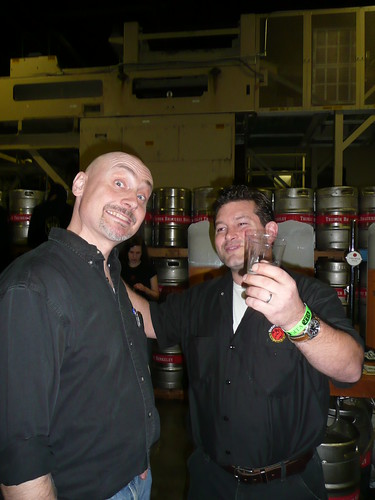
A self-portrait with Matt, from Oakshire Brewing, Jonathan Surrat, and me at the Goose Island cask event during CBC in Chicago.
vanwyck-2
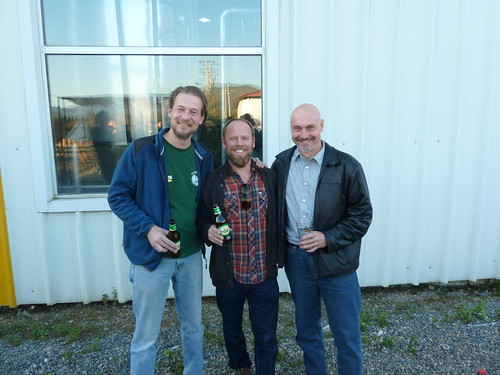
On the floor at GABF in 2007 with Andrew Mason (on left), Matt’s assistant at Flossmoor Station, and Wil Turner (on right) from Goose Island.
Jamie Floyd, from Ninkasi, and Matt Van Wyck, from Oakshire
Jamie Floyd, from Ninkasi Brewing, with Matt at GABF in 2009.
P1210027
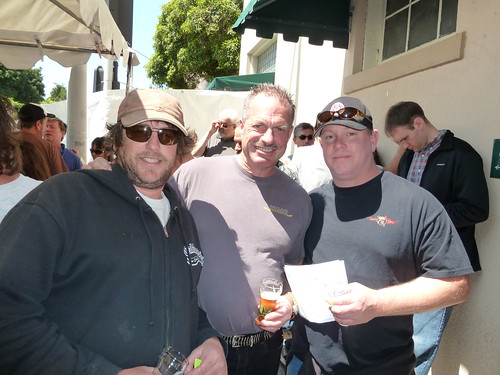
Matt at the Boonville Beer Festival a few years ago.
DSCN0938
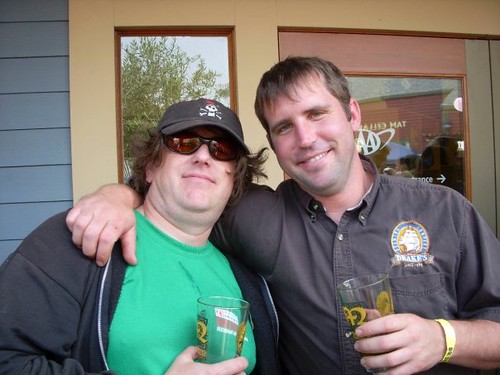
Matt and me, several years ago during a trip to Eugene at the Oakshire tasting room in Eugene.

Filed Under: Birthdays Tagged With: Oregon

Historic Beer Birthday: Henry Hess

August 1, 2025 By Jay Brooks

henry-hess
Today is the birthday of Henry Hess (August 1, 1859-July 25, 1909). Hess was born in Bucks County, Pennsylvania and in 1901 bought the Germania Brewing Co. in Philadelphia, which has originally been founded in 1875 by Philip J. Laubner, and it was known then as the Philip J. Laubner Brewery. Hess renamed the Henry Hess Brewing Co. and remained opened until it closed in 1911, presumably due to his death two years before. He appears to have been involved in another location that was also called the Henry Hess Brewing Co. from 1909-1912. Before 1909, it was known as the Consumer’s Brewing Co. and afterwards was known as the Premier Brewing Co., which closed in 1920 due to prohibition. In 1933, it re-opened as Trainer Brewing and in 1937 became known as the Otto Erlanger Brewing Co. until 1951, when it closed for good.

henry-hess

Here is an obituary of Hess from the “Brewers Journal, Volume 34 for the Year 1909:”

henry-hess-obit-1
henry-hess-obit-2

hess-bottle-01

And this is about his brewery from the book “1000 Years of Brewing:”

henry-hess-100yrs

Filed Under: Birthdays, Breweries, Just For Fun Tagged With: History, Pennsylvania, Philadelphia

Historic Beer Birthday: Frederick Gettelman Jr.

August 1, 2025 By Jay Brooks

gettelman
Today is the birthday of Frederick W. Gettelman Jr. (August 1, 1915-November 30, 1998). He was born in Wauwatosa, Wisconsin, the grandson of Adam Gettelman, who founded the A. Gettelman Brewing Co. in Milwaukee, Wisconsin. Junior worked at the brewery with his father, but after Senior passed away, the brewery was sold to the neighboring Miller Brewing Company in 1961.

Fred Jr.

The Gettelman plant and brand continued on with Frederick Gettelman, Jr., along with his brother brothers Tom, as plant managers until Miller formally merged the two operations in 1971.

fritz-gettelman-2
fritz-gettelman-2-text
I think Frederick Gettelman Jr. is in this photo, possibly on the right, but I’m not 100% sure.

And this is from “A Century of Brewing, 1854-1954: The A. Gettelman Brewing Company,” a company brochure from 1954:

The A. Gettelman Brewing Company first began to show signs of the new post-prohibition prosperity in 1937 with construction of an addition to the old bottle-house. An 80 x 110 foot structure, the building was twice the size of the building it annexed. Cream-colored bricks salvaged from the old Gettelman mansion atop the hill overlooking the brewery went into the construction of its walls and the bottling equipment it housed was modernity itself. In fact, Fritz Gettelman had had a hand in the improvement of the bottle washer installed in the new bottle house. It was he who had dreamed up and perfected the idea of cleaning the bottles with high pressure steam and water. So efficient was the equipment in the ultra modern bottle shop that Gettelman was able to show figures proving that breakage on bottles of all makes and ages ran only .442 percent of total bottles handled.

In addition to the modern machinery on the ground floor the bottle shop boasted a battery of glass-lined storage tanks in the basement, an innovation which Fritz Gettelman had also helped engineer. During development of the revolutionary tanks, he had spent long hours at the A. 0. Smith plant subjecting experimental models to every conceivable torture to prove his idea that molten glass will stick to steel. How he did this in the face of skeptical college “enchineers” — as he called them — is another story, but the success he encountered is borne out by the fact that few progressive breweries today are without the big beer holders with the glazed walls.

All this while the affairs of the brewery had been directed from the office building which lies between State street and the brewery proper. By 1948, however, it was becoming increasingly apparent that the expanding brewery would need corresponding office facilities. It was decided, therefore, that an old malt-house which had, for the last several years, served as a place for miscellaneous storage be made over into an office building. Part of the building had originally been the first Gettelman homestead, antedating even the mansion on the hill. From what had once been its living room emerged the present office reception room whose walls are panelled with the cypress of the old wooden beer storage tanks. From the rest of the building the architect’s skill and a lot of hard work wrought the present Gettelman offices. Fritz Gettelman went along with, and indeed inaugurated, most of the brewery’s advances, but he turned a deaf ear to any suggestion that he move his office to the newly renovated building. Moreover, he insisted that the second story room in which he had been born and from which had come many of his ideas on the humble brown butcher paper be left inviolate — and so it has been, to this day.

Modernization of brewery and office facilities was approved by everyone connected with the business, but no one sanctioned them more heartily than the two Gettelman brothers, Fred, Jr., and Tom, sons of the energetic and imaginative Fritz. Actively entering the management affairs of the brewery in 1939 and 1941, respectively, the two younger Gettelmans not only welcomed the changes but were, in large measure, responsible for their execution. Interest of the brothers in increased production and administrative efficiency was not an overnight affair. The lives of both of them had revolved around the brewery almost since they had taken their first steps and they had a working knowledge of every facet of the business long before they emerged from brewers’ school as master brewers.

Gettelman-Brewery-1054
The brewery in 1954, on its 100th anniversary.

Filed Under: Birthdays, Breweries, Just For Fun Tagged With: History, Wisconsin

Historic Beer Birthday: Rita Daigle

July 31, 2025 By Jay Brooks

Today is the birthday of Rita Daigle McGrover (July 31, 1927-February 9, 1974). Daigle was elected Miss Rheingold 1946. She was born in New York, and started modeling when was seventeen (lying about her age). She was also Miss Stardust of 1944 and Queen of the 1945 Photographers Ball. The same December she was crown Miss Rheingold, she married a well-known singer, Jimmy Saunders, who sang with Harry James, among others, and co-wrote songs with Frank Sinatra. Her modeling career both before and after 1946 was fairly robust, with her appearing on the cover of such magazines as Cosmopolitan, Life and Vogue. She later married lawyer Raymond J. McGrover, who was also president of the American Contract Bridge League. She had two children.

Here’s more about her from Those Obscure Objects of Desire:

Rita Daigle was born on July 31, 1927 in New York City, to Raymond and Alice Daigle. Her father, who worked as an assistant manager in a hotel, was born in Massachusetts. Her mother was French-Canadian, a housewife. She was their only child.

The family lived in Manhattan with a lodger in 1930. Rita attended high school in New York and developed an interest in modeling from an early age, picking this vocation as her road to fame and riches.

Rita signed with the Walter Thorton Agency, a premier modeling agency of the time, on par with Conover and John Power Agencies. She was only 16 when she started doing the modeling rounds. Her claim to fame was being crowned Miss Stardust in 1944, beating more than 3000 other pretty hopefuls for the title. This was followed closely by being Queen of New York’s Press Photographers Ball. Riding on a wave of high publicity, she was signed to a movie career in 1945.

CAREER

RitaDaigle4

Let me tell you right of the bat – I haven’t got any credits on Rita. She doesn’t have a page on IMDB, but I know that, unless the papers outright lied about it, Rita signed a contract with Paramount pictures in April 1945. There is a good chance that she, like many young and pretty starlets, never made a movie during their contract period. Also, it’s worth noting that her modeling career was much more lucrative than signing a contract as a starlet. If I were Rita, I would have chosen to return to New Yotk. Anyway, Rita really went back to New York and married by the end fo the year, thus ending any chance of working in Hollywood for the long run (her husband absolutely refused to work on the West coast, and her modeling momentum was slowly melting away).

Later, after her divorce, in about 1952, the papers called her an “actress”, but I couldn’t find any credits from this time (unless she changed her name) so it’s kaput again.

PRIVATE LIFE

In 1944, when the 17-year-old Rita hit the papers, they claimed she was a native of Lowell Massachusetts (not quite right), that she was 19 years old (not quite right), and that she was the sweetheart of Liutenant Emile Bouchard, serving somewhere in England at the time. I guess the part about Bouchard was true, but their relationship ended not long after.

Rita married singer Jimmy Saunders in New York in December 1945. Saunders was born as Vincent LaSpada on June 9, 1920, in Philadelphia, Pennsylvania. He came from a large Italian-American family – the son of Fillipo and Lillian LaSpada, his father was a baker who owned a bakery on the 9th and Cross Street. The family had 13 children, and Vincent had seven sisters (Lucy, Rose, May, Grace, Helen, Carmel, Angelina).

In 1945, Jimmy was in top form, and so was Rita. For instance, in 1946, Rita was crowned Miss Rheingold, a great honour for any model in the 1940s (the very first Miss Rheingold, Jinx Falkenburg, was the only one that had any kind of a acting career). That year, she made about 45, 000$ from her modeling work, making her a pretty well paid woman for that time! Rita appeared in Yank the Army Weekly, Cosmopolian and Vogue (among others). She was nicknamed La Daigle, and played pretty coy with the papers, admitting her father was a innkeeper and refused to say what inn – she also admitted that she rarely drank beer (despite being Miss Rheingold). It was also noted that she met Jimmy while dancing at Pops’ hotel. Cute! Now more about Jimmy’s career. As his obituary on Philly.com notes, he was a popular big band singer of the time:

Jimmy Saunders, also known as Sonny Saunders and for a time as Marco Polo, sang with the bands of Harry James, Eddie Duchin, Ray Bloch, Sonny Kendis and Charlie Spivak. He co-wrote “Peach Tree Street” with Frank Sinatra and recorded such hits as “There Must Be a Way,” “Santa Lucia,” “You Belomg to My Heart,” “I Love You for Sentimental Reasons” and “You Are Too Beautiful.” He also was a featured vocalist on the “Lucky Strike Hit Parade” show.

Aside for their highly successful careers, the LaSpadas had two children, two daughter, together: Diane LaSpada (born on April 15, 1947) and Linda LaSpada (born on December 9, 1948).

However, things in showbiz turn fast. One day a king, the next a pauper. Rita’s career, in a time when models lasted until they were 25, was hampered not only by her age but also by her wish to take care of her children. So, her modeling career was effectively over by 1950. Due to the sharp decline in popularity of big bands, so was Jimmy’s.

RitaDaigle5

The tensions over their failed careers led to the demise of their marriage in 1951. Yet, during the court proceedings more dirty laundry made it’s way to the public. For instance, an article claimed that Saunders filed court papers asking a judge for help “ridding his household of a mother-in-law and a gossipy aunt.”

Rita officially divorced Saunders in 1952 – Jimmy never remarried. Rita marched on. There were rumors she might marry James Cecil when her Florida divorce came through. Nothing doing.

Rita married Raymond J. McGrover, probably in the 1950s. McGrover was born on December 9, 1905, in New York, making his a whole lot older than Rita. While unlike in age with Rita, like her he spent his entire life in New York City, Brooklyn to be exact. He became a noted lawyer and devoted much energy to his favorite pastime, bridge. He married Billie McGrover in 1930, and they had a child. Both Raymond and his wife were passionate bridge players, probably the best in Brooklyn, often winning tournaments. I found that very cute – they had a strong shared interest that probably got them together in the first place. However, they divorced in 1939 in Reno, and Mrs. McGrover charged Raymond with a very non descriptive “cruelty”. McGrover lived alone from then on in Brooklyn. In the 1946-1947 period, he was a member of the steering committee that very much reorganized the American Contact Bridge League.

The ad announcing her victory in late 1945.
From the spring of 1946.
And one more from 1946.

Filed Under: Birthdays, Just For Fun Tagged With: History, New York, Rheingold

Beer Birthday: Jonathan Surratt

July 31, 2025 By Jay Brooks

beer-mapping
Today is the 51st birthday of Jonathan Surratt. Jonathan launched the Beer Mapping Project and also ran the website for DRAFT magazine before it folded. And Jonathan also created National Growler Day, though its exact date from year to year is still fluid, plus he was a twitter diva, too. More recently, he’s become a sandwich aficionado of the highest order. Join me in wishing Jonathan a very happy birthday.

A self-portrait with Matt, then with Oakshire Brewing, Jonathan, and me at the Goose Island cask event during CBC in 2010.
Horse Brass publican Don Younger bookended by Jonathan’s wife Robin and Jonathan, displaying his excellent taste in attire.
Jonathan & Robin Surratt Sandwiched by Sean Paxton
Jonathan with Sean Paxton and Jonathan’s wife Robin at GABF a few years ago.
gabf07-71
Jonathan, Ray McCoy, Robin, and Ray’s wife, Cornelia Corey.
P1050259
Michael Roper, owner of the Hopleaf, Jonathan, and Wendy Littlefield, from Vanberg & DeWulff, when we had dinner there a few years ago.

Filed Under: Birthdays Tagged With: Chicago, Illinois, Midwest

Historic Beer Birthday: Leopold Nathan

July 30, 2025 By Jay Brooks

conical-fermenter
Today is the birthday of Leopold Nathan (July 30, 1864- December 24, 1937). He was born in Laupheim, in Württemberg, Germany, in 1864. “He studied chemistry in Frankfurt am Main and became a leading expert in wine and beer processing. In 1912 he founded the Nathan-Institut, or Nathan-Institute AG.” He developed the Nathan Brewing System, the closed system using conical-cylindrical fermenters that are ubiquitous today.

This is his biography, translated from Dutch, from his page on the BeerWiki:

Leopold Nathan (Laupheim, July 30, 1864 – Berlin-Dahlem , December 24, 1937) was a German scientist, brewer and inventor. He was born at Schloss Laupheim. This slot had the disposal of a brewery, so early did not only his interest in fermentation measure that also to nature in general. Due to poor health, after doctoral education he did not go to the gymnasium, but in the doctrine of an uncle, where he could transform his love for flowers and plants into the open air into theoretical knowledge. Before his 18th he studied fruit and wine studies at Geisenheim University College. For some time he had been the assistant of Hermann Müller, better known as Hermann Müller-Thurgau, the breeder of the Müller-Thurgau grape breeder.

Nathan dedicated himself to making wine from berries and paid close attention to the yeast types used. In winter of 1888, Nathan again contacted brewing when he studied the yeast reindeer culture for three months in the famous laboratory of the Carlsberg Brewery, where Emil Christian Hansen performed groundbreaking work for the brewing industry.

In the years thereafter he made more and more of fermentation, first of berries, later also the preparation of champagne and schaumwein and sekt – the German version of champagne.

Nathan Institute

Nathan develops a new way of producing and riping beer under substantially sterile conditions, the [Nathan_Brouwerij | Nathan System]. Around the turn of the century, Leopold Nathan came to Switzerland, where he would later receive citizenship. In 1912, in Zurich, together with Ing. Gille, Bonenblust and Einstein founded the Nathan Institute. From this institute, the process and components of the brewing facilities are further improved and the commercial activities supported. The chemical department of the Technical University of Munich, Nathan, awarded his title in 1923 the title ‘Doctor ing.’.

Just a few of his patents, as filed in the U.S., include the Manufacture of vessels (1906), a Process for sterilizing closed vessels (1907), the Art of brewing beer (1918), a Process and apparatus for the filtration of beer wort for further treatment, and for the filtration of beer and other foaming liquids (1930), a Process for the elimination of the immature odoriferous constituents in brewing (1935).

The Walkerville Co-operative Brewing Company Ltd of Adelaide signed an agreement with the Nathan Institute of Zurich in November 1925 for the installation of its plant at the company’s brewery at Southwark, and this became the first Nathan system to be installed in Australia. It was a major project for the brewery, requiring the erection of additional buildings to accommodate the new equipment. Beer production commenced in the Nathan plant late in 1927, and a formal opening ceremony was held in January 1928.

Nathan Bitter was the first beer brewed and was instantly popular, being sold around Australia. The South Australian Brewing Company was becoming the more dominant brewery in the 1930’s and by the end of the decade they had purchased the Walkerville Brewery. Since the Nathan Beers were so popular they continued to make the beer at the Southwark Brewery, the brewery wanted to remove the Walkerville branding so they renamed the brewery to the Nathan Brewery.

This is Nathan’s obituary, written by H. Lloyd Hind, from the Journal of the Institute of Brewing in March of 1938:

Members will have heard with regret of the sudden death of Dr. Leopold Nathan, at Berlin. To many he was personally known through his visit to Edinburgh and London in 1930, when he addressed both Sections. His name stood very high in the brewing world on account of the great technical advances he introduced. These may possibly have overshadowed his scientific attainments, which were of no mean order. Though he lived to the age of 73, he was rather delicate in his youth, but overcame this and developed the remarkable energy which characterised him in later years. He had a varied career. Engaged first at a distillery in Erfurt, he passed on to the study of viniculture and, finally worked under Hanson at Copenhagen. Returning to Germany he was engaged in the preservation of vegetables by drying and drew attention to the possibilities of canning.

During this early stage of his career he also worked on the manufacture of fruit juices and was the first to apply pure yeast culture to wines, and was one of the earliest protagonists of the collection of fermentation gas. This work led him to study brewing, and ultimately to the rapid brewing process, with which his name is associated. The object of the Nathan process is to produce a lager beer in much shorter time than is usual. It is based on the principle of pure yeast in sterile wort. In 1900, Nathan moved to Zurich, and in 1912 founded the Nathan Institute and from there directed many installations all over the world. The output of beer brewed by his process now amounts to more than 1,500,000 barrels a year. He drew attention many years ago to the necessity of using air-free CO, and to the advantages of bottling under CO2. The University of Munich recognized the value of his scientific and technical work by conferring on him the honorary degree of doctor.

The Nathan Brewery

But it’s his brewing system that he invented and improved upon throughout his life that he’s remembered for, so let’s take a look at the Nathan System.

Nathan-brochure

This description is from the page on the Nathan Brewery, translated from Dutch, on the BeerWiki

In the early twentieth century, in climatic conditions, it was virtually impossible to brew a good beer in areas with a tropical climate. The German but Swiss resident Brewer and inventor Leopold Nathan developed a new type of brewery with a brewing method in that time. The method was aimed at not contacting the wort with direct outdoor air and significantly reducing the bearing time. Several breweries were already in use in Germany who used a Nathan installation and the results were hopeful. During this time, conventional fermenters used conventional breweries, and after a storage period of up to six months, the beer was suitable for consumption.

Nathan-brouwerij
The tight, technically well-equipped interior of a Nathan brewery.

As with the classic method, the malt is scraped and mixed with water. This mixture is then heated in steps to convert the starch into sugars during the germination. The next step is filtering out the grain residues and the remaining liquid (the wort) is boiled and hops are added. In this process the wort becomes sterile.

With the method of Nathan, the wort is removed in a special barrel of all hop and malt residues and then cooled to 5 ° C as soon as possible by means of a surface cooler. This cooler is located in a space where filtered and sterile air is blown. The chilled wort goes slowly from below into the vessel and is pumped so until the liquid is clear.

Nathan-gistkweek

Yeast

Unlike the usual open fermentation bins, aluminum barrels were used in a Nathan brewery. These cylinder conical tanks were an essential part of the Nathan Breweries. This type of tank was patented by Nathan in 1927 and are still used in many breweries. The tanks were fitted with a jacket that allowed cooling to the right temperature. The yeast – a cultured, clean culture – was added from below and kept in motion by sterile air or carbon dioxide so that the yeast process could be accurately controlled. In six to nine days, depending on the type of beer, the fermentation was completed. Because it was a closed system all carbon dioxide generated at the fermentation could be collected and reused after purification. Before use, the used material was sterilized with alcohol.

The Nathan Institute also provided “loose” yeast cultivation plants. Such an installation was placed at the Hürlimann brewery based in Zurich. At this brewery a lot of research was done on yeast and its functioning. Hürlimann brought “Birell” one of the first truly successful alcohol-free beers on the market.

The storage that took place in a classic brewery in those days was accelerated in the Nathan method by a few days a lot of small bubbles of carbonated acid (collected at the fermentation) by pumping the young beer.

Nathan-brouwerij-schema


Schematic drawing of a Nathan brewery on the back of a French-language brochure.

This is a report on a talk Nathan gave in Chicago at a meeting of the American Society of Brewing Technology in 1914:

US915791-0
This is one of his earlier patents.

And this history is from Ian Spencer Hornsey’s “A History of Beer and Brewing:”

There are also several other online accounts of Leopold Nathan. See, for example, Gary Gillman’s two posts, Leopold Nathan – Unsung Hero of Modern Brewing and Some Bio On Dr. Leopold Nathan. Then there’s also Brewing Vessels Reviewed: Cylindroconical fermenters remain a craft beer staple, The Nathan System in Australia, and Improvements in the Fermentation and Maturation of Beers.

US1988954-0
And this is one of his later patents.

Filed Under: Birthdays, Just For Fun Tagged With: History, Switzerland

Beer Birthday: Dr. Bill

July 30, 2025 By Jay Brooks

Today is also the 63rd birthday of William Sysak, better known to the beer community as Dr. Bill. Dr. Bill’s massive tastings are the stuff of legends, and he later transported them — albeit on a smaller scale — to working at Stone Brewing’s World Bistro & Gardens. He has impeccable taste, be it in beer, wine, whiskey, cigars, what have you, and is one of the most fun people to taste with. He was working with Stone Brewing for a time, but then started his own brewery, co-founding Wild Barrel Brewing, in San Marcos, California, which lasted for a number of years before closing in 2023. Join me in wishing Bill a very happy birthday.

Dr. Bill and me sharing a plate of frites before the final judging at the Hard Liver Barleywine Festival in 2008.
Dr. Bill with Matt Bonney, from Brouwer’s/Bottleworks in Seattle at Slow Food Nation 2008 at Fort Mason.
Dr. Bill at Falling Rock, hosting one of his legendary tastings, during GABF in 2006.
Me, Bill, Bonney and a few others at the Keene Tasting in Seattle in 2008.
dr-bill
Dr. Bill’s player’s card when he joined Stone Brewing.

Filed Under: Birthdays Tagged With: California, San Diego, Southern California

Beer Birthday: Jim Jacobs

July 30, 2025 By Jay Brooks

Today is the 62nd birthday of Jim Jacobs, who for many years was doing various things at Lagunitas Brewing, most recently as Director of Community Giving. He also helped create the legendary Lagunitas Beer Circus. In his spare time he works with the Petaluma Music Festival and is also the drummer in the Smokehouse Gamblers. Plus, he’s ben a great friend to both me and craft beer over the years. Join me in wishing Jimmy a very happy birthday.

Me and Jimmy at his 60th birthday party.
The Smokehouse Gamblers.

Filed Under: Birthdays, Just For Fun Tagged With: Bay Area, California, Northern California

Historic Beer Birthday: Hamar Alfred Bass

July 30, 2025 By Jay Brooks

bass
Today is the birthday of Hamar Alfred Bass (July 30, 1842-April 8, 1898). He was the great-grandson of William Bass, the founder of the Bass brewery, and the second son of brewer Michael Thomas Bass.

Here’s his biography from Wikipedia:

Bass was born in Burton upon Trent, the second son of brewer Michael Thomas Bass and his wife Eliza Jane Arden, daughter of Major Samuel Arden of Longcrofts Hall, Stafford. Bass was the great-grandson of William Bass, the founder of the brewery firm of Bass & Co, and his elder brother became Lord Burton. Bass was educated at Harrow School and became a Director of the family firm of Bass, Ratcliff, Gretton and Co. He was Honorary Major of the 4th Prince of Wales’s (North Staffordshire) Regiment and was a J.P. for Staffordshire. Bass played cricket for the Marylebone Cricket Club (MCC), making a single first-class appearance for the MCC against Sussex in 1865. He was dismissed in the MCC’s first-innings by James Lillywhite, while in their second-innings he was dismissed for 3 runs by George Wells. The match ended in a draw.

Bass was elected MP for Tamworth at a in by-election in 1878 and held the seat until 1885 when the representation was reduced to one seat under the Redistribution of Seats Act 1885. He was elected MP for West Staffordshire in the 1885 general election and held the seat until his death aged 55 in 1898 from a complex form of rheumatism.

Bass was a breeder at the Byrkley Stud and his horse “Love Wisely” won the Ascot Gold Cup in 1896. He was also for 12 years master of the Meynell Hunt.

Bass married Louisa Bagot (1853–1942), daughter of William Bagot, 3rd Baron Bagot, in 1879. They lived at Byrkley Lodge and Needwood House, Burton, and also at 145 Piccadilly, London. After his death, Louisa married Rev Bernard Shaw.

Bass’s sister Emily Bass married Sir William Plowden, MP for Wolverhampton West, and his sister Alice Bass married Sir George Chetwode being the mother of Field Marshal Philip Chetwode.

Bass’s son William succeeded in his uncle’s baronetcy according to special remainder. Hamar Bass’s daughter Sibell Lucia married Major Berkeley John Talbot Levett of the Scots Guards, son of Theophilus Levett of Wychnor Park, Staffordshire. Berkeley Levett served as one of the Gentlemen Ushers to the Royal Family from 1919 to 1937.

Rear: Austro-Hungarian Ambassador, Lady Alice Stanley.

Back Row: Hon. Col. Legge, Marquis of Soveral, Duchess of Devonshire, Mr Hamar Alfred Bass, Lord Elcho, Miss Jane Thornewill, H.M. Queen Alexandra, Lord Burton (Michael Arthur Bass), Lady Mar & Kellie, Prince Henry of Pless

Front Row: Lady Noreen Bass, Miss Muriel Wilson, Lady Desborough, Lady de Grey, H.M. King Edward VII, Lady Burton (Harriett Bass), Princess Henry of Pless, Mrs Alice Fredrica Keppel, Miss Bunny Thornewill

And this summary is from the Local History of Burton upon Trent:

Hamar Bass was the second son of Michael Thomas Bass and his wife Eliza Jane Arden. He was brother of Lord Burton and also a Director of the family firm of Bass, Ratcliff, Gretton and Co. One sister Emily married Sir William Plowden, MP for Wolverhampton West, and the other married Sir George Chetwode being the mother of Field Marshall Philip Chetwode.

Hamar Bass was MP for Tamworth from 1878 to 1885. He was then MP for West Staffordshire from 1885 until his death aged 56 in 1898 from a complex form of rheumatism.

Hamar Bass married Louisa Bagot (1853-1942), daughter of William Bagot, 3rd Baron Bagot, in 1879. They lived at Byrkley Lodge and Needwood House, Burton, and also at 145 Piccadilly, London. Louisa subsequently married Rev Bernard Shaw. He was a breeder at the Byrkley Stud and his horse “Love Wisely” won the Ascot Gold Cup in 1896. He was also for 12 years master of the Meynell Hunt.

His son William succeeded in his uncle’s baronetcy of Stafford according to special remainder. Hamar Bass’s daughter Sibell Lucia married Major Berkeley John Talbot Levett, Scots Guard, son of Theophilus Levett of Wychnor Park, Staffordshire. Berkeley Levett served as one of the Gentlemen Ushers to the Royal Family from 1919 to 1937.

Filed Under: Birthdays, Just For Fun Tagged With: England, Great Britain, History

« Previous Page
Next Page »

Find Something

Northern California Breweries

Please consider purchasing my latest book, California Breweries North, available from Amazon, or ask for it at your local bookstore.

Recent Comments

  • Bob Paolino on Beer Birthday: Grant Johnston
  • Gambrinus on Historic Beer Birthday: A.J. Houghton
  • Ernie Dewing on Historic Beer Birthday: Charles William Bergner 
  • Steve 'Pudgy' De Rose on Historic Beer Birthday: Jacob Schmidt
  • Jay Brooks on Beer Birthday: Bill Owens

Recent Posts

  • Beer In Ads #5141: Out Today Sunshine Genuine Bock Beer March 3, 2026
  • Beer Birthday: Jeff Cioletti March 3, 2026
  • Historic Beer Birthday: Kosmos Spoetzl March 3, 2026
  • Beer In Ads #5140: The Talk Of The Town, Jacob Ruppert Bock Beer March 2, 2026
  • Historic Beer Birthday: Henry Gund March 2, 2026

BBB Archives

Feedback

Head Quarter
This site is hosted and maintained by H25Q.dev. Any questions or comments for the webmaster can be directed here.