Brookston Beer Bulletin

Jay R. Brooks on Beer

  • Home
  • About
  • Editorial
  • Birthdays
  • Art & Beer

Socialize

  • Dribbble
  • Email
  • Facebook
  • Flickr
  • GitHub
  • Instagram
  • LinkedIn
  • Pinterest
  • RSS
  • Twitter
  • YouTube

Powered by Genesis

Patent No. 700833A: Manufacture Of Fermented Liquors

May 27, 2016 By Jay Brooks

patent-logo
Today in 1902, US Patent 700833 A was issued, an invention of Joseph Schneible, for his “Manufacture of Fermented Liquors.” There’s no Abstract, though it’s described this way in the application:

This invention relates particularly to the carrying on of the fermentation of liquors such as malt beverages, for example and to the culture, propagation, and separation of yeast for further use As the fermentation of such liquors is now commonly practiced the yeast propagated for further use is separated and collected under conditions which are liable to result in contamination of the yeast by contact with air,usually teeming with wild ferments and very often with fungi, and in subsequent injury to the finished product.

It is the object of this invention to provide for the carrying on of the fermentation and the separation of the yeast in such a manner as to avoid exposure of either yeast or liquor to such contaminating and injurious influences, while at the same time the fermentation is carried on under practically normal conditions as to pressure.-

In accordance with this invention the newly-fermented liquor containing the yeast in suspension for further inoculation is transferred from the vessel in which the fermentation was carried on to a clean vessel, in which the separation of the yeast intended for further work from the liquor takes place and from which the liquor is withdrawn, thereby leaving the yeast in the clean vessel. The further quantity of liquor to be fermented is then introduced into the vessel containing the yeast and is inoculated thereby,thus avoiding altogether the removal of the yeast from the vessel in which the same has been allowed to separate from the fermented liquor and avoiding its exposure to the contaminating influences above referred to. This process is carried on successively in the manner referred to, the newly-fermented liquor being transferred from the vessel in which the inoculation has taken place and the main fermentation was carried on to a clean vessel, as before.

US700833-0

Filed Under: Beers, Breweries, Just For Fun, Politics & Law, Related Pleasures Tagged With: Brewing Equipment, History, Law, Patent, Science of Brewing

Patent No. 1760071A: Centrifugal Separator

May 27, 2016 By Jay Brooks

patent-logo
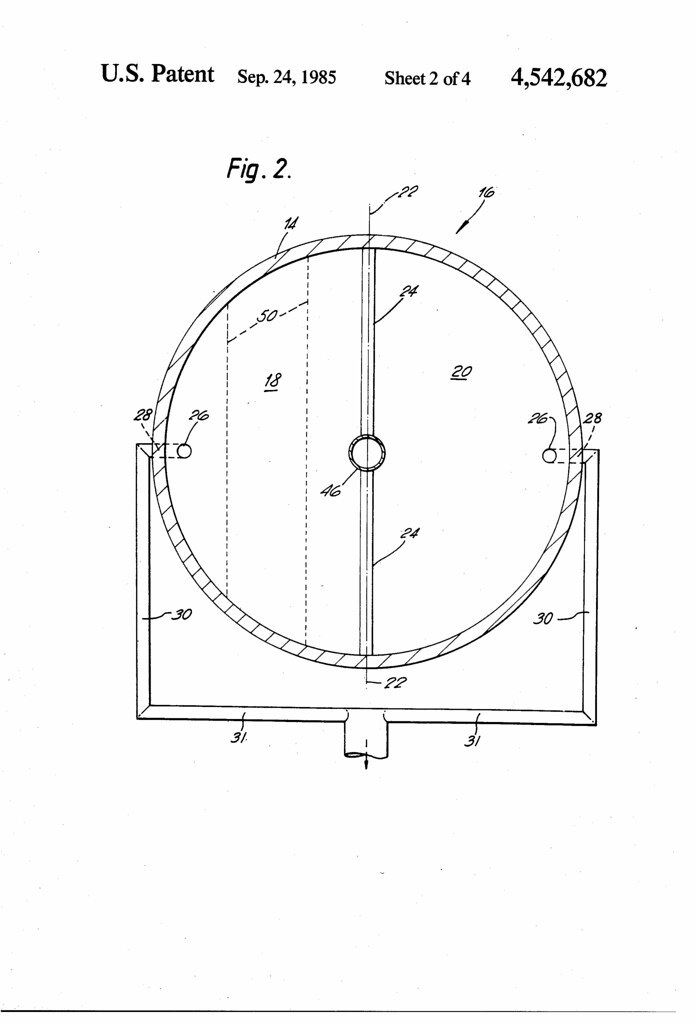
Today in 1930, US Patent 1760071 A was issued, an invention of Henry George Koepke, for his “Centrifugal Separator.” There’s no Abstract, though it’s described this way in the application:

My invention relates to centrifugal separators of the discharge nozzle conical type, primarily constructed for the separation of yeast from most of the associated liquids in which it has been’ propagated.

US1760071-0
US1760071-1

Filed Under: Beers, Breweries, Just For Fun, Politics & Law, Related Pleasures Tagged With: Brewing Equipment, History, Law, Patent, Science of Brewing

Venezuela’s President Gives Brewery Ultimatum: Brew Or Go To Jail

May 25, 2016 By Jay Brooks

polar
There’s an interesting development going on in Venezuela. Empresas Polar, the country’s largest brewer — with an 80% market share — completely shut down their operations in April, apparently because of “supply problems of its main raw materials.” The president of Venezuela, Nicolas Maduro, according to the drinks business, “has now threatened to take over the closed breweries, saying that the business owners risk being ‘put in handcuffs.'”

The country has been hit by a dire economic downturn over the last several years, and the president has not exactly been helping. John Oliver has covered the situation there hilariously at least twice, first in early May 2015 and then again last Sunday. In that report he mentioned that Marcos was threatening to jail owners of closed factories and have the government seize the buildings and take them over. And apparently one of those businesses he’s targeting is Polar. Here’s the rest of the story from the drinks beverage:

He said he was also ordering action “to recover the production apparatus, which is being paralyzed by the bourgeoisie”.

Meanwhile, Polar said it could no longer access the US currency needed to import the malted barley for beer production, and had to close the last of its breweries. Access to foreign exchange is currently under the control of the country’s government.

The beer shortage has had a big impact, as Venezuelans really like their beer. The tropical country has the highest per capita consumption rates of any nation in South America, and ongoing economic woes have to some extent been softened so far by the affordable luxury of a cold beer.

It’s the latest chapter in a long-running set of shortages and supply problems for beer and other food in Venezuela.

Polar’s billionaire owner, Lorenzo Mendoza, has been a vocal opponent of the President, with Maduro accusing him of waging an “economic war” on his government. Over the past year, Polar has been embroiled in a strike by brewery workers, conflict with the trade unions, and has seen its distribution centre occupied by the military.

polar-beer
Apropos of the nothing, it was almost impossible to find an image of Polar Pilsen that didn’t include a model in a bikini. Go ahead, Google it and see how hard it really is.

Filed Under: Beers, Breweries, News, Politics & Law Tagged With: Big Brewers, Politics, Venezuela

ABI To Introduce Budweiser Prohibition Brew, Non-Alcoholic Bud

May 25, 2016 By Jay Brooks

Budweiser-new
Anheuser-Busch InBev is introducing a new non-alcoholic beer, at least in Canada (for now), called Budweiser Prohibition Brew. According to AdAge:

Budweiser is introducing a buzz-free version in Canada. The new non-alcoholic beer is called Budweiser Prohibition Brew. It could enter other countries, including the U.S. “Budweiser Prohibition Brew is only available in Canada for now, but we’re excited by the prospect that it could eventually be offered in the U.S., the birthplace of Budweiser, sometime in the future,” said Ricardo Marques, VP for Bud in the U.S.

The beer “leverages the latest de-alcoholization technology to create a beer that has 0.0% alcohol by volume and yet delivers the great taste of Budweiser,” according to Budweiser Canada. It is “an ideal choice for a work lunch or casual afternoon with friends, as well as designated drivers and people with active lifestyles,” said Kyle Norrington, vice president, marketing for Labatt, which is the Canadian division of Anheuser-Busch InBev. In the U.S., A-B InBev currently markets the non-alcoholic O’Doul’s brand.

Bud-prohibition-beer

It certainly seems like ABI is beginning to take some radical marketing steps recently. First, there was renaming Budweiser as “America” and now using the Budweiser brand for a non-alcoholic beer, both of which seem like steps the old management would never have taken, because of concerns of harming the core brand perception. But ABI, of course, has no loyalty to the brand, or indeed anything, as long as profit can be squeezed out of it. Their approach seems more like a scorched earth way of thinking.

And we still haven’t seen what they’re planning to do, if anything, with all of the area codes that they tried to trademark. And you know there’s an end game with all of the acquisitions of smaller breweries they’ve been buying up. If history is any judge, the last time there were over 4,000 breweries, consolidation was rampant in the next few decades, and by 1900 — just 25 years after the high point — there were only a little more than 1,800. And by the time Prohibition took effect, there were less than 700, which represents only 17% of the 4,131 in 1873. So there is some precedent to watch out for, consolidation is nothing new. Some is inevitable due to market forces, the fact that not every brewery can compete in their local market for a variety of reasons (quality of their beer, business acumen, etc.), but sometimes its predatory as a way to squash competition. The next decade will certainly be enlightening as everything plays out.

Here’s the reaction from the Canadian press, or at least the Globe and Mail and the Financial Post.

Filed Under: Beers, Breweries, News Tagged With: Announcements, Big Brewers, Canada, Non-Alcoholic

Patent No. 5906151A: Apparatus And Method For Brewing An Alcoholic Beverage

May 25, 2016 By Jay Brooks

patent-logo
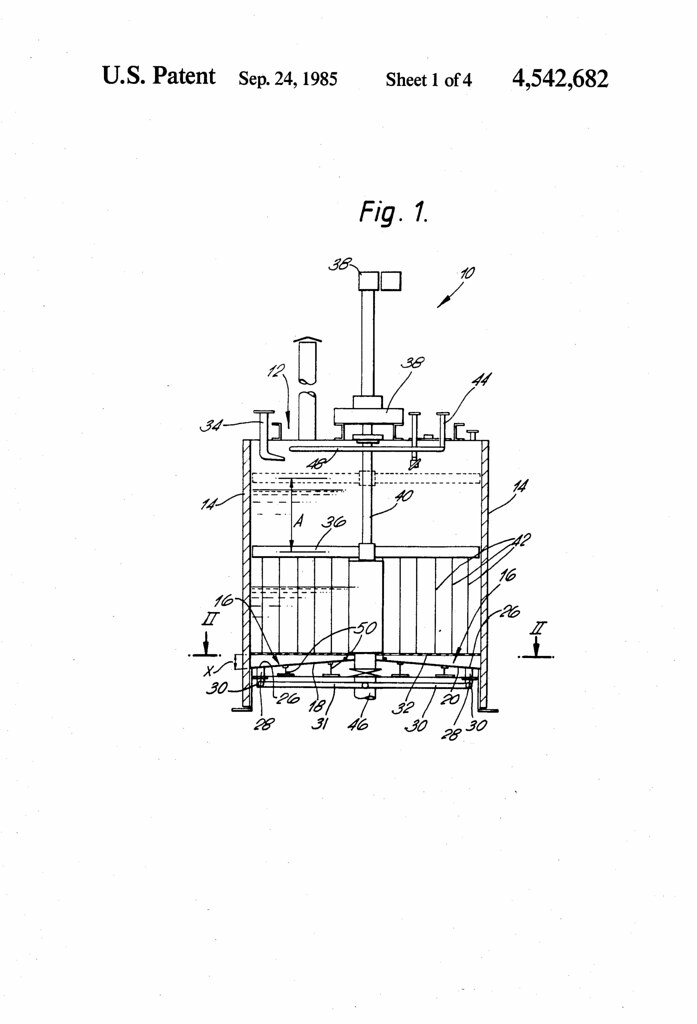
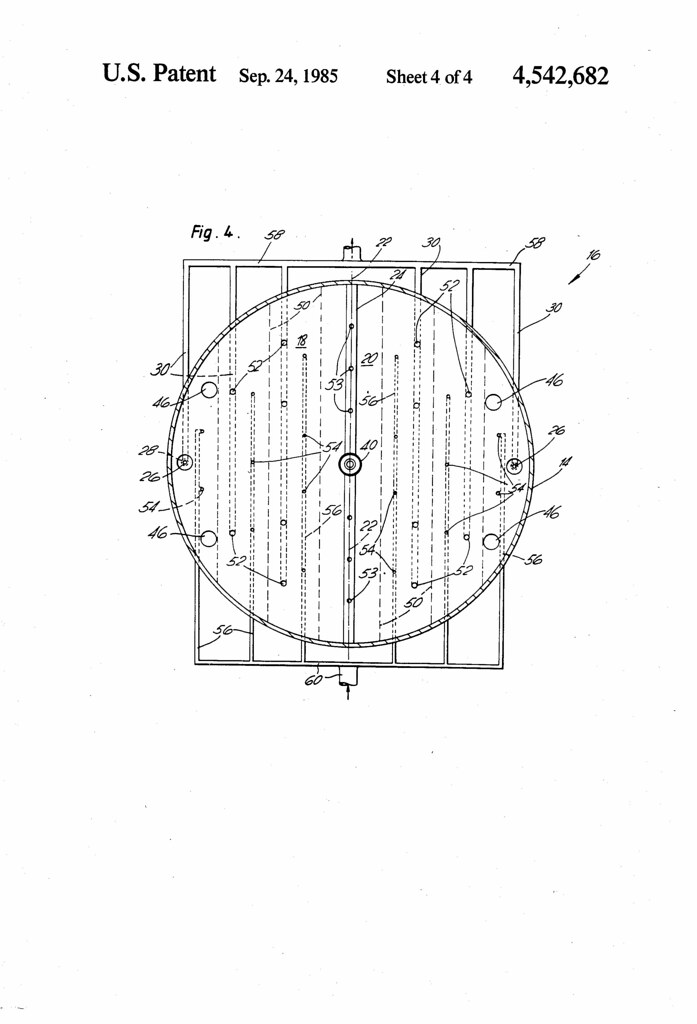
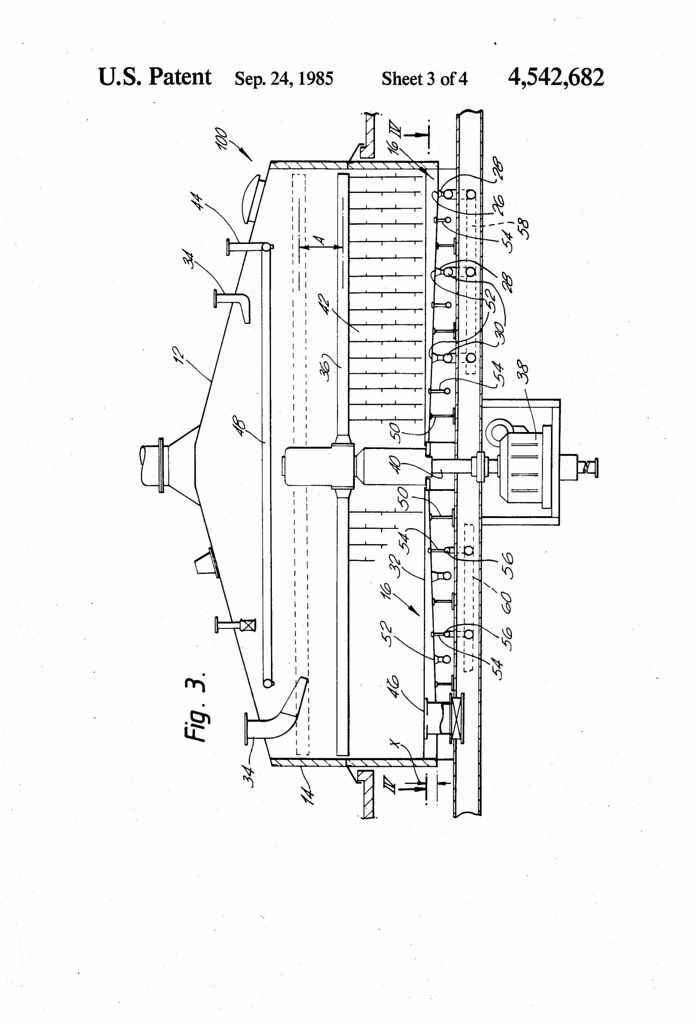
Today in 1999, US Patent 5906151 A was issued, an invention of Adam Firestone, Jeffers Richardson, Donald E. Othman, and Michel A. Blom, assigned to Firestone Walker, LLC, for their “Apparatus And Method For Brewing An Alcoholic Beverage and Beverage Brewed by Same.” Here’s the Abstract:

An apparatus for brewing an alcoholic beverage includes a plurality of wooden barrels including at least one first wooden barrel, at least one second wooden barrel, and at least one third wooden barrel; an enclosed trough; a plurality of first conduits providing flow communication between each of the plurality of wooden barrels and the enclosed trough; an enclosed catch pot in flow communication with the enclosed trough; a plurality of second conduits providing flow communication between the enclosed catch pot and each of the plurality of wooden barrels; and devices, such as valves, for controlling flow between each of the plurality of wooden barrels and the second conduit. The at least one first wooden barrel is a new barrel that has been filled with an alcoholic beverage up to 5 times, the at least one second wooden barrel is a middle aged barrel that has been filled with an alcoholic beverage from 6 to 12 times, and the at least one third wooden barrel is an old barrel that has been filled with an alcoholic beverage from 13 to 30 times.

This is essentially a patent for Firestone Walker’s modified Burton Union System that they pioneered when they first started, and then scaled-up when they bought the old SLO Brewery in Paso Robles and increased the size of their beer production. Jeffers, of course, is still there is the Barrelmeister, or Director of the Firestone Walker Barrelworks. That system is one of only two such brewing systems left in the world, the other being at Marston’s in Burton-on-Trent in England.
US5906151-1
US5906151-2
US5906151-3

Here’s a few photos of the system at the Paso Robles brewery in 2012.

P1040642

P1040672

Filed Under: Beers, Breweries, Just For Fun, Politics & Law, Related Pleasures Tagged With: Brewing Equipment, California, History, Law, Patent, Science of Brewing

Patent No. 2420708A: Beer Meter

May 20, 2016 By Jay Brooks

patent-logo
Today in 1947, US Patent 2420708 A was issued, an invention of Clifford S. Hutsell, for his “Beer Meter.” There’s no Abstract, though it’s described this way in the application:

To carry out the principles of my invention, the liquid is passed through a cooling coil which is immersed in some suitable cooling medium, the length of such cell can be varied so that the beer or other liquid can be passed through one loop or many loops of the coil; in this way the beer is brought under constriction in which its velocity is dissipated by frictional losses without the liquid itself being agitated. The liquid is then led through a discharge opening from which it may be drawn into a glass or other receptacle. This whole dispensing action is controlled, except for the adjustment of the length of coil used, by a single operating lever. My device will control the delivery of beer so that its included gas will be properly handled. The volume of the liquid is accurately measured. Each portion dispensed is accurately counted. The control and serving of beer on draught has always presented a difficult problem due to the beers susceptibility to the influence of three ever-present, variable factors; pressure, balance. Beer in its making is charged with carbon dioxide, the retention of such charge is essential to maintain its quality. When the beer is quiescent, at a sufficiently low temperature, the carbon dioxide is inert. This temperature is below the desirable serving temperatures and as the temperature is raised for serving there is a area sufficiently small to form a restriction to the temperature and agitation or tendency to discharge the carbon dioxide from the beer. To offset this tendency to dissipate its included gas and also to raise the beer to the discharge faucet, gas or air pressure is applied to the beer in the keg. The amount of pressure necessary to hold the carbon dioxide charge in the beer is in direct proportion to the tempera considerable degree, destroys the essential quality of the beer and in addition frequently causes excessive foaming at the faucet and a consequent wastage of beer.

A certain degree of refrigeration together with some form of constriction between the beer keg and the discharge tap would effect adequate control of the beer if the composition and condition of the beer were constant. However, no constant amount of restriction of the line is equally effective at all times because the beer may vary in its gaseous content, in its temperature, or it may have been recently agitated.

US2420708-0
US2420708-1
US2420708-2
US2420708-3

Filed Under: Beers, Breweries, Just For Fun Tagged With: Brewing Equipment, History, Law, Patent

Patent No. 2348797A: Crown Cap Selecting Machine

May 16, 2016 By Jay Brooks

patent-logo
Today in 1944, US Patent 2348797 A was issued, an invention of Louis A. Fischer, assigned to the Schaefer Brewing Co., for his “Crown Cap Selecting Machine.” There’s no Abstract, although in the description it includes this summary:

This invention relates to crown cap selecting machines, and has for its object to provide means for inspecting the interior of such machines while the same are running, and also provide means for preventing the caps from clogging during the operation of the machine.

In the use of such cap selecting machines, it frequently happens that inspection of the interior of the same becomes necessary and also that certain caps which have become clogged be removed. Also certain foreign matters must be dislodged.

This requires a shutting down of the machine and a re-starting, this requiring several hours of non-use of the machine.

The invention consists of a door closed opening which permits the caps to be ejected from the machine, capable of being opened and closed during the operation of the machine, and the invention also consists in the means for preventing clogging of caps.

US2348797-0
US2348797-1

Filed Under: Beers, Breweries, Just For Fun, Politics & Law, Related Pleasures Tagged With: Brewing Equipment, Crowns, History, Law, Patent

Patent No. 257977A: Beer Chip

May 16, 2016 By Jay Brooks

patent-logo
Today in 1882, US Patent 257977 A was issued, an invention of Bernard Rice, for his “Beer Chip.” There’s no Abstract, although in the description it includes this summary:

My said invention relates to the chips or shavings employed by brewers for clarifying the beer in vats or thus previous to kegging it. These chips consist of beechwood, by preference, and have heretofore been used in the form of thick shavings, or of sawed lath-like chips, straight and flat, or of a mixture of the two. Grave objections lie to either form, which it is the design of my invention to obviate. The shavings invariably break in numerous places on the convex side, form ing interstices into which the particles of yeast and impurities settle, rendering it impossible to properly cleanse the shavings in the usual revolving washers. The sawed chips, while not open to this objection, are deficient in superficies, are liable to pack and stick together, and on the whole are inferior to the shavings. The desideratum is a shaving or chip having a large superficies, curved so as not to pack nor adhere to other chips, tough enough to withstand the agitation in the washer without breaking, and one which will not mildew when kept in stock. Such a chip I have succeeded in preparing, and that at a cost less than that of the chips as heretofore made. In practice I cut a sheet of veneer from a revolving login the usual way, choosing by preference the inner portion of the log, which is free from knots, and comparatively free from resin, and thoroughly dry the sheet. Either before or after drying I cut it into chips about eighteen inches long by one and a quarter inch wide, and pass them between heated calender rolls. This process has the effect to compact the fiber and prevent the chips from becoming soggy and sinking in the vats, to toughen them and prevent them from breaking in the cask or washer, and it gives them a. permanent curvature, so that they never straighten out. It also increases the density of the wood, rendering it of substantially the same specific gravity as the beer, whereby the chips do not tend to float exclusively at the surface, but remain suspended in the beer. The calendering, furthermore, dries out the sap and resin.

In order to insure a proper bending of the chips, an extra roller or bender may be attached to the calendering machine; but that is not essential. The rolls may also have embossed figures or lines, so as to indent the chips and increase their superficies.

US257977-0

Filed Under: Beers, Breweries, Just For Fun, Politics & Law, Related Pleasures Tagged With: History, Law, Patent, Science of Brewing

Jackson Family Wines To Build Sonoma County Brewery

May 11, 2016 By Jay Brooks

jackson-family-wines
You know the brewing industry must be doing something right if one of America’s largest producers of wine has decided to jump in with a new brewery. Brewbound has the scoop, with Jackson Family Wines Proprietor Launching Sonoma County Craft Brewery.

It’s certainly not the first time. Does anybody else remember Sonoma Mountain Brewing? And more recently, Carneros Brewing built a brewery on the grounds of their Ceja Vineyards. And don’t forget that Korbel Winery once launched their own small brewery, hiring a young brewer to make the beer. After a short time, they decided to get out of the beer business, and brewer Vinnie Cilurzo obtained the name and moved Russian River Brewing to downtown Santa Rosa, and with his wife Natalie Cilurzo, built it into a destination brewery that’s undoubtedly helped put Sonoma County on the map for beer, as well as wine. So some have worked great, others not so much.

This one at least seems off to a big start. It’s not officially a project of the Jackson Family Wines, but Christopher Jackson, who is the son of winery founder Jess Jackson. Of course, most start-ups don’t have the resources to start by “constructing a 25,000-barrel craft brewery” with “an initial brewing capacity of 8,000 barrels.” Most start-ups don’t have $8 million as their initial capital, even though Jackson states that “[i]t is a passion play” and I “am the sole proprietor and it is my project going forth, but we are employing a lot of similar philosophies from my wine background.”

The new brewery will apparently be called Seismic Brewing Company, which name Jackson bought from San Diego’s Rough Draft Brewing. The new brewery will be located at 2870 Duke Court, Santa Rosa and plans to open in late summer.

It sure seems like Sonoma County is indeed becoming a “craft beer Mecca,” as Jackson called Santa Rosa. I think that’s truer of the whole county, but certainly between Santa Rosa and Petaluma the county’s doing pretty well. Sonoma County currently has 31 licensed breweries, at least according to the latest number from the CCBA, which means we’re nowhere near the 100+ that are now open in San Diego County. Still, I think Sonoma probably has more than most counties.

sonoma-county-map

Filed Under: Breweries, News, Related Pleasures Tagged With: Announcements, Business, Sonoma County, Wine

Budweiser Tries To Rebrand Itself As “America”

May 10, 2016 By Jay Brooks

bud-stature-liberty
The original Anheuser-Busch considered itself a quintessentially American company, and it many ways it was. Run by the same family for generations from their mansions in St. Louis, Missouri, in the heartland of America, it was easy for the German-American Busch family to position Budweiser as the ultimate American beer. And they rarely shied away from making such associations. From early on, the Budweiser label was red, white and blue and they used that to their advantage on numerous occasions. During my lifetime, countless times their advertising played on that patriotism, using patriotic iconography in their POS and marketing.

But I imagine this latest campaign may be going a little too far for many people. They filed, and received, label approval on April 11, 2016 from the TTB with application OMB No. 1513-0020 for a new label. That new label will try to rebrand the new Anheuser-Busch InBev, no longer an American company with international roots in Brazil and Belgium, as “America.” No, seriously, they’re actually going to call Budweiser “America,” at least for the summer. According to AdAge:

A-B InBev on Tuesday, May 10, confirmed the limited-edition label change, saying “America” would replace “Budweiser” on the front of 12-oz. cans and bottles. The packaging will run from May 23 through election season in November, the brewer stated. The agency that handled the design change is Jones Knowles Ritchie, New York. The packaging will be accompanied by a summer-long campaign called “America is in Your Hands.” A national TV spot featuring the cans and bottles will premiere on June 1.

And it’s not just that title, the new label is riddled with patriotic associations. It’s an amazing piece of propaganda, and not in any way subtle.

14840.2BUD12canSummer
This is the image that accompanied the TTB label application.

Will this work? Can the international conglomerate poised to swallow up SABMiller — who’s already the world’s largest beer company — be able to convince Americans that they’re still your blue collar friend? That they’re still America’s beer? It feels like a tough sell, but if I’ve learned anything in my five decades consuming advertising it’s that people are incredibly gullible. Many people don’t care who owns Budweiser. Many people don’t care, or perhaps even know, that Budweiser is owned by a ginormous international conglomerate. They’ve been Bud drinkers as long as they can remember, and they have too many other things they care more about than thinking about what beer they’re drinking. I think because we live in such a beer bubble that we sometimes forget that most people don’t care about the industry as deeply as we do.

It seems like ABI has become far more aggressive lately in how they’re trying to position their brand. Part of that seems like desperation at their shrinking market, but being the world’s 25th most valuable brand, worth an estimated $22.3 billion alone (never mind the rest of the company), still makes them the 800-pound gorilla. And that sort of size would make anyone aggressive, with no one else remotely close to their size. I’m certainly curious to see this play out. Will there be a backlash? My guess is no. They’ll be some fiery condemnations on the interwebs, perhaps a few stories on television, and then it will die down. Bud drinkers will just continue drinking their beer of choice. And I’m willing to bet at least a few won’t even notice the change. It will certainly appeal to a certain jingoist bent that many Americans are prone to, the people who believe America is always number one in everything, and anybody who says differently is a commie; the same people who used to say “America, love it or leave it.”

bud-to-america-cans

ABI released a statement today entitled “Budweiser Emblazons America On Cans And Bottles To Kick Off Its Most Patriotic Summer Ever” with the details on their new ad campaign.

America’s No. 1 full-flavored lager is taking its longstanding tradition of patriotic packaging even further this summer by replacing “Budweiser” with “America” on the front of its 12-oz. cans and bottles. The brand is also modifying Budweiser’s iconic label to add copy that is central to American history, including phrases from the Pledge of Allegiance and lyrics from “The Star Spangled Banner” and “America the Beautiful.” On shelves nationwide from May 23 through the election in November, these cans and bottles aim to inspire drinkers to celebrate America and Budweiser’s shared values of freedom and authenticity.

Designed in partnership with Jones Knowles Ritchie New York, Budweiser’s bold new look serves as the focal point for its summer-long campaign—“America is in Your Hands”—which reminds people from sea to shining sea to embrace the optimism upon which the country was first built. The “America” cans and bottles will star in the brand’s new national TV spot, premiering June 1.

“We are embarking on what should be the most patriotic summer that this generation has ever seen, with Copa America Centenario being held on U.S. soil for the first time, Team USA competing at the Rio 2016 Olympic and Paralympic Games,” said Ricardo Marques, vice president, Budweiser. “Budweiser has always strived to embody America in a bottle, and we’re honored to salute this great nation where our beer has been passionately brewed for the past 140 years.”

The “America is in Your Hands” campaign will come to life this summer during culturally relevant moments where Budweiser will be present, including Fourth of July celebrations, the Copa America Centenario soccer tournament, the 100th anniversary of the National Park Service, and events to celebrate the brand’s six Team Budweiser athletes competing to appear in the Rio 2016 Olympic and Paralympic Games. The campaign will include billboards, murals, digital content, and retail activations along with additional surprises to be revealed throughout the summer.

Budweiser is also unveiling new cans and bottles featuring a magnified view of the Statue of Liberty’s torch, inspired by Team Budweiser, the brand’s six Olympic and Paralympic hopefuls. On shelves from May 23 through mid-September, the “Torch” packaging will be available in 16-oz. and 25-oz. cans, along with 16-oz. aluminum bottles.

bud-to-america-bottle

Is this the new face of American beer? I suspect not, but only time will tell how many Americans will fall for it.

Filed Under: Beers, Breweries, Editorial, Politics & Law Tagged With: Advertising, Anheuser-Busch InBev, Packaging

« Previous Page
Next Page »

Find Something

Northern California Breweries

Please consider purchasing my latest book, California Breweries North, available from Amazon, or ask for it at your local bookstore.

Recent Comments

  • Bob Paolino on Beer Birthday: Grant Johnston
  • Gambrinus on Historic Beer Birthday: A.J. Houghton
  • Ernie Dewing on Historic Beer Birthday: Charles William Bergner 
  • Steve 'Pudgy' De Rose on Historic Beer Birthday: Jacob Schmidt
  • Jay Brooks on Beer Birthday: Bill Owens

Recent Posts

  • Historic Beer Birthday: Oliver Hughes May 20, 2026
  • Historic Beer Birthday: Benjamin, Lord Iveagh May 20, 2026
  • Historic Beer Birthday: Eduard Buchner May 20, 2026
  • Historic Beer Birthday: Louis de Luze Simonds May 20, 2026
  • Historic Beer Birthday: Johann Adam Lemp May 20, 2026

BBB Archives

Feedback

Head Quarter
This site is hosted and maintained by H25Q.dev. Any questions or comments for the webmaster can be directed here.