Brookston Beer Bulletin

Jay R. Brooks on Beer

  • Home
  • About
  • Editorial
  • Birthdays
  • Art & Beer

Socialize

  • Dribbble
  • Email
  • Facebook
  • Flickr
  • GitHub
  • Instagram
  • LinkedIn
  • Pinterest
  • RSS
  • Twitter
  • YouTube

Powered by Genesis

Historic Beer Birthday: Alexander Keith

October 5, 2025 By Jay Brooks

Today is the birthday of Alexander Keith (October 5, 1795–December 14, 1873). He was born in Scotland, where he was trained as a brewer. He settled in Canada, specifically Halifax, Nova Scotia, in 1820, where he founded the Alexander Keith Brewery.
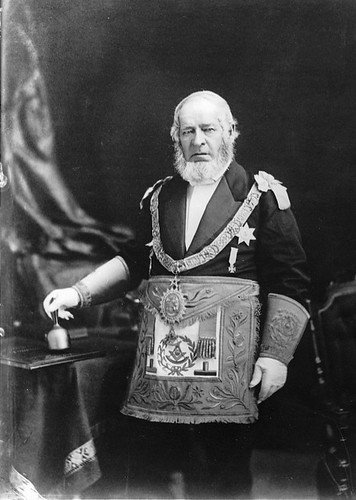
Here’s his biography from his Wikipedia page:

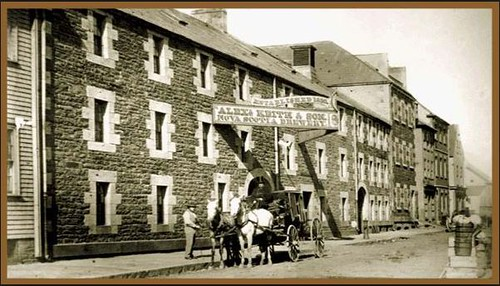
Keith was born in Halkirk, Caithness, Highland, Scotland, where he became a brewer. He immigrated to Canada in 1817 and founded the Alexander Keith’s brewing company in Halifax, Nova Scotia in 1820, moving to a three-storey building on Hollis Street at Lower Water in the downtown area in 1820. Keith had trained as a brewer in Edinburgh and London. His early products included ale, porter, ginger wine, table and spruce beers.

Alexander Keith served as mayor in 1843 and in 1853-54 and president of the Legislative Council (provincial parliament) from 1867 to his death in 1873.

Throughout his career Keith was connected with several charitable and fraternal societies. He served as president of the North British Society from 1831 and as chief of the Highland Society from 1868 until his death. In 1838 he was connected with the Halifax Mechanics Library and in the early 1840s with the Nova Scotia Auxiliary Colonial Society. Keith was also well known to the Halifax public as a leader of the Freemasons. He became Provincial Grand Master for the Maritimes under the English authority in 1840 and under the Scottish lodge in 1845. Following a reorganization of the various divisions in 1869, he became Grand Master of Nova Scotia. There are four masonic lodges named in his honour: Moncton, New Brunswick, and Halifax, Stellarton, and Bear River in Nova Scotia.

Alexander Keith died in Halifax in 1873 and was buried at Camp Hill Cemetery at the corner of Spring Garden Road and Robie Streets. His birthday is often marked by people visiting the grave and placing beer bottles and caps on it (or, less frequently, cards or flowers).
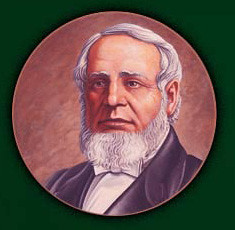
And this more thorough biography is from the Dictionary of Canadian Biography:

KEITH, ALEXANDER, brewer and politician; b. 5 Oct. 1795 in Caithness-shire, Scotland, son of Donald Keith and Christina Brims; d. 14 Dec. 1873 in Halifax, N.S.

When Alexander Keith was 17, his father sent him to an uncle in northern England to learn the brewing business. Five years later, when Keith migrated to Halifax, he became sole brewer and business manager for Charles Boggs, and he bought out Boggs’ brewery in 1820. On 17 Dec. 1822 he married Sarah Ann Stalcup, who died in 1832. On 30 Sept. 1833 he married Eliza Keith; they had six daughters and two sons. One son, Donald G. Keith, became a partner in the brewing firm in 1853.

In 1822 Keith moved his brewery and premises to larger facilities on Lower Water Street and in 1836 he again expanded, building a new brewery on Hollis Street. In 1863 he began construction of Keith Hall which was connected by a tunnel to his brewery. Keith Hall, now occupied by Oland’s Brewery, is in the Renaissance palazzo style, with baroque adornments, pillars of no particular style, and a mansard roof. This peculiar combination of styles resulted from the fact that the designs were probably derived from books with plans of buildings in Great Britain and the United States. Keith’s appointment as a director of the Bank of Nova Scotia in 1837 along with William Blowers Bliss is an indication of his importance in the Halifax business community. Beginning in 1837, he also served as a director, at various dates, of the Halifax Fire Insurance Company. In 1838 he helped found the Halifax Marine Insurance Association, and in the 1840s he was on the board of management of the Colonial Life Assurance Company. He was also a director of the Halifax Gas, Light, and Water Company, incorporated in 1840, and in 1844 helped incorporate the Halifax Water Company, becoming a director in 1856. By 1864 Keith was a director of the Provincial Permanent Building and Investment Society. At the time of his death his estate was evaluated at $251,000.

Keith’s interest in utilities and insurance was but part of his general involvement in the public life of Halifax. He was unsuccessful in the general election of 1840 when he stood as a Conservative candidate for the town of Halifax but was elected to the first city council in 1841. In 1842 he served as a commissioner of public property and in 1843 was selected mayor of Halifax. He continued as a member of council until he again served as mayor, by election, in 1853 and 1854. In December 1843 he was appointed to the Legislative Council and in June 1867 he accepted the appointment of president of the council, declining a seat in the Canadian Senate. As a supporter of confederation and president of the council, he was helped at first by the fact that before 1 July 1867 Charles Tupper* had filled several seats in the upper house with known confederates. Although the premier, William Annand*, appointed to the upper house in November 1867, had complete control of the lower house, he did not dare introduce a resolution into the upper chamber in 1868 calling for repeal of union. The anti-confederates gradually secured control of the upper house, however, and Keith was unable to prevent passage, in 1871, of a particularly flagrant bill which took the vote from all federal officials in provincial elections. It was perhaps a commentary on Keith that he was not actively involved at this time with the Conservative party organization which was run by such party stalwarts as Philip C. Hill* and James MacDonald*.

Throughout his career Keith was connected with several charitable and fraternal societies. He served as president of the North British Society from 1831 and as chief of the Highland Society from 1868 until his death. In 1838 he was connected with the Halifax Mechanics Library and in the early 1840s with the Nova Scotia Auxiliary Colonial Society. Keith was perhaps best known to the Halifax public as a leader of the freemasons. He became provincial grand master for the Maritimes under the English authority in 1840 and under the Scottish lodge in 1845. Following a reorganization of the various divisions in 1869, he became grand master of Nova Scotia.
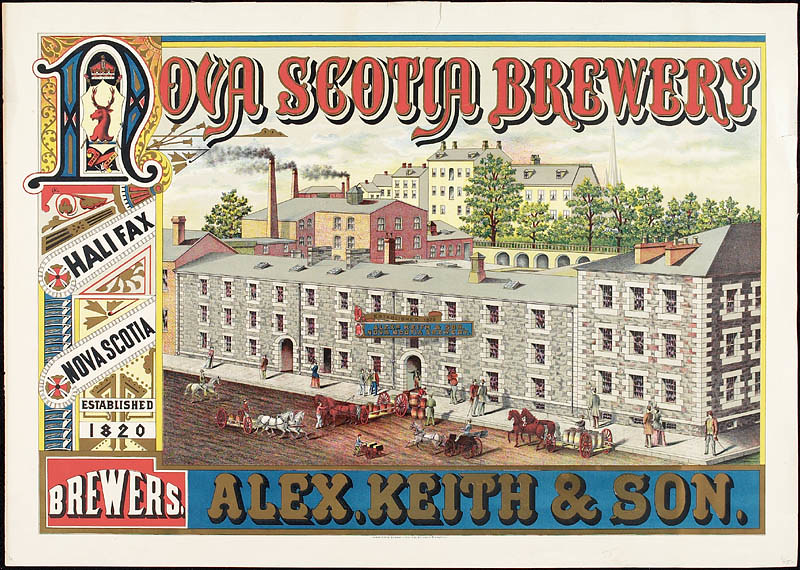
This short history of Keith’s brewery is from their Wikipedia page:

Founded in 1820, Alexander Keith’s is a brewery in Halifax, Canada. It is among the oldest commercial breweries in North America. (The oldest surviving brewing enterprise in Canada was established by John Molson in Montreal in 1786 while the oldest in the US, Yuengling, originally called Eagle Brewing, was founded in 1829 in Pottsville, PA.)

Keith’s was founded by Alexander Keith who emigrated from Scotland in 1817. Keith moved the facility to its final location, a three-storey building on Hollis Street at Lower Water in the downtown area, in 1820. Keith had trained as a brewer in Edinburgh and London. His early product included ale, porter, ginger wine, table and spruce beers. Alexander Keith was mayor in 1843 and in 1853-54 and president of the Legislative Council from 1867 to his death in 1873.

Keith’s was sold to Oland Breweries in 1928 and to Labatt in 1971. Today, the brewery is under the control of this subsidiary of Anheuser–Busch InBev which took the brand national in 1990’s. Keith’s also produces Oland Brewery beers, distributed in Eastern Canada.

In April 2011, Anheuser–Busch InBev began selling Alexander Keith’s beer in the United States after nearly two centuries of being available only in Canada.

AB InBev produces Keith’s India Pale Ale, currently the most popular product in this line,[6] as well as Keith’s Red Amber Ale, Keith’s Premium White, and Keith’s Light Ale.[7] Products sold in the United States are labelled Keith’s Nova Scotia Style Pale Ale, Keith’s Nova Scotia Style Lager, and Keith’s Nova Scotia Style Brown Ale.[8] Seasonal products have included Keith’s Ambrosia Blonde, Keith’s Harvest Ale, and Keith’s Tartan Ale. Although Alexander Keith products were originally produced in the Halifax brewery only for sale in the Maritimes, they are now national products, mass produced at AB InBev plants across Canada and in Baldwinsville, New York.
Filed Under: Birthdays, Breweries, Just For Fun Tagged With: Canada, History, Nova Scotia, Scotland

Beer In Ads #5094: Christiania Bryggeri’s Bok-Øl

October 2, 2025 By Jay Brooks

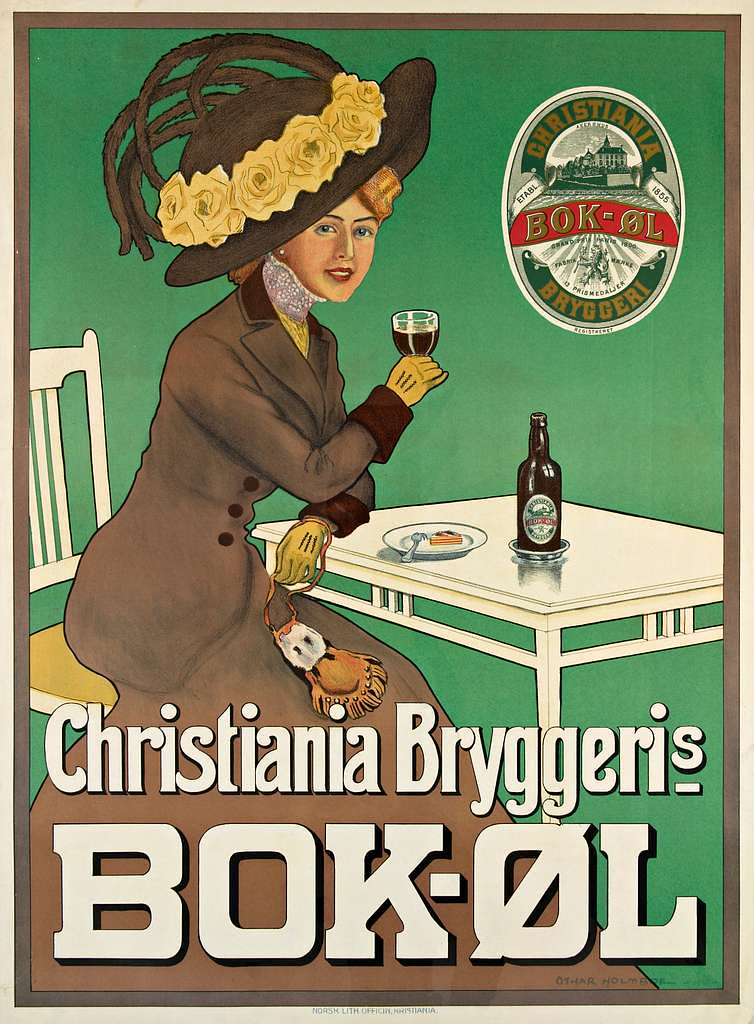
Last year I decided to concentrate on Bock ads. Bock, of course, may have originated in Germany, in the town of Einbeck. Because many 19th century American breweries were founded by German immigrants, they offered a bock at certain times of the year, be it Spring, Easter, Lent, Christmas, or what have you. In a sense they were some of the first seasonal beers. “The style was later adopted in Bavaria by Munich brewers in the 17th century. Due to their Bavarian accent, citizens of Munich pronounced ‘Einbeck’ as ‘ein Bock’ (a billy goat), and thus the beer became known as ‘Bock.’ A goat often appears on bottle labels.” And presumably because they were special releases, many breweries went all out promoting them with beautiful artwork on posters and other advertising.

Thursday’s work is for Christiania Bryggeri’s Bok-Øl, which was created in 1910. This one was for the Christiania Bryggeri, of Christiania (Oslo), Norway, which was originally founded in 1855. The artist who created this poster was Othar Holmboe, who was also from Norway.

Filed Under: Art & Beer, Beers, Breweries, Just For Fun Tagged With: Advertising, Bock, History, Norway

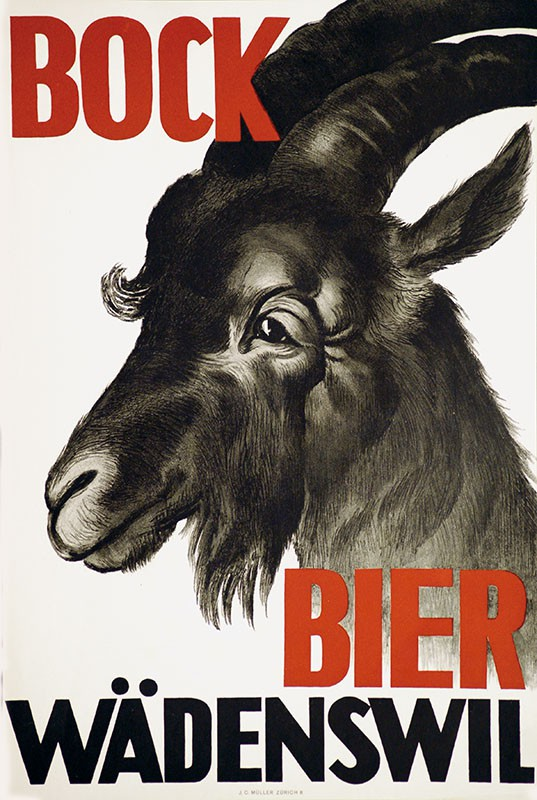
Beer In Ads #5093: Bock Bier Wädenswil

October 1, 2025 By Jay Brooks

Last year I decided to concentrate on Bock ads. Bock, of course, may have originated in Germany, in the town of Einbeck. Because many 19th century American breweries were founded by German immigrants, they offered a bock at certain times of the year, be it Spring, Easter, Lent, Christmas, or what have you. In a sense they were some of the first seasonal beers. “The style was later adopted in Bavaria by Munich brewers in the 17th century. Due to their Bavarian accent, citizens of Munich pronounced ‘Einbeck’ as ‘ein Bock’ (a billy goat), and thus the beer became known as ‘Bock.’ A goat often appears on bottle labels.” And presumably because they were special releases, many breweries went all out promoting them with beautiful artwork on posters and other advertising.

Wednesday’s work is for Wädenswil Bock Bier, which was created in 1939. This one was for the Brauerei Wädenswil of Wädenswil, Switzerland, which was originally founded in 1833. Sadly, the artist who created it is unknown.

Filed Under: Art & Beer, Beers, Breweries, Just For Fun Tagged With: Advertising, Bock, History, Switzerland

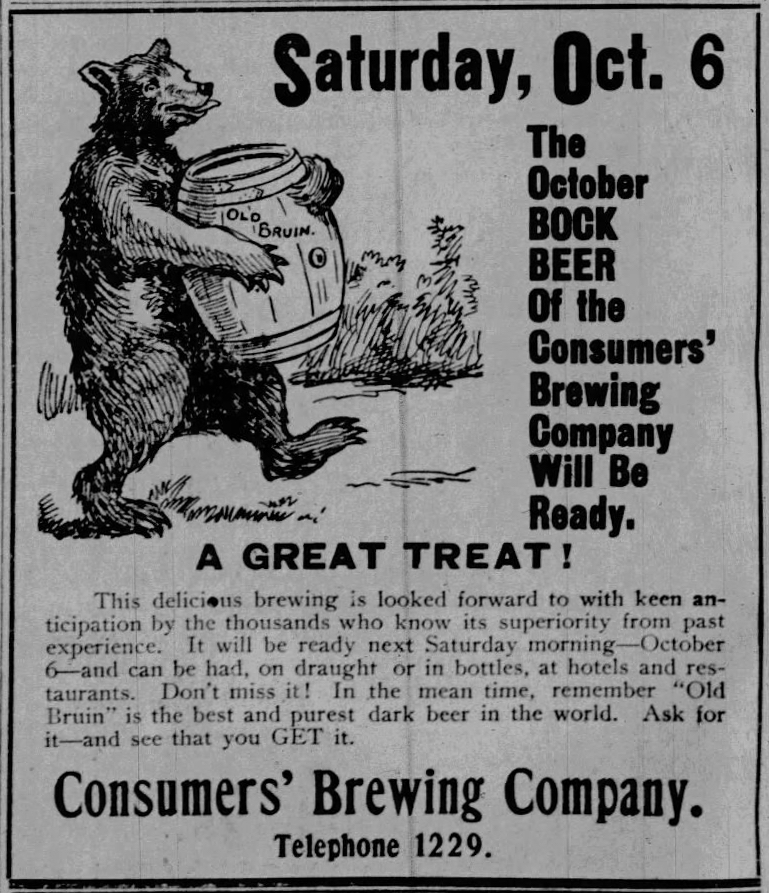
Beer In Ads #5092: The October Bock Beer

September 30, 2025 By Jay Brooks

Last year I decided to concentrate on Bock ads. Bock, of course, may have originated in Germany, in the town of Einbeck. Because many 19th century American breweries were founded by German immigrants, they offered a bock at certain times of the year, be it Spring, Easter, Lent, Christmas, or what have you. In a sense they were some of the first seasonal beers. “The style was later adopted in Bavaria by Munich brewers in the 17th century. Due to their Bavarian accent, citizens of Munich pronounced ‘Einbeck’ as ‘ein Bock’ (a billy goat), and thus the beer became known as ‘Bock.’ A goat often appears on bottle labels.” And presumably because they were special releases, many breweries went all out promoting them with beautiful artwork on posters and other advertising.

Tuesday’s ad is for Consumers’ Bock Beer, which was published on September 30, 1900, six days before it was scheduled to be released on October 6. This one was for the Consumers’ Brewing Co. of Norfolk, Virginia, which was originally founded in 1896. At least I think so, since that’s the closest one to D.C. But there were also breweries called “Consumers'” located in Rhode Island, Ohio, Pennsylvania and New York. This ad ran in The Washington Post, from Washington, D.C.

Filed Under: Art & Beer, Beers, Breweries, Just For Fun Tagged With: Advertising, Bock, D.C., History

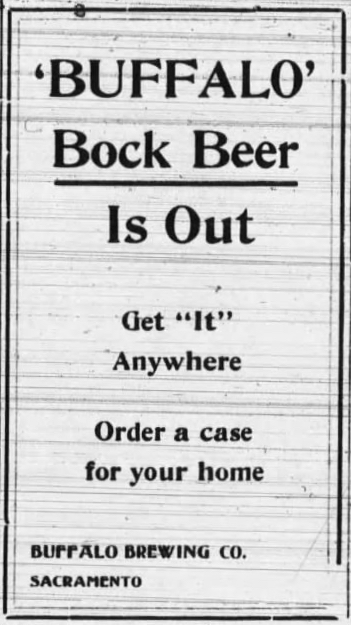
Beer In Ads #5091: Buffalo Bock Beer Is Out

September 29, 2025 By Jay Brooks

Last year I decided to concentrate on Bock ads. Bock, of course, may have originated in Germany, in the town of Einbeck. Because many 19th century American breweries were founded by German immigrants, they offered a bock at certain times of the year, be it Spring, Easter, Lent, Christmas, or what have you. In a sense they were some of the first seasonal beers. “The style was later adopted in Bavaria by Munich brewers in the 17th century. Due to their Bavarian accent, citizens of Munich pronounced ‘Einbeck’ as ‘ein Bock’ (a billy goat), and thus the beer became known as ‘Bock.’ A goat often appears on bottle labels.” And presumably because they were special releases, many breweries went all out promoting them with beautiful artwork on posters and other advertising.

Monday’s ad is for Buffalo Bock Beer, which was published on September 29, 1915. This one was for the Buffalo Brewing Co. of Sacramento, California, which was originally founded in 1890. This ad ran in The Plumas Independent, which served Plumas County, California, located in the northeast part of the state, in the Sierra Nevada mountains. I love how they claim you can “Get ‘It’ Anywhere.”

Filed Under: Art & Beer, Beers, Breweries, Just For Fun Tagged With: Advertising, Bock, California, History, Sacramento

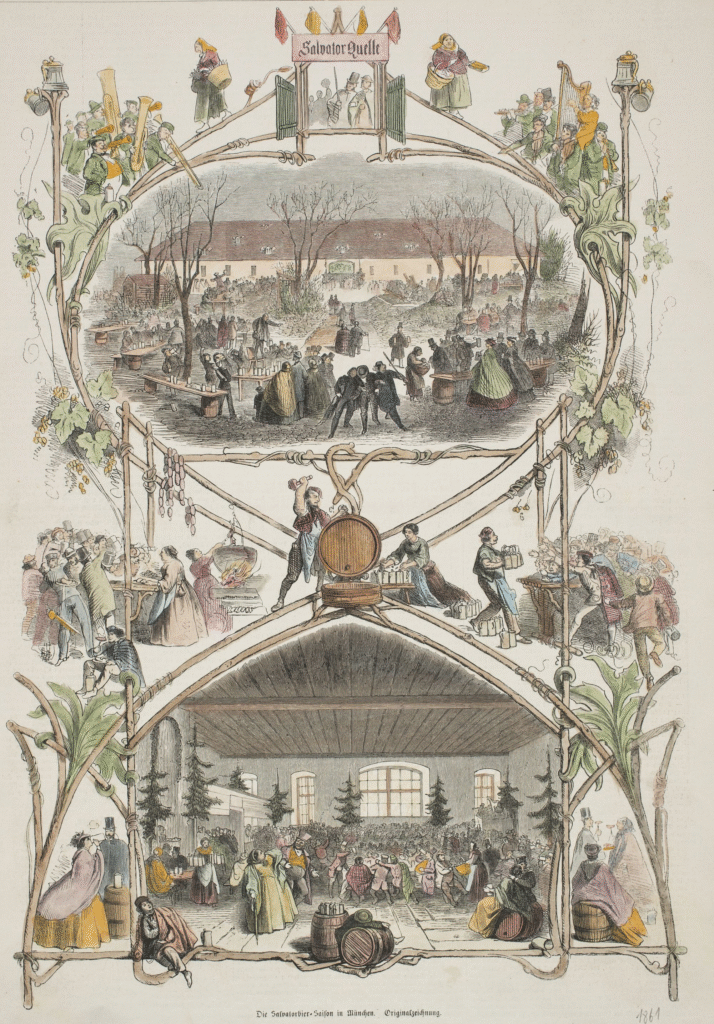
Beer In Ads #5090: Salvator Season In Munich

September 28, 2025 By Jay Brooks

Last year I decided to concentrate on Bock ads. Bock, of course, may have originated in Germany, in the town of Einbeck. Because many 19th century American breweries were founded by German immigrants, they offered a bock at certain times of the year, be it Spring, Easter, Lent, Christmas, or what have you. In a sense they were some of the first seasonal beers. “The style was later adopted in Bavaria by Munich brewers in the 17th century. Due to their Bavarian accent, citizens of Munich pronounced ‘Einbeck’ as ‘ein Bock’ (a billy goat), and thus the beer became known as ‘Bock.’ A goat often appears on bottle labels.” And presumably because they were special releases, many breweries went all out promoting them with beautiful artwork on posters and other advertising.

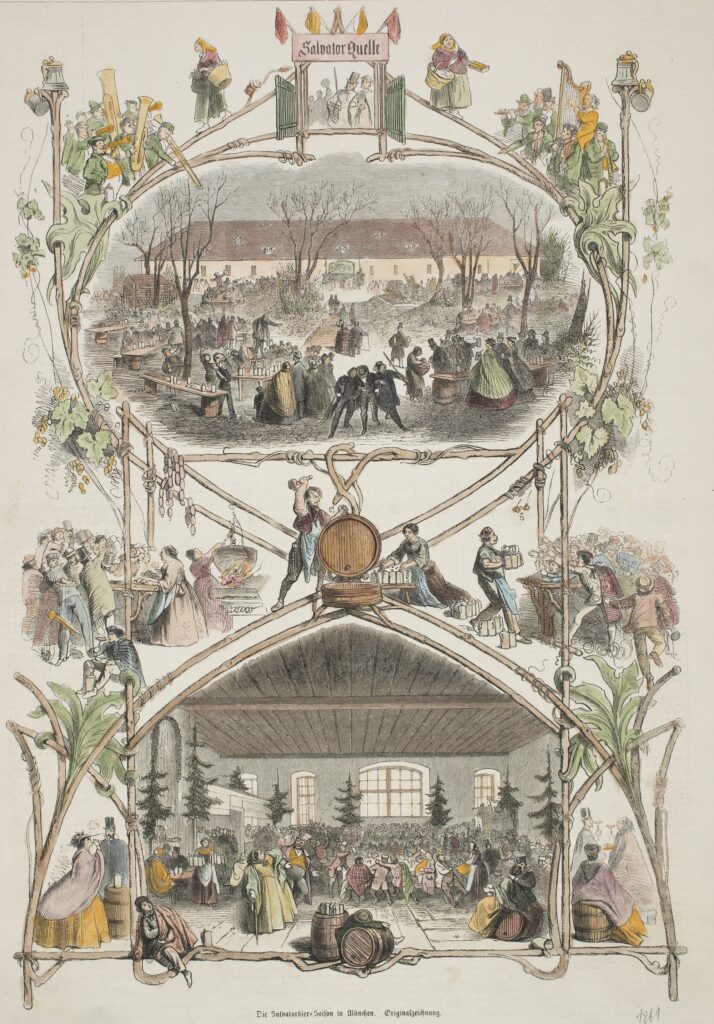
Sunday’s work is another one for Salvator Doppelbock, which was created in 1861. This one was for the Paulaner Brewery (Paulaner Brauerei München) of Munich, Germany, which was originally founded in 1634. It’s an original drawing is called “Die Salvator-Saison in München” (or “Salvator Season in Munich”) at the Munich City Museum, although they don’t know who the artist was who created this highly detailed drawing.

Filed Under: Art & Beer, Beers, Breweries, Just For Fun Tagged With: Advertising, Bock, Germany, History

Beer In Ads #5089: Bottled Beer At Its Best

September 27, 2025 By Jay Brooks

Last year I decided to concentrate on Bock ads. Bock, of course, may have originated in Germany, in the town of Einbeck. Because many 19th century American breweries were founded by German immigrants, they offered a bock at certain times of the year, be it Spring, Easter, Lent, Christmas, or what have you. In a sense they were some of the first seasonal beers. “The style was later adopted in Bavaria by Munich brewers in the 17th century. Due to their Bavarian accent, citizens of Munich pronounced ‘Einbeck’ as ‘ein Bock’ (a billy goat), and thus the beer became known as ‘Bock.’ A goat often appears on bottle labels.” And presumably because they were special releases, many breweries went all out promoting them with beautiful artwork on posters and other advertising.

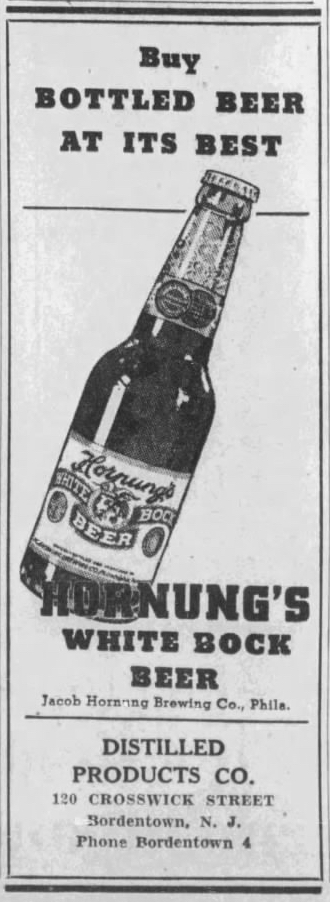
Saturday’s ad is for bottles of Hornung’s White Bock Beer, which was published on September 27, 1935. This one was for the Jacob Hornung Brewing Co. of Philadelphia, Pennsylvania, which was originally founded in 1885. This ad ran in The Trenton Evening Times, from Trenton, New Jersey.

Filed Under: Art & Beer, Beers, Breweries, Just For Fun Tagged With: Advertising, Bock, History, New Jersey, Pennsylvania

Beer In Ads #5088: Salvator Doppelbock

September 26, 2025 By Jay Brooks

Last year I decided to concentrate on Bock ads. Bock, of course, may have originated in Germany, in the town of Einbeck. Because many 19th century American breweries were founded by German immigrants, they offered a bock at certain times of the year, be it Spring, Easter, Lent, Christmas, or what have you. In a sense they were some of the first seasonal beers. “The style was later adopted in Bavaria by Munich brewers in the 17th century. Due to their Bavarian accent, citizens of Munich pronounced ‘Einbeck’ as ‘ein Bock’ (a billy goat), and thus the beer became known as ‘Bock.’ A goat often appears on bottle labels.” And presumably because they were special releases, many breweries went all out promoting them with beautiful artwork on posters and other advertising.

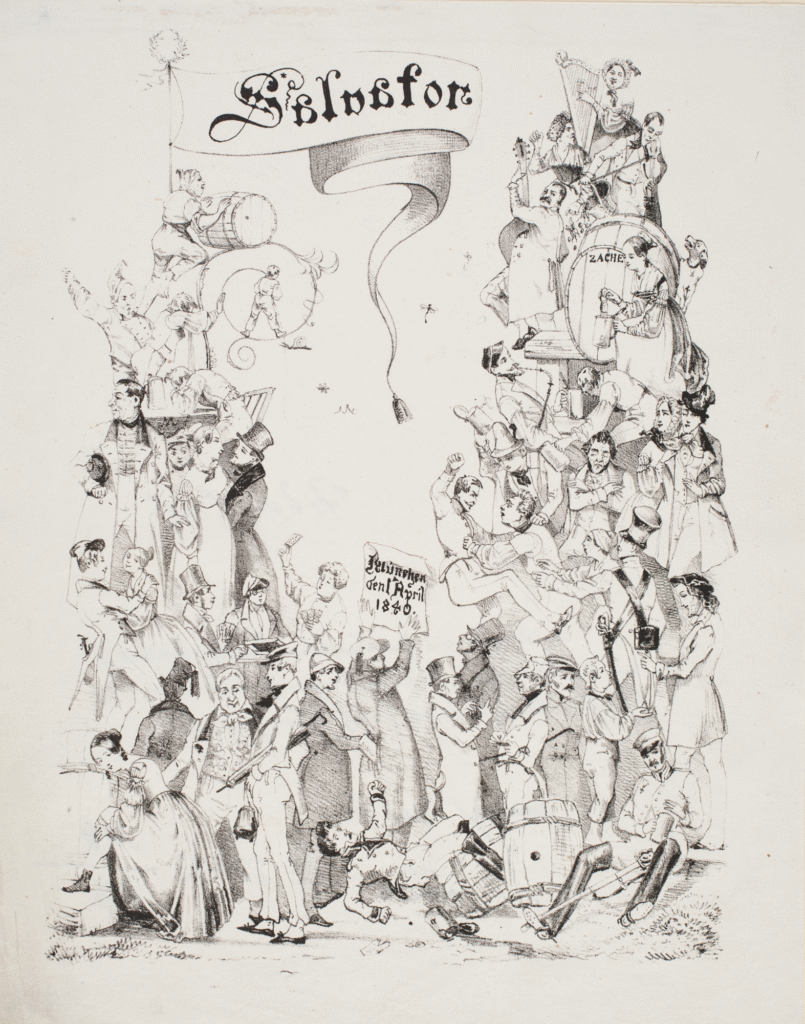
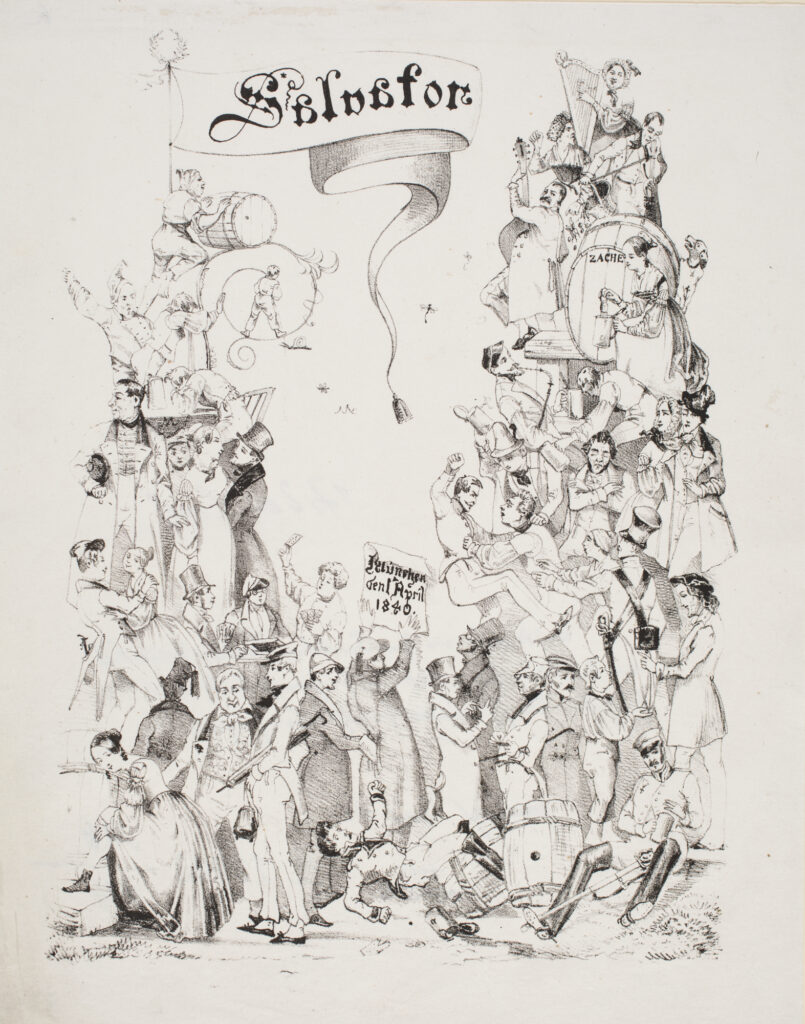
Friday’s lithograph is for Salvator Doppelbock, which was published in April of 1840. This one was for the Paulaner Brewery (Paulaner Brauerei München) of Munich, Germany, which was originally founded in 1634. The poster is called “Verschiedene Szenen beim Salvatorbier” (or “Various scenes at the Salvator beer”) at the Munich City Museum, although they don’t know who the artist was who created it. But here’s a translation of their description:

Salvator, a Doppelbock beer, dates back to the 17th-century Munich Paulaner monks, who sought a culinary way to bridge the austere Lent period. Under the motto ‘Liquids don’t break the fast,’ they brewed a particularly strong and high-calorie beer that soon enjoyed widespread popularity even outside the monastery walls. After secularization in 1806, the Paulaner brewery, and with it the recipe for the fortifying Doppelbock, passed to master brewer Franz Xaver Zacherl, who named the beer ‘Salvator’ (Latin for ‘redeemer’). Zacherl’s continuation of the traditional annual tapping of the strong beer, laid the foundation for the festivities during the strong beer season known as the ‘Fifth Season.'”

Filed Under: Art & Beer, Beers, Breweries Tagged With: Advertising, Bock, Germany, History

Beer In Ads #5087: It’s Like Old Times Again

September 25, 2025 By Jay Brooks

Last year I decided to concentrate on Bock ads. Bock, of course, may have originated in Germany, in the town of Einbeck. Because many 19th century American breweries were founded by German immigrants, they offered a bock at certain times of the year, be it Spring, Easter, Lent, Christmas, or what have you. In a sense they were some of the first seasonal beers. “The style was later adopted in Bavaria by Munich brewers in the 17th century. Due to their Bavarian accent, citizens of Munich pronounced ‘Einbeck’ as ‘ein Bock’ (a billy goat), and thus the beer became known as ‘Bock.’ A goat often appears on bottle labels.” And presumably because they were special releases, many breweries went all out promoting them with beautiful artwork on posters and other advertising.

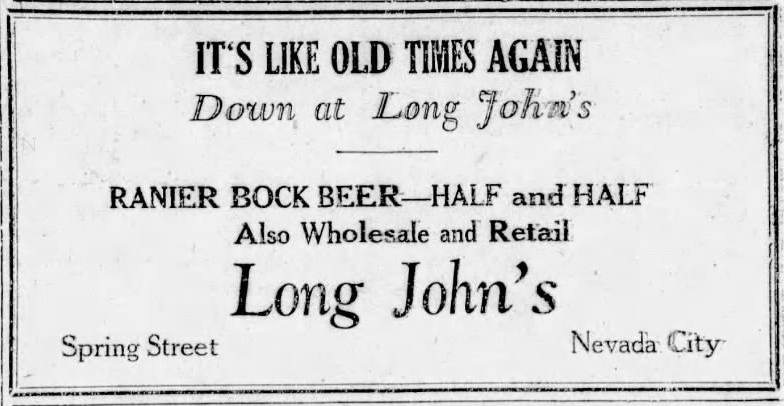
Thursday’s ad is for Rainier Bock Beer, which was published on September 25, 1933. This one was for the Rainier Brewing Co. of Seattle, Washington, which was originally founded in 1878, though it was mostly advertising Long John’s Tavern, which located in downtown Nevada City, California. The tagline was “It’s Like Old Times Again Down at Long John’s.” This ad ran in The Nevada County Nugget, from Nevada City, California.

Filed Under: Art & Beer, Beers, Breweries, Food & Beer Tagged With: Advertising, Bock, California, History, Pubs

Beer In Ads #5085: Celebrated Miller’s Bock Beer

September 23, 2025 By Jay Brooks

Last year I decided to concentrate on Bock ads. Bock, of course, may have originated in Germany, in the town of Einbeck. Because many 19th century American breweries were founded by German immigrants, they offered a bock at certain times of the year, be it Spring, Easter, Lent, Christmas, or what have you. In a sense they were some of the first seasonal beers. “The style was later adopted in Bavaria by Munich brewers in the 17th century. Due to their Bavarian accent, citizens of Munich pronounced ‘Einbeck’ as ‘ein Bock’ (a billy goat), and thus the beer became known as ‘Bock.’ A goat often appears on bottle labels.” And presumably because they were special releases, many breweries went all out promoting them with beautiful artwork on posters and other advertising.

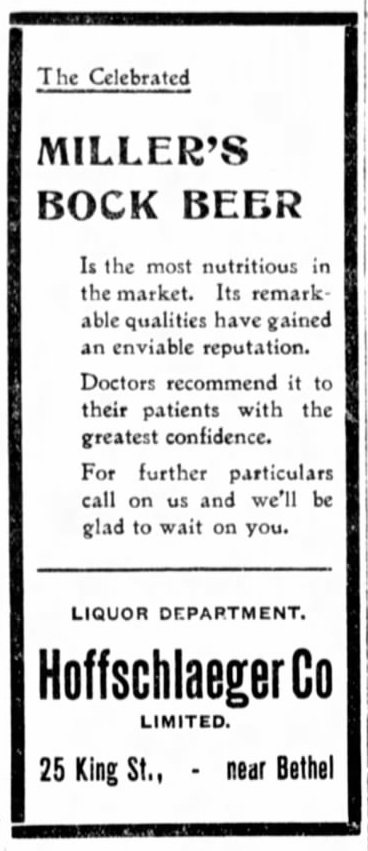
Tuesday’s ad is for Miller Bock Beer, which was published on September 23, 1903. This one was for the Miller Brewing Co. of Milwaukee, Wisconsin, which was originally founded in 1855. This ad ran in The Honolulu Star Bulletin, of Honolulu, Hawaii because the ad was really for the liquor department of the Hoffschlaeger Co., which also made whiskey. Miller apparently only made a bock from 1888-1920. I do love the remark about it being the “most nutritious in the market.” Plus, “Doctors recommend it to their patients with the greatest confidence,”

Filed Under: Art & Beer, Beers, Breweries, Just For Fun Tagged With: Advertising, Bock, Hawaii, History, Miller Brewing, Wisconsin

« Previous Page
Next Page »

Find Something

Northern California Breweries

Please consider purchasing my latest book, California Breweries North, available from Amazon, or ask for it at your local bookstore.

Recent Comments

  • Bob Paolino on Beer Birthday: Grant Johnston
  • Gambrinus on Historic Beer Birthday: A.J. Houghton
  • Ernie Dewing on Historic Beer Birthday: Charles William Bergner 
  • Steve 'Pudgy' De Rose on Historic Beer Birthday: Jacob Schmidt
  • Jay Brooks on Beer Birthday: Bill Owens

Recent Posts

  • Historic Beer Birthday: Fred Horix October 3, 2026
  • Historic Beer Birthday: F.D. Radeke October 3, 2026
  • Historic Beer Birthday: John Gorrie October 3, 2026
  • Historic Beer Birthday: Alois Alexander Assman October 3, 2026
  • Historic Beer Birthday: John Gund October 3, 2026

BBB Archives

Feedback

Head Quarter
This site is hosted and maintained by H25Q.dev. Any questions or comments for the webmaster can be directed here.