

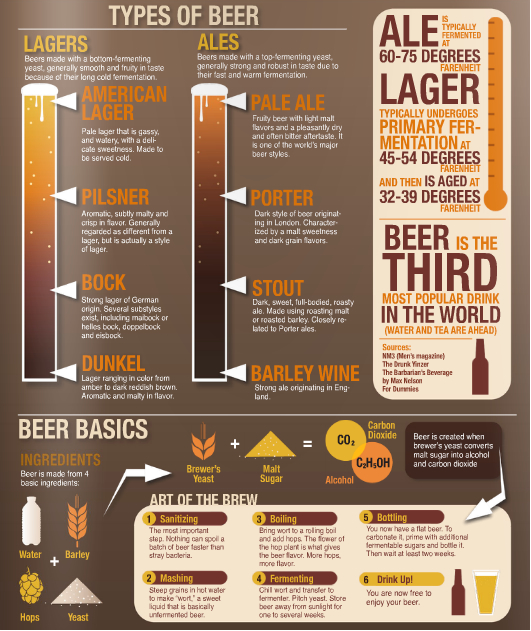
Today’s infographic is another beer styles and brewing overview poster, entitled simply Types of Beer, and created by (or for) Kristela Garza for an Annual Beer Battle.
It’s Just … Beerific

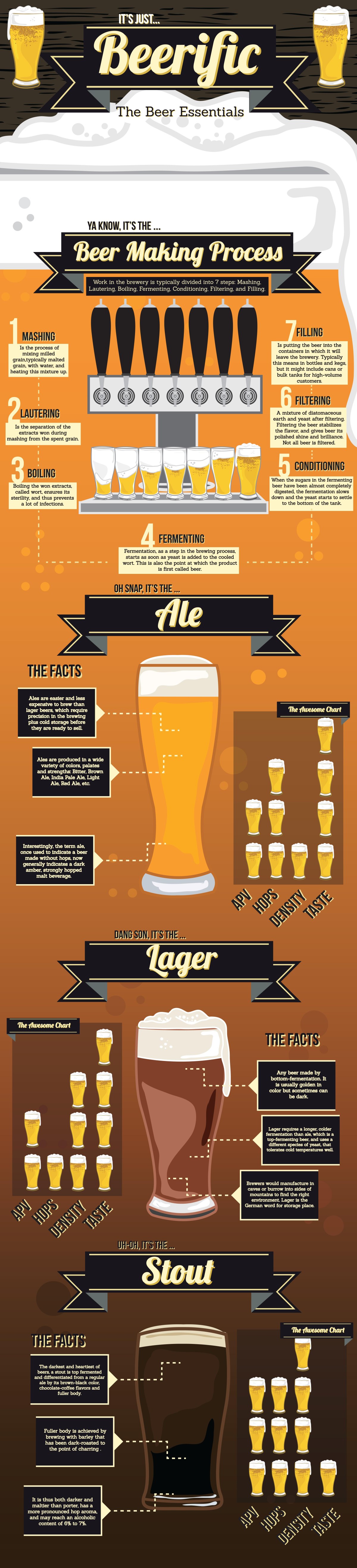
Today’s infographic was created by a graphic design student from Philadelphia for an information design class. Entitled It’s Just … Beerific, the assignment “topic was on beer types and beer brewing process.”
Beer Menus Infographic

Today’s infographic is the result of an interesting survey asking people about their preferences on Beer Menus. It was created by the North Carolina beer blog Wort & Yeast in early 2012. It may not be entirely scientific, but the results are interesting nonetheless. The majority of people taking the survey prefer their beer menu on paper and organized by style, and the most common complaint is that they’re too often out-of-date.

Click here to see the infographic full size.
A Brief History Of Sour Beer In The New Yorker

The New Yorker had a nice overview the other day on sour beer, entitled A Brief History of Sour Beer. It was written by a friend, and colleague, Christian DeBenedetti. Definitely worth a read.
Happy IPA Day!

As today is IPA Day, we should remember that as wonderful as these hoppy beers are, there’s a lot of mythology surrounding them, much of which is exaggerated or simply untrue. Several British beer historians have been working hard to reveal the truth — and dispel the myths — and have largely shown that the standard story of IPAs is simply not accurate. A good place to start is with my friend Martyn Cornell, and his Five facts you may not have known about India Pale Ale. For even more great information, buy his wonderful book, Amber, Gold & Black. Amazingly, he often gets angry comments and e-mails from Americans who prefer their cherished mythology over learning the truth. And there’s also Pete Brown (author of Hops and Glory) and Ron Pattinson, too, who have taken a good look at IPA’s history.
I’m starting to think we should lose the “India” in IPA and replace it with “Imperial,” although I know some people have a hard time with that modifier, too. But in a sense, an IPA is an imperial version of a pale ale, so it seems like it would work; and it would allow an Imperial Pale Ale to remain an IPA. Furthermore, Double IPAs and Triple IPAs could continue to be called by those names, with a minimum of fuss, although we’d have to ditch Imperial IPA in favor of Double.
To me, the most exciting thing about IPAs these days is that IPA is no longer simply one kind of beer, if indeed it ever was, but instead has fractured into numerous varieties. As I detailed in my latest newspaper column, IPA Day, there is currently American-style IPA, English-style IPA, Imperial/Double IPA, Triple IPA, Black IPA (or Black Ale), White IPA, Rye IPA, Belgian IPA (or Belgo-IPA), Farmhouse IPA, Wild IPA, IPL, Red IPA, herbal IPA, spiced IPA, Session IPA, West Coast IPA, San Diego IPA, Single Hop IPA, and who knows how many others. I’m sure someone is working on a Quad IPA right now. Can a Fruit IPA be far behind? But whatever kind of IPA you hoist today, enjoy the hop flavors in it, secure in the knowledge that there are more different beers being called an IPA than at any other time in history. To me, that’s certainly worth celebrating. Happy IPA Day!

Colorado: The Beer Me State

Today’s infographic concerns Colorado, the Beer Me State, created by Spork Marketing. On this day in 1876, Colorado became the 38th state.

Click here to see the infographic full size.
How To Clean Bottles

Today’s infographic is a chart showing the steps on How to Clean Bottles for Your Homebrew, created by Mike’s Brew Review.

Click here to see the chart full size.
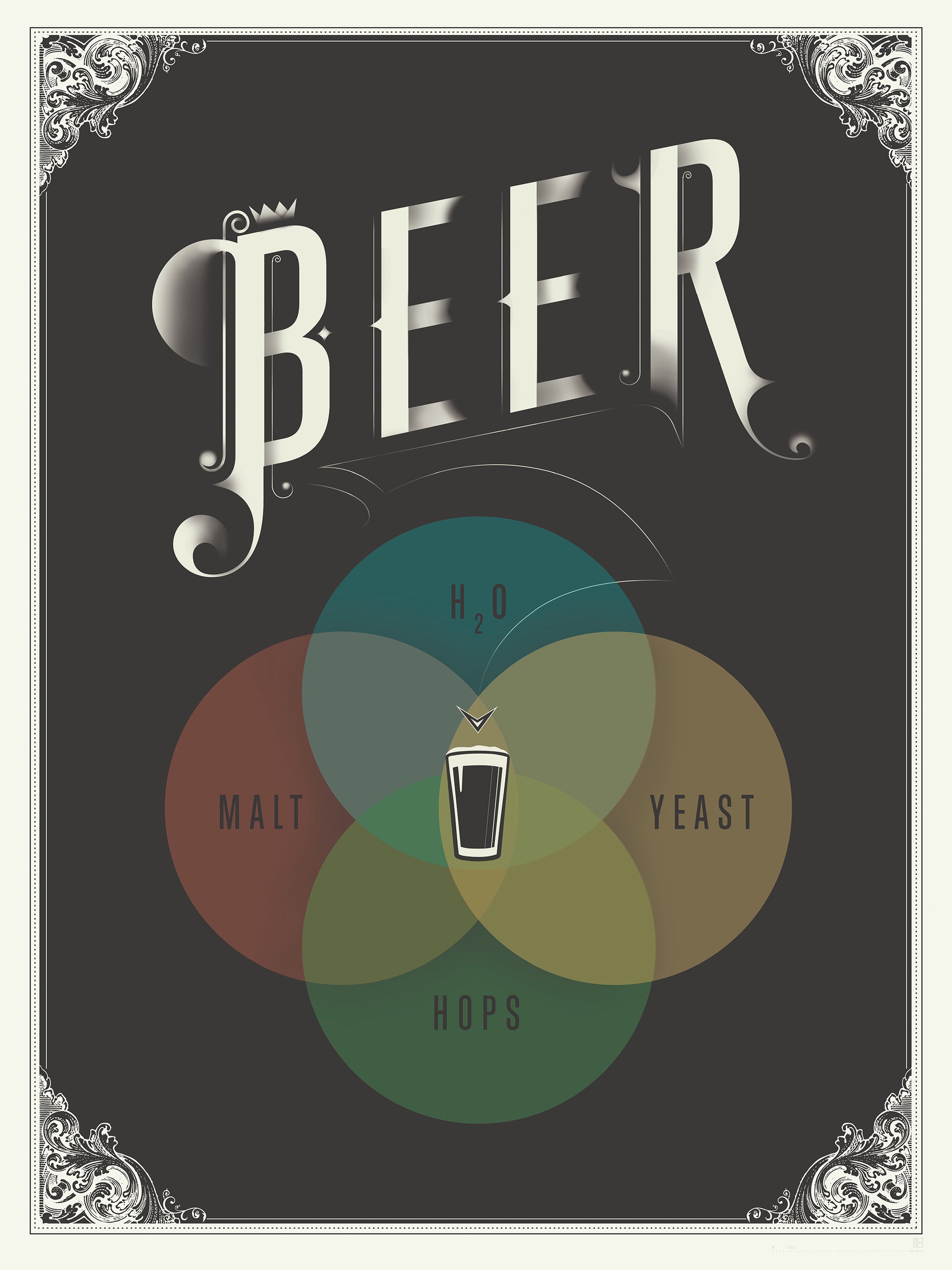
The Venn Of Beer

One More Periodic Table Of Beer Styles

Today’s infographic is another Periodic Table of Beer Styles, this one by Andrei Chapoval for Mantis Design, from 2001. This is the one I have framed in my home office.



Tap Into The Business Of Craft Beer

Today’s infographic is entitled Tap Into The Business Of Craft Beer, and was created by Kendall College of Chicago, in part because the Siebel Institute is moving there.

Click here to see the infographic full size.