Today is the birthday of Robbin Bain (August 1, 1938-October 23, 2023). Bain was elected Miss Rheingold 1959, the 20th model chosen. She was born Barbara Jane Bain in Flushing, Queens, in New York City, though her family later moved to Bronxville in Westchester County. She appears to have been married three time, first to Arno Schefler in 1962, then to Alexander Gaudier, and finally to Edward V. Mele, whom she remained married to until his death in 2003. He started a manufacturing company that became the largest maker of jewel boxes in the world.
Pursuing a career as a model, Barbara appeared in ads for Helena Rubinstein and Revlon. She was also one of four women, called “Portrettes,” who introduced Jackie Gleason on his television variety show, “The Jackie Gleason Show,” in 1956 and 1957. The next year, she graduated with an associate degree from Bradford Junior College (which later became Bradford College) in Haverhill, Mass., where she studied psychology, art and theater.
She changed her first name to Robbin early in her career, to avoid confusion with the actress Barbara Bain.
Ms. Bain was famous enough in 1961 to be a panelist on “To Tell the Truth,” a game show whose object was to figure out which of three people claiming to be the same person was the real one. In one episode she was so good at it — singling out the true “inventor of cocktails” from a three-man lineup — that another panelist, Betty White, playfully said, “I think Robbin’s disgusting.” In response, Ms. Bain lightly punched Ms. White on the shoulder.
The top of a notepad given to customers of Rheingold beer in 1959.
Her obituary continues:
Ms. Bain joined NBC as the “Today Girl” in late August 1961, working alongside the host John Chancellor and the news anchor Frank Blair. It was a stereotypical female role that had previously been filled by the actresses Estelle Parsons, Lee Meriwether and FlorenceHenderson.
Robert Bendick, the “Today” show’s producer at the time, outlined the role in 1959, telling The Associated Press: “A girl is essential to the show. You need a woman’s face to brighten up things. And you also need a woman for some types of features — fashions, beauty and talking to certain guests.”
But Ms. Bain said she loved it. “I was the only woman with the exception of the makeup woman on the set,” she said during a reunion of “Today Girls” on “Today” in 2012. And, Ms. McLanahan noted: “The role did transition to co-host. She always felt that she was groundbreaking in that sense.”
Ms. Bain left “Today” after only two months; the press speculated that she didn’t like the hours, but in fact she was pregnant with her first daughter, Dina.
“I ruined her career,” her daughter, now known as Dina Nemeth, joked in a phone interview.
Robbin Mele Gaudieri (formerly Robbin Bain) died peacefully in her home on October 21, 2023, surrounded by her husband and two daughters.
Robbin grew up in Bronxville, NY with her parents Margaret Davison Bain and James Emms Bain. After graduating from Bronxville High School her remarkable beauty led her into the limelight. She won Miss Surf Maid USA at the age of 12 and was elected Miss Rheingold in 1959. This prestigious and highly anticipated contest drew 24 million votes across the nation.
Robbin pursued her education at Bradford Junior College where she studied psychology, art, and theatre. Her captivating presence made her a beloved television personality, notably as one of the Today Show’s inaugural female broadcasters, co-hosting alongside John Chancellor and Hugh Downs. She also frequently appeared as a panelist on “What’s My Line” and “To Tell the
Truth” game shows. Represented by the William Morris Agency, Robbin became an iconic image for Revlon, Playtex, and Helena Rubenstein. Throughout her life, she passionately pursued art and design, earning numerous awards for her paintings. She also served as President of the Central New York Arts Council in Utica, New York for many years. Her charitable commitments extended to a role as a Board Member of The Madison Square Boys and Girls Club.
Robbin’s life encompassed two previous marriages. Her first was to Arno Schefler with whom she had two daughters. Later, she enjoyed a 30-year marriage with Edward V. Mele until his passing in 2003.
She was devoted to her family who adored her tremendously. She is survived by her loving and devoted husband of 19 years, Alexander V.J. Gaudieri of Palm Beach; her daughters Dina Schefler Nemeth and Lara Schefler Mclanahan; sons-in-law Robert Raymond Nemeth and William Duer McLanahan; six grandchildren: Nicholas Bain Nemeth, Georgia Bain McLanahan, James Duer McLanahan, Annabelle Clare Nemeth, Brooke Denning McLanahan, and James
Edward Nemeth; and her stepson Alexandre Barclay Everson Gaudieri.
Robbin was a member of the Shinnecock Hills Golf Club, The Meadow Club of Southampton, and The Lost Tree Club at the time of her passing.
To many, Robbin had an illuminating presence whenever she entered a room, but to her family, her true beauty radiated from within through her unconditional love, devotion, warmth, and affection. Fondly referred to as “Gummy” by her family, she embraced this endearing nickname over time.
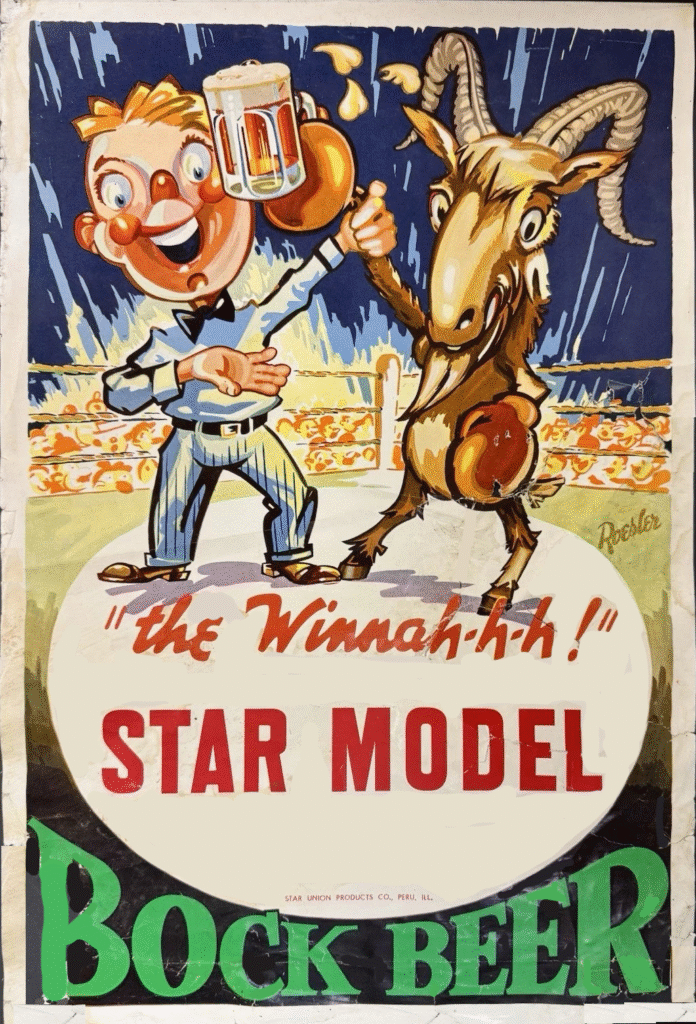
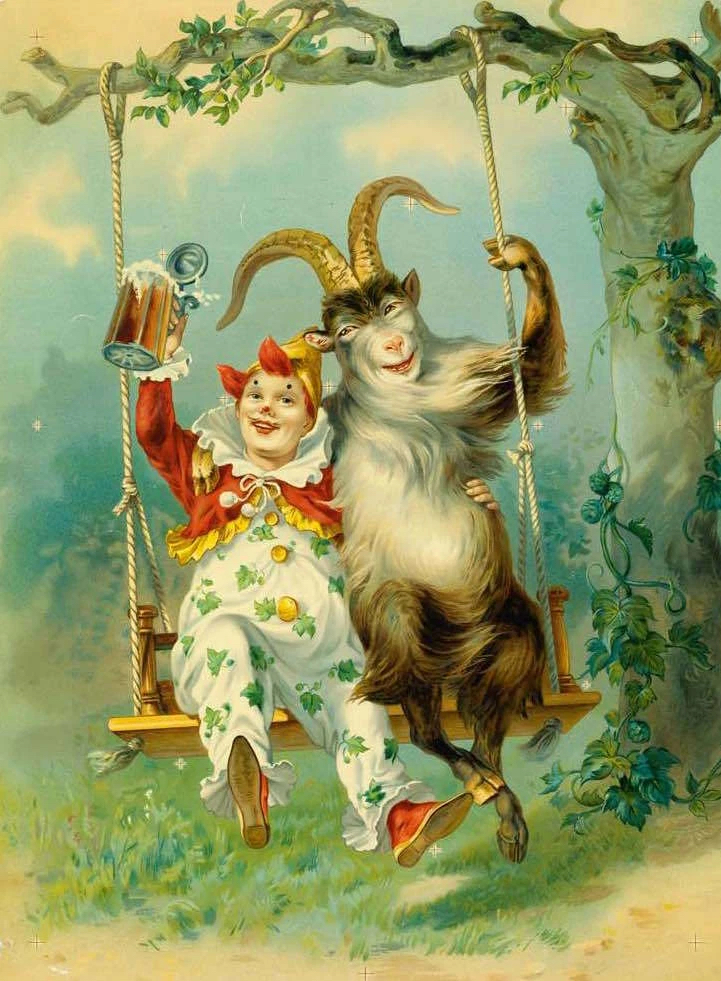
Last year I decided to concentrate on Bock ads. Bock, of course, may have originated in Germany, in the town of Einbeck. Because many 19th century American breweries were founded by German immigrants, they offered a bock at certain times of the year, be it Spring, Easter, Lent, Christmas, or what have you. In a sense they were some of the first seasonal beers. “The style was later adopted in Bavaria by Munich brewers in the 17th century. Due to their Bavarian accent, citizens of Munich pronounced ‘Einbeck’ as ‘ein Bock’ (a billy goat), and thus the beer became known as ‘Bock.’ A goat often appears on bottle labels.” And presumably because they were special releases, many breweries went all out promoting them with beautiful artwork on posters and other advertising.
Thursday’s ad is for Frank Fehr’s Bock Beer, which was published in 1884. This one was for the Frank Fehr City Brewery of Louisville, Kentucky, which was originally founded in 1849 as the William Tell Brewery. Frank Fehr appears to have joined the brewery in 1872 and after 1876 it became known as the Frank Fehr City Brewery. This ad ran in The Courier Journal, also of Louisville, Kentucky.
Last year I decided to concentrate on Bock ads. Bock, of course, may have originated in Germany, in the town of Einbeck. Because many 19th century American breweries were founded by German immigrants, they offered a bock at certain times of the year, be it Spring, Easter, Lent, Christmas, or what have you. In a sense they were some of the first seasonal beers. “The style was later adopted in Bavaria by Munich brewers in the 17th century. Due to their Bavarian accent, citizens of Munich pronounced ‘Einbeck’ as ‘ein Bock’ (a billy goat), and thus the beer became known as ‘Bock.’ A goat often appears on bottle labels.” And presumably because they were special releases, many breweries went all out promoting them with beautiful artwork on posters and other advertising.
Wednesday’s ad is not for an actual beer, but instead is something Bock related. As we move increasingly past the typical bock beer season, the number of unique ads are becoming harder to find, and today only this odd little gem stood out. This ad is for films being shown in Cleveland, Ohio, and presumably the various theaters have a single owner since the one ad has listings for eight different theaters in different locations. The ad was published on July 30, 1931 in The Plain Dealer, of Cleveland, Ohio. The one that stood out was the Alhambra Theatre, which was located at 10403 Euclid Ave. This ad ran on a Thursday and was promoting a new film imported from Germany entitled “Bockbierfest,” released the previous year in Europe. Bockbierfest was about to debut in three days, on Saturday. The ad refers to the novie as a “Rollicking, Hilarious Comedy of the annual Bock Beer Festival.”
Here’s a close up of the listing from the Alhambra:
Bockbierfest was not a film I’d ever heard of before, so I did a little googling to see what I could find. Several websites give the following synopsis:
Underwear manufacturer Livius Heintze is a vehement anti-alcoholic and thus is very much against the marriage of his daughter Hedwig to the brewery owner Raumert. Heintze’s second, illegitimate daughter Emmi also wants to give her father a heart attack by marrying the hops merchant Seidl.
From what I can gather it was only shown in German and the only copy I could find for sale online had no subtitles or dubbing available. It starred Carl Boese, Ludwig Stössel, Margarete Kupfer and Margot Landa, none of whom I was familar with.
The website SIMKL also gives some information about the film:
Bock Beer Fest (1930) – A German Comedy Classic
Released in 1930, Bock Beer Fest is a German comedy film directed by Carl Boese. This early talkie is a light-hearted, entertaining movie that showcases the director’s skill in blending humor and wit.
The film follows the story of a group of friends who try to outdo each other in a series of comedic misadventures. With its witty dialogue and physical comedy, Bock Beer Fest is a hilarious portrayal of friendships and the chaos that ensues when they get together.
What makes this film stand out is its historical significance. As one of the earliest German talkies, Bock Beer Fest showcases the early days of sound in cinema. The film’s direction and cinematography are noteworthy, highlighting Boese’s expertise in capturing the essence of the era.
Interesting Facts:
Bock Beer Fest was one of the first German films to use synchronized sound, making it a milestone in the country’s cinematic history.
The film’s title, “Bockbierfest,” refers to a traditional German beer festival, which is a central theme throughout the movie.
Trude Brionne played “Emmi – ihre Tochter”
And Margot Landa starred as “Hedwig – beider Tochter”
You can also watch it in German, in two parts, on YouTube. Here are links for Part 1 and Part 2.
Last year I decided to concentrate on Bock ads. Bock, of course, may have originated in Germany, in the town of Einbeck. Because many 19th century American breweries were founded by German immigrants, they offered a bock at certain times of the year, be it Spring, Easter, Lent, Christmas, or what have you. In a sense they were some of the first seasonal beers. “The style was later adopted in Bavaria by Munich brewers in the 17th century. Due to their Bavarian accent, citizens of Munich pronounced ‘Einbeck’ as ‘ein Bock’ (a billy goat), and thus the beer became known as ‘Bock.’ A goat often appears on bottle labels.” And presumably because they were special releases, many breweries went all out promoting them with beautiful artwork on posters and other advertising.
Tuesday’s ad is for Goetz Country Club Bock Beer, which was published on July 29, 1948. This one was for the M.K. Goetz Brewing Co. of Saint Joseph, Missouri (and they also had a brewery in Kansas City), which was originally founded in 1859. This ad ran in The Mound City News Independent, of Mound City, Missouri, serving Holt County.
Today is the 41st birthday of Tim Sciascia, co-founder of Cellarmaker Brewing, which started in San Francisco but now has locations in Oakland and Berkeley, as well. He’s also recently joined Berkeley Yeast as a Brand Ambassador. Originally from Massachusetts, his original passion was one we share: classical Saxophone. But he also picked up homebrewing in college, and afterwards worked at the Samuel Adams brewery in the Jamaica Plain neighborhood of Boston. But wanting to make his own way, he relocated to the Bay Area, and spent five years under Arne Johnson at Marin Brewing before partnering with his fiancé Kelly and fellow Marin-alum Connor Casey to start Cellarmaker in 2013. Since then, it’s been nothing but upward trajectory. Join me in wishing Tim a very happy birthday.
Co-founders Connor Casey and Tim (along with Kelly Caveney Sciascia) at thier Oakland location in 2023.
Last year I decided to concentrate on Bock ads. Bock, of course, may have originated in Germany, in the town of Einbeck. Because many 19th century American breweries were founded by German immigrants, they offered a bock at certain times of the year, be it Spring, Easter, Lent, Christmas, or what have you. In a sense they were some of the first seasonal beers. “The style was later adopted in Bavaria by Munich brewers in the 17th century. Due to their Bavarian accent, citizens of Munich pronounced ‘Einbeck’ as ‘ein Bock’ (a billy goat), and thus the beer became known as ‘Bock.’ A goat often appears on bottle labels.” And presumably because they were special releases, many breweries went all out promoting them with beautiful artwork on posters and other advertising.
Monday’s poster is for Falken Schaffhauser’s Oster-Bock, and was published in 1929. This one was made for the Bierbrauerei Falken Schaffhausen, or Falcon Brewery, of Schaffhausen, Switzerland. The brewery was founded in 1799, and is still in business today, and is “considered the only independent brewery in the Schaffhausen region,” and is Switzerland’s 5th largest brewery. This one is for their Schaffhauser Oster-Bock (Easter Bock) and shows a man balancing on a wooden beer barrel while holding a mug full of beer and a pipe in his mouth. It was created by Swiss artist Arnold Oechslin.
Today is the birthday of Sharon Vaughn (July 28, 1938-December 2023). Her claim to beer fame was being named as Miss Rheingold for 1965, the last Miss Rheingold in the golden era. She was also chosen by the new owners of the brewery rather than through a public vote, which hadn’t been the case since the second year of the contest in 1941. Unfortunately, the new owners didn’t really know what to do with her and she appeared in no ads her year, but instead only made public appearances at events and had fluff pieces written about those appearances. As a result, there’s far less breweriana of her than almost any other Miss Rheingold, which is a shame. She didn’t even appear in print until March of 1965, unlike previous ones who typically were announced the previous September or October.
She was born in Missouri, but moved to Washington state when she was five, and graduated from the University of Washington as a music major. While in college, she became Miss Washington and represented the state at the Miss America Pageant, where she was second runner-up. After college, she moved to New York City and attended Julliard. She began getting small parts in Broadway musicals, but also sang in nightclubs and appeared in television commercials. In 1965, she took a year off to become Miss Rheingold. Afterwards, she was cast in Funny Girl, and also appeared in the film a few years later. While in L.A. for filming she met talent agent Byron Lapin, whom she married. She also did some television, appearing on Bewitched and Get Smart. The couple later moved to St. Louis when he took over his family’s business. She passed away in December of 2023.
In 1968, Vaughn played a villain known as “Wanda” in an episode of “Get Smart” called “The Groovy Guru.“
Headshot when she competed in the Miss America pageant as Miss Washington.
Getting her evening gown ready for the Miss America pageant.
Last year I decided to concentrate on Bock ads. Bock, of course, may have originated in Germany, in the town of Einbeck. Because many 19th century American breweries were founded by German immigrants, they offered a bock at certain times of the year, be it Spring, Easter, Lent, Christmas, or what have you. In a sense they were some of the first seasonal beers. “The style was later adopted in Bavaria by Munich brewers in the 17th century. Due to their Bavarian accent, citizens of Munich pronounced ‘Einbeck’ as ‘ein Bock’ (a billy goat), and thus the beer became known as ‘Bock.’ A goat often appears on bottle labels.” And presumably because they were special releases, many breweries went all out promoting them with beautiful artwork on posters and other advertising.
Sunday’s ad is for Old Bohemian Bock Beer, which was published on July 27, 1962. To be fair, it’s primarily advertising their Light Beer, but also mention they have Cream Ale and Bock beer, too. It’s also an interesting advertising strategy, the anti-local but cheaper gambit. This one was for the Eastern Brewing Corp. of Hammonton, New Jersey, which was originally founded out of Prohibition in 1933. This ad ran in the Daily News, of New York, New York.
Last year I decided to concentrate on Bock ads. Bock, of course, may have originated in Germany, in the town of Einbeck. Because many 19th century American breweries were founded by German immigrants, they offered a bock at certain times of the year, be it Spring, Easter, Lent, Christmas, or what have you. In a sense they were some of the first seasonal beers. “The style was later adopted in Bavaria by Munich brewers in the 17th century. Due to their Bavarian accent, citizens of Munich pronounced ‘Einbeck’ as ‘ein Bock’ (a billy goat), and thus the beer became known as ‘Bock.’ A goat often appears on bottle labels.” And presumably because they were special releases, many breweries went all out promoting them with beautiful artwork on posters and other advertising.
Saturday’s ad is for Acme Bock Beer, which was published in 1949. The brewery was the Acme Brewing Co. of San Francisco, California, which was originally founded in 1907, though they also opened a location in the Los Angeles area. Today the brand is owned by North Coast Brewing. This ad ran in the Palo Verde Valley Times of Blythe, California.
Last year I decided to concentrate on Bock ads. Bock, of course, may have originated in Germany, in the town of Einbeck. Because many 19th century American breweries were founded by German immigrants, they offered a bock at certain times of the year, be it Spring, Easter, Lent, Christmas, or what have you. In a sense they were some of the first seasonal beers. “The style was later adopted in Bavaria by Munich brewers in the 17th century. Due to their Bavarian accent, citizens of Munich pronounced ‘Einbeck’ as ‘ein Bock’ (a billy goat), and thus the beer became known as ‘Bock.’ A goat often appears on bottle labels.” And presumably because they were special releases, many breweries went all out promoting them with beautiful artwork on posters and other advertising.
Thursday’s ad is for Schaefer Bock Beer, which was published on July 25, 1979. This one was for the F. & M. Schaefer Brewing Co. of New York, New York, which was originally founded in 1842. This ad ran in Newsday’s Suffolk Edition, also of New York, New York.