Our 111th Guinness ad is by John Gilroy, showing the iconic zookeeper simply raising a Guinness in toast, which seemed appropriate for St. Patrick’s Day.
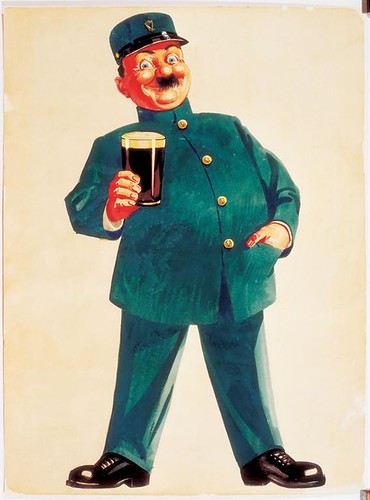

Our 111th Guinness ad is by John Gilroy, showing the iconic zookeeper simply raising a Guinness in toast, which seemed appropriate for St. Patrick’s Day.

It’s hard not to get a chuckle from this Guinness advertisement from the UK, especially on St. Patrick’s Day. Enjoy.

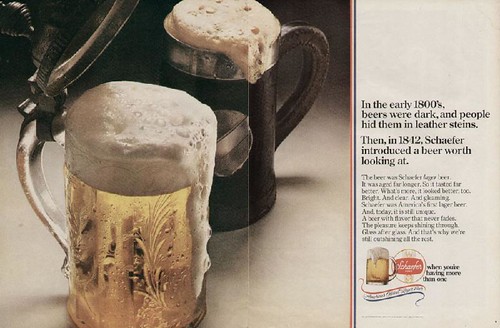
Friday’s ad is the last bicentennial ad for Schaefer beer in the series. This one uses the ad copy. “In the early 1800s beers were dark, and people hid them in leather steins. Then, in 1842, Schaefer introduced a beer worth looking at.” This one also doesn’t try to make them sound 200 years old. And it does feature another beautiful drinking vessel — although I’m not fond of that leather one — and yet more impossibly perfect foam.
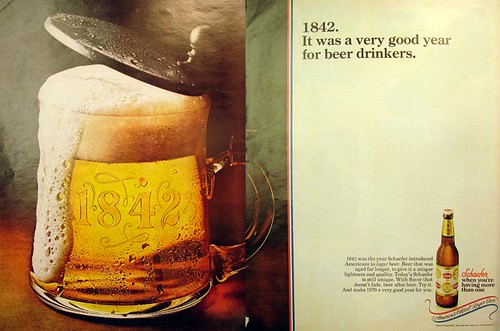
This week has inadvertently turned into Schaefer Week, with Thursday’s ad being yet another bicentennial ad for Schaefer beer. This one uses the ad copy. “1842. It Was A Very Good Year For Beer Drinkers.” At least this one doesn’t try to make them sound 200 years old. But it does feature another beautiful drinking vessel and more impossibly perfect foam.

The Tax Foundation, a Washington think tank dedicated to al things taxable, had last week for their weekly Monday Maps on the Tax Foundation’s blog an infographic on State Beer Excise Tax Rates as of September 1, 2011. Alaska has the highest tax rate and Wyoming the lowest. And, of course, the chart doesn’t include the federal excise taxes breweries have to pay or any local taxes, either. Still, it’s always interesting to see the differences laid out on the map.
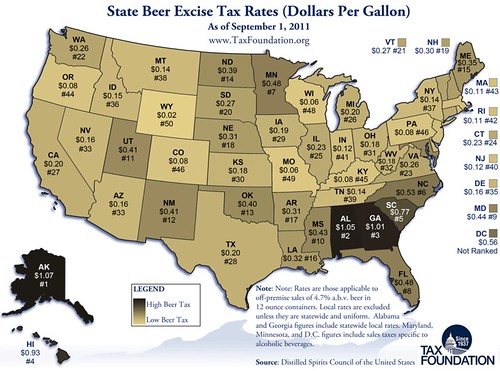
Obviously, it’s hard to read at this size, but you can check it out full size at the Tax Foundation blog.
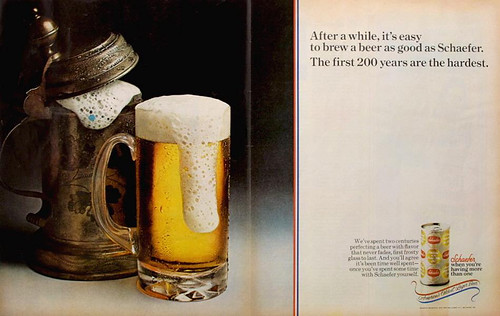
Wednesday’s ad is another (I think) bicentennial ad for Schaefer beer. This one uses the ad copy. “After a while, it’s easy to brew a beer as good as Schaefer. The first 200 years are the hardest.” Again, this would have been when Schafer was around 134 years old, not terribly close to 200 years, but the ad was aimed at America’s 200th birthday. In this one there’s another cool-looking stein, but the foam on that glass looks pretty fake. With the handle on the mug, if you use your imagination it looks like an elephant or I suppose you could say it looks a bit phallic.

Here’s an interesting infographic, though for most craft beer drinkers it won’t be of much use. It’s a pyramid — or beeramid — showing many of the most popular mainstream beers with their calories and carbohydrates shown, ranking them with the lowest in both at the top of the beeramid and the beers with the most calories and carbs as the foundation on the bottom.
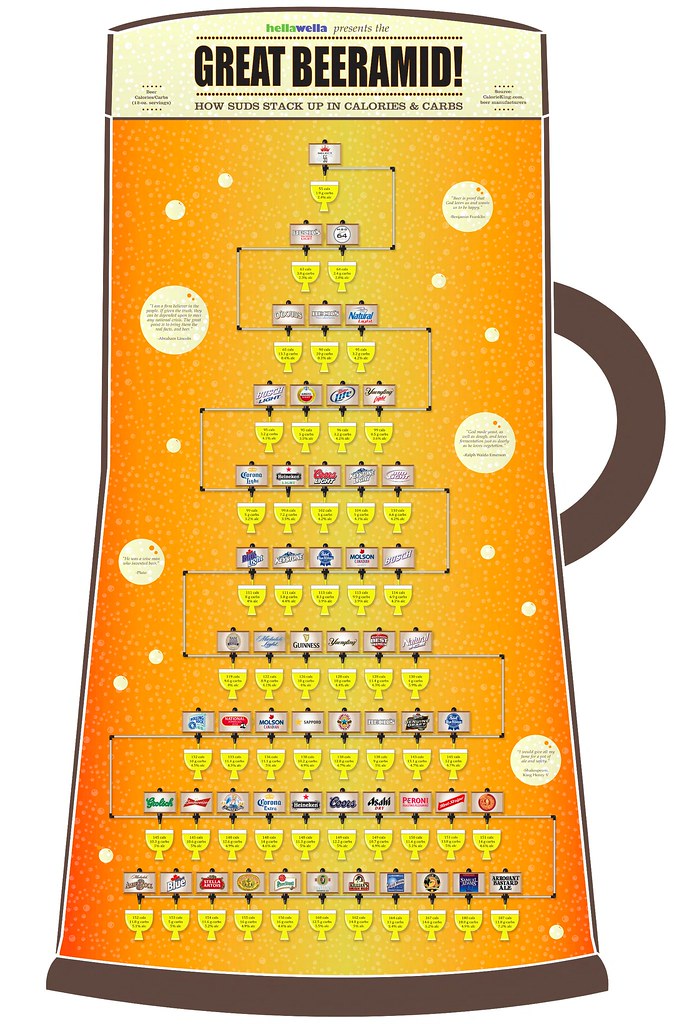
It’s hard to read at this size, but you can see it full size at HellaWella.
It was created by HellaWella, a health-oriented website. And while I realize they mean well, I’ve never been convinced that calories or carbohydrates should ever be part of the decision-making process for choosing a beer. I realize other people feel differently, but watching the caloric content necessarily means sacrificing flavor so you can drink more. I say drink less, but better.
They believe that with their chart “you can figure out ahead of time how to keep the calories and/or carbohydrates to a minimum.” But by that criteria, Budweiser’s Select 55 is the best choice. The Top 10 include two non-alcoholic beers (which frankly shouldn’t even be here) and the other eight are low-calorie light beers, not one of which would I voluntarily drink or ever order at a bar or restaurant. But that’s the problem with these health suggestions. When you stick to the numbers, health means giving up what makes beer a great choice in the first place: flavor. If I have to give up beer that tastes of anything to be healthy, to my way of thinking there’s just no point. Except that beer is already healthy (even though the anti-alcohol folks have seen to it breweries aren’t aloud to say so) and since moderation is already the best course to take, why anyone would ever choose a beer with the lowest calories is beyond me.
So I’m a sucker for infographics, and this one is very well done, but in the end its flaw is in the intention, which is to steer people to the blandest possible beers imaginable, supposedly in the interest of health. That’s a mistake, I believe, and not part of a healthy lifestyle. Health also includes mental, as well as physical, health. If drinking responsibly and moderately means (according to the most recent dietary guidelines) having no more than 4 beers in a singe day (3 for a woman) and no more than 14 in a week (7 for women) then you should make them count. Choose the most flavorful, best-tasting beer you can. The difference in calories or carbs just isn’t worth the sacrifice. Skip the piece of cake and go for the better beer. To me, that’s a healthy choice.
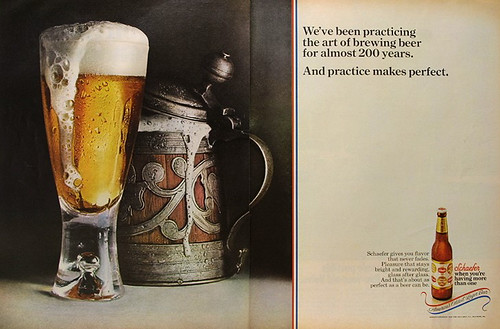
Tuesday’s ad is odd, at least as far as the ad copy. It’s for Schaefer beer with the following ad copy. “We’ve been practicing the art of brewing beer for almost 200 years. And practice makes perfect.” Which sounds good, right? Except that Schaefer was founded in 1842. I just bought a book celebrating their 100th anniversary in 1942. While I’m not absolutely certain, I believe this ad was from around America’s bicentennial in 1976, which would have made Schaefer 134 years old. Maybe it’s my lack of number sense, but that doesn’t seem like “almost” 200 years old, not even close. I’d say you’d have to be at least 151 to claim that, which would not have been until 1993. But that beer glass and mug are beautiful.
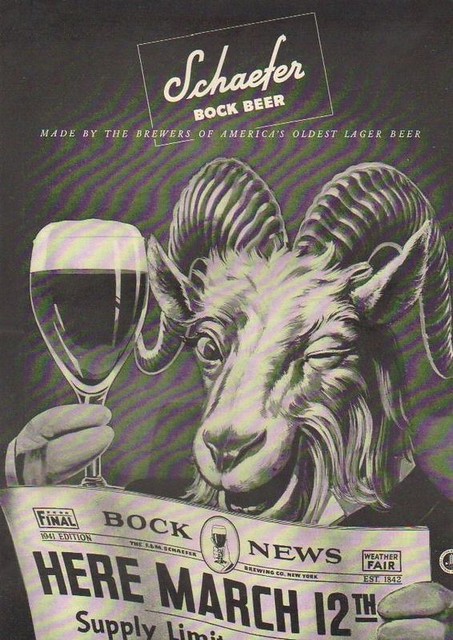
Monday’s ad is particularly cool. The ad is for Schaefer’s Bock Beer, released in 1941 on March 12th — today’s date — with “supply limited.” The ad features a goat holding a glass of bock while reading a newspaper, the “Bock Times.” I think he’s winking at me.

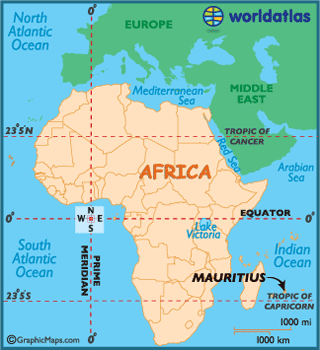
Today in 1968, Mauritius gained their Independence from the United Kingdom.
Mauritius
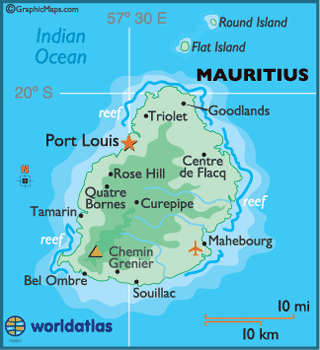
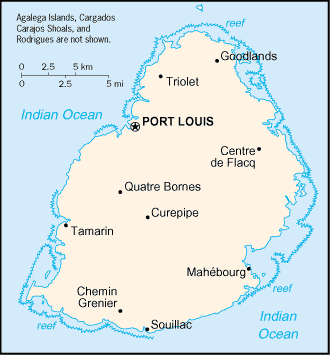
Mauritius Breweries
Mauritius Brewery Guides
Other Guides
Guild: None Known
National Regulatory Agency: None
Beverage Alcohol Labeling Requirements: Not Known
Drunk Driving Laws: BAC 0.05%


Alcohol Consumption By Type:
Alcohol Consumption Per Capita (in litres):
WHO Alcohol Data:
Patterns of Drinking Score: 3
Prohibition: None