Brookston Beer Bulletin

Jay R. Brooks on Beer

  • Home
  • About
  • Editorial
  • Birthdays
  • Art & Beer

Socialize

  • Dribbble
  • Email
  • Facebook
  • Flickr
  • GitHub
  • Instagram
  • LinkedIn
  • Pinterest
  • RSS
  • Twitter
  • YouTube

Powered by Genesis

Beer In Ads #4895: Pschorr-Braü Mai Bock

February 28, 2025 By Jay Brooks

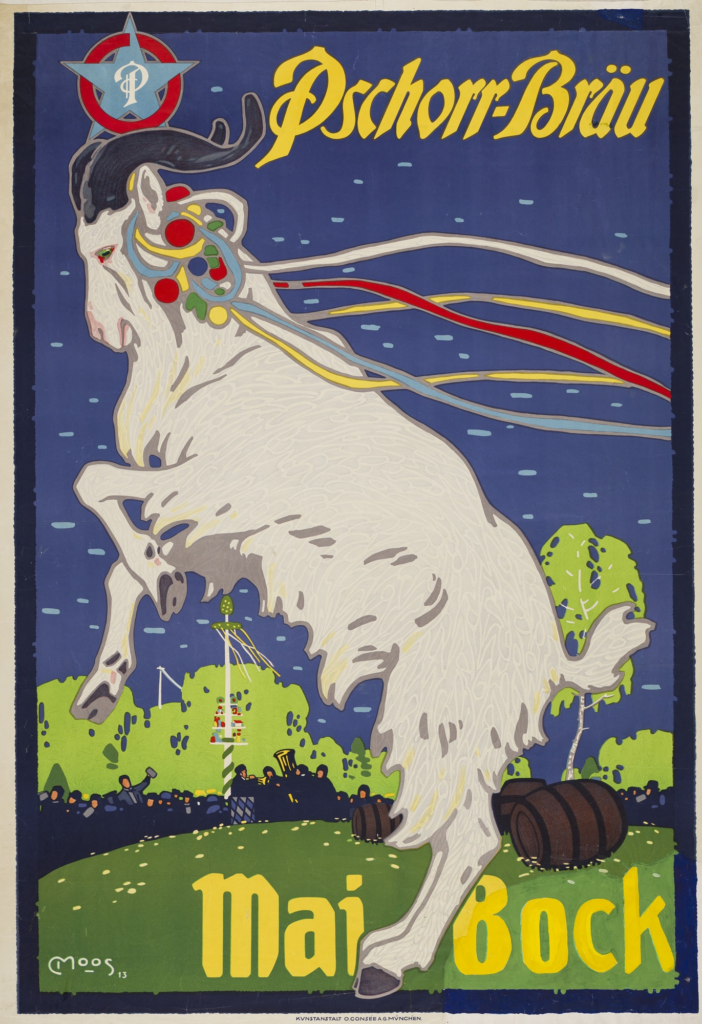
Last year I decided to concentrate on Bock ads. Bock, of course, originated in Germany, in the town of Einbeck. Because many 19th century American breweries were founded by German immigrants, they offered a bock at certain times of the year, be it Spring, Easter, Lent, Christmas, or what have you. In a sense they were some of the first seasonal beers. “The style was later adopted in Bavaria by Munich brewers in the 17th century. Due to their Bavarian accent, citizens of Munich pronounced ‘Einbeck’ as ‘ein Bock’ (a billy goat), and thus the beer became known as ‘Bock.’ A goat often appears on bottle labels.” And presumably because they were special releases, many breweries went all out promoting them with beautiful artwork on posters and other advertising.

Friday’s ad is is for Pschorr-Braü Mai Bock, and is from 1913. At that time, it was the Pschorr-Bräu, but after a merger in 1972 with the Hacker Brewery it became known as the Hacker-Pschorr Brewery. This poster was created by Carl Moos, a well-known German-Swiss graphic artist, who was best known for his travel and skiing posters.
Filed Under: Art & Beer, Beers, Breweries, Just For Fun Tagged With: Advertising, Bock, Germany, History, Switzerland

Historic Beer Birthday: John Holme Ballantine

February 28, 2025 By Jay Brooks

ballantine

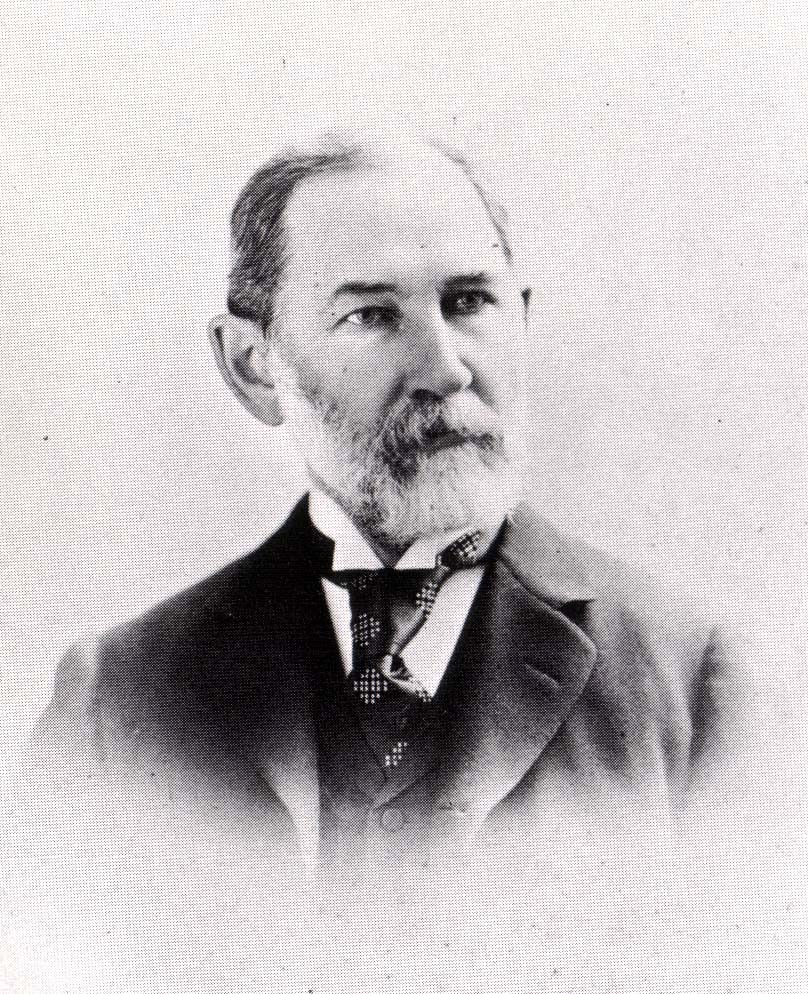
Today is the birthday of John Holme Ballantine (February 28, 1834-April 27, 1895). He was the second of three sons of Peter Ballantine, who founded P. Ballantine & Sons. In 1857, he brought on his three sons as partners. John Holme served as president of the family brewery from 1883 until his death in 1895.
JohnBallantinephoto

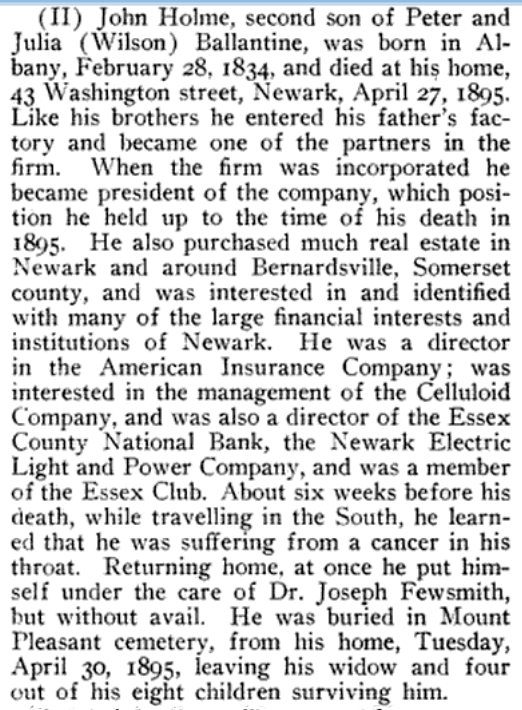
This is John Holme’s obituary from the Genealogical and Memorial History of the State of New Jersey:

John-Holme-Ballantine-obit
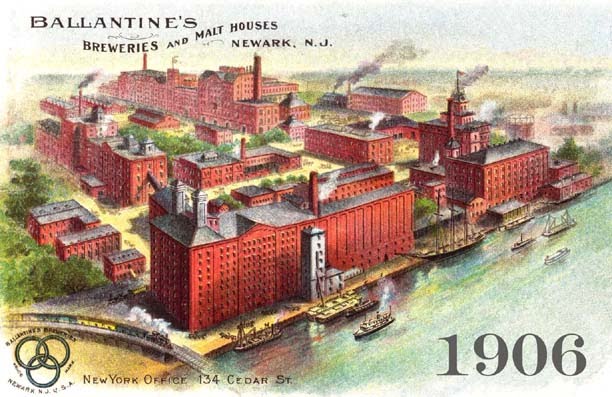
Ballantone-Postcard-1906
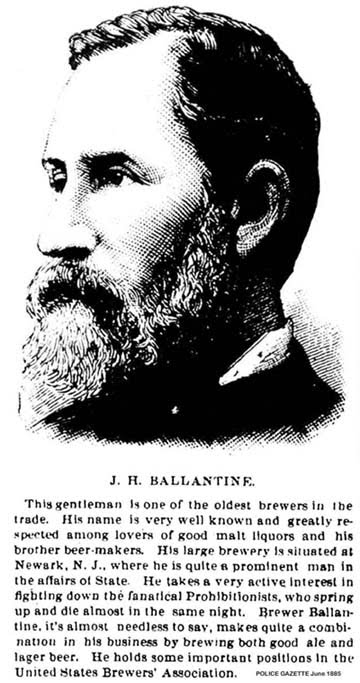
JohnHPoliceGazettews
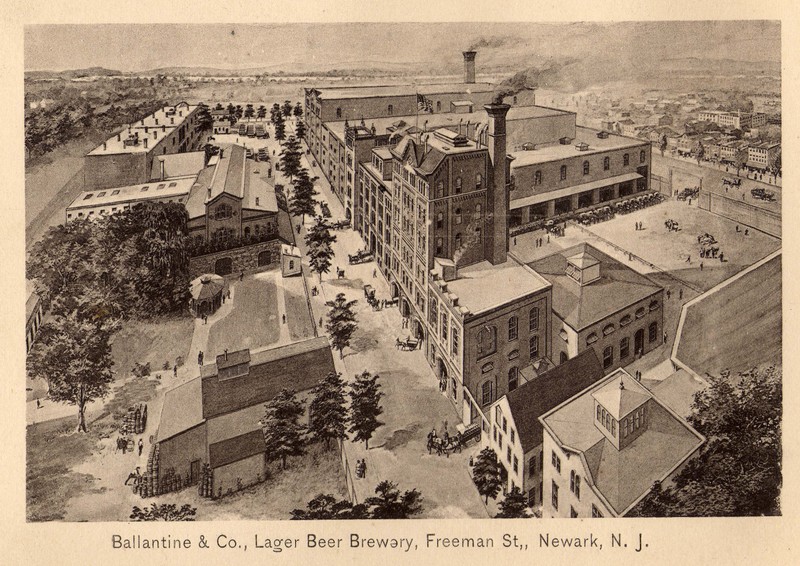
ballantine-lagerbrewery

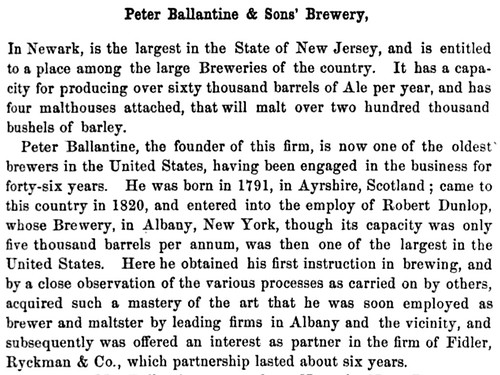
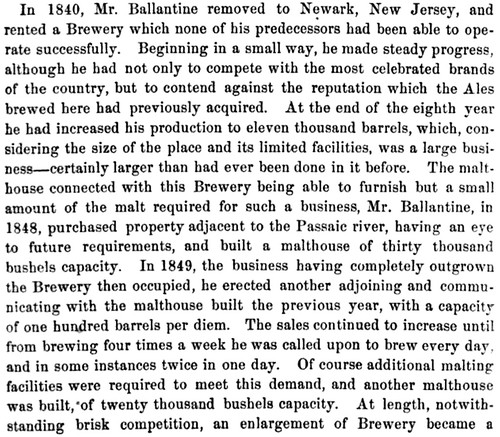
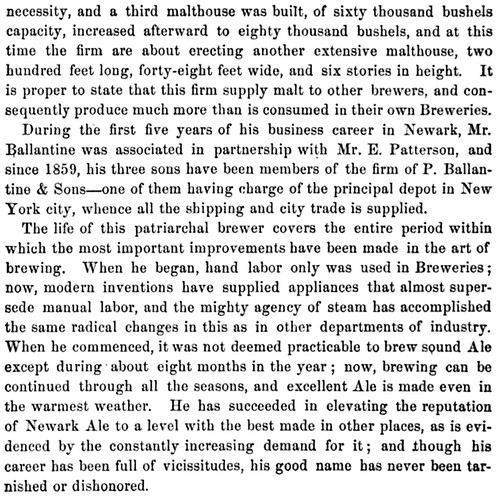
And here’s a history of the Ballantine brewery from “A History of American Manufactures from 1608 to 1860,” by John Leander Bishop, Edwin Troxell Freedley, Edward Young, published in 1868:

ballantine-brewery-bio-1
ballantine-brewery-bio-2
ballantine-brewery-bio-3
letterheadglassbeeraleCutOut
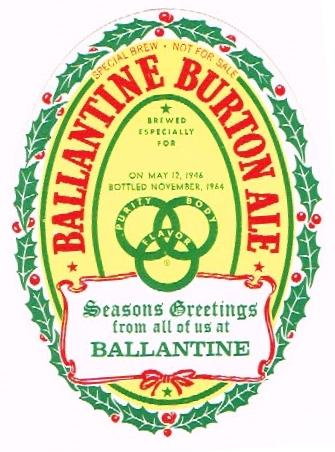
Ballantine-xmas-1964-blanks

Filed Under: Birthdays, Breweries, Just For Fun Tagged With: History, New Jersey

Session #144: Home Beer, Sweet, Home Beer

February 28, 2025 By Jay Brooks

For our 144th Session, hosted by Boak & Bailey, they’ve chosen as their topic by posing the seemingly simple question, [w]hat’s the best beer you can drink at home right now? They also set some guidelines and suggestions about how to proceed:

Not necessarily right now. You can go to the shops if you like. But you shouldn’t have to get on a train or a flight. Or travel back in time. If you like, you can choose a top 3, or top 5, or top 10. What makes it a good beer to drink at home? Is it brewed to be packaged? Does it pair well with your home cooking? Does it pair well with drinking in your pyjamas? If you don’t think there’s any such thing as a good beer to drink at home, that’s fine, too – talk about that! Whatever your response to the prompt might be is absolutely grand. It’s just a starting point, or trigger – not a set of rules to a game of which we are the umpires.

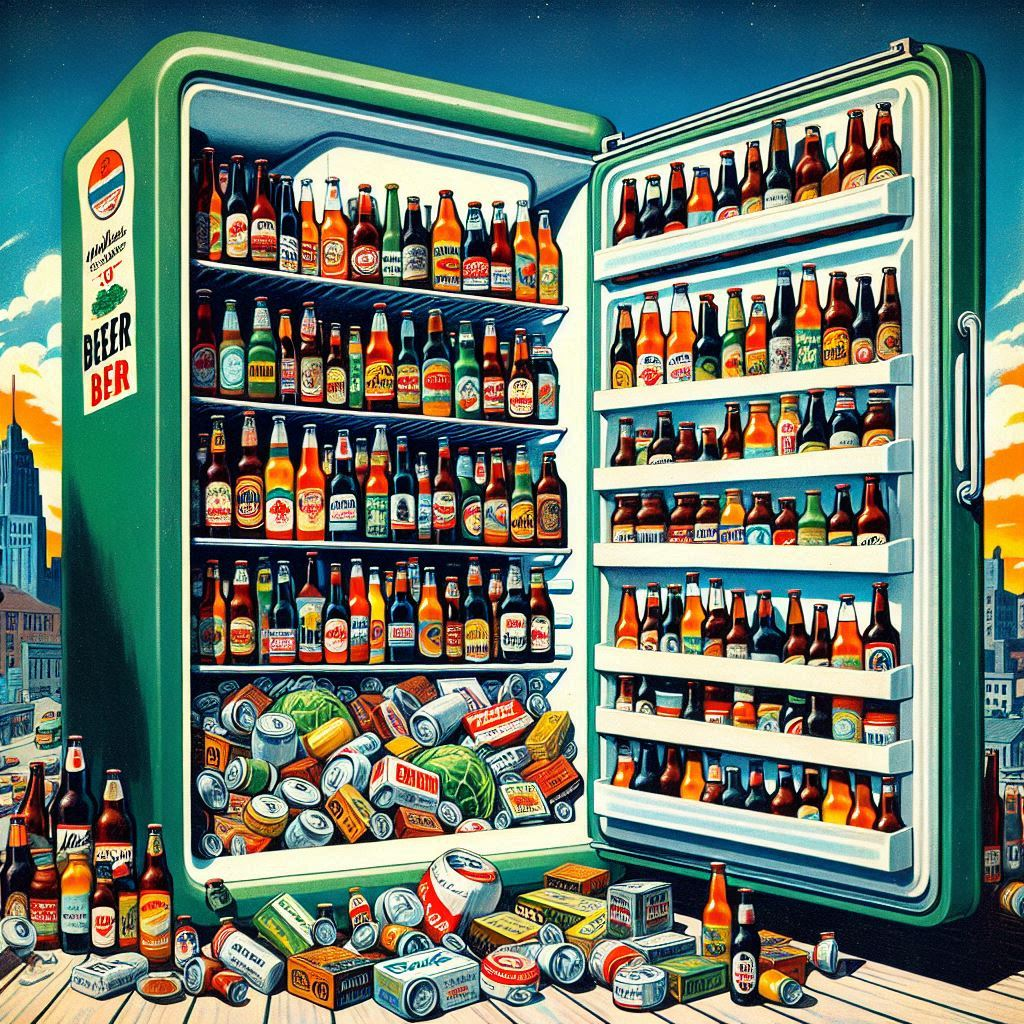
Okay, so that’s the mission. Let me go to the ‘frig.

I’m at the point in my life when I don’t go out to bars, or even breweries, unless I’m working or traveling. We do have four refrigerators, three in the garage, and one in the kitchen, not to mention a beer cellar under the house. So we generally are well-stocked with choices. I get a fair amount of samples, though it’s been declining here of late, so many of what’s out being chilled are the extra samples. If I get a four-pack or six-pack of samples, I’ll try one of the cans or bottles, and put the rest into rotation in the garage. Some sit around too long, sad to say — I’m only one man, after all — though there are a few beers I like to always keep on hand, though in general it’s more that I like to have a few varied types of beers around, and a specific one of them is less important. So for example, I like to have a pilsner around, and I’m thrilled if I have some Trumer Pils, though I’m just as happy with Russian River STS Pils, Moonlight Reality Czech or Firestone Walker Pivo Pils. All four are relatively easy to find near me, but there are plenty of others I would reach for in a pinch. What’s more important is I want that delicate base malt character, signature subtle hop bitterness and the crisp expression of the yeast that makes a pilsner a pilsner.

Decision, decisions….

This approach plays into something that’s been bugging about the direction of beer over the last decade or so, coinciding with the meteoric rise of hazy IPAs. While not my favorite “innovation” of the modern era, I can, and often do, enjoy a good one from time to time. But what I think we lost when they became the be-all, end-all of craft beer was the diversity which was kind of the point. I think I actually whined … excuse me, opined … about this last month. The reason that the “microbrewery revolution” happened at all was in response to people noticing that almost all American beer was the same, and not that great to boot. Different flavors a.k.a. diversity was the point. So when several decades later the market shrinks to being mostly IPAs, us old-timers cried foul, not that anybody listened (nor should they, to be fair).

But back to the problem at hand. The best beer(s) I can drink at home right now are a group of a few types of beers that I like to keep on hand so I can pick what to drink based on my mood, the weather, what I’m eating, if I’m drinking alone or entertaining, or even what I’m doing. It doesn’t always work perfectly, but it’s good to have goals. More often than not, I can find something at least close to what I want … what I really, really want.

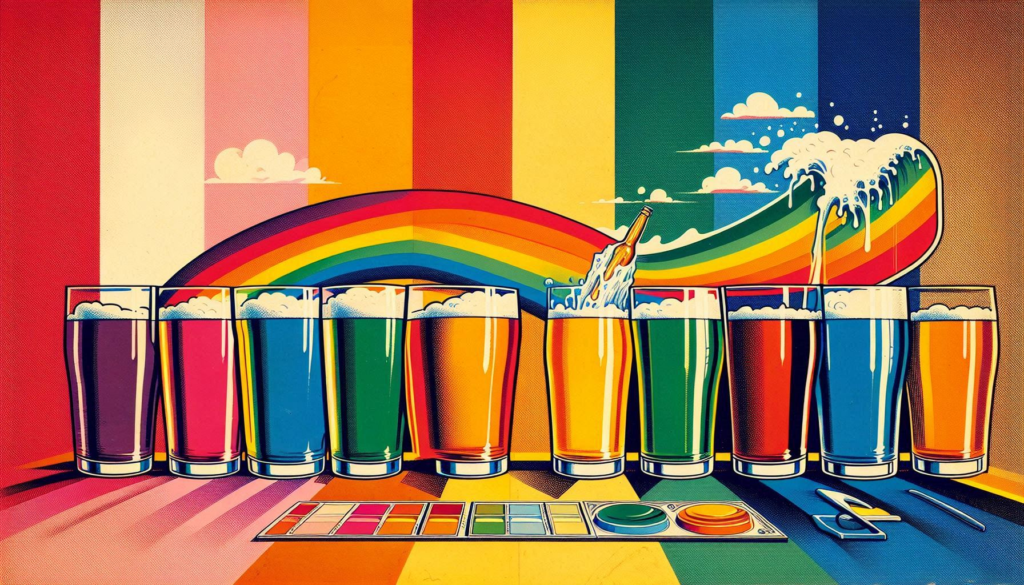
I just made this up today, for no better reason than it was a way to organize my thoughts in a less chaotic way than it exists inside my brain. I took the colors of the rainbow and roughly applied them to seven kinds of beer that I like to keep stocked in my house at any given time so I have a wide variety of choices when it comes time to pick which beer to drink. It’s hardly perfect, but just the process of throwing it together was oddly satisfying and more fun than I would have anticipated. It might even be useful. Who knows?

Strong Beers: I always like to keep something good for sipping around, like a Belgian tripels or barleywine. I’m a bit over Imperial Stouts right now, especially ones aged in Bourbon or other barrels. They more often than not taste like what was in the barrel and lose their beerishness. I also have several bottles (not sure that’s the right word) of Utopias, which is nice for that purpose.

Amber or Light Lagers: By this, I mean Pilsners, Helles and other lighter-bodied lagers. Even Amber Lagers or Vienna Lager fits here, as would Märzen.

Yeasty or Yeast-Forward Beers: Belgian beers are what I had in mind here, although Bavarian hefeweizen would fit this, too. But I generally like to have bottles of Orval or Duvel around, or something along those lines.
Gueuze or other Sour or Wild Fermentation Beers: I almost always have some Cantillon, 3 Fonteinen or Boon, or all three in the cellar. And Russian River being a local brewery to me makes it relatively easy to keep a few of their Belgian-inspired sour ales in stock.
Black or Brown Dark Beers: Moonlight’s Death and Taxes, Brian’s San Francisco-style black lager is almost always in my refrigerator. It’s one of my go-to beers. But I also like to keep a nice Porter or stout, especially oatmeal stout around. I wish there were more packaged brown ale in my neck of the woods, but lately they’ve been hard to come by.

IPAs and Hop-Forward Beers: I know I give the proliferation of IPAs a hard time, but that doesn’t mean I don’t sometimes want a true, bitter IPA, especially thee West Coast variety. It felt like WCIPA was on the ropes for a miniute, but they do seem to be making a comeback here in California, at least.

Veiss or Weiss or Rye Beers: Yeah, I know, this is the weakest one color-wise, but oh, well. There are definitely times when a smooth wheat beer is exactly what I want. I’m especially fond of dunkelweizens, but those are as rare as hen’s teeth. And I threw rye in here just because I have a particular soft spot for any beer brewed with rye.

So that’s my approach to drinking at home, which these days is my preferred spot. While I could arbitrarily pick just one, I feel like there’s simply too many good beers around to ever limit oneself to one beer. That’s what got us into this mess in the first place. I think it’s better to have a new favorite beer every time I open the refrigerator depending on the caprices of my whims. I suppose it’s like answering the question “what’s your favorite beer” by replying “the one in my hand.”

Filed Under: Beers, Just For Fun, The Session Tagged With: fresh, local

Beer Birthday: Jeff Bell

February 28, 2025 By Jay Brooks

ypres-castle
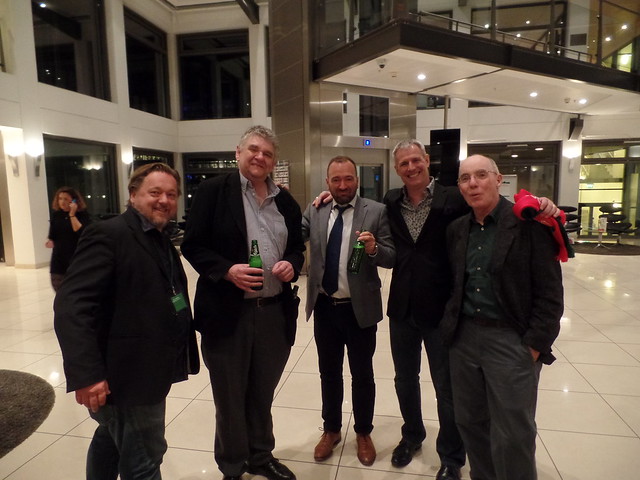
Today is the 46th birthday of Jeff Bell, whose alter ego was, until over a decade ago, Stonch, once one of England’s best bloggers. He retired from blogging to concentrate on his new job as landlord of a London pub, The Gunmakers, in Clerkenwell, a village in the heart of London. I stopped by to meet Jeff on my way back from a trip to Burton-on-Trent years ago. And several years back, I saw Jeff several times during GBBF week. But later, the blogging started up again, and he moved on from that pub, and for a time he was the landlord of the Finborough Arms in Earl’s Court, next to the Finborough Theatre, but he’s moved on from there, and for awhile was tramping around Italy as an “Englishman living in Tuscany.” But he’s back in England, and has taken up residence in the East Sussex town of Rye as the publican and proprietor of the Ypres Castle Inn, at least that’s the last I heard. Join me in wishing Jeff a very happy birthday.

stonch-1
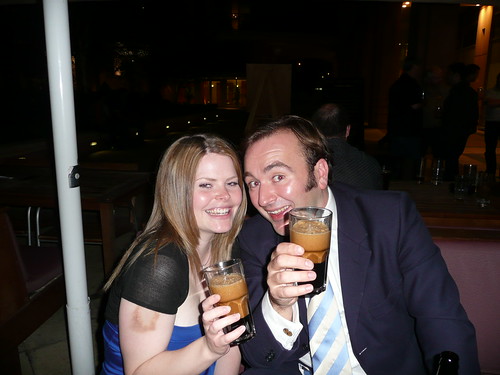
Jeff Bell, a.k.a. Stonch, at The Gunmakers Pub in central London.

P1150769
With a Gunmaker’s bartender at the British Beer Writers Guild event before the start of the Great British Beer Festival in 2009.

P1150880
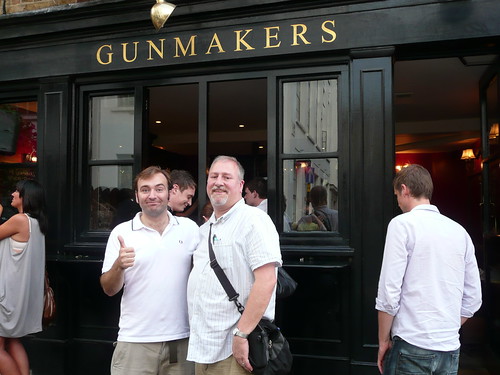
In front of Gunmaker’s in the summer of 2009.

SAM_5804
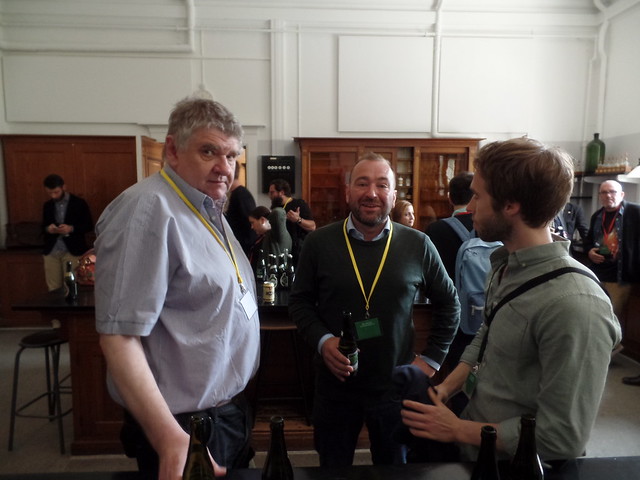
Ron Pattinson, talking with Jeff and Mark Dredge at the Carlsberg Laboratories in Copenhagen a couple of years ago.

SAM_5995
Leaving Copenhagen; Pete Brown, Ron Pattinson, Jeff, Stephen Beaumont and Stan Hieronymus.

Filed Under: Birthdays, Just For Fun Tagged With: London, Pubs, UK

Historic Beer Birthday: James Younger

February 28, 2025 By Jay Brooks

george-younger
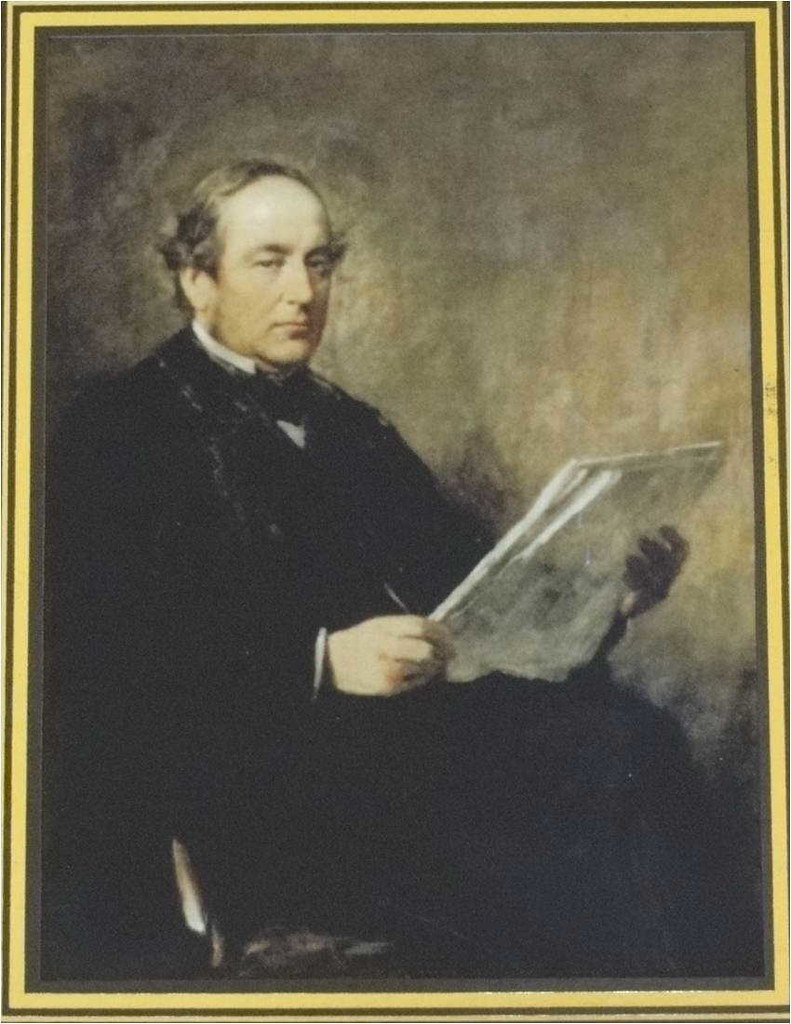
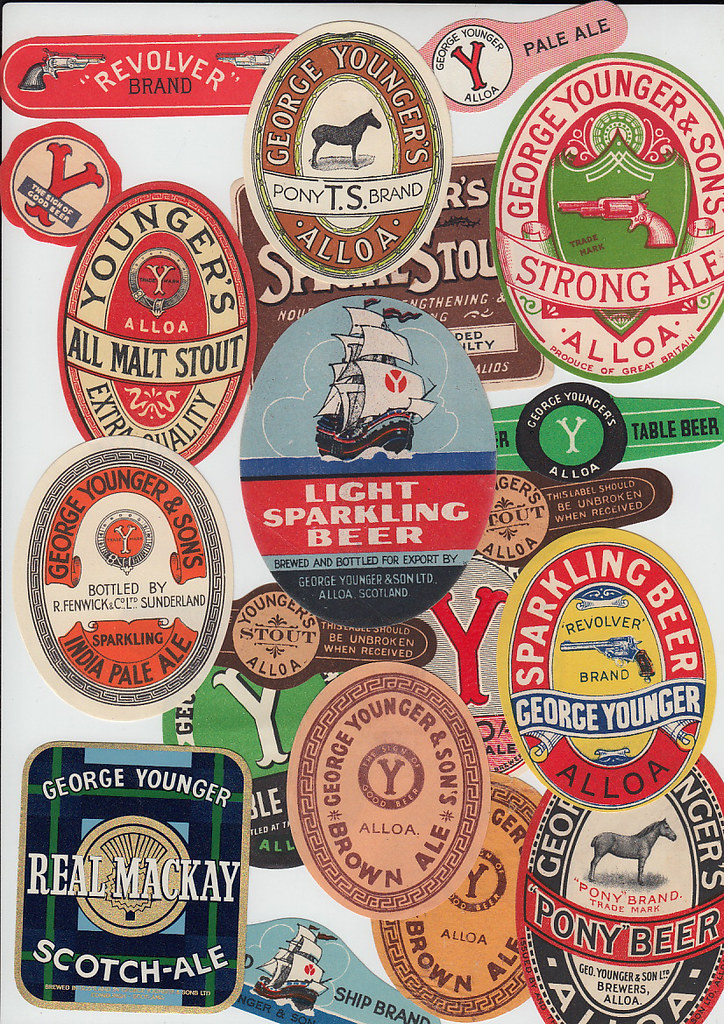
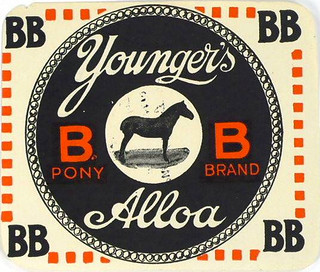
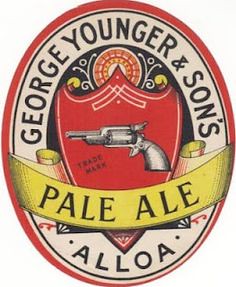
Today is the birthday of James Younger (February 28, 1818-August 5, 1868). He was born in Alloa, Clackmannanshire, Scotland, and was the son of George Younger, and the grandson of George Younger, who founded the brewery that would become George Younger and Son in 1764. He was also a first cousin of Robert Younger (1850-1887) and the ancestor of the Younger family of York, North Yorkshire. Presumably because he wasn’t the first, but one of several in the very early days of the brewery, there’s very little information about him I could find.

James-Younger

He married Janet McEwan, daughter of John McEwan, in November 1850.

george-younger-labels

George-Younger-meadow-brewery
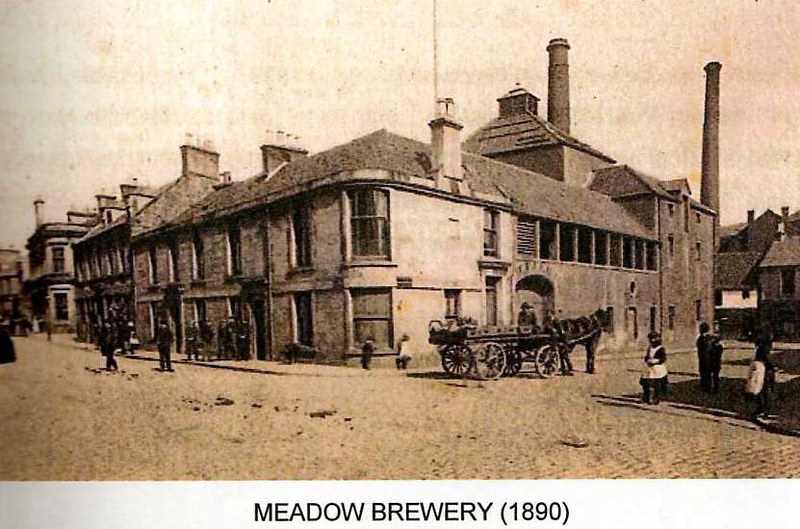
Here’s the Meadow Brewery around 1890, just before it became known as George Younger & Sons.

youngers-pony-brand-1930
George-Younger-pale-ale

Filed Under: Birthdays, Just For Fun Tagged With: History, Scotland

Historic Beer Birthday: Joseph Metcalfe

February 28, 2025 By Jay Brooks

indiana
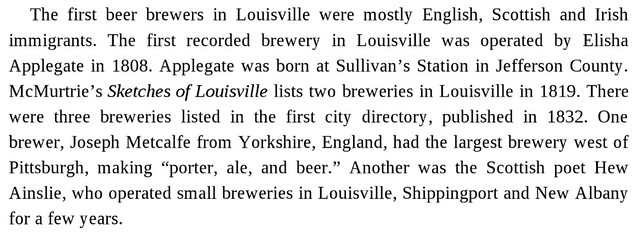
Today is the birthday of Joseph Metcalfe (February 28, 1832-?). There’s very little information I could find about Joseph Metcalfe. He appears to have been born in Yorkshire, England and was a brewer who owned breweries in both Louisville, Kentucky and New Albany, Indiana, which is just across the Ohio River from Louisville.

He’s mentioned, curiously, in Germans in Louisville, in the prehistory of the town, from a German perspective.

matcalfe-germans-in-louisville

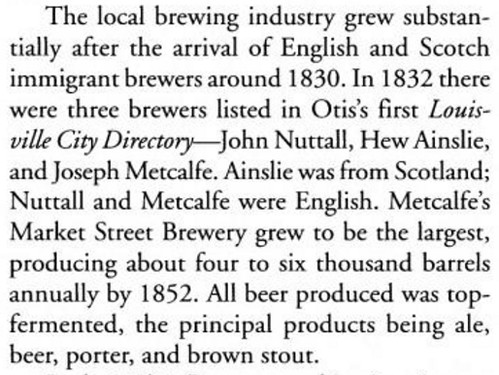
And again similarly in an Encyclopedia of Louisville:

matcalfe-encyclopedia-of-louisville
Here’s the story from IndianaBeer.com:

Colonel Joseph Metcalfe started a brewery in New Albany in 1847 which he sold to William Grainger in 1856 who sold it to Paul Reising in 1857. Reising sold it to Martin Kaelin in 1861 who renamed it Main Street Brewery. This was a two-story building of 40×60 feet with two lagering cellars. It employed five men who made 3,600 bbls by 1868.

metcalfe-brewery-ad
And this is how he’s mentioned in Hoosier Beer: Tapping Into Indiana Brewing History:

metcalfe-brewery-hoosier-beer
Tavern Trove has a slightly different timeline for the brewery, as do a number of sources.

Joseph Metcalfe Brewery 1847-1857
William Grainger 1857-aft 1857
Paul Reising Aft. 1857-1861
Martin Kaelin, Main Street Brewery 1861-1882
Louis Schmidt, Main Street Brewery 1882-1883
Hornung and Atkins, Main Street Brewery 1883-1886
Jacob Hornung, Main Street Brewery 1886-1889
Indiana Brewing Co. 1889-1895
Pank-Weinmann Brewing Company. 1895-1899
Merged with the Southern Indiana Ice and Beverage Co. of New Albany, Indiana in 1899

Ackermans-Old-Rip-Beer-Labels-Southern-Indiana-Ice-amp--Beverage_79976-1

This is Metcalfe’s brewery shortly after he had sold it to Paul Reising.

paul-reising-brewery

Reisling-brewers
The brewery crew when it was the Paul Riesing Brewery.

Reisings-Kaiser-Beer-Labels-Paul-Reising-Brewing-Co-Inc_31932-1

Filed Under: Birthdays, Just For Fun Tagged With: History, Indiana, Kentucky

Beer In Ads #4894: Piel’s Light Bock

February 27, 2025 By Jay Brooks

Last year I decided to concentrate on Bock ads. Bock, of course, originated in Germany, in the town of Einbeck. Because many 19th century American breweries were founded by German immigrants, they offered a bock at certain times of the year, be it Spring, Easter, Lent, Christmas, or what have you. In a sense they were some of the first seasonal beers. “The style was later adopted in Bavaria by Munich brewers in the 17th century. Due to their Bavarian accent, citizens of Munich pronounced ‘Einbeck’ as ‘ein Bock’ (a billy goat), and thus the beer became known as ‘Bock.’ A goat often appears on bottle labels.” And presumably because they were special releases, many breweries went all out promoting them with beautiful artwork on posters and other advertising.

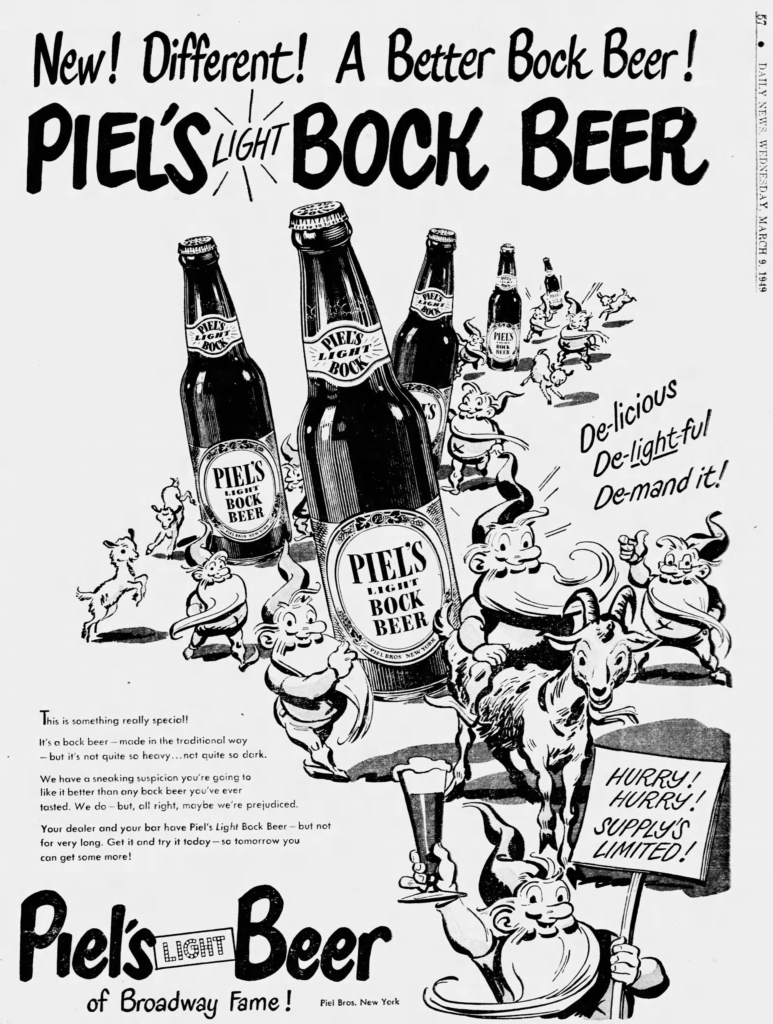
Thursday’s ad is is for Piel’s Light Bock Beer, and is from March of 1949. While I’m aware of lighter colored bocks not being uncommon, this is the first time I’ve seen one advertised as a “light bock.” Piel’s Brewing was founded in 1883 in Brooklyn, but by the 1960s they started closing breweries and by 1973 they were all shut down, and the brand sold to another conglomerate. The brand tried to restart in 2018, but it must not have lasted long because of their new social channels ar dormant. I do quite love the gnomes with the goats.

Filed Under: Art & Beer, Beers, Just For Fun Tagged With: Advertising, Bock, History, New York

Historic Beer Birthday: Albert Braun

February 27, 2025 By Jay Brooks

albert-bruan

Today is the birthday of Albert Braun (February 27, 1863-February 27, 1895). He was born in Dusseldorf, Germany, and emigrated to the U.S. when he was 25, in 1888. He worked at several breweries, including Anheuser-Busch in St. Louis, before settling in Seattle in 1889. The following year he opened the Albert Braun Brewing Association. It was in business only un 1893, when it merged with several other local breweries to become part of the Seattle Brewing and Malting Company.

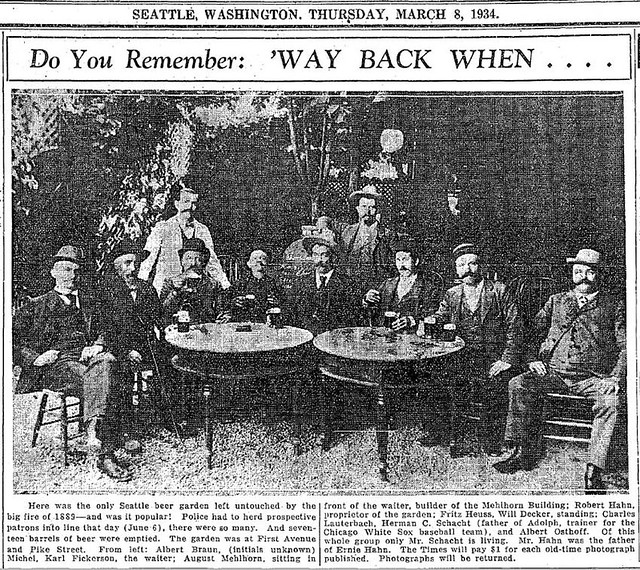
albert-braun-in-group-shot
The only photograph I could find of Braun is in the group shot, which in ran in a nostalgia piece in the newspaper, in 1934. Braun is apparently seated at the far left.

This biography is from “An Illustrated History of the State of Washington, by Rev. H.K. Hines, published in 1893:

ALBERT BRAUN, vice-president of the Seattle Brewing and Malting Company was born at Dusseldorf, on the Rhine, Germany, in February, 1863. He was educated in the schools of Germany and then traveled quite extensively through the European countries. His business career began under the direction of his father, who was an extensive manufacturer of preserved fruits, vegetables, meats and fancy canned goods, and was continued in the same industry, in partnership with his brother at Mainz, on the Rhine.

In 1888 Mr. Braun sold his interest and came to the United States and, upon the advice of Adolphus Busch, president of the Anheuser- Busch Association, of St. Louis, Missouri, he entered the brewery of Peter Doelger, of New York, and learned the practical workings of the business, completing his instruction in the details at the Anheuser-Busch brewery in St. Louis.

In 1889 Mr. Braun made a trip through the Northwest, and, after a short visit in Seattle, he was so favorably impressed with the people and location of the city that he decided upon the city as a location for future settlement. He then returned to St. Louis and continued his studies of the brewery business up to March 1, 1890, when he again visited Seattle and at once engaged in the organization of the Albert Braun Brewing Association, which was incorporated with a capital of $250,000, he being duly elected president and general manager. The brewery was erected six miles south of Seattle, very complete in all its appointments, with a capacity of 70,000 barrels per year, the Product finding a ready market in Washington, region, Idaho and British Columbia. Continuing up to 1893, the Albert Braun Brewing Association was consolidated with the Bay View Brewing Company and the Claussen-Sweeney Brewing Company, and incorporated as the Seattle Brewing and Malting Company, with capital stock of $1,000,000. The affairs of the new association were conducted by the managers of the old breweries, the official corps being: Andrew Hemrich, President; Albert Braun, Vice-President; Edward F. Sweeney, Secretary; and Fred Kirschner, Treasurer.

The company expects to develop brewing and malting into one of the leading interests of the city of Seattle, and as their product has competed successfully with the best Eastern brands there is little doubt of an auspicious future.

Mr. Braun is also interested in various other enterprises of the city and he has perfect faith and confidence in the future of Seattle and the Sound districts.

Dorpat Albert Braun Brewery THEN

According to Brewing in Seattle, by Kurt Stream, Braun was named Vice-President of Seattle Brewing and Malting. Here’s how it went down:

The Seattle Times also has a story about what happened to Braun’s brewery:

ALBERT BRAUN arrived from Iowa soon after Seattle’s Great Fire of 1889. Within a year and a half, the young German immigrant, with financial help from local and Midwestern investors, built a brewery about 2 miles south of Georgetown.

The serpentine Duwamish River is hidden behind the brewery. Directly across the river, on its west side and also hidden, was the neighboring community of South Park. Braun’s name is emblazoned on the brewery’s east facade, and so it was best read from the ridge of Beacon Hill and from the trains on the railway tracks below.

The brewing began here December 1890, and the brewery’s primary brands, Braun’s Beer, Columbia Beer and Standard Beer, reached their markets in March 1891. The 1893 Sanborn fire insurance map for Seattle includes a footprint of the plant that is faithful to this undated photograph. The map’s legend notes that the buildings were “substantial, painted in and outside” with “electric lights and lanterns” and that a “watchman lives on the premises.” It also reveals, surprisingly, that the brewery was “not in operation” since July of that year. What happened?

The economic panic of 1893 closed many businesses and inspired a few partnerships, too. Braun’s principal shareholders partnered his plant with two other big beer producers, the Claussen Sweeney and Bay Views breweries, to form the Seattle Brewing and Malting Co. Braun’s landmark was then designated “Albert Braun’s Branch.”

Of the three partnering breweries, this was the most remote, and it was largely for that reason, it seems, that it was soon closed. The upset Braun soon resigned; sold most of his interest in the partnership; and relocated to Rock Island, Ill. There, he started work on a new brewery and fell in love, but with tragic results: Early in 1895, Braun committed suicide, reportedly “over a love affair.”

For six years after its closing, the tidy Braun brewery beside the Duwamish River stood like a museum to brewing, but without tours. Practically all the machinery was intact, from its kettles to its ice plant, until the early morning of Sept. 30, 1899. On that day, The Seattle Times reported, “the nighthawks who were just making their way home and the milkmen, butchers and other early risers were certain that the City of Tacoma was surely being burned down.” They were mistaken. It was Braun’s brewery that was reduced to smoldering embers. The plant’s watchman had failed that night to engage the sprinkler system connected to the tank at the top of the five-story brewery.

There is at least a hint that the brewery grounds were put to good use following the fire. The Times, on Aug. 11, 1900, reported that the teachers of the South Park Methodist Episcopalian Sunday school took their classes “out for a holiday on the banks of the beautiful Duwamish River, (and for) a pleasant ride over the river to the Albert Braun picnic grounds.”

Gary Flynn filled in the gaps about what happened to Flynn after 1893, on his page on Braun at his website Brewery Gems:

Albert Braun took his own life, with a gun shot to the heart, on February 27, 1895, at the young age of 32. While still holding a significant number of Seattle Brewing & Malting Co. shares, he was not considered well-to-do in the matter of ready cash. Additionally, Braun had left Seattle for Illinois, after millionair brewer, Otto Huber, indicated that he was interested in partnering with Braun in the purchase of the LaSalle Brewing Co. For what ever reason Huber went back on his promise, leaving Braun with no immediate prospects and in a state of despair.

He has more about the Albert Braun Brewery, too.

Filed Under: Birthdays, Breweries, Just For Fun Tagged With: Germany, History, Washington

Historic Beer Birthday: William Henry Beadleston

February 27, 2025 By Jay Brooks

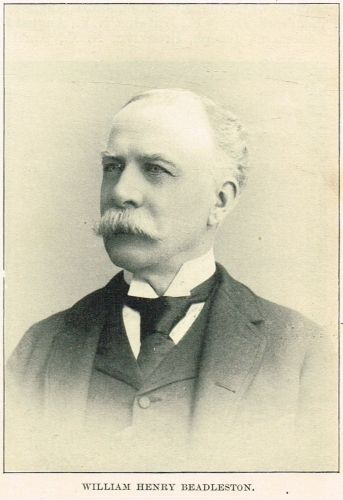
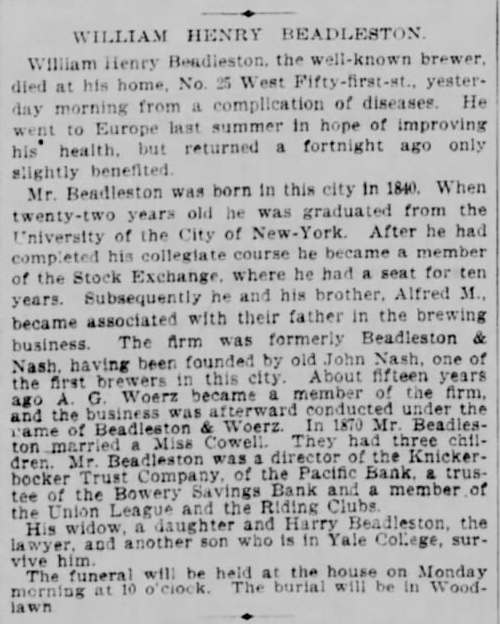
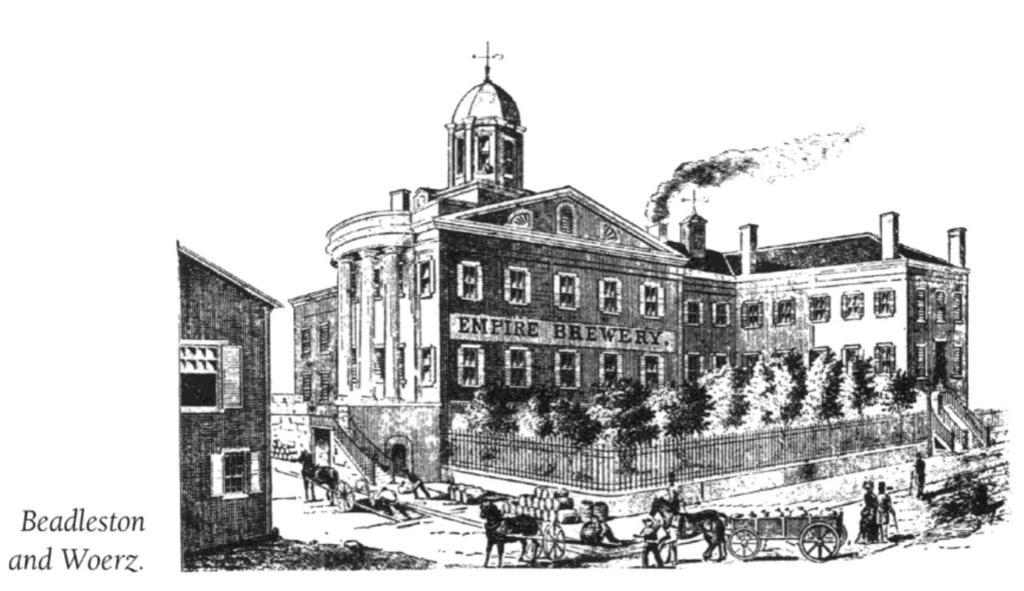
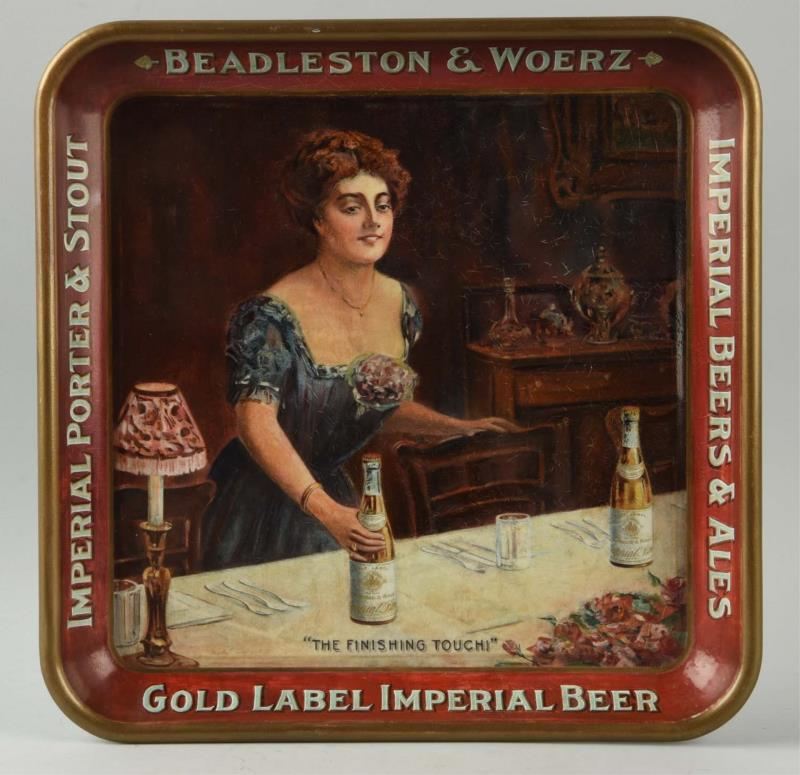
Today is the birthday of William Henry Beadleston (February 27, 1840-October 24, 1895). He was born in New York, and according to his very short biography was a “director and trustee in various corporations; in brewing business.” He was president of the Beadleston & Woerz Empire Brewery in New York City. “Under William’s leadership the brewery his father founded grew to be a large player supplying beer to many locations east of the Mississippi.” Known by a few different names before 1877, Beadleston was always one of the names list in the brewery name from it’s founding in 1846 until its final name, Beadleston & Woerz Empire Brewery, which it traded under until 1920, when it closed for good.

Here is his obituary from the New Your Tribune on October 25, 1895.

Filed Under: Birthdays, Breweries, Just For Fun Tagged With: New York

Beer In Ads #4893: National Bock Beer Fight

February 26, 2025 By Jay Brooks

Last year I decided to concentrate on Bock ads. Bock, of course, originated in Germany, in the town of Einbeck. Because many 19th century American breweries were founded by German immigrants, they offered a bock at certain times of the year, be it Spring, Easter, Lent, Christmas, or what have you. In a sense they were some of the first seasonal beers. “The style was later adopted in Bavaria by Munich brewers in the 17th century. Due to their Bavarian accent, citizens of Munich pronounced ‘Einbeck’ as ‘ein Bock’ (a billy goat), and thus the beer became known as ‘Bock.’ A goat often appears on bottle labels.” And presumably because they were special releases, many breweries went all out promoting them with beautiful artwork on posters and other advertising.

Tuesday’s ad is depicts a goat fight, apparently to the death, as the victor head butts the other goat over the ledge of a cliff. Standing behind and watching this epic battle are personifications of the major nations of the time, all with mugs of Bock beer in their hands. The Library of Congress mentions a connection to the F. Klemm Brewery of Baltimore, Maryland, although it’s fairly subtle and not all obvious. In the bottom right-hand corner is the following text, quite tiny: “Published by F. Klemm, No. 429 Central Ave., Baltimore, MD.” The chromolithograph was created in 1878. The lithographer was A. Hoen & Co., of 75 Second St., in Baltimore, Maryland. “A. Hoen & Co. was a Baltimore, Maryland-based lithography firm founded by Edward Weber in the 1840s as E. Weber & Company. When August Hoen took it over following Weber’s death, he changed the name and built the company into one of the most prominent in the industry at the time.”

Filed Under: Art & Beer, Beers, Just For Fun Tagged With: Advertising, Baltimore, Bock, History, Maryland

« Previous Page
Next Page »

Find Something

Northern California Breweries

Please consider purchasing my latest book, California Breweries North, available from Amazon, or ask for it at your local bookstore.

Recent Comments

  • Ernie Dewing on Historic Beer Birthday: Charles William Bergner 
  • Steve 'Pudgy' De Rose on Historic Beer Birthday: Jacob Schmidt
  • Jay Brooks on Beer Birthday: Bill Owens
  • Steve 'Pudgy' De Rose on Beer Birthday: Charles Finkel
  • Steve 'Pudgy' De Rose on Beer Birthday: Bill Owens

Recent Posts

  • Beer In Ads #5204: Oh Brother! Griesedieck Bros. Genuine Premium Bock Beer Is Here! February 15, 2026
  • Historic Beer Birthday: Emil Resch February 15, 2026
  • Historic Beer Birthday: Philip Zang February 15, 2026
  • Beer In Ads #5203: Robert Portner’s Bock Beer February 15, 2026
  • Historic Beer Birthday: August Schell February 15, 2026

BBB Archives

Feedback

Head Quarter
This site is hosted and maintained by H25Q.dev. Any questions or comments for the webmaster can be directed here.